GUEST BOOK REVIEW by William Meikle: Something Wicked This Way Comes Part 2

Green Town 2:
Something Wicked This Way Comes
Ray Bradbury

Genre: Coming of Age, Horror, Halloween
Publisher: William Morrow Paperbacks
Original Publication Date: 9.17.1962
Pages: 314

One of Ray Bradbury’s best-known and most popular novels, Something Wicked This Way Comes, now featuring a new introduction and material about its longstanding influence on culture and genre.

For those who still dream and remember, for those yet to experience the hypnotic power of its dark poetry, step inside. The show is about to begin. Cooger & Dark’s Pandemonium Shadow Show has come to Green Town, Illinois, to destroy every life touched by its strange and sinister mystery. The carnival rolls in sometime after midnight, ushering in Halloween a week early. A calliope’s shrill siren song beckons to all with a seductive promise of dreams and youth regained. Two boys will discover the secret of its smoke, mazes, and mirrors; two friends who will soon know all too well the heavy cost of wishes…and the stuff of nightmares.

Few novels have endured in the heart and memory as has Ray Bradbury’s unparalleled literary masterpiece Something Wicked This Way Comes. Scary and suspenseful, it is a timeless classic in the American canon.

Something Wicked This Way Comes – A Review (Part 2)

Part 2: Pursuits

Part 2 opens with Ms Foley, who is clearly now under the carnival’s spell. She reports the two boys to the police for attempting to burgle her, and neglects to mention the nephew who clearly isn’t her nephew. Will and Jim get into trouble, but even then Jim seems more concerned with the carousel, and the possibilities of instantly becoming a grown up. Will tries to explain to his father, but stops when he realizes he would be leading the man into Mr Dark’s net. This is something the boys must face alone, even if Will is becoming more and more worried about losing Jim entirely. The interplay between stolid, sensible Will and Jim’s wild side is masterfully done. When I was a lad reading this, I knew I was most definitely a Will, even while I knew a part of me would always want to be a Jim. I had a friend who was definitely a Jim. He passed away last year, still running ahead without me, and reading this now brought it all back to me. Bradbury, nostalgia, and emotion… a heady mixture for a boy at any age.

“Here comes the carnival. Death like a rattle in one hand, life like candy in the other. Shake one to scare you, offer one to make your mouth water. Here comes the side show, both hands full.”

That same night, or rather, in the early hours of the morning, the boys wake up to find that one of the carnival’s denizens, the Dust Witch, is searching for them, hovering silently over the town in a hot air balloon. Once again Bradbury paints us a quick word picture of her, and once again we are immediately terrified. He’s got his hooks deep in us now. Will, showing us a bravery even beyond what we knew was in him, lures the witch to a deserted house and, in a brilliantly taut scene, dispatches the balloon with an arrow, driving her away.

“Nothing much else happened, all the rest of that night.”

The next day Will and Jim meet a frightened young girl. It is only later that they realise it is Ms Foley, made young again by the carousel, but by then it is too late… they cannot find her, and the carnival, via a parade, has come right into the center of town, looking for them. The boys must hide.

They take position under a grille in the sidewalk, only to be discovered by Will’s father. But things get complicated when Mr Dark arrives to question the man about the boys. Mr Holloway shows remarkable calm in the face of the Tattooed man’s insistence, and refuses to betray the boys to him. The Dust Witch arrives to complicate matters, but Mr Holloway banishes her simply by blowing cigar smoke in her face. Now aware that something is indeed awry in the town, Mr Holloway tells the boys to stay hidden then meet him at the library later.

In just the past twenty pages or so, both elder and younger Holloway have shown their mettle, revealing inner strengths. But it is Jim we’re getting most worried about at this point, the one of the pair who now seems somewhat younger than the other. Act 2 is about to come to a head, and we’re not sure yet where it’s going.

Our three heroes meet later in the library, where Will’s father tells them that he has discovered that the same carnival, and the same people, have been coming to town for a very long time. They are about to discuss how they might fight this menace when they are interrupted. The boys hide again as the father confronts Mr Dark. We get a terrifying set of scenes where Mr Dark overwhelms the father, breaking his fingers in the process, finds the boys, and sends the Dust Witch to kill the father. At this point it seems that Mr Dark has won completely.

Then the whole book turns on a single pivot. Will’s father laughs at the absurdity of things as the Witch tries to stop his heart… and the laughter causes her to pause, so he laughs again, loud and hard, and the Witch quails away from him. He has found the tool he needs to give them a fighting chance.

The witch flees, and Will’s father, nursing a broken hand, heads out into the night to search for the boys.

At the end of Act 2, we are left in despair, with the boys in the hands of Mr Dark. But there’s hope. Will’s father has proved his mettle again, and we are now all rooting for him as we head for the final confrontation.

Boo-ology: William Meikle is a Scottish writer, now living in Canada, with more than twenty five novels published in the genre, and over 300 short story credits in thirteen countries. His work has appeared in a number of professional anthologies. When he is not writing, he plays guitar, drinks beer, and dreams of forture and glory.

Website
Goodreads

GUEST BOOK REVIEW by William Meikle: Something Wicked This Way Comes Part 1

Green Town 2:
Something Wicked This Way Comes
Ray Bradbury

Genre: Coming of Age, Horror, Halloween
Publisher: William Morrow Paperbacks
Original Publication Date: 9.17.1962
Pages: 314

One of Ray Bradbury’s best-known and most popular novels, Something Wicked This Way Comes, now featuring a new introduction and material about its longstanding influence on culture and genre.

For those who still dream and remember, for those yet to experience the hypnotic power of its dark poetry, step inside. The show is about to begin. Cooger & Dark’s Pandemonium Shadow Show has come to Green Town, Illinois, to destroy every life touched by its strange and sinister mystery. The carnival rolls in sometime after midnight, ushering in Halloween a week early. A calliope’s shrill siren song beckons to all with a seductive promise of dreams and youth regained. Two boys will discover the secret of its smoke, mazes, and mirrors; two friends who will soon know all too well the heavy cost of wishes…and the stuff of nightmares.

Few novels have endured in the heart and memory as has Ray Bradbury’s unparalleled literary masterpiece Something Wicked This Way Comes. Scary and suspenseful, it is a timeless classic in the American canon.

Something Wicked This Way Comes – A Review (Part 1)

“There are times when we’re all autumn people.”

This is a book I have lived with for most of my reading life.

I first came across it in a small town library at home in the West of Scotland. I think I was about 13, the same age as the boys, and it immediately resonated with me… not because of the small town Americana, which seemed too different from my industrial town Scottish upbringing, but because of the boys. It’s a book about friendship, but not just about friendship. It’s a book about growing up, but not just about growing up. And it’s a book about good, and evil, and magic.

But it’s not just about those things.

Above all else, it’s a book about life, and joy, and hope. And that’s why I’ve found myself drawn back to it again and again over the intervening years, particularly when dark clouds gather in my soul.

The book splits naturally into three main sections, and I’ll deal with them in turn but first, Bradbury’s own prologue introduces the boys in his usual poetic but economical fashion.

“Both touched toward fourteen; it almost trembled in their hands. And that was the October week when they grew up overnight, and were never so young any more.”

Part 1: Arrivals

We’re first interested to the boys, Will and Jim, through the eyes of a travelling lightning rod salesman. In a series of trademark word pictures, Bradbury paints us the boys lying on the grass outside their houses, then has the salesman take center stage to ominously refer to a coming storm. He even gives Jim a ‘magical’ lightning rod to stave it off, but the dies have been cast; we’ve already been set up for the coming of something that will, like a thunderclap, change the boys’ lives irrevocably. It’s a remarkable, very short, first chapter, but it has already done its job. I’m, once again, hooked and off and away to adventure with the lads.

Our next arrival is seen through the eyes of the lads when they visit the local library. Will’s dad, Charles Holloway, is the janitor there, but more than that, he knows all the books immediately. He has become a father late in life, and, in these early stages at least, appears to cut a rather sad and lonely figure among the shelves. There is some chatter between the three of them of black and white hats, more foreshadowing of things to come but with such style we hardly notice among the magical prose and the sounds of music in the wind before the coming storm.

There’s a smell of licorice and cotton candy in the air as the town closes down for the night. The boys are running for home, hoping the storm will come and they’ll see the lightning rod in action. We start to get intimations of their characters. Will is the serious one, Jim’s more patient, always wanting to see more, more of the town’s theatre folk in action, more of danger, more of life. At the same time Will’s father catches sight of another arrival, the first cart of a Travelling Show, one that stirs old bittersweet memories in him from his own boyhood. We’re only 30 or so pages into it but Bradley’s way with emotions linked to nostalgia is already tugging at our heartstrings.

Our next arrival is the train bringing the carnival. The passage describing its whistle has always stuck with me.

“The wails of a lifetime were gathered in it from other nights in other slumbering years; the howl of moon-dreamed dogs, the seep of river-cold winds through January porch screens which stopped the blood, a thousand fire sirens weeping, or worse! the outgone shreds of breath, the protests of a billion people dead or dying, not wanting to be dead, their groans, their sighs, burst over the earth!”

Damn, I wish I could write a paragraph like that, just once.

The boys cannot contain themselves. They escape from home in the early hours of the morning and head for the carnival. And it is here the temptations begin. The first to be tempted is Miss Foley, one of the boys’ teachers. We get the first real hint of the darkness to come as she is almost swallowed by the mirror maze while chasing a younger version of herself. The boys save her, but Will is horrified, while Jim appears strangely fascinated.

The boys find the discarded bag of the lightning rod salesman from earlier, and return to the carnival in search of him. We get our next arrival, and the most important one, when they meet an illustrated man, Mr Dark. Jim is immediately both fascinated and scared, but ignores Will’s entreaties to go home. They stay, and watch the merry-go-round run backwards, and an old man, Mr Cooger, becomes a boy. They follow the new boy, who tries to pretend he is Mr Foley’s nephew, but when confronted, runs back to the carnival.

We get another of Bradbury’s wonderful scenes as the merry-go-round goes forward again. Mr Cooger gets older again, then Will knocks the switch, sending it into fast forward, causing Mr Cooger to age a hundred years in a few seconds. The boys flee again to fetch the police, but on return to the carnival they are met with Mr Cooger in a new guise as Mr Electrico. Mr Dark charms the police force and offers the boys free tickets to the rides.

But much of the charm of the carnival has gone for them.

They want to go home.

So, the first act is done, the players have been revealed, and the stakes laid down. We’re starting to see how this might go, and we’re getting worried for the state of the boys’ friendship, given Jim’s impetuous nature. There’s more strange magic to come; it has saturated the air in the small town, and Bradbury has us squirming on his hook.

It’s already a tour-de-force, and I’m delighted to be along for the ride (s).

Boo-ology: William Meikle is a Scottish writer, now living in Canada, with more than twenty five novels published in the genre, and over 300 short story credits in thirteen countries. His work has appeared in a number of professional anthologies. When he is not writing, he plays guitar, drinks beer, and dreams of forture and glory.
Website
Goodreads

GUEST POST: Frazer Lee

Top 5 Spooky Halloween Games

Spooky season is upon us and it’s almost time kids… The pumpkin flesh is tender and ready to carve. A scary horrorthon is queued up on the telly. This year’s costume is even more fabulous than last year’s, and the candy pail is already overflowing with treats! How else can we add to the frightful fun before the clock strikes twelve on the creepiest night of the year? In my haunted house, after the dead man’s fingers and gooey eyeballs have been devoured, we always play a spooky game together. So gather around my table of terror brave ones, and feast your eyes on the…

5. Horror Top Trumps

(image © Frazer Lee)

This game will bring out the spooky strategist in you as you pit your wits against the other players in order to grave-rob them of all their cards. If you’ve ever wondered what might happen if The Invisible Man (no)faced off against Frankenstein’s Monster, then Horror Top Trumps is the game for you. As an added bonus the cards glow in the dark, casting their eerie glow across anyone willing to risk their arm! And if you don’t own a deck, why not craft your own and create scary stats for your favourite movie and book-based monsters? (Hmm… I’d really love to see a Horror Top Trump card for my monster The Skin Mechanic from my Bram Stoker Award nominated debut novel The Lamplighters…)

4. Scream Inn

(image © Frazer Lee)

“We’re only here for the fear…” After all the Halloween fun and folics, we all need to get our heads down for a while, presuming they haven’t been severed of course. And where better to relax than the Scream Inn? Check in if you’re brave enough and you’ll discover this vintage classic features a rotten rotating board, so you never know if you’re in for a cosy night’s sleep or a fatal death-trap! There’s an old saying that you might ‘wake up in the morning with a crowd ’round your bed’ and this game can definitely result in a case of ‘dead and breakfast’. Long out of print, you can sometimes snap a copy up in online auctions and hey, we’ve all wanted to bid on a genuine haunted house, right?

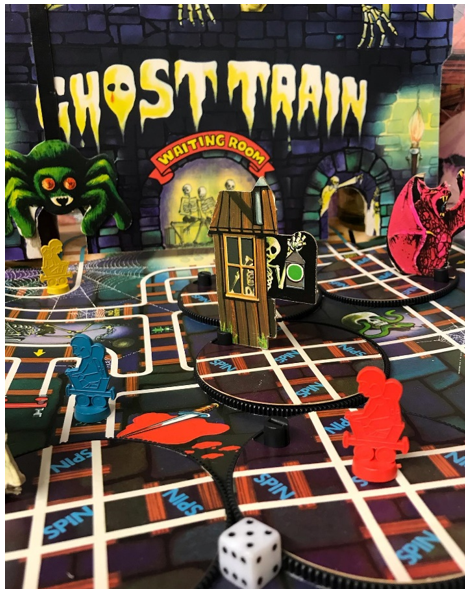
3. Ghost Train

(image © Frazer Lee)

Riding the ghost train at the funfair is one of my favourite activities when the carnies come to town and this game recreates the ride on your table at home. Kids love the swinging spider, which can plummet pendulum-like and knock you off the board. The rotating ‘tracks’ add tension to the game by redirecting you away from the exit and deeper into the shadows! Sadly, Ghost Train is out of print, and someone should really bring it back from the dead. (If you don’t own a copy, a good alternative is Labyrinth, which also features some spooky elements and a devilish moving board, muah ha ha.)

2. Ghost Castle

(image © Frazer Lee)

One of the oldest and also the most oft-reissued spooky board game, Ghost Castle started out with a simple cardboard board and pieces, before evolving into a cool castle diorama complete with moving coffin lid and glow in the dark skull that bounces down the staircase bringing the icy touch of death upon all in its path! This game can also be the quickest game to play in my experience, which is useful when you have a lot of activities to cram in on Halloween night! The moving floor and ghostly mirror are exciting features, bringing all the benefits of a haunting into your house… without the need for an exorcist.

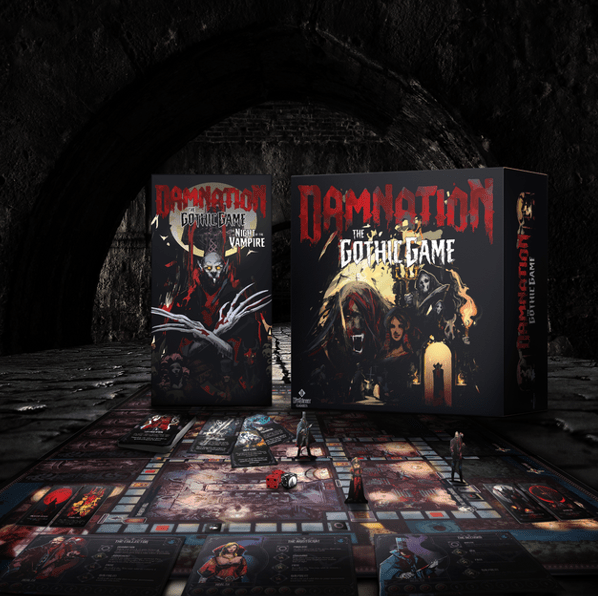
1. Damnation: The Gothic Game

Okay, I’m biased (because I have just written the official novelisation of this game, see an exclusive extract below) but what honestly places Damnation: The Gothic Game at the top of my list is its unique goal – to kill all the other players on the board! The 1992 classic became a Halloween tradition of mine, perfect for parties, with unwitting players expiring from the dreaded ‘suffocating prunes’, drowning in the moat, or being taken out by a poisoned blow-dart from the lavatory tower! Blackletter Games’ amazing update Damnation: The Gothic Game adds a ton of frightful and fun features such as the ability to haunt other players from beyond the grave, and there is even a Night of the Vampire expansion. Who could possibly resist a deadly game of battle royale in Castle Dracula? Try it and see if you can survive Halloween night…

I hope you have found some eerie inspiration for your own table top terrors (post your favourite ghoulish games in the comments). Here’s wishing you a Happy Halloween!

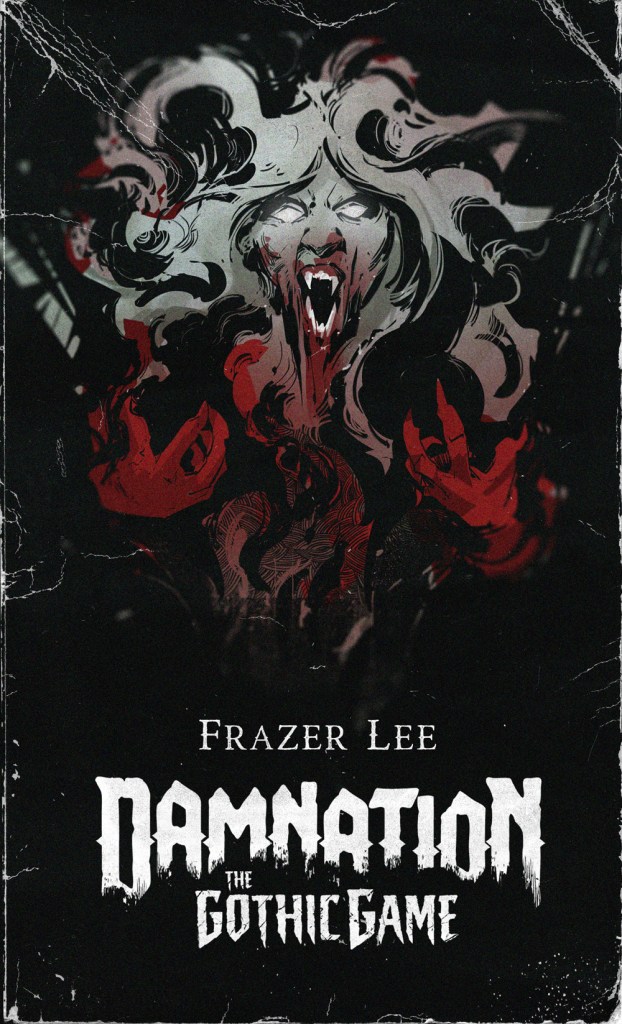
Check out the video below to see Frazer Lee reading an exclusive extract from the Damnation: The Gothic Game novel, coming soon this spooky season. Follow Frazer Lee’s website for updates!

The Carpathian Mountains, 1897. An impassable storm forces a group of travellers to disembark from their steam train and take shelter in a remote castle for the night. Their enigmatic host invites them to take part in some after-dinner entertainment. But as they each explore the castle’s rooms and passageways they discover they have become part of a deadly game. Only one guest may leave in the morning and it is up to each of them to use their wits, and weapons, to survive the night. For the others, Damnation awaits.

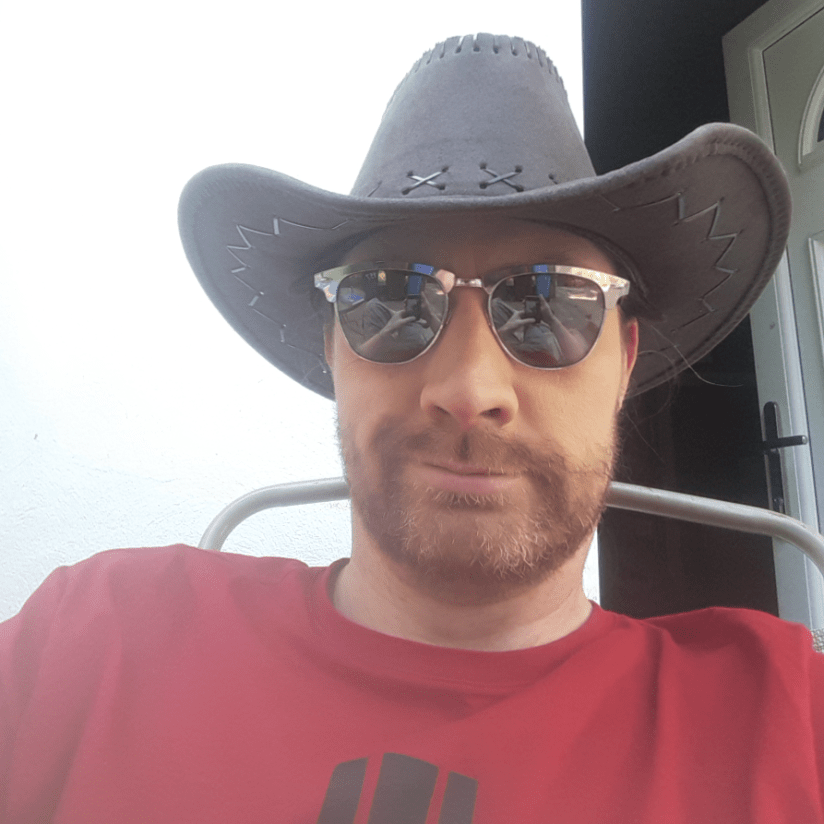
Boo-graphy: Frazer Lee is the Bram Stoker Award® nominated author of seven novels including Damnation: The Gothic Game. Winner of the Edgar Allan Poe Gothic Filmmaker Award, Frazer’s screenwriting and directing credits include the acclaimed horror films Panic Button and The Stay. Frazer is Reader in Creative Writing at Brunel University London, and resides with his family in Buckinghamshire, just across the cemetery from the real-life Hammer House of Horror. Crisps are his downfall… talk him down from the ledge at his website.

GUEST BOOK REVIEW by Christa Carmen: Reluctant Immortals

Reluctant Immortals

Gwendolyn Kiste
Genre: Horror, Gothic
Publisher: Saga Press
Publication Date: 8.23.2022
Pages: 317

For fans of Mexican Gothic, from three-time Bram Stoker Award–winning author Gwendolyn Kiste comes a novel inspired by the untold stories of forgotten women in classic literature–from Lucy Westenra, a victim of Stoker’s Dracula, and Bertha Mason, from Charlotte Brontë’s Jane Eyre–as they band together to combat the toxic men bent on destroying their lives, set against the backdrop of the Summer of Love, Haight-Ashbury, 1967.

Reluctant Immortals is a historical horror novel that looks at two men of classic literature, Dracula and Mr. Rochester, and the two women who survived them, Bertha and Lucy, who are now undead immortals residing in Los Angeles in 1967 when Dracula and Rochester make a shocking return in the Haight-Ashbury district of San Francisco.

Combining elements of historical and gothic fiction with a modern perspective, in a tale of love and betrayal and coercion, Reluctant Immortals is the lyrical and harrowing journey of two women from classic literature as they bravely claim their own destiny in a man’s world.

When I was a teenager, I read Jane Eyre. I also read Rebecca, The Castle of Otranto, The Mysteries of Udolpho, The Haunting of Hill House, Dracula, The Picture of Dorian Gray, Wuthering Heights, and every other classic Gothic novel I found on either my mother’s or the local library’s shelves. Like a lot of teen-aged girls obsessed with these types of novels, I pictured myself as the protagonist of each, descending to the abbey basement, journeying to an ancestral home, exploring the secret dungeon or attic or passageway beneath the floorboards. I was Jane learning her true identity, the second Mrs. de Winter gazing upon Manderley for the first time, Eleanor Vance drinking from her cup of stars. But here’s the thing: many of these women weren’t actually great role models to aspire to, or even appropriate “costumes” to try on. Their autonomy, their ability to be the heroine of their own story, was a carefully orchestrated illusion. Jane was a pawn for Mr. Rochester. Emily St. Aubert was imprisoned in Castle Udolpho by Signor Montoni. Isabella was persecuted and traumatized by generations of men who’ve ruled Otranto. In fact, I would be far, far removed from my adolescence before I found a pair of Gothic heroines truly worthy of my aspirations; I thank Gwendolyn Kiste, and her gorgeous novel, Reluctant Immortals, for finally delivering them to me.

Bertha, or “Bee,” Mason and Lucy Westenra fight back, take control, have teeth (no pun intended). They possess true autonomy in that they drive the events of their story. These are not your mother’s or your childhood librarian’s gothic heroines. They are far more powerful than either Edward Fairfax Rochester or Count Dracula ever were. And that’s one of Gwendolyn’s many talents: writing her female characters in a way that naturally balances the scales. They’re believable in their actions, admirable in their strength, understandable in their motives—and their flaws. Gwendolyn captures all the magic and beauty and excitement (not to mention the eeriness, dread, and horror) of Gothic novels with none of the misogynistic stifling of her characters. And her prose? Do we even bother talking about Gwendolyn’s prose in reviews of her work anymore? It’s transcendent (examples: “The pool glitters in the moonlight, the shape of a teardrop, blue and spotless as a phony lagoon from a movie set,” and “The rest of me turns to dust, and I can’t hold on to the urn anymore. It falls through my crumbling fingers, shattering into a thousand pieces on the floor. Overhead, Dracula’s muddy form smears across the ceiling before dripping down to meet himself, the parts of him mingling together, his body becoming stronger, while mine becomes nothing at all. I won’t watch him now. I close what’s left of my eyes and let the darkness rush in to greet me.”). Her weaving of words is on a whole other level.

Some novels can’t help but sacrifice pacing for characterization and language, but Reluctant Immortals is not one of them. One of my favorite sections of the novel (and there are many) was Bee and Lucy’s arrival in San Francisco with Daisy, a young hitchhiker interested in helping them locate Jane Eyre after she’s inadvertently loosed some of Dracula’s ashes on Los Angeles. It’s right about the dead-center of the narrative, and yet it screams forward with as much momentum as the women’s Buick ricocheting up the 101. And the stakes (again, no pun intended) only increase from there.

The showdown between Dracula and Lucy—and Rochester and Bee—is as fantastic and satisfying as one could hope for (and surprisingly biting in its humor at times… When Lucy considers breaking an end table to use on Dracula, he points out that it’s Formica, to which Lucy replies, “Maybe it’s the ideal way to finish you. Death by tacky wood paneling.”). This climax is rife with decay and blood, secrets centuries in the making coming to light and vampires doing, well, what vampires do, and sucking the souls of innumerable victims. But the showdown also vibrates with originality and heart (Lucy and Dracula grappling atop the Golden Gate Bridge, ruin and rot against the “painfully quaint” backdrop of Playland at the Beach), and the worthiness of these Gothic women as heroines strikes me all over again. Gosh, it’s a joy to read about kickass, supernatural women banishing the classic monsters of our past.

“There are no Hollywood endings, not even in Hollywood,” Gwendolyn writes. But with Reluctant Immortals, we do get a Hollywood ending, in a sense. Without spoiling anything, the idea that Lucy and Bee don’t have to be monsters, despite coming from them, is a lifeline I’m more than willing to follow. There may still be “gloom brimming” in our heroines’ hearts, but they have more than achieved what Gwendolyn set out for them to accomplish. Bee’s story, “the one they tried so hard to steal” from her, remains unwritten. Lucy is “more than just the girl who withers in… shadow.” They are as immortal as Gwendolyn’s transcendent novel deserves to be.

Boo-graphy: Christa Carmen lives in Rhode Island, and is the author of the short story collection, Something Borrowed, Something Blood-Soaked. Her debut novel, The Daughters of Block Island, is forthcoming from Thomas & Mercer in fall 2023, and her second novel with the mystery, thriller, and true crime imprint will be out in the fall of 2024. Christa studied English and psychology at the University of Pennsylvania, has an MA from Boston College, and an MFA from the University of Southern Maine.

When she’s not writing, she keeps chickens, uses a Ouija board to ghost-hug her dear departed beagle, and sets out an adventures with her husband, and bloodhound/golden retriever mix. Most of her work comes from gazing upon the ghosts of the past or else into the dark corners of nature, those places where whorls of bark become owl eyes and deer step through tunnels of hanging leaves and creeping briers only to disappear.

A young woman’s fears regarding the gruesome photos appearing on her cell phone prove justified in a ghastly and unexpected way. A chainsaw-wielding Evil Dead fan defends herself against a trio of undead intruders. A bride-to-be comes to wish that the door between the physical and spiritual worlds had stayed shut on All Hallows’ Eve. A lone passenger on a midnight train finds that the engineer has rerouted them toward a past she’d prefer to forget. A mother abandons a life she no longer recognizes as her own to walk up a mysterious staircase in the woods. In her debut collection, Christa Carmen combines horror, charm, humor, and social critique to shape thirteen haunting, harrowing narratives of women struggling with both otherworldly and real-world problems. From grief, substance abuse, and mental health disorders, to a post-apocalyptic exodus, a seemingly sinister babysitter with unusual motivations, and a group of pesky ex-boyfriends who won’t stay dead, Something Borrowed, Something Blood-Soaked is a compelling exploration of horrors both supernatural and psychological, and an undeniable affirmation of Carmen’s flair for short fiction.

GUEST POST: Paul Flewitt

Horror: An Origin Story

Hello, and Happy Halloween to all the readers of Meghan’s House of Books. Yup, its that time of year again, where Meghan allows me to come here and do a thing. So, I thought I’d have you all sit around the campfire and offer a bit of a short history lesson. Some of you might already know all this, but some might not. Here goes…

Any writer worth his salt is also a historian of the genre they write in. In an effort to understand how the genre works, what makes our writing that suitable for that genre, what the rules were from the outset and how they’ve changed and developed over time. We search with a rabid knowledge-lust to find out exactly where we came from, in a similar way someone might research their familial history.

Horror isn’t any different, especially in a world where the genre is constantly being divided into categories and sub-categories. We go back to move forward, discover where our cues came from and how we can best serve what we’re doing ourselves. By their own admission, Stephen King and Ramsey Campbell would scarcely have been the same writers if not for HP Lovecraft, MR James, and writers of their ilk. So, I thought I’d offer a few thoughts on where I think horror came from, how it developed and who were the main players in its development. Be warned, there’s some left field ideas in here, but its all about the discussion. Disagreement is allowed in any debate.

Where to begin?

Well, I would arguably go back to written works like The Epic of Gilgamesh, Beowulf, and other ancient texts which document mythologies and spoken histories. Are they horror? Well, yes and no. My view is that there are elements of horror in all of them, alongside a heavy dose of fantasy. I would posit the notion that the earliest overt writers of horror did likely look to writings like these, if not those writing specifically, and take some inspiration from some of the stories told there. Remember, this is about finding the primordial ooze which gave rise to horror, and I think this is most likely where it’s to be found. Some of the imagery in these texts is pure horror, and we still use those images today.

Homer’s Illiad is, to my mind, the first real horror story. Like the ancient texts I referenced above, it is as much fantasy as horror, but I find the two genres are inextricably linked in many ways. There are many horrific moments in that work, and many tropes we still see in horror today. There are meek and mild maidens who rise to be badass warriors, there are evil antagonists who creep you out and make you want to see them die in messy ways, and sometimes Homer shows you those deaths. For an ancient Greek philosopher, Homer was definitely a hell of a horror writer.

Taking his cue from Homer, I would cite Dante Aleghieri. The Divine Comedy, and particularly the Inferno section, is truly overt horror. It gives us a view of Hell, and one man’s trip through the seven levels of it. If we have to look hard to find horror DNA in the ancient texts I described, or in Homer, we certainly don’t with Dante. There is beauty in the horrific, and Dante revels in its description. Is he the first true horror master, the grandfather and architect of it all? Well, I’ll leave that for you guys to debate.

Goethe is another one from a little later than Dante. His Faust poem has given rise to the term “faustian,” which is a trope often used in horror. Clive Barker is a great proponent of the faustian pact trope, where a protagonist accepts a gift or an offer, only to be confronted with unforeseen and often horrific consequences. In Goethe’s Faust, the title character makes a pact with Mephistopholes, or Mephisto in some translations, and finds he has actually sold his soul to the devil himself. Is this horror? I’d say so.

Another early writer who often saw beauty in the horrific is William Blake. Alongside his paintings, Blake was a polymath who certainly delved into the darker literary arts. His work is often cited by horror writers as an inspiration.

Which brings us to, quite likely, the more familiar architects. I’ve skimmed through several hundred years of history here, highlighting writers who shaped the future of what would become horror. When we hit the 19th century though, we see a massive shift in sensibilities and matters which suddenly become acceptable to write about. Horror, the supernatural and erotic are no longer the things of taboo they once were, particularly in Britain, where horror and science fiction seem to take root first and strongest.

Robert Louis Stevenson and Mary Shelley are perhaps the first real horror writers we would think of from this period. Stevenson wrote Jekyll and Hyde, which has all the hallmarks of horror and science fiction. There is a psychological element to both, as we witness a descent into madness for the main characters in both those works. For me though, it’s Mary Shelley who truly broke the boundaries and addressed what horror would become later. It’s Shelley who confronted the idea that mankind may really be the monsters. I would ask, is Prometheus really the monster in Frankenstein, or is it the doctor who creates and abandons him? This is the question which horror writers wrangle a lot of the time, whether the monsters in their tales are archetypes for the worst of human traits, or whether mankind truly is portrayed as the monster for their treatment of anything they consider other. For me, Mary Shelley was the true risk taker of this generation, and her work certainly pushed the boundaries of taboo like few others dared.

Moving on to Bram Stoker, and the later 19th century writers. Stoker wrote Dracula, and we know what that one book gave rise to. It’s a franchise before anyone knew what such a thing was. Another taboo breaker, which gave us horror with a hint of the erotic. He provided another element to throw into the primordial ooze of the horror blueprint. I would also cite Lair of the White Worm too, which has elements of Lovecraft’s weird fiction before such a term was ever coined.

Writers which may seem like left field choices here would be Charles Dickens and Arthur Conan Doyle. Although their work is not, in the strictest sense of the word, horror, there are certainly elements to be found in their stories. Hounds of the Baskervilles certainly leans heavily into our world, and Dickens was a great writer of ghost stories which he often incorporated into his studies of life in Victorian London. Both are more than worthy of deeper investigation.

Edgar Allan Poe needs no introduction, and is widely accepted as one of the true architects of modern horror. His poetry and short stories are the inspiration for many modern writers, with such absolute classics as The Pit and the Pendulum, The Masque of the Red Death, The Telltale Heart, Murders in the Rue Morgue, The Fall of the House of Usher, and so many, many more besides. He touched on so many different forms of horror that it’s difficult to argue with anyone who asserts that Poe is among the most important writers of horror we’ve had. I would tend to agree.

In the early to mid-20th century, horror still continued to burgeon. It was, however, branching out from the gothic sensibilities of the previous decades. Writers like HG Wells and Aldous Huxley were writing with a far more futuristic vision, imagining new worlds and visitations from warrior races from other planets. Some would call their writings science fiction, but there is certainly horror in there too. Tell me The War of the Worlds or Brave New World are not both works of horror. Shirley Jackson and MR James flew the flag for gothic horror and ghost at this time. Jackson’s The Haunting of Hill House, a staple which entertained and inspired for generations to come, while MR James’ short ghost stories are a staple diet for many modern writers trying to learn and hone the craft of creating atmosphere. But, the real trailblazer of this time was HP Lovecraft. Totally unappreciated at the time, Lovecraft’s contributions and importance didn’t gain popularity until the 60’s and 70’s, but his ideas have been the springboard for a good many writers since. He’s more than just the Cthulu mythos though. His ghost stories, tales of rats in the walls, and other gothic style stories are absolutely as important as the Old Ones stories.

All of these writers, in some way or another, have shaped horror in the last century. Without each of them, or some combination of them, we would not have had Ramsey Campbell, Robert Bloch, James Herbert, Stephen King, Clive Barker, and the other horror masters who have rightly taken their place in the pantheon in the years since. Horror writers like me look back on these creators in awe of their inspiration, their vision, their bravery to explore ideas which were certainly counter to societal conventions and often considered dangerous or immoral. Without that bravery, none of us would be here.

So, I raise a toast to all of those who went before. All any of us who write can hope for is that we honour their legacy, and keep the flames of their creations alive for the generations to come.

Boo-graphy: Paul Flewitt is a horror and dark fantasy writer from Sheffield, UK, where he lives with his wife and two children.

Paul began publishing in 2012, beginning with the flash fiction story, Smoke, for OzHorrorCon’s Book of the Tribes anthology. He went on to pen further short stories, including Paradise Park, Climbing Out, Apartment 16c and Always Beneath.

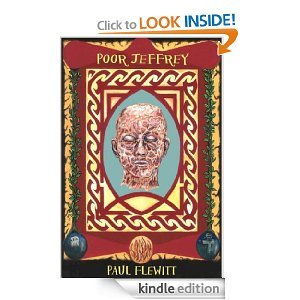
In 2012, he also published his first novel, Poor Jeffrey, which was received to much critical acclaim.

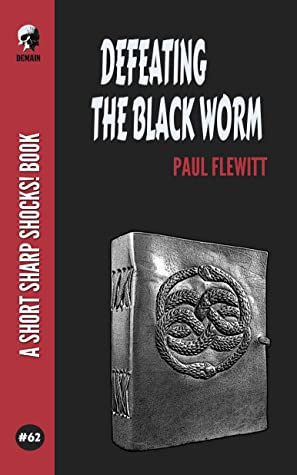
His novelette, Defeating the Black Worm, was released in 2021, through Demain Publishing.

Paul cites writers such as Clive Barker, Stephen King, James Herbert, and JRR Tolkien as inspirations on his own writing.

Paul continues to write, contributing to Matt Shaw’s The Many Deaths of Edgar Allan Poe anthology in 2020 with The Last Horror of Dear Eddie. He also began releasing free short stories and fanfiction on his Wattpad account for fun.