Hello, and Happy Halloween to all the readers of Meghan’s House of Books. Yup, its that time of year again, where Meghan allows me to come here and do a thing. So, I thought I’d have you all sit around the campfire and offer a bit of a short history lesson. Some of you might already know all this, but some might not. Here goes…
Any writer worth his salt is also a historian of the genre they write in. In an effort to understand how the genre works, what makes our writing that suitable for that genre, what the rules were from the outset and how they’ve changed and developed over time. We search with a rabid knowledge-lust to find out exactly where we came from, in a similar way someone might research their familial history.
Horror isn’t any different, especially in a world where the genre is constantly being divided into categories and sub-categories. We go back to move forward, discover where our cues came from and how we can best serve what we’re doing ourselves. By their own admission, Stephen King and Ramsey Campbell would scarcely have been the same writers if not for HP Lovecraft, MR James, and writers of their ilk. So, I thought I’d offer a few thoughts on where I think horror came from, how it developed and who were the main players in its development. Be warned, there’s some left field ideas in here, but its all about the discussion. Disagreement is allowed in any debate.
Where to begin?
Well, I would arguably go back to written works like The Epic of Gilgamesh, Beowulf, and other ancient texts which document mythologies and spoken histories. Are they horror? Well, yes and no. My view is that there are elements of horror in all of them, alongside a heavy dose of fantasy. I would posit the notion that the earliest overt writers of horror did likely look to writings like these, if not those writing specifically, and take some inspiration from some of the stories told there. Remember, this is about finding the primordial ooze which gave rise to horror, and I think this is most likely where it’s to be found. Some of the imagery in these texts is pure horror, and we still use those images today.
Homer’s Illiad is, to my mind, the first real horror story. Like the ancient texts I referenced above, it is as much fantasy as horror, but I find the two genres are inextricably linked in many ways. There are many horrific moments in that work, and many tropes we still see in horror today. There are meek and mild maidens who rise to be badass warriors, there are evil antagonists who creep you out and make you want to see them die in messy ways, and sometimes Homer shows you those deaths. For an ancient Greek philosopher, Homer was definitely a hell of a horror writer.
Taking his cue from Homer, I would cite Dante Aleghieri. The Divine Comedy, and particularly the Inferno section, is truly overt horror. It gives us a view of Hell, and one man’s trip through the seven levels of it. If we have to look hard to find horror DNA in the ancient texts I described, or in Homer, we certainly don’t with Dante. There is beauty in the horrific, and Dante revels in its description. Is he the first true horror master, the grandfather and architect of it all? Well, I’ll leave that for you guys to debate.
Goethe is another one from a little later than Dante. His Faust poem has given rise to the term “faustian,” which is a trope often used in horror. Clive Barker is a great proponent of the faustian pact trope, where a protagonist accepts a gift or an offer, only to be confronted with unforeseen and often horrific consequences. In Goethe’s Faust, the title character makes a pact with Mephistopholes, or Mephisto in some translations, and finds he has actually sold his soul to the devil himself. Is this horror? I’d say so.
Another early writer who often saw beauty in the horrific is William Blake. Alongside his paintings, Blake was a polymath who certainly delved into the darker literary arts. His work is often cited by horror writers as an inspiration.
Which brings us to, quite likely, the more familiar architects. I’ve skimmed through several hundred years of history here, highlighting writers who shaped the future of what would become horror. When we hit the 19th century though, we see a massive shift in sensibilities and matters which suddenly become acceptable to write about. Horror, the supernatural and erotic are no longer the things of taboo they once were, particularly in Britain, where horror and science fiction seem to take root first and strongest.
Robert Louis Stevenson and Mary Shelley are perhaps the first real horror writers we would think of from this period. Stevenson wrote Jekyll and Hyde, which has all the hallmarks of horror and science fiction. There is a psychological element to both, as we witness a descent into madness for the main characters in both those works. For me though, it’s Mary Shelley who truly broke the boundaries and addressed what horror would become later. It’s Shelley who confronted the idea that mankind may really be the monsters. I would ask, is Prometheus really the monster in Frankenstein, or is it the doctor who creates and abandons him? This is the question which horror writers wrangle a lot of the time, whether the monsters in their tales are archetypes for the worst of human traits, or whether mankind truly is portrayed as the monster for their treatment of anything they consider other. For me, Mary Shelley was the true risk taker of this generation, and her work certainly pushed the boundaries of taboo like few others dared.
Moving on to Bram Stoker, and the later 19th century writers. Stoker wrote Dracula, and we know what that one book gave rise to. It’s a franchise before anyone knew what such a thing was. Another taboo breaker, which gave us horror with a hint of the erotic. He provided another element to throw into the primordial ooze of the horror blueprint. I would also cite Lair of the White Worm too, which has elements of Lovecraft’s weird fiction before such a term was ever coined.
Writers which may seem like left field choices here would be Charles Dickens and Arthur Conan Doyle. Although their work is not, in the strictest sense of the word, horror, there are certainly elements to be found in their stories. Hounds of the Baskervilles certainly leans heavily into our world, and Dickens was a great writer of ghost stories which he often incorporated into his studies of life in Victorian London. Both are more than worthy of deeper investigation.
Edgar Allan Poe needs no introduction, and is widely accepted as one of the true architects of modern horror. His poetry and short stories are the inspiration for many modern writers, with such absolute classics as The Pit and the Pendulum, The Masque of the Red Death, The Telltale Heart, Murders in the Rue Morgue, The Fall of the House of Usher, and so many, many more besides. He touched on so many different forms of horror that it’s difficult to argue with anyone who asserts that Poe is among the most important writers of horror we’ve had. I would tend to agree.
In the early to mid-20th century, horror still continued to burgeon. It was, however, branching out from the gothic sensibilities of the previous decades. Writers like HG Wells and Aldous Huxley were writing with a far more futuristic vision, imagining new worlds and visitations from warrior races from other planets. Some would call their writings science fiction, but there is certainly horror in there too. Tell me The War of the Worlds or Brave New World are not both works of horror. Shirley Jackson and MR James flew the flag for gothic horror and ghost at this time. Jackson’s The Haunting of Hill House, a staple which entertained and inspired for generations to come, while MR James’ short ghost stories are a staple diet for many modern writers trying to learn and hone the craft of creating atmosphere. But, the real trailblazer of this time was HP Lovecraft. Totally unappreciated at the time, Lovecraft’s contributions and importance didn’t gain popularity until the 60’s and 70’s, but his ideas have been the springboard for a good many writers since. He’s more than just the Cthulu mythos though. His ghost stories, tales of rats in the walls, and other gothic style stories are absolutely as important as the Old Ones stories.
All of these writers, in some way or another, have shaped horror in the last century. Without each of them, or some combination of them, we would not have had Ramsey Campbell, Robert Bloch, James Herbert, Stephen King, Clive Barker, and the other horror masters who have rightly taken their place in the pantheon in the years since. Horror writers like me look back on these creators in awe of their inspiration, their vision, their bravery to explore ideas which were certainly counter to societal conventions and often considered dangerous or immoral. Without that bravery, none of us would be here.
So, I raise a toast to all of those who went before. All any of us who write can hope for is that we honour their legacy, and keep the flames of their creations alive for the generations to come.
Boo-graphy: Paul Flewitt is a horror and dark fantasy writer from Sheffield, UK, where he lives with his wife and two children.
Paul began publishing in 2012, beginning with the flash fiction story, Smoke, for OzHorrorCon’s Book of the Tribes anthology. He went on to pen further short stories, including Paradise Park, Climbing Out, Apartment 16c and Always Beneath.
In 2012, he also published his first novel, Poor Jeffrey, which was received to much critical acclaim.
Paul continues to write, contributing to Matt Shaw’s The Many Deaths of Edgar Allan Poe anthology in 2020 with The Last Horror of Dear Eddie. He also began releasing free short stories and fanfiction on his Wattpad account for fun.
Meghan: Hi, Paul. Welcome back to Meghan’s HAUNTED House of Books and thank you for being a part of this year’s Halloween Extravaganza. Interesting fact for you: I was looking at post views for all of my Halloween celebrations over the years and I found that YOUR Clive Barker Retrospective in 2019 (Pt 1, Pt 2, Pt 3, Pt 4, Pt 5, Pt 6) has the most views of all GUEST BLOG POSTS in the history of me being a book blogger. Which I find super awesome. I should add that to the trivia next year!! What is your favorite part of Halloween?
Paul: I love getting together with the kids and getting dressed up. For my family and friends, Halloween is a big event. We have friends who have an annual, themed party, so the costumes and themes are planned for months in advance. We’ve done everything from Historic Villains, to Rocky Horror, to Scary Fairytales. It’s a hell of a lot of fun. I absolutely love it. The chance to just get together with my family and friends, have fun and revel in the darkness is amazing. It’s also the one night of the year where I’m not the weirdo, so that’s cool too.
Meghan: Do you get scared easily?
Paul: Not really. Real life scares me far more than anything in books or in movies. For me, horror and Halloween is an escape from all of that crap we see in the news and, largely, have very little control over.
Meghan: What is the scariest movie you’ve ever seen and why?
Paul: Not so much scary, but one I vowed never to watch again was Salo. That movie works on several different levels. It’s disgusting for one thing, but is also very loosely based on true events. There were portions of that movie which made me feel physically sick. It’s certainly one you only ever need to watch once. If you watch horror movies for fun, that one certainly isn’t a good time.
Meghan: Which horror movie murder did you find the most disturbing?
Paul: Again, none really. Personally, I find the deaths in movies like American History X or The Shawshank Redemption to be far more disturbing because they’re there with a point and hit close to home. In horror, they’re mostly set pieces to get from one place to another. They’re like the finishing move in a wrestling match. From that standpoint, I appreciate how well they’re done than actually become disturbed by them.
That said, I think the way they rendered the second death of Georgie Denbrough in the first new It movie was really well done. That was pretty heartbreaking actually, and both the young actors really dug deep for that one.
Meghan: Is there a horror movie you refused to watch because the commercials scared you too much?
Paul: Nah, the only movies I really refused to watch are ones which just look too silly to even be funny. I’m talking about stuff like the Sharknado films, which I just can’t even approach. They have their audience, I’m sure, but I’m not among them.
I will admit though, I had to stop watching The Handmaid’s Tale after a while. That series just cut closer and closer to the bone after a while, and it started making me inordinately angry as I saw governments seemingly taking it as an instruction manual. I really enjoyed the series, but I just had to walk away from it for a while. And really, that has to be a compliment to the writers and actors.
Meghan: If you got trapped in one scary movie, which would you choose?
Paul: Would I want that? Really? I mean, if I had to choose one then it’d probably be the Scream franchise, because the antagonist is crap at his job and I’d have half a chance at survival.
Meghan: If you were stuck as the protagonist in any horror movie, which would you choose?
Paul: Again, why would I want that? Writers tend to enjoy torturing their protagonists, so why would you want to be in that position? Nah, this is one time I will advocate for being the protagonist in some sort of comedy.
Meghan: What is your all-time favorite scary monster or creature of the night?
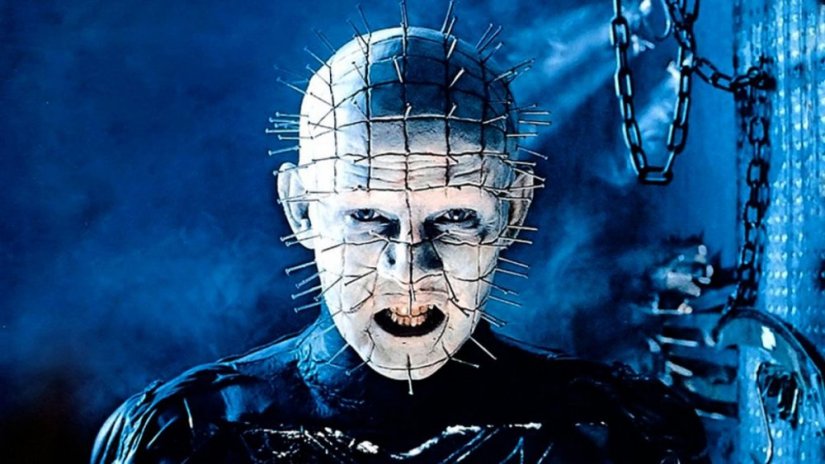
Paul: Everyone who knows me (you included) knows the answer to this one. It’s Pinhead, from the Hellraiser movies. There’s a grace and elegance about that character, especially in the first two or three films. I appreciate that his appearances are used sparingly, and that his speeches are few and far between. He doesn’t say much, but when he does speak there’s usually a profundity in his statements which are breathtaking. That’s something I feel they got wrong as the franchise moved on and away from Barker’s original vision, and he quickly became a cheesy parody of what he was meant to be. Still, we have those first two or three movies.
Meghan: What is your favorite Halloween tradition?
Paul: Well, maybe not an official tradition, but the costume parties at my friends’ house is always the highlight. And, if they don’t happen for whatever reason, then it’s sitting down for a classic movie marathon with the kids, or just reading a good horror story.
Meghan: What is your favorite horror or Halloween-themed song?
Paul: I’m a big lover of horror movie soundtracks, so the first Hellraiser score is on pretty heavy rotation in my house. That, and the Phillip Glass piano music from Candyman. That’s something that Barker always got in his movies – a great score.
Meghan: Which horror novel unsettled you the most?
Paul: A very little-loved Barker novel called Mister B. Gone. As I’ve already said, I don’t really get scared or disturbed by books and movies, but that one I had to put down for a while. There are parts of the book where it’s like it’s talking directly to you. Now, I read it when my daughter was first born, so I wasn’t getting a lot of sleep at the time. So, reading it at the dead of night, with your wife snoring softly beside you, and the book starts threatening your family and describing their deaths. Yeah, that got to me at that point.
Meghan: What is the creepiest thing that’s ever happened while you were alone?
Paul: My wife says I’m a psychic black hole, so creepy things don’t really happen around me. I’ve walked into supposedly haunted places with people who are attuned to that kind of thing, and they say pretty much the same. So, I’ve never experienced anything which couldn’t be explained. It’s quite the disappointment really.
Meghan: Which unsolved mystery fascinates you the most?
Paul: There are a few, and many of them offer inspiration for stories. Particularly though, Jack the Ripper is probably the main one. I do love anything to do with ghost ships, which I find absolutely fascinating.
Meghan: What is the spookiest ghost story that you have ever heard?
Paul: A lot of the stories by MR James, which I’ve just re-read. He really was a master of dark atmosphere, and reading his stuff on a dark night is truly creepy.
Meghan: In a zombie apocalypse, what is your weapon of choice?
Paul: Anyone with a dodgy leg… and my wife. Seriously, hear me out a moment.
So, if you’re being chased by a zombie horde, you’re going to want someone slower than you are, right? It buys you time to get away, so why not keep a person with a dodgy leg around?
And my wife because we recently went to an axe throwing centre and found that she has something of a natural talent for throwing pointy objects at things. So, she is definitely a weapon of choice in any situation.
Meghan: Okay, let’s have some fun… Would you rather get bitten by a vampire or a werewolf?
Paul: A vampire. That would be erotic as hell.
Meghan: Would you rather fight a zombie apocalypse or an alien invasion?
Paul: Tough one. Are we talking traditional, slow zombies, or new style fast ones? If its traditional ones, then I’m taking them bastards all day long.
Meghan: Would you rather drink zombie juice or eat dead bodies from the graveyard?
Paul: Erm… neither sound particularly appetizing. Can I just stick with a JD, or a nice glass of red wine please?
Meghan: Would you rather stay at the Poltergeist house or the Amityville house for a week?
Paul: Oooh, neither of those, because we have our own version of that here in the UK. I’d stay there in a heartbeat, and take my pad and pen with me.
Meghan: Would you rather chew on a bitter melon with chilies or maggot-infested cheese?
Paul: Well, there’s a lot of protein in them maggots, you know?
Meghan: Would you rather drink from a witch’s cauldron or lick cotton candy made of spider webs?
Paul: Did you say cotton candy? I do like me some cotton candy …
Boo-graphy: Paul Flewitt is a horror and dark fantasy writer from Sheffield, UK, where he lives with his wife and two children.
Paul began publishing in 2012, beginning with the flash fiction story, Smoke, for OzHorrorCon’s Book of the Tribes anthology. He went on to pen further short stories, including Paradise Park, Climbing Out, Apartment 16c and Always Beneath.
In 2012, he also published his first novel, Poor Jeffrey, which was received to much critical acclaim.
Paul continues to write, contributing to Matt Shaw’s The Many Deaths of Edgar Allan Poe anthology in 2020 with The Last Horror of Dear Eddie. He also began releasing free short stories and fanfiction on his Wattpad account for fun.
Happy Halloween, folks! This is our time of year, right?
Well, unless we live Halloween all year round. I guess many of us do, and just welcome people to the party when the festive period rolls around. It’s a thing. We’re the weirdos, right?
Halloween is the period when blogs everywhere want to talk to the horror writers, whether they generally cover horror or not. I guess they have to wheel out the macabre ones when the nights get dark and the ghosts come out to play. Most of them ask similar questions, and there are two that are asked most often.
Why do you write horror?
Where do the ideas come from?
So, I thought I’d address them in somewhat longer form here. Why not?
I suppose the reasons for writing horror are similar ones to why we read horror. It excites us, awakens some primal part of ourselves. There’s a frisson of delight we get from being made uneasy in books, and the great thing is that we can always close the book if we want some relief. It’s like a rollercoaster; we’re exhilarated for the duration of the ride, but we know we’re getting off in a minute. It’s tapping into something that gets the pulse racing, the endorphins pumping and the adrenaline flowing. Oh, and the stories are entertaining too.
Writers are no different, and we seek that same exhilaration when we create our stories. You know that pulse racing? Yeah, we get that when we write too.
There are some scenes in stories that take us unawares; they just seem to creep out of the pen unbidden. We sit back when we’re done writing them and think “what the hell is wrong with me,” closely followed by: “Its damned cool though.”
Those are the moments we’re looking for, and they’re not always planned.
That’s one reason we write horror; to fulfill something in our primal selves and pour it out into the world.
Of course, there’s an element of catharsis there too. If we’ve had a bad day, then we know we can sit down and write a brutal death scene. Releasing that negative emotion is a good, healthy thing.
I don’t think there’s a psychological marker for horror writers. I know, when I was young, I pictured horror writers to be a certain way. I kind of imagined them all to be somewhat gothic, long hair and black clothes.
Then, I saw Stephen King for the first time.
We can be anyone, and that’s a cool thing. Horror speaks to all people, if they feel the need to embrace it. Horror writers aren’t all devil-worshipping, vestal virgin sacrificing freaks, or I just didn’t get invited to those parties yet. Pretty much all the horror writers I know are the funniest, kindest and most sensitive people I know, and I think that’s why they’re able to write horror. Most of us feel very keenly, and are very in touch with our emotions. If we understand how we feel, then we know how to convey emotions … and fears. That’s also a very cool thing.
So, where do the ideas come from?
Something funny happened when I released my first novel; my mum read it … and asked if it was her fault. Was it something she’d done? She was utterly serious, and I found the question completely hilarious. Actually, the idea behind that first novel was born out of a joke between me, my editor and a beta reader. But, I digress.
I don’t think this is a question limited just to horror. Every writer is asked where the ideas come from, and if they dry up. I think the answer is pretty simple; we always ask, “what if?”
We can be walking by a piece of architecture, an interesting quirk in the landscape, or pretty much anything and ask, “what if?” To me, it’s one of the most important questions in the world, and one we seek to answer. I think the most pertinent question is this though: “why do the answers have a spooky outcome with horror writers?”
Well, because that’s what we like. We see the spooky because spooky is cool. My wife will look at a beautiful view in the countryside and comment on its beauty, whereas I will look at it and say, “what if there’s a monster in those hills? What if that village is home to a demon-worshipping cult? What if?”
And the reaction is always satisfying. And that’s it, in a nutshell.
Yes, people of the page; we’re looking for a reaction. Whether that’s delight, disgust, fear, dismay, or the plethora of other reactions we can expect from a horror story, we’re just looking for that reaction.
Silence is fucking scary, after all.
Boo-graphy: Paul Flewitt was born and raised in Sheffield, Yorkshire where he still lives with his family. He is the father of two children and keeper of several beta reading demons
Paul spends his time caring for his children and devotes much of his free time to writing his next works. He writes only for the thrill of scaring his readers in new and inventive ways.
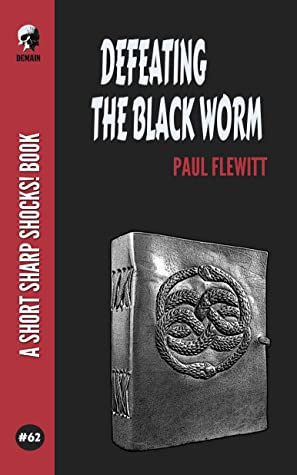
Matthew had fallen so far, so quickly. The anxiety and panic had overcome him suddenly, and he couldn’t find a way back. In desperation, he sought solace in doctors and psychiatrists, but no-one could (or would!) help him. He loses everything to the hunger and appetites of the Black Worm.
But then, at his lowest point, and with nothing left, Matthew finds aid in the most unexpected of places…
Meghan: Hey Paul. Welcome to this year’s Halloween Extravaganza. Thanks so much for coming back again this year. What is your favorite part of Halloween?
Paul: I love the atmosphere around Halloween. The misty nights, the weather getting cooler and the leaves falling … it’s the stuff horror movies and books are made from. Here in the UK, it’s the beginning of a pretty fun couple of weeks: we have Halloween, then we have Bonfire Night (celebrating Guy Fawkes) the week after. It really is great time of year.
Meghan: What is your favorite Halloween tradition?
Paul: I really enjoy dressing up, and friends of ours tend to have costume parties for Halloween. I’m not really big on Halloweening, but the dressing up and having fun with character is just so much fun. It’s a time when I can really let my inner-cosplayer emerge.
Meghan: If Halloween is your favorite holiday (or even second favorite holiday), why?
Paul: Why would it not be? It’s much more fun than Christmas or Easter, and can be done without spending much money. It’s a great way of having fun with family and friends, and you really get to know your neighbours around Halloween. If they don’t embrace the dark season, then are they really worth your time?
Meghan: What are you superstitious about?
Paul: Nothing really. For a horror writer, I don’t really go in for the mystical. It’s really boring, and really rational, but I just never got people who were scared of black cats, refuse to walk under ladders or saw bad luck omens in every quirk or accident. That really comes from my Dad, who was always pretty rational too.
Meghan: What/who is your favorite horror monster or villain?
Paul: Pinhead, from the Hellraiser universe. He is the most articulate, eloquent character in the whole of horror. I like it when he doesn’t say much in a movie, but when he does speak it has real substance and gravitas. He’s almost regal, almost sympathetic to his victims. He explains exactly why he’s there, and exactly what he’s going to do to you. It’s your fault, you invited this, and this is the consequence. What gets any better than that?
Meghan: Which unsolved murder fascinates you the most?
Paul: Oh, there are many. I suppose a lot of horror writers are fascinated by murderers who got away with their crimes; how they did it, where they went, who they were … it’s really an intriguing area to research. I mean, Jack the Ripper’s murders are probably most people’s favourite, simply because he’s never been identified, but there are so many possibilities. There’s endless scope for speculation, and it all happened at a really emotive time in British history too. Victorian London will always be a time we remember in many different ways, as portrayed by Dickens, Conan Doyle and Shelley. We can easily identify with his victims too, when you look at their stories and discover who they were. Those times and places are evoked and encapsulated in many of the early works of horror, so Jack definitely fits right in there.
Meghan: Which urban legend scares you the most?
Paul: None of them scare me per se, but some of them do fascinate me. I love the foundations of these kinds of legends, finding out where they came from and how they evolved over time. Essentially, they are the modern version of the tales told in mediaeval times around the campfire, which eventually were collected in Chaucer’s Canterbury Tales. They really are a great call back to former times, and I’m all there for it.
Meghan: Who is your favorite serial killer and why?
Paul: As above, it would be Jack the Ripper for the reasons I set out there. I mean, the serial killers we know about, we know about. We know their psychology, their motivations and what drove them. We know nothing about Jack the Ripper, but we can track him down and seek to find some closure on those deaths.
Meghan: How old were you when you saw your first horror movie? How old were you when you read your first horror book?
Paul: I’m not even sure about that. I guess it would be one of the old Hammer Horrors, or maybe one of the classic horrors. When I was a kid, black and white equaled boring, but there is definitely something primal about the images of Bela Lugosi or Boris Karloff as Dracula and Frankenstein. Those characters really stuck in my mind.
I loved the Hammers, because they seemed to be played with tongue firmly in cheek. They were making low budget movies, the scripts were sometimes terrible, but they knew it. Some of them were so terrible that they went straight back around to being genius again, and they gave us Christopher Lee, Peter Cushing and Bernard Cribbins. What’s not to love?
Meghan: Which horror novel unsettled you the most?
Paul: I don’t think any horror novel has truly unsettled me. Some have engaged me deeply, and I’ve enjoyed the imagery evoked by them, but none have really triggered any extreme reaction. Why? Because you can put them down. That’s the beauty of horror.
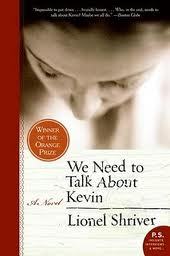
Now, if you asked me about a book that unsettled me, I would cite A Child Called It, which is a true story of the author’s abuse at the hands of his mother. Now, that story is truly affecting, and you need to read it cover to cover, in the hope that there is closure at the end. In the fiction world, I found We Need To Talk About Kevin to be similar in the emotions that book evoked.
Meghan: Which horror movie scarred you for life?
Paul: Not a horror movie exactly, but Pink Floyd’s The Wall movie screwed me up. The imagery and symbolism in the film was really affecting; from the visions of riots, to schools making clones of us all, to kids being put through a giant mincer … it was just one thing after another in that thing. It never let up, from beginning to end. Yeah, that thing still gets me after all this time.
Meghan: What is your favorite Halloween costume?
Paul: I told you about friends who have costume parties at Halloween, and one year we really hit it out of the park. The theme was an evil twist on fairy tales, and so my wife decided to do Alice in Wonderland. Oh, it was great. My wife was Alice, my son was the Cheshire Cat, my daughter was the Red Queen (I think??) and I was the Bad, Mad Hatter. My wife really went to town making that costume, and I even had miniature bottles of liquor that were labelled up with “Bigger,” “Smaller,” “Wiser,” etc. That was an awesome one, and it must be reprised sometime.
Meghan: What is your favorite Halloween-themed song?
Paul: Pfft, tough one. I mean, I really like horror movie soundtracks around Halloween, and I generally have them playing in the background when kids come to call around on the night. It’s great, slowly answering the door in the darkness, with the Hellraiser soundtrack playing behind me.
Meghan: What is your favorite Halloween candy or treat? What is your most disappointing?
Paul: I’m not a big fan of sweets, so I leave that to the kids. It also saves disappointment, so it’s a win-win for me.
Boo-graphy: Paul Flewitt was born and raised in Sheffield, Yorkshire where he still lives with his family. He is the father of two children and keeper of several beta reading demons
Paul spends his time caring for his children and devotes much of his free time to writing his next works. He writes only for the thrill of scaring his readers in new and inventive ways.
Matthew had fallen so far, so quickly. The anxiety and panic had overcome him suddenly, and he couldn’t find a way back. In desperation, he sought solace in doctors and psychiatrists, but no-one could (or would!) help him. He loses everything to the hunger and appetites of the Black Worm.
But then, at his lowest point, and with nothing left, Matthew finds aid in the most unexpected of places…
Meghan: Hi, Paul. It’s a pleasure to have you here today. Welcome to Meghan’s House of Books. Tell us a little bit about yourself.
Paul Flewitt: First and foremost, thanks for hosting me on your blog. It’s great to be here.
I’m Paul Flewitt, and I’m a horror and dark fantasy writer (why does that always sound like an AA meeting intro?)
I live in Sheffield, UK, am married to a wonderful wife and have two amazing children. I love rock music, playing pool and hanging with friends. I guess I’m just a normal guy… I just have a bit of a screwed up imagination… honest.
Meghan: What are five things most people don’t know about you?
Paul Flewitt: Wow. Five things people don’t know about me?
These questions are always kinda difficult, because I tend to be a pretty open and honest person (probably sometimes too much so,) so its pretty hard to think of anything anyone might not have already heard. So, I’ll endeavor to try.
I was raised as a Jehovah’s Witness, and reading the bible at a young age has sometimes coloured the stuff I write, whether that be the lunatic preacher in my first novel or the demon, Jezriel, from my short story, Climbing Out.
I have never broken a bone in my body, but that is probably more by luck than management.
People often think I’m an unfeeling asshole, but I’m actually pretty sensitive and if people are hurting, I hurt too.
I recently was diagnosed as suffering from acute anxiety, which is something I battle every day.
I am a complete technophobe. If I need to figure anything technological, I need my wife to hold my hand and go in first.
Meghan: What is the first book you remember reading?
Paul Flewitt: That’s another tough one because I remember reading from a very young age. My Dad was an avid reader and encouraged me to read everything, almost as soon as I could talk. Probably the first book I can remember is a collection of children’s fairytales and poetry. I can’t remember its title, but I read “There Was a Crooked Man” over and over. That is one that sticks in my mind along with Enid Blyton’s Famous Five stories and Beatrix Potter’s Peter Rabbit books. I’m sure there are other books and stories that I read as a kid, but those are the ones that really stick in my mind.
Meghan: What are you reading now?
Paul Flewitt: I’m re-reading Clive Barker’s Abarat books. They are the only books by him that I haven’t read repeatedly, so I am putting that right. I’ve also been on a bit of a secret society kick lately, so I’ve been reading a lot of books about The Priory of Scion, The Illuminati, The Freemasons, and Rosicrucians. It’s not that I believe in their theology or theories, but the way they are formed and the psychology involved in their membership is interesting to me.
Meghan: What’s a book you really enjoyed that others wouldn’t expect you to have liked?
Paul Flewitt: I’m sure there are plenty. I read pretty much everything I can get my hands on, so nothing should really come as a surprise. I suppose people might be surprised to learn that I enjoy Bernard Cornwell books; his Sharpe series and Last Kingdom books are phenomenal. I like Ellis Peters’ Cadphael books and Brian Jacques’ Redwall stories too. I have no problem reading kids’ books, YA books, historical fiction or pretty much anything else. I appreciate well written stories, no matter who they’re aimed at.
Meghan: What made you decide you want to write? When did you begin writing?
Peter Flewitt: This is another “It was Dad’s fault” questions I’m afraid.
My Dad was a hobbyist writer and poet as well as a voracious reader, so I suppose it was inevitable that he would encourage my brothers, sister and I to try our hands at it. I always had a natural ability with words and telling stories, so I always have done it to one extent or another. I enjoyed it when my English teacher set us a creative writing assignment and I could let loose with my imagination. Often I would rush through work in lessons so that I could just write a story or a poem, which my teachers would allow me to do. So, I have always written to some degree, for as long as I can remember.
As far as writing for print, I was out of work for a while during the last global financial crisis and my wife got sick of me rattling around the house while looking for a job. The job market where I live was awful at the time and I was really struggling, so my wife suggested I write something and see if I could get published. I didn’t really take it seriously, but I did as she suggested and wrote a couple of short stories. I joined an online writing group, which is where I met my editor. She read what I’d written and encouraged me to submit them for publishing. I did that and both were accepted; one was turned into my first novel. Because of those acceptances, my wife gave me a year to work at it and see what became of writing, and I haven’t been back to a day job since. I’ll be honest, I’ve been really lucky.
Meghan: Do you have a special place you like to write?
Paul Flewitt: Not really. I mean, I can’t seem to write in public so cafes and parks aren’t really an option; I get too easily distracted by stuff going on around me. I just sit on the sofa or at my desk with a pen and paper and scribble away until I have something. Pretty boring really… sorry!
Meghan: Do you have any quirks or processes that you go through when you write?
Paul Flewitt: Again, not really. I think possibly the quirkiest thing about my process is that I write all first drafts longhand. In this day and age of laptop computers, tablets and technology I notice less and less writers actually sit with a pen and paper and write, but to me that is where the magic is. I find I can flow better if I write longhand and watch the ink melting into the page. Yes, it is slower progress, but the final results are much better for me.
Meghan: Is there anything about writing you find most challenging?
Paul Flewitt: There are many things about writing that I find challenging. Finishing a story is probably the main thing. I am my own harshest critic, and I have so many manuscripts languishing in a box unfinished because I lost the thread, because the quality of the story dipped or I just lost faith in the story. I call it “writer dysmorphia,” where you look at everything you write and decide it’s the worst thing in the world and you’re kidding yourself if you ever thought you were any good. I’ve spoken to a lot of writers, and many of them have the same thing. It’s something you just have to push through and ignore.
Meghan: What’s the most satisfying thing you’ve written so far?
Paul Flewitt: I guess the politically correct answer to this would be my novel, Poor Jeffrey, or the thing I am currently writing. Instead, for me, it is a short story I wrote for Dean M. Drinkel’s Demonology anthology. I wrote a thing called Climbing Out, which was the story of a Nephilim escaping Hell and recounting his story as he literally climbed out of the Pit. For me, it’s a story that is the closest I have come yet to being the writer that I want to be.
Meghan: What books have most inspired you? Who are some authors that have inspired your writing style?
Paul Flewitt: There are so many, for many reasons. You know those books that you read and don’t want to end? The ones where you reach the end of the story and are disappointed to the point of grief because you have to leave the world that the writer has created? That is the kind of thing that I want to write. Those are the writers that I hold as my benchmarks for success. The first book that got me like that was Tolkien’s Lord of the Rings. I felt at home in Middle Earth and I loved the people that inhabited it, and I never wanted to leave. Clive Barker has written many books that filled me with that feeling: Imajica, The Great and Secret Show, Cabal, Everville, Galilee. Barker is my favourite writer, and his work really speaks my language. At a time when I was getting a little jaded by horror books, Barker came along and lit a fire under my ass, so he will always be my guy.
I never set out to write like anyone except myself, but reviewers have often likened my style to Clive Barker and Stephen King, which shocked me a little. Given that they are two of my favourites, I guess it shouldn’t be a surprise that people hear echoes of their voices in my own.
Meghan: What do you think makes a good story?
Paul Flewitt: For me, it’s making the unbelievable believable. If you can convince the reader that the fantasy that you’re creating is feasible, then they will follow you pretty much anywhere. Your characters, situations, world that you create have to be relatable to the reader, and then they’ll engage. Make the characters likeable, hateable, repulsive or loveable as you wish, but make the reader believe.
If a book leaves me with a sense that this weird, wacky and sometimes terrifying stuff could actually happen, that is when I know that it’s a good book. You get extra points if it leaves me looking over my shoulder for the antagonist to strike.
Meghan: What does it take for you to love a character? How do you utilize that when creating your characters?
Paul Flewitt: Again, it’s about believability and relatability. If you see something of yourself in a character, then you can live vicariously through their written experience. All of the characters I write have characteristics that I have seen in someone I’ve met or walked past in the street. That’s not to say that I write friends and people I know into my books, I don’t. All my characters are composites of a lot of people and none, so if anyone sees themselves in my characters, it says more about you than me. Its about writing humanity in a way that can strike people as familiar.
Meghan: Which, of all your characters, do you think is the most like you?
Paul Flewitt: None of them really. Again, I don’t go out of my way to make my characters like anyone I know… not even myself. I mean, of course there will be echoes of me in all of the characters that I write. I am the writer and all of them come from me, so it would be weird if there wasn’t something of me in all of them… even the worst of them, but only an echo and nothing more.
Meghan: Are you turned off by a bad cover? To what degree were you involved in creating your book covers?
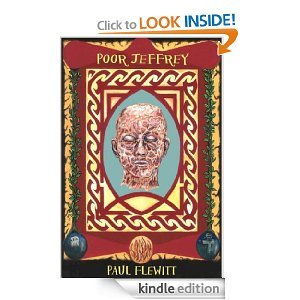
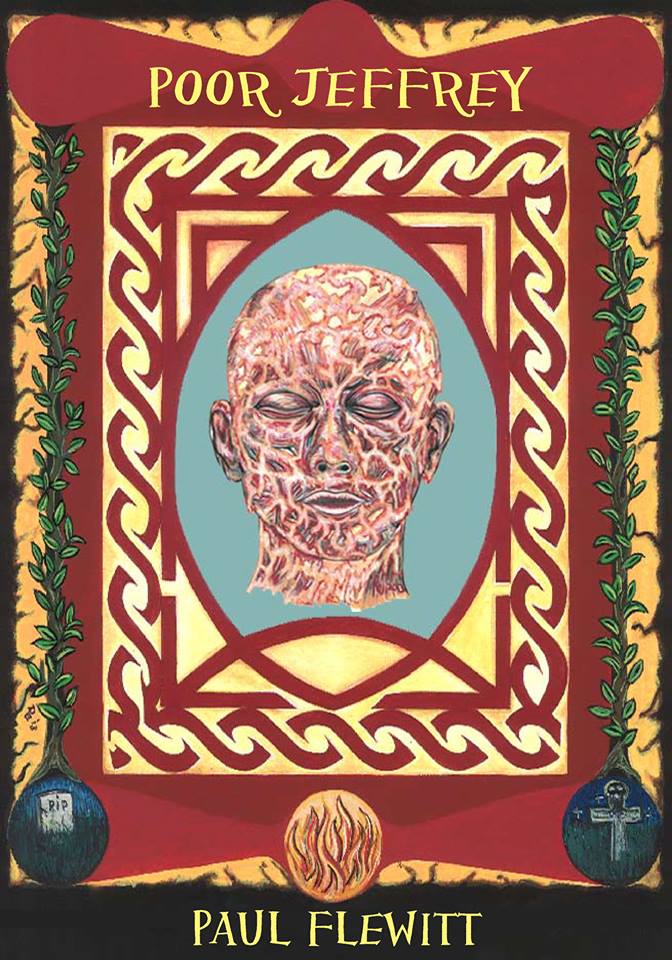
Paul Flewitt: If its truly awful, I can be. I feel that, if you have no regard for the presentation of the cover, then there won’t be any regard for the story either. The cover is the first thing you see, and it has to be representative of the story within. With Poor Jeffrey I was very hands on with the creation of the cover. I gave Richard a very clear brief on what I wanted and he hit it out of the park, I have to say. It also has the advantage of being a real work of art which hangs in his studio. I will always insist on having a good deal of input into the cover art for my books. It has my name on it; it represents me and my work so it has to be right. I hope that doesn’t make me sound like too much of a diva hahaha.
Meghan: What have you learned creating your books?
Paul Flewitt: Many things about the industry, clearly. As a newbie writer, I had no idea that writing only comprises about ten percent of a writer’s time. I had no idea about promotion, blogging, and the amount of work that needs to be done away from the pen and paper. Really, publishing has been an eye-opener into what actually has to go into the production of a book. The great thing is that you never really stop learning.
Meghan: What has been the hardest scene for you to write so far?
Paul Flewitt: There have been a couple that were difficult for different reasons. The first would be one I call “The Mute Girl” scene from Poor Jeffrey. People that have read the book have highlighted it as a particularly hard hitting portion of the book, and I very nearly didn’t put it in because I wondered how it would be received. In the end, it went in because it was a scene that gave an insight into the mind of my antagonist, but it was a difficult one to write and edit.
The other one comes from a story I wrote for a pitched TV show called Fragments of Fear. My contribution was called Silent Invader, and dealt with a demon which haunts television and makes people commit atrocity. One of the scenes involves a mother murdering her children and her husband, which was another one that I struggled to write and very nearly didn’t put in.
Funny that both scenes are ones which involve violence against children… which probably says a lot about me.
Meghan: What makes your books different from others out there in this genre?
Paul Flewitt: I wrote them hahaha. Seriously, this is a question I always struggle with because I don’t really analyse my stuff too closely. I suppose one difference is that I’m not trying too hard to be different. I just want to tell good stories, and if people see something different about them then that’s cool. I don’t go all out on gore, trying more to write characters that readers become invested in so that the situations they find themselves in become the horror, not the amount of blood that gets splashed around. One criticism that I have of some modern writers is that they go all out for shock value or disgust value, which is okay for them and they’ve got an audience for that kind of story. More power to them. Its just not the kind of story that I want to write. I want to write more in the classic mould, but for the modern era.
Meghan: How important is the book title, how hard is it to choose the best one, and how did you choose yours (of course, with no spoilers)?
Paul Flewitt: I cheat. I come up with the title first, and everything flows from there. Okay, that’s not strictly true. I come up with a character first, and start to build the story about that character, and then I come up with the title. It tends to come pretty soon after beginning the story and the first one I come up with tends to be the one I go with.
Of course the title is all important, because it’s the thing that attracts the reader after the cover (assuming people are finding your work while browsing the shelves, whether physical or cyber.) It has to draw people in and intrigue, like a tag line or blurb.
How do I find the title? It’s a mystery even to me. It tends to be a phrase which seems to speak to the story and pops.
Meghan: What makes you feel more fulfilled: Writing a novel or writing a short story?
Paul Flewitt: Both, for different reasons. Short stories can be just as much a challenge as longer work, because you have to tell a complete story in a short space of time. You have to be disciplined and concise. You can’t introduce a character or side story just because it pops up and seems worthy of exploration like you can in a novel. The sense of achievement you get from a short story is just as fulfilling as a four-hundred page novel.
Conversely, a novel is a real commitment and a slog. It can represent years of work to get to the point of editing. That’s a lot of a person’s life to commit to a project. It’s a different kind of fulfillment, but still very profound.
Meghan: Tell us a little bit about your books, your target audience, and what you would like readers to take away from your stories.
Paul Flewitt: My stories are classic horror/dark fantasy of the 70’s and 80’s. As I’ve said previously, reviewers liken my stuff to Clive Barker and Stephen King and that is a quality that I have come to embrace after years of denial hahaha. If you like that kind of stuff, then there’s a good chance that you’ll like my work. I’ve written mostly short stories in anthologies, but they are all pretty easy to find on Amazon, as is my debut novel, Poor Jeffrey. I hope what people take away from my work is that they’ve experienced a good story. My ambition is to entertain people for a time, to take them away from the rigors of their lives for a time and offered a means of escape. If my stories achieve that for someone, then I’m a happy chappy.
Meghan: Can you tell us about some of the deleted scenes/stuff that got left out of your work?
Paul Flewitt: God no! No no no! If they didn’t make it into the book, then there’s a bloody good reason for that. Those scenes are consigned to the fiery pits of literary hell, never to be spoken of or recounted. Or… they might find their way into another story sometime… who knows?
Meghan: What is in your “trunk”?
Paul Flewitt: Oh, I have several. I have a box full of manuscripts that have been abandoned because I lost the thread of them, and some of them have real potential. I delve into the box and pull out some of them every now and then, tickling at them to see if I can spark anything. There is a dark love story in there about a witch and a young guy, loosely based on the song Maggie May which has a lot of promise if I can ever get it right. There’s one called Architecture, which is a horror story about the homeless and also has a lot of promise. Another is called The Family Jeraboam, which was intended as a short story for Steve Dillon’s Refuge Collection, but kept on growing and became something quite different, and perhaps the most Barkerian thing I’ve ever written. All of them will see the light of day at some time.
Meghan: What can we expect from you in the future?
Meghan: In the nearer future will be the first book in an intended trilogy: False Prophet. The finished book is with my editor, and has been for some time now. That’s an ambitious project that I’ve been playing with for three years, and is the reason that I haven’t released anything in quite a while. I have tried to concentrate on producing longer works instead of short stories. My issue is that I enjoy writing for anthologies to a brief, and I forgot how to say no for a while there.
After Prophet, I am currently working on a second book in the Poor Jeffrey world. People have been asking about it for some time, and I’ve been enjoying exploring those characters again. The sequel is tentatively titled The Last Testament of Del Foster, and is very much a sequel and a building of the themes from the first book.
I’ve also started writing the follow-up to Prophet, but that will take some time to complete because of the level of ambition in there. Its truly epic and calls on my love of Tolkien, epic Clive Barker, and Stephen Donaldson.
In short, you’ll be sick of seeing my face in the future. I have a lot to do.
Meghan: Do you have any closing words for your fans or anything you’d like to say that we didn’t get to cover in this interview?
Paul Flewitt: Just to say thank you for having me on Meghan’s House of Books, and thanks to the readers out there who have read my stuff and shown patience while I get my head around these longer works. I know they’ve been a long time coming, but they are indeed coming. I’ll catch you all later!
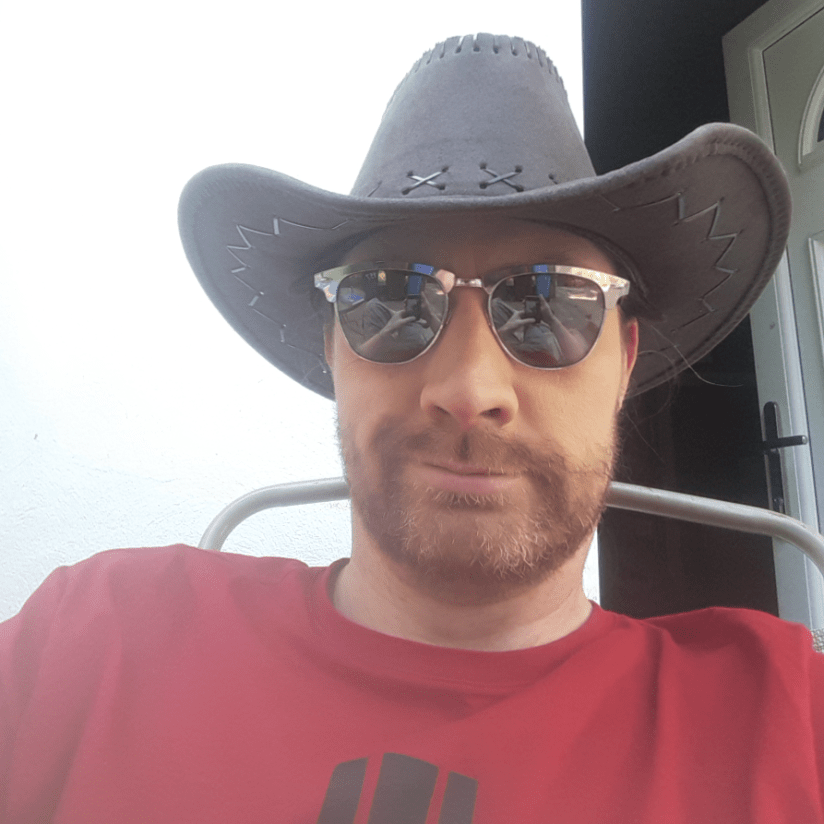
My beautiful picture
Paul Flewitt is a horror/dark fantasy author. He was born on the 24th April 1982 in the Yorkshire city of Sheffield.
Always an avid reader, Paul put pen to paper for the first time in 1999 and came very close to inking a deal with a small press. Due to circumstances unforeseen, this work has never been released, but it did give Paul a drive to achieve within the arts.
In the early 2000’s, Paul concentrated on music; writing song lyrics for his brother and his own bands. Paul was lead singer in a few rock bands during this time and still garners inspiration from music to this day. Paul gave up his musical aspirations in 2009.
In late 2012, Paul became unemployed and decided to make a serious attempt to make a name for himself as a writer. He went to work, penning several short stories and even dusting off the manuscript that had almost been published over a decade earlier. His efforts culminated in his first work being published in mid-2013, the flash fiction piece “Smoke” can be found in OzHorrorCon’s Book of the Tribes: A Tribute To Clive Barker’s Nightbreed.
In 2015 Paul contributed to two further anthologies: Demonology (Climbing Out) from Lycopolis Press and Behind Closed Doors (Apartment 16c) with fellow authors Matt Shaw, Michael Bray, Stuart Keane, and more.In 2016, Paul wrote the monologue, The Silent Invader, for a pitch TV series entitled Fragments of Fear. The resulting episode can be viewed now on YouTube, but the show was never aired. The text for the monologue was published in Matt Shaw’s Masters Of Horror anthology in 2017.
Paul continues to work on further material.
He remains in Sheffield, where he lives with his partner and two children. He consorts with his beta reading demons on a daily basis.
You can find more information on Paul Flewitt and his works here…
Grief drives people to extreme behaviour, and when Poor Jeffrey Kinsey is killed his friends go to some extreme lengths to bring him back… sometimes the magic works.
When Cal Denver comes to town and girls start to disappear, only to be found half eaten by an unidentifiable creature; some townsfolk will panic and flee… others will get angry or go insane.
For Tommy, Jade and Chloe the next few weeks will make them or break them… and a story begins…
Poor Jeffrey; he never wanted death to be this way…








 Meghan's House of Books