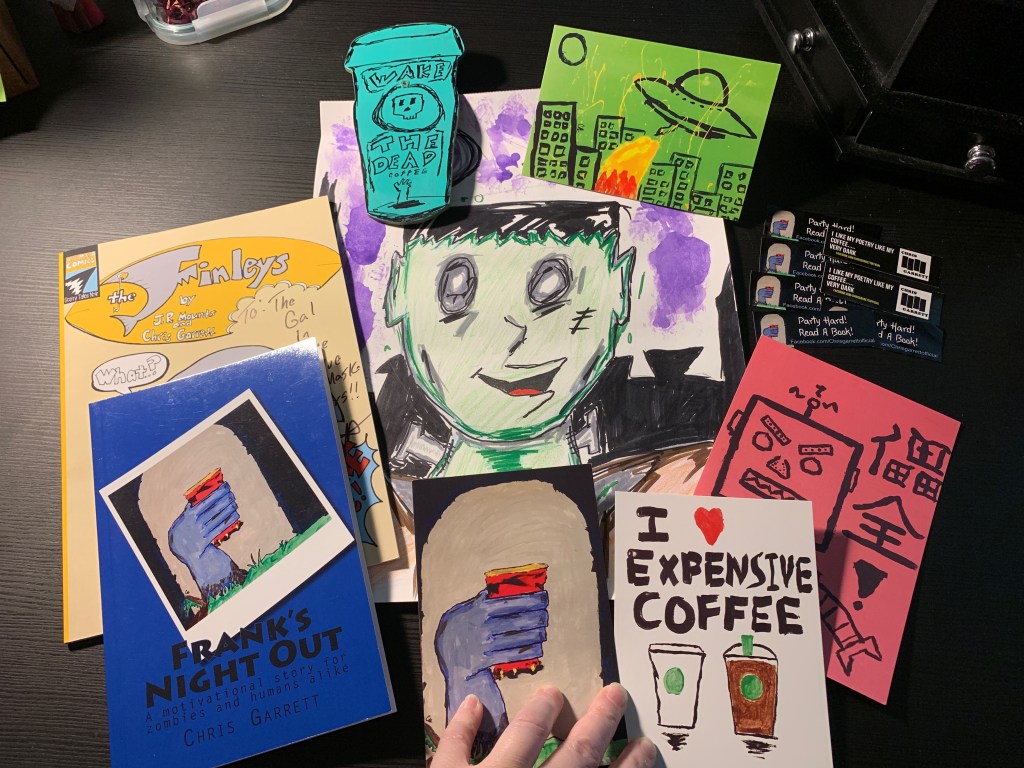
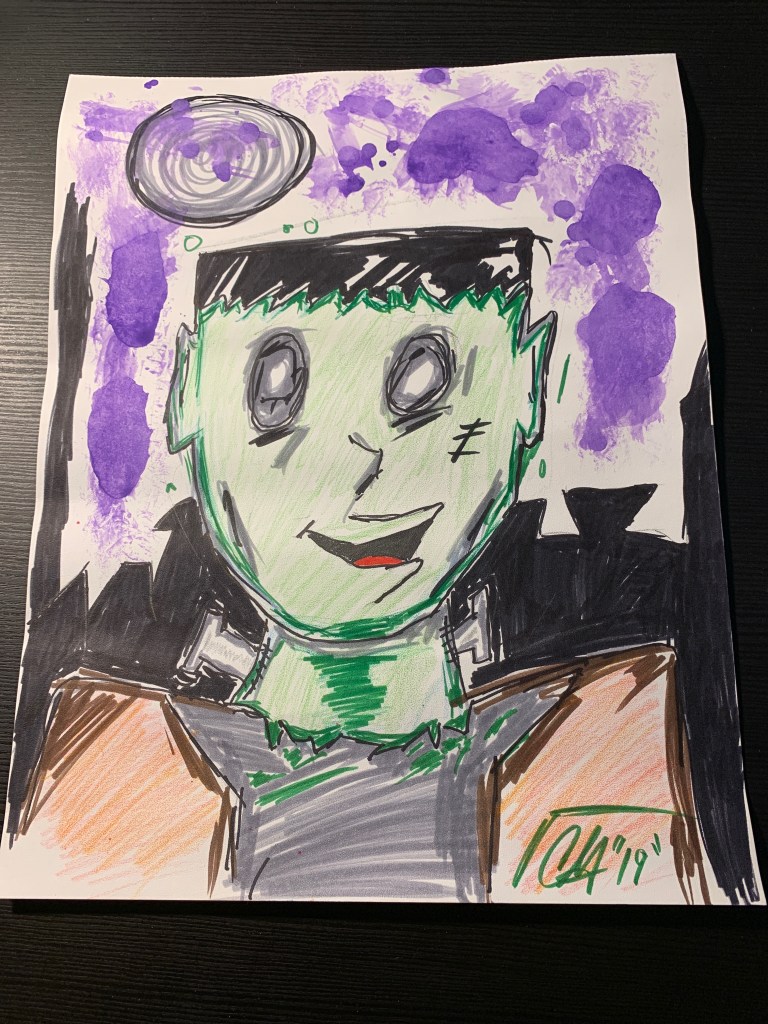
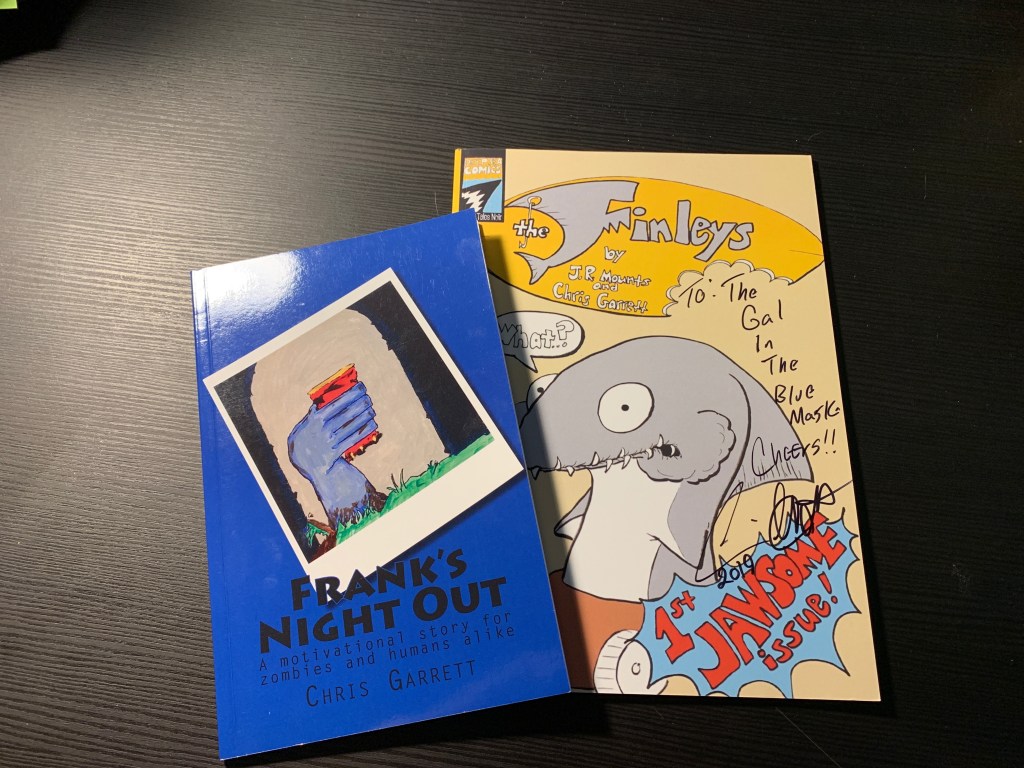
I was first introduced to Chris Garrett’s work a couple of years ago when I read his The Stupid Nerdy Notebook Vol 1-3 and not only found a super talented guy (both artistically and verbally) but also found someone I am proud to call my friend. Since then, he’s done some comic books, chap books, and drawn some awful good pictures, one of which I have purchased to hang in my office.
When he asked me if he could make a video for this, well, how could I refuse?
2004 was a stupid year for me. At the time there wasn’t a lot of publishing options for independent writers. Major publishers had a requirements and deadlines for new entries and were very limited to the writers they brought in. Self publishers during that period weren’t offering any free tools for publishing and the starting price was around $500. I was only a senior in high school and already decided that sharing my writing with the world was going to cost me a fortune. So I buried the idea. NOW I’m older, fatter, and just a little bit smarter. I’m glad I waited because there was so much more for me to write. And I stand before you today with 3 volumes of some of my most beloved memories, sticky situations, and just pure anger ventilation. It calmed my nerves to write how I felt and felt better in the long run because of that. And not only are there 3 volumes but heard them into one book like cattle and call it a collection!!!!
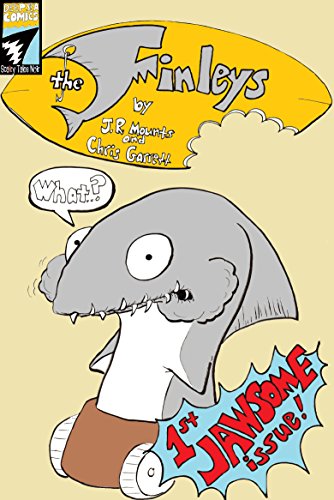
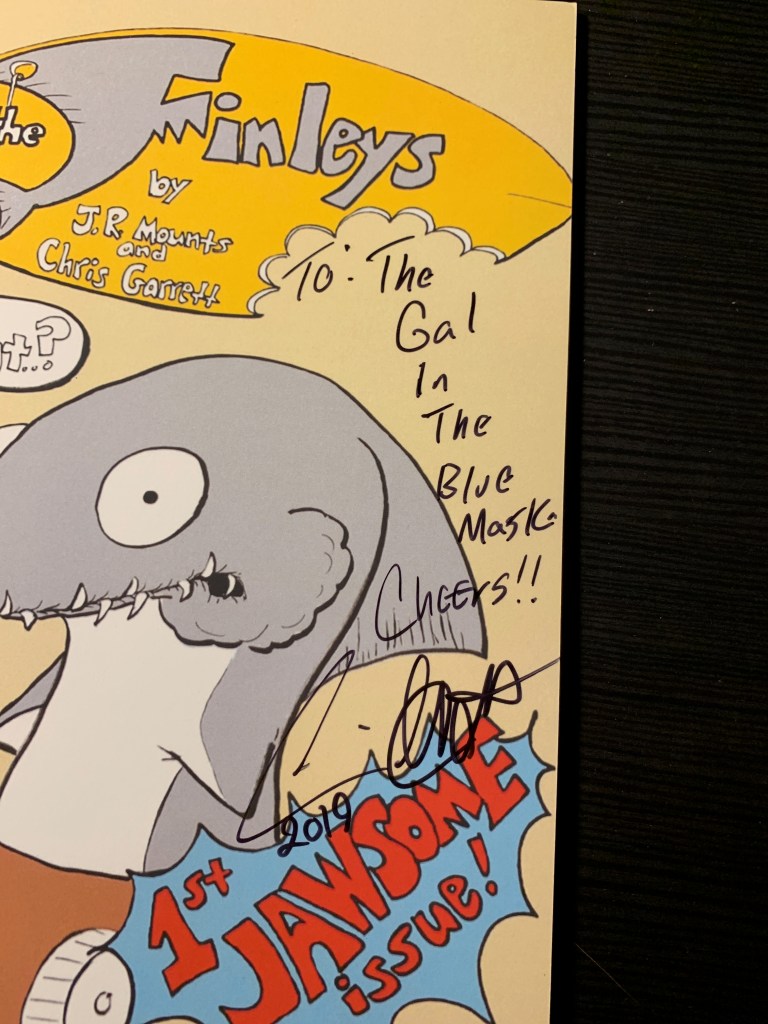
Cursed to live in chum buckets, The Finleys are a rare breed of half sharks that live among human society (because half a shark can’t swim!) Follow their “tails” in the strange and mysterious town of BERMUDA!!
Join the Finley Family as they make their “wave” through the world. It is summer and the Bucket Sharks are officially on vacation. But where to? And why? find out in Issue 2!!
Meghan: Hi, Ramsey! It’s great to have you here today. Thank you for agreeing to take part in my sixth annual Halloween extravaganza. Tell us a little bit about yourself.
Ramsey Campbell: I write horror, and have for more than half a century. For me writing is a compulsion, driven by the pressure of untold tales and unwritten prose. Jenny is my first reader, partly because she’s among the few who can read my handwriting. She’s also the best part of me, and we’ve been together for nearly fifty years.
Meghan: What are five things most people don’t know about you?
Ramsey Campbell: If you ask me my favourite composer I’ll immediately say Beethoven, only to feel that Johann Sebastian Bach is equally essential. My favourite film is probably Letter from an Unknown Woman. Over the years I’ve often listed ten favourites, but while the list changes, it has never included a horror film – they’re crowded out by other titles. (For the record, I’ve loved Jacques Tourneur’s Night of the Demon ever since I saw it most of sixty years ago.) Jenny and I watch a film almost every day, once I’ve finished work about mid-afternoon. I very much enjoy dreams – free surrealist films, they are.
Meghan: What is the first book you remember reading?
Ramsey Campbell: When I was two years old and apparently horribly precocious, reading a tale of Rupert Bear gave me my first taste of terror in fiction. One of the many presents I found in a bulging pillowcase at the end of my bed at Christmas 1947 was a copy of More Adventures of Rupert. The tale that haunted my nights was “Rupert’s Christmas Tree”, in which Rupert acquires a magical tree that decamps after the festivities and returns to its home in the woods. Perhaps this is meant as a charming fantasy for children, but the details—the small high voice from the tree, the creaking that Rupert hears in the night, the trail of earth he follows from the tub in his house, above all the prancing silhouette that inclines towards him, the star it has in place of a head—are surely the stuff of adult supernatural fiction. I think I got my start in the field right there, and many of my preoccupations must derive from my early childhood.
Meghan: What’s a book you really enjoyed that others wouldn’t expect you to have liked?
Ramsey Campbell: That would depend what image they have of me, and how would I know? On the assumption that their view of me is severely limited, perhaps W. E Bowman’s hilarious comic novel The Ascent of Rum Doodle, which parodies mountaineering books.
Meghan: What made you decide you want to write? When did you begin writing?
Ramsey Campbell: I never really decided to be a writer – I was at it by the age of five, writing doggerel that appeared in the children’s corner of the local Liverpool Echo (perhaps because my mother, prolific but almost entirely unpublished, encouraged me to make the effort). At eleven years old I was already writing my first completed book, Ghostly Tales. The stories in it were patched together like Frankenstein’s monster from fragments of fiction I’d read. My writing had yet to catch up with my appreciation of the genre. Let me quote a single representative sentence from Ghostly Tales: “The door banged open, and the afore-mentioned skeleton rushed in.” It must have been out of a mixture of desperation and maternal pride that my mother encouraged me to submit the completed book – the only copy, handwritten and illustrated in crayon – to publishers. Sometimes it ended up with a children’s book editor, one of whom told me it made her feel quite spooky sitting at her desk. (Childish the book may have been, but it wouldn’t be for children even now.) By far the most positive response came from Tom Boardman Jr in August 1958. While Boardman was one of the few British houses to publish science fiction in hardcover, they didn’t take ghost stories, but he concluded: “We should like to take this opportunity of encouraging you to continue with your writing because you have definite talent and very good imaginative qualities. It means a lot of hard work to become an author but with the promising start you have made there is every possibility that you will make the grade.”
Meghan: Do you have a special place you like to write?
Ramsey Campbell: Always here at my desk on the third floor of our Victorian semi. You’ll find me here well before seven every morning, by which time I’ve prepared the first sentence or sentences of the day and probably scribbled in my notebook other ideas for the day’s session. I can certainly write elsewhere – if we go away while a work is in progress, it goes with me and I work on it – but as I age I do prefer to take less taxing work with me, rereading a first draft prior to the rewrite, or proofreading.
Meghan: Do you have any quirks or processes that you go through when you write?
Ramsey Campbell: I never sit down to write without having composed at least the first sentence of the session. I always write the first draft of a piece of fiction longhand in a spiral-bound exercise book, using a basic Parker cartridge pen. Rewrites are done onscreen, and I work on non-fiction directly on the screen – perhaps it’s a way of keeping the fiction process separate. New fiction is my morning work, non-fiction (such as this interview) waits until the afternoon.
Meghan: Is there anything about writing you find most challenging?
Ramsey Campbell: The early stages of creating a new tale, where the characters have no names and I have no idea what they do in life, and only the vaguest sense of what the tale will contain. Ideas (for me at least) are the easy part, but then comes the task of development. Often enough it feels like groping about in the dark for items I need but can’t even identify. So far, or at any rate mostly, I eventually reach that magical place where things begin to come together.
Meghan: What’s the most satisfying thing you’ve written so far?
Ramsey Campbell: Perhaps my recent (and only) trilogy, which I think multiplied the energy novels generally generate for me while I’m writing them and gave me an unusual amount of scope to develop various themes.
Meghan: What books have most inspired you? Who are some authors that have inspired your writing style?
Ramsey Campbell: Cry Horror, the first British paperback collection of Lovecraft’s work, was crucial when I was fourteen and set me on my path. M. R. James demonstrated how to show just enough to suggest far worse (and both of them exemplified careful choice of language and structure). Fritz Leiber’s crucial development of urban supernatural horror Smoke Ghost, where the everyday environment is the source of the uncanny rather than being invaded by it, pointed me towards my subsequent work. I’d just turned seventeen when I read Lolita, which was a great revelation and liberated my style and approach to narrative (as did all the other Nabokov books I immediately devoured). Graham Greene’s precision and impressionistic conciseness was another influence. I’d also cite Buñuel’s Los Olvidados and Resnais’ Marienbad, two films that deeply impressed me and prompted emulation.
Meghan: What do you think makes a good story?
Ramsey Campbell: If I thought about that I might lose my instinctiveness, which is how I write.
Meghan: What does it take for you to love a character? How do you utilize that when creating your characters?
Ramsey Campbell: That’s not how I approach it. I simply want to believe in the characters as human beings and present them as honestly as I can. I’ve never required characters I read about to be sympathetic, and so I don’t create them in that way either. If they are, fine, but I think fiction is a good place to met people you would ordinarily cross the street to avoid.
That said, I’m quite fond of a number of my characters, not least the family in Thirteen Days by Sunset Beach – they seem like people to me. I was disconcerted by how many readers protested that one of them (Julian) was unsympathetic. He is, but what of it? At one point we glimpse a reason why he’s how he is, not that this excuses his behaviour. However, I concluded long ago that the writer can’t control the reader’s response, and I haven’t tried for many years.
Meghan: Which, of all your characters, do you think is the most like you?
Ramsey Campbell: Several, representing different stages of my life. I’d include the narrator of “The Chimney”, Peter in The Face That Must Die and to some extent Dominic Sheldrake, the narrator of the trilogy, which however is less autobiographical than some readers have assumed.
Meghan: Are you turned off by a bad cover? To what degree were you involved in creating your book covers?
Ramsey Campbell: Generally a cover by itself won’t put me off a book. PS Publishing in particular often ask me for suggestions for images, and Flame Tree routinely do.
Meghan: What have you learned creating your books?
Ramsey Campbell: That you can always improve as a writer.
Meghan: What has been the hardest scene for you to write so far?
Ramsey Campbell: Just about the whole first section of Midnight Sun, where I felt I wasn’t engaging sufficiently with the material – only the scene where Ben Sterling tells his tale of the ice spirits seemed to come alive, inspiring me as much as him. Even so, once I’d finished the section I seriously considered abandoning the novel, such was my apparent lack of inspiration. I reread what I’d written – again, something I virtually never do these days until the first draft is completed – and decided there was just about enough reason to continue. The first part was very considerably rewritten and condensed later. All this said, I recently reread the book for a reissue and found it wasn’t as much of a failure as I recalled.
Meghan: What makes your books different from others out there in this genre?
Ramsey Campbell: That’s for readers to decide. I simply hope the books are literate and truthful – authentic, if you prefer – and that some convey at least a hint of uncanny awe while others offer some psychological insight.
Meghan: How important is the book title, how hard is it to choose the best one, and how did you choose yours (of course, with no spoilers)?
Ramsey Campbell: It should grow naturally out of the material. Sometimes a working title is supplanted by a better one. I’m fond of using titles with multiple meanings – Needing Ghosts, Thieving Fear – but then I like ambiguity of language in the tales as well. Perhaps my favourite of my titles is Think Yourself Lucky, which only reveals its significance some way into the novel.
Meghan: What makes you feel more fulfilled: Writing a novel or writing a short story?
Ramsey Campbell: Generally a novel or even a novella, given their scope and their ability to surprise me in the process of writing.
Meghan: Tell us a little bit about your books, your target audience, and what you would like readers to take away from your stories.
Ramsey Campbell: I write horror, ranging from the psychological to the supernatural (which are often inextricably bound together), from the uncanny to the gruesome (again, not mutually exclusive), from comedy of paranoia to bids to achieve awe. My audience is anyone who likes my stuff, and I hope it enriches their imagination and makes us – me included – look at things we’ve taken for granted.
Meghan: Can you tell us about some of the deleted scenes/stuff that got left out of your work?
Ramsey Campbell: The first draft and indeed the first rewrite of my 1980s novel The Claw (aka Night of the Claw) was several kinds of a mess. Although the central issue was a young girl in increasing danger from her apparently possessed parents, there were (incredibly) no scenes from her viewpoint. I deleted about a dozen chapters, including a redundant subplot about a cult in search of the titular talisman, and substituted scenes seen through her eyes. Some of the deleted material is included in an afterword to later editions.
Meghan: What is in your “trunk”?
Ramsey Campbell: I’ve several uncompleted novels from before the start of my career, and didn’t expect ever to see them into print, but the last one – a pastiche of John Dickson Carr with Lovecraftian interpolations, Murder by Moonlight – I recently resurrected as the foundation of a book for Borderlands Press. I use the adolescent narrative as a lens to look at how I and my parents were when I wrote it, and it will appear as The Enigma of the Flat Policeman.
Meghan: What can we expect from you in the future?
Ramsey Campbell: Flame Tree Press have a new supernatural novel, The Wise Friend, for the spring. PS Publishing have an immense two-volume retrospective collection, Phantasmagorical Stories (note the initials). Electric Dreamhouse will bring out my collected Video Watchdog columns, Ramsey’s Rambles, and that Stooges book. I’ve recently completed the first draft of a novel, Somebody’s Voice.
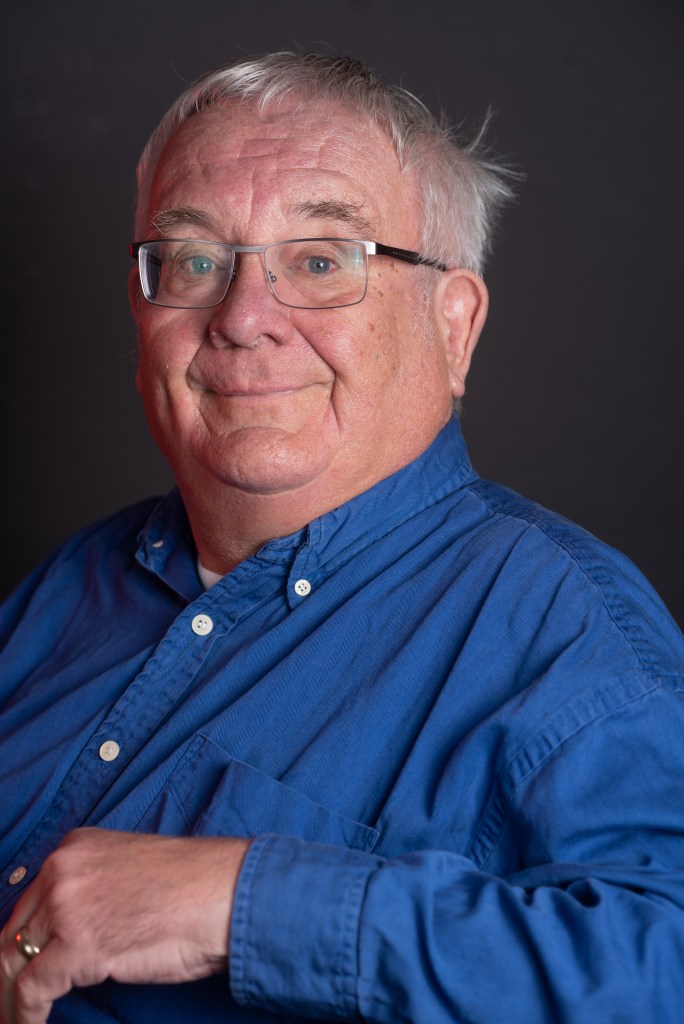
Ramsey Campbell lives on Merseyside with his wife Jenny. His pleasures include classical music, good food and wine, and whatever’s in that pipe. His web site can be found here.
Meghan: Hi, D.W. Welcome welcome. It’s a pleasure having you here today. Tell us a little bit about yourself.
D.W. Gillespie: Well, I’ve been writing for about eighteen years now, which is crazy to say out loud. I’m not exactly sure when you’re allowed to consider yourself a professional writer, but I did get paid for a story way back in college, so we’ll go with that. If only I knew how long it would take to actually get novels published, I might have started a Youtube channel instead.
Over those years, I have realized some things about myself, mainly that I am a writer through and through. There’s not a lot in this world that I feel like I’m qualified to do, but writing is one of those things I feel like I’ve earned, if not with actual talent, than at least with blood, sweat, and tears.
Beyond that, I’m a family man. I’m, admittedly, pretty boring. I spend most of my time with my wife and kids, or playing video games. Being boring is actually pretty great for the nuts and bolts of writing (planning, sticking to schedules, stuff like that), but it’s not as helpful for writing bios and interviews. I wish I could tell you some crazy interesting story about myself, but no, I’m just a writer.
Meghan: What are five things most people don’t know about you?
D.W. Gillespie: For starters, I’d say most people don’t know anything about me, because I kind of hate social media. I do it, but I don’t think I do it particularly well.
Second thing, which goes along with the first, is that I’m pretty introverted. I genuinely like people, but I need some alone time to recharge at least a little bit everyday.
Third thing… ever since my kids were born, I’ve had less and less time to write at home, so my last four or five books have been written during my lunch break from my day job. That’s why writing full time is a huge dream of mine, not because I have delusions of wealth and fame, but because I’d just love to have the time to write and edit at a deeper level.
Four, now that I have two more widespread books coming out, I think most people don’t realize how long I’ve been writing. I’m certainly new to them, but along with the four books I have available, there are another seven or so that haven’t seen the light of day. Some were (in hindsight) just practice, and I’ve already reused certain parts in other books, but a few are waiting for the right time.
And the last thing is, along with horror, which I’m known for, I’ve also written a sci-fi novel, and even a middle-grade novel. The sci-fi one is on the shelf for now, but it might see the light of day once I spend some more time with it. The middle-grade novel is being read by publishers by the time you read this, so fingers crossed.
Meghan: What is the first book you remember reading?
D.W. Gillespie: I’ve thought about this a lot recently, just because I was trying to remember the answer myself. I know for a fact that the first horror novel I ever read was Dracula, which in hindsight, was a pretty dense read for a kid. I do remember really enjoying it, and I wanted to immediately read some Stephen King after that.
But, I think the first novel I read was Call of the Wild by Jack London. I don’t remember a ton about it, but I did really enjoy it. There are some passages there that still stick with me even if I can’t remember the entire plot.
Meghan: What are you reading now?
D.W. Gillespie: Been slowly working my way through Boy’s Life by Robert McCammon. What a book. I’ve seen it described as a horror book, but it’s more than I was expecting. I recently read through IT by King as well, and it’s a fun comparison, looking at the two of those books, both about childhood in a lost time.
Meghan: What’s a book you really enjoyed that others wouldn’t expect you to have liked?
D.W. Gillespie: I always list The Hobbit as one of my favorite books. It’s getting to the point now were I feel like people are beginning to turn on classics like that, maybe because they’re too old fashioned, but I love things that are earnest.
Meghan: What made you decide you want to write? When did you begin writing?
D.W. Gillespie: I’ve told the story before, but I was always the creative type. When I was right out of high school, I was convinced I would be making movies at some point. Then I realized how hard it is to make movies, especially without the right people around you, so I started to just drift towards something I could do all by myself. I took a creative writing class, and got some great feedback from my teacher. That was around 2002, and it’s been pretty steady ever since.
Meghan: Do you have a special place you like to write?
D.W. Gillespie: I always laugh, because the answer to this question is always the same. In my car, during my lunchbreak, in some abandoned parking lot somewhere. Not very glamorous, but it gets the job done. One of these days, I’d like to have an actual stuffy office with books on the wall and a big desk, but for now, I’ll just make due.
Meghan: Do you have any quirks or processes that you go through when you write?
D.W. Gillespie: Not so much quirks, but I have written enough books to have a very solid process. Sometimes I change up whether or not I plan too much ahead of time, but I always have a set schedule for drafts. I’m not one of those people who write every single day. I’m more a sprinter, and when I’m working on a draft, I try very hard to hit ten thousand words a week until the draft is finished. That’s a pace that I couldn’t keep up for more than a few months at a time, but it works well in short bursts.
Meghan: Is there anything about writing you find most challenging?
D.W. Gillespie: For me, it’s just the time. I love draft writing, but I’ve learned to love editing too. When I’m working on a manuscript, I feel like I’m doing exactly what I’m on this planet to do, so when I have to spend 8 hours in an office doing something that, to be honest, anyone could do, it’s a bummer.
Meghan: What’s the most satisfying thing you’ve written so far?
D.W. Gillespie: That’s a tough one to say. I’m very proud of both The Toy Thief and One by One, but my last unpublished book is still probably the one I’m most satisfied with. It’s a bit more sprawling, going back hundreds of years into the history of this town, and I think it has something like 70 characters in it. It was very ambitious, but it just wasn’t the right book for the time. I might try to revisit it someday.
Meghan: What books have most inspired you? Who are some authors that have inspired your writing style?
D.W. Gillespie: The Road by Cormac McCarthy is one of my favorite books. I love his style, and I’ll go back and read through passages over and over again. Hemmingway is another one, even though I don’t love his books, I just love the ability to get as much meaning and feeling as possible with just a few words.
Meghan: What do you think makes a good story?
D.W. Gillespie: Well, it’s that push and pull between characters and plot. Character, rightfully, gets most of the praise in books, but for me, the stories that really live on are the ones that hit that balance perfectly.
Meghan: What does it take for you to love a character? How do you utilize that when creating your characters?
D.W. Gillespie: I’ve thought a lot about this since my last book, The Toy Thief. I really didn’t see any reviews that thought it was poorly written, but I saw a lot of criticism of the main character, saying she was unlikable. It might just be a preference thing, but I’ve always liked broken, vulnerable characters, people that have reasons to give up, but find a way to keep going.
I try very hard to see the duality of everyone. That’s one of my favorite aspects of a good character. It’s a villain, a monster even, who still has something human and relatable about them. It’s a protagonist who you’re genuinely rooting for who suddenly does something despicable. Its not about shock or cheap tricks, it’s about recognizing the fact that every single one of us has done things we’re not proud of. That’s what makes a character work for me.
Meghan: Which, of all your characters, do you think is the most like you?
D.W. Gillespie: I don’t think I can even pick one. This is one of the funniest things about being a writer, is having everyone who reads your book saying, “Oh, I know who that character is.” The truth is, there are bits of me in every character I’ve ever written.
Meghan: Are you turned off by a bad cover? To what degree were you involved in creating your book covers?
D.W. Gillespie: Bad covers can be disappointing. It’s the first impression, and you just know that some great books just won’t get an audience with the wrong cover.
I’ve had some basic feedback on most of my covers, but not complete control. I’m happy with most of them though.
Meghan: What have you learned creating your books?
D.W. Gillespie: I’ve learned a lot of basic life lessons from writing. Perseverance. Goal setting and keeping. Time management. I’ve gotten more of this from writing than I ever did from school or any other job.
Meghan: What has been the hardest scene for you to write so far?
D.W. Gillespie: It’s hard to pick out one, but there have been several scenes that played out a certain way in my mind and totally different when I sat down to write them. One by One in particular deals with issues of child abuse, and I knew pretty quickly that I was going to handle those things in a very vague, “offscreen” sort of way. I just can’t dive into the details of things like that.
Meghan: What makes your books different from others out there in this genre?
D.W. Gillespie: I’ve seen the phrase “quiet horror” in several of my reviews, and I’ve kind of learned to embrace it. I’ve written gorier or more extreme stories before, but I’ll admit that’s not my main focus. I think of my books as mood-building, and I like the feeling of standing in the calm before a storm. Hopefully, my books put you on edge and keep you there while you wait for the bad thing to finally happen.
Meghan: How important is the book title, how hard is it to choose the best one, and how did you choose yours (of course, with no spoilers)?
D.W. Gillespie: I used to try really hard to nail down the title before starting, but I gave up on that years ago. I almost always start with a placeholder title now, and I just pick the title out of a line in the book. It usually happens organically though.
Meghan: What makes you feel more fulfilled: Writing a novel or writing a short story?
D.W. Gillespie: I spent several years straight trying to get short stories published, which is something that has completely fallen off for the past 3 years or so. My focus is completely on novels now, and that’s led to some great success. I still love writing shorts, and I hope to get back to them next year.
Overall, I don’t think there’s anything as satisfying as completing a novel, just because of the time commitment. You basically life with a novel over the course of months, or even years. I’m amazed that books I thought were “finished” years before still come back for edits. Once you finally see that book in your hand, it’s almost surreal.
Meghan: Tell us a little bit about your books, your target audience, and what you would like readers to take away from your stories.
D.W. Gillespie: I’m in this to make the reader feel something. Probably the worst review for me would be someone saying they didn’t feel anything reading my books. Whether you like it or not, if you leave the book with something to think about, then I’ve done my job.
My target audience would be anyone who loves monsters. They might be literal monsters, or just figurative ones, but they’ve all got a human side to them.
Meghan: What can we expect from you in the future?
D.W. Gillespie: I got two big projects on the horizon. One is the middle grade book I mentioned earlier, which I can’t say too much about just yet. I will give you a preview of the name, The Unseen Team… I’ll let you guess what that means.
The other project is a new horror novel titled The Mill. I’m getting ambitious with this one. The draft is longer than any book I’ve ever written. There’s a lot of work to be done, but hopefully it will be out to publishers in the next few months.
Meghan: Do you have any closing words for your fans or anything you’d like to say that we didn’t get to cover in this interview?
D.W. Gillespie: I just want to say that, the past year has been a big boost for me as a writer. I’ve gotten more reviews and eyes on my work in the past twelve months than I have in the previous twelve years. I can’t thank you all enough.
For anyone who has enjoyed my work, stay tuned. There is much more on the way.
Born and raised in Middle Tennessee, D.W. Gillespie has been daydreaming for as long as he can remember. His first short story was in second grade, and it involved (unsurprisingly) monsters wreaking havoc on some unsuspecting victim. Some things never change, and now D.W. writes a healthy mixture of horror, sci-fi, and supernatural fiction.
He began writing seriously in 2002, and he’s since been published many times in print and online. His body of work includes eleven novels and dozens of short stories.
D.W. still lives in Tennessee with his wife and two children.
The Easton family has just moved into their new fixer-upper, a beautiful old house that they bought at a steal, and Alice, the youngest of the family, is excited to explore the strange, new place. Her excitement turns to growing dread as she discovers a picture hidden under the old wallpaper, a child’s drawing of a family just like hers. Soon after, members of the family begin to disappear, each victim marked on the child’s drawing with a dark black X. It’s up to her to unlock the grim mystery of the house before she becomes the next victim.
I found this to be a very cute idea, almost as if you were calling a customer service number. It is part of a fiction series of letters that The Price Girls will be posting on their website once it is up and running. I can’t wait to see what they come up with next.
Are you a recently departed soul who has no idea which way to go? A wayward son, tired of traveling down the long and narrow path? Do you think the Stairway to Heaven has too many steps? Then step on down to Hell! I can get you there fast, just ride the elevator.
Take this questionnaire to find your place in one of the eight residential neighborhoods of hell. If you come to a floor you feel you fit best in just press the button and step off. Someone will be there to greet you. }:)
Press 1: Limbo 1.) Are You a Natural Born Heathen? 2.) Does the Idea of Church Give You the Chills? 3.) Is Your Favorite Shape a Star?
Press 2: Lust 1.) Do You Now or Have Ever Wanted Jessie’s Girl? 2.) Were You In Love with Stacy’s Mom? 3.) Ever Been Hungry Like the Wolf?
Press 3: Gluttony 1.) Ever Eaten at a Buffet? 2.) Are Your Eyes Bigger than Your Stomach? 3.) Are You a Glutton for Punishment?
Press 4: Greed 1.) In life, Were You Considered a Bit of a Scrooge? 2.) Ever Cheated at Monopoly? 3.) Have You Ever Tried to Buy a Stairway to Heaven?
Press 5: Anger 1.) Big Listener to Alanis Morissette? 2.) Identify Yourself with the Show Anger Management? 3.) Were You a Former Participant in Road Rage?
Press 6: Heresy 1.) Feel Like You Were Born to Raise Hell? 2.) Do You Find Blasphemy a Blast? 3.) Are You One to Always Try Your Damnedest?
Press 7: Violence 1.) Ever Been Prone to Sadistic or Masochistic Tendencies? 2.) The Neighbor’s Dog Lead You to Kill People? 3.) Ever Put the V in Vendetta?
Press 8: Fraud 1.) Pyramid-schemes Your Thing? 2.) Ever Used a Filter When Taking a Selfie? 3.) On a Dating Site, Have You Ever Used a Picture of Yourself that You Took 20 Years Ago?
Press 9: Treachery 1.) Et Tu, Brute? 2.) Have You Ever Thrown Someone Under the Bus? 3.) Sell Anyone Down The River?
Fit into more than one category? I’ll get you sorted out. Just ride the elevator all the way down. (I will be waiting for you on the basement level.)
Your Friend, Staan
Marité, Sheníe, and Taís Price are three sisters who write under the collective name Price Girls. The three of them have escaped a small—always hot—western town in Texas to live in the mossy—seems like it is always raining—urban city of Olympia, Washington. Together, they are living out their dream of residing in the Pacific Northwest in a home filled with three generations of women, cats, dogs, ducks, and chickens. Currently, they are hard at work writing during the day and conjuring scary ideas during the night.
Sixteen-year-old Marimar Utterson has just found herself living in a small southern town’s notoriously haunted house when she meets Sage Sterling. A handsome hazel-green eyed boy who is not only captivated by Marimar’s petite beauty and fiery disposition, but by her home’s mysterious past. Unfortunately, his fascination with her house turns perilous when he manages to infuriate the spirit who in turn lashes out against Marimar.
Together, they must set off to uncover the spirit’s dark secret in hopes of finally laying it to rest. For with each encounter the malicious presence diminishes Marimar’s grasp on her sanity and odds of survival.
After undergoing battle with her dead roommate and reclaiming her house, Marimar attempts to go back to life as normal. But darkness has a way of creeping back in and as the darkness spreads so does the chaos. Sage begins to keep secrets, her once loving baby sister is beginning to change and grow distant, and everything Marimar thought she knew to be true was wrong. Danger is once again lurking at every corner and if she is to stop it from spreading any further a sacrifice must be made.Cornered and alone, Marimar must choose to either embrace the light- fulfilling the role she was predestined to take, risking the loss of the one she holds most dear-or be swallowed by the darkness.
Meghan: Hi, ladies. Welcome to Meghan’s House of Books. Take a seat and tell us a little bit about yourselves.
Marité: Sheníe and I are identical twins, and Taís is five years younger—although, most people mistake us as triplets. Taís is also an artist who illustrated our covers.
Meghan: What are five things most people don’t know about the three of you?
Taís: 1.) The three of us bought a house together and share a room. 2.) We all have a healthy fear of the dark, hence the part about us sharing a room. 3.) We see dead people (our houses have always been haunted). 4.) Out of the three of us, Sheníe is the only one who has ever read a Stephen King novel. 5.) As a rule, we don’t celebrate Halloween.
Meghan: What is the first book you remember reading?
Meghan: What made you decide you want to write? When did you begin writing?
Marité: As far back as I can remember I always had the longing to write something, yet I could never come up with anything worth writing. I recall reading a piece of writing advice in a book somewhere that you should draw inspiration from your life, and being a teenager at the time I read this leading a relatively quiet life I decided to wait until I had material worthy to draw from. A couple of years later, when the urge to write had intensified, Sheníe had a nightmare about a girl who moves into a small town’s haunted house and being (a) a teenage girl myself trapped in a small town in Texas and (b) living in a haunted house I knew I had my story. Three days later we started writing our first draft of what later came to be The Merging of Shadows, Sheníe and I had just turned seventeen two-weeks prior and Taís was only eleven at the time.
Meghan: Do you have a special place you like to write?
Taís: The living room is our regular haunt so it serves the dual purpose of acting as both our entertainment space and workshop.
Meghan: Do you have any quirks or processes that you go through when you write?
Marité: I can always be found writing with my earbuds in even if they are not plugged into anything—it helps me to block out the background noise, Sheníe has to listen to Linkin Park whenever she’s writing, and Taís always has to create a playlist to help her get into writing mode.
Meghan: Is there anything about writing you find most challenging?
Sheníe: Sticking to an outline is by far the most challenging as our writing style is composed of freewriting which means the ideas come as they go and the scenes are constantly evolving.
Meghan: What’s the most satisfying thing you’ve written so far?
Taís: The darker scenes were the most satisfying as we had to challenge ourselves to up the ante.
Meghan: What books have most inspired you?
Marité: Twilight, because the story was inspired by a dream, and The Hunger Games because of Suzanne Collins’ masterful blend of genres.
Meghan: Who are some authors that have inspired your writing style?
Taís: A good story is one that you can take something away from it. After all, stories were originally crafted to contain a message.
Meghan: What does it take for you to love a character? How do you utilize that when creating your characters?
Marité: For us, we find that the characters that we adore have within them the capacity for good, no matter how intrinsically evil they may be. With each character we bring to life we are careful they allude a sense of humanity, even if that may come as an illusion.
Meghan: Which, of all your characters, do you think is the most like you?
Sheníe: Marimar embodies all three of our personalities and she also serves as the personification of our ideal selves as well as our shortcomings.
Meghan: What have you learned creating your books?
Taís: It is our duty as authors to tell a story as it is meant to be told. Something one person might love about a book another may hate, yet what’s important is that you are never afraid to be daring and always ready to push the envelope.
Meghan: How important is the book title, how hard is it to choose the best one, and how did you choose yours (of course, with no spoilers)?
Marité: A title must embody the tone and theme of your book while at the same time clarifying the cover image. In this respect, it plays a key role in capturing your attended audience and, as such, is one of the hardest decisions to make. After two failed attempts (the first had us listed on Amazon under a telenovela and the second was too similar to a title of an already popular book) we finally took our title from a passage in our novel. We felt the title The Merging of Shadows conveyed a sense of mystery and hinted at the central theme of our book—the blurring of the line between the known and the unknown.
Meghan: Tell us a little bit about your books, your target audience, and what you would like readers to take away from your stories.
Sheníe: The Merging of Shadows and its sequel The Darkness that Lies Inside originated from a single nightmare of mine. Three times I had tried to wake myself up from it only to fall back asleep and enter the dream, watching the story play out like a movie from beginning, middle, and end. When I awoke the next morning I told my sisters about it and we just knew we had to write it. As luck would have it, our Dad was about to have us start on a book report for our English assignment when we managed to convince him into letting us write a novel instead as part of our homeschool project.
Flash forward six years, and we have polished the manuscript, found an editor, published it in paperback form, and have just released its sequel. Yet, in spite of all the years in between, the biggest take away that we wish young adults and our adult readers will have has always stayed the same and that is that we all have the power inside ourselves to take control of our own lives.
Meghan: What was it like working together?
Taís: As in any democracy, there is a lot of checks and balances. Everything has to be put to a vote and there are countless vetoes.
Meghan: Do you think it’s easier or harder to work together as sisters?
Marité: For us, it was easy as we think alike. Truth be told, at times we speculated whether the stories would have come out faster if only one of us had chosen to write it, but in the end we have all agreed that the story wouldn’t be half as good (in our opinion) without each of our thoughts, ideas, and (in our case) dreams.
Meghan: I’ve interviewed several author-teams, but never one consisting of three people. How does the process work for y’all?
Sheníe: The three of us take turns writing in the book, and we split up the writing depending on whose idea it was for a scene or chapter. When facing writer’s block we will hand off the book to whoever is available. Interestingly enough, when we all are stuck on a certain scene one of us will have a nightmare about what to do next and we will write around that central idea. The spookiest part about this is that all three of us have been visited by the same character in our dreams.
Meghan: Who is the sister that is the most outspoken? Who is the quietest? There’s always one that is more bossy than the others – who would you say that sister is?
Taís: Marité is the most outspoken, I am the quietest, and Sheníe is the bossiest although Marité is the oldest.
Meghan: What can we expect from you in the future?
Marité: At the moment we are working on two new projects, one being the spinoff to The Merging of Shadows series and the other is a contemporary young adult novel inspired from yet another one of Sheníe’s dreams.
Meghan: Where can we find you?
Sheníe: Visit us if you dare at our young adult blog and be sure to stop by our official website (Coming Soon) which is kindly hosted by WebsiteDreams.
Meghan: Do you have any closing words for your fans or anything you’d like to say that we didn’t get to cover in this interview?
Taís: Firstly, we would like to express our thanks to Meghan’s House of Books for conducting this wonderful interview, and lastly we would like to thank all of you paranormal geeks, horror lovers, and bookworms out there for making this interview possible. Sweet dreams. Love, Price Girls.
Marité, Sheníe, and Taís Price are three sisters who write under the collective name Price Girls. The three of them have escaped a small—always hot—western town in Texas to live in the mossy—seems like it is always raining—urban city of Olympia, Washington. Together, they are living out their dream of residing in the Pacific Northwest in a home filled with three generations of women, cats, dogs, ducks, and chickens. Currently, they are hard at work writing during the day and conjuring scary ideas during the night.
Sixteen-year-old Marimar Utterson has just found herself living in a small southern town’s notoriously haunted house when she meets Sage Sterling. A handsome hazel-green eyed boy who is not only captivated by Marimar’s petite beauty and fiery disposition, but by her home’s mysterious past. Unfortunately, his fascination with her house turns perilous when he manages to infuriate the spirit who in turn lashes out against Marimar.
Together, they must set off to uncover the spirit’s dark secret in hopes of finally laying it to rest. For with each encounter the malicious presence diminishes Marimar’s grasp on her sanity and odds of survival.
After undergoing battle with her dead roommate and reclaiming her house, Marimar attempts to go back to life as normal. But darkness has a way of creeping back in and as the darkness spreads so does the chaos. Sage begins to keep secrets, her once loving baby sister is beginning to change and grow distant, and everything Marimar thought she knew to be true was wrong. Danger is once again lurking at every corner and if she is to stop it from spreading any further a sacrifice must be made.Cornered and alone, Marimar must choose to either embrace the light- fulfilling the role she was predestined to take, risking the loss of the one she holds most dear-or be swallowed by the darkness.







 Meghan's House of Books