Halloween Extravaganza: INTERVIEW: Robert Herold

Meghan: Hi, Robert. Welcome to Meghan’s House of Books. Thank you so much for agreeing to be part of the annual Halloween Extravaganza. Tell us a little bit about yourself.

Robert Herold: I’ve been a fan of horror ever since I was a little nipper. I decided to rekindle that love much later in life by becoming a horror author and I’m having a blast. You could say that being a horror writer is to die for!

Meghan: What are five things most people don’t know about you?

Robert Herold: I wanted to be a werewolf as a child, later it was The Riddler from Batman. I guess I’ve always had a dark side. I enjoy treasure-hunting in thrift stores and flea markets for books (especially 1930’s-1950’s paperbacks with lurid covers), records, sheet music, and kitschy items. I used to get in trouble in elementary for daydreaming. I’m the only one in Seattle who doesn’t like coffee. (It’s a lonely town!) My all-time favorite movie is It’s a Wonderful Life. I play in a Seattle band called Bluetopia. (OK, that’s six. ‘Good thing I’m not a math teacher!)

Meghan: What is the first book you remember reading?

Robert Herold: The Cat In The Hat Comes Back—I loved that brash 6 foot cat and his ability to turn snow pink. (My abilities are limited to yellow.)

Meghan: What are you reading now?

Robert Herold: On audiobook in my car, I’m listening to The Outsider by Stephen King, and in book form, I’m reading The Apothecary Rose by my friend Candace Robb.

Meghan: What’s a book you really enjoyed that others wouldn’t expect you to have liked?

Robert Herold: My favorite book this year is The Judge Hunter by Christopher Buckley. It’s a marvelous tale set in the 17th Century about an annoying man who is sent to the colonies to track down a couple of fugitives during the Restoration period in England.

Meghan: What made you decide you want to write? When did you begin writing?

Robert Herold: I began writing in junior high and had a wonderful English teacher who encouraged me. Later, I put writing aside to pursue music (I play the saxophone & flute) but about five years ago, I came across a sheaf of papers with a ribbon around it. It was from my son, Devon, when he was about eight or nine. A note was attached saying that the paper was for me to use when I start writing again. I decided to put writing back in my life. I’m glad I did!

Meghan: Do you have a special place you like to write?

Robert Herold: I typically write at home with my chihuahua acting as guard.

Meghan: Do you have any quirks or processes that you go through when you write?

Robert Herold: I come with an ending first. I used to outline, but I have more fun when I don’t. It means more time in the editing process, but I’m OK with that.

Meghan: Is there anything about writing you find most challenging?

Robert Herold: Like many authors, the editing process is arduous, but it’s worth it.

Meghan: What’s the most satisfying thing you’ve written so far?

Robert Herold: My novel, The Eidola Project, is the most satisfying. I’ve had some success writing pilot scripts, winning a contest and being a finalist, but I’ve never worked so hard on one project and I’m satisfied that I’ve given it my all.

Meghan: What books have most inspired you? Who are some authors that have inspired your writing style?

Robert Herold: I’ve read The Maltese Falcon by Dashiell Hammett probably a dozen times! His clean powerful prose is masterful, as is his cinematic approach, revealing characterization largely through action and dialogue. I love everything I’ve read by David Liss, Bernard Cornwell, Stephen King, Paul Tremblay, Christopher Buckley, Caleb Carr, Peter Straub, Raymond Chandler, Will Thomas, Thomas Harris, Walter Mosley, and many more!

Meghan: What do you think makes a good story?

Robert Herold: An engaging set of characters facing a crisis is key, as is action, realistic dialogue, and masterful use of the English language.

Meghan: What does it take for you to love a character? How do you utilize that when creating your characters?

Robert Herold: For me to engage with a character, they need to convey a sense of realism within their world. I need to believe they exist, with a rich backstory, of which I may only know a little. To love a character, they need to have a moral compass and show growth in the course of the tale. I tried to imbue each character with these traits, which took some doing with an ensemble.

Meghan: Which, of all your characters, do you think is the most like you?

Robert Herold: They each reflect a different side to me. I’m not always proud of these aspects, but there they are.

Meghan: Are you turned off by a bad cover? To what degree were you involved in creating your book covers?

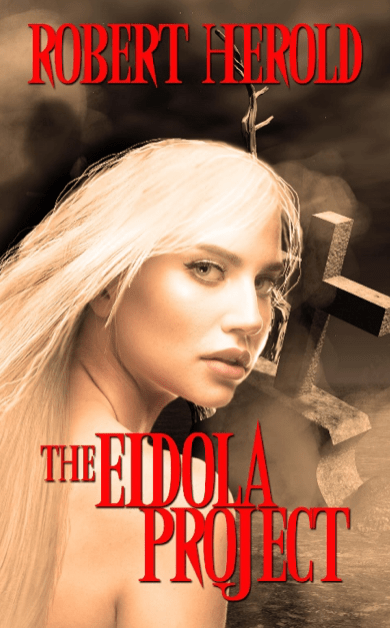
Robert Herold: First impressions do matter. For example, a cute fuzzy bunny would probably not attract many horror fans. On the other hand, if it had blood dripping from its mouth, then perhaps… I had quite a bit of involvement in the cover for The Eidola Project. My publisher contracts with Debbie Taylor, who did a great job!

Meghan: What have you learned creating your books?

Robert Herold: I’ve learned so many things: gratitude for those who have helped me along the way, how to make my prose more powerful, and how to use social media to reach out to potential readers. (‘Still learning!)

Meghan: What has been the hardest scene for you to write so far?

Robert Herold: Killing characters that I have come to love. Oh, well, sometimes they gotta go!

Meghan: What makes your books different from others out there in this genre?

Robert Herold: Imagine Stephen King, Caleb Carr, and Sir Arthur Conan Doyle thrown in a blender and mixed up to a bloody froth. My work combines classic elements to make a new taste treat.

Meghan: How important is the book title, how hard is it to choose the best one, and how did you choose yours (of course, with no spoilers)?

Robert Herold: Eidola is a Greek word for ghost. Since the Eidola Project is a team of paranormal investigators, it seemed like a natural (or supernatural) fit.

Meghan: What makes you feel more fulfilled: Writing a novel or writing a short story?

Robert Herold: Both are wonderful artforms. Given the time investment, I’d say that I find novel writing most fulfilling.

Meghan: Tell us a little bit about your books, your target audience, and what you would like readers to take away from your stories.

Robert Herold: I hope my books give people the creeps! In addition, as I combine my love of horror with my love of history, I hope can also bring the time in which they are set to life, the late 19th Century.

Meghan: Can you tell us about some of the deleted scenes/stuff that got left out of your work?

Robert Herold: By and large, everything that I came up with for the book is still in it, though it went through a million rewrites.

Meghan: What is in your “trunk”?

Robert Herold: I may have a movie or TV show in me! I had some success in contests writing pilot scripts (in fact The Eidola Project began as one) and I may return to this one day.

Meghan: What can we expect from you in the future?

Robert Herold: Book two in the series is already at the editor, and I am 99 pages into book three. I have plans for ten or more titles in this series. Though I will strive to make each book stand on its own.

Meghan: Where can we find you?

Robert Herold: Website ** Facebook

Meghan: Do you have any closing words for your fans or anything you’d like to say that we didn’t get to cover in this interview?

Robert Herold: After reading The Eidola Project, please consider leaving an honest review on one or more sites. In today’s world reviews are golden! Look forward to more Eidola Project books. I’ve only just begun!
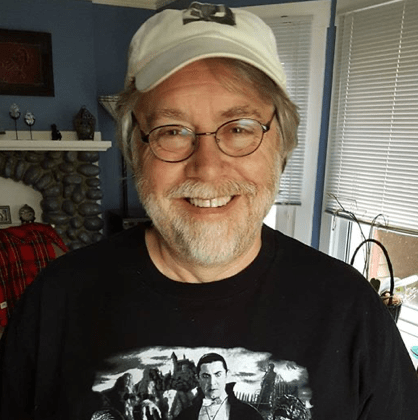
The supernatural always had the allure of forbidden fruit, ever since my mother refused to allow me, as a boy, to watch creature features on late night TV. She caved in. (Well, not literally.)

As a child, fresh snow provided me the opportunity to walk out onto neighbors’ lawns halfway and then make paw prints with my fingers as far as I could stretch. I would retrace the paw and boot prints, then fetch the neighbor kids and point out that someone turned into a werewolf on their front lawn. (They were skeptical.)

I have pursued many interests over the years, but the supernatural always called to me. You could say I was haunted. Finally, following the siren’s call, I wrote The Eidola Project, based on a germ of an idea I had as a teenager. Ultimately, I hope my book gives you the creeps, and I mean that in the best way possible.

Website ** Facebook

The Eidola Project

It’s 1885 and a drunk and rage-filled Nigel Pickford breaks up a phony medium’s séance. A strange twist of fate soon finds him part of a team investigating the afterlife.

The Eidola Project is an intrepid group of explorers dedicated to bringing the light of science to that which has been feared, misunderstood, and often manipulated by charlatans. They are a psychology professor, his assistant, an African-American physicist, a sideshow medium, and now a derelict, each possessing unique strengths and weaknesses.

Called to the brooding Hutchinson Estate to investigate rumored hauntings, they encounter deadly supernatural forces and a young woman driven to the brink of madness.

Will any of them survive?

Halloween Extravaganza: Linda Addison: Candy Corn!!!!

Am I the only one who remembers thinking as a child that when I grew up I would buy as much candy as I wanted and eat it every day? As an adult, other than a brief flirtation with Sugar Babies, Candy Corn still has a strong hold on me. I can’t even imagine eating only one candy corn. Once I start eating them, one by one, I can’t stop until my teeth ache and my stomach starts to whine. Other than the obvious ingredient of sugar, I was curious what else made up this innocent-looking, yet seductive deliciousness.

Curiosity has lead me to research many things, but usually it’s stuff like quantum mechanics, etc. Finding out that the place of origin for candy corn was Philadelphia was interesting, since I grew up there. Maybe that explained its hold over me? Originally it was called “Chicken Feed” when it was created in the 1880s. I’m pretty sure if they had kept that name I wouldn’t be writing about it now. It’s mainly made from sugar, corn syrup, honey & salt; well, that’s all the different kinds of sweet that accounts for the I-can’t-stop-eating-it-ness.

Millions of pounds are produced each year, which is how it’s on every store counter I pass in October. Sometimes research turns up information I wish I had never found, like there are variations of candy corn created for other holidays, not just Halloween. What the—!

There’s brown/orange/white candy corn for Thanksgiving (okay, I did know about this since it’s slyly shown up in October), red/green/white for Christmas, red/pink/white for Valentine’s Day, blue/white/red for Independence Day in the United States, and Bunny Corn for Easter (two color candy: pink/green/yellow/purple mixes). The madness goes on: caramel apple, green apple candy corn, s’mores, pumpkin spice, carrot corn, birthday cake…

There’s other forms the insidious flavor has invaded: candy corn flavored bagels, flavored martinis, Halloween costumes, beer, smoothies, deep fried, etc. Of course, a “Candy Corn” movie was released in 2019, since Tony Todd is in it I’ll have to track it down.

There are studies on how people eat each piece (whole or nibble from narrow end or the wide end), truth is I’ve done all three.

In case you think I’m the only one to obsess about this there are many essays online about candy corn. Elise Taylor wrote an essay for Vogue magazine in 2017 titled: “Candy Corn: You Either Love It or Hate It, There Is No In-Between”. There’s all kinds of statistics about people hating and loving candy corn. From Taylor’s article: “As Halloween comes and goes, so will the candy corn debate. But in late September, it’ll creep back into our consciousness and conversations again, a sugary Pennywise the Clown ready to terrorize your teeth, your towns, and your Twitter feed.”

I found a “Candy corn lovers support group” on FaceBook but I don’t think they’re going to help me control this problem because the first photo is for candy corn soda. So my little exclusion has opened up a door to eating candy corn all year long, in flavors and forms I never imagined—Noooooooo!!!

Linda D. Addison, award-winning author of four collections, including How to Recognize A Demon Has Become Your Friend, the first African-American recipient of the HWA Bram Stoker Award, received the 2016 HWA Mentor of the Year Award and the 2018 HWA Lifetime Achievement Award. Check out her latest poetry in The Place of Broken Things, writen with Alessandro Manzetti (Crystal Lake Publishing, 2019). She is excited about the 2020 release of a film (inspired by my poem of same name) Mourning Meal, by producer and director Jamal Hodge.

How to Recognize a Demon Has Become Your Friend

Who doesn’t need to know How To Recognize A Demon Has Become Your Friend? From the first African-American to receive the HWA Bram Stoker award, this collection of both horror and science fiction short stories and poetry reveals demons in the most likely people (like a jealous ghost across the street) or in unlikely places (like the dimension-shifting dreams of an American Indian). Recognition is the first step, what you do with your friends/demons after that is up to you.

The Place of Broken Things

Bram Stoker Award® winners Linda D. Addison and Alessandro Manzetti use their unique voices to create a dark, surrealistic poetry collection exploring the many ways shattered bodies, minds, and souls endure. 

They created poems of visionary imagery encompassing death, gods, goddesses and shadowy, Kafkaesque futures by inspiring each other, along with inspiration from others (Allen Ginsberg, Pablo Neruda, Phillis Wheatley, etc.).

Construction of The Place started with the first bitten apple dropped in the Garden. The foundation defined by the crushed, forgotten, and rejected. Filled with timeless space, its walls weep with the blood of brutality, the tears of the innocent, and predatory desire. Enter and let it whisper dark secrets to you.

Proudly represented by Crystal Lake Publishing—Tales from the Darkest Depths.

Halloween Extravaganza: INTERVIEW: Linda D. Addison

Meghan: Hello, Linda. Welcome to Meghan’s House of Books. Tell us a little bit about yourself.

Linda D. Addison: I’m the second oldest of 10 children, been making up fables since I can remember. Currently, I have over 350 poems, stories and articles in print. I write what sings in me, so I’ve created work that’s been labeled horror, fantasy, science-fiction. I’ve worked most of my life as a software developer, but now retired to write full-time.

Meghan: What are five things most people don’t know about you?

Linda D. Addison: Ok, here we go:

  • I’m a character in the Star Trek Wiki (“Linda Addison was a Human female who served in the Federation Starfleet in the 24th century.”).
  • I took belly dancing lessons years ago and had one public performance (at Necon).
  • In 11th grade, I won a scholarship to travel to western Europe with the World Youth Forum, which completely changed my life.
  • I’ve been practicing tai chi for more than 20 years.
  • I’m in IMDB as background cast from The Girl Next Door film (book by Jack Ketchum).

Meghan: What is the first book you remember reading?

Linda D. Addison: Fun with Dick and Jane. This was the first book I remember holding in school and thinking, I want to make these one day. I had no idea what that meant but I never forgot that moment.

Meghan: What are you reading now?

Linda D. Addison: For my own pleasure: at this very moment: I Am Not Your Final Girl poetry collection by Claire C. Holland, which I got into because of hearing her read one of her poems. After that I had to buy her book and I’m enjoying it very much. In general, I read several books at the same time, the ones started on the top of a tall pile: Pimp my Airship by Maurice Broaddus; Lady Bits by Kate Jonez; The King of the Wood by J. Edwin Buja. Outside of these I’m reading tons of poetry for the next issue of Space & Time Magazine.

Meghan: What’s a book you really enjoyed that others wouldn’t expect you to have liked?

Linda D. Addison: I read A Prayer for Owen Meany by John Irving in the early 1990’s and put me on the road to reading Irving. That book’s story and main character were so entirely different than anything I had been reading.

Meghan: What made you decide you want to write? When did you begin writing?

Linda D. Addison: My mother was a magnificent storyteller. I grew up believing everyone made up stories, so my imagination was always engaged, an overlay to reality like The Matrix. I had no choice but to write, it was the natural outcome for me as soon as I learned to put words to paper. My earliest memory of a story I wrote was a take off of Alice in Wonderland in elementary school.

Meghan: Do you have a special place you like to write?

Linda D. Addison: I like to write in my very comfy chair in living room where I can see the mountains. In a day I’ve been know to move to the dining room where I can see my courtyard; my office, even my bedroom has a writing corner. When I’m not home I can write anywhere as long as I have music on earphones.

Meghan: Do you have any quirks or processes that you go through when you write?

Linda D. Addison: I don’t have something I always do, but when I’m home I like to write either with silence, or music without vocals (like Miles Davis) or depending on what I’m writing, movies running with sound off (Star Wars, Alien, etc.).

Meghan: Is there anything about writing you find most challenging?

Linda D. Addison: Hmmm, just having enough time to get it down each day, it’s a balancing act between writing my stuff and being involved with other projects with other people.

Meghan: What’s the most satisfying thing you’ve written so far?

Linda D. Addison: The last thing I’ve completed, a poetry collection, The Place of Broken Things, released July 2019 written with Alessandro Manzetti. It was easy, fun and uplifting, we each wrote a third of the poems separately & a third together. Our voices/approaches were different enough to inspire each of us to create some weirdly, wonderful work.

Meghan: What books have most inspired you? Who are some authors that have inspired your writing style?

Linda D. Addison: This is the hardest questions to answer. I could write a book of lists. In elementary school I read every book of fables in our classrooms (Yellow, etc), Aesop’s Fables, filling my head with talking magical animals. Junior High, High School I read the science-fiction section of the library, A through Z, fantasy with dragons; non-genre authors like: Shakespeare, Poe, Kafka, Ralph Ellison, James Baldwin, Langston Hughes. The pattern of reading widely continues to this day, more than anything I struggle to find time to read and write.

Meghan: What do you think makes a good story?

Linda D. Addison: I’m a big character person—I can follow a story many places if you hook me into the character.

Meghan: What does it take for you to love a character? How do you utilize that when creating your characters?

Linda D. Addison: I love characters who have levels of personality, willing to pay the price for what they want/need, whether they are perceived as good or bad, I like characters that have a bit of both, like real people. I try to do the same when I create my characters.

Meghan: Which, of all your characters, do you think is the most like you?

Linda D. Addison: I can’t think of one particular character who is most like me, there’s a little bit of me in many of my stories, some emotion/reaction/memory of mine.

Meghan: Are you turned off by a bad cover? To what degree were you involved in creating your book covers?

Linda D. Addison: A bad cover is not good for anyone. I’ve read work with covers that weren’t as professional as they could be, so it won’t stop me, but I know it turns off others. I’m very happy with the covers of my books; they have been published by small/medium presses and I’ve had input, final sign off on them. They are each special in a different way. The cover to How To Recognize A Demon Has Become Your Friend by Jill Bauman always attracts people when I do signings.

The cover of The Place of Broken Things, was created by Adrian Borda, an artist bought to my attention by Alessandro Manzetti (co-creator of book) and we decided together which piece of art to use. I’m absolutely delighted with the cover art, it’s a great representation of the title: that broken place, that broken character.

Meghan: What have you learned creating your books?

Linda D. Addison: Each book teaches me something different. There’s are many steps that go into going from the first sentence/poem line to a finished manuscript. I’m constantly looking to increase my technique and editing abilities. The main things: write my first draft as wild as I want; re-write/edit like a warrior; get someone with edit skills for a final read. When looking for a market/publisher spend time checking for a good fit. Good production is important (including covers). Marketing/Sales, I”m always learning something new about using social media to help get the word out.

Meghan: What has been the hardest scene for you to write so far?

Linda D. Addison: The poem “Philly’s Little Boy” in the book The Place of Broken Things was very emotional because I read how children were treated in American slavery to incorporate real details.

Meghan: What makes your books different from others out there in this genre?

Linda D. Addison: It’s difficult to step outside my writing but I’ve been told my poetry is accessible because of the emotion it invokes and my genre fiction reflects real human situations.

Meghan: How important is the book title, how hard is it to choose the best one, and how did you choose yours (of course, with no spoilers)?

Linda D. Addison: Book titles are very important, they set the mood for the reader, draw them in. It’s been easy for me to select titles since they come to the surface as the book is written. For collections that include poetry, the book title is often the title of a poem. I even have a document full of possible titles, like lines of poems. Alessandro and I had a title for our collection before we even started writing; the first poem we wrote was The Place of Broken Things. The words in the title set the open tone for what we wrote from then on.

Meghan: What makes you feel more fulfilled: Writing a novel or writing a short story?

Linda D. Addison: I started writing poetry mostly and it was very easy, like listening to a song. Writing short stories sometimes took more work (outlining, editing, etc). The last couple of years even writing fiction has also become very organic. Now I’m completing my first novel (well, the first I would let anyone read) and to my delight it’s been flowing very nicely.

Meghan: Tell us a little bit about your books, your target audience, and what you would like readers to take away from your stories.

Linda D. Addison: Most of my books are considered horror, which is more psychological than graphic. My science-fiction is mostly about characters than things. I don’t know what my target audience would be but I hope readers are touched/inspired/entertained.

Meghan: Can you tell us about some of the deleted scenes/stuff that got left out of your work?

Linda D. Addison: I have lots of poems that were taken out of collections because they didn’t work, and bits and pieces of stories that haven’t been finished. These are things that might be useful in the future so they’re never thrown away for good.

Meghan: What is in your “trunk”?

Linda D. Addison: There are stories I’ve published that I want to expand into longer pieces (ex. “Whispers During Still Moments”, my vampire story in the Dark Thirst anthology).

Meghan: What can we expect from you in the future?

Linda D. Addison: I’m very excited about having a poem in the next issue of Weird Tales Magazine #364. Look for a story of mine in “New Scary Tales to Tell in the Dark” anthology (HarperCollins, 2020), which was a blast writing.

Movies have always been inspiring for me so I’m beyond thrilled about Mourning Meal, a film inspired by my poem of the same title, being released in 2020 by award winning producer, screenwriter Jamal Hodge. My poem, with the fantastic actor Rüya Koman, is the first episode of a 2020 web series called “Poetry & Death” also by Jamal Hodge.

Meghan: Where can we find you?

Linda D. Addison: Website ** Facebook ** Twitter

Meghan: Do you have any closing words for your fans or anything you’d like to say that we didn’t get to cover in this interview?

Linda D. Addison: I have three words for my fans: “I love you”.

Linda D. Addison, award-winning author of four collections, including How to Recognize A Demon Has Become Your Friend, the first African-American recipient of the HWA Bram Stoker Award, received the 2016 HWA Mentor of the Year Award and the 2018 HWA Lifetime Achievement Award. Check out her latest poetry in The Place of Broken Things, writen with Alessandro Manzetti (Crystal Lake Publishing, 2019). She is excited about the 2020 release of a film (inspired by my poem of same name) Mourning Meal, by producer and director Jamal Hodge.

How to Recognize a Demon Has Become Your Friend

Who doesn’t need to know How To Recognize A Demon Has Become Your Friend? From the first African-American to receive the HWA Bram Stoker award, this collection of both horror and science fiction short stories and poetry reveals demons in the most likely people (like a jealous ghost across the street) or in unlikely places (like the dimension-shifting dreams of an American Indian). Recognition is the first step, what you do with your friends/demons after that is up to you.

The Place of Broken Things

Bram Stoker Award® winners Linda D. Addison and Alessandro Manzetti use their unique voices to create a dark, surrealistic poetry collection exploring the many ways shattered bodies, minds, and souls endure. 

They created poems of visionary imagery encompassing death, gods, goddesses and shadowy, Kafkaesque futures by inspiring each other, along with inspiration from others (Allen Ginsberg, Pablo Neruda, Phillis Wheatley, etc.).

Construction of The Place started with the first bitten apple dropped in the Garden. The foundation defined by the crushed, forgotten, and rejected. Filled with timeless space, its walls weep with the blood of brutality, the tears of the innocent, and predatory desire. Enter and let it whisper dark secrets to you.

Proudly represented by Crystal Lake Publishing—Tales from the Darkest Depths.

Halloween Extravaganza: Steve Thompson: STORY: Wee Man and the Eejit

Wee Man & the Eejit
as Told by Sean “Burly” O’Shea

“There he stood, all of three-foot and six inches, clad in his finest green outfit, now covered in rancid muck. The big eejit that pushed him in the ditch had a bit much of the black stuff. He was acting the maggot he was. Trying to impress his floozie, hoping to score some fun time between her legs. The wee man, well, he wasn’t taking no shite from no codger. A real chancer that fella was getting a Mountain Leprechaun all hepped up. Everyone round these parts knows you don’t feck with a Mountain Leprechaun, a valley one maybe, worse they can do is change you into a potato until sunrise. You just pray to all hell nobody cooks you for their supper.

I saw that happen to a young lad once you know, and at sunrise when he changed back, his legs, well, they was chewed off just above the knees they was. Some yoke thought it would be a great riot to take a bite out of him when he was a potato just to see what would happen. Heads or tails he said twirling the potato in his hands before he took a good old chomp out of the damn thing. It was a riot all right; the poor lad screaming with blood gushing everywhere and everyone running around like a bunch of chickens with their heads lopped off. He lived though, that’s him right over thar in front of Flanagan’s bar in the wheelchair.

Now where was I, oh yeah, some folks leaned a lesson tonight, just cause it’s Halloween don’t mean that everyone you see on the street is wearing a costume. That lad found out the hard way cause he’s not from ‘round here, and he sure as all hell didn’t know we have real Leprechauns that come into town during celebrations. I mean Jesus, Mary and Joseph, I can still smell the ass juice that shot down the eejit’s leg when the wee man transformed into a troll and bit his fecking head off.”

Steve Thompson is the author of two short and flash fiction collections. You can check out his 2 latest short stories “Kill Point Club” in the anthology When the Clock Strikes 13 from his In Your Face Publishing that he started in June 2019 and “Malignant” which he co-wrote with Kenneth W. Cain which is in the Shallow Waters 2 flash fiction anthology by Crystal Lake Publishing.

When the Clock Strikes 13

Tick – tock 
Tick – tock 
Tick – tock

Your time is running out. When the clock strikes 13, all manners of hell will break loose.

When the Clock Strikes 13 is a collection of thirteen short horror stories by some of the best horror and dark fiction authors writing today. Inside, you will find stories to frighten, shock and gnaw at your inner fears, and take you places that belong only in the dark recesses of your mind. There are monsters on these pages; some are human, some are not. 

Table of Contents 
Introduction by Joe Mynhardt 
“The Boy in the Pond” by Mark Allan Gunnells 
“Open Waters” by Richard Thomas 
“Memories” by John R. Little 
“Detrition of War” by Kenneth W. Cain 
“Comes the Red Man” by Tom Deady 
“Mommy’s Girl” by Somer Canon 
“Taking Up Carpentry” by Justin M. Woodward 
“Kill Point Club” by Steve Thompson 
“Calm Down Time” by Richard Chizmar 
“Carrion: My Wayward Son” by James Newman 
“Bear” by Michelle Garza and Melissa Lason 
“When Arachnids Attack” by Sheri White 
“A Song Above” by Glenn Rolfe 
Afterword by Steve Thompson 

Halloween Extravaganza: INTERVIEW: Steve Thompson

Meghan: Hi, Steve. Welcome to the new Meghan’s House of Books. Tell us a little bit about yourself.

Steve Thompson: I live in Moncton, New Brunswick, Canada with my girlfriend, Lisa. I recently retired from my day job as a housekeeping supervisor at our city hospital after 30 years of service. I’m now dunking my foot into the unknown depths of the publishing world and hoping I don’t drown. I have 8 pets at home, 4 dogs and 4 cats that take up a large part of my day. 3 of those dogs are Boston Terriers and one is a Chorkie, and never in my life did I ever think I could love any animal as much as those dogs; the cats, well, they’re just evil.

Meghan: What are five things most people don’t know about you?

Steve Thompson: 1- I never graduated from high school because I was given the choice to quit or get kicked out 3 months before graduation. 2 – Most people know I am scared of heights, What they don’t know is if I get into a situation that I am up too high, I need to get down ASAP, even if it means jumping and I don’t know what is the greater fear, the heights or wanting to jump to get out of that situation. 3 – When I was 15, I broke into a portable classroom and peed in the desk drawer of a teacher I didn’t like because he bullied a lot of his students. 4 – When I was nine or ten years old I loved to burn things with a magnifying glass; plastic car models, the long grass in the fields next to our house and insects, I burned a lot of insects, and I didn’t turn out to be a serial killer. Got 4 out of 5.

Meghan: What is the first book you remember reading?

Steve Thompson: The Stand by Stephen King

Meghan: What are you reading now?

Steve Thompson: Finishing up In the Scrape by James Newman and Mark Steensland with Jeff Strand’s Five Novellas on deck.

Meghan: What’s a book you really enjoyed that others wouldn’t expect you to have liked?

Steve Thompson: Jackie Collin’s Hollywood Wives. I read this back in the 80’s because it was the only book in the house at the time that I hadn’t already read.

Meghan: What made you decide you want to write?

Steve Thompson: Reading Stephen King books is what turned me on to reading and writing.

Meghan: When did you begin writing?

Steve Thompson: About 25 years ago, but mostly it was just farting around, writing short stories for myself and some friends. I only started to take writing seriously about 6 years ago.

Meghan: Do you have a special place you like to write?

Steve Thompson: In my computer room/library.

Meghan: Do you have any quirks or processes that you go through when you write?

Steve Thompson: Nope.

Meghan: Is there anything about writing you find most challenging?

Steve Thompson: Everything, but mostly it’s the show don’t tell I struggle with but it is getting better the more I write. Also keeping my focus on one story at a time. Right now, I have 7 short stories that are half done and I keep jumping back and forth between them, writing a line or 2 on one story than a line or 2 on another.

Meghan: What’s the most satisfying thing you’ve written so far?

Steve Thompson: That would be my short story “Kill Point Club” from the anthology When the Clock Strikes 13. It was a fun story to write and I had a great time with it. I used the names of some of the other authors in the anthology as characters and then killed them off. Fun Times.

Meghan: What books have most inspired you?

Steve Thompson: The Stand by Stephen King, Animosity and Odd Man Out by James Newman. These are the only books I can remember ever pissing me off to the point I almost threw the books across the room and to make me shed a tear.

Meghan: Who are some authors that have inspired your writing style?

Steve Thompson: Stephen King, James Newman, and Richard Laymon to name a few.

Meghan: What do you think makes a good story?

Steve Thompson: Believable characters that grow on you and you care what happens to them, because if you don’t care the story just feels flat and lifeless. If something happens to a character, I want to be able to feel something for them and not just Johnny fell off a bridge and drowned and think who cares I wish they would all fall off a bridge and drown so this story would end.

Meghan: What does it take for you to love a character?

Steve Thompson: Again, I’ll say believable characters. Characters you can relate to and it doesn’t matter whether you love them or hate them as long as you feel something.

Meghan: How do you utilize that when creating your characters?

Steve Thompson: I try to make my characters as real as possible, I use characteristics from people I know or myself and then throw in a few quirks.

Meghan: Which, of all your characters, do you think is the most like you?

Steve Thompson: There’s a little piece of me in all my characters, so there really isn’t just one that is most like me.

Meghan: Are you turned off by a bad cover?

Steve Thompson: No, bad covers don’t turn me off. There’s a ton of great books out there with crap covers. It’s what’s inside that counts.

Meghan: To what degree were you involved in creating your book covers?

Steve Thompson: I had pretty much full control on my book covers for better or worse, except for When the Clock Strikes 13. I wanted all the authors involved to be ok with the cover before I finalized it.

Meghan: What have you learned creating your books?

Steve Thompson: I learned that I still have a lot to learn.

Meghan: What has been the hardest scene for you to write so far?

Steve Thompson: There was a rape and torture scene in my short story “Pearl” that was hard to write and I ended up cutting most of it out because it was too graphic. I still got some flak for it from a few readers telling me they didn’t like what happened to the girl and I would just reply well, you’re not supposed to like it and if you did, I’d think there was something wrong with you.

Meghan: What makes your books different from others out there in this genre?

Steve Thompson: I don’t really know, but all my stories are written in a very simple form that anyone can understand. You definitely don’t need a dictionary beside you to read one. Nothing takes me out of a story faster than not knowing the meaning of some words.

Meghan: How important is the book title, how hard is it to choose the best one, and how did you choose yours (of course, with no spoilers)?

Steve Thompson: The title is very important and can sometimes be hard to choose the right one. I try to make the title reflect what is inside the book.

Meghan: What makes you feel more fulfilled: Writing a novel or writing a short story?

Steve Thompson: I have never written a novel or novella for that matter; I love short stories. Reading them and writing them.

Meghan: Tell us a little bit about your books, your target audience, and what you would like readers to take away from your stories.

Steve Thompson: My short story collections are a mix of sci-fi and horror with one collection having a few non-fiction stories in it from periods of my life that have stuck with me. I just hope readers will enjoy the stories. If only one person likes the story, I still call that a win.

Meghan: Can you tell us about some of the deleted scenes/stuff that got left out of your work?

Steve Thompson: I tend to ramble on at times and then delete most of it.

Meghan: What is in your “trunk”?

Steve Thompson: Body parts. Just kidding. Or am I. Actually, I’m thinking about turning one of my short stories (Johnny Dewitt) into a novella.

Meghan: What can we expect from you in the future?

Steve Thompson: Right now, I am working on a short story collection and hopefully going forward with a signed limited-edition chapbook with one of my favorite authors.

Meghan: Where can we find you?

Steve Thompson: Amazon, Facebook, and In Your face Books.

Meghan: Do you have any closing words for your fans or anything you’d like to say that we didn’t get to cover in this interview?

Steve Thompson: I would like to thank you for doing this interview with me, my very first one, and thanks to everyone that read it until the end.

Steve Thompson is the author of two short and flash fiction collections. You can check out his 2 latest short stories “Kill Point Club” in the anthology When the Clock Strikes 13 from his In Your Face Publishing that he started in June 2019 and “Malignant” which he co-wrote with Kenneth W. Cain which is in the Shallow Waters 2 flash fiction anthology by Crystal Lake Publishing.

When the Clock Strikes 13

Tick – tock 
Tick – tock 
Tick – tock

Your time is running out. When the clock strikes 13, all manners of hell will break loose.

When the Clock Strikes 13 is a collection of thirteen short horror stories by some of the best horror and dark fiction authors writing today. Inside, you will find stories to frighten, shock and gnaw at your inner fears, and take you places that belong only in the dark recesses of your mind. There are monsters on these pages; some are human, some are not. 

Table of Contents 
Introduction by Joe Mynhardt 
“The Boy in the Pond” by Mark Allan Gunnells 
“Open Waters” by Richard Thomas 
“Memories” by John R. Little 
“Detrition of War” by Kenneth W. Cain 
“Comes the Red Man” by Tom Deady 
“Mommy’s Girl” by Somer Canon 
“Taking Up Carpentry” by Justin M. Woodward 
“Kill Point Club” by Steve Thompson 
“Calm Down Time” by Richard Chizmar 
“Carrion: My Wayward Son” by James Newman 
“Bear” by Michelle Garza and Melissa Lason 
“When Arachnids Attack” by Sheri White 
“A Song Above” by Glenn Rolfe 
Afterword by Steve Thompson