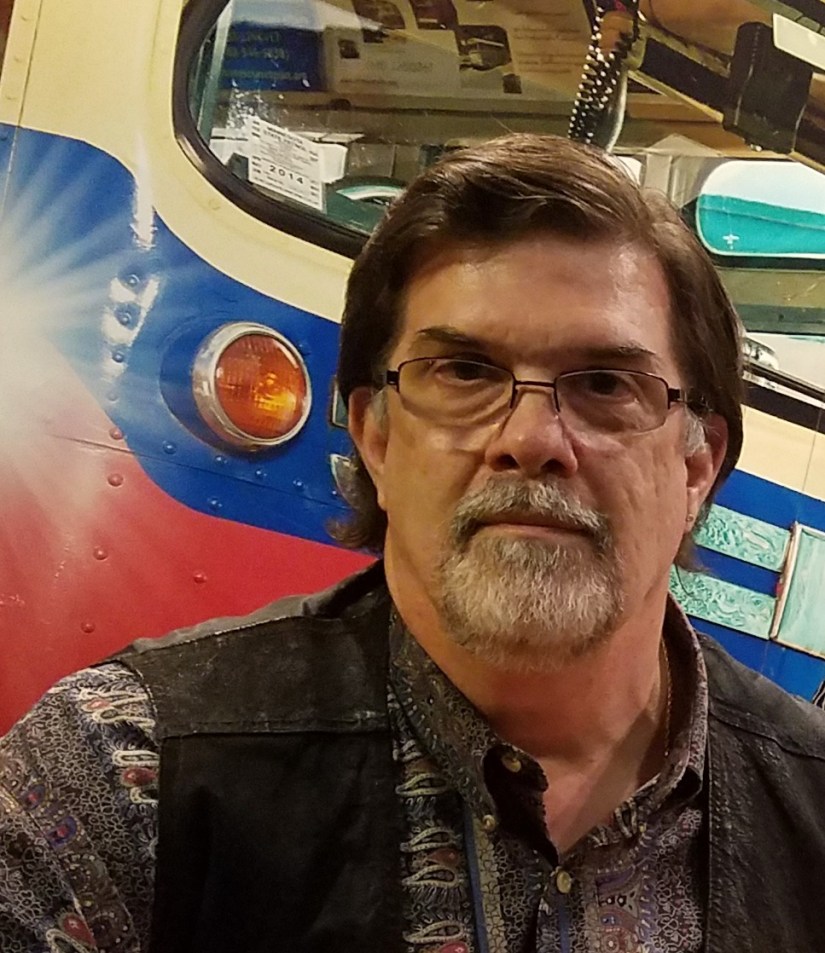
GUEST POST: Thomas Smith

Halloween via Time Machine – or – How to Haunt a House

When I received the request to write this post I was whisked away in my mental time machine and deposited smack dab in the middle of Halloween in the 1960s.

Bobby “Boris” Pickett was singing his new song, Monster Mash, on the radio. A day or so before the big day itself, televisions all over the country were following the antics of the Peanuts gang in a new TV special: It’s the Great Pumpkin Charlie Brown. And in theaters everywhere, there were new movies unlike anything we’d ever seen before, each one guaranteed to make you sleep with a night light:

Night of the Living Dead, The Birds, and Norman Bates as the ultimate mama’s boy in Psycho loomed large on the big screen for those brave enough to keep their eyes open.

And when Halloween finally arrived, a legion of ghosts, goblins, clowns, ballerinas, and hobos came home with bags and plastic jack-o-lanterns filled with apples, oranges, Baby Ruths (regular and minis), Butterfingers (regular and minis), Saf-T-Pops (complete with heavy string loops instead of a stick), Dubble Bubble Gum, Snickers, Milky Ways, Forever Yours Bars, Kraft Caramels, B. B. Bats, wax lips, wax fangs, and boxes of Boston Baked Beans.

And almost every character that wasn’t created at someone’s mother’s sewing machine came from a cardboard box with a cellophane front from either Collegeville, or Ben Cooper. They were the huge Halloween costume companies in the 1950s and 1960s. If you really wanted to be cool, Ben Cooper’s clown, devil, princess, dragon, and spooky monster costumes had flashing lights in the mask. But Collegeville, not to be outdone, had some of the coolest costumes with their Gorilla, Ghoul, Monster, Body Snatcher, and Weird-O, Fink costumes.

Now none of the boxed costumes fit worth a dang, but we didn’t care. A rip here and a patch there (always in the back) and who’s to know? Besides, if you were wearing the Planet of the Apes, Batman, Superman, Hobo, Frankenstein, ghost, and mummy costumes (the very latest and greatest of the day), it was worth it.

Meanwhile, in the middle of all of this Halloween spectacle, my brother and I were waiting in the basement of our house to cap off Halloween in style. We worked for the previous two or three days to get everything just right. Then we went trick-or-treating with the first wave of costumed candy beggars so we could be back in time for the opening of Thomas and Paul’s Haunted Basement.

OK, the title wasn’t terribly original, but for the early 1960s, we were the only game in town (in our particular town at least). We took turns standing in the outdoor entrance to the basement and ushered the unsuspecting costumed customers (admission fee was one candy bar) into a maze of glowing cardboard skeletons, a ghost that moved and floated in the corner of the basement (thanks to an old screen door spring and a string), rubber bats that dropped out of the darkness above onto their victims’ various noggins, a bowl of grapes coated with a little vegetable oil and placed in a black box labeled EYEBALLS with a hole cut out just big enough for a victims hand), a Frankenstein’s monster (each of us in turn, in costume) that would jump out and growl menacingly (as if there’s any other way for the creation of Victor Frankenstein to growl) and watch the guys finch and the girls scream.

Then there was the scary movie.

We would get an 8mm copy of Frankenstein vs The Wolfman from the local Public library (the original movie condensed to approximately five minutes) and coupled with a homemade soundtrack from the Chilling, Thrilling Sounds of the Haunted House record (copied onto a reel-to-reel tape recorder to correspond with the movie scenes), we had the perfect ending to a horrifying (hey, I was nine years old in the 60s) trek through the darkness.

I went trick-or-treating a lot after that. And I’ve been through some really good professionally staged haunted houses. But I’ve gotta be honest.

I’d love to go through Thomas and Paul’s Haunted Basement just one more time.

Boo-graphy:
Thomas is an award-winning writer, essayist, playwright, reporter, TV news producer, and a three-time American Christian Writers Association Writer of the Year. His work has appeared in numerous publications from Writer’s Digest and Exploring Alaska, to The Horror Zine and Cemetery Dance magazine.

He has written for many publishers including Grinning Skull Press, Zondervan, Barnes & Noble Books, Adams Media, Chronicle Books, Borderlands Press, Barbour Publishing, Pocket Books, and Cemetery Dance Publications. Two of his short stories (Mother and Child Reunion and The Heart is a Determined Hunter) have appeared on Tales to Terrify, and his short story, A Rustle of Owls’ Wings, has been adapted for the stage.

Thomas has written jokes for Joan Rivers and his comedy material has been performed on The Tonight Show.

He is also, quite possibly, the only writer in captivity to have been included in collections with Stephen King, and the Rev. Rick Warren in the same week.

And other than author bios, he rarely refers to himself in the third person.

Rarely.
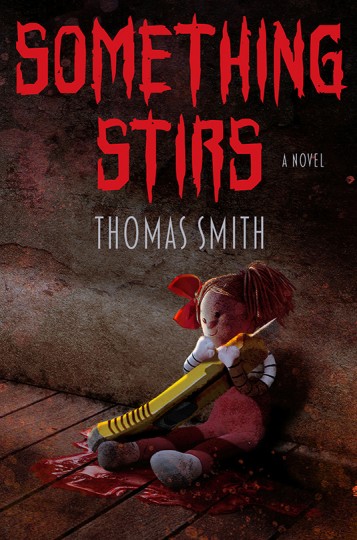
Something Stirs
Ben Chalmers is a successful novelist. His wife, Rachel, is a fledgling artist with a promising career, and their daughter, Stacy, is the joy of their lives. Ben’s novels have made enough money for him to provide a dream home for his family. But there is a force at work-a dark, chilling, ruthless force that has become part of the very fabric of their new home.

A malevolent entity becomes trapped in the wood and stone of the house and it will do whatever it takes to find a way to complete its bloody transference to our world.

Local sheriff, Elizabeth Cantrell, and former pastor-turned-cabinetmaker, Jim Perry, are drawn into the family’s life as the entity manipulates the house with devastating results. And it won’t stop until it gets what it wants. Even if it costs them their faith, their sanity, and their lives.
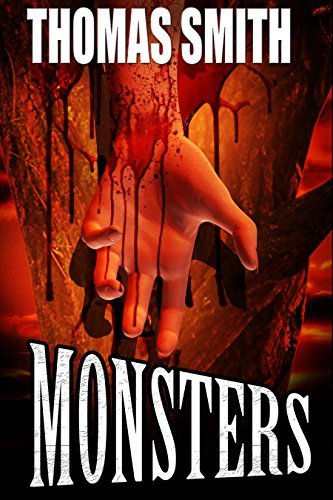
Monsters
“I killed my parents when I was thirteen years old.”

And now, with the murder of Missy Blake twenty-two years later, it’s time for Jack Greene to finish what he started.

When the co-ed’s mutilated body is found, the police are clueless, but Jack knows what killed the pretty college student; he’s been hunting it for years. The hunt has been going on for too long, though, and Jack wants to end it, but he can’t do it alone. The local police aren’t equipped to handle the monster in their midst, so Jack recruits Major Kelly Langston, and together they set out to rid the world of this murdering creature once and for all.

GUEST TV REVIEW by Sarah McKnight: The Tale of the Dead Man’s Float

Are You Afraid of the Dark S5: E1:
The Tale of the Dead Man’s Float

TV Series – 10.7.1995 – Not Rated – 22 minutes
Director: DJ MacHale
Writer: Will Dixon (original creator: DJ MacHale)
Stars: Margot Finley (Clorice), Kaj-Erik Eriksen (Zeke Matthews)

Zeke and Clorice find an abandoned swimming pool at their school where a secret is contained.

“Submitted for the approval of The Midnight Society, I call this story…”

Are You Afraid of the Dark? is a horror anthology series that ran on Nickelodeon from 1990-1996. The series featured members of The Midnight Society gathered around a campfire in the woods and exchanging tales that ranged from the bizarre to the truly terrifying. Each character had a distinct personality and told stories that aligned with their individual interests. With a rating of TVY7, the show not only sparked my love for all things horror, but essentially traumatized me with a few memorable episodes as well.

The one that scared me the most, and naturally became my favorite, was titled The Tale of the Dead Man’s Float. As a child, I absolutely loved swimming and would spend hours in the pool, but the fear of drowning was always in the back of my mind. This episode solidified that fear. The tale revolves around Zeke, a nerdy teenager who never learned to swim, and Clorice, a cool girl on the swim team. After Zeke discovers a pool hidden behind a fake wall within their high school, he teams up with Clorice to get it cleaned up so the swim team can stop traveling for their practices. In exchange, all Zeke asks for is private lessons so he can finally learn to swim. But, as Zeke and Clorice soon find out, there was a reason the pool was hidden away for so long.

Something is lurking beneath the water; something invisible and evil that caused numerous deaths in the past. After a near-fatal experience in the newly opened pool, Zeke and Clorice soon discover, with the help of an old janitor who was once a lifeguard for that very pool, that the school was built over a cemetery and some of the bodies had been missed during the excavation. While this is a tired, arguably overused, trope, the twist on it feels unique and the story, in my humble opinion, still holds up to this day.

Now, Zeke and Clorice know what is lurking beneath the waters, but how can they fight something they cannot see? Fortunately, Zeke is a wiz at chemistry, and he has an idea that just might be crazy enough to work.

When Zeke pours his chemical compound into the pool water, the creature responsible for so many deaths is revealed, and my young mind was subjected to the most terrifying imagery I have ever seen. It still haunts me to this day, and I love it.

Are You Afraid of the Dark? didn’t have to go so hard with their visual effects, but I am so thankful that they did. There was something raw about this show that I feel you don’t see in modern kid’s TV, even if it is horror themed. I recently rewatched the entire series and was surprised at the amount of death and sadness portrayed in the stories shared by The Midnight Society. I think, even as a child, this was one of the reasons why I loved the show so much. Sometimes, it was incredibly real, and the dark tales were not watered down. No one tiptoed around the subject matter just because the audience was mainly children. It was an entertaining, spooky, and occasionally funny show that can still be enjoyed by all audiences to this day.

The series had a short revival from 1999-2000 in which only one member of the original cast returned, and beginning in 2019, Nickelodeon has begun airing short spinoffs of the original show, which have grown in popularity. While these spinoffs are enjoyable, and I feel they have captured the vibe of their predecessor, nothing can beat the original. The entire series, save for seasons 5 and 6, can be found streaming on Paramount+. I highly recommend binging it. Maybe, though, keep the lights on.

“I declare this meeting of The Midnight Society closed.”

Boo-graphy:
Sarah McKnight has been writing stories since she could pick up a pencil, and it often got her in trouble during math class. After a brief stint teaching English to unruly middle schoolers in Japan, she decided she wasn’t going to put off her dream of becoming a writer any longer and set to work. With several novels in the making, she hopes to tackle issues such as anxiety, depression, and letting go of the past – with a little humor sprinkled in, too. A St Louis native, she currently lives in Pennsylvania with her wonderful husband and three cats. You can find her on Twitter and on her website.

The Reaper Chronicles 1:
The Reaper’s Quota
Meet Grim Reaper #2497. Behind on his work, he must complete his quota of thirty Random Deaths or face termination in the worst way. Faced with an insurmountable task and very little time to complete it, Reaper #2497 struggles to hang on to the one thing he’s not supposed to have – his humanity.

GUEST MOVIE REVIEW: Lisa Morton

Halloween III: Season of the Witch
By: Lisa Morton

Let’s get one big thing out of the way first: Halloween III: Season of the Witch (1982) is possibly the worst sequel ever made. I don’t mean that in the sense that this is the worst movie ever made that followed another movie, but rather that this is not even remotely a sequel to Halloween (1978) or Halloween II (1981). This movie has no slasher in a William Shatner mask (except for a couple of scenes of the first movie glimpsed on televisions), no courageous Laurie Strode frantically repurposing a wire coat hanger into a weapon. Making this movie part of the Halloween franchise is about like making a Mad Max movie set in a scenic utopia where everyone walks.

Aside from that, there’s really a lot to love about Halloween III: Season of the Witch, especially if you’re one of those who (like me) start cruising stores in July for Halloween stuff. Unlike the other films in John Carpenter’s Michael Myers series, this one is not merely set around and finally on Halloween, but explores the deeper meaning of the holiday itself.

In case you’ve either skipped seeing Halloween III because of the bad press or haven’t seen it since its original release in 1982, here’s what it’s all about: a small-town doctor, Dan Challis (Tom Atkins), is working the late-shift at the hospital eight days before Halloween when he finds that one of his patients has had his face pulled apart. When the dead guy’s comely daughter Ellie (Stacey Nelkin) shows up and decides to investigate Dad’s murder, the good doctor accompanies her to the small Northern California town of Santa Mira, where Dad had been dealing with the Silver Shamrock Company, producers of Halloween masks. Silver Shamrock’s owner Conal Cochran (Dan O’Herlihy) is a mysterious Irish toymaker who is more than he seems. Before long, Dan and Ellie are surrounded by a number of bizarre deaths, all somehow related to a five-ton piece of Stonehenge kept in Silver Shamrock’s basement, surrounded by scientists and high-tech (for 1982) equipment. It’s finally up to Dan to escape Cochran and tell the world that the immensely popular Silver Shamrock masks will unleash more than just a lot of candy.

So, where’s the title witch? Okay, yeah… Halloween III: Season of the Witch is a double-fail as a title because there’s no Michael Myers AND there’s no witch. What there is instead is Conal Cochran, who is known as the ultimate practical joker and who tells Dan that he was around when Halloween was still called Samhain and “the hills ran red.” The first screenwriter on Halloween III was mad genius Nigel Kneale, the British writer who not only wrote the terrifying Quatermass and the Pit (known in the U.S. as Five Million Years to Earth), but even invented a now-accepted paranormal investigation theory in his 1972 television movie The Stone Tape (“stone tape theory” speculates that some objects or structures can record traumatic events and replay them). Producer Debra Hill asked for a story that combined ancient witchcraft and modern technology, and Kneale was brought in to write the first draft but he ended up being unhappy with the gore added later and had his name removed from the credits. Kneale’s influence is plainly still there… but, sadly, watered down. In his draft Cochran was an ancient demon; in the final film, his nature is so ambiguous – is he a trickster spirit? A sorcerer? A Druid? Just a creepy old dude? – that it deprives his character of a shot at real iconic horror stardom.

Halloween III certainly has other problems. It was Tommy Lee Wallace’s first directing gig (he would go on to make the It television miniseries with Tim Curry as Pennywise), and he has a bad habit throughout the film of holding on his actors so long that you can see them actually wondering what they should be doing. Tom Atkins is always a reliable and likeable actor, but his character here is a doctor who drinks and smokes too much, slaps his nurse on the ass, and asks Ellie how old she is after they have sex (hey, at least he’s not a typical hero). The editing is lazy, and the story takes too long to get going.

But here’s what’s great about Halloween III: it’s Weird with a capital W. Weird as in, full-on go-for-broke crazy. Name another movie that incorporates 18th-century clockwork automata, Jerusalem crickets, loving shots of latex masks being produced, a fake living room set in a lead-lined laboratory, a heroine whose last name is Grimbridge, a reference to Samhain, a woman whose face is (very artistically) fried by an energy beam… well, you get the idea. Buried beneath all this wackiness is some interesting commentary about consumer culture, especially about how it has created a middle class that is happy to plant its children in front of a television while the parents are otherwise engaged. The Silver Shamrock commercial jingle, heard throughout the film, limns an American society obsessed with advertising, even at the expense of protecting its own children. Halloween III is one of those few films that doesn’t just threaten children but shows one being graphically killed, while the parents attempt not to save the child but to flee.

It’s probably no coincidence that Halloween III, which John Carpenter co-produced and also co-wrote, is intensely cynical and ultimately nihilistic, because it was released in 1982, the same year Carpenter directed The Thing. Although in some respects it’s closer to Carpenter’s 1980 gem The Fog – they share the same small Northern California coastal town setting – it absolutely reflects the “we’re all doomed” aesthetic of The Thing.

It also happily wallows in Halloween-ness. First are the three Silver Shamrock masks – a jack-o’-lantern, a skull, and a witch – which we get to see in the factory, in stores stocked full of Halloween goods, and on kids parading about the streets in costume, engaged in trick or treat. The plot’s meticulous build toward the 31st – giving us a seasonal countdown – raises the holiday to an appropriate level of importance. And even Cochran’s undefined nature could arguably be a comment on the deeper mysteries surrounding the history of Halloween.

If you’ve never seen Halloween III: Season of the Witch, consider giving it a spin this October. Go in knowing it’s neither a perfect film nor a classic slasher and you might find other, stranger pleasures here to enjoy instead. Just don’t blame me if that Silver Shamrock jingle gets stuck in your head for weeks after.

Boo-graphy: Lisa Morton is a screenwriter, author of non-fiction books, Bram Stoker Award-winning prose writer, and Halloween expert whose work was described by the American Library Association’s Readers’ Advisory Guide to Horror as “consistently dark, unsettling, and frightening.”  She has published four novels, 150 short stories, and three books on the history of Halloween. Her recent releases include Weird Women: Classic Supernatural Fiction from Groundbreaking Female Writers 1852-1923 (co-edited with Leslie S. Klinger) and Calling the Spirits: A History of Seances; her latest short stories appeared in Best American Mystery Stories 2020, Final Cuts: New Tales of Hollywood Horror and Other Spectacles, and In League with Sherlock Holmes. Her most recent book is the collection Night Terrors & Other Tales. Lisa lives in Los Angeles and online.

From Halloween expert Morton, a level-headed and entertaining history of our desire and attempts to hold conversations with the dead.
 
Calling the Spirits investigates the eerie history of our conversations with the dead, from necromancy in Homer’s Odyssey to the emergence of Spiritualism—when Victorians were entranced by mediums and the seance was born. Among our cast are the Fox sisters, teenagers surrounded by “spirit rappings”; Daniel Dunglas Home, the “greatest medium of all time”; Houdini and Sir Arthur Conan Doyle, whose unlikely friendship was forged, then riven, by the afterlife; and Helen Duncan, the medium whose trial in 1944 for witchcraft proved more popular to the public than news about the war. The book also considers Ouija boards, modern psychics, and paranormal investigations, and is illustrated with engravings, fine art (from beyond), and photographs. Hugely entertaining, it begs the question: is anybody there . . . ?

An abused child finds comfort in the friendship of Frankenstein’s monster…a near-future Halloween party becomes an act of global terrorism…one of the world’s wealthiest men goes in search of his fate as he rots from within…Hans Holbein’s famed “Dance of Death” engravings are revealed to be an instruction manual…a man trapped on an isolated road confronts both a terrifying creature and the legacy of his tough-as-nails grandfather…

Night Terrors and Other Tales is the first major collection to gather together twenty of Lisa Morton’s finest short stories (chosen by the author herself). During a career that has spanned more than three decades, she has produced work that has been hailed as “consistently dark, unsettling, and frightening” (the American Library Association’s Readers Advisory Guide to Horror).

If you’ve never encountered Lisa Morton’s work before, you’ll find out why Famous Monsters called her “one of the best writers in dark fiction today.” If you’re already a fan, this collection will offer up a chance to revisit these acclaimed and award-winning stories. You’ll also find a new story here, written just for this collection: “Night Terrors” reveals ordinary people trying to cope with extraordinary and terrifying dreams that have spread like a plague.

GUEST POST: Robert Herold

Why We Need Horror

Horror fulfills an important part of human culture. Ancient societies were full of examples: The Chaos Monster in Mesopotamia, the Greek’s Minotaur and Gorgon, the tale of Beowulf, the Gumiho from Korea, and many others.

Confronting fearful mythic figures have been used to inspire, explain the unknowable, and to entertain. But they do more than that. Many times, a monster is pitiable, getting us to confront societal prejudices and unfair practices. For example, while Frankenstein’s monster is depicted differently in book and film, both are victims and cause us to question what is just and fair. So too with many of the figures of horror fiction and film.

While some contend that horror is inherently conservative, as the goal is to return to how things used to be, many times the reader or viewer of horror is actually asked to question the norms of society. When done well, horror can enlighten.

Ultimately, we need horror. Stephen King perhaps said it best: “We make up horrors to help us cope with the real ones.”

(This piece originally appeared in the author’s newsletter, The Haunted House of Herold. If interested in subscribing, contact the author at email@robertheroldauthor.com)

Boo-graphy:
The supernatural has always had the allure of a forbidden fruit, ever since my mother refused to allow me, as a boy, to watch creature features on late night TV. She caved in. (Well, not literally!)

While other kids my age wanted to grow up to be doctors, firefighters, spacemen, and the like, I wanted to be a werewolf.

I have pursued my interests over the years (including playing the sax and flute, and teaching middle school history for 36 years), but supernatural writing always called to me. You could say that I was haunted. Ultimately, I hope my books give you the creeps, and I mean that in the best way possible!

Website
Amazon
Facebook
Twitter
Email

The Eidola Project – The Eidola Project is a 19th century team of ghost hunters who become ensnared in a deadly investigation of a haunted house. They are a psychology professor, his assistant, an African-American physicist, a young sideshow medium, and a traumatized Civil War veteran, each possessing unique strengths and weaknesses. Will any of them survive?

Moonlight Becomes You – The Eidola Project travels to Petersburg, Virginia, to investigate a series of murders in the Black community—rumored to be caused by a werewolf. Once there, danger comes from all quarters. Not only do they face threats from the supernatural, the KKK objects to the team’s activities, and the group is falling apart. Can they overcome their human frailties to defeat the evil that surrounds them?

Totem of Terror – The Eidola Project, a team of 19th Century ghost hunters, have been tasked with trying to stop a deadly shapeshifting demon attacking the native people of La Push, on the Washington Coast. The team brings their own demons with them, in the form of drug addiction, a werewolf’s curse, and being in mourning from the death of a loved one. Can they rise to this new challenge, or will they face the same grisly end as the shapeshifter’s other victims?

Witch Ever Way You Go
When an ill-fated graduate student and his girlfriend are lured into a terrifying world of witchcraft and murder, they become targets for human sacrifice. Is there a chance they can escape a bloodthirsty coven of witches and certain death until the curse is lifted? A spellbinding story of modern horror.

GUEST MOVIE REVIEW by Katie Marie: The Halloween Tree

The Halloween Tree

TV Movie — 1993 — Not Rated — 1 hour 9 minutes
Director: Mario Piluso
Writer: Ray Bradbury
Stars: Ray Bradbury (narrator), Leonard Nimoy (Mr Moundshroud)

Four children learn the origins of Halloween customs while trying to save the life of their friend.

Halloween has always been one of my favorite holidays.

These days I love decorating, getting dressed up and giving out sweets to the small monsters that come to my door.

When I was little, I loved going Trick-or-Treating, but I also loved making my own costumes, reading scary books (Goosebumps were a favorite) and watching spooky films.

My absolute favorite of these was The Halloween Tree, and it’s this film that I want to talk to you about today.

Beware spoilers below.

The Halloween Tree was released in 1993 on ABC before being released on VHS and making its way across the pond to the UK where I found it on the shelf of my local rental store. It is based on the 1972 book of the same name by Ray Bradbury and while there are some changes, mostly the animated film stays true to the book.

Ray Bradbury voices the narrator and the film even boasts voice talents of Leonard Nimoy as Mr. Moundshroud.

Plot Summary
The film opens with the narrator describing a small towns Halloween preparation and we meet our main characters, Jenny, Ralph, Wally and Tom. The small group plan to meet their friend Joe (known as Pip). But when they go to meet him at his house, they see him being loaded into an ambulance, the poor lad has appendicitis.

They decide to visit him at the hospital and take a shortcut through the woods but they see a ghost-like vision of Pip running away from them and are convinced this whole thing is a hoax. They follow Pip all the way into a spooky mansion.

Inside the mansion they meet Mr. Moundshroud who is saddened by the fact that none of the children understand the deeper meaning behind their respective costumes, mummy, witch, monster and skeleton. He also reveals that Pip has pinched a pumpkin with his face carved into it from Mr. Moundshroud’s tree of jack-o-lanterns and Mr. Moundshroud is now pursuing him.

Tom begs for the group to be allowed to go with Mr. Moundshroud to retrieve Pip’s ghost. They are initially refused but eventually the old man relents and the group is challenged to retrieve the pumpkin and learn about their costumes in order to get Pip back.

The group goes on marvelous adventures to ancient Egypt, Stonehenge, Notre Dame Cathedral and lastly, Mexico to witness Día De Los Muertos. During these adventures the group comes within a hair’s breath of catching Pip but he always escapes until Tom finds him in Mexico and apologizes. Tom had wished for something bad to happen to Pip so he could be in charge of the group for once, Pip forgives him but crumbles to dust.

Mr. Moundshroud announces the children failed and Pip now belongs to him. But each of the children offer up a year of their lives to Mr. Moundshroud in exchange for Pip, Mr. Moundshroud agrees and they seal the contract with candy. The children are returned home and see Pip has come home from the hospital.

The film ends with Mr. Moundshroud and the jack-o-lantern tree turning to smoke, all except Pip’s pumpkin which his friends rescued with their sacrifice.

My Thoughts
This was a favorite of mine when I was young and even as an adult, I enjoy watching it. I feel films like this paved the way for other stories such as Over the Garden Wall which is wonderfully creepy.

This is a classic horror story, with very real stakes and very real consequences for our characters. But it also has real heart, and shows a strength of friendship and love that resonates with us even as adults. All of Pip’s friends care about him so deeply that they are willing to exchange their own mortal time to keep him alive and safe.

It is also delightfully informative without feeling like you’re being lectured at. It exposed my young and infinitely curious mind to a whole host of cultures, history and information I would have otherwise been ignorant to.

Overall, this is a classic movie with well-established stakes, highly motivated and compelling characters, told with heart and style. A must see for small and big kids alike.

Boo-graphy:
Katie Marie is a horror enthusiast and writer from Norfolk, England.

She has been published in several anthologies and magazines, and her Novella, A Man in Winter, was recently released by Brigids Gate Press.

Katie started writing while studying at Aberystwyth University in the early 2000’s and several years later she has received a Masters Degree and published many short stories, a novel and novella.

Website
Facebook

Arthur, whose life was devastated by the brutal murder of his wife, must come to terms with his diagnosis of dementia. He moves into a new home at a retirement community, and shortly after, has his life turned upside down again when his wife’s ghost visits him and sends him on a quest to find her killer so her spirit can move on. With his family and his doctor concerned that his dementia is advancing, will he be able to solve the murder before his independence is permanently restricted?

A Man in Winter examines the horrors of isolation, dementia, loss, and the ghosts that come back to haunt us.