GUEST BOOK REVIEW by Christa Carmen: Reluctant Immortals

Reluctant Immortals

Gwendolyn Kiste
Genre: Horror, Gothic
Publisher: Saga Press
Publication Date: 8.23.2022
Pages: 317

For fans of Mexican Gothic, from three-time Bram Stoker Award–winning author Gwendolyn Kiste comes a novel inspired by the untold stories of forgotten women in classic literature–from Lucy Westenra, a victim of Stoker’s Dracula, and Bertha Mason, from Charlotte Brontë’s Jane Eyre–as they band together to combat the toxic men bent on destroying their lives, set against the backdrop of the Summer of Love, Haight-Ashbury, 1967.

Reluctant Immortals is a historical horror novel that looks at two men of classic literature, Dracula and Mr. Rochester, and the two women who survived them, Bertha and Lucy, who are now undead immortals residing in Los Angeles in 1967 when Dracula and Rochester make a shocking return in the Haight-Ashbury district of San Francisco.

Combining elements of historical and gothic fiction with a modern perspective, in a tale of love and betrayal and coercion, Reluctant Immortals is the lyrical and harrowing journey of two women from classic literature as they bravely claim their own destiny in a man’s world.

When I was a teenager, I read Jane Eyre. I also read Rebecca, The Castle of Otranto, The Mysteries of Udolpho, The Haunting of Hill House, Dracula, The Picture of Dorian Gray, Wuthering Heights, and every other classic Gothic novel I found on either my mother’s or the local library’s shelves. Like a lot of teen-aged girls obsessed with these types of novels, I pictured myself as the protagonist of each, descending to the abbey basement, journeying to an ancestral home, exploring the secret dungeon or attic or passageway beneath the floorboards. I was Jane learning her true identity, the second Mrs. de Winter gazing upon Manderley for the first time, Eleanor Vance drinking from her cup of stars. But here’s the thing: many of these women weren’t actually great role models to aspire to, or even appropriate “costumes” to try on. Their autonomy, their ability to be the heroine of their own story, was a carefully orchestrated illusion. Jane was a pawn for Mr. Rochester. Emily St. Aubert was imprisoned in Castle Udolpho by Signor Montoni. Isabella was persecuted and traumatized by generations of men who’ve ruled Otranto. In fact, I would be far, far removed from my adolescence before I found a pair of Gothic heroines truly worthy of my aspirations; I thank Gwendolyn Kiste, and her gorgeous novel, Reluctant Immortals, for finally delivering them to me.

Bertha, or “Bee,” Mason and Lucy Westenra fight back, take control, have teeth (no pun intended). They possess true autonomy in that they drive the events of their story. These are not your mother’s or your childhood librarian’s gothic heroines. They are far more powerful than either Edward Fairfax Rochester or Count Dracula ever were. And that’s one of Gwendolyn’s many talents: writing her female characters in a way that naturally balances the scales. They’re believable in their actions, admirable in their strength, understandable in their motives—and their flaws. Gwendolyn captures all the magic and beauty and excitement (not to mention the eeriness, dread, and horror) of Gothic novels with none of the misogynistic stifling of her characters. And her prose? Do we even bother talking about Gwendolyn’s prose in reviews of her work anymore? It’s transcendent (examples: “The pool glitters in the moonlight, the shape of a teardrop, blue and spotless as a phony lagoon from a movie set,” and “The rest of me turns to dust, and I can’t hold on to the urn anymore. It falls through my crumbling fingers, shattering into a thousand pieces on the floor. Overhead, Dracula’s muddy form smears across the ceiling before dripping down to meet himself, the parts of him mingling together, his body becoming stronger, while mine becomes nothing at all. I won’t watch him now. I close what’s left of my eyes and let the darkness rush in to greet me.”). Her weaving of words is on a whole other level.

Some novels can’t help but sacrifice pacing for characterization and language, but Reluctant Immortals is not one of them. One of my favorite sections of the novel (and there are many) was Bee and Lucy’s arrival in San Francisco with Daisy, a young hitchhiker interested in helping them locate Jane Eyre after she’s inadvertently loosed some of Dracula’s ashes on Los Angeles. It’s right about the dead-center of the narrative, and yet it screams forward with as much momentum as the women’s Buick ricocheting up the 101. And the stakes (again, no pun intended) only increase from there.

The showdown between Dracula and Lucy—and Rochester and Bee—is as fantastic and satisfying as one could hope for (and surprisingly biting in its humor at times… When Lucy considers breaking an end table to use on Dracula, he points out that it’s Formica, to which Lucy replies, “Maybe it’s the ideal way to finish you. Death by tacky wood paneling.”). This climax is rife with decay and blood, secrets centuries in the making coming to light and vampires doing, well, what vampires do, and sucking the souls of innumerable victims. But the showdown also vibrates with originality and heart (Lucy and Dracula grappling atop the Golden Gate Bridge, ruin and rot against the “painfully quaint” backdrop of Playland at the Beach), and the worthiness of these Gothic women as heroines strikes me all over again. Gosh, it’s a joy to read about kickass, supernatural women banishing the classic monsters of our past.

“There are no Hollywood endings, not even in Hollywood,” Gwendolyn writes. But with Reluctant Immortals, we do get a Hollywood ending, in a sense. Without spoiling anything, the idea that Lucy and Bee don’t have to be monsters, despite coming from them, is a lifeline I’m more than willing to follow. There may still be “gloom brimming” in our heroines’ hearts, but they have more than achieved what Gwendolyn set out for them to accomplish. Bee’s story, “the one they tried so hard to steal” from her, remains unwritten. Lucy is “more than just the girl who withers in… shadow.” They are as immortal as Gwendolyn’s transcendent novel deserves to be.

Boo-graphy: Christa Carmen lives in Rhode Island, and is the author of the short story collection, Something Borrowed, Something Blood-Soaked. Her debut novel, The Daughters of Block Island, is forthcoming from Thomas & Mercer in fall 2023, and her second novel with the mystery, thriller, and true crime imprint will be out in the fall of 2024. Christa studied English and psychology at the University of Pennsylvania, has an MA from Boston College, and an MFA from the University of Southern Maine.

When she’s not writing, she keeps chickens, uses a Ouija board to ghost-hug her dear departed beagle, and sets out an adventures with her husband, and bloodhound/golden retriever mix. Most of her work comes from gazing upon the ghosts of the past or else into the dark corners of nature, those places where whorls of bark become owl eyes and deer step through tunnels of hanging leaves and creeping briers only to disappear.

A young woman’s fears regarding the gruesome photos appearing on her cell phone prove justified in a ghastly and unexpected way. A chainsaw-wielding Evil Dead fan defends herself against a trio of undead intruders. A bride-to-be comes to wish that the door between the physical and spiritual worlds had stayed shut on All Hallows’ Eve. A lone passenger on a midnight train finds that the engineer has rerouted them toward a past she’d prefer to forget. A mother abandons a life she no longer recognizes as her own to walk up a mysterious staircase in the woods. In her debut collection, Christa Carmen combines horror, charm, humor, and social critique to shape thirteen haunting, harrowing narratives of women struggling with both otherworldly and real-world problems. From grief, substance abuse, and mental health disorders, to a post-apocalyptic exodus, a seemingly sinister babysitter with unusual motivations, and a group of pesky ex-boyfriends who won’t stay dead, Something Borrowed, Something Blood-Soaked is a compelling exploration of horrors both supernatural and psychological, and an undeniable affirmation of Carmen’s flair for short fiction.

GUEST MOVIE REVIEW: Lisa Morton

Halloween III: Season of the Witch
By: Lisa Morton

Let’s get one big thing out of the way first: Halloween III: Season of the Witch (1982) is possibly the worst sequel ever made. I don’t mean that in the sense that this is the worst movie ever made that followed another movie, but rather that this is not even remotely a sequel to Halloween (1978) or Halloween II (1981). This movie has no slasher in a William Shatner mask (except for a couple of scenes of the first movie glimpsed on televisions), no courageous Laurie Strode frantically repurposing a wire coat hanger into a weapon. Making this movie part of the Halloween franchise is about like making a Mad Max movie set in a scenic utopia where everyone walks.

Aside from that, there’s really a lot to love about Halloween III: Season of the Witch, especially if you’re one of those who (like me) start cruising stores in July for Halloween stuff. Unlike the other films in John Carpenter’s Michael Myers series, this one is not merely set around and finally on Halloween, but explores the deeper meaning of the holiday itself.

In case you’ve either skipped seeing Halloween III because of the bad press or haven’t seen it since its original release in 1982, here’s what it’s all about: a small-town doctor, Dan Challis (Tom Atkins), is working the late-shift at the hospital eight days before Halloween when he finds that one of his patients has had his face pulled apart. When the dead guy’s comely daughter Ellie (Stacey Nelkin) shows up and decides to investigate Dad’s murder, the good doctor accompanies her to the small Northern California town of Santa Mira, where Dad had been dealing with the Silver Shamrock Company, producers of Halloween masks. Silver Shamrock’s owner Conal Cochran (Dan O’Herlihy) is a mysterious Irish toymaker who is more than he seems. Before long, Dan and Ellie are surrounded by a number of bizarre deaths, all somehow related to a five-ton piece of Stonehenge kept in Silver Shamrock’s basement, surrounded by scientists and high-tech (for 1982) equipment. It’s finally up to Dan to escape Cochran and tell the world that the immensely popular Silver Shamrock masks will unleash more than just a lot of candy.

So, where’s the title witch? Okay, yeah… Halloween III: Season of the Witch is a double-fail as a title because there’s no Michael Myers AND there’s no witch. What there is instead is Conal Cochran, who is known as the ultimate practical joker and who tells Dan that he was around when Halloween was still called Samhain and “the hills ran red.” The first screenwriter on Halloween III was mad genius Nigel Kneale, the British writer who not only wrote the terrifying Quatermass and the Pit (known in the U.S. as Five Million Years to Earth), but even invented a now-accepted paranormal investigation theory in his 1972 television movie The Stone Tape (“stone tape theory” speculates that some objects or structures can record traumatic events and replay them). Producer Debra Hill asked for a story that combined ancient witchcraft and modern technology, and Kneale was brought in to write the first draft but he ended up being unhappy with the gore added later and had his name removed from the credits. Kneale’s influence is plainly still there… but, sadly, watered down. In his draft Cochran was an ancient demon; in the final film, his nature is so ambiguous – is he a trickster spirit? A sorcerer? A Druid? Just a creepy old dude? – that it deprives his character of a shot at real iconic horror stardom.

Halloween III certainly has other problems. It was Tommy Lee Wallace’s first directing gig (he would go on to make the It television miniseries with Tim Curry as Pennywise), and he has a bad habit throughout the film of holding on his actors so long that you can see them actually wondering what they should be doing. Tom Atkins is always a reliable and likeable actor, but his character here is a doctor who drinks and smokes too much, slaps his nurse on the ass, and asks Ellie how old she is after they have sex (hey, at least he’s not a typical hero). The editing is lazy, and the story takes too long to get going.

But here’s what’s great about Halloween III: it’s Weird with a capital W. Weird as in, full-on go-for-broke crazy. Name another movie that incorporates 18th-century clockwork automata, Jerusalem crickets, loving shots of latex masks being produced, a fake living room set in a lead-lined laboratory, a heroine whose last name is Grimbridge, a reference to Samhain, a woman whose face is (very artistically) fried by an energy beam… well, you get the idea. Buried beneath all this wackiness is some interesting commentary about consumer culture, especially about how it has created a middle class that is happy to plant its children in front of a television while the parents are otherwise engaged. The Silver Shamrock commercial jingle, heard throughout the film, limns an American society obsessed with advertising, even at the expense of protecting its own children. Halloween III is one of those few films that doesn’t just threaten children but shows one being graphically killed, while the parents attempt not to save the child but to flee.

It’s probably no coincidence that Halloween III, which John Carpenter co-produced and also co-wrote, is intensely cynical and ultimately nihilistic, because it was released in 1982, the same year Carpenter directed The Thing. Although in some respects it’s closer to Carpenter’s 1980 gem The Fog – they share the same small Northern California coastal town setting – it absolutely reflects the “we’re all doomed” aesthetic of The Thing.

It also happily wallows in Halloween-ness. First are the three Silver Shamrock masks – a jack-o’-lantern, a skull, and a witch – which we get to see in the factory, in stores stocked full of Halloween goods, and on kids parading about the streets in costume, engaged in trick or treat. The plot’s meticulous build toward the 31st – giving us a seasonal countdown – raises the holiday to an appropriate level of importance. And even Cochran’s undefined nature could arguably be a comment on the deeper mysteries surrounding the history of Halloween.

If you’ve never seen Halloween III: Season of the Witch, consider giving it a spin this October. Go in knowing it’s neither a perfect film nor a classic slasher and you might find other, stranger pleasures here to enjoy instead. Just don’t blame me if that Silver Shamrock jingle gets stuck in your head for weeks after.

Boo-graphy: Lisa Morton is a screenwriter, author of non-fiction books, Bram Stoker Award-winning prose writer, and Halloween expert whose work was described by the American Library Association’s Readers’ Advisory Guide to Horror as “consistently dark, unsettling, and frightening.”  She has published four novels, 150 short stories, and three books on the history of Halloween. Her recent releases include Weird Women: Classic Supernatural Fiction from Groundbreaking Female Writers 1852-1923 (co-edited with Leslie S. Klinger) and Calling the Spirits: A History of Seances; her latest short stories appeared in Best American Mystery Stories 2020, Final Cuts: New Tales of Hollywood Horror and Other Spectacles, and In League with Sherlock Holmes. Her most recent book is the collection Night Terrors & Other Tales. Lisa lives in Los Angeles and online.

From Halloween expert Morton, a level-headed and entertaining history of our desire and attempts to hold conversations with the dead.
 
Calling the Spirits investigates the eerie history of our conversations with the dead, from necromancy in Homer’s Odyssey to the emergence of Spiritualism—when Victorians were entranced by mediums and the seance was born. Among our cast are the Fox sisters, teenagers surrounded by “spirit rappings”; Daniel Dunglas Home, the “greatest medium of all time”; Houdini and Sir Arthur Conan Doyle, whose unlikely friendship was forged, then riven, by the afterlife; and Helen Duncan, the medium whose trial in 1944 for witchcraft proved more popular to the public than news about the war. The book also considers Ouija boards, modern psychics, and paranormal investigations, and is illustrated with engravings, fine art (from beyond), and photographs. Hugely entertaining, it begs the question: is anybody there . . . ?

An abused child finds comfort in the friendship of Frankenstein’s monster…a near-future Halloween party becomes an act of global terrorism…one of the world’s wealthiest men goes in search of his fate as he rots from within…Hans Holbein’s famed “Dance of Death” engravings are revealed to be an instruction manual…a man trapped on an isolated road confronts both a terrifying creature and the legacy of his tough-as-nails grandfather…

Night Terrors and Other Tales is the first major collection to gather together twenty of Lisa Morton’s finest short stories (chosen by the author herself). During a career that has spanned more than three decades, she has produced work that has been hailed as “consistently dark, unsettling, and frightening” (the American Library Association’s Readers Advisory Guide to Horror).

If you’ve never encountered Lisa Morton’s work before, you’ll find out why Famous Monsters called her “one of the best writers in dark fiction today.” If you’re already a fan, this collection will offer up a chance to revisit these acclaimed and award-winning stories. You’ll also find a new story here, written just for this collection: “Night Terrors” reveals ordinary people trying to cope with extraordinary and terrifying dreams that have spread like a plague.

GUEST BOOK REVIEW by Martin Berman-Gorvine: A Fatal Thing Happened on the Way to the Forum

A Fatal Thing Happened on the Way to the Forum: Murder in Ancient Rome

By: Emma Southon
Publisher: Abrams Press
Publication Date: 3.9.2021
Genre: History, Ancient Rome
Pages: 352

An entertaining and informative look at the unique culture of crime, punishment, and killing in Ancient Rome

In Ancient Rome, all the best stories have one thing in common—murder. Romulus killed Remus to found the city, Caesar was assassinated to save the Republic. Caligula was butchered in the theater, Claudius was poisoned at dinner, and Galba was beheaded in the Forum. In one 50-year period, 26 emperors were murdered.

But what did killing mean in a city where gladiators fought to the death to sate a crowd? In A Fatal Thing Happened on the Way to the Forum, Emma Southon examines a trove of real-life homicides from Roman history to explore Roman culture, including how perpetrator, victim, and the act itself were regarded by ordinary people. Inside Ancient Rome’s darkly fascinating history, we see how the Romans viewed life, death, and what it means to be human.


For Halloween, Read Up on the Gorefest That Was Rome

Looking for horror? Look no further than the pages of ancient history.

However bad you thought the Romans were, after reading Emma Southon’s A Fatal Thing Happened on the Way To the Forum: Murder in Ancient Rome, you will realize they were much, much worse.

Let’s start with Sulla, a dictator who ruled Rome during its so-called Republic, after winning a decisive bloody victory in one of his country’s endless civil wars on November 1, 82 B.C.E. The Sulla Victory Games were held in commemoration of this glorious event from then on, around Halloween week, which is our seasonal tie-in for this tiptoe around the Gorefest That Was Rome. Noble Sulla decreed the first Roman law to criminalize murder, but only of very specific types, such as “presiding over a criminal trial with the intent of executing someone.” So the intent of his Cornelian Law was primarily to bring his fellow elites, such as Roman Senators, who were running around murdering each other in the aftermath of the civil war, under some sort of control. (Dictator was an official, legal title in the Roman Republic, by the way.)

If you were an ordinary Roman citizen, much less an enslaved person, you could not resort to the law for protection against or punishment of a homicide at all. The Roman state did not recognize that any of its citizens or subjects had an intrinsic right to life, nor that their murders, however foul and horrible, posed any threat to it. Therefore, most murders were not prosecuted, nor were they even investigated, because there was no such thing as police. (Assassinating a Senator or an emperor was a different matter, of course, not that this stopped half the Roman emperors from being assassinated.)

If you were an ordinary Roman citizen and someone stabbed a member of your family to death, it was up to you and your family to avenge it, if you could. If you were a slave, you had no rights whatsoever, and your master could legally beat you to death if you were too slow fetching him the salt, or for no reason at all. He could feed you to his pet man-eating lamprey, a nightmarish sharp-toothed giant eel. A Roman nobleman named Vedius Pollio was about to do just that to a slave who broke a crystal goblet by mistake. The slave begged his master’s dinner guest, who was none other than the first Emperor, Augustus Caesar himself, to kill him quickly, but the emperor was bored with his host and instead had his slaves break every single one of Vedius Pollio’s goblets instead. Of course, Augustus hadn’t gotten where he was in the first place without shedding oceans of blood.

Then there were Roman methods of execution. Trust me, you don’t want to know. Oh, you do? Well, they didn’t dream up the slow, torturous method of killing known as crucifixion just for poor Jesus. They nailed up men, women and children without distinction or remorse all the time (the Jewish Mishnah claims that the Romans crucified women facing the cross for modesty’s sake). Archeologists can’t find any of the nails, though, because everybody collected the damn things as good luck charms. Oh, and the Romans also crucified dogs once a year in an appalling ceremony meant to commemorate a dumb legend they had that when the Gauls attacked the city of Rome hundreds of years before, the town’s dogs failed to bark out a warning.

Ms. Southon also has a great deal to say about those gladiators you’ve heard so much about (the fights weren’t always to the death, but there was still plenty of gore, don’t you worry), and the Romans’ many, many other highly creative ways of publicly torturing and killing supposed criminals who had done unspeakable things such as trying to escape slavery, or practicing Christianity before that became the state religion. And yet, while reading about this thousand-year spree of human cruelty and bloodlust, you’ll also be laughing yourself silly because on every page, Ms. Southon launches very English barbed quips and comparisons to present-day pop cultural horrors such as reality TV.

Us horror novelists have nothing on sober history, friends. Believe me—or better still, believe Emma Southon’s A Fatal Thing Happened on the Way To the Forum: Murder in Ancient Rome.


Boo-graphy:
Martin Berman-Gorvine is the author of the four-book the Days of Ascension horror novel series: All Souls Day (2016), Day of Vengeance (2017), Day of Atonement (2018), and Judgment Day (2020), all published by Silver Leaf Books, as well as the standalone horror novels Vengeance Is Golden (2019) and The Hunter’s Sister (2021), the paranormal romance Haunted Island: A Love Story (2019), and a satirical screwball caper about American expatriates in Israel in the 1990s, Wanted in the Promised Land (2020).

He is also the author of seven science fiction novels, many with an alternate history theme, including the Sidewise Award-winning The Severed Wing (as Martin Gidron) (Livingston Press, 2002); 36 (Livingston Press, 2012); Seven Against Mars (Wildside Press, 2013); Save the Dragons! (Wildside Press, 2013), which was a finalist for the Prometheus Award; Ziona: A Novel of Alternate History (as Marty Armon), an expansion of the short story “Palestina,” published in Interzone magazine, May/June 2006 (Amazon/CreateSpace, 2014); Heroes of Earth (Wildside Press, 2015); and Monsters of Venus (Wildside Press, 2017). 

He’s currently enamored of his latest pen name, Sam Haines (geddit?), so find him at one of the following websites: Sam Haines, Martin Berman-Gorvine, Varmints Cartoon, Days of Ascension, Emanuel Goldstein (that’s where he writes about political horror) or via his author page on Amazon.

GUEST BOOK REVIEW by C.R. Richards: Inside & Midnight Screams

Two Frightfully Fun Books Written by Women

Crisp wind dances through the falling leaves, sending a blanket of burnt-orange and yellow across the damp ground. I shiver, my gaze drifting along the landscape. Pumpkins smile an ominous warning from their sentry post beside the front door. I catch the distinct aroma of cinnamon and cloves in the air. Someone is baking. I quicken my pace as thoughts of hot tea, and pumpkin cookies make my mouth water.

A warm glow beckons me. Home. Smiling down at my furry walking companion, I climb the stoop and open our front door. My cozy reading chair waits inside. I run anxious fingers longingly across the small stack of books resting upon a table beside the armrest. I’ve been looking forward to my evening read all day.

Hot tea at the ready, I sit down in my chair and scan the scary books on my Halloween Reading List. Will it be The Haunting of Hill House by Shirley Jackson? Frankenstein by Mary Shelley, perhaps? No. I want to begin my Spooky Season reading with two new favorites, written within the last decade by talented women authors.

Inside
By: D.M. Siciliano

Genre: Horror, Ghosts
Publisher: Parliament House Press
Publication Date: October 2019
Pages: 354

1987 “Does it burn in the dark?”

Reid is a bully, but he’s still Alex’s best friend. When Reid pushes Alex and their friends into invading a historically haunted Massachusetts house, Alex knows it’s a terrible idea, but indulges his friend. What could go wrong?

Inside, a mysterious Shadow looms in the darkness. The door to the house vanishes, leaving them trapped. The group flees through the tiny, one-roomed house that defies logic, constantly shifting, presenting them with new doors, hallways, and rooms that seem to be plucked from their memories and fears. One by one, the Shadow hunts them, intent on burning them all from within.

Is there any way to escape? Or will they be burned from the inside out?


C.R. Richard’s Review:

It’s 1987. Five teens dare each other to go inside a haunted house in the middle of the Massachusetts woods. What could go wrong?

The one-story house waits in the wood as it has done for centuries. Locals know it by reputation as being haunted, so naturally, a group of friends go inside to explore. Reid, their leader, is a bully and enjoys asserting his dominance on the group. Not wanting to be a victim of his best friend’s teasing, Alex agrees to go inside with the rest of the group. But the friends soon find the house has deadly games of its own to play. Portals and constantly changing rooms keep the characters and readers guessing.

Time and space are fluid in this house of horrors. What seems like a simple shack in the woods turns into an evil predator with a wicked taste for psychological cruelty. I was both fascinated and terrified by the story’s concept. Warning. This is NOT a lightweight read. The emotional torment of the characters can be draining. We, as readers, become emotionally invested in their well-being.

Author D.M. Siciliano is a modern-day master. Expertly layering emotional torment with threats to the physical, the author guides her readers through the terrifying paradox that is the single-level house.

My Rating: 4 out of 5 Pumpkins!

Banshee 1:
Midnight Screams
By: Sara Clancy

Genre: Horror
Publisher: Scare Street
Publication Date: May 2017
Pages: 144

When Benton dreams, people die…

Every time Benton sleeps, he becomes a trapped passenger within a murderer’s skin; able to hear, see, and feel every part of their kill. When he wakes up, he knows it’s only a matter of time before his dreams become reality. No matter how hard he tries to stop the murders, it always ends the same way – with death.

After ten years of constantly relocating, his parents have decided to settle in Fort Wayward. A quiet Albertan town where Benton could focus on graduating high school and living an idyllic teenage life. That is, until he finds a dead body in his backyard.

Benton’s hopes for normalcy come crashing down as something new begins stalking his dreams. Something that’s not human. And, for the first time, he’s not the only one watching.

As his dreams and reality collide, Benton finds himself facing a monster beyond his understanding. In his fight for survival, Benton soon discovers why death follows him, why monsters draw close, and why he always wakes up screaming.


C.R. Richard’s Review:

Nightmares are terrifying. Trapped inside the deepest realm of our psyche, we are helpless against the brutal torture exacted by our subconscious. Escape comes with the aid of a clamoring alarm clock or an unexpected nudge toward reality. Sweating and afraid, we laugh with a heavy sigh of relief. It was only a dream!

Imagine if the dreamscape won’t let go. Something imprisons Benton, forcing him to witness horrific scenes of violence as if he were the one committing the atrocities. Each night he sees a new murder and experiences it through the killer’s eyes. He wakes, knowing the killings will soon become a reality.

Author Sara Clancy draws us into the troubled life of Benton, the high schooler who is desperate to live a normal life. Clancy has created a sympathetic and interesting character. Being the new kid in high school is awkward enough, but throw in visions of murders, and you have the perfect setup for horror. The author adds ‘literary salt’ to Benton’s wounds as she expertly builds the tension between him and his anxious parents.
Midnight Screams is a wonderful mix of heart-stopping horror and crushing emotional angst.

My Rating: 5 out of 5 Pumpkins!

Still Hungry for Horror? Check out The Horror Writers Association for more hauntingly good stories.


Boo-graphy:
C. R. Richards is the award-winning author of The Mutant Casebook Series. A lover of horror and dark fantasy stories, she enjoys telling tales of intrigue and adventure. Her most recent literary projects include the epic dark fantasy series Heart of The Warrior and the novel-length dark fantasy thriller, Pariah. She is an affiliate member of the Horror Writers Association.

Look for her paranormal dark fantasy project, The Vengeful Dead, coming in 2022.

For more information on the author’s books and upcoming events, please visit her website or social media:

Author Website
Blog: Deep Thoughts & Junk
Facebook Author Page
Amazon Author Page
Goodreads
Twitter

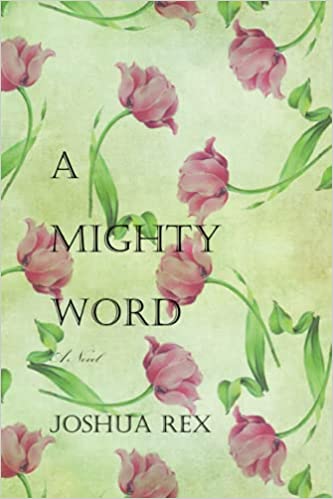
GUEST BOOK REVIEW by Christa Carmen: A Mighty Word

A Mighty Word
By: Joshua Rex

Genre: Horror, Magical Realism, Speculative Fiction

Publisher: Rotary Press
Publication Date: 4.12.2021

Pages: 175

Kevin Heartstone is a past-obsessed tenth grader grieving the loss of his father, an architect and restoration specialist, and struggling with his mother’s new relationship with the owner of a demolition company. While visiting his father’s grave, Kevin encounters Jane Cardinal, a fifteen year old girl who has been dead for over a century and a half. Jane, along with her contemporaries, have recently been re-animated by the by-product of an anti-depressant produced by Still City’s leading employer—Preventative Solutions—which has been illegally dumping the waste into the decaying area neighborhoods and cemeteries. Jane will be Kevin’s link to a time for which he longs, while Kevin himself will become central in his fractured hometown’s survival, and the dilemma of reconciling its past with its present by conciliating the dead with the living.


Halloween is a two-faced entity, characterized both by long-standing traditions and a host of fun, more modern frights. While one can celebrate the night on which the veil between the physical and spiritual worlds is thinnest by visiting a cemetery to pay respects to a lost loved one, an equally viable option is to gather a group of costumed friends to shudder before the latest A24 horror film.

Joshua Rex’s A Mighty Word, like Halloween itself, encompasses the best of seemingly competing worlds. It is a celebration of things that have come before as well as an exploration of that which scares us most in the here-and-now. Death. Loss. Change. Oblivion. No longer recognizing the world around you, or your place within it. It is a novel that engages insightfully with the fear that the best of humanity has come and gone.

The story takes place in fictional Still City, a community that is keeping its last grip on life by producing and promoting an antidepressant called Plaiscene, manufactured by Preventative Solutions. When the toxic byproducts of Plaiscene seep into the ground, causing the deceased residents of Treestone and Neil Memorial Cemeteries to rise from their graves, it quickly becomes clear that the dead are far less monstrous than those in Still City intent on keeping Preventative Solutions running smoothly, no matter the fallout.

Too busy navigating an unfamiliar world after his father’s unexpected death to have bought into the Plaiscene hype, Kevin Heartstone is clear-headed (and open-minded in the way that only somewhat-different-and-subsequently-alienated-kids can truly be) when he stumbles upon the reanimated Jane Cardinal, and finds that his old-fashioned view of things aligns him closely with her and the other corpses.

Kevin and Jane’s fight for what is right is not only hard-hitting in today’s politically embittered times, but in the hands of Joshua Rex, it’s rendered hauntingly on the page. During Kevin’s solitary treks through a ghostly, near-abandoned city, he would “search the newly vacant lots for scraps of the recently demolished, finding perhaps a plaster acanthus curl from a Corinthian column, a spandrel or bracket dowel, a pane from a latticed window.” As the dead rise, they contemplate their surroundings, those spots that were once “hallowed,” that once held “rows of handsome oaks and flowerbeds bright as barrelfuls of spilled jewels.” Even death is beautiful here, and when the mayor takes drastic measures to escape culpability in Still City’s demise, his end is marked by “a volcanic spray brilliant as brimming lava… superimposed against the red and orange shell burst of twilight.”

It’s clear that Joshua’s care wasn’t for a single, or even a handful, of elements when it came to penning this novel. Characters are not sacrificed for plot; neither is language for dread-inducing suspense. Horror—sociopolitical, Gothic, and the beautiful macabre—along with captivating discourses on life coexist bewitchingly on the page.

Some of the best horror, the best stories regardless of genre, are those works which are not easily categorizable; A Mighty Word resists being put in a box much in the same way that the wise and dignified corpses who shape its narrative refuse their stuffy coffins. If Halloween is as much for tradition as it is for the newer rituals that continue to shape it, then Joshua Rex’s novel is what you should be reading this October 31st. It’s a delightful trick of horror subgenre, and an overall treat of dark fiction.


Boo-graphy:
Something Borrowed, Something Blood-Soaked won the 2018 Indie Horror Book Award for Best Debut Collection, and additional work has been published in places such as Year’s Best Hardcore Horror, Fireside, Not All Monsters, and Behold the Undead of Dracula.

These days when I’m not writing, I keep chickens, read books like Mary, Who Wrote Frankenstein and The Gashlycrumb Tinies to my daughter, forget to pull a daily tarot card, and tinker with a dog food recipe concocted to make my beagle live forever.

Most of my work comes from gazing upon the ghosts of the past or else into the dark corners of nature, those places where whorls of bark become owl eyes and deer step through tunnels of hanging leaves and creeping briars only to disappear.

Something Borrowed, Something Blood Soaked
A young woman’s fears regarding the gruesome photos appearing on her cell phone prove justified in a ghastly and unexpected way. A chainsaw-wielding Evil Dead fan defends herself against a trio of undead intruders. A bride-to-be comes to wish that the door between the physical and spiritual worlds had stayed shut on All Hallows’ Eve. A lone passenger on a midnight train finds that the engineer has rerouted them toward a past she’d prefer to forget. A mother abandons a life she no longer recognizes as her own to walk up a mysterious staircase in the woods.

In her debut collection, Christa Carmen combines horror, charm, humor, and social critique to shape thirteen haunting, harrowing narratives of women struggling with both otherworldly and real-world problems. From grief, substance abuse, and mental health disorders, to a post-apocalyptic exodus, a seemingly sinister babysitter with unusual motivations, and a group of pesky ex-boyfriends who won’t stay dead, Something Borrowed, Something Blood-Soaked is a compelling exploration of horrors both supernatural and psychological, and an undeniable affirmation of Carmen’s flair for short fiction.