In the murky London gloom, a knife-wielding gentleman named Jack prowls the midnight streets with his faithful watchdog Snuff – gathering together the grisly ingredients they will need for an upcoming ancient and unearthly rite. For soon after the death of the moon, black magic will summon the Elder Gods back into the world. And all manner of Players, both human and undead, are preparing to participate.
Some have come to open the gates. Some have come to slam them shut.
And now the dread night approaches – so let the Game begin.
Author: Roger Zelazny Illustrator: Gahan Wilson Genre: Fantasy, Horror, Gaslamp Publisher: Avon Books Publication Date: September 1, 1994 Pages: 280
Intro
Roger Zelazny‘s A Night in the Lonesome October is a wonderful book in every sense of the word, and perfect October reading, set as it is in the month leading up to Halloween. Each chapter of the book covers a day, and in this series of potted reviews here, I’ll cover them in the same way, reading a chapter a day through to the climax. I’m reading the hardcover of the gorgeous edition illustrated by Gahan Wilson, but it’s also available in paperback, ebook and audiobook.
It’s gorgeously written, humorous, completely immersive and one of the greatest things since sliced bread. Do yourself a favor and get onto this straight away. Follow me along by reading a chapter a day for the Halloween season – you can thank me later.
October 1st
We start with an introduction to our narrator. Snuff is a loyal companion to Jack, a mysterious figure from Whitechapel who spends time walking the streets righting wrongs and digging in graveyards for ‘materials’ to help with his work. An introductory foreword shows Snuff to be a dog that can talk to other animals. He has a sardonic, almost comical narrative voice that leads you in very cosily to Day 1.
Snuff is on his rounds of Jack’s house, checking that the ‘things’ are where they should be. The thing in the mirror is quiet, but the thing in the cupboard is restless and mouthy until Snuff puts it in its place. Snuff is a guard dog. It’s who he is. It’s what he does.
So we’ve already established there’s something going on, Jack’s motives are murky to say the least and he’s preparing for something that sounds nasty at the end of the month, something that possibly involves the ‘things’ he’s collecting. But Snuff is loyal to Jack, and we already love Snuff, so we’re along for the ride.
Day one, and I’m already back on the hook.
Boo-graphy: William Meikle is a Scottish writer, now living in Canada, with more than thirty novels published in the genre press and over 300 short story credits in thirteen countries.
He has books available from a variety of publishers including Dark Regions Press, Crossroad Press and Severed Press, and his work has appeared in a number of professional anthologies and magazines.
He lives in Newfoundland with whales, bald eagles and icebergs for company.
When he’s not writing he drinks beer, plays guitar, and dreams of fortune and glory.
The Green & the Black — A small group of industrial archaeologists head into the center of Newfoundland, investigating a rumor of a lost prospecting team of Irish miners in the late Nineteenth century.
They find the remains of a mining operation, and a journal and papers detailing the extent of the miners’ activities. But there is something else on the site, something older than the miners, as old as the rock itself.
Soon the archaeologists are coming under assault, from a strange infection that spreads like wildfire through mind and body, one that doctors seem powerless to define let alone control.
The survivors only have one option. They must return to the mine, and face what waits for them, down in the deep dark places, where the green meets the black.
I read horror books all year round. Every season is horror season for me. However, fall time puts me in a particularly festive and nostalgic mood. When the days get darker and colder, when the leaves crunch and the pumpkin spice flows freely, I want to read a specific kind of spooky. I want to read something with a Halloween vibe.
Halloween Land by Kevin J. Kennedy delivers the nostalgia-laden plot that I need beside a crackling fire with a stiff whisky and some mellowcreme pumpkins lifted off my children. The novella is bite-sized, like the candy, and I was able to binge it in one sitting.
Halloween Land introduces us to two teenaged children, Zak and Wendy, as they search for fun and frights on Halloween night. A traveling carnival has appeared in their town for the night, and the two feel compelled to explore it. They don their costumes and push their way through the crowd to get inside. Yet they quickly discover that the carnival is not normal. Instead, it is a gateway to something far more terrifying.
I know Kennedy more than the average reader. He and I co-authored the post-apocalyptic horror novella Screechers. I am also featured in several of his horror anthologies. I personally know how deep of a horror lover Kennedy is and how much genre knowledge he has. That passion, focused on Halloween itself, is very evident in Halloween Land.
Like any deep horror author, Kennedy takes his favorite toys out of the box to play with in his world. This produces a reliance on tropes and archetypes, appearances of familiar characters and ideas. Especially when we approach concepts steeped in motifs, like Halloween itself or a carnival. Kennedy blends horror with Halloween and a carnival in Halloween Land. This blending relies on the tropes you would expect to see in such a recipe, but I was not exasperated to see reliance on these archetypes. Rather, it was like coming home to familiar friends, smiling at the comfort.
The subtitle of Halloween Land is “A Coming of Age Story.” That aptly describes the journey of Zak and Wendy and sets the tone of their adventure. The two dressing up and heading to the Halloween carnival has a distinctly Goosebumps vibe to it, especially since Goosebumps laid the foundation for all my later horror indulgence. That tickle of my childhood only amplified the nostalgia already conjured by the Halloween and carnival imagery.
Yet Halloween Land does not remain in childlike fantasy. When Zak and Wendy cross the threshold into Halloween Land’s other dimension, we too step into Kennedy’s world of monsters.
I am familiar with Kennedy’s world of monsters. I have written there. When we were writing Screechers, I handled the human survivors while Kennedy concocted the mutated monsters. He imagined fantastical beasts. I cannot fathom what all is lurking in his imagination. I will not betray Halloween Land with spoilers, but the same sort of blood-thirsty beasts are unleashed from his mind. With the appearance of these monsters, you can expect epic battles and harrowing fights for Zak and Wendy.
Halloween Land is the quick, easy read to sit down with to get you in the Halloween mood. It is the story to curl up with when you are feeling nostalgic and want to go to the Halloween carnival and also hint at your own youth. Halloween Land is horror comfort food to be consumed in one sitting, perhaps by a fire with a stiff drink and some leftover candy (like I did). Get in line to see if you survive the Fun House!
Boo-graphy: Colorado-bred writer, Christina Bergling knew she wanted to be an author in fourth grade. In college, she pursued a professional writing degree and started publishing small scale. With the realities of paying bills, she started working as a technical writer and document manager, traveling to Iraq as a contractor and eventually becoming a trainer and software developer. She avidly hosted multiple blogs on Iraq, bipolar, pregnancy, running. Limitless Publishing released her novel The Rest Will Come. HellBound Books Publishing published her two novellas Savages and The Waning. She is also featured in over ten horror anthologies, including Collected Christmas Horror Shorts, Graveyard Girls, Carnival of Nightmares, and Demonic Wildlife. Bergling is a mother of two young children and lives with her family in Colorado. She spends her non-writing time running, doing yoga and barre, belly dancing, taking pictures, traveling, and sucking all the marrow out of life.
Followers — Sidney, a single mother with a menial day job, has big dreams of becoming a full-time horror reviewer and risqué gore model. She’s determined to make her website a success, and if her growing pool of online followers is any indication, things are looking good for her Elvira-esque aspirations. In fact, Sidney has so many followers that chatting with them is getting to be a job in itself. More than a job, it might be getting a risky….
When Sidney is attacked on a dark trail late one night, it becomes clear that the horror she loves is bleeding into her real life. She learns that real-life horror is not a game, and being stalked isn’t flattering—it’s terrifying, and it could get her killed.
Sidney—and her loved ones—are now in serious danger. This follower isn’t just another online fan: he knows her movements, and he knows her routine. In fact, he’s right behind her… and when he gets close enough, he won’t take no for an answer.
Both the movie (the made for television mini-series from 1978) and the book (written in 1973) are absolute wins. Harvest Home is the story about Cornwall Coombe, a tiny, almost forgotten hamlet tucked away somewhere within the Connecticut countryside and follows a young family (the Constantines) who desire a more quiet and peaceful life.
It’s part folk and part cult, but all solidly horror-based. The book does take its time “getting there”, but what Tryon does masterfully is set the scenes and create the world, so by the time hell breaks loose (and trust me, it does), you are all in.
The characters are riveting and truly jump off the page. Like ‘em or hate ‘em, you’ll get to know and understand them. And while we might not live in a world like ‘the Coombe’, there’s enough folk horror of today for readers to have a firm grasp on the entirety of the story. Think Midsommar, The Wicker Man (the original), and to a degree, The Stepford Wives (the original), and even The Witch.
I recommend this book (and the made for tv movie – you can find a fairly decent offering on YouTube. It’s not the cleanest version, but you’ll get the gist.) It’s perfect for the fall, for Halloween, or anytime you want a fantastic story and pulls you in and refuses to let go long after you’ve finished with it.
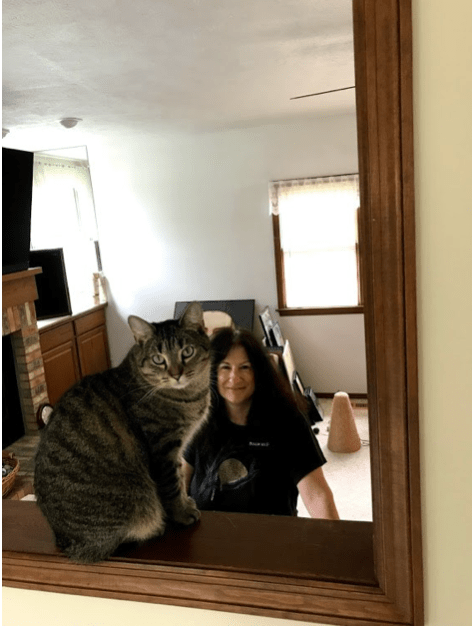
Boo-graphy: Sue Rovens is an indie suspense/horror author who hails from Normal, Illinois. She has written four novels and two books of short horror stories, with her latest book, Rage, having “hit the shelves” in July 2021.
Track 9, her second novel, snagged a starred review in Publisher’s Weekly (May 2018), her short story, “Coming Over”, from her book In a Corner, Darkly (Volume 1), was turned into a screenplay and short student indie film by the theater department of Southern Illinois University, Carbondale, and another short story, “When the Earth Bled”, won 2nd place in the Support Indie Authors short story contest earlier this year. Her two most recent books (Buried and Rage) are under Plump Toad Press.
Sue owns a blog which includes interviews with authors, musicians, podcasters, and artists. She is an Executive Producer for an indie (short) horror film which is currently in production called “Let’s Do Things that Make Us Happy”. Sue is also a co-host and story writer for the new horror podcast, Ye Olde Terror Inn.
Sue is a member of The Chicago Writers Association and the Alliance for Independent Authors (ALLi).
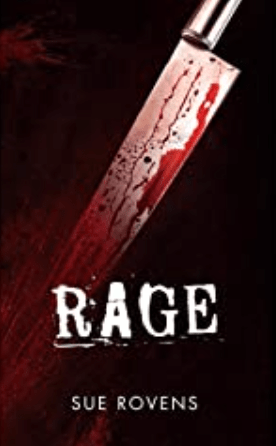
Rage — Weston Cross is a bullied and abused man who wants nothing more than to escape from his agonizing mental anguish and excruciating misery. After a harrowing brush with death, he discovers a better way to twist his depression and self-despair into something different…something sinister.Lindsay Yager, the therapist assigned to help Weston with his internal battles, is fighting her own demons. On the verge of a nasty divorce, she finds solace at the bottom of a bottle. Her anger and vitriol take no prisoners, even when lives are at stake – including her own.Depression sets the stage, but RAGE will have the final say.
Two novel recommendations for horror fans who appreciate well-told stories about devilish characters.
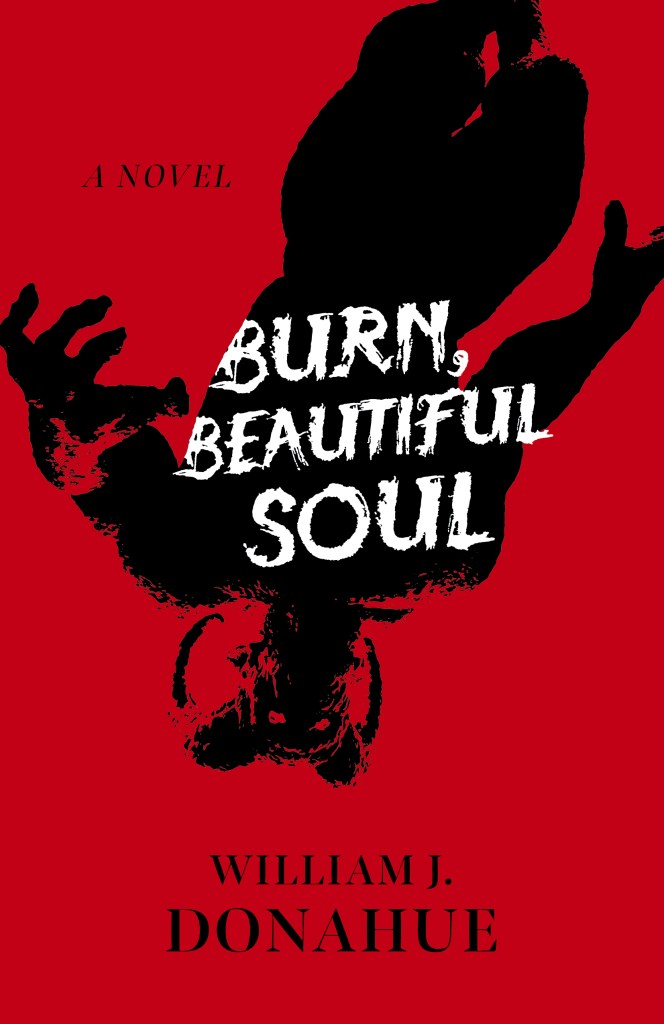
What respectable horror fan doesn’t love a good novel in which the devil, or something closely resembling him, comes to Earth to stage an uprising, possess an unsuspecting soul, or otherwise wreak havoc on the mortal world? I sure do; in fact, I used the trope as a central part of my 2020 novel, Burn, Beautiful Soul, in which a demon king named Basil departs his subterranean kingdom for the surface to take a job writing ad copy for an agency in rural Nebraska.
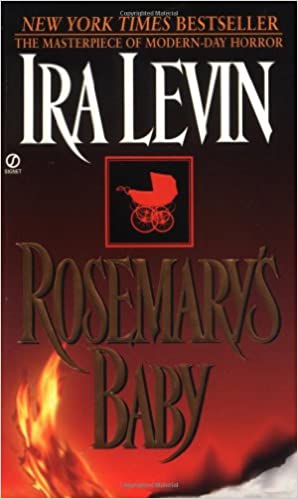
Two excellent novels that incorporate this idea ended up on my nightstand in the past year: Rosemary’s Baby by Ira Levin (1967); and The Summer That Melted Everything by Tiffany McDaniel (2017). In some ways, these two novels are opposites; one is written in first person, the other in third person; one is a coming-of-age story set in a small Ohio town that does not exist, and the other is an occult-driven mystery set in the world’s largest metropolis; and one surrounds the end of innocence, while the other details the postpartum beginning of hell on earth.
Both, however, are amazingly written, completely engrossing, and creepy as hell.
Let’s start with Rosemary’s Baby. I picked up a hardback copy of this novel for less than a dollar at a used-book sale in a suburb of Philadelphia, figuring that even if it landed in the “DNF” pile, at least I had it in my collection; it’s considered a classic for good reason. I had not watched the film in its entirety until last year, though I had seen the final unsettling scene a dozen times in Terror in the Aisles and other films about horror’s best and most iconic titles.
You likely know the story, too, even if you have not read the novel or seen the film. The gist: A young married couple moves into a gorgeous Manhattan apartment building with an insidious past; a klatch of elderly and eccentric neighbors gets increasingly chummy with the couple, because they are grooming the protagonist, Rosemary, to bear the Dark Lord’s progeny; and, in the end, Rosemary’s maternal instincts kick in as she comes to terms with the idea of spending the next 18 years mothering the antichrist, at which point the antichrist will be of legal age and able to make decisions for himself.
Rosemary’s Baby is an excellent read. Even though I knew the story, I felt a sense of eerie delight as I turned the patchouli-scented pages. (Incidentally, I love the personalities of used books; many come with notes in the margins, underlined passages the prior owner found particularly profound, or, in this case, evidence of the prior owner’s lifestyle.) Without giving away too much of the story, Rosemary finds herself on the horns of a thorny dilemma. She and her husband, Guy, want to have a baby. Her new neighbors seem kind enough, even if they are a bit strange and take a little too quickly to the new folks in town, particularly Guy, who is an aspiring actor. When the neighbors learn that the couple is trying to procreate, things happen, as they generally do in novels.
Rosemary’s pregnancy takes, which should be a cause for celebration. Her memory of certain events surrounding the pregnancy seems fuzzy, which may or may not have something to do with the “cold sour” concoctions one of the neighbors has been feeding her to sustain the bundle of joy growing inside her. Or it could be the stink of the strange charm around her neck, another gift from the overbearing neighbor. Of course, Rosemary also abhors the atrocious dreams—or are they memories?—about a seemingly demonic figure having its way with her as Guy and others look on approvingly.
Levin, the author, does a wonderful job of making the reader struggle along with his protagonist. Rosemary begins to suspect that her neighbors, her doctor, and even her loving husband are conspiring against her, and gaslighting her into thinking her pregnancy is going according to plan, when, in fact, her body is nourishing a monster. Part of Rosemary does not want to believe such horrible things are happening, despite the impassioned warnings of a male friend who digs a little too deeply into the curious goings-on. Likewise, the reader suspects Rosemary’s fate is not a good one, but the nugget of doubt keeps the reader turning pages until the perfectly devilish conclusion.
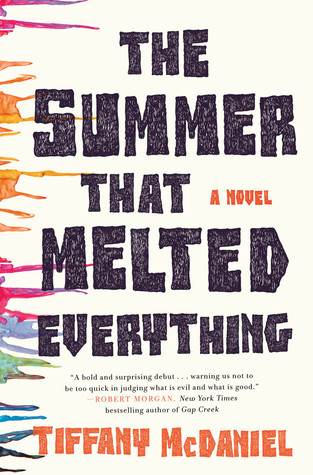
Which brings me to Tiffany McDaniel’s The Summer That Melted Everything. This is not a horror novel; rather, it’s a dark coming-of-age story about a young boy named Fielding Bliss who grows up in a town called Breathed (pronounced BRETH-ed), Ohio, during a particularly hot summer in the early 1980s. Circumstances convince Fielding’s father, a kind man named Autopsy — give McDaniel credit for inventive character names — to advertise a peculiar invitation in the local newspaper: He welcomes the devil to visit and shake up their sleepy town.
Soon enough, the devil shows up… in the form of a thirteen-year-old black boy named Sal.
Sal looks nothing like one might expect from the Prince of Darkness: no horns, no hooves, no pitchfork. He does, however, have a peculiar way about him, and he seems to have no discernible past. Sal also possesses an uncanny ability to understand people’s intentions and past traumas, even if they cannot understand those things themselves.
Despite outcries from certain sects of Breathed’s population, led by a feisty dwarf named Elohim, the Bliss family takes Sal in as one of their own. That’s where the story gets good — amazing, in fact. Mysterious occurrences ensue. People die. Innocent snakes get set alight. (Great line, among too many to mention: “You can tell a lot about a man by what he does with a snake.”) Along the way, Fielding learns about kindness and cruelty, friendship and love, good and evil, life and death.
The writing ranks among the best I have ever had the pleasure to consume. Several times while reading this novel I stopped and nearly gasped at McDaniel’s talent for turning a phrase and plucking a nerve I didn’t know was there.
Of the sixty or so books I read last year, I consider The Summer That Melted Everything my favorite. I immediately bought McDaniel’s follow-up, Betty, which is a prequel of sorts. It, too, was incredibly well written, but reading it pained me because of the many hells the title character and her family must endure. It’s even more unsettling to consider the novelist’s suggestion that some of those hells were slightly fictionalized versions of episodes from her own family’s history.
Betty is one of the few books that I nearly stopped reading purely because of a scene’s intensity. The author took one step across a line that made me wonder if I wanted to finish; only the strength of the narrative kept me going. I’m glad I did because of the novel’s resolution, which included a graceful reintroduction to some of the characters from The Summer That Melted Everything.
I have read my share of horror novels flush with gore and brutality, and some of them have a permanent place on my bookshelves at home. Even so, my favorite horror stories, meaning the ones I will return to, have a certain elegance to them—moments of quiet and tenderness among the screaming and bloodshed. To me, few novels achieve this balance more effectively than the two I’ve outlined here.
Boo-graphy: William J. Donahue’s novel Burn, Beautiful Soul won the horror category in the 2021 International Book Awards. He also authored three short-story collections: Too Much Poison, Filthy Beast, and Brain Cradle, one of which (Filthy Beast) was a finalist for Foreword’s 2004 Book of the Year Award. His next novel, Crawl on Your Belly All the Days of Your Life, will be released in April 2022. He lives in a small but well-guarded fortress in the Keystone State, somewhere on the map between Philadelphia and Bethlehem. Although his home lacks a proper moat, it does have plenty of snakes.
Burn, Beautiful Soul — Basil the demon king has come to a crossroads. He has grown tired of life underground and regretful of the atrocities he has committed to maintain his hold on power. Wanderlust leads him to the surface, to live freely among humans. Considering the state of the world, most humans seem unfazed by his arrival – but not all. A religious zealot with murderous intentions and a vengeful biker gang seek his end. Meanwhile, Basil must contend with two internal forces: the disturbing dreams that suggest he once walked the earth as a human; and the pull of the underworld, drawing him back to deal with the troubles he left behind – namely, a cunning foe who craves the throne, a monstrous kraken, and an ancient evil as cold and dark as the soil.
‘Burn, Beautiful Soul is The Wizard of Oz with a demon Dorothy… It is a loving but unsentimental dissection of America and its people. It is a story you will never forget.’ John Schoffstall, author of Half-Witch




 Meghan's House of Books