Halloween Extravaganza: INTERVIEW: Paul Flewitt

Meghan: Hi, Paul. It’s a pleasure to have you here today. Welcome to Meghan’s House of Books. Tell us a little bit about yourself.

Paul Flewitt: First and foremost, thanks for hosting me on your blog. It’s great to be here.

I’m Paul Flewitt, and I’m a horror and dark fantasy writer (why does that always sound like an AA meeting intro?)

I live in Sheffield, UK, am married to a wonderful wife and have two amazing children. I love rock music, playing pool and hanging with friends. I guess I’m just a normal guy… I just have a bit of a screwed up imagination… honest.

Meghan: What are five things most people don’t know about you?

Paul Flewitt: Wow. Five things people don’t know about me?

These questions are always kinda difficult, because I tend to be a pretty open and honest person (probably sometimes too much so,) so its pretty hard to think of anything anyone might not have already heard. So, I’ll endeavor to try.

I was raised as a Jehovah’s Witness, and reading the bible at a young age has sometimes coloured the stuff I write, whether that be the lunatic preacher in my first novel or the demon, Jezriel, from my short story, Climbing Out.

I have never broken a bone in my body, but that is probably more by luck than management.

People often think I’m an unfeeling asshole, but I’m actually pretty sensitive and if people are hurting, I hurt too.

I recently was diagnosed as suffering from acute anxiety, which is something I battle every day.

I am a complete technophobe. If I need to figure anything technological, I need my wife to hold my hand and go in first.

Meghan: What is the first book you remember reading?

Paul Flewitt: That’s another tough one because I remember reading from a very young age. My Dad was an avid reader and encouraged me to read everything, almost as soon as I could talk. Probably the first book I can remember is a collection of children’s fairytales and poetry. I can’t remember its title, but I read “There Was a Crooked Man” over and over. That is one that sticks in my mind along with Enid Blyton’s Famous Five stories and Beatrix Potter’s Peter Rabbit books. I’m sure there are other books and stories that I read as a kid, but those are the ones that really stick in my mind.

Meghan: What are you reading now?

Paul Flewitt: I’m re-reading Clive Barker’s Abarat books. They are the only books by him that I haven’t read repeatedly, so I am putting that right. I’ve also been on a bit of a secret society kick lately, so I’ve been reading a lot of books about The Priory of Scion, The Illuminati, The Freemasons, and Rosicrucians. It’s not that I believe in their theology or theories, but the way they are formed and the psychology involved in their membership is interesting to me.

I’m also reading Clive Barker’s biography by Douglas E. Winter and doing some research in preparation for a thing I’m writing.

Meghan: What’s a book you really enjoyed that others wouldn’t expect you to have liked?

Paul Flewitt: I’m sure there are plenty. I read pretty much everything I can get my hands on, so nothing should really come as a surprise. I suppose people might be surprised to learn that I enjoy Bernard Cornwell books; his Sharpe series and Last Kingdom books are phenomenal. I like Ellis PetersCadphael books and Brian JacquesRedwall stories too. I have no problem reading kids’ books, YA books, historical fiction or pretty much anything else. I appreciate well written stories, no matter who they’re aimed at.

Meghan: What made you decide you want to write? When did you begin writing?

Peter Flewitt: This is another “It was Dad’s fault” questions I’m afraid.

My Dad was a hobbyist writer and poet as well as a voracious reader, so I suppose it was inevitable that he would encourage my brothers, sister and I to try our hands at it. I always had a natural ability with words and telling stories, so I always have done it to one extent or another. I enjoyed it when my English teacher set us a creative writing assignment and I could let loose with my imagination. Often I would rush through work in lessons so that I could just write a story or a poem, which my teachers would allow me to do. So, I have always written to some degree, for as long as I can remember.

As far as writing for print, I was out of work for a while during the last global financial crisis and my wife got sick of me rattling around the house while looking for a job. The job market where I live was awful at the time and I was really struggling, so my wife suggested I write something and see if I could get published. I didn’t really take it seriously, but I did as she suggested and wrote a couple of short stories. I joined an online writing group, which is where I met my editor. She read what I’d written and encouraged me to submit them for publishing. I did that and both were accepted; one was turned into my first novel. Because of those acceptances, my wife gave me a year to work at it and see what became of writing, and I haven’t been back to a day job since. I’ll be honest, I’ve been really lucky.

Meghan: Do you have a special place you like to write?

Paul Flewitt: Not really. I mean, I can’t seem to write in public so cafes and parks aren’t really an option; I get too easily distracted by stuff going on around me. I just sit on the sofa or at my desk with a pen and paper and scribble away until I have something. Pretty boring really… sorry!

Meghan: Do you have any quirks or processes that you go through when you write?

Paul Flewitt: Again, not really. I think possibly the quirkiest thing about my process is that I write all first drafts longhand. In this day and age of laptop computers, tablets and technology I notice less and less writers actually sit with a pen and paper and write, but to me that is where the magic is. I find I can flow better if I write longhand and watch the ink melting into the page. Yes, it is slower progress, but the final results are much better for me.

Meghan: Is there anything about writing you find most challenging?

Paul Flewitt: There are many things about writing that I find challenging. Finishing a story is probably the main thing. I am my own harshest critic, and I have so many manuscripts languishing in a box unfinished because I lost the thread, because the quality of the story dipped or I just lost faith in the story. I call it “writer dysmorphia,” where you look at everything you write and decide it’s the worst thing in the world and you’re kidding yourself if you ever thought you were any good. I’ve spoken to a lot of writers, and many of them have the same thing. It’s something you just have to push through and ignore.

Meghan: What’s the most satisfying thing you’ve written so far?

Paul Flewitt: I guess the politically correct answer to this would be my novel, Poor Jeffrey, or the thing I am currently writing. Instead, for me, it is a short story I wrote for Dean M. Drinkel’s Demonology anthology. I wrote a thing called Climbing Out, which was the story of a Nephilim escaping Hell and recounting his story as he literally climbed out of the Pit. For me, it’s a story that is the closest I have come yet to being the writer that I want to be.

Meghan: What books have most inspired you? Who are some authors that have inspired your writing style?

Paul Flewitt: There are so many, for many reasons. You know those books that you read and don’t want to end? The ones where you reach the end of the story and are disappointed to the point of grief because you have to leave the world that the writer has created? That is the kind of thing that I want to write. Those are the writers that I hold as my benchmarks for success. The first book that got me like that was Tolkien’s Lord of the Rings. I felt at home in Middle Earth and I loved the people that inhabited it, and I never wanted to leave. Clive Barker has written many books that filled me with that feeling: Imajica, The Great and Secret Show, Cabal, Everville, Galilee. Barker is my favourite writer, and his work really speaks my language. At a time when I was getting a little jaded by horror books, Barker came along and lit a fire under my ass, so he will always be my guy.

Stephen King’s The Long Walk, The Stand, It, and Carrie are also books that transported me.

I never set out to write like anyone except myself, but reviewers have often likened my style to Clive Barker and Stephen King, which shocked me a little. Given that they are two of my favourites, I guess it shouldn’t be a surprise that people hear echoes of their voices in my own.

Meghan: What do you think makes a good story?

Paul Flewitt: For me, it’s making the unbelievable believable. If you can convince the reader that the fantasy that you’re creating is feasible, then they will follow you pretty much anywhere. Your characters, situations, world that you create have to be relatable to the reader, and then they’ll engage. Make the characters likeable, hateable, repulsive or loveable as you wish, but make the reader believe.

If a book leaves me with a sense that this weird, wacky and sometimes terrifying stuff could actually happen, that is when I know that it’s a good book. You get extra points if it leaves me looking over my shoulder for the antagonist to strike.

Meghan: What does it take for you to love a character? How do you utilize that when creating your characters?

Paul Flewitt: Again, it’s about believability and relatability. If you see something of yourself in a character, then you can live vicariously through their written experience. All of the characters I write have characteristics that I have seen in someone I’ve met or walked past in the street. That’s not to say that I write friends and people I know into my books, I don’t. All my characters are composites of a lot of people and none, so if anyone sees themselves in my characters, it says more about you than me. Its about writing humanity in a way that can strike people as familiar.

Meghan: Which, of all your characters, do you think is the most like you?

Paul Flewitt: None of them really. Again, I don’t go out of my way to make my characters like anyone I know… not even myself. I mean, of course there will be echoes of me in all of the characters that I write. I am the writer and all of them come from me, so it would be weird if there wasn’t something of me in all of them… even the worst of them, but only an echo and nothing more.

Meghan: Are you turned off by a bad cover? To what degree were you involved in creating your book covers?

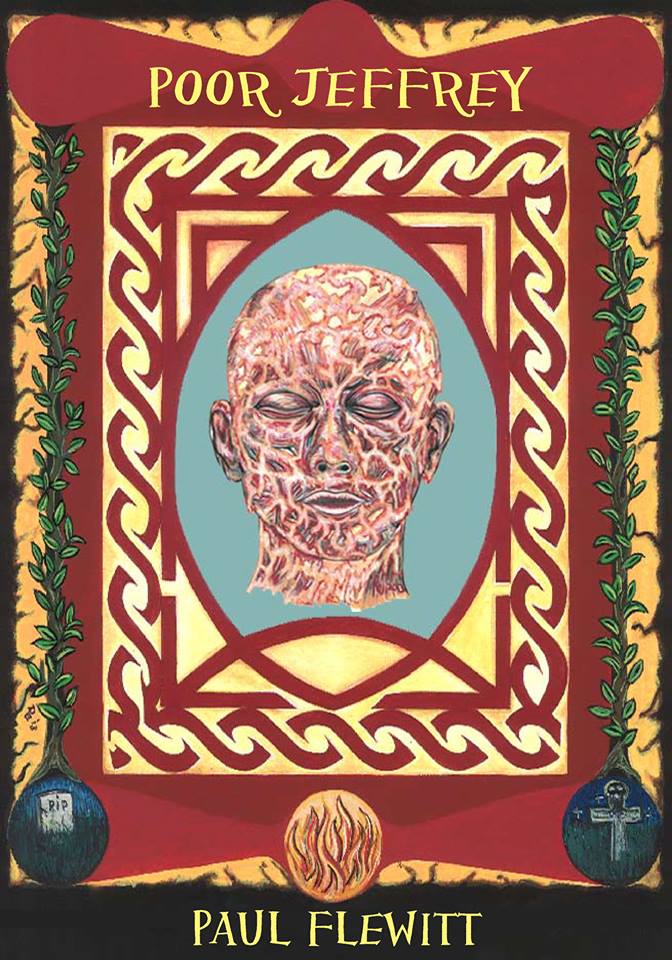
Paul Flewitt: If its truly awful, I can be. I feel that, if you have no regard for the presentation of the cover, then there won’t be any regard for the story either. The cover is the first thing you see, and it has to be representative of the story within. With Poor Jeffrey I was very hands on with the creation of the cover. I gave Richard a very clear brief on what I wanted and he hit it out of the park, I have to say. It also has the advantage of being a real work of art which hangs in his studio. I will always insist on having a good deal of input into the cover art for my books. It has my name on it; it represents me and my work so it has to be right. I hope that doesn’t make me sound like too much of a diva hahaha.

Meghan: What have you learned creating your books?

Paul Flewitt: Many things about the industry, clearly. As a newbie writer, I had no idea that writing only comprises about ten percent of a writer’s time. I had no idea about promotion, blogging, and the amount of work that needs to be done away from the pen and paper. Really, publishing has been an eye-opener into what actually has to go into the production of a book. The great thing is that you never really stop learning.

Meghan: What has been the hardest scene for you to write so far?

Paul Flewitt: There have been a couple that were difficult for different reasons. The first would be one I call “The Mute Girl” scene from Poor Jeffrey. People that have read the book have highlighted it as a particularly hard hitting portion of the book, and I very nearly didn’t put it in because I wondered how it would be received. In the end, it went in because it was a scene that gave an insight into the mind of my antagonist, but it was a difficult one to write and edit.

The other one comes from a story I wrote for a pitched TV show called Fragments of Fear. My contribution was called Silent Invader, and dealt with a demon which haunts television and makes people commit atrocity. One of the scenes involves a mother murdering her children and her husband, which was another one that I struggled to write and very nearly didn’t put in.

Funny that both scenes are ones which involve violence against children… which probably says a lot about me.

Meghan: What makes your books different from others out there in this genre?

Paul Flewitt: I wrote them hahaha. Seriously, this is a question I always struggle with because I don’t really analyse my stuff too closely. I suppose one difference is that I’m not trying too hard to be different. I just want to tell good stories, and if people see something different about them then that’s cool. I don’t go all out on gore, trying more to write characters that readers become invested in so that the situations they find themselves in become the horror, not the amount of blood that gets splashed around. One criticism that I have of some modern writers is that they go all out for shock value or disgust value, which is okay for them and they’ve got an audience for that kind of story. More power to them. Its just not the kind of story that I want to write. I want to write more in the classic mould, but for the modern era.

Meghan: How important is the book title, how hard is it to choose the best one, and how did you choose yours (of course, with no spoilers)?

Paul Flewitt: I cheat. I come up with the title first, and everything flows from there. Okay, that’s not strictly true. I come up with a character first, and start to build the story about that character, and then I come up with the title. It tends to come pretty soon after beginning the story and the first one I come up with tends to be the one I go with.

Of course the title is all important, because it’s the thing that attracts the reader after the cover (assuming people are finding your work while browsing the shelves, whether physical or cyber.) It has to draw people in and intrigue, like a tag line or blurb.

How do I find the title? It’s a mystery even to me. It tends to be a phrase which seems to speak to the story and pops.

Meghan: What makes you feel more fulfilled: Writing a novel or writing a short story?

Paul Flewitt: Both, for different reasons. Short stories can be just as much a challenge as longer work, because you have to tell a complete story in a short space of time. You have to be disciplined and concise. You can’t introduce a character or side story just because it pops up and seems worthy of exploration like you can in a novel. The sense of achievement you get from a short story is just as fulfilling as a four-hundred page novel.

Conversely, a novel is a real commitment and a slog. It can represent years of work to get to the point of editing. That’s a lot of a person’s life to commit to a project. It’s a different kind of fulfillment, but still very profound.

Meghan: Tell us a little bit about your books, your target audience, and what you would like readers to take away from your stories.

Paul Flewitt: My stories are classic horror/dark fantasy of the 70’s and 80’s. As I’ve said previously, reviewers liken my stuff to Clive Barker and Stephen King and that is a quality that I have come to embrace after years of denial hahaha. If you like that kind of stuff, then there’s a good chance that you’ll like my work. I’ve written mostly short stories in anthologies, but they are all pretty easy to find on Amazon, as is my debut novel, Poor Jeffrey. I hope what people take away from my work is that they’ve experienced a good story. My ambition is to entertain people for a time, to take them away from the rigors of their lives for a time and offered a means of escape. If my stories achieve that for someone, then I’m a happy chappy.

Meghan: Can you tell us about some of the deleted scenes/stuff that got left out of your work?

Paul Flewitt: God no! No no no! If they didn’t make it into the book, then there’s a bloody good reason for that. Those scenes are consigned to the fiery pits of literary hell, never to be spoken of or recounted. Or… they might find their way into another story sometime… who knows?

Meghan: What is in your “trunk”?

Paul Flewitt: Oh, I have several. I have a box full of manuscripts that have been abandoned because I lost the thread of them, and some of them have real potential. I delve into the box and pull out some of them every now and then, tickling at them to see if I can spark anything. There is a dark love story in there about a witch and a young guy, loosely based on the song Maggie May which has a lot of promise if I can ever get it right. There’s one called Architecture, which is a horror story about the homeless and also has a lot of promise. Another is called The Family Jeraboam, which was intended as a short story for Steve Dillon’s Refuge Collection, but kept on growing and became something quite different, and perhaps the most Barkerian thing I’ve ever written. All of them will see the light of day at some time.

Meghan: What can we expect from you in the future?

Meghan: In the nearer future will be the first book in an intended trilogy: False Prophet. The finished book is with my editor, and has been for some time now. That’s an ambitious project that I’ve been playing with for three years, and is the reason that I haven’t released anything in quite a while. I have tried to concentrate on producing longer works instead of short stories. My issue is that I enjoy writing for anthologies to a brief, and I forgot how to say no for a while there.

After Prophet, I am currently working on a second book in the Poor Jeffrey world. People have been asking about it for some time, and I’ve been enjoying exploring those characters again. The sequel is tentatively titled The Last Testament of Del Foster, and is very much a sequel and a building of the themes from the first book.

I’ve also started writing the follow-up to Prophet, but that will take some time to complete because of the level of ambition in there. Its truly epic and calls on my love of Tolkien, epic Clive Barker, and Stephen Donaldson.

In short, you’ll be sick of seeing my face in the future. I have a lot to do.

Meghan: Where can we find you?

Paul Flewitt: You can find me on Facebook, Twitter, Instagram, Amazon.

Meghan: Do you have any closing words for your fans or anything you’d like to say that we didn’t get to cover in this interview?

Paul Flewitt: Just to say thank you for having me on Meghan’s House of Books, and thanks to the readers out there who have read my stuff and shown patience while I get my head around these longer works. I know they’ve been a long time coming, but they are indeed coming. I’ll catch you all later!

Paul Flewitt is a horror/dark fantasy author. He was born on the 24th April 1982 in the Yorkshire city of Sheffield.

Always an avid reader, Paul put pen to paper for the first time in 1999 and came very close to inking a deal with a small press. Due to circumstances unforeseen, this work has never been released, but it did give Paul a drive to achieve within the arts.

In the early 2000’s, Paul concentrated on music; writing song lyrics for his brother and his own bands. Paul was lead singer in a few rock bands during this time and still garners inspiration from music to this day. Paul gave up his musical aspirations in 2009.

In late 2012, Paul became unemployed and decided to make a serious attempt to make a name for himself as a writer. He went to work, penning several short stories and even dusting off the manuscript that had almost been published over a decade earlier. His efforts culminated in his first work being published in mid-2013, the flash fiction piece “Smoke” can be found in OzHorrorCon’s Book of the Tribes: A Tribute To Clive Barker’s Nightbreed.

2013 was a productive year as he released his short story “Paradise Park” in both J. Ellington Ashton’s All That Remains anthology and separate anthology, Thirteen Vol 3. He also completed his debut novella in this time. Poor Jeffrey was first released to much praise in February 2014. In July 2014 his short story “Always Beneath” was released as part of CHBB’s Dark Light Four anthology.

In 2015 Paul contributed to two further anthologies: Demonology (Climbing Out) from Lycopolis Press and Behind Closed Doors (Apartment 16c) with fellow authors Matt Shaw, Michael Bray, Stuart Keane, and more.In 2016, Paul wrote the monologue, The Silent Invader, for a pitch TV series entitled Fragments of Fear. The resulting episode can be viewed now on YouTube, but the show was never aired. The text for the monologue was published in Matt Shaw’s Masters Of Horror anthology in 2017.

Paul continues to work on further material.

He remains in Sheffield, where he lives with his partner and two children. He consorts with his beta reading demons on a daily basis.

You can find more information on Paul Flewitt and his works here…

Amazon ** Facebook ** Twitter ** Instagram

Poor Jeffrey

Grief drives people to extreme behaviour, and when Poor Jeffrey Kinsey is killed his friends go to some extreme lengths to bring him back… sometimes the magic works.

When Cal Denver comes to town and girls start to disappear, only to be found half eaten by an unidentifiable creature; some townsfolk will panic and flee… others will get angry or go insane.

For Tommy, Jade and Chloe the next few weeks will make them or break them… and a story begins… 

Poor Jeffrey; he never wanted death to be this way…

Halloween Extravaganza: INTERVIEW: Edmund Stone

Meghan: Hi, Edmund. Thanks for coming here today. Tell us a little bit about yourself.

Edmund Stone: My name is Edmund Stone and I’m a Horror writer, artist, poet but not necessarily in that order. I love all things out of the ordinary and take inspiration from odd occurrences and people. I’m constantly seeking out characters who I think would fit well in my books. You can find strange individuals everywhere you look but the state I live in, Kentucky, has an abundance of them. My current WIP novel has many of those same people and I feel readers will enjoy reading about them when the time is right.

Meghan: What are five things most people don’t know about you?

Edmund Stone: I work as an Occupational Therapy Assistant during the day and I’m a grandpa x3; we start young here. I’m an amateur artist and I drew my own book cover for my ebook. I have other concepts ready for future books I may use or let a graphic artist fix up. By drawing out my characters it gives me a way to see them in a physical form before writing them, making for a richer, more rounded character. I would love to develop my skills as a graphic artist further. I play guitar and have for years. It helps me to relax and get my mind open for writing.

Meghan: What is the first book you remember reading?

Edmund Stone: I read lots of comics before I started reading short stories and novels. The first horror I remember reading was Clive Barker’s Books of Blood (I have the whole collection) and the Unabridged Works of Edgar Allan Poe. I spent lots of time and nightmares on that one!

Meghan: What are you reading now?

Edmund Stone: In the last few years I’ve been concentrating on the master. I’ve read several King books, in audio and paperback/ebook format. I read his On Writing book when I first decided to become a writer and I love his mind set and passion for writing. I had read his short stories in the past and watched all the movies. He’s an inspiration to me, as he is to other writers. If you want to be a writer, it’s best to emulate the best. I’m in the middle of Justin Cronin’s The Passage and I’m reading Cujo. I just read In the Tall Grass by King and Joe Hill, craziest thing I’ve read in awhile! I also read Indie writers on my Kindle. I recently read Trespass by Chris Miller. He’s really good and you would owe yourself a favor to check him out.

Meghan: What’s a book you really enjoyed that others wouldn’t expect you to have liked?

Edmund Stone: I would think Ender’s Game by Orson Scott Card or maybe Yancey’s The Fifth Wave. I love Sci-fi, especially the kind that has a horror element to it. The Fifth Wave probably has more of it than the first but either novel is worth reading. I’ve read romance as well. Some stories by Nicholas Sparks and the Indie author Michelle Dalton. I helped her beta read her Epona novel via my writer’s group, The Write Practice. She’s a good author in the romance genre.

Meghan: What made you decide you want to write? When did you begin writing?

Edmund Stone: I began to write when I was ten years old. I also began to draw. I loved both but wasn’t sure which one I would concentrate on the most. I’ve written poetry for the last Thirty-five years. I wooed many a fair maiden with it back in the day and caught my wife in the snare of my poetry web (we’ve been together for 28 years). I only started writing short stories and novels since 2016. I’ve always wanted to expand my writing endeavors but never thought I could. It takes lots of reading and practice, practice, practice. But I can’t think of a more enjoyable way to spend my time!

Meghan: Do you have a special place you like to write?

Edmund Stone: I have an office converted from my daughters old bedroom that I do most of my work in. It helps to get away from everything in the house for awhile. I have my computer there, as well as an artist’s easel and my guitar. Sometimes I go from one to the other but art has many expressions and as long as I’m working on something, I feel productive.

Meghan: Do you have any quirks or processes that you go through when you write?

Edmund Stone: I drink a cup or two of coffee to get myself ready to write my novels and short stories. I drink a glass of wine or beer to write poetry and Drabbles. My mind has a way of wandering if I drink too much, so I try to take it slow. I have a wooden sculpture I call my muse, looking over me as I write. I always talked about my muse but never had a tangible object to call such. She showed up one day in a box of items and she’s been on my desk ever since. I’m a terrible procrastinator and will do the dishes, mow the yard, or whatever needs to be done to get out of writing sometimes. Sometimes the words just aren’t coming so I work to get them there.

Meghan: Is there anything about writing you find most challenging?

Edmund Stone: Yes, finding the time to balance writing with family time and keeping up with the day job and all the responsibilities of being a husband. It’s not easy making it all work but as any author would probably tell you, the challenge is what makes you better. You put forth your best work when you’re under stress. I feel when deadlines and my time are pulling me in all directions, I come up with some inspiration to keep going. I love to write and create. It makes me the author I want to be.

Meghan: What’s the most satisfying thing you’ve written so far?

Edmund Stone: Probably the Tent Revival series and the Rebecca mythos. I have a novel in the works called Tent Revival that I hope to release soon. It started as as synopsis of my hometown but has turned into a whole universe of characters. It has even spawned a sci-fi horror novella that takes the reader to another planet. I’m also very satisfied with my first self-published book, Hush my Little Baby. It’s a collection of short stories and poems. I’ve had a bunch of people wanting a copy. It was a challenge but fun too, to do that. I will continue to pursue the traditional publishing route but may have some more self-pubbed titles down the road unless I sign a contract and can no longer do so.

Meghan: What books have most inspired you?

Edmund Stone: If I were to pick one, I would say the works of Poe. I cut my horror teeth on his stuff. The Tell-Tale Heart is still one of my favorite horror stories.

Meghan: Who are some authors that have inspired your writing style?

Edmund Stone: Stephen King, Clive Barker, even some Dean Koontz, but not as much as the first two. I try to read as many other authors as I can for better reference. I’ve read the classic authors such as Stoker, Lovecraft, Matheson. They all inspired the modern authors of horror so I’m keeping in good company.

Meghan: What do you think makes a good story?

Edmund Stone: Great characters and natural dialogue. A story that keeps the action going; a real page turner. I like there to be some humor to lighten things up occasionally. King is good at that.

Meghan: What does it take for you to love a character? How do you utilize that when creating your characters?

Edmund Stone: I love all my characters, especially the ones in my novels, probably because I spend so much time with them. I like to get in their heads and think like they do. Most of the time they’re trying to get away from something or causing something to happen; horrible things.

Meghan: Which, of all your characters, do you think is the most like you?

Edmund Stone: Probably Sy Sutton in Tent Revival. He’s and older empty nester kind of guy who’s son has gone into a coma and he can’t figure out why. He has a feeling something he did in his past is responsible. So, he kidnaps his boy from the hospital to try and help him, because he feels guilty and thinks the doctors and nurses are unable to heal him. Although, unbeknownst to him, an evil is brewing from somewhere within the town they live in and his son and several others are taken in by it. I feel his desperation as a father and know I would do the same for my kids if needed.

Meghan: Are you turned off by a bad cover? To what degree were you involved in creating your book covers?

Edmund Stone: I am. I think the cover should grab your attention. If it sucks I think readers won’t take a chance on it. I’ve bought books based on the cover. Sometimes it pays off and other times it doesn’t but it’s the first impression when a reader buys a book, so it should be good. I spent a lot of time on mine. The ebook version anyway. Not so much on the paperback. I ended up liking it the best though. It was simple. A black background with eerie letters. I thought they both turned out great but I’m partial to the paperback. I’m an amateur artist and drew many concepts, one of which is in the book. The ebook cover is also featured within the paperback. I drew a collage of characters found in the stories within the book to give credence to them. I think it turned out well. I spent countless hours drawing and redrawing concepts I thought would go on the cover. It was a lot of work but well worth it. They turned out well when put on the printed page.

Meghan: What have you learned creating your books?

Edmund Stone: How hard and how easy it is. Getting the Amazon account and setting up all the details was pretty easy. The hard part was formatting. I use Scrivener, so it takes out a lot of the guesswork and compiles things in easy to use formats. I liked that. I didn’t put page numbers or chapter references in my book. I did place the stories in order as they appear in the book. If I do it again, I’ll pay more attention to those details.

Meghan: What has been the hardest scene for you to write so far?

Edmund Stone: Probably love scenes. I write them well but feel I want to go to the dark side rather quickly. I think my characters take me there. I write them the way they want to be written and it can consume me. I feel like I may be going too far sometimes but then think I want my writing to be genuine. Sometimes it’s better to let the muse win. Actually, I think it’s always better to let her win.

Meghan: What makes your books different from others out there in this genre?

Edmund Stone: I don’t know. Maybe the intimacy of my characters. I try to make them front and center, as I think a story should have strong characters, or at least someone you feel for, or are rooting for. The only problem is, my stories usually don’t have happy endings. I will probably try to emulate King quite a bit, or attempt to while writing, but no one author has the same style. I’ve noticed my style is developing more every day. I started by trying to write like my favorite authors but feel I’m becoming more comfortable in my own skin.

Meghan: How important is the book title, how hard is it to choose the best one, and how did you choose yours (of course, with no spoilers)?

Edmund Stone: Mine wrote itself. It’s named for the first story in the book, coincidentally the first short story I ever had accepted for publication. Really, no coincidence at all. ‘Hush my Little Baby’ meant something to me. It’s all about a girl out on her own, trying to make it after a relationship gone bad. My daughter was going through a similar situation and it gave me inspiration to write it. She still won’t read it, as it scares her too much.

Meghan: What makes you feel more fulfilled: Writing a novel or writing a short story?

Edmund Stone: I love both but the novel has to be the most fulfilling. When I finished the rough draft to my first novel, I thought I’d died and gone to Heaven. It was such a difficult thing to get it down, and even though it needs a bunch of work, I can still say I did it. Short stories are my go between. My distraction from the edits needed to finish my novel. I have a novella closer to being ready than my novel and it was satisfying to get it completed as well. But until the novel is ready, I’ll always feel as though there is a hole in my life. Rewrites and revisions are coming soon. It will probably take me into the beginning of next year before it’s ready to send out to publishers.

Meghan: Tell us a little bit about your books, your target audience, and what you would like readers to take away from your stories.

Edmund Stone: My target audience is usually older teens to adults. My writing is not always for everyone and it does deal with some controversial things. Of course, they also have a good dose of horror and creepiness in them as well. I want my readers to be , first and foremost, scared to turn the lights off. But I also want them to feel as though my characters could be them or someone they know.

Meghan: Can you tell us about some of the deleted scenes/stuff that got left out of your work?

Edmund Stone: I really don’t delete too much. Only if the wording sucks or something along those lines. I may put a disclaimer out there if I feel the work may be read by a younger audience, but I make no apologies for a scene that may be deemed too controversial or racy. Writing is all about expression, as any art form is. I know my readers would think me disingenuous if I were to hold back in any way. My novel has some pretty crazy stuff in it, I hope it will be well received, we’ll see.

Meghan: What is in your “trunk”?

Edmund Stone: Mine is my rough draft novel, Tent Revival and Lost Hope, my novella. I’ve also been writing Drabbles lately, which is something I didn’t think I had the discipline to do. It’s funny, it’s easier to write the long stuff than the short stuff, for me anyway. I would like to develop my artwork, especially the graphic art. I’ve dabbled with computer generated stuff but haven’t been able to nail it down. I think I need some classes.

Meghan: What can we expect from you in the future?

Edmund Stone: A novel for starters. It’s the next step in this process and the one that scares me the most. But I’m ready for the challenge. I actually have, at present, two novels in rough draft and a novella. So, it’s a matter of getting busy more than anything. Another area I’ve been interested in, is children’s literature, or maybe YA. I have a story in mind, an old draft of a novel I started but never finished called the Boldman’s Prophecy. Once I have the other projects finished, I may revisit that one. My grandchildren will be in the age range for reading YA sooner than I expect and I would love to have something out there they could get into. I’ll continue to do Drabbles and poetry as my practice and distraction between novel writing, so expect to see more of those, maybe even on my website as giveaways.

Meghan: Where can we find you?

Edmund Stone: My website is a great way to find me and get an idea of some of the things I’m doing. I’m also on Twitter, Instagram, or on Facebook. There’s a link on my webpage for my book also.

Meghan: Do you have any closing words for your fans or anything you’d like to say that we didn’t get to cover in this interview?

Edmund Stone: I’m thankful for all the people who’ve read my stories and I hope to keep you coming. Expect some bigger things coming from me in the near future. My first little collection has been an intimate undertaking and I’m quite pleased with Hush my Little Baby. I can’t wait until my next book is out and I hope to have you all along for the journey. Thank you for the support and thanks for reading.

Edmund Stone is a writer and poet of horror and fantasy living in a quaint river town in the Ohio Valley. He writes at night, spinning tales of strange worlds and horrifying encounters with the unknown. He lives with his wife, a son, four dogs and a group of mischievous cats. He also has two wonderful daughters, and three granddaughters, who he likes to tell scary stories, then send them home to their parents.

Edmund is an active member of The Write Practice, a member only writer’s forum, where he served as a judge for their Summer contest 2018. Edmund’s poetry is featured in the Horror Zine, Summer 2017 issue and in issue #6 of Jitter by Jitter Press. He has two poems in issue 39, one poem in issue 41, and a story in issue 42, of Siren’s Call ezine. He also has three short stories in separate anthologies, See Through My Eyes by Fantasia Divinity, Year’s Best Body Horror anthology 2017 by Gehenna & Hinnom, and Hell’s Talisman anthology by Schreyer Ink Publishing. Most of these stories can also be read in Hush my Little Baby: A Collection by Edmund Stone.

Website ** Email ** Facebook ** Twitter ** Instagram

Halloween Extravaganza: INTERVIEW: Jonathan Edward Ondrashek

Meghan: Hi, Jonathan. Welcome back to the Halloween Extravaganza… and welcome to the new blog. It’s been awhile since we sat down together. What’s been going on since we last spoke?

Jonathan Edward Ondrashek: Hi, Meghan! Thanks for having me back (and for finally dropping that restraining order against me). Since we last chatted, Books 2 and 3 of The Human-Undead War trilogy have been published, I’ve co-edited two more anthologies, have had over a half dozen more shorts accepted (mostly in paying markets), and recently appeared with both Stephen King and Guy N. Smith in It Came From the Garage!, an anthology of automotive horror from Darkwater Syndicate, Inc. In addition, I’ve edited two stand-alone novellas and a novel (with professional credit on the cover, finally!), lost my day job, and became a fur-father to a massive brown wiener (dog). Oh, and masturbation. Lots of masturbation.

Meghan: Who are you outside of writing?

Jonathan Edward Ondrashek: Please see the final sentence in my answer to Question 1. Yep. I’m a sick weirdo in every way, in and outside the writing realm.

Meghan: How do you feel about friends and close relatives reading your work?

Jonathan Edward Ondrashek: I love it when they do, but I’m especially nervous anytime they mention wanting to read certain works. My stuff has progressively gotten more extreme and sexual and moral-bending, and some friends and relatives are too conservative to be the intended audience. But, at the end of the day, I want every reader I can get. Sometimes you just gotta bite down on the red ballgag and let friends and family find out how truly deranged you are.

Meghan: Is being a writer a gift or a curse?

Jonathan Edward Ondrashek: A bit of both. It’s a gift – any level of mastery over a skill is, whether it be writing or bagging groceries or laying brick. But it’s also a curse in that it permeates every aspect of my life even when I need to focus on other things. Work at the day job? Interrupted every 5 minutes for a random story idea, or a plot twist I hadn’t thought up before. Errands after work? I better give that character a more meaningful name while I’m waiting at this red light. Oh, and I should probably – Shit. Someone’s honking. Gotta roll.

It can also be a curse in that it affects my mood: If I know I can’t find time to write today, I’m miserable all fuckin’ day. If I’m able to write, I’m humping everyone’s leg whether they like it or not, goddamn it.

Meghan: How has your environment and upbringing colored your writing?

Jonathan Edward Ondrashek: My past has eked into my last few stories in greater proportions than it used to, so I’ve found my work morphing to incorporate my environments and upbringing – almost subconsciously. It’s made for some interesting settings and situations, and I plan to continue cultivating my past for horrors to exploit.

Meghan: What’s the strangest thing you have ever had to research for your books?

Jonathan Edward Ondrashek: For a scene in Patriarch (Book 2, The Human-Undead War), I had to do extensive research on blood transfusions. I had to use legitimate science and dormant math skills to figure out exactly how many liters of blood a person of X weight would have, how quickly blood flows inside the body, how quickly it can be pumped into arteries without blowing them out, the exact routes of the human circulatory system, what was a high enough blood pressure and heartrate to maintain life, what blood types meshed, and a lot more medical shit that was strange yet exciting to learn.

Meghan: Which do you find the hardest to write: the beginning, the middle, or the end? (Explain.)

Jonathan Edward Ondrashek: I tend to have an idea of the beginning and end early in the process. However, that bridge between the two doesn’t always connect as I’d envisioned it, and that’s where my frustrations surface. Those middles, for me, can sometimes be as painful as these goddamn hemorrhoids.

Meghan: Do you outline? Do you start with characters or plot? Do you just sit down and start writing? What works best for you?

Jonathan Edward Ondrashek: I’m not a good pantser, so outlining works best for me. I also don’t have a specific regimen for starting. The idea generally originates with a theme, which leads to plot, and then to character for me, though several of my works started with the character first – all depends on what impact I wish to leave on the reader. I’m not good at just sitting and writing, either. That evil fucking demon who resides within my gray matter requires me to reread and edit the previous day’s work before I can vomit new ink onto the page. He’s a mean SOB, so I listen to him, and that seems to work well for me.

Meghan: What do you do when characters don’t follow the outline/plan?

Jonathan Edward Ondrashek: I break out the cat o’ nine tails and beat the shit out of ‘em, until they stop moaning in pleasure and screech instead in pain!

In all seriousness, a few have gone rogue on me before. Rather than reel them in to fit my preconceived mold, I let them breathe on their own. It’s led to many interesting character meetups and romantic interests, twists and turns. (It has also led to many an unplanned death, so maybe the defiant bastards shouldn’t have strayed, huh? THAT’S WHAT YOU FUCKING GET, KAREN!)

Meghan: What do you do to motivate yourself to sit down and write?

Jonathan Edward Ondrashek: Motivation to sit and write has been my bane for the past year. My productivity has halted due to the daily grind of life. However, recent fan adoration has rekindled a fire. Perhaps not working for a greedy corporation and spending most waking hours embedded in their bullshit might be the final spark now . . .

Meghan: Are you an avid reader?

Jonathan Edward Ondrashek: I used to be, but have found my free time severely limited. And instead of novellas or novels, I’ve transitioned toward anthologies. I enjoy being able to rip through a short here and there without having to remember plot points or characters and whatnot when I pick the book up again. I’ve also been discovering more and more authors this way, which is always pleasant.

Meghan: What kind of books do you absolutely love to read?

Jonathan Edward Ondrashek: I don’t stray far outside horror these days, and the darker and more hardcore, the better.

Meghan: How do you feel about movies based on books?

Jonathan Edward Ondrashek: I think they’re mostly great. Yes, the adaptation from page to screen often requires plot or character changes (sometimes major, too), but movies based on books inject creativity and originality into the Hollywood atmosphere, which is currently drenched in remakes (and remakes of remakes, or remakes of movies already once adapted from books). This can also drive sales for authors who write in the same or similar genres, which is great for the writing community. I just wish Hollywood would look at the indie scene more, especially in horror. There are some stellar fucking works out there that don’t have Big Name on the cover but would make for mind-blowing, action-packed gorefests on the big screen.

Meghan: Have you ever killed a main character?

Jonathan Edward Ondrashek: Yes, I’ve killed many. Sometimes the acts of the main characters – including their deaths – are necessary elements regardless of how much I or a reader may love them.

Meghan: Do you enjoy making your characters suffer?

Jonathan Edward Ondrashek: Does a paraplegic wish she could diddle herself while watching Fifty Shades of Grey?

Fuck. Yes.

Suffering – pain – makes us remember that we’re alive. Everyone must suffer in some way to transform. As for why I enjoy it, I guess I’m just a sick fuck who gets off on putting my characters through the wringer when possible. Increases the tension, makes the character come to life, and gets the blood pumping to extremities I haven’t seen in over a decade.

Meghan: What’s the weirdest character concept that you’ve ever come up with?

Jonathan Edward Ondrashek: The sole female jackal from The Human-Undead War series was a strange one. The jackals themselves are genetic pieces of gorillas, boa constrictors, hyenas, and human mashed into one giant two-legged undead freak closely resembling a troll-werewolf hybrid, and the female jackal had to stand out from them. She’s larger, has protruding nipples that dribble at will, is protected fiercely by the primary antagonist, and her sole purpose is to breed and produce. She is able to procreate and birth a human-sized jackal within a couple hours, and then she is ready to do it all again. Since she had to have a penchant for the horn and vampires needed to evolve, she required a (somewhat vague) bestiality scene at one point, which got really fuckin’ weird.

Did I mention that she rips off her victims’ cocks and swallows them whole when she is finished with them? I didn’t? You’re welcome.

Meghan: What’s the best piece of feedback you’ve ever received? What’s the worst?

Jonathan Edward Ondrashek: The best feedback was from an editor of a recent published story. She had commented, “NOOOO… This is so cliché in contrast to otherwise fantastic writing!” This from someone at a place who saw my work as worthy enough to pay me pro rates for it, and it was the only thing she really called out in the piece. Made my day knowing that she found it fantastic otherwise, given the caliber of the press.

I can’t recall the worst feedback, so it must not have been that bad. I either ignored it or learned from it.

Meghan: What do your fans mean to you?

Jonathan Edward Ondrashek: There have been many moments in the past year where I wanted to bow out of the writing scene entirely due to depression and anxiety, slumping sales, and whatnot. But then I attended a couple conventions as a vendor and got to meet my fans face to face like I have in the past, and it pulled me out of my funk, to a degree. Seeing their sparkling eyes, their genuine interest and excitement in my work – it gives me a massive heart-on (also known as “the feels”). It reminded me of why I do this and has brought me some sanity again, so I thank the few I have!

Meghan: If you could steal one character from another author and make them yours, who would it be and why?

Jonathan Edward Ondrashek: I’d yank the original concept of Dracula away from Stoker and turn him into a true horrifying creature of the night, not some lamenting, compassionate elf that hisses every once in a while but otherwise does little or no harm to others. (I know Dracula helped horror go mainstream, but come on – Dracula is a bit of a pussy, ain’t he?)

Meghan: If you could write the next book in a series, which one would it be, and what would you make the book about?

Jonathan Edward Ondrashek: I’d write the next book in The Human-Undead War series that I had planned to do years ago. It would pick up 20 years after the events of the first trilogy with some familiar faces and many new, and with new apocalyptic turmoil brewing beneath the surface.

Meghan: If you could write a collaboration with another author, who would it be and what would you write about?

Jonathan Edward Ondrashek: David Owain Hughes. We’ve co-edited and appeared in many anthologies together, but we have yet to co-author anything. We’ve entertained the idea, and if we do, it’ll be a bizarro novella of orgasmic proportions

Meghan: What can we expect from you in the future?

Jonathan Edward Ondrashek: I’ve been promising a short story collection for a few years now and have finally amassed enough to make it happen, so hopefully 2020 will be the year for it. I’m also working on a novelette and short story collection that are all tied together in a series tentatively titled Plumb Fucked Conspiracies. (Get your tinfoil hats ready!) In addition, I’ll have a racially charged revenge story in Shadows & Teeth Volume 4 from Darkwater Syndicate, Inc (release date TBD), and my overseas bearded brother from another mother David Owain Hughes and I will be unleashing Deranged, a horror/bizarro anthology that explores fucked-up sexual kinks (cover photo below), later this year.

After that, who the fuck knows? I may not be a bestseller, I may not be a household name, and my output may have dwindled to a GRRM-esque drip, but I’ve been around for years and ain’t goin’ nowhere. You’ll see me around, ya poor suckers.

Meghan: Where can we find you?

Jonathan Edward Ondrashek: Website ** Amazon ** Facebook ** Twitter

Meghan: Do you have any closing words for your fans or anything you’d like to say that we didn’t get to cover in this interview or the last?

Jonathan Edward Ondrashek: Said it last time and I’ll say it again: Fuck the rat race. No point in toiling away for a greedy prick in a suit if it means giving up your passions. Live while you can.

Jonathan Edward Ondrashek is a horror/dark fantasy writer and editor who hisses and screeches at sunlight. He’s the author of The Human-Undead War trilogy (Dark Intentions, Patriarch, and A Kingdom’s Fall). His short stories have appeared in numerous anthologies, including the highly acclaimed VS: US vs UK Horror series, Nothing’s Sacred Volume 5, and It Came From the Garage!, which featured Stephen King and Guy N. Smith, among others. He also co-edited Deranged, F*ck the Rules, What Goes Around, and Man Behind the Mask, boundary-pushing anthologies featuring work from established and new voices in the horror genre. If he isn’t reading, editing, or writing, he’s probably drinking beer and making his wife regret marrying a lunatic. Feel free to stalk him on social media.

Deranged

Most of us have sexual fantasies. They are normally harmless, but what if the status quo wasn’t enough? What if your proclivity for climaxing tipped over the edge and into the extreme?

Would you fancy shagging a mermaid, or an otherworldly creature from another dimension or planet? Would you seek sexual revenge if some thing raped you? Maybe you’d let a ghost have its way with you, if the mood struck? Perhaps your penchant for asphyxiation would bleed over into guerrilla interrogation tactics?

What if you weren’t a necrophiliac but found yourself sopping wet after gazing into the milky white eyes of a pristine, hunky dead man?

The ten tales in this horror/bizarro tome will shock, disgust, and make your toes curl in unexpected ways.

Everyone has a kink. Some are just more deranged than others . . .

The Guilty Sickos:
Antonio Simon, Jr ** Sarah Cannavo ** Jonathan Butcher ** Colleen Anderson
Sidney Williams ** John Paul Fitch ** W.T. Paterson ** Annie Knox
C.L. Raven ** Suzanne Fox

It Came From the Garage

Shift your fear into top gear. 

Set your pulse racing with this collection of automotive horror that fires on all cylinders. This bad boy comes fully-optioned with fifteen tales of classic cars and motorcycles behaving badly; and the star-studded lineup is sure to provide all the nightmare fuel you can handle. 

So strap in and hold on, because we’re going pedal to the metal. It’s blood-soaked horror or bust, and we aren’t stopping for anything. You’re in for a ride. 

The authors who contributed to this anthology are: Stephen King, Guy N. Smith, Antonio Simon, Jr., Apara Moreiya, Stephanie Kelley, David Owain Hughes, Paige Reiring, R. Perez de Pereda, Sarah Cannavo, Alana Turner, Douglas Fairbanks, Jonathan Edward Ondrashek, Richard Ayre, Michael Warriner, and Nicholas Paschall.

Halloween Extravaganza: INTERVIEW: Paul Heatley

Meghan: Hi, Paul. It’s been awhile since we sat down together. What’s been going on since we last spoke?

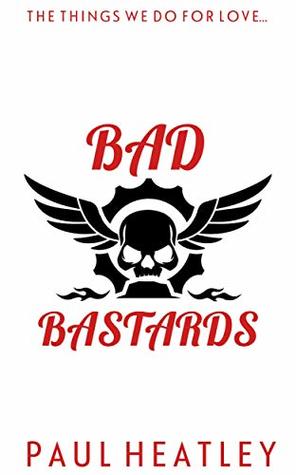
Paul Heatley: Well, I’ve been keeping busy. I always try to keep busy. Books two and three in the Eye For An Eye series were released by Close To The BoneThe Runner and Violent By Design – I released a Christmas novella called Christmas Stockings, and this year has seen the release of Guillotine (All Due Respect) and, most recently, Bad Bastards (Fahrenheit 13).

Meghan: Who are you outside of writing?

Paul Heatley: Pretty boring. When I’m not at the day job I read a lot, I watch TV – standard stuff.

Meghan: How do you feel about friends and close relatives reading your work?

Paul Heatley: I really don’t mind. In fact, I wish more of them would do it! (And tell all of their friends and relatives in turn, and so on.)

Meghan: Is being a writer a gift or a curse?

Paul Heatley: It’s a bit of both. When it’s going well it’s the greatest thing in the world. Then, when block strikes or something in a manuscript just isn’t quite working out the way you want it to, it remains the best thing in the world but with added frustration. I make sure to write in some capacity every day, and if I don’t I get incredibly restless and agitated, which is what makes it a curse I suppose. I don’t mind, though. I’d rather have this than nothing else.

Meghan: How has your environment and upbringing colored your writing?

Paul Heatley: I’m not so sure it has a great deal. I set most of my books in America and I wasn’t raised there, and the Eye For An Eye books which I’ve set in the north east England don’t contain a great deal of my background – not that I can see, anyway.

Meghan: What’s the strangest thing you have ever had to research for your books?

Paul Heatley: I’m not sure I’ve ever researched anything particularly strange. Like I said above I tend to set most of my books in America, so sometimes I just look up words to see if they have different meanings in America to how we use them in England.

Meghan: Which do you find the hardest to write: the beginning, the middle, or the end?

Paul Heatley: Probably endings. Even just chapter endings, sometimes. You want to make sure you finish on just the right word or phrase. When it comes to the very end of the book, that’s what people are going to remember most of all so it’s important to try and nail it just right. Of course, sometimes beginnings are hard, too, especially if it’s something brand new that you’re going into and you need to work your way through the setting and get to know your characters.

Meghan: Do you outline? Do you start with characters or plot? Do you just sit down and start writing? What works best for you?

Paul Heatley: I do a mix of all! Primarily I outline, but sometimes I do just sit down and start writing. I prefer to have an outline as I prefer to go in to a work knowing that I have all the Gordian knots already unravelled, rather than lose time trying to find out how to cut through them. I don’t think there’s anything worse than writing yourself into a corner and having no idea how to get out of it. When it comes to characters and plot, I tend to have the plot first, then I introduce the characters to it, work out their own background and traits which in turn influences and sometimes expands the plot.

Meghan: What do you do when characters don’t follow the outline/plan?

Paul Heatley: I follow them and see where they go. I outline, but I’m not afraid to change it on the fly. I’ve rewritten entire sections of work in the past if the characters find a new direction to go in.

Meghan: What do you do to motivate yourself to sit down and write?

Paul Heatley: I repeat mantras to myself that I’ve heard over the years to make sure I get in the chair and write. Sometimes they’re harsh, but sometimes that’s what it takes – ‘Every day you don’t write is another day you’ve wasted.’ ‘Do you want results, or do you want excuses?’ etc.

Meghan: Are you an avid reader?

Paul Heatley: I am, though not a particularly fast one!

Meghan: What kind of books do you absolutely love to read?

Paul Heatley: I’ll read anything, so long as it interests me. At the minute I’m reading the first book in the Wheel Of Time series by Robert Jordan. I haven’t read any fantasy for a while and I was eager to get back into it. I tend to mostly read things on the crime side, though. I read The Postman Always Rings Twice by James M. Cain for the first time recently, so you can probably guess I’ve still got a lot of the classics to catch up on. I’ve never read Raymond Chandler or Patricia Highsmith, and I’m eager to get round to both of them. I only started reading Richard Stark in the last year and now I can’t get enough. Mostly I’ve read James Ellroy, Jim Thompson, and Chester Himes. They are my main three.

Meghan: How do you feel about movies based on books?

Paul Heatley: I don’t mind them, though if it’s something I’m interested in I always prefer to have read the book first.

Meghan: Have you ever killed a main character?

Paul Heatley: Yes, quite often. Going back to your earlier question about when characters don’t follow the outline, there’s a death at the end of Violent By Design that I didn’t originally plan on, but I’m quite glad it got worked in.

Meghan: Do you enjoy making your characters suffer?

Paul Heatley: Yes. It’s necessary to the story – without their suffering, there is no story. Especially in noir. And when you consider noir tends to be the stories of bad people doing bad things, it’s hard to not want to make them suffer.

Meghan: What’s the weirdest character concept that you’ve ever come up with?

Paul Heatley: My most colourful characters probably appear in my Motel Whore books (collected together in The Motel Whore & Other Stories). There’s a wide array of outcasts and oddballs in those stories.

Meghan: What’s the best piece of feedback you’ve ever received? What’s the worst?

Paul Heatley: I wouldn’t necessarily say I’ve had a bad piece of feedback. It’s only really bad if you perceive it as such, and if I read a bad review I pay attention to WHY the person didn’t like it. That way, you’ve got something to learn from and improve upon. In terms of the best, I got a great review recently from David Nemeth for my book Guillotine where he said ‘Heatley is becoming a master of American noir in the vein of Jim Thompson and James M Cain.’ That’s great, and that’s the blurb I’m gonna use on every future release.

Meghan: What do your fans mean to you?

Paul Heatley: They mean a hell of a lot. I appreciate everyone who buys and reads my books, and who gets in touch with me to tell me what they thought of them. Without them it’s me just screaming out into a void.

Meghan: If you could steal one character from another author and make them yours, who would it be and why?

Paul Heatley: Parker by Richard Stark. He’s simultaneously the perfect noir hero and villain. Tough and unrelenting, and cares only about himself.

Meghan: If you could write the next book in a series, which one would it be, and what would you make the book about?

Paul Heatley: This questions follows on perfectly from the last as I guess I’d have to go with Parker. Naturally the story would be about a heist going wrong, he gets double-crossed, then he comes back for revenge! I’d have to read every single one of his past appearances to make sure I was able to work in something new and didn’t just repeat an earlier caper.

Meghan: If you could write a collaboration with another author, who would it be and what would you write about?

Paul Heatley: Stephen King, and we’d put together some From Dusk Til Dawn-style thing – it starts off as a gangster story, then it becomes something totally unexpected and over the top.

Meghan: What can we expect from you in the future?

Paul Heatley: Like I said at the top, I keep busy! I write every day and the intention is to always be building up forward momentum, so hopefully you’ll see a lot more books coming your way!

Meghan: Where can we find you?

Paul Heatley: I’m on Facebook, Twitter, and Instagram. My website is here.

Paul Heatley is the author of The Motel Whore & Other Stories, Fatboy, Guillotine, Bad Bastards, and the Eye for an Eye series, as well as more than fifty short stories published online and in print. He lives in the north east of England.

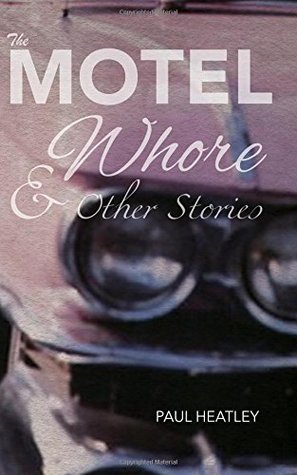
The Motel Whore & Other Stories

A dying town on the edge of nowhere. Misfits, outcasts, losers and loners, making their way through their aimless lives. The Motel Whore. The Vampire. The Boy. They will crawl inside your skull. They will live beneath your skin. They will stay with you forever. Featuring two previously unpublished tales.

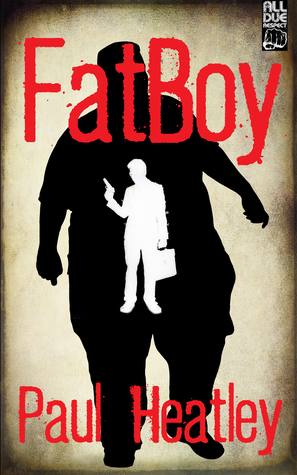
Fatboy

After his girlfriend leaves and takes their young son with her, Joey Hidalgo is left alone in the trailer they formerly called home with nothing to do but get drunk and contemplate her reasons. Is he really as angry, as volatile, so close to constant violence, as she claims he is?

No, Joey thinks, of course not, the real problem is money–or lack thereof. Joey’s a bartender, always struggling to make ends meet, unlike his most vile regular customer, the rich and racist fatboy. So Joey hatches a plan to get his family back by taking him for all he’s worth. 

But the fatboy isn’t going to make it easy for them. Neither is Joey’s temper. Things are going to get messy, and it’s gonna be one hell of a long night.

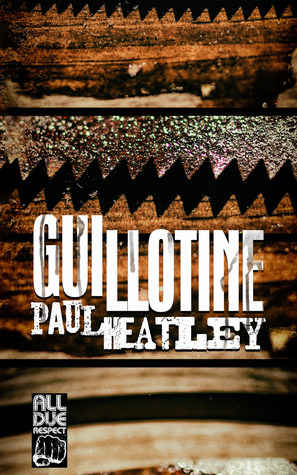
Guillotine

After suffering a lifetime of tyranny under her father’s oppressive rule, when Lou-Lou sees a chance to make a break with the man she loves, she takes it. Problem is, daddy’s also known as Big Bobby Joe, a dangerous and powerful man in the local area—powerful enough to put out a sixty grand bounty on the head of the man she’s run off with, who also happens to be one of his ex-employees.

With every criminal affiliate out looking for them, making good on their getaway doesn’t seem promising. Even their so-called friends are on the take, willing to pull a double-cross if that’s what’s going to turn them a quick buck. But Big Bobby Joe hasn’t counted on his daughter’s resolve to distance herself from him. No matter what he throws at her, no matter what he does, she’s going to get away—or die trying.

Bad Bastards

Falling in love might just be the dumbest move Patton has ever made. 

Patty Dawson is beautiful – tall, with most of her length in her legs – and Patton has fallen head over heels. Patty is also Bobby Hodge’s daughter and that means she’s off-limits to guys like Patton. 

Bobby runs the Bad Bastards Motorcycle Club with an iron fist – he runs his family the same way – and when he finds out about Patton and his only daughter it was only ever going to go one way, badly. 

Beaten to a pulp and under threat of death, Patton is determined to find a way to be with the girl he loves no matter what the cost, but as the stakes get higher he has to decide just how far he’s willing to go in the name of love. 

Halloween Extravaganza: INTERVIEW: Dean H. Wild

Meghan: Hi, Dean. Welcome back to my annual Halloween Extravaganza. It’s been awhile since we sat down together. What’s been going on since we last spoke?

Dean H. Wild: On the writing front, I will have a short story published in CrashCode, an anthology of technology-based horror tales to be released by the end of 2019. My story is called “The God Finger.” I’ve also been working with The Horror Zine on an anthology of ghost stories and I have started another novel.

Meghan: Who are you outside of writing?

Dean H. Wild: Some people call me “organized.” Some call me “thorough.” I recently had someone refer to me as “gentle.” I suppose you need to have most of your marbles in the can to do what I do, and I have quite the soft spot in my heart when it comes to the animals of the world. A lost and lonely kitten can nearly break my heart in two. But I’m mostly your typical introvert with a tenacious commitment to the comfort of guests in my home and a gentleman’s appreciation of a fine whiskey.

Meghan: How do you feel about friends and close relatives reading your work?

Dean H. Wild: I have no trouble with it. They already know about my dark and twisted core, so if some of that leaks into my work (and it always does) I have no shame or concern. They are aware of what they’re getting into.

Meghan: Is being a writer a gift or a curse?

Dean H. Wild: The answer is Yes. Ha-ha. I love the organic feel the flow of ideas brings when I’m in writing mode. It is an experience that defies words. And to have someone read the work later and relate to it is an author-reader connection that is rewarding and precious. However, the drive to put words to paper, especially when those words are coming hard, spurred on by the need to move forward with a piece and bring it to fruition can be brutal. It consumes all thought, making the rest of your life a state of distraction. Performing any other task, however menial and/or necessary, becomes a source of guilt. And there is no escape from the misery, because once the manuscript-at-hand is complete, there is utter helplessness against taking up the pen and starting another.

Meghan: How has your environment and upbringing colored your writing?

Dean H. Wild: I grew up in a very colorful blue collar environment populated by some very hard-smoking, hard-drinking adults. This was offset by the honest, peaceful, almost idyllic lives of some kind and nurturing relatives. Therefore I was exposed to two very contrasting lifestyles, and being the quiet, introverted and nearly “invisible” child that I was, I often observed how these two groups interacted with their chums and, more interestingly, how they intermingled. I feel this gave me a very up-close view of how people interpret, judge and play off of one another. How they speak differently when in the company of their cohorts vs. in mixed company. It gave me a good sense of character, I feel.

Meghan: What’s the strangest thing you have ever had to research for your books?

Dean H. Wild: Aside from the usual weird stuff (how to pick a lock, various homemade explosive devices, other things that have, no doubt, landed me on some sort of watch list or other) I would have to say it would be the decay and anaerobic gases produced by our garbage as it breaks down in the depths of our landfills. Pretty savory stuff, right?

Meghan: Which do you find the hardest to write: the beginning, the middle, or the end?

Dean H. Wild: Most often, for me, it is the end. I know far in advance where the book is headed, so “what” is going to happen isn’t too much of a challenge, but I find it critically important “how” the ending falls into place. I require the ending to be satisfying in relation to the story and in regard to the characters as well. It needs to be more than a finish. It must be to be significant, and the prose needs to be just right. I often struggle with endings to get them fine-tuned to suit my needs.

Meghan: Do you outline? Do you start with characters or plot? Do you just sit down and start writing? What works best for you?

Dean H. Wild: I’m a pantser through and through. No outlines here ever. I will make notes as I go along to make sure I hit a desired plot point or include an incident that has popped into my head while working on the story, but that’s about all the preplanning I do. At the very, microbial level, when I’m first hatching a book idea, my main character is typically the starting point. Certainly not every minute fact about them, but basic characteristics that make them relevant as a protagonist. Plot follows closely, to be sure that character’s relevance applies. Day to day, it is a butt in chair/pen in hand method.

Meghan: What do you do when characters don’t follow the outline/plan?

Dean H. Wild: Sit back, shake my head and figure out how to write myself (and them) out of the predicament. Or sometimes I follow them down that new path. It’s scary when a character’s intuition is stronger than mine, but I love it.

Meghan: What do you do to motivate yourself to sit down and write?

Dean H. Wild: Sometimes the story calls out to me. Sometimes I need to seek it out. But it all comes down to the fact I think about the current work-in-progress all the time. No matter where I am, no matter what I’m doing at the moment. The story/novel/whatever is always working in the back of my mind like a perpetually running machine. It makes me ready, at a moment’s notice, to sit down and get to work on it, whenever those precious moments are available. I guess, with me, it’s not motivation as much as it is staying in an “always ready” state.

Meghan: Are you an avid reader?

Dean H. Wild: I read as much as I can. Not sure that makes me “avid.” But I’ve always got two books going at once, sometimes three. I still can’t keep up with my TBR pile, however!!

Meghan: What kind of books do you absolutely love to read?

Dean H. Wild: I prefer fiction over nonfiction, and I like to invest for the long haul, so I prefer novels over story collections or anthologies when I read. Horror makes up the bulk of my reading choices, but any novel with striking, memorable characters faced with obstacles and challenges hold my interest. Especially novels with good pacing.

Meghan: How do you feel about movies based on books?

Dean H. Wild: For me, the two mediums are vastly different, with their own unique methods of storytelling. I do not compare book to movie since what works for one might fall flat for the other. I consider each on its own merit and don’t trouble myself with picking nits over why the book’s blonde protagonist is a redhead in the film or why the dragon was fought on a rickety bridge instead of on a mountain spire.

Meghan: Have you ever killed a main character?

Dean H. Wild: In a novel, no. In short stories, yes.

Meghan: Do you enjoy making your characters suffer?

Dean H. Wild: I do not. I do, however, understand this is an element of storytelling which must remain present. Often, my characters come with a lot of built-in anguish so a lot of their suffering comes from within. That being said, a character who remains unchallenged can be a largely uninteresting character, so I have learned how to make the going rough to enrich the story.

Meghan: What’s the weirdest character concept that you’ve ever come up with?

Dean H. Wild: An ancient, soul-hungry entity that takes the form of a huge, rolling, wooden wheel. It’s in a novel I’m shopping around right now, something I wrote back in 2012. Watch for it one day!!

Meghan: What’s the best piece of feedback you’ve ever received? What’s the worst?

Dean H. Wild: I will relay the best in the form of an anecdote. I submitted a manuscript to be professionally edited, and the editor was very helpful and very knowledgeable. One thing she pointed out (and I realize now that deep down I was aware of this but never gave it any real thought) was my overuse of the letter “C” when it came to character names, place names, etc. Almost every character had a “C” either in their first name or last. Restaurants, street names, towns, contained “C’s” without number. One character even drove a Camry, for crying out loud. It was a bit jarring for me to rename most of my beloved characters after spending so much time with themand knowing them so well as Cora, Cassidy, Clark, Charlene, etc. But the editor was right. And I came to realize in the piece I was currently working on, the same thing was occurring again, this time with the letter “T”!!! I’m not sure why my brain works that way, but it is something I am cognizant of now and avoid without fail.

As for the worst feedback, I was advised by an editor to get rid of a secondary character because he didn’t like her. Well, she may have been secondary but some of her actions and predicaments were pivotal to the plot any my main character would have zero motivations to learn or to act upon his intuitions without her presence (she was his ex-wife) so I’m not sure if the editor actually read the whole book and was aware this or not. To excise her would mean monumental rewrites and a huge change to the entire storyline. I didn’t do it. (I did, however, change her name so it didn’t have a “C” in it)

Meghan: What do your fans mean to you?

Dean H. Wild: To those who’ve read something of mine, said “this was pretty good” and look for more work with my name on it, I say a thousand thank you’s. The need to write is the throbbing heart and the driving conscience of an author’s craft, but the constant reader is the surging blood. Would I continue to write even if no one read my creations? Of course. But knowing there is someone out there experiencing the tale I created and realizing at least a little enjoyment from it is a reward all its own. I write for that unseen audience (readers, fans, whatever name you want to give them) as much as I write for myself, and in the act hope I am creating a connection. “Here is my story, stuff I like to read. I hope you like it, too.”

Meghan: If you could steal one character from another author and make them yours, who would it be and why?

Dean H. Wild: That would be Ben Mears from Stephen King’s Salem’s Lot. He is everything I find intriguing in a main character. He’s troubled, yet sincere. Levelheaded yet unsure. He’s an every-man philosopher, impassioned and humble. I think you’ll find snips of him in most of my main characters.

Meghan: If you could write the next book in a series, which one would it be, and what would you make the book about?

Dean H. Wild: To be honest, I don’t often read many books that are part of a series. I’m a fan of the stand-alone novel so I’m not sure how to answer. Most of the series I have read are such broad-scope endeavors I would not presume to step in and attempt an installment of my own. It would feel like trespassing.

Meghan: If you could write a collaboration with another author, who would it be and what would you write about?

Dean H. Wild: I’m usually entrenched up to my eyeballs in my own work—I’m in it all or nothing—so it’s difficult for me to imagine collaborating. What I have thought about is a sort of “tag-team” story collection, perhaps something with a theme, where two authors, or perhaps three, take turns weaving their tales; one by me, one by author #2, then one by author #3, then back to me again, round and round. As to with whom I might collaborate—the list is endless. There are so many talented folks out there. I would like to see some dark humor threaded into this fantasy tag-team. Jeff Strand or Larry Hinkle come to mind.

Meghan: What can we expect from you in the future?

Dean H. Wild: Now that The Crymost is on the shelves and selling, I have begun to work on a new novel. I also have a nearly-completed novella which I need to finish, but since I’ve been away from that tale for a while, it will be a challenge to get back into the groove with that one. And I have notes on two other novels which I would like to tackle after the current one is done. Lots of irons in the fire or ready to be consigned to flame. We’ll see what comes of it.

Meghan: Where can we find you?

Dean H. Wild: My website is the cleanest, clearest path.

Meghan: Do you have any closing words for your fans or anything you’d like to say that we didn’t get to cover in this interview or the last?

Dean H. Wild: Only that I appreciate every reader who picks up a book, however briefly, and finds enjoyment within its pages. To write is a fulfillment of a striving energy greater than the soul. To be read is a validation beyond words.

Dean H. Wild grew up in east central Wisconsin and has lived in the area, primarily in small towns surrounding the city of Fond du Lac, all his life. He wrote his first short horror story at the tender age of seven and continued to write dark fiction while he pursued careers in retail, the newspaper industry, and retail pharmacy. His short stories have seen publication in various magazines and anthologies including Bell, Book & Beyond, A Feast of Frights, Night Terrors II, and Horror Library 6. His novel, The Crymost, is an exploration of tradition, superstition, and encroaching horrir in a small Wisconsin town. He and his wife, Julia, currently reside in the village of Brownsville.

The Crymost

There is a place just outside of town where the people of Knoll, Wisconsin take their sorrows and their worries. They don’t talk much about it, and they don’t discuss the small tokens they bring as offerings to the place known as the Crymost. After all, this is Knoll, where certain things are best left unsaid. The Crymost, however, will not remain quiet for much longer. Something ancient has awakened in that remote, sorrowful place, and time is running out for its inhabitants. Long-kept secrets will need to be unearthed before the entire town succumbs to the will of a powerful, dark stranger who works hand in hand with a hungry entity crossing Knoll’s borders, invading its homes and executing a soul-draining grip on its citizens.