GUEST BOOK REVIEW by Elana Gomel: Hallowe’en Party

Hercule Poirot 41:
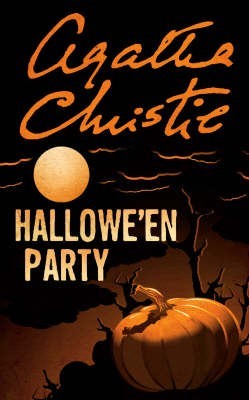
Hallowe’en Party
By: Agatha Christie
Genre: Mystery, British Mystery
Publication Date: November 1969 (reissued in October 2006)
Pages: 320

When a Halloween party turns deadly, it falls to Hercule Poirot to unmask a murderer in Agatha Christie’s classic murder mystery, Hallowe’en Party.

At a Halloween party, Joyce – a hostile thirteen year old – boasts that she once witnessed a murder. When no one believes her, she storms off home. But within hours her body is found, still in the house, drowned in an apple-bobbing tub. That night, Hercule Poirot is called in to find the “evil presence.” But first he must establish whether he is looking for a murderer or a double-murderer…


Child’s Play or Child’s Murder? Agatha Christie’s Hallowe’en Party

Mrs. Ariadne Oliver is a kind, if somewhat scatterbrained lady, who loves apples and writes bestselling murder mysteries. Though a delightful person, unfortunately, she has never existed. Mrs. Ariadne Oliver is a literary character, a creation of Dame Agatha Christie who introduced her in her later books as a wry alter ego.

In 1969, Mrs. Oliver is about to celebrate Halloween at her friendsโ€™ house in Kent, UK. As the hostess is bustling around, trying to get everything in order, Mrs. Oliver ponders the difference between squash and zucchini, between Halloween and Thanksgiving, and between life and death:

โ€œIt was rather remarkable, seeing so many pumpkins or vegetable marrows, whatever they areโ€ฆ The last time I saw one of theseโ€ฆwas in the United States last year โ€“ hundreds of them. All over the house. Iโ€™ve never seen so many pumpkinsโ€ฆThey were everywhere in the shops, and in peopleโ€™s houses, with candles or nightlights inside them or strung up. Very interesting, really. But it wasnโ€™t for Halloweโ€™en party, it was Thanksgiving. Now Iโ€™ve always associated pumpkins with Halloweโ€™en, and thatโ€™s the end of October. Thanksgiving comes much later, doesnโ€™t it? Isnโ€™t it November, about the third week in November? Anyway, here, Halloweโ€™en is definitely the 31st of October, isnโ€™t it? First Halloweโ€™en and then, what comes next? All Soulsโ€™ Day? Thatโ€™s when in Paris you go to cemeteries and put flowers on graves. Not a sad sort of feast. I mean, all the children go too and enjoy themselvesโ€.

The jarring transition from grief in cemeteries to kids having fun captures the essence of Halloween. It is a holiday of candy and ghost stories; of pumpkins and ghouls; of good cheer and deep fear. And in her own inimitable way, Ariadne Oliver โ€“ or rather, her creator, Agatha Christie โ€“ has captured the deep duality of this strangest of all feasts.

Halloweโ€™en Party is not as well-known as Christieโ€™s earlier novels, but it is just as accomplished, while considerably darker. Published in 1969, it features indefatigable Hercule Poirot who, by this time, would be around 120 years old. But he is still capable of solving a murder mystery. Poirot is invited by Mrs. Oliver to investigate a series of crimes around the Quarry Garden in Kent. The crimes are atrocious: four murders, two of them involving children, and an attempted murder of yet another child. The ambience is brooding and ominous: a party ending with a corpse; a mysterious sunken garden; a contested country estate.

We could easily imagine the setup as the beginning of a slasher movie. And indeed, the novel generates a sense of dread by constantly hinting at some unspecified demonic forces at play. There are so many references to serial killers, insanity, witches, and ghouls, you would expect the knife-wielding Michael Myers to pop up from behind the bushes and go on a rampage. After all, the first Halloween movie that crystallized the connection between the holiday and slasher aesthetics came out less than ten years after Christieโ€™s novel, in 1978.

But this is not Christie. Though some of her other novels verge on supernatural horror (especially the superb And Then There Were None, 1939), in her Poirot books, the solution is always rational and logical, the horror of violence defused by reducing it to a bloodless puzzle. At the end, there is a logical explanation, justice is done, and the cozy mystery solved. Poirot, the voice of reason, dismisses out of hand any talk of madness, possession, or ghosts. In Poirotโ€™s world, mayhem is only a pretext for ratiocination, a game with set rules, a game even a child can play. And so, despite the gruesome nature of the murders in Halloweโ€™en Party, the motive for them is neither sexual nor supernatural but a good old-fashioned desire for profit and fear of discovery (spoilers alert!). Poirotโ€™s reasonable explanation for the deaths of 13-year-old Joyce and her little brother is supposed to dispel the horror of their violent end.

But does it? By the time the murderers finally get their just comeuppances (spoilers alert again!), we have been inundated with so many disturbing references to madness, sexual depravity, possession, demonic forces, and the Devil that the tidy ending rings hollow. As a cleaning lady who is reputed to be a witch ominously suggests, the smug upper-middle-class suburb of Woodleigh Common is infested with evil: โ€œthe devilโ€™s always got some of his own. Born and bred to it.โ€ When the children of Woodleigh Common are having a Halloween party, is it a childโ€™s play or a childโ€™s sacrifice?

Mrs. Oliverโ€™s stream of consciousness quoted above is, in fact, a pretty accurate summary of the history of Halloween. It started as the pagan feast of Samhain and later merged with the Catholic All Saintsโ€™ Day, designated as such by Pope Gregory III in the eighth century. The night before November 1 was known as All Souls, or All Hallows, Eve, which is the origin of the word Halloween, still spelled in Christieโ€™s novel in the old-fashioned way with an apostrophe. Neither Samhain nor All Hallows Eve were innocent entertainment. Samhain may have involved human sacrifices, while All Hallows Eve was believed to be the time when the dead walk among the living. In the Middle Ages, the fear of ghosts and witches was absolutely real, and neither were a laughing matter. Even the carnival elements โ€“ dressing up, masking, drinking, and dancing โ€“ were linked to fertility cults that warded off death by engaging in sexual magic.

The reason why Halloween mutated from a pagan ritual to a kiddiesโ€™ night out had to do with the rise of science and rationalism in the Industrial Age. Folklore and superstition became an embarrassing reminder of the more โ€œprimitiveโ€ stages of cultural development. The Victorians saw themselves as the adults of history; everything that went on before was childish, immature; in short, a childโ€™s play.

Only it did not quite work out this way. Nightmares turned out to be impervious to the light of reason; science did not dispel the fog of superstition; and irrational evil came back in force during the massacres of the last century. And Halloween persisted in its duality: both a whimsical entertainment and a night of terror; both a childโ€™s play and adult horror; both trick-or-treating and serial murder.

Halloweโ€™en Party reflects this duality. Some of the customs in the novel will strike the American reader as quaint. There is no trick-or-treating but there is bobbing for apples (lifting apples from a bucket of water with your teeth). No face-painting or masks but mirrors are handed out, so girls can see faces of their future husbands (a practice widespread in medieval Europe and reflected in some spooky German and Russian ballads about a dead bridegroom coming to fetch the incautious bride). No candy but there is the Snapdragon โ€“ a dish of raisins set on fire. All these customs descend from ancient pagan rituals: apples are linked to fertility cults; mirrors trap souls; and the Snapdragon recalls the Viking funeral pyre. Surrounded by echoes of the Druidic ceremonies, the murder of a young girl is initially presented as some sort of demonic sacrifice, or perhaps a sex crime perpetrated by a madman.

But at the end it turns out to have been just a game. Christieโ€™s novels seldom leave you with unanswered questions about the nature of evil or the origins of criminality. They are soothing puzzles to occupy your mind; cozy mysteries; precursors to Midsomer Murders. And yet, even as all the loose ends are tied up, there is something darker left unspoken. Next time you want to attend a Halloweโ€™en Party, remember that at All Soulsโ€™ Eve, evil walks, and evil is not a childโ€™s play. Dame Agatha Christie who was knighted by the Queen for her contribution to British culture knows how to have her cake and to eat it; to reassure her readers and to disturb them; to have fun and to teach a lesson. So. letโ€™s have Mrs. Ariadne Oliver, Christieโ€™s ironic self-portrait, have the last word, as she does in Halloweโ€™en Party:

โ€œโ€™Thatโ€™s right,โ€™ said Mrs. Oliver in an exaggerated voice, โ€˜blame it all on me as usualโ€™โ€


Boo-graphy:
Elana Gomel was born in a country that no longer exists and has lived in many others that may, or may not, be on the road to extinction. She currently resides in California. She is an academic with a long list of books and articles, specializing in science fiction, Victorian literature, and serial killers. She is also a fiction writer who has published more than ninety short stories, several novellas, and three novels. Her story โ€œWhere the Streets Have No Nameโ€ was the winner of the 2020 Gravity Award, and her story โ€œMine Sevenโ€ is included in The Best Horror of the Year 13 edited by Ellen Datlow. She is a member of HWA.

Little Sister
A schoolgirl steps between a soldier and a ravening monsterโ€ฆ

1943. Soviet Union is under attack as WW2 is raging. Fighting in the doomed battle of Kursk, Andrei finds himself in a strange city where Svetlana, a girl he has never seen but who looks eerily familiar, saves him from a fist-faced creature. When Svetlanaโ€™s family is lost, the two embark on a harrowing odyssey across the snow-covered plain, battling deformed former humans and taken prisoners by the army of black stars. Against impossible odds, they reach their destination where they discover a secret that will change history.

Little Sister is a dystopian historical fantasy set in the Soviet Era. Presenting a richly imagined alternative history world, this is a tale of friendship, survival, and heartbreak. Fans of The Book Thief and The Wolfhound Century will enjoy this striking fantasy rooted in Russian fiction.

Halloween Extravaganza: INTERVIEW: Dev Jarrett

Meghan: Hi, Dev! Welcome back… sort of. Take a look around and let me know what you think of the new place.

Now, Itโ€™s been awhile since we sat down together. Whatโ€™s been going on since we last spoke?

Dev Jarrett: Well, you know what the man saidโ€ฆ life is what happens to you when youโ€™re busy making other plans. Iโ€™m still writing, still loving every second of it, but I guess since we last talked, Iโ€™ve kind of been grinding. Leveling-up might be a good term for it.

When we last spoke, Iโ€™d done what so many only dream aboutโ€”Iโ€™d landed a big-time agent. Itโ€™s like achieving a new level in a game. But at that new level, the enemies, monsters, and bosses are tougher, so youโ€™ve got to GRIND, and learn how to use all the magical weapons properly. In the past three years, Iโ€™ve actually written three more novels. Theyโ€™re pretty good. If I were still battling the slushpile at smaller, niche presses, I bet at least two of them would have already been picked up. But (to complete the metaphor) Iโ€™m on the big quest, looking to kill the most fearsome monsters in the land.

Meghan: Who are you outside of writing?

Dev Jarrett: Up until December of last year, I was still a soldier in the US Army. Now, I’m a civilian. I’ve been spending the last few months unlearning a ton of the military mindset (“What? What do you mean I can’t deploy the knife-hand and cuss someone out if they work too slowly? Are you serious?”) Expedience is one thing, but some of that stuff can be pretty toxic sometimes, too. These days I write more, enjoy myself more, and let myself BE myself more. It’s nice.

Meghan: How do you feel about friends and close relatives reading your work?

Dev Jarrett: Iโ€™m okay with anyone reading my stuffโ€”AFTER itโ€™s published. In general, friends and close relatives might not make the best beta readers. They might feel obligated to only say nice things when asked their opinions, which is not fair to anyone, or to the work.

That said, I do have a couple of family members who read my stuff before anyone else. My wife Jennie reads everything first, and then my son-in-law Cody. They know the deal, and they donโ€™t sugarcoat anything when I screw up.

Meghan: Is being a writer a gift or a curse?

Dev Jarrett: I think being a writer can go either way. I love what I do, and I’m grateful, but sometimes dream-time gets in the way of being present in the moment. I get an idea, get distracted by it, and realize that I’ve missed the last ten minutes of a conversation.

But it’s also an integral part of my makeup, the way I’m sure it is for many writers. I’ve GOT to write, or I get irritable. My wife has told me that it’s obvious when I’ve missed my writing time. When I can’t write, I’m just… off.

Meghan: How has your environment and upbringing colored your writing?

Dev Jarrett: I think my environment and upbringing made me the person I’ve become, and that’s what colors my writing. I was brought up in Columbus, Georgia, and had a pretty normal childhood. I’m sure I could find things to complain about – everyone’s got a hard luck story, after all – but it was mostly okay. I think my southern upbringing shows in many ways in my stories. When I was twenty-two, I joined the Army, and I’ve lived in a ton of different places in the service of Uncle Sam. All that life experience, the memories of all the people I’ve met and the places I’ve been, shapes the stories I tell.

Meghan: Whatโ€™s the strangest thing you have ever had to research for your books?

Dev Jarrett: We’ve all seen the meme where the writer says “Please don’t check my web history! I was just doing research for a book!” And yeah, to a degree, it’s true. We look up weird things, right? For a work in progress currently, I’ve looked up the nutritional information of dragonflies, Alabama cult leaders, ancient Babylonian gods, and rehab times for opioid addicts. How does any of that go together? Hopefully you’ll find out soon.

Meghan: Which do you find the hardest to write: the beginning, the middle, or the end?

Dev Jarrett: For me, it’s usually the ending. Beginnings are great. You’ve got the freedom to build anything, and the whole field is wide open. The middle? Well, that can go either way. You’ve still got some wiggle room for additions and complications, but you’ve also got to build on the solid foundations you’ve already laid. The ending, though, is where you’ve got to bring it all back around, bring it all to completion. Put another way, if a gymnast doesn’t stick the landing, they probably won’t take home the gold.

Meghan: Do you outline? Do you start with characters or plot? Do you just sit down and start writing? What works best for you?

Dev Jarrett: There’s not really a hard and fast answer to that, for me. When I start, it is usually just an idea or a visual that I can’t get out of my head. That may be an initial image, which begs me to track it down and find out what happens next, or an ending image, which asks me to find out what came before all that, what set it in motion.

I don’t usually outline in the sense of Roman numerals, capital letters, Arabic numerals, lower case letters, but when I’m in the story, I generally have an idea of what’s going to happen next. I say generally, because sometimes my initial plans go completely off the rails.

Meghan: What do you do when characters donโ€™t follow the outline/plan?

Dev Jarrett: I let them run with it and try to stay out of the way. It’s a kind of magic, I think, when your characters take over their own creation. As writers, we have to allow our characters to react honestly, even if that gets in the way of what we think we want to say.

Meghan: What do you do to motivate yourself to sit down and write?

Dev Jarrett: I donโ€™t have a problem with motivation to write. I often wish there were more hours in a day so that I could write more. Sometimes, I do have to kill distractionsโ€”social media is a big one, as is binge-watching TV. I know, I know, bingeing anything is really unhealthy, but even finishing the current season of a favorite show gives a small sense of completion.

Meghan: Are you an avid reader?

Dev Jarrett: I love to read! I read every day, even if I only get to finish a couple of chapters. I recently finished A Boy & His Dog at the End of the World and Beloved. Now I’m reading The Bassoon King, rereading NOS4A2, and I just started King‘s The Institute.

Meghan: What kind of books do you absolutely love to read?

Dev Jarrett: Looking at my recent and current reads, I like many different things. Beloved won the Pulitzer Prize back in 1988, and it’s a kind of ghost story. A Boy & His Dog… suckered me in with the title, and it was supposed to have a twist at the end that, in my opinion, didn’t “stick the landing.” The Bassoon King is a sort of humorous autobiography of Rainn Wilson. And, of course, NOS4A2 and The Institute are horror.

I love reading horror, but variety is necessary, too. Not only should we all read deeply, but we should also read widely. I’m no snob about it. I think there is always time for both escapist reading and interpretive reading. Like a teacher once told me: there’s a time for champagne in crystal flutes, but there’s also a time for light beer straight from the can. Sometimes you get lucky and get them both in one story.

Meghan: How do you feel about movies based on books?

Dev Jarrett: I generally have no trouble with them. Translating from one medium to another is a challenge in so many ways, and no movie director will have had the same vision as anyone else whoโ€™s read a story and watched their own mind-movie.

I know people get bent out of shape about some movies not being true to their source material, but some things simply don’t translate. A character’s thoughts can’t be shown, and cheesy voiceovers haven’t really worked in decades. By the same token, movie tie-ins have the opposite problem. How do you translate a jump-scare to words on a page?

Meghan: Have you ever killed a main character?

Dev Jarrett: Of course. Sometimes, their end is an essential part of the story. Death is a part of all life, right? Even a character’s life. I’m no George R.R. Martin, but my mind hosts the occasional bloodbath, too.

Meghan: Do you enjoy making your characters suffer?

Dev Jarrett: Actually, sometimes yes. Maybe that sounds a little sadistic, but the thing is, a certain amount of suffering tempers a character. There are those times when a character’s suffering is a part of the arc, and when they come out on the other side, they’re stronger for having survived whatever trauma they’ve had.

On the other hand, there are many characters I’ve created that I just… well… HATE. And yes, I love to see them get their deserved comeuppance. As viscerally as possible.

Meghan: Whatโ€™s the weirdest character concept that youโ€™ve ever come up with?

Dev Jarrett: Several of my early short stories were science fiction, and some of those involved extraterrestrial life forms, and they werenโ€™t limited by our earthly physiologies at all. I guess thatโ€™s a kind of lazy answer, though.

Iโ€™ve had cars that were vampires, cicada vampires, were-raccoons, and a guy who turned into a catfish. Then there was the guy who was basically a colony of tiny creatures who could turn into anything. The best, however, is yet to come.

Meghan: Whatโ€™s the best piece of feedback youโ€™ve ever received? Whatโ€™s the worst?

Dev Jarrett: That’s a tough call. In one sense, the best feedback received pre-publication is usually the harshest. Those things help make the story better, and make me a better writer. The worst in that case would be a beta reader going “Ummm, I don’t get it.”

Post-publication, the worst are the assholes. Everyone gets the trolls those only interest is punching holes and tearing down the work of others for no reason except making themselves feel superior. You’ve just got to ignore people like that.

Maybe not best, but certainly the most flattering feedback I’ve ever received was on a tiny zombie story I wrote. I never got on the whole Walking Dead bandwagon, really, but I thought of a different way to tell a zombie story, and an editor enjoyed it enough to publish it. One reviewer of the story said that they thought it could have “sprung from the pen of Ray Bradbury or Kurt Vonnegut.” That kind of comparison blew me away.

Meghan: What do your fans mean to you?

Dev Jarrett: I love them, of course. The very idea of having fans is intimidating and humbling, but if someoneโ€™s willing to give up their hard-earned money and a few minutes or hours to read something Iโ€™ve written, I absolutely want to make it worth their investment. Not simply the money, but their time, too.

Iโ€™ve had a few people follow my career, and ask when Iโ€™m coming out with something new, and itโ€™s always flattering to be asked that. When my first novel came out, I was at the first Scares That Care Charity Weekend and someone came by the table and just wanted to shake my hand. He said heโ€™d read some of my short stories and was glad to see that Iโ€™d gotten a book published, too. That was surreal, but inspiring at the same time.

Meghan: If you could steal one character from another author and make them yours, who would it be and why?

Dev Jarrett: There are so many great characters I’ve read over the years, that’s a challenging question. Now that I think about it, my answer may actually be a very common response to the question (and I suppose that’s one reason for the author’s continuous appeal to the world): Roland Deschain of The Dark Tower series.

Roland is introduced as a world-weary errant knight in a strange desert on the edge of a dystopian fantasy world, and that really appealed to me in The Gunslinger. What can I say? I was one of those kids who watched a ton of westerns on Saturday afternoons. But later on, Roland’s development through the entire series became beautiful, and wise, and even poetic in some ways. So many of Mr. King‘s fans say his masterpiece is The Stand, or possibly The Shining, but I completely disagree. In my opinion, his masterpiece is the character of Roland.

Meghan: If you could write the next book in a series, which one would it be, and what would you make the book about?

Dev Jarrett: Wow. Not sure about that. I’d love to write a Discworld novel, but I don’t have the humor chops of Terry Pratchett, and I can’t think of anyone who comes close. We lost a treasure when we lost him.

I think I could write a novel of the Dresden Files. The sort of urban fantasy is fun to read – the juxtaposition of fantasy elements with our modern world seems like it would be a great playground. If I were able to do that, I don’t know what it would be about, but I’m sure it’d be much darker than Jim Butcher writes. Much more darker.

Meghan: If you could write a collaboration with another author, who would it be and what would you write about?

Dev Jarrett: Obviously, Iโ€™d love to aim high on this one (Stephen King, Joe Hill, Neil Gaiman), but I think Iโ€™d feel like those co-writer guys on a James Patterson novel must feel, like Iโ€™m just a punk getting carried by another name. (Not throwing stones hereโ€ฆ thatโ€™s just how Iโ€™d see it for me, Dev โ€œImposter Syndromeโ€ Jarrett.)

Realistically? Hmmm. Iโ€™m not sure. Someday, maybe Jonathan Janz. I met him once, and he is such a nice guy. Iโ€™d love to work with him. It could be about anything, but a concept Iโ€™ve been tossing around in the back of my mind is a horror story that involves a high school reunion. Collaboration sounds hugely interesting to me. Iโ€™ve never worked with someone on a single creation like that, but I think itโ€™d be fun.

Meghan: What can we expect from you in the future?

Dev Jarrett: I mean, after I finish my collaborations with Janz, Gaiman, Hill, and King, I might… well… no. I’ve got tons of work in the pipeline, at various stages of completion, and hopefully I’ll have something spectacular out soon.

Like I said, I’ve written a few novels that aren’t quite ready for prime time, but I suppose the NEXT thing you can expect from me is a new short story for the Christmas Takeover.

Meghan: Where can we find you?

Dev Jarrett: I’ve got a small website that I’m terrible about keeping up to date, but it has links to all of the published work.

Website ** Twitter ** Facebook

Meghan: Do you have any closing words for your fans or anything youโ€™d like to say that we didnโ€™t get to cover in this interview or the last?

Dev Jarrett: First, thanks for having me. I think we covered all the bases this time (I noticed that in our last conversation, I was kind of laconic, I guess? I wanted to make sure I opened up a little more this time).

Except, let’s see… dogs, not cats. Original flavor Oreos. I’m not an FPS kind of videogamer, I’m more platformer. If I were to have an 80s-era arcade game in my house, it’d be Joust. Mexican food. INT-J. Beer is great, but when it’s time for hard drinking, bourbon’s my poison of choice. Pretty much anything is good on a pizza, but I mostly only tolerate pineapple. My current playlist includes a little bit of everything, but it’s mostly rock.

And… there are always more stories to tell.

Dev Jarrett is a writer, a father of five, a husband, and one of those guys the US Army trained too much. He speaks Arabic, he can break ciphers in his sleep, and can still break down and reassemble an M4 rifle and an M9 pistol while blindfolded.

He’s visited many different countries in the past quarter century, and can’t talk about most of the adventures he’s had. On the other hand, it’s public record that he’s received a Bronze Star and a Purple Heart, so make what you will of that.

He’s represented by Barbara Poelle of the Irene Goodman Literary Agency, and all he wants is to scare the hell out of you.

Loveless

Till death do us part… sometimes.

When a hapless explorer disturbs the watery grave of Muriel Wallace, a terrifying chain of events is put into motion. Corey Rockland, sheriff of a sleepy Georgia town, must now unravel the mystery behind a corrupt family and a broken heart dating back to the Civil War. Unless he can find a way to stop her, Muriel will unleash her vengeance on anyone she deems loveless.

Dark Crescent

If you could change the future, would you?

Bud Primrose, assistant coach of a Little League team, gets smacked in the head with a line drive and wakes up in the hospital with a kind of second sight.

If you saw a strangerโ€™s death coming, would you try to save her?

He sees others’ deaths hours before they occur. When he uses this strange new ability to save a woman from a brutal murder, he becomes the thwarted next target.

If you had the power, would you use it?

Now he must do everything he can to save himself and the woman he loves from the razor-wielding maniac bent on payback.

If you had to face a killer, could you do it?

Casualties

Fresh from Afghanistan, crippled by both a crumbling marriage and growing paranoia, can a soldier save his family from the ancient evil in his own house? 

Sergeant First Class Chris Williams is back home, and he and his family are move to Fort Huachuca, a small Army post deep in the southeastern corner of Arizona.

From the time they move in, Chris and his wife Molly are struck by the preponderance of ghost stories surrounding their new home. Chris wonders why nightmares still plague himโ€”then, he realizes the reason. He and his family are not alone in their house. An evil older than Fort Huachuca, older than time itself, lives there. Now, enough sacrifices have been made to its blood hunger that it can finally give birth to a powerful, deadly offspring intent on dominating our world.

Chris, Molly, and their two children become pawns of the evil spirit inhabiting their new neighborhood. Already casualties of life, crippled by both a crumbling marriage and growing paranoia, can Chris and Molly save their family from the evil already living under their own roof?

Little Sister

Seven year old Lucinda has a homemade doll that has a special kind of magic. When someone tries to hurt Lucinda and her mother, perhaps heโ€™ll see the dollโ€™s magic too.

For her seventh birthday Lucindaโ€™s grandfather sends her a homemade doll. Her mother Sharon had a little sister onceโ€”and now Lucinda has a โ€œlittle sisterโ€ of her own.    

Sharonโ€™s boyfriend Deke is not the man she thought he wasโ€”heโ€™s hateful and abusive, like something out of a nightmare. Now heโ€™s on the run from the police and heโ€™s taken Sharon and Lucinda with him.

Mother and daughter must find some way to escape his blood-soaked grasp before he kills them both. They have no way out.

All they have is Lucindaโ€™s homemade doll.