Meghan: Welcome back, Jonathan. This has become so much of a tradition, you and me, that I can’t imagine Halloween without you. Thanks for joining us again this year. What is your favorite part of Halloween?
Jonathan: Cheesy answer here, but I love taking my kids trick-or-treating. My oldest is a junior now, and my middle child is a freshman, so they do things with their friends now, but my youngest (Peach) is still all-in for trick-or treating. I love going with her!
Meghan: Do you get scared easily?
Jonathan: Yes. I have a deliriously overactive imagination, so I get scared pretty frequently. The things I’m most scared of involve something happening to my loved ones, but I guess most people worry about that. Some more obscure things that scare me are waking in the middle of the night and worrying someone is going to seize my hand. I’m also creeped out when I’m in the school alone (where I teach). Schools can be really eerie places.
Meghan: What is the scariest movie you’ve ever seen and why?
Meghan: Which horror movie murder did you find the most disturbing?
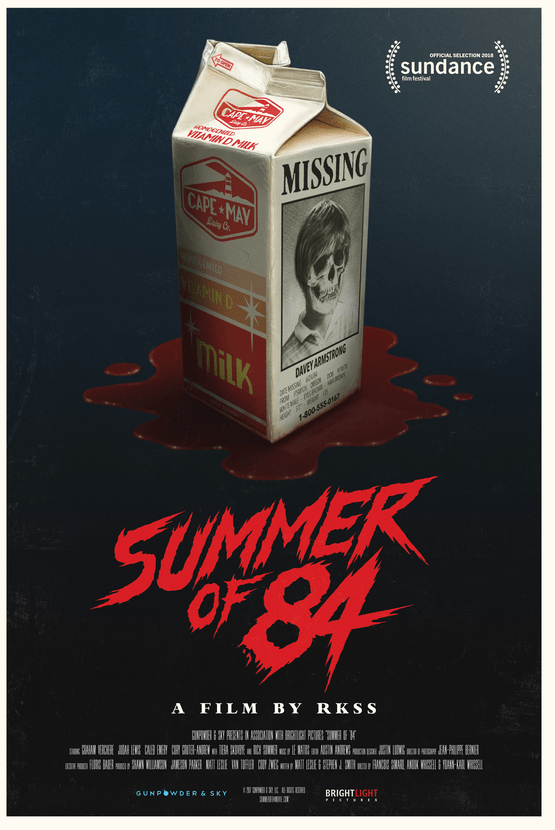
Jonathan: You know one that really bothered me? I think it fit the movie, but it really hit me hard. In Summer of ’84, there’s a death near the end that really stunned me. I still can’t quite believe they went there, but I do think it was the right decision.
Meghan: Is there a horror movie you refused to watch because the commercials scared you too much?
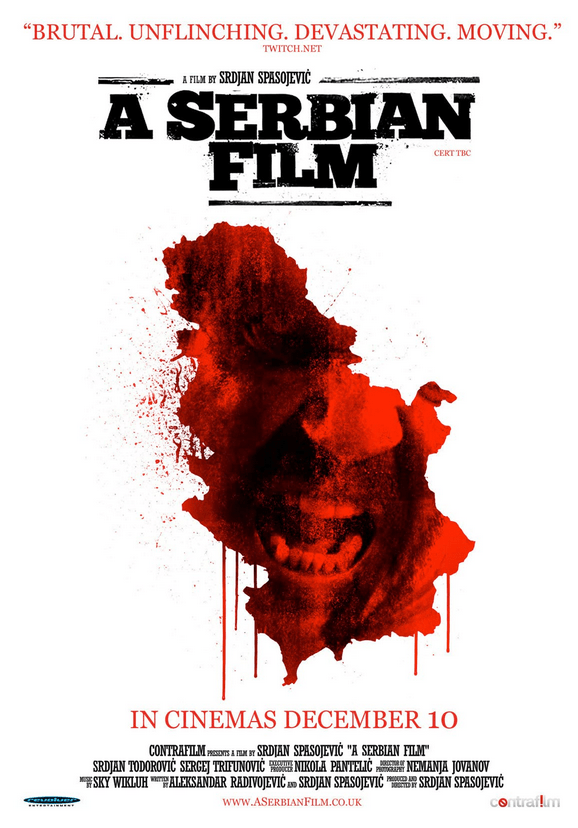
Jonathan: Naw. If the commercials were scary, I’d be there. The only ones I don’t watch are ones I just know I wouldn’t dig from the stuff I’ve heard. Cannibal Holocaust and A Serbian Film come to mind. I’m not against them or anything. I just don’t have any interest in them.
Meghan: If you got trapped in one scary movie, which would you choose?
Jonathan: Weeellll, I guess I’d choose one from which I could escape? One that would be a lot of fun? So that being said, maybe Slaxx or Psycho Goreman? Or Love & Monsters, which I enjoyed quite a bit.
Meghan: If you were stuck as the protagonist in any horror movie, which would you choose?
Jonathan: If survival were the goal, I’d have to choose a pretty resourceful one, so I’d say… Ash from the Evil Dead series.
Meghan: What is your all-time favorite scary monster or creature of the night?
Jonathan: Wow, great question. I love both vampires (when they’re ferocious) and werewolves, but if I HAD to pick one, it’d be the werewolf. I just love that concept.
Meghan:What is your favorite Halloween tradition?
Jonathan: My birthday is right around Halloween (the 27th), so it’s always fun to celebrate both around the same time. I get to have my family with me even more than usual!
Meghan: What is your favorite horror or Halloween-themed song?
Meghan: Which horror novel unsettled you the most?
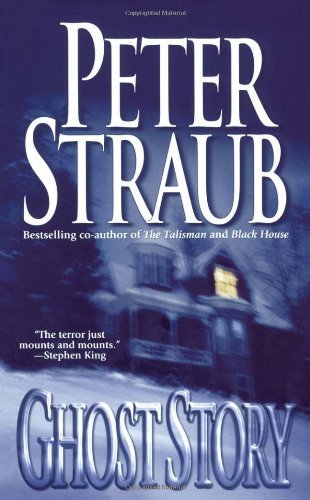
Jonathan: Hmmm… for that one, let’s go with Ghost Story. I’ve been re-reading it for an upcoming podcast and remembering all the ways it freaked me out. Straub made something permanent there.
Meghan: What is the creepiest thing that’s ever happened while you were alone?
Jonathan: I sleepwalked a great deal as a kid, so I woke up in some scary places. I remember waking up in a friend’s new house where they’d just moved in, and I was stuck in a pitch-black room in a maze of boxes for a good twenty minutes before I felt my way out. It felt like twenty hours.
Meghan: Which unsolved mystery fascinates you the most?
Jonathan: The stuff with alien abductions fascinates me. I’m sure most accounts aren’t true, but what if? Also, I’m really taken with the notion of ghosts, so any haunting piques my interest.
Meghan: What is the spookiest ghost story that you have ever heard?
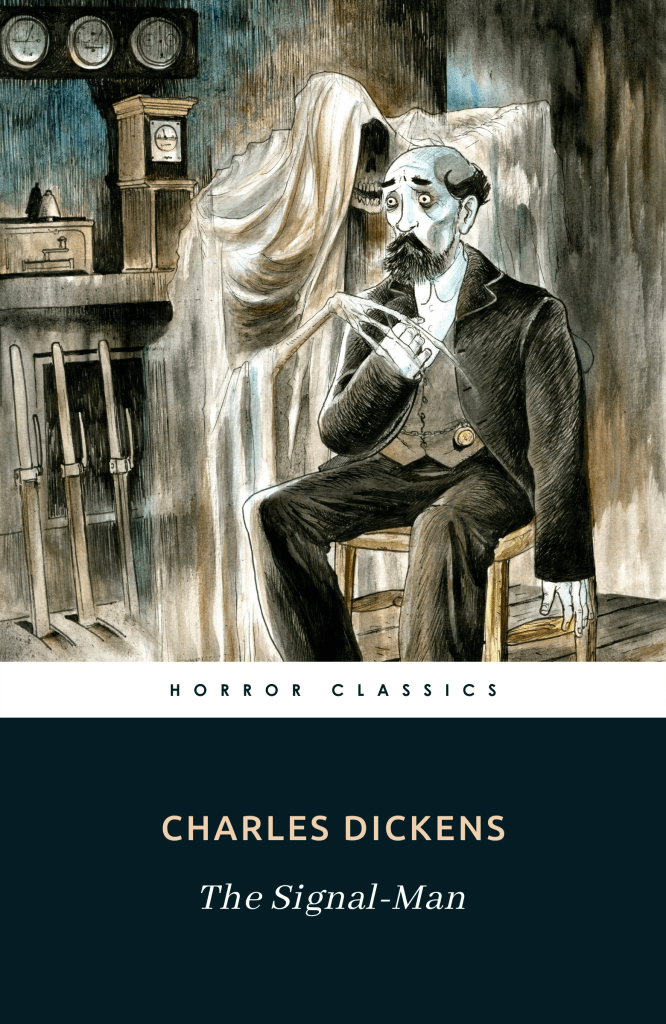
Jonathan: I’ll go way back for this one. The Signal-Man by Charles Dickens scared the hell out of me as a little kid. My mom brought in home on album from the Delphi Public Library. It had sound effects, the creepiest music, and a really good narrator. I still get chills thinking about it.
Meghan: In a zombie apocalypse, what is your weapon of choice?
Jonathan: Got to be the crossbow (after I mastered it, of course). Or a sword. I’ve watched too much Walking Dead, obviously.
Meghan: Okay, let’s have some fun. Would you rather get bitten by a vampire or a werewolf?
Jonathan: Werewolf. You don’t HAVE to kill to survive. I’d have my family lock me up as a precaution. Then again, if they were MY kind of werewolves (who changed because of a strong negative emotion), I might be a danger to my family. So let me think about it some more!
Meghan: Would you rather fight a zombie apocalypse or an alien invasion?
Jonathan: It would depend on the nature of the aliens, but I’d lean toward the former because the latter seems more invincible.
Meghan: Would you rather drink zombie juice or eat dead bodies from the graveyard?
Jonathan: Yikes! I guess the latter if they were seasoned properly *shivers*
Meghan: Would you rather stay at the Poltergeist house or the Amityville house for a week?
Jonathan: Amityville. The Poltergeist held too many terrors. Although I don’t like the way the Amityville House made him turn on his family.
Meghan: Would you rather chew on a bitter melon with chilies or maggot-infested cheese?
Jonathan: Yikes again! The former. No question at all. I’m not a maggot fan.
Meghan: Would you rather drink from a witch’s cauldron or lick cotton candy made of spiderwebs?
Jonathan: Is that code for something? I’m gonna assume no and go with the former.
Boo-graphy: Jonathan Janz is the author of more than a dozen novels. He is represented for Film & TV by Ryan Lewis (executive producer of Bird Box). His work has been championed by authors like Josh Malerman, Caroline Kepnes, Stephen Graham Jones, Joe R. Lansdale, and Brian Keene. His ghost story The Siren &the Specter was selected as a Goodreads Choice nominee for Best Horror. Additionally, his novels Children of the Dark and The Dark Game were chosen by Booklist and Library Journal as Top Ten Horror Books of the Year. He also teaches high school Film Literature, Creative Writing, and English. Jonathan’s main interests are his wonderful wife and his three amazing children. You can sign up for his newsletter, and you can follow him on Twitter, Instagram, Facebook, Amazon, and Goodreads.
The Raven 2: Blood Country — Three years ago the world ended when a group of rogue scientists unleashed a virus that awakened long-dormant strands of human DNA. They awakened the bestial side of humankind: werewolves, satyrs, and all manner of bloodthirsty creatures. Within months, nearly every man, woman, or child was transformed into a monster…or slaughtered by one.
A rare survivor without special powers, Dez McClane has been fighting for his life since mankind fell, including a tense barfight that ended in a cataclysmic inferno. Dez would never have survived the battle without Iris, a woman he’s falling for but can never be with because of the monster inside her. Now Dez’s ex-girlfriend and Iris’s young daughter have been taken hostage by an even greater evil, the dominant species in this hellish new world:
Vampires.
The bloodthirsty creatures have transformed a four-story school building into their fortress, and they’re holding Dez’s ex-girlfriend and Iris’s young daughter captive. To save them, Dez and his friends must risk everything. They must infiltrate the vampires’ stronghold and face unspeakable terrors.
Because death awaits them in the fortress. Or something far worse.
See, if you grew up, as I did, in the Great Britain of the late 50s and early 60s, Halloween wasn’t exactly a big thing, like it was in the USA.
Yes, we knew what it was. We’d read enough in comics or creepy stories to know it was a time when ghoulies and ghosties come out to play.
But in those days you didn’t have shops packed full of masks and witches’ costumes, Devil outfits, claw-like plastic fingernails, gummy fangs, and gobstopper eyeballs next to the supermarket checkout.
And you didn’t go around your neighbours’ houses knocking on doors in said costumes, demanding confectionary with menaces and the threat of evil to be carried out if such gifts were not given.
“Trick-or-Treating” was as alien to us as that guy with pointed ears on Star Trek.
We learned about Halloween, gradually, like Sorceror’s Apprentices. Except we didn’t glean our wisdom from potions or dusty, creaking grimoires – we got it from a much more dubious source. Television.
They inculcated us into an alternative reality of Halloween and the macabre, plying us with forbidden fruit the like of which was as likely to be offered us on the BBC as pigs had of flying. Here in the UK, we were dumbed and numbed by the innocuous (but strangely terrifying) fare of Twizzle, Andy Pandy and Sooty and Sweep. (Google if you dare.)
But from across the pond, by way of the airwaves, came strange and sinister confections – in the case of The Munsters – re-concocted from primal images indelibly created by Universal Studios in the form of their famous monsters… Frankenstein and his Bride, Lugosi’s Dracula, Lon Chaney Jr’s Werewolf…
The weird things was…. They became our friends.
Far more so than the more palatable and educational stuff our domestic television channel was churning out. (I use the singular because for my early childhood, there was only one in the UK, until ITV – “independent” television – arrived to lower the tone. And way before Channel 4 in the 1980s lowered it even further.)
No great surprise then, that, as a writer of horror, I feel I was created by these imported monstrosities as surely as if someone had put current through bolts in my neck and yelled to the heavens that I was alive.
I was alive, suddenly.
My love of all things grotesque, from horror movies that were way beyond my cultural reach, to the heady symbolism of Edgar Allan Poe, began right there.
You could say, “Halloween” dug a hole deep in my heart.
And like many a horror writer before and since, it gave me comfort, because it spoke of powers of the night that were silent by day, of lusts that a child’s imagination cannot comprehend, of the lure and perils of the undead – of loved ones who, maybe, just maybe, could come back from the grave, but… changed!
It was thrilling. It was terrifying. It was real because it was unreal.
It was where I belonged.
And maybe those feelings lay buried or maybe they didn’t. Because when they finally came to the surface again, and Halloween came to play in my own back yard, things were never the same again.
CUT TO: 1992
I’d been writing for a living ever since I left film school. After a stint in advertising in London, I sold one of my first screenplays – wow! – and in a foolish commitment to luck over probability, decided to become a freelance screenwriter, full time.
You won’t have seen it unless you are as old and decrepit as me, but the film was called Gothic, and was about the birth of Frankenstein in the mind of a young girl of nineteen, Mary Shelley. It starred the late Natasha Richardson, with Gabriel Byrne as Lord Byron, and was directed by one of the most amazing British directors of all time – Ken Russell, who’d made the febrile phantasmagoria, The Devils. One of my favourite films of all time. And one of the most controversial.
No pressure, then.
A few gigs after that, I found myself in Hollywood working with the director of The Exorcist, William Friedkin, no less, on a film that became The Guardian, based upon a novel about an evil nanny who abducts children from good hard working middle-class families in contemporary Los Angeles. (Again, Google if you must.)
After that baptism of fire, with my confidence shrivelled by the process, I returned to England and, wanting to get in touch with my inner core as a writer again, pitched a new idea to a BBC producer who liked my writing, Ruth Baumgarten.
It was a TV series, a bit like The X-Files (given The X-Files wouldn’t exist for another 10 years) – a reporter and a paranormal investigator team up to find out the truth behind a haunted house.
A slam dunk, you might think? Well, no.
The BBC didn’t bite. The supernatural, then as now, is a hard sell for Auntie, more at home with costume dramas and cop shows.
But my producer was undaunted.
“Could we do it as a single drama? There’s a 90-minute slot going begging.”
“Great,” I said. “But the whole six hour series couldn’t be done in an hour and a half. What if we did the last episode and the rest is back story? What if we just do that last episode, a live broadcast from a haunted house on Halloween night… BUT WE DO IT AS IF IT REALLY IS LIVE?”
Ruth’s jaw dropped. “Do you think we can do it?”
I shrugged. “Let’s try.”
Many drafts and a brilliant director (Lesley Manning) later, we began shooting it over a cold summer, first the video footage from the bland house in suburban London where the poltergeist infestation was supposed to be taking place, then coverage in the fake TV studio where the presenter and various experts were supposedly observing the happenings from afar.
Obviously, in order to control what we could control, we weren’t going to film it “live” at all – and certainly not on Halloween night, the night when the programme was ostensibly supposed to be going out.
We had been given no transmission date at the time of shooting. Nevertheless, Lesley took a huge gamble in placing all manner of Halloween paraphernalia on set – carved pumpkins, plastic cobwebs, apples dangling on strings –and insisted on long takes, to give the illusion of verisimilitude that the project required if we were to pull it off.
All this long before The Blair Witch Project and the whole wagon train of “found footage” horror films that followed. They say our BBC drama Ghostwatch is the grandaddy of them all. And maybe they’re right. I wouldn’t be so grand as to claim that honour.
But the effect it had must surely put it up there.
Because when our show was transmitted, none of us could have expected… Wait. What did we expect, exactly?
We’d faked a “live-stream” ghost, right in front of the TV viewers’ eyes, audaciously and unapologetically. Without warning the audience that what they were about to see wasn’t true.
It was mere fiction, albeit wrapped up in the visual language of what seemed like an outside broadcast.
It was done like that – with real presenters like Michael Parkinson, a TV legend who’d famously interviewed Mohammed Ali, as the anchorman – to make the conceit work as planned. Not to “fool” anybody, any more than any drama “fools” anybody by convincing them it’s real. Neither did we expect anyone to feel like they’d been “had”.
Boy, were we wrong.
The phone calls coming in jammed the BBC switchboard even as the programme was being aired that Halloween night.
By the end, Ghostwatch was reputedly one of the most complained about TV programmed of all time. People – or at least some people – were not pleased. They thought they’d been taken for mugs. Others were just plain terrified, and wanted to swing a punch at the makers.
“Heads must roll at the BBC!” screamed the tabloid headlines that hit us in the subsequent days.
Michael Parkinson was door-stopped and had to say with his trademark Yorkshire bluntness that “People are daft! Some of them even believe the wrestling!” He stood by us, having bought into the concept from the start, getting immediately from his days presenting TV’s Cinema what a TV horror movie was trying to do.
Scare people! Duh!
Still, Sarah Greene (another real TV presenter cast under her own name) had to appear during children’s hour to assure young viewers that she hadn’t been killed by the ghost who’d trapped her in the closet under the stairs.
Meanwhile the two girls (real sisters) who featured in our story went to school on Monday morning and had their 15 minutes of fame in the playground, having enjoyed every minute of playacting a ghost story for television that, as it turned out, had spooked the nation.
To the extent that questions were even raised in Parliament.
From the BBC duty log we found out that three women had been so scared watching it they’d gone into labour.
We received a letter from an irate vicar telling us that, even though he knew the drama was fake, we had nonetheless “conjured up dangerous, evil forces”.
Best of all, Ruth got a letter from one woman asking for compensation because her husband, a war veteran, had shit his pants with terror and she wanted to buy him a new pair of jeans.
The whole experience, to put it mildly, was most peculiar on a psychological level, if nothing else, because for every person who’d thought the events of Ghostwatch were really happening, right up to the end credits, there was another who didn’t buy it, from the first ten seconds.
For every person outraged at the outrageous “hoax” perpetrated on their unsuspecting selves and their vulnerable children, there was another who thought it was the most exciting and provocative programme the BBC had ever made.
Go figure.
Well, we’d liked to have done. We’d liked to have, at least, discussed the aftermath, and explained why we wanted to created such a drama in the first place.
I, for one, had the answer readily to hand: Firstly, I wanted to create a really good ghost story for television, just as I’d been captivated and influenced by the BBC’s A Ghost Story for Christmas and Nigel Kneale’s seminal TV play The Stone Tape. As a secondary objective – and this was always seen by us as an added bonus – Ghostwatch was intended to be a satire about the medium itself. Our reliance on TV personalities as a surrogate family, and our inability to separate fact from fiction. To believe uncritically in what we are shown. And to get a vicarious, voyeuristic thrill from what we watch.
But we didn’t get the chance.
The BBC swiftly gagged us in the face of a torrent of criticism, and the programme was buried forever in the BBC vaults, never to be repeated. The dictat even went out that it should never be mentioned in any other BBC programme, ever.
So far, so Stalinist.
But not very surprising. The BBC, like all institutions, is primarily interested in its own self-preservation. Support of its creative staff, we found, comes very low down the list of corporate priorities.
Even so, I think it is true to say, my Halloween has never been the same since.
With the British Film Institute bringing out a DVD of Ghostwatch in 2002 for its tenth anniversary, we found out to our astonishment and delight that not everybody hated Ghostwatch. Far from it.
In fact, there were thousands of fans – less vocal than the green ink brigade – who had prized it all along as one of the most riveting and life changing viewing experiences of their lives.
I know this because they told us about it, eager to share their memories.
They arranged screenings. Often at Halloween. Often coming in costume. Reliving the thrill and fun of seeing the apples bobbing and extras dressed as devils and witches. Chuckling as Parkinson introduces the show:
“No creaking gates, no gothic towers. No shuttered windows. Yet for the past ten months this house has been the focus for an unprecedented barrage of supernatural activity. This footage was shot by parapsychologists investigating the case. You are about to see one of the incidents that have earned the house in Foxhill Drive an unenviable reputation as Britain’s most haunted house….”
They loved it.
And to those of us who had actually made the thing, that was unbelievably touching.
A fan website was set up, and eventually a feature length documentary was made by our biggest fan, Richard Lawden – Ghostwatch: Behind The Curtains, featuring interviews with all the prime movers, including our late executive producer Richard Broke.
Blogs, discussions and interviews about the show have become so plentiful as to be difficult to keep track of. And invitations to do a Q&A at screenings keep on coming, thick and fast. Usually clustered around that very special, spooky time of year we all know and love.
Yes, for my sins, now, I can honestly say Ghostwatch has become a Halloween fixture. As much part of the furniture of that whole capitalist frightfest as grinning pumpkin heads and monster masks.
And I’m inordinately proud of that.
It’s pretty cool that a single, 90-minute TV programme transmitted on one night only and never repeated, is remembered almost 30 years later, and remembered mostly positively by a massive cohort of horror fans.
Fans who sometimes come up to me and say “You know, Ghostwatch was the best thing I ever saw on TV. It changed my life, got me interested in horror, and now I’m making horror films of my own.”
For me there can be no greater reward than this. To pass on the baton.
When Rob Savage, director of the internet sensation of 2020, Host, told me Ghostwatch was his biggest inspiration, my heart swelled with pride.
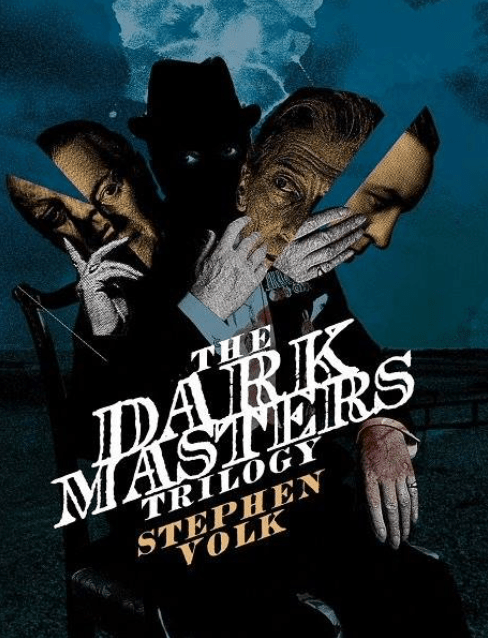
Sometimes I want to draw the line under it. I’ve written many things since after all – half a dozen feature films, including The Awakening, and I’ve created and been lead writer on television series such as Afterlife– as well as being the author of books such as The Dark Masters Trilogy.
But I’m reconciled to the fact that when I turn up my toes the headline will be “Ghostwatch Man Dies”. Ah, well.
It’s not a bad legacy, and, I hope, a little bit of Halloween horror history.
Watch it if you can find it. Preferably on Halloween night. Preferably with friends.
Turn the lights down, imagine yourself watching it back in 1992, unaware that it’s fake from beginning to end. And above all:
In 1870s Paris, long before meeting his Dr Watson, the young man who will one day become the world’s greatest detective finds himself plunged into a mystery that will change his life forever.
A brilliant man—C. Auguste Dupin—steps from the shadows. Destined to become his mentor. Soon to introduce him to a world of ghastly crime and seemingly inexplicable horrors.
The spectral tormentor that is being called, in hushed tones, The Phantom of the Opera . . . The sinister old man who visits corpses in the Paris morgue . . . An incarcerated lunatic who insists she is visited by creatures from the Moon . . . A hunchback discovered in the bell tower of Notre Dame . . . And—perhaps most shocking of all—the awful secret Dupin himself hides from the world. Tales of Mystery, Imagination, and Terror
Investigated in the company of the darkest master of all.
The Dark Master’s Trilogy — Whitstable – 1971. Peter Cushing, grief-stricken over the loss of his wife and soul-mate, is walking along a beach near his home. A little boy approaches him, taking him to be the famous vampire-hunter Van Helsing from the Hammer films, begs for his expert help…
Leytonstone – 1906. Young Alfred Hitchcock is taken by his father to visit the local police station. There he suddenly finds himself, inexplicably, locked up for a crime he knows nothing about – the catalyst for a series of events that will scar, and create, the world’s leading Master of Terror…
Netherwood – 1947. Best-selling black magic novelist Dennis Wheatley finds himself summoned mysteriously to the aid of Aleister Crowley – mystic, reprobate, The Great Beast 666, and dubbed by the press ‘The Wickedest Man in the World’ – to help combat a force of genuine evil…
The Little Gift — The nocturnal scampering invariably signals death. I try to shut it out. The cat might be chasing a scrap of paper or a ball of silver foil across the bare floorboards downstairs, say a discarded chocolate wrapper courtesy of my wife, who likes providing it with impromptu playthings. I tell myself it isn’t necessarily toying with something living, but my stomach tightens.
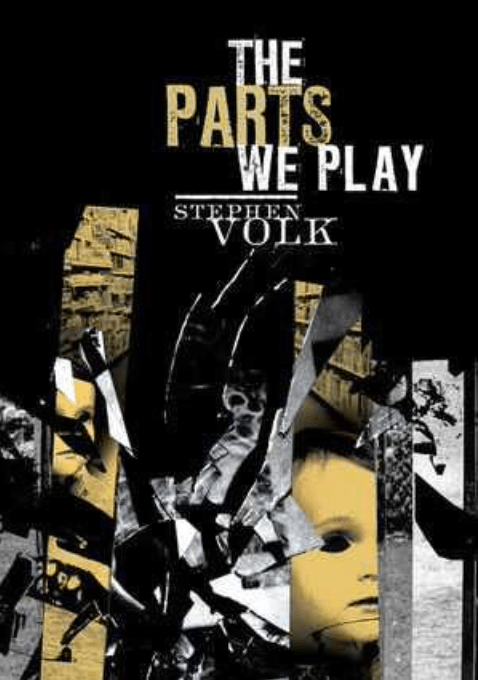
The Parts We Play — An illusionist preparing his latest, most audacious trick… A movie fan hiding from a totalitarian regime… A pop singer created with the perfect ingredients for stardom… A folklorist determined to catch a supernatural entity on tape… A dead child appearing to her mother in the middle of a supermarket aisle… A man who breaks the ultimate taboo—but does that make him a monster?
In this rich and varied collection of Stephen Volk’s best fiction to date, characters seek to be the people they need to be, jostled by hope, fears, responsibility, fate, and their own inner demons—and desires. These tales of the lies and lives we live and the pasts we can’t forget include the British Fantasy Award-winning novella, Newspaper Heart.










 Meghan's House of Books