Having the amazing Brian Hodge on the blog for the first time is definitely an honor. Having him write a review of his favorite Halloween story, which is also one of mine… it’s like we’ve known each other forever.
It is inevitable that institutions get watered down by time. Meanings dilute; the reactions they evoke diminish. Solemn rites become superficial pageantry, ever more hollow the further they drift from their original contexts. Given enough familiarity, even villains and monsters evolve into unlikely antiheroes. By now, the only people rooting for the Halloween movies’ Michael Myers to be stopped are those who are bored sick of him.
According to splatterpunk O.G. John Skipp and his early short story “The Spirit of Things,” the problem with Halloween goes back a lot farther in time than its four-decade film franchise, and runs a lot deeper.
To the ancient Celts, the seasonal turning of summer to winter, of old year to new, was a transitional phase that brought a thinning of the veil between our world and everything else on the other side. Spirits, demons, the dead… they could all cross the ephemeral threshold. This is the history that “The Spirit of Things” remembers. This is the reality that, after millennia of eradication and mockery, is reasserting itself with extreme prejudice.
Since it was first published in the mid-1980s, “The Spirit of Things” has remained my favorite Halloween story of all time. Until a couple of moves disappeared my old hardcopies into a boxed storage purgatory from which they’ve yet to be excavated, I read the piece each year like holy canon: first in the December 1986 issue of Twilight Zone Magazine, then in Deadlines, the 1988 novel by Skipp and his then-collaborator Craig Spector. A strange narrative beast, is Dead Lines, at the time described by its authors as a story collection wrapped in a novel about a guy who kills himself because he can’t sell his story collection.
Barely cracking 2300 words, “The Spirit of Things” has the straightforward simplicity of a timeless fable: a single character, a single setting, a single sequence of events that, in real time, would span fifteen minutes, tops. On the scariest night of the year, an armed and desperate blue-collar worker barricades himself in his apartment, listening to the grisly fate of his neighbors and waiting to see what his own will be.
Yet, with this deceptively limited handful of elements, Skipp paints a portrait in miniature of an entire world undergoing breakdown toward a horrifying new normal. To read it is to reposition yourself at the heart of it. It’s not only balding, paunchy Jake Wertzel under siege in his home; it’s you in yours. It’s not just Wertzel finding out how far he’s willing to go when offering sacrifices to petition for his survival; you can’t read this without wondering about your own limits.
The story’s greatest power is in how actively it engages the imagination. Reader participation is mandatory, because while little is actually seen, much is implied and a whole crazy freakin’ lot is heard. As Wertzel’s surroundings periodically erupt with the kinetic mayhem of an Evil Dead film, it’s the chaos of what he can only hear going on all around him — just outside the windows, on the other side of ceilings and walls — that truly brings the terror, forcing you to conjure in your own head what horrors could possibly be making those ghastly sounds… as well as the carnage they’re leaving in their wake. You want to see, but to see will be the end of you.
Because it’s been around more than thirty years, “The Spirit of Things” may require a bit of a hunt to get your hands on one of its various reprintings. But the effort will be of long-term reward: a holiday classic you can revisit on an annual basis, and wonder, “What if, this year…?”
Called “a writer of spectacularly unflinching gifts” by no less than Peter Straub, Brian Hodge is one of those people who always has to be making something. So far, he’s made thirteen novels, over 130 shorter works, five full-length collections, and one soundtrack album.
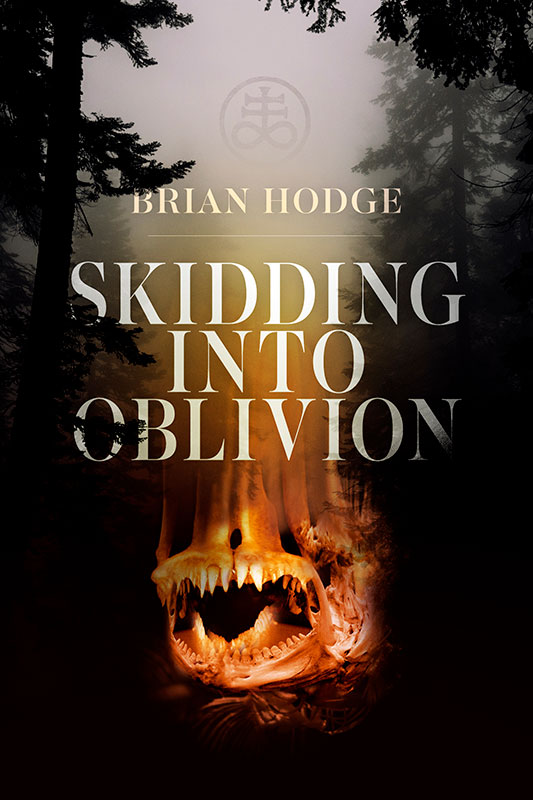
His most recent works include the novel The Immaculate Void and the collection Skidding Into Oblivion, companion volumes of cosmic horror. His Lovecraftian novella The Same Deep Waters As You is in the early stages of development as a TV series by a London-based production company. More of everything is in the works.
He lives in Colorado, where he also endeavors to sweat every day like he’s being chased by the police. Connect through his website, or Facebook.
“You wouldn’t think events happening years apart, at points in the solar system hundreds of millions of miles distant, would have anything to do with each other.”
When she was six, Daphne was taken into a neighbor’s toolshed, and came within seconds of never coming out alive. Most of the scars healed. Except for the one that went all the way through.
“You wouldn’t think that the serial murders of children, and the one who got away, would have any connection with the strange fate of one of Jupiter’s moons.”
Two decades later, when Daphne goes missing again, it’s nothing new. As her exes might agree, running is what she does best … so her brother Tanner sets out one more time to find her. Whether in the mountains, or in his own family, search—and—rescue is what he does best.
“But it does. It’s all connected. Everything’s connected.”
Down two different paths, along two different timelines, Daphne and Tanner both find themselves trapped in a savage hunt for the rarest people on earth, by those who would slaughter them on behalf of ravenous entities that lurk outside of time.
“So when things start to unravel, it all starts to unravel.”
But in ominous signs that have traveled light—years to be seen by human eyes, and that plummet from the sky, the ultimate truth is revealed:
There are some things in the cosmos that terrify even the gods.
We each inhabit many worlds, often at the same time. From worlds on the inside, to the world on a cosmic scale. Worlds imposed on us, and worlds of our own making.
In time, though, all worlds will end. Bear witness:
After the death of their grandmother, two cousins return to their family’s rural homestead to find a community rotting from the soul outward, and a secret nobody dreamed their matriarch had been keeping.
The survivors of the 1929 raid on H.P. Lovecraft’s town of Innsmouth hold the key to an anomalous new event in the ocean, if only someone could communicate with them.
The ultimate snow day turns into the ultimate nightmare when it just doesn’t stop.
An extreme metal musician compels his harshest critic to live up to the hyperbole of his trolling.
With the last of a generation of grotesquely selfish city fathers on his deathbed, the residents of the town they doomed exercise their right to self-determination one last time.
As history repeats itself and the world shivers through a volcanic winter, a group gathers around the shore of a mountain lake to once again invoke the magic that created the world’s most famous monster.
With Skidding Into Oblivion, his fifth collection, award-winning author Brian Hodge brings together his most concentrated assortment yet of year’s best picks and awards finalists, with one thing in common:
It’s the end of the world as we know it… and we don’t feel fine at all.
Meghan: Hi, Brian. It is an honor to have you here on Meghan’s House of Books as part of my annual Halloween Extravaganza. Tell us a little bit about yourself.
Brian Hodge: When I did 23andMe, the DNA results showed 12% mountains, 14% being half of a dyad, 8% Maine Coons, 5% coffee, 2% Belgian ale, 6% black metal, 7% Berlin school electronics, 8% ambient, 11% solitude, 6% kettlebells, 4% Odin, 5% Green Man, and 12% trace elements and unidentifiable.
Meghan: What are five things most people don’t know about you?
Brian Hodge: (1) My favorite person from history is Leonardo da Vinci, because I’m fascinated by polymaths. (2) I am, so far, up to a blue belt in Krav Maga, the hand-to-hand combat system of the Israeli Defense Forces (the progression is white, yellow, orange, green, blue, brown, black). (3) I once managed the circus feat of projectile vomiting strawberry shortcake into my own underwear. (4) For more than twenty years, I’ve been an investor. (5) My primary childhood doctor told me I have unusually tough connective tissue, which I’ve chosen to interpret as being armor plated.
Meghan: What is the first book you remember reading?
Brian Hodge: It would’ve been from the Little Golden Books line for children. I had a couple of Christmas books … The ABC’s of Christmas and the other told the Rudolph story.
Meghan: What’s a book you really enjoyed that others wouldn’t expect you to have liked?
Brian Hodge: Can I cheat? I promise, it’s still writing related. I can’t think of a book, but I loved the show Gilmore Girls. Which probably wouldn’t have been something most people familiar with me would think I’d find essential. But a few weeks after its first season debut, I stumbled across this article, headlined something like “The Best-Written Show You Have No Idea Exists.” Okay, then — challenge accepted. And I right away fell in love with it, in part because the dialogue was so sharply written.
Meghan: What made you decide you want to write? When did you begin writing?
Brian Hodge: Second grade was when I wrote my first story. I was trying novels by sixth. That drive was always there, from even before I’d learned the alphabet, so there was never a conscious decision about it. It was just following the impulse.
Meghan: Do you have a special place you like to write?
Brian Hodge: My desk, most of the time. It’s this big oak beast with a hutch that I bought right after we moved to Colorado. When I snuff it, I’m thinking the whole thing should be smashed up as the wood for my funeral pyre.
Meghan: Do you have any quirks or processes that you go through when you write?
Brian Hodge: It’s more about how I begin the day overall. For me, writing in the morning is optimal, when I’m freshest and my head is clearest. So I get up about 5:30am, and after a bit of mobility warm-up, I head outside for a cardio workout in a fasted state. It comes down to: “Get up, get out, get moving.” It’s usually either trail running or going to the park we live by for a jump rope regimen with agility and weighted ropes. There are a lot of benefits from this: fresh air, getting the blood flowing, and especially the production of BDNF, brain-derived neurotrophic factor. Even in the middle of winter, it has to be awfully deadly out to keep me inside. Then I’m back in for a pint of warm water with lemon juice and apple cider vinegar, and I step into a cold shower for a few minutes. This routine leaves me feeling phenomenal — energized but calm, focused, just plain turbocharged. So it’s a great place from which to begin working.
Meghan: Is there anything about writing you find most challenging?
Brian Hodge: Probably keeping on the right side of perfectionist tendencies, before toppling over onto the other side where they start to become paralyzing.
Meghan: What’s the most satisfying thing you’ve written so far?
Brian Hodge: It’s always the most recent things — the latest novel, The Immaculate Void, and the newest collection, Skidding Into Oblivion. I consider them companion volumes. They started out as a single book, then while writing a capstone piece for the collection I accidentally wrote a novel. And I recently did a piece called “Insanity Among Penguins,” for Final Cuts, an upcoming anthology edited by Ellen Datlow, themed around films. It’s about a lost Werner Herzog documentary, and unnerved the shit out of me more than anything has in a long time.
Meghan: What books have most inspired you? Who are some authors that have inspired your writing style?
Brian Hodge: It was less about individual books than the cumulative effects of bodies of work. There’s no getting away from Stephen King, and encountering Clive Barker was like seeing the bar get raised. John Irving and Shakespeare left their marks. Dylan Thomas, for rhythm, but that came from audio recordings of him. I always like to credit three contemporaries who came along around the same time, Poppy Z. Brite and Caitlín R. Kiernan and Kathe Koja, for making me more aware of language — they all burst out of the gate doing beautiful things with language — and then Kathe turned me onto Cormac McCarthy. Still, that’s scratching the surface. I’m always absorbing something.
Meghan: What do you think makes a good story?
Brian Hodge: Compelling characters in interesting situations. Preferably situations whose resolutions aren’t telegraphed too obviously ahead of time, and ideally in well-realized settings.
Meghan: What does it take for you to love a character? How do you utilize that when creating your characters?
Brian Hodge: Just like loving people in real life, there’s almost no end of reasons, or combinations of reasons, that can bring it about. It could be elements of chemistry and compatibility, like worldview and humor and vulnerabilities. It could be admirable traits, like commitment to a cause or striving to do the right thing no matter how hard it may be.
I found Game of Thrones to be a master class in this. There were so many characters I loved, and for different reasons. But one thing I noticed that I especially responded to were characters who were devoted to protecting, looking out for, whatever, one or more weaker characters — even if they were only weaker in the moment — no matter the cost. It was the selflessness of that.
So in my own work, I’m more conscious of this than I used to be. But then, two or three years ago, I had a similar thing called to my attention in a review. I don’t remember what it was covering specifically, but the reviewer brought up having noticed this thread throughout several things of mine they’d read: of characters having to make really hard choices. I hadn’t consciously realized it, but it made me think: Yeah, I guess that’s right. I love it when characters find it in themselves to make the hardest moral choices of their lives. Okay, then, more of that.
Meghan: Which, of all your characters, do you think is the most like you?
Brian Hodge: I’d have to go back to my first couple of novels, Oasis and Dark Advent, the main protagonists of those. A few years ago, in an afterword to a new edition of the latter, I mentioned that the reason the central characters of both novels are students is because, at the time, a student was still about all I knew anything about being. They were such early novels…not just early in my overall body of work, but early in my life. I wrote Oasis about a year out of university. So it was like, okay, if I tap all that, high school and college, at least I’ll have that much locked down. So we’re talking most like me at the time of the writing, but not now. You grow, you evolve, you start achieving your Ultimate Form. I wouldn’t want to be either of those lunkheads now.
Meghan: Are you turned off by a bad cover? To what degree were you involved in creating your book covers?
Brian Hodge: I should know better, but, yeah, I still can’t help seeing a bad cover as a poor reflection of the contents. As for my own, I’ve occupied every possible station along the continuum: with no input whatsoever and having to take what they give me, total veto power, making suggestions for changes to the basic concept, to designing and compositing my own for some upcoming novella re-releases.
Some of the most satisfying experiences came from projects with Cemetery Dance Publications, and working more closely with the artists. Vincent Chong did the covers for my fourth collection, Picking the Bones, and that new edition of Dark Advent. The most I did was talk about mood, then Vinny knocked them out of the park. He’s glorious. The same with Kim Parkhurst, an artist I got directed to for a novella called I’ll Bring You the Birds From Out of the Sky. With this, it was more than the cover. The story is rooted in cosmic horror, and involves a cache of Appalachian folk art, so I thought it would be cool to have several style-appropriate color plates throughout the book. Kim totally ran with it. All I had to do was sit back and drool over the work-in-progress that she would send me. That little book looks so good I want to lick it.
Meghan: What have you learned creating your books?
Brian Hodge: Years ago I read something that immediately struck me as true, but I’d never considered it before: that each book teaches how you to write that particular book. The implication being that there’s not as much carryover to the next as you might think, because the next presents its own new set of challenges. But through all that, one overarching thing I’ve learned is to simply trust the process. That as long as you keep showing up to do the work, and giving it all you have, the details tend to sort themselves out along the way. What you’re doing that whole time is giving your subconscious mind more and more to work with, and the subconscious is always busy, always solving problems. So many times I’ve had no concrete notion of how something should culminate, but by the time I’m on the final approach, it’s there. So I don’t stress about it like I might’ve early on. I trust the process.
Meghan: What has been the hardest scene for you to write so far?
Brian Hodge: The one that’s always stayed with me as the biggest ordeal is a chapter in my sixth novel, Prototype. One of the central characters is this damaged guy who finds out he has this extremely rare chromosomal abnormality. About two-thirds in, he finally meets another one like him, whom he finds to be in even worse shape, so it’s devastating for him. I wanted to get as deep into this as possible, so I really prepared for it. On the stereo, I set this 20-minute Godflesh track on infinite repeat, like this spiraling black hole of oppressive noise, and wrote the chapter over several hours while tripping on acid. It got the job done, but I was useless the next day.
Meghan: What makes your books different from others out there in this genre?
Brian Hodge: Really, I’m the last person who should weigh in on this. About all I can say is that they’re uniquely mine, but that’s going to apply to most anyone with a byline. You’d have to ask readers, and even then, ten different people might give you ten different answers.
Meghan: How important is the book title, how hard is it to choose the best one, and how did you choose yours (of course, with no spoilers)?
Brian Hodge: They’re vital, but regardless of whether it’s novels or short stories or long fiction or collections, it seems like I either know what the perfect title is very early on, or it eludes me and nothing ever feels quite right. The best times are when I have a title sitting around waiting for the perfect thing to hang beneath it. “Scars In Progress,” a piece in the collection from earlier this year, Skidding Into Oblivion, is a good example of that. One day I was skimming some dull technical material and misread the phrase “scans in progress.” Wait — what was that again? So I knew I had a keeper, even if it had to gather dust a few years for the right story to come along and claim it. Happy accidents like that can come from anywhere, so you have to always leave yourself open to receive the gifts.
Meghan: What makes you feel more fulfilled: Writing a novel or writing a short story?
Brian Hodge: I’ve always described novels as being like marriages, while shorter works are passionate flings on the side. So they each have their own rewards. A novel is obviously a bigger accomplishment, but there are times when it’s a bigger pain in the ass, too. So the intrinsic reward ratio is skewed. Let’s say a particular novel is fifteen times the length of a particular short story. Is it fifteen times as fulfilling? I can’t say that it is. I’m just happy to cross another finish line, however long the race. What I most love is the process, and the relationship with the work, however long it lasts.
Meghan: Tell us a little bit about your books, your target audience, and what you would like readers to take away from your stories.
Brian Hodge: Every book, whether it’s been horror, crime, or more recently fantasy, has been a product of the time it was written. Five years apart, the same idea might undergo a very different development and execution. So I don’t think in terms of a target audience. That would feel too calculating. The main concern is to do the best job I possibly can with the narrative that has started to undress itself in front of me.
And it doesn’t matter what I might want readers to take away, so I never think of that either. When you release something new into the wild, you may retain ownership of the work itself, but you relinquish control over the experience of reading it. People find their own meanings in things. I’ve seen people align perfectly with what I felt I was putting into a work, and seen other people derive takeaways I never intended. But I would never tell the latter people, “No, you’re wrong,” because it’s their own subjective experience. The first time anyone asked me what I wanted readers to come away with, it was during a convention panel, and all I said was, “A receipt.”
Meghan: Can you tell us about some of the deleted scenes/stuff that got left out of your work?
Brian Hodge: I tend to not work in a way that generates big, solid chunks of extraneous stuff. I’m lazy, I don’t want to do all this work that’s just going to get tossed, so paradoxically I do as much heavy lifting upfront as possible. I’ll have these freeform conversations with myself on a yellow legal pad as a way of brainstorming, to get a good idea of where things might be headed, who the characters are, and so on. With a completed first draft, my metaphor is that it’s like a fighter showing up for training camp — recognizable but out of shape. The subsequent drafts, it’s mainly about losing flab and building more muscle where needed. The final pass-throughs, to get to the optimal fighting weight, we’re down to sweating off ounces — a word here, a few words there.
Meghan: What is in your “trunk”? (Everyone has a book or project, which doesn’t necessarily have to be book related, that they have put aside for a ‘rainy day’ or for when they have extra time. Do you have one?)
Brian Hodge: That’s interesting, the difference in terminology here. To me, “trunk novel” has always meant an early stab at writing a book that didn’t turn out well, so it gets stashed away in this trunk, real or metaphorical, and likely never sees daylight again.
But what you’re talking about, to me it just falls under time- and project management. I have ideas for novels, and am hundreds of pages into one of them, but it’s not their time yet. So they’re idling like airliners on a runway, waiting on the tower to clear them for takeoff. And I like to mess about with music and sound design, in a home studio. By now it seems to have sorted itself out into three stylistically different identities. I can’t accord it the same priority as the writing, but it’s still something I love doing. Photography, too — I like doing photography. The rationalization I came up with for it all is that success in one field of creative endeavor should fund the ongoing abuse of another.
Meghan: What can we expect from you in the future?
Brian Hodge: If we are what we repeatedly do, as Aristotle said, for more than a year I ceased to be much of a writer. My parents died in April of last year, then I was appointed estate executor. There were so many responsibilities and obligations, that this was my focus for the next year. Then I needed to take some time off from everything. There’s still estate business to tend to now and then, but I pretty much have my life back again, even though it feels slow in getting back up to speed. Like turning an aircraft carrier.
Lately I’ve been putting together my sixth collection. I wrote the main finale for the third and final volume of editor Stephen Jones’ Lovecraft Squad trilogy of mosaic novels. I just did a piece for an anthology called Miscreations. There’s a gritty fantasy novel called A Song of Eagles that’s part of a larger Kickstarter project, and was 50,000 words along when I had to set it aside the day I woke up to the news my mom had died. So now that I’m warmed up, I’ll finish that one, then decide which runway novel to go with next.
Then there are some potential TV and film projects. We’ve just renewed the option for a TV adaptation of a story called “The Same Deep Waters As You,” by a London-based production company. I read their season one treatment recently, and really like what the attached writer, from Sweden, has done with it. A few other things are still in the negotiation or paperwork phase, so it’s too soon to go public with the news.
Meghan: Where can we find you?
Brian Hodge: My website has an email link. I’m usually active on Facebook, although a brief sabbatical is occasionally necessary when the whining hits critical mass. I still have an account on Twitter but hesitate to send anyone there. When the family stuff blew up, I didn’t have time for it, and it’s been dormant ever since.
Meghan: Do you have any closing words for your fans or anything you’d like to say that we didn’t get to cover in this interview?
Brian Hodge: Nah, other than to say thanks very much for having me here.
Called “a writer of spectacularly unflinching gifts” by no less than Peter Straub, Brian Hodge is one of those people who always has to be making something. So far, he’s made thirteen novels, over 130 shorter works, five full-length collections, and one soundtrack album.
His most recent works include the novel The Immaculate Void and the collection Skidding Into Oblivion, companion volumes of cosmic horror. His Lovecraftian novella The Same Deep Waters As You is in the early stages of development as a TV series by a London-based production company. More of everything is in the works.
He lives in Colorado, where he also endeavors to sweat every day like he’s being chased by the police. Connect through his website, or Facebook.
“You wouldn’t think events happening years apart, at points in the solar system hundreds of millions of miles distant, would have anything to do with each other.”
When she was six, Daphne was taken into a neighbor’s toolshed, and came within seconds of never coming out alive. Most of the scars healed. Except for the one that went all the way through.
“You wouldn’t think that the serial murders of children, and the one who got away, would have any connection with the strange fate of one of Jupiter’s moons.”
Two decades later, when Daphne goes missing again, it’s nothing new. As her exes might agree, running is what she does best … so her brother Tanner sets out one more time to find her. Whether in the mountains, or in his own family, search—and—rescue is what he does best.
“But it does. It’s all connected. Everything’s connected.”
Down two different paths, along two different timelines, Daphne and Tanner both find themselves trapped in a savage hunt for the rarest people on earth, by those who would slaughter them on behalf of ravenous entities that lurk outside of time.
“So when things start to unravel, it all starts to unravel.”
But in ominous signs that have traveled light—years to be seen by human eyes, and that plummet from the sky, the ultimate truth is revealed:
There are some things in the cosmos that terrify even the gods.
We each inhabit many worlds, often at the same time. From worlds on the inside, to the world on a cosmic scale. Worlds imposed on us, and worlds of our own making.
In time, though, all worlds will end. Bear witness:
After the death of their grandmother, two cousins return to their family’s rural homestead to find a community rotting from the soul outward, and a secret nobody dreamed their matriarch had been keeping.
The survivors of the 1929 raid on H.P. Lovecraft’s town of Innsmouth hold the key to an anomalous new event in the ocean, if only someone could communicate with them.
The ultimate snow day turns into the ultimate nightmare when it just doesn’t stop.
An extreme metal musician compels his harshest critic to live up to the hyperbole of his trolling.
With the last of a generation of grotesquely selfish city fathers on his deathbed, the residents of the town they doomed exercise their right to self-determination one last time.
As history repeats itself and the world shivers through a volcanic winter, a group gathers around the shore of a mountain lake to once again invoke the magic that created the world’s most famous monster.
With Skidding Into Oblivion, his fifth collection, award-winning author Brian Hodge brings together his most concentrated assortment yet of year’s best picks and awards finalists, with one thing in common:
It’s the end of the world as we know it… and we don’t feel fine at all.
Meghan: Hello, David. Welcome, welcome. Tell us a little bit about yourself.
David Watkins: I am a teacher by trade and writer the rest of the time. My main job – the one that keeps the roof over my head – is as a math teacher in a school in North Devon in the UK. Teaching is a great and rewarding job, but it’s also very stressful. Writing is a great release for that – it’s an endless source of names of characters who need to die extremely violent deaths. I went part time a couple of years ago so I could devote more time to writing and improve my work-life balance. I’m also married with two children, so my time is at a premium.
Meghan: What are five things most people don’t know about you?
David Watkins: I’m a twin, have a soft spot for bad 80s rock, love things like roller coasters, can fall asleep anywhere (once during a Rage Against The Machine concert), and I will cancel anything to watch Wales play rugby – although most of my friends already know that!
Meghan: What is the first book you remember reading?
David Watkins: The Faraway Tree by Enid Blyton. I know that she’s been accused of bigotry and sexism in her books but I loved the stories as a boy. Wonderful displays of imagination. A few years ago, I tried to read The Famous Five to my sons but, honestly, it hasn’t aged well.
Meghan: What are you reading now?
David Watkins: Right now, I’m reading Dead by Design by James Mortain. I’ve met James a few times and he’s a top bloke so I’m relieved to say I’m really enjoying the book. It’s the second in his Detective Deans series about a police officer who starts to have psychic awakenings. Good stuff and some of it is set locally to me, which is nice. I just finished Thingy by J. R. Park, which is an extremely limited release to publicise Duncan P. Bradshaw’s Cannibal Nuns from Outer Space! I would highly recommend both and indeed, anything released by The Sinister Horror Company is worth any horror fan’s time.
Meghan: What’s a book you really enjoyed that others wouldn’t expect you to have liked?
David Watkins: The Time Travelers Wife. I really don’t like romantic books at all (my wife is a big fan) but I stayed up all night to finish that one. Ignore the film!
Meghan: What made you decide you want to write? When did you begin writing?
David Watkins: I have written for as long as I can remember, so I can’t really recall a time when I decided to ‘give it a go’. As a boy I was a big fan of the Flash Gordon and Buck Rogers black and white TV shows (the Buster Crabbe ones) and obviously Star Wars. I remember making up different story lines for those and it went from there. I think cliff-hanger style of storytelling has had a big impact on my own writing.
My original plan was to be a teacher for five years, write a few books in my holidays and then be a writer full time. Ridiculous when you think about it! I have now been teaching for twenty five years, have published three books and recently finished the fourth.
There were two events that made me take writing much more seriously. The first was that my twin brother bought me a copy of On Writing by Stephen King, which is simply one of the best books about the craft I’ve read. On the front page, my brother had written ‘I hope this inspires you!’ My brother loves his books and can read a copy multiple times without so much as a dent on the spine, so for him to deliberately deface a book by writing in it was a pretty big message to me.
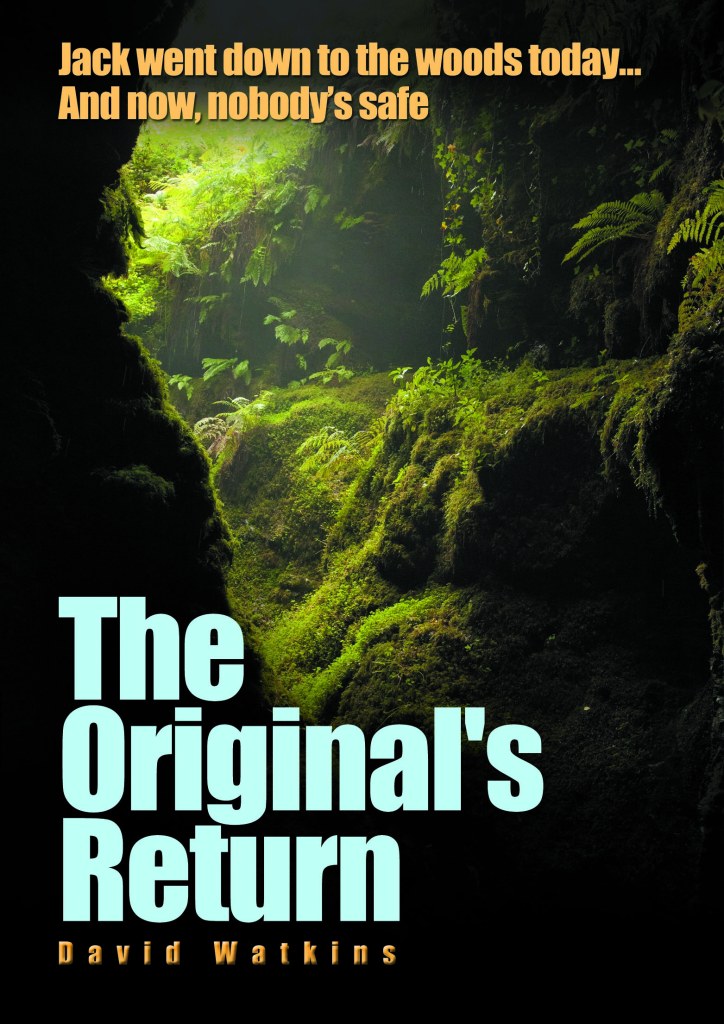
Secondly, I was driving to work, too fast, too late, just a normal day and I lost control of my car. I hit a lorry and completely wrote off the car. The only part of the car that wasn’t smashed to pieces was my seat. I am very, very lucky to be alive. As I lay in the hospital, berating myself whilst a nurse removed glass from my hands, I wondered why I’d never given writing a serious go. Four months later, I had the first draft of The Original’s Return written and have not looked back since. That was ten years ago, but it came out in 2013 so I’m averaging a book every two years since then. I’m not the speediest of writers, but I feel it’s more important to write well than quickly.
Meghan: Do you have a special place you like to write?
David Watkins: Not especially. I have an office in my house that I write in, or I use the kitchen table. However, I can – and will – write anywhere. The only time I freeze is when someone is reading over my shoulder as I type, so go away darling, I love you too!
Meghan: Do you have any quirks or processes that you go through when you write?
David Watkins: Music and tea – as much of both as I can.
Meghan: Is there anything about writing you find most challenging?
David Watkins: Coming up with twists on plots can be difficult, especially if you try to force it. It’s very difficult to be original when so many thousands of books are being published, seemingly every day. That said, it’s fun to twist people’s expectations. In The Original’s Return, I don’t use the word ‘werewolf’ but it’s clear that’s what we’re dealing with. However, there are no full moons, no silver bullets or any of those clichés and the reviews are overwhelmingly positive so people seem to like this approach.
Editing is always a challenge, but I have learned to enjoy it as it’s when the story comes into focus. Tightening up the language makes the story flow better and that is the most important thing of all for readers.
Meghan: What’s the most satisfying thing you’ve written so far?
David Watkins: Satisfying is a difficult one. I’m not sure I’m completely satisfied with anything I’ve written – it’s all about striving to be better. I don’t have a huge amount of self-confidence about my writing (does anybody?), so it’s always a lovely surprise when someone says ‘I really enjoyed that’. I just had some feedback on my latest WIP from someone whose opinion I really value and she thought it was ‘absolutely brilliant’. It’s about monsters running amok in Exeter but she couldn’t believe I’d made them up from scratch and hadn’t based them on an existing trope. Phew!
Meghan: What books have most inspired you? Who are some authors that have inspired your writing style?
David Watkins: Stephen King has been a big influence on both my reading and love of horror. His On Writing is a book every aspiring writer should read. Joe Lansdale is another: just brilliant characters and stories. The Hap and Leonard series is probably his best known work but his Drive In series is great fun. It’s a shame the The Drive In 3 is only available as an eBook or at a ridiculous price in the UK.
Meghan: What do you think makes a good story?
David Watkins: For me the key word is story. It has to have a plot. I’m not interested in a 500+ page rumination on the way people’s lives are connected by a baseball – give me some people to care about (one will do) and an intriguing story and I’m all yours. Take Brian Keene’s Urban Gothic. That is one dark and twisted tale, but the characters feel very relatable so you want them to survive.
Meghan: What does it take for you to love a character? How do you utilize that when creating your characters?
David Watkins: The character has to seem like a real person. They shouldn’t just do things because the plot dictates, but because it is a logical move for that character. We all know of moments in books and, especially, films where someone does something stupid (like not call the police) for no reason other than it fits the plot. If you establish the character is anti-authority, anti-police or whatever then that moment is now earned. This is something I’m working on constantly.
Meghan: Which, of all your characters, do you think is the most like you?
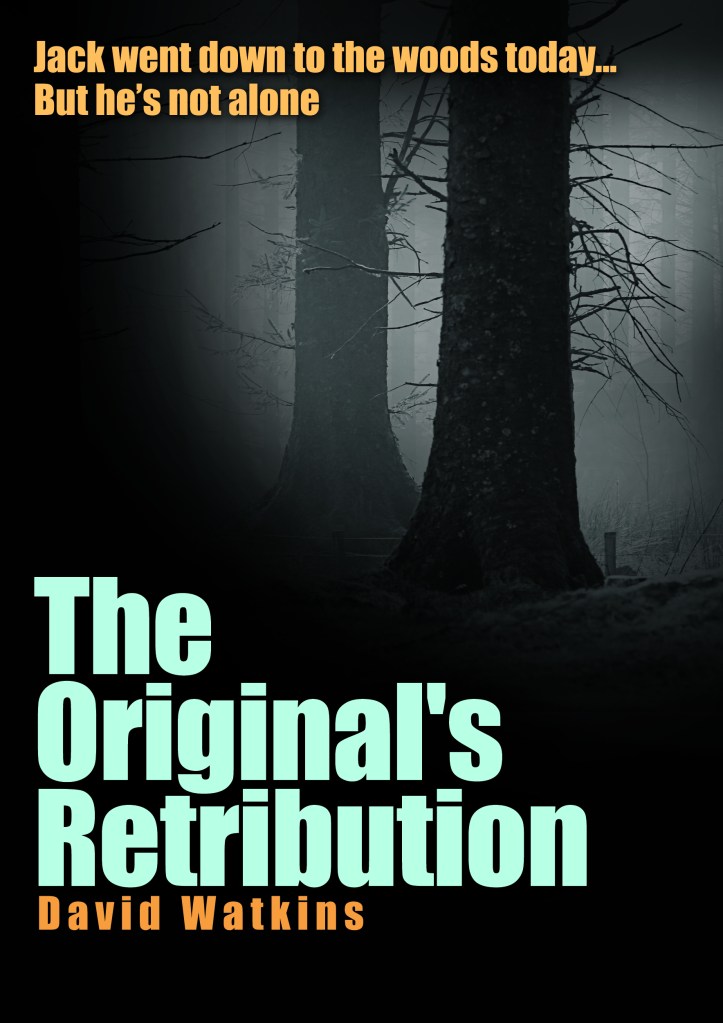
David Watkins: This one is easy: Jack Stadler, the main character of The Original’s Return and The Original’s Retribution. He runs, plays guitar, loves Springsteen, is a new dad and math teacher. I didn’t look very far from the mirror to get inspiration for him. He’s also a werewolf, so he’s a much cooler version of me.
Meghan: Are you turned off by a bad cover? To what degree were you involved in creating your book covers?
David Watkins: Definitely. I am very fortunate with my covers in that one of my mates (Rowan) is a superb photographer and another is a graphic designer (Frank). Frank takes Rowan’s photos and turns then into my covers. They look fantastic and have been praised in reviews and all it cost me was a firm handshake and a few beers.
Meghan: What have you learned creating your books?
David Watkins: Edit, edit, edit. And then, when you think it’s done, edit one more time.
Meghan: What has been the hardest scene for you to write so far?
David Watkins: There is a rape scene in The Original’s Retribution that surprised me when it came up. It fits for where the character is at that moment in the story, but I didn’t enjoy writing that bit. My wife gave me a ‘really?’ look when she read it and it remains her least favourite scene of mine. To be honest, that probably means it did its job.
Meghan: What makes your books different from others out there in this genre?
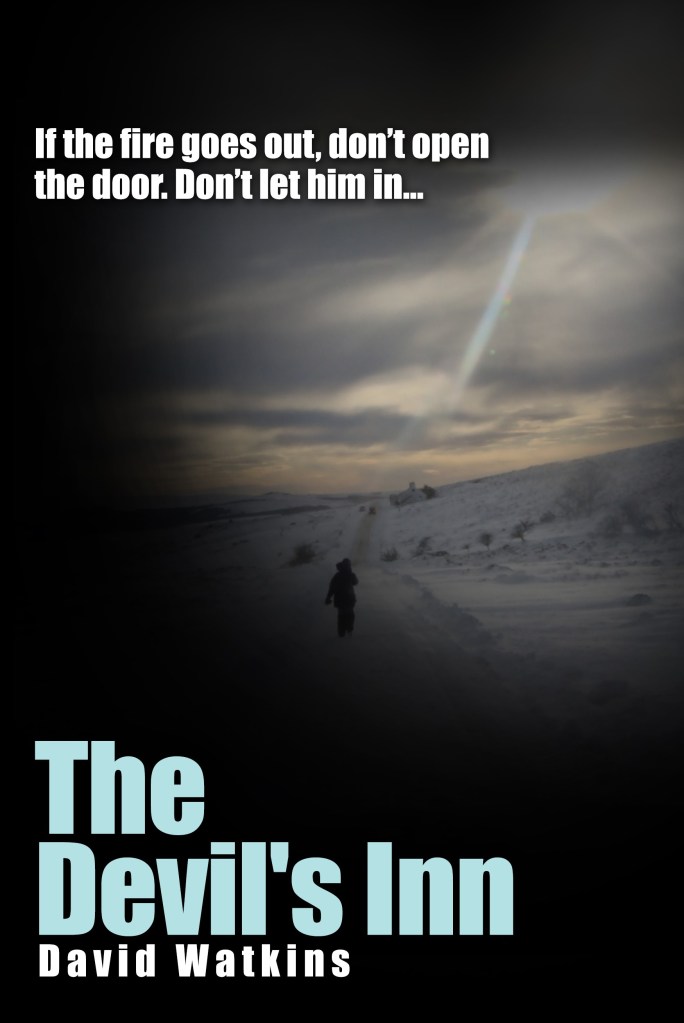
David Watkins: That’s a tough one. They are resolutely British, both in setting and outlook and are all set in beautiful Devon. Both of The Originals books do not feature the word ‘werewolf’ at all. I started out with that as a challenge to myself: how far can you get without using the word? The Devil’s Inn features a few legends of Dartmoor, but I don’t mention that in the text so it’s there for interested readers to look up themselves.
Meghan: How important is the book title, how hard is it to choose the best one, and how did you choose yours (of course, with no spoilers)?
David Watkins: The title of a book should be intriguing enough to make you pick it up. All of my titles have come up as part of the writing, so it was fairly easy to come up with them. However The Original’s Return had been out for six months before a mate said ‘it sounds like a sequel.’ Damn – minor problem as it’s the first in the series!
For The Devil’s Inn I had the title before I’d finished writing the first chapter. As it’s about the Devil visiting a pub in Devon, the title suggested itself.
Meghan: What makes you feel more fulfilled: Writing a novel or writing a short story?
David Watkins: I don’t write that many short stories (although this is something I’m working on) so it would have to be novel. There is something about the length that makes it a challenge and it’s a lovely feeling when you type ‘the end’. I think it’s probably a similar feeling for marathon runners and sprinters: both are challenging and rewarding in different ways.
Meghan: Tell us a little bit about your books, your target audience, and what you would like readers to take away from your stories.
David Watkins: They are designed to be page turners and so would make ideal books for anyone looking for a fast paced story, from teenagers upwards. None of them are ‘young adult’ but my son read The Original’s Return when he was thirteen (spoiler: ‘best book I’ve ever read’, but then he has to say that as homeless at thirteen is a tough gig). I want them to be entertained, first and foremost.
Meghan: Can you tell us about some of the deleted scenes/stuff that got left out of your work?
David Watkins: No – they were deleted for a reason!
Meghan: What is in your “trunk”?
David Watkins: I have an idea for a sci-fi story about the early days of colonising an alien planet. It’s percolating nicely so may well be my next project. Obviously, it will become more of a horror story at some point rather than straight sci-fi. Seems I can’t write a story without someone dying horribly.
Meghan: What can we expect from you in the future?
David Watkins: I am doing final edits on The Exeter Incident which is about monsters running amok in the Devon capital. I will be approaching some publishers for this one, but may well self-pub again if the terms aren’t right.
David Watkins lives in Devon in the UK with his wife, two sons, dog, cat, and two turtles. He is unsure of his place in the pecking order: probably somewhere between the cat and the turtles.
David’s latest novel is The Devil’s Inn: a chilling tale set on Dartmoor during a fierce snowstorm. Has the Devil really come to Devon?
He is now working on a new stand alone novel, set in Exeter. He hates referring to himself in third person, but no-one else is going to write this for him.
David can be found on Twitter so please drop by and say hello, where you’ll find him ranting about horror, the British education system and Welsh rugby, but not usually at the same time.
Sergeant Peter Knowles has seen it all: in Afghanistan he witnessed death on a level that no-one should walk away from. Returning to Britain, he jumps at the chance to lead a small team in Devon. The task sounds more like a holiday; exactly what Knowles and his men need.
The mission: watch Jack Stadler.
Jack has always led a quiet life, but now he is suffering blackouts and has violent fantasies.
When the first dismembered body is found, Knowles begins to realise he has made a terrible mistake…
Sergeant Peter Knowles has sworn to hunt down the remaining wolves in Britain and kill them all. He wants revenge for the massacre that took the lives of his friends.
The wolf packs are scattered and scared, but someone new has started to galvanise them.
Someone terrifying.
Someone closer to Knowles than he could ever suspect.
Meghan: Hi, Chris. Welcome to Meghan’s House of Books. Tell us a little bit about yourself.
Chris Bauer: Philly guy. Was corporate middle management at some blue chips: Ford Motor, Exxon, MetLife. I’m old-ish. First published at age 57. I love reading thrillers, mysteries, crime stories, noir, dark humor, so this is what I write. I’ve had some very irreverent short stories published; among them: “You’re a Moron,” noir, thuglit; “Zombie Chimps from Mars,” horror, Shroud.
Meghan: What are five things most people don’t know about you?
Chris Bauer:
1) I played rugby. My position on the team—hooker—is a lot like a center in football. It’s a good conversation starter. “ I used to be a hooker.” Raised-eyes responses can push the conversation in some interesting directions.
3) One of my short stories, “You’re A Moron,” was podcasted, as in read/performed by an actor. The podcast was downloaded over 100,000 times. True fact. Don’t get excited. The downloads were/are free. A good short story nonetheless.
4) “Beach house?” This is my wife’s response whenever I tell her of a writing milestone, as in my first pubbed short story, first agent, debut novel, first advance, first multi-book deal. The best we’ve been able to do with the spoils from any of these accomplishments is rent a condo on the beach where you could actually see the water.
5) I’m 6’2”.
Bonus “thing you should know”: 6) I lie a lot.
Meghan: What is the first book you remember reading?
Chris Bauer: Something in the Tom Swift series of middle grade sci-fi books first published in the early 20th century. I can’t remember which one. Pure camp. Written by Victor Appleton, which was a pseudonym for a bevvy of writers. The series originated a writing taboo known as the “Tom Swifty,” or “punning wordplay heavy on adverbs.” (Example: “That’s a lot of hay,” Tom said balefully.)
Meghan: What’s a book you really enjoyed that others wouldn’t expect you to have liked?
Chris Bauer: Fessin’ up big time here: I LIKED THE DA VINCI CODE. There, I said it. So many people say it’s poorly written. For me it was a pure adrenalin rush. DO NOT JUDGE ME.
Meghan: What made you decide you want to write?
Chris Bauer: I don’t know. Maybe I always wanted to write, from back in my days at Penn State when my English professor decided to read to us from his porn novel. I suppose it comes from enjoying the escapism one gets from reading fiction. It put that one twinkle in my eye — “Hey, I can do that!” — that was really a piece of dirt I should have washed out soon as it got in there. As they say, writing is a blessing and a curse, but I can’t not write. God help me.
Meghan: When did you begin writing?
Chris Bauer: In my early forties. My family and I were suffering through a difficult, life-changing corporate takeover that almost relocated me from the east coast (Connecticut) to the Pacific Northwest (Portland, OR). I wrote a novel about it; it was my first attempt at creative writing in any capacity. It’s in a drawer somewhere. I’m glad I didn’t accept the relocation package. I would have become a leper out there because the acquiring company eventually went bankrupt as a direct result of the acquisition of my company.
Meghan: Do you have a special place you like to write?
Chris Bauer: On my large screen iMac in the fourth bedroom of the house. To my left, a torn forty-year-old leather couch in burgundy. My old iMac sits on a beat-up corporate mahogany exec desk with candy in the top drawer, the desk on an Oriental rug spread on top of some standard carpet. My “Buddy Jesus” figurine statue from the movie Dogma is always there to give me a smiley-faced, back-at-you thumbs up and eye wink. Various Philly trinkets sit on a window ledge. Ever hear of a pimple ball? It’s a Philly thing from the fifties-sixties. You can look it up.
Meghan: Do you have any quirks or processes that you go through when you write?
Chris Bauer: Up by four a.m. seven days a week to write. COFFEE. Compose/research in the morning, trash two-thirds of what I wrote by the afternoon, critique the work of peer writers in the evening because I usually hate everything I’m critiquing by then, and I’d rather my writer friends feel that wrath than lose most of what I’ve written for the day.
Meghan: Is there anything about writing you find most challenging?
Chris Bauer: Anything with a deadline. Early on I had the luxury of writing at my own pace, dreaming of the day when I might close a deal. Careful what your wish for. Ignorance is bliss. Once the pen hits the contract: “Hey, this writing shit is hard!”
Meghan: What’s the most satisfying thing you’ve written so far?
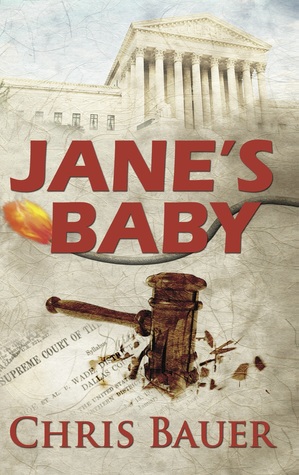
Chris Bauer: The political thriller Jane’s Baby (Intrigue Publishing, 2018). It deals with a present day what-if question regarding the 1973 Roe v Wade landmark US Supreme Court decision about women’s reproductive rights. The byline is “Whatever happened to Jane Roe’s baby?” The short answer is in real life the litigant Norma McCorvey’s pregnancy wasn’t terminated. Her baby, a girl, was born and was subject to a closed adoption, neither side ever knowing the identity of the other. What if this child learned who she was later in life (she’d be in her late forties now), after she gained some career prominence and notice on the national scene? What if someone planned all this? Ebook, paperback, audiobook.
Meghan: Who are some authors that have inspired your writing style?
Chris Bauer: Shilstone, specifically because of his Chance baseball novel. Written in the first person. What a writing voice!
Meghan: What do you think makes a good story?
Chris Bauer: I like genre fiction best, with all its mainstays: tension, conflict, action, crisp dialogue, uniqueness of plot, twists, twists and more twists, and salt-of-the-earth characters. I don’t look for it to be literary, it just needs to keep me wanting to turn the page.
Meghan: What does it take for you to love a character?
Chris Bauer: Protagonists can be from any walk of life: blue collar, professional, priests, nuns, cops, military. They will be hard working, flawed, and have taken some hard knocks, and the storyline thrusts them into action. They’re also usually self-deprecating while a bit narcissistic. Sidekicks must be colorful and memorable, distinctive. They all will be a little over the top, to take the reader into territory that allows the escapism all readers covet: show me a world, an event, and people I don’t usually see.
Meghan: How do you utilize that when creating your characters?
Chris Bauer: The storyline/plot is key, and it is the first thing that needs development, then I build the characters around it.
Meghan: Which, of all your characters, do you think is the most like you?
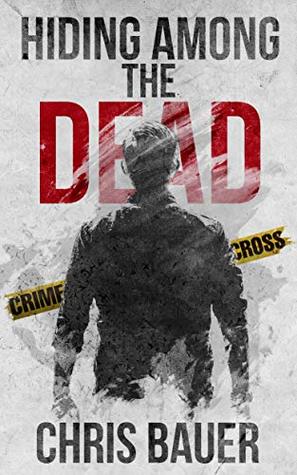
Chris Bauer: A number of them. Okay-fine, I see myself in many of my heroes. But “is” might not be the correct verb to use; “was” is more appropriate, considering their ages. In Binge Killer, it would be bounty hunter Counsel Fungo, even though she’s female. Her Catholic school upbringing, like mine, cried for rebellion, and rebel she did. In Scars on the Face of God it would be Wump Hozer, the aging church custodian. In Jane’s Baby it’s another bounty hunter, retired Marine Judge Drury. In Hiding Among the Dead, it would be protagonist crime scene cleaner and bare-knuckle boxer Philo Trout.
Meghan: Are you turned off by a bad cover? To what degree were you involved in creating your book covers?
Chris Bauer: Yes, I’m immensely turned off by bad covers, as most authors are, because book covers go a long way toward selling the book. I’m always granted final approval, front and back, but the only cover I had significant creative front-end input on was Jane’s Baby. I found a photo of the print copy of the original real-life Roe v Wade Supreme Court decision that was autographed by one of the arguing attorneys, Sarah Weddington. If you look closely at the cover, you can see her handwritten first name. I thought it was a nice touch.
Meghan: What have you learned creating your books?
Chris Bauer: Good beta readers are like gold, as are good peer critiquers. I’ve also validated some writing tropes. “Writing is a lonely endeavor.” “You won’t get rich.” “Enter (a scene) late, leave early.” “Read your work aloud” for clarity, pitch, cadence, etc. “If you write drunk, edit sober.” “Don’t kill the cat.” Going against the last one effectively ruined one of my chances at signing with perhaps the largest independent publisher out there. Ouch. (Six the Cat is now alive and well and debuted in Hiding Among the Dead.)
Meghan: What has been the hardest scene for you to write so far?
Chris Bauer: A few were extremely hard. In Hiding Among the Dead, the opening scene was difficult: suicide by train involving an undocumented immigrant mother and her two children, one an infant. Very graphic but necessary, or so I tell myself. In Binge Killer, the final scene might be the single most graphic scene of any book released in 2019. I had to decide if I was going there. Again, necessary. In a novel yet to be sold, HOP SKIP JUMP, about reincarnation, and what might happen if a person returned to a place where she was needed the most, I have some cathartic scenes about a character losing her mother early, when the child was an infant. It’s something my wife experienced, and I will never be able to do justice to it, but I wanted to try. A lot of the novel made me cry while writing it.
Meghan: What makes your books different from others out there in this genre?
Chris Bauer: One, I’m not afraid of writing genre novels utilizing controversial current issues. See Jane’s Baby. The second novel in the series, currently titled AMERICA IS A GUN, will deal with gun control. Two, I call myself a “brute force novelist” and my byline is “The thing I write will be the thing I write.” It’s a take it or leave it proposition that might be a little self-serving, but it effectively recognizes that I attempt to write scenes and dialogue that come right at the reader and do not to pull punches. More along the lines of Elmore Leonard, if I can be so bold as to include my name in a paragraph with his name in it.
Meghan: How important is the book title, how hard is it to choose the best one, and how did you choose yours (of course, with no spoilers)?
Chris Bauer: Binge Killer became a community decision, one of a few titles I suggested to the publisher and which we agreed on. A play on serial killer. This drifter kills a number of people in one day and night during a last hurrah for himself. An out-of-towner looking to soil a small town’s admirable reputation of no reported major crimes in over fifty years. This is the first of my published novels that the title was not entirely my decision, but I’m plenty good with it.
Meghan: What makes you feel more fulfilled: Writing a novel or writing a short story?
Chris Bauer: Novels are a marathon, short stories a sprint. I’ve written, or am in WIP status of, probably the same number of each (seven?). Both have their moments, but IMO a good short story is actually the tougher of the two to get right. Fulfillment-wise, however, I feel more satisfaction in completing a novel. I love pulling together the puzzle, love producing a story with multiple moving points that all need solutioning.
Meghan: Tell us a little bit about your books, your target audience, and what you would like readers to take away from your stories.
Chris Bauer: In Binge Killer (October 2019) a female bounty hunter squares off against a maniacal killer in a small town that just wants to be left alone and is mostly made up of bowlers, bingo players, and quilters. Mostly. Neo-noir, mystery, dark humor.
Hiding Among the Dead (May 2019) is the first in a series about commercial crime scene cleaners bumping up against the underbelly of organized crime. The second book in the series is due out 2020. Mystery, thriller, dark humor.
Jane’s Baby (2018) is a political thriller that attempts to answer the question whatever happened to Jane Roe’s baby of Roe v. Wade infamy. It’s the first in a series that will deal with controversial modern day social issues. The second in the series, AMERICA IS A GUN, another political thriller with crimes involving lax gun control, is looking for a home because of its controversial nature. Thriller, legal fiction, political fiction.
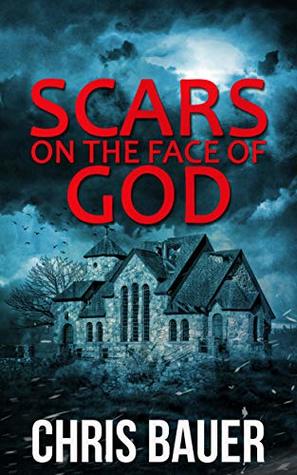
Scars on the Face of God (re-released May 2019) is a standalone biblical horror novel set in the 1960s involving a real-life 13th century manuscript called The Devil’s Bible currently on display in the royal library of Sweden. It asks the question, if the Devil wrote a bible, what would be in it, and how might a small Pennsylvania Dutch town be impacted if this blasphemous manuscript were discovered in the attic of an orphanage, AND they felt that it foretold the advent of the anti-Christ. Horror/thriller, religious fiction.
Regarding what I want my readers to take away from my novels, I want only that they be entertained—by the story, the characters, the humor, and the sentiment.
Meghan: Can you tell us about some of the deleted scenes/stuff that got left out of your work?
Chris Bauer: Binge Killer entered the editing process and left with all its original scenes intact, but one of the publisher’s content editors suggested a significant enhancement that really increased the stakes, so we added it. In Hiding Among the Dead, we removed a storyline that will appear in a later novel. The scenes deleted and the subplot they related to just needed a different home.
Meghan: What can we expect from you in the future?
Chris Bauer: A follow-up novel to Hiding Among the Dead, tentatively titled HER TWELVE-LETTER ALPHABET, which is set in Hawaii on the only Hawaiian island that is privately owned. Will release 2020.
I will finish up AMERICA IS A GUN, a novel with many of the same characters who appeared in Jane’s Baby. This will involve the art world, the dark web, bitcoin, and the gun lobby. No publisher yet, but I am hopeful.
Meghan: Do you have any closing words for your fans or anything you’d like to say that we didn’t get to cover in this interview?
Chris Bauer: Friend me on Facebook! Follow me on Twitter! Buy my books! Read them! Review them on Amazon, Goodreads, everywhere! Tell your friends! Repeat! (I am judicious in my use of exclamation marks when writing my fiction. Here, I’m indulging myself.)
“The thing I write will be the thing I write.”
Chris wouldn’t trade his northeast Philly upbringing of street sports played on blacktop and concrete, fistfights, brick and stone row houses, and twelve years of well-intentioned Catholic school discipline for a Philadelphia minute (think New York minute but more fickle and less forgiving). Chris has had some lengthy stops as an adult in Michigan and Connecticut, and he thinks Pittsburgh is a great city even though some of his fictional characters do not. He still does most of his own stunts, and he once passed for Chip Douglas of My Three Sons TV fame on a Wildwood, NJ boardwalk. He’s a member of International Thriller Writers, and his work has been recognized by the National Writers Association, the Writers Room of Bucks County (PA), and the Maryland Writers Association. He likes the pie more than the turkey. You can find him online here.
A female bounty hunter tracks a maniacal killer to a town in rural Pennsylvania.
A town with its own dark secret…
Counsel Fungo is a unique woman. An experienced bounty hunter, she’s very good at her job. You don’t have to ask. She’ll tell you. Officially, her two canine companions are her therapy dogs. Unofficially, she considers them to be her partners. Counsel has suffered intense loss and was once the victim of a horrible crime. But now these experiences drive her unquenchable thirst for justice. And she’ll do anything to stop criminals from preying on the vulnerable.
Randall Burton is a serial killer and a rapist. Diagnosed with a terminal disease, he has jumped bail and intends to go out in a blaze of glory. He heads to sleepy Rancor, Pennsylvania, named one of the “Safest Towns in America,” for one last, depraved, hurrah. A quiet town tucked away in the Poconos, its citizens are mostly widowers, bowlers, and bingo players. Mostly.
There’s a reason no one in Rancor has reported a major crime in the past 50 years. And neither Counsel nor the killer are quite ready for what this town has in store…
Philo Trout: Retired Navy SEAL. Former bare-knuckles boxer. Current crime scene cleaner.
Philo Trout just wanted to start over.
He moved to Philadelphia to keep his past a secret. His new life as a crime scene cleaner is quiet—until he discovers that many of his “clients” are coming up short on their organ count.
As Philo tries to outrun his past, a coworker can’t remember his own. Patrick was found brutally beaten, and is now an amnesiac as a result. When the connection between his coworker’s history and missing organs begins to emerge, Philo is determined to solve the puzzle.
The trail of clues leads Philo into a dark conspiracy. A brutal organization will stop at nothing to protect their secret. And Philo’s past as a fighter might be his only route to the truth…
Whatever happened to Jane Roe’s baby? Norma McCorvey, of Caddo-Comanche heritage, did not terminate the pregnancy that led her to become the anonymous plaintiff of the landmark U.S. Supreme Court women’s rights case Roe v Wade because in 1971, when the motion was first argued, abortion in the U.S. was illegal. The Jane Roe real-life child would now be a woman in her late forties, the potential of her polarizing celebrity unknown to her. A religious rights splinter group has blackmailed its way into learning the identity of the Roe baby, the product of a closed adoption. To what end, only a new Supreme Court case will reveal. Tourette’s-afflicted K9 bounty hunter Judge Drury, a retired Marine, stands in the way of the splinter group’s attempt at stacking the Supreme Court via blackmail, murder, arson, sleight of hand, and secret identities.
The year is 1964. A construction project in the town of Three Bridges, Pennsylvania unearths an ancient sewer. Inside is a mystery dating to the 19th century: the hidden skeletons of countless infants.
As the secrets of Three Bridges begin to surface, an ancient codex is discovered in the attic of a local orphanage. A bible containing writings in Lucifer’s own hand.
The parish priest and a church handyman set out to discover the truth. But a series of strange visions and horrifying tragedies begin, and the darkest secret of all becomes clear:
The town of Three Bridges is marked, and the Devil is coming out to play.
“Mom,” the daughter called as her mother entered into the Louisiana homestead, “did you get anything that isn’t shit?”
Her mother had been at the supermarket for the majority of the day, leaving the daughter alone at home, forcing her to lie under the tin roof and listen to the sounds of the rain pattering against the roof of the shack. After the death of the Husband, it was just the two of them deep in the murky swamp among the mosquitos, alligators, copperheads, and bears. They lived in a messily strewn together shack that only had one room. Mother usually slept on a blowup mattress on the floor, while Daughter had the luxury of using their couch as a bed. Other than that, they had a record player, a bug zapping lamp, an ancient wood stove, some rusted silverware, and a refrigerator. Filling their yard was a sea of trash, that would have smelled hideously, but blended in with the scent of the mold, mud, and still water of the swamp. Mother was far too lazy to clean up or take any of the trash to the landfill when she went out to the supermarket. It wasn’t like she was a hard worker or anything, seeing as they lived off of welfare checks that were sent to the family for Mother’s “injuries.”
“Watch your language, please,” Mother quipped back at her, stepping over a mountain of cigarette cartons, fast food boxes, soda boxes, and laundry. She held the groceries tightly in her hands: more cigarettes and a giant box of Goldfish. She set one of the bags full of dozens of cigarette cartons on the floor, then started to shake the Goldfish box, as if she was jiggling a present to see what was inside. It was easy to hear them sloshing around on the inside. The smiling fish on the front cover seemed to mock the rest that would soon meet their fate. In a way, it was disturbing that Pepperidge Farms could be so egregious by killing millions without a second thought, but then again, it was all for the greater good.
“Goldfish for dinner again?” Daughter whined. Mother frowned at her ungratefulness, but shrugged it off; she wasn’t at all in the mood to get in a fight that night.
“A nice man gave me a discount,” Mother retorted, “we actually talked awhile. His name was Mark. He even gave me his telephone number!”
Daughter sighed, rolling her eyes back.
“I’m not rushing it again, you know that! Mommy has just been… really lonely. I asked him if he wanted to get dinner sometime.”
“What did he say?”
“He was such a nice man, really! He said he would love to do something with me. He even asked asked me if I wanted to go over to his house to watch some movies this weekend! He was just splendid!” There was that word again. Every time that Mother found a male interesting, she seemed to describe everything with him as splendid. She would often bring one of them over for a night or two, and Daughter would usually go for long walks when this happened, only for a new man to be in Mother’s Life within a month or so.
“That’s great, ma, that really is.” In the dim candlelight of the shack, Mother’s operculum looked smaller than usual. Daughter almost wanted to compliment her, but she didn’t have the energy.
“Are you hungry, baby? I bet you’ve been so bored all day,” she asked her child with a slow blink of her eye. Mother’s skin almost looked like a rainbow of colors, looking entrancingly beautiful in the light. How Daughter wished that skin would shed like that of a copperhead. Maybe if she was able to have Mother’s skin, the kids at school would make fun of her less. She wondered if Mother knew how jealous she was.”
“Starving! Let’s eat!” Daughter begged.
The two sat down in the sludge on top of the mattress, their unnaturally skinny legs crossed over each other. Mother sat the Goldfish in between them, letting the screams from the inside howl into the shack. She pulled two rusty forks from under the mattress, taking one for herself and giving the other to Daughter, who nervously eyed Mother’s red, gelatin-like eggs in one of the corners of the shack.
“Mother, you never told me, who is the father of them?”
“That isn’t your business, now is it?”
“Yes, it is. It’s pretty moist out here, Mother, so most of them will probably survive till adulthood. I wanna know who made my siblings. Why are they red?”
“We can’t support all of them, you know that. We’ll probably have to eat some to stay alive.”
Daughter kept her mouth shut. She knew how disturbing and vile the suggestion was. Even still, her gills flared up in anger. She watched as Mother pried open the cardboard container in front of them, then they both took a good whiff of the contents. Inside of the box was a gallon and a half of water, and dozens of meatball sized fish were rushing from side to side, urging for some kind of escape. Unfortunately, the fish were too small to leave the box, and even if they somehow scaled the walls the two would happily be able to devour them.
“Are you going to eat?” Mother asked, noticing that she was staring off into space.
“You said you were hungry! So you better eat! I spent good money on these!” Mother practically screamed, then jammed her fork into the box, piercing one of the fish like Poseidon’s trident. The blood of the fish instantly began to float through the water, making the rest of them violently rush into the walls to escape, but to no avail. Mother yanked the fork from the murky water but had only grazed the fish, poking through its stomach and piercing through its intestines. The scales easily crumbled away for the might of the rusty fork, forcing the intestines to leave the flapping body of the creature and wrap around the silver, like a macabre rope. The fish dangled in the air, violently convulsing and gasping for water. Daughter watched in horror at the amusement Mother found in the creature’s torture. After a few more agonizing moments that sent blood splattering onto the mattress, she brought the fork above her head, letting the fish dangle above her mouth. With a quick chomp of her teeth, which were some of the only parts of her that were still human, she swallowed the creature and separated it from the intestines wrapped around the fork, sending the black grime of its digested food splattered against her face. Mother gleefully giggled, running her fins over his lips and letting the fluid slowly drip into her mouth.
Daughter’s stomach grumbled, and suddenly, she found herself craving the salty taste of their scales, the irony taste of their blood, and the cool rubbery texture of their insides.
“Do you think my eggs will taste this good?” Mother finally asked after the two spent nearly ten minutes feasting on the squirming animals.
“I think they will, Ma,” Daughter replied, rubbing her stomach, “but I ate too much.”
“Maybe we can have them tomorrow,” Mother responded.
“Sure.”
“They don’t have to know that their mommy got a little hungry, do they? After all, I made them with love,” she said, softly purring, eyeing her children. They were puny inside of the translucent red eggs as they wobbled around. If only they could understand what the two were talking about. Would they be happy if the same woman who created them would be devouring them? Would they embrace death, or they would be afraid of their mother?
William Becker is an 18-year-old horror author with a mind for weirder sides of the universe. With an emphasis on complex and layered storylines that tug harshly on the reader to search for deeper meanings in the vein of Silent Hill and David Lynch, Becker is a force to be reckoned within the horror world. His works are constantly unfathomable, throwing terror into places never before seen, while also providing compelling storylines that transcend the predictable jumpscares of the popular modern horror.
His first novel, Weeping of the Caverns, was written when he was 14. After eight months of writing, editing, and revising, the story arrived soon after his 15th birthday. During the writing sessions for his debut novel, he also wrote an ultra-controversial short story known as THE WHITE SHADE that focused on the horrors of a shooting. Living in a modern climate, it was impossible for THE WHITE SHADE to see the light of day. Following a psychedelic stint that consisted of bingeing David Lynch movies, weird art, and considering the depth of the allegory of the cave wall, he returned to writing with a second story, THE BLACK BOX, and soon after, his second novel, Grey Skies.
A man is arrested after a strange series of barbaric animal killings in the Rocky Mountains. He is taken away from his family, and then placed behind bars, but not even the solid confines of prison can save him from the hellish nightmare that begins to unfold.
Roman Toguri finds himself burying the body of a nun in Boone, North Carolina. As the skies darken and it begins to storm, he is forced to shove the corpse into his trunk and take it home for the night, unaware of the torment that playing God will bestow upon him.
Enter Hell with two bonus short stories: The White Shade, an ultra-violent look into the mind of a mass shooter, and The Black Box, a psychedelic dive into weird horror.








 Meghan's House of Books