Halloween Extravaganza: Kyle Alexander Romines: Guest Review of Something Other

Book review:
Something Other: A Collection of Horror Stories by Jacob Romines

It’s not every day your cousin writes a book. So when mine began working on a collection of horror stories, I was intrigued.

I eagerly read each story over the year or so it took him to complete the project. I knew at the time the book would be something special. I just didn’t realize how special it would be.

Something Other: A Collection of Horror Stories, was released earlier this year, and the reception has been nothing short of breathtaking. Phrases like “I can’t stop” and “this is the best one I have ever read” continually appear in the reviews. With Halloween just last month, and this celebration making it last even longer, I thought it would be the perfect time to dust off my copy and write a proper review.

Everything you need to know going in is right there in the title. Something Other is a horror anthology themed around otherworldly, existential horror. While each piece stands on its own, the stories weave together to create their own mythos. Although Romines claims inspiration from the works of H.P. Lovecraft and Thomas Ligotti, this mythos is as unique and distinctive as you’ll find in contemporary horror.

The book itself is a work of art. The cover depicts a monstrous eye underneath a moonlit pond. The sinister red lettering for the title and author’s name creates an unsettling atmosphere even before opening the book to the first page. Then there’s the blurb, which hints at terrors to come.

Shadowy hints of titanic monsters. Humanesque voices, even faces, that almost seem real.Lures into ancient and incomprehensible jaws. The twisting of human minds and bodies for insidious purposes.Biological corruption and chaos. Encounters with the unknown.

The anthology includes 19 horror stories. Three unnerving poems placed at key intervals add flavor to the book. There is a surprising amount of secret content in the book as well, which I won’t spoil here.

Beneath the Swamp

The narrator recounts a harrowing trip to the Everglades two days before a catastrophic disaster. This excellent, blink-and-you’ll-miss-it short is the perfect story to kick off the book and is a great example of Jacob’s unique voice. Many of Jacob’s stories are told from a first-person POV, which drops you directly into the story’s events in a visceral way. Once you read this story, you’ll find yourself turning to the next.

The Nightstrider

A college student thinks something sinister stocks her campus. What follows is one of the most gripping stories in the entire collection, and one of my personal favorites. Nadia is an incredibly compelling protagonist, which ramps up the tension you feel for her all the more.

A Fable of Crickets

This short aside might seem like an opportunity to let your guard down after the preceding story. Don’t be fooled. It’ll make your hair stand on end once it sinks in.

The Puppeteer

After losing her only son, a widow returns alone to their country farm only to discover that she is very much not alone. This is one of the most unsettling stories in the entire collection. It’s another of my favorites. The entity depicted in the story is something only Jacob could’ve concocted, and he tells it so well, you’ll find yourself imagining the story’ events long after you’ve read it.

The Bad Tree

A young mother with crippling anxiety worries for her young son’s safety in a tale that reads as a companion piece to the previous story.

Contortion

A camper goes off on his own and discovers something eerie on a lake. Something very eerie.

God’s Prison

A reporter investigates something shady at the Vatican and discovers… well, that would be telling. This story will mess with your head. Jacob has a unique philosophy and perspective on life and man’s place in the universe. This piece blends that perfectly with the distinctive brand of existential horror he has developed over the preceding chapters.

The Threshold

It begins with, “There is a space between wakefulness and dreams, a gray land we must pass through to rest each night,” and ends with, “And the thing laughs.” Another short aside that also serves as a perfect bridge between what has come before and what is yet to come. Jacob’s stories can be read on many levels, and this is another one that will stay with you long after you’ve finished it.

The Soul Eater

An individual suffering from sleep paralysis encounters something called the Soul Eater. This story is as much philosophical and psychological as it is horror. In fact, I’d call it a tale of existential dread. I’ve mentioned a few times already that Jacob’s stories are thought-provoking. That’s true of this story even more than any of the others, which is one reason why it’s generated such a strong response from readers.

The Man on the Tower

Every night, the protagonist watches a man throw himself off a tower, only to do it again. Trust me, you’re going to love the ending.

Siren

A man who lost the love of his life encounters her again under a storm drain, only… He’s not quite sure it’s her. This story will hit you where it hurts. It’s a visceral, emotional story that packs a punch. One of my favorites.

Listen to Your Ma

This dark poem shows the true breadth of Jacob’s skill.

They Don’t Lurk Anymore

A college student explains his theory about the DNA of fear. The implications will leave the protagonist, and you, reeling.

Quarry

A man makes the most dangerous swim of his life.

A Maze

In this short aside, a child discovers a hidden underground maze.

The Praying Fungus

The story begins with: “I killed Jaqueline. I killed my girlfriend. But I killed her because she was going to kill you.” What follows is absolutely horrifying and grotesque. It’s also one of the most well-written stories in the anthology.

With the anthology nearing its end, Jacob hits the gas at the exact point other authors might let off steam. The Praying Fungus, and the stories that following, lower the veil to reveal the true scope of the mythos he’s constructed over the course of the anthology.

Entities of Predatory Consciousness: Introduction

At first, this aside seems disconnected from the previous story. But once you read the next three short stories, you’ll look at The Praying Fungus in a whole new way, which is one reason I recommend reading the anthology at least twice.

The Fungus King

An intelligence officer makes a horrifying archeological discovery in the Middle East. I refuse to say any more than that. It’s another of my favorites.

Out There

This chilling story initially appears to be a simple 4chan post. Instead, it’s the most explicit look behind the curtain of Jacob’s mythos contained in the anthology.

The House in the Middle of Nowhere

Jacob saved the best for last. Quite possibly the most disturbing story in the entire collection. I won’t tell you what this one is about. You’ll have to discover it for yourself. The anthology is worth buying for this story alone.

Now that I’ve finished hinting at the book’s contents, a word about the author. Jacob is a college student. In fact, he was only 18 years old when he started working on this book. Reviewers often mention their surprise that someone so young can be so talented in their reviews. Several have said he is “wise beyond his years.” It’s true. Jacob has a first-class mind and a deep-seated love of learning. His desire to unravel life’s great mysteries couple with a unique perspective on life to create the voice of Something Other. And his talent and skill only continue to grow with each new story. This is your chance to discover greatness before everyone else.

If you’re looking for something spooky, give it a read. You won’t be sorry.

Kyle Alexander Romines is a teller of tales from the hills of Kentucky. He enjoys good reads, thunderstorms, and anything edible. His writing interests include fantasy, science fiction, horror, and western.

Kyle’s debut horror novel, The Keeper of the Crows, appeared on the Preliminary Ballot of the 2015 Bram Stoker Awards in the category of Superior Achievement in a First Novel. He obtained his M.D. from the University of Louisville School of Medicine. 

You can contact Kyle via email. You can also subscribe to his author newsletter to receive email updates and FREE electronic copies of his Warden of Fál prequel short, The Path of Vengeance, AND his horror/science fiction novella, The Chrononaut.

The Keeper of the Crows

No evil can remain buried forever, as disgraced journalist Thomas Brooks discovers when a wave of death grips the rural Kentucky town of Gray Hollow in terror.

Following a very public humiliation, Thomas is looking for a story to get him back on the map-and free of the small town newspaper where he serves out his exile. The apparent murder of a stranger seems to be just what the opportunistic reporter needs, until he discovers the death is merely the start of something bigger.

Also investigating the murder is Sheriff Jezebel Woods, who doesn’t approve of Thomas’ sensationalist intentions. Mounting deaths force the pair to set aside their differences to confront a force that threatens to destroy the entire town.

At the center of the mystery is the disappearance of a boy named Salem Alistair, who designed a series of grotesque scarecrows for his parents’ farm-scarecrows that are turning up at each subsequent crime scene. Thomas begins to doubt his uneasy alliance with the sheriff when he realizes Jezebel has her own secret history with Salem Alistair.

Thomas and Jezebel are completely unprepared to face the supernatural force at odds with Gray Hollow. As the killings continue, and the town slowly begins to yield its dark secrets, the truth will pit Thomas and Jezebel on a collision course with true evil.

The Chrononaut

The future. Millennia of scientific discovery have led to mankind’s greatest feat: the invention of time travel, a technology with a potential for learning and scientific advancement rivaled only by its potential catastrophic consequences. To prevent such outcomes, the world government has carefully restricted the technology, limiting its use and study to a selected few. 

Dr. Amelia Lewis is a temporal historian charged with uncovering humanity’s greatest unsolved historical mysteries during her voyages into the timestream. It is on one of these missions that she witnesses something more terrifying than anything mankind has ever encountered—a monstrous entity that exists outside of time itself. Amelia’s journeys into the past have drawn its gaze, and now it seeks to devour her. 

As she desperately seeks a way a to save herself, Amelia discovers that everyone she cares about is being erased from existence. The fabric of her life is beginning to unravel. Soon, there may not be anything to go back to.

A Sound in the Dark

For Zack Allen, it was supposed to be a chance to get away and relax. A weekend camping trip with a small group of friends seemed like the perfect distraction from a messy personal life, but as Zack and his friends made their way to the camping ground at Drifter’s Folly Memorial Park, he couldn’t shake the feeling something was terribly wrong. 

Zack should have listened to his gut, because he and his friends aren’t the only ones in the forest. Someone else is watching—someone with dark intentions. And he wants to play a game…

Bride

The year is 1795. Frankenstein’s monster has given his creator an ultimatum: Victor must build the creature a mate, or watch as the monster destroys everything and everyone he has ever loved. 

You know their story. 

You don’t know hers.

She is born into darkness, her destiny entwined with an unspeakable evil. Her sole companion is her creator, the inscrutable Victor Frankenstein, gatekeeper to a life she has never experienced. As her understanding of humanity takes shape, she must contend with the horrific nature of her intended mate and conflicting feelings for her creator. 

She wants more from life than to be the bride of Frankenstein’s monster, but will she seek freedom, vengeance, or something else entirely?

Atonement

In the years following the Civil War, lawlessness and corruption reign across the United States and its territories. 

The West is the most dangerous place of all. 

When a deadly gang overruns the small community of Casper, Wyoming, the townspeople find themselves forced to live in constant fear. 

Then a stranger named Christian wanders into town with nothing but a horse and a pair of pistols to his name, and everything changes. Wanting nothing more than to restock on supplies and leave, he soon finds himself reluctantly drawn into the conflict between the outlaws and the townspeople. 

Christian will be faced with the choice to continue running from his past, or to stay and fight and confront his demons.

Drone

After the emergence of the destructive, godlike Titans, the world is more dangerous than ever. 

When drone pilot David Hunter is recruited to join a top-secret military program, he learns the government has captured the Titan Prometheus. Once considered a hero by many, Prometheus is now an empty shell, retrofitted with technology to serve as a new kind of drone—and it’s David’s task to use the Titan’s powers on the government’s behalf. 

David has his own reasons to distrust Titans, but when he discovers some vestiges of Prometheus’ consciousness remain, it sets in motion a course of events that will cause him to learn what it means to be a hero.

Warden of Fal 1: The Wrath of Lords

The job sounded simple enough.

Rid the village of an ogre and rescue the girl. In return, the local lord would overlook that ugly business in the church.

It was nothing he hadn’t dealt with before.

That was before he heard the howls coming from the Bog of Móin Alúin. Before he crossed paths with the headless rider. Before he woke to find the witch’s crooked fingers on his face.

Now Berengar must unravel the labyrinth of secrets and lies surrounding the village before a deadly curse claims his life, all while a darker evil looms in the shadows…

Warden of Fal 2: The Blood of Kings

Being a warden is tough work at the best of times. Keeping the tenuous peace between the five kingdoms of Fál is a difficult business, especially in a land of monsters and magic.

Esben Berengar, the realm’s most feared warden, relies on his wits and his axe to deal with unscrupulous rulers, bloodthirsty outlaws, and the occasional witch.

When the king of Munster is murdered, Berengar is called upon to investigate. Many had cause to want the king dead, and treachery lurks behind every corner.

As tensions between humans and all others threaten to boil over, the warden finds himself reluctantly partnered with Morwen, Munster’s court magician, to solve the murder before the killer strikes at the royal family again.

Waden of Fal 3: The City of Thieves

Years ago, when violent purges plunged Dún Aulin into chaos, Warden Esben Berengar was sent to restore order by any means necessary. He did so with such brutal efficiency he became known throughout Fál as the High Queen’s Monster.

All is not forgiven.

When the hunt for a mysterious enemy leads Berengar back to Dún Aulin, an old friend’s request thrusts him headfirst into danger. In the Ceremony of the Cursed Blade, the sword used by the Lord of Shadows in his conquest of Fál will change possession, and it’s up to Berengar to keep the blade from falling into the wrong hands.

To do that he’ll have to survive vengeful goblins, bloodthirsty monster hunters, Leinster’s powerful Thieves Guild, and worse.

Much worse. 

Warden of Fal 4: The Will of Queens

For Esben Berengar, the road home is paved in blood.

Twenty years ago, Berengar left the Kingdom of Ulster and never looked back. But when another of the High Queen’s Wardens vanishes in the icy reaches of Fál’s northernmost realm, only Berengar can find him—even if it means returning to a place he thought he’d left behind forever.

But Ulster is more dangerous than Berengar remembers. Outlaws roam the countryside in open rebellion against the Ice Queen’s reign, while neighboring giants and trolls stand on the brink of war. It isn’t long before Berengar finds himself ensnared in conflict, even as the hunt for his missing friend leads to a far greater threat—one that could mean the destruction of Fál itself.

Halloween Extravaganza: INTERVIEW: Kyle Alexander Romines

Meghan: Hi, Kyle. Welcome to Meghan’s House of Books. Tell us a little bit about yourself.

Kyle Alexander Romines: I’m a writer from the hills of Kentucky. My debut novel, The Keeper of the Crows, appeared on the Preliminary Ballot of the 2015 Bram Stoker Awards in the Category of Superior Achievement in a First Novel. Since then I’ve published 10 books, with many more on the way.

I’m also an unlicensed medical doctor. My first novel was published during my third year of medical school at the University of Louisville School of Medicine.

Meghan: What is the first book you remember reading?

Kyle Alexander Romines: Vampire Breath, one of R.L. Stine’s Goosebumps books, is one of the first chapter books I remember reading. I devoured those books as a kid, and they had a huge impact on my development as a writer.

Meghan: What are you reading now?

Kyle Alexander Romines: The Road Back to You: An Enneagram Journey to Self-Discovery by Ian Cron. It’s a fascinating book about the enneagram personality types.

Meghan: What’s a book you really enjoyed that others wouldn’t expect you to have liked?

Kyle Alexander Romines: Jane Austen’s Pride & Prejudice would probably be an unusual pick for a horror writer, but it’s been one of my favorites since high school.

Meghan: What made you decide you want to write? When did you begin writing?

Kyle Alexander Romines: I’ve been writing since I can remember! I completed my first novel in college and finished three more books to hone my craft before pursuing publication. I learned a lot from those initial drafts.

Meghan: Do you have a special place you like to write?

Kyle Alexander Romines: Anywhere dark, quiet, and free of distraction.

Meghan: Do you have any quirks or processes that you go through when you write?

Kyle Alexander Romines: I sometimes use dictation software to speak my stories into life. It seems to make the story flow better and the dialogue sound more natural.

Meghan: Is there anything about writing you find most challenging?

Kyle Alexander Romines: Editing! I’d much rather start on the next book, and I hate reading my own writing.

Meghan: What’s the most satisfying thing you’ve written so far?

Kyle Alexander Romines: My fantasy series, Warden of Fál—over 1,000 pages written over a year. The characters and plot of those books are closer to my heart than any others.

Meghan: What books have most inspired you? Who are some authors that have inspired your writing style?

Kyle Alexander Romines: R.L. Stine’s Goosebumps novels left a strong impression on me as a kid. The fast-paced storytelling full of cliffhanger chapter endings stayed with me. The James Patterson and David Baldacci thrillers I read when I was younger helped me flavor my stories with unexpected twists and turns. Other authors who have inspired me include Jeff Smith (the author of Bone) and Pierce Brown (the author of The Red Rising series).

Meghan: What do you think makes a good story?

Kyle Alexander Romines: What a great question! Everyone has their own answer, but I favor dynamic characters and interesting plots. I try to make my stories lean, fast-paced, and full of twists and turns.

Meghan: What does it take for you to love a character? How do you utilize that when creating your characters?

Kyle Alexander Romines: I’m very interested in human psychology. People are fascinating! (It’s easy to see why Psychiatry was my favorite rotation in medical school.) When I create characters, I start with an interesting backstory. Then I give them a distinct personality type, sometimes based on enneagram personality types. Then I like to give my characters internal and external (plot-based) objectives to further their arcs.

Meghan: Which, of all your characters, do you think is the most like you?

Kyle Alexander Romines: I based Thomas Brooks, the protagonist of my first book, off my physical appearance, but I’d say Thane Ramsay (an antihero in my fantasy novels) is most like me.

Meghan: Are you turned off by a bad cover? To what degree were you involved in creating your book covers?

Kyle Alexander Romines: From a sales standpoint, the cover is one of—if not the—most important parts of the book. If a customer is browsing for books, it’s usually the cover that draws their eye first, followed by the description. That’s why for my traditionally published and self-published books, getting the cover right is essential. I’ve worked with several professionals to design kindle, paperback, and audiobook covers that are representative of what’s selling in the current market. It’s essential.

Meghan: What have you learned creating your books?

Kyle Alexander Romines: Becoming an author has helped me grow as a person. On the self-publishing side, I’ve learned how to manage my own business. That means paying for cover art, copyediting, proofreading, and formatting, as well as advertising and marketing. It’s difficult work at times, but I love being my own boss and setting my own schedule.

Meghan: What has been the hardest scene for you to write so far?

Kyle Alexander Romines: There’s a scene in an upcoming book where one of the protagonists loses everything that was very difficult to write. I’m someone known for killing and maiming my characters, but it can be tough growing close to my characters and then doing bad things to them.

Meghan: What makes your books different from others out there in this genre?

Kyle Alexander Romines: I’ve incorporated what I learned writing horror and thrillers into my fantasy novels. Normally, fantasy books are very detail-oriented—sometimes to the point of excessive worldbuilding or overly flowery language. I tell lean, fast-paced stories full of twists and turns set against a fantasy backdrop. For my horror and thriller novels, I work hard to put the reader into the seat of the action to make them feel for the characters.

Meghan: How important is the book title, how hard is it to choose the best one, and how did you choose yours (of course, with no spoilers)?

Kyle Alexander Romines: Apart from editing, coming up with titles is usually the most difficult part for me. My western Atonement began as “The Rider” and became “The Man with the Silver Pistols,” and at one point was “Salvation.” That’s four title changes! I want the title to capture the book’s content or theme and be catchy as well. Sometimes that’s easier said than done, but from a sales POV, next to the cover, the title is one of the most important parts of the book.

Meghan: What makes you feel more fulfilled: Writing a novel or writing a short story?

Kyle Alexander Romines: A novel, hands-down. There’s nothing like the feeling of watching your characters grow and take shape over time, or the feeling of completing a full novel-length manuscript with complete plots, arcs, and subplots.

Meghan: Tell us a little bit about your books, your target audience, and what you would like readers to take away from your stories.

Kyle Alexander Romines: I write in multiple genres—thriller, horror, mystery, fantasy, and science fiction. Regardless of the genre, my novels are fast-paced, character driven, and full of twists and turns. I write books for a broad audience; everyone from adults to seventh eighth graders have enjoyed my stories. I try to tackle important themes in my books—overcoming fear, struggling against dark impulses, and atoning for mistakes, to name just a few. I hope that readers will connect to my characters, enjoy the stories, and come away having learned something about themselves in the process.

Meghan: Can you tell us about some of the deleted scenes/stuff that got left out of your work?

Kyle Alexander Romines: Another great question! Mostly prologues and epilogues have a tendency to get removed in the editing process. I sometimes touch up the endings to books in series to make each novel more self-contained if I feel there’s too much bleed over.

Meghan: What is in your “trunk”?

Kyle Alexander Romines: I actually have a literal trunk full of completed manuscripts. I have over 10 more books waiting to be edited and revised. These include three fantasy novels set in the same world as my Warden books, a horror novel about a banshee set in Ireland, a horror werewolf novel, and a sequel to my western Atonement.

Meghan: What can we expect from you in the future?

Kyle Alexander Romines: At the moment, I’m going over edits to the next two books in The Keeper of the Crows series—The Whispers of the Crows and The Vengeance of the Crows. Those books, published by Sunbury Press, should be out later this year. I’ve also contributed two short stories to an upcoming horror anthology for Sunbury Press. I’m in the process of writing a fantasy trilogy for Aethon Books that will serve as a prequel to my Warden of Fál series. After that, I plan to pen the final two books in my Warden series.

Meghan: Where can we find you?

Kyle Alexander Romines: Interested readers can find my books on Amazon. You can also reach out via email.

Meghan: Do you have any closing words for your fans or anything you’d like to say that we didn’t get to cover in this interview?

Kyle Alexander Romines: Thanks for reaching out! If you enjoy horror, thrillers, fantasy, science fiction, westerns, or mystery, I hope you will check out my books!

Kyle Alexander Romines is a teller of tales from the hills of Kentucky. He enjoys good reads, thunderstorms, and anything edible. His writing interests include fantasy, science fiction, horror, and western.

Kyle’s debut horror novel, The Keeper of the Crows, appeared on the Preliminary Ballot of the 2015 Bram Stoker Awards in the category of Superior Achievement in a First Novel. He obtained his M.D. from the University of Louisville School of Medicine. 

You can contact Kyle via email. You can also subscribe to his author newsletter to receive email updates and FREE electronic copies of his Warden of Fál prequel short, The Path of Vengeance, AND his horror/science fiction novella, The Chrononaut.

The Keeper of the Crows

No evil can remain buried forever, as disgraced journalist Thomas Brooks discovers when a wave of death grips the rural Kentucky town of Gray Hollow in terror.

Following a very public humiliation, Thomas is looking for a story to get him back on the map-and free of the small town newspaper where he serves out his exile. The apparent murder of a stranger seems to be just what the opportunistic reporter needs, until he discovers the death is merely the start of something bigger.

Also investigating the murder is Sheriff Jezebel Woods, who doesn’t approve of Thomas’ sensationalist intentions. Mounting deaths force the pair to set aside their differences to confront a force that threatens to destroy the entire town.

At the center of the mystery is the disappearance of a boy named Salem Alistair, who designed a series of grotesque scarecrows for his parents’ farm-scarecrows that are turning up at each subsequent crime scene. Thomas begins to doubt his uneasy alliance with the sheriff when he realizes Jezebel has her own secret history with Salem Alistair.

Thomas and Jezebel are completely unprepared to face the supernatural force at odds with Gray Hollow. As the killings continue, and the town slowly begins to yield its dark secrets, the truth will pit Thomas and Jezebel on a collision course with true evil.

The Chrononaut

The future. Millennia of scientific discovery have led to mankind’s greatest feat: the invention of time travel, a technology with a potential for learning and scientific advancement rivaled only by its potential catastrophic consequences. To prevent such outcomes, the world government has carefully restricted the technology, limiting its use and study to a selected few. 

Dr. Amelia Lewis is a temporal historian charged with uncovering humanity’s greatest unsolved historical mysteries during her voyages into the timestream. It is on one of these missions that she witnesses something more terrifying than anything mankind has ever encountered—a monstrous entity that exists outside of time itself. Amelia’s journeys into the past have drawn its gaze, and now it seeks to devour her. 

As she desperately seeks a way a to save herself, Amelia discovers that everyone she cares about is being erased from existence. The fabric of her life is beginning to unravel. Soon, there may not be anything to go back to.

A Sound in the Dark

For Zack Allen, it was supposed to be a chance to get away and relax. A weekend camping trip with a small group of friends seemed like the perfect distraction from a messy personal life, but as Zack and his friends made their way to the camping ground at Drifter’s Folly Memorial Park, he couldn’t shake the feeling something was terribly wrong. 

Zack should have listened to his gut, because he and his friends aren’t the only ones in the forest. Someone else is watching—someone with dark intentions. And he wants to play a game…

Bride

The year is 1795. Frankenstein’s monster has given his creator an ultimatum: Victor must build the creature a mate, or watch as the monster destroys everything and everyone he has ever loved. 

You know their story. 

You don’t know hers.

She is born into darkness, her destiny entwined with an unspeakable evil. Her sole companion is her creator, the inscrutable Victor Frankenstein, gatekeeper to a life she has never experienced. As her understanding of humanity takes shape, she must contend with the horrific nature of her intended mate and conflicting feelings for her creator. 

She wants more from life than to be the bride of Frankenstein’s monster, but will she seek freedom, vengeance, or something else entirely?

Atonement

In the years following the Civil War, lawlessness and corruption reign across the United States and its territories. 

The West is the most dangerous place of all. 

When a deadly gang overruns the small community of Casper, Wyoming, the townspeople find themselves forced to live in constant fear. 

Then a stranger named Christian wanders into town with nothing but a horse and a pair of pistols to his name, and everything changes. Wanting nothing more than to restock on supplies and leave, he soon finds himself reluctantly drawn into the conflict between the outlaws and the townspeople. 

Christian will be faced with the choice to continue running from his past, or to stay and fight and confront his demons.

Drone

After the emergence of the destructive, godlike Titans, the world is more dangerous than ever. 

When drone pilot David Hunter is recruited to join a top-secret military program, he learns the government has captured the Titan Prometheus. Once considered a hero by many, Prometheus is now an empty shell, retrofitted with technology to serve as a new kind of drone—and it’s David’s task to use the Titan’s powers on the government’s behalf. 

David has his own reasons to distrust Titans, but when he discovers some vestiges of Prometheus’ consciousness remain, it sets in motion a course of events that will cause him to learn what it means to be a hero.

Warden of Fal 1: The Wrath of Lords

The job sounded simple enough.

Rid the village of an ogre and rescue the girl. In return, the local lord would overlook that ugly business in the church.

It was nothing he hadn’t dealt with before.

That was before he heard the howls coming from the Bog of Móin Alúin. Before he crossed paths with the headless rider. Before he woke to find the witch’s crooked fingers on his face.

Now Berengar must unravel the labyrinth of secrets and lies surrounding the village before a deadly curse claims his life, all while a darker evil looms in the shadows…

Warden of Fal 2: The Blood of Kings

Being a warden is tough work at the best of times. Keeping the tenuous peace between the five kingdoms of Fál is a difficult business, especially in a land of monsters and magic.

Esben Berengar, the realm’s most feared warden, relies on his wits and his axe to deal with unscrupulous rulers, bloodthirsty outlaws, and the occasional witch.

When the king of Munster is murdered, Berengar is called upon to investigate. Many had cause to want the king dead, and treachery lurks behind every corner.

As tensions between humans and all others threaten to boil over, the warden finds himself reluctantly partnered with Morwen, Munster’s court magician, to solve the murder before the killer strikes at the royal family again.

Waden of Fal 3: The City of Thieves

Years ago, when violent purges plunged Dún Aulin into chaos, Warden Esben Berengar was sent to restore order by any means necessary. He did so with such brutal efficiency he became known throughout Fál as the High Queen’s Monster.

All is not forgiven.

When the hunt for a mysterious enemy leads Berengar back to Dún Aulin, an old friend’s request thrusts him headfirst into danger. In the Ceremony of the Cursed Blade, the sword used by the Lord of Shadows in his conquest of Fál will change possession, and it’s up to Berengar to keep the blade from falling into the wrong hands.

To do that he’ll have to survive vengeful goblins, bloodthirsty monster hunters, Leinster’s powerful Thieves Guild, and worse.

Much worse. 

Warden of Fal 4: The Will of Queens

For Esben Berengar, the road home is paved in blood.

Twenty years ago, Berengar left the Kingdom of Ulster and never looked back. But when another of the High Queen’s Wardens vanishes in the icy reaches of Fál’s northernmost realm, only Berengar can find him—even if it means returning to a place he thought he’d left behind forever.

But Ulster is more dangerous than Berengar remembers. Outlaws roam the countryside in open rebellion against the Ice Queen’s reign, while neighboring giants and trolls stand on the brink of war. It isn’t long before Berengar finds himself ensnared in conflict, even as the hunt for his missing friend leads to a far greater threat—one that could mean the destruction of Fál itself.

Halloween Extravaganza: INTERVIEW: Paul Flewitt

Meghan: Hi, Paul. It’s a pleasure to have you here today. Welcome to Meghan’s House of Books. Tell us a little bit about yourself.

Paul Flewitt: First and foremost, thanks for hosting me on your blog. It’s great to be here.

I’m Paul Flewitt, and I’m a horror and dark fantasy writer (why does that always sound like an AA meeting intro?)

I live in Sheffield, UK, am married to a wonderful wife and have two amazing children. I love rock music, playing pool and hanging with friends. I guess I’m just a normal guy… I just have a bit of a screwed up imagination… honest.

Meghan: What are five things most people don’t know about you?

Paul Flewitt: Wow. Five things people don’t know about me?

These questions are always kinda difficult, because I tend to be a pretty open and honest person (probably sometimes too much so,) so its pretty hard to think of anything anyone might not have already heard. So, I’ll endeavor to try.

I was raised as a Jehovah’s Witness, and reading the bible at a young age has sometimes coloured the stuff I write, whether that be the lunatic preacher in my first novel or the demon, Jezriel, from my short story, Climbing Out.

I have never broken a bone in my body, but that is probably more by luck than management.

People often think I’m an unfeeling asshole, but I’m actually pretty sensitive and if people are hurting, I hurt too.

I recently was diagnosed as suffering from acute anxiety, which is something I battle every day.

I am a complete technophobe. If I need to figure anything technological, I need my wife to hold my hand and go in first.

Meghan: What is the first book you remember reading?

Paul Flewitt: That’s another tough one because I remember reading from a very young age. My Dad was an avid reader and encouraged me to read everything, almost as soon as I could talk. Probably the first book I can remember is a collection of children’s fairytales and poetry. I can’t remember its title, but I read “There Was a Crooked Man” over and over. That is one that sticks in my mind along with Enid Blyton’s Famous Five stories and Beatrix Potter’s Peter Rabbit books. I’m sure there are other books and stories that I read as a kid, but those are the ones that really stick in my mind.

Meghan: What are you reading now?

Paul Flewitt: I’m re-reading Clive Barker’s Abarat books. They are the only books by him that I haven’t read repeatedly, so I am putting that right. I’ve also been on a bit of a secret society kick lately, so I’ve been reading a lot of books about The Priory of Scion, The Illuminati, The Freemasons, and Rosicrucians. It’s not that I believe in their theology or theories, but the way they are formed and the psychology involved in their membership is interesting to me.

I’m also reading Clive Barker’s biography by Douglas E. Winter and doing some research in preparation for a thing I’m writing.

Meghan: What’s a book you really enjoyed that others wouldn’t expect you to have liked?

Paul Flewitt: I’m sure there are plenty. I read pretty much everything I can get my hands on, so nothing should really come as a surprise. I suppose people might be surprised to learn that I enjoy Bernard Cornwell books; his Sharpe series and Last Kingdom books are phenomenal. I like Ellis PetersCadphael books and Brian JacquesRedwall stories too. I have no problem reading kids’ books, YA books, historical fiction or pretty much anything else. I appreciate well written stories, no matter who they’re aimed at.

Meghan: What made you decide you want to write? When did you begin writing?

Peter Flewitt: This is another “It was Dad’s fault” questions I’m afraid.

My Dad was a hobbyist writer and poet as well as a voracious reader, so I suppose it was inevitable that he would encourage my brothers, sister and I to try our hands at it. I always had a natural ability with words and telling stories, so I always have done it to one extent or another. I enjoyed it when my English teacher set us a creative writing assignment and I could let loose with my imagination. Often I would rush through work in lessons so that I could just write a story or a poem, which my teachers would allow me to do. So, I have always written to some degree, for as long as I can remember.

As far as writing for print, I was out of work for a while during the last global financial crisis and my wife got sick of me rattling around the house while looking for a job. The job market where I live was awful at the time and I was really struggling, so my wife suggested I write something and see if I could get published. I didn’t really take it seriously, but I did as she suggested and wrote a couple of short stories. I joined an online writing group, which is where I met my editor. She read what I’d written and encouraged me to submit them for publishing. I did that and both were accepted; one was turned into my first novel. Because of those acceptances, my wife gave me a year to work at it and see what became of writing, and I haven’t been back to a day job since. I’ll be honest, I’ve been really lucky.

Meghan: Do you have a special place you like to write?

Paul Flewitt: Not really. I mean, I can’t seem to write in public so cafes and parks aren’t really an option; I get too easily distracted by stuff going on around me. I just sit on the sofa or at my desk with a pen and paper and scribble away until I have something. Pretty boring really… sorry!

Meghan: Do you have any quirks or processes that you go through when you write?

Paul Flewitt: Again, not really. I think possibly the quirkiest thing about my process is that I write all first drafts longhand. In this day and age of laptop computers, tablets and technology I notice less and less writers actually sit with a pen and paper and write, but to me that is where the magic is. I find I can flow better if I write longhand and watch the ink melting into the page. Yes, it is slower progress, but the final results are much better for me.

Meghan: Is there anything about writing you find most challenging?

Paul Flewitt: There are many things about writing that I find challenging. Finishing a story is probably the main thing. I am my own harshest critic, and I have so many manuscripts languishing in a box unfinished because I lost the thread, because the quality of the story dipped or I just lost faith in the story. I call it “writer dysmorphia,” where you look at everything you write and decide it’s the worst thing in the world and you’re kidding yourself if you ever thought you were any good. I’ve spoken to a lot of writers, and many of them have the same thing. It’s something you just have to push through and ignore.

Meghan: What’s the most satisfying thing you’ve written so far?

Paul Flewitt: I guess the politically correct answer to this would be my novel, Poor Jeffrey, or the thing I am currently writing. Instead, for me, it is a short story I wrote for Dean M. Drinkel’s Demonology anthology. I wrote a thing called Climbing Out, which was the story of a Nephilim escaping Hell and recounting his story as he literally climbed out of the Pit. For me, it’s a story that is the closest I have come yet to being the writer that I want to be.

Meghan: What books have most inspired you? Who are some authors that have inspired your writing style?

Paul Flewitt: There are so many, for many reasons. You know those books that you read and don’t want to end? The ones where you reach the end of the story and are disappointed to the point of grief because you have to leave the world that the writer has created? That is the kind of thing that I want to write. Those are the writers that I hold as my benchmarks for success. The first book that got me like that was Tolkien’s Lord of the Rings. I felt at home in Middle Earth and I loved the people that inhabited it, and I never wanted to leave. Clive Barker has written many books that filled me with that feeling: Imajica, The Great and Secret Show, Cabal, Everville, Galilee. Barker is my favourite writer, and his work really speaks my language. At a time when I was getting a little jaded by horror books, Barker came along and lit a fire under my ass, so he will always be my guy.

Stephen King’s The Long Walk, The Stand, It, and Carrie are also books that transported me.

I never set out to write like anyone except myself, but reviewers have often likened my style to Clive Barker and Stephen King, which shocked me a little. Given that they are two of my favourites, I guess it shouldn’t be a surprise that people hear echoes of their voices in my own.

Meghan: What do you think makes a good story?

Paul Flewitt: For me, it’s making the unbelievable believable. If you can convince the reader that the fantasy that you’re creating is feasible, then they will follow you pretty much anywhere. Your characters, situations, world that you create have to be relatable to the reader, and then they’ll engage. Make the characters likeable, hateable, repulsive or loveable as you wish, but make the reader believe.

If a book leaves me with a sense that this weird, wacky and sometimes terrifying stuff could actually happen, that is when I know that it’s a good book. You get extra points if it leaves me looking over my shoulder for the antagonist to strike.

Meghan: What does it take for you to love a character? How do you utilize that when creating your characters?

Paul Flewitt: Again, it’s about believability and relatability. If you see something of yourself in a character, then you can live vicariously through their written experience. All of the characters I write have characteristics that I have seen in someone I’ve met or walked past in the street. That’s not to say that I write friends and people I know into my books, I don’t. All my characters are composites of a lot of people and none, so if anyone sees themselves in my characters, it says more about you than me. Its about writing humanity in a way that can strike people as familiar.

Meghan: Which, of all your characters, do you think is the most like you?

Paul Flewitt: None of them really. Again, I don’t go out of my way to make my characters like anyone I know… not even myself. I mean, of course there will be echoes of me in all of the characters that I write. I am the writer and all of them come from me, so it would be weird if there wasn’t something of me in all of them… even the worst of them, but only an echo and nothing more.

Meghan: Are you turned off by a bad cover? To what degree were you involved in creating your book covers?

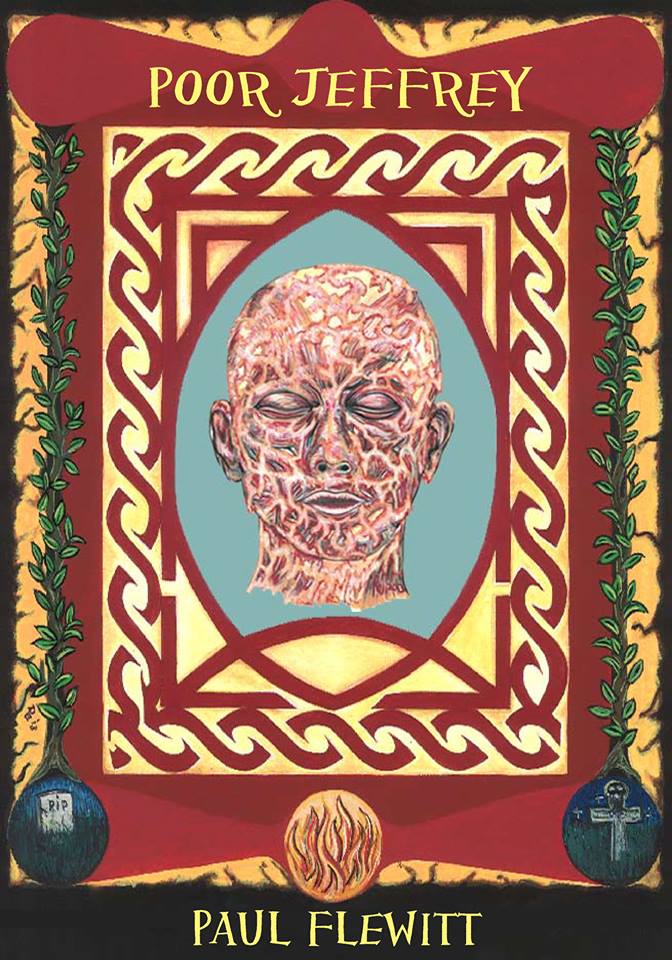
Paul Flewitt: If its truly awful, I can be. I feel that, if you have no regard for the presentation of the cover, then there won’t be any regard for the story either. The cover is the first thing you see, and it has to be representative of the story within. With Poor Jeffrey I was very hands on with the creation of the cover. I gave Richard a very clear brief on what I wanted and he hit it out of the park, I have to say. It also has the advantage of being a real work of art which hangs in his studio. I will always insist on having a good deal of input into the cover art for my books. It has my name on it; it represents me and my work so it has to be right. I hope that doesn’t make me sound like too much of a diva hahaha.

Meghan: What have you learned creating your books?

Paul Flewitt: Many things about the industry, clearly. As a newbie writer, I had no idea that writing only comprises about ten percent of a writer’s time. I had no idea about promotion, blogging, and the amount of work that needs to be done away from the pen and paper. Really, publishing has been an eye-opener into what actually has to go into the production of a book. The great thing is that you never really stop learning.

Meghan: What has been the hardest scene for you to write so far?

Paul Flewitt: There have been a couple that were difficult for different reasons. The first would be one I call “The Mute Girl” scene from Poor Jeffrey. People that have read the book have highlighted it as a particularly hard hitting portion of the book, and I very nearly didn’t put it in because I wondered how it would be received. In the end, it went in because it was a scene that gave an insight into the mind of my antagonist, but it was a difficult one to write and edit.

The other one comes from a story I wrote for a pitched TV show called Fragments of Fear. My contribution was called Silent Invader, and dealt with a demon which haunts television and makes people commit atrocity. One of the scenes involves a mother murdering her children and her husband, which was another one that I struggled to write and very nearly didn’t put in.

Funny that both scenes are ones which involve violence against children… which probably says a lot about me.

Meghan: What makes your books different from others out there in this genre?

Paul Flewitt: I wrote them hahaha. Seriously, this is a question I always struggle with because I don’t really analyse my stuff too closely. I suppose one difference is that I’m not trying too hard to be different. I just want to tell good stories, and if people see something different about them then that’s cool. I don’t go all out on gore, trying more to write characters that readers become invested in so that the situations they find themselves in become the horror, not the amount of blood that gets splashed around. One criticism that I have of some modern writers is that they go all out for shock value or disgust value, which is okay for them and they’ve got an audience for that kind of story. More power to them. Its just not the kind of story that I want to write. I want to write more in the classic mould, but for the modern era.

Meghan: How important is the book title, how hard is it to choose the best one, and how did you choose yours (of course, with no spoilers)?

Paul Flewitt: I cheat. I come up with the title first, and everything flows from there. Okay, that’s not strictly true. I come up with a character first, and start to build the story about that character, and then I come up with the title. It tends to come pretty soon after beginning the story and the first one I come up with tends to be the one I go with.

Of course the title is all important, because it’s the thing that attracts the reader after the cover (assuming people are finding your work while browsing the shelves, whether physical or cyber.) It has to draw people in and intrigue, like a tag line or blurb.

How do I find the title? It’s a mystery even to me. It tends to be a phrase which seems to speak to the story and pops.

Meghan: What makes you feel more fulfilled: Writing a novel or writing a short story?

Paul Flewitt: Both, for different reasons. Short stories can be just as much a challenge as longer work, because you have to tell a complete story in a short space of time. You have to be disciplined and concise. You can’t introduce a character or side story just because it pops up and seems worthy of exploration like you can in a novel. The sense of achievement you get from a short story is just as fulfilling as a four-hundred page novel.

Conversely, a novel is a real commitment and a slog. It can represent years of work to get to the point of editing. That’s a lot of a person’s life to commit to a project. It’s a different kind of fulfillment, but still very profound.

Meghan: Tell us a little bit about your books, your target audience, and what you would like readers to take away from your stories.

Paul Flewitt: My stories are classic horror/dark fantasy of the 70’s and 80’s. As I’ve said previously, reviewers liken my stuff to Clive Barker and Stephen King and that is a quality that I have come to embrace after years of denial hahaha. If you like that kind of stuff, then there’s a good chance that you’ll like my work. I’ve written mostly short stories in anthologies, but they are all pretty easy to find on Amazon, as is my debut novel, Poor Jeffrey. I hope what people take away from my work is that they’ve experienced a good story. My ambition is to entertain people for a time, to take them away from the rigors of their lives for a time and offered a means of escape. If my stories achieve that for someone, then I’m a happy chappy.

Meghan: Can you tell us about some of the deleted scenes/stuff that got left out of your work?

Paul Flewitt: God no! No no no! If they didn’t make it into the book, then there’s a bloody good reason for that. Those scenes are consigned to the fiery pits of literary hell, never to be spoken of or recounted. Or… they might find their way into another story sometime… who knows?

Meghan: What is in your “trunk”?

Paul Flewitt: Oh, I have several. I have a box full of manuscripts that have been abandoned because I lost the thread of them, and some of them have real potential. I delve into the box and pull out some of them every now and then, tickling at them to see if I can spark anything. There is a dark love story in there about a witch and a young guy, loosely based on the song Maggie May which has a lot of promise if I can ever get it right. There’s one called Architecture, which is a horror story about the homeless and also has a lot of promise. Another is called The Family Jeraboam, which was intended as a short story for Steve Dillon’s Refuge Collection, but kept on growing and became something quite different, and perhaps the most Barkerian thing I’ve ever written. All of them will see the light of day at some time.

Meghan: What can we expect from you in the future?

Meghan: In the nearer future will be the first book in an intended trilogy: False Prophet. The finished book is with my editor, and has been for some time now. That’s an ambitious project that I’ve been playing with for three years, and is the reason that I haven’t released anything in quite a while. I have tried to concentrate on producing longer works instead of short stories. My issue is that I enjoy writing for anthologies to a brief, and I forgot how to say no for a while there.

After Prophet, I am currently working on a second book in the Poor Jeffrey world. People have been asking about it for some time, and I’ve been enjoying exploring those characters again. The sequel is tentatively titled The Last Testament of Del Foster, and is very much a sequel and a building of the themes from the first book.

I’ve also started writing the follow-up to Prophet, but that will take some time to complete because of the level of ambition in there. Its truly epic and calls on my love of Tolkien, epic Clive Barker, and Stephen Donaldson.

In short, you’ll be sick of seeing my face in the future. I have a lot to do.

Meghan: Where can we find you?

Paul Flewitt: You can find me on Facebook, Twitter, Instagram, Amazon.

Meghan: Do you have any closing words for your fans or anything you’d like to say that we didn’t get to cover in this interview?

Paul Flewitt: Just to say thank you for having me on Meghan’s House of Books, and thanks to the readers out there who have read my stuff and shown patience while I get my head around these longer works. I know they’ve been a long time coming, but they are indeed coming. I’ll catch you all later!

Paul Flewitt is a horror/dark fantasy author. He was born on the 24th April 1982 in the Yorkshire city of Sheffield.

Always an avid reader, Paul put pen to paper for the first time in 1999 and came very close to inking a deal with a small press. Due to circumstances unforeseen, this work has never been released, but it did give Paul a drive to achieve within the arts.

In the early 2000’s, Paul concentrated on music; writing song lyrics for his brother and his own bands. Paul was lead singer in a few rock bands during this time and still garners inspiration from music to this day. Paul gave up his musical aspirations in 2009.

In late 2012, Paul became unemployed and decided to make a serious attempt to make a name for himself as a writer. He went to work, penning several short stories and even dusting off the manuscript that had almost been published over a decade earlier. His efforts culminated in his first work being published in mid-2013, the flash fiction piece “Smoke” can be found in OzHorrorCon’s Book of the Tribes: A Tribute To Clive Barker’s Nightbreed.

2013 was a productive year as he released his short story “Paradise Park” in both J. Ellington Ashton’s All That Remains anthology and separate anthology, Thirteen Vol 3. He also completed his debut novella in this time. Poor Jeffrey was first released to much praise in February 2014. In July 2014 his short story “Always Beneath” was released as part of CHBB’s Dark Light Four anthology.

In 2015 Paul contributed to two further anthologies: Demonology (Climbing Out) from Lycopolis Press and Behind Closed Doors (Apartment 16c) with fellow authors Matt Shaw, Michael Bray, Stuart Keane, and more.In 2016, Paul wrote the monologue, The Silent Invader, for a pitch TV series entitled Fragments of Fear. The resulting episode can be viewed now on YouTube, but the show was never aired. The text for the monologue was published in Matt Shaw’s Masters Of Horror anthology in 2017.

Paul continues to work on further material.

He remains in Sheffield, where he lives with his partner and two children. He consorts with his beta reading demons on a daily basis.

You can find more information on Paul Flewitt and his works here…

Amazon ** Facebook ** Twitter ** Instagram

Poor Jeffrey

Grief drives people to extreme behaviour, and when Poor Jeffrey Kinsey is killed his friends go to some extreme lengths to bring him back… sometimes the magic works.

When Cal Denver comes to town and girls start to disappear, only to be found half eaten by an unidentifiable creature; some townsfolk will panic and flee… others will get angry or go insane.

For Tommy, Jade and Chloe the next few weeks will make them or break them… and a story begins… 

Poor Jeffrey; he never wanted death to be this way…

Halloween Extravaganza: INTERVIEW: James Watts

Meghan: Hi, James. Welcome to the annual Halloween Extravaganza. Tell us a little bit about yourself.

James Watts: I am a 42-year-old father of one son. Bailey. He just turned 21 this year. I play a little trombone and love video games. RPGs are my fav as well as survival horror. The Legend of Zelda is my all-time top fav. I am a random person with a random sense of humor. I enjoy bowling, shooting pool, fishing, camping, baseball, and working with wood. I love Mexican and Italian foods the most and have a major sweet tooth. I also believe in having strong family bonds and honoring your family in whatever you choose to do. I love most types of music, my top favs being Rock, Heavy Rock, Alternative, Jazz, and classic rock. Movies: horror, sci-fi, fantasy, animated(anime), comedy, and westerns.

Meghan: What are five things most people don’t know about you?

James Watts: I play trombone (badly), I write my stories by the seat of my pants, I talk to my pets in baby talk, I have enjoyed a few soft rock songs, and when I was 12 I kissed a girl… and I liked it.

Meghan: What is the first book you remember reading?

James Watts: It was a Hardy Boys mystery, but I cannot recall which case it was.

Meghan: What are you reading now?

James Watts: The Pleasure Hunt by Jacob Floyd.

Meghan: What’s a book you really enjoyed that others wouldn’t expect you to have liked?

James Watts: Peter Pan

Meghan: What made you decide you want to write?

James Watts: After Reading King‘s The Stand.

Meghan: Do you have a special place you like to write?

James Watts: Alone in my room.

Meghan: Do you have any quirks or processes that you go through when you write?

James Watts: Music. I must have music that matches the mood of the genre I am writing in.

Meghan: Is there anything about writing you find most challenging?

James Watts: Saying goodbye to a cherished character.

Meghan: What’s the most satisfying thing you’ve written so far?

James Watts: Fallen, a short story in the anthology And Hell Followed from Death’s Head Press.

Meghan: What books have most inspired you?

James Watts: The Stand, The Shining, Phantoms, 1984, Swan Song, and Boy’s Life

Meghan: Who are some authors that have inspired your writing style?

James Watts: King, Poe, Koontz, McCammon, Saul, Pendleton.

Meghan: What do you think makes a good story?

James Watts: Strong characterization and a solid plot. The story should be as a real as it can be no matter how far-flung it may be.

Meghan: What does it take for you to love a character?

James Watts: Any number of things. I never outline so my stories just happen as I go along and my characters grow naturally.

Meghan: How do you utilize that when creating your characters?

James Watts: I give them authentic dialogue and backstories. Or as authentic as I can.

Meghan: Are you turned off by a bad cover?

James Watts: I can be. I am a book cover lover. I am generally first drawn to a book by the cover art.

Meghan: To what degree were you involved in creating your book covers?

James Watts: As much as I can be.

Meghan: What have you learned creating your books?

James Watts: Do not rush it. Pace it and let the story tell itself.

Meghan: What has been the hardest scene for you to write so far?

James Watts: The death of Roy Sanders.

Meghan: What makes your books different from others out there in this genre?

James Watts: No zombies or vampires so far. Seriously, though, I do try and use things that are not overdone and mix it up a little.

Meghan: How important is the book title, how hard is it to choose the best one, and how did you choose yours (of course, with no spoilers)?

James Watts: Very, as it is part of the lure. Pretty hard, because you want to choose the best one to attract readers. I will get an image and research that image until I think I have and then start rolling the title over in my head, changing it just a little each time.

Meghan: Tell us a little bit about your books, your target audience, and what you would like readers to take away from your stories.

James Watts: I write horror. The horror fan. Family bonds are important.

Meghan: Can you tell us about some of the deleted scenes/stuff that got left out of your work?

James Watts: Really have not had to cut much out… yet. But the longer my books get, I know some stuff will be cut.

Meghan: What is in your “trunk?”

James Watts: Misguided Faith. It is not complete, yet, but is waiting for me to breathe some life into it.

Meghan: What can we expect from you in the future?

James Watts: A novel based on my short story Fallen and my short story Deranged Innocence.

Meghan: Where can we find you?

James Watts: Goodreads ** Facebook

Meghan: Do you have any closing words for your fans or anything you’d like to say that we didn’t get to cover in this interview?

James Watts: All I can really think to say is that I love all of my fans, present and future. It is for you that I strive to be the best I can be.

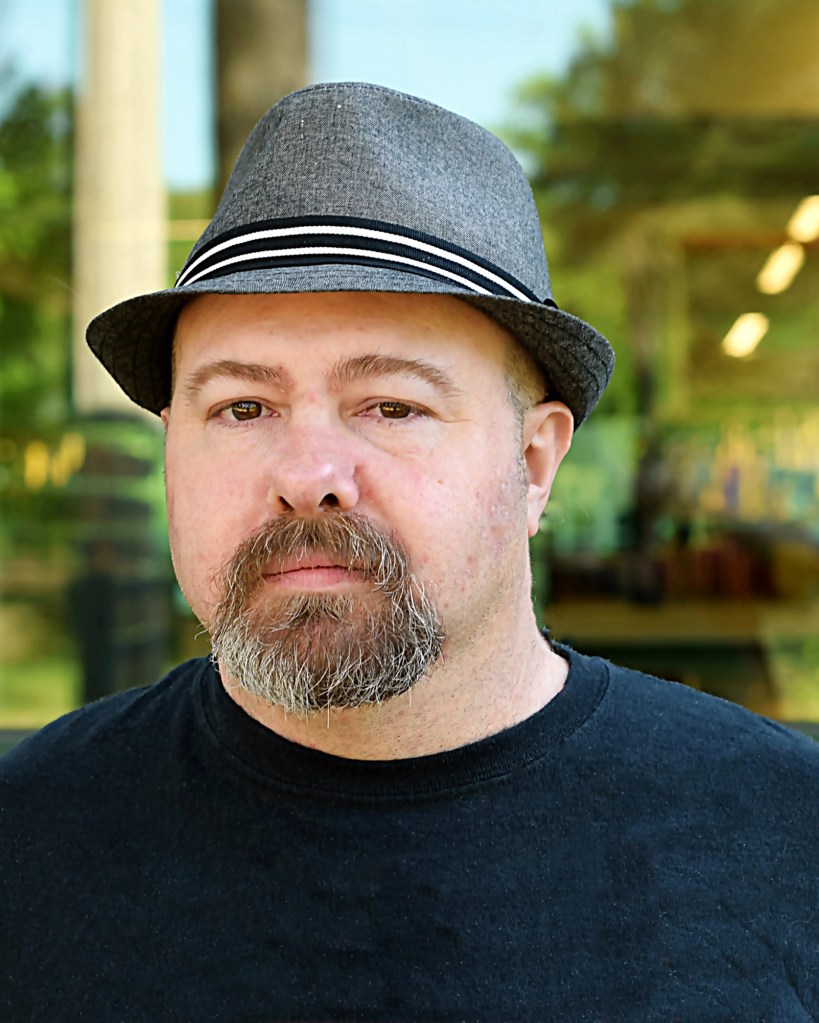
James Watts was born in Birmingham, Alabama in March of 1976. Growing up in the small town of West Jefferson, Alabama, Watts spent his days lost in his vivid imagination. At age 10, he discovered the Hardy Boys mystery series and fell in love with reading. By Age 12, the discovery of Stephen King‘s The Stand gave life to his need to write, to tell stories that he hoped the world would love. It would take twenty years of rejections and working low paying jobs, and going through two divorces, before he would see the publication of his horror novel Them through Fear Front Publishing. James Watts currently resides in West Jefferson, Alabama and has one 19 year old son, Bailey Watts.

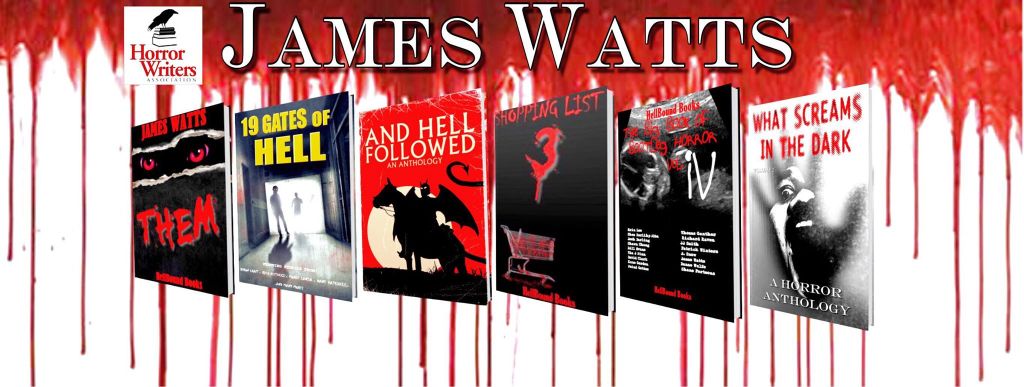
Them

In the small town of Maple Grove, Alabama, an ancient evil resurfaces to claim its right to life and the human race be damned.

When Ray Sanders returned to Maple Grove to attend his mother’s funeral, he never planned to have to overcome all of his insecurities in order to save the town from an evil as old as time itself. For over a hundred years, the town of Maple Grove has suffered from the deranged minds and unquenchable hunger of parasitic creatures not of our Earth. Once before in a sacrifice of blood, the forces from beyond were locked away presumably forever. Now they have returned, hungering for their chance to evolve. It will be up to Ray Sanders, his cousin Roy, and a woman either them recall to stop this evolution and prevent the reign of these ageless creatures before their evil can spread.

19 Gates to Hell

From the darkest places imaginable, both outside and inside the mind, comes 19 tales that will drag you into places you never dreamed of seeing, not even in your worst nightmares.Come along as these tales open up 19 gates into hell and experience the supernatural, the darkness of night, and the unimaginable like never before.

And Hell Followed

Seventeen authors re-imagine the biblical apocalypse and all the hell that follows in sixteen horrifying tales. What if the prophecies of Revelation hit today? What sort of craziness and evil would ensue? With this list of excellent authors contributing, it’s sure to be a Hell of a read! 

Featuring:
Wrath James White – Horse
Sam West – The Whore of Babylon
The Sisters of Slaughter (Michelle Garza & Melissa Lason) – Godless World
Jeff Strand – Outpouring
K. Trap Jones – Ham & Pudge
C. Derick Miller – Hell Paso
Christine Morgan – Censered
Patrick C. Harrison III – The Old Man & the Lamb
John Wayne Comunale – Apocalypse… Meh
Cody Higgins – The Unveiling
Delphine Quinn – Six Degrees of Separation
James Watts – Fallen
Wile E. Young – The Day & the Hour
Chris Miller – Behind Blue Eyes
Mark Deloy – Cult of the Angel Eaters
Richard Raven – Mark of the Beast

Shopping List 3

By popular demand, the third volume in our bestselling anthology series, twenty-one spine-chilling, terrifyingly creepy tales of terror by a bunch of the best independent horror authors writing today! 

Featured:
Richard Farren Barber – Black Light
Mark Thomas – A Boy & His Turtle
Jeremy Thompson – An Opening
Steve Stark – Angel of Mercy
Jeremy Wagner – Dead Half
James Watts – Deranged Innocence
Kevin McHugh – First Do No Harm
Brian McGowan – Gotta Have Heart
Mark Deloy – Island Food
Jason Gehlert – Beaver’s Claw
J.N. Cameron – A Night Ride Through the Desert
Nick Swain – Recess for Billy
Nick Manzolillo – Saltwater Fish Tank
Dhinoj Dings – The Body Parts Gang
Richard Raven – The Butcher’s Return
Megan E. Morales – The Dead Boys

The Big Book of Bootleg Horror 4

Welcome to Volume Four of our best-selling horror anthology, featuring tales of terror and dark, slithering things to chill the marrow and keep even the most resolute of horror fans awake in the small hours of the night when the inherently evil and deliciously malevolent come out to explore our earthly realm

Featuring:
Erin Lee – Patient Virtues
Thomas S. Gunther – The Butcher Knife Kid
Shea Herlihy-Abba – If You Want To
Richard Raven – The Final Iniquity
Josh Darling – Moxie Proxy
J.J. Smith – Inhuman Exposure
Shawn Chang – Painsteakingly
Bill Evans – Poppo
J. Snow – The Theory of Divine Inventions
Tim J. Finn – The Last Wolf Pack Leader
James Watts – Scarlet Frost
David Clark – Unholy Trinity
Danae Wulfe – The Fisherman’s Wife
Kane Gordon – The Heads of Corpses
Shane Porteous – Torn Apart by a Toothpick
Feind Gottes – Inhuman Nature
Patrick Winters – Tempt Me Not

Halloween Extravaganza: INTERVIEW: Nikki Noir

Meghan: Hi, Nikki. Tell us a little bit about yourself.

Nikki Noir: My name is Nikki and I am on a journey! Through a series of fortunate events, I discovered a sub-genre of horror that both horrifies and fascinates me. After thinking long and hard about it, I decided that I wanted to make a name for myself in this field of extreme horror and erotic fiction. So now I am spending all my free time reading and writing and documenting the journey on my website Redrum Reviews.

Meghan: What are you reading now?

Nikki Noir: I am about to embark on my first Stephen King book. The good people over at Books of Horror on FB have convinced me to read The Long Walk. Thankfully it’s a novella because the size of King’s books are daunting to me, and I’ve seen too many bad reviews of them to want to commit that kind of time on a lame book. I like my horror hard and fast, and they’ve convinced me that the Bachman books such as The Long Walk are perfect. We’ll see

Meghan: What’s a book you really enjoyed that others wouldn’t expect you to have liked?

Nikki Noir: The Greatest Salesman in the World. Very motivational and uplifting. About the exact opposite of horror.

Meghan: What made you decide you want to write? When did you begin writing?

Nikki Noir: I’ve always loved reading, but I never considered writing until just last year. I was given an extreme horror anthology as a gift and holy crap! I’ve read some graphic literature before, but some of these stories were utterly vile… And yet I read on. When I finished the book, I spoke with the publisher and did some research on the authors. That’s when the wheels in my head started spinning. By early in 2018 I found a mentor by pitching my Redrum Reviews idea and have been working on my craft since.

It’s been less than two years, so I’m still finding my voice and honing my style. But even as a newbie, my debut book Watchers of the Black Rite is getting some great early reviews. I really appreciate the constructive feedback everyone is giving me, and with continued mentoring, I’m hoping to get one of those cool extreme author nicknames. Nikki Noir Goddess of Gore has a nice ring to it—thanks to Chris Kosarich for the suggestion.

Meghan: Do you have a special place you like to write?

Nikki Noir: A warm bubble bath surrounded by candles.

Meghan: Do you have any quirks or processes that you go through when you write?

Nikki Noir: Besides using a quill pen dipped in the blood of my male slaves, I wouldn’t say I have any quirks or process that differ greatly from other writers.

Meghan: Is there anything about writing you find most challenging?

Nikki Noir: Only finding the time. I’ve gotten so many great story ideas in the last week alone, but it’s so hard to make time with the busy lives we all lead.

Meghan: What’s the most satisfying thing you’ve written so far?

Nikki Noir: Well, since I’m new to the scene the most satisfying accomplishment so far is my novella Watchers of the Black Rite. It released on September 14th. The feedback has been phenomenal so far, and I am working on the sequel as we speak.

Meghan: What books have most inspired you? Who are some authors that have inspired your writing style?

Nikki Noir: D.O.A. III – that anthology started it all. After that, I went right for the jugular when I started researching. Influences were Kristopher Triana, K.J. Moore, Wrath James White, and Ed Lee. They know what fans of this genre want to read and I tried to learn from their style, but put my own Nikki spin on it.

Meghan: What do you think makes a good story?

Nikki Noir: Quick-paced suspense, over the top violence, and sexual situations

Meghan: Are you turned off by a bad cover? To what degree were you involved in creating your book covers?

Nikki Noir: Yes! I wish I wasn’t, but I totally am. For my book Watchers of the Black Rite, I bought stock art and worked with the artist to tweak it just a bit. The idea was all his though. I tried to be completely involved in the cover of my teaser Black Siren, but it didn’t come out quite as good as I’d hoped. Maybe I can get it redone in the future when I expand the series.

Another note on covers, there are times when I want super graphic art to convey what the story is about, but I know that in order to get paid marketing space, the cover can’t be too extreme. Since my covers may need to remain tame, I’m in the process of creating a sexy/evil logo with Rooster Republic as well as other artwork to help promote while still keeping the cover classy 😉

Meghan: What have you learned creating your books?

Nikki Noir: I’ve learned that readers never want to see an animal hurt. On my Amazon book description, I have the following line: “It all started when Bennet shot the owl with Tyler’s rifle. That was the moment they realized things are not what they seem in North Pine Woods.” However, it isn’t a real owl. It’s a hidden camera disguised as an owl. But since that wasn’t explained, the damage was done. I had at least one person publicly say they wouldn’t read the story because an owl was killed. Makes me wonder how many other people just ignored the book because of the description. I need to go back and update that Amazon description asap otherwise readers may skip over it without realizing that there’s no cruelty to animals at all in it… just human torture lol

Meghan: What has been the hardest scene for you to write so far?

Nikki Noir: The hardest scene was where a possessed guy is forcing himself onto a nineteen-year-old girl. Such a struggle to write, however, I promise it has a satisfying ending. I choose teen characters for this story, which made most of the violent scenes extremely difficult to write, but I really wanted to focus on young adults.

Meghan: What makes your books different from others out there in this genre?

Nikki Noir: I’m really hoping that I can bring a new audience to extreme horror by marrying the feminine and masculine qualities of the genre. When I started following authors and publishers in this field, I heard a lot of complaints that extreme plots were all the same; mostly male fantasy torture porn. I have read nowhere near enough books to confirm or deny this claim, but I have seen plenty examples of the boring torture fantasy. However, I’ve also read a lot that of stories that were literary, engaging, and intelligent while still being vile. With that in mind, I worked a lot with my mentor/editor to create something that has sex and torture split equally against men and women lol. I hope that is what makes my work stand out. To steal the Dove line is “Strong enough for a man but made for a woman.”

Meghan: How important is the book title, how hard is it to choose the best one, and how did you choose yours (of course, with no spoilers)?

Nikki Noir: Titles are important, but for me, they’re the hardest part of writing besides finding the time to write. Honestly, the title Watchers of the Black Rite was not planned at the start. When I finished the outline draft, I still had no clue what it should be called. Then one day it just came to me while doing the dishes.

Previously, I had a novelette teaser titled Black Siren. I wasn’t consciously aware about the reoccurring color at the time. Black Siren was so named because the powerful substance in the book looks like black sludge; it also calls to people like the mischievous harpies of the ocean lured in sailors. And like those deadly sea sirens, if you succumb to the call of the sludge, you’re gonna have a bad time.

Once I noticed the ‘Black’ theme, I decided to dub the series Black Planet—inspiration from a Sisters of Mercy song. The sequel that’s in the works is called Black Celebration, another fantastic song.

Meghan: What makes you feel more fulfilled: Writing a novel or writing a short story?

Nikki Noir: This early in my career, even completing a blog post makes me feel fulfilled! Haha.

Meghan: Tell us a little bit about your books, your target audience, and what you would like readers to take away from your stories.

Nikki Noir: My Black Planet series dabbles with twists on extreme horror while remaining an occult thriller at heart. The idea came about in early 2019 when I wrote a short story about an alien parasite that, when living inside a human host creates a powerful aphrodisiac in the person’s bloodstream. Foolish cartel connections have discovered how to harness the ecstasy-like drug and are attempting to introduce it the general population. It was originally called “Meat Triangle” and like a newb, I submitted the story to a publisher almost immediately after writing it. Turns out the story wasn’t ready to be submitted. After several revisions, I had something I’m more proud of. The story, now titled “Grinder”, will appear in K. Trap Jones’s anthology Welcome to the Splatter Club.

While revising Grinder, I got the idea for another powerful liquid-like substance, but this one is slightly different. I’m very much into metaphysical ideas and questioning the nature of our reality. I believe there is a very thin line that separates science from occult philosophies of old and that played into this new idea that developed into the Black Planet series. Instead of the substance being in the blood, it’s a byproduct of interdimensional travel. Almost like ectoplasm with ghosts. Proximity rather than ingestion is what affects an individual. This residue which is the consistency of glue or molasses still drives your emotional state, but now it’s not only in lust—like Grinder. The glue in Black Planet amplifies the negative qualities of your shadow and attracts more dark entities to your life like an interdimensional beacon.

Watchers of the Black Rite begins with the discovery of an ancient structure buried in North Pine Woods. As dark agencies experiment with the esoteric find, this black interdimensional glue begins seeping into our reality. Now, strange things are happening in the town of Shale just outside the woods. Missing teenagers, robotic owls, and shared nightmares of an alien craft will alter forever the future of Shale and its residents.

Meghan: What is in your “trunk”?

Nikki Noir: I started some bizarro erotica stories that I want to circle back to. But looking at my immediate schedule, the erotica probably won’t be ready to hit the sheets until 2021.

Meghan: What can we expect from you in the future?

Nikki Noir: I’d like to release the next book in the Black Planet series by January of 2020. I’m also in the process of a very exciting collaborative project. I’m working with S.C. Mendes on a very disturbing book called Lockdown. Yes, it takes place at a public high school, but it has nothing to do with school shootings. Instead, a rash of student deaths have a community on high alert. Everyone wants to help the children yet no one can figure out the link between the tragedies. As the school, community, and town disintegrate the deadly connection becomes clear to a young lady named PJ, but it may be too late to save the next victim.

Meghan: Where can we find you?

Nikki Noir: Redrum Reviews ** Goodreads ** Amazon

Meghan: Do you have any closing words for your fans or anything you’d like to say that we didn’t get to cover in this interview?

Nikki Noir: As a newbie, I need all the help I can get spreading the news about my work, so thank you for having me on your blog! If anyone enjoys my work, or even if you don’t, please take a moment to leave a review or just a rating on your favorite media outlet for books. Honest feedback is helpful and I appreciate it!

Nikki Noir writes erotic thrillers, extreme horror, and bizarre plotlines. She enjoys reviewing all forms of dark fiction and fashion at her website Redrum Reviews.

Black Planet 0: Black Siren

Lilly Gomez has three days to raise five thousand dollars.

If she fails, the mob will put out a hit on her. But in order to earn money that fast, her legal options are limited. When erotic photoshoots and soft-core films can’t materialize the money she needs quick enough, Lily is forced to ask her ex-boyfriend for help. Unfortunately, Brent Hardy has a dark side and his brand of “help” sends Lily into a life and death game of bizarre drugs, mobsters, and magick.

Black Siren is an erotic novelette serving as foreplay for a much deeper fantasy. The sexy horror-thriller series begins with Watchers of the Black rite which released Sept. 14th 2019.

Black Planet 1: Watchers of the Black Rite

Dark Occultists. An Ancient Discovery. Metaphysical Horror

When a bizarre structure is discovered under a cabin in North Pine Woods, deep-state agents quickly move in to secure the location. They conduct an investigation of the cryptic symbols and strange geometry of the stone. As a result of their experiments, the veil between our world and another is pierced, and a powerful substance begins to seep into the woods.  Crime, shared nightmares, and lustful possessions grip the nearby town of Shale as the metaphysical substance grows stronger.

After Haley Morgan and her brother Tyler stumble into the conspiracy, they are marked by the watchers. Now, the nineteen-year-old, home from her first semester at NAU, is the only one who can save her family from the evil affecting their lives.

Sex, murder, and glue abound in this occult thriller from extreme horror author Nikki Noir.