GUEST MOVIE REVIEW by Daemon Manx: Jaws

Jaws

A Zanuck Brown Production/Directed by Steven Spielberg

I am at a point in my life where I can tell if a relationship is going to work within the first ten minutes of meeting someone, before I even find out what their favorite color is. There are only two things I need to know to ascertain whether we are compatible or if we even stand a chance at becoming friends. All it takes is for someone to say โ€œIโ€™m not a fan of horror moviesโ€ or โ€œI didnโ€™t like the movie Jawsโ€ and it is a deal breaker, game over, so long, have a nice life.

Never trust anyone who tells you they didnโ€™t love the movie Jaws!

As a boy growing up in New Jersey, the home of author Peter Benchley, and the original setting of the shark attacks that allegedly inspired the 1975 film, I spent countless summers frolicking in the surf and at the beaches during the time of this iconic movieโ€™s release. There are countless aspects as to why this block buster should be in everyoneโ€™s top ten, if not five, movies of all time. However, I can only speak for myself and try to inspire with my I own fascination and love affair with this movie.

Timing is everything! Thatโ€™s what they say, and I am a firm believer. Jaws was released during the summer of 1975 and was the very first movie to be filmed on the ocean, which lead to massive production problems. The film ran over budget and past schedule, and the salt water wreaked havoc with Bruce, the mechanical shark that repeatedly broke down during the filming. This ultimately worked in Spielbergโ€™s favor, a young director who had yet to make his mark on the industry, who utilized the malfunctioning shark to his advantage. In horror, it isnโ€™t always what you see, itโ€™s what you donโ€™t see. Spielberg decided to suggest the sharkโ€™s presence as much as he could, relying on shadows and quick glimpses of the ominous fin to reveal the impending threat.

To further turn up the drama, composer John Williams added the soundtrack that has become an iconic undertone that all beach goers know all too well. The theme is essentially comprised of two bass notes that no-doubt strike fear in the hearts of millions every time it is heard, especially if they are to be swimming at the time.

Itโ€™s about suspense, itโ€™s about tension, itโ€™s about what you donโ€™t see. Authorโ€™s call this invisible ink. The space between the lines, the words that are not being used. Spielberg painted this masterpiece with gallons of invisible ink as he gave life to the novel written by Peter Benchley in 1974.

Benchley, a Jersey native claims that this tale is not inspired by the shark attacks that plagued New Jersey beaches in 1916. From Beach Haven to the Matawan Creek a killer shark dinned on hapless beach goers that fateful summer. A boy on a raft, a man and his dog, another gentleman who had lost his leg. Does this sound familiar to anyone else? Benchleyโ€™s novel was different in ways from the big screen version, but the premise is the same and the horror is synonymous.

The movie is a watershed moment in Hollywood history for being perhaps the first true summer blockbuster. It was the highest grossing picture of itโ€™s time until Star Wars was released a year later in 1977. It has spurred three sequels, none of which stand up to the original, some of which are downright embarrassing. It was one of those moments where everything gelled. It had to do with the production, the music, the editing, the director, and Oh My Godโ€ฆit had everything to do with the cast.

Roy Scheider was cast as Police Chief Martin Brody, but the role was first offered to Robert Duvall who only wanted to play Quint. Charlton Heston wanted the role but Spielberg though that Heston was too big of a star to bring the anonymity that he wanted from a lesser know actor. Above all else, he wanted the shark to be the star of the show.

The character Quint was based on real life fisherman Craig Kingsbury, was played by veteran actor Robert Shaw. There are numerous repots that Shaw spent most of the time rather tipsy during the filming of the movie. If this is what you get when Robert Shaw is tipsy then by all means, buy this man another round, and put it on my tab. Quint is an absolute show stealer, and his recollection of the sinking of the Indianapolis is possibly the greatest monologue in movie history. Chillsโ€ฆdo you feel them?

The character of Matt Hooper was not even cast until nine days before production began. There were a lot of possibilities when it came to would-be hopefuls for the part: John Voight, Jan Michael Vincent, Jeff Bridges, Joel Gray even Kevin Kline. But it was Spielbergโ€™s good friend, George Lucas who recommended that he use a young actor who had performed in his movie American Graffiti. Richard Dreyfus took on the role of the young oceanographer and the rest was magic. At least for us, Dreyfus and Shaw couldnโ€™t stand each other.
You know that you really have something special when people go around quoting your movie afterwardโ€ฆdamn near 50 years now

โ€œYouโ€™re gonna need a bigger boat.โ€ This is the best hands-down line ever written in a movie.

โ€œShow me the way to go home, Iโ€™m tired and I want to go to bed.โ€

And who could deny, โ€œSmile you son of bitch!โ€ Although the bitch is drowned out from the explosion it is in there.

So, this movie messed up a lot of people. It made them afraid to go into the water. It turned them away from the ocean and scared the ever-living shit out of them. It had a different effect on me. I instantly wanted to become an oceanographer when I grew up. I never did, but I did become an avid scuba diver. While other children were playing football, my friends and I were reenacting scenes from Jaws. This movie inspired me on such a deep moving profound level that I canโ€™t completely express it. Possibly it was because I was at that perfect age at the time, also it has everything to do with all of the reason that I have explained.

What makes the Mona Lisa a masterpiece? What makes Beethoven a maestro? What makes Einstein more than just another guy with a bad haircut?

Itโ€™s the same reason why Jaws is, and always will be a watershed moment in movie history and one of the greatest achievements of our time. If you missed this on the big screen, I truly feel sorry for you. You have no idea what you missed when Ben Gardnerโ€™s head pops outโ€ฆOh My God!!!

There arenโ€™t enough stars in the heavens to give this movie all that it truly deserves.

Infinity stars for Jaws, Spielberg, and the entire cast and crew that brought this gem to life. Thank you!

One last note to the Gods of Hollywood who are determined to ruin everything.

DO NOT try to remake this movie! I will hunt you down and I will make chum out of you!

I mean it!
Daemon Manx


Boo-graphy:
Daemon Manx writes horror and speculative fiction. He is a member of the Horror Authors Guild (HAG) and has had stories featured in magazines in both the U.S. and the U.K. His short story, The Dead Girl, became a finalist in The Green Shoe Sanctuaryโ€™s summer writing prompt contest in August 2021. His debut novelette, Abigail, was released through Terror Tract Publishing and has received 4.8 stars out of 5 on Amazon and Goodreads. He lives with his sister and their narcoleptic cat Sydney in a remote cabin off the grid, where they patiently prepare for the apocalypse. There is a good chance there they will run out of coffee.

Abigail
Strange things come in small packages. Adrian Billard believes he knows what it’s like to be different, and has nearly given up hope of ever finding happiness. But, a strange package left on his doorstep is about to turn his entire world upside down. Everything Adrian thinks he knows is about to change. He is about to meetโ€ฆAbigail.

GUEST BOOK REVIEW by Daemon Manx: Frankenstein

Frankenstein OR The Modern Prometheus
By: Mary Wollstonecraft Shelley
Genre: Horror, Gothic, Science Fiction
Pages: 260

Mary Shelley’s seminal novel of the scientist whose creation becomes a monster.


Frankenstein OR The Modern Prometheus by Mary Wollstonecraft Shelley

Written in 1818 by the English author, and original Goth Girl, Mary Wollstonecraft Shelley, Frankenstein was originally published anonymously when she was 20. It wasnโ€™t until the release of the second edition that Shelleyโ€™s name even appeared. Some of Shelleyโ€™s background is certainly important to know to fully understand the magnitude of what the author has so masterfully painted and implied in her work. I assure you; the message and the social implication of Frankenstein is just as relevant today as it was two hundred years age.

Shelleyโ€™s mother died from an infection she developed after giving birth to Mary. The iconic author grew up never knowing her mother and had bonded strongly with her father, William Godwin. However, Godwinโ€™s second wife was jealous of their relationship which resulted in his pulling away from young Mary, and for his favoring her half brothers and sisters instead.

Mary later met and married Percy Bysshe Shelly, one of the Romantic Poets. In 1815 Shelley gave birth to Clara, who died two weeks later. Mary continued to lose her children in a similar way for the next eight years. This is such an impactful premise that followed her through her life and ultimately helped to shape Frankenstein.

In 1816, while travelling in Geneva, Shelley, Percy, Lord Byron, and John Polidori decided to see who could write the best ghost story. Only one of them ever completed their story. Mary Shelley was 18 when she won the contest with her story Frankenstein.

The story is masterfully executed as it shifts from one narrative POV to the next. Initially the story is told through a series of letters from shipโ€™s Captain Robert Waldon, a failed writer on an expedition to the North Pole. It is through the eyes of Waldon that the reader first meets Victor Frankenstein, and we get a glimpse of the giant creature on the horizon. Victor is nearly dead by the time Waldon finds him. Consumed by his own compulsive desire and obsession, Victor sees a bit of himself in the captain, a man obsessed with his voyage to the North Pole. We learn that Victor has been pursuing the giant creature and his obsession has nearly killed him.

Flawlessly the narrative shifts and is told through the eyes of Victor as we learn about his childhood, the death of his mother, and his passion for the sciences and Alchemy. Victor is consumed with the pursuit of knowledge and has learned the secrets to creating life.

There are no bolts of lightning, there is no assistant named Igor, and there are no electrodes attached to the neck of Victorโ€™s creation. The creature is 8 feet tall because the intricacies of the human anatomy would be too difficult to work on and recreate if performed on normal scale. It is done with a mixture of science and chemistry, and a bit of mystery as we never learn how Victor actually did it. However, he succeeds, and he is instantly repulsed by the sight of the creature. It is so profound to take note that Victor has put a great deal of effort and devotion into the creation of his creature. Then when the act is complete and the fruits of his labor are revealed, he no longer wants it. In fact, Victor wishes nothing more than to destroy his creation. Victor losses his mind for a moment, if he was ever in possession of it to begin with, and takes off, while his newborn is left to fend for himself. We later find out that shortly after this incident happens, Victorโ€™s brother is murdered.

The narrative then shifts to the point of view of the creature. Alone, unable to understand the language, the creature must fend for itself in the wild. It hides and teaches itself how to speak by watching a family, and he quickly grows intelligent. However, he is aware of his own repulsiveness and soon finds that all humans see him just as his father Victor does, hideous and unworthy of love.

The creature decides that if he cannot be loved and since he is so hated by man, that he will find Victor and force the scientist into creating the only thing that could love him, a mate in his image, hideous and repulsive. I will not give it all away as I nearly have already. However, if you have only seen the Hollywood flicks and never read Shelleyโ€™s masterpiece, you are doing yourself a great disservice. This is the real deal, the original horror classic. Certain Horror associations should be giving out the Shelley award. The guy who wrote that story about a creepy count was a hack compared to Mary Wollstonecraft Shelley. I said, and it is too late to take it back. And I will tell you whyโ€ฆ

First, Victor is Frankenstein-not the creature. Also, Victor is the monster. A parent who decides to conceive his child, puts all his effort in giving that child life, and then brings that child into the world, only then wishing the destruction of that child. Shelleyโ€™s mother died as a result of childbirth. Mary Shelley lost several children during childbirth and/or soon after. Also, abortion was as controversial a subject then as it is today. This all plays heavily into the subjects of destruction of life and the abandonment of a living being.

Science was in question. Was it right for man to assume the role of God when it came to creation? Was it even a place for a man to have a place at all? I urge you to read Mary Shelleyโ€™s Frankenstein and allow yourself to go a bit deeper. This story not only sets the precursor for the modern-day horror novel and sci-fi thriller, but also suggests that we dig a bit deeper into what truly defines us as human? Itโ€™s about the balance between our emotions and our obsessions, our desires and our darkness. Itโ€™s about what separates man from monster?

Can I give more than five stars? What is the limit? Whatever it is, that is what Mary Wollstonecraft Shelley deservers, and so much more for her masterpiece, Frankenstein-The Modern Prometheus.
I Love, Love, Love this Bookโ€ฆDaemon Manx


Boo-graphy:
Daemon Manx writes horror and speculative fiction. He is a member of the Horror Authors Guild (HAG) and has had stories featured in magazines in both the U.S. and the U.K. His short story, The Dead Girl, became a finalist in The Green Shoe Sanctuaryโ€™s summer writing prompt contest in August 2021. His debut novelette, Abigail, was released through Terror Tract Publishing and has received 4.8 stars out of 5 on Amazon and Goodreads. He lives with his sister and their narcoleptic cat Sydney in a remote cabin off the grid, where they patiently prepare for the apocalypse. There is a good chance there they will run out of coffee.

Abigail
Strange things come in small packages. Adrian Billard believes he knows what it’s like to be different, and has nearly given up hope of ever finding happiness. But, a strange package left on his doorstep is about to turn his entire world upside down. Everything Adrian thinks he knows is about to change. He is about to meetโ€ฆAbigail.

GUEST POST: Daemon Manx

My Halloween Inspiration

I am sure that my affinity for Halloween and all things spooky is similar to that of most people who find themselves drawn to the horror writing culture. It starts at an early age, and it continues to grow at an insatiable rate until one day you find yourself in your big-boy shoes staring at a room full of plastic skeletons, two dozen black hairy spiders, and a cauldron full of body parts while the original Halloween from 1978 runs an endless loop on every television in your house. It is then that you sit back and realize your life has turned out just the way you hoped that it would.

I have always loved the idea of stepping out of myself into another characterโ€™s shoes. Halloween is that one time of year where we can all do that without fear of judgement. Though the undead genre had made great strides within the past decade, I am sure that if I were to stumble down the halls of Rutgers University dressed as a zombie, moaning, and grabbing at passers-by, it would not be well received. Now if I were to do that on Halloween it would not only be perfectly acceptable, but it would also be expected, if not required. What is not to love about going to a party dressed as Gene Simmonsโ€™ demon from Kiss? Six-inch spiked boots, chain mail armor, full make up complete with blood spitting pellets, and the optional ability to shoot balls of fire. It is a costume everyone should wear at least once in their lifetime.

I consider myself fortunate that my childhood took place during a period where people still respected the classics. Dracula, Frankenstein, The Creature from the Black Lagoon, and Night of the Living Dead were staples for the children my age. There was a great sense of mystery that was to be gained from watching the old black and white classics as they were shown everyday on what channel eleven called the 4:30 Movie. If you got lucky there might be a weeklong Planet of the Apes movie marathon or a Horror Week series. Sundays at 11:30 were a special time as well as the Abbot and Costello movie would be on, possibly the one where they met the Wolfman, or even Dracula. Actors like Vincent Price, Lon Chaney, Christopher Lee, Boris Karloff and of course Bela Lugosi were the icons of the golden age, to name a few, who helped inspire that mystery and love for the macabre in all of us.

But it wasnโ€™t all steeped in the classics, although many of what was considered contemporary horror releases would soon be considered classics themselves. I was in High School when Michael Jacksonโ€™s Thriller was released, also the movie Ghostbusters. I remember when Misery came out in hardcover and then later interpreted onto the big screen. I sat in theaters when Friday the 13th came out. I jumped from my seat, spilling my popcorn the first time I saw cute little Jason pop out of the water.

Letโ€™s face it. Halloween isnโ€™t a holiday, it isnโ€™t a time of year, and it isnโ€™t a season. Halloween is a feeling. You either get it or you donโ€™t. I am a Halloween person. I married a Christmas person, and it didnโ€™t work out. You can imagine why. It goes way deeper than the fact that all I wanted to watch was scary-ass movies and all she was interested in was sappy chick-flicks written by guys like Nicholas Sparks. Oh, the horror!

I say all this for a reason. As a writerโ€ฆas a horror writerโ€ฆas a sarcastic, introverted, creepy-ass, horror writer, Halloween is largely responsible for who I am. It has shaped my outlook, my thought process, my day-to-day interactions, and it consumes my ideologiesโ€ฆfor real!

I am by no means the most extreme horror writer out there. In fact, I wouldnโ€™t even consider my writing extreme at all. I am, however, a writer of speculative, gothic, dark, psychological, suspenseful, morbid, and oftentimes, rather sad stories. Thatโ€™s not to say that I donโ€™t have the capacity to explore other emotions in my stories, A good writer covers the gamut and can utilize the combination of human emotions throughout the course of their text. I hope to be one of those writers one dayโ€ฆlol.

There is one story that I have been working on, for about a year and a half now, that I would like to expand upon. The inspiration for this story comes from the very first Halloween party I threw as a lad. I was in grade school and had constructed a haunted house in my basement which succeeded in scaring the pants off most of my friends. The rest of the party consisted of cupcakes, costumes, and my mother inventing creepy Halloween based party games. She blind folded us and passed around various objects for us to hold.

โ€œThese are his intestines,โ€ she said as she passed the innards of the carved out pumpkin to me and my friends.

We did that light as a feather stiff as a board thing where you lift the big kid by only using two fingers. It was a blast, and it became something that I did every year. This followed me into my later years as Halloween parties, parties at bars on Halloween, continued to appealed to me on a profound level. The thought and work that I would dedicate to the fabrication of the perfect costume was an event in itself.

Naturally, I was a child quite some time ago. The seventies and eighties were very different in many ways. For one, the lack of technology is a huge thing to consider. If you were lost in the words in 1980, you were really lost in the woods. There were no cell phones and there was no GPS. If you got stuck on the side of a dark road, you were praying that someone would come along and help you before some psychopath showed up and turned you into a slipcover for his couch. It was a scary time because there was less connectivity linking you to sources of help. You definitely didnโ€™t want to have to walk to a payphone on a dark deserted highway in the middle of the night.

I started writing my story, which shall remain nameless until the point where it is copywritten and ready for release, as the world went under lockdown. While social distancing and mandatory quarantines were in effect in the area I lived, I came up with the idea of a story that takes place during a time when you couldnโ€™t rely on a cell phone or GPS to bail you out of tight situation. I spent roughly six months feverishly hammering away at the archaic device I used to write my first draft. I began this story sometime in April of 2020 and on October 30th of that year, I looked up from the tiny screen as I typed the final sentence of my saga to find that I had a staggering 500k word monster staring back at me. For a little perspective, Stephen Kingโ€™s unabridged version of The Stand clocks in very close to 500k words. I by no means dare to compare myself to the Master of Horror, I only use the word count as a reference.

Needless to say, I was exhausted. I had spent approximately six months writing for five uninterrupted hours a day. I had no idea where the story was even coming from as it appeared to flow out of me from an unknown source. It was spontaneous and oddly enough, it had started out with the intention of being a short story. The never-ending short story apparently. I would spend my daylight hours outlining and framing where the next few chapters would logically go but never had a clear picture of where the story was headed. It was as much a thrill of discovery for me as it will eventually be for the reader.

On October 30th, 2020, I was finishedโ€ฆwith the rough draft. I had made some typo edits along the way but no major revisions. I needed to step away, I needed a break. I needed to focus my attention on other projects while this beast sat and marinated for a while. Abigail had already been written at this time, along with several other of my stories that have been recently published. I started writing other short pieces and went about the process of shopping my material. I landed a few magazine publications, got a job with the Observer, and even stumbled into a cool gig with Princeton University. Then Abigail got published which started the ball rolling and brought me back to the idea that it was time to dive into my doorstopper of a story.

Halloween is the pivotal moment in my saga, at least itโ€™s the lead up to it. It is the feeling in the air of the small town that I created, and it is also the day after the day that I completed the first draft. My first day of restโ€ฆlol. In June of this year, six months after the final sentence had been written, I dove back into my story. I began the process of redrafting and tightening up, fixing the prose, and patching the holes. This has been an even bigger undertaking than the initial writing of the story itself.

I see this story as possibly being my lifeโ€™s workโ€ฆat least up to this point. It is an encompassing tale of horror, love, family, betrayal, and survival. It is rich with back story with a town full of characters, each one more interesting than the next. And it is a fast-paced race to save the day.

Looking at the sheer magnitude of my Halloween tale I see it as possibly being four separate novels. All of which will be quite lengthy on their own. Maybe Stephen King can put out a 500k word story and expect people to buy it, but for the new kid on the block, that might not fly. I have recently finished redrafting book two and am about to dive into book three. Fortunately, I have other releases ready to go, that will be sent to the press according to the release dates I have loosely scheduled. I am still open for the medium of this projects release and imagine that will continue to mature as the story itself does.

Although I am not at liberty to reveal much else about this story, I will say thisโ€ฆIf you love Halloween, if you love epic sagas, and if you love survival-based horror, you are in for a treat. With any luck we will be discussing this story in depth next Halloween.

I look forward to seeing you thenโ€ฆDaemon

Trick or Treat
You little monsters!


Boo-graphy:
Daemon Manx writes horror and speculative fiction. He is a member of the Horror Authors Guild (HAG) and has had stories featured in magazines in both the U.S. and the U.K. His short story, The Dead Girl, became a finalist in The Green Shoe Sanctuaryโ€™s summer writing prompt contest in August 2021. His debut novelette, Abigail, was released through Terror Tract Publishing and has received 4.8 stars out of 5 on Amazon and Goodreads. He lives with his sister and their narcoleptic cat Sydney in a remote cabin off the grid, where they patiently prepare for the apocalypse. There is a good chance there they will run out of coffee.

Abigail
Strange things come in small packages. Adrian Billard believes he knows what it’s like to be different, and has nearly given up hope of ever finding happiness. But, a strange package left on his doorstep is about to turn his entire world upside down. Everything Adrian thinks he knows is about to change. He is about to meetโ€ฆAbigail.

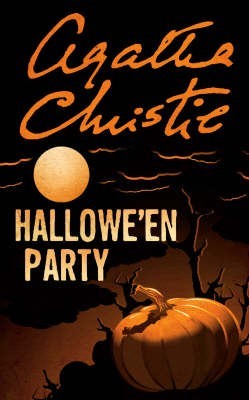
GUEST BOOK REVIEW by Elana Gomel: Hallowe’en Party

Hercule Poirot 41:
Hallowe’en Party
By: Agatha Christie
Genre: Mystery, British Mystery
Publication Date: November 1969 (reissued in October 2006)
Pages: 320

When a Halloween party turns deadly, it falls to Hercule Poirot to unmask a murderer in Agatha Christie’s classic murder mystery, Hallowe’en Party.

At a Halloween party, Joyce – a hostile thirteen year old – boasts that she once witnessed a murder. When no one believes her, she storms off home. But within hours her body is found, still in the house, drowned in an apple-bobbing tub. That night, Hercule Poirot is called in to find the “evil presence.” But first he must establish whether he is looking for a murderer or a double-murderer…


Child’s Play or Child’s Murder? Agatha Christie’s Hallowe’en Party

Mrs. Ariadne Oliver is a kind, if somewhat scatterbrained lady, who loves apples and writes bestselling murder mysteries. Though a delightful person, unfortunately, she has never existed. Mrs. Ariadne Oliver is a literary character, a creation of Dame Agatha Christie who introduced her in her later books as a wry alter ego.

In 1969, Mrs. Oliver is about to celebrate Halloween at her friendsโ€™ house in Kent, UK. As the hostess is bustling around, trying to get everything in order, Mrs. Oliver ponders the difference between squash and zucchini, between Halloween and Thanksgiving, and between life and death:

โ€œIt was rather remarkable, seeing so many pumpkins or vegetable marrows, whatever they areโ€ฆ The last time I saw one of theseโ€ฆwas in the United States last year โ€“ hundreds of them. All over the house. Iโ€™ve never seen so many pumpkinsโ€ฆThey were everywhere in the shops, and in peopleโ€™s houses, with candles or nightlights inside them or strung up. Very interesting, really. But it wasnโ€™t for Halloweโ€™en party, it was Thanksgiving. Now Iโ€™ve always associated pumpkins with Halloweโ€™en, and thatโ€™s the end of October. Thanksgiving comes much later, doesnโ€™t it? Isnโ€™t it November, about the third week in November? Anyway, here, Halloweโ€™en is definitely the 31st of October, isnโ€™t it? First Halloweโ€™en and then, what comes next? All Soulsโ€™ Day? Thatโ€™s when in Paris you go to cemeteries and put flowers on graves. Not a sad sort of feast. I mean, all the children go too and enjoy themselvesโ€.

The jarring transition from grief in cemeteries to kids having fun captures the essence of Halloween. It is a holiday of candy and ghost stories; of pumpkins and ghouls; of good cheer and deep fear. And in her own inimitable way, Ariadne Oliver โ€“ or rather, her creator, Agatha Christie โ€“ has captured the deep duality of this strangest of all feasts.

Halloweโ€™en Party is not as well-known as Christieโ€™s earlier novels, but it is just as accomplished, while considerably darker. Published in 1969, it features indefatigable Hercule Poirot who, by this time, would be around 120 years old. But he is still capable of solving a murder mystery. Poirot is invited by Mrs. Oliver to investigate a series of crimes around the Quarry Garden in Kent. The crimes are atrocious: four murders, two of them involving children, and an attempted murder of yet another child. The ambience is brooding and ominous: a party ending with a corpse; a mysterious sunken garden; a contested country estate.

We could easily imagine the setup as the beginning of a slasher movie. And indeed, the novel generates a sense of dread by constantly hinting at some unspecified demonic forces at play. There are so many references to serial killers, insanity, witches, and ghouls, you would expect the knife-wielding Michael Myers to pop up from behind the bushes and go on a rampage. After all, the first Halloween movie that crystallized the connection between the holiday and slasher aesthetics came out less than ten years after Christieโ€™s novel, in 1978.

But this is not Christie. Though some of her other novels verge on supernatural horror (especially the superb And Then There Were None, 1939), in her Poirot books, the solution is always rational and logical, the horror of violence defused by reducing it to a bloodless puzzle. At the end, there is a logical explanation, justice is done, and the cozy mystery solved. Poirot, the voice of reason, dismisses out of hand any talk of madness, possession, or ghosts. In Poirotโ€™s world, mayhem is only a pretext for ratiocination, a game with set rules, a game even a child can play. And so, despite the gruesome nature of the murders in Halloweโ€™en Party, the motive for them is neither sexual nor supernatural but a good old-fashioned desire for profit and fear of discovery (spoilers alert!). Poirotโ€™s reasonable explanation for the deaths of 13-year-old Joyce and her little brother is supposed to dispel the horror of their violent end.

But does it? By the time the murderers finally get their just comeuppances (spoilers alert again!), we have been inundated with so many disturbing references to madness, sexual depravity, possession, demonic forces, and the Devil that the tidy ending rings hollow. As a cleaning lady who is reputed to be a witch ominously suggests, the smug upper-middle-class suburb of Woodleigh Common is infested with evil: โ€œthe devilโ€™s always got some of his own. Born and bred to it.โ€ When the children of Woodleigh Common are having a Halloween party, is it a childโ€™s play or a childโ€™s sacrifice?

Mrs. Oliverโ€™s stream of consciousness quoted above is, in fact, a pretty accurate summary of the history of Halloween. It started as the pagan feast of Samhain and later merged with the Catholic All Saintsโ€™ Day, designated as such by Pope Gregory III in the eighth century. The night before November 1 was known as All Souls, or All Hallows, Eve, which is the origin of the word Halloween, still spelled in Christieโ€™s novel in the old-fashioned way with an apostrophe. Neither Samhain nor All Hallows Eve were innocent entertainment. Samhain may have involved human sacrifices, while All Hallows Eve was believed to be the time when the dead walk among the living. In the Middle Ages, the fear of ghosts and witches was absolutely real, and neither were a laughing matter. Even the carnival elements โ€“ dressing up, masking, drinking, and dancing โ€“ were linked to fertility cults that warded off death by engaging in sexual magic.

The reason why Halloween mutated from a pagan ritual to a kiddiesโ€™ night out had to do with the rise of science and rationalism in the Industrial Age. Folklore and superstition became an embarrassing reminder of the more โ€œprimitiveโ€ stages of cultural development. The Victorians saw themselves as the adults of history; everything that went on before was childish, immature; in short, a childโ€™s play.

Only it did not quite work out this way. Nightmares turned out to be impervious to the light of reason; science did not dispel the fog of superstition; and irrational evil came back in force during the massacres of the last century. And Halloween persisted in its duality: both a whimsical entertainment and a night of terror; both a childโ€™s play and adult horror; both trick-or-treating and serial murder.

Halloweโ€™en Party reflects this duality. Some of the customs in the novel will strike the American reader as quaint. There is no trick-or-treating but there is bobbing for apples (lifting apples from a bucket of water with your teeth). No face-painting or masks but mirrors are handed out, so girls can see faces of their future husbands (a practice widespread in medieval Europe and reflected in some spooky German and Russian ballads about a dead bridegroom coming to fetch the incautious bride). No candy but there is the Snapdragon โ€“ a dish of raisins set on fire. All these customs descend from ancient pagan rituals: apples are linked to fertility cults; mirrors trap souls; and the Snapdragon recalls the Viking funeral pyre. Surrounded by echoes of the Druidic ceremonies, the murder of a young girl is initially presented as some sort of demonic sacrifice, or perhaps a sex crime perpetrated by a madman.

But at the end it turns out to have been just a game. Christieโ€™s novels seldom leave you with unanswered questions about the nature of evil or the origins of criminality. They are soothing puzzles to occupy your mind; cozy mysteries; precursors to Midsomer Murders. And yet, even as all the loose ends are tied up, there is something darker left unspoken. Next time you want to attend a Halloweโ€™en Party, remember that at All Soulsโ€™ Eve, evil walks, and evil is not a childโ€™s play. Dame Agatha Christie who was knighted by the Queen for her contribution to British culture knows how to have her cake and to eat it; to reassure her readers and to disturb them; to have fun and to teach a lesson. So. letโ€™s have Mrs. Ariadne Oliver, Christieโ€™s ironic self-portrait, have the last word, as she does in Halloweโ€™en Party:

โ€œโ€™Thatโ€™s right,โ€™ said Mrs. Oliver in an exaggerated voice, โ€˜blame it all on me as usualโ€™โ€


Boo-graphy:
Elana Gomel was born in a country that no longer exists and has lived in many others that may, or may not, be on the road to extinction. She currently resides in California. She is an academic with a long list of books and articles, specializing in science fiction, Victorian literature, and serial killers. She is also a fiction writer who has published more than ninety short stories, several novellas, and three novels. Her story โ€œWhere the Streets Have No Nameโ€ was the winner of the 2020 Gravity Award, and her story โ€œMine Sevenโ€ is included in The Best Horror of the Year 13 edited by Ellen Datlow. She is a member of HWA.

Little Sister
A schoolgirl steps between a soldier and a ravening monsterโ€ฆ

1943. Soviet Union is under attack as WW2 is raging. Fighting in the doomed battle of Kursk, Andrei finds himself in a strange city where Svetlana, a girl he has never seen but who looks eerily familiar, saves him from a fist-faced creature. When Svetlanaโ€™s family is lost, the two embark on a harrowing odyssey across the snow-covered plain, battling deformed former humans and taken prisoners by the army of black stars. Against impossible odds, they reach their destination where they discover a secret that will change history.

Little Sister is a dystopian historical fantasy set in the Soviet Era. Presenting a richly imagined alternative history world, this is a tale of friendship, survival, and heartbreak. Fans of The Book Thief and The Wolfhound Century will enjoy this striking fantasy rooted in Russian fiction.

GUEST POST: Karissa Laurel

Halloween Spirits:
A Pairing of Scary Movies & Contemporary Cocktails

Midnight Mass
Really more of a limited series than a movie, Midnight Mass is the latest Netflix entry from Mike Flanagan, the director who brought us The Haunting of Hill House, The Haunting of Bly Manor, and many more. Heโ€™s quickly becoming one of my favorite horror directors, and if you like scary movies but havenโ€™t seen Midnight Mass yet, you really must: โ€œThe arrival of a charismatic young priest brings glorious miracles, ominous mysteries and renewed religious fervor to a dying town desperate to believe.โ€

The movie centers around a devoted population (most of the inhabitants of a tiny, isolated fishing village) who attend mass in a small catholic church. The congregants regularly participate in communion and eventually discover the sacramental wine is more than merely the symbolic blood of Christ. With that in mind, Iโ€™m paring this movie with โ€œThe Devilโ€™s Margarita,โ€ a tequila cocktail with a red wine “float.”

1 1/2 ounces blanco tequila
1 ounce lime juice, freshly squeezed
3/4 ounce simple syrup
1/2 ounce red wine

Add the tequila, lime juice and simple syrup to a cocktail shaker with ice and shake until well-chilled. Strain into a cocktail glass. Float the red wine on top by slowly pouring it over the back of a bar spoon so it pools on the surface of the drink. Garnish with a lime wheel.

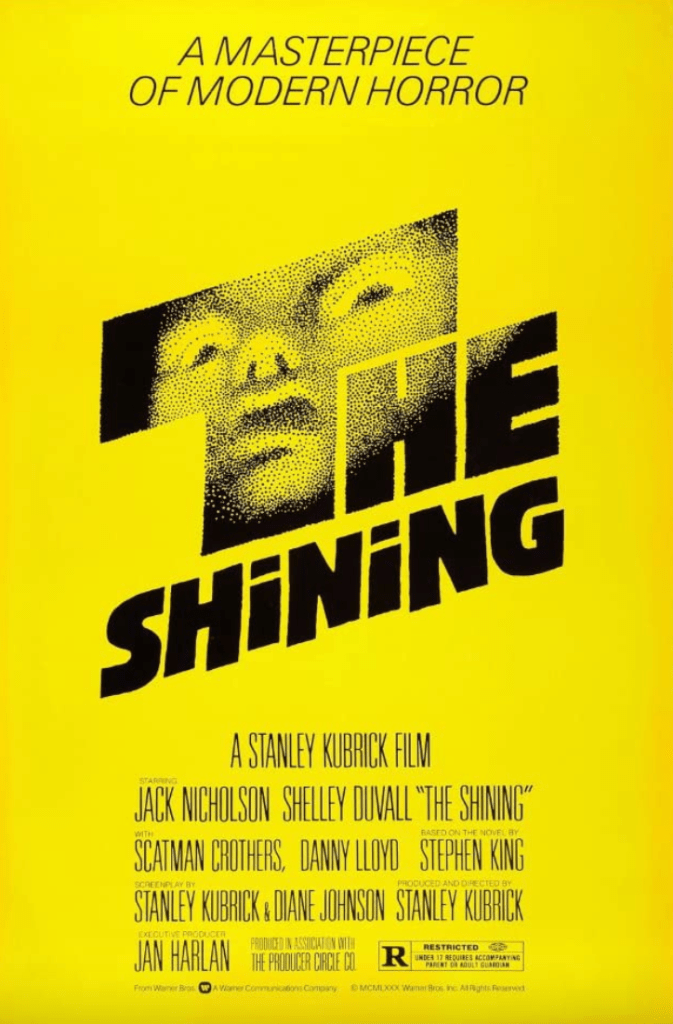
The Shining
The Shiningโ€”directed by Stanley Kubrick, based on the novel by Stephen King about a haunted hotel, starring Jack Nicholson and Shelly Duval. Itโ€™s really one of the best horror movies out there and one of my perennial favorites. I can watch it over and over. That wild look in Jack Nicholsonโ€™s eye as he peers through the hole he just hacked into the door of the bathroom where his wife is hiding and snarls โ€œHereโ€™s Johnny!โ€ will never not be scary as hell.

Fun movie fact: How is it that Kubrick, infamous for his painstaking attention to detail, allows Jack Torrance to order a glass of bourbon, only for the ghost bartender to pour from a bottle that is clearly Jack Danielโ€™s Tennessee whiskey? Anywayโ€ฆ as for a cocktail pairing, I thought to find something older and classic that might have been served at The Overlook Hotel in its glory days. Instead of that, I cheated and checked Google. A website called 12 Bottle Bar has a recipe for a drink based on the movie. Itโ€™s called the โ€œJack Torranceโ€.

1 oz Jack Daniels
3 oz Advocaat
2 Dashes Angostura Bitters (optional)

Place all ingredients in a mixing glass half full with crushed ice. Shake and pour, without straining, into a rocks glass

Or, if something sweeter is more to your taste, maybe youโ€™d prefer a little REDRUM Punch:

1 cup of orange juice
1 cup of pineapple juice
1/4 cup lime juice
1/4 cup rum
1/4 cup dark rum
1/2 cup of grenadine

In a pitcher, combine the juices, the rum, and the grenadine. Stir. Pour into ice-filled glasses and serve with an orange slice and maraschino cherries.

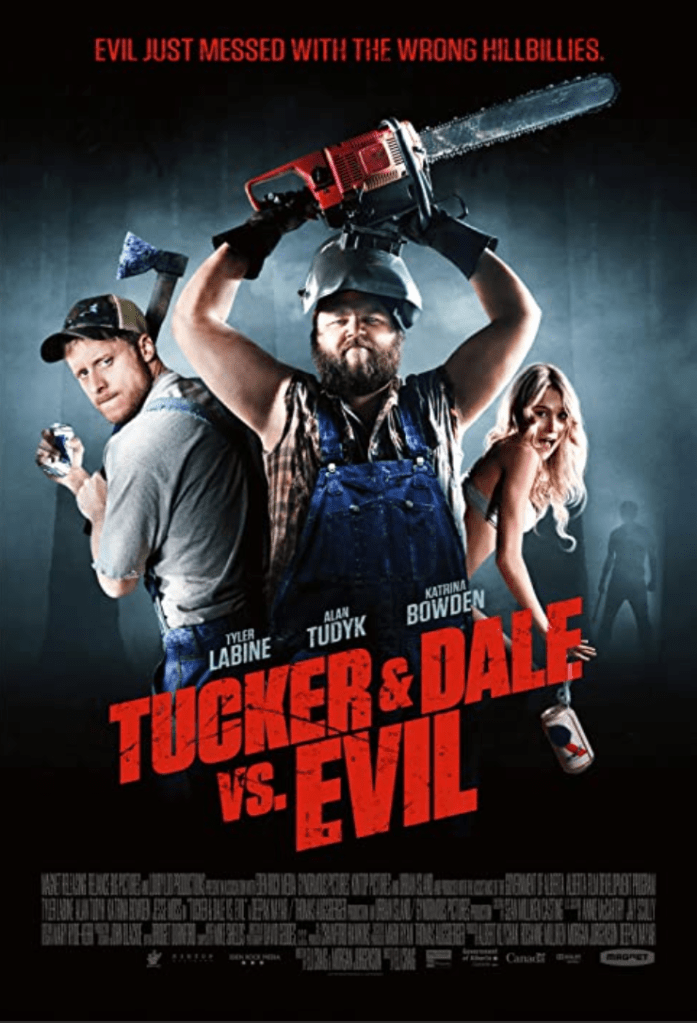
Tucker & Dale vs. Evil
From the hapless victimsโ€™ points of view, Tucker and Dale are the worst kind of psycho killers, but the audience is in on the secret. Theyโ€™re really just a couple of good olโ€™ boys who want to spend a weekend alone in the woods getting back to nature and cracking a few cold beers. What happens during their vacation is really just a series of unfortunate, hilarious, and grisly events. With that in mind, you could probably crack a few Pabst Blue Ribbons to enjoy with this movie, but since cocktails is the theme, cocktails (made with beer) is what youโ€™re going to get. The classic Shandy:

6 ounces pale ale or lager beer (Your favorite cheap beer works great for this!)
6 ounces ginger ale, ginger beer, lemon lime soda (Sprite), or sparkling lemonade
For the garnish: lemon wedge (optional)
Optional: 1 dash bitters adds a complex flavor

Add the beer and mixer to a glass and stir gently to combine. Garnish with a lemon wedge.

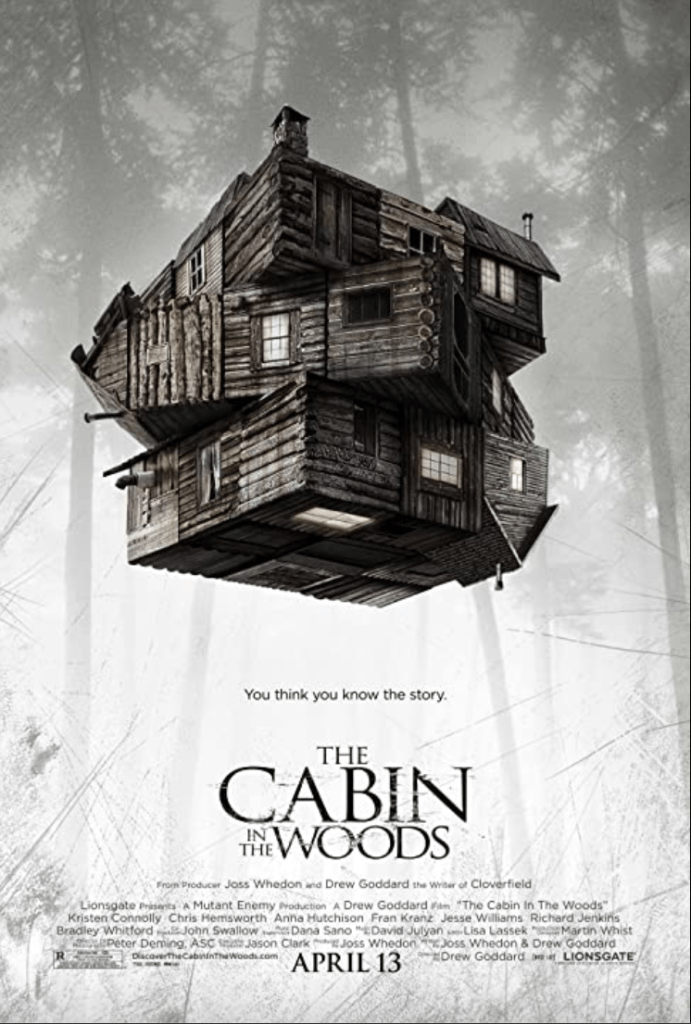
Cabin in the Woods
Similar to Tucker and Dale Vs Evil, Cabin in the Woods is another movie that brilliantly subverts the most clichรฉ horror movie tropes. โ€œFive friends arrive at a secluded cabin with clear rules for their retreat. But when protocol is broken, punishment is swift — and everyone will pay.โ€ While Tucker and Dale use irony and humor as their main tool, Cabin in the Woods sticks to its horror roots. Itโ€™s got gadgets and gizmos a-plenty. Itโ€™s got monsters and nightmares galore. You want dismembered body parts? Itโ€™s got twenty (at least)!

Donโ€™t watch the end if you have a weak stomach, but if a little (okay, a lot) of blood and gore is your thing, then a classic Bloody Mary might be the perfect movie refreshment for you.

Celery salt
1 lemon wedge
1 lime wedge
2 ounces vodka
4 ounces tomato juice
2 teaspoons prepared horseradish
2 dashes Tabasco sauce
2 dashes Worcestershire sauce
1 pinch ground black pepper
1 pinch smoked paprika
Garnish: parsley sprig
Garnish: green olives
Garnish: lime wedge
Garnish: celery stalk

Pour some celery salt onto a small plate. Rub the juicy side of the lemon or lime wedge along the lip of a pint glass. Roll the outer edge of the glass in celery salt until fully coated, then fill the glass with ice and set aside. Squeeze the lemon and lime wedges into a shaker and drop them in. Add the vodka, tomato juice, horseradish, Tabasco, Worcestershire, black pepper, paprika, plus a pinch of celery salt along with ice and shake gently. Strain into the prepared glass. Garnish with parsley sprig, 2 speared green olives, a lime wedge and a celery stalk (optional).

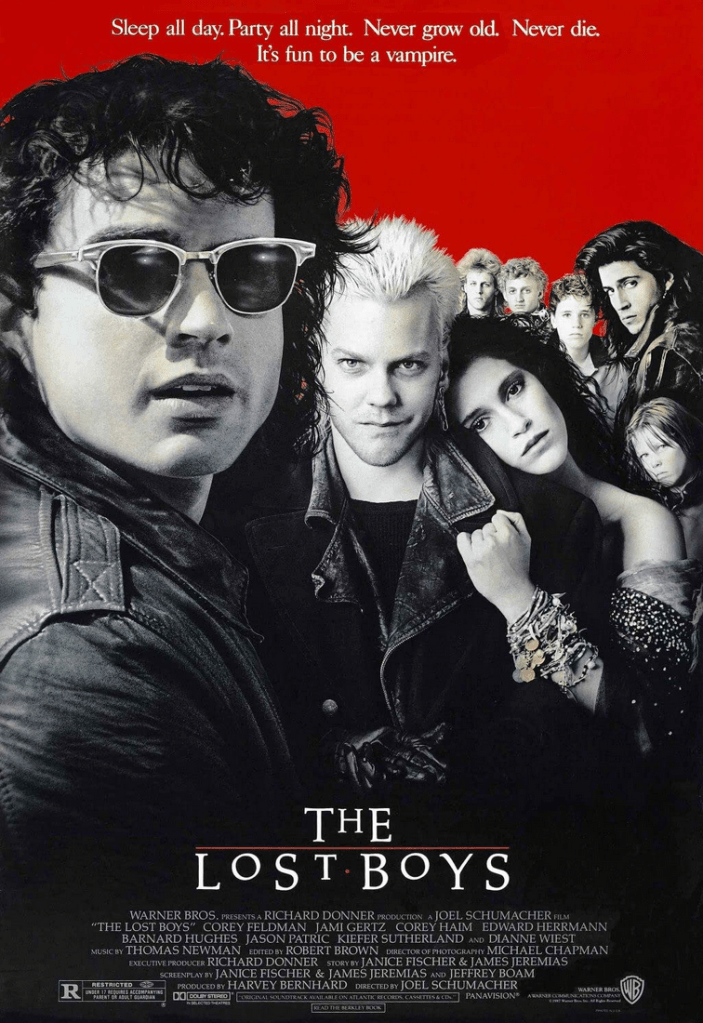
The Lost Boys
This was the first โ€œrealโ€ horror movie I remember watching as a kid. I still love the soundtrack to this day. It was fully of great 80s cheese and glamorous vampire boys that would put poor Edward Cullen to shame. Classic duo Corey Haim and Corey Feldman use every tool in their arsenalโ€”holy water, wooden stakes, and of course garlicโ€”to battle a coven of blood sucking fiends and save their hot, broody older brother from supernatural, evil influences. If you want a drink thatโ€™ll keep away the vampires, too, then a Black Garlic Mojito might be just the thing for you:

1ยฝ ounce dark rum
1 orange wheel, sliced into halves
3 basil leaves, plus 1 sprig for garnish
1 ounce black garlic simple syrup*
Soda water

Muddle basil and half an orange wheel in the bottom of a rocks glass filled with ice. Add black garlic syrup and rum. Stir, and top with soda water. Garnish with orange and basil.

*Black garlic simple syrup
ยฝ cup hot water
ยฝ cup Demerara sugar
3 cloves black garlic
1โ€“2 tablespoons balsamic vinegar

To make syrup: Bring water to boil. Stir in the sugar until it dissolves. Pour the syrup into a blender and add garlic. Blend until the garlic is finely ground. Use a fine-mesh strainer to remove any solids. Add the vinegar and taste. It should taste slightly acidic with a sweet, earthy finish.


Boo-graphy:
Karissa Laurel lives in North Carolina with her kid, her husband, the occasional in-law, and a very hairy husky named Bonnie. Some of her favorite things are coffee, dark chocolate, superheroes, and Star Wars. She can quote Princess Bride verbatim. In the summer, she’s camping, kayaking, and boating at the lake, and in the winter, she’s skiing or curled up with a good book. She is the author of the Urban Fantasy trilogy, The Norse Chronicles; Touch of Smoke, a stand-alone paranormal romance; and The Stormbourne Chronicles, a YA second-world fantasy trilogy.

Serendipity at the End of the World
Serendipity Blite and her sister, Bloom, use their unique talents to survive the apocalyptic aftermath of the Dead Disease. When Bloom is kidnapped, Sera is determined to get her back. Attempting a rescue mission in an undead-infested city would be suicidal, so Sera forms a specialized team to help retrieve her sister. But unfortunate accident sets Sera teetering on the edge of death. She must fight to save her own life, because surviving could mean finding family, love, and possibly a cure.

You can find it on Kindle Vella
New episodes come out every Saturday