SHORT STORY: Hanuman by David A Riley

Hanuman
By David A Riley

(First published in Phantasmagoria Magazine #16, 2020)

“Did you know the mothers run off into the jungle and hide any males they have because the fathers’ll kill ’em? It’s not till they’re strong enough to stand up for themselves they’re brought back. Then the little buggers’ll have a go at their own fathers if necessary in a duel for leadership.” The stone walls of the distant Hindu temple they were staring at across the muddy river seemed to throb in the heat of the midday sun. Adrian Wilkes drained his gin and tonic before speaking once more, his throat parched. He coughed dryly, then said: “Of course, it’s typical they should have a god named after them – Hanuman. It’s even more typical they should let the creatures roam free to rob and pillage.”

The ironic sarcasm in Wilkes’s nasal Birmingham twang droned through Harper’s oversensitive skull. Stuart David Harper – S. D. Harper as he styled himself in his novels – wiped sweat from his forehead with a sodden handkerchief, crossed his legs on the insidiously uncomfortable restaurant chair, and sighed. It had been a long night that hadn’t ended till six in the morning, a night that had started pleasantly enough with rounds of over-expensive Indian beer, to end chaotically – and not too clearly – hours later with even more expensive drugs. Somewhere along the way there may have been a few women, but he wasn’t sure. It could have been a dream. Harper wrinkled his forehead for concentration, instantly regretting it, and wondered whether he should have stayed in bed.

His fellow guest was pointing beyond the hotel to a large sand-coloured monkey, its naked face staring at them with large, queerly intelligent eyes. “There’s one of the bastards now,” Wilkes said.

Harper sat up in his chair. The monkey was staring at them with disconcerting intensity, motionless – significantly motionless maybe. He grinned back at it, then reached for his glass. The monkey did not move. It even ignored the flies that swarmed across its face.

“Youโ€™d almost believe they could think, wouldn’t you?” Wilkes said in a drone. He tipped an ice-cube from his glass, held it between two nicotine-stained fingers, before flicking it at the monkey. The cube skidded across the floor tiles, rebounded off a table leg and missed the monkey by a foot. The animal ignored it. Its eyes, curiously deep, stared at the Europeans as if it were assessing them.

Harper felt drawn to stare back at it as if some kind of empathy had built between them. In a way he felt honoured, which was strange as animals normally left him cold. Even when he was a child, he never had any interest in them, like the shaggy Old English sheepdog his father had given him when he was eight, which he ignored completely. A flea-bitten monkey was the last thing with which he would have expected to empathize.

On an impulse Harper reached into his glass for an ice-cube too, rolled it for a moment between his fingers, then threw it as hard as he could at the monkey. It glittered through the air.

Wilkes howled with laughter as the ice-cube hit the beast hard between its eyes. “Good shot!” he shouted, slapping his thighs.

The monkey shook its head, then chattered something between yellow fangs, before loping away between the table legs.

Harper avoided Wilkes’s eyes as the man gabbled his praise. “If you could aim that well with a gun, you’d be a great hunter.”

Harper stood up, suddenly ashamed of himself. He watched the monkey as it waddled out of the restaurant before lowering itself to the sparsely grassed embankment that sloped down at a steep gradient to the river. “I’ll be back in a moment,” he said. He strolled between the tables after the monkey. He felt through his pockets to see if he had any food he could offer in appeasement, though all he could find was a boiled sweet the airline stewardess had given him during his flight to India five days ago. He peeled off the wrapping paper as he approached the restaurant wall. Leaning over, he saw the monkey sat by the river, scooping its paws into the clay-coloured water. Harper whistled to catch its attention, then threw the sweet towards it. The monkey watched the humbug land on the grass a couple of yards from its feet, then gazed at Harper. Curiously, he felt as if the creature was again assessing him, before it returned its attention to the sweet, climbing to its feet and loping through the grass with a kind of simian dignity, as if reaching for the sweet was beneath it. Almostโ€ฆ but not quite, Harper thought with a silent chuckle, wishing he had something better to throw for it. He turned to Wilkes. “Have you anything to eat on you?”

Wilkes guffawed, before jabbering some lingua franca – some very gross, pidgin lingua franca – to one of the Indian waiters.

“I’ve asked for a dish of peanuts,” he said. “Monkey nuts might be more appropriate if youโ€™re feeding that bugger.”

Harper scowled. He turned to the monkey and their eyes met. He snapped his fingers encouragingly, coaxing it to him with clucking sounds. Behind him Wilkes’s laughter subsided into his glass.


The air-conditioning in Harper’s bedroom was so efficient it made him shiver when he stepped into it late that night after too many hours in the bar. Not bothering to switch on the light, he stripped off and went into the shower. Moonlight shone through the window. A gecko, hunting for insects in the gloom, zipped up the wall in a burst of speed, making him sway as he caught sight of it in the corner of his eye. Involuntarily he followed its path till it disappeared into the shadows.

Then a muffled noise drew his attention.

Leaving the shower, he strode towards the suitcases propped on a small table in the corner. Their dark shapes loomed beside the wardrobe. One of them slid sideways, bouncing with a crash on the floor as the monkey launched itself in the opposite direction.

“Hanuman!” Harper snapped, his reflexes making him reach for the creature as it headed for the door. “Here!” The animal stopped in its tracks and stared back at him. With a sudden, mirthless laugh, Harper reached into his jacket and pulled out a handful of nuts, scattering them across the floor in front of him. “Come on – eat!” He laughed again as the creature picked at the nuts with infinite caution, chewing them slowly one by one, its eyes barely leaving Harperโ€™s face. Despite the monkeyโ€™s subservience, there was something about its eyes that disturbed him. He could feel a prickling creep across his shoulders. There was nothing subservient about the animalโ€™s eyes. In fact, little about those eyes seemed right, however intelligent it might be.

“Dumb beast,” Harper muttered. He strode to a pile of hardbound books on a table by the window. Each spine showed his name in large, stylistic letters next to the smaller title of the novel. S.D. Harper. A name that sold, so his publisher said – so his publisher knew! “D’you see this, you dumb little beast?” he said, pivoting on his heel to face the creature again. “This,” he said, “is me.” He raised the book. “This is my soul,” he said slowly, drunkenly, “you sorry-looking animal.”

Their eyes met, and Harper felt stupid, not only for talking to the monkey, but for the pretentiousness of what he’d said. It must be the drink, he thought, watching the monkey as it sidled towards him.

“What do you think you’re up to now?” he asked. Drink always made him aggressive – as two ex-wives had found to their cost. He stared at the monkey. “Piss off,” he muttered, unable to remember why he had ever felt interested in the creature – or why he had encouraged it back to his room. Though had he encouraged it? What happened seemed like a dream to him now. How had the filthy creature got here? He seemed to recall some raucous jokes from Wilkes after he managed to entice it back to the restaurant, where they had played with it for a while, throwing nuts for the monkey to catch while they drank more gin. He remembered Wilkes saying something about the Hindusโ€™ belief in reincarnation, that if there was anything in it what had the monkey been in its previous life – a thief, a murderer, or a priest? All three, Harper remembered joking after he’d looked into its eyes. “What d’yer mean?” Wilkes asked, tears of drunken laughter in his. Harper told him it had probably been the soul of a priest from one of those murderous cults that haunted Indiaโ€™s distant past. He felt clever when he said it, knowing Wilkes, the bumbling salesman, was falling for it hook, line and sinker. “No such thing,” Wilkes retorted. Then Harper told him about the cult of the Thuggees whose followers committed wholesale murder on hapless travellers.

Why he’d said it – why he’d ever connected it with the monkey, he didn’t know. It was odd, because somehow heโ€™d meant it. There was a look deep down inside the creature’s eyes that suggested this to him, instinctively perhaps, or intuitively, or some such nonsensical thing.

“Piss off,” he muttered.

The monkey stopped and stared at him.

“Hanuman,” Harper said, “you’re a filthy, murderous, nasty little thief. You probably killed your own father – and your children – which would be the kind of thing a Thuggee would do, isnโ€™t it?” He chuckled, though he did not know why. “Now piss off and leave me alone!”


Perhaps because of the alcohol heโ€™d drunk he had bad dreams that night, dreams in which he found himself lost in a moonlit jungle. Nearby was a dirt track, grooves worn into it from thousands of carts that had trundled down it over the years. He wasn’t alone. Others were with him. Waiting. One of them gloated that a band of travellers, who set out late from the nearest town, were planning to pass this way before settling down for the night. Some of their comrades had already managed to infiltrate the travellers, he added, masquerading as pilgrims.

Soon, as expected, the travellers appeared, with armed guards amongst them, hired as protection against the Thugs. What none of them knew was that most of their guards were Thuggees themselves!

Harper hunkered down, feeling the familiar excitement building inside him. Soon the travellers would settle for the night, lulled by a false sense of security. At a signal they would be attacked from within and without as their guards turned on them and he and the rest of the gang swarmed in. He held a yellow scarf between his fingers. He would use it to strangle his victims for Kali, Goddess of Destruction. His hands itched with the urge to do it. He could barely wait for the killing to begin. He loved that even more than the spoils they would take, before burying the bodies. It was what he lived for, to feel his victim struggle beneath him, unable to escape from the ritualistic noose that was strangling the life from them.

Hours passed as they followed the caravan before they stopped for the night. Time passed while food was eaten, then the travellers settled down to sleep, relying on their hired guards to keep them safe.

Moonlight shone through leaves overhead on their huddled bodies.

Someone whistled.

It was the signal.

Silently, Harper crept towards the caravan, his scarf clenched ready to be drawn around the neck of his first victim, his first sacrifice to the Goddess, when a gunshot rang out and he realised they had been fooled.

More gunshots followed. In the muzzle flashes he saw men, white men. Soldiers, he realised. British soldiers.

Panicking, he fled between the trees, hoping to find somewhere to hide in the jungle, when a searing pain slammed hard between his shoulder blades, hurling him onto the ground. He realised he had been shot. Air wheezed from his lungs as blood bubbled, choking him, up his windpipe into his mouth, filling it. Frightened, he knew he was dying.

Darkness fell across his eyes.

Darkness such as he had never experienced before, a darkness that seemed eternal.
But wasnโ€™t.


Disorientated, Harper opened his eyes, unable to remember who or where he was. He couldnโ€™t even remember when he was. The only thing he could remember was hiding in a jungle, waiting to kill. Wanting to kill, he thought with a chill. He had wanted it so much it scared him now. That he had wanted to murder someone as much as he had sickened him. He could feel the cloth he clenched between his fingers as a garrotte. He could remember what it felt to wrap it around someoneโ€™s neck, drawing it tighter and tighter till it bit into their flesh and strangled them.

Sweating, Harper sat on the edge of his bed, sure he was going to be sick.

Across the room, staring at him, sat the monkey. Had it been there all night? Harper felt impatient at its presence but wary of it too.

Forcing himself to his feet he opened the window. Hot air blew in at him. It was already late morning and the sun was shining with a painful brilliance across the gardens outside.

Grabbing a towel from the bathroom, he shooed the monkey towards the window.

โ€œGet out, you little bastard,โ€ he rasped at it, his throat so dry it hurt to speak. He flicked the towel at the animal as it passed.

With a silent stare, the monkey leapt away from the towel and landed on the windowsill before dropping outside. He watched it lope across the paving stones alongside the garden, before squatting down to gaze back at him.

Grunting his annoyance, Harper shut the window and drew the curtains, blocking out the view. He knew the creature would still be staring, sure it would sit there for hours if need be, though he had no idea why. There was something odd, disturbing, frightening about the monkey, as if a human intelligence lurked somewhere inside its brain.

Harper grunted derisively. He knew he was being ridiculous, allowing his overactive imagination to get the better of him. Too much time on his hands and too much booze (definitely too much booze), that was the problem โ€“ the real problem. It was time to return home and put this exotic nonsense behind him.

After talking with Wilkes yesterday about the Thuggees, he knew the subject had preyed on his mind, which was why he dreamt about them. And that was all it had been, a meaningless, stupid dream.

Though that didnโ€™t explain the monkey.

He wished he had never set eyes on it โ€“ or, when he did, had behaved like Wilkes, who treated the creature with contempt.

He lay down again, feeling tired, out of synch, as if he had not properly woken up and was still dreaming. That bloody, bloody monkeyโ€ฆ

This time he was aware where he was. Luxuriant trees grew all around him and he knew he was in a jungle again. Was it the same as before? He could remember being shot. Hadnโ€™t he died afterwards? Or had he blacked out and been rescued? He tried to look around, but his neck felt stiff and it was painful to move. Even so he could see there were other people nearby. A few feet from him a man moaned in pain. Another man sobbed. There was the smell of blood, and something worse. Was it gangrene? It snagged at his throat and he felt an urge to vomit but managed to control his reflexes as he pushed himself up high enough on the heap of straw he was lying on so he could look around. He realised he was in an encampment of some kind. There were others here, most of them injured. The injured were lying on the ground like him. There were a handful of men walking between them, old men mainly in dirty robes stained with blood.

Suddenly he realised how thirsty he was and called for water. The word came out as โ€œPani!โ€ which he somehow knew was the same in whatever language these people spoke.

One of the old men, his beard streaked more grey than black, crept towards him with a pail of water. Using a wooden ladle, he dribbled it onto his lips. โ€œAhista,โ€ the man whispered. Slow.

Harper nodded as he let the water trickle between his lips.

Later he learned what had happened. The fight had been fierce, with the soldiersโ€™ rifles taking out many of their men before the rain started, coming down so hard it was impossible to see, let alone fight. In the confusion, many of the wounded, like him, were dragged into the jungle.

โ€œYou were lucky,โ€ he was told. The musket shot that hit him must have either been fired with not enough powder or had ricocheted and lost most of its force. Though it had winded him and bruised his back, it had not penetrated the skin. โ€œYou will live to fight another day.โ€

Or kill, he thought, feeling weirdly caught up between his twentieth century self that was asleep and dreaming and the Thuggee who lived all those years ago, as if somehow he was unsure which was real, though the thought of strangling innocent men, women, and children to that disgustingly barbaric god, Kali, revolted Harper, even as the Thuggee spoke ecstatically about it.

Time passed quickly as if he sometimes blanked out. His injury was soon just an occasional twinge. Having left the encampment his group now moved cautiously through the jungle; aware they were being hunted by British soldiers. There were too many to fight head on, especially with their modern rifles. The Thuggees had to be cunning instead, scouting any caravan they were going to attack until they were certain it was safe to do so. At the same time, they had to make sure no one passed any information on to the British about where they were. Traitors were suspected. The rewards being offered were temptingly high, especially for people as poor as most of them were. Eyes, therefore, were everywhere, and you had to be careful what you said, which added to the atmosphere of paranoia.

When the Monsoon started he began to suffer. The injury to his back worsened again, so that often he could barely stand upright without groaning. Carrying anything heavier than a canteen of water was agony. But their leaders were deaf to his complaints. Kali did not recognise weakness, neither did her chief acolytes. And he knew he would be left to fend for himself if he became a burden. Or maybe worse, he would be sacrificed to their god.

He had to be strong!

Harper sensed the desperation.

He had to be strong!

Weeks passed, though to Harper they streamed by in seconds. He would close his eyes and open them again and days had gone, sometimes weeks. In a way this was a relief from the insufferable boredom and the pain in his back, but it was alarming as well as he could sense the deterioration of his Thuggee self. The injury to his back must have been worse than originally thought because he was hobbling now, doubled up in pain. He could barely imagine the man being capable of murdering anyone now, especially with a noose. That required strength, determination, and a strong back.

Harper felt no pity for the man though. In a way he was looking forward to all of them being caught and paying for their crimes, either by being shot dead or hanged. He wondered what the Thuggeeโ€™s fate would be: the bullet or the noose. Though it seemed more likely he would succumb to disease first. He had already developed a nasty cough and spat blood. Thick globules too large to bode anything but bad news.

His Thuggee self was aware how sick he was, and he could sense his wish to leave the cult and find a village where he could live out his days in peace.

It was only days before the Thuggee straggled behind the rest of the gang. Mostly this was because of the state of his health but there was connivance there too. He was looking for an opportunity. And soon it came.

A British patrol, including a mounted officer were heading for one of the small villages on the outskirts of the jungle. As soon as he saw them he hid, watching them as they questioned the villagers. The patrol had a native guide with them who carried out the interrogations. He was a tall man dressed in a uniform like the soldiers except for a turban which showed he was a Sikh.

The Thuggee buried his incriminating yellow scarf beneath a bush, then hobbled into plain sight of the soldiers, several of whom instantly trained their rifles on him.

Spreading his arms to show he had no weapons, he limped towards them. Over the next few hours, he told a rambling tale of being kidnapped by a gang of Thuggees who were marauding through the jungle. He gave them an even more rambling and vaguer story about his escape. When pressed by the Sikh he promised to lead them to where the gang was heading. Within hours a scout was dispatched to the main body of British troops and plans were made to trap the Thuggees and wipe them out or take them to be tried.

Thus it was that the gang was routed, and most were shot. The Thuggee was taken to identify those who had been captured, which was when he met his end. He had hardly finished walking down a line of Thugs when one of them leapt at him with a concealed knife, ignored the bullets that pounded his body to slam the dagger in his chest.

Harper awoke instantly.

He could see the killerโ€™s face even now, filled with hatred.

โ€œKali will eat your heart, you damned traitor!โ€ the man cried as they died, one on top of the other.

How odd to curse a man you were already killing, Harper thought. You would think the one would cancel the other! He shook his head, puzzled, though relieved that his dream had broken.

He went into the bathroom to wash and get dressed, deciding he needed company. It was another brilliantly sunny day and he knew he would find Wilkes in the bar when heโ€™d eaten his breakfast. The manโ€™s down-to-earth humour was what he needed now.


โ€œNo wonder youโ€™re a novelist,โ€ Wilkes said when Harper told him his dreams. though Harper seemed preoccupied, and was hardly listening to what Wilkes said, before he added as an afterthought: โ€œYour imagination must be running on all pistons.โ€

โ€œToo much sometimes,โ€ Harper said finally.

โ€œIโ€™ll drink to that.โ€ Wilkes laughed.

Harper laughed, but bitterly, then frowned, sitting up. โ€œThat damned monkeyโ€™s back again!โ€ There was anger in his voice. โ€œI wish the hotel would get rid of the filthy blighters.โ€

Wilkes turned and looked, feeling a cold riff going up his spine.

โ€œI donโ€™t suppose thereโ€™s much the hotel could do. It wouldnโ€™t be politic to send someone out to shoot them. Thereโ€™d be an uproar from the locals.โ€

โ€œShooting their little gods, eh? Ha ha, youโ€™re right, of course. I forgot about that. Bloody idiots.โ€

Stillโ€ฆ Harper thought. He stared at the monkey as it glared back at him, remembering that the Indian god Hanuman was associated with Kali, whose aspects could vary between good and evil, and was always at her worst amongst her Thuggee adherents, brandishing a severed head in one of her four hands and a necklace of skulls hung around her neck.

For one chill moment Harper was sure the monkey bore an uncanny resemblance to the face of the man who stabbed him to death in his dream. Then he laughed. Of course, it was. It was the monkey that inspired it. No wonder there were aspects of his attackerโ€™s face in its. His imagination had used the monkey as a template, as simple as that.

Or was it?

Harper looked up.

โ€œFor all of that, theyโ€™re a bloody nuisance.โ€

Wilkes glanced at him, looking surprised at the rage that was consuming the manโ€™s face as if he had gone mad and would gladly tear the monkey to pieces if he could lay his hands on it.

โ€œAre you okay?โ€ Wilkes asked, which seemed to irritate Harper even more, who ignored his question, his lips moving as if he was talking to himself.

Which was what he was doing, Wilkes realised with a shudder, making out the occasional words. Words that werenโ€™t even English but might have been Urdu.

Suddenly Harper launched himself forwards, running towards the monkey, his gin and tonic smashing to the floor. He ran past Wilkes as if he werenโ€™t there, bowling him over as one of his feet entangled itself under one of the legs of Wilkesโ€™s chair, knocking him sideways. It was over in a second. Rolling across the floor, Harper grabbed at the monkey, which leapt beyond his reach, only for Harper to lash out with his fist, catching the creature on its chest. It was a hard blow, for all it was awkwardly delivered, bouncing the monkey into the restaurant wall where, scrabbling on his hands and knees, Harper pursued it with an aggression more animalistic than human. Again, he snatched at the creature, managing to grasp an arm in his hand, encircling its narrow bicep and tightening. The monkey bit at his fingers, tearing out lumps of flesh as it frantically tried to free itself, but Harper was oblivious to pain, his other hand circling the monkeyโ€™s throat and choking it.


The doctor was puzzled at his condition, that much Harper could tell, though he was quick enough to give his diagnosis.

โ€œHeat stroke.โ€

Harper stared at him. He wondered what the man was talking about and why they were in the managerโ€™s office. He was puzzled why the doctor, an overweight Indian in dirty white jacket and dusty trousers, was watching him through horn-rimmed spectacles with a quizzical frown on his face. Two waiters were stood beside him, their expressions wary, as if they were worried what Harper might do.

โ€œYou have been suffering from heat stroke,โ€ the doctor repeated, emphasising his words as if to a child.

It was only then that Harper realised he was wearing handcuffs. He stared down at them, trying to remember why and when this happened, then realised the men beside the doctor werenโ€™t waiters but policemen.

โ€œWhereโ€™s the monkey?โ€ he asked suddenly, feeling alarmed.

The doctor turned to one of the policemen and shook his head. Images, though, were already returning to Harper. He could see the monkeyโ€™s face as he leaned over it, his hand at its throat.

โ€œI did it, didnโ€™t Iโ€?

The doctor nodded, absently. โ€œIt was a sacrilege. Many locals are already outside the hotel. They are very upset.โ€

Harper was sure the gently spoken words were an understatement. He could imagine the uproar that had been stirred by what he did.

But why did he do it?

One of the policemen turned to the doctor and whispered to him.

โ€œHe is obsessed with this monkey, yes?โ€

โ€œIt would seem so, Inspector. He thinks it has been haunting him.โ€

โ€œA ghost?โ€ The inspector uttered a nasal laugh.

โ€œVery much like a ghost.โ€

โ€œToo much sun and gin,โ€ the inspector said, shaking his head at the handcuffed man.

โ€œToo much sun and gin and too much imagination. A dangerous combination.โ€

Somewhere nearby Harper could hear chanting. On and on and onโ€ฆ While at the feet of the doctor and the two policeman the monkey squatted, staring at him.

โ€œWhatโ€™s it doing here?โ€ Harper croaked in alarm, nodding at the creature to draw their attention.

โ€œWhat is what doing here, Mr Harper?โ€ the inspector asked.

โ€œThat monkey! That damned monkey in front of you.โ€

The men automatically looked at their feet. The inspector shook his head sadly.

โ€œThere is nothing there, Mr Harper.โ€

Even more clearly than before Harper recognised the assassinโ€™s face in the monkeyโ€™s features. Why had he come back to plague him? Wasnโ€™t killing him once all those years ago enough?

But he knew. He had known the answer all the time. He had betrayed his brethren to the soldiers. He had sold them out for coins and his freedom. In the end he had neither, just a dagger in the heart โ€“ and damnation on his soul.

Harper knew he should never have come to this place. He hardly knew why he had. An impulse? A whim?

Or a centuries old curse that drew him here to this fate?

โ€œThere are charges to be faced. Not serious legally,โ€ the inspector added with emphasis, โ€œbut serious in the eyes of the locals. And possibly others across our great nation, who hold Hanuman in high esteem. Blasphemies mean more here than in your country. We are a religious nation. What you did is not regarded lightly.โ€

Harper could imagine. He would be a pariah if that were the right word for what heโ€™d done.

โ€œTomorrow you will be taken to the magistrates, where you will be charged and sentenced, probably with a fine. I am sure you can afford it,โ€ the inspector said.

โ€œThen?โ€ Harper asked, dry-mouthed.

โ€œThen I suggest you go straight to the airport and return to England. And not come back to India again. For your own safety.โ€

Harper nodded. He had no wish to stay anyway. He was done with this country. Though he was certain India had done with him too. He had abused its hospitality and outlasted his welcome.

โ€œYou are sure his condition is stable?โ€ the inspector asked the doctor, who nodded. โ€œAs sure as I can be.โ€

Harper was released from his handcuffs then accompanied upstairs to his room.

โ€œOne of my men will be stationed outside your door overnight,โ€ the inspector said. โ€œTo ensure your safety, you understand,โ€ he added.

And to make sure I donโ€™t try to escape, Harper thought, though where to and why he had no idea.

He went for a shower. Sweat had formed a sticky layer on his skin and he felt lightheaded. Had he drunk too much gin and had too much sun, he wondered. He had drunk more than usual, he knew. He blamed Wilkes for that. The man was a veritable sponge, though he never seemed the worse for it.

When heโ€™d finished, Harper returned to his bedroom. Which was when he saw it squatting in the middle of the floor, its dark eyes staring straight at his. The eyes of the assassin.


Police Constable Manjooran, who had been stationed outside Harperโ€™s door, was the first to see him the following day when he unlocked it to tell him it was time to go to the magistratesโ€™ court. Afterwards, to Manjooranโ€™s eternal shame he was unable to convince his superiors he never left his post during the night, letting someone sneak into the authorโ€™s room, though he knew that he hadnโ€™t, that no one could have entered, no one at all.

Though how the Englishman came to have been strangled in a room with all its windows locked and no other way in than the door he had been guarding, he could not explain. But strangled Harper was, with an ancient rag of yellow silk knotted around his throat.

Boo-graphy:
David A Riley writes horror, fantasy and SF stories. His first story was in the 11th Pan Book of Horror in 1970. He has had stories published by Doubleday, DAW, Corgi, Sphere, Roc, Playboy Paperbacks, Robinsons, etc, and in magazines such as Aboriginal Science Fiction, Dark Discoveries, Fear, Whispers, Savage Realms Monthly and Fantasy Tales. His first collection of stories was published by Hazardous Press in 2012, His Old Man Demons. A Lovecraftian novel, The Return, was published by Blood Bound Books in 2013. A 2nd collection of stories, The Lurkers in the Abyss & Other Tales of Terror, was launched at the World Fantasy Convention in 2013 by Shadow Publishing. Hazardous Press published his 3rd collection, Their Cramped Dark World & Other Tales, in 2016. Both Hazardous Press collections have been reprinted by Parallel Universe Publications, plus two new collections After Nightfall & Other Weird Tales (illustrated by Jim Pitts) and A Grim God’s Revenge. A fantasy novel, Goblin Mire, and a horror novel, Moloch’s Children, were published in 2015. He and his wife Linden recently relaunched Parallel Universe Publications, which originally published Beyond magazine in 1995, and have now published around 50 books, including two art books.

Along with the award-winning artist Jim Pitts he edits a twice-yearly anthology of swords and sorcery stories: Swords & Sorceries: Tales of Heroic Fantasy. The fifth volume will be published as a paperback and ebook in November. Recent publications containing his stories are: Savage Realms Monthly #12 “The Carpetmaker of Arana”; Summer of Sci-Fi & Fantasy “The Storyteller of Koss”; Sword & Sorcery Magazine #118 “The God in the Keep”; Mythic #17 “Baal the Necromancer.” I also have a novelette due in the next issue of Lovecraftiana “The Psychic Investigator.”
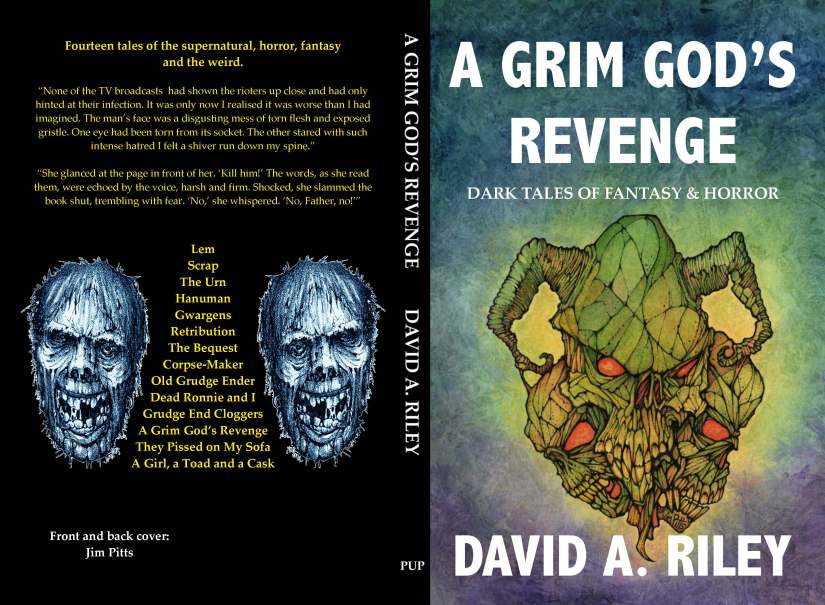
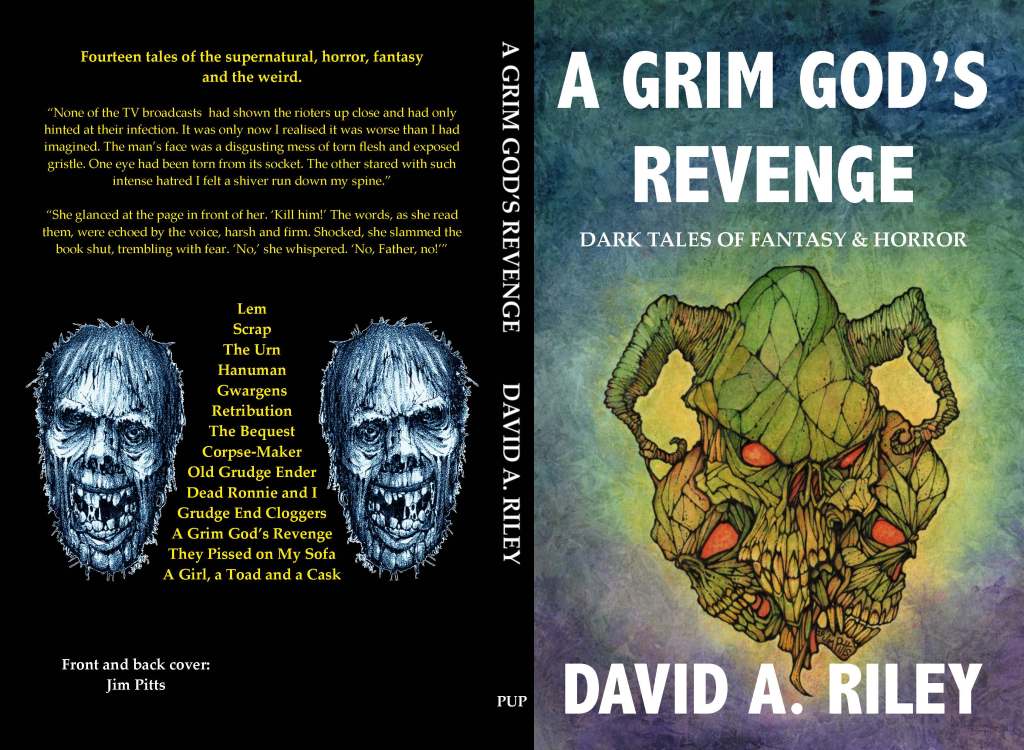
Fourteen dark tales of fantasy and horror ranging from 1971 to 2020.

Dead Ronnie and I was first published in Sanitarium issue 44, 2016
Corpse-Maker was first published in Weird Window issue 2, 1971
The Urn was first published in Whispers issue 1, 1972
Gwargens was first published in Beyond issue 3, 1995
Retribution was first published in Peeping Tom issue 3, 1991
The Bequest was first published in Dark Horizons, 2008
They Pissed on My Sofa was first published in Malicious Deviance, 2011
Old Grudge Ender was first published in The Screaming Book of Horror, 2012
A Girl, a Toad and a Cask was first published in The Unspoken, 2013
Scrap was first published in Dark Visions 1, 2013
Lem was first published in The Eleventh Black Book of Horror, 2015
A Grim Godโ€™s Revenge was first published in Mythic issue 4, 2017
Grudge End Cloggers was first published in Scare Me, 2020
Hanuman was first published in Phantasmagoria issue 16, 2020

AUTHOR INTERVIEW: David A Riley

Meghan: Hey, David! Welcome back. It’s always a pleasure to have you here on Meghan’s HAUNTED House of Books. What is your favorite part of Halloween?

David: Until recent years Halloween wasnโ€™t really regarded by most people here in the UK as a holiday as such. Itโ€™s only been in the last few decades, for instance, that trick or treating has followed in the footsteps of the United States, influenced by films such as ET. Even now I donโ€™t think we make as much fuss of it as in the US. I must admit I donโ€™t do much to celebrate it myself, other than watch a few favourite horror movies.

Meghan: Do you get scared easily?

David: Not at all. Which possibly helps when it comes to writing horror stories.

Meghan: What is the scariest movie youโ€™ve ever seen and why?

David: On first viewing, probably the original Night of the Living Dead which I viewed for the first time at a British Fantasy Convention sometime in the late 70โ€™s. I had never before watched a more relentlessly nihilistic movie in which everyone is doomed to face a violent death. Itโ€™s bleakness was possibly even more disturbing than the image of the marauding zombies.

Meghan: Which horror movie murder did you find the most disturbing?

David: Martyrs. I found the whole film highly disturbing, especially the addiction the main character gradually developed for being tortured. Itโ€™s not a film I would ever willingly watch again. Once was more than enough.

Meghan: Is there a horror movie you refused to watch because the commercials scared you too much?

David: I canโ€™t say I have. Commercials have sometimes put me off watching certain movies, but not because they looked too scary.

Meghan: If you got trapped in one scary movie, which would you choose?

David: Well, definitely not a slasher movie! It would have to be one where there was a reasonable chance of surviving till the end. Not that the survival rate in most scary movies is particularly high. They wouldnโ€™t be scary if there was. Ghostbusters would seem to be the obvious choice.

Meghan: If you were stuck as the protagonist in any horror movie, which would you choose?

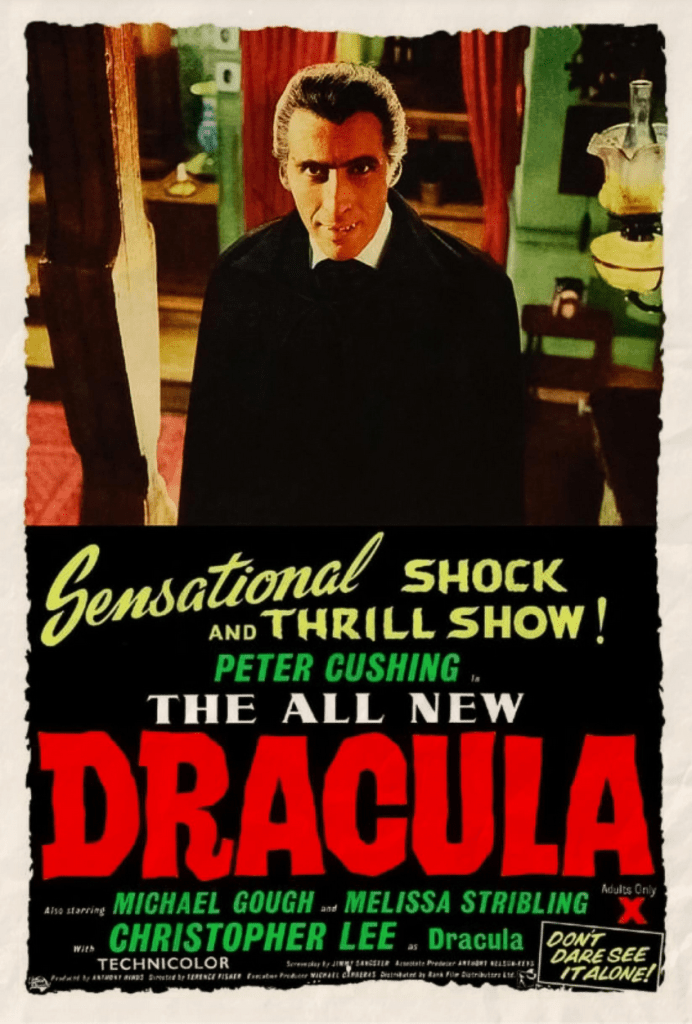
David: Any with Peter Cushing as Van Helsing, probably the Horror of Dracula.

Meghan: What is your all-time favorite scary monster or creature of the night?

David: Thatโ€™s a difficult one as there are so many great ones, but probably Dracula as portrayed by Christopher Lee. At least there are several films to follow him through.

Meghan: What is your favorite Halloween tradition?

David: Iโ€™m afraid I donโ€™t have one other than try and watch a few appropriate movies. As I mentioned above, Halloween has never been much of a celebration here in the UK, possibly because it comes only a few days before Bonfire Night on the 5th of November which has always been a big festivity here, with fireworks and a huge roaring fire made up of piles of wood on top of which we burn Guy Fawkes, added to which we have treacle toffee and jacket potatoes cooked in the embers of the fire.

Meghan: What is your favorite horror or Halloween-themed song?

David: That would have to be the theme from The Rocky Horror Show. That gets in so many horror and science fiction references, itโ€™s amazing.

Meghan: Which horror novel unsettled you the most?

David: The Devil Rides Out by Dennis Wheatley with its satanists and the Devil himself, plus the Angel of Death. Itโ€™s a great adventure story too.

Meghan: What is the creepiest thing thatโ€™s ever happened while you were alone?

David: Hearing footsteps running along the landing outside my bedroom when I knew there was no one there. This has only happened the once in thirty years, but this is a very old house (over two centuries old). I must admit, though, I was more intrigued than frightened. Indeed, I wasnโ€™t frightened at all, even when the footsteps stopped at my bedroom door.

Meghan: Which unsolved mystery fascinates you the most?

David: The Yeti ever since I watched that old Hammer movie The Abominable Snowman.

Meghan: What is the spookiest ghost story that you have ever heard?

David: A View from a Hill by M.R. James, which is my all-time favourite Jamesian story. The image of the man being carried away through the streets by invisible spirits of the dead heโ€™d used in his alchemical experiments is uniquely vivid.

Meghan: In a zombie apocalypse, what is your weapon of choice?

David: An axe. Iโ€™ve always thought the ease with which everyone in The Walking Dead manage to pierce zombie skulls with their knives and daggers particularly unrealistic, as if their skull bones had turned to cardboard. You need something with a bit more weight to reach their brains.

Meghan: Let’s have some fun… Would you rather get bitten by a vampire or a werewolf?

David: A vampire โ€“ at least that usually still has a mind of its own, whereas a werewolf is just a ravening beast.

Meghan: Would you rather fight a zombie apocalypse or an alien invasion?

David: Neither is appealing, of course, but an alien invasion is probably the one I would choose, as for zombies to exist in reality would be a bit too much to absorb. Reanimated dead bodies just do not make sense.

Meghan: Would you rather drink zombie juice or eat dead bodies from the graveyard?

David: Lovely choice! I think both would result in almost immediate vomiting! I suppose the zombie juice. At least you could drink that down quickly with your eyes shut. Yuck!

Meghan: Would you rather stay at the Poltergeist house or the Amityville house for a week?

David: As I do not believe in all the razzamatazz about the Amityville house that would easily be my choice. Of course, if you mean the one as portrayed in the movies then maybe the Poltergeist house.

Meghan: Would you rather chew on a bitter melon with chilies or maggot-infested cheese?

David: The melon any day, though there are some connoisseurs who would go for some rare but special cheeses which are actually infested with maggots. Those are definitely not for me.

Meghan: Would you rather drink from a witchโ€™s cauldron or lick cotton candy made of spider webs?

David: Am I partial to โ€œeye of newtโ€ and all the other icky stuff that goes in it? Possibly. Iโ€™m definitely not partial to cotton candy in its usual form so I think I would try my luck with the cauldron. I must admit these are some of the worst alternative foodstuffs I have ever come across!

Boo-graphy:
David A Riley writes horror, fantasy and SF stories. His first story was in the 11th Pan Book of Horror in 1970. He has had stories published by Doubleday, DAW, Corgi, Sphere, Roc, Playboy Paperbacks, Robinsons, etc, and in magazines such as Aboriginal Science Fiction, Dark Discoveries, Fear, Whispers, Savage Realms Monthly and Fantasy Tales. His first collection of stories was published by Hazardous Press in 2012, His Old Man Demons. A Lovecraftian novel, The Return, was published by Blood Bound Books in 2013. A 2nd collection of stories, The Lurkers in the Abyss & Other Tales of Terror, was launched at the World Fantasy Convention in 2013 by Shadow Publishing. Hazardous Press published his 3rd collection, Their Cramped Dark World & Other Tales, in 2016. Both Hazardous Press collections have been reprinted by Parallel Universe Publications, plus two new collections After Nightfall & Other Weird Tales (illustrated by Jim Pitts) and A Grim God’s Revenge. A fantasy novel, Goblin Mire, and a horror novel, Moloch’s Children, were published in 2015. He and his wife Linden recently relaunched Parallel Universe Publications, which originally published Beyond magazine in 1995, and have now published around 50 books, including two art books.

Along with the award-winning artist Jim Pitts he edits a twice-yearly anthology of swords and sorcery stories: Swords & Sorceries: Tales of Heroic Fantasy. The fifth volume will be published as a paperback and ebook in November. Recent publications containing his stories are: Savage Realms Monthly #12 “The Carpetmaker of Arana”; Summer of Sci-Fi & Fantasy “The Storyteller of Koss”; Sword & Sorcery Magazine #118 “The God in the Keep”; Mythic #17 “Baal the Necromancer.” I also have a novelette due in the next issue of Lovecraftiana “The Psychic Investigator.”

Fourteen dark tales of fantasy and horror ranging from 1971 to 2020.

Dead Ronnie and I was first published in Sanitarium issue 44, 2016
Corpse-Maker was first published in Weird Window issue 2, 1971
The Urn was first published in Whispers issue 1, 1972
Gwargens was first published in Beyond issue 3, 1995
Retribution was first published in Peeping Tom issue 3, 1991
The Bequest was first published in Dark Horizons, 2008
They Pissed on My Sofa was first published in Malicious Deviance, 2011
Old Grudge Ender was first published in The Screaming Book of Horror, 2012
A Girl, a Toad and a Cask was first published in The Unspoken, 2013
Scrap was first published in Dark Visions 1, 2013
Lem was first published in The Eleventh Black Book of Horror, 2015
A Grim Godโ€™s Revenge was first published in Mythic issue 4, 2017
Grudge End Cloggers was first published in Scare Me, 2020
Hanuman was first published in Phantasmagoria issue 16, 2020
Christmas Takeover 1: David A. Riley: Lock-In

Lock-In

A Story by David A. Riley
9,300 words

โ€œNobody expects anything really dramatic to happen at Christmas.โ€

โ€œThere was Ceausescu. He got toppled at Christmas. That was pretty dramatic.โ€

โ€œAnd they shot him. Which was even more dramatic.โ€

โ€œAlong with his wife!โ€

โ€œThen we had the Tsunami on Boxing Day.โ€

โ€œI know that, I know. But – and itโ€™s a big but โ€“ itโ€™s still true that no one expects anything to happen at Christmas. When it does, it takes us by surprise.โ€

โ€œBut you could say that about any day of the year. You could say no one expects anything really dramatic to happen on the twenty-fifth of July. Now thereโ€™s a boring date for you.โ€

โ€œAnd if you said this to the vicar heโ€™d soon tell you that the most dramatic event in the history of mankind happened at Christmas.โ€

โ€œOh, put a sock in it! Youโ€™ll have us singing carols next. For Godโ€™s sakeโ€ฆโ€

โ€œAnyway, Bob, what exactly are you getting at? Why does it matter whether, rightly or wrongly โ€“ depending on your point of view โ€“ you think no one expects anything really dramatic to happen at Christmas? Apart for the usual domestic break-ups and rows and everything else you might expect when most of the population over indulges in alcohol.โ€

โ€œNever mind all that. Whose round is it next? Iโ€™m drinking without.โ€ Arthur Renshaw banged his empty beer glass on the table between them, emphasising his point. The four old men, the Grudgers they called themselves (after the district of town they were all born in, Grudge End), burst out laughing, while Bob Beesley fished in his wallet for a ten-pound note.

โ€œBarman,โ€ he called out. โ€œAnother four of your best, please!โ€

They were a distinctive group, even in the Potterโ€™s Wheel, one of the few unrefurbished, unremodernised pubs in the district. Its dark wallpaper first saw the light of day โ€“ such as ever penetrated this far โ€“ over thirty years ago, much about the same time the paint dried on its woodwork. There was a luxurious atmosphere of dilapidation about the place, with its damp beer mats that often stuck tenaciously to the scarred wooden tables and the old fashioned, barrel-shaped glasses.

Bob Beesley heaved himself up off his stool and waddled to the bar, where he picked up their next round of drinks and passed them, one by one, to eager hands held stretched from the nearby alcove that was literally their own reserve spot in the pub. โ€œAnd a bag of pork scratchings,โ€ Bob added. โ€œIโ€™m feelinโ€™ a bit peckish.โ€

By the time heโ€™d sat down again, panting from the effort, the others had taken at least two or three gulps of their beers and were busily arguing once more. Bob pushed his thick, horn-rimmed spectacles back up the broad bridge of his nose and glanced at the darkening sky outside the nearest window as he nimbly unfastened his pork scratchings. It looked as if there was a storm brewing, which probably meant heโ€™d have to hurry home later to avoid getting soaked; heโ€™d left his raincoat hung behind his front door, along with his brolly. Typical the weather should change like this, he thought. Just his luck.

โ€œAnyway,โ€ Tom Atkins said to him; his sallow cheeks had gained a faint, almost healthy flush from the two pints heโ€™d drunk, โ€œwhatโ€™s all this about Christmas? Itโ€™s not November till tomorrow. Itโ€™s only frigginโ€™ Halloween tonight. Itโ€™s bad enough all the shops start putting up their blasted decorations as soon as weโ€™ve seen the back of Bonfire Night, without you going on about it.โ€

โ€œYou old humbug,โ€ Arthur scolded him. โ€œYou get more miserable by the year.โ€

โ€œSo would you if youโ€™d thirteen grandchilder to buy presents for โ€“ and none of โ€˜em cheap.โ€

โ€œAs if you didnโ€™t really love it,โ€ Bob told him. โ€œIโ€™ve seen you, hiking off to Eddisonโ€™s Toy Shop on Market Street. Youโ€™re like a child yourself when you get in there. And Iโ€™ll bet you make sure you help some of those grandchilder of yours to play with their toys!โ€

The others laughed, including Tom, who had to admit that he did, sometimes, have to help them out. โ€œBut only when theyโ€™re not sure how to play with them properly,โ€ he added. โ€œSome of these modern toys are very complicated to use, you know.โ€

Paddy Morgan, his brick-red cheeks like very old slabs of beef, shook his head sadly. โ€œYou never grew up, Tom. Iโ€™ve always said it.โ€

โ€œSome of us grow up too fast,โ€ Tom told him. โ€œI envy my grandchilder. Theyโ€™ve some wonderful toys these days. Far better than weโ€™d to make do with when we were kiddies.โ€

There was a rumbled chorus of agreements to this. Then Tom said: โ€œIโ€™d better get in another round. I see Arthurโ€™s about to be drinking without again.โ€

โ€œDrinks too fast. Always has. Like a bottomless drain,โ€ Bob grumbled good-naturedly. He glanced at the clock, hidden above the bar amidst a line of almost empty optics. Nine thirty and he felt tired already. Getting old, he thought. Getting far too old. Not like the old days when the four of them would paint the town red. A long, long time ago now, he added to himself, sadly.

โ€œWhatโ€™s going on out there?โ€

On his way to the bar, Tom glanced at the speaker, a terse old farmer who drove down to the pub at night in his battered Land Rover for a pint or two by himself before going home to bed.

โ€œWhat is it, Jim?โ€ Tom asked as he leant against the bar and nodded to the landlord for another four pints.

โ€œOutside. Looks like some sort of commotion. Might be some damned idiots out celebrating Halloween.โ€ Jim Bartlet slammed down his beer and sidled over to the frosted glass door. Frowning, he placed a hand on the doorknob to pull it open.

As he watched him, Tom felt a faint premonition that something was wrong, something worse than just a commotion outside. And for an instant he had an urge to tell Jim to ignore it, to let go of the door and go back to the bar. But it was an urge he ignored. Not only would Jim think he was being absurd, but he would take no notice of him. In fact, heโ€™d be even more likely to go ahead with whatever he was going to do if he said anything to him. And quite rightly so. If someone told Tom something as ridiculous as that heโ€™d ignore them as well. Tom shuddered, though, as the irascible old farmer pulled the door open and stepped outside. There was a brief hint of fog and a noise like someone snapping twigs. Less than a minute later the door burst open and Jim Bartlet fell back into the pub, blood streaming from his face. He made a half turn, as if to steady himself against the bar, then slithered to the ground. Tom reached for him, but his reflexes were slow these days and he missed. Sam Sowerby, though, for all his own weight, was round the public side of the bar within seconds and knelt beside the farmer, cradling his head. Jimโ€™s face was unrecognisable. A red, raw ruin of sinews and veins and stripped, naked meat. It was as if the skin had been sliced from his face, cut away from deep into the flesh and muscles and down into the bone. On instinct Tom went to the heavy, wooden outer door, hurriedly closed it with a solid thud, then snapped the locks shut, top and bottom, though it seemed a feeble enough defence against whatever had attacked Jim Bartlet.

The rest of the Grudgers had scrambled to their feet, even Bill, though he trailed behind the others as they gathered about the body on the floor.

โ€œIโ€™ll phone for the police,โ€ Arthur said. He hurried to the phone behind the bar. A moment later he looked at the others, a crestfallen expression on his long, thin, lugubrious face. โ€œItโ€™s dead,โ€ he told them.

Bob frowned at him. โ€œWhat dโ€™you mean dead?โ€

โ€œItโ€™s dead,โ€ Arthur repeated. โ€œThe phoneโ€™s dead.โ€

Sam laid the farmerโ€™s mutilated head back on the floor. โ€œLet me try,โ€ he told him. He hurried behind the bar and stabbed energetically at the buttons on the phone, as if force alone could make it work. In the end he slammed it back on its cradle. He looked over at the locked outer door. The others, watching him, looked over too.

โ€œI ainโ€™t going out there. Not till thereโ€™s at least a vanful of police outside. Preferably a SWAT team,โ€ Bob muttered.

โ€œI donโ€™t think thereโ€™s much chance of a SWAT team in Edgebottom,โ€ Tom told him. โ€œNot for hours anyway. Theyโ€™d have to send to Manchester for one – and thatโ€™s more than fifteen mile frae here.โ€

Paddy nodded at the dead body of Jim Bartlet. โ€œWhat the โ€˜ell did that to him? We canโ€™t just stand here while thereโ€™s someone out there who killed poor Jim like that. Itโ€™s horrible. Horrible. Weโ€™ve got to contact the police. Somehow.โ€

โ€œBarring smoke signals โ€“ which no one would see at this time of night anyway โ€“ what would you suggest, Paddy?โ€ Sam asked, shaken; he looked down at his bloodstained hands, then went to the sink behind the bar to wash them clean. โ€œWhat would you suggest?โ€ he muttered to himself as he vigorously tried to wipe them dry on a wet bar towel.

โ€œThereโ€™s a lunatic out there,โ€ Bob said. โ€œA lunatic with a butcherโ€™s cleaver. What else could have done that to Jim Bartletโ€™s face?โ€

They all, reluctantly, looked down at the farmerโ€™s head, laid in a spreading pool of blood. The only other customer left in the pub beside the Grudgers was Harold Sillitoe, a retired schoolmaster with literary pretensions. But he seemed speechless, sat on his barstool with his eyes closed against the horror only three yards from him, his single malt whisky untouched on the bar in front of him.

โ€œWhat did he hear that made him go outside?โ€ Paddy wondered out loud.

โ€œWhatever it was I couldnโ€™t hear it.โ€ Tom shook his head. โ€œBut I did feel something was wrong. I almost said that to him. That heโ€™d be better off ignoring whatever heโ€™d heard and stay here. I donโ€™t even know why I felt that. Though I wish Iโ€™d said something now.โ€

โ€œAnd do you think Jim wouldโ€™ve listened?โ€ Bob asked. โ€œHeโ€™ldโ€™ve told you to stop being soft. And gone out.โ€

โ€œAt least I wouldโ€™ve tried. I feel guilty somehow.โ€

โ€œBollocks! Only the bastard as did that to him is guilty of anything. How were you to know someone would chop off his frigginโ€™ face?โ€ Bob reached for his pint off the table behind them and took a long swallow.

โ€œWeโ€™ve still got to do something,โ€ Paddy insisted. โ€œWe canโ€™t just stay here while whoever attacked him is still out there, roaming about.โ€

The landlord shook his head. โ€œAnd what would you suggest? Iโ€™ve tried the phone. And thatโ€™s dead. What else is there?โ€

โ€œYouโ€™ve got a mobile, havenโ€™t you?โ€ Paddy asked.

Sam swore, then hurried to the stairs. He came back again only a minute later, mobile in one hand. โ€œNo signal. No bloody signal.โ€

A tense silence settled on the men. Then Bob asked if Sam had the remote for the TV. There was an old, eighteen-inch set in the games room, usually used by some of the locals to watch horse racing on Saturday afternoons, though none of the Grudgers had ever watched it.

Sam disappeared behind the bar, then came out with the remote and went into the games room, with its pool table and darts board. They heard him cursing to himself. The old men exchanged worried looks, then Sam strode slowly back into the lounge, his broad face even paler than usual.

โ€œYou arenโ€™t going to believe this,โ€ he said to them.

โ€œBut you canโ€™t get any channels,โ€ Bob answered. โ€œThe TVโ€™s dead as well.โ€

โ€œNo reception on any of its channels.โ€ Sam flung the remote onto the bar. โ€œItโ€™s as if weโ€™re cut off from everything.โ€

โ€œBut how?โ€ Bob asked.

โ€œAnd why?โ€ Tom put in with a shudder. โ€œWhy?โ€

Bob wandered slowly to the window and peered outside, the others watching him intently. He moved his head cautiously from side to side, but the darkness looked impenetrable. He couldnโ€™t even see any streetlights down the road. Not far away should have been the illuminated clock tower on St Paulโ€™s Junior School. He couldnโ€™t see that either. Nor the traffic lights at the end of the block. Nor any traffic. No traffic at all. As if the world outside had ceased to exist.

Shuddering, Bob backed away from the window. He looked at the others, unsure what to say.

โ€œThis is freakinโ€™ surreal,โ€ Sillitoe suddenly said, reaching for his whisky. โ€œFreakinโ€™, freakinโ€™ surreal.โ€

โ€œCalm down, Harold,โ€ the landlord told him. โ€œNo need to panic.โ€

The others eyed him in disbelief.

โ€œIf this isnโ€™t cause enough to panic, what is?โ€ Bob asked.

The rest added their agreement.

โ€œIโ€™m just about ready to panic myself,โ€ Tom said. โ€œAnd thatโ€™s without even knowing what โ€˜freaking surrealโ€™ even means.โ€

Perhaps in an effort to show some kind of moral control, Sam slowly walked towards the front door.

โ€œAre you sure what youโ€™re doing?โ€ Tom asked.

โ€œWe canโ€™t just stay here, can we?โ€ Sam said, uncertainly.

โ€œBut if you go out, the same might happen to you as happened to Jim Bartlet. I wouldnโ€™t risk it.โ€

โ€œNor me,โ€ added Bob.

Sam looked round at them, seeing the concern in their faces. The fear.

โ€œWe canโ€™t just wait around for something to happen,โ€ Sam told them, insistently.

With less resolution than he allowed himself to show, Sam took a firm hold of the upper lock of the front door, then clicked it open. Bending his knees, he reached for the lower lock and clicked that open too. Licking his lips, Sam paused for a moment to rebuild his determination, before reaching for the door handle, his palm damp with sweat as he tried to grip it as firmly as he could.

The door opened with ease. Outside all was black, the solid, impenetrable black of absolute nothingness. No streetlights, no traffic, no hint of the stars or the moon or the pavement or the rest of the town or anything of the outside world at all. Just an endless, eternal black, like everlasting night, that went on and on till his eyes ached from the strain of staring into it.

Even so, Sam stood at the pub doorway for a long, long moment. He wanted to reach out into the darkness, but something warned him not to do it, that not only would it be wrong but dangerous. Perhaps Jim Bartlet had felt the same urge and leant out to peer into the darkness too, and in doing so lost his face. Sam shuddered, unable to cope with the bizarre ideas that rushed in at him about what he was looking at, then he stepped back into the warmth and light and shabby cosiness of the pub; he slammed the front door shut behind him and returned to the lounge.

โ€œWhat did you see?โ€ Bob asked, a tremor in his voice.

โ€œCome on,โ€ Tom added. โ€œSay something. Youโ€™re worrying me.โ€

Sam stepped behind the bar and poured himself a stiff whisky from the optics. He drank it in one gulp, then poured himself another. He drank this too in one gulp.

โ€œSam!โ€ Bob rapped on the bar to catch his attention. โ€œWhat the hell did you see?โ€

โ€œSee?โ€ Sam shut his eyes for a moment, his plump face blank. โ€œI wish there had been something to see. But I couldnโ€™t see nothing more than you could see through the window. Thereโ€™s nothing. Nothing out there. Nothing at all.โ€

โ€œStop talking nonsense,โ€ Paddy snapped at him. โ€œWhat dโ€™you mean, nothing? Dโ€™you mean you couldnโ€™t see anything because weโ€™ve had a power cut?โ€

โ€œA power cut thatโ€™s affected everywhere apart from the Potterโ€™s Wheel?โ€ Sam laughed humourlessly. โ€œYouโ€™re a genius, Paddy. How come I couldnโ€™t think of that!โ€

โ€œThen what?โ€ Bob asked. Feeling queasy with fear, he sat down on one of the old bar stools and leant against the bar. He felt in need of his pint of beer again.

โ€œThereโ€™s no โ€˜whatโ€™ about it. Not so far as I can see – so far as I can reckon,โ€ Sam said, almost to himself. โ€œI looked out of the door and there was nothing there. Just a deep black void that went on and on forever.โ€

โ€œSteady, Sam,โ€ Tom told him.

โ€œSteady? You should take a look out there yourself,โ€ Sam said. โ€œBut be careful, โ€˜cause I reckon itโ€™s a blackness you shouldnโ€™t even try to touch. Not unless you want to end up like Jim.โ€

โ€œI thought some madman did that to him. Hacked him with a knife or an axe,โ€ Paddy said, as they looked down at the farmerโ€™s body by the bar.

Sam shook his head. โ€œI donโ€™t think so. Thereโ€™s nothing human, mad or otherwise, out there, Paddy. Whatever did that to him wasnโ€™t human. More likely it was just the blackness that did it. How, I donโ€™t know.โ€

The six men sat round the bar for some minutes in silence as each of them tried to digest what had happened.

Suddenly, his face white with fear, Harold Sillitoe knocked over his whisky and rushed for the door. โ€œI donโ€™t care what rubbish any of you say, Iโ€™m not staying here,โ€ he shouted at them. โ€œIโ€™m not staying here to be trapped.โ€

Sam tried to grab his arm, but the schoolteacher was too fast. The next moment he reached the door, snapped its locks and flung it open. Arthur Renshaw was the nearest to him; he tried to pull him back, but Sillitoe was too determined to get out of the pub and slipped past his fingers. The moment he reached beyond the doorway into the darkness, though, he screamed. At that instant Arthur managed to grasp hold of the collar of his coat, then grunted with the effort as he tugged him back. Together they fell into the lounge, tumbling across the floor, as Sillitoe writhed in abject agony, the stumps of his arms jetting blood over the two of them. Tom moved in and pulled Arthur free, then stood back as the schoolteacherโ€™s body spasmed, then stilled, and the blood ceased pumping from the severed ends of his arms.

A look of horror on his face, Arthur said: โ€œWhat the hell did that to him?โ€

โ€œI told you,โ€ Sam answered. โ€œThe darkness. He touched it. He put his arms into it. And, somehow, in some way, it destroyed them.โ€

โ€œLike acid?โ€

โ€œOr worse.โ€

โ€œMuch worse,โ€ Bob added sombrely. โ€œI saw what acid can do when I worked at Watsonโ€™s Chemical Works in Thrushington and thatโ€™s nothing like as bad as this, believe me. Nor anything like so fast.โ€ He shuddered and sat down again on his stool. Then reached for his beer.

Meanwhile, Sam knelt beside Sillitoe. โ€œHeโ€™s dead,โ€ he told them, though they knew this by now. The schoolteacherโ€™s body had jerked only once and become so still there was no room for doubt in any of them that he had died โ€“ that and the stemming of the outpouring of blood from what was left of his arms.

Sam nodded to Arthur, and the two of them dragged Sillitoeโ€™s body away to one wall. They then dragged Jim Bartletโ€™s next to it, away from the bar.

โ€œPlace is beginning to look like a frigginโ€™ morgue,โ€ Tom muttered.

โ€œAye, and itโ€™s us who are creatinโ€™ it,โ€ Bob added.

Sam went behind the bar, filled five glasses of whisky, then passed them out to the four Grudgers, before sitting down himself and taking a deep gulp of his drink. โ€œI hope thatโ€™s the last attempt any of us make to get out through that door.โ€

With an exchange of glances, the four men nodded their heads as they raised the whiskies to their lips.

โ€œWhat are we going to do?โ€ Bob asked. โ€œWe canโ€™t just sit here, pleasant though it is, forever.โ€

โ€œWell, Iโ€™m just glad my wife decided to leave me last month,โ€ Sam said. โ€œOtherwise the nagging bitchโ€™d be going at us relentlessly by now.โ€

โ€œWhat dโ€™you reckon it is?โ€ Paddy asked.

Sam shrugged. โ€œIโ€™ve no more idea than any of you. I doubt our schoolteacher friend, for all his learning and degrees and suchlike, had any more himself. Which is, perhaps, why he panicked.โ€

As the hours passed the five men slowly relapsed into silence. It was only when it passed eleven oโ€™clock, when he would normally lock the front door and call last orders, that Sam remembered his lodger. Ever since his wife left him, he had supplemented his dwindling income in the pub by letting out one of the spare bedrooms upstairs. An odd old bugger, his current lodger called himself Albert Durer, though Sam was sure this wasnโ€™t his real name somehow. Still, the money was welcome each week โ€“ and he paid it on time every Friday.

โ€œHave any of you seen Albert?โ€ Sam asked, though none of the men remembered catching sight of the lodger all evening.

โ€œPerhaps he couldnโ€™t get in โ€˜cause of that stuff,โ€ Paddy suggested, with a vague gesture at the door.

โ€œIโ€™ll go take a look in his room,โ€ Sam said.

It was less than a minute later that he shouted down to the rest of them to โ€œcome up here! For Christโ€™s sake, take a look at this!โ€

As the four men gathered about the open doorway upstairs, panting for breath, Sam stood at the far end of the room in front of the curtained window. Between them the threadbare carpet had been rolled back to uncover the floorboards. On these there was a large, painted circle in white and a five-pointed star. All around the edges were peculiar symbols and the burnt-out stubs of candles, their melted wax lying in off-white ridges on the floorboards. In the centre of the star was what horrified them all the most: it was a nailed-down body of a rat, its ribs and stomach sliced open.

โ€œThe dirty bastard,โ€ Bob muttered, wiping sweat from his forehead. โ€œThe dirty, dirty bastard!โ€

โ€œFilthy pervert, more like,โ€ Tom put in. โ€œWhoโ€™d do a thing like that?โ€

โ€œAlbert Durer, thatโ€™s who,โ€ Sam said. โ€œAnd hereโ€™s me, cookinโ€™ his breakfast for him every morning, and the bastard does that in my own home.โ€

โ€œWhat is it?โ€ Paddy asked. โ€œSatanism?โ€

โ€œI donโ€™t know,โ€ Sam said. โ€œItโ€™s something horrible, I know that. Whether itโ€™s Satanism or not, I havenโ€™t a clue. Ask me something I know something about, and Iโ€™ll answer you. Thisโ€ฆthis is just frigginโ€™ disgustinโ€™, whatever you call it.โ€

โ€œThereโ€™s some kind of old book over there on the dresser,โ€ Tom said, pointing.

They followed his finger, and Sam stepped over to the dresser, gingerly keeping his feet outside the painted circle. He touched the open book, its pages crackling beneath his fingers like very old parchment. He stared at it hard for several moments, his brows puckering with concentration.

โ€œCanโ€™t make out a blessed thing thatโ€™s written in it,โ€ he told them eventually. โ€œItโ€™s all in some kind of foreign language.โ€

โ€œLike French?โ€ Paddy asked, to whom foreign meant Calais, which was the furthest heโ€™d ever travelled.

โ€œOr Latin?โ€ Bob asked, whoโ€™d done four years of it at Grammar School a long time ago and could just about remember Amo, Amas, Amat.

โ€œTake a look,โ€ Sam told him, but when Bob sidled over to peer at the book, he shook his head. โ€œI donโ€™t think it is Latin,โ€ he said finally. โ€œOr if it is, itโ€™s in some kind of code.โ€

The men shook their heads in consternation.

โ€œDโ€™you think this has anything to do with whatโ€™s happened tonight?โ€ Tom asked.

Sam stared at him. โ€œThat blackness?โ€ he asked.

โ€œI know it sounds mad,โ€ Tom went on. โ€œBut before what happened to Jim and Harold that would have sounded mad too. And it is Halloween. When better to do something queer like this?โ€

โ€œBut why?โ€ Bob asked. โ€œAnd how?โ€

Tom shrugged. โ€œYouโ€™d have to ask Samโ€™s absent lodger that, if we ever get chance to meet him again.โ€

โ€œIโ€™d like just one chance to meet that bastard again,โ€ Sam muttered as he gazed at the mutilated remains of the rat nailed to the floorboards. โ€œHeโ€™d not forget it if we did.โ€

While they were upstairs, they checked the rest of the bedrooms and Samโ€™s living room, but the sheer solid blackness outside never changed. By the early hours of the morning they had all gone to sleep in the two other bedrooms besides Durerโ€™s, though none of them felt secure enough to undress. Whatever was happening to them, they were sure there were more surprises in store. And none of them, probably, good.

Sam was the first up. By half eight he had prepared breakfast for them all of fried eggs and bacon.

โ€œThereโ€™s plenty of food in the freezer, but I canโ€™t promise many more days of bacon and egg,โ€ he told them as they sat about the table in the kitchen.

โ€œDo you think weโ€™ll be stuck here that long?โ€ Tom asked, his sallow complexion now grey, with dark shadows under his eyes.

โ€œWho knows?โ€ Sam said. โ€œWeโ€™re still stuck now, arenโ€™t we? Which makes it nearly twelve hours already. Who knows how much longer thisโ€™ll go on?โ€

โ€œMuch longer and I think Iโ€™ll go stir crazy,โ€ Tom muttered. โ€œWe mightโ€™ve joked sometimes about how grand itโ€™d be to get locked inside a pub, but the realityโ€™s not quite the same.โ€

โ€œThe lock-in from Hell,โ€ Bob said. Like Tom, his plump face showed signs of strain.

โ€œI never thought the Potterโ€™s Wheel Paradise, but I never reckoned to compare it to Hell,โ€ Sam said with an attempt at levity, trying to put out of his mind what they saw in Albert Durerโ€™s bedroom.

Levity, though, had come into short supply by mid-afternoon and the view through the windows was still pitch black. There was a creeping atmosphere of fear in the pub. And claustrophobia.

There were strange anomalies. Though they could neither send nor receive telephone calls, and the TV and radio were dead, there were still supplies of electricity and water. Arthur Renshaw said it was a pity the water pipes werenโ€™t big enough to crawl along, otherwise they might have been able to get out that way, till Bob pointed out that, however big the pipes might be, they would drown in them anyway because of the water โ€“ and still get nowhere. Sam organised for the two bodies in the lounge to be wrapped and taped inside bin bags, then he and Tom dragged them into the cellar, where it was cold enough to keep them preserved โ€“ and where, more importantly, they werenโ€™t in constant view.

By evening there was real fear.

โ€œWe should have heard something from someone by now,โ€ Tom insisted. โ€œSurely somebody knows weโ€™re stuck here, that somethingโ€™s wrong.โ€

Sam shrugged. โ€œWho knows what itโ€™s like on the outside? Perhaps itโ€™s as dangerous to get into the Potterโ€™s Wheel as it is to get out.โ€

They drank slowly and steadily that night. Talk petered out long before ten; after that they sat around the bar in desultory groups, each consumed by their own gloomy thoughts for the future. Before they knew it, it was midnight, they all felt slightly drunk, and went to bed grumbling about the bloody absurdity of it all.

Five days passed and the situation hardly changed, though the bacon and eggs for breakfast had long since run out and Sam was beginning to look increasingly more worried whenever he went to the freezer. His initial optimism about what it held hadnโ€™t taken into account that it would have to cater for five grown men, with no additional food coming in from any other source. Now it was beginning to empty with ominous speed. Two days later the freezer was down to an already opened bag of peas, three fish fingers, some ice cream in a battered tub and a very old packet of boil-in-the-bag spinach.

Within the next few days they were all beginning to feel hungry and beginning to realise that they were facing the grim prospect of starvation. If being imprisoned within the pub had been enough to make them feel afraid to start with, their food running out increased this till there was hardly a moment when they werenโ€™t aware of it. It dominated their thoughts. But there was nothing they could do about it. They had long since searched the pub for every possible scrap of food, from half eaten packets of biscuits to the snacks hung on cards behind the bar. Even dusty jars of out of date cherries for cocktails that had never been popular in the Potterโ€™s Wheel had all been consumed. Their ill-assorted diet led them to feeling queasy as well as hungry, depressing their spirits even more and making all of them irritable.

By the end of the second week tempers, as well as hunger, were at breaking pointโ€ฆ

โ€œThis is bloody ridiculous,โ€ Bob said eventually as the five of them sat around a table in the lounge. With empty stomachs, they had stopped drinking alcohol till later at night; and each of them now held a bottle of fruit juice from behind the bar. โ€œWeโ€™ve got to do something. If we donโ€™t, weโ€™re going to starve to death within the next couple of weeks, unless we turn to cannibalism.โ€

โ€œAnd with only five of us that wouldnโ€™t last long,โ€ Sam put in with a rueful smile, though his attempt at humour met with little response from the drawn faces of the four old men, who stared at him in silence

โ€œWeโ€™ve got to try something,โ€ Tom said. โ€œEven if it means risking what happened to the others. If we donโ€™tโ€ฆโ€

โ€œIf we donโ€™t, weโ€™re doomed,โ€ Bob said flatly.

Sam went behind the bar and poured them five beers. โ€œIf weโ€™re to plan getting out of here we need something stronger than orange juice,โ€ he told them.

Their first plans, though, were vague impracticalities that were soon dissected and tossed to one side. It was Tom who came up with the first and only practical suggestion.

โ€œHave you ever wondered why weโ€™ve still got water and electricity?โ€ he asked.

โ€œGood job we have them,โ€ Arthur said. โ€œWeโ€™d have been well buggered if we hadnโ€™t.โ€

โ€œI agree with you there. But why have we still got them,โ€ Tom went on insistently. โ€œThatโ€™s the important thing. Thatโ€™s what Iโ€™ve been wondering. After all, weโ€™ve no TV or radio signals.โ€

They sat there watching him, waiting.

โ€œAnd?โ€ Bob asked. โ€œWhat answer have you come up with? Or is this going to be twenty frigginโ€™ questions?โ€

โ€œTwo things,โ€ Tom said, and, despite the hunger that was aching in his stomach, he managed a smile of monumental smugness. โ€œElectrical cable and lead pipes โ€“ or whatever they make water pipes from these days.โ€

โ€œIt ainโ€™t lead, I know that,โ€ Sam said. โ€œBut I get your point. Electricity and water get through because theyโ€™re protected in some kind of casing.โ€

โ€œAnd?โ€ Bob asked. โ€œAm I being a bit thick, but how does that help us. We canโ€™t get out of here through either of them, can we?โ€

โ€œBut we might be able to make some kind of casing through the darkness,โ€ Tom said. โ€œSomething thatโ€™ll protect us inside. Itโ€™s just a matter of finding something thatโ€™ll stretch out into the darkness that we would be safe inside.โ€

โ€œItโ€™s more than just worth a try,โ€ Sam said. โ€œBetter than sitting here, starving to death.โ€

Putting aside their beers, they set out foraging about the pub for materials they could use to construct a tunnel.

โ€œI hope that darkness doesnโ€™t stretch too far,โ€ Tom confided in Sam, but the landlord shrugged. โ€œWeโ€™ve got to try, Tom. Itโ€™s the best idea so far, and if we donโ€™t make a stab at it weโ€™re doomed anyway.โ€

It was in the beer cellar they came up with the solution. At one time, during the late eighties, a previous landlord had made an attempt at building up the catering side of the pub, and with that purpose in mind had started work on a proper professional kitchen. Things had gone well, till he was told he would have to construct a ventilation system. Spiralling costs, at each new demand from the local council, had resulted in him eventually abandoning the project. In the cellar, though, were the aluminium panels for an unconstructed ventilation system, ready to be connected together to form a two-foot square metal shaft.

โ€œIf we could connect these together, we could lead them from the front door out into the darkness. Hopefully theyโ€™ll make a shaft long enough to let us crawl out of here,โ€ Sam said, as they relayed the open-ended boxes up the cellar steps to the bar.

Opening the front door was a ticklish operation as no one wanted to risk suffering any of the mutilations that struck those who had already tried to get out that way. The deep, almost cosmic darkness that confronted them, with its cold, black depths, had become no less awesome โ€“ or frightening. Gingerly, they pushed the ventilation shaft, a twelve-foot length of aluminium squares, inch by inch out across the doorstep into what should have been the street. Their first attempt, though, was a dismal failure. As they shone a torch into it, they could see that the inexplicable darkness had entered it from the far end, filling it till it was in line with the darkness at the doorstep.

โ€œWeโ€™ll need to seal the far end off,โ€ Sam said as they pulled the shaft back into the pub. โ€œPerhaps thatโ€™ll keep it out.โ€

They found some sheets of aluminium in the cellar which fitted on the end of the shaft. With a soldering iron, it did not take long before they had it in place.

โ€œMake sure you seal in every gap, otherwise the darkness might seep through,โ€ Tom suggested while Sam worked on it. โ€œBut not too strongly. It has to break off.โ€

This time, as they slowly, carefully pushed the delicate shaft into the darkness, the inside remained clear. Even when most of it stretched out from the pub, its outside swallowed by the darkness around it, as if it no longer existed, its interior remained bright, unsullied by even the slightest hint of darkness.

The five men exchanged cheers of jubilation. They sat back and admired their work for a moment.

โ€œDo you think the far endโ€™s reached the other side of the darkness?โ€ Arthur asked, dampening their spirits. None of them knew how far the darkness reached. For all they knew it might have stretched only inches from the pub โ€“ or gone on for eternity. There was no way they could tell from staring into it. It was black and impenetrable to their gaze.

โ€œThereโ€™s only one way to tell,โ€ Sam said. โ€œOne of us is going to have to creep along that shaft and batter the end off with a hammer. Then, either the darkness will flood in, or thereโ€™ll be the real world again.โ€

โ€œYou make it sound so simple,โ€ Bob said. โ€œBut you do realise, donโ€™t you, that if the shaft doesnโ€™t reach safety and the darkness does coming flooding in, whoeverโ€™s in there will be swallowed by it?โ€

โ€œAnd be dissolved like poor old Jim Bartlettโ€™s face or Harold Sillitoeโ€™s arms,โ€ Tom said, unable to hide the horror in his voice as he said it.

โ€œThanks, Tom,โ€ Sam told him. โ€œI was trying to forget that alternative.โ€

โ€œWell, one of us will have to try it, whatever the risks. Otherwise weโ€™ve just wasted our time.โ€ Bob wiped his hands on his knees. He looked down at his stomach, which still loomed large despite their enforced diet. โ€œThough I donโ€™t suppose Iโ€™ll be able to volunteer. I might manage to squeeze down that shaft, but I donโ€™t think Iโ€™d be able to move my arms enough to use a hammer to force the end off.โ€

โ€œI think weโ€™ll need someone somewhat slimmer, I agree.โ€ Sam looked at the others, conscious that, even though he was youngest here, he was not much slimmer than Bob, and would have a problem in the tunnel too. โ€œWell?โ€ he asked. โ€œWho is it going to be?โ€

There was a long moment of silence. The others knew the dangers involved, that whoever crawled along the shaft and knocked off the end would be risking his life.

โ€œOne of usโ€™ll have to do it,โ€ Arthur said. โ€œPerhaps we should toss for it or pick a short straw or something like that.โ€

The only ones slim enough to make it, Paddy, Arthur and Tom, exchanged glances.

Sam nipped behind the bar. He returned a minute later with a pack of playing cards.

โ€œLowest card wins โ€“ or loses, depending on your point of view,โ€ he said, shuffling the cards. โ€œAces low.โ€

One by one, the three Grudgers reached for the cards and selected one.

โ€œLooks like Iโ€™m the one,โ€ Arthur said, flatly as he gazed at the three of spades in his hands. Tom had the five of hearts and Paddy the king of clubs.

โ€œWould you like to do best out of three?โ€ Tom asked.

Arthur shook his head. โ€œOnly putting off the inevitable. Itโ€™s got to be one of us. Anyway, if it doesnโ€™t work, perhaps Iโ€™m the lucky one, eh? At least I wouldnโ€™t have to starve to death. Or end up eating one of you lardy arsed buggers.โ€

โ€œWhen do you want to try it?โ€ Sam asked.

โ€œI doubt if I could sleep tonight knowing I was going to have to crawl along that frigginโ€™ tunnel in the morning, so I might as well do it now,โ€ Arthur said, his face deadpan. โ€œWhat have I got to lose – apart from my nerve?โ€

โ€œHere,โ€ Sam said to him. He went to the bar and handed him a large whisky. โ€œJust to steady you a bit, eh?โ€

โ€œMany thanks.โ€ Arthur smiled, thinly, and took a long swallow of the whisky. โ€œGood stuff too, for once.โ€

He looked at the galvanised tunnel, squared his shoulders, then stepped towards it. Sam handed him a heavy hammer. โ€œA couple of hard bangs should be enough to snap the solder. If someone will help me, two of us will take a firm grip of this end of the shaft to make sure it doesnโ€™t slide forward.โ€

โ€œTake a bloody firm grip,โ€ Arthur said as he stooped and stretched his hands into the tunnel, then began gingerly to crawl on all fours along it. He could feel the cold metal beneath the palms of his hands. There was an intensity to the coldness which he supposed was because the blackness surrounding it was drawing out any heat into whatever voids of nothingness there were outside.

โ€œAre you okay?โ€ Sam called as the old man shifted his knees into the shaft.

โ€œFeels cold but firm,โ€ Arthur told him; he looked back with difficulty over his shoulders. โ€œFeels as if itโ€™s resting on something solid.โ€

โ€œTake care,โ€ Bob told him, as he crouched down to watch him crawl foot by foot down the shaft.

Sam gritted his teeth as he and Bob held onto the shaft to make sure it didnโ€™t move. Arthur moved only slowly, not daring to jar the shaft from their fingers, conscious at every move he made of the terrifying blackness surrounding him beyond the thin metal sheets. The shaft felt so fragile he half expected it to come apart every time he moved. Even though the shaft was only twelve feet long, it took him at least five minutes to inch his way to the end. Eventually, though, he was close enough to reach out and touch it.

He pulled the hammer from under his belt.

โ€œTwo sharp blows should snap off most of the solder,โ€ Sam called to remind him.

Arthur nodded, though he knew that if the shaft wasnโ€™t long enough, if the blackness extended even further than its end, it would rush in and kill him. The thought of it made the hair prickle along his arms and neck, while his stomach tightened with apprehension into a small, icy nugget of fear.

โ€œTwo sharp blows,โ€ Arthur muttered to himself beneath his breath as he manoeuvred the hammer so that he could grip it properly and swing it far enough back in the cramped space inside the shaft to hit the plate at the end.

โ€œHold onto the shaft for me,โ€ Arthur shouted to Sam and Bob. โ€œIโ€™m going to hit it now.โ€

He closed his eyes, tightened his grip on the hammer, made a swift, uncharacteristically sincere prayer, then swung with as much force as he could muster.

There was a dull metallic thud.

Nothing.

He gritted his teeth and swung again. Even harder this time.

One corner of the aluminium sheet pinged free and a thin shaft of light shone through the gap.

For a second Arthur stared into it, a sick feeling in the pit of his stomach, till he realised he was looking at light, however dim, not darkness.

Light!

He could barely take his eyes away from it.

โ€œWhatโ€™s wrong? Whatโ€™s the matter?โ€ Sam called out to him, alarmed at his stillness.

Arthur took a deep breath as relief flooded through him.

โ€œThereโ€™s light,โ€ he shouted down the shaft. โ€œLight!โ€

Buoyed up by the cheers of encouragement that broke out madly behind him. Arthur swung at the metal again with determination. A couple of good, strong blows and heโ€™d have it off. Just a couple, that was all, he thought to himself. The first blow parted the sheet from one side, and the light grew brighter. He aimed a blow at the opposite edge. Just one, he thought. Just one more blow. Make it good and hard and heโ€™d be out of here. Out of here for good.

Back inside the pub, Sam looked at Bob as he tightened his grip on the edge of the shaft before Arthur could strike his next blow. โ€œNearly there,โ€ he whispered. Bob grinned, then looked down the shaft as Arthur wriggled into position, before bringing the hammer down with a resounding, echoing thud against the metal.

A dim grey light shone down the shaft as the metal fell free. It was a cold light, almost shadowy in substance. Carefully, Arthur crawled further along the shaft, till his head and shoulders were free of it. If he had expected to see any sign of the streets or houses that lay beyond the front of the pub, there was no sign of them now as he craned his neck to see as much as he could , though everything seemed to be little more than dimly-seen differing shades of grey. There was an impression of vast stone walls somewhere in the distance and high above him, as if he was in an enormous cavern. He screwed up his eyes, wishing that he had brought his glasses with him when he came to the pub, but none of his friends had ever seen him wearing them โ€“ none of them even knew that his eyesight had worsened over recent years. Out there, though, he felt sure that something moved. Something large and dark.

โ€œAre you okay, Arthur,โ€ he heard Sam call to him as he wriggled free of the shaft and crawled onto the hard, cold surface of the stone outside. He turned around and looked back down the shaft. โ€œIt seems okay here,โ€ he called back. โ€œBut Iโ€™ve no idea where I am. Itโ€™s not Edgebottom.โ€

โ€œNot Edgebottom? But how do you know?โ€ Sam asked.

Arthur saw his face disappear for a moment as Sam discussed things with the others. He reappeared again shortly. โ€œHold on to your end of the shaft,โ€ Sam told him. โ€œWeโ€™re coming through.โ€

Arthur glanced around the darkness uncertainly. โ€œI donโ€™t know whether itโ€™s all that safe,โ€ he told him. โ€œI keep seeing something move in the distance. Something large. Iโ€™ve no idea what it is, though.โ€

โ€œBut we canโ€™t just stay here,โ€ Sam insisted.

Arthur sighed. โ€œOkay. Iโ€™ll take a hold of the shaft.โ€

The shaft stood out a few feet from a dark, glistening mass of blackness like that surrounding the pub. He would have called it a pool, but it rose in front of him up against the side of a wall of rock. He flinched as the shaft tugged his fingers; Sam had squeezed himself into the far end of it, his pale face almost filling it as he stared at Arthur.

โ€œTake it slow,โ€ Arthur told him. โ€œDonโ€™t risk damaging the joins. Theyโ€™re not all that strong.โ€

One by one the rest of them slowly made their way along the shaft, till all five of them eventually stood on the rough stone at the end of it. Bob shivered theatrically. โ€œItโ€™s a damn sight colder here than in the pub,โ€ he grumbled.

โ€œYou can always go back if you like,โ€ Sam said.

โ€œIโ€™m not sure yet whether that wouldnโ€™t be a good idea,โ€ Bob retorted. โ€œI thought this might lead outside the pub, but God knows where it is. It doesnโ€™t ring a bell with me. Itโ€™s like nowhere round Edgebottom that Iโ€™ve ever seen.โ€

โ€œNor me,โ€ Tom said, his voice quiet, as if he felt intimidated by the vastness of the gloomy depths around them. โ€œOh, my gawd,โ€ he mumbled.

The rest of them followed his gaze as he stared with a look of horror into the distance.

โ€œWhat is it?โ€ Arthur asked, though he felt sure that he knew. It was that thing โ€“ that large, dark shape he had seen move when he first climbed out of the shaft. He screwed his eyes in an effort to make out what it was. It was large in the distance. Immense. Too large to be real.

The rest of them saw the creature at once, though none could have even started to describe what they saw. It was impossible for them to fix it in their gaze, as if it did not even fully exist within reality, but partially slid between dimensions even as they stared up at it. It was a Leviathan of Biblical size, perhaps octopoid, perhaps insectile, perhaps neither, or both, or many other forms of life simultaneously โ€“ or beyond all forms of life, something the like of which none of them had ever heard of or seen or imagined.

They felt fear deprive them of thought as they gazed up at it.

An impossibly long tendril reached towards them from the creature, dark, bristly, covered in rows upon rows of millions of tiny, moving suckers. Arthur shrank back against the rest of the men as it moved towards him. Sam pushed him to one side, then mindlessly scrabbled to get back as far as he could from it. Panic infected them all as they ran about against the rock face in an effort to elude the nearing limb. Paddy was the first to scream. It was a pitifully pathetic, terror-filled scream of gut-wrenching horror. The rest of them were halted for an instant as the tiny suckers transfixed themselves to Paddyโ€™s face. His arms and legs flailed in agony as he tried to tear himself free, as his face seemed to be drawn into all the suckers simultaneously, followed by the rest of his head, then shoulders. Sam felt sickened as blood erupted from all the tears that were ripped about the old manโ€™s body as it was wrenched apart into the hundreds of suckers consuming him. Sam grabbed at one of Paddyโ€™s arms, though he knew he was too late to save him. He tugged at the arm, but there was no give. The immense tendril that was drawing him violently into it was far too strong for his efforts to have any effect upon it.

More of the tendrils or octopoid limbs were emerging from the distant creature. Sam saw Tom trip as one of them soared down at him, attaching itself to his back. His screams rose in a terrible falsetto.

Bob made a bolt for the ventilation shaft to get back to the pub. But the old man was too fat and too slow to make it in time, and another tendril grasped him with its carnivorous suckers.

Was this why they had been trapped in the pub? Sam wondered. Had all this been part of some terrible plan, created by that bastard Durer?

Sam pushed Bobโ€™s writhing body to one side, then dived down the shaft. The brighter light of the pub was ahead of him, and he moved with reckless speed down the shaft towards it, conscious of the possibility that one of the tendrils and its deadly suckers might only be inches away behind him.

He slithered out of the end into the pub, scrabbling at the ground to tug himself as fast as he could from the shaft. The metallic structure was moving behind him, and he knew that something else was inside it. A scream was stuck in the back of his throat as he stared at the exit, his fists clenched in a useless gesture of defence, when Arthur thrust himself out of the shaft.

โ€œHelp me!โ€ the old man shouted. And Sam saw the thick tip of the tendril that had attached itself to one of his feet emerge from the shaft as Arthur crawled across the floor into the pub. Blood burst from his leg as the suckers commenced their terrible, relentless, irresistible work on him, consuming him even as he struggled to get as far as he could from the shaft. โ€œHELP ME!โ€

Sam pushed himself to his feet and ran behind the bar into the kitchen. He tugged out the cutlery drawer by the sink. Then ran back into the pub, a carving knife clenched in one fist.

Without hesitation he hacked at the tendril, but the thing was so tough it was like trying to cut through seasoned mahogany. Sharp though the blade was, it barely scratched the surface of the tendril.

โ€œSam!โ€ Arthur screamed at him, the foot and ankle of his left leg a ruin. โ€œDo something, for Christโ€™s sake!โ€

Sam threw the knife to one side.

โ€œWhat can I do?โ€ he asked him, agitated and frightened. He kicked at the end of the shaft, then on an impulse he reached down and tugged it. He felt it come free as he pulled the far end that was still in the cavern back into the darkness. The tendril, still trapped inside it, disappeared in an instant as darkness filled it. The rest of the tendril flopped onto the floor, falling away from Arthurโ€™s ruptured foot, its severed end oozing thick black fluids that hissed and bubbled on the floor of the pub.

Sam dragged Arthur away from the tendril and up onto a chair near the bar. He wrapped a towel round his injured foot. The old man moaned, but he was still conscious.

โ€œWhatโ€™s happening to us, Sam?โ€ the old man asked.

โ€œI donโ€™t know for sure,โ€ Sam said. โ€œBut I intend to find out.โ€ He looked towards the stairs.

โ€œWhatโ€™re you going to do?โ€

โ€œSomething I should have thought of days ago,โ€ Sam muttered.

Clenching his fists, Sam strode up the stairs till he stood in the doorway to Albert Durerโ€™s bedroom. He stared in at the painted pentacle and circle and the dead rat nailed in the centre of them. He stepped into the pentacle and kicked the stiffened carcass from the nails pinning it to the floorboards. He then kicked at the painted lines and curves and obscure symbols, scuffing them with the hard leather soles of his boots. He went out into the upstairs kitchen and found a knife. Back in Durerโ€™s bedroom he set to work scraping and slicing as much as he could of the pentacle away. Then he went to the sash window, pulled back its curtains and pushed up the bottom of the window frame. Outside, the ominous, threatening blackness loomed before him. He reached for the book on the dresser. For a second he looked down at its stained, old pages, with their obscure, thickly printed lines of writing and strange drawings. Then he raised the book and threw it with as much force as he could muster out into the darkness.

He sank to his knees. There was nothing else he could think of to do. After this, all there was left was to return to the bar and give what help he could to Arthur. A feeling of helplessness seeped through him as he raised his head and looked at the window โ€“ through which the first rays of dawn were starting to emerge from above the dark grey roofs to the east.

No one amongst all the scores of police and local and regional government officials who had gathered about the outside of the pub over the last few days was able to give Sam any reason for the โ€œStrange Anomalyโ€ (as they termed it) that had isolated the Potterโ€™s Wheel from the rest of the normal world. Nevertheless, it was only a matter of minutes before Arthur was whisked away in an ambulance to the nearest hospital to have his injuries treated, while Sam showed a small group of the most senior investigators about the pub.

In the months that followed the reality of what happened became blurred through layers of โ€œofficialโ€ explanations, denials, claims that the whole thing was some kind of hoax, and an inability of the two survivors from inside the pub to grasp just what had happened to them, as it began to seem, as they looked back on it, as a strange kind of dream or nightmare or, as some experts suggested to them, mass hallucination.

Of his late lodger, Albert Durer, Sam never heard anything more. The odd man appeared to have disappeared completely as if he had never existed. That he had almost certainly used a false name was soon pointed out, when someone mentioned that he must have taken it from the German painter Albrecht Durer, dead for over four hundred years.

โ€œHeโ€™d wish heโ€™d been dead that long too if I ever get my hands on him,โ€ Sam would mutter to himself when well in his cups. But he knew there was little chance of that. If he was still alive, โ€œDurerโ€ would be well away from here by now, his mischief done. Though whether he would do what heโ€™d tried to do in the Potterโ€™s Wheel elsewhereโ€ฆ Sam shuddered at the thought. Especially when Arthur hobbled into the pub at night for enough drinks to help him sleep. Then the two of them would talk into the early hours of the morning of those terrible events and marvel that even two of them had survived.

David A. Riley writes horror, fantasy and SF stories. In 1995, along with his wife, Linden, he edited and published a fantasy/SF magazine, Beyond. His first professionally published story was in The 11th Pan Book of Horror in 1970. This was reprinted in 2012 in The Century’s Best Horror Fiction edited by John Pelan for Cemetery Dance. He has had numerous stories published by Doubleday, DAW, Corgi, Sphere, Roc, Playboy Paperbacks, Robinsons, etc., and in magazines such as Aboriginal Science Fiction, Dark Discoveries, Fear, Fantasy Tales. His first collection of stories (4 long stories and a novelette) was published by Hazardous Press in 2012, His Own Mad Demons. A Lovecraftian novel, The Return, was published by Blood Bound Books in the States in 2013. A second collection of his stories, all of which were professionally published prior to 2000, The Lurkers in the Abyss & Other Tales of Terror, was launched at the World Fantasy Convention in 2013. His fantasy novel, Goblin Mire, was published by Parallel Universe Publications in 2015. Their Cramped Dark World is his third collection of short stories. With his wife, Linden, he runs a small press called Parallel Universe Publications, which has so far published ten books. His stories have been translated into Italian, German, Spanish and Russian.

Halloween Extravaganza: David A. Riley: STORY: Their Cramped Dark World

Their Cramped Dark World

It was obvious that something was wrong the moment they entered the empty house.

For a start off, it felt far from empty.

There were sounds everywhere.

โ€œIf thoseโ€™re rats, Iโ€™m out of here,โ€ Lenny muttered, his enthusiasm dampened suddenly by the scutterings that seemed to cascade all around them as they walked across the bare floorboards in their trainers. Lenny, the younger of the two boys by barely a month, was tall and gangly, with a livid rash of acne across both cheeks. His dark eyes glanced suspiciously about the ballroom-sized entrance hall as they paused inside it, listening.

Pete grinned. It was a broad, unmistakably roguish grin that somehow made him look older than his fifteen years, as if heโ€™d been born before and could still remember far too much of a disreputably colourful past life.

โ€œRats are the last things you should be worried about here, Lenny.โ€ He made a long, haunting moan that echoed eerily through the house.

โ€œBollocks,โ€ Lenny retorted, anger mixed with the stirrings of doubt he had begun to feel as soon as they approached the old, abandoned house. Making plans was one thing. Carrying them out was something else, especially after dusk had darkened the two acres of woodland around the house into a motion-filled blackness of half-seen, menacing shapes. โ€œWe should have set out earlier,โ€ he grumbled as he switched on his torch. โ€œBesides, I bet none of the others turn up.โ€

โ€œTheyโ€™d better,โ€ Pete said. โ€œThis lot cost me a fortune. Especially since I had to pay that old wino, Karl Ott, to buy them for me.โ€ He lugged the rucksack heโ€™d been carrying off his shoulders and lowered it to the floorboards. There was a clink of glass: two half bottles of vodka and a bottle of rum, with a mixture of cokes, Sprite and orangeade. On top was a box of candles in case the electricity in the house wasnโ€™t working.

Lenny tried the light switch and the two boys were surprised when the electric chandelier above their heads came on, though half its bulbs were dead or missing.

โ€œThe rest of the gang should be here in another half hour,โ€ Pete said. โ€œI told them half five.โ€

In late October, though, it was dark not long after four. Now, with heavy clouds covering what little there was of the moon, it was all but black outside.

โ€œIt would have been better if weโ€™d all come together,โ€ Lenny grumbled.

โ€œWhat, and miss out on getting into the party mood beforehand?โ€ Pete brought out one of the bottles of vodka and a couple of glasses. โ€œCoke or Sprite?โ€

Lenny grinned. โ€œCoke.โ€

He accepted the brimming glass and sipped the dark, fizzy liquid inside it. โ€œI canโ€™t taste anything but coke,โ€ he complained. โ€œDid you pour in some vodka?โ€

โ€œYou saw me, dummy. Fifty-fifty. My dad says you canโ€™t taste vodka anyway. Only what you mix with it.โ€

โ€œThen whatโ€™s the point?โ€

โ€œYouโ€™ll see the point when youโ€™ve drunk it. When was the last time you got a buzz off cola?โ€

Dubious, Lenny drank some more. โ€œI think I see what you mean,โ€ he said a moment later.

โ€œHereโ€™s to Halloween,โ€ Pete announced, raising his glass.

โ€œShouldnโ€™t we wait for the others?โ€

โ€œWhat for? We can have another toast then. Thereโ€™s no law to say you can only toast something once. Come on, hurry up. Weโ€™ve time for a few more drinks before they get here.โ€

Draining his glass, Lenny handed it back to Pete for a refill. Somehow the creaks and scratchings inside the walls and in the ceiling didnโ€™t quite seem so menacing anymore. He felt a mild glow start to grow inside him.

โ€œItโ€™s not hard to believe what happened here, is it?โ€ Lenny said a few minutes and a third glass of vodka and coke later. The warm glow had now spread throughout most of his diaphragm.

โ€œDid you ever doubt it?โ€

โ€œNaw. But sometimes you wonder whether your parents enjoy embroidering it all a bit just to get you frightened. Itโ€™s kind of sick, isnโ€™t it? A whole family slaughtered, one by one.โ€

โ€œIt was worse than that, Lenny.โ€ The two boys were sat on the floor in the hallway, the surrounding doors into the other rooms still closed, sealed with festoons of dark grey cobwebs. Most of Peteโ€™s face was in shadow as he leaned forward over his glass of coke.

โ€œWhat dโ€™you mean, worse? What could be worse than that?โ€

โ€œWorse, โ€˜cause they werenโ€™t just slaughtered. They were sacrificed, Lenny, one by one. Whoever killed them, tied them up first so they couldnโ€™t move, then taped their mouths so none of them could cry for help. Or hear their screams as he worked on them.โ€

โ€œWorked on them?โ€

โ€œThey were tortured to death, Lenny. It took hours. All night long it went on. There was blood everywhere. Thatโ€™s why there are no carpets. They were drenched in it. Ruined. Even the floors were awash. If you look hard enough they say you can still see some of the stains.โ€

Lenny squirmed uncomfortably on the wooden floor, as if he could feel the old dried blood beneath his buttocks on the dark floorboards.

โ€œYouโ€™re joshing me, arenโ€™t you?โ€

โ€œWhy should I do that? Itโ€™s all for real. You could check it yourself if you wanted to. Itโ€™s there in the papers. Every last word. Twenty-five years ago to this night. On Halloween. And no one has ever been arrested for it.โ€

Lenny reached for another drink from his glass.

โ€œWhoever did it must be getting on now. If he was only in his twenties then, heโ€™d fifty now. Sheesh!โ€

โ€œFiftyโ€™s not old,โ€ Pete said.

โ€œMy grandparents are fifty – and theyโ€™re old.โ€

Pete laughed. โ€œBet theyโ€™d be pleased if you told them that.โ€

โ€œBut itโ€™s true,โ€ Lenny insisted. โ€œItโ€™s too old for a murderer. Isnโ€™t it?โ€

โ€œYouโ€™re a scream, Lenny. A real scream. Did you know that?โ€

Lenny grunted.

โ€œAnyway, itโ€™s a long time ago.โ€

โ€œAnd this house is still empty.โ€

โ€œNot always,โ€ Lenny said. โ€œI remember people living here.โ€

โ€œMaybe, but none of them ever stayed for long. Thatโ€™s what I mean. None of them,โ€ Pete added with an air of significance.

โ€œAre you telling me this place is haunted?โ€

โ€œDonโ€™t you think so? Isnโ€™t that why weโ€™re here?โ€

Lenny shivered; his hand reached out instinctively for the vodka and coke. โ€œWhere are the others? They should be here by now.โ€

โ€œTheyโ€™ll be here. Thereโ€™s plenty of time yet.โ€

โ€œBut itโ€™s nearly six.โ€

โ€œAnd so?โ€

Lenny shrugged. โ€œItโ€™s nearly six. Thatโ€™s all I said. I thought at least one of them wouldโ€™ve been here by now.โ€

โ€œPerhaps theyโ€™ve chickened out? Perhaps they know too much about what happened all those years ago and are frightened to come here tonight.โ€

Lenny stared at him. โ€œYouโ€™re joking, arenโ€™t you?โ€

โ€œMaybe.โ€ Pete grinned, that same roguish, all-knowing grin he always used.

Lenny drank some more vodka and coke. He felt a little light-headed now.

โ€œWhatโ€™ll we do if they donโ€™t come?โ€ he asked.

โ€œWeโ€™ll have a party of our own.โ€

โ€œThatโ€™d be fun,โ€ Lenny said, sarcastically.

Pete merely grinned.

โ€œYou did tell them all, didnโ€™t you?โ€ Lenny asked a few minutes later. The noises within the walls were still rustling disconcertingly all about them and he was beginning to feel nervous again despite the effects of the vodka.

โ€œOf course I did.โ€

Lenny peered at his Timex. โ€œItโ€™s ten past now. Why arenโ€™t they here?โ€

โ€œPerhaps theyโ€™ve chickened out, like I said. Perhaps thereโ€™s only you and me with the balls to come here.โ€

Lenny reached for his glass. He wished he felt as tough about being in this place as Pete. But the non-stop sounds of hidden movement made him think too vividly of nasty, vicious swarms of rats inside the walls, of scores, perhaps hundreds of the verminous creatures hidden behind the dark wallpaper and wafer-thin, damp-riddled plaster, only feet away from them. With sharp teeth and sharper claws.

โ€œYou feeling a bit jittery?โ€ Pete asked.

โ€œNawโ€ฆโ€ Even to his own ears, though, Lennyโ€™s reply sounded weak. Unsure.

Pete laughed, quietly.

His laughter was beginning to get on Lennyโ€™s nerves. He wondered if Pete had really invited the rest of them here. But why would he have lied about this? It didnโ€™t make sense.

Unless, Lenny wondered, Pete had some secret reason for wanting to be alone with him here tonight which Lenny would never have agreed to if he had known about it. Unless, Lenny thought, with a sudden shock of insight that left him feeling nauseated, Pete fancied him in some way.

Lenny looked at his friend. Was it possible that Pete was secretly queer?

He didnโ€™t look that way. But could he be sure? He knew so little about that kind of thing, and what he did know was probably a load of nonsense. He was only too aware how talk about stuff like that got distorted, with all sorts of myths and rumours and misinformation. Perhaps Pete was gay. Heโ€™d a bloody strange grin, that was for sure. And he didnโ€™t seem at all concerned that none of the others had turned up tonightโ€“ as if he had known all along there would only be the two of them here.

Lenny reached again for his vodka and coke, though he wasnโ€™t sure if drinking any more of the stuff was a good idea.

โ€œAre you worried?โ€ Pete asked.

โ€œAbout what?โ€

โ€œAbout this place. About its history. About what went on here twenty-five years ago. What else did you think I meant?โ€ Pete narrowed his eyes.

โ€œNothing,โ€ Lenny said. โ€œJust what you said. What happened here. The murders.โ€

โ€œBloody gruesome, eh?โ€ Pete laughed. The sound echoed through the empty house and for the briefest of instants Lenny was sure the rustling ceased, as if whatever was making the sounds had heard him and paused – to listen.

โ€œI think Iโ€™ve had enough of it here,โ€ Lenny said suddenly. โ€œIf the rest arenโ€™t coming, itโ€™s going to be a bloody bore. We might as well go home and watch TV.โ€

โ€œYou chickening out too?โ€

โ€œIโ€™m here, arenโ€™t I? I wasnโ€™t scared to come here. Iโ€™d have stayed here too if there was any point. But two of us doesnโ€™t make a party, whatever you say. And now itโ€™s getting cold and thereโ€™s nowhere to sit except on the floor. And I donโ€™t care much for those rats.โ€

โ€œWhat rats?โ€

โ€œThose fucking rats scuttering inside the walls, for Godโ€™s sake. Canโ€™t you hear them too?โ€

Pete shrugged. โ€œTo be honest, Lenny, Iโ€™d forgotten about them. Got used to the sounds, I suppose. Just background noise. White noise, donโ€™t they call it? Anyway, theyโ€™re harmless. Have you ever heard of anyone you know being attacked by rats? Theyโ€™re only aggressive if theyโ€™re cornered. Everyone knows that. Leave them alone and theyโ€™ll leave you alone. Itโ€™s as simple as that.โ€

โ€œSo youโ€™re an expert on rats now?โ€

Pete frowned; his grin gone. โ€œHave I upset you, Lenny? Have I said something to annoy you? To piss you off?โ€

โ€œNo.โ€

โ€œSounds to me like I have. Sounds to me like thatโ€™s why you want to leave. Weโ€™ve not even been here an hour yet. Thereโ€™s still plenty of time for the others to arrive.โ€

โ€œBollocks. None of them are coming. Theyโ€™d have been here by now if they were. At least one of them would have turned up.โ€

โ€œYou trying to imply something?โ€

Lenny shrugged. โ€œMaybe.โ€

โ€œLike what?โ€

โ€œJust leave it. Iโ€™m fed up with this place. And that vodkaโ€™s making me feel sick.โ€

โ€œLike what, I said, Lenny?โ€

โ€œFuck it.โ€ Lenny got to his feet. โ€œIโ€™m off.โ€

โ€œLike fuck you are.โ€ Pete stood up too, his aggression obvious to Lenny. What good humour heโ€™d had before had gone. There was a dangerous tautness about his face, which disconcerted Lenny. He had never seen anything like this about his friend before. It was almost as if he had found himself alone with a stranger.

โ€œWhatโ€™s up with you, Pete?โ€

โ€œUp with me?โ€ The teenager smiled. It was a tense smile, as unlike anything he would have normally given as a grimace. There was no humour in the expression. There was no humour in it at all.

Feeling suddenly afraid, Lenny abruptly made for the outside door, but Pete moved even more quickly, cutting him off, as if he had half expected him to do what he did.

โ€œNot so fucking quick,โ€ Pete snarled. He swung a fist at Lennyโ€™s face. It was so unexpected that Lenny could barely react before he felt Peteโ€™s knuckles crack like a heavy mallet against his jaw. The next thing he knew he was falling, dizzy with shock, nausea and a sudden sense of unreality, as the floorboards loomed against the side of his face. Almost at once Pete was astride him. The weight of his body forced Lenny down onto the hard floorboards, winding him. Still dazed, Lenny felt his hands being pulled in front of him. Something thin was tugged tight around his wrists, forcing them together. He struggled to sit up when he saw that a narrow strip of plastic, like the kind his father used for tying up plants in their yard, was being pulled around his wrists, then locked into place. He tried to push it apart, but the plastic tie was far too strong and cut his skin.

โ€œPete! What are you doing?โ€

His friend reached into one of the pockets of his jacket and pulled out a roll of gaffer tape. He tore off a six-inch strip of it, held it for a second above Lennyโ€™s face, as if gauging his target, then tugged it tight across his mouth. Lenny tried to scream, but his lips couldnโ€™t move beneath the vile-smelling tape.

โ€œThatโ€™s better,โ€ Pete said, finally. He eased himself up, then stepped back, grabbed a hold of Lennyโ€™s feet and forced them together. Before Lenny could do anything to resist him, another, heavier plastic tie had been secured around his ankles. It was so tight it hurt as it bit into him.

โ€œHad enough?โ€ Pete asked.

Lenny tried to say something, but his lips were squashed beneath the unyielding tape gummed across them. The skin around them felt as if it would tear if he tried to force them open.

โ€œResistance is futile,โ€ Pete said, grinning once more, his voice familiar to both of them as a Borg from Star Trek. The sudden humour sounded misplaced and false to Lenny as he uselessly struggled against the plastic ties around his wrists and ankles and realised just how painful it was to try to snap them.

โ€œDo you think our unknown, unscrupulous friend, all those years ago, used plastic ties and gaffer tape to immobilise his victims?โ€ Pete asked. โ€œHe might have had gaffer tape, I suppose. It could have been around then. I donโ€™t know. I donโ€™t suppose plastic ties were, though. Do you?โ€

Pete turned, retraced his steps to the pack heโ€™d brought their drinks in and squatted down to search inside it till he found what he wanted, then slowly rose to his feet once more, a look of triumph on his face. Lenny squirmed on the floor to watch him, his heart thumping so loud in his ears it almost blotted out the rat-like scratchings inside the walls. Deep grunts of panic came from inside his throat when he saw the knife Pete held in his hands. He fondled it almost like he would a pet as he stared at Lenny over it. It gleamed like very expensive steel. And its edge looked sharp.

โ€œBet heโ€™d have given his high teeth for something like this,โ€ Pete said. โ€œCost an arm and a leg. Paid for it with my dadโ€™s credit card on the internet. But he buys so much expensive crud using it heโ€™ll never notice one more item he never bought himself.โ€

Pete pointed the knife at Lennyโ€™s face, clearly enjoying the sight as his friendโ€™s eyes opened wide in abject terror, staring back at it, unable to look away.

โ€œYou know, Lenny, I often think Iโ€™ve been here before. Somehow Iโ€™ve always felt like that. My mother told me that when my gran first saw me as a newborn baby, she said, โ€œHeโ€™s been here before, this one. Heโ€™s been here before.โ€ Dโ€™you know that, Lenny? Even my gran recognised this wasnโ€™t my first life. Itโ€™s not my second, either. Iโ€™ve been here lots of times before. Lots and lots of times.โ€ He took a step nearer. โ€œAnd every time Iโ€™ve been here, Iโ€™ve had this task, this very important task to do, to ensure Iโ€™ll be able to come back again. Iโ€™ve done it so often over the years it comes to me in my dreams, time and time again, as clear as I can see you now, to make sure I canโ€™t ignore it.โ€ He hunkered down beside Lennyโ€™s head. โ€œBut Iโ€™d never ignore it. Thatโ€™s why thereโ€™s only you and me, why no one else was told about us coming to this place tonight. No one knows weโ€™re here, Lenny. Itโ€™s a secret. A secret between you and me. And youโ€™ll never tell, will you, Lenny?โ€ Pete snickered. โ€œThatโ€™s a bit of a no brainer, if ever there was one, I know, but I couldnโ€™t resist it.โ€ His hand flicked out and the point of the hunting knife sliced a line across Lennyโ€™s forehead. Lenny would have screamed at the sudden, intense pain, as a trickle of blood pulsed out of the cut and dripped into one eye, but the gaffer tape kept his straining lips gummed together.

โ€œShush, shush,โ€ Pete whispered. โ€œIโ€™ve not begun yet. Thereโ€™s someone here youโ€™ve yet to meet before the real thing starts.โ€ He cocked his head to one side. โ€œYouโ€™ve heard it, though. That scuttering.โ€ Pete stood up. Behind him, from the wall, Lenny saw something move where the old wallpaper seemed to hang open now like a dislodged curtain. From beyond it, something large and grey, like a huge, misshapen rat moved out into the light of the room. There were others, smaller, huddled behind it. Their dark eyes, gleaming like soiled rubies, stared at Lenny.

โ€œThey like the blood,โ€ Pete said as he crouched beside him again. โ€œEspecially Him. Heโ€™s old. So old you couldnโ€™t imagine it. He was brought to this place so long ago, too, when I was in a different body, with a different name. So long ago even I canโ€™t remember what name I had, thereโ€™ve been so many in between. But it doesnโ€™t matter. What does is His power. Thatโ€™s old as well. As old as the world. Perhaps older. When others like Him were plentiful. When they ruled. As one day, if Mankind has its suicidal way and we destroy what we have of this world, Heโ€™ll rule again.โ€

Lenny struggled to scream as he watched the creature move across the floorboards, as large as a pig, its ugly, scaly rat-like face etched with countless sores and wrinkles. Most of the thick grey hair had fallen away from its corpulent body, baring the glistening skin beneath. If he had not been gagged, he would have shouted at Pete that he was mad, that this ugly creature wasnโ€™t what he seemed to think it was, but some insane monster that had fooled him. It wasnโ€™t godlike. It wasnโ€™t godlike at all. Just some pathetic old demon. How he sensed or knew this, he wasnโ€™t sure. Instinct, perhaps. Some old race memory from a time when things like this had flourished. He didnโ€™t know. All he knew with certainty was that Pete had been taken in by it. That it needed him to provide it with the worship it craved – it and its hideous, ugly children.

Though rat-like in shape, as it moved out into the light, Lenny realised the thing had no mouth as such, just tubular, fleshy tendrils. Each, though, ended in what looked like a mouth – mouths that opened and closed as it slowly, furtively moved towards him.

Again, Pete sliced at Lenny with his knife, cutting deep into one of his hands. Blood pulsed from the wound. And the rat-like creature moved in, its tendrils dipping into the blood as it spread across the floorboards. Lennyโ€™s body tensed with horror and disgust as he heard the hideous slurping sounds from the tendrils as they sucked at the pool of blood. And the other, smaller, rat-like creatures scuttled forwards, drawn by it.

In sheer desperation Lenny struggled to free his lips from the gaffer tape, chewing at what snippets he could draw between his teeth. He fought against the pain as Pete sliced away his jacket and t-shirt so he could make further gashes in his body.

โ€œPart of it is your pain,โ€ Pete told him, as if this expiated him. โ€œHe needs to feel that โ€“ that and your fear. He feeds off them both.โ€

Several times during the next few hours Lenny blacked out, either from nausea or pain or both. Each time Pete waited till he was conscious again, then started once more, cut after cut, till the floor surrounding them was thick with blood. The other creatures had moved in on the pool as it spread across the room and had begun to feed from it.

Almost too weak from blood loss to feel much pain anymore, it was only then that Lenny was able to force his mouth open. The gaffer tape was sodden with spit and weakened where he had gnawed at it.

But by then he could barely talk, let alone scream for help, and Pete merely glanced at him as he carved more cuts in his chest.

โ€œPeteโ€ฆโ€ Lennyโ€™s voice was a ragged croak, barely intelligible. โ€œPeteโ€ฆโ€

โ€œToo late to plead for your life, Lenny. Far too late for that, Iโ€™m afraid. He must feed. And so must they. Iโ€™m held to do it. I always have been. And always will.โ€

โ€œTwenty five years ago,โ€ Lenny whispered. โ€œYou did it twenty-five years ago.โ€

Pete glanced down at him, smiled, then moved the knife speculatively across his friendโ€™s abdomen.

โ€œYouโ€™re fifteen now. How long did your old self live after what he did here?โ€

Pete shrugged. โ€œHow long is a piece of string, Lenny?โ€

Midnight had come and gone, and still Pete worked, his face lost in the intensity of it. Lenny died not long afterwards. And as he died, so the blood flowed slowly, then stopped.

Pete looked around at the creatures. His creatures. His Gods.

The large one stared up at him from the blood it had been drinking.

โ€œIโ€™ve served you well,โ€ Pete said. โ€œAgain.โ€ He smiled, roguishly.

Something heavy moved across his foot. He looked down and saw one of the smaller creatures climb across it. Others milled around his ankles. And for a moment he felt uneasy. But it was always like this. They were thanking him for what he had done for them.

The large one, his God, stared up at him, though, its dark red eyes unwavering as it moved towards him. There was more to be done. Just what, he was unsure. But there was more, he was certain. He felt himself being pushed by the others; their bodies as big as well fed cats. Then he remembered. This was his moment of rebirth โ€“ the moment he would enter the darkness of the void. The moment he would leave this shallow husk till the time was right to return. Ten years he had hung in the void before till he entered this body. His time to let go of this body was now.

Was now.

Pete screamed as his God lunged at him. It claws dug deep into his chest, as it dragged him back towards the gap within the wall. The others scrabbled about his feet, biting and nipping and scratching him.

โ€œNo!โ€ Pete screamed as he remembered it all, all those times in the past. He had to go with them now, into their cramped dark world. But he didnโ€™t want to go into that void again where they would feed off his flesh and blood, revived and hungry.

His final act of sacrifice.

โ€œTill next time,โ€ he heard himself scream in despair.

As his eyes stared in horror at the grim darkness between the walls where they were dragging him.

Where he would feed and sustain them and make them fat for years to come.

David A. Riley writes horror, fantasy and SF stories. In 1995, along with his wife, Linden, he edited and published a fantasy/SF magazine, Beyond. His first professionally published story was in The 11th Pan Book of Horror in 1970. This was reprinted in 2012 in The Century’s Best Horror Fiction edited by John Pelan for Cemetery Dance. He has had numerous stories published by Doubleday, DAW, Corgi, Sphere, Roc, Playboy Paperbacks, Robinsons, etc., and in magazines such as Aboriginal Science Fiction, Dark Discoveries, Fear, Fantasy Tales. His first collection of stories (4 long stories and a novelette) was published by Hazardous Press in 2012, His Own Mad Demons. A Lovecraftian novel, The Return, was published by Blood Bound Books in the States in 2013. A second collection of his stories, all of which were professionally published prior to 2000, The Lurkers in the Abyss & Other Tales of Terror, was launched at the World Fantasy Convention in 2013. His fantasy novel, Goblin Mire, was published by Parallel Universe Publications in 2015. Their Cramped Dark World is his third collection of short stories. With his wife, Linden, he runs a small press called Parallel Universe Publications, which has so far published ten books. His stories have been translated into Italian, German, Spanish and Russian.

The Return

It was never going to be easy to return for one last look at the streets where he spent his childhood years. Even knowing this, Gary still felt he had to make the effort, just this once, to see if they were really as bad as he remembered. In a few months demolition was due to start on Grudge End… When Gary Morgan travels north to lie low after a gangland shooting in London, a childhood friend is violently maimed within hours of his arrival. Decades after escaping the blight of his hometown, he finds himself ensnared in a place he hates more than any other.Feuding families, bloodthirsty syndicates, and hostile forces older than mankind all play a role in the escalating chaos surrounding Gary Morgan. Now he must unravel the mysteries of Grudge End and his own past or meet his doom in the grip of an ancient, unimaginable evil.

Moloch’s Children

Elm Tree House had a sinister history but few realised the true demonic power that lurked within its forbidding depths till it was taken over by a cult determined to make use of its horrendous secret.

Goblin Mire

Many years have passed since Elves defeated and killed the last Goblin king. Now the Goblins are growing stronger in their mire, and Mickle Gorestab, one of the few remaining veterans of that war, is determined they will fight once more, this time aided by a renegade Elf who has delved into forbidden sorcery and hates his kind even more than his Goblin allies. Murder, treachery and the darkest of all magics follow in a maelstrom of blood, violence and unexpected alliances. Facing up to the cold cruelty of the Elves, Mickle Gorestab stands out as the epitome of grim, barbaric heroism, determined to see the wrongs of his race avenged and a restoration of the Goblin King.

Into the Dark

There’s a serial killer at loose in London. Janice, who has a chronic fear of the dark, stumbles into a relationship with the man who may secretly be the murderer. Neither know that in the North of England, in a place previously owned by his dead mother, activities are taking place that may unleash a horror that could spell the end of civilisation in Britain – an ancient evil that would make the activities of any serial killer look like child’s play by comparison. Could a psychotic killer be the only man capable of ending this? Andrew Jennings is also known as David A. Riley.

The Lurkers in the Abyss & Other Tales of Terror

David A. Riley began writing horror stories while still at school and had his first professional sale to Pan Books in 1969, which was The Lurkers in the Abyss, published in The Eleventh Pan Book of Horror Stories. This story was chosen for inclusion in The Century’s Best Horror Fiction in 2012. Over the years he has had numerous stories published in Britain and the United States plus translations into German, Spanish, Italian and Russian. His fiction has appeared in World of Horror, Fear, Whispers, Fantasy Tales, Aboriginal Science Fiction, Dark Discoveries and Lovecraft e-Zine. His first collection, His Own Mad Demons was published by Hazardous Press in 2012. The Return, a Lovecraftian horror novel was published by Blood Bound Books in 2013. This second collection brings together under one cover seventeen of the author’s best blood-curdling stories.

Their Cramped Dark World & Other Tales

Their Cramped Dark World and Other Tales is David A. Riley’s third collection of short fiction, spanning 40 years of publication, from appearances in New Writings in Horror & the Supernatural #1 in 1971, to the Ninth Black Book of Horror in 2012.He has had numerous stories published by Doubleday, DAW, Corgi, Sphere, Roc, Playboy Paperbacks, Robinsons, etc., and in magazines such as Aboriginal Science Fiction, Dark Discoveries, Fear, and Fantasy Tales. His stories have been translated into Italian, German, Spanish and Russian. His Lovecraftian crime noir horror novel, The Return, was published by Blood Bound Books in 2013. His fantasy novel, Goblin Mire, was published by Parallel Universe Publications in 2015.Table of Contents Hoody (first published in When Graveyards Yawn, Crowswing Books, 2006) A Bottle of Spirits (first published in New Writings in Horror & the Supernatural 2, 1972) No Sense in Being Hungry, She Thought (first published in Peeping Tom #20, 1996) Now and Forever More (first published in The Second Black Book of Horror, 2008) Romero’s Children (first published in The Seventh Black Book of Horror, 2010) Swan Song (first published in the Ninth Black Book of Horror, 2012) The Farmhouse (first published in New Writings in Horror & the Supernatural 1, 1971) The Last Coach Trip (first published in The Eighth Black Book of Horror, 2011) The Satyr’s Head (first published in The Satyr’s Head & Other Tales of Terror, 1975) Their Cramped Dark World (first published in The Sixth Black Book of Horror, 2010).

His Own Mad Demons

David A. Rileyโ€™s first professionally published story was in the 11th Pan Book of Horror in 1970. Since then he has been published in numerous anthologies from ROC Books, DAW Books, Robinson Books, Corgi Books, Doubleday, Playboy Paperbacks, and Sphere. Two recent notable anthologies in which he has appeared are The Centuryโ€™s Best Horror Fiction from Cemetery Dance, and Otto Penslerโ€™s Zombies! Zombies! Zombies! from Vintage Books.In 1995, David and his wife Linden edited and published Beyond, a fantasy/SF magazine. His stories have been published in magazines such as Aboriginal Science Fiction, Dark Discoveries, Fear, Fantasy Tales and World of Horror.His Own Mad Demons contains his stories โ€œLock-Inโ€, โ€œThe Worst of All Possible Placesโ€, โ€œThe Fragile Mask on His Faceโ€, โ€œTheir Own Mad Demonsโ€, and โ€œThe True Spiritโ€.

Halloween Extravagana: INTERVIEW: David A. Riley

Meghan: Hi, David! Welcome to the new blog… and welcome back to the Halloween Extravaganza. Itโ€™s been awhile since we sat down together. Whatโ€™s been going on since we last spoke?

David A. Riley: Not so much writing, though I have turned to it once more in the last few months. I have concentrated on publishing books by other people through Parallel Universe Publications, and spent a lot of time working on one particular project, which was a large art book for my friend Jim Pitts. The Fantastical Art of Jim Pitts, which is available as a limited-edition hardback and, more recently, as a two-volume soft cover. This was a major project for me, involving an investment in a new, more powerful computer to handle all the graphics and some rather expensive software. It was very time consuming too as each page had to be designed individually. I also branched out into publishing hardcover book collections, including Fishhead: The Darker Tales of Irvin S. Cobb, which was another labour of love, involving a lot of research and copying out a great many stories.

Meghan: Who are you outside of writing?

David A. Riley: Gardener, cook, reader, film and theatre-goer. I now have three grandchildren, which is fantastic.

Meghan: How do you feel about friends and close relatives reading your work?

David A. Riley: I love it, though I donโ€™t go out of my way looking for favourable comments about it, as I know itโ€™s unlikely Iโ€™ll get a completely honest appraisal โ€“ except from my wife, who is totally honest and whose judgement I know I can rely on.

Meghan: Is being a writer a gift or a curse?

David A. Riley: I donโ€™t regard it as either, except when I am struggling with a particular story โ€“ then itโ€™s definitely a curse, especially if I become convinced that whatever skills I might have once had have deserted me! I think thatโ€™s a not uncommon feeling, though.

Meghan: How has your environment and upbringing colored your writing?

David A. Riley: Though I donโ€™t write specifically about this in everything I turn my hand to, there are quite a few things I have written that reflect my upbringing in Lancashire, in an industrial town. On the other hand, I have written a number of stories set in the United States, including New York, which I am assured read convincingly even though I have never visited the States. Itโ€™s good to have your roots as an influence, but a mistake to be shackled to them all the time. A writer should be able to use their imagination and what they have learned, either through travel, reading, films and TV, to branch out.

Meghan: Whatโ€™s the strangest thing you have ever had to research for your books?

David A. Riley: Strange for the UK: guns, as handguns are illegal here. I did quite a bit of research into the handguns used by the Mossad, as one of my characters always used one in his role as a gangland enforcer in London. I first learned of them from a friend who had a genuine but deactivated Beretta .22.

Meghan: Which do you find the hardest to write: the beginning, the middle, or the end?

David A. Riley: The beginning. That has to grab me first of all or I find I very quickly lose the incentive to go on. I must have characters from the outset I can believe in and with whom have some empathy. If theyโ€™re just cardboard cutouts I canโ€™t go on. They bore me. And if Iโ€™m bored, what can I expect from any potential readers?

Meghan: Do you outline? Do you start with characters or plot? Do you just sit down and start writing? What works best for you?

David A. Riley: I donโ€™t outline. I do work from the characters to start with, and I prefer to have some sort of vague plot in mind, but I find the best ideas come while Iโ€™m writing, which sometimes veers off quite a lot from what I intended. The characters and their predicaments do have a tendency to take over, which in my view is as it should be.

Meghan: What do you do when characters donโ€™t follow the outline/plan?

David A. Riley: Hope I can maneuver things towards a proper story in the end. That doesnโ€™t always happen โ€“ and that story will remain on my computer, unresolved. Sometimes I can take a look at it again some time later and things suddenly start to work out. Sometimes, though, they donโ€™t.

Meghan: What do you do to motivate yourself to sit down and write?

David A. Riley: Feel in the mood to start with. I donโ€™t think I can force myself. That doesnโ€™t work for me. I wish it did. I would probably write a lot more if that happened.

Meghan: Are you an avid reader?

David A. Riley: I read every day, though not as much as I would like. I used to read a lot more when I was younger. On the other hand, we have a holiday home in the country where we have only limited internet and even more limited TV where I spend a lot of time reading. I was there last week and got through three rather hefty novels. And loved them.

Meghan: What kind of books do you absolutely love to read?

David A. Riley: Novels in particular. Though I mainly write short stories, I am not as big a reader of these as I used to be. I have also found that my tastes have altered over the years and I must admit I donโ€™t like a lot of new short stories. I now love crime fiction and historical novels, particularly writers like Ian Rankin, Michael Connelly, and Simon Scarrow. I also like crime novels that veer towards supernatural horror, like John Connolly, who is one of the best writers in horror today. I have also started to reread a lot of books I first came across many years ago, like Ray Bradbury, Agatha Christie, and Robert Bloch.

Meghan: How do you feel about movies based on books?

David A. Riley: I am particularly keen to see more movies based on books, if only because that will take us away from the obsession with remaking old movies with inferior ones. On the other hand, it is saddening to see some great books rendered into poor movies because someone thought that making major changes would improve on the original โ€“ something that rarely ever happens. A lot of film makers seem to have a poor idea of storytelling and itโ€™s disheartening to see a great book butchered by someone who wrongly thought they knew better than the original writer.

Meghan: Have you ever killed a main character?

David A. Riley: Frequently. Thatโ€™s a common fate in my short stories especially. In my novels not so much so, though I did have one main character who at the end commits suicide because that was really the only option left open to him.

Meghan: Do you enjoy making your characters suffer?

David A. Riley: Not particularly, and often I do feel sad about this โ€“ which I hope the reader feels too! If they do, I have at least made them feel some empathy towards the character in question, which means I also managed to make that character believable.

Meghan: Whatโ€™s the weirdest character concept that youโ€™ve ever come up with?

David A. Riley: A heroic but nevertheless barbaric goblin โ€“ the main character of my only fantasy novel, Goblin Mire. Mickle Gorestab is old, irascible but unflinchingly courageous – and stoutly convinced of the rightness of his cause: the reestablishment of a Goblin Empire. I really loved this character for all his faults.

Meghan: Whatโ€™s the best piece of feedback youโ€™ve ever received? Whatโ€™s the worst?

David A. Riley: The best was from Otto Penzler. When interviewed about his anthology Zombies! Zombies! Zombies, he was asked โ€œIf a reader has an opportunity to read only one story from Zombies! Zombies! Zombies!, which one would you recommend?โ€ He would recommend two: โ€œโ€ฆthe stories that jump to mind are Seabrookโ€™s โ€œDead Men Working in the Cane Fieldsโ€ because itโ€™s such a comprehensive introduction in the genre, and David A. Rileyโ€™s โ€œAfter Nightfallโ€ because it is, holy moley, so damned scary.โ€

The worst is a review of my only fantasy novel, Goblin Mire, which simply stated: โ€œTerrible. Everything about this[sic] book is terrible. Iโ€™d write more but Iโ€™d be wasting both of oursโ€™ timeโ€ฆโ€

Meghan: If you could steal one character from another author and make them yours, who would it be and why?

David A. Riley: John Connollyโ€™s Charlie Parker. He is such a great character. But he would be wasted on me. I couldnโ€™t use him anything like as well as Connolly.

Meghan: If you could write the next book in a series, which one would it be, and what would you make the book about?

David A. Riley: I am not sure. I have never been keen on retreading the same ground and have only once (after much badgering by a friend) written to sequel to any of my stories, so the idea of doing a series doesnโ€™t necessarily appeal to me. The nearest I have come is in using the same settings, as in Grudge End, where I have set a few of my stories and also my novel The Return. Itโ€™s my English version of Arkham or Dunwich.

Meghan: If you could write a collaboration with another author, who would it be and what would you write about?

David A. Riley: I have tried a couple of times to write a collaboration with another writer, but it didnโ€™t work out. I donโ€™t think I would ever be tempted quite honestly.

Meghan: What can we expect from you in the future?

David A. Riley: Hard to say. I hope to get at least one more novel finished. I have several which are part written, one with about 60k words, another with 40k. I would like to get a few more science fiction stories completed. I have always felt I should have written more SF. My first love when I first started writing was SF and I actually did complete a SF novel, now lost completely. I kind of stumbled into writing horror because I found SF more difficult. Then again, I started writing about the same time that the New Wave started in the late sixties under Moorcock and New Worlds, and I didnโ€™t really gel with all that. I was overjoyed when I had a science fiction story published some years ago in Aboriginal Science Fiction.

Meghan: Where can we find you?

David A. Riley: Parallel Universe Publications for my publishing activities and my website for my writing and everything else

Meghan: Do you have any closing words for your fans or anything youโ€™d like to say that we didnโ€™t get to cover in this interview or the last?

David A. Riley: The most important thing is to support writing and writers. And to try and give your favourite writers some kind of positive feedback, especially those who have never been fortunate enough to have achieved best selling status, as this is the only kind of thing to give them a boost and encourage them to write more. I am a great believer in the written word and, though there is far more fame and glory these days in TV and films, a well-written book or story still has far, far more to offer. If films and TV disappeared tomorrow, I could live with it. If books did, I couldnโ€™t.

David A. Riley writes horror, fantasy and SF stories. In 1995, along with his wife, Linden, he edited and published a fantasy/SF magazine, Beyond. His first professionally published story was in The 11th Pan Book of Horror in 1970. This was reprinted in 2012 in The Century’s Best Horror Fiction edited by John Pelan for Cemetery Dance. He has had numerous stories published by Doubleday, DAW, Corgi, Sphere, Roc, Playboy Paperbacks, Robinsons, etc., and in magazines such as Aboriginal Science Fiction, Dark Discoveries, Fear, Fantasy Tales. His first collection of stories (4 long stories and a novelette) was published by Hazardous Press in 2012, His Own Mad Demons. A Lovecraftian novel, The Return, was published by Blood Bound Books in the States in 2013. A second collection of his stories, all of which were professionally published prior to 2000, The Lurkers in the Abyss & Other Tales of Terror, was launched at the World Fantasy Convention in 2013. His fantasy novel, Goblin Mire, was published by Parallel Universe Publications in 2015. Their Cramped Dark World is his third collection of short stories. With his wife, Linden, he runs a small press called Parallel Universe Publications, which has so far published ten books. His stories have been translated into Italian, German, Spanish and Russian.

The Return

It was never going to be easy to return for one last look at the streets where he spent his childhood years. Even knowing this, Gary still felt he had to make the effort, just this once, to see if they were really as bad as he remembered. In a few months demolition was due to start on Grudge End… When Gary Morgan travels north to lie low after a gangland shooting in London, a childhood friend is violently maimed within hours of his arrival. Decades after escaping the blight of his hometown, he finds himself ensnared in a place he hates more than any other.Feuding families, bloodthirsty syndicates, and hostile forces older than mankind all play a role in the escalating chaos surrounding Gary Morgan. Now he must unravel the mysteries of Grudge End and his own past or meet his doom in the grip of an ancient, unimaginable evil.

Moloch’s Children

Elm Tree House had a sinister history but few realised the true demonic power that lurked within its forbidding depths till it was taken over by a cult determined to make use of its horrendous secret.

Goblin Mire

Many years have passed since Elves defeated and killed the last Goblin king. Now the Goblins are growing stronger in their mire, and Mickle Gorestab, one of the few remaining veterans of that war, is determined they will fight once more, this time aided by a renegade Elf who has delved into forbidden sorcery and hates his kind even more than his Goblin allies. Murder, treachery and the darkest of all magics follow in a maelstrom of blood, violence and unexpected alliances. Facing up to the cold cruelty of the Elves, Mickle Gorestab stands out as the epitome of grim, barbaric heroism, determined to see the wrongs of his race avenged and a restoration of the Goblin King.

Into the Dark

There’s a serial killer at loose in London. Janice, who has a chronic fear of the dark, stumbles into a relationship with the man who may secretly be the murderer. Neither know that in the North of England, in a place previously owned by his dead mother, activities are taking place that may unleash a horror that could spell the end of civilisation in Britain – an ancient evil that would make the activities of any serial killer look like child’s play by comparison. Could a psychotic killer be the only man capable of ending this? Andrew Jennings is also known as David A. Riley.

The Lurkers in the Abyss & Other Tales of Terror

David A. Riley began writing horror stories while still at school and had his first professional sale to Pan Books in 1969, which was The Lurkers in the Abyss, published in The Eleventh Pan Book of Horror Stories. This story was chosen for inclusion in The Century’s Best Horror Fiction in 2012. Over the years he has had numerous stories published in Britain and the United States plus translations into German, Spanish, Italian and Russian. His fiction has appeared in World of Horror, Fear, Whispers, Fantasy Tales, Aboriginal Science Fiction, Dark Discoveries and Lovecraft e-Zine. His first collection, His Own Mad Demons was published by Hazardous Press in 2012. The Return, a Lovecraftian horror novel was published by Blood Bound Books in 2013. This second collection brings together under one cover seventeen of the author’s best blood-curdling stories.

Their Cramped Dark World & Other Tales

Their Cramped Dark World and Other Tales is David A. Riley’s third collection of short fiction, spanning 40 years of publication, from appearances in New Writings in Horror & the Supernatural #1 in 1971, to the Ninth Black Book of Horror in 2012.He has had numerous stories published by Doubleday, DAW, Corgi, Sphere, Roc, Playboy Paperbacks, Robinsons, etc., and in magazines such as Aboriginal Science Fiction, Dark Discoveries, Fear, and Fantasy Tales. His stories have been translated into Italian, German, Spanish and Russian. His Lovecraftian crime noir horror novel, The Return, was published by Blood Bound Books in 2013. His fantasy novel, Goblin Mire, was published by Parallel Universe Publications in 2015.Table of Contents Hoody (first published in When Graveyards Yawn, Crowswing Books, 2006) A Bottle of Spirits (first published in New Writings in Horror & the Supernatural 2, 1972) No Sense in Being Hungry, She Thought (first published in Peeping Tom #20, 1996) Now and Forever More (first published in The Second Black Book of Horror, 2008) Romero’s Children (first published in The Seventh Black Book of Horror, 2010) Swan Song (first published in the Ninth Black Book of Horror, 2012) The Farmhouse (first published in New Writings in Horror & the Supernatural 1, 1971) The Last Coach Trip (first published in The Eighth Black Book of Horror, 2011) The Satyr’s Head (first published in The Satyr’s Head & Other Tales of Terror, 1975) Their Cramped Dark World (first published in The Sixth Black Book of Horror, 2010).

His Own Mad Demons

David A. Rileyโ€™s first professionally published story was in the 11th Pan Book of Horror in 1970. Since then he has been published in numerous anthologies from ROC Books, DAW Books, Robinson Books, Corgi Books, Doubleday, Playboy Paperbacks, and Sphere. Two recent notable anthologies in which he has appeared are The Centuryโ€™s Best Horror Fiction from Cemetery Dance, and Otto Penslerโ€™s Zombies! Zombies! Zombies! from Vintage Books.In 1995, David and his wife Linden edited and published Beyond, a fantasy/SF magazine. His stories have been published in magazines such as Aboriginal Science Fiction, Dark Discoveries, Fear, Fantasy Tales and World of Horror.His Own Mad Demons contains his stories โ€œLock-Inโ€, โ€œThe Worst of All Possible Placesโ€, โ€œThe Fragile Mask on His Faceโ€, โ€œTheir Own Mad Demonsโ€, and โ€œThe True Spiritโ€.