In the murky London gloom, a knife-wielding gentleman named Jack prowls the midnight streets with his faithful watchdog Snuff – gathering together the grisly ingredients they will need for an upcoming ancient and unearthly rite. For soon after the death of the moon, black magic will summon the Elder Gods back into the world. And all manner of Players, both human and undead, are preparing to participate.
Some have come to open the gates. Some have come to slam them shut.
And now the dread night approaches – so let the Game begin.
Author: Roger Zelazny Illustrator: Gahan Wilson Genre: Fantasy, Horror, Gaslamp Publisher: Avon Books Publication Date: September 1, 1994 Pages: 280
Intro
Roger Zelazny‘s A Night in the Lonesome October is a wonderful book in every sense of the word, and perfect October reading, set as it is in the month leading up to Halloween. Each chapter of the book covers a day, and in this series of potted reviews here, I’ll cover them in the same way, reading a chapter a day through to the climax. I’m reading the hardcover of the gorgeous edition illustrated by Gahan Wilson, but it’s also available in paperback, ebook and audiobook.
It’s gorgeously written, humorous, completely immersive and one of the greatest things since sliced bread. Do yourself a favor and get onto this straight away. Follow me along by reading a chapter a day for the Halloween season – you can thank me later.
October 1st
We start with an introduction to our narrator. Snuff is a loyal companion to Jack, a mysterious figure from Whitechapel who spends time walking the streets righting wrongs and digging in graveyards for ‘materials’ to help with his work. An introductory foreword shows Snuff to be a dog that can talk to other animals. He has a sardonic, almost comical narrative voice that leads you in very cosily to Day 1.
Snuff is on his rounds of Jack’s house, checking that the ‘things’ are where they should be. The thing in the mirror is quiet, but the thing in the cupboard is restless and mouthy until Snuff puts it in its place. Snuff is a guard dog. It’s who he is. It’s what he does.
So we’ve already established there’s something going on, Jack’s motives are murky to say the least and he’s preparing for something that sounds nasty at the end of the month, something that possibly involves the ‘things’ he’s collecting. But Snuff is loyal to Jack, and we already love Snuff, so we’re along for the ride.
Day one, and I’m already back on the hook.
Boo-graphy: William Meikle is a Scottish writer, now living in Canada, with more than thirty novels published in the genre press and over 300 short story credits in thirteen countries.
He has books available from a variety of publishers including Dark Regions Press, Crossroad Press and Severed Press, and his work has appeared in a number of professional anthologies and magazines.
He lives in Newfoundland with whales, bald eagles and icebergs for company.
When he’s not writing he drinks beer, plays guitar, and dreams of fortune and glory.
The Green & the Black — A small group of industrial archaeologists head into the center of Newfoundland, investigating a rumor of a lost prospecting team of Irish miners in the late Nineteenth century.
They find the remains of a mining operation, and a journal and papers detailing the extent of the miners’ activities. But there is something else on the site, something older than the miners, as old as the rock itself.
Soon the archaeologists are coming under assault, from a strange infection that spreads like wildfire through mind and body, one that doctors seem powerless to define let alone control.
The survivors only have one option. They must return to the mine, and face what waits for them, down in the deep dark places, where the green meets the black.
Meghan: Hi, William. Welcome back to our annual Halloween Extravaganza. What is your favorite part of Halloween?
William: I have a confession.
I don’t celebrate Halloween, and haven’t since I was a kid. Back in Scotland when I was growing up, Halloween was for kids, and just for kids. I never saw an adult dressed up, never saw a house decorated for Hallowen. We kids went out ‘acting the gloshes’ which translates as ‘pretending to be ghosts’ and, as we were all poor as church mice, that mostly consisted of an old sheet with holes cut for eyes.
We went round the local houses, not trick or treating as such… we had to tell a joke or sing a song to get a reward which in those days was often a toffee apple. I always enjoyed the singing (I found out later that I perform well in front of audiences with guitar in hand).
About the only thing I recognize when watching North American Halloween is dunking for apples in a big bucket of water. Some of the old folk in town still insisted we did that before we’d get a treat… an apple usually.
It being the end of October, in the West of Scotland, Halloween was often damp, windy and sometimes downright miserable as a lot of folks didn’t bother to participate.
So my favorite part of Hallowween these days is watching in bemusement what a big deal gets made of it over here in the New World.
Meghan: What is your favorite Halloween tradition?
William: We didn’t have pumpkins in Scotland. We carved swedes (we call them tumchies) with kitchen knives, a process that took hours and caused many a bruised knuckle, then stuck a candle in them. I can still smell the roasted turnip even now fifty years and more on.
It’s a very old tradition. Carved swedes have been found in old graves all the way back to the Neolithic.
And there’s something spooky about the manic grin on a carved turnip that no amount of artistry in pumpkin carving can match. That was always my favorite part of the night.
Meghan: If Halloween is your favorite holiday (or even second favorite holiday), why?
William: See above. I do like seeing kids enjoy themselves, but I’m a bit bemused as to how much adults get into it here in North America.
Meghan: What are you superstitious about?
William: Not a lot really. I am a believer in the supernatural, having had several encounters that leads me to think that the land of Faerie is close by us, so if I’m somewhere with a faerie tradition (there are more than a few places in Scotland and also some here in Newfoundland) I try not to piss off the wee folk and always say hello and thank you when crossing ‘their’ bridges.
Meghan: What/who is your favorite horror monster or villain?
William: The same one it has been for fifty years. It’s not strictly horror, but it has to be KONG. I first saw the big guy back in the late ’60s in his 1933 incarnation, and around the same time I caught the Japanese Godzilla vs Kong movie, and that was it, I was hooked on big beasties.
The recent resurgence, firstly with Jackson‘s Kong ( which I loathe in places and love in other places) through to Skull Island and Godzilla vs Kong has me like a kid in a toy shop.
Meghan: Which unsolved murder fascinates you the most?
William: It’s always been the Whitechapel Ripper case. I’ve read numerous books, seen all the movies, and remain no closer to having a clue as to who Jack might have been.
His crimes cast a shadow over the whole late-Victorian era in London, and his effect on popular culture down the years has been remarkable. He’s become almost mythic. I wonder if the perpetrator had any idea what he was starting… and indeed, was that the point?
Meghan: Which urban legend scares you the most?
William: Back in the 1950s, in the Gorbals area of Glasgow, about 20 miles north of where I lived, stories were going around about missing children, believed killed. The culprit was said to be a seven-foot vampire, with iron teeth, lurking in the Southern Necropolis graveyard.
One night after school, hundreds of children of all ages armed themselves with blades and crosses, stakes and dogs and descended upon the Necropolis to hunt it. The children prowled the graveyard as night fell, checking behind trees and headstones for the awful creature that might be lurking.
They never caught it of course, but the story passed into legend.
I heard about it when I was around ten years old in ’68 and it gave me a recurring nightmare that still pops up every few years.
Meghan: Who is your favorite serial killer and why?
William: I don’t have a ‘favorite’ serial killer. I find the idea of having that kind of empathy with them to be a strange concept. But there’s one or two that intrigue me.
Again in 1968, which was kind of a formative time for my horror roots, a serial killer was operating in Glasgow, as I said before only 20 miles from us. Bible John, as he was known, was stalking a nightclub, quoting bible verse, abducting young women and killing them. It filled the news at the time and we schoolkids were obviously fascinated.
There were 3 confirmed deaths, several other possibles.
He was never caught.
When I was at university in the late ’70s in Glasgow rumours spread that he was still around, still working the same area. We all kept a close eye on our female friends when we were out and about town.
Meghan: How old were you when you saw your first horror movie? How old were you when you read your first horror book?
William: The first time I remember being terrified at the movies was not at a horror movie as such, but at the transformation scene in Jerry Lewis‘ The Nutty Professor which I was taken to see by my mum… I can’t have been more than six years old at the time. All that strobing red lighting and screaming soundtrack had me getting out of my seat and heading for the door before fascination had me turning back to see…
The first horror movie I remember seeing was a rerun of the original The Blob in around 1967 when I was nine. I thought it was a hoot and loved every minute of it, and it gave me a lifelong love of big blobs in film. There’s a particularly good one in one of the early B&W Hammer movies X-The Unknown that I love to bits.
The first X-rated horror movie I saw in the cinema was when I sneaked in to The Exorcist on its first run in 1973. I’d already read the book so knew broadly what to expect, but it certainly made an impact.
As for books…
I got early nightmares in around ’67 from a first read of The Hobbit, my dreams being plagued by Gollum and red eyes in dark places for a while.
The first outright horror book I remember reading was one of the Pan Books of Horror collections, probably some time in 1969 IIRC. My granddad was an avid reader and had boxes of paperbacks lying around. I’d pick them up and read them, which is how I discovered the likes of Alistair MacLean, Ed McBain, Louis L’Amour and many more. One day I picked up #6 in the PBOH series and was immediately hooked. That led me on almost directly to Dennis Wheatley, then H.P. Lovecraft and then, in ’74, a chap called Stephen King came along and everything changed.
Meghan: Which horror novel unsettled you the most?
Dread is a word you don’t see used much in association with horror fiction any more. And it’s a shame, because used properly, slow building dread can be more horrific than any gore or bloodletting.
Fortunately, there are writers who understand this, and one of the best examples can be found in The Ceremonies, which starts slow, gets slower, but accumulates dread along the way like a wool suit collecting cat hairs. And it’s a marvel of timing, precision and skill, with its cast of great characters all circling around the central motifs, each of them catching glimpses of the whole but none completely understanding what they are being shown, or why.
The slow build, taking care and attention to let us get to know, if not like, the main characters, gives their respective fates at the climax emotional resonance, and a depth that’s often lacking in fiction in the field.
The book is one of the wonders of modern weird fiction.
I was only 17 when I first saw this classic, and wasn’t really prepared for the depth of sadness and misery that has hold of the main characters all the way through. It’s a simply stunning piece of work, with the director Roeg keeping us unsure as to what’s going on all the way through to the shock at the end. It’s lived with me ever since. Donald Sutherland‘s best movie, Roeg‘s best movie, and one of the all time great horror movies.
As an aside, Roeg‘s use of color, in particular red, to highlight important plot points meant that when I first saw The Sixth Sense and saw that Shamalyan had done the same, I saw the end coming a long way off…
Meghan: What is your favorite Halloween costume?
William: I still have a nostalgic fondness for that white sheet I mentioned earlier but if I were to do it today (and had the money) I’d splash out on a good gorilla suit and go round as KONG for the night. That would be lovely.
Meghan: What is your favorite Halloween-themed song?
William: That would have to be THE MONSTER MASH, not the Boris Pickett version but the one by the very silly Bonzo Dog Doo Dah Band, a bunch of English eccentrics who did a brilliant cover version.
Meghan: What is your favorite Halloween candy or treat? What is your most disappointing?
William: As I don’t really do Halloween, I don’t really have one. And in Scotland we didn’t have ‘candy’, we had ‘sweeties’. My favourite as a lad was black liquorice dipped in sherbet – I’m weird that way.
I remember being disappointed as a kid by a very old and sad Tangerine.
Meghan: Thanks, William. This has been great, learning more about you. Before you go, what are your top three Halloween movies and books.
Boo-graphy: William Meikle is a Scottish writer, now living in Canada, with more than thirty novels published in the genre press and over 300 short story credits in thirteen countries.
He has books available from a variety of publishers including Dark Regions Press, Crossroad Press and Severed Press, and his work has appeared in a number of professional anthologies and magazines.
He lives in Newfoundland with whales, bald eagles and icebergs for company.
When he’s not writing he drinks beer, plays guitar, and dreams of fortune and glory.
The Green & the Black — A small group of industrial archaeologists head into the center of Newfoundland, investigating a rumor of a lost prospecting team of Irish miners in the late Nineteenth century.
They find the remains of a mining operation, and a journal and papers detailing the extent of the miners’ activities. But there is something else on the site, something older than the miners, as old as the rock itself.
Soon the archaeologists are coming under assault, from a strange infection that spreads like wildfire through mind and body, one that doctors seem powerless to define let alone control.
The survivors only have one option. They must return to the mine, and face what waits for them, down in the deep dark places, where the green meets the black.
Catherine Cavendish is a must-read horror author and someone I am super excited about having involved in this year’s Halloween Extravaganza. If you haven’t read any of her work, I encourage you to give her a chance. It won’t be a waste of time, I assure you.
Meghan: Hi, Catherine. Welcome welcome. Tell us a little bit about yourself.
Catherine Cavendish: I’m a published author of horror tales mainly in the supernatural, paranormal, Gothic, and ghostly traditions.
Meghan: What are five things most people don’t know about you?
Catherine Cavendish: When I was a child, I planted a conker that is now a flourishing, tall horse chestnut tree
I am not fond of chocolate. I don’t hate it, but I could live without it perfectly happily. Cheese on the other hand…
I have a phobia about stairs – I had a nasty accident involving them a few years back.
When I was a small child, I wanted to be a ballerina.
Again, when I was a small child, I had an invisible friend called Gerry. He went everywhere with me, much to my mother’s embarrassment.
Meghan: What is the first book you remember reading?
Meghan: What made you decide you want to write? When did you begin writing?
Catherine Cavendish: There is no one answer to this as I cannot remember a time I didn’t want to write. The need to tell a story that builds in my head and refuses to go away is what always gets me started. I began writing as soon as I could hold a pencil.
Meghan: Do you have a special place you like to write?
Catherine Cavendish: At my desk in my home office/library. The walls are lined with bookshelves. Perfect for me.
Meghan: Do you have any quirks or processes that you go through when you write?
Catherine Cavendish: Nothing out of the ordinary. I research locations and settings on the internet and create a file of pictures. I also do this with main characters. For books requiring research, I read a lot beforehand to drown myself in the atmosphere of the time and place in which I am setting the story.
Meghan: Is there anything about writing you find most challenging?
Catherine Cavendish: Hunting out and ridding the story of anomalies that creep in. Even when you think you’ve dispatched them all, there is always one lurking in a corner ready to trip you up.
Meghan: What’s the most satisfying thing you’ve written so far?
Catherine Cavendish: That’s a hard one to answer. I am particularly partial to my latest – The Haunting of Henderson Close – because I had the basic idea for that story for a number of years and finally got around to writing it.
Meghan: What books have most inspired you? Who are some authors that have inspired your writing style?
Catherine Cavendish: Strong, multi layered characters working their way through a plot with unexpected twists and turns, challenges, atmosphere, suspense and an ending you weren’t expecting.
Meghan: What does it take for you to love a character? How do you utilize that when creating your characters?
Catherine Cavendish: I hate prissy, sweet, text book characters. I love flawed, sometimes damaged personalities who fight against the circumstances in which they find themselves. I like them to be non-conformist or to have broken away from the life they were expected to follow. I like rebels. I strive to incorporate this in my main characters. They are usually thirty years old, or more, and have had ups and downs in their lives. Of course, little do they know that things are about to take a turn for the worse and they will need all their reserves of strength and resilience…
Meghan: Which, of all your characters, do you think is the most like you?
Catherine Cavendish: There are elements of me in most of my main characters but none are especially like me. I suppose the closest is probably Nessa who features in a novel I am currently working on. She goes through some of the major medical issues I faced a few years ago and I do see more of myself in her.
Meghan: Are you turned off by a bad cover? To what degree were you involved in creating your book covers?
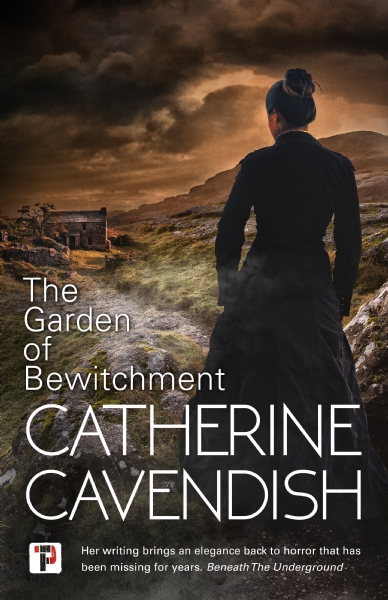
Catherine Cavendish: If we are honest, I think most of us look at the cover first and make an unconscious snap judgement about the content of the story based on that. I am lucky in that all my publishers (so far) have involved me quite heavily in the process. For The Haunting of Henderson Close and my upcoming novel, The Garden of Bewitchment, the publishers – Flame Tree Press – invited me to submit suggestions. I did so, fairly comprehensively as I always do, and the resulting covers are as near to my vision as I believe it is possible to be. I am delighted with them and feel they accurately reflect the content in each case. This also applies to my titles with Crossroad Press.
Meghan: What have you learned creating your books?
Catherine Cavendish: That you never stop learning and there is always room for improvement.
Meghan: What has been the hardest scene for you to write so far?
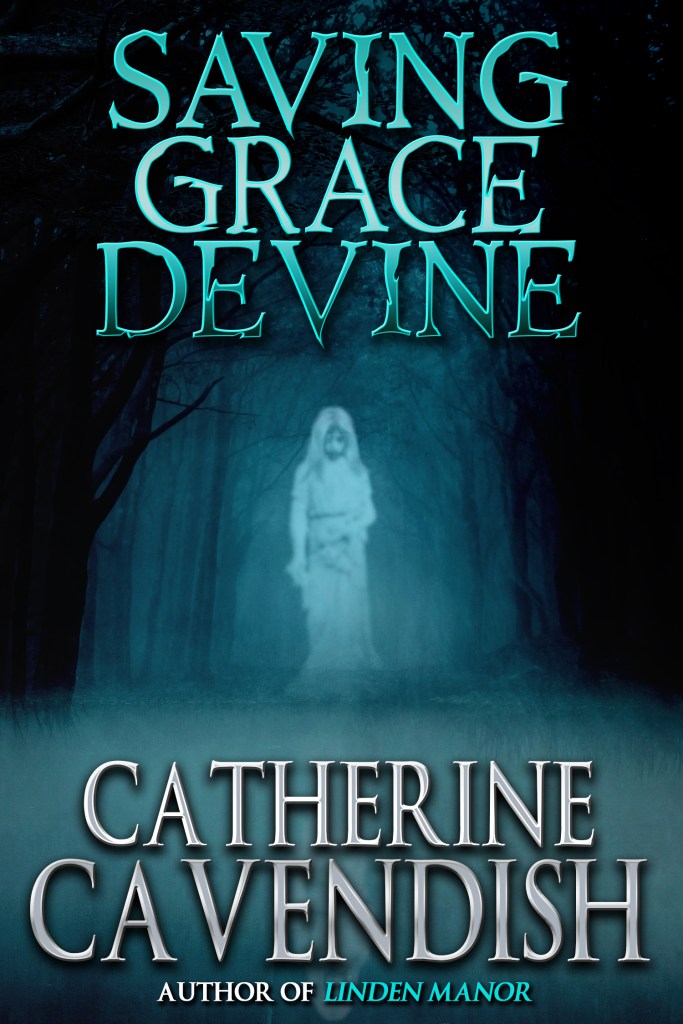
Catherine Cavendish: That has to be in my current work in progress because it involved a serious medical condition and surgery I actually lived through. While I was writing it, I felt myself back in the hospital, in pain, a bit scared and wondering how I was going to get through it. As far as my currently published work is concerned, the final scene in Saving Grace Devine reduced me to tears.
Meghan: What makes your books different from others out there in this genre?
Catherine Cavendish: I think you would have to ask my readers that one. I like to think maybe it’s the combination of gothic with supernatural and the twists I take at the end. I like to challenge!
Meghan: How important is the book title, how hard is it to choose the best one, and how did you choose yours (of course, with no spoilers)?
Catherine Cavendish: I think titles are critical. Whenever I come up with one, I always check it to see if there are any other books with the same title. If there are, I avoid it and think again. Of course, there is nothing to stop someone else coming up with the same title as yours, but I think it prevents possible confusion if you try and avoid one already in use.
Sometimes a title is the first thing that comes to me and, at other times, I really have to work at it, discarding three or four choices before finding the one that really fits the bill. One of the easiest was The Haunting of Henderson Close. I had picked the name of the Close after checking that no such place existed in Edinburgh and, as the novel was about an evil haunting, the rest came naturally.
Meghan: What makes you feel more fulfilled: Writing a novel or writing a short story?
Catherine Cavendish: In their own ways, both, but because of the length of time and energy expended on writing a novel, the time when you finally decide ‘that’s it’, is a greatly fulfilling one.
Meghan: Tell us a little bit about your books, your target audience, and what you would like readers to take away from your stories.
Catherine Cavendish: My take on horror is the jump-scare, something lurking in the shadows, the stuff of nightmares. I often set – at least part of – my stories in the past because I love history and exploring historical locations. Mine is the world of ghosts, demons, witches, devils and unquiet spirits, frequently with a Gothic flavour. I use folklore traditions that exist and ones I create myself. My target audience is anyone who enjoys a scary, creepy story, suspense and/or horror. When they have finished one of my stories, I hope readers have enjoyed the experience and want to read more
Meghan: Can you tell us about some of the deleted scenes/stuff that got left out of your work?
Catherine Cavendish: If a scene fails to move the story along, or has no relevance to what came before or will come after, out it goes. Once it’s gone, it’s gone and I don’t tend to think about it anymore.
Meghan: What is in your “trunk”?
Catherine Cavendish: I have a tin containing scraps of paper with notes on, or sometimes merely a line or two suggesting a plot for a short story, novel or novella. One came from a vivid dream I had which I can still remember around six years on. I was in a wood and came across an old timber hut. There was an exquisite and clearly expensive picture on the porch…and that’s all I’m telling you. I’ll write that story one day… maybe
Meghan: What can we expect from you in the future?
Catherine Cavendish: On February 10th, Flame Tree Press will be publishing The Garden of Bewitchment which is set in Bronte country – Haworth and its environs – in West Yorkshire, near where I grew up. This is a ghostly and Gothic tale involving twin sisters who are obsessed with the works of the Bronte sisters. Here’s the official blurb:
Don’t play the game
In 1893, Evelyn and Claire leave their home in a Yorkshire town for life in a rural retreat on their beloved moors. But when a strange toy garden mysteriously appears, a chain of increasingly terrifying events is unleashed. Neighbour Matthew Dixon befriends Evelyn, but seems to have more than one secret to hide. Then the horror really begins. The Garden of Bewitchment is all too real and something is threatening the lives and sanity of the women.
Evelyn no longer knows who – or what – to believe. And time is running out.
Meghan: Where can we find you? (Links to anywhere you’re okay with fans connecting with you.)
(I also have Instagram but I’m not particularly good at it! Camera-shy I guess.)
Meghan: Do you have any closing words for your fans or anything you’d like to say that we didn’t get to cover in this interview?
Catherine Cavendish: Thank you to everyone who has read or reads my work. I really appreciate your support. Long may it continue. Keep reading scary stories!
Cat first started writing when someone thrust a pencil into her hand. Unfortunately as she could neither read nor write properly at the time, none of her stories actually made much sense. However as she grew up, they gradually began to take form and, at the tender age of nine or ten, she sold her dolls’ house, and various other toys to buy her first typewriter. She hasn’t stopped bashing away at the keys ever since, although her keyboard of choice now belongs to her laptop.
The need to earn a living led to a varied career in sales, advertising and career guidance but Cat is now the full-time author of a number of supernatural, ghostly, haunted house and Gothic horror novels, novellas and short stories. These include (among others): The Haunting of Henderson Close, The Devil’s Serenade, and Saving Grace Devine.
Cat lives in Southport, in the U.K. with her longsuffering husband, and a black cat, who has never forgotten that her species was once worshipped in Egypt.
When not slaving over a hot computer, Cat enjoys wandering around Neolithic stone circles and visiting old haunted houses.
Ghosts have always walked there. Now they’re not alone…
In the depths of Edinburgh, an evil presence is released.
Hannah and her colleagues are tour guides who lead their visitors along the spooky, derelict Henderson Close, thrilling them with tales of spectres and murder. For Hannah it is her dream job, but not for long. Who is the mysterious figure that disappears around a corner? What is happening in the old print shop? And who is the little girl with no face?
The legends of Henderson Close are becoming all too real. The Auld De’il is out – and even the spirits are afraid.
Maddie had forgotten that cursed summer. Now she’s about to remember…
When Maddie Chambers inherits her Aunt Charlotte’s Gothic mansion, old memories stir of the long-forgotten summer she turned sixteen. She has barely moved in before a series of bizarre events drives her to question her sanity.
The strains of her aunt’s favorite song echo through the house, the roots of a faraway willow creep through the cellar, a child who cannot exist skips from room to room, and Maddie discovers Charlotte kept many deadly secrets.
Gradually, the barriers in her mind fall away, and Maddie begins to recall that summer when she looked into the face of evil. Now, the long dead builder of the house has unfinished business and an ancient demon is hungry. Soon it is not only Maddie’s life that is in danger, but her soul itself, as the ghosts of her past shed their cover of darkness.
When Alex Fletcher finds a painting of a drowned girl, she s unnerved. When the girl in the painting opens her eyes, she is terrified. And when the girl appears to her as an apparition and begs her for help, Alex can t refuse.
But as she digs further into Grace s past, she is embroiled in supernatural forces she cannot control, and a timeslip back to 1912 brings her face to face with the man who killed Grace and the demonic spirit of his long-dead mother. With such nightmarish forces stacked against her, Alex s options are few. Somehow she must save Grace, but to do so, she must pay an unimaginable price. “



 Meghan's House of Books