Halloween Extravaganza: INTERVIEW: Andrew Robertson

Meghan: Welcome back, Andrew! Itโ€™s been awhile since we sat down together. Whatโ€™s been going on since we last spoke?

Andrew Robertson: First, itโ€™s great to be back, especially on your fresh, new, updated blog!

Since the last time we spoke, the anthology I edited, Dark Rainbow: Queer Erotic Horror was released by Riverdale Avenue Books and landed a #1 spot on a few of Amazonโ€™s LGBTQ+ charts which was great to see. I also published a short story titled Her Royal Counsel in Colleen Andersonโ€™s Alice Unbound anthology from Exile Editions and placed my story Sick is the New Black in the Pink Triangle Rhapsody anthology from Lycan Valley Press. That one launches Winter 2019 and contains horror, sci-fi, fantasy, thriller, and pulp mystery stories written exclusively by gay men. I fell in love with the characters in Sick is the New Black and have started a book-length version to further explore the dark and fashionable social media cult that their lives revolve around.

Also, with the holidays right around the corner, readers can pick up O Unholy Night in Deathlehem: An Anthology of Holiday Horrors for Charity from Grinning Skull Press that was published earlier this year. I have a creepy little tale in there called Jasonโ€™s Ugly Christmas Sweater Party, and all proceeds from the book go to benefit The Elizabeth Glaser Pediatric AIDS Foundation.

Meghan: Who are you outside of writing?

Andrew Robertson: Thatโ€™s hard to answer. I feel like Iโ€™ve changed a lot in the past three years, but itโ€™s been more about returning to someone I used to be before I started looking for what was already there. Sometimes we think we need to โ€˜grow upโ€™ and develop a mature, adult identity by burying parts of ourselves that made us who we were in high school or university, but Iโ€™ve realized that those pieces werenโ€™t temporary. So I put on some black nail polish, sat down to write horror stories without caring what anyone else thought, and got tattoos of Siouxsie Sioux and Lydia Lunch. It all felt right.

I guess Iโ€™m a bit introspective – I like exploring ideas and art and love new (and scary) experiences most of all. It always surprises people how easily scared I get but I like it a lot. My partner Dinis refuses to go to haunted houses with me because I push him in first. But I donโ€™t even need the haunted house. I can even scare myself just by thinking. I was in a canoe on Lower Buckhorn Lake in Ontario and I envisioned a cold pale arm reaching out of the underwater reeds and that was it. I paddled for shore like an outboard motor.

Meghan: How do you feel about friends and close relatives reading your work?

Andrew Robertson: I think that one is tricky for anyone that doesnโ€™t write cozy thrillers. My very first piece of writing published in an anthology was called Not Just a Fuck, a hell of a title. Of course, I was really excited about it, especially because Margaret Atwood was in the same book, so I wanted to show my parents but my content was a bitโ€ฆ personal as you can imagine. I bit the bullet and showed them all the same. I figured they might as well get used to it because I have never been one to self-edit!

The other concern for many writers is your family or friends โ€˜seeingโ€™ themselves in the characters or situations you write about. Sometimes Iโ€™ll use friendโ€™s names in stories just to mess with them. That way, when they ask why โ€˜theirโ€™ character was killed off, you know that they actually read your work.

Meghan: Is being a writer a gift or a curse?

Andrew Robertson: I think being able to tell a story is a gift, and if it means something to a reader, that is a perfect gift. The curse is writing the story.

Meghan: Whatโ€™s the strangest thing you have ever had to research for your books?

Andrew Robertson: Iโ€™ve researched Sokushinbutsu, or the self-mummifying practice of certain Buddhist monks, for Miira in Group Hex Vol 1. They enter mummification while they are still alive which was so horrifying to me that I had to write about it. That was when I learned about Portuguese sailors selling Egyptian mummies to the Japanese to turn into a powder that was believed to have curative powers.

Iโ€™m also currently researching a lot of diseases that have obvious and visible symptoms for a WIP. That makes me feel pretty itchy.

Meghan: Are you an avid reader?

Andrew Robertson: I have a giant stack of books to get through, and I usually have a few on the go at the same time. Sometimes itโ€™s to try and grow or learn as a writer. For example, I will read a thriller to see how the author sets the pace. I really enjoy Shari Lapenaโ€™s work in that way. There are so many twists and turns that she stitches together, and we live in the same city so maybe one day I can tell her how much I enjoy her work in person!

Iโ€™ve just read Bedfellow by Jeremy C. Shipp and it was fantastic. The way he writes is so surreal you feel like you are losing your mind along with the family at the core of the tale, and the progression of the plot reveals a nefarious otherworldly gaslighting at its finest.

Iโ€™ve also recently finished Danger Slaterโ€™s I Will Rot Without You and the level of horrific imagination he displays while telling what is at its most basic level a love story with a total disregard for whether something needs to make sense is inspiring. I think itโ€™s important for a writer to stop asking if something could happen and just make it happen.

Meghan: Have you ever killed a main character?

Andrew Robertson: Maybe. Thatโ€™s all Iโ€™ll say.

Meghan: Do you enjoy making your characters suffer?

Andrew Robertson: As a huge fan of the Hellraiser films, my formative years were spent watching characters suffer. Isnโ€™t that the way itโ€™s supposed to be?

Meghan: Where can we find you?

Andrew Robertson: Iโ€™m on Facebook and twitter for all your stalking needs.

Meghan: Do you have any closing words for your fans or anything youโ€™d like to say that we didnโ€™t get to cover in this interview or the last?

Andrew Robertson: I just want to thank you for your passion in keeping this blog going, for supporting indie authors, and for helping spread the word about genre books. A few years ago I never would have thought that I would have work out by publishers I admire, alongside other writers I read and love, or that anyone would want to interview me never mind twice, so thanks for being a part of this crazy ride Meghan!

Meghan: Aww shucks! Thanks for all that! And you are truly welcome. It’s been wonderful meeting you and every other cool author I’ve met along the way. It more than makes up for the handful who have been… dramatic (and not in a good way) haha.

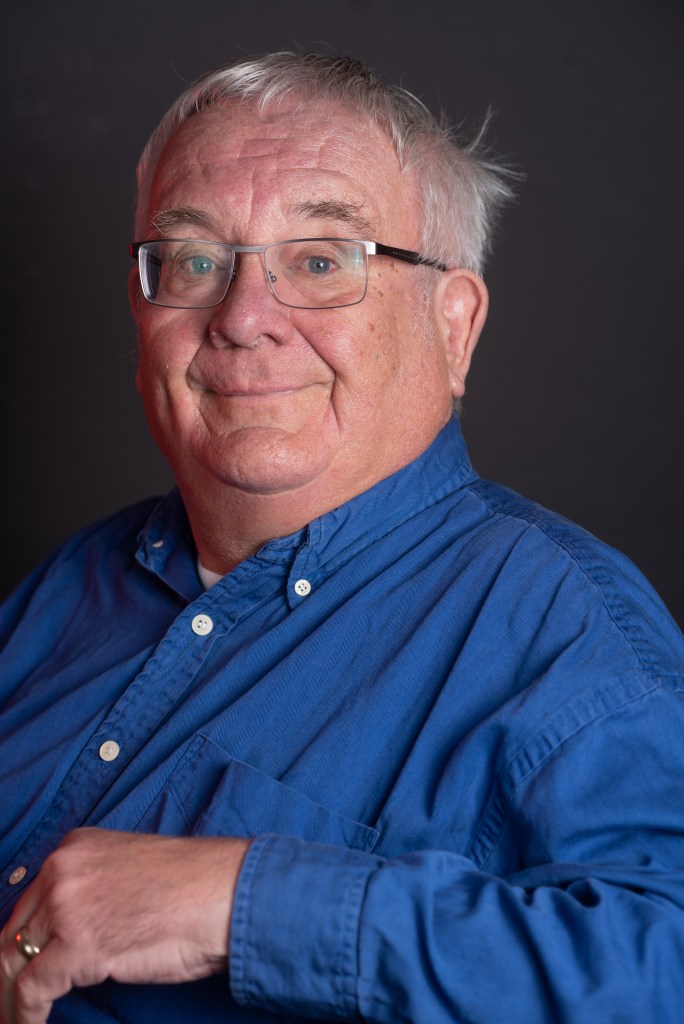
Andrew Robertson is an award-winning queer writer and journalist. He has published articles in Xtra!, fab magazine, ICON, Gasoline, Samaritan Magazine, neksis, and Shameless. His fiction has appeared in literary magazines and quarterlies such as Stitched Smile Publications Magazine Vol 1, Deadman’s Tome, Undertow, and katalogue and in anthologies including Alice Unbound: Beyond Wonderland, A Tribute Anthology to Deadworld, Group Hex Vol. 1 and Vol. 2, and Pink Triangle Rhapsody from Lycan Valley Press. He is also the editor of Dark Rainbow: Queer Erotic Horror, a bestselling anthology from Riverdale Avenue Books. A lifelong fan of horror, he is the founder and co-host of The Great Lakes Horror Company Podcast, official podcast to Library of the Damned, and a member of the Horror Writer’s Association.

Pink Triangle Rhapsody – Coming Winter 2019

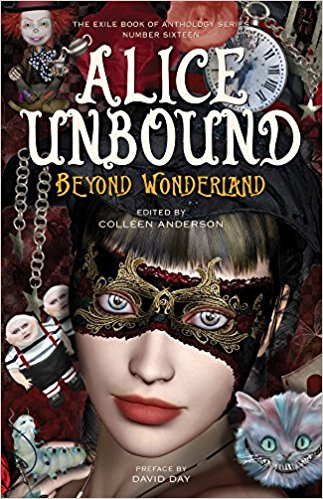
Alice Unbound: Beyond Wonderland

Lewis Carroll explored childlike wonder and the bewildering realm of adult rules and status, which clashed in bizarre ways. And although it seems we all know something about Alice and Wonderland, weโ€”like Alice herself upon her first reading of Jabberwockyโ€”find โ€œIt fills my head with ideas, but I donโ€™t know what they are.โ€ So as each new generation falls under Carrollโ€™s word spells, each in turn must attempt to understand what Alice and Wonderland might mean in the context of their world and in their time.

This collection of twenty-first century speculative fiction stories is inspired by Aliceโ€™s Adventures in Wonderland, Alice Through the Looking Glass, The Hunting of the Snark, and to some degree, aspects of the life of the author, Charles Dodgson, and the real-life Alice (Liddell).

Enjoy our wild ride down into and back up out of the rabbit hole!

Preface by David Day

Authors: Patrick Bollivar, Mark Charke, Christine Daigle, Robert Dawson, Linda DeMeulemeester, Pat Flewwelling, Geoff Gander and Fiona Plunkett, Cait Gordon, Costi Gurgu, Kate Heartfield, Elizabeth Hosang, Nicole Iversen, J.Y.T. Kennedy, Danica Lorer, Catherine MacLeod, Bruce Meyer, Dominik Parisien, Alexandra Renwick, Andrew Robertson, Lisa Smedman, Sara C. Walker, James Wood

Dark Rainbow: Queer Erotic Horror

There has always been a special relationship between queer culture and horror. Horror is a genre about the โ€˜otherโ€™ and being a part of queer culture often comes with feelings of โ€˜othernessโ€™ or being an outsider based on your desiresโ€ฆmaybe you see a freak onscreen during a midnight madness screening and you think to yourself, Well, I feel like a freak too. Maybe the monster is just misunderstoodโ€ฆwe all hunger for something, right?Dark Rainbow: Queer Erotic Horror is the first volume of a short fiction anthology series edited by award-wining queer writer and editor Andrew Robertson. Published under Riverdale Avenue Booksโ€™ Afraid imprint, it features many members of the Horror Writers Association along with writers from all over the world. Dark Rainbow contains 15 tales of dark appetites, hidden fantasies, sex and slashers including new work from Angel Leigh McCoy, Jeff C. Stevenson, Sรจphera Girรณn, Julianne Snow, Derek Clendening, Spinster Eskie, Lindsay King-Miller and many more.

O Unholy Night in Deathlehem

Said the little child to his mother dear, 
do you hear what I hear 
Shrieking through the night, father dear, 
And do you see what I see 
A cry, a scream, blood coloring the snow 
And a laugh as evil as sin 

Well, folks, looks like we’re back in Deathlehem, whereโ€ฆ
Santa’s gift turns a mindless horde of bargain-hungry shoppers intoโ€ฆwellโ€ฆ a horde of hungry shoppersโ€ฆ 
defective toys aren’t just dangerous; they’re deadlyโ€ฆ 
holiday ornaments prove to be absolutely captivatingโ€”permanentlyโ€ฆ 
those ugly Christmas sweaters are to die forโ€ฆ 

Twenty-five more tales of holiday horror to benefit The Elizabeth Glaser Pediatric AIDS Foundation.

Halloween Extravaganza: INTERVIEW: Scott Carruba

I met Scott Carruba at a con, and was so floored by the amazingness that is Scott (and by how good looking he was) that I said about a billion times how beautiful his covers were. Yeah… it was awkward. Thankfully he was too “guy” to let on that he noticed… or maybe he just didn’t notice at all. Since then, I’ve had the opportunity to read one of his books – TWICE – and have several interesting conversations with the man. Definitely a talented guy, so make sure you reach out to him and tell him hi. Oh, and buy his books.


Meghan: Itโ€™s been awhile since we sat down together, Scott. Whatโ€™s been going on since we last spoke?

Scott Carruba: More writing, but unfortunately, no con appearances. I have done some traveling, but it wasnโ€™t related to writing. The third and final book of my urban fantasy series was just published, so now I can put that behind me and work on something completely different.

Meghan: Who are you outside of writing?

Scott Carruba: I am still me. I look at my writing as part of my creative expression, and that very rarely stops completely. I may not always be sitting in front of the computer, writing, but there is nearly always some sort of creating going on in my head. Other than that, Iโ€™d say family is the most important thing to me. I am fortunate to have a great, close family, and we all get along very well.

Meghan: How do you feel about friends and close relatives reading your work?

Scott Carruba: They have, and I wish more of them would. I know that some close family members (mainly my mother) would be shocked at some parts, but I still would like them to read my work.

Meghan: Is being a writer a gift or a curse?

Scott Carruba: Itโ€™s a gift. I presume some would call it a curse, because it can be difficult, and you sometimes feel like a slave being tossed about on fickle tides. I feel like it enriches my life, and I frankly think things would be very boring without it.

Meghan: How has your environment and upbringing colored your writing?

Scott Carruba: There is no escaping it. The life we live shapes who and how we are as writers. My parents were certainly not an impediment to my writing. They even encouraged it to some extent. They never thought I could become rich & famous off it, because to them, the arts were something you did as a hobby, not a โ€˜realโ€™ job. So far, they were right about that, but I feel there was an odd mix of encouragement and marginalizing, which did result in some stumbles and false starts.

Meghan: Whatโ€™s the strangest thing you have ever had to research for your books?

Scott Carruba: How windows open in Europe. Oh, I suppose my research into alleged actual schools run by the Devil was fairly strange.

Meghan: Which do you find the hardest to write: the beginning, the middle, or the end?

Scott Carruba: Definitely the middle. I love the beginning. I have so many unfinished works, because I revel in the blank page and getting started. I also generally have the end already figured. Itโ€™s connecting those dots that provides the biggest challenge to me.

Meghan: Do you outline? Do you start with characters or plot? Do you just sit down and start writing? What works best for you?

Scott Carruba: I do all of those. I prefer to have an outline, sometimes even a treatment. I generally jot down a โ€˜cast of charactersโ€™, and sometimes I begin the outline after the work. It helps me stay focused.

Meghan: What do you do when characters donโ€™t follow the outline/plan?

Scott Carruba: That doesnโ€™t happen to me very often. Iโ€™ve read a lot of other writers talking about how the characters have minds of their own, but it doesnโ€™t seem to happen to much to me. If it does, I make modifications as necessary, but itโ€™s never been a huge deal for me.

Meghan: What do you do to motivate yourself to sit down and write?

Scott Carruba: That can be tough. I try to stick with a routine, because that works for me. There are times that are for writing. After a while, it becomes habit, and I just do it. When I really need motivation, I can listen to certain kinds of music, or even watch certain sorts of shows to receive motivation. I also sometimes just go back and read over what Iโ€™ve written, then carry on.

Meghan: Are you an avid reader?

Scott Carruba: Yes. I was an avid reader before I became a writer. I will always be in love with reading and writing.

Meghan: What kind of books do you absolutely love to read?

Scott Carruba: Good ones. Seriously, though, I enjoy complex books that allow a story to be told in the time it needs. I like depth and density.

Meghan: How do you feel about movies based on books?

Scott Carruba: I take them one at a time. I donโ€™t feel any particular negativity toward them in general. I also donโ€™t necessarily judge them poorly if they deviate โ€˜too muchโ€™ from the source material. I generally view them both in the context of their original source and how they stand as their own vehicle.

Meghan: Have you ever killed a main character?

Scott Carruba: Not yet.

Meghan: Do you enjoy making your characters suffer?

Scott Carruba: I do not enjoy that. I have had characters go through rough times, and it is somewhat difficult and painful for me to write. I am an empathic person, so I tend to want to avoid extremely troubling events. I force myself to push them through terrible experiences, but I donโ€™t enjoy it.

Meghan: Whatโ€™s the weirdest character concept that youโ€™ve ever come up with?

Scott Carruba: My characters are not too weird, or I donโ€™t think they are. At least not in concept. No talking shoes or roaches. I canโ€™t write like Burroughs.

Meghan: Whatโ€™s the best piece of feedback youโ€™ve ever received? Whatโ€™s the worst?

Scott Carruba: Iโ€™ve received a lot of good feedback. Itโ€™s hard to tell which was โ€˜bestโ€™. My publisher has helped me to refine my writing in ways I never would have alone. As far as โ€˜worstโ€™, my Rhetoric and Composition professor told me I was โ€œtooโ€ creative.

Meghan: What do your fans mean to you?

Scott Carruba: My fans mean a sort of completion of the circle that gives a satisfaction like no other. I would write even if I never got published. It is a drive in me I feel I cannot deny. Having someone partake of and enjoy my work to that extent fills me. Itโ€™s amazing. I thank each and every one of them from the bottom of my heart.

Meghan: If you could steal one character from another author and make them yours, who would it be and why?

Scott Carruba: Probably Hannibal Lecter. Such a fascinating character, and I find it immensely interesting how a cultured monster can capture such popularity and become a dark protagonist.

Meghan: If you could write the next book in a series, which one would it be, and what would you make the book about?

Scott Carruba: This is a tough one for me, and a great question! I think Iโ€™d choose Silent Hill. Iโ€™ve never even read any of the books, but I find the world so enthralling and deeply creepy. I love psychological horror, and Iโ€™d love the avenues of exploration afforded to me if I were to pen a book in that series.

Meghan: If you could write a collaboration with another author, who would it be and what would you write about?

Scott Carruba: Probably some sort of dark, gothic, twisted, occult something with Carmilla Voiez. And itโ€™d need to have vampires in it. And demons. Maybe demon-vampires?

Meghan: What can we expect from you in the future?

Scott Carruba: I am currently working on a book about an extraterrestrial invasion that deals with how we perceive reality, memories, ourselves, and what the future may hold for us. Iโ€™ve also got two novels about vampires in the works. So, yeah, vampires again.

Meghan: Where can we find you?

Scott Carruba:

Website ** Amazon ** Goodreads ** BookBub
Facebook ** Twitter ** Mewe

Meghan: Do you have any closing words for your fans or anything youโ€™d like to say that we didnโ€™t get to cover in this interview or the last?

Scott Carruba: This has been a very thorough and fun interview. I hope others enjoy reading it. Thanks!

Meghan: Oh no no no. Thank YOU, Scott, for stopping by today. And if you thought this one was good, wait until you get to round three.

Born in Houston, Texas into the temporary care of a bevy of nuns before being delivered to his adopted parents, Scott discovered creative writing at a very young age when asked to write a newspaper from another planet. This exercise awakened a seemingly endless drive, and now, many short stories, poems, plays, and novels (both finished and unfinished) later, his dark urban fantasy Butterfly series has been published.

The seeds for this tale began with dreams, as many often do, before being fine-tuned with a whimsical notion and the very serious input of a dear friend. Before long, the story took on a life of its own and has now become the first book in the series.

Having lived his whole life in the same state, Scott attended the University of Texas at Austin, achieving a degree in philosophy before returning to the Houston area to be closer to his family and friends. During this time, he wrote more and even branched out into directing and performance art, though creative writing remains his love.

Butterfly 1: Dance of the Butterfly

A modern dark urban fantasy, telling of two powerful families who uphold a secret duty to protect humanity from a threat it doesnโ€™t know exists. Though sharing a common enemy, the two families form a long-standing rivalry due to their methods and ultimate goals. Forces are coalescing in a prominent Central European city- criminal sex-trafficking, a serial murderer with a savage bent, and other, less tangible influences. Within a prestigious, private university, Lilja, a young librarian charged with protecting a very special book, finds herself suddenly ensconced in this dark, strange world. Originally from Finland, she has her own reason for why she left her home, but she finds the city to be anything but a haven from dangers and secrets. 

Butterfly 2: Sword of the Butterfly

The tale continues in Sword of the Butterfly, book two of the series, as Lilja and Skothiam continue to fight demons within and without. The infernal forces make a grand play, hoping to stab the world in its very heart. Casualties mount as further tensions rise in the City, threatening the vigilante with a loss of freedom and life. Children become victims of a madman’s design while the hunt is on for a powerful creature wreaking havoc across parts of the U.S. Lilja begins to question herself and her place in Skothiam’s life even as the very treasure they must protect comes under danger.

Butterfly 3: Soul of the Butterfly

The third Book awaits. The last of them. All holding promises of untold power. Skothiam and Lilja continue their journey as they follow the trail to places unimagined. Strange forces lurk, biding for the moment to strike and exact price. Unexpected allies arise even as others seek to disentangle from the web. Who will gain and who will lose? What shadow waits, eager to consume them all? Find out in the conclusion of the Butterfly trilogy.

Halloween Extravaganza: INTERVIEW: Somer Canon

Meghan: Itโ€™s been awhile since we sat down together, Somer. Whatโ€™s been going on since we last spoke?

Somer Canon: Oh boy, SO MUCH! Iโ€™ve had the release of my book, A Fresh Start, from Crossroads Press as well as a few anthologies. I also embarked on a co-writing journey with my friend and talented author, Wesley Southard. Our work is still in itโ€™s nascent form, but itโ€™s shaping up to be something pretty amazing.

Meghan: Who are you outside of writing?

Somer Canon: Suburban wife and mother of two sons. Minivan driving menace to aggressive drivers in BMWs and grill master extraordinaire.

Meghan: How do you feel about friends and close relatives reading your work?

Somer Canon: My two childhood best friends are NOT horror fans. Not even a little bit. Theyโ€™ve read one of my works and were kind enough to ask me what was wrong with me, but I am very understanding of their abstaining from reading my stuff. I canโ€™t really help it if my family reads my works and I try not to think about it too much for fear of censoring myself, to tell the truth. If I offend, Iโ€™m happy if they donโ€™t tell me about it.

Meghan: Is being a writer a gift or a curse?

Somer Canon: Itโ€™s a mixed bag, honestly. I think creatives are some of the most empathetic and wonderful people to know and I love being in their midst. By knowing them, Iโ€™ve learned to embrace the parts of myself, my creative self, that have for so long been hidden by me for fear of them being weird or off-putting by members of polite society, and not just because I am a horror writer, although that comes with its own cabinet of weird. We notice things some other people donโ€™t, weโ€™re sensitive and vain, and we tend to be frightened of putting to paper parts of the lush and colorful wilderness that is our imaginations. That place in our heads is where we do most of our living and sharing it is difficult, and yet most of us, myself included, are compelled to put it down and get it out. Itโ€™s freeing and wonderful, but also terrifying and loathsome.

Meghan: How has your environment and upbringing colored your writing?

Somer Canon: Well, they certainly color ME, so they would have to bleed into the work that I wring out of myself, you know? My upbringing wasnโ€™t a happy one, so I tend to not write child protagonists because I hated so much being a childโ€ฆI donโ€™t want to revisit that. Things that anger me make it into the books, things that scare and hurt me make it in. My weird preoccupation with snack cakes made it into my book Killer Chronicles! The things in my past and in my surroundings canโ€™t help but be part of the creative process and I think itโ€™s good for the final product. It makes it more relatable, I think.

Meghan: Whatโ€™s the strangest thing you have ever had to research for your books?

Somer Canon: Crime scene photos. Iโ€™ve had to describe some horrible things and in order to keep it grounded, or at least semi-grounded in reality, I had to get a good look at it. Iโ€™ve lost sleep over a few of those.

Meghan: Which do you find the hardest to write: the beginning, the middle, or the end?

Somer Canon: Endings are HARD. Not to say that beginnings and middles are easy (theyโ€™re SO not) but endings have a lot of responsibility towards the overall tone of the book. Where do you end it? How do you end it? What questions do you answer or leave hanging? How many of your readers do you want sending you angry emails? I consider books to be like thrill rides and theyโ€™re absolutely more about the journey than the destination, but if the destination is ill-fitted and all wrong, it certainly has influence over your impression of the overall experience.

Meghan: Do you outline?

Somer Canon: I might do a page-long idea of the overall story sometimes, but mostly I pants it.

Meghan: Do you start with characters or plot?

Somer Canon: Plot.

Meghan: Do you just sit down and start writing?

Somer Canon: It might look like that from the outside, I suppose, but my mind is totally bent on that current work in progress. Every waking moment is spent thinking on it.

Meghan: What works best for you?

Somer Canon: I need to do things that are quieting. By that I mean, my hands are busy, but my mind is in this really great, quiet, almost zen place and I get my best ideas when Iโ€™m quieting. I bake, work out, do yard work, or clean my kitchen cabinets. It helps a lot.

Meghan: What do you do when characters donโ€™t follow the outline/plan?

Somer Canon: My characters start off as cardboard cutouts of the more well-rounded people they become in the process of writing the story. If they want to go off script, Iโ€™m okay with it.

Meghan: What do you do to motivate yourself to sit down and write?

Somer Canon: I want this. Iโ€™ve always wanted this. Hard work has never scared me off. Someone once said to me, โ€œJust sit down and write the damn thing.โ€ Reciting that like a mantra actually helps me a lot!

Meghan: Are you an avid reader?

Somer Canon: I try to be, I really do. I donโ€™t read as much as Iโ€™d like.

Meghan: What kind of books do you absolutely love to read?

Somer Canon: I love haunted house books. Iโ€™ve never passed on one. I also love a good biography.

Meghan: How do you feel about movies based on books?

Somer Canon: Iโ€™m always dubious about it because so many movies change parts of the original story thatโ€ฆ WHY. There was no need to change that, why did you do that? I watch plenty of movies based on books, but Iโ€™m usually left cold.

Meghan: Have you ever killed a main character?

Somer Canon: Yes.

Meghan: Do you enjoy making your characters suffer?

Somer Canon: Itโ€™s not that I get joy from it. There is something to learn from pain and thereโ€™s an opportunity to grow or learn something about yourself if you make it out of the suffering intact. It has to happen, but I donโ€™t necessarily love it.

Meghan: Whatโ€™s the weirdest character concept that youโ€™ve ever come up with?

Somer Canon: I have my idea book where I jot down little ideas for stories or characters. I used to keep it by my bed so if I woke up with a thought I could jot it down. I stopped keeping it there after I found an entry with only two words and, for the life of me, I have no idea what I was thinking. Grandma Boobie is the entry. I justโ€ฆ HUH?

Meghan: Whatโ€™s the best piece of feedback youโ€™ve ever received?

Somer Canon: Iโ€™ve been really lucky to work with editors that have helped me catch some annoying habits in my writing. I canโ€™t imagine how tedious I must be to them. Whatโ€™s the worst? I once had a fellow author tell me that Iโ€™ll never again hit the high of the experience of signing my first contract and it was all downhill from there. I disagree with that. Big time. Every time someone wants to publish one of my tales, every short story acceptance, every invite to do a blog tour or a conventionโ€ฆ it all means so much to me and I let myself be humble and flabbergasted by all of it. Iโ€™m living my dream and I donโ€™t want to let myself become numb to it.

Meghan: What do your fans mean to you?

Somer Canon: We have to hide how demoralizing this writing thing can be. Rejections happen, things go quiet and youโ€™re forgotten, self-loathing is the grease that keeps my writing engine going and Iโ€™m very hard on myself. And then, in those darkest times, someone will message me and tell me that they liked my story, or send me an email asking when my next book will come out. I can float on those tiny nuggets of encouragement for a week at least. My fans startle me and lift me up and I really donโ€™t know if I could handle the drudgeries without them.

Meghan: If you could steal one character from another author and make them yours, who would it be and why?

Somer Canon: I would love Larry Underwood, from Stephen Kingโ€™s The Stand. Larry is such a mess and Iโ€™d like to play with him in a timeline where I can continue his storyline and Captain Trips never happens. Heโ€™s a victim of good intentions swallowed by pride and vanity, until everything goes to hell and he has to lead with his better side. His better side is full of mistakes, but it perseveres.

Meghan: If you could write the next book in a series, which one would it be, and what would you make the book about?

Somer Canon: Iโ€™d like to write another Southern Vampire Mystery book (True Blood was based on them). I love the character of Sookie Stackhouse as she was in the books (donโ€™t make me talk about the showโ€ฆ I get loud) and I feel that Charlaine Harris got tired of writing in that world, which I understand. But as a fan I would geek out so hard.

Meghan: If you could write a collaboration with another author, who would it be and what would you write about?

Somer Canon: I AM writing a collaboration with someone, the previously mentioned Wesley Southard! But fantasy-wise? I think it would be cool to write with one of my high-minded, intelligent friends like Mary SanGiovanni or Catherine Cavendish. Theyโ€™re so much smarter and more eloquent than I am and it would be a real experience to live in their process.

Meghan: What can we expect from you in the future?

Somer Canon: Iโ€™m not stopping! Iโ€™m working on a novel right now that will be my homage to both Clive Barker and Tobe Hooper! After that, who knows?

Meghan: Where can we find you?

Somer Canon: Iโ€™m on Twitter and Iโ€™m on Instagram and I have a website.

Meghan: Do you have any closing words for your fans or anything youโ€™d like to say that we didnโ€™t get to cover in this interview or the last?

Somer Canon: Thank you to anyone who has given any of my words even a cursory glance. Itโ€™s easy to feel lonely and alone and to every person who has ever interacted with me in even the smallest way, thank you so very much. And thank you, Meghan’s House of Books, for having me again! This interview was a doozy!

Somer Canon is a minivan revving suburban mother who avoids her neighbors for fear of being found out as a weirdo. When sheโ€™s not peering out of her windows, sheโ€™s consuming books, movies, and video games that sate her need for blood, gore, and things that disturb her mother.  

A Fresh Start

Still hurting from her divorce, Melissa Caan makes a drastic life change for herself and her two young children by moving them out to a rural home.But the country life came with some extras that she wasn’t counting on. Doors are slamming, she and her children are violently attacked by unseen hands, and her elderly neighbor doesn’t like to talk about the murders that happened in the strangely named hollow all those years ago.Ghost hunters, witches, and a sassy cancer survivor come together to help Melissa fight for the safety of her children and herself.All she wanted was a fresh start, will she get it?

The Hag Witch of Tripp Creek

A NEW HOME

Dawna Temple let herself be moved from the familiarity of Pittsburgh to the wilds of West Virginia, all so her mentally exhausted husband, John, could heal from a breakdown. Struggling with the abrupt change of location, Dawna finds a friend in her neighbor, Suzanne Miller, known to the locals as The Hag Witch of Tripp Creek.

A NEW FRIEND

Dismissing it as hillbilly superstition, Dawna can’t believe the things she hears about her funny and empathetic friend. Suzanne has secretsโ€”dark secretsโ€”and eventually she reveals the truth behind the rumors that earned her the wicked nickname decades earlier.

OLD WOUNDS

Now in possession of the truth, Dawna has conflicting emotions about Suzanneโ€™s past deeds, but when her husband’s well-being takes a downturn, she finds there is no one else to turn to. Will she shun her friend as others have done before? โ€ฆor can she accept that an act of evil is sometimes necessary for the greater good?

Halloween Extravaganza: INTERVIEW: Andrew Freudenberg

Meghan: Hi, Andrew! Thanks for joining us today. Let’s start out with something easy. Tell us a little bit about yourself.

Andrew Freudenberg: I live in the West Country in England, with my Ninja wife and three sons. I have a German name because my Grandparents were German, I was born in France, but Iโ€™m British!

Meghan: What are five things most people donโ€™t know about you?

Andrew Freudenberg:

  • I used to own a techno/trance record label, releasing my own and other’s music.
  • I have a degree in Information Technology and Philosophy.
  • I once DJ’d in the New State Circus building in Moscow.
  • I grew up on a fruit farm.
  • I have interviewed Anthrax, Celtic Frost, and Savatage.

Meghan: What is the first book you remember reading?

Andrew Freudenberg: Probably something by Richard Scarry. According to my mother, one of the first phrases I ever used, repeatedly, was โ€˜read a bookโ€™.

Meghan: What are you reading now?

Andrew Freudenberg: I always have a few things on the go. I just finished Necroscope by Brian Lumley, a proper old school horror. As well as a pile of books that I have to read as a juror for the BFS awards, Iโ€™m also just starting Laura Mauroโ€™s new collection, finishing off Penny Jonesโ€™ mini collection and have probably half a dozen other anthologies on the go as well. Iโ€™m also a big comic reader and have nearly finished ploughing through the World War Hulk Omnibus.

Meghan: Whatโ€™s a book you really enjoyed that others wouldnโ€™t expect you to have liked?

Andrew Freudenberg: Great Expectations by Charles Dickens.

Meghan: What made you decide you want to write? When did you begin writing?

Andrew Freudenberg: I think it was probably a love of reading. Iโ€™ve always written, from when I was very small. Itโ€™s only in the last decade that Iโ€™ve gotten a little more focused on actually getting some fiction published.

Meghan: Do you have a special place you like to write?

Andrew Freudenberg: Not really. Anywhere quiet preferably.

Meghan: Do you have any quirks or processes that you go through when you write?

Andrew Freudenberg: No. Iโ€™m disgustingly disorganised, and easily distracted, so attempting to focus is really my top priority!

Meghan: Is there anything about writing that you find most challenging?

Andrew Freudenberg: See above! Focusing on one thing and finding the time are really the basic challenge.

Meghan: Whatโ€™s the most satisfying thing youโ€™ve written so far?

Andrew Freudenberg: Iโ€™m not sure that I could name any one thing. Crossing the finish line is always immensely satisfying, and I hope that the best is yet to come!

Meghan: What books have most inspired you? Who are some authors that have inspired your writing style?

Andrew Freudenberg: Thatโ€™s a very difficult question. I think of authors that I love to read, rather than necessarily inspire me, although I suppose everything that I read is in some way subconsciously inspirational. King, Herbert, and Barker were the first real horror writers that I dived into when I was a teen, and I was also reading Clarke, Heinlein, and Asimov in the SF world. I hope my writing style is my own. I havenโ€™t set out to copy anyone else, and I think writers tend to be a melting pot of a multitude of otherโ€™s styles, mixed in with their own personality and experience. If you read my collection, youโ€™ll see that I like to write everything from in your face pulp, to more introspective pieces.

Meghan: What do you think makes a good story?

Andrew Freudenberg: I think it all starts with a writerโ€™s voice and how it translates from the page. Their rhythm, vocabulary and style need to be compatible with the reader. From there it opens up into a multitude of things, an interesting setting, an intriguing premise and characters that you enjoy โ€˜watchingโ€™.

Meghan: What does it take for you to love a character? How do you utilize that when creating your characters?

Andrew Freudenberg: As a writer, they have to be fun to write. As a reader, they have to be alive. I think my characters emerge from the particular hell that Iโ€™m usually putting them through. Itโ€™s a fairly natural process for me, and there usually doesnโ€™t feel like anyone else would fit the bill for that particular scenario.

Meghan: Which of all your characters, do you think is the most like you?

Andrew Freudenberg: I think that thereโ€™s usually at least a sliver of the writer underlying most characters. Iโ€™m not sure that thereโ€™s one that is noticeably more like me than the others, but with a lot of the stories in my collection, the aspect of me that is a parent seems to have forced its way through.

Meghan: Are you turned off by a bad cover? To what degree were you involved in creating your book covers?

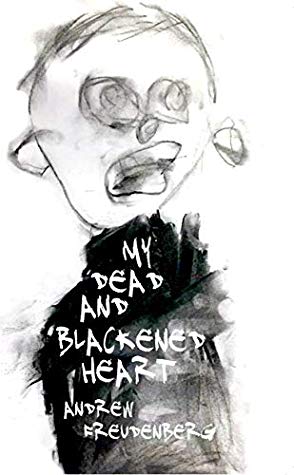
Andrew Freudenberg: A bad cover is definitely off-putting. A lot of my stories are in anthologies, and I have no say in those. Some have been quite bad, but thankfully of late, theyโ€™ve been excellent. I worked closely with my publisher on the cover for My Dead and Blackened Heart, and in fact ended up using some art created by my youngest son. I think it is quite striking.

Meghan: What have you learned creating your books?

Andrew Freudenberg: That itโ€™s damn hard work!

Meghan: What has been the hardest scene for you to write so far?

Andrew Freudenberg: My characters go to some very dark places, but Iโ€™m strange in that the worse the situation, the more I enjoy writing it. I like to get grim. I think I may be lacking some kind of filter that many people have. I donโ€™t feel any need to hold anything back.

Meghan: What makes your books different from others out there in this genre?

Andrew Freudenberg: As I mentioned earlier, I think it comes down to voice. Hopefully I write like myself, and that goes a long way to differentiating me from other writers.

Meghan: How important is the book title, how hard is it to choose the best one, and how did you choose yours?

Andrew Freudenberg: I think its reasonably important and extremely difficult to settle on one. My Dead and Blackened Heart was a story that I wrote about a devastated vampire, and I think it sums up the tone of my book very well. Also, no spoilers, hearts pop up here and there throughout the collection. (The actual story My Dead and Blackened Heart is included in the hardback version of the collection).

Meghan: What makes you feel more fulfilled: Writing a novel or writing a short story?

Andrew Freudenberg: As yet, I havenโ€™t had any novels published. I think signing off on a novel would inevitably be more fulfilling, but the suffering immeasurably greater!

Meghan: Tell us a little bit about your books, your target audience, and what you wold like readers to take away from your stories?

Andrew Freudenberg: With horror, I want to leave the reader emotionally marked. I hope that when they finish one of my short stories they have to pause for breath, shake their head and go back to read the last paragraph again, just in case it wasnโ€™t as grim as they thought it was. You should feel a different mental state by the end of the tale. As far as target audience goes, just anyone who enjoys the genre or, hopefully, think that they donโ€™t.

Meghan: What is in your trunk?

Andrew Freudenberg: I have all sorts of ongoing works in process. Did I mention that I struggle to focus? Numerous novellas and shorts edging towards completion and novel ideas bubbling under. Iโ€™d also like to get back to making music again, and Iโ€™m very interested in the idea of making a film.

Meghan: What can we expect from you in the future?

Andrew Freudenberg: Longer works and more of the same, different angles and flavours, just a variety of hopefully interesting stories. Iโ€™d like to get back into producing music and Iโ€™m giving films the side-eye.

Meghan: Where can we find you?

Andrew Freudenberg: Facebook ** Twitter

Meghan: Do you have any closing words for your fans or anything youโ€™d like to say that we didnโ€™t get to cover in this interview?

Andrew Freudenberg: Thanks for reading. Thatโ€™s the greatest joy for me, that someone enjoyed something that I wrote. Let me know what you thought, I love to hear from readers.

Andrew Freudenberg is an English author with a German name. He was born in France.

Despite always having a strong love for the written word, he spent a large part of his 20’s dabbling in the global techno scene. He loves heavy metal.

A number of his stories have appeared in anthologies. My Dead & Blackened Heart will be his first solo collection.

He currently lives in the South West of England with his Ninja wife and three sons.

My Dead & Blackened Heart

14 stories of terror, dread and fatherhood. 

From the isolation of space, to the ever-watchful eyes in a darkening wood, Andrew Freudenberg takes us on a journey exploring the themes of friendship, fatherhood and loss, as we pick through the remains of his dead and blackened heart. 

โ€œOverhead the lighting operator switched everything to green, just as two enormous mortars fired shredded silver paper in a plume over the crowd. Sarge blinked, attempting to clear the salt lacing his eyes. 

For a moment he thought he saw paratroopers descending from above, but shook off the hallucination and turned his attention to the stalls. A group of youngsters were caught by Docโ€™s spotlight for a split second, their eyes wide with wonderment and a touch of fear. 

It was enough to send Sarge back to the jungle, back to the children in the village. Their eyes had been the same, gazing up at him intently, even after he had slaughtered them with his bayonet and laid them all out in a row. At the time it had seemed the kind thing to do, a mercy killing of sorts. After all they had executed everyone else, so who would have looked after them? 

There was something complete about leaving them lying peacefully amongst the burning buildings. 

It had been a Zen moment.โ€ 

Featuring the stories: Something Akin To Despair, A Bitter Parliament, Charlieโ€™s Turn, Pater in Tenebris, Milkshake, Nose to the Window, The Cardiac Ordeal, Meat Sweets, Scorch, The Teppenyaki of Truth, Before The Meat Time, Hope Eternal, The Last Patrol & Beyond The Book. 

Halloween Extravaganza: INTERVIEW: Ramsey Campbell

Meghan: Hi, Ramsey! It’s great to have you here today. Thank you for agreeing to take part in my sixth annual Halloween extravaganza. Tell us a little bit about yourself.

Ramsey Campbell: I write horror, and have for more than half a century. For me writing is a compulsion, driven by the pressure of untold tales and unwritten prose. Jenny is my first reader, partly because sheโ€™s among the few who can read my handwriting. Sheโ€™s also the best part of me, and weโ€™ve been together for nearly fifty years.

Meghan: What are five things most people donโ€™t know about you?

Ramsey Campbell: If you ask me my favourite composer Iโ€™ll immediately say Beethoven, only to feel that Johann Sebastian Bach is equally essential. My favourite film is probably Letter from an Unknown Woman. Over the years I’ve often listed ten favourites, but while the list changes, it has never included a horror film โ€“ theyโ€™re crowded out by other titles. (For the record, I’ve loved Jacques Tourneurโ€™s Night of the Demon ever since I saw it most of sixty years ago.) Jenny and I watch a film almost every day, once I’ve finished work about mid-afternoon. I very much enjoy dreams โ€“ free surrealist films, they are.

Meghan: What is the first book you remember reading?

Ramsey Campbell: When I was two years old and apparently horribly precocious, reading a tale of Rupert Bear gave me my first taste of terror in fiction. One of the many presents I found in a bulging pillowcase at the end of my bed at Christmas 1947 was a copy of More Adventures of Rupert. The tale that haunted my nights was โ€œRupertโ€™s Christmas Treeโ€, in which Rupert acquires a magical tree that decamps after the festivities and returns to its home in the woods. Perhaps this is meant as a charming fantasy for children, but the detailsโ€”the small high voice from the tree, the creaking that Rupert hears in the night, the trail of earth he follows from the tub in his house, above all the prancing silhouette that inclines towards him, the star it has in place of a headโ€”are surely the stuff of adult supernatural fiction. I think I got my start in the field right there, and many of my preoccupations must derive from my early childhood.

Meghan: What are you reading now?

Ramsey Campbell: A study of The Three Stooges for production information as I work on a monograph about all six or more of them, and I’m revisiting Agatha Christie from my childhood, The Murder at the Vicarage, just now.

Meghan: Whatโ€™s a book you really enjoyed that others wouldnโ€™t expect you to have liked?

Ramsey Campbell: That would depend what image they have of me, and how would I know? On the assumption that their view of me is severely limited, perhaps W. E Bowmanโ€™s hilarious comic novel The Ascent of Rum Doodle, which parodies mountaineering books.

Meghan: What made you decide you want to write? When did you begin writing?

Ramsey Campbell: I never really decided to be a writer โ€“ I was at it by the age of five, writing doggerel that appeared in the childrenโ€™s corner of the local Liverpool Echo (perhaps because my mother, prolific but almost entirely unpublished, encouraged me to make the effort). At eleven years old I was already writing my first completed book, Ghostly Tales. The stories in it were patched together like Frankensteinโ€™s monster from fragments of fiction Iโ€™d read. My writing had yet to catch up with my appreciation of the genre. Let me quote a single representative sentence from Ghostly Tales: โ€œThe door banged open, and the afore-mentioned skeleton rushed in.โ€ It must have been out of a mixture of desperation and maternal pride that my mother encouraged me to submit the completed book โ€“ the only copy, handwritten and illustrated in crayon โ€“ to publishers. Sometimes it ended up with a childrenโ€™s book editor, one of whom told me it made her feel quite spooky sitting at her desk. (Childish the book may have been, but it wouldnโ€™t be for children even now.) By far the most positive response came from Tom Boardman Jr in August 1958. While Boardman was one of the few British houses to publish science fiction in hardcover, they didnโ€™t take ghost stories, but he concluded: โ€œWe should like to take this opportunity of encouraging you to continue with your writing because you have definite talent and very good imaginative qualities. It means a lot of hard work to become an author but with the promising start you have made there is every possibility that you will make the grade.โ€

Meghan: Do you have a special place you like to write?

Ramsey Campbell: Always here at my desk on the third floor of our Victorian semi. Youโ€™ll find me here well before seven every morning, by which time Iโ€™ve prepared the first sentence or sentences of the day and probably scribbled in my notebook other ideas for the dayโ€™s session. I can certainly write elsewhere โ€“ if we go away while a work is in progress, it goes with me and I work on it โ€“ but as I age I do prefer to take less taxing work with me, rereading a first draft prior to the rewrite, or proofreading.

Meghan: Do you have any quirks or processes that you go through when you write?

Ramsey Campbell: I never sit down to write without having composed at least the first sentence of the session. I always write the first draft of a piece of fiction longhand in a spiral-bound exercise book, using a basic Parker cartridge pen. Rewrites are done onscreen, and I work on non-fiction directly on the screen โ€“ perhaps itโ€™s a way of keeping the fiction process separate. New fiction is my morning work, non-fiction (such as this interview) waits until the afternoon.

Meghan: Is there anything about writing you find most challenging?

Ramsey Campbell: The early stages of creating a new tale, where the characters have no names and I have no idea what they do in life, and only the vaguest sense of what the tale will contain. Ideas (for me at least) are the easy part, but then comes the task of development. Often enough it feels like groping about in the dark for items I need but canโ€™t even identify. So far, or at any rate mostly, I eventually reach that magical place where things begin to come together.

Meghan: Whatโ€™s the most satisfying thing youโ€™ve written so far?

Ramsey Campbell: Perhaps my recent (and only) trilogy, which I think multiplied the energy novels generally generate for me while Iโ€™m writing them and gave me an unusual amount of scope to develop various themes.

Meghan: What books have most inspired you? Who are some authors that have inspired your writing style?

Ramsey Campbell: Cry Horror, the first British paperback collection of Lovecraftโ€™s work, was crucial when I was fourteen and set me on my path. M. R. James demonstrated how to show just enough to suggest far worse (and both of them exemplified careful choice of language and structure). Fritz Leiberโ€™s crucial development of urban supernatural horror Smoke Ghost, where the everyday environment is the source of the uncanny rather than being invaded by it, pointed me towards my subsequent work. Iโ€™d just turned seventeen when I read Lolita, which was a great revelation and liberated my style and approach to narrative (as did all the other Nabokov books I immediately devoured). Graham Greeneโ€™s precision and impressionistic conciseness was another influence. Iโ€™d also cite Buรฑuelโ€™s Los Olvidados and Resnaisโ€™ Marienbad, two films that deeply impressed me and prompted emulation.

Meghan: What do you think makes a good story?

Ramsey Campbell: If I thought about that I might lose my instinctiveness, which is how I write.

Meghan: What does it take for you to love a character? How do you utilize that when creating your characters?

Ramsey Campbell: Thatโ€™s not how I approach it. I simply want to believe in the characters as human beings and present them as honestly as I can. I’ve never required characters I read about to be sympathetic, and so I donโ€™t create them in that way either. If they are, fine, but I think fiction is a good place to met people you would ordinarily cross the street to avoid.

That said, I’m quite fond of a number of my characters, not least the family in Thirteen Days by Sunset Beach โ€“ they seem like people to me. I was disconcerted by how many readers protested that one of them (Julian) was unsympathetic. He is, but what of it? At one point we glimpse a reason why heโ€™s how he is, not that this excuses his behaviour. However, I concluded long ago that the writer canโ€™t control the readerโ€™s response, and I havenโ€™t tried for many years.

Meghan: Which, of all your characters, do you think is the most like you?

Ramsey Campbell: Several, representing different stages of my life. Iโ€™d include the narrator of โ€œThe Chimneyโ€, Peter in The Face That Must Die and to some extent Dominic Sheldrake, the narrator of the trilogy, which however is less autobiographical than some readers have assumed.

Meghan: Are you turned off by a bad cover? To what degree were you involved in creating your book covers?

Ramsey Campbell: Generally a cover by itself wonโ€™t put me off a book. PS Publishing in particular often ask me for suggestions for images, and Flame Tree routinely do.

Meghan: What have you learned creating your books?

Ramsey Campbell: That you can always improve as a writer.

Meghan: What has been the hardest scene for you to write so far?

Ramsey Campbell: Just about the whole first section of Midnight Sun, where I felt I wasnโ€™t engaging sufficiently with the material โ€“ only the scene where Ben Sterling tells his tale of the ice spirits seemed to come alive, inspiring me as much as him. Even so, once Iโ€™d finished the section I seriously considered abandoning the novel, such was my apparent lack of inspiration. I reread what Iโ€™d written โ€“ again, something I virtually never do these days until the first draft is completed โ€“ and decided there was just about enough reason to continue. The first part was very considerably rewritten and condensed later. All this said, I recently reread the book for a reissue and found it wasnโ€™t as much of a failure as I recalled.

Meghan: What makes your books different from others out there in this genre?

Ramsey Campbell: Thatโ€™s for readers to decide. I simply hope the books are literate and truthful โ€“ authentic, if you prefer โ€“ and that some convey at least a hint of uncanny awe while others offer some psychological insight.

Meghan: How important is the book title, how hard is it to choose the best one, and how did you choose yours (of course, with no spoilers)?

Ramsey Campbell: It should grow naturally out of the material. Sometimes a working title is supplanted by a better one. I’m fond of using titles with multiple meanings โ€“ Needing Ghosts, Thieving Fear โ€“ but then I like ambiguity of language in the tales as well. Perhaps my favourite of my titles is Think Yourself Lucky, which only reveals its significance some way into the novel.

Meghan: What makes you feel more fulfilled: Writing a novel or writing a short story?

Ramsey Campbell: Generally a novel or even a novella, given their scope and their ability to surprise me in the process of writing.

Meghan: Tell us a little bit about your books, your target audience, and what you would like readers to take away from your stories.

Ramsey Campbell: I write horror, ranging from the psychological to the supernatural (which are often inextricably bound together), from the uncanny to the gruesome (again, not mutually exclusive), from comedy of paranoia to bids to achieve awe. My audience is anyone who likes my stuff, and I hope it enriches their imagination and makes us โ€“ me included โ€“ look at things we’ve taken for granted.

Meghan: Can you tell us about some of the deleted scenes/stuff that got left out of your work?

Ramsey Campbell: The first draft and indeed the first rewrite of my 1980s novel The Claw (aka Night of the Claw) was several kinds of a mess. Although the central issue was a young girl in increasing danger from her apparently possessed parents, there were (incredibly) no scenes from her viewpoint. I deleted about a dozen chapters, including a redundant subplot about a cult in search of the titular talisman, and substituted scenes seen through her eyes. Some of the deleted material is included in an afterword to later editions.

Meghan: What is in your โ€œtrunkโ€?

Ramsey Campbell: I’ve several uncompleted novels from before the start of my career, and didnโ€™t expect ever to see them into print, but the last one โ€“ a pastiche of John Dickson Carr with Lovecraftian interpolations, Murder by Moonlight โ€“ I recently resurrected as the foundation of a book for Borderlands Press. I use the adolescent narrative as a lens to look at how I and my parents were when I wrote it, and it will appear as The Enigma of the Flat Policeman.

Meghan: What can we expect from you in the future?

Ramsey Campbell: Flame Tree Press have a new supernatural novel, The Wise Friend, for the spring. PS Publishing have an immense two-volume retrospective collection, Phantasmagorical Stories (note the initials). Electric Dreamhouse will bring out my collected Video Watchdog columns, Ramseyโ€™s Rambles, and that Stooges book. I’ve recently completed the first draft of a novel, Somebodyโ€™s Voice.

Meghan: Where can we find you?

Ramsey Campbell: Facebook ** Twitter

Meghan: Do you have any closing words for your fans or anything youโ€™d like to say that we didnโ€™t get to cover in this interview?

Ramsey Campbell: I hope you may see me as an element, however minor, in the literary continuity of our field.

Photo Credit: Tony Knox

The Oxford Companion to English Literature describes Ramsey Campbell as โ€œBritainโ€™s most respected living horror writerโ€. He has been given more awards than any other writer in the field, including the Grand Master Award of the World Horror Convention, the Lifetime Achievement Award of the Horror Writers Association, the Living Legend Award of the International Horror Guild and the World Fantasy Lifetime Achievement Award. In 2015 he was made an Honorary Fellow of Liverpool John Moores University for outstanding services to literature. Among his novels are The Face That Must Die, Incarnate, Midnight Sun, The Count of Eleven, Silent Children, The Darkest Part of the Woods, The Overnight, Secret Story, The Grin of the Dark, Thieving Fear, Creatures of the Pool, The Seven Days of Cain, Ghosts Know, The Kind Folk, Think Yourself Lucky, Thirteen Days by Sunset Beach, and The Wise Friend. He recently brought out his Brichester Mythos trilogy, consisting of The Searching Dead, Born to the Dark, and The Way of the Worm. Needing Ghosts, The Last Revelation of Glaโ€™aki, The Pretence, and The Booking are novellas. His collections include Waking Nightmares, Alone with the Horrors, Ghosts and Grisly Things, Told by the Dead, Just Behind You, Holes for Faces, By the Light of My Skull, and a two-volume retrospective roundup (Phantasmagorical Stories). His non-fiction is collected as Ramsey Campbell, Probably and Ramseyโ€™s Rambles (video reviews). Limericks of the Alarming and Phantasmal is a history of horror fiction in the form of fifty limericks. His novels The Nameless, Pact of the Fathers, and The Influence have been filmed in Spain. He is the President of the Society of Fantastic Films.

Ramsey Campbell lives on Merseyside with his wife Jenny. His pleasures include classical music, good food and wine, and whateverโ€™s in that pipe. His web site can be found here.