AUTHOR INTERVIEW: J.P. Choquette

Meghan: Hey J.P. Welcome back to our annual Halloween Extravaganza? What is your favorite part of Halloween?

J.P.: I love the dressing up and pretending to be someone else aspect. As a kid, playing dress up and imagining myself in different roles and situations was one of my favorite things to do. And of course, Reeseโ€™s Peanut Butter Cups.

Meghan: What is your favorite Halloween tradition?

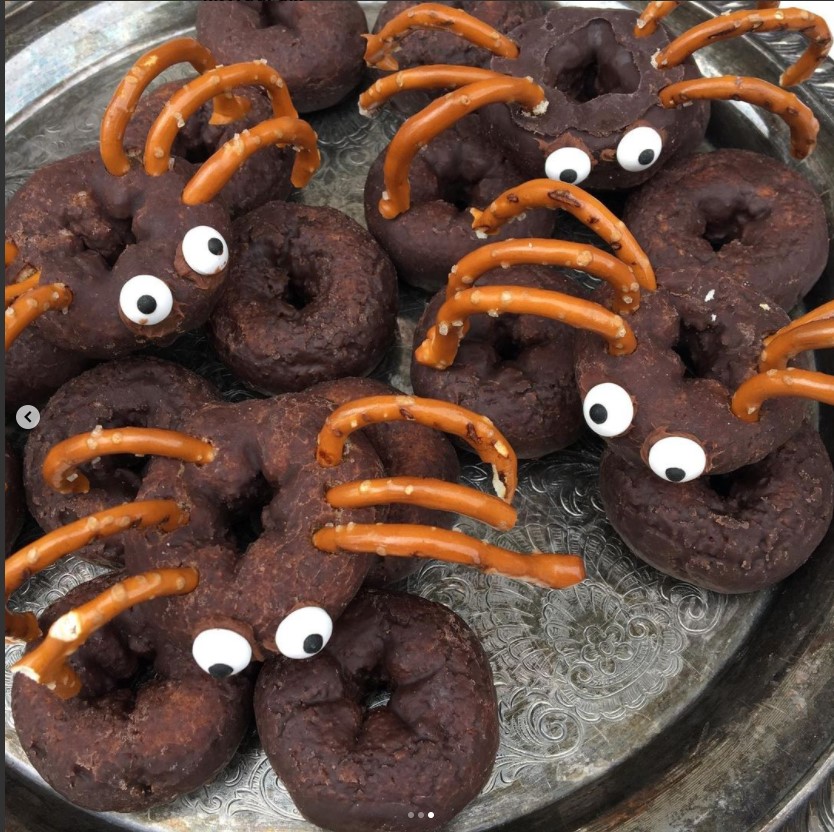
J.P.: Decorating the house with my husband and son is always fun. My very favorite part of that is standing down by the end of the driveway when weโ€™ve finished and looking at the lights/decorations. Last year (COVID) we werenโ€™t sure if trick-or-treating would be possible, so we had a big outdoor Halloween party with several families in our neighborhood and my sonโ€™s friends and families. It was a blast and I really enjoyed our creative Halloween-themed snacks (puking pumpkin was a hit but maybe not as much as the spider donuts).

Meghan: If Halloween is your favorite holiday (or even second favorite holiday), why?

J.P.: Halloween is toward the top of my list. I just love the idea of everyone connecting with their creative selvesโ€”the decorations, costumes, the fun of walking the streets in the dark with kids as they go door-to-door, the movies and books, candles and cozinessโ€”thereโ€™s a lot to love!

Meghan: What are you superstitious about?

J.P.: No superstitions here. ๐Ÿ˜Š

Meghan: What/who is your favorite horror monster or villain?

J.P.: I read Bram Stokerโ€™s Dracula for the first time a few years ago. While Iโ€™ve always been fascinated by the idea of vampires and their eerie transformation from person to blood-sucking-villain, this book made the idea so much more realโ€ฆand frightening. Highly recommend this bookโ€”the atmosphere Stoker created was incredible and the writing really beautiful.

Meghan: Which urban legend scares you the most?

J.P.: I read a scary book by Mary Higgins Clark when I was a teenager about a babysitter who was getting crank callsโ€ฆand realized they were coming from inside the house. I did a lot of babysitting back then and it was at the back of my mind from that point on! I have heard variations of this as an urban legend but am not sure which came firstโ€”the story or the novel.

Meghan: Who is your favorite serial killer and why?

J.P.: Ohhhh, I do not like serial killer stories at all.

Meghan: How old were you when you saw your first horror movie? How old were you when you read your first horror book?

J.P.: I saw Childโ€™s Play at a friendโ€™s sleepover party when we were in the third grade. I was terrified. Afterward, my little overactive imagination saw Chuckie everywhere I wentโ€”behind the shower curtain, in my closet, under the bedโ€ฆ.

My first horror book was Dean Koontz in high school, I think. I canโ€™t remember the title but there was some sort of supernatural monster in it. I love supernatural suspense and the type of horror that causes all the fear and dread without relying on gore.

Meghan: What is your favorite Halloween costume?

J.P.: I think it was the year I made a Bride of Frankenstein costume. I bought a big Marge Simpson-style white wig and spray painted it black (cutting out lightning bolts first to keep the hair underneath white). I made a dress from an old sheet and my husband helped with the makeup. It was fun and I loved the way it looked in the end.

Meghan: What is your favorite Halloween-themed song?

J.P.: I love Halloween songs! Thriller, Monster Mash, and Purple People Eater–theyโ€™re all great. My absolute favorite, though, is Little Red Riding Hood by Sam The Sham & The Pharaohs. Love it!

Meghan: What is your favorite Halloween candy or treat? What is your most disappointing?

J.P.: Iโ€™m a huge chocoholic so anything with chocolate is a yes for me. If itโ€™s paired with peanut butter (Reeseโ€™s PB cups or Butterfinger) makes it even better.

Meghan: Thanks for stopping by today, J.P. Before you go, what kind of Halloween books and movies are your go-to?

J.P.: Right now, Iโ€™m listening to Halloweโ€™en Party by Agatha Christie which Iโ€™m really enjoying. Anything gothic-y, dark, atmospheric, preferably set in the deep woods, a crumbling mansion, or a boarding school are my go-to choices for Halloweenโ€ฆand most of the rest of the year, too.


Boo-graphy:
Thriller author, J.P. Choquette, writes atmosphericย suspense novels with themes of nature, art, and folklore.

She started writing “books” when she was old enough to hold a crayon. These were held together with staples and left some painful scratches.ย 

In her career, J.P. has been a vet tech, a Montessori teacher helper, an administrative assistant, a case manager, and a buffet hostess, in no particular order. She’s been writing full-time since 2008.ย 

When she’s not working, you’ll find her sipping a hot beverage, reading, or in the woods with her family.ย 

Join her Readers’ย Clubย and get peeks into her writing life, upcoming releases, thriller book recommendations,ย and other treats for book lovers.

Website
Instagram

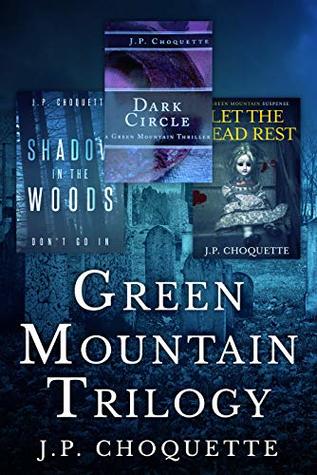
Green Mountain Trilogy:
Let the Dead Rest, Shadow in the Woods, Dark Circle

Combined for the first time, readers of J.P. Choquette’s Gothic tales of suspense will be riveted by The Green Mountain Trilogy.

In “Let the Dead Rest,” a strange doll makes her appearance in the life of Isabel Joven, an artist living out in the boondocks of Vermont. When strange things begin to happen, Isabel is drawn deeper and deeper into the doll’s frightening past, even as her own world starts to fall apart at the seams.

Readers are calling “Shadow in the Woods,” a “fast-paced, fun thriller,” and remarked that it “hits the accelerator and never lets up on the gas.” In it, two mental health counselors bring a small group of patients for an “ecotherapy” weekend in the wilds of the Vermont mountains. But when the group is forced to take refuge from a storm in a cave, sinister things begin to happen. Six go into the woods, but only three come out.

Sarah Solomon is recovering from a traumatic experience in “Dark Circle,” and moves to northwestern Vermont for a fresh start. But strange things are happening in the gated community where she and her husband live. When Sarah sees the “gray lady” in the woods, she’s unsure if it’s a ghost or a real person. As Sarah digs deeper into the community’s past, she discovers secrets that others want very much to stay buried.

Now available for the first time in a trilogy format, readers can enjoy a collection of Choquette’s most popular supernatural suspense titles. Fans of Ruth Ware, Lisa Unger and Peter Swanson will enjoy Choquette’s atmospheric, chilling tales packed with twists and turns. All three novels are set in rural or small town northwestern Vermont.
GUEST BOOK REVIEW by Elana Gomel: Hallowe’en Party

Hercule Poirot 41:
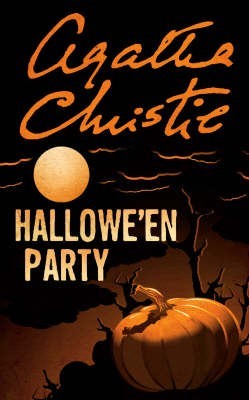
Hallowe’en Party
By: Agatha Christie
Genre: Mystery, British Mystery
Publication Date: November 1969 (reissued in October 2006)
Pages: 320

When a Halloween party turns deadly, it falls to Hercule Poirot to unmask a murderer in Agatha Christie’s classic murder mystery, Hallowe’en Party.

At a Halloween party, Joyce – a hostile thirteen year old – boasts that she once witnessed a murder. When no one believes her, she storms off home. But within hours her body is found, still in the house, drowned in an apple-bobbing tub. That night, Hercule Poirot is called in to find the “evil presence.” But first he must establish whether he is looking for a murderer or a double-murderer…


Child’s Play or Child’s Murder? Agatha Christie’s Hallowe’en Party

Mrs. Ariadne Oliver is a kind, if somewhat scatterbrained lady, who loves apples and writes bestselling murder mysteries. Though a delightful person, unfortunately, she has never existed. Mrs. Ariadne Oliver is a literary character, a creation of Dame Agatha Christie who introduced her in her later books as a wry alter ego.

In 1969, Mrs. Oliver is about to celebrate Halloween at her friendsโ€™ house in Kent, UK. As the hostess is bustling around, trying to get everything in order, Mrs. Oliver ponders the difference between squash and zucchini, between Halloween and Thanksgiving, and between life and death:

โ€œIt was rather remarkable, seeing so many pumpkins or vegetable marrows, whatever they areโ€ฆ The last time I saw one of theseโ€ฆwas in the United States last year โ€“ hundreds of them. All over the house. Iโ€™ve never seen so many pumpkinsโ€ฆThey were everywhere in the shops, and in peopleโ€™s houses, with candles or nightlights inside them or strung up. Very interesting, really. But it wasnโ€™t for Halloweโ€™en party, it was Thanksgiving. Now Iโ€™ve always associated pumpkins with Halloweโ€™en, and thatโ€™s the end of October. Thanksgiving comes much later, doesnโ€™t it? Isnโ€™t it November, about the third week in November? Anyway, here, Halloweโ€™en is definitely the 31st of October, isnโ€™t it? First Halloweโ€™en and then, what comes next? All Soulsโ€™ Day? Thatโ€™s when in Paris you go to cemeteries and put flowers on graves. Not a sad sort of feast. I mean, all the children go too and enjoy themselvesโ€.

The jarring transition from grief in cemeteries to kids having fun captures the essence of Halloween. It is a holiday of candy and ghost stories; of pumpkins and ghouls; of good cheer and deep fear. And in her own inimitable way, Ariadne Oliver โ€“ or rather, her creator, Agatha Christie โ€“ has captured the deep duality of this strangest of all feasts.

Halloweโ€™en Party is not as well-known as Christieโ€™s earlier novels, but it is just as accomplished, while considerably darker. Published in 1969, it features indefatigable Hercule Poirot who, by this time, would be around 120 years old. But he is still capable of solving a murder mystery. Poirot is invited by Mrs. Oliver to investigate a series of crimes around the Quarry Garden in Kent. The crimes are atrocious: four murders, two of them involving children, and an attempted murder of yet another child. The ambience is brooding and ominous: a party ending with a corpse; a mysterious sunken garden; a contested country estate.

We could easily imagine the setup as the beginning of a slasher movie. And indeed, the novel generates a sense of dread by constantly hinting at some unspecified demonic forces at play. There are so many references to serial killers, insanity, witches, and ghouls, you would expect the knife-wielding Michael Myers to pop up from behind the bushes and go on a rampage. After all, the first Halloween movie that crystallized the connection between the holiday and slasher aesthetics came out less than ten years after Christieโ€™s novel, in 1978.

But this is not Christie. Though some of her other novels verge on supernatural horror (especially the superb And Then There Were None, 1939), in her Poirot books, the solution is always rational and logical, the horror of violence defused by reducing it to a bloodless puzzle. At the end, there is a logical explanation, justice is done, and the cozy mystery solved. Poirot, the voice of reason, dismisses out of hand any talk of madness, possession, or ghosts. In Poirotโ€™s world, mayhem is only a pretext for ratiocination, a game with set rules, a game even a child can play. And so, despite the gruesome nature of the murders in Halloweโ€™en Party, the motive for them is neither sexual nor supernatural but a good old-fashioned desire for profit and fear of discovery (spoilers alert!). Poirotโ€™s reasonable explanation for the deaths of 13-year-old Joyce and her little brother is supposed to dispel the horror of their violent end.

But does it? By the time the murderers finally get their just comeuppances (spoilers alert again!), we have been inundated with so many disturbing references to madness, sexual depravity, possession, demonic forces, and the Devil that the tidy ending rings hollow. As a cleaning lady who is reputed to be a witch ominously suggests, the smug upper-middle-class suburb of Woodleigh Common is infested with evil: โ€œthe devilโ€™s always got some of his own. Born and bred to it.โ€ When the children of Woodleigh Common are having a Halloween party, is it a childโ€™s play or a childโ€™s sacrifice?

Mrs. Oliverโ€™s stream of consciousness quoted above is, in fact, a pretty accurate summary of the history of Halloween. It started as the pagan feast of Samhain and later merged with the Catholic All Saintsโ€™ Day, designated as such by Pope Gregory III in the eighth century. The night before November 1 was known as All Souls, or All Hallows, Eve, which is the origin of the word Halloween, still spelled in Christieโ€™s novel in the old-fashioned way with an apostrophe. Neither Samhain nor All Hallows Eve were innocent entertainment. Samhain may have involved human sacrifices, while All Hallows Eve was believed to be the time when the dead walk among the living. In the Middle Ages, the fear of ghosts and witches was absolutely real, and neither were a laughing matter. Even the carnival elements โ€“ dressing up, masking, drinking, and dancing โ€“ were linked to fertility cults that warded off death by engaging in sexual magic.

The reason why Halloween mutated from a pagan ritual to a kiddiesโ€™ night out had to do with the rise of science and rationalism in the Industrial Age. Folklore and superstition became an embarrassing reminder of the more โ€œprimitiveโ€ stages of cultural development. The Victorians saw themselves as the adults of history; everything that went on before was childish, immature; in short, a childโ€™s play.

Only it did not quite work out this way. Nightmares turned out to be impervious to the light of reason; science did not dispel the fog of superstition; and irrational evil came back in force during the massacres of the last century. And Halloween persisted in its duality: both a whimsical entertainment and a night of terror; both a childโ€™s play and adult horror; both trick-or-treating and serial murder.

Halloweโ€™en Party reflects this duality. Some of the customs in the novel will strike the American reader as quaint. There is no trick-or-treating but there is bobbing for apples (lifting apples from a bucket of water with your teeth). No face-painting or masks but mirrors are handed out, so girls can see faces of their future husbands (a practice widespread in medieval Europe and reflected in some spooky German and Russian ballads about a dead bridegroom coming to fetch the incautious bride). No candy but there is the Snapdragon โ€“ a dish of raisins set on fire. All these customs descend from ancient pagan rituals: apples are linked to fertility cults; mirrors trap souls; and the Snapdragon recalls the Viking funeral pyre. Surrounded by echoes of the Druidic ceremonies, the murder of a young girl is initially presented as some sort of demonic sacrifice, or perhaps a sex crime perpetrated by a madman.

But at the end it turns out to have been just a game. Christieโ€™s novels seldom leave you with unanswered questions about the nature of evil or the origins of criminality. They are soothing puzzles to occupy your mind; cozy mysteries; precursors to Midsomer Murders. And yet, even as all the loose ends are tied up, there is something darker left unspoken. Next time you want to attend a Halloweโ€™en Party, remember that at All Soulsโ€™ Eve, evil walks, and evil is not a childโ€™s play. Dame Agatha Christie who was knighted by the Queen for her contribution to British culture knows how to have her cake and to eat it; to reassure her readers and to disturb them; to have fun and to teach a lesson. So. letโ€™s have Mrs. Ariadne Oliver, Christieโ€™s ironic self-portrait, have the last word, as she does in Halloweโ€™en Party:

โ€œโ€™Thatโ€™s right,โ€™ said Mrs. Oliver in an exaggerated voice, โ€˜blame it all on me as usualโ€™โ€


Boo-graphy:
Elana Gomel was born in a country that no longer exists and has lived in many others that may, or may not, be on the road to extinction. She currently resides in California. She is an academic with a long list of books and articles, specializing in science fiction, Victorian literature, and serial killers. She is also a fiction writer who has published more than ninety short stories, several novellas, and three novels. Her story โ€œWhere the Streets Have No Nameโ€ was the winner of the 2020 Gravity Award, and her story โ€œMine Sevenโ€ is included in The Best Horror of the Year 13 edited by Ellen Datlow. She is a member of HWA.

Little Sister
A schoolgirl steps between a soldier and a ravening monsterโ€ฆ

1943. Soviet Union is under attack as WW2 is raging. Fighting in the doomed battle of Kursk, Andrei finds himself in a strange city where Svetlana, a girl he has never seen but who looks eerily familiar, saves him from a fist-faced creature. When Svetlanaโ€™s family is lost, the two embark on a harrowing odyssey across the snow-covered plain, battling deformed former humans and taken prisoners by the army of black stars. Against impossible odds, they reach their destination where they discover a secret that will change history.

Little Sister is a dystopian historical fantasy set in the Soviet Era. Presenting a richly imagined alternative history world, this is a tale of friendship, survival, and heartbreak. Fans of The Book Thief and The Wolfhound Century will enjoy this striking fantasy rooted in Russian fiction.