Blog

AUTHOR INTERVIEW: Ken MacGregor

Earlier this month, Blood Bound Books released their latest anthology, Burnt Fur, edited by Ken MacGregor. I have been lucky enough to sit down with Ken, and several of the authors involved in this anthology, and over the next week, will be sharing these interviews with you.

Meghan: Hi, Ken. Welcome to Meghan’s House of Books. Tell us a little bit about yourself.

Ken MacGregor: Certainly. Iโ€™m a father of two, who drives the bookmobile for the local library, and Iโ€™ve been an actor, a stage and movie director (some professionally), a cook, cab driver, hotel desk clerk, and about a hundred and fifty other things in my 53 years.

Meghan: What are five things most people donโ€™t know about you?

Ken MacGregor: I have eleven tattoos (so far). I was married for seventeen years (until death did us part). I did sketch comedy for five years. When I was a kid, I wanted to be a magician (that did not work out). My first book-crush was the Xanth series of youth fantasy novels by Piers Anthony.

Meghan: What is the first book you remember reading?
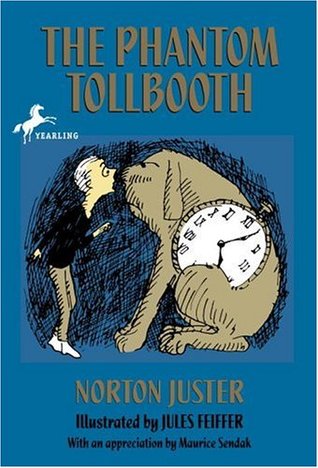
Ken MacGregor: The Phantom Tollbooth by Norton Juster (illustrated by Jules Pfieffer).

Meghan: What are you reading now?

Ken MacGregor: The Green Kangaroos by Jessica McHugh, and The Mambo Kings Played Songs of Love by Oscar Hijuelos. Almost finished with both, which is good, because I have a never-ending pile of books to read.

Meghan: Whatโ€™s a book you really enjoyed that others wouldnโ€™t expect you to have liked?

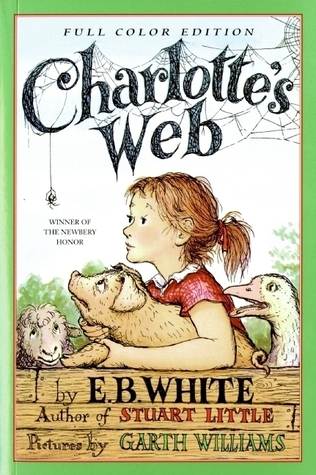
Ken MacGregor: Charlotteโ€™s Web by E.B. White (who also wrote The Elements of Style, a book every writer should own). Itโ€™s a kidโ€™s book, but it opens with a man carrying an axe, planning to spill blood.

Meghan: What made you decide you want to write? When did you begin writing?

Ken MacGregor: Itโ€™s funny, because Iโ€™ve always been a storyteller, for as long as I can remember. I got a poem published in my elementary school newsletter. But I never considered trying to get stuff published for real until almost ten years ago. I was acting in movies, working with friends who were very good at it. One of them, Brian Lillie (who also writes horror, and is very good. You should look him up) said he wanted to make the scariest short movie of all time. So, I tried to write it. I sent him script after script, annoying him until he finally told me to write them as short stories instead, put me in touch with the Great Lakes Association of Horror Writers, and the rest sort of snowballed. Now, I have a ton of stuff in print, a novel and a novella on the way, get invited to write for anthologies, and am a professional editor. How the hell did all that happen?

Meghan: Do you have a special place you like to write?

Ken MacGregor: I like my comfy chair in the living room (Iโ€™m there right now), sunlight streaming in behind me, pen in hand, wide-rule composition book in front of me. But I can write pretty much anywhere: on breaks at work, in a coffee shop (during non-pandemic times), over breakfast, in the parkโ€ฆ

Meghan: Do you have any quirks or processes that you go through when you write?

Ken MacGregor: A couple years ago, I decided to set aside my laptop and write an entire novella (the one thatโ€™s getting published this year) completely by hand. Up to then, I had typed all my first drafts. It was great! I was so much more in tune with the story, and it flowed more easily. Since, Iโ€™ve written almost everything longhand first. When I transcribe it to computer, I do my first real edit. This system has worked well for me. I wonโ€™t suggest you do it. Everyone has their own process, and what works for me wonโ€™t necessarily work for you. But, it might. Youโ€™re welcome to try it.

Meghan: Is there anything about writing you find most challenging?

Ken MacGregor: Itโ€™s not the writing itself I find challenging. Itโ€™s the process of publishing. The endless waiting, the staggering number of rejections, the number of revisions and re-edits needed to get things in print (especially with the novel!) that I find frustrating. It has taught me to be patient (in all aspects of my life), but I still loathe how long everything takes.

Meghan: Whatโ€™s the most satisfying thing youโ€™ve written so far?

Ken MacGregor: Thatโ€™s a difficult thing to answer. Itโ€™s dependent on context in a lot of ways. So, Iโ€™ll give you my most recent example. I was invited to write for an anthology a few months back. The genre was โ€œmagical realismโ€ and Iโ€™d not only never tried to write that but hadnโ€™t read any either. The editor suggested I read some Gabriel Garcia Marquez to get a feel for the genre. I did and loved it. I tried to write one story that I thought was inadequate, so wrote another and sent it to a friend whose opinion I deeply respect. She swore at me and said she wished she had written it. I took this as a good sign. Sent it to the editor, who loved it too, and itโ€™s scheduled to be in the book (should be out around October of this year). That was pretty damn satisfying.

Meghan: What books have most inspired you? Who are some authors that have inspired your writing style?

Ken MacGregor: Good Omens, The Earthsea Trilogy, the entire Amber series (Roger Zelazny was a huge influence on me, which also answers the second part). Iโ€™ve been profoundly affected by Stephen King, Clive Barker, Neil Gaiman, Terry Pratchett, Steve Martin (heโ€™s a writer too!), Ursula K. LeGuin, and dozens more.

Meghan: What do you think makes a good story?

Ken MacGregor: Characters we can relate to, love or hate, root for or want to see fall; settings we can imagine walking through, seeing, smelling, tasting the world; conflict: if the protagonist isnโ€™t suffering, Iโ€™m bored; dialogue that seems real and true to the character (Iโ€™ve read some otherwise fantastic fiction that left me lukewarm because of the dialogue).

Meghan: What does it take for you to love a character? How do you utilize that when creating your characters?

Ken MacGregor: They have to be believable, first and foremost. And, they have to be true to themselves. If youโ€™re writing a drug addict, and you put them in a room with drugs, they should be dying to do them. If they arenโ€™t, youโ€™ve lost my trust as a reader. When I write, I let my characters make choices based on who they are. If I put them in peril (and I do, pretty much all the time, because thatโ€™s my job), they should react as themselves. If I catch myself trying to help them get out of it, I put on the brakes and get my natural inclination to be nice out of the way. Itโ€™s not my place to be nice. The best is when the characters take on a life of their own and make decisions without my consent. Inevitably, when this happens (not often enough for my tastes, but more than it used to), the story is much better for it. Iโ€™ve had stories go wildly different than intended because the characters were like, โ€œNope. Thatโ€™s not what we want to do.โ€ And I listen, because they know better than I.

Meghan: Which, of all your characters, do you think is the most like you?

Ken MacGregor: Gavin the Werewolf. No contest. Heโ€™s basically me, idealized and indestructible. Heโ€™s a wiseass, fun-loving maniac who happens to transform into a giant wolf and loves fighting monsters (the bigger and tougher the better). Heโ€™s in four short stories (five, if you count the one Iโ€™m writing now) and is one of the main characters in my co-authored (with Kerry Lipp) novel, HEADCASE (coming soon).

Meghan: Are you turned off by a bad cover? To what degree were you involved in creating your book covers?

Ken MacGregor: Bad covers are horrible. I know youโ€™re not supposed to judge, but I do. We all do. Iโ€™ve been heavily involved in the cover-creating process for both my story collections, the novel, and with Burnt Fur. Mostly, my involvement has been approval (or otherwise) of cover art, along with making suggestions (and, in the case of my second collection, telling the artist exactly what I wanted). I also hired the artist for my upcoming novella. She finished reading it yesterday, and Iโ€™m hoping to see a draft of cover art in the next month or so.

Meghan: What have you learned throughout the process of creating your books?

Ken MacGregor: Iโ€™m constantly learning. Every time I read a book on writing, or read a great book, or an amazing short story, I take something away from it. Every time I get editor feedback on my own work, I learn. Every writing experience, and, indeed, every life experience, enriched one and makes one a better writer. Iโ€™m always trying to up my game, make each new thing better than the last. The other, less person thing Iโ€™ve learned is: donโ€™t be a dick. Editors and publishers all seem to know one another. If youโ€™re professional, and pleasant, you may not make a sale, and you may not be rememberedโ€ฆ but, if youโ€™re rude, youโ€™re much less likely to make a sale, and you will be remembered. Thatโ€™s not the way you want to be remembered. Luckily, Iโ€™ve learned this by watching others make this mistake. So far, I donโ€™t think Iโ€™ve pissed anyone off. (knocks wood).

Meghan: What has been the hardest scene for you to write so far?

Ken MacGregor: I write horror, mostly, so you might think itโ€™d be the really gruesome stuff: the eyeball-gouging, skin-peeling, genital-torture stuff. Itโ€™s not. The worst thing I ever had to write was a scene where a guy recounts the night his wife died in a car accident. Even harder was reading this scene out loud at StokerCon. I damn near cried in that room full of people. My own wife died in 2018, and I doubt very much Iโ€™ll ever fully recover from that. Writing that scene helped a little, but it was like putting new stitches in an old wound and pulling them tight.

Meghan: What makes your books different from others out there in this genre?

Ken MacGregor: I write horror, so I always see the worst possible outcome in every scenario. However, I have a background in improv and sketch comedy too, so I also tend to see the funny in everything. I liberally season the nastiness in my work with a few well-placed laughs. This has the effect of either easing the tension or making the reader wonder what the hell is wrong with me. Possibly both. Oh, and I write sexy stuff too, because I have a background inโ€ฆ you know what? Never mind.

Meghan: How important is the book title, how hard is it to choose the best one, and how did you choose yours?

Ken MacGregor: I think, like covers, titles are pretty damn important. A good title catches your eye, makes you want to know more. This particular book, Burnt Fur, was a carefully chosen title. In Furry culture, there was a time when a small group of people were pushing boundaries and making a lot of other people uncomfortable. From this, a radical, near-Puritanical group emerged, calling themselves Burned Furs, who wanted to squash any sort of blatantly sexual activities among Furries (in public anyway). This group incited violence (though no actual violence is documented) and quickly developed a stigma among other Furries. The name itself causes some people in the fandom to cringe. This is why I chose a variant of it for a horror anthology about Furry culture (and anthropomorphic animals). I wanted the negative connotations that came with the name. I wanted to make people uncomfortable out of the gate. I want you, the reader, to feel a little apprehensive before page one. Because itโ€™s horror. Itโ€™s not supposed to be nice.

Meghan: What makes you feel more fulfilled: Writing a novel or writing a short story?

Ken MacGregor: Well, Iโ€™ve only written one novel, and that was by accident (Kerry and I had written a short story, sold it, and weโ€™re planning to write another. We got carried away). I love the short form, and likely always will. Thereโ€™s something incredibly satisfying about being able to sit down and hammer out an entire story in one sitting. Also, Iโ€™m a total pantser, so trying to plan out a novel seems incredibly daunting to me. I plan to do it someday regardless, but I keep putting it off.

Meghan: Tell us a little bit about your books, your target audience, and what you would like readers to take away from your stories.

Ken MacGregor: My first collection, An Aberrant Mind (Sirens Call Publications, 2014) is a hodgepodge of short and flash fiction without any sort of theme (thus the name: the only thing they have in common is they all originated in my kooky brain). My second collection, Sex, Gore & Millipedes, is all the stuff I donโ€™t want my mother to know I wrote. Itโ€™s all in the title: dirty, nasty, gross, and, well, funny! Headcase is about Johnny Headcase, an aging (but badass) bounty hunter and his friends. Itโ€™s like a buddy cop movie with sex and vampires. Son of a Monster Hunter (working title) is my first middle-grade story, and my first novella. Itโ€™s scheduled to come out sometime in 2020, and is about a kid whose dad is dying, so he has to step up and take over the family โ€œbusinessโ€ a few years early.

Meghan: I am always excited to get my hands on anthologies, especially ones from publishers that I have grown to trust. Since you are the editor of this anthology, tell us about Burnt Fur, the story behind the concept (since you are the one who came up with the idea), and how you went about selecting the stories included in this anthology.

Ken MacGregor: I already talked about the title, but thereโ€™s more fun stuff about how this came about. Blood Bound Books put out an open call, on April 1, 2018, for antho ideas. Said theyโ€™d pay to have it made if they liked it. I sent them an email saying that, despite the fact that it was likely a prank, I wanted to pitch the idea of a Furry-themed antho, because I could see it drawing some great stories (it did!) and because it has a built-in fan base as Furries are widely known and many people find them fascinating. Selecting the stories was an interesting process: we had a lot of submissions that were easy to pass over, since they didnโ€™t fit the theme, and some that did fit the theme but were not the kind of quality stories I wanted to attach my name to. After that, it came down to picking the best possible pieces. This wasnโ€™t easy, and some had to go because we had too many of one type (there are, in fact, two pig and two werewolf stories, but they are wildly different, so I let it slide). After choosing the final selection, I was delighted to find that the writers were easy to work with and receptive to my edit suggestions. I can tell you, based on other projects, that sometimes writers are not always so pleasant to work with. Iโ€™d work with any of these folks anytime.

Meghan: Can you tell us about some of the deleted scenes/stuff that got left out of the anthology?

Ken MacGregor: I asked a few of the writers to redo the ending of their stories, because I could see an ending the seemed truer to the story. As a writer, Iโ€™ve often had people point this out to me, because I was too close to it, and couldnโ€™t see the forest for the trees. Each of these writers was gracious enough to accept these suggestions from me, and, I think, made the stories stronger. Perhaps they mention this in their own interviews. Hopefully, without too much bitterness.

Meghan: What is in your โ€œtrunkโ€?

Ken MacGregor: Iโ€™ve been working on another novella. This one is sort of a gritty detective story with a nonbinary, asexual protagonist who keeps coming back from the dead. Itโ€™s weird and I have no idea where the hell itโ€™s going, but I think Iโ€™ll figure it out eventually.

Meghan: What can we expect from you in the future?

Ken MacGregor: Iโ€™m going to keep writing and editing, as long as I can, assuming I survive the pandemic. Kerry and I are writing the sequel to Headcase, which weโ€™ll hopefully finish before the end of the year. Iโ€™m going to attend a few conventions, assuming weโ€™re allowed to interact with other humans safely at some point, and look forward to seeing some of you at some of those (StokerCon in 2021 is also on my long-term plans).

Meghan: Where can we find you?

Ken MacGregor: My website (though I’m terrible about keeping it up to date), Facebook, & Amazon.

Meghan: Do you have any closing words for your fans or anything youโ€™d like to say that we didnโ€™t get to cover in this interview?

Ken MacGregor: Iโ€™m really proud of Burnt Fur and the writers in it (the cover too, done by K. Trap Jones). Itโ€™s an incredible thing to come up with an idea, have it enthusiastically accepted by a publisher, and have the end result wildly exceed your expectations. I believe this book is going to surprise people with its diversity of subject matter and talent; I think readers are going to walk away from this with images from the book indelibly embedded into their brains. Itโ€™ll shake you up. Itโ€™ll stay with you. Which is good. Thatโ€™s itโ€™s job. Thank you.

About the Book:
Sit. Roll over. Whoโ€™s a Good Boy?

There are no good boys in in this anthology, only twisted, deviant, and burnt encounters with pets, people in costume, animals who behave like humans, and creatures who blur the line between the three. Violent pigs, killer ducks, horny bees, a naughty rabbit, and many more fill these pages with tale after tail of hair-raising horror.

Don your Fursuit, slip into your Fursona, and ride the dark wave of horror that is Burnt Fur. You may never go back to wearing your normal skin again.

The Moon in Her Eyes by Sarah Hans
Mallard’s Maze by Joseph Sale
Salivation by Theodore Deadrat
The Hamford Pigs by N. Rose
The Willingness of Prey by Paul Allih
6 Dicks by Rachel Lee Weist
The Others by C.M. Saunders
Randall Rabbit by Elliot Arthur Cross
A Concubine for the Hive by Rue K. Poe
Five Nights with Teddy by Thurston Howl
Oh Piggy, My Piggy by Matt Scott
Ware the Deep by Stephanie Park
The Molt of a Diminishing Light by Michelle F. Goddard
The Victims by James L. Steele

About the Author:
Ken MacGregorโ€™s work has appeared in dozens of anthologies and magazines, and the occasional podcast.

He has two story collections: AN ABERRANT MIND, and SEX, GORE & MILLIPEDES, and is a member of the Great Lakes Association of Horror Writers (GLAHW). He has also written TV commercials, sketch comedy, a music video, and a zombie movie. His debut novel (co-written with Kerry Lipp) is pending publication in 2020, and they are working on the sequel. HIs first middle-grade novella comes out in 2020 too. He is the Managing Editor of Anthologies for LVP Publications, and curated an anthology (BURNT FUR) for Blood Bound Books.

When not writing, Ken drives the bookmobile for his local library. He lives with his kids, two cats, and the ashes of his wife.
AUTHOR INTERVIEW: Jonathan Fortin

Meghan: Tell us a little bit about yourself.

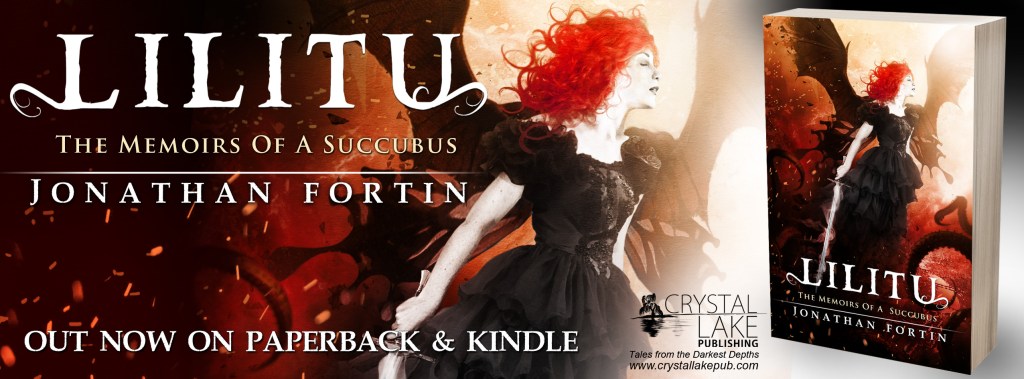
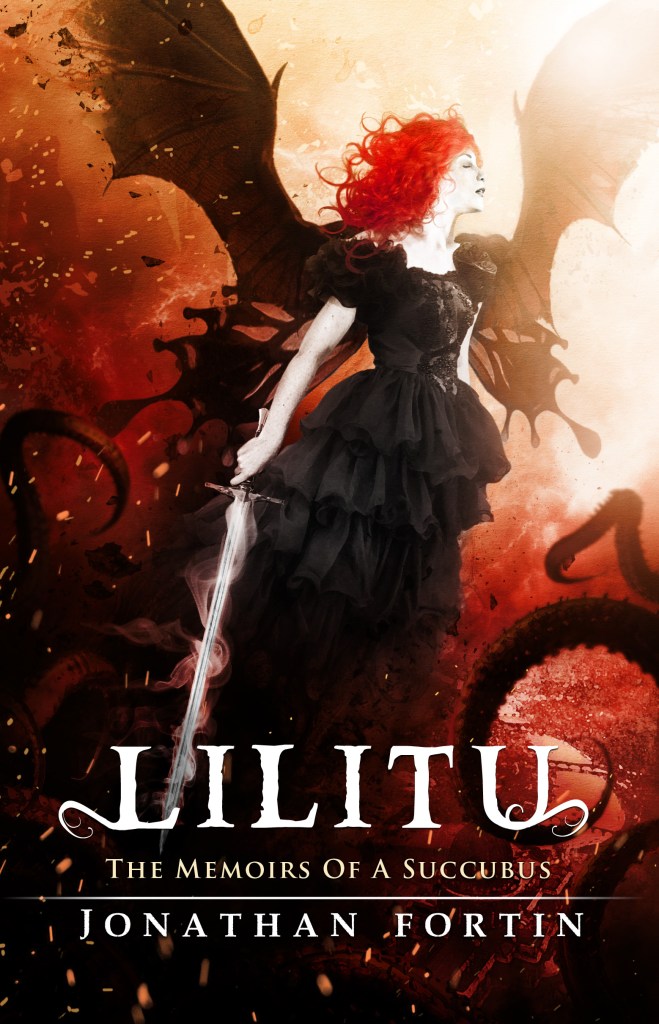
Jonathan Fortin: My name is Jonathan. My debut novel Lilitu: The Memoirs of a Succubus came out today and Iโ€™m very excited about it!

Meghan: What are five things most people donโ€™t know about you?

Jonathan Fortin:
-Iโ€™m a trained voice actor in addition to being a writer. I also have experience acting on stage and in front of the camera.
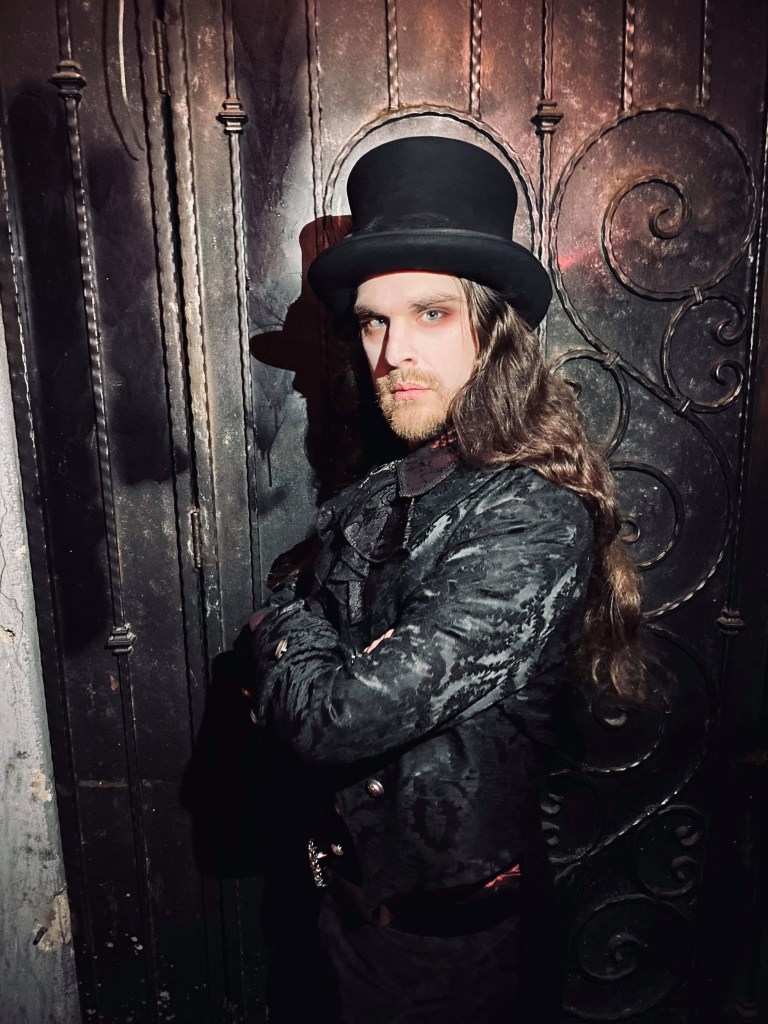
-Contrary to popular belief, my top hat is not affixed to my head. And no, I donโ€™t shower in it.
-I donโ€™t smoke, drink, or do drugs, but less because of moral reasons and more because Iโ€™m fussy and sensitive to the tastes and smells. My taste buds are so sensitive that I canโ€™t even enjoy coffee.
-I do, however, drink earl grey tea every morning.
-I am on the autistic spectrum, which explains the hypersensitivity.

Meghan: What is the first book you remember reading?

Jonathan Fortin: I honestly donโ€™t know. Goodnight Moon? Runaway Bunny? Green Eggs and Ham?

Meghan: What are you reading now?

Jonathan Fortin: Iโ€™m just finishing up The Broken Earth Trilogy by N.K. Jemisin. Brilliant stuff.

Meghan: Whatโ€™s a book you really enjoyed that others wouldnโ€™t expect you to have liked?

Jonathan Fortin: While I mostly read Horror and Fantasy, there are a few non-spectulative books that come to mind. James Baldwinโ€™s Sonnyโ€™s Blues is one of my absolute favorite short stories. Iโ€™m also fond of Joseph Hellerโ€™s Catch-22, and A Fine Balance by Rohinton Minstry.

Meghan: What made you decide you want to write? When did you begin writing?

Jonathan Fortin: You know, it was kind of always just what I did. As a kid, I wrote childrenโ€™s books. As a teenager, I wrote young adult books. I first dreamed of being a writer from a young age, because it was the only way I could create the stories in my head. I couldnโ€™t make movies or video games, but I could write. When I was younger, I was interested in exploring the film and video game industries, but quickly realized I didnโ€™t want to deal with the difficulties or creative constraints inherent to them. So I stuck to writing because it seemed the most feasible way to bring my creative visions to life.

Meghan: Do you have a special place you like to write?

Jonathan Fortin: No, but I should probably find one. Itโ€™s honestly hard for me to focus anywhere I go, and when Iโ€™m at home I just want to be lazy.

Meghan: Do you have any quirks or processes that you go through when you write?

Jonathan Fortin: I get very detail-focused and sometimes get tripped up on getting a certain detail just right before moving on. Then Iโ€™ll get caught by it again when redrafting, because Iโ€™m not sure itโ€™s quite there yet.

Meghan: Is there anything about writing you find most challenging?

Jonathan Fortin: Itโ€™s less the writing itself and more the factors surrounding it, such as time management. Blocking out the time and energy to write is hard. So are other factors like promoting the book, networking, attending conventions, etc. Another problem I have is that at any given time Iโ€™ll have too many book ideas crawling around in my head, and I get indecisive about which one to work on, constantly distracted by my other ideas.

Meghan: Whatโ€™s the most satisfying thing youโ€™ve written so far?

Jonathan Fortin: Lilitu: The Memoirs of a Succubus takes the cake for sure. It spans years, has a ton of characters who all needed to develop and change over time, and it combines multiple genres together. It was hugely ambitious for a first novel, and I had to redraft it many times before it was ready.

Meghan: What books have most inspired you? Who are some authors that have inspired your writing style?

Jonathan Fortin: Neil Gaiman, China Mieville, H.P. Lovecraft, Alan Moore, Holly Black, J.K. Rowling, Joe Hill, Dan Simmons, Junji Ito, Haruki Murakami, Clive Barker, Carlton Mellick III, Caitlin R. Kiernan, and Michael Cox all come to mind.

Meghan: What do you think makes a good story?

Jonathan Fortin: Regardless of genre: characters that intrigue you, struggling hard to get things that mean the world to them. A fast pace, so youโ€™re never bored. Beautiful prose. Lots of details. Strong craft elements. You know a story is working when it absorbs you, immerses you in its worldโ€”feels more real to you than the real world. But everyone gets immersed by different things, so actually executing this is easier said than done.

Meghan: What does it take for you to love a character? How do you utilize that when creating your characters?

Jonathan Fortin: Itโ€™s tricky for me to find characters I love because I donโ€™t relate to most people in the first place, real or fictional. I find that I connect best with characters who make me laugh, or feel true and genuine and deeply flawed. A lot of my characters tend to be dealing with some kind of trauma, because itโ€™s something that I and most of my friends struggle with.

Meghan: Which, of all your characters, do you think is the most like you?

Jonathan Fortin: I deliberately avoid basing any characters directly on myself, but I will say that one of my current projects involves being on the spectrum. While that character isnโ€™t based on myself, they struggle with some of the things Iโ€™ve always struggled with.

Meghan: Are you turned off by a bad cover? To what degree were you involved in creating your book covers?

Jonathan Fortin: I am absolutely turned off by a bad cover. Itโ€™s shallow, I know, and Iโ€™m not saying I wonโ€™t read a really great book just because its cover stinks. But itโ€™s hard to not let a cover set your expectations for the bookโ€™s aesthetic style. Iโ€™m something of an aesthete, and visualize my books very strongly in my head, so I demand a certain degree of control over my book covers. I was terrified that with Lilitu we would get a cover with a ton of cleavage and/or a naked man chest. Fortunately, my publisher Crystal Lake was very willing to put me directly in touch with our cover artist, Ben Baldwin, and Ben was super receptive to my ideas. We all ended up being extremely happy with the beautiful cover he created.

Meghan: What have you learned throughout the process of creating your books?

Jonathan Fortin: Everything takes longer than you want it to, and thatโ€™s okay.

Meghan: What has been the hardest scene for you to write so far?

Jonathan Fortin: Thereโ€™s a certain massive battle sequence in one of my novel projects that was just a thorn at my side for years. I love how it turned out, but that book still needs work, so youโ€™ll have to wait a bit longer to read it, sorry.

Meghan: What makes your books different from others out there in this genre?

Jonathan Fortin: Lilitu: The Memoirs of a Succubus takes the folklore of succubi and incubi seriously. Its succubi arenโ€™t merely evil seductresses or mindless sex objects for the male gaze. Indeed, it deconstructs the Seductress and Byronic Hero archetypes to explore the emotional ramifications of such beings.

Meghan: How important is the book title, how hard is it to choose the best one, and how did you choose yours?

Jonathan Fortin: I think itโ€™s important for the title to pull readers in and give them an idea what to expect. I went with Lilitu because I decided that it would be the title of the series, with The Memoirs of a Succubus being the title of the first book. I felt that readers would be drawn to the idea of a high-quality succubus horror novel that didnโ€™t look cheesy or shlocky, since there arenโ€™t too many of those out there.

Meghan: What makes you feel more fulfilled: Writing a novel or writing a short story?

Jonathan Fortin: Iโ€™m a novel guy. Big, epic stories are what occupy my headpsace. They take forever to finish, but once you finally do, thereโ€™s nothing more satisfying. Itโ€™s like a very slow exorcism.

Meghan: Tell us a little bit about your books, your target audience, and what you would like readers to take away from your stories.

Jonathan Fortin: My fiction is overtly Gothic. I like corsets, crumbling old castles, shadows, monsters, and magic. I like dark humor, psychological complexity, epic battles with clashing swords, tragic love, and sex that you really want but really, really shouldnโ€™t have. I like body horrorโ€”transformations, monsterifications, and a general loss of humanity. Above all, I like taking readers into a dark reflection of our own world, revealing difficult truths along the way. Lilitu, for example, is ostensibly about succubi and incubi, but it uses them in order to explore issues of gender, class, and sexual repression.

Meghan: Can you tell us about some of the deleted scenes/stuff that got left out of your work?

Jonathan Fortin: Lilitu needed serious revising because the first draft of it was written years ago, when I was younger and more of an edgelord. It contained a lot more gratuitous violence, particularly towards women, which I just felt took away from the message and would limit the audience significantly. Itโ€™s still a very dark, violent book, but I think the final draft is less excessive.

Meghan: What is in your โ€œtrunkโ€?

Jonathan Fortin: Thereโ€™s an Epic Lovecraftian book that I need to finish editing. I have a solid first draft but itโ€™s super long and rough, and Iโ€™m honestly too intimidated to touch it right now. But soon.

Meghan: What can we expect from you in the future?

Jonathan Fortin: More Lilitu books, and more unrelated booksโ€”primarily, but probably not exclusively, horror and dark fantasy.

Meghan: Where can we find you?

Jonathan Fortin: Website ** Twitter ** Facebook

Meghan: Do you have any closing words for your fans or anything youโ€™d like to say that we didnโ€™t get to cover in this interview?

Jonathan Fortin: Thanks so much! I hope you enjoy the book.

About the author:
Jonathan Fortin is an author and voice actor located in the San Francisco Bay Area. He is the author of Lilitu: The Memoirs of a Succubus, Requiem in Frost, and Nightmarescape. A lifelong lover of spooky gothic stories, Jonathan was named the “Next Great Horror Writer” in 2017 by HorrorAddicts. He attended the Clarion Writing Program in 2012, one year after graduating summa cum laude from San Francisco State University’s Creative Writing program.

About the book:
England, 1876. Twenty-year-old Maraina Blackwood has always struggled to adhere to the restrictive standards of Victorian society, denying the courage and desire that burn within her soul. But after a terrifying supernatural encounter, Maraina’s instincts compel her to action.

Maraina soon discovers a plot to unleash a new worldโ€”one of demonic aristocrats, bloody rituals, and nightmarish monsters. Putting her upbringing aside, Maraina vows to fight the dark forces assuming control of England. But as her world transforms, Maraina finds that she too must transform…and what she becomes will bring out all that she once buried.

Happy Birthday to the World’s Greatest Dad + An Interview with Michaelbrent Collings

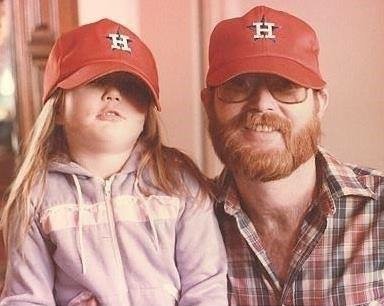
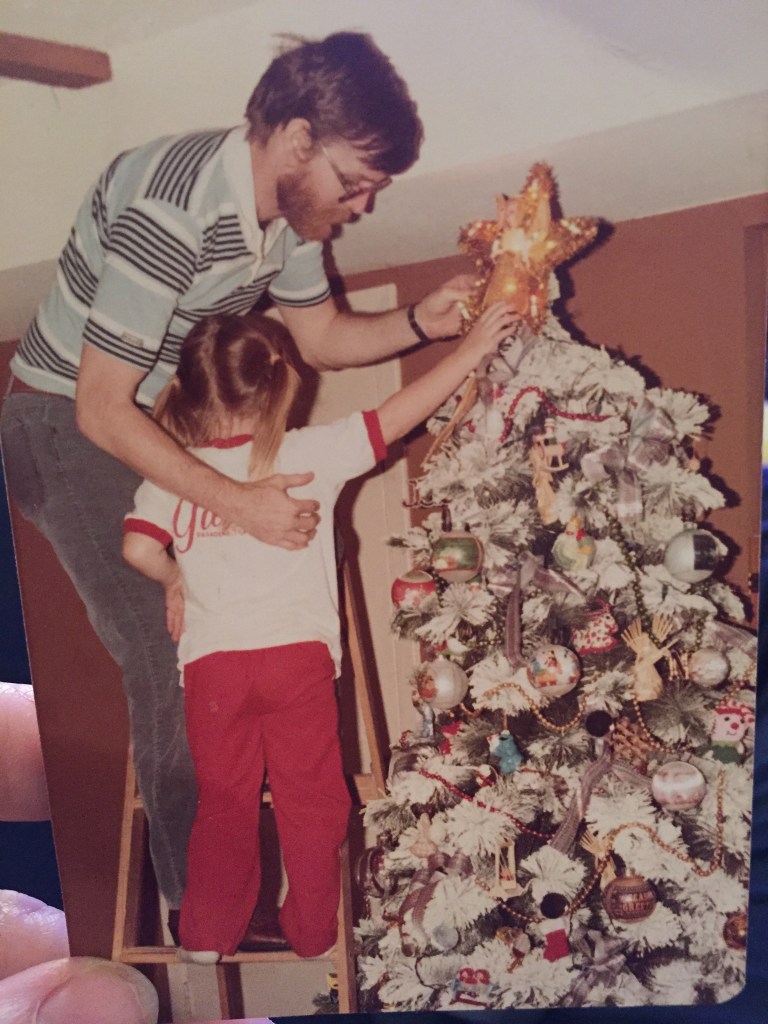
Today is the birthday of the World’s Greatest Dad – not to be confused with all of those other fathers out there who believe that this title is theirs. It’s partly because of him – and completely because he married my mother – that I am the person I am today, and I thank God every day that I was able to have the time with him that I did. Unfortunately, he passed away while I was in high school – a million years ago, but just like yesterday – and has spent the last 20+ years being a guardian angel to a kid that really needed him.

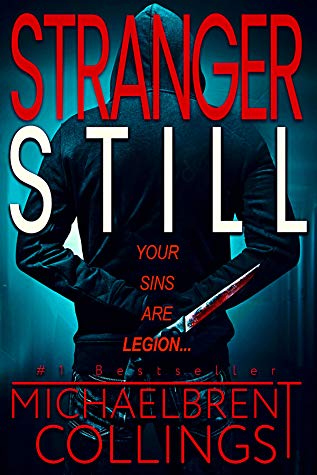
When Michaelbrent asked me if I would be interested in reading his latest, Stranger Still, and said that the release date was today, I knew that having him on for a second interview would be the PERFECT birthday present to my dad. Michaelbrent is the kind of author that would have captured my dad’s attention, and he writes the kind of books that my father would have made sure his daughters spent some time with. I am excited to be able to sit down with his latest – it looks fantastic – and honored to have him here today.

So, without further adieu…

Meghan: Hi, Michaelbrent! Itโ€™s been awhile since we sat down together. Whatโ€™s been going on since we last spoke?

Michaelbrent Collings: SO much! Iโ€™ve written some more books โ€“ my newest, Stranger Still, hits today โ€“ and Iโ€™m a dad and husband so life only functions on โ€œsleep deprivedโ€ and โ€œslightly more sleep deprived.โ€ But itโ€™s been a great time overall. Just finished out the most successful year of my career and passed a quarter-million ebooks sold, so I canโ€™t complain!

Meghan: A quarter-million ebooks?! That’s amazing!! Who are you outside of writing?

Michaelbrent Collings: See above re โ€œdad and husband.โ€ My most important jobs all revolve around them. Thereโ€™s also a lot of church stuff (which often makes people laugh given what kind of thing I write), and Iโ€™m also involved in community stuff. I mentor a recently-released felon, I try to take my kids to do service around our city, things like that. But first, last, and mostly: family.

Meghan: How do you feel about friends and close relatives reading your work?

Michaelbrent Collings: Great! Most of them are big readers, so itโ€™s actually more โ€œwho can I count on not reading my book?โ€ Obviously my kids are too young for some of the books I write, but other than thatโ€ฆ have at it! If I was ashamed/worried about someone reading something, Iโ€™d have to ask myself why I was doing something like that. Iโ€™m not ashamed of what I do, or who knows about it. So read away.

Meghan: Is being a writer a gift or a curse?

Michaelbrent Collings: Why canโ€™t it be both?

Thatโ€™s the nature of good things โ€“ they tend to come paired with a bad thing, and vice-versa. Writing is a huge blessing in that it allows me to express myself, to try and tell stories that entertain and enlighten, and that allow me to hang out with tens of thousands of readers who have provided me with a livelihood. Itโ€™s a curse in that it so often keeps me up at night, makes me ramble incomprehensibly, and sometimes just sees straight-up incompatible with โ€œnormalโ€ life.

But overall: blessing. Definitely.

Meghan: How has your environment and upbringing colored your writing?

Michaelbrent Collings: Well, I grew up in a reading and writing environment, so that was huge. My father was the Creative Writing Director for a major university, and my mother spent many nights and weekends reading books to us as children and then โ€“ as we grew โ€“ reading the stories that we wrote. Dad was also the world expert on Stephen King for a good long time, so I grew up with screaming in the house as a good thing.

Meghan: Whatโ€™s the strangest thing you have ever had to research for your books?

Michaelbrent Collings: I couldnโ€™t even begin to guess! All I know is that Iโ€™ve researched enough bizarro stuff that every once in a while I wave and hold up a sign that says โ€œHi!โ€ so that whatever NSA guy is monitoring me through my laptopโ€™s webcam will have a nicer day.

Meghan: Which do you find the hardest to write: the beginning, the middle, or the end?

Michaelbrent Collings: The end, definitely. Thatโ€™s where everything comes together, so it tends to be the most emotional as an experience. And though I always try to craft a story that people can enjoy spending a day or two with, sometimes people forget that I havenโ€™t spent a few days with it. Iโ€™ve spent weeks or months with it, and by the time I get to the end I very often just want to get it over with! I try not to rush things, but thereโ€™s definitely a cumulative exhaustion that sets in.

Meghan: Do you outline? Do you start with characters or plot? Do you just sit down and start writing? What works best for you?

Michaelbrent Collings: I do โ€˜em all. With Stranger Still, I mostly pantsed it. Same with The Colony Saga, which was a seven-book series. On the other hand, I typically do pretty thorough outlines for mysteries like Blood Relations and The Longest Con. Theyโ€™re all fun to do โ€“ though going in without an outline is definitely the scariest because it usually isnโ€™t until about 2/3 of the way through that I finally figure out whatโ€™s happening myself!

Meghan: What do you do when characters donโ€™t follow the outline/plan?

Michaelbrent Collings: Giggle maniacally.

Meghan: What do you do to motivate yourself to sit down and write?

Michaelbrent Collings: Think about all my vices โ€“ like paying for food and shelter.

Meghan: Are you an avid reader?

Michaelbrent Collings: Yes, but itโ€™s changed a lot over the years. I do a lot more non-fiction reading for fun, and while I read a lot of fiction as well, it tends to be during the day as part of the โ€œmarket researchโ€ aspect of my work.

Meghan: What kind of books do you absolutely love to read?

Michaelbrent Collings: There are very few I donโ€™t. I donโ€™t like erotica, but other than that, the breadth and width of my reading tastes are pretty wide.

Meghan: How do you feel about movies based on books?

Michaelbrent Collings: Depends on the movie. I donโ€™t get mad when movies donโ€™t follow books โ€“ theyโ€™re different beasties, and changes should be made. But I do not like a bad movie regardless of itโ€™s genesis. So I like good movies based on books, and bad ones make me groan.

Meghan: Have you ever killed a main character?

Michaelbrent Collings:
All.
The.
Time.

Meghan: Do you enjoy making your characters suffer?

Michaelbrent Collings: Quite the opposite. I tend to get very into my charactersโ€™ heads, so writing about their pain hurts me as well. I wrote a character based on one of my children, and when I realized he was going to die for the story to work, I really had a bad day. The day I wrote that scene was worse โ€“ I barely talked at home that night.

That said, I do make them suffer. Suffering is not only interesting, but it shows us who the characters really are โ€“ and hopefully that way also shows us what kind of people we are as we read.

Meghan: Whatโ€™s the weirdest character concept that youโ€™ve ever come up with?

Michaelbrent Collings: OHMIGOSH. Thereโ€™s a character in Stranger Still that I just had a blast with. He is a murderous psychopath who is a narcissist of unbelievable proportions โ€“ to the point that he believes every thought he has is deep, even though the extent of his education is mostly reading Netflix descriptions and Instagram posts. He was a hilarious set of dichotomies and I worried it wouldn’t work, but advance readers almost all have mentioned how much they loved/hated the guy.

Meghan: Whatโ€™s the best piece of feedback youโ€™ve ever received? Whatโ€™s the worst?

Michaelbrent Collings:
Best: keep writing
Worst: give up

Meghan: What do your fans mean to you?

Michaelbrent Collings: They mean so very much. I write because I have to. But I write full-time because they allow it. They support my family, and so there is a debt I can never hope to repay.

Meghan: What can we expect from you in the future?

Michaelbrent Collings: More books! I will be working on a paranormal horror novel (tentatively called The Forest) about a pair of teens who go into a forest where their friend has been lost. Two of the three survive, because of what happens there. Twenty years later they go backโ€ฆ and things get even worse.

Meghan: Where can we find you?

Michaelbrent Collings: Iโ€™m easy to find. Just Google โ€œMichaelbrentโ€ and youโ€™ll find me!

Orโ€ฆ
Facebook
Twitter

You can also sign up for my mailing list (called Michaelbrentโ€™s Minions) and get a free book, plus special access to deals and giveaways!

Meghan: Do you have any closing words for your fans or anything youโ€™d like to say that we didnโ€™t get to cover in this interview or the last?

Michaelbrent Collings: Just thank you. I appreciate every single person whoโ€™s made this weird, wild, wonderful trip possible!

About the book:
Your sins are Legion…
… and now you belong to him.

Legion is a teacher. An avenging angel. A murderer.
A madman.

Born in the blood of a dying mother, raised in the underground hideout of an insane father, he travels the world looking for those who keep secrets and sins. He finds those who have fallen short, and teaches them the lessons they need to leave their mistakes behind.

And if he has to teach a lesson that ends in death, well… sometimes that’s the cost of proper education.

That’s why, when he sees a man kidnap two people on the side of the road, Legion knows it is time to teach again.

Soon he finds himself caught in the crossfire of a coup in a Russian crime syndicate. Legion is captured, beaten, bleeding, in chains; cut off and alone. 

It’s just the way he likes it.

Legion has his students. And the lessons are about to begin…

About the author:
One of the most versatile writers around, Michaelbrent Collings is an internationally
bestselling novelist, produced screenwriter, and multiple Bram Stoker Award finalist.
While he is best known for horror (and is one of the most successful indie horror authors
in the United States), he has also written bestselling thriller, fantasy, science fiction,
mystery, humor, young adult, and middle grade works, and western romance.

As a novelist, Michaelbrent has written dozens of bestsellers that have also received
critical acclaim, and he and his work have been featured on everything from mom-and-pop
podcasts to Publishers Weekly, The San Francisco Book Review, and NPR.

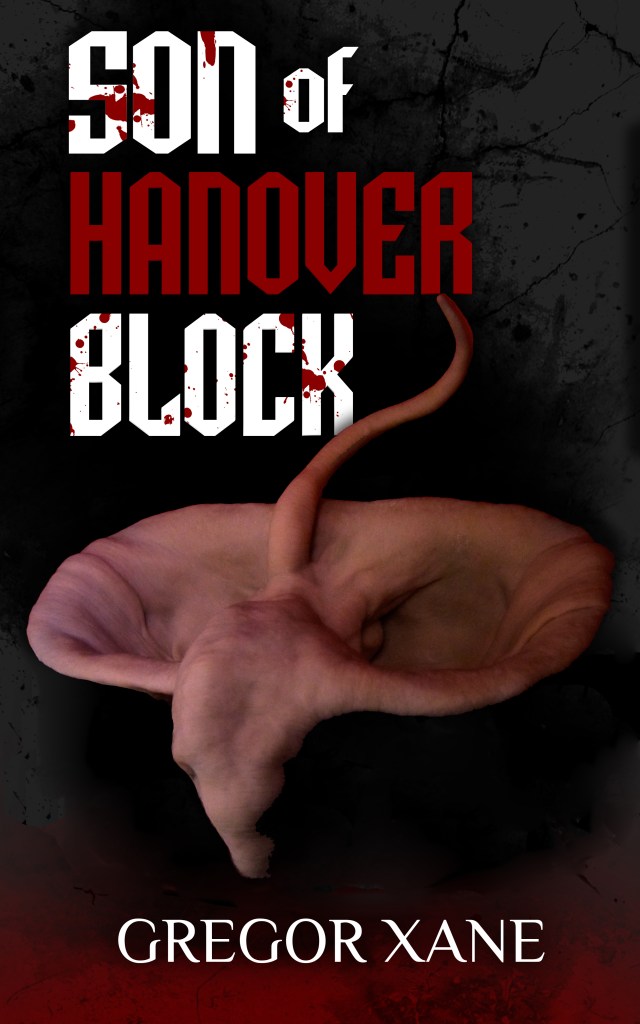
COVER REVEAL: Gregor Xane’s Son of Hanover Block

A young boy collapses on a playground. Surgeons carve out a giant tumor and half of his brain. Soon after, the boy’s father locks him in a secret prison for his own perverse amusement. Through physical and psychological torture, he plans to transform his son into a monster, but he creates something wolly unexpected.

A research psychiatrist is on the verge of publishing a strange and beautiful new book, a collection of artists’ renderings of the hallucinations of the clinically insane. Her book threatens to expose a terrible truth, and this truth will not set her free.

A mysterious infestation, intensely personal and deadly, is decimating communities across the nation. All that stands in its path is a ruthless government agency which may prove to be more lethal than the otherworldly parasites it aims to destroy.

The son is risingโ€ฆ

You can pick book 1 (The Hanover Block) and 2 (Brides of Hanover Block) of The Hanover Quartet up on Amazon.

Gregor Xane is the author of TABOOGASM, THE HANOVER QUARTET, and SIX DEAD SPOTS. His work has been featured in STUPEFYING STORIES, DEAD ROSES, and the popular Halloween anthology series, BAD APPLES. He lives in southwestern Ohio with a dog.

Christmas Takeover 40: Edmund Stone: The Gift

The Gift

A Short Story by Edmund Stone
1,497 words

The stockings hung by the chimney with care. Tinsel glistened, glowing in the white lights on a small tree in the corner. Bobby worked on it for hours while his mommy slept. The nice lady at the Salvation Army gave him the supplies, along with warm cookies. He only hoped it would make mommy happy. She lay on the couch, an empty liquor bottle beside her. Her pipe still smoldering on the nightstand. If sheโ€™d known he went out today, she would yell at him, like she always did.

Bobby popped up when he heard the noise of mail falling through the shoot by the door. Heโ€™d sent a letter to Santa a month ago and was waiting for a reply. He shuffled through the envelopes until he found it, a gold one, addressed to him personally, from the North Pole! He ran down the hall to the living room.

โ€œIt came! It came!โ€ he shouted. His mommy rolled off the couch.

โ€œWhat the fuck is all this racket?!โ€ she hissed. She raised her head and blinked her blood shot eyes at the shining lights on the little plastic tree. โ€œWhere the hell did that come from?โ€

โ€œDo you like it, mommy? The lady down at the Army gave it to me. I put it up for you. Itโ€™s Christmas Eve!โ€

โ€œWhat?! You ainโ€™t supposed to go out when Iโ€™m sleeping! And you ainโ€™t supposed to talk to strangers, especially those self-righteous assholes! Now, throw that shit away!โ€

โ€œBut, mommy.โ€

โ€œDonโ€™t but me, mister. Go to fucking bed!โ€ she said, kicking the box the tree came in across the room. She stumbled into the kitchen, returned with a fresh bottle of vodka, took a swig, and plopped back on the couch. She reached for her pipe and took a drag. She blew the smoke in the air. Smiling with a mouth full of black teeth, she said, โ€œYou know, Santaโ€™s not real. Now, go to your room!โ€

He turned, sulking away. โ€œIs too,โ€ he said under his breath.

He opened the bedroom door, hesitated, looked at his mommy, and sighed. Bobby jumped onto his bed, laying on his stomach. He opened the letter. It was gold and embossed with black letters; the print large and fancy. His fingers touched the lettering as he looked it over. There was one line printed in bold type:

Hi, Bobby. Have you been a good boy this year?

Bobby raised up, blinking his eyes. He considered the question. There was the time he hid his momโ€™s liquor from her. Bobby still felt the sting of the slap. He only tried to help. After she found it, she drank the whole bottle, and slept for a day. So, in a way he did make things better. She didnโ€™t scream at him next morning. โ€œYes,โ€ he said. Then, words began to appear on the letter.

Good to hear. Iโ€™ll be visiting soon. Think of something very special you want this year and write it here.

He thought about it. What would he like best? The possibilities are endless. But as he opened the bedroom door and saw mommy on the couch, her outstretched arm clutching the vodka bottle, he knew what he wanted more than anything.

Bobbyโ€™s mommy woke from her drunken stupor. Her head pounding, she reached for her pipe. Not there. He did it again.

โ€œBobby?! Give me my fucking pipe, or Iโ€™ll slap you into next week!โ€ she said, her back cracking as she rose. She stumbled through the kitchen, pulled open a cabinet and grabbed a fresh bottle. Turning for the couch, she stopped, noticing a plate of cookies on the table. One or two had bites from them.

โ€œThe fuck?โ€ she said. Did she buy cookies at the liquor store? As fucked up as she was yesterday, she wouldnโ€™t have known. She shrugged, then saw a piece of gold paper near the cookie plate. She snatched it and started reading. It looked like a letter to Santa. What the hell was the little shit up to? The words, written at the bottom in Bobbyโ€™s handwriting, gave her pause.

I want a new mommy, it said. She snarled, crumpling the paper.

โ€œBobby?! Get out here now!โ€ she bellowed. Sheโ€™d had enough. Heโ€™d pay for this shit.

She started towards his room when she heard a knock on the door.

โ€œWho is it?!โ€

โ€œIโ€™m here for the boy. You said come over Christmas morning,โ€ a muffled voice came from outside the door.

She flung it open. A man stood there with a wad of cash in his hand. He considered her for a moment, then handed her the money.

โ€œThis is the right apartment? You told me to come for the boy. The deal is still on?โ€

She looked him up and down. His greasy hair was slicked back so tight, you would need a spatula to flip it to the side. His face was full of pock marks, and he had a gold tooth which gleamed from the light above the hall.

โ€œYeah, come in,โ€ she said, stuffing the money into her dirty bra.

โ€œWhere is the boy?โ€ he said.

โ€œI donโ€™t know, couldnโ€™t find him, probably in his room.โ€

โ€œNice tree,โ€ he said looking at the tinsel covered twig in the corner.

โ€œYeah, Iโ€™m trying to get into the Christmas spirit,โ€ she said, plopping on the couch. โ€œGo get your business done. If he screams, duct tape his fucking mouth shut. I donโ€™t want the neighbors calling the cops.โ€

The man gave her a tepid smile and started for the bedroom. He returned a moment later.

โ€œThat was fast. You get your rocks off already?โ€

โ€œNo. Thereโ€™s nobody in the room,โ€ he said, his shoulders turned in.

โ€œWhat? Bobby?! Where the fuck you hiding?!โ€ she screamed, making the man wince.

Suddenly, they heard a noise coming from the chimney. Bobbyโ€™s mother smiled. She crept toward the fireplace opening, the man close behind. Pieces of soot fell onto the fireless hearth. She reached into the chimney, her arm buried to the shoulder. Feeling nothing, she sat on her bottom to extend her reach. She fished her arm around inside, trying to grasp Bobbyโ€™s feet.

โ€œBobby, you little shit! Youโ€™re gonna be sorry when I get a hold of you!โ€

She pulled her soot covered arm out and shook it. Her back turned to the fireplace, she couldnโ€™t help but notice the expression on the greasy manโ€™s face. His mouth open and eyes wide, looking just above her head. She gave him an indignant expression.

โ€œWhat?โ€ she said, then turned to the fireplace. What she saw made her want to scream, but in her shock, she was unable to breath. A creature stood there, slime dripping from its large fangs onto a forked tongue. Its face resembled a hideous elf with an elongated chin and pointed ears. The thing had disjointed arms. They were long and nearly touched the floor. Its fingers snaked down with jagged nails at the tip. It wore an old ragged Santa suit with a red toboggin hat. The tongue protruded from its mouth like an appendage and wrapped around her throat. In the split of the tongue, small needle-like protrusions dug into her flesh. It squeezed, and she began to make gurgling sounds as her hands went immediately to her throat

The greasy man found the voice she couldnโ€™t. A low sound, between a grunt and a squeal, came from him, as he began to back pedal for the door. He turned but before he could move, an arm shot out from the creature, grasping him on his collar and jerking him backward. He screamed, as he landed on his back, the air released from his lungs. The jagged fingernails of the creatureโ€™s hand found purchase and dug into his nostrils. He tried to yell but couldnโ€™t find the breath. The elfin-thing raked the manโ€™s nose from his face. He made gurgling sounds, as blood filled his throat.

Bobbyโ€™s mother coughed blood from her mouth. The veins protruded from her neck, as the forked tongue continued to squeeze. Her eyes bulged, the ocular vessels burst, and blood mixed with clear fluids ran down her cheeks. She lost her grip on the piece of gold paper in her hand. The creature considered the letter and smiled. The tongue pulled her closer. Its mouth widened, and the fangs chomped into her face.


Bobby opened the door humming the hymns sung by the carolers at the Army. The aroma of eggs and bacon met his nose, wafting from the kitchen.

โ€œMommy?โ€

โ€œYes, dear?โ€ a female voice answered from the other room.

Bobby stepped into the kitchen. A lady stood there, young and beautiful, smiling ear to ear.

โ€œGood Christmas morning, Bobby! I made your favorite.โ€

Bobby shook his head, trying to take this in. He noticed the gold Santa letter lying on the table. He picked it up and read.

Merry Christmas, Bobby.

He smiled.

Edmund Stone is a writer and poet of horror and fantasy living in a quaint river town in the Ohio Valley. He writes at night, spinning tales of strange worlds and horrifying encounters with the unknown. He lives with his wife, a son, four dogs and a group of mischievous cats. He also has two wonderful daughters, and three granddaughters, who he likes to tell scary stories, then send them home to their parents.

Edmund is an active member of The Write Practice, a member only writerโ€™s forum, where he served as a judge for their Summer contest 2018. Edmundโ€™s poetry is featured in the Horror Zine, Summer 2017 issue and in issue #6 of Jitter by Jitter Press. He has two poems in issue 39, one poem in issue 41, and a story in issue 42, of Sirenโ€™s Call ezine. He also has three short stories in separate anthologies, See Through My Eyes by Fantasia Divinity, Yearโ€™s Best Body Horror anthology 2017 by Gehenna & Hinnom, and Hellโ€™s Talisman anthology by Schreyer Ink Publishing. Most of these stories can also be read in Hush my Little Baby: A Collection by Edmund Stone.

Website ** Email ** Facebook ** Twitter ** Instagram