GUEST BOOK REVIEW by Elana Gomel: Hallowe’en Party

Hercule Poirot 41:
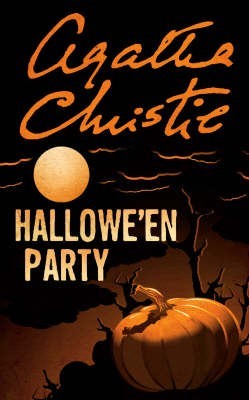
Hallowe’en Party
By: Agatha Christie
Genre: Mystery, British Mystery
Publication Date: November 1969 (reissued in October 2006)
Pages: 320

When a Halloween party turns deadly, it falls to Hercule Poirot to unmask a murderer in Agatha Christie’s classic murder mystery, Hallowe’en Party.

At a Halloween party, Joyce – a hostile thirteen year old – boasts that she once witnessed a murder. When no one believes her, she storms off home. But within hours her body is found, still in the house, drowned in an apple-bobbing tub. That night, Hercule Poirot is called in to find the “evil presence.” But first he must establish whether he is looking for a murderer or a double-murderer…


Child’s Play or Child’s Murder? Agatha Christie’s Hallowe’en Party

Mrs. Ariadne Oliver is a kind, if somewhat scatterbrained lady, who loves apples and writes bestselling murder mysteries. Though a delightful person, unfortunately, she has never existed. Mrs. Ariadne Oliver is a literary character, a creation of Dame Agatha Christie who introduced her in her later books as a wry alter ego.

In 1969, Mrs. Oliver is about to celebrate Halloween at her friendsโ€™ house in Kent, UK. As the hostess is bustling around, trying to get everything in order, Mrs. Oliver ponders the difference between squash and zucchini, between Halloween and Thanksgiving, and between life and death:

โ€œIt was rather remarkable, seeing so many pumpkins or vegetable marrows, whatever they areโ€ฆ The last time I saw one of theseโ€ฆwas in the United States last year โ€“ hundreds of them. All over the house. Iโ€™ve never seen so many pumpkinsโ€ฆThey were everywhere in the shops, and in peopleโ€™s houses, with candles or nightlights inside them or strung up. Very interesting, really. But it wasnโ€™t for Halloweโ€™en party, it was Thanksgiving. Now Iโ€™ve always associated pumpkins with Halloweโ€™en, and thatโ€™s the end of October. Thanksgiving comes much later, doesnโ€™t it? Isnโ€™t it November, about the third week in November? Anyway, here, Halloweโ€™en is definitely the 31st of October, isnโ€™t it? First Halloweโ€™en and then, what comes next? All Soulsโ€™ Day? Thatโ€™s when in Paris you go to cemeteries and put flowers on graves. Not a sad sort of feast. I mean, all the children go too and enjoy themselvesโ€.

The jarring transition from grief in cemeteries to kids having fun captures the essence of Halloween. It is a holiday of candy and ghost stories; of pumpkins and ghouls; of good cheer and deep fear. And in her own inimitable way, Ariadne Oliver โ€“ or rather, her creator, Agatha Christie โ€“ has captured the deep duality of this strangest of all feasts.

Halloweโ€™en Party is not as well-known as Christieโ€™s earlier novels, but it is just as accomplished, while considerably darker. Published in 1969, it features indefatigable Hercule Poirot who, by this time, would be around 120 years old. But he is still capable of solving a murder mystery. Poirot is invited by Mrs. Oliver to investigate a series of crimes around the Quarry Garden in Kent. The crimes are atrocious: four murders, two of them involving children, and an attempted murder of yet another child. The ambience is brooding and ominous: a party ending with a corpse; a mysterious sunken garden; a contested country estate.

We could easily imagine the setup as the beginning of a slasher movie. And indeed, the novel generates a sense of dread by constantly hinting at some unspecified demonic forces at play. There are so many references to serial killers, insanity, witches, and ghouls, you would expect the knife-wielding Michael Myers to pop up from behind the bushes and go on a rampage. After all, the first Halloween movie that crystallized the connection between the holiday and slasher aesthetics came out less than ten years after Christieโ€™s novel, in 1978.

But this is not Christie. Though some of her other novels verge on supernatural horror (especially the superb And Then There Were None, 1939), in her Poirot books, the solution is always rational and logical, the horror of violence defused by reducing it to a bloodless puzzle. At the end, there is a logical explanation, justice is done, and the cozy mystery solved. Poirot, the voice of reason, dismisses out of hand any talk of madness, possession, or ghosts. In Poirotโ€™s world, mayhem is only a pretext for ratiocination, a game with set rules, a game even a child can play. And so, despite the gruesome nature of the murders in Halloweโ€™en Party, the motive for them is neither sexual nor supernatural but a good old-fashioned desire for profit and fear of discovery (spoilers alert!). Poirotโ€™s reasonable explanation for the deaths of 13-year-old Joyce and her little brother is supposed to dispel the horror of their violent end.

But does it? By the time the murderers finally get their just comeuppances (spoilers alert again!), we have been inundated with so many disturbing references to madness, sexual depravity, possession, demonic forces, and the Devil that the tidy ending rings hollow. As a cleaning lady who is reputed to be a witch ominously suggests, the smug upper-middle-class suburb of Woodleigh Common is infested with evil: โ€œthe devilโ€™s always got some of his own. Born and bred to it.โ€ When the children of Woodleigh Common are having a Halloween party, is it a childโ€™s play or a childโ€™s sacrifice?

Mrs. Oliverโ€™s stream of consciousness quoted above is, in fact, a pretty accurate summary of the history of Halloween. It started as the pagan feast of Samhain and later merged with the Catholic All Saintsโ€™ Day, designated as such by Pope Gregory III in the eighth century. The night before November 1 was known as All Souls, or All Hallows, Eve, which is the origin of the word Halloween, still spelled in Christieโ€™s novel in the old-fashioned way with an apostrophe. Neither Samhain nor All Hallows Eve were innocent entertainment. Samhain may have involved human sacrifices, while All Hallows Eve was believed to be the time when the dead walk among the living. In the Middle Ages, the fear of ghosts and witches was absolutely real, and neither were a laughing matter. Even the carnival elements โ€“ dressing up, masking, drinking, and dancing โ€“ were linked to fertility cults that warded off death by engaging in sexual magic.

The reason why Halloween mutated from a pagan ritual to a kiddiesโ€™ night out had to do with the rise of science and rationalism in the Industrial Age. Folklore and superstition became an embarrassing reminder of the more โ€œprimitiveโ€ stages of cultural development. The Victorians saw themselves as the adults of history; everything that went on before was childish, immature; in short, a childโ€™s play.

Only it did not quite work out this way. Nightmares turned out to be impervious to the light of reason; science did not dispel the fog of superstition; and irrational evil came back in force during the massacres of the last century. And Halloween persisted in its duality: both a whimsical entertainment and a night of terror; both a childโ€™s play and adult horror; both trick-or-treating and serial murder.

Halloweโ€™en Party reflects this duality. Some of the customs in the novel will strike the American reader as quaint. There is no trick-or-treating but there is bobbing for apples (lifting apples from a bucket of water with your teeth). No face-painting or masks but mirrors are handed out, so girls can see faces of their future husbands (a practice widespread in medieval Europe and reflected in some spooky German and Russian ballads about a dead bridegroom coming to fetch the incautious bride). No candy but there is the Snapdragon โ€“ a dish of raisins set on fire. All these customs descend from ancient pagan rituals: apples are linked to fertility cults; mirrors trap souls; and the Snapdragon recalls the Viking funeral pyre. Surrounded by echoes of the Druidic ceremonies, the murder of a young girl is initially presented as some sort of demonic sacrifice, or perhaps a sex crime perpetrated by a madman.

But at the end it turns out to have been just a game. Christieโ€™s novels seldom leave you with unanswered questions about the nature of evil or the origins of criminality. They are soothing puzzles to occupy your mind; cozy mysteries; precursors to Midsomer Murders. And yet, even as all the loose ends are tied up, there is something darker left unspoken. Next time you want to attend a Halloweโ€™en Party, remember that at All Soulsโ€™ Eve, evil walks, and evil is not a childโ€™s play. Dame Agatha Christie who was knighted by the Queen for her contribution to British culture knows how to have her cake and to eat it; to reassure her readers and to disturb them; to have fun and to teach a lesson. So. letโ€™s have Mrs. Ariadne Oliver, Christieโ€™s ironic self-portrait, have the last word, as she does in Halloweโ€™en Party:

โ€œโ€™Thatโ€™s right,โ€™ said Mrs. Oliver in an exaggerated voice, โ€˜blame it all on me as usualโ€™โ€


Boo-graphy:
Elana Gomel was born in a country that no longer exists and has lived in many others that may, or may not, be on the road to extinction. She currently resides in California. She is an academic with a long list of books and articles, specializing in science fiction, Victorian literature, and serial killers. She is also a fiction writer who has published more than ninety short stories, several novellas, and three novels. Her story โ€œWhere the Streets Have No Nameโ€ was the winner of the 2020 Gravity Award, and her story โ€œMine Sevenโ€ is included in The Best Horror of the Year 13 edited by Ellen Datlow. She is a member of HWA.

Little Sister
A schoolgirl steps between a soldier and a ravening monsterโ€ฆ

1943. Soviet Union is under attack as WW2 is raging. Fighting in the doomed battle of Kursk, Andrei finds himself in a strange city where Svetlana, a girl he has never seen but who looks eerily familiar, saves him from a fist-faced creature. When Svetlanaโ€™s family is lost, the two embark on a harrowing odyssey across the snow-covered plain, battling deformed former humans and taken prisoners by the army of black stars. Against impossible odds, they reach their destination where they discover a secret that will change history.

Little Sister is a dystopian historical fantasy set in the Soviet Era. Presenting a richly imagined alternative history world, this is a tale of friendship, survival, and heartbreak. Fans of The Book Thief and The Wolfhound Century will enjoy this striking fantasy rooted in Russian fiction.

GUEST BOOK REVIEW by William Meikle: 31 Days of A Night in the Lonesome October: Day 14

1

A Night in the Lonesome October
All is not what it seemsโ€ฆ

In the murky London gloom, a knife-wielding gentleman named Jack prowls the midnight streets with his faithful watchdog Snuff โ€“ gathering together the grisly ingredients they will need for an upcoming ancient and unearthly rite. For soon after the death of the moon, black magic will summon the Elder Gods back into the world. And all manner of Players, both human and undead, are preparing to participate.

Some have come to open the gates. Some have come to slam them shut.

And now the dread night approaches โ€“ so let the Game begin.

Author: Roger Zelazny
Illustrator: Gahan Wilson
Genre: Fantasy, Horror, Gaslamp
Publisher: Avon Books
Publication Date: September 1, 1994
Pages: 280


October 14th

Snuff and Greymalk have a conversation that serves as an infodump bringing us up to speed on the current situation. The vicar has been taking potshots at the players with his crossbow, the Great Detective is prowling in the area and we discover that the players not only have familiars, but each is in possession of at least one magic item; Jack’s blade, Jill’s broom, the mad monk’s icon ( stolen from a Mad Arab…I think I can guess what that must be), the Count’s ring, the Druid’s scythe and so on. The conversation doesn’t just provide us with more depth on the game though, it moves the plot along to the next level when Greymalk announces she has found a body.

We discover that Snuff’s mental map is more magical than we thought, in that in some cases it might allow him to track backwards in time along the lines to find out what was going on in the past. Not this time though; the body Greymalk takes him to see is that of a policeman up from the city. His throat has been cut, his eyes pecked out by crows. Snuff cannot allow it to be discovered so close to Jack’s house and resolves to drag the body to the river and drop in it where it can be carried far away. It’s going to take him a while though, and at the end of the day he has to hide the body in a copse and return home for some well earned sleep. He’s only got halfway to the river.

We’ve had a lot of info given to us in that chapter, all skillfully woven into snappy dialogue to make it palatable. And the death of the policeman means that the stakes have just got that much higher for everyone; the players have, up till now, been mostly minding their own business. I suspect that’s all about to change. We’re into the meat of it now; the chapters are getting longer, the cast are moving about more frantically and interacting more often. I expect some mayhem soon.


Boo-graphy:
William Meikle is a Scottish writer, now living in Canada, with more than thirty novels published in the genre press and over 300 short story credits in thirteen countries.

He has books available from a variety of publishers including Dark Regions Press, Crossroad Press and Severed Press, and his work has appeared in a number of professional anthologies and magazines.

He lives in Newfoundland with whales, bald eagles and icebergs for company.

When heโ€™s not writing he drinks beer, plays guitar, and dreams of fortune and glory.

Website

The Green & the Black
A small group of industrial archaeologists head into the center of Newfoundland, investigating a rumor of a lost prospecting team of Irish miners in the late Nineteenth century.

They find the remains of a mining operation, and a journal and papers detailing the extent of the miners’ activities. But there is something else on the site, something older than the miners, as old as the rock itself.

Soon the archaeologists are coming under assault, from a strange infection that spreads like wildfire through mind and body, one that doctors seem powerless to define let alone control.

The survivors only have one option. They must return to the mine, and face what waits for them, down in the deep dark places, where the green meets the black.

William’s Halloween Giveaway

GUEST MOVIE REVIEW by Karissa Laurel: The Descent

Mother & Son Horror Movie Review: The Descent

Iโ€™d originally planned do a review, with my 19 y.o. son, of Train to Busan, which was one of my favorite horror movies watched in the previous year. Iโ€™m always a sucker for a good Zombie flick, and this was one of the best Iโ€™ve seen in a while. (Go watch it. Keep some tissues nearby for the ending). But I kept getting lured into watching other horror movies, so he and I never got around to watching it again for the purposes of writing a review.

I also thought I might do a review of Midnight Mass, which is definitely my favorite horror film/series of the year and probably cements Mike Flannagan as my new favorite horror director. Yes it was brutal But it was so brilliantly written and acted. It was perhaps the most sympathetic horror story Iโ€™ve ever watched. However, the kiddo hasnโ€™t watched it yet, and although Iโ€™ve tried talking him into it, heโ€™s been reluctant.

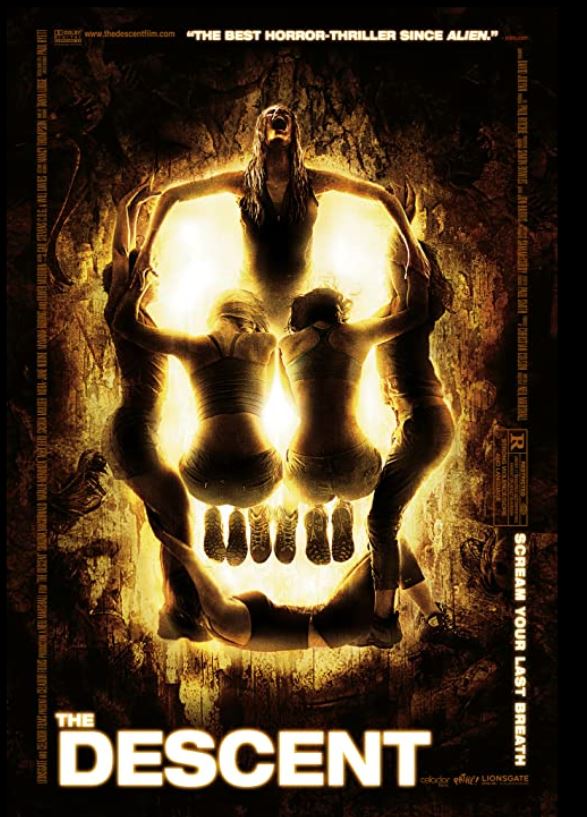
Ultimately I decided to ask my son what horror movie he thought I should watch, and he picked one of his most favorites: The Descent (2005), which you can watch for free right now if you have Amazon Prime. First, can I say how thrilled I was to find out one of my sonโ€™s favorite horror movies features a band of totally badass women? It passes the Bechdel Test with flying colors, and while it has tons of gore and brutal fight scenes, it features absolutely zero sexual violence. Iโ€™m so proud. wipes proud mom tear from eye. While the movie poster features a quote that says something about it being the best horror thriller since Alien, I canโ€™t quite agree with that statement. But I will say it was worth the hour or so I spent on it.

Hereโ€™s a blurb from Amazon: A girls’ trip to explore a [unmapped and โ€œundiscoveredโ€] labyrinth of North Carolina caves takes a terrifying turn in this spelunking scarefest.

Horror is highly subjective. What scares one person wonโ€™t scare another. In this case, the horror relies a lot on claustrophobia. I donโ€™t necessarily have a nagging fear of enclosed spaces, though. In fact, Iโ€™ve explored quite a few caves over the years and always marveled at the experience in a positive way. But I think itโ€™s fair to say that particularly element went over well (or dreadfully) with my son. Thereโ€™s also the fact that he was born in West Virginia (mountain territory) and spends a lot of time there with extended family. He has intimate experience with old, abandoned mines and such and gets a kick out of exploring them for the horror thrill of it. I talked to him more in depth about this movie after we watched it this past weekend, and hereโ€™s what he had to say:

Me: Why is The Descent one of your favorites, and what about it, in particular, makes it scary for you?

D: The reason I like decent is because itโ€™s a breath of fresh air.

Me: In what way?

D: I feel as if itโ€™s similar to horror movies of that time but mixes physical horror with psychological horror. You have cramped areas, no map, no one knows weโ€™re you areโ€ฆ

Me: So, it’s like the perfect storm of bad luck, and that type of construct is also kind of believable.

D: And growing up visiting mountains a lot makes this story scary because these things come up to hunt, and yeah that was a great way to put that storm of bad luck. Like, could they hunt you?

Me: What would you say was your most favorite scene or element? Or what one thing really stood out to you in this movie, where you were like: Oh that was cool! Or, That was especially scary! (WARNING: HIS ANSWER INCLUDES A SPOILER)

D: My favorite moment was when the main character is fighting the girl creature in the pit and has to kill it with a tooth bone. It shows truly how desperate she is to live plus how badass/resourceful she is.

Me: Oh yeah. That was a great (disgusting) scene.

D: Yeah, thatโ€™s why itโ€™s my favorite. LOL.

Me: Anything else we should say about this movie?

D: If you like two badass women kicking creature butts, watch this movie.

Me: LOL. Thatโ€™s perfect, actually.

Ultimately, the movie didnโ€™t really scare me because the claustrophobia factor, a big element, didnโ€™t elicit as strong of feeling of dread in me as it did for my son. I also felt the โ€œmonsterโ€ factor could have used a lighter touch, particularly in building suspense in the beginning. I wouldโ€™ve liked more teasing, more suspense. I think the monster element could have happened more subtly over time until one big shocking reveal and the fight to stay alive and escape thereafter.

I canโ€™t say, however, that the idea of trapping a group of women in a cave that has no obvious escape route, and then sending a ravenous horde that has evolved to thrive in the underground gloom after them, isnโ€™t a great recipe for a horror film. It was, and itโ€™s not a bad way to spend a Saturday afternoon this Halloween season. Besides, as I said before, horror is subjective. This movie might be the one that perfectly tickles your horror bone.


Boo-graphy:
Karissa Laurel lives in North Carolina with her kid, her husband, the occasional in-law, and a very hairy husky named Bonnie. Some of her favorite things are coffee, dark chocolate, superheroes, and Star Wars. She can quote Princess Bride verbatim. In the summer, she’s camping, kayaking, and boating at the lake, and in the winter, she’s skiing or curled up with a good book. She is the author of the Urban Fantasy trilogy, The Norse Chronicles; Touch of Smoke, a stand-alone paranormal romance; and The Stormbourne Chronicles, a YA second-world fantasy trilogy.

Serendipity at the End of the World
Serendipity Blite and her sister, Bloom, use their unique talents to survive the apocalyptic aftermath of the Dead Disease. When Bloom is kidnapped, Sera is determined to get her back. Attempting a rescue mission in an undead-infested city would be suicidal, so Sera forms a specialized team to help retrieve her sister. But unfortunate accident sets Sera teetering on the edge of death. She must fight to save her own life, because surviving could mean finding family, love, and possibly a cure.

You can find it on Kindle Vella
New episodes come out every Saturday

GUEST BOOK REVIEW by Karissa Laurel: The Haunting of Hill House & NOS4A2

Reviewing Horror Novels:
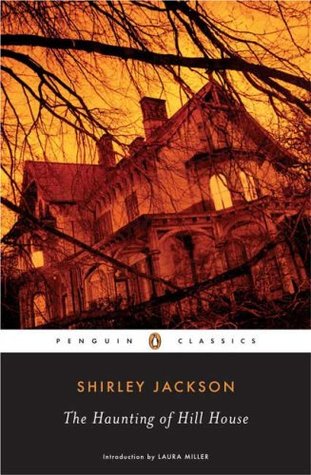
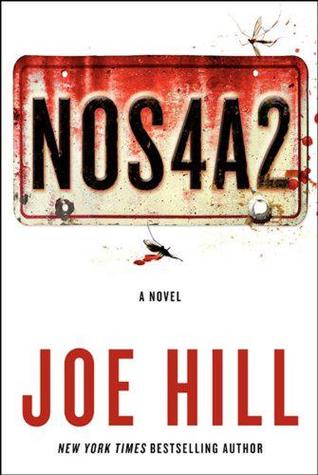
Haunting of Hill House by Shirley Jackson & NOS4A2 by Joe Hill

I was working on an interview post for Meghan about Halloween, and that got me in the mood for a good horror story. Since I listen to way more audiobooks than I can afford to buy, I often rely on my library to supplement my Audible diet. When I went searching on my libraryโ€™s audiobook app, I stumbled across The Hunting of Hill House. While Iโ€™m familiar with Shirley Jackson and the story on which a terrible 90s movie and a pretty good recent Netflix series is based, Iโ€™ve never actually read the source material. So, I decided it was time to remedy that.

Iโ€™m glad I did. Hill House is clearly a foundational story in the horror genre, particularly the hunted house sub-genre. You can see Jacksonโ€™s inspiration in so many stories that came after hers. Stephen King openly admits Hill House was a big influence on The Shining, for example. Eleanor and Danny Torrance have a lot in common. So does Hill House and Overlook Hotel.

If you know nothing about The Haunting of Hill House, hereโ€™s a blurb: โ€œIt is the story of four [paranormal activity] seekers who arrive at a notoriously unfriendly pile [abandoned mansion] called Hill House: Dr. Montague, an occult scholar looking for solid evidence of a “haunting”; Theodora, the lighthearted assistant; Eleanor, a friendless, fragile young woman well acquainted with poltergeists; and Luke, the future heir of Hill House. At first, their stay seems destined to be merely a spooky encounter with inexplicable phenomena. But Hill House is gathering its powersโ€”and soon it will choose one of them to make its own.โ€

The main protagonist is Eleanor, who has an extremely sensitive connection to the house. Jackson, however, leaves what the house actually is, and what the haunting actually is, very much up to the readerโ€™s interpretation. Read carefully from here onโ€ฆ my discussion will contain spoilers. For me the fact that Jackson made a point of mentioning Eleanor’s childhood “poltergeist” experience (an avalanche of rocks rained on Eleanorโ€™s childhood home without any clear source or reason) meant it was Jackson‘s intent to show that the โ€œhauntingโ€ at Hill House wasn’t entirely inside Eleanor’s head. Plus the book clearly states the other members of the party were witnesses the haunting events (beating on doors, vandalism of Theodoraโ€™s clothes, writing on the walls in what seemed like blood, a frigid cold presence that sucked the warmth out of rooms). Whether Eleanor is the poltergeist herself–she might be some kind of telekinetic–or is highly psychically sensitive to those kinds of energies is what’s so wonderfully ambiguous in this story. Ambiguousness plays a big part in heightening the storyโ€™s sensations of terror and dread, and itโ€™s often my most favorite tool in horror.

I decided that, for me, I believe Eleanor was psychically sensitive to the energies of the house, which had a history and reputation for malevolence long before Eleanor’s arrival. Those energies manipulated her specifically because of her vulnerabilities and sensitivities.

The arrival of Ms. Montague (Dr. Montagueโ€™s wife and a self-proclaimed spiritualist/psychic) seemed to underscore thisโ€”she was the embodiment of dramatic irony. She was so insistent that the others in the party had no psychic ability. However, when she worked with โ€œplanchetteโ€ (as in a Ouija Board planchette), all the information Ms. Montague received from it had to do with โ€œNellโ€ i.e, Eleanor, which proved how physically sensitive Eleanor was and how obtuse Ms. Montague actually was even, although she believed the opposite about herself. This irony was one of my favorite devices in the story. The results from Ms. Montagueโ€™s consultations with โ€œplanchetteโ€ were yet another clue that the things happening to Eleanor were not completely in Eleanorโ€™s head. Yet, it also served to further muddy how much of what happened in the house was Eleanorโ€™s doing and how much was the house itself.

In the end, it’s my belief that (BIG SPOILER) Eleanor’s spirit becomes a part of the house’s energies along with those of the others who died there before her. I think before her death, Eleanor was already starting to become a part of the houseโ€™s sentience, as if the house were absorbing her and vice versa. The house is basically an amalgam of all the people it victimized over the years.

I can’t believe it took me this many years to finally get around to reading this book, but I’m glad I did. It’s such a cultural touchpoint, I think it should be expected reading as much as Dickens or Shakespeare or Faulkner or Steinbeck, etc. Itโ€™s also interesting in its themes of female sexuality. Itโ€™s definitely ahead of itโ€™s time and such a masterful portrayal of the โ€œhuman conditionโ€. Iโ€™ll fight anyone who says genre fiction canโ€™t represent the human experience as well as literary fiction. Haunting of Hill House should prove all genre naysayers wrong.

After finishing Hill House, which was indeed very literary in tone and style, I was still in the horror mood, so I went back to my library app and found N0S4A2, which has showed up repeatedly over the years in lists of โ€œbest horror novelsโ€. The book is by Joe Hill, who is Stephen Kingโ€™s son. Itโ€™s written in a much more commercial and accessible style, and Hill is clearly influenced by the works of his father. So, if youโ€™re a King fan, which I am, you might enjoy Hillโ€™s books, too.

Again, for those who may be unfamiliar, hereโ€™s a blurb (with which I have taken great liberties):

Victoria โ€œVicโ€ McQueen, a deeply flawed woman who spends most of the novel in a state of perpetual denial, has an uncanny knack for finding things using a Raleigh Tuff Burner bike and a magical covered bridge. Joe Hill is, as I mentioned, Stephen Kingโ€™s son, so itโ€™s no surprise this story is set in New England, and what is a New England story without a covered bridge?

The magic bridge eventually takes Vic to Charles Talent Manx, a soul sucking vampiric creature-person who drives a cool old Rolls Royce Wraith that’s a lot like Kit from Knight Rider if Kit were possessed by a demon. Or, you know, kind of like that evil 1958 Plymouth Fury in Christine, a book by Joe Hillโ€™s dad. Anyway, Charlie Manx likes kids but not in that “kiddie fiddler” kind of way that everyone wrongly accuses him of, and he kidnaps and takes the kids to a perpetual childhood in “Christmasland” (Hint: Christmasland isn’t as fun as it sounds). Helping him is the “Gasmask Man”, a simple-minded, childlike man who really, really hates women, especially “Mommies,” and does everything he can to torture and abuse them throughout the book. Fun times.

Manx sees Vic as a threat and tries to do bad things to her, but Victoria manages to escape and spends decades dealing, poorly, with the emotional trauma of her magical abilities and her near-death run-in with Manx and Gasmask Man. She has some good times, even manages to fall in love with a wonderful cinnamon roll of a man (seriously, Lou is the best character in the book), and she writes some successful children’s novels (that sound so cool they should exist in real life), but literal demons from her past haunt her into near insanity, and her life starts falling apart.

Eventually Vic, Manx, and Gasmask Man have their final showdown when Manx, still pissed that Victoria got away from him all those years ago, comes to seek his revenge. She puts on her big girl panties long enough to get stabbed, burned, beaten, and broken a whole lot before she finally goes Grinch all over Manx’s Christmasland.

Iโ€™m not going to lie. I struggled with this book. There was a time when I had more patience and tolerance for horror that used misogyny as one of its elements. That the misogyny was presented as an evil thing that came from the โ€œbad guysโ€ who may or may not meet justice for their violent hateful ways isnโ€™t enough justification for me anymore. I donโ€™t have much stomach left for premises that are predicated on violence against children and women (mothers in particular). I feel like weโ€™ve been victims in media far too long, and Iโ€™m just so tired of that trope.

That Vic, a woman and a mother, turns out to be a righteous hero (somewhat of an anti-hero at times) was perhaps a redeeming element. Sheโ€™s a complex character, written well. She and Lou, a great gentle giant of a man who was a great contrast to the woman hating violence of Manx and Gasmask Man, are what made the book worth finishing. There were more than a few times when I wanted to give up on it, but Lou and Vic were worth rooting for.

I might read The Haunting of Hill House again in the future. Itโ€™s the kind of book that will, I suspect, stand up to re-reading and will reveal new secrets and themes and elements upon future study. For me, N0S4A2 has none of that. Not that a good entertaining book needs to be deep or literary to be worthwhile. The kinds of books I write donโ€™t stand up to long term scrutiny either. But as far as horror goes, phycological terror always appeals to me more than bloody violence and gore. For that reason alone, I definitely recommend The Haunting of Hill House over N0S4A2. But, I think any well rounded reader, especially ones who are fond of horror, would get something out of reading both.


Boo-graphy:
Karissa Laurel lives in North Carolina with her kid, her husband, the occasional in-law, and a very hairy husky named Bonnie. Some of her favorite things are coffee, dark chocolate, superheroes, and Star Wars. She can quote Princess Bride verbatim. In the summer, she’s camping, kayaking, and boating at the lake, and in the winter, she’s skiing or curled up with a good book. She is the author of the Urban Fantasy trilogy, The Norse Chronicles; Touch of Smoke, a stand-alone paranormal romance; and The Stormbourne Chronicles, a YA second-world fantasy trilogy.

Serendipity at the End of the World
Serendipity Blite and her sister, Bloom, use their unique talents to survive the apocalyptic aftermath of the Dead Disease. When Bloom is kidnapped, Sera is determined to get her back. Attempting a rescue mission in an undead-infested city would be suicidal, so Sera forms a specialized team to help retrieve her sister. But unfortunate accident sets Sera teetering on the edge of death. She must fight to save her own life, because surviving could mean finding family, love, and possibly a cure.

You can find it on Kindle Vella
New episodes come out every Saturday

GUEST POST: Karissa Laurel

Halloween Spirits:
A Pairing of Scary Movies & Contemporary Cocktails

Midnight Mass
Really more of a limited series than a movie, Midnight Mass is the latest Netflix entry from Mike Flanagan, the director who brought us The Haunting of Hill House, The Haunting of Bly Manor, and many more. Heโ€™s quickly becoming one of my favorite horror directors, and if you like scary movies but havenโ€™t seen Midnight Mass yet, you really must: โ€œThe arrival of a charismatic young priest brings glorious miracles, ominous mysteries and renewed religious fervor to a dying town desperate to believe.โ€

The movie centers around a devoted population (most of the inhabitants of a tiny, isolated fishing village) who attend mass in a small catholic church. The congregants regularly participate in communion and eventually discover the sacramental wine is more than merely the symbolic blood of Christ. With that in mind, Iโ€™m paring this movie with โ€œThe Devilโ€™s Margarita,โ€ a tequila cocktail with a red wine “float.”

1 1/2 ounces blanco tequila
1 ounce lime juice, freshly squeezed
3/4 ounce simple syrup
1/2 ounce red wine

Add the tequila, lime juice and simple syrup to a cocktail shaker with ice and shake until well-chilled. Strain into a cocktail glass. Float the red wine on top by slowly pouring it over the back of a bar spoon so it pools on the surface of the drink. Garnish with a lime wheel.

The Shining
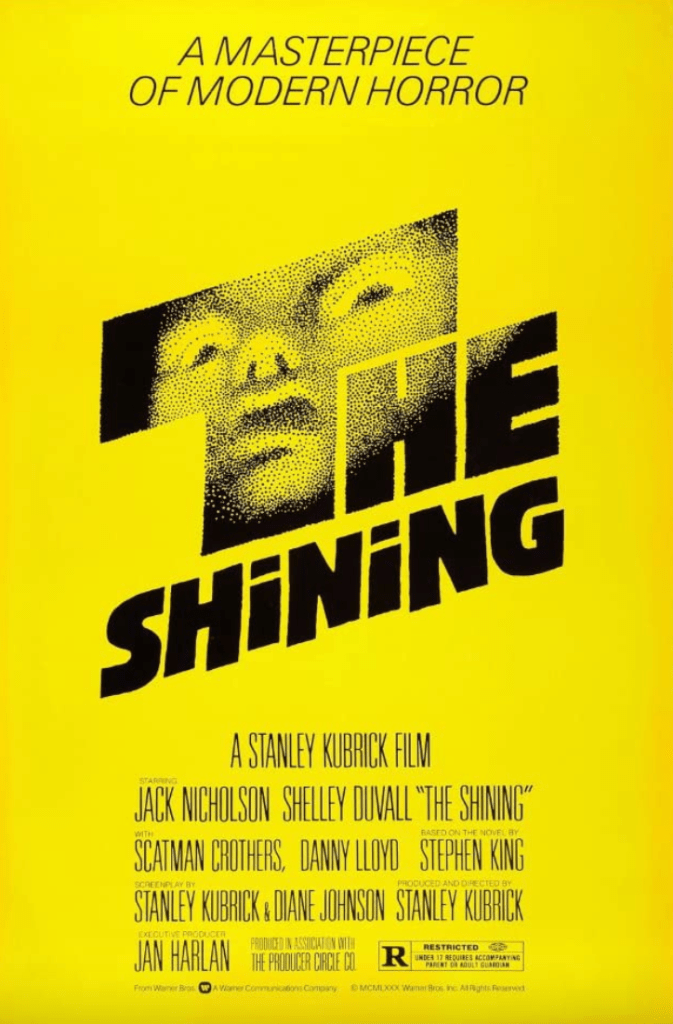
The Shiningโ€”directed by Stanley Kubrick, based on the novel by Stephen King about a haunted hotel, starring Jack Nicholson and Shelly Duval. Itโ€™s really one of the best horror movies out there and one of my perennial favorites. I can watch it over and over. That wild look in Jack Nicholsonโ€™s eye as he peers through the hole he just hacked into the door of the bathroom where his wife is hiding and snarls โ€œHereโ€™s Johnny!โ€ will never not be scary as hell.

Fun movie fact: How is it that Kubrick, infamous for his painstaking attention to detail, allows Jack Torrance to order a glass of bourbon, only for the ghost bartender to pour from a bottle that is clearly Jack Danielโ€™s Tennessee whiskey? Anywayโ€ฆ as for a cocktail pairing, I thought to find something older and classic that might have been served at The Overlook Hotel in its glory days. Instead of that, I cheated and checked Google. A website called 12 Bottle Bar has a recipe for a drink based on the movie. Itโ€™s called the โ€œJack Torranceโ€.

1 oz Jack Daniels
3 oz Advocaat
2 Dashes Angostura Bitters (optional)

Place all ingredients in a mixing glass half full with crushed ice. Shake and pour, without straining, into a rocks glass

Or, if something sweeter is more to your taste, maybe youโ€™d prefer a little REDRUM Punch:

1 cup of orange juice
1 cup of pineapple juice
1/4 cup lime juice
1/4 cup rum
1/4 cup dark rum
1/2 cup of grenadine

In a pitcher, combine the juices, the rum, and the grenadine. Stir. Pour into ice-filled glasses and serve with an orange slice and maraschino cherries.

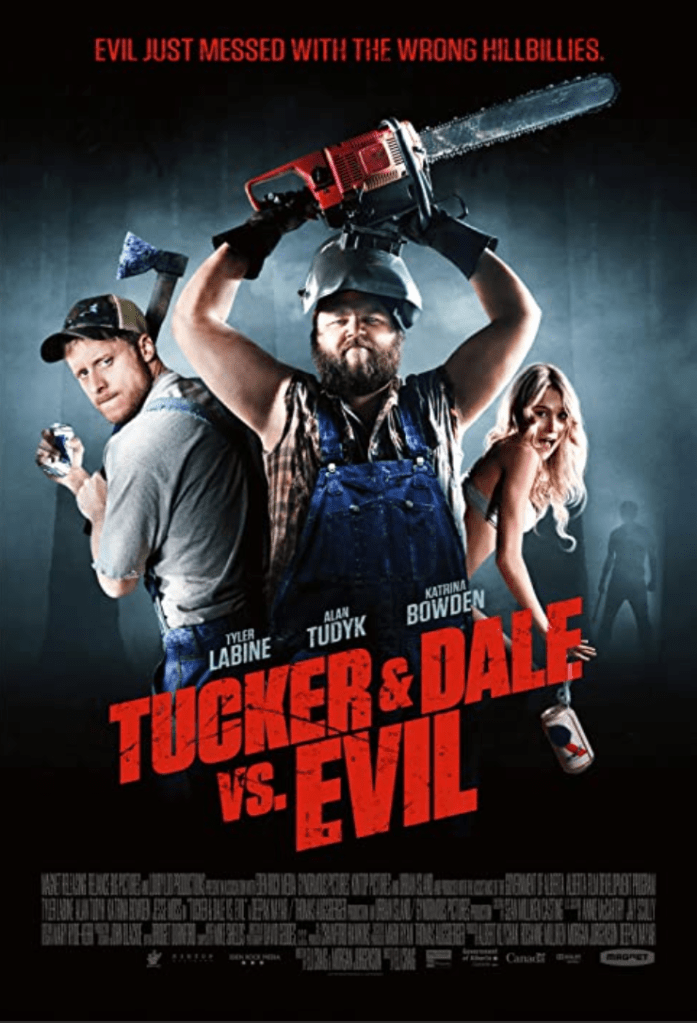
Tucker & Dale vs. Evil
From the hapless victimsโ€™ points of view, Tucker and Dale are the worst kind of psycho killers, but the audience is in on the secret. Theyโ€™re really just a couple of good olโ€™ boys who want to spend a weekend alone in the woods getting back to nature and cracking a few cold beers. What happens during their vacation is really just a series of unfortunate, hilarious, and grisly events. With that in mind, you could probably crack a few Pabst Blue Ribbons to enjoy with this movie, but since cocktails is the theme, cocktails (made with beer) is what youโ€™re going to get. The classic Shandy:

6 ounces pale ale or lager beer (Your favorite cheap beer works great for this!)
6 ounces ginger ale, ginger beer, lemon lime soda (Sprite), or sparkling lemonade
For the garnish: lemon wedge (optional)
Optional: 1 dash bitters adds a complex flavor

Add the beer and mixer to a glass and stir gently to combine. Garnish with a lemon wedge.

Cabin in the Woods
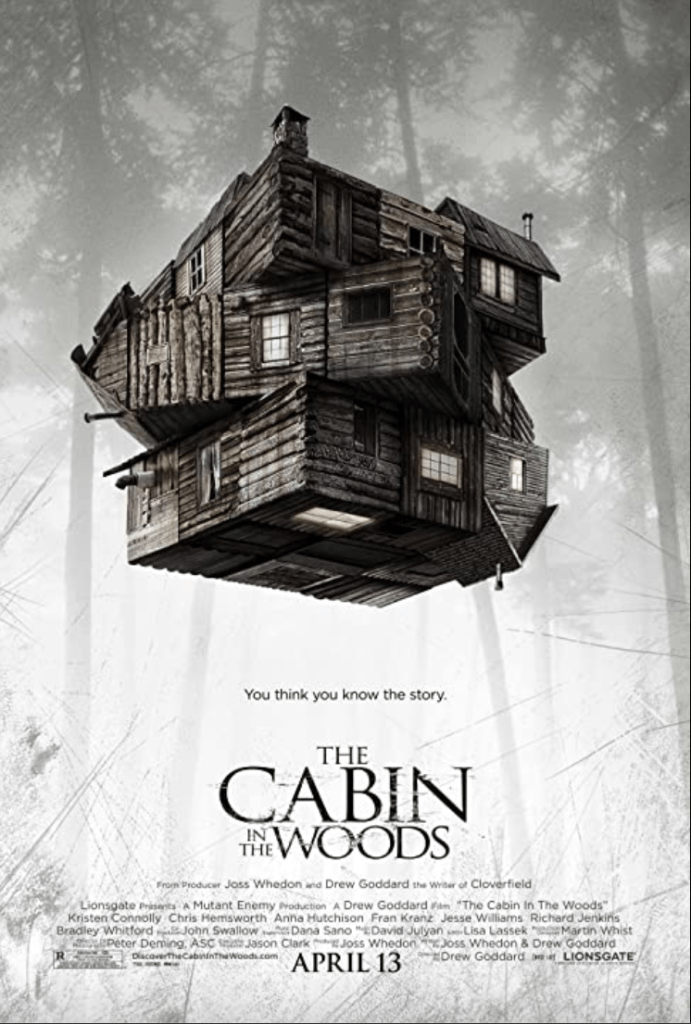
Similar to Tucker and Dale Vs Evil, Cabin in the Woods is another movie that brilliantly subverts the most clichรฉ horror movie tropes. โ€œFive friends arrive at a secluded cabin with clear rules for their retreat. But when protocol is broken, punishment is swift — and everyone will pay.โ€ While Tucker and Dale use irony and humor as their main tool, Cabin in the Woods sticks to its horror roots. Itโ€™s got gadgets and gizmos a-plenty. Itโ€™s got monsters and nightmares galore. You want dismembered body parts? Itโ€™s got twenty (at least)!

Donโ€™t watch the end if you have a weak stomach, but if a little (okay, a lot) of blood and gore is your thing, then a classic Bloody Mary might be the perfect movie refreshment for you.

Celery salt
1 lemon wedge
1 lime wedge
2 ounces vodka
4 ounces tomato juice
2 teaspoons prepared horseradish
2 dashes Tabasco sauce
2 dashes Worcestershire sauce
1 pinch ground black pepper
1 pinch smoked paprika
Garnish: parsley sprig
Garnish: green olives
Garnish: lime wedge
Garnish: celery stalk

Pour some celery salt onto a small plate. Rub the juicy side of the lemon or lime wedge along the lip of a pint glass. Roll the outer edge of the glass in celery salt until fully coated, then fill the glass with ice and set aside. Squeeze the lemon and lime wedges into a shaker and drop them in. Add the vodka, tomato juice, horseradish, Tabasco, Worcestershire, black pepper, paprika, plus a pinch of celery salt along with ice and shake gently. Strain into the prepared glass. Garnish with parsley sprig, 2 speared green olives, a lime wedge and a celery stalk (optional).

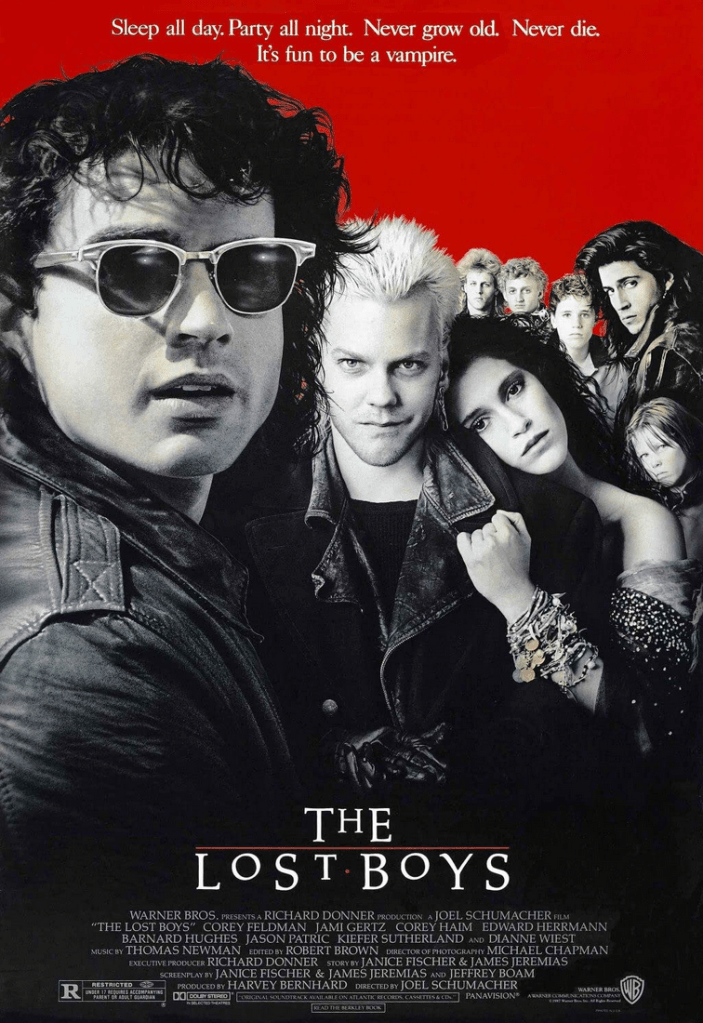
The Lost Boys
This was the first โ€œrealโ€ horror movie I remember watching as a kid. I still love the soundtrack to this day. It was fully of great 80s cheese and glamorous vampire boys that would put poor Edward Cullen to shame. Classic duo Corey Haim and Corey Feldman use every tool in their arsenalโ€”holy water, wooden stakes, and of course garlicโ€”to battle a coven of blood sucking fiends and save their hot, broody older brother from supernatural, evil influences. If you want a drink thatโ€™ll keep away the vampires, too, then a Black Garlic Mojito might be just the thing for you:

1ยฝ ounce dark rum
1 orange wheel, sliced into halves
3 basil leaves, plus 1 sprig for garnish
1 ounce black garlic simple syrup*
Soda water

Muddle basil and half an orange wheel in the bottom of a rocks glass filled with ice. Add black garlic syrup and rum. Stir, and top with soda water. Garnish with orange and basil.

*Black garlic simple syrup
ยฝ cup hot water
ยฝ cup Demerara sugar
3 cloves black garlic
1โ€“2 tablespoons balsamic vinegar

To make syrup: Bring water to boil. Stir in the sugar until it dissolves. Pour the syrup into a blender and add garlic. Blend until the garlic is finely ground. Use a fine-mesh strainer to remove any solids. Add the vinegar and taste. It should taste slightly acidic with a sweet, earthy finish.


Boo-graphy:
Karissa Laurel lives in North Carolina with her kid, her husband, the occasional in-law, and a very hairy husky named Bonnie. Some of her favorite things are coffee, dark chocolate, superheroes, and Star Wars. She can quote Princess Bride verbatim. In the summer, she’s camping, kayaking, and boating at the lake, and in the winter, she’s skiing or curled up with a good book. She is the author of the Urban Fantasy trilogy, The Norse Chronicles; Touch of Smoke, a stand-alone paranormal romance; and The Stormbourne Chronicles, a YA second-world fantasy trilogy.

Serendipity at the End of the World
Serendipity Blite and her sister, Bloom, use their unique talents to survive the apocalyptic aftermath of the Dead Disease. When Bloom is kidnapped, Sera is determined to get her back. Attempting a rescue mission in an undead-infested city would be suicidal, so Sera forms a specialized team to help retrieve her sister. But unfortunate accident sets Sera teetering on the edge of death. She must fight to save her own life, because surviving could mean finding family, love, and possibly a cure.

You can find it on Kindle Vella
New episodes come out every Saturday