We need to talk. About Halloween candy. You’ve got it all wrong, I guarantee it. I’m sure you’re thinking to yourself, no way Mr. Frank, Reece’s Peanut Butter Cups are the best Halloween candy, I’m certain of it. And, while you make a good case, Reece’s are an incredible Halloween candy to score in your trick-or-treat bag (and I maintain that Reece’s Pieces are superior to the peanut butter cup, but that’s another argument for another time), they are not the ultimate score.
The problem is, the ultimate Halloween candy goes criminally unnoticed year after year. It’s not right. The greatest Halloween candy to land in your trick-or-treat bag (or bucket, which you shouldn’t be using anyway because trick-or-treat buckets are limited and cumbersome) is Willy Wonka’s Bottle Caps. See? I know, you just smacked yourself in the forehead and said, Duh!
What? You didn’t smack yourself in the forehead and say, Duh? There’s no possible way in the name of all the ghosts, ghouls, witches and Whatchamacallits that Willy Wonka’s Bottle Caps are the ultimate Halloween candy? They can’t possibly be better than a Reece’s (in any form), Snickers, 3 Musketeers or Skittles. You are a fool if that is your mindset.
Listen, I get it. You’ve been bombarded with big chocolate advertising you’re whole life. It started out with the chocolate bar, graduated to chocolate covered candies that refuse to melt in your mouth. From there it was peanuts and nougat. Add in a cookie and cover it with caramel. All wonderful, to be sure. But the more the big candy companies vie for your Halloween dollar, they more complex and over-thought the offerings become. With clever marketing they sell you on overindulgence. It’s unnecessary. You need to find your roots.
Let’s get back to basics, the sugar!
The heart of any candy, chocolate or otherwise, is sugar. Nope, it isn’t the cocoa bean that makes the confectionery world go ‘round. It’s the sugar cane!
Willy Wonka’s Bottle Caps are masterpieces of the use of sugar in candy.
When you think sugar you think candy, cake, flavored juice bastardizations and, of course, soda. Soda! Liquid candy! Mr. Wonka, when not slaving away over the Ultimate Gobstopper, married the best of both sugary worlds and created a soda flavored candy! Bottle Caps!
You must’ve tried them at some point. They are hard and disc-shaped like Smarties (another fine and underrated Halloween addition to any discerning trick-or-treat bag). They are chewable Necco Wafers but with a less chalky finish. They are fruity and vibrant like Skittles or Starburst. And, most amazing of all, when you bite into them there is a sort of effervescence on the tongue. No, they aren’t carbonated candy but they taste like carbonated candy. You’re favorite soda pop in a fun little bite-sized candy!
Does your precious peanut butter cup do that? Didn’t think so.
It’s cool. I know I’ve got your attention now. Its that marketing thing. Willy Wonka doesn’t wield the advertising budget of the other guys. But, Willy Wonka doesn’t need to invest in a Wall Street marketing firm to get his goodies sold. Nope, he puts his money where his mouth is. He takes it on down to Flavortown!
Still, its hard as hell to score yourself one of these little treasures on Halloween. The best you can hope for is that you’re local trick-or-treat stop has invested in a Willy Wonka Halloween candy mix ‘n match bag. They’ll have Nerds, Sweet Tarts, Laffy Taffy, and Gobstoppers. And of course, they’ll have those precious treasures, a sleeve of Bottle Caps.
Don’t be shy. Demand the Bottle Caps. Let it be known you want Bottle Caps and nothing less! Dip your grubby little hands into that bowl full of sugar overdoses and go for the Bottle Caps. Take two, you are in the know now.
Demand Bottle Caps when all they have is m&m’s and Twix (which, by the way, we all know that the Left Twix is the superior Twix.) Say nay when you are offered a Dum-Dum lollipop and tell the sugar dispenser they are the dumb-dumb for not stocking Bottle Caps this Halloween. Turn your nose up at Hershey bars, Crunch bars and Dove medallions.
Make a stand! Demand Bottle Caps.
This is a process. It won’t change in the course of one or two Halloweens. Play the long game. Get the word out around the neighborhood that the kids demand Bottle Caps first and foremost! Soon the adults will be stocking up on bulk purchases of Bottle Caps to be the most talked about house on the block that Halloween. Sooner or later you’ll get that one adult who has to stand out all around town. They will be giving out full sized tubes of Bottle Caps, the ultimate score! Greater than a full sized chocolate bar, more treasured than a two-cup Reece’s package. The full sized, large disced tube of Willy Wonka Bottle Caps is the greatest treasure anyone can hope for at Halloween.
We can get there. You and I. Together.
Happy Halloween!
Boo-graphy: Frank J. Edler is the author of many twisted novels and uncanny short stories often cited as ‘laugh out loud’ reads. His writing walks the fine line between horror and the bizarre. He resides in New Jersey, a land that is both horrific and bizarre. When not writing, Mr. Frank hosts the wildly popular Bizzong! The Weird & Wacky Fiction Podcast heard exclusively on Project Entertainment Network.
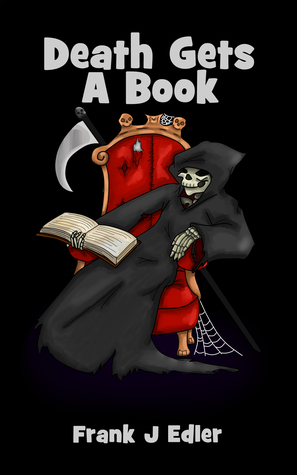
Death Gets a Book — Vincent and his nagging wife, Wanda wind up getting themselves killed in Tijuana. Vincent wakes to find that he is now the Grim Reaper. With minimal training he is cast into the world of Deaths to collect the souls of the dead. The only wrinkle is his dead wife has come back as a screaming Banshee. She is hellbent on getting her husband to realize that its not ’til death do they part and he is set on getting through his first day on the job.
He will not go it alone. Along the way he is helped by his co-workers: a cowboy, a midget, an action figure and a bumbling grim reaper from Salem.
Will Death get the soul to Charon’s skiff by the end of the work day or will a squadron of maniac Banshee’s stop Death and upend the balance of power in the underworld? And, will Vincent ever be rid of his nagging wife?
Death gets a book and now you do too!
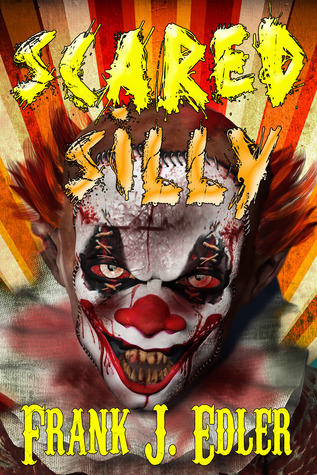
Scared Silly — What do you get when you mix a penis eating zombie with a downtrodden grim reaper then add a pinch of lycanthopic mad scientist, sprinkle it with a grocery store full of living food and mash it into a frightening red eyed monster?
You get SCARED SILLY!
Let author, Frank J Edler, take you into a world of not-so-serious horror. This collection features five frighteningly funny tales from the wicked and wacky writer. Laugh yourself to death as you read the stories: Old Scrote, SPLAT!, Death Gets A Life, GROSSeries and Wolfberries.
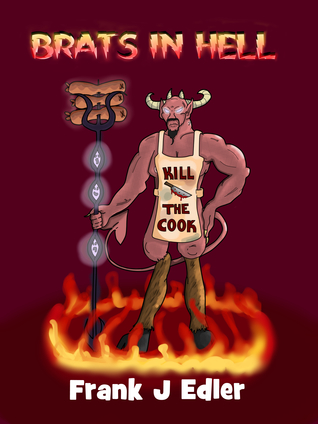
Brats in Hell — Otto Van Der Noodle has just been crowned the Bratwurst King of Wisconsin when he is gunned down in cold blood. Otto finds himself in line at the pearly gates when he is accidentally cast through the gates of Hell.
Otto lands in the middle of a power struggle for the throne of Hell. Satan rules the underworld with an iron fist and a delicious bratwurst. Satan’s brother, Dagobert has just found his secret weapon, Otto Van Der Noodle and his prize-winning bratwurst.
Dagobert will try to tip the balance of control in Hell using Otto’s delectable bratwursts. But Satan may have found the ultimate weapon in his new favorite pet demon.
Souls will be tortured, demons will fight demons and bratwursts will be cooked. Who will come out as the top chef and leader of Hell when the cook-off to end all cook-offs is fought?
Read BRATS IN HELL to find out. Its the WURST book ever written!
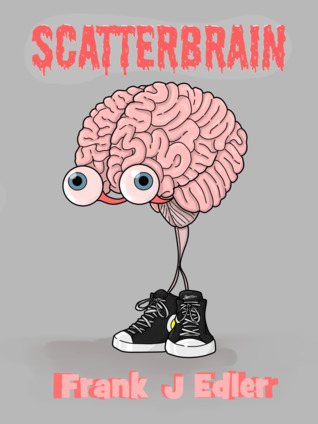
Scatterbrain — It’s hard being a Killer Brain. Just ask Scatter, a Killer Brain who just wants to be a Killer Brain. But he can’t, his parents want him to get a job. Scatter would rather do what he does best, terrorize the city with his pack of Killer Brain friends. But Scatter is about to find out life isn’t fair.
Crazed neurosurgeon, Dr. Justin Case is out to avenge the death of his parents at the hands of the Killer Brains. And now he has Scatter in his sights. Along with his cohort, Coda, Dr. Case will stop at nothing to exact his revenge and seek the closure he has sought since he watched his parents get devoured by Killer Brains as a child.
The odds are stacked against Scatter. He must navigate life while trying not to fall into the clutches of his would-be nemesis. Can Scatter get by without a little help from family and friends. He just wants to live life doing what he loves but sometimes responsibility has a way of rearranging your priorities. Join Scatter as he navigates through life, the job market and a city full of crazies all keeping him from doing what he loves, being a Killer Brain.
Meghan: Hi, Henry. Welcome to Meghan’s House of Books and thank you again for agreeing to take part in this year’s Halloween Extravaganza. What is your favorite part of Halloween?
Henry: As a kid, my favorite part of Halloween was the candy, of course. Now, it is the costumes. Any excuse for a party is a good excuse.
Meghan: What is your favorite Halloween tradition?
Henry: Seeing groups of kids happily wandering through the neighborhoods, their pillowcases bulging with sugary loot.
Meghan: If Halloween is your favorite holiday (or even second favorite holiday), why?
Henry: Free candy and costumes! What’s not to like? It gives us all an excuse to slip into an alter ego.
Meghan: What are you superstitious about?
Henry: Nothing.
Meghan: What/who is your favorite horror monster or villain?
Henry: Dracula. Think of how terrifyingly unstoppable a vampire would be with its powers and wisdom from existing for centuries.
Meghan: Which unsolved murder fascinates you the most?
Henry: The murders committed in 1888 London by Jack the Ripper. Who was he? Why did he do it?
Meghan: Which urban legend scares you the most?
Henry: The Licked Hand – a scared girl hears an ominous dripping coming from within her home. She is reassured by her faithful dog, who licks her hand from under the bed. Eventually, she investigates the noise only to find her dog slaughtered and a message written in blood – “humans can lick hands too”.
Meghan: Who is your favorite serial killer and why?
Henry: Hannibal Lecter because he is so intelligent, depraved, creepy, and sophisticated. If he sets his eyes on you, you are toast… with some fava beans and a nice bottle of Chianti.
Meghan: How old were you when you saw your first horror movie? How old were you when you read your first horror book?
Henry: I think my first horror movie was Jaws. I did not want to go swimming for quite some time after that. I unexpectedly slipped into reading horror when I discovered how good a writer Stephen King is with Different Seasons, which was comprised of four novellas, more dramatic than horrific. So, after that, my first horror book was Salem’s Lot. Vampires, yeah. Scary.
Meghan: Which horror novel unsettled you the most?
Henry: I was less scared by Cujo, Christine, or Carrie than I was It. An alien clown. Why did it have to be an alien clown? Preying on kids. Want a balloon, little boy?
Meghan: Which horror movie scarred you for life?
Henry: There’s a scene in An American Werewolf in London when the two friends are out walking in the fields at night, scared by wolf howling. One slips and falls and they have a good laugh. Right in the middle of that comic moment, the werewolf slams into one of them. Scary!
Meghan: What is your favorite Halloween costume?
Henry: Being a fantasy fan and San Diego Comic-Con attendee, I’ve seen some amazing costumes. Inside jokes, like the cabbage merchant from Avatar: The Last Airbender crack me up. I also like authentic “recreations”, like a group of eight women dressed as Adapta Sororitas (Sisters of Battle) from Warhammer 40K. I love mashups, like a little girl in a pastel-colored Predator costume and tutu, or a mashup of Boba Fett and the giant chicken Ernie from Family Guy.
Meghan: What is your favorite Halloween-themed song?
Meghan: What is your favorite Halloween candy or treat? What is your most disappointing?
Henry: The 100 Grand candy bar from Ferrero is the king of Halloween candy. Fight me. Chocolate, caramel, and krispies, undiluted by gratuitous peanut butter, coconut, or whole nuts. The three most disappointing candies of my youth were candy corn (all the candy corn ever made was made in 1911), elephant “peanuts” (stale marshmallow formed into large peanut shapes, flavored with a hint of self-loathing), and Necco wafers (sad pastel-colored discs of brittle chalk).
Meghan: Before we go, what are some of your top Halloween movies and books?
I Am Smoke — Smoke speaks in mesmerizing riddles: “I lack a mouth, but I can speak…. I lack hands, but I can push out unwanted guests…. I’m gentler than a feather, but I can cause harm….”This rhythmically powerful narration is complemented by illustrations in which swirling smoke was captured on art paper held over smoky candle flames, and the dancing smoke textures were then deepened and elaborated with watercolors and Photoshop finishes. With this unique method, Mercè López “let the smoke decide how the idea I had in mind would dance with it, giving freedom to the images.” The resulting illustrations are astounding, and they resonate with the otherworldly text.
Monster Goose Nursery Rhymes — Enter an enchanted land of mythical creatures where manticores reign and ogres roar-a land of mystery and fright. A unique twist on traditional rhymes of everyone’s youth, “Monster Goose Nursery Rhymes” presents a more sinister approach to these childhood classics, and yet the sing-song nature of the poems renders them playful and jovial at the same time. Little Witch Muffet is not frightened by a silly, little spider; she simply adds him to her stew!
Rotten zombies, giants, dwarves, and goblins mingle with werewolves, centaurs, and fauns. Follow along the skeleton stepping stones, scale up a palisade, claw at the window of a tasty child and bake him into a pumpkin shell. Monsters cook up delicious elvish pie, too! Every kid who has an eensy weensy bit of sense wants a pet with feathers white as snow, who flies like an eagle and bleats like a goat-a hippogriff, of course!
Six forest sprites with four times as many pixies escape from a loaf of bread atop the elaborate table of the fey queen; her feast has flown away! If you enjoy mischief and have a penchant for the morbidly hilarious, the Herzs’ rhymes will satisfy your mythological curiosities.
Larson’s illustrations give new life to these ancient figures, and her artistic style employs the bold lines and colorful movement of an action-packed comic book. The author also includes a “bestiary” with information about the book’s legendary creatures, which hail from Scotland, Germany, Italy, Persia, Haiti, and Scandinavia.
See, if you grew up, as I did, in the Great Britain of the late 50s and early 60s, Halloween wasn’t exactly a big thing, like it was in the USA.
Yes, we knew what it was. We’d read enough in comics or creepy stories to know it was a time when ghoulies and ghosties come out to play.
But in those days you didn’t have shops packed full of masks and witches’ costumes, Devil outfits, claw-like plastic fingernails, gummy fangs, and gobstopper eyeballs next to the supermarket checkout.
And you didn’t go around your neighbours’ houses knocking on doors in said costumes, demanding confectionary with menaces and the threat of evil to be carried out if such gifts were not given.
“Trick-or-Treating” was as alien to us as that guy with pointed ears on Star Trek.
We learned about Halloween, gradually, like Sorceror’s Apprentices. Except we didn’t glean our wisdom from potions or dusty, creaking grimoires – we got it from a much more dubious source. Television.
They inculcated us into an alternative reality of Halloween and the macabre, plying us with forbidden fruit the like of which was as likely to be offered us on the BBC as pigs had of flying. Here in the UK, we were dumbed and numbed by the innocuous (but strangely terrifying) fare of Twizzle, Andy Pandy and Sooty and Sweep. (Google if you dare.)
But from across the pond, by way of the airwaves, came strange and sinister confections – in the case of The Munsters – re-concocted from primal images indelibly created by Universal Studios in the form of their famous monsters… Frankenstein and his Bride, Lugosi’s Dracula, Lon Chaney Jr’s Werewolf…
The weird things was…. They became our friends.
Far more so than the more palatable and educational stuff our domestic television channel was churning out. (I use the singular because for my early childhood, there was only one in the UK, until ITV – “independent” television – arrived to lower the tone. And way before Channel 4 in the 1980s lowered it even further.)
No great surprise then, that, as a writer of horror, I feel I was created by these imported monstrosities as surely as if someone had put current through bolts in my neck and yelled to the heavens that I was alive.
I was alive, suddenly.
My love of all things grotesque, from horror movies that were way beyond my cultural reach, to the heady symbolism of Edgar Allan Poe, began right there.
You could say, “Halloween” dug a hole deep in my heart.
And like many a horror writer before and since, it gave me comfort, because it spoke of powers of the night that were silent by day, of lusts that a child’s imagination cannot comprehend, of the lure and perils of the undead – of loved ones who, maybe, just maybe, could come back from the grave, but… changed!
It was thrilling. It was terrifying. It was real because it was unreal.
It was where I belonged.
And maybe those feelings lay buried or maybe they didn’t. Because when they finally came to the surface again, and Halloween came to play in my own back yard, things were never the same again.
CUT TO: 1992
I’d been writing for a living ever since I left film school. After a stint in advertising in London, I sold one of my first screenplays – wow! – and in a foolish commitment to luck over probability, decided to become a freelance screenwriter, full time.
You won’t have seen it unless you are as old and decrepit as me, but the film was called Gothic, and was about the birth of Frankenstein in the mind of a young girl of nineteen, Mary Shelley. It starred the late Natasha Richardson, with Gabriel Byrne as Lord Byron, and was directed by one of the most amazing British directors of all time – Ken Russell, who’d made the febrile phantasmagoria, The Devils. One of my favourite films of all time. And one of the most controversial.
No pressure, then.
A few gigs after that, I found myself in Hollywood working with the director of The Exorcist, William Friedkin, no less, on a film that became The Guardian, based upon a novel about an evil nanny who abducts children from good hard working middle-class families in contemporary Los Angeles. (Again, Google if you must.)
After that baptism of fire, with my confidence shrivelled by the process, I returned to England and, wanting to get in touch with my inner core as a writer again, pitched a new idea to a BBC producer who liked my writing, Ruth Baumgarten.
It was a TV series, a bit like The X-Files (given The X-Files wouldn’t exist for another 10 years) – a reporter and a paranormal investigator team up to find out the truth behind a haunted house.
A slam dunk, you might think? Well, no.
The BBC didn’t bite. The supernatural, then as now, is a hard sell for Auntie, more at home with costume dramas and cop shows.
But my producer was undaunted.
“Could we do it as a single drama? There’s a 90-minute slot going begging.”
“Great,” I said. “But the whole six hour series couldn’t be done in an hour and a half. What if we did the last episode and the rest is back story? What if we just do that last episode, a live broadcast from a haunted house on Halloween night… BUT WE DO IT AS IF IT REALLY IS LIVE?”
Ruth’s jaw dropped. “Do you think we can do it?”
I shrugged. “Let’s try.”
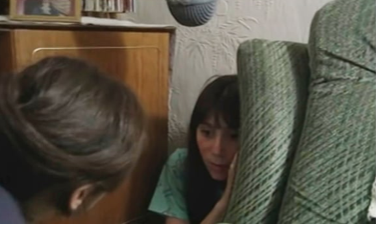
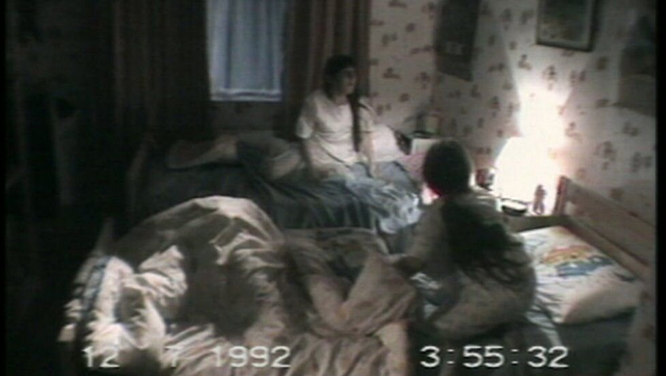
Many drafts and a brilliant director (Lesley Manning) later, we began shooting it over a cold summer, first the video footage from the bland house in suburban London where the poltergeist infestation was supposed to be taking place, then coverage in the fake TV studio where the presenter and various experts were supposedly observing the happenings from afar.
Obviously, in order to control what we could control, we weren’t going to film it “live” at all – and certainly not on Halloween night, the night when the programme was ostensibly supposed to be going out.
We had been given no transmission date at the time of shooting. Nevertheless, Lesley took a huge gamble in placing all manner of Halloween paraphernalia on set – carved pumpkins, plastic cobwebs, apples dangling on strings –and insisted on long takes, to give the illusion of verisimilitude that the project required if we were to pull it off.
All this long before The Blair Witch Project and the whole wagon train of “found footage” horror films that followed. They say our BBC drama Ghostwatch is the grandaddy of them all. And maybe they’re right. I wouldn’t be so grand as to claim that honour.
But the effect it had must surely put it up there.
Because when our show was transmitted, none of us could have expected… Wait. What did we expect, exactly?
We’d faked a “live-stream” ghost, right in front of the TV viewers’ eyes, audaciously and unapologetically. Without warning the audience that what they were about to see wasn’t true.
It was mere fiction, albeit wrapped up in the visual language of what seemed like an outside broadcast.
It was done like that – with real presenters like Michael Parkinson, a TV legend who’d famously interviewed Mohammed Ali, as the anchorman – to make the conceit work as planned. Not to “fool” anybody, any more than any drama “fools” anybody by convincing them it’s real. Neither did we expect anyone to feel like they’d been “had”.
Boy, were we wrong.
The phone calls coming in jammed the BBC switchboard even as the programme was being aired that Halloween night.
By the end, Ghostwatch was reputedly one of the most complained about TV programmed of all time. People – or at least some people – were not pleased. They thought they’d been taken for mugs. Others were just plain terrified, and wanted to swing a punch at the makers.
“Heads must roll at the BBC!” screamed the tabloid headlines that hit us in the subsequent days.
Michael Parkinson was door-stopped and had to say with his trademark Yorkshire bluntness that “People are daft! Some of them even believe the wrestling!” He stood by us, having bought into the concept from the start, getting immediately from his days presenting TV’s Cinema what a TV horror movie was trying to do.
Scare people! Duh!
Still, Sarah Greene (another real TV presenter cast under her own name) had to appear during children’s hour to assure young viewers that she hadn’t been killed by the ghost who’d trapped her in the closet under the stairs.
Meanwhile the two girls (real sisters) who featured in our story went to school on Monday morning and had their 15 minutes of fame in the playground, having enjoyed every minute of playacting a ghost story for television that, as it turned out, had spooked the nation.
To the extent that questions were even raised in Parliament.
From the BBC duty log we found out that three women had been so scared watching it they’d gone into labour.
We received a letter from an irate vicar telling us that, even though he knew the drama was fake, we had nonetheless “conjured up dangerous, evil forces”.
Best of all, Ruth got a letter from one woman asking for compensation because her husband, a war veteran, had shit his pants with terror and she wanted to buy him a new pair of jeans.
The whole experience, to put it mildly, was most peculiar on a psychological level, if nothing else, because for every person who’d thought the events of Ghostwatch were really happening, right up to the end credits, there was another who didn’t buy it, from the first ten seconds.
For every person outraged at the outrageous “hoax” perpetrated on their unsuspecting selves and their vulnerable children, there was another who thought it was the most exciting and provocative programme the BBC had ever made.
Go figure.
Well, we’d liked to have done. We’d liked to have, at least, discussed the aftermath, and explained why we wanted to created such a drama in the first place.
I, for one, had the answer readily to hand: Firstly, I wanted to create a really good ghost story for television, just as I’d been captivated and influenced by the BBC’s A Ghost Story for Christmas and Nigel Kneale’s seminal TV play The Stone Tape. As a secondary objective – and this was always seen by us as an added bonus – Ghostwatch was intended to be a satire about the medium itself. Our reliance on TV personalities as a surrogate family, and our inability to separate fact from fiction. To believe uncritically in what we are shown. And to get a vicarious, voyeuristic thrill from what we watch.
But we didn’t get the chance.
The BBC swiftly gagged us in the face of a torrent of criticism, and the programme was buried forever in the BBC vaults, never to be repeated. The dictat even went out that it should never be mentioned in any other BBC programme, ever.
So far, so Stalinist.
But not very surprising. The BBC, like all institutions, is primarily interested in its own self-preservation. Support of its creative staff, we found, comes very low down the list of corporate priorities.
Even so, I think it is true to say, my Halloween has never been the same since.
With the British Film Institute bringing out a DVD of Ghostwatch in 2002 for its tenth anniversary, we found out to our astonishment and delight that not everybody hated Ghostwatch. Far from it.
In fact, there were thousands of fans – less vocal than the green ink brigade – who had prized it all along as one of the most riveting and life changing viewing experiences of their lives.
I know this because they told us about it, eager to share their memories.
They arranged screenings. Often at Halloween. Often coming in costume. Reliving the thrill and fun of seeing the apples bobbing and extras dressed as devils and witches. Chuckling as Parkinson introduces the show:
“No creaking gates, no gothic towers. No shuttered windows. Yet for the past ten months this house has been the focus for an unprecedented barrage of supernatural activity. This footage was shot by parapsychologists investigating the case. You are about to see one of the incidents that have earned the house in Foxhill Drive an unenviable reputation as Britain’s most haunted house….”
They loved it.
And to those of us who had actually made the thing, that was unbelievably touching.
A fan website was set up, and eventually a feature length documentary was made by our biggest fan, Richard Lawden – Ghostwatch: Behind The Curtains, featuring interviews with all the prime movers, including our late executive producer Richard Broke.
Blogs, discussions and interviews about the show have become so plentiful as to be difficult to keep track of. And invitations to do a Q&A at screenings keep on coming, thick and fast. Usually clustered around that very special, spooky time of year we all know and love.
Yes, for my sins, now, I can honestly say Ghostwatch has become a Halloween fixture. As much part of the furniture of that whole capitalist frightfest as grinning pumpkin heads and monster masks.
And I’m inordinately proud of that.
It’s pretty cool that a single, 90-minute TV programme transmitted on one night only and never repeated, is remembered almost 30 years later, and remembered mostly positively by a massive cohort of horror fans.
Fans who sometimes come up to me and say “You know, Ghostwatch was the best thing I ever saw on TV. It changed my life, got me interested in horror, and now I’m making horror films of my own.”
For me there can be no greater reward than this. To pass on the baton.
When Rob Savage, director of the internet sensation of 2020, Host, told me Ghostwatch was his biggest inspiration, my heart swelled with pride.
Sometimes I want to draw the line under it. I’ve written many things since after all – half a dozen feature films, including The Awakening, and I’ve created and been lead writer on television series such as Afterlife– as well as being the author of books such as The Dark Masters Trilogy.
But I’m reconciled to the fact that when I turn up my toes the headline will be “Ghostwatch Man Dies”. Ah, well.
It’s not a bad legacy, and, I hope, a little bit of Halloween horror history.
Watch it if you can find it. Preferably on Halloween night. Preferably with friends.
Turn the lights down, imagine yourself watching it back in 1992, unaware that it’s fake from beginning to end. And above all:
In 1870s Paris, long before meeting his Dr Watson, the young man who will one day become the world’s greatest detective finds himself plunged into a mystery that will change his life forever.
A brilliant man—C. Auguste Dupin—steps from the shadows. Destined to become his mentor. Soon to introduce him to a world of ghastly crime and seemingly inexplicable horrors.
The spectral tormentor that is being called, in hushed tones, The Phantom of the Opera . . . The sinister old man who visits corpses in the Paris morgue . . . An incarcerated lunatic who insists she is visited by creatures from the Moon . . . A hunchback discovered in the bell tower of Notre Dame . . . And—perhaps most shocking of all—the awful secret Dupin himself hides from the world. Tales of Mystery, Imagination, and Terror
Investigated in the company of the darkest master of all.
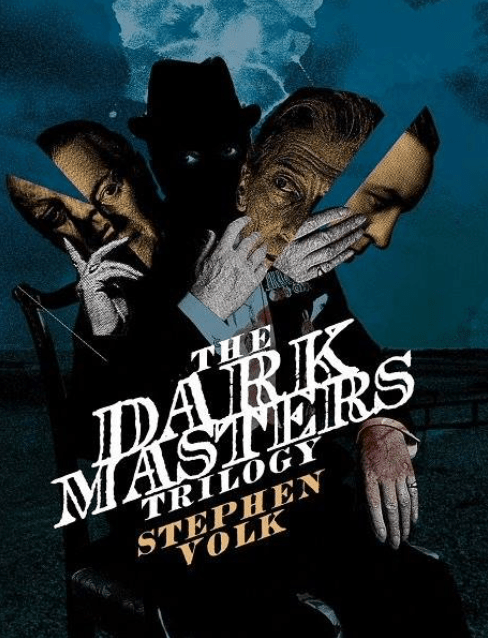
The Dark Master’s Trilogy — Whitstable – 1971. Peter Cushing, grief-stricken over the loss of his wife and soul-mate, is walking along a beach near his home. A little boy approaches him, taking him to be the famous vampire-hunter Van Helsing from the Hammer films, begs for his expert help…
Leytonstone – 1906. Young Alfred Hitchcock is taken by his father to visit the local police station. There he suddenly finds himself, inexplicably, locked up for a crime he knows nothing about – the catalyst for a series of events that will scar, and create, the world’s leading Master of Terror…
Netherwood – 1947. Best-selling black magic novelist Dennis Wheatley finds himself summoned mysteriously to the aid of Aleister Crowley – mystic, reprobate, The Great Beast 666, and dubbed by the press ‘The Wickedest Man in the World’ – to help combat a force of genuine evil…
The Little Gift — The nocturnal scampering invariably signals death. I try to shut it out. The cat might be chasing a scrap of paper or a ball of silver foil across the bare floorboards downstairs, say a discarded chocolate wrapper courtesy of my wife, who likes providing it with impromptu playthings. I tell myself it isn’t necessarily toying with something living, but my stomach tightens.
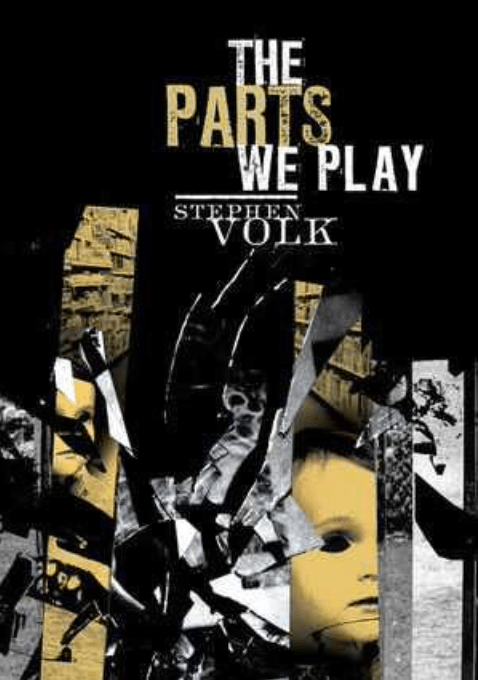
The Parts We Play — An illusionist preparing his latest, most audacious trick… A movie fan hiding from a totalitarian regime… A pop singer created with the perfect ingredients for stardom… A folklorist determined to catch a supernatural entity on tape… A dead child appearing to her mother in the middle of a supermarket aisle… A man who breaks the ultimate taboo—but does that make him a monster?
In this rich and varied collection of Stephen Volk’s best fiction to date, characters seek to be the people they need to be, jostled by hope, fears, responsibility, fate, and their own inner demons—and desires. These tales of the lies and lives we live and the pasts we can’t forget include the British Fantasy Award-winning novella, Newspaper Heart.
Meghan: Hey Stephen! Welcome… back? Hahaha. What is your favorite part of Halloween?
Stephen: 1) My grandsons having fun!
2) The movies!……. It is the one day of the year when TV puts out horror movies or shows about horror movies. And it is the one night of the year when people who don’t like scary things like to be scared, And – see – that’s when we GET them! Heh heh heh!
Meghan: What is your favorite Halloween tradition?
Stephen: Telling ghost stories by candle light. Except nobody does it any more. Our campfire tales are usually told in front of the latest wide screen plasma screen. And told by cinematographic storytellers. But there is nothing quite like the old tradition of HEARING a ghost story to truly chill the blood. The images you conjure up in your head are far worse than any CGI can deliver!
Meghan: If Halloween is your favorite holiday (or even second favorite holiday), why?
Stephen: I like ANY holiday because it means the phone won’t ring and I can get on with writing without being disturbed!
Meghan: What are you superstitious about?
Stephen: I’m not superstitious in the conventional sense, but I have a desk full of talismanic objects… A statuette of Peter Cushing, Poe and Alfred Hitchcock, skull money boxes, monster toys etc…
But generally I believe in “paying back” – so if I get paid for a screenplay, I like to spend money on a work of art. Be it a small print of £50 or a bigger piece of artwork I have fallen in love with – or indeed an expensive or lavish book. I love the visual arts – painting, etching, etc – lots of my friends are artists and you can pick up an original work of art rather than a mass produced print and feel you are supporting the artist. I like that! I also like to share all sorts of weird images on my twitter feed or Facebook timeline – they are great inspiration for stories!
Meghan: What/who is your favorite horror monster or villain?
Stephen: It would have to be Frankenstein’s creature. It isn’t just frightening it has a lot of tragedy and pathos – it was rejected by its father, so it wasn’t born bad, it was made bad by being treated badly. I love that as a metaphor for life. Maybe there is a story to be written where Viktor Frankenstein was a good daddy? That would be interesting.
Meghan: Which unsolved murder fascinates you the most?
Stephen: The Jack the Ripper murders of Whitechapel in 1888, of course. I don’t think we will ever get to the bottom of the mystery. Not anymore, so long after the primary evidence has decayed and the witnesses and investigators are all dead. All the theories overlap and the territory is too muddy. My own theory is that “London” or specifically the East End was the murderer. There was no single killer of the canonical five. And the person who wrote the “Dear Boss” letter was an enterprising reporter called Tom Bulling. In fact, I wrote a TV script about him, and the creation of the first tabloid true crime story. Bulling “created” the myth of Jack the Ripper, I think. (I was always fascinated that Inspector Abberline was alive long enough to have watched Hitchcock’s “Ripper” film The Lodger in a movie house!)
Meghan: Which urban legend scares you the most?
Stephen: The phantom hitchhiker, probably. It’s very easy to hallucinate a figure at the side of the road but it turns out it’s only a signpost or tree, but the idea of a hitchhiker being a ghost sitting next to you is terrifying. We’re terribly vulnerable in our cars at night. I tried to dramatise this is a script I wrote called Octane (called Pulse in the USA) starring Madeline Stowe and Norman Reedus. It was about vampires who prey on people in car crashes at night. It was a cool idea but the movie didn’t quite work.
Meghan: Who is your favorite serial killer and why?
Stephen: I don’t find serial killers interesting or charismatic. In real life they are boring, odious non-entities. I think we have to grow up and face the fact that they aren’t comic book monsters let alone “heroes” – they are human beings who have gone badly wrong. And we can’t spot them in a crowd because they look like you and me. In my stories about people who do terrible things I always want there to be shadings of gray. Maybe a terrible person does something for a good reason, or a good person is forced to do something awful. That is much more interesting to me than a Freddy or a Jason.
Meghan: How old were you when you saw your first horror movie? How old were you when you read your first horror book?
Stephen: First horror movie was on TV and it was a black and white one called The City of the Dead. It was a British film, I think, but set in the USA, full of men in monks’ cowls and streets swathed in fog – it was terrific! There is one particular image that stayed with me ever since, and that was a man staggering through the fog holding a life sized cross from the graveyard to ward off the evil ones – who I think burst into flames! That, to me, was almost the equal of the iconic scene in Hammer’s Dracula where Van Helsing leaps up and pulls down the curtains letting in the sunlight that shrivels Dracula to a crisp – then holds the two candle sticks in the form of a crucifix to finish him off! Wonderful stuff!
First horror book was a magazine – FAMOUS MONSTERS OF FILMLAND magazine! I used to save up my pocket money and go to the local newsagent and buy it. The photographs were like nothing I’d ever seen. And of course long before I was old enough to see any of the movies themselves – which were “X” certificate in Britain – ADULTS ONLY! That’s how I got to know Boris Karloff and Bela Lugosi, way before I saw the films.
Meghan: Which horror novel unsettled you the most?
Stephen: Possibly Dracula at a young age – it sort of felt real because it was in diary form. Like the equivalent of a “found footage” movie today. You plunge into the immersive world and it doesn’t let go. When you are young you don’t understand the graphically sexual imagery – it is just the force of predatory evil and strangeness that is all-consuming.
Meghan: Which horror movie scarred you for life?
Stephen: Without doubt, Nicolas Roeg’s Don’t Look Now starring Donald Sutherland and Julie Christie. It’s my number one film of all time because when the ending happened (I was sitting in a movie house all alone on a wet Wednesday afternoon) I thought I’d lost my mind. I thought the reels must have been switched. I didn’t get it, then it all made sense. Then there was that marvellous montage of all the hints that had told you what was going on all along. It’s a true cinematic masterpiece, and I will watch it over and over till the day I die. Purely from the craft point of view there is so much to learn from the storytelling and the depth of character.
Meghan: What is your favorite Halloween costume?
Stephen: I have a skinhead skullcap with a massive rubber Mohawk sticking up. I like it because my dad wore it one time and it looked hilarious so it reminds me of him. And, since I’m bald, it is kind of perverse to wear a bald skull cap on top of a bald head! But hey, that’s how I roll!
Meghan: What is your favorite Halloween-themed song?
Stephen: Gotta be “The Monster Mash”. I can’t think of any other. And now I’ve got it playing in my head, damn you!
Meghan: What is your favorite Halloween candy or treat? What is your most disappointing?
Stephen: Nothing. I’ll eat anything. If you were a chocolate bar, I’d eat you.
Meghan: Stephen, thanks again for joining us today. Not for one interview, but TWO. Before you go, what are your favorite Halloween movies?
In 1870s Paris, long before meeting his Dr Watson, the young man who will one day become the world’s greatest detective finds himself plunged into a mystery that will change his life forever.
A brilliant man—C. Auguste Dupin—steps from the shadows. Destined to become his mentor. Soon to introduce him to a world of ghastly crime and seemingly inexplicable horrors.
The spectral tormentor that is being called, in hushed tones, The Phantom of the Opera . . . The sinister old man who visits corpses in the Paris morgue . . . An incarcerated lunatic who insists she is visited by creatures from the Moon . . . A hunchback discovered in the bell tower of Notre Dame . . . And—perhaps most shocking of all—the awful secret Dupin himself hides from the world. Tales of Mystery, Imagination, and Terror
Investigated in the company of the darkest master of all.
The Dark Master’s Trilogy — Whitstable – 1971. Peter Cushing, grief-stricken over the loss of his wife and soul-mate, is walking along a beach near his home. A little boy approaches him, taking him to be the famous vampire-hunter Van Helsing from the Hammer films, begs for his expert help…
Leytonstone – 1906. Young Alfred Hitchcock is taken by his father to visit the local police station. There he suddenly finds himself, inexplicably, locked up for a crime he knows nothing about – the catalyst for a series of events that will scar, and create, the world’s leading Master of Terror…
Netherwood – 1947. Best-selling black magic novelist Dennis Wheatley finds himself summoned mysteriously to the aid of Aleister Crowley – mystic, reprobate, The Great Beast 666, and dubbed by the press ‘The Wickedest Man in the World’ – to help combat a force of genuine evil…
The Little Gift — The nocturnal scampering invariably signals death. I try to shut it out. The cat might be chasing a scrap of paper or a ball of silver foil across the bare floorboards downstairs, say a discarded chocolate wrapper courtesy of my wife, who likes providing it with impromptu playthings. I tell myself it isn’t necessarily toying with something living, but my stomach tightens.
The Parts We Play — An illusionist preparing his latest, most audacious trick… A movie fan hiding from a totalitarian regime… A pop singer created with the perfect ingredients for stardom… A folklorist determined to catch a supernatural entity on tape… A dead child appearing to her mother in the middle of a supermarket aisle… A man who breaks the ultimate taboo—but does that make him a monster?
In this rich and varied collection of Stephen Volk’s best fiction to date, characters seek to be the people they need to be, jostled by hope, fears, responsibility, fate, and their own inner demons—and desires. These tales of the lies and lives we live and the pasts we can’t forget include the British Fantasy Award-winning novella, Newspaper Heart.
When Stephen and I discussed what he wanted to do in this year’s Halloween Extravaganza, he told me that he was impressed with an interview I had done of a fellow author, a serious one. How can I deny someone who is impressed by one of my interviews, right? After some back and forth, and my suggestion of doing both, he agreed. So here, first, is the serious interview. Ladies and gentlemen, Stephen Volk.
Meghan: Hey, Stephen. Welcome to Meghan’s House of Books. Tell us a little bit about yourself.
Stephen: My name is Stephen Volk. In spite of a name that sounds German, I’m Welsh. I’m a BAFTA winning screenwriter best known for writing the so-called “Halloween hoax” Ghostwatch which was transmitted by the BBC on Halloween night 1992. Astonished that thirty years later people still talk about it! I’ve also been creator and lead writer of two TV shows (Afterlife and Midwinter of the Spirit), have written lots of other screenplays and television scripts, as well as dozens of short stories and novellas, and a few stage plays. Mostly, but not all, in the horror genre.
Meghan: What are five things most people don’t know about you?
Stephen: I have a cat named Asbo. I was once at a party with Jack Nicholson. I grew up in the same town as Tom Jones. My house was built in 1692. I hate jazz.
Meghan: What is the first book you remember reading?
Stephen: A large illustrated book of The Pied Piper, when I was about four. I don’t remember if it was the poem or just the basic tale. The illustrations were magnificently terrifying, complementing the innate horror of the story. Its impact sank deep. I later wrote a story related to The Pied Piper, called “Best in the Business”. I’d also one day like to tell it in a film, set post-US Civil War, in the style of Clint Eastwood’s High Plains Drifter.
Meghan: What’s a book you really enjoyed that others wouldn’t expect you to have liked?
Stephen: The Pull of the Stars by Emma Donoghue. It’s a novel about nurses working during the flu epidemic in Dublin in 1918. It has no genre element whatsoever, but I will read anything by the author of the brilliant Room. She is such a great writer.
Meghan: What made you decide you want to write? When did you begin writing?
Stephen: I started drawing before I started writing. My granddad, who ran a pub, used to give me shiny squares of paper and I would hide under the table and draw on them – continuous images, as if each square was a comic book panel. I think I started writing proper in my early teens. My cousin and I were both mad keen on books and films, so for our fifteenth birthdays our mutual grandmother bought us each a typewriter. It was the best birthday present I’ve ever had. It was like receiving a travel ticket to anywhere you can imagine.
Meghan: Do you have a special place you like to write?
Stephen: I write at home, in my study, at my desk – smallest room in my house. I didn’t get a lap top until recently so if I wasn’t there, I wouldn’t be working (unless I took a notebook with me). It’s not a monk’s cell exactly, but most of my stuff is produced in that room, with a window over the garden and the cat whining in the background.
Meghan: Do you have any quirks or processes that you go through when you write?
Stephen: No, I have no superstitions. I know all the smart advice about getting started: get writing as soon as your ass hits the chair, etc. I can give them, but I rarely obey them. As far as process goes, I have to know roughly what I’m going to do before I start. Ramsey Campbell says, always start knowing the sentence you will write. That’s pretty good advice. In general, I plan a lot. Obviously in screenplays it’s a requirement, but even in short stories, for me, there will be several pages of scribbles figuring out whether the thing is worth doing, and sometimes that goes in a drawer till it is. I don’t know if it’s a quirk, but I love the feeling of typing THE END or FADE OUT. That moment is what you live for – the story exists! But always, about half an hour later or even ten seconds later you wonder if it’s complete shit.
Meghan: Is there anything about writing you find most challenging?
Stephen: Yes, most of writing is challenging! I would definitely say getting notes, be it from an editor, script editor or producer. You can’t reject them all and usually you can’t address them all, so there is a give and take. Negotiating that in order to make this nebulous thing called “the story” better is really complex and only comes from experience. I still find it enormously difficult, but everything needs work, and you are a fool if you don’t listen to feedback.
Meghan: What’s the most satisfying thing you’ve written so far?
Stephen: I’m not ducking the question, but it’s literally the last thing I finished. Both generally and specifically. I think you almost have to feel that. Yesterday I finished a kind of monster story/mythic fantasy short story that has been bugging me for ages – possibly all my life. I had ideas but I didn’t know what to do with them. Only by getting them on paper did I arrive at what I wanted to say, or rather, what I wanted to explore. And the story did that. The story throws back at you what it needs to be. I’m really glad that happened, so I’m on a little bit of a high that I pulled it off.
Meghan: What books have most inspired you? Who are some authors that have inspired your writing style?
Stephen: Oh, too many to mention! Sometimes it is very clear. My recent book Under a Raven’s Wing, in which a young Sherlock Holmes is educated in his art by Poe’s master detective C. Auguste Dupin, is very obviously inspired by my love of Poe and Conan Doyle. It might sound funny, but sometimes I get the voice of a story by imagining it written by someone else – when I wrote my story “Sicko” I wondered how Joyce Carol Oates would write it. For “White Butterflies” it was Cormac McCarthy. “The Airport Gorilla” needed to be a bit more loose and poetic, so I channelled the wordplay of Dylan Thomas a little bit. Another story came alive when I thought of it being told by Alan Bennett. Sometimes you unlock how to do it that way.
Meghan: What do you think makes a good story?
Stephen: Honesty. Telling it from the heart. Making opposites clash, or making the story the opposite of what it seems: I often say my “horror” stories are about love. Nail the theme – what it is about underneath – but don’t be dictatorial. Let the reader fill in the gaps. The wonderful director Billy Wilder said if you give the audience two plus two and they make five, they will love you forever.
Meghan: What does it take for you to love a character? How do you utilize that when creating your characters?
Stephen: Truthfulness. I hate the boring Hollywood note that a character isn’t “likeable”. It usually means they don’t feel real. And the whole process of making them lovable makes them more boring. Make them interesting in the way real people you know are interesting and complex and compelling and unknowable and contradictory. Mine your own life for detail and authenticity. Observe. Be curious. Above all, give them a flaw. The flaw, the wound is everything. The wound is where the light gets in.
Meghan: Which, of all your characters, do you think is the most like you?
Stephen: Dr Robert Bridge, possibly, the psychology lecturer character played by Andrew Lincoln in my TV series Afterlife. He is a rational man and thinks logically, it is his job to think things out, put them in their place (like a writer) but he is faced with a person – Alison Mundy, a spirit medium who is entirely instinct – and he fears that, fears letting himself go to emotional upheaval.
Meghan: Are you turned off by a bad cover? To what degree were you involved in creating your book covers?
Stephen: Oh, listen, I trained as a graphic designer before I became an advertising copywriter. I am a design junkie. I love book design, illustration, typography, just as much as what is inside the covers, and it literally makes me squirm when I have to buy a book with a terrible cover because I love the author. I almost will not do it. I’d rather buy a book with a terrific cover that I never read. It’s not my place to be involved in designing book covers for my own books – though I feel I could, at a push, but they wouldn’t be really excellent. One of the reasons I love doing the meticulous small-run books that PS Publishing create is that I know Pedro Marques will design mine, and he is an absolute genius. Opening the box when I receive then is always mind- blowingly thrilling.
Meghan: What have you learned throughout the process of creating your books?
Stephen: After working for thirty years writing for film and TV, that I have learned a few things about storytelling. Most of all, that I like to be in the position, now, where I get input, but at the end of the day, what I say goes. The book is mine and nobody else’s, for good or ill. I’m tired of taking the flak for other people’s mistakes in my career.
Meghan: What has been the hardest scene for you to write so far?
Stephen: I don’t find scenes that are emotional or that cut deep difficult, even death scenes – death scenes are very gratifying, actually, because you get to be with someone dying but nobody actually dies – you can rehearse it, over and over, in the way that horror is perhaps rehearsing death over and over in a way, or what it feels to be hurt, or to lose your identity. All these things aren’t hard – they are exciting. You just have to be honest with yourself and go there till you get it. The hard scenes are where you get stupid notes to address and you can’t solve the problem, or something isn’t working – those are the killer. And sometimes later on you go: “Oh course, that’s how you do it – what’s the problem?” But at the time you felt like killing yourself or handing the money back. “Here! Take it! I’m not a writer anymore! Leave me alone!”
Meghan: What makes your books different from others out there in this genre?
Stephen: Speaking for books and scripts and plays all together? I have no idea. Maybe they’re not in “the genre” in terms of mainstream at all. PS is a very select and exclusive edition type publisher and I’m fine with that. They don’t turn around and ask for a shark on the cover, or a bleeding skull. If I started to wonder where I sat in the genre I think I’d go mad. I have tried to figure out what the genre means to me over many years. I wrote think pieces in Andy Cox’s Black Static magazine which were compiled in Coffinmaker’s Blues: Collected Writings on Terror. So that’s the nearest you’ll get to me analysing myself or my writing.
Meghan: How important is the book title, how hard is it to choose the best one, and how did you choose yours (of course, with no spoilers)?
Stephen: There’s sometimes a clever story about a title and sometimes there isn’t. It often just pops out of the air – as Under a Raven’s Wing did, the idea of mentoring and Poe in one neat phrase. I tried it out on my wife and she said: “Yeah. Obvious.” (Ha! I wish “obvious” ideas came that easily more often!) Many times, with me, the title of a story comes at the early stages – it is sort of part of the overall package of the idea that is what turns me on. That’s why when someone wants to change the title (as they always do, in films, without fail) my heart plummets. I wrote a screenplay called The Interpretation of Ghosts (which I loved) but they changed it to The Awakening. Don’t ask me why!
Meghan: What makes you feel more fulfilled: Writing a novel or writing a short story?
Stephen: I have only written a novel or two (the Gothic film novelisation of Netherwood; and a couple of unpublished ones), but I will answer in terms of writing a short piece as opposed to a big piece such as a film screenplay. Basically, I think a short story has immediate gratification – you can write it in weeks, if not days, sometimes, and there it is: done. A screenplay or novel will takes months at best and sometimes several years. So the two are very different beasts to handle in terms of control, focus and stamina. Your love for a novel or screenplay will have peaks and troughs, depending on collaborators. With a short story you may have no collaborators at all. You are left to your own instinct and skill, and that can be a huge liberatio. At the moment I am into short stories and novellas, but that might be a passing preference, depending what comes up next as the pandemic lifts.
Meghan: Tell us a little bit about your books, your target audience, and what you would like readers to take away from your stories.
Stephen: I’ll shift a little and talk about my next short story collection, coming out in March 2022 from PS Publishing, which will be called Lies of Tenderness. What I’d like readers to get from this wide range of tales in many different settings is that we are all given choices between empathy and selfishness at various points in our lives, and how we react to that situation and those pressures is what forms us. I’ve spelled it out in a way I would never want to, really. But that’s what I want “horror stories” to achieve – to take you to a place you think one thing will happen, and it’s actually another. You were perhaps expecting a sharp shock like the genre habitually delivers, and it’s not. It’s something else.
Meghan: Can you tell us about some of the deleted scenes/stuff that got left out of your work?
Stephen: Again thinking of Lies of Tenderness, I left out one story – which was actually fully on-theme – but was a period piece that didn’t fit the flow of the book. I’m sure it will find its way into a future book, though. In the latest story I’ve written, three characters enter the story halfway through, they rapidly get killed, and I just cut those four pages out – it made a huge difference. I always say crossing out is just as important as word count!
Meghan: What is in your “trunk”?
Stephen: I have several things are are half-baked because they are not ready – it is best to put them aside and come back to them when the penny has dropped. Of course sometimes the penny never drops! But that is part of the game. I have numerous film projects that have never comes to fruition which makes me sad, because some of them are far more interesting than movies I have had produced. For one we had Michael Caine, Danny DeVito, and Kristin Scott Thomas all signed up, but still couldn’t get the finance. It’s quite baffling. Which is why you have to get the pleasure from the actual writing, if you can. I also have a massive novel written in archaic language which nobody will touch. I don’t know about bottom drawers, I think I have a whole warehouse full of these things!
Meghan: What can we expect from you in the future?
Stephen: Lies of Tenderness will be out n March 2022. I have a couple of TV series in development, and a couple of feature films with producers. Very excited about all of them, but I really can’t give specific details as the business is fickle at the best of times and what seems like a slam-dunk can turn into a dead duck. As ever I will split between screen work and books. I actually want a stretch of clear blue water in front of me to see what will happen.
Meghan: Do you have any closing words for your fans or anything you’d like to say?
Stephen: Thank you for reading this far and thank you for reading or watching my work. By the way, if you read something (or watch something), try to reach out and let the writer know about it. Don’t imagine they will be too busy to hear some words of praise. Some people might be, but most of us all have dark nights of the soul and your words could mean a lot to that person at that point. It is a tough old business, writing for a living, and in some cases, those moments of contact and support are all that keeps us going! Thank you!
In 1870s Paris, long before meeting his Dr Watson, the young man who will one day become the world’s greatest detective finds himself plunged into a mystery that will change his life forever.
A brilliant man—C. Auguste Dupin—steps from the shadows. Destined to become his mentor. Soon to introduce him to a world of ghastly crime and seemingly inexplicable horrors.
The spectral tormentor that is being called, in hushed tones, The Phantom of the Opera . . . The sinister old man who visits corpses in the Paris morgue . . . An incarcerated lunatic who insists she is visited by creatures from the Moon . . . A hunchback discovered in the bell tower of Notre Dame . . . And—perhaps most shocking of all—the awful secret Dupin himself hides from the world. Tales of Mystery, Imagination, and Terror
Investigated in the company of the darkest master of all.
The Dark Master’s Trilogy — Whitstable – 1971. Peter Cushing, grief-stricken over the loss of his wife and soul-mate, is walking along a beach near his home. A little boy approaches him, taking him to be the famous vampire-hunter Van Helsing from the Hammer films, begs for his expert help…
Leytonstone – 1906. Young Alfred Hitchcock is taken by his father to visit the local police station. There he suddenly finds himself, inexplicably, locked up for a crime he knows nothing about – the catalyst for a series of events that will scar, and create, the world’s leading Master of Terror…
Netherwood – 1947. Best-selling black magic novelist Dennis Wheatley finds himself summoned mysteriously to the aid of Aleister Crowley – mystic, reprobate, The Great Beast 666, and dubbed by the press ‘The Wickedest Man in the World’ – to help combat a force of genuine evil…
The Little Gift — The nocturnal scampering invariably signals death. I try to shut it out. The cat might be chasing a scrap of paper or a ball of silver foil across the bare floorboards downstairs, say a discarded chocolate wrapper courtesy of my wife, who likes providing it with impromptu playthings. I tell myself it isn’t necessarily toying with something living, but my stomach tightens.
The Parts We Play — An illusionist preparing his latest, most audacious trick… A movie fan hiding from a totalitarian regime… A pop singer created with the perfect ingredients for stardom… A folklorist determined to catch a supernatural entity on tape… A dead child appearing to her mother in the middle of a supermarket aisle… A man who breaks the ultimate taboo—but does that make him a monster?
In this rich and varied collection of Stephen Volk’s best fiction to date, characters seek to be the people they need to be, jostled by hope, fears, responsibility, fate, and their own inner demons—and desires. These tales of the lies and lives we live and the pasts we can’t forget include the British Fantasy Award-winning novella, Newspaper Heart.



















 Meghan's House of Books