Halloween Extravaganza: INTERVIEW: Austin Crawley

Meghan: Hi, Austin. It’s been awhile since we sat down together. What’s been going on since we last spoke?

Austin Crawley: A whole lot of real life, but I’ve been writing. I’ve got a Halloween story wrapping up now and a couple of series coming together in bits and pieces as well as another stand alone book.

Meghan: Who are you outside of writing?

Austin Crawley: Picture Ritchie Valens if he had lived to his late 30s and was into writing instead of guitar. That’s pretty much me.

Meghan: How do you feel about friends and close relatives reading your work?

Austin Crawley: My relatives don’t read my work. I use a pen name so most of them don’t even know I write Horror novels.

Meghan: Is being a writer a gift or a curse?

Austin Crawley: Definitely a gift. Creating imaginary worlds brings more euphoria than any form of intoxicant. I wouldn’t have it any other way.

Meghan: How has your environment and upbringing colored your writing?

Austin Crawley: I grew up in a low income area of East Los Angeles where everyone is Catholic, but later went to college at UCLA, so I’m very aware of cultural divides. This came out a little in my first book, A Christmas Tale, which is about three middle class white college girls who do a séance without thinking out the implications of what could happen. One of them does some volunteer work to help the less fortunate.

In my second book, Letters to the Damned, the contrast between a guy from California and people in a small English village makes for a different kind of contrast. I’ve traveled in England so the village, though fictional, is based on a typical northern England village model.

There’s a lot of superstition in Latino Catholicism and that makes good source material for Horror novels. There’s a lot of symbolism couched in my stories, like the white raven who shows up in most of my books.

Meghan: What’s the strangest thing you have ever had to research for your books?

Austin Crawley: A Catholic exorcism rite for my most recent story, A Halloween Tale. Also some information about New Orleans voodoo to get the description of a Ghede right.

Meghan: Which do you find the hardest to write: the beginning, the middle, or the end?

Austin Crawley: Making sure I enough middle has so far been most challenging. I go for fast action and so far my books have been novella length as a result. I have a plan to flesh out the stories I have planned for the series to come.

Meghan: Do you outline? Do you start with characters or plot? Do you just sit down and start writing? What works best for you?

Austin Crawley: I think of a concept and start taking notes. At some point the start of the story will start running through my head and I just go with it. A sort of outline forms along the way.

Meghan: What do you do when characters don’t follow the outline/plan?

Austin Crawley: Characters are independent creatures. I don’t over plan them but let them show me their story.

Meghan: What do you do to motivate yourself to sit down and write?

Austin Crawley: There’s a lot of self-discipline involved in writing. The most prolific writers I know choose a time of day that works for them and make an effort to sit and write at that time every day. I’m working on that. Real life gets in the way a lot. As far as motivation goes, the stories constantly going through my head are my main motivators. They want out! They want to be read by enthusiastic readers! It’s my task in life to bring them across to this plane of existence.

Meghan: Are you an avid reader?

Austin Crawley: Oh definitely! I read every moment I get free. Not just my own genre but a wide variety of fiction and non-fiction.

Meghan: What kind of books do you absolutely love to read?

Austin Crawley: I go through phases of Horror, Fantasy, Historical, Dystopian, and even Steampunk when I can find some written for grown-ups. I keep an open mind. Anything well-written is a possibility.

Meghan: How do you feel about movies based on books?

Austin Crawley: It depends on how well they’re done. A lot of books I enjoy and don’t want to see a film version because that’s going to be a different story. Others translate better in video media, like Game of Thrones. I really enjoyed those books but the television series was so rich with costumes and top quality CGI that my imagination struggles to keep up.

Meghan: Have you ever killed a main character?

Austin Crawley: I write Horror and Dystopian novels. Yes.

Meghan: Do you enjoy making your characters suffer?

Austin Crawley: Not suffer so much as giving them challenges to overcome. There’s no guarantee of a happy ending in my genres so they might suffer if they fail, but the struggle is what makes the story interesting.

Meghan: What’s the weirdest character concept that you’ve ever come up with?

Austin Crawley: smiles The little boy in The Locked Door. That started as a short story and you can still read it online, but it was the kid and his uncanny ability to get into secret places not of this world that made me decide to flesh him out into a novel. It’s in progress now.

Meghan: What’s the best piece of feedback you’ve ever received? What’s the worst?

Austin Crawley: The best was responses to that story telling me I should expand it into a book. The worst, someone didn’t get why a Mexican protagonist would find fried tomatoes and baked beans in an English style breakfast would seem out of place when Mexicans eat refried beans and salsa. That told me I needed to explain the differences in more detail.

Meghan: What do your fans mean to you?

Austin Crawley: Every writer likes to know that someone enjoys their stories. I would always write even if no one read it, but finding followers on my blog and Goodreads as well as Amazon gives me a warm feeling and inspires me to strive to constantly improve my storytelling skills.

Meghan: If you could steal one character from another author and make them yours, who would it be and why?

Austin Crawley: This one took some thought. I’m big on respecting the boundaries between my imaginary worlds and those of others, but if there’s one character I wish I had written, it would have to be Terry Pratchett‘s version of Death. The concept of looking at things from Death’s point of view isn’t entirely new, but he made him a sympathetic character, along with Death of Rats.

Meghan: If you could write the next book in a series, which one would it be, and what would you make the book about?

Austin Crawley: That would be a real challenge. An author leaves their own mark on a series and trying to fill the next slot would be like doing a cosplay of that author, or else derailing the feeling of continuity for the series.

If I had to choose one, Roger Zelazny‘s Amber series has a lot of room for expanding imagination. It already has prequels written by a different author, written well I might add, but adding something to that world could be an interesting challenge for the imagination.

Meghan: If you could write a collaboration with another author, who would it be and what would you write about?

Austin Crawley: I’m a big fan of Neil Gaiman. His collaboration with Terry Pratchett on Good Omens is one of my favorite books of all time, so I think if we were paired up it would have to be some kind of Dark Fantasy with very imaginative supernatural overtones.

Meghan: What can we expect from you in the future?

Austin Crawley: I have two series formulating simultaneously. The Locked Door will be finished first, but I anticipate four books in each of the series. Whether I alternate between them or finish one before going on to the other is yet to be seen.

Meghan: Where can we find you?

Austin Crawley: Blog ** Amazon ** Goodreads ** Facebook ** Twitter

Meghan: Do you have any closing words for your fans or anything you’d like to say that we didn’t get to cover in this interview or the last?

Austin Crawley: Reading expands the mind, it’s all good. Just be prepared to explore some dark corners if you read my books. I like books that make people think.
Austin Crawley writes Horror and Dystopian fiction with a supernatural twist. His lifelong love of ghost stories and interest in comparative religions has led him to seek the darker corners of human existence and to exploit them in prose, touching on our deepest fears. he has been known to spend his vacations visiting places that are reported to be haunted.

Crawley is the author of A Christmas Tale, a story about three young women who perform a seance to raise the fictional ghosts of DickensA Christmas Carol with surprising results, and of Letters to the Damned, about a post box in a small English village that reportedly transmits written requests for favours to the dead and damned. His most recent release is A Halloween Tale, which came out last month, a haunted house tale filled with horrific, inter-dimensional terror.
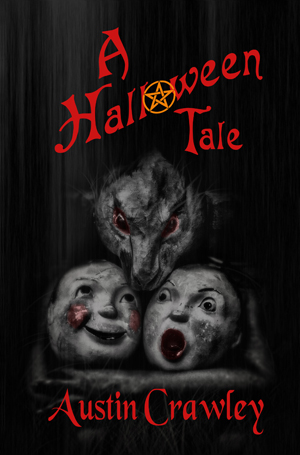
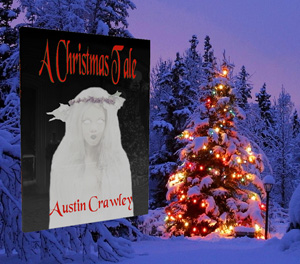
A Halloween Tale ** A Christmas Tale

Halloween Extravaganza: INTERVIEW: Thomas S. Gunther

Meghan: Hi, Thomas. Welcome back to Halloween Extravaganza, and welcome to the new blog. It’s been awhile since we sat down together. What’s been going on since we last spoke?

Thomas S. Gunther: The big news is that I’ve taken a position as a columnist for Becky Narron’s brand new horror ezine, Terror Tract. Our first came out in October!

Meghan: Who are you outside of writing?

Thomas S. Gunther: Outside of writing, I live a fairly normal life. I’m married. I have kids, grandkids, a dog, etc. I have a regular job, though it is seasonal, working on a tree farm–it’s great working outside. I pay bills, have responsibilities. Pretty boring stuff like that. Writing, much like reading, is a form of escapism.

Meghan: How do you feel about friends and close relatives reading your work?

Thomas S. Gunther: Funny you should ask. A cousin told me awhile back she was purchasing a copy of Monsters vs. Nazis, an anthology from Deadman’s Tome, which includes a werewolf story I wrote. I never heard back from her, so decided to message her and ask. Nothing. Crickets. I’m sure she’s busy with everyday life, but it’s disconcerting. They say family are the worst critics. One learns to take it all with a grain of salt.

Meghan: Is being a writer a gift or a curse?

Thomas S. Gunther: There are days when I truly hate writing, and being the proverbial writer. Regardless of how much I love the craft, it’s still a lot of work. I am rarely happy with the results. I get picky, and often waste a lot of time like that, worrying about the perfect word or some iota of prose. It can be exhausting, often more taxing than the extremely physical work I do for a living.

Meghan: How has your environment and upbringing colored your writing?

Thomas S. Gunther: I think it’s impossible to write anything without some faction of my personal life finding its way in. I’ve never submitted it, but I have written a story based on some of the weirder childhood tales my mother has told me. Many of my stories, expressed or not, take place in Michigan, though I often take liberties with geography.

Meghan: What’s the strangest thing you have ever had to research for your books?

Thomas S. Gunther: Not sure if I could give you a straight answer. Often, when I am doing research, I find myself going off on tangents. Some discoveries help to shape a story, and add color or take it in new directions. Some find me wasting time and smoking cigarettes.

Meghan: Which do you find the hardest to write: the beginning, the middle, or the end?

Thomas S. Gunther: Oh, definitely the beginning. It’s part of getting started. In fact, my first article for Terror Tract touches on this.

Meghan: Do you outline? Do you start with characters or plot? Do you just sit down and start writing? What works best for you?

Thomas S. Gunther: Sometimes I outline. I’ll actually sit down, and scratch out bubble charts and the sort of stuff one learns in school. But most of the time–quite frequently–I just sit on a story, and mull it round in my head forever before I actually start typing.

Meghan: What do you do when characters don’t follow the outline/plan?

Thomas S. Gunther: (Snorts). That’s what makes writing fun!

Meghan: What do you do to motivate yourself to sit down and write?

Thomas S. Gunther: I go through a slew of thoughts, emotions, etc. Some writers can hold full-time jobs and write full-time while doing so, and many of them are far more prolific than I. Like my job, writing can be seasonal for me. I work in the warm months, and write in the cold. Spring and fall are transitional, or have been, for the last few years. I’m weird, I know.

Meghan: Are you an avid reader?

Thomas S. Gunther: Not as avid as I used to be. I have less time as I did when I was younger, when I devoured books. And while I read very well, I’m a slow reader. I guess, though, it’s because I want to savor every word, every paragraph. I can’t imagine life without reading, but I’ll never be able to read everything I hope to read. There are so many stories, so many books, and I just keep collecting!

Meghan: What kind of books do you absolutely love to read?

Thomas S. Gunther: Surprisingly, it wasn’t always horror. I have read a lot of science fiction and fantasy. A lot. But, most of the fiction I read now is from my writing peers, “horror” and related. There are some great writers in the market, and I think the ones I love the best are the ones who write the sort of stories I wished I had thought of.

Meghan: How do you feel about movies based on books?

Thomas S. Gunther: Meh. Depends on the book, the movie, etc.

Meghan: Have you ever killed a main character?

Thomas S. Gunther: If by main character you mean the protagonist, then “no,” I don’t think so. I love the element of hope.

Meghan: Do you enjoy making your characters suffer?

Thomas S. Gunther: Of course. There’s really no story worth reading or writing if the characters aren’t suffering from something.

Meghan: What’s the weirdest character concept that you’ve ever come up with?

Thomas S. Gunther: Some of my sillier stories involve characters with odd quirks or fetishes. I think most characters should be multi-faceted, to be more interesting and believable. One combination I tried was a werewolf who was not only a drunk, but he had a fear of heights. Not sure how well that actually worked out.

Meghan: What’s the best piece of feedback you’ve ever received? What’s the worst?

Thomas S. Gunther: I certainly love praise. Flattery will get you everywhere. But truly, the best feedback I’ve ever gotten has come from Clark Roberts. Not only because he’s, on more than one occasion, taken the time to say why he liked my work, but because I like his work. Getting feedback from another writer, particularly from one I admire, is a compliment. And, it’s encouraging. I love that I’ve come to be friends with several other writers in my field. There is a certain camaraderie. As far as the worst feedback is concerned, well, let’s just say crickets are the worst critics.

Thomas S. Gunther enjoys reading and writing fiction of all kinds, though he is partial to horror. Like the original American horror writer, Edger Allen Poe, he favors the short story over longer works, though he is currently working on a novel (or two), as well. Besides writing fiction, he is also a columnist for the new ezine, Terror Tract. During the summer months, he is employed as an aquatic transfer engineer on a tree farm, but also works as a writer/editor for occasional private clients. While his parents had hoped he would pursue his artistic talents, he chose to draw with words instead, having been inspired by various writers, including but not limited to, Jack London, Harlan Ellison, John Lindqvist, and Clive Barker. In turn, his work may be described as being a mix of brutality, dark humor, and the macabre. Several of his short stories have made it into print within the pages of various anthologies with indie publishers. When not working or writing, Thomas S. Gunther spends his days helping his beautiful wife around their home in Kalamazoo, MI, making sure the dog doesn’t eat the youngest grandson, eat the flowers, or dig up the cats buried in the backyard.

Website ** Blog

Halloween Extravaganza: Tommy B. Smith: Halloween

Halloween

The walls between worlds draw thin. This world and which other, you might ask? The world of shadow, dreams, and imagination. Its denizens hurry along the streets in masks, shrouds of white, black, and orange, and bags full of sugar-bombs.

Tis the season. No, not that season. The other one. The one many of us horror fiends celebrate all year round, in our fashion.

The day is known as Samhain to those who recognize and celebrate the occasion’s Celtic roots, Hallow’s Eve to some others, and Halloween to many. It’s inspired countless adventures, tales, and films across the years.

In general, I’ve found inspiration in the fall season. Its arrival is unmistakable with a cooler note on the winds rustling among falling leaves, the season coloring the trees and steering summer behind us as another year winds toward its wintery conclusion.

Maybe the next year will be better. Maybe not. Perhaps we should appreciate what we have while it’s around. Watching the leaves fall has become a subtle reminder.

To step outside and sip a tasty beverage isn’t out of the question. Oktoberfest brews line the shelves, though I’m not partial to the style. In my experience, a winter warmer goes a long way on a brisk October day, even if October isn’t quite winter.

So there I am, sipping my whiskey-barrel ale on a Halloween night while the vampires, princesses, pirates, and green witches with pointy hats make the streets and occasion their own. A night of tricks and treats, a catalyst for liberation, and imagination overcomes fear.

Rise and conquer, children of the night. This is the stuff of stories.

Tommy B. Smith is a writer of dark fiction, author of The Mourner’s Cradle, Poisonous, and the short story collection, Pieces of Chaos, as well as works appearing in numerous magazines and anthologies throughout the years. His presence currently infests Fort Smith, Arkansas, where he resides with his wife and cats.

Halloween Extravaganza: INTERVIEW: Kristopher Rufty

Meghan: Hey, Krist!! Welcome to Meghan’s House of Books. It’s fantastic to have you back on the Halloween Extravaganza. It’s been awhile since we sat down together. What’s been going on since we last spoke?

Kristopher Rufty: Took an extended break for a while to be a dad to my three children. We’ve had a difficult two years but are finally getting through it. Back to writing, putting a new life together, and rebuilding. It’s been a long, trying journey to get to this point, but we’re finally here.

Meghan: Who are you outside of writing?

Kristopher Rufty: A simple guy, really. I mostly spend all my time with my children—taking them to school, appointments, and events. Making sure supper is cooked. I also play music, watch a lot of movies when I can (which doesn’t happen often), and sleep.

Meghan: How do you feel about friends and close relatives reading your work?

Kristopher Rufty: It depends on what else they enjoy to read or watch. When Angel Board was released, nearly all my relatives bought a copy. Even my grandmother was eager to get one. But then they all read it, and suddenly they weren’t so excited about my stories. I’m not sure what they were expecting, but they all had different opinions on the adult situations and the overall subject matter. After that, I hoped they would just stay away from my books, and all of them have.

But some of my closest friends are my biggest supporters. My friend, Katie, calls herself my Annie Wilkes, and tries her best to keep me motivated and inspired so the books keep coming. She’s been working really hard the last couple years with encouraging me, and it’s finally paid off. I’m writing a lot more than I have been, and it’s great.

Meghan: Is being a writer a gift or a curse?

Kristopher Rufty: The only curse that I can really think of is the curse of a deadline, yet, at the same time, it’s also a blessing because it keeps me focused. I could never think of anything bad about writing because it’s a wonderful gift to have. When it’s not fun, then I know the story is all wrong and it either needs to be approached from a different angle or abandoned entirely. Writing is magic, and I’m thankful to be able to do it.

Meghan: How has your environment and upbringing colored your writing?

Kristopher Rufty: A lot, actually. It’s sprinkled throughout most of my stories. The town Brickston from many of my books is actually the town I grew up in, but I changed the name. The library in Anathema and Angel Board is the local library my daughter and I visit all the time. The dirt road Joel Olsen lives on in Pillowface is the road I grew up on, just with my grandfather’s house replacing my parents’ house. The way certain character’s talk and the way they act comes from my watching people for so long and interacting with them. I used to work in retail, and I used to manage a video store, so I’ve met tons of people. Sometimes they wind up in books, or at least incredibly sensationalized versions of themselves.

Meghan: What’s the strangest thing you have ever had to research for your books?

Kristopher Rufty: Before starting work on The Vampire of Plainfield, I spent a lot of time researching Ed Gein. I already owned several books on him, but I wanted to see more. I scoured through online databases for any info and photos I could find. I searched how someone could escape from being locked in a trunk. I looked up news stories on necrophiliacs for a story idea I have. I wouldn’t be surprised if the FBI showed up some day to question me about my internet history. I’ve looked up all kinds, but nothing seems really weird to me, though. So maybe that’s the problem?

Meghan: Which do you find the hardest to write: the beginning, the middle, or the end?

Kristopher Rufty: The middle. When I have trouble with a book, it’s always in the later section of the middle right before the ending is set into motion. I don’t know why this is. It doesn’t happen every time, but when it does, it hits hard. I’ll go back and read over everything I’ve written to that point, making minor alterations along the way. Sometimes, I scrap the whole first chunk of the book and start fresh. More times than not, it’ll click when I’m not expecting it and I’ll find myself going back to my old draft and picking right up where I left off, omitting the new version, and soaring through to the end. I doubt myself too much at times, and it takes doing something as drastic as rewriting a whole book before I realize I was in the right place all along.

Meghan: Do you outline? Do you start with characters or plot? Do you just sit down and start writing? What works best for you?

Kristopher Rufty: A little of all the above. My main routine before beginning a new book is sitting down with a blank page, either on my laptop or a legal pad, and I start writing about the ideas I have. I sort of have a conversation with myself about the book. I’ll get a basic premise and an idea for a few characters and then I jump right in. I’ll get past those parts and go back to my blank pages and talk out the rest. Other times, I just go right into it with a beginning and nothing beyond that.

Meghan: What do you do when characters don’t follow the outline/plan?

Kristopher Rufty: I just follow along. I’ve learned it’s easier that way than fighting what they naturally want to do. I used to disagree and move on with my own intentions and every time the book suffered for it, or could never be completed. Now, I save time by not fighting it and going with what they present to me and letting the story guide itself. It’s a lovely process and still amazes me to this day that it happens all on its own if I allow it to.

Meghan: What do you do to motivate yourself to sit down and write?

Kristopher Rufty: I don’t really think there’s any real way to motivate myself. I either want to or don’t want to and, thankfully, I always want to. I don’t write like I used to, but I still write every free moment I have. I make sure there is some gap of time set aside to write. I can’t go without doing it, so I must ensure myself there is always that window I can escape through, even if for just a little while.

Meghan: Are you an avid reader?

Kristopher Rufty: Big time. I read as much as possible. I used to read multiple books at once, but I’ve cut back on that and read one or two at a time now. I love stories. I always need to have one nearby.

Meghan: What kind of books do you absolutely love to read?

Kristopher Rufty: Horror, naturally. 😊 I love crime fiction and westerns as well. This past year, I’ve started reading YA books from the 80’s and 90’s by Stine, Pike, and the slew of others. Some of them are actually pretty dark, and I’m surprised by the amount of violence some of them have. They’re just so much and have great covers that remind me of being in middle school and finding these books in the library.

Meghan: How do you feel about movies based on books?

Kristopher Rufty: I love it. I can’t really talk about it too much just yet, but I will be able to share more of how I feel about it soon. It’s only a matter of time, it looks like. Sure, anything could happen to where I can’t elaborate, but for now, it looks quite possible. But to give a response that isn’t so vague: I am in love with the idea! I hope that movies are made based on my books frequently. I have no problem with other people taking the books and adapting them into something else. It’s all a collaboration at that point, and it excites me to see these stories brought to life through someone else’s interpretation.

Meghan: Have you ever killed a main character?

Kristopher Rufty: Many times. Sometimes readers enjoy a surprise like that, other times they hate it. I just go in the direction the story takes me. If that character is supposed to be let go, the story will let me know. I hate it when any of my characters meet their end, but it’s out of my hands. I think it’s harder to accept when it’s a character I’ve been with for so long, only to turn to the page and find out they’re no longer there on the pages that follow. The story moves on without them, whether I want it to or not.

Meghan: Do you enjoy making your characters suffer?

Kristopher Rufty: It depends. If they’re a bastard, then yes, I enjoy it. 😊 I don’t like it when characters I love suffer anything, but again, if the story calls for it, I have to go along with it. Desolation was filled with characters suffering and it was agonizing to write their pain. Yet, I couldn’t stop writing it. I had to know what was going to happen and the desire to reach to the end kept me going. I never want to write a book like that, again. It was brutal to go through, but when I was finished, I was very happy with what I had accomplished. But I’m just fine with never returning to that type of story at all. Soon as I had finished, I needed to write something a bit more fun. Bigfoot Beach was what I came up with, and it was so far away from the kind of story Desolation was that it was refreshing and such a good time to write about Bigfoot smashing people’s heads.

Meghan: What’s the weirdest character concept that you’ve ever come up with?

Kristopher Rufty: That’s a tough one. Herschell from Seven Buried Hill was pretty bizarre. The idea for him came from a photograph I saw on display at my local library of an artificial arm from the late 1800’s. It was a monstrous contraption that looked as if it had been built from steal. I asked one of the librarians about it and she told me that amputees would have those ungodly things attached to them. I had no idea how anyone could stand up with such a device on their body, let alone use it. On my way home, the idea for a horror-western hit and I began writing it that night. Herschell lost most of his body due to leprosy, so he’s part man, part steal, and has been turned into an unstoppable killing machine.

Meghan: What’s the best piece of feedback you’ve ever received? What’s the worst?

Kristopher Rufty: I’ve been fortunate throughout the years to receive a lot of great feedback from authors I’ve admired for so long. I have even been able to collaborate with some as well. Before I was published, I received a lot of great advice from Ronald Malfi, Jeff Strand, Brian Keene, and Edward Lee, plus a whole list of others. I consider all of them now to be great friends.

The worst? Probably from some of those same people. When something doesn’t work, or I did something wrong, a good friend and writer will point it out. It was hard (and still is) to hear at times how badly I’d messed up in a story, but later it became feedback I still live by. It’s helped me to be able to construct a coherent story that, for the most part, people like to read. So, in my experiences, some of the worst feedback was actually the best I could have received.

Meghan: What do your fans mean to you?

Kristopher Rufty: I am grateful for each one. I still remember the first time a reader reached out to me. Still remember who it was, too. That fan later went on to be an editor on two of my books for Sinister Grin Press. He told me he would always cherish how responsive I was and how kind I was to him. I treat my readers like human beings because that’s what they are. I value all of them and, whenever I can, give them free stuff. I was at a convention a couple years ago and tried to give away so much stuff to my fans that one of them finally stopped me and reminded me they were there to buy things, too. I can’t thank them enough for supporting me and even if they didn’t like something of mine, they don’t turn away. They’re loyal to me and I will always be loyal to them.

Meghan: If you could steal one character from another author and make them yours, who would it be and why?

Kristopher Rufty: I don’t know if I could steal any character from somebody else and do it any kind of justice. But I would probably have to pick Jason Voorhees. I grew up as a fan of the Friday the 13th series and used to daydream about making my own entry in the series. That was where the idea for Pillowface came from. I was a kid, mowing the field behind our house and fantasized about Jason staggering out of the woods, wounded from a battle. I helped him get healthy again and we became good buddies. Even as an adult, the dream of working on one has never left me. Maybe some day it’ll happen.

Meghan: If you could write the next book in a series, which one would it be, and what would you make the book about?

Kristopher Rufty: That’s a good question. Though I feel Richard Laymon wrapped them up nicely, I might would like to take a shot at doing a Beast House book. Probably have it take place in present day, many years after the events of The Midnight Tour. The Beast House has been shut down for years, but somebody has recently purchased it and decides to reopen it. So much could happen in the meantime with new characters and maybe even some of the older characters could return as well.

Meghan: If you could write a collaboration with another author, who would it be and what would you write about?

Kristopher Rufty: Wrath James White was always the answer I used to give whenever someone asked me this. And I’ve been blessed enough to get to do that with Master of Pain. Talk about a dream come true. I became a fan of Wrath’s work back in 2009. If you would have told me that one day I’d get to write a book with him, I would have said you were crazy. I’ve been collaborating with another writer on a book for a little over a year. It keeps getting put on hold because we have to work on other things, but we keep coming back to it. I’m almost finished with my turn, then I’ll send it back to him. I want to say who it is, but I know it’s too soon to announce it yet. Hopefully in the next couple months we can talk more about it.

Meghan: What can we expect from you in the future?

Kristopher Rufty: I have a book coming out through Thunderstorm Books that I finished earlier in the year. They’re launching a new line of books and I believe this one will be the first. Soon as they make the announcement, I can talk more about it. I can say that it’s a book I’ve been asked about many, many times. Hopefully it’s everything my readers wanted, and even more! I also finished a draft of a book called Three Men and a Body. It’s a dark crime story with horror mixed in. Probably one of my darker books, though I didn’t start off writing it that way. I have also completed a draft of a book called Lipstick Wings and have begun to assemble stories for another collection that I hope will release early next year.

Meghan: Where can we find you?

Kristopher Rufty: I’m still on Facebook and Twitter, though not nearly as much as I used to be. Next year will see the launch of a new website, a newsletter, and hopefully a lot of news to talk about. I’m slowly getting back to things and I hope to continue building back to full steam before too long.

Meghan: Do you have any closing words for your fans or anything you’d like to say that we didn’t get to cover in this interview or the last?

Kristopher Rufty: I’m back to work! I’ll see you all soon!

Kristopher Rufty is the writer and director of the movies Psycho Holocaust, Alice in Deathland, Cutting Room!, and Wicked Wood, and also the author of Angel Board, PillowFace, and The Lurkers.

He used to host Diabolical Radio, an internet radio show devoted to horror fiction and film for five years and developed quite an archive list and following.

He is married to his high school sweetheart and is the father of two insane children that he loves dearly, and together they reside in North Carolina with their 120 pound dog, Thor, and a horde of cats. He is currently working on his next novel, script, or movie.

Halloween Extravaganza: Rachel Aukes: Halloween

Halloween:
My Favorite Holiday;
My Dog’s Least Favorite Holiday

I love Halloween. Not for the treats, though I loved trick-or-treating as a child. What I love about the holiday is the chance for anyone to dress up any way they want; they can be any one they want. Now, I wish people treated every day as Halloween, but that’s not the world we live in, so I’ll savor the one night a year when the world goes wild.

My dog goes wild, too. Even though she’d prefer not to.

I have a fifty-pound Wirehaired Pointing Griffon. She’s a hunting dog. She loves to hunt, point, flush, chase, and retrieve. She is an outdoorsy dog that has terrified the local squirrel, chipmunk, and rabbit populations. She does not like dressing up.

She’s two and a half years old right now, which means she’s worn two costumes and will be wearing her third soon.

Ellie’s first Halloween came when she was only six months old. If you’ve never had a puppy, six months is the age of boundless energy, endless curiosity, and destructive playfulness. Knowing this, I bought her a simple harness with angel wings. I thought, she wears a harness on walks so this will be perfect! Nope. The wings lasted roughly three point two seconds before she figured out how to reach one. Her angel costume had become a fallen angel costume, which, looking back, does fit her personality better.

Ellie’s second Halloween came for an older and better trained dog. I found the perfect Halloween costume for her. She dressed up as her favorite character: the UPS driver. You see, we have Jimmy, the best UPS driver of all time. With every package he delivers, he’d leave a treat for Ellie. I swear, she could hear his truck from a mile away and would be waiting, in a perfect “sit” position, for her inevitable treat. And so when I came across a costume of a UPS driver in my dog’s size, I knew it’d be perfect.

She did far better her second Halloween. Her costume lasted nearly a minute before she’d torn into the mini package on the front of the costume. She was disappointed that there were no treats within.

(Note: I couldn’t get a good picture of Ellie in her UPS Driver costume as there were too many things for her to chew on: the hat, arms, package, you name it—it was truly irresistible to her. Attempt 1: Ellie was intent on shredding an arm. Attempt 2: I had to snap a picture the split-second after I said, “treat!” She resumed chewing immediately after the shot.)

For Ellie’s third Halloween, I haven’t yet picked out her costume, though I certainly will get her one. After all, it’s a tradition. So, help me! Give me ideas for Ellie’s Halloween costume. And maybe, your idea will turn into a costume my dog will model for at least ten minutes (fingers crossed) this year!

Rachel Aukes is a science fiction writer with over twenty books in print, including 100 Days in Deadland, which made Suspense Magazine’s Best of the Year list. She is also a Wattpad Star, her stories having over six million reads. Her popular Tidy Guides series covers tips on writing, editing, and publishing your first novel. When not writing, Rachel can be found flying old airplanes with her husband and an incredibly spoiled 50-pound lap dog over central Iowa.

Fringe 5: Fringe Legacy

It’s an age of heroes and sacrifices. 
The colonies won their independence.
But they are not at peace.

New enemies come at the fragile Alliance of Free Colonies. Assassination attempts. Kidnappings. Murder.

When Aramis Reyne is nearly killed, he turns the tables and hunts the hunters. He learns things are not as they seem. When Critch disappears, he must make an impossible rescue. 

If Reyne fails, the Alliance will fall. War will claim the colonies once again. 
The race is on and time is running out.

The Tidy Guide to Writing a Novel

Learn to write a novel in 30 minutes!

Do you dream of writing a novel, but not sure where to start? Have you been working on a book for ages but feel stuck? Despite all your best efforts, do you feel overwhelmed? The Tidy Guide to Writing a Novel brings you a no-nonsense approach to write your book right the first time. 

In this guide, you’ll learn how to: 
• Plan and organize your story ideas by breaking them out into easy, digestible bites 
• Use the simple yet mighty Little Ups approach to confidently write your first draft and subsequent drafts

The Tidy Guide to Writing a Novel is a 30-minute read that’s jam-packed with information essential for writers at any stage in their careers.