Meghan: Hi, Katherine! Welcome welcome. What is your favorite part of Halloween?
Katherine: There are so many facets to love about celebrating Halloween. My favorites are decorating, baking spooky-inspired treats, and watching horror movies.
Meghan: What is your favorite Halloween tradition?
Katherine: We don’t tend to get many trick or treaters at our house, so we’ll often go to my parent’s place just to see some of the fun costumes that the kids have. They will usually get between 100 and 150 kids that night (and this is a small midcoast town in Maine!).
Meghan: If Halloween is your favorite holiday (or even second favorite holiday), why?
Katherine: I’ve always had a love for horror films, scary books, and haunting decor. Halloween is a celebration of all of that and is my favorite season of the year with autumn being in full swing.
Meghan: What are you superstitious about?
Katherine: I’ve definitely tossed salt over my shoulder when I’ve tipped over a salt shaker. I also tend to think that Friday the 13th is usually an unpredictable and chaotic day.
Meghan: What/who is your favorite horror monster or villain?
Meghan: Which unsolved murder fascinates you the most?
Katherine: I watched a documentary about Cropsey, a boogeyman myth originating in New York. This is a particularly haunting case (and a brilliantly filmed documentary).
Meghan: Who is your favorite serial killer and why?
Katherine: The most interesting serial killer to me is Jack the Ripper.
Meghan: How old were you when you saw your first horror movie? How old were you when you read your first horror book?
Katherine: I saw Jaws when I was probably ten or eleven. It was edited for television, so there were parts edited. I loved it. I’ve had a fascination with creature features, sharks, and monsters ever since. My first horror book was actually more of a Halloween book called The Old Lady Who Wasn’t Afraid of Anything. I was probably four or five and learning to read with my mom. We’d read that year round and I absolutely adored it.
Meghan: Which horror novel unsettled you the most?
Katherine: When I was in fifth grade at school, my class took a trip to the library. I pulled Stephen King’s IT off the shelf and read the prologue. I didn’t get any further. I’ve had a fear of clowns ever since.
Meghan: Which horror movie scarred you for life?
Katherine: The Ring. I’ll never, ever watch that movie again.
Meghan: What is your favorite Halloween costume?
Katherine: One year, I dressed up as Ernest P. Worrell. Absolutely no one knew who I was. It was hilarious.
Meghan: What is your favorite Halloween-themed song?
Katherine: It’s a tie. I love “This is Halloween” from The Nightmare Before Christmas but I also really love “Werewolves of London” by Warren Zevon.
Meghan: What is your favorite Halloween candy or treat? What is your most disappointing?
Katherine: Snickers were always my favorite. As a kid, I was always disappointed with Mounds or Almond Joy (love them now though!).
Meghan: Before we go, what are your Top Halloween Movies and Books?
Boo-graphy: Katherine Silva is a Maine author of dark fiction, a connoisseur of coffee, and victim of cat shenanigans. She is a two-time Maine Literary Award finalist for speculative fiction and a member of the Horror Writers of Maine, Maine Writers and Publishers Alliance, and New England Horror Writers Association. Katherine is also the founder of Strange Wilds Press, Dark Taiga Creative Writing Consultations, and The Kat at Night Blog. Her latest book, The Wild Dark, is due out October 12th.
The Wild Dark — Elizabeth ‘Liz’ Raleigh has lost everything: her job as a police detective, her partner, her fiancé, and her peace of mind. After a month of solitude at a cabin in the woods, she finally feels as though she’s ready to move on.
But in one terrifying night, everything changes. Liz’s partner, Brody, appears in the form of a ghost. He’s one of millions that have returned to haunt their loved ones. Brody can’t remember how he died and Liz is determined to keep the secret of it buried, for it means dredging up crushing memories. Along with him comes an unearthly forest purgatory that swallows up every sign of human civilization across the world. The woods are fraught with disturbing architecture and monstrous wolves hungry for human souls. Brody says he escaped from them and that the wolves are trying to drag him and others ghosts back.
As winter closes in and chaos erupts across New England, Liz fights desolation, resurfacing guilt, and absolute terror as she tries to survive one of the most brutal winters she’s ever seen.
Meghan: Hi, Henry. Welcome to Meghan’s House of Books and thank you again for agreeing to take part in this year’s Halloween Extravaganza. What is your favorite part of Halloween?
Henry: As a kid, my favorite part of Halloween was the candy, of course. Now, it is the costumes. Any excuse for a party is a good excuse.
Meghan: What is your favorite Halloween tradition?
Henry: Seeing groups of kids happily wandering through the neighborhoods, their pillowcases bulging with sugary loot.
Meghan: If Halloween is your favorite holiday (or even second favorite holiday), why?
Henry: Free candy and costumes! What’s not to like? It gives us all an excuse to slip into an alter ego.
Meghan: What are you superstitious about?
Henry: Nothing.
Meghan: What/who is your favorite horror monster or villain?
Henry: Dracula. Think of how terrifyingly unstoppable a vampire would be with its powers and wisdom from existing for centuries.
Meghan: Which unsolved murder fascinates you the most?
Henry: The murders committed in 1888 London by Jack the Ripper. Who was he? Why did he do it?
Meghan: Which urban legend scares you the most?
Henry: The Licked Hand – a scared girl hears an ominous dripping coming from within her home. She is reassured by her faithful dog, who licks her hand from under the bed. Eventually, she investigates the noise only to find her dog slaughtered and a message written in blood – “humans can lick hands too”.
Meghan: Who is your favorite serial killer and why?
Henry: Hannibal Lecter because he is so intelligent, depraved, creepy, and sophisticated. If he sets his eyes on you, you are toast… with some fava beans and a nice bottle of Chianti.
Meghan: How old were you when you saw your first horror movie? How old were you when you read your first horror book?
Henry: I think my first horror movie was Jaws. I did not want to go swimming for quite some time after that. I unexpectedly slipped into reading horror when I discovered how good a writer Stephen King is with Different Seasons, which was comprised of four novellas, more dramatic than horrific. So, after that, my first horror book was Salem’s Lot. Vampires, yeah. Scary.
Meghan: Which horror novel unsettled you the most?
Henry: I was less scared by Cujo, Christine, or Carrie than I was It. An alien clown. Why did it have to be an alien clown? Preying on kids. Want a balloon, little boy?
Meghan: Which horror movie scarred you for life?
Henry: There’s a scene in An American Werewolf in London when the two friends are out walking in the fields at night, scared by wolf howling. One slips and falls and they have a good laugh. Right in the middle of that comic moment, the werewolf slams into one of them. Scary!
Meghan: What is your favorite Halloween costume?
Henry: Being a fantasy fan and San Diego Comic-Con attendee, I’ve seen some amazing costumes. Inside jokes, like the cabbage merchant from Avatar: The Last Airbender crack me up. I also like authentic “recreations”, like a group of eight women dressed as Adapta Sororitas (Sisters of Battle) from Warhammer 40K. I love mashups, like a little girl in a pastel-colored Predator costume and tutu, or a mashup of Boba Fett and the giant chicken Ernie from Family Guy.
Meghan: What is your favorite Halloween-themed song?
Meghan: What is your favorite Halloween candy or treat? What is your most disappointing?
Henry: The 100 Grand candy bar from Ferrero is the king of Halloween candy. Fight me. Chocolate, caramel, and krispies, undiluted by gratuitous peanut butter, coconut, or whole nuts. The three most disappointing candies of my youth were candy corn (all the candy corn ever made was made in 1911), elephant “peanuts” (stale marshmallow formed into large peanut shapes, flavored with a hint of self-loathing), and Necco wafers (sad pastel-colored discs of brittle chalk).
Meghan: Before we go, what are some of your top Halloween movies and books?
I Am Smoke — Smoke speaks in mesmerizing riddles: “I lack a mouth, but I can speak…. I lack hands, but I can push out unwanted guests…. I’m gentler than a feather, but I can cause harm….”This rhythmically powerful narration is complemented by illustrations in which swirling smoke was captured on art paper held over smoky candle flames, and the dancing smoke textures were then deepened and elaborated with watercolors and Photoshop finishes. With this unique method, Mercè López “let the smoke decide how the idea I had in mind would dance with it, giving freedom to the images.” The resulting illustrations are astounding, and they resonate with the otherworldly text.
Monster Goose Nursery Rhymes — Enter an enchanted land of mythical creatures where manticores reign and ogres roar-a land of mystery and fright. A unique twist on traditional rhymes of everyone’s youth, “Monster Goose Nursery Rhymes” presents a more sinister approach to these childhood classics, and yet the sing-song nature of the poems renders them playful and jovial at the same time. Little Witch Muffet is not frightened by a silly, little spider; she simply adds him to her stew!
Rotten zombies, giants, dwarves, and goblins mingle with werewolves, centaurs, and fauns. Follow along the skeleton stepping stones, scale up a palisade, claw at the window of a tasty child and bake him into a pumpkin shell. Monsters cook up delicious elvish pie, too! Every kid who has an eensy weensy bit of sense wants a pet with feathers white as snow, who flies like an eagle and bleats like a goat-a hippogriff, of course!
Six forest sprites with four times as many pixies escape from a loaf of bread atop the elaborate table of the fey queen; her feast has flown away! If you enjoy mischief and have a penchant for the morbidly hilarious, the Herzs’ rhymes will satisfy your mythological curiosities.
Larson’s illustrations give new life to these ancient figures, and her artistic style employs the bold lines and colorful movement of an action-packed comic book. The author also includes a “bestiary” with information about the book’s legendary creatures, which hail from Scotland, Germany, Italy, Persia, Haiti, and Scandinavia.
Clive Barker, Dark Dreamer: A Retrospective Part 3
In 1990 Clive Barker once again teamed up with Chris Figg, this time to make the movie adaptation of Cabal: Nightbreed. The pair teamed up with Morgan Creek to make the movie, who financed them to the tune of $11m due to Barker’s rising stock as a writer and director after the successes of Hellraiser and The Great and Secret Show. Barker had spoken to Geoff Portas at Image Animation, and together they had drawn up plans for the monsters that would appear in the film, producing a bible to explain the mythology of the Breed. Barker convinced legendary cult-film director, David Cronenberg, to jump on board to play psychopathic psychiatrist, Decker, as well as recruiting Hellraiser alumni Doug Bradley, Nick Vince, and Simon Bamford.
Almost immediately after shooting began, the financiers started getting cold feet about the project as costs spiralled due to a prosthetics team that had grown from thirty members to fifty-one, a crew of monsters which had increased from fifty to almost two-hundred, and twenty-five sets at Pinewood Studios in London. The $11m budget had swollen to a reported $20m and Barker wanted more… a dispute which cost Chris Figg his job.
Morgan Creek agreed a deal with Twentieth Century Fox for distribution, and they expressed reservations about the movie when they saw Barker’s cut. They had invested in Barker as “the future of horror,” but Nightbreed was neither a horror movie nor the natural successor to Hellraiser that they had expected.
In post-production, Fox insisted on enhancement shoots, extending filming for three weeks. They told Barker this was to film three new monsters, but was actually to enforce their own changes. They filmed a cameo with John Agar, as well as a new ending which would set-up a possible sequel. They overdubbed several of the actors’ voices, including Doug Bradley and Oliver Parker.
Barker and editor, Richard Marden, flew to Hollywood and met with Fox for a meeting and were told that the movie had been totally recut. Instead of the epic monster fantasy that Clive had intended to make, they had cut it by 30 minutes to two hours and informed Barker that they wanted to cut it even further to 90 minutes, with the focus of the new cut being Decker, not the Nightbreed. At this news, Richard Marden quit the movie and flew back to England.
Mark Goldblatt and Alan Baumgarten took over editing the final cut of the movie, and it was an act of butchery. The cohesion of Barker’s vision was destroyed under the committee-style production. Even after the re-edit, there was more insult to add to injury, as the MPAA did not like the idea of a movie where the monsters were the heroes and humanity were the real monsters. They cut a further seventeen scenes from the movie, saying that they were being hard on the movie due to the heroic monsters aspect.
The final nail in Nightbreed’s coffin was delivered by Fox’s promotional campaign, which totally misrepresented the movie as a slasher flick instead of a fantasia. Nightbreed was not received well, and disappeared from the cinemas shortly after release.
The shame of all this is, of course, that Nightbreed is far from a terrible movie. Even in the butchered theatrical cut, there is a lot to like. Underneath the incoherence, you can sense the movie that Barker had intended to create and characters, such as Narcisse, Ohnaka, and Babette, are still lovable, just as much as Decker is hated. The edit destroyed the relationship between Boone and Lori, so that it is more ambiguous than Barker ever intended.
This was an episode which broke Barker’s heart, telling friends upon his return to England that it would be a long time before he directed another movie. He was drained, both physically and emotionally, after the battles he had to fight to just get Nightbreed made. He realised that he could not be successful in Hollywood unless he could be a part of the fabric of the city, to be involved in the politicking and the business. In short, he had to leave for America on a more permanent basis.
That could have been the end of matters for Nightbreed, but it wasn’t. It seems only right and proper that we take a moment to fast forward to the mid-2000’s and rumours that the lost Nightbreed footage existed. No one was exactly sure where they were or what condition they might be in, but they did exist. Mark Miller, VP of Seraphim Studios, decided to track down the footage to see if anything could be done with them, but was told by Morgan Creek that there wasn’t the audience to even make a bu-ray enhancement worthwhile. There the story may have ended, but for a fortuitous event… In June 2009, Mark Miller announced that he had found VHS tapes in Seraphim’s offices which were labelled “Nightbreed.” Unfortunately, these tapes were not compatible with VHS players in the States, so were sent to Barker archivists, Phil and Sarah Stokes. They digitized the tapes, and what they found was a treasure trove of footage containing pieces that could be reconstructed to reveal Barker’s original vision. It was a start. There was a thread on Revelations, asking fans what they thought of a possible director’s cut being produced, which generated 1200 responses, a number which continued to grow for a couple of years.
In 2010, there was an authorised one-off screening of the digitized workprint at HorrorHound convention, a very rough and unedited version of the tapes that had been found which generated some enthusiasm from those who attended, but momentum slowed amidst Morgan Creek’s refusal to do anything with the tapes because demand did not justify spending the money on a restoration. In July 2010, Morgan Creek told Revelations that a search of their archives for lost footage had turned up nothing, so it had to be assumed that the only material available was on the Seraphim tapes. All seemed lost at that moment, and fans despaired of ever seeing the director’s cut coming to fruition.
Once again, events took a turn in 2011 when Russell Cherrington, Senior Lecturer of Film and Video Production in Derby, UK, and long-time friend of Barker, saw the workprint tapes and saw potential in them. They were grainy and needed some work, but he believed that something could be salvaged from them that Barker might be happy with. Using an early draft of the Nightbreed script, Cherrington and editor Jimmi Johnson set about piecing together a coherent version of the movie. The result would become known as The Cabal Cut.
The Cabal Cut was an ongoing project, with at least 8 different versions as the restoration evolved. Clive Barker offered insights, notes and direction for the project as it finally became the movie that he wanted to make. Upon first viewing of this cut, Barker was reportedly tearful at the result and has said many times that his dream of seeing the film as he envisioned it might soon be realised. Still, Morgan Creek remained unreceptive to the idea of a full restoration.
In 2012, The Cabal Cut was screened at Mad Monster Party, which included a panel with Anne Bobby (Lori) and Craig Sheffer (Boone) from the original cast. In attendance was Ryan Danhauser of the Clive Barker Podcast, who was there to report on the event for the podcast. It was in a recorded conversation with Danhauser for the podcast that Anne Bobby said that fans should “Occupy Midian,” and thus a movement was born. It was a slogan that she would repeat during a Q&A, urging fans to campaign to get the damn restoration made.
Also in attendance at Mad Monster Party was producer, Michael Plumides. He was a guy with contacts within Morgan Creek, and he heard that Barker was still struggling to get permission from Morgan Creek to actually screen The Cabal Cut at Mad Monster Party. Plumides made a call to Morgan Creek president, David Robinson, and urged him to get behind the project. In one phone call, Plumides succeeded where others had failed and the screening went ahead.
Following on from Anne Bobby’s “Occupy Midian” clarion call, Ryan Danhauser and Roger Boyes decided to act. That very night, a Facebook Group was created and they began to lay the foundations of a movement. Meanwhile, Cherrington bought the domain name for occupymidian.com. the movement grew quickly as news of The Cabal Cut screening spread, and a Twitter account was also set up to spread the word that the Tribes of the Moon were being called home. An online petition was set up, which garnered 14,000 signatures (mine among them, I’m pleased to confirm), and a letter campaign to Morgan Creek ensued from fans urging the company to make The Cabal Cut available. The question was: what to do next?
The next step was to host further screenings in 2012, this time at The New Beverly Cinema in LA. One screening sold out, and a second had to be arranged to meet demand. Clive Barker was ecstatic with this response, publishing a series of tweets thanking the fans for their support. Next, The Cabal Cut went on tour, with over 40 screenings worldwide with panels including Russell Cherrington and cast members.
Occupy Midian and Russell Cherrington had proven that there was indeed an appetite to see Nightbreed restored, but they needed distribution. Cue Michael Plumides again, who was introduced to Cliff Macmillan of Shout Factory. He jumped at the chance to release the movie and the deal was done.
In 2014, Shout Factory announced that, in conjunction with Warner Bros, they had managed to find the original film of Nightbreed in over 600 boxes. Not only had they found the missing masters, they had never before seen footage too. It was beyond the wildest dreams of anyone involved in the Occupy Midian movement, and Barker especially. Finally, a high quality restoration of the Director’s Cut of Nightbreed could begin.
Shout Factory’s release was originally set for 5000 copies, but demand meant it was quickly upgraded to 10,000. In less than a week, 2000 copies had been pre-ordered… and it was only available in the US! In November of 2014, the Director’s Cut was on Amazon Instant Video, iTunes, and in December it was streamed on Netflix and Shudder, where it went to number one in horror. Finally, after so many years and the heartache the original project had caused Barker, Nightbreed was a smash hit. In June 2015, The Director’s Cut won a Saturn Award for Best DVD or Blu-Ray Special Edition Release.
Barker had won, after 24 years… but the war was not yet over. Licensing and rights issues meant that the Director’s Cut could only be released in the US. Despite distributors being eager to bring Midian to shores worldwide, Barker’s hands were tied. All of that changed earlier this year, with an announcement made by Arrow Video that they would be releasing Nightbreed in the UK on Blu-Ray for the first time and pre-orders have proved very popular even after five years of waiting. Barker’s vindication is complete at last.
1991 saw the release of Barker’s most epic, ambitious, and dense work to date: Imajica. Perhaps this was a reaction to the butchery of Nightbreed, as Clive let loose with his imagination and pushed himself to the limits of his abilities.
Imajica was written at a time of upheaval and change in Barker’s life. He was dealing with the fallout of Nightbreed and a move to Los Angeles, which is reflected in the book. Parts of Imajica read like a love letter to the London that he had lived in, and to the UK. There are moments of self-reflection within the pages; the main character is an artist, making his way as a forger. Could this be a comment on himself, writer of horror and expected to rehash familiar themes for paymasters who demanded blood and gore, rather than the more progressive material that Barker offered? Because of this, Imajica comes across to his readers as the most personal of Barker’s work, a story that you see a lot of Barker laid bare and examined as we witness the fall and rise of the main character; John Furie “Gentle” Zacharias.
Some readers consider Imajica overlong and flawed, an opinion that I would disagree with strongly. To me Imajica is Barker’s magnum opus, the storytelling and structure sweeps the reader away in much the same way as Tolkien’s Lord of the Rings. It is a novel which challenges the reader, asking existential, moral, and theological questions in the guise of an epic fantasy. For me, Barker rarely exceeded the powers that he showed with Imajica.
The book opens with a typically Barker treatise on drama, written under the guise of Pluthero Quexos. Here, he determines that true drama can only ever be based around two or three characters. Okay, more might wander on and off stage, but by the end of any play the cast is whittled down until the spotlight falls on two or three characters. It is an opening salvo which sets the stage very well, and is a rule which Barker observes as he whittles down the cast in this story from many, to just one.
John Furie “Gentle” Zaccharias is an artist plying his trade as a forger, and confirmed lady’s man. The beginning of Imajica finds Gentle between conquests and without work for the first time in an age when he receives a mysterious letter from the husband of an old flame, Jude. The husband, Charlie Estabrook, a rich businessman, has paid for someone to kill Jude after the breakup of their marriage and now he is getting cold feet. Gentle goes to meet the man and agrees to go to New York to warn Jude of the threat to her life.
In New York, Gentle tracks Jude’s apartment and saves her when the assassin makes an attempt on her life. He chases the mysterious man and fails to catch him, but does have a strange frisson when he makes eye contact with the would-be killer… a feeling that he knows this person. Bemused, Gentle returns to Jude’s apartment but she asks him to leave; there are too many bad memories associated with him.
He goes back to his hotel room and goes to sleep, but is roused when Jude appears in his room. In the throes of passion, the phone rings and Gentle knocks it off the bedside table. The receiver falls from the cradle and he hears Jude’s voice on the other end of the line. Confused, he snaps on the light and sees that Jude is not the woman he is in bed with… it is the assassin. He flees again, and this time Gentle cannot give chase. Confused and agitated, he can do nothing more than return to London.
Back in London, Gentle cannot simply forget all that happened in New York. The memory of the assassin plagues him, and he tries to catch the likeness of the man on the canvas, exhausting himself as he paints obsessively. Eventually, defeated, he returns to Estabrook and demands to know where the man met the assassin. Estabrook tells him about the travellers’ campsite, and Gentle tracks it down. When Gentle reaches the camp, he finds it in flames. Enraged, he rushed into the flames and catches sight of the assassin, but loses him as he is overcome by the smoke. Once again, Gentle is forced to admit defeat and return to his studio empty handed.
Meanwhile, Jude returns to London. She is contacted by old friend Clem, letting her know that his partner, Taylor, is dying and that they are holding a New Year’s Eve party. He asks her if she could find Gentle and bring him along. Of course, she agrees and does take Gentle along to the party, but he has to leave early when he is taken sick. Jude drives him home to his studio and leaves him there.
Jude goes to Estabrook’s house to collect some of her things, hearing that he is in hospital after a suicide attempt. While taking some of her jewellery from the safe, she finds a mysterious blue stone which she takes as a memento. Back at her apartment, she finds the blue stone in her pocket and studies it, becoming entranced by it. Soon enough, she is taken out of her body and transported across the city to a tower, where she is shown the mummified body of a woman trapped behind a wall. She is returned to her body, but the visions that the stone has showed her continue to haunt her and she decides to go to see Gentle… if anyone would believe her extraordinary story, it would be him.
Gentle is still ill when the assassin arrives at his studio, explaining that he is a being from another world, a mystif of the second dominion. There are five dominions, the creature tells Gentle, from which the Earth has been sundered. Gentle asks the mystif, Pie’Oh’Pah, to take him to these dominions, and the creature agrees.
Jude arrives at Gentle’s apartment in time to see the pair leave, their forms entwining as they left the world she knows. Bereft, she realises that the only way for her to untangle the mystery of the stone (and now Gentle’s disappearance) is to meet with her estranged husband. She goes to visit Estabrook in the hospital, where he tells her that the stone was a gift from his brother, Oscar Godolphin, but will tell her little more. The two brothers did not get along after Estabrook was passed over for inheritance by their father, so Godolphin became the owner of the family estate and Estabrook denounced the family and gave up its name. Jude threatens to track the brother down and ask him directly, but Estabrook begs her not to, telling her that Oscar is dangerous and not to be trusted… he will show her what she wants to see.
A few days later, Jude is taken to the derelict Godolphin estate by Estabrook. They walk around the grounds and Jude enters the ruined house, the sight of the grand hallway bringing forth images of balls and parties which may have been held there. He takes her to see The Retreat, a folly built by one of Estabrook’s ancestors as a gateway to the dominions. They step inside when Oscar appears… and Jude falls instantly in love. Estabrook tells her to leave them, to get away from Oscar, which she only does reluctantly when Oscar tells her to. The brothers are left alone inside the Retreat, and after a time, Oscar comes out with a wound, telling Jude that Estabrook is dead and that he had to kill him or be killed. Jude leaves with Oscar, becoming his lover… and prisoner.
Meanwhile, Gentle is travelling the dominions with Pie’Oh’Pah. He discovers that he has magical powers in these worlds – pneuma. Wherever he travels in the dominions, it seems drama and destruction follows in his wake. In Yzorrderex there is uprising; in Beatrix there is massacre. The pair soon discover that they are being tracked and hunted by the Autarch’s soldiers. They decide to travel over the mountains to a portal out of the dominion, and Gentle frees goddesses that were trapped in ice by the god, Happexamendios. On the journey, the pair marry after a sickness that Gentle contracts from a near drowning.
It is here that Gentle discovers that he is a powerful man, a reconciler. Pie’Oh’Pah tells him that it was his servant when he, as the Maestro Sartori, attempted to reconcile the domions two hundred years previously. He failed in the attempt, and begged the mystif to make him forget the failure and its tragic consequences. He has lived in ignorance for two hundred years, shedding identities like old socks and moving on, never remembering who he was. Unbeknown to Gentle, the Autarch is his doppelganger, a being of his creation around the time of the reconciliation. The Autarch has taken over the dominions and shaped them into his own empire. Everywhere Gentle looks, he sees how he has been responsible for the desecration of the Imajica.
Soon Pie’Oh’Pah is injured in a battle, and is close to death when they reach The Erasure, a sacred place in the Imajica where the dominions are divided by their god, Happexamendios. When the mystif dies, Gentle loses himself to despair and destroys the encampment around the Erasure before returning to the Yzzorderex… to destroy his creation, the Autarch.
While Gentle is busy exploring the Imajica, Jude is distracted by Oscar. She tells herself otherwise, but she has become enslaved to the man. On a trip to the opera, Oscar has to stop off for a meeting. Waiting in the car, Jude realises that the place they have arrived at is the tower that she saw in her vision of the woman. She explores while Oscar is distracted and meets a woman called Clara Leash, who tells her of the Tabula Rasa. The Tabula Rasa is a secret group that for centuries has been committed to eradicating all forms of magic from the Earth. The group is comprised of members of seven families, and that Oscar is a member of that group. Jude tells Clara about the woman in the basement, and she agrees to meet again to try and free her.
A few days later, Jude returns to the tower to meet with Clara. They search around the perimeter of the place, looking for a way in, when they meet Dowd, Oscar’s right hand man. Dowd kills Clara and takes Jude back to Oscar’s house. Now she really is a prisoner. She confronts Oscar and he agrees to take her to the Retreat and to show her the Imajica; he really has fallen in love with her and wants to keep her by his side. He does take her, but while crossing over to the Imajica, Dowd interferes. Jude sees Oscar’s face covered in blood, then Dowd leering at her before she loses consciousness.
She wakes up in the home of Peccable, a merchant of curios from her domino who had worked for a long time with Oscar. Peccable is not home, but his daughter, Hoi Polloi, is. There is civil war raging in the city, and Hoi Polloi is afraid. There is a storm coming, fighting in the streets, and the girl has to shut up the house. For the moment, Jude is trapped in the house with Dowd.
Once the storm passes, Dowd decides to leave the city and means to take Jude with him. Jude tries to persuade Hoi Polloi to leave with them, but she refuses to leave without her father. So it is that Jude finds herself wandering the broken streets of Yzzorderex in the company of Dowd, with unrest raging all around her. In the midst of all of this, Jude is passed by a great procession of soldiers bearing a palanquin. When the curtains part as the palanquin is dropped, Jude comes face to face with her mirror image. The woman she fleetingly encounters is Quaisoir, the Aurarch’s cruel paramour, on her way to view the day’s executions. Jude resolves to meet this woman who has her face, and discover all about her sister.
In the tumult on the streets, Jude is parted from Dowd and she decides to climb the hill to the Autarch’s palace. Once inside, she finds her way to Quasiour’s apartments and the woman herself, a drugged and paranoid harridan. She falls asleep in Quaisoir’s bed, and is woken by Gentle. They make love on the bed, neither lover knowing that the other is not the person they think.
Here it is that Quaissoir is blinded, and in her weakened state she explains how Jude came to be. Two hundred years before, Quaisoir had been married to Joshua Godolphin, but a man named the Maestro Sartori had become enchanted with her, and she had fallen in love with him. In return for his part in the Reconciliation, Sartori had requested Godolphin’s wife. Being a fair man, Sartori had created a double which would love Godolphin for the rest of his life. Jude was that double, but there had also been an unintended consequence of the working: Sartori had also created a double of himself, the Autarch.
Quaissoir persuades Jude to take her into the city, to find her “Man of Sorrows,” but instead they find Dowd. He tries to kill Jude, but Quaissoir kills him. They return to the palace and Quaissoir retires to a room between the Pivot Tower, a receptacle of prayers which a monolith within the tower collects from all over the dominion and the source of the Autarch’s preternatural ability to know all the goings on in the Imajica.
Meanwhile, the city is in uprising and the people are marching on the Autarch’s Palace. Gentle arrives and finds himself in his brother’s palace, where he seeks the Autarch out. They find each other and battle through the palace, but the Autarch flees. Gentle finds the Pivot… and both Jude and Quaissoir. Now, Gentle resolves to destroy the Pivot and does so, breaking it with pneuma. In the midst of the destruction, Quaissoir refuses to leave the room under the tower and is killed as the Pivot Tower falls. With Gentle bereft, injured, and exhausted, the pair return to their own Dominion at last.
Jude takes Gentle back to his studio before returning to her own apartment. After sleep, she is invited to another party at Gentle’s old employer’s house, Chester Klein. When she arrives, Gentle is there and looking rested and much the better for sleep. They leave together and return to her apartment together. After a night of passion, Gentle leaves on business; he is ready to build an empire now and begins to act very strangely, but Jude overlooks this. Upon returning, he finds the blue stone and takes it from Jude. This is when Jude knows that this Gentle, who she has taken into her heart and into her bed, is not her Gentle, but the Autarch Sartori… and that she is now pregnant with his child.
While Sartori is out on his empire building business, Jude meets Oscar Goldolphin and returns to the tower. They go straight to the basement in search of the goddess trapped behind the walls, but are disturbed by the sound of an intruder. Oscar goes off to investigate, and Dowd appears, back from the dead. He kills Oscar and advances on Jude, not knowing that there is a being of power in the basement with them. The wall begins to dissolve to reveal the goddess, and he makes a fatal error… he touches her. In a rage, the goddess kills Dowd and asks Jude to find her son, Sartori.
Meanwhile, the real Gentle has returned to a place he barely remembers, a house he once occupied when he was the Maestro Sartori. The house on Gamut Street is filled with ghosts from his past, and all of them confront him as he tours the rooms of his old home. At last, he is met by a demon called Little Ease, an emissary of Gentle’s twin sent to waylay him. In one fell swoop, Little Ease opens Gentle’s mind and all of Gentle’s memories of his past lives, which have been forgotten, flood back in and makes him crazy. Little Ease sends him on his confused and shambling way back into the world.
Alone and addled, not knowing even his name, Gentle wanders the streets of London and falls in with a group of homeless people. Among their number is a boy who draws with charcoal; Gentle takes them and begins drawing on the walls, the floors… every surface he can find. He is drawing a map of the Imajica, if only he could remember what it was.
While all this is going on, Jude and Gentle’s friend Clem is searching for the real Gentle. Taylor has returned from the dead and told Clem that Gentle has returned and he is going to do something wonderful. Clem volunteers with a soup kitchen in the evenings. On one of these evenings feeding the homeless, Clem finds pictures drawn in pastels all over the pavement and walls, pictures that could only have been drawn by Gentle. He follows the trail of artwork and finds the man himself, and realises that he has lost his mind… or rather, rediscovered too much of his mind. They walk together, Clem trying to find Gentle in among the ramblings as the night draws on. Eventually, at dawn, they come back to the camp and hear giggling from one of the sleeping vagrants. Clem’s partner, Taylor, is in the light and speaks through the boy, Monday. It Taylor is that reminds Gentle of who he is and what it is that he is made to do; he is all of the things that he remembers, and he is the Reconciler. Together with Monday they return to the house on Gamut Street, where Gentle confronts the ghosts and embarks on his first reconciliation, that between his past failures and fallen friends, before making plans for the rite that will realign the Imajica.
Jude also arrives at Gamut Street with the ailing goddess Celestine. Gentle is preoccupied by the preparations for the reconciliation, but is persuaded to talk with the woman. She tells him a story that she told him as a child, the take of Nissi Nirvana. It is, of course, her story. Gentle comes to understand his own nature from the story: he is the son of Happexamendios himself, who raped Celestine and left her in her madness. Celstine tells her story, then passes away with her son in her arms.
As the time draws near, Jude begins to have reservations about the reconciliation, and decides that she must stop the working, finally siding with Sartori against Gentle. As Gentle is preparing for the rite, he finds that Jude has sabotaged the working and throws her out before finding the stones that will form the circle that he needs to perform the deed. He throws his mind out and visits the other maestros in the other dominions, making sure that the working is safe before they begin. Then, they begin the reconciliation, imagining themselves as the dominions that they represent. All seems to be going well until Gentle is pulled from the circle and attacked. Sartori has found his way to Gamut Street and is intent on destroying both the reconciliation and Gentle. A fight ensues, and this time Gentle is victorious and kills his brother. The reconciliation has taken on its own momentum, restructuring the Imajica and opening doors to bring the dominions back together.
In dismay and disgust at her own actions and anger at Gentle for being the man that he was, and is, Jude returns to Yzzorderex and finds it much changed. The goddesses have taken over the Autarch’s palace, and they take Jude in as one of their own.
In the aftermath of the Reconciliation, Gentle realises that he has one more task before him. The First Dominion, the home of his father, is still separate from the rest of the dominions. To be truly reconciled, he must tear down the walls that his father has put up. Once again, Gentle travels through the Imajica and enters the first dominion, finding his father in a city forgotten. Happexamendios reveals himself to Gentle, forgetting his own shape as he manifests himself and appearing as a mismatched and hideous thing. In the confrontation between father and son, Gentle reminds Happexamendios of his sins against Celestine, and the god becomes enraged. He sends out a killing fire across the dominions to destroy the woman, but he has forgotten… the Imajica is a circle, and so the killing fire returns and strikes the god down himself. At the death of Happexamendios, the First Dominion is revealed as a rotting, disease infected place… and in the ruins of this hell, Gentle is reunited with his love, Pie’Oh’Pah.
At the end, Gentle resolves to travel and make a map of the Imajica, a work of art that can never be complete, and will be ever changing… at last, he has purpose.
Imajica was a story that stretched Barker’s ambitions almost to breaking point, the one story that Barker thought he may not have the skill to complete. It has stood as his Lord of the Rings for many readers in the years since its publication. Still, Barker didn’t see this as the peak of his creativity… there were still many more stories to tell, but he had regained control that he felt he had lost with his foray into Hollywood, and now he decided it was time to move back into that circle.
1992 would see Barker move back into Hollywood circles, but not before he took another gamble with his literary career and stuck a further thumb in the eye of critics and readers who still mistakenly labelled Barker a horror writer. This time, Clive decided to release a children’s tale, The Thief of Always, written as he was also creating Imajica.
Barker did have history of writing children’s stories, although none of them had seen publication. The Candle in the Cloud and The Adventures of Maximillian Bacchus… had been written years before, and very much directed toward young adult readers, but his publishers wouldn’t know that. It was indeed a huge gamble for a writer known for writing erotically charged, dark tales to branch out into children’s fiction, but that is precisely what Barker was proposing. It was perhaps a testament to the level that he had risen to that his publishers did not dismiss the idea out of hand; they purchased The Thief of Always for a single dollar, which offered the author much more in the way of royalties. As Clive himself quipped earlier this year to a fan at a convention: “It turned out to be a terrible business decision; it is now available in forty languages… it just shows that the experts don’t always know everything.”
His publishers didn’t skimp on the release, making 100,000 hardback copies available in the US alone. In the 27 years since its publication, The Thief of Always has enchanted a great many younger readers (including my own daughter, who still counts it as one of her favourite books), and has been optioned for movie rights many times, although a finished movie has yet to emerge.
The Thief of Always is also notable as the first book to feature Clive Barker’s artwork within its pages, belying an ambition that would reach its apotheosis with the Abarat series. Of course, Barker’s artwork adorned later printings of Books of Blood and books by other authors, but this was the most extensive use of his artwork yet… and proved to be a talking point and attraction of the book for many years to come. The positive reaction to his artwork led to more work being exhibited in 1993, and a tentative step into the world of art in general. It was a world that Barker mistrusted, and so chose his exhibitors with great care, but was also a pursuit that he found fulfilling over the years.
So it was that The Thief of Always became an important entry in the Barker canon for many reasons: an illustration of the creative freedom that he had won, proof that Barker could sell books in many genres, and that his visual art also had an audience. In one book, Barker had cemented himself as a true visionary and dreamer.
Like Weaveworld and Imajica before it, The Thief of Always opens with a line that could hook even the most sceptical of readers: “The Great Grey Beast February had eaten Harvey Swick whole…”
It was a line which evoked the childhood desperation of boring, rainy days in pre-spring, when there is little to do but watch the rain dripping down the windowpane and dreaming of summer. This is precisely what Harvey Swick is feeling in the opening pages of the book, and like many parents, his mother offers him the same advice that my mother often gave me: “Don’t dream your life away.” Like the opening line, it is a statement which speaks of the whole while seeming an everyday, throwaway comment.
In the midst of his boredom, Harvey is visited by the strange and oddly reminiscent of Shadwell (Weaveworld) Rictus. The man flies in through Harvey’s window and offers him the trip of a lifetime to the Holiday House. Harvey accepts the invitation readily, and travels across town with the man. He is confronted with a high wall which disappears into the February mists, but is really a portal into another world. On the other side of the wall is Wonderland, a place where all of his childish wishes come true. At the Holiday House, Harvey is met by the jovial Wendell, the more serious and melancholy Lulu, and the homely cook, Miss Griffin, and her three cats.
It soon becomes apparent that the Holiday House is truly a place of dreams where the mornings are spring days, where the daytime is all summer, evenings are autumn days and Halloween parties; night time is winter, with Christmas dinners and Thanksgiving suppers. Harvey tests the claim that all his wishes can come true here, and wishes for a long lost toy ark to be returned to him. That night he is given a Christmas gift, and unwrapping it finds the toy that he wished for, exact in every imperfect particular. The Holiday House was everything that Rictus had told him it was… and much more.
Exploring the Wonderland, Harvey discovers that the place isn’t all about pleasant dreams. Beyond a gnarled hedge, Walden, Lulu, and Harvey discover an old pond filled with fish that Harvey instantly dislikes, swimming round the pond as if waiting for one of them to fall in. He loses his toy ark in the depths of the pond, but doesn’t mourn its loss for long. Harvey also meets Rictus’ nightmarish brothers: Jive, Marr, and Carna. He is told that the owner and builder of the house, Mr. Hood, only wants special children in his Holiday Home, and that Harvey is one of them.
That night, Marr turns Harvey into a vampire as a joke to be played on Wendell. Harvey delights in his newfound powers of flight, swooping down on the frightened Wendell, but rebuffs Marr’s suggestion that Harvey should taste Wendell’s blood.
Harvey is disturbed by these events, realising that happiness and fun comes at a price. He understands that the fun cannot last forever, embodied by Lulu, who has been at the House the longest and is quickly turning into one of its own creatures. He begins to see similarities between Lulu and the fish in the pond, resolving to escape as soon as possible.
Together, Harvey and Wendell follow one of Mrs. Griffin’s cats and find a way through the misty wall and back into the real world. They are pursued by Carna, but he cannot follow them far as reality injures him. Harvey wanders home, but the town feels somehow different to him after his experiences in the Wonderland. He arrives home and finds that his parents are grown old and sad; he has been missing for thirty years! It is only then that Harvey realises the terrible trick that has been played on him, that his time in the Holiday House has stolen time from his life, and the lives of all the other children that visited the place.
Harvey resolves to return to the Holiday House to reclaim that which has been stolen from him. He goes into the cellar and finds Mrs.Griffin in a coffin; she was the House’s first child victim and condemned to remain as housekeeper by her wish for immortality. It is Mrs.Griffin who finally tells Harvey of the nature of the House and its occupants. After freeing Mrs.Griffin, Harvey tracks down and destroys Marr, Jive, and Carna by showing them the nature of their own creation. Now he confronts Mr. Hood in the attic. Here it becomes apparent that the man is the evil of the house incarnate, a reflection of his own darkness. What ensues is a battle of wishes, as Harvey offers wish after wish, which Mr. Hood is bound to grant, and is destroyed. Hood’s destruction frees the children, all of whom were the fish in the pond which Harvey disliked, and all return to their own times.
Harvey returns home and finds his parents restored to youth. He tells them his fantastic story, but they don’t believe him. Desperate to be believed, Harvey takes them to the wall that had been the portal into the Wonderland where he meets and old man who confirms Harvey’s tale. The old man is Lulu’s husband, sent by her to thank Harvey for her release so many years before.
1992 also brought the world a new monster to rival the Freddies and Jasons of the horror world; a monster far more eloquent, intelligent, and darkly-scary than any of them: Candyman.
Based on “The Forbidden” from Books of Blood, Candyman is transported from the run down council estates of Liverpool to the Chicago projects and Cabrini Green. Usually, such transportations are a mere Hollywood flippancy, borne of a belief that audiences couldn’t possibly handle any scenario or story that doesn’t take place in America (because the US is, of course, the centre of the known world…). In the case of Candyman, it does add the dichotomy of a middle-class white woman exploring a largely African-American, lower class area of a big city which simply wouldn’t have been the same if it was set in Liverpool. This aside, and some embellishments to flesh out the characters a little more and offer the possibility of sequels, Candyman remained largely faithful to the original material. The addition of music by Phillip Glass in the soundtrack was a masterstroke; the haunting piano playing in counterpoint to the action lending increased atmosphere to each scene is truly remarkable and fitting with the tale being told on screen.
Clive Barker took a step back and relinquished control to Bernard Rose, who wrote and directed the movie. Barker acted as executive producer, offering his insights whenever they were requested. Rose remarked at the support that Clive gave him and the project, being open to changes that Rose wanted to make. Barker would say later that their minds were very similar, crafting fiction in much the same way, so it isn’t a surprise that they worked together so successfully.
Virginia Madsen plays Helen, the white, middle class university student writing a thesis of modern urban legends. It is her researcher, Bernadette, who recounts the tale of the hook-handed Candyman (reminiscent of Bloody Mary, for any British person who grew up in the 70’s and 80’s), who would appear and kill you if you looked into a mirror and uttered his name five times.
Helen continues her research, despite the dismissals of her lecherous and philandering husband, Trevor. During her research, she learn that there is a serial killer haunting the streets of Cabrini Green. Of course, Helen decides to investigate further.
On a drunken dare with her researcher, Helen looks into a mirror and utters Candman’s name five times, laughing it off as ridiculous horseplay.
In Cabrini Green, the pair discover an apartment where one of the murders allegedly took place, finding the slogan “sweets to the sweet” daubed on the wall. Investigating further, they discover a room given over as a shrine, the image of a screaming man painted around a door and offerings of bedsheets, chocolates, and bloody razorblades on the floor. When they leave the apartment, they meet one of the residents, Anne-Marie, who tells them about the killer they have dubbed Candyman.
That night, Helen holds a dinner party and tells her guests about her research. The overbearing and condescending Professor Purcell pontificates on a paper that he wrote a decade before on the subject of Candyman, detailing the character’s history. Legend tells them that in the 1800’s, a wealthy landowner commissioned a talented young artist (who happened to be a black man) to draw a picture of his daughter. Unfortunately for the artist, he fell in love with the girl. Hearing of the artist’s infatuation, the wealthy man hired a bunch of villains to exact revenge. They took him and sawed off his hand, daubing him with honey, and leaving him to be stung to death by bees. The artist’s body was burned and his ashes scattered on land that Cabrini Green is built upon, and remained to haunt the place ever since.
Helen isn’t convinced by the professor’s dismissal, and returns to Cabrini Green to photograph the graffiti in the apartment. While there she meets Jake, a young boy who lives in Cabrini Green. She asks the boy about Candyman, and he takes her to a public toilet where, according to stories in the area, a disabled youth was unmanned and left for dead. Inside the toilets she finds more Candyman-inspired graffiti and a toilet bowl filled with bees. She is disturbed by four youths, one of them wielding a hook, who attack her and leave her for dead. Later, she identifies one of her attackers in a police line-up and he is charged with the murders that have taken place in Cabrini Green. On a return visit to the estate, she reassured Jake that the Candyman isn’t real; that he is just a made up monster like Frankenstein. On her way home however, walking through a car park, Helen is disturbed by a shadow who calls her name, his deep voice silky and hypnotizing. “Helen… I came for you,” he says.
Out of the shadows steps the Candyman himself (played magnificently by Tony Todd), wearing a long coat over nineteenth century shirt and trousers. In her mind, Helen pictures the graffiti which she now understands are not simply memorials and shrines to an urban legend, but faithful representations of the man. He tells her that he had to meet her, because she wanted the truth behind the myths being told. He brandishes the hook and asks her to be his victim.
From here on, we are not in the realms of a straight-forward horror flick. Candyman’s eloquence and intelligence demands more, and he sets out his mission in the movie with one of the best speeches in horror cinema: “I am the writing on the wall, the whisper in the classroom. Without these things, I am nothing. So now I must shed innocent blood… Come with me.”
Helen faints, and wakes in Anne-Marie’s apartment with the severed head of a dog and a meat cleaver beside her. Anne-Marie attacks her, screaming about her missing baby and demanding that Helen return the child. In the fray, Helen wounds Anne-Marie with the meat cleaver, just as police burst into the room and see Helen with the weapon. Of course, they arrest Helen and take her to the jailhouse.
She is bailed out of jail by Trevor and returns home, where she is again confronted by Candyman. Now he tells her that either she must die, or Anne-Marie’s baby will be killed. He wants Helen to become legend, just like him, to be immortal. Bernadette interrupts the conversation, and Candyman kills her, leaving the knife behind to incriminate Helen once again. Now the police confine Helen to a mental institution, but she isn’t safe from the Candyman even there. He lavishes her with more seductions, promising that she will always be remembered if only she will become his victim.
Helen wakes from sedation weeks later, finding that she has been charged with the murder of her researcher. She tells her story to a psychiatrist, who confirms that she is crazy. The Candyman appears then, cutting the man open, and telling Helen that she is his before freeing her.
Helen shambles home, still fuzzy headed from sedation and finding that Trevor has moved one of his young students into the house. They are redecorating, wiping away any trace of Helen’s existence in the place. Trevor attempts to justify himself, but Helen tells him that it’s all over; meaning both their relationship… and her life.
She returns to Cabrini once more, back to the abandoned apartment with the graffiti and the shrine. She finds the place much changed, now adorned with frescoes which tell the story of Candyman on every wall. She finds the man himself, sleeping on a bier in one of the rooms and attacks him, but only awakens him. She offers herself in return for the child, and Candyman accepts
With a kiss, Candyman disappears with the child, the walls now adorned with the words “It was always you, Helen,” and a portrait of his dead lover… who looks almost identical to Helen herself. From outside, she hears the cries of the child and rushes to a pile of detritus that has been built in the middle of the estate. She fights her way into the pile to retrieve the child, but the people of Cabrini Green douse the pile of rubbish with fuel and set it ablaze, believing that Candyman is inside. She realises now that she has been betrayed by him, and fights to save the child before the flames reach it. Candyman appears, and she impales him with a flaming stake, fighting her way through the inferno to get the baby out. Burned, her hair gone, she finally bursts from the flames and lays the baby at Anne-Marie’s feet before she falls to the floor dead.
In typical Hollywood fashion, the way must be left open for a sequel, and Candyman does not escape from that tradition. At Helen’s graveside stands Trevor, Purcell, and Trevor’s new girlfriend. As they lower Helen’s coffin into the ground, the residents of Cabrini Green arrive at the graveside to pay their respects to their fallen hero, and Jake throws a scorched hook… Candyman’s hook… onto her coffin.
Later that night, Trevor is in the bathroom mourning Helen. We see his new girlfriend in the kitchen, chopping up steak with a sharp knife, and she calls to her lover. Trevor turns to the bathroom mirror, sobbing as he calls Helen’s name five times. Helen appears behind him, hook in hand. She guts Trevor and leaves his corpse for the girlfriend to find, and for the police to find her.
Candyman was Barker’s return to horror, and much like Hellraiser it was a success. Bernard Rose was approached to write a sequel, for which he decided to recall another Books of Blood story, The Midnight Meat Train. In Rose’s version, the audience would be transported to London’s Whitechapel where murders oddly reminiscent of the Jack the Ripper killings were happening again. The movie would flash back and forth from the original 1880’s killings to the present day events, ending with the main characters on a train full of human meat. The producers hated this pitch, and Barker himself was convinced that The Midnight Meat Train could be made into its own standalone movie, and so that version of the Candyman sequel was never made. Instead, Candyman 2: Farewell to the Flesh was made in 1995, with Candyman 3: Day of the Dead appearing in 1997.
Barker had returned to Hollywood, although not as director, and proven that his stories could make successful movies if treated faithfully and with respect. To a degree, it was vindication after the hell that he had experienced with Nightbreed.
Candyman was not Barker’s only work in Hollywood in 1992. Hellraiser 3: Hell On Earth was also released in that year, as was Stephen King’s Sleepwalkers, which is notable for a certain cameo scene involving King, Tobe Hooper, and Clive Barker at a crime scene. It lasts only seconds, but is a wonderful thing to behold for any lover of 80’s and 90’s dark fiction.
Come back tomorrow for Part 4 of this fantastic retrospective on Clive Barker.
Paul Flewitt is a horror/dark fantasy author. He was born on the 24th April 1982 in the Yorkshire city of Sheffield.
Always an avid reader, Paul put pen to paper for the first time in 1999 and came very close to inking a deal with a small press. Due to circumstances unforeseen, this work has never been released, but it did give Paul a drive to achieve within the arts.
In the early 2000’s, Paul concentrated on music; writing song lyrics for his brother and his own bands. Paul was lead singer in a few rock bands during this time and still garners inspiration from music to this day. Paul gave up his musical aspirations in 2009.
In late 2012, Paul became unemployed and decided to make a serious attempt to make a name for himself as a writer. He went to work, penning several short stories and even dusting off the manuscript that had almost been published over a decade earlier. His efforts culminated in his first work being published in mid-2013, the flash fiction piece “Smoke” can be found in OzHorrorCon’s Book of the Tribes: A Tribute To Clive Barker’s Nightbreed.
In 2015 Paul contributed to two further anthologies: Demonology (Climbing Out) from Lycopolis Press and Behind Closed Doors (Apartment 16c) with fellow authors Matt Shaw, Michael Bray, Stuart Keane, and more.In 2016, Paul wrote the monologue, The Silent Invader, for a pitch TV series entitled Fragments of Fear. The resulting episode can be viewed now on YouTube, but the show was never aired. The text for the monologue was published in Matt Shaw’s Masters Of Horror anthology in 2017.
Paul continues to work on further material.
He remains in Sheffield, where he lives with his partner and two children. He consorts with his beta reading demons on a daily basis.
You can find more information on Paul Flewitt and his works here…
Clive Barker, Dark Dreamer: A Retrospective Part 2
1988 proved to be another busy year for Clive Barker, as another Hellraiser movie was needed and more books needed to be written. He gave up the director’s seat for Hellraiser 2, offering his friend, Peter Atkins, the opportunity to write it. Clive acted as executive producer for Hellbound, whilst pursuing another movie project in Nightbreed. He was also working on a new novel, eager to capitalise on the UK success of Weaveworld.
1988 was a year of creation, but he still managed to release another seminal work, the book that became the unintended blueprint for the movie that would become Nightbreed.
Barker had actually intended to release Cabal as part of another collection of short stories; in fact, it has been released along with other stories from Books of Blood Volume 6 in the US. In the UK, it was released as a novella, the intention being to release a series of connected stories outlining the mythology of the lost breed. That has never, up to now, materialised, but has given rise to graphic novels, unauthorised anthologies, and the aforementioned movie. What it has become in the intervening years is a cult classic, giving rise to TV programmes like Buffy The Vampire Slayer and movies like Twilight, where the monster can be the sympathetic character and the humans the true monsters. Here, Clive Barker was truly ahead of his time.
Aaron Boone is a man suffering with mental health issues which often lead to him having blackouts. In order to combat his illness, he has turned to psychiatrist, Phillip Decker. During a crisis Boone visits Decker, where the psychiatrist shows him a deck of photographs from crime scenes, crimes which Decker insists Boone committed. The good doctor promises to cover for Boone, just as long as he takes the medication that Decker prescribes. Confused, scared, feeling guilty, and high on the medication that Decker has given him, Boone attempts to commit suicide and throws himself under a truck… but he is not killed and wakes up in a hospital.
In his hospital room is a man named Narcisse, who mistakes Boone for an envoy of a place called Midian. Narcisse insists that he is worthy and begs Boone to take him there, and to prove his worth he is prepared to show Boone his true face. Narcisse sets to work slicing off his own face as an act of faith, and Boone flees in fear of being blamed for the man’s injuries. What Narcisse has given Boone is a destination: if he is a monster, then why not go where the monsters live?
Boone finds Midian, a huge graveyard and necropolis in the north of Canada. He approaches the gates and is met there by Peloquin, a half-man, half-reptile hybrid. Boone tells him of his crimes, and Peloquin laughs and tells him that he is innocent and natural… he is meat. Peloquin bites Boone, and the bite awakens something in Boone’s senses. He flees from Midian and hides in a ghost town, shunned by the monsters and fearful of humanity, he hunkers down. The police arrive, led by Decker, and corner Boone, shooting him at the order of the psychiatrist who has now blamed Boone for the murders in the photographs.
Lori is Boone’s girlfriend and soulmate, and she struggles to make sense of Boone’s crimes or his death. In an effort to find some closure, she sets out to Midian to lay her man to rest. She finds the necropolis in daylight and explores the place, wondering what could possibly have brought Boone to this place. On her exploration she finds a cat-like creature, burning in the sun. She picks up the creature and carries it to the shadows of a mausoleum, where the creature turns into a little girl. The girl’s mother, Rachel, appears and explains to Lori the nature of the Breed, and tells her that Boone is not dead. Lylesberg, the patriarch of Midian, appears and bids Lori to leave, “What is below must remain below,” he says, reciting the law of the Breed.
Devastated at her dismissal and the news that Boone still lives, Lori leaves and is found by Old Zipper Face, the alter ego of Decker. He tells her that it was him that committed the murders that Boone was accused of, that he liked it. He chases her through the necropolis, but is attacked by Boone. Decker escapes and Boone takes an unconscious Lori into the mausoleum, breaking the law of the Breed.
When Lori wakes, she finds Midian in controversy over Boone’s actions. Lylesberg insists that Boone must answer to Baphomet, the god of the Breed. Boone goes off to the god’s chamber to be judged for his crimes, and Lori follows. What she sees astounds her; a city underground peopled by every configuration of monster that her mind could conjure. She comes to Baphomet’s chamber and screams when she sees the divided god in its pillar of white fire.
Boone is banished from Midian by the god, and is about to leave when the city comes under attack from the cops and good old boys of the nearby town. In the tumult of the attack, Boone finds Decker and tears him to pieces as the battle rages around him. Lylesberg releases the Berserkers of the Breed, and the humans are defeated, but at the cost of Midian. Uncovered, the Breed must leave their haven and find new sanctuaries… and Boone must be their leader. He is Cabal.
With the success of Hellraiser, and the promise of more movies in that franchise, Barker realised that his distance from Hollywood would prove to be a stumbling block. In 1988, Barker decided that it was time to circulate in LA. His agents, CAA, introduced him to another of their clients, Mick Garris. The two men found a common ground with their love of horror and got along; Garris was fresh from success with Critters 2 and Barker has just released Hellraiser the year before, so it made sense that they might work together. Over the coming months and years, the pair would pitch a number of projects that would not see the light themselves, but would give rise to other projects that did. Spirit City USA, a series that Barker was developing for ABT, would become Lord of Illusion; there was early talk of adapting the Books of Blood Story, In The Flesh, into a movie as well as Cabal, but neither happened; and neither did their pitch for a movie entitled The Mummy, although that would surface in 1999 under a very different guise to the one that Barker and Garris intended.
Garris did work with Barker on screen, however, casting him in a cameo for Stephen King’s Sleepwalkers (one of the most iconic scenes for horror aficionados, involving Barker, King and Tobe Hooper). Garris also worked on the King/Barker collaboration, Quicksilver Highway, in 97.
With this meeting between Barker and Garris, and Clive’s attempts to work more often in LA, he was certainly signalling his intent and ambition in 1988. LA and the film industry would become influential for Barker in the coming years… but not quite yet.
1989 was dawning, and Barker still had business in England… and with the literary world.
1989 was the year that Barker stepped his literary craft up to another level, penning and releasing the book that would begin what I consider to be the triumvirate of masterpieces that he would create in the next few years: The Great and Secret Show. In fact, it was something of a risk, as Barker would eschew the horror genre completely and step into another realm entirely, and one not easily characterised at the time. With The Great and Secret Show, Barker would embrace his Tolkienesque quality and display his love of E.R. Eddison with great effect, re-writing the rulebook when it comes to fantasy writing and truly becoming the great imaginer of the dark fantastique.
The gamble would pay off, as The Great and Secret Show would earn him bestseller status in both the UK and US for the first time, and also a $2m advance for his next four books. It would place him in the pantheon of great authors of his time, offering him the freedom and cache to be the artist that he truly wanted to be.
The book begins with Randolph Jaffe, a true wastrel who struggles to hold down a job, feels no direction and is utterly hopeless. He is absolutely bitter about all of this, feeling that he is above the lot that the world had given him and being wasted in the dead-end world that he inhabits. He works in the post office in Omaha, the centre of America… and hates it. His mood isn’t made any better when he is sent to work in the dead letter office, opening envelopes that the service has failed to deliver. His job is to open up the letters and remove anything of value; consigning the worthless correspondence to the furnace. What he discovers in the dead mail will change his life. Not every letter, but one in every hundred or so envelopes, he sees whispers of a hidden world, a new theology which exists under the surface of humanity. Jaffe hears of the sea of Quiddity, which mankind swims in only three times in their life: the day they are born, the night they sleep beside their true love, and the day they die. He reads about the Ephemeris, the island which stands in Quiddity, and the power that might be derived from that strange place. He searches through the letters then in search of more information of this new religion. He finds it too, along with a strange medallion which piques his fascination even more. In these letters, Randolph Jaffe sees power and knowledge… he sees The Art.
Soon enough, his supervisor and colleagues become distrustful of Jaffe and suspect him of hoarding some of the banal treasures for himself. He hears that his superiors are about to remove him from the dead letter office, and so he kills his supervisor and burns down the dead letter office. He flees Omaha and goes on a quest across America in search of the Art, of the power that it might offer him.
His quest brings him to a strange place called The Loop, where he meets a man named Kissoon. Kissoon is a shaman, wielder of The Art, and member of a group of seventeen murdered adepts named The Shoal. Jaffe implores Kissoon to teach him, but he is refused and sent away.
Not to be denied, Jaffe soon finds another way to obtain power. He meets Richard Fletcher, a brilliant scientist who is addicted to mescaline. Fletcher is a dreamer, always asking “Will I be sky?” He has engineered a substance called the Nuncio, a force which speeds up evolution. With the Nuncio, Fletcher has already caused an ape to evolve into a boy and Jaffe sees the possibilities that the Nuncio presents. He imbibes it, feeling the power of the substance coursing through him. Unfortunately for Jaffe, Fletcher has also been exposed to the effects of the Nuncio, and pits himself against Jaffe. They battle each other for many years, all across America, until they are exhausted and come to rest, totally exhausted in a non-descript area of the States.
In Palomo Grove, four virgins go swimming in a lake which appears from nowhere during a summer storm. When they emerge, each one is filled with carnal urges which cover a basic need, that of fertility. Of the four, one is barren and kills herself. Three others conceive and deliver children, but one of them kills her child, which leaves three: Tommy-Ray and Jo-Beth Maguire, twins borne of Jaffe’s seed, and Harold Katz, borne of Fletcher’s. The scene has been set for an endgame, but it would take eighteen years for it to reach apotheosis.
Buddy Vance is a comedian who has made Palomo Grove his home. He falls down a fissure while out running, where he comes into contact with Jaffe and Fletcher. He is dying, and sees the pair, by turns, as wasted old men and spirits locked in grim combat. Through sly persuasion, Jaffe takes Vance’s worst fears and nightmares, turning them into creatures called terrata, which he uses to escape the chasm that has kept him trapped with Fletcher. On his part, Fletcher takes a dream from Vance, called hallucinogenia, gives chase, and both men go in search of their offspring.
Nathan Grillo arrives in Palomo Grove to investigate the disappearance of Buddy Vance. Grillo is a shamed journalist, feeding on the weird and horrific in American society for publications like National Enquirer. For Grillo, the disappearance of Vance is manna from heaven. Until Vance resurfaces and arranges a party at his house in the town, inviting the great and good from Hollywood to attend. His house is a shrine to carnival, a literal funhouse. Grillo sneaks into the party, and witnesses the strangeness that ensues.
Buddy Vance is not Buddy Vance at all, but is Jaffe disguised by a sway. Jaffe’s plan is to lure these people to the town and make them bear witness to his moment of glory, and make an army of their nightmares..
Meanwhile, Fletcher has realised that his hallucinogenia is no match for Jaffe’s terrata, and he has no time to raise more. He passes the secrets of the Nuncio to Tesla Bombeck, before he sets himself on fire in an act of self-sacrifice. There is a crowd of townspeople watching the scene unfold, and Fletcher’s spirit touches each of them, which in turn inspires their hallucinogenia.
Tesla sets out to find the remnants of Fletcher’s Nuncio to destroy it, but Tommy-Ray Maguire is inspired by his father by now and tries to take it from her. In the scuffle, Tommy-Ray is touched by the Nuncio and is transformed into the Death Boy and he flees back to Palomo Grove. Gravely wounded from the battle, Tesla also tastes the Nuncio, and is transported to New Mexico, to the town of Trinity, where she meets Kissoon and is utterly disgusted by him.
Meanwhile, Jaffe is slowly becoming drunk on his own power to deceive. In the rush, he goes beyond his intention to create terrata and decides to show his audience his true power, to rip away the screen of reality and show the gathered there what lies beneath the veneer of the world. He takes a handful of the wall in his hand and pulls, bending the substance of the house out of true and revealing the secret world that exists beyond the veil. He pulls, revealing more and more, and slowly becoming consumed by it. Harold Katz and Jo-Beth Maguire arrive with an army of hallucinogenia, intending to take on Jaffe and his terrata, and witness the downfall of Jo-Beth’s father… just as Tommy-Ray arrives, too late to save him.
The trio are sucked out of the real world and into Quiddity. They swim for a time, and the sea joins Jo-Beth and Harold together. They come onto the island of Ephemeris. Here, Tommy-Ray sees the Iad Uroboros, a seething mass of darkness which contains horrors beyond the imagining of man. The sight inspires him, and he takes that inspiration back into the real world.
Tesla and Grillo descend into the bowels of Palomo Grove, into the chasm that had claimed Buddy Vance, in search of whatever the experience in the house had left of Jaffe. They find him, bereft and bitter after his failure to wield the Art. What follows is a scene reminiscent of the game of riddles in The Hobbit, where Gollum and Bilbo Baggins trade riddles in return for Bilbo’s freedom. Jaffe leads Tesla as she tries to make sense of the things that she has seen, egging her on to the most profound discovery and explanation of the medallion that he first discovered all those years before Palomo Grove and the Nuncio.
Grillo and Tesla emerge from the chasm to the death of Palomo Grove, as the town destroys itself and sinks into the earth.
This is not the end though… not quite. Tesla returns to Trinity and The Loop, where she encounters Kissoon once again. This time, she knows the power that she wields and can control it. She uncovers the secret of the place, the pivotal moment of human history in the twentieth century, frozen in time and made a prison. She confronts Kissoon and discovers his crimes, and destroys the Loop… and a remnant of the Iad Uroboros. She has come into her power and revealed herself as a saving power in the human world.
1989 ended on a high and with triumph for Barker, as The Great and Secret Show gave him his first success, both critical and commercial. He moved forward with confidence into the New Year, with a new challenge before him… but 1990 would prove to be frustrating, and darken his view of the workings of Hollywood for the rest of his life.
Come back tomorrow for Part 3 of this fantastic retrospective on Clive Barker.
Paul Flewitt is a horror/dark fantasy author. He was born on the 24th April 1982 in the Yorkshire city of Sheffield.
Always an avid reader, Paul put pen to paper for the first time in 1999 and came very close to inking a deal with a small press. Due to circumstances unforeseen, this work has never been released, but it did give Paul a drive to achieve within the arts.
In the early 2000’s, Paul concentrated on music; writing song lyrics for his brother and his own bands. Paul was lead singer in a few rock bands during this time and still garners inspiration from music to this day. Paul gave up his musical aspirations in 2009.
In late 2012, Paul became unemployed and decided to make a serious attempt to make a name for himself as a writer. He went to work, penning several short stories and even dusting off the manuscript that had almost been published over a decade earlier. His efforts culminated in his first work being published in mid-2013, the flash fiction piece “Smoke” can be found in OzHorrorCon’s Book of the Tribes: A Tribute To Clive Barker’s Nightbreed.
In 2015 Paul contributed to two further anthologies: Demonology (Climbing Out) from Lycopolis Press and Behind Closed Doors (Apartment 16c) with fellow authors Matt Shaw, Michael Bray, Stuart Keane, and more.In 2016, Paul wrote the monologue, The Silent Invader, for a pitch TV series entitled Fragments of Fear. The resulting episode can be viewed now on YouTube, but the show was never aired. The text for the monologue was published in Matt Shaw’s Masters Of Horror anthology in 2017.
Paul continues to work on further material.
He remains in Sheffield, where he lives with his partner and two children. He consorts with his beta reading demons on a daily basis.
You can find more information on Paul Flewitt and his works here…
When I invited Paul Flewitt to take part in this year’s Halloween Extravaganza, I never could have expected the guest post that he sent me. We discussed it several times over the past few weeks, and every time he would tell me that it was almost done, send me over a small portion of it, and ask me what I thought. When I received the final copy, I immediately sat down to read it – a retrospective on one of my all-time favorite authors? – and could not believe just how good it was. Weighing in at 69 pages, 40,227 words… it’s definitely the largest, most researched blog post I have received in my seven plus years of being a blogger. I have broken it up into six days, so sit back and enjoy.
Clive Barker, Dark Dreamer: A Retrospective Part 1
Hi everyone, and happy belated Halloween. Thanks to Meghan for inviting me to write this, admittedly rather lengthy article.
It should come as no surprise to anyone that, given the opportunity to do so, I would write an article about Clive Barker. I have never made a secret of the fact that I love his work, and that I hold Barker in high esteem as a writer, artist, director and human being. I think every interview I have ever given has included Barker in some way or another – how could it not? He is a huge influence on my writing, as is reflected in many reviews of my books and stories. It would be utterly remiss of me to refuse to celebrate him in any way that I can. So when I discussed with Meghan the kinds of spots she wanted for her Halloween Extravaganza, and a Barker retrospective came up in the conversation, I leapt at the chance to be the one to write it. I do hope that you take as much pleasure in reading it as I have in researching and writing it.
I have tried to be concise, to keep this from becoming an unauthorised biography running into many thousands of words, but there is a lot of ground to cover. Clive has been an insanely prolific artist over the last 40 years, and to fit absolutely everything into a blog article in the detail that each project deserves would be inadvisable. I have written here a potted history of his books, some selected movies, and mentions for plays he has written. You might see this post as a jumping off point for further research. I recommend Douglas E. Winter’s authorised biography The Dark Fantastic, Clive Barker’s own The Essential Clive Barker, and also the Barkercast and Revelations websites for further examination of his wider work.
So, all of this said… shall we begin?
Liverpool, UK in the 1950’s and 60’s was a city in transformation. The year of Clive Barker’s birth, 1952, came seven years after World War 2 ended; Liverpool was still rebuilding and regenerating after being gutted by bombing and the docks, which once provided the lion’s share of the city’s economy, were slowly dying. It was a city catching up with the modern world, and was a hotbed of artistic creativity. From this soup would be fermented bands like The Beatles, The Merseybeats, Gerry & the Pacemakers, and writers like Phil Redmond and, of course, Clive Barker.
The young Barker was a creative, artistic boy. His bedroom was filled with scribblings, doodles, and models half-built. He created for himself different worlds to inhabit and take him away from one that made very little sense to him, which probably gave a clue to the man that he would become. He was an intelligent child; was one of only ten children in his primary school to pass his eleven-plus exam and be admitted to Quarry Bank Grammar School. The headteacher of Quarry Bank was William Pobjoy, a man forever remembered in history as the guy who allowed a young lad named John Lennon to form a little sciffle band while at school and play during lunch periods; The Quarrymen would pretty soon become The Beatles. Pobjoy was described as a “pompous prick” by Barker, so he clearly didn’t enjoy the same rapport with the man as Lennon did. Of course, Clive also described himself as a “snidey little bastard,” so his criticism is not only reserved for his headteacher, but turned upon himself too.
In his first years, Clive was absent from lessons more than he attended them, a fact that was mourned by one teacher who remarked that the class was “lesser for Clive’s absence.” He hated sports, and the class system which pitted child against child. The enigma to teachers was that Barker was a talented pupil, far from a dunce. He performed well in exams and in class… when he deigned to show up. Put simply, academic pursuits held little relevance to the young Clive Barker; the arts and words were where the world made sense to him. In time, he came to a compromise with his parents that he would knuckle down at school, if he could also pursue his art. As long as his mess was confined to his room, a deal was struck.
Clive’s English teacher, Norman Russell, immediately saw something very different in the young Barker, famously refusing to mark Clive’s assignments because “he had moved beyond the curriculum and could not be marked.” Russell was the man who encouraged Barker’s exploration of his imagination, supporting his endeavours on stage. Clive was cast in school plays throughout his time at Quarry Bank and was permitted to put on his own fringe plays, many of them written by him and his friend Phil Rimmer. This was also where Barker first met a boy two years his junior, but would become a lifelong friend, Doug Bradley. Most memorable of these self-produced plays was Neongonebony, a play entirely improvised by the students.
In these plays Barker and his fellow actors showed a forward-thinking and almost revolutionary philosophy toward the arts, seating the audience on stage while the play was enacted on the floor, lit by candles held by the actors and with horrific special effects designed by Clive and Phil.
Clive left Quarry Bank with the intention of attending Liverpool College of Arts, but at the insistence of his father who wanted him to get a proper education and some possibility of gainful employment, he went to the University of Liverpool instead. This dismayed his English teacher, Norman Russell, who had hoped to see Clive accepted into Oxford or Cambridge, but as Barker himself concedes “I lacked the application… I didn’t want to be an MP or justice of the peace…” University did not stop the young Barker from creating; writing plays and even a short novel, originally entitled “The Company of Dreamers;” later released as “The Candle in the Cloud” and dedicated to his friends: Julie, Sue, Anne, Lynne, Doug, and Graham; his fellow actors from school.
Throughout his years at university he continued to act, forming his own theatre company with Doug Bradley, Peter Atkins, Phil Rimmer, and others. The company started out as The Hydra Theatre Company after Clive and Phil Rimmer made a series of experimental short films, which included Salome and The Forbidden. The company occupied much of Clive’s spare time throughout the 70’s, mutating into The Theatre of the Imagination. Under both guises, Barker put on a number of plays. At this time he also wrote The Adventures of Maximillian Bacchus and His Travelling Circus, a short novel for young adults which was eventually released in 2009 and loosely based on his theatre company and friends. The theatre became more of a full time focus when he graduated from university in 1974, and they built a solid reputation for themselves.
Liverpool could not contain Clive Barker for much longer, however, as travel to cities like Paris and London showed him the wider world. It took some persuasion – Barker believed that living in Liverpool offered a unique mystique that being in the London scene would not afford them – but he was persuaded and was first of his friends to move, with his partner, John Gregson, to London in 76. Doug Bradley moved in 78, as did Phil Rimmer and the rest of the company. The troupe morphed as new members joined, becoming The Dog Company and performing several Barker-penned plays including “History of the Devil,” applying for funding from The Arts Council and touring to places like Edinburgh and Holland to perform. Barker and John were never particularly well off, but got by on John’s salary, Clive’s welfare checks, and whatever small income he received from performing. He also supplemented his income writing for a small S&M magazine, copies of which were seized and burned, much to Clive’s delight. It was these stories and articles that would later inspire, in part, Clive’s most famous creation, Pinhead.
More plays followed in the early years of the 80’s, with “Paradise Street,” “Frankenstein in Love,” “The Secret Life of Cartoons,” “Crazyface,” “Subtle Bodies,” and “Colossus” being written and performed in 81, 82 and 83. By now Clive had withdrawn from acting, taking on the role of stage director and principle writer in pursuit of more singular recognition for his writing.
1983 and 84 proved pivotal years for Barker as he began working at night on short stories. His days were still spent on plays and the theatre, the stories being more a distraction and something to share with his friends from the company. He explored his imagination in a much deeper, unreserved way in these stories, giving no thought to publishing any of them. That was, until he saw the Dark Forces anthology in a bookstore, containing short stories by Stephen King, Joyce Carol Oates, and Ramsey Campbell. This anthology set off a lightbulb for Barker and he immediately set about, with his theatrical agent, to find a publisher for his stories. It was a tough sell; the industry opinion was, and still is, that anthologies don’t sell. Sphere Books took a chance on them however, and Clive Barker’s Books of Blood were published. A new Imaginer had arrived, and took the world of horror and dark fantasy by storm. Ramsey Campbell wrote; “I think Clive Barker is the most important writer of horror fiction since Peter Straub,” and Stephen King wrote; “I have seen the future of horror, and his name is Clive Barker.” It was a phrase that Barker says “changed my life forever…” but also proved to be something of a curse.
Of all Clive Barker’s works, Books of Blood is the one I see most frequently recommended in online groups to initiates into the world of Barker (or The Barkerverse, as I term it) these days. I can see why too; Books of Blood gives an overview of everything that might be expected from Clive’s work. There are claustrophobic horrors and epic fantasies, peopled by monsters of both the human and distinctly non-human variety. If you’re going to like any Barker at all, you will like a lot of what’s contained in these volumes.
There are a number of releases of Books of Blood: individual volumes and omnibus editions which collect volumes 1-3 and 3-6, all with differing cover art. Really, Barker is a collectors’ dream when it comes to interesting cover art. Like Pokemon; you’ve gotta catch em all.
Stand out stories for me here would be: Pig Blood Blues, Rawhead Rex, Dread, The Forbidden, Book of Blood, The Body Politic, Jacqueline Ess: Her Will and Testament, Son of Celluloid, and In The Hills, The Cities. Honestly though, there isn’t a bad story in the whole bunch. As an introduction to Barker’s work, you really can’t go wrong here.
The release of Books of Blood proved something of an anomaly in publishing circles; for a writer to debut with a short story collection was unheard of in the modern era, for them to be a critical success unprecedented. It wasn’t an astounding commercial success, but sold enough for Sphere to want more from Barker: a novel. It was a daunting prospect for Clive to write a full length piece, but he set to work and produced a synopsis entitled “Out of the Empty Quarter.” This was proposed to begin in the Arabian desert; an explorer discovers the ruins of Eden inhabited by a lonely angel. The explorer returns to England and unleashes a horrifying force, which turns out to be more angelic than demonic. Sphere rejected this idea, finding it more akin to fantasy than horror. Unperturbed, Barker came up with something else: “Mamoulian’s Game,” but we would come to know it as “The Damnation Game.”
The story begins with a thief wandering through the ashes of the Warsaw Ghetto, searching for a legendary card player. Stories have been told of the European, the greatest card player they have ever heard of who never loses, and the thief is skeptical. Of course, he wants to meet this man himself and disprove the fable… and play him himself. He has tracked the European to Warsaw, and here he will find him… and win. The prize for winning against the European is wealth, fame, and long life, a prize that the thief accepts eagerly.
Years later, Marty Strauss is in prison for armed robbery, closing in on parole and determined to see out his sentence in peace. He is summoned to a meeting with the governor of the prison and is greeted by William Toy. Strauss is soon made an offer he could scarcely refuse: early release, in return for his services as bodyguard to the hermetic millionaire, Joseph Whitehead.
Strauss is taken to Whitehead’s Sanctuary by Toy, where he will live as Whitehead’s right hand man. He meets Whitehead and, quite frankly, cannot believe his luck. He is paid well for his services, lives in a grand mansion, and can live his life again. All is going better than Strauss could have possibly dreamed… until Mamoulian comes to call.
The Damnation Game is a Faustian tale of redemption and… well, damnation obviously. Marty Strauss is portrayed as a normal guy, thrown into some very unusual and terrifying circumstances, used by a man who considers himself above the common. Mamoulian, the Last European, is characterised as an eloquent, melancholy, and ill-used antagonist in the piece. There is a lot to like in this story, as bleak and morbid as it turns out to be. It is certainly a great debut novel from a writer finding his feet and discovering his style.
Once again, Barker’s work was praised by the genre critics, but wasn’t so much a commercial success. Sphere marketed it as a middle-ranked book, giving it a little marketing and hoping that Clive could sell it in personal appearances. They were hoping to sell movie rights, but they never materialised. It certainly engendered a response, with one critic calling it “spiritually bankrupt,” while another said it was “Zombie Flesh Eaters written by Graham Greene.” Characteristically, Barker revelled in these critiques. “What you can’t do to most of the images in my books is ignore them…”
If nothing else, Barker had announced himself on the scene as a major writer of dark fiction, and his contribution was recognised in 1985 by the British Fantasy Society and World Fantasy Society, awarding him Best Collection award for 84’s Books of Blood.
Now it was time for Barker to cement his place in the pantheon of British horror writers… but not before a little distraction in the form of movie-making.
1985 also brought Barker’s first feature film through Green Man Productions: Underworld. A futuristic horror, it was doomed from the beginning by interfering producers which led to a disjointed affair. Barker wrote the script and friend, George Pavlou, directed with a shoestring budget; neither was in control of the money and Pavlou was even barred entirely from the editing suite during post-production. A second writer was brought in to rewrite Barker’s scripts (which began as unfilmable since Clive had previously written for stage and had no experience of writing for the screen), but the new writer turned it into a more 80’s themed, low budget action romp. Pavlou tried to sew the two scripts together in an effort to create a coherent script… and ultimately failed. Barker saw the movie in the theatre and couldn’t watch, seeing the butchery that had been committed on his vision, which gave a preview of themes that he would revisit in Nightbreed.
Barker had sold the rights of first refusal to Green Man Productions for five of the stories from Books of Blood: Rawhead Rex; Jacqueline Ess: Her Will and Testament; Confessions (From a Pornographer’s Shroud); Sex, Death and Starshine; and Human Remains.
Pre-production on Rawhead Rex would begin in January 1986.
If Clive thought that Rawhead Rex would be a happier, more successful experience and that Green Man Productions would have learned from the errors made with Underworld, he was mistaken. From the outset it became apparent that this would be another difficult production. First, the producers re-set the movie in Ireland instead of the south of England, then announced a budget of £3m, but the reality was rather less. Barker wrote the screenplay, which director George Pavlou loved… and that was essentially the end of Barker’s involvement in the project. He was never invited to the set, nor was he even called for advice. Clive presented the artists with sketches for the Rawhead character, but the producers had other ideas. The make-up artists designed an elaborate twenty-piece suit for Rawhead which would take seven hours to dress, but these were also rejected for being too expensive by producers. Instead, they went with a single piece suit which took fifteen minutes to dress… and it showed. Shooting took place during the worst storms Ireland had seen for years, meaning filming was a torturous experience. The movie took seven weeks of eighteen hour days to make in terrible conditions.
Needless to say, Rawhead Rex was far from the movie that it could have been, and once again Clive was disappointed with the result. What could have been a fine inclusion into the pantheon of monster horror was resigned to the B-movie comedy bin. Barker was not bitter about the experience, however; he had been taught an important lesson: if you want something done right, do it yourself.
1986 also saw Barker’s work return to the stage, and this time in the West End. The Secret Life of Cartoons had been received well at the Edinburgh Fringe in 1982, and now there were producers who wanted to put it onto the bigger stages in London. So it was that Tudor Davis directed the play at the Aldwych Theatre in October of 86. Barker expanded the play to two hours from its original one, and the play starred Una Stubbs (Worzel Gummidge), Derek Griffiths (Play School), and Geoffrey Hughes (Coronation Street). Unfortunately, the critics were not kind to Clive’s venturing into farce and the run was a short one.
1986 was a year of learning harsh lessons indeed… but 1987 was a year where everything would change and Clive Barker would put the lessons he had learned into action.
The first seeds of Barker’s rise to prominence on the world stage were sown in 1986, when he began writing the novelette that would kick his career into the stratosphere. So far, while his written work and stageplays had been moderately successful, his movies could only be viewed as interesting failures. 1987 would be the year that all of that changed… but Clive had to raise some hell first…
Clive Barker’s next release came with little fanfare: a novelette published in the Night Visions 3 anthology. This was a small press release, and very limited, so Barker could not have known the impact that this small (only covering around 100 pages) Faustian tale could have on his future. Night Visions was re-released in 1988 as The Hellbound Heart; the story itself not released individually until 1991, at the height of the movie’s success.
The Hellbound Heart begins with Frank Cotton, a man fuelled by excesses which are no longer sated by normal human pursuits. He travels in search of the next experience, the next excess with which his desires might be relieved. He is given a small, plain black box in Dusseldorf by a man named Kircher, who promises that to open the box is to travel… or something very like it. Of course, Frank wastes no time in finding the solution to opening the box and summoning the Cenobites of The Order of the Gash, explorers of the outer reaches of pleasure and sensation. They take him to their realm, to discover the limits of his own desires.
Barker takes inspiration for the Cenobites appearance from the homoerotic S&M magazines that he had written stories for previously; their scarred and disfigured appearance, bound in leather recalling the most extreme body modifications. He is here calling to outsider culture in the most direct terms possible, and perverting their activities as only Barker can.
Rory and Julia Cotton move into a house left to Rory by his missing brother following his disappearance, helped by their old schoolmate, Kirsty. Julia has grown to dislike Kirsty, her dour demeanour and endless fawning over Rory, and isn’t exactly happy in her marriage either: her thoughts are often drawn back to the day that she had succumbed to the advances of his brother, the irrepressible and missing Frank.
Rory cuts himself on a nail during the move and blood drips onto the floor of the house, unwittingly inviting a visitor into their new home. That night Julia is drawn to a room at the top of the house, the wall peels back to the sound of tinkling bells and a strange, flayed form is revealed; Frank is back.
What follows is a tale of love and lust. Julia agrees, reluctantly at first, to bring men back to the house so that Frank can feed. This she does and, over the course of the next few days, Frank grows stronger and ever more persuasive… what he needs next is flesh, and there is a donor living in the house with them.
Rory has asked Kirsty to look in on Julia, concerned by her suddenly erratic demeanour and distracted mood. When Kirsty does, her curiosity overcoming her. She explores the house and finds the puzzlebox that had undone Frank and the husks of Julia’s victims. She comes face to face with the skinless Frank, who lusts after her and sees her ripe for corruption. Kirsty escapes the house with the puzzlebox, fully intending to warn Rory before it’s too late, but she faints on the street outside the house.
She awakes in a hospital and notices the puzzlebox on the table beside her. She studies it to pass the time, her fingers moving across its lacquered surfaces. Unwittingly, she solves the puzzle, the box begins to open, and the Cenobites arrive. Of course, Hell’s servants must take Kirsty back to their domain, but Kirsty manages to persuade them to take another in her place.
Kirsty returns to Julia’s house, hoping to save Rory from a fate similar to the men whose remains she had seen. When she gets there, she finds Julia and Rory, with blood on his face, drinking brandy. Rory tells her that he has killed Frank, and knows all about Julia’s actions of the last few days. He then utters a phrase which betrays him – “Come to Daddy…” he says, belying the man who really lived beneath the borrowed flesh. Kirsty argues against him, and Frank gives chase through the house until they reach the upper room. There, Frank unwittingly names himself and bells begin to toll as the Cenobites arrive to take their errant pupil.
While Barker didn’t write the story with any thought toward making a film of it (it was written to exorcise the ghost of his ended relationship with John Gregson after ten years), he soon realised that it would translate very well to a low-budget film. Clive first approached George Pavlou, but was also introduced to Chris Figg, who was interested in making a horror movie and had ambitions toward production. Learning from past mistakes, Clive insisted on directing the movie. Figg knew that insistence meant that the project would be small scale, low budget – no one would offer cash to a first time director. So, they set about trying to convince financiers to invest. Barker set about writing The Hellbound Heart as a screenplay and, via a circuitous route they came to Hollywood. After a deal with Virgin Films fell apart, New Line Cinema stepped into the breach and committed $4.2m to the project. Filming began in 1987, less than a year after Clive had conceived the story.
The movie is fairly faithful to the book, aside from the relationship of the principle characters being changed: Kirsty is now a teenage firebrand daughter of Larry (Rory) and Julia Cotton, not the dowdy old school-friend. The roles are perfectly played, particularly Kirsty, Julia, and Pinhead. Doug Bradley particularly understands the understated quality of Barker’s invention; equal parts Karloff’s Frankestein’s monster and Christopher Lee’s Dracula, he presents Pinhead as an aloof figure, intensely eloquent and with a quiet aura of threat and promised violence. Andrew Robinson, too, provided two improvisations which have proved to be iconic moments in the films; as he chases Kirsty through the house, he growls “Enough of this cat and mouse shit,” and as the Cenobites deliver their coup de gras, the tortured Frank utters the famous line “Jesus wept” moments before he is ripped apart by the hooks and chains which bear him up. It is these improvisations which show the spirit of collaboration that Barker brought to the project and work to make Hellraiser one of the most faithful and best adaptations of a horror story ever produced.
Much to Barker’s surprise it was not the character of Julia or Frank which captured the imagination of the audience, but the monster, Pinhead. The striking appearance of the Hell Priest gave rise to tee-shirts, jigsaws, comic books, a short story anthology and several more movies (declining in quality as they move further away from Clive’s initial intention,) models and trading cars. What Hellraiser ensured was Clive Barker’s equity as not only a writer, but a director and imaginer.
Hellraiser was not the only creation that worked to cement Barker’s reputation in 1987; the year also saw the release of Barker’s second novel. Amidst the praise and furore which surrounded Hellraiser, Clive released Weaveworld.
Back in 1986, Clive had signed a lucrative new publishing deal with HarperCollins, and they were keen to capitalise on the exposure that Clive had received with the movie. The PR department went into overdrive, putting everything they had behind the UK release and were rewarded with a number one bestselling book. They eschewed the “horror” tag and marketed the book for what it was, not for what Barker had become known for. There was a nationwide tour, television appearances, and the commissioning of a carpet from the Royal College of Art.
In the US, Simon & Schuster were more reserved, preferring to cling to the horror angle. This led to critical confusion and a more lukewarm reception from critics and readers alike. The Stephen King quote, “I have seen the future of horror…,” became a millstone around Clive’s neck, rather than the lifechanging gift that it once was. It is an issue that has plagued Barker ever since, as new readers on discussion boards the world over mistake Clive for a linear horror writer, not the fantasist that he really is.
Weaveworld certainly sold in the States upon its release, but was not the phenomenon that it was in the UK.
Cal Mooney is an accountant yearning to dream, and for his dreams to come true. He has returned to Liverpool following the death of his mother, to care for a father who isn’t dealing well with his sudden widowhood, and his beloved racing pigeons. It is a setting familiar to anyone who, like me, grew up in the north of England.
When one of the pigeons flies off for adventures of its own, Cal chases the bird and tracks it to a house being emptied to pay for its occupants’ nursing costs. In the backyard is laid a rug from the house, its design facing upwards toward the sky. Cal corners the bird on a window ledge, climbing up on a wall to catch the errant creature. Cal falls while reaching to retrieve the pigeon, falling onto the carpet and catching sight of another world in the warp and weft of the rug. It is a sight that changes Cal’s life, and colours the future events of the story. He meets the grand-daughter of the occupant of the house, Suzanna, a potter with a free-spirit and memories of her grandmother’s tales of other places and magic. She has a book of fairytales, passed down to her from her grandmother, and strangely evocative of the world Cal has seen in the carpet.
Shadwell is a salesman, the emissary of dark witch Immacolata the Incantatrix, and her horrific sisters. He wears a dazzling jacket which has the power to produce the wildest wish of whomever views its lining; all you need do is look and your dearest wish can be yours. Shadwell’s greatest wish is to find the Weave and to sell it. This puts him at odds with his mistress, whose undying ambition is to exact revenge on the people inhabiting the carpet, the Seerkind, for rejecting and fighting against her ambitions to rule them and exiling her from their world, The Fugue. Together, Shadwell and Immacolata steal the carpet, tearing it in the process.
Cal and Suzanna find a deep attraction to one another, and make love. While they sleep, the fragment of the carpet unravels, releasing three inhabitants from The Fugue… and so the story proper begins.
Weaveworld is an ambitious work of fantasy, epic in its conception and execution. Barker introduces us to a Liverpool instantly recognisable and relatable, before taking us on a flight into his own imagination. Weaveworld involves themes that will become familiar in Clive’s subsequent work: magic being shunned by a world grown banal and ordinary, the fantastic hoping to live side by side with the ordinary, the struggle for the acceptance of difference, and the wonder of the weird. Like Books of Blood, Weaveworld is a book that I see recommended frequently to readers new to Barker’s work, and one that most Barker fans have taken to their hearts as a true modern classic.
1987 was a pivotal year in Barker’s progression as a writer, seeing the success of Hellraiser and the release of his first bestselling novel. As we know, Barker is not one for resting on his laurels and the need to move forward was as strong as ever.
Come back tomorrow for Part 2 of this fantastic retrospective on Clive Barker.
Paul Flewitt is a horror/dark fantasy author. He was born on the 24th April 1982 in the Yorkshire city of Sheffield.
Always an avid reader, Paul put pen to paper for the first time in 1999 and came very close to inking a deal with a small press. Due to circumstances unforeseen, this work has never been released, but it did give Paul a drive to achieve within the arts.
In the early 2000’s, Paul concentrated on music; writing song lyrics for his brother and his own bands. Paul was lead singer in a few rock bands during this time and still garners inspiration from music to this day. Paul gave up his musical aspirations in 2009.
In late 2012, Paul became unemployed and decided to make a serious attempt to make a name for himself as a writer. He went to work, penning several short stories and even dusting off the manuscript that had almost been published over a decade earlier. His efforts culminated in his first work being published in mid-2013, the flash fiction piece “Smoke” can be found in OzHorrorCon’s Book of the Tribes: A Tribute To Clive Barker’s Nightbreed.
In 2015 Paul contributed to two further anthologies: Demonology (Climbing Out) from Lycopolis Press and Behind Closed Doors (Apartment 16c) with fellow authors Matt Shaw, Michael Bray, Stuart Keane, and more.In 2016, Paul wrote the monologue, The Silent Invader, for a pitch TV series entitled Fragments of Fear. The resulting episode can be viewed now on YouTube, but the show was never aired. The text for the monologue was published in Matt Shaw’s Masters Of Horror anthology in 2017.
Paul continues to work on further material.
He remains in Sheffield, where he lives with his partner and two children. He consorts with his beta reading demons on a daily basis.
You can find more information on Paul Flewitt and his works here…



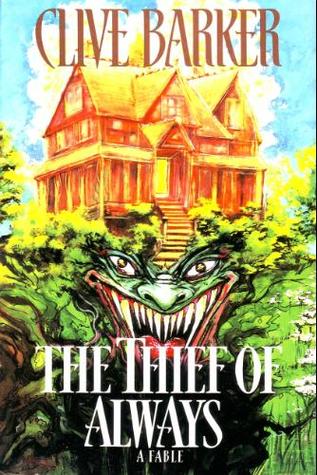


 Meghan's House of Books