Author Brian Kaufman joins us today with an article of one of his favorite movies: Night of the Living Dead.
As a horror fan (and a genre writer), I enjoy a scary movie. I’ve seen literally hundreds of them. One stood above the others as a truly frightening experience. Because the film was revolutionary (and because I was young), Night of the Living Dead had a lasting effect, both on my writing and my life.
My first encounter with the movie came through a negative newspaper review, which noted that the film departed from the traditional horror film (as typified by the Universal Studio monsters). NOTLD had no comedic elements. No schlocky reminders that the film was, after all, just a movie. And the hero dies. A drawing accompanying the review showed movie-goers, ostensibly children, fleeing the theater in tears.
The following summer, I took a date to the drive-in. She wore a sweater over her blouse, but it was late August, and that sweater was coming off for sure. Then the movie started. I’d recognized the name from the review I’d read, and thought, good, this could be fun. Maybe she’ll get scared!
Let’s start by saying that the title sequence scared me. Black and white film. A car driving a deserted road. Plain title lettering. No reason to feel dread, except, I did. As soon as Bill Hinzman, the graveyard zombie, killed poor Barbara’s brother, my date buttoned up that sweater. I was unseasonably cold myself, and settled in to endure the overwhelming sense of impending doom.
Film over, we drove home in silence. That night, I had my first zombie nightmare.
The dreams are all the same. It’s late afternoon or early evening. The sun will be down soon, and I have a limited amount of time to secure my surroundings and find weapons. Only the setting changes. In one dream, I was in the storage room of a museum. In another, the attic of a fast food restaurant.
In one particularly bad dream, I was on the top floor of an office building. The zombies were shambling down the hall, and coworkers barred the door. We all breathed a sigh of relief. Then, the pounding started. Someone on the other side of the door begged us to let him in. One coworker asked, “Is that Bob?” I tried to remove the bar, but coworkers pulled me way. The man outside shrieked, “They’re eating me!” I woke up screaming. My poor wife, half asleep, began screaming, too.
Meanwhile, I kept watching zombie movies. What scares you can also fascinate you. All this, thanks to that first black-and-white film, which clearly altered my DNA.
When I began writing horror, I wasted no time wondering what kind of monster I’d portray. Being eaten would surely be a horrible way to die. The relentless, unstoppable nature of zombies adds to their dread. And zombies are mindless. Evil has always struck me as thoughtless and irrational.
Novel writing is a lonely, arduous task. That’s why I chose a subject I could obsess over. It’s easy to maintain interest in a project that infects you. Dead Beyond the Fence was a moderate success, though the million or so zombie movies and books since then have taken the genre to new places. My second zombie story, for example, Mary King’s Plague, took the undead to 17th century Scotland.
I still have occasional zombie dreams, though time and nostalgia have altered the way they are viewed. I look forward to the setting sun. A good weapon makes me smile. (Sometimes, chaos is fun.) As for Romero’s classic, my older self finds that some of the strings are showing—bad acting, script flaws, lapses in logic. No matter—Night of the Living Dead still affects me, marrow deep. Best horror film ever.
Brian Kaufman is curriculum editor for an online junior college. He has published five novels, two textbooks, and a number of novellas. Kaufman lives with his wife and dog in the Colorado mountains, dividing his time between various passions, including writing, blues guitar, and book-hoarding.
According to legend, when plague broke out in Edinburgh, Scotland in 1644, city officials walled up a tenement neighborhood to contain the outbreak. When the walls came down months later, soldiers found dismembered corpses. Today, Mary King’s Close is one of the most haunted places in the world.
“Mary King’s Plague” – a novella. Betrayal. Forgiveness. Redemption. Zombies.
The dead have risen, and there’s no safe place. Coworkers Kevin and Angel take refuge in a college town research facility, where a handful of desperate survivors battle the plague and each other while searching for a cure. Meanwhile, Angel has a secret that will affect everyone in the facility. “Dead Beyond the Fence” includes a bonus novella, “Dread Appetites.” Seven months have passed, and the dead still walk. Will the world ever return to normal?
Meghan: Hello, Robert! Welcome to Meghan’s House of Books. Tell us a little bit about yourself.
Robert Essig: I’m a life long horror fan who lives with my wife and son in Southern California. I started writing in high school and then quit for several years before picking it back up and submitting my stories to various publications. I’ve published over 100 short stories and several novels and novellas. But alas that doesn’t pay the bills. I work a mundane job to keep a roof over my head and keep the family fed. Somehow I manage to write a fair number of stories every year even though I’m a father, husband, and house painter before I’m a writer (oops, wasn’t going to mention the day job).
Meghan: What are five things most people don’t know about you?
Robert Essig: 1. I used to love sports. Turns out I’m not all that competitive. I was doing it for fun, and that didn’t fly once I got into junior high. 2. I don’t like swimming in lakes or large bodies of water. 3. I’m a huge fan of sushi even though I’m not a big fan of cooked fish. 4. I do not like action movies (yes, this includes super hero movies). 5. I love cold, rainy weather, which makes living in east San Diego county kind of a bummer (among many other reasons). Despite having one of our odd rainy seasons, even our winter and spring (especially where I live) can get brutally hot.
Meghan: What is the first book you remember reading?
Robert Essig: The Batman Returns novelization. I read it for some reading program in grammar school. I hated reading at the time, so it took me way too long to get through the book. To this day it is the only novelization I’ve ever read. There are little details in the film that I don’t think I would have noticed had it not been for reading the book. I probably aught to read another novelization of a favorite film just to see the differences.
Meghan: What’s a book you really enjoyed that others wouldn’t expect you to have liked?
Robert Essig: This is a tough one to answer because I’m pretty predictable with what I read. I guess the best answer would be the Agatha Christie book I read when I was a teenager. I don’t remember the name of the book. It was a collection of short stories where two gents would meet unexpectedly and always when a murder had occurred. Together they would solve the mystery… and then meet again in another story.
Meghan: What made you decide you want to write? When did you begin writing?
Robert Essig: In high school I was given an assignment to write about Thanksgiving. I figured nothing unusual happened during my family Thanksgivings, so my story was going to be a bore. It hadn’t occurred to me to write fiction until someone asked if we could do just that. Thing was, I had been dreaming up a Thanksgiving horror story rather than writing about eating food and passing out on the couch. I bammed out the story in record time and handed it in after the bell rang. After Thanksgiving break I arrived to class early (as I always did so I could get some reading in) and Mrs. Martinez slapped my story down and looked kind of frantic. She said, “You’ve got to finish this!” I flipped to the end and realized that I had finished it. I left the ending open (something I’ve never done since). She said both she and her husband read it and loved it. From that day on I wrote short stories in class rather than do my work.
Meghan: Do you have a special place you like to write?
Robert Essig: The coffee table or the kitchen table. Those are the only places in the house where I can write. I write early in the morning before any one is awake, so there are no distractions.
Meghan: Do you have any quirks or processes that you go through when you write?
Robert Essig: Not really. I just get a cup of coffee, sit down in front of the computer and let the words flow. I used to work through my plots while driving to and from work (my commute can be a lengthy drag depending on where I’m working), but I don’t really do that anymore. I’ve streamlined my process to utilize the very limited time I have to write. Working with an outline is helpful.
Meghan: Is there anything about writing you find most challenging?
Robert Essig: Selling the finished manuscripts. I hate pitching my work. As far as the writing itself, I tend to lose my drive. I have a large number of unfinished books. Great ideas, but I just don’t know where to go with the stories, and I kind of want to write everything all at one time. This is why I’ve started writing outlines. With an outline I can stay focused to the end.
Meghan: What’s the most satisfying thing you’ve written so far?
Robert Essig: A novel called Circus Oasis. I haven’t sold it yet. In fact, I’m going through my first round of rewrites and edits. I think I’m always the most impressed with my latest work. As far as short stories go, I wrote one for an anthology called San Diego Horror Professionals Vol. 2 where I was challenged to write a Christmas story with a clown in it. The story is called “Tears of a Clown” and I think it’s about the best short I’ve ever written.
Meghan: What books have most inspired you? Who are some authors that have inspired your writing style?
Robert Essig: Pin by Andrew Neiderman inspired the hell out of me. It’s such a tight story and so bizarre, taking the reader right up to the point of feeling uncomfortable without plunging into the pool of absurdity and exploitation. Prodigal by Melanie Tem made a huge impact on me with its emotional depth and isolation. I could relate to the little girl in the story and yet there was so much I could never relate to The story is so well told that I lived in that world for a time. Others in short order: Horror Show by Greg Kihn, Mucho Mojo by Joe Lansdale. Robert Bloch, Ray Bradbury, Richard Matheson, Shirley Jackson.
Meghan: What do you think makes a good story?
Robert Essig: Atmosphere, character development, plot. Exciting and interesting subject matter. Something new and fresh (or at least a fresh take on something old and well tread).
Meghan: What does it take for you to love a character? How do you utilize that when creating your characters?
Robert Essig: This is something that took me a while to understand and utilize. I began, many years ago, writing very idea driven stories. Through rejection I was often told that my characters were unlikable, uninteresting, or two- dimensional. I thought about it and realized that what makes a great character is something that I can connect with, something emotional, something personal. Whether a good character or bad, they need to have depth, experience, fears, dreams, something they’re yearning for. It’s very important. It’s something I pay close attention to these days.
Meghan: Which, of all your characters, do you think is the most like you?
Robert Essig: I suppose parts of me seep into every character in one way or the other, but I cannot think of one character that is the most like me outside of a little boy in an unpublished story called “Sea Freak”. I modeled the kid after myself as a youngster.
Meghan: Are you turned off by a bad cover? To what degree were you involved in creating your book covers?
Robert Essig: Of course! Who isn’t? There are degrees of bad, certainly. Any publisher worth their salt isn’t going to release a book with one of those awful cut and paste covers some self-published authors have come up with (there are plenty of them, unfortunately). I’ve been pretty lucky, though there has been a cover or two I’ve begun to dislike over time. So far I’ve been asked for a general idea on each cover for my work. That seems to be the standard with small presses. I’m generally not very confidant with cover ideas. My book Death Obsessed has my favorite cover of all my works. Turned out exactly how I wanted it. One of the few times I had a solid cover concept.
Meghan: What have you learned creating your books?
Robert Essig: A lot. Too much to put into one interview question. I’ve learned not to write to market. I’ve made a few bucks doing this with short stories, but it can take something I truly enjoy and turn into something that can be fairly dreadful. I’ve learned that having other eyes on my stories is a good thing, and that there is a lot to learn from editors. I’ve come to realize that I need to outline my stories in order to streamline the writing process since I have such little time in the day to write. I learn, and I’ll continue to learn until I write my last word.
Meghan: What has been the hardest scene for you to write so far?
Robert Essig: Nothing emotional. Even the most heartbreaking emotional moment was easy (well, as easy and writing ever comes), even those very few that actually brought me to tears. As strange as it may sound, action sequences are the most difficult for me to write. I much prefer atmosphere to action, but that goes to the previous question. I continue to learn how to write action sequences effectively.
Meghan: What makes your books different from others out there in this genre?
Robert Essig: Oh boy, this is a tough question. I suppose my look at the world around me and how I process things would cause elements of my stories to be fairly unique.
Meghan: How important is the book title, how hard is it to choose the best one, and how did you choose yours (of course, with no spoilers)?
Robert Essig: Book titles are your greeting card to the readers. It’s the first thing they see. A good title is a good start. Like cover concepts, I’m not all that great at titles. Short titles are good (my first book is called Through the In Between, Hell Awaits… give me a break, I hate that title), and interesting or unique titles that stick out will grab a reader’s attention. I think I’m getting better. Death Obsessed and Circus Oasis are nice titles. I think I’m getting better.
Meghan: What makes you feel more fulfilled: Writing a novel or writing a short story?
Robert Essig: A novel. There’s so much more that goes into a novel. It takes longer, the characters and story take more time to develop. I become more invested and close to a novel, kind of like raising a child and watching them grow, whereas a short story can be knocked out in one writing session and revised in another sit down. Some short stories might take longer to draw out, but for the most part they happen pretty quickly. Novels leave scars; short stories are just flesh wounds.
Meghan: Tell us a little bit about your books, your target audience, and what you would like readers to take away from your stories.
Robert Essig: I write what I’m interested in. I don’t target an audience, I don’t follow trends, I don’t write to market, and I don’t think I ever will. I’m entertaining myself first. If there’s an audience for what entertains me, then that’s great. That’s what I hope for. I have a handful of fans who buy what I put out and seem to enjoy it. I hope that little group of people gets bigger and bigger with each new release. I consider myself a bit of a pulp horror author. I’m not writing for some deeper meaning, but for entertainment. Something that people can read for escape from the trial of the day. Some of my work leans toward the extreme side of horror (Brothers in Blood, The Madness, and my latest novel from Death’s Head Press, Stronger Than Hate, for example), but I seem to be going into a more inclusive direction. By that I mean I feel that my work is becoming more accessible to any fan of the genre. I really don’t want to be pigeonholed as an extreme horror author (and really I’m not as extreme as, say, Ed Lee or Monica O’Rourke).
Meghan: Can you tell us about some of the deleted scenes/stuff that got left out of your work?
Robert Essig: That’s a great question, but once I delete a scene it’s gone forever. I’m not big on saving that stuff. I can’t think of a specific scene that was taken out of a story. If something doesn’t work or in unnecessary I delete and move on. I do have fragments and abandoned stories, of which I will mine from time to time, but even when an entire chapter is taken out of a novel or novella I just get rid of it.
Meghan: What is in your “trunk”?
Robert Essig: I wrote what was supposed to be the first story in a series of urban fantasy books following freelance journalist Veronica Hensley. The first two acts of the novel are good, but the third just doesn’t work. I pitched it to a mass market publisher that specializes in urban fantasy and they passed on it. I recognize the issues, but don’t feel like going back to it just yet. I spent a LOT of time on this one. When I do go back (if I do) I am going to rework it into a trilogy rather than an ongoing series.
Meghan: What can we expect from you in the future?
Robert Essig: I have a collection of short fiction co-authored with Jack Bantry coming from Death’s Head Press. In May, Bantry and I have a novella coming out, but it has not been announced yet, and we also have a novella called Insatiable coming soon from Grand Mal Press. I have a few other goodies I can’t talk about (one in particular that I’m ecstatic about).
Meghan: Do you have any closing words for your fans or anything you’d like to say that we didn’t get to cover in this interview?
Robert Essig: First off, thank you so very much for the opportunity. These were some stellar questions. It was a lot of fun. For the fans, there’s plenty coming this year. I’ve got you covered. For the readers who haven’t read me yet, I hope you give my work a chance.
Robert Essig is the author of Death Obsessed, In Black, and Brothers in Blood, among others. He has published over a hundred short stories and edited several small press anthologies. Visit him on the web. Robert lives with his family in Southern California.
Remember those old VHS tapes with labels that said “banned in 40 countries” and “not for the faint of heart,” with titles like Faces of Death and Mondo Violence? Well, they’re back, only this time it’s a book. This book. Death Obsessed is Faces of Death with an identity crisis. Get ready for something mondo macabre!
Back when he was a teenager, Calvin was into the morbid stuff. He thought he outgrew it, but he’s only a video clip away from becoming obsessed, and what’s Ronnie going to think about that? She’s not the kind of girl who digs cemeteries and dead things. But Hazel, she’s something else altogether, and oh how persuasive is a woman who knows what she wants.
Drawn back to a place Calvin had forgotten about, and lured by the baritone drawl of Mr. Ghastly, who promises the much sought-after death scenes classic known as Death’s Door, Calvin trips down one hell of a rabbit hole, and everything is at stake. Can he leave his nine-to-five life in the dust for some real action, or will he be left sick, all alone, and death obsessed?
“For anyone who dared picked up Faces of Death at the video store as a teenager or perused the atrocities of early internet shock sites like Rotten.com, Death Obsessed is a nightmarish trip down a rabbit hole slick with corpse slime and grave dirt. It’s a supernatural glimpse at the deranged world behind execution videos and crime scene photos and the people who enjoy them.” — Mike Lombardo, writer/director of I’m Dreaming of a White Doomsday
Chase thought he’d been hired to do some painting, but when the paint dried, it created a black void through which was a chamber. Suffering abounds, but Chase manages to escape with his life…and the strange black paint.
Needles is a town that time seems to have forgotten. Run down, desperate—the perfect place for Paul to pimp out his girlfriend and close enough to Laughlin for him to gamble away her earnings. When he discovers the eerie black paint, he creates a depraved brothel in a hidden void and hightails it to Vegas to make some real dough.
Chase spends his fugitive life in search for his missing wife and the black paint. After requesting the help of someone he is loath to work with, he finds himself driving through the desert to Sin City for a showdown like no other.
He was warned about the black paint, but didn’t listen. Now he has to find and destroy it before more innocent lives succumb to its unfathomable darkness.
Twin brothers Kyle and Lyle Morris depend on one another to live and to kill, only Kyle’s strange desires are becoming more twisted with each new body. Lyle, a grown man with the mind of a toddler, doesn’t understand the perversity of his relationship with dead things. Lyle’s caregiver, Desiree, is worried about the big ol’ lug, and she’s terrified of his brother, but she’s been getting those strange letters again, the ones that her stalker ex used to send her, only now it seems as if he wants something she can’t give him.
A necromaniac using his deformed brother for fresh meat; a young woman in the clutches of her ex’s twisted fantasies—blood will flow . . . but who will bleed out first and what will be left of them?
Francine watches the deal from below, trapped within a sinkhole that opened up in her precious garden. Forty bucks and a quarter bag of weed. How could she be sold off for so little? Familiar faces look down upon her—the worst students she ever had the displeasure of teaching before she retired from the local high school. They snicker as money changes hands. They spit on her. Throw things at her.
And there’s no way in hell they’re going to get help.
But someone else knows about Francine’s predicament. Her neighbor Greg, another former student. The one whose peers called him Lazy Eye. The one who always looked to be accepted even at the expense of Francine’s safety. Does he have it in his heart to do the right thing, to come to his senses and call the police?
At the mercy of deviants, Francine Mosely must harness her inner strength to survive their torments, but how much can she take? Through guidance from the memory of her late husband she banishes herself from what is happening, retreating to her most precious memories, but what happens when the horrors around her infiltrate her mind? How much can she take before breaking down? Is Francine Mosely STRONGER THAN HATE?
Meghan: Hi, Grant. I’m so excited to have you here today. Thank you for agreeing to take part in this year’s Halloween Extravaganza. Tell us a little bit about yourself.
Grant Hinton: I was born in London, United Kingdom, back when the world made sense, but now resided in sunny Australia. I love writing, it’s a passion that’s taken over my life. I have a long-suffering wife who doesn’t read much of my stories, (she’s not a horror fan,) but supports my decision to scare people. Along with that, I like to make beer and I’ve gotten pretty good at it, well, that’s what my friends tell me.
Meghan: What are five things most people don’t know about you?
Grant Hinton: I’m an open book, even on the Internet forums I frequent. But I will go with:
I couldn’t write my name until I was six.
I’m a very good singer, as in I could make a living off of it, and when I was younger I did for a while, but it’s not the life for me.
I wrote my first story – which was a total rip-off of The BFG – but I was only ten.
I’ve never been in a fight outside of self-defence classes and boxing training.
You wouldn’t think this by looking at my rather rotund form, but I can do the splits.
Meghan: What is the first book you remember reading?
Grant Hinton: The BFG as a kid, although I was never a big reader and never finished any book assignments from school. I only started getting seriously into reading when I was about 28. I picked up a copy of Eragon by Christopher Paolini. It was incredible and I was hooked from the get-go. It was the first book I read fully in one sitting.
Meghan: What are you reading now?
Grant Hinton: Nowadays I have a few books on the go, I don’t just read fiction either. So, currently, I’m reading Save the Cat Writes a Novel by Jessica Brody, which is super impressive and informative. It’s changing the way I approach writing stories. I’ve always been a mixture of a plotter and a pantser. I would have a great idea and kinda know where I wanted it to go plot-wise and then I would pants my way through it. This book has changed that, and I’m thankful.
I love reading indie authors like myself. I think there are so many great writers out there that get overlooked. Take my other book for example. Escape from Samsara by Nicky Blue. It’s about a ninja gardener from England that goes on a quest to find his missing father. It’s comical and easy to read, it also has a cockney spirit guide that keeps cropping up in bushes, so I was sold.
Meghan: What’s a book you really enjoyed that others wouldn’t expect you to have liked?
Grant Hinton: Umm, this is tough, most people expect you to love all books and genres when they find out you’re an author. Especially the genre you write.
Gosh, this is tough. I’ve read so many. Pass. Sorry I just haven’t got an answer.
Meghan: What made you decide you want to write? When did you begin writing?
Grant Hinton: So after my plagiarism of Roald Dahl, I had a spat of writing poetry in school and after that never thought about writing again until I was 28. I was sat in a hotel room in Waikiki, Hawaii. I don’t know where the idea came from or the compulsion to write it but I grabbed the closest piece of paper and started writing. It was a dungeon scene between an evil sorcerer and a captive elf. I didn’t know what I was doing back then, so that single chapter got edited several thousand times. Each time I would go to write I would re-read, change a few things and then progress the story. I still have it somewhere. It’s around 23k words (unedited) and should have been a heroic fantasy. One day I might dust it off and write it with the skill set I now have.
Meghan: Do you have a special place you like to write?
Grant Hinton: No, is the short answer. I write everywhere. Unlike most authors, I write about 90% of the time on my phone. It’s actually how I wrote the answers to this questionnaire. Inspiration can hit me anywhere so I like being able to whip out my phone and get it down. Google docs are amazing for that. I can access them anywhere at any time. The last thing I want to do is limit myself because I’ve tried the whole make time to write in a special place and when I get there to do just that, nothing wants to come out.
Meghan: Do you have any quirks or processes that you go through when you write?
Grant Hinton: I have several processes when polishing a piece, but I don’t think that’s what you’re asking. The one thing I like to do with a WIP is re-read what I’ve written so far. It adds a little time onto the workload but It allows me to get the mindset right for the characters, what the style of the story is, the undertone, plot, conflicts etc.
If it’s a fresh idea, I like to let it simmer away in the back of mind for a time. I think a lot when I’m in bed trying to sleep. The silence allows me to really play out the story in my head. I can run scenarios, tweak ideas, ask a lot of what-ifs moments; get involved in the plot-line and stir things up.
Meghan: Is there anything about writing you find most challenging?
Grant Hinton: Politics. I’m not one for all that, so I intend to leave it out of my stories. I’m a simple man, I want to scare you to death, not bore you
What’s the most satisfying thing you’ve written so far?
It’s a short story called ‘Tunnel Vision’ in my collection The Wraith Within. Essential it’s about a lady stuck on a train. But she doesn’t know that until the end. It heavy with dialogue but of all the author friends I’ve asked to critique it, they have found it amazing, so I’m happy it’s done it justice. It’s a futuristic tech horror, one of my favourite sub-genres.
Meghan: What books have most inspired you? Who are some authors that have inspired your writing style?
Grant Hinton: The opening paragraph of GOT A Song of Ice and Fire inspired a whole story around the Irish mythology of Badb. The triple crone. Other inspirations come from Lovecraft, his style is mastery, Neil Gaiman makes telling stories seem effortless, I envy him for that. Margret Weis and Tracy Hickman’s Dragonlance adventures were my first looking into an epic fantasy setting that motivated me to devour the whole collection. And Brendon Sanderson, I’ve watched every YouTube video of his lectures, the guys incredibly talented and a must for any new writer. He will break stuff down for you in a way that you can understand.
Meghan: What do you think makes a good story?
Grant Hinton: Conflict. Without conflict, it’s not a story. I like to throw my characters into the worst situations possible and then make it even worse. Flaws are also a biggie. We all want to related to our characters. No one wants to read about a perfect MC, that’s plain and boring. We want flaws, so we can relate and feel better about ourselves as our characters change throughout the story.
Meghan: What does it take for you to love a character? How do you utilize that when creating your characters?
Grant Hinton: I kill most of my characters, so I’m not showing much love, haha. Na, I’m just kidding, well kinda. I’m going to go back to the flaws. It’s what makes them like you and me. We want them to be messed up like we are, we want them to not know the answers because we don’t. We want to see them struggle and we love them for that.
Meghan: Which, of all your characters, do you think is the most like you?
Grant Hinton: I write predominantly first-person POV. So a lot of myself pours through in my stories. But if I were to pin one character it would be a recent creation. Bison Dawson. He’s a Cherokee angel I wrote for the second season of a popular internet ARG called Brighter Futures suicide hotline. He has a massive arc to go through while fighting to fit into a world he doesn’t belong in. I felt the same since I was little. Not knowing my place in the world. But as I’ve grown older I’ve stopped thinking that way and now understand that you don’t have to fit in as much as carve out that space for yourself.
Meghan: Are you turned off by a bad cover? To what degree were you involved in creating your book covers?
Grant Hinton: Absolutely. It’s the first impression of the writing world. If you don’t get it right it can bum you book. I don’t know what makes a cover great, to be honest, I’ve been caught by a plain cover with a catchy title and I’ve been caught by great artwork. I think it’s a medium between the two.
My cover for The Wraith Within is drawn by an amazing artist called Lee Marej, an engineer from the Philippines. When I saw the picture two years ago, I knew I wanted to use it for my collection. I purchased the right to use it and designed the rest of the cover from there. That was a huge – but enjoyable – learning curve.
Meghan: What have you learned creating your books?
Grant Hinton: A lot. It’s one thing to write but all the behind-the-scenes technical stuff that goes into getting those words in front of people is astounding. I’ve had to learn how to format for ebooks, Kindle, Amazon, design book covers as above, learnt how to promote that book and even interact with fans. Some days I relish just being able to delve into the worlds inside my head and write.
Meghan: What has been the hardest scene for you to write so far?
Grant Hinton: The ending to a story called ‘Why you don’t bring back people from the dead.’ It’s about the entities latching on to you when you die and come back. It was heavily influenced by my idol. My father. So the ending has him die, that was hard. Imagining that made me choke up when I was writing it. He’s still very much alive, healthy and strong. I felt that way because he’s my father and I have a strong bond with him.
Meghan: What makes your books different from others out there in this genre?
Grant Hinton: Have you seen my front cover! It’s badass. Just kidding. Why is my book different… umm, well the one thing I can think of other than I wrote it is that I’ve given each story an epilogue. I wanted the reader to get a look into how the story came about and any feeling I had while writing it.
Meghan: How important is the book title, how hard is it to choose the best one, and how did you choose yours (of course, with no spoilers)?
Grant Hinton: I think the cover of a book is more important than the title. A good cover catches the eye and makes you stop and read the title. Get those both right and you may get someone to pick your book off the shelf or even read the blurb if online.
How hard is it for me to choose? I’ve only got the one book so far, but I have an answer for you anyway. I think you should do a poll. If that’s with your family and friends, or fans on your page or whatever. Line up the choices and get some feedback.
With my current collection, I chose The Wraith Within because one; it symbolises the demons inside of us wanting to get out. I believe humans are fundamentally good and bad, it’s a choice to do either. You have a choice to not hit someone who’s shouting at you. You have a choice to give back the money you saw drop out the guy’s wallet. You have the choice to not buy a gun and shoot people with it.
And two, It’s also how I see the stories in my head, all pulsating and pushing their way out.
Meghan: Tell us a little bit about your books, your target audience, and what you would like readers to take away from your stories.
Grant Hinton: I enjoy writing short horror stories, its how I began so it’s easy to slip back into. Shorts can be punch 500 words or be a colossal 10K words, either way, they can break novel rules. You can play with syntax and prose, throw structure out the window and experiment with the joy of writing a thrilling piece. With a novel, you can’t really do that.
Most of my stories follow the ‘learn a lesson’ style, be that don’t do drugs or don’t chase white see-through things down dark tunnels with a phone and nobody with you because that’s shits gonna end bad kinda lesson. I like my readers to still be thinking about my story well after finishing it.
Meghan: What is in your “trunk”?
Grant Hinton: A trunk? Mine’s a whole garage. Haha. Ideas crop up all the time, sometimes that inspiration needs the motivation to get out on the paper. If I don’t have the time to smash it out, I’ll leave plot points or notes so I can come back to them. When I do come back to them sometimes the fire is gone or I leave it for so long that I can’t remember the pattern of thought surrounding the storyline. These one sit at the back of my mind and in a folder on google docs. I often go through what I got in the drafts there, I’m meticulous like that. I have a master file with all that I’ve written, every collaboration I’ve been in and all my drafts. Just the other day I picked up a plot point of a man turning to my character. His face decaying with weeping wounds and open sores. A maggot crawls out from his hairline and creeps across his face, slipping in and out a fresh wound. The maggot crawls into the decaying man’s mouth and he bites down on it.
Meghan: What can we expect from you in the future?
Grant Hinton: Twisted Fairytales and Secondhand Nightmare. Twisted Fairytales explain itself precisely, but to sum up, essentially I wanted to take 8-10 popular tales and twisted them back into something Hans Christian Andersen would be proud of.
Secondhand Nightmares is a joint collaboration with my amazing author friend, Melody Grace. We have taken 30 pictures from a Facebook secondhand finds page and with the owner’s permission written stories inspired by them. My favourite is a shrunken head picture. My character is a cheeky student with a wit sharp enough to cut grass. But then lady he meets a lady on holiday that’s more than a match for him. It’s a little sexy and quite dark. It was fun to write. I won’t spoil it for anyone out there.
Meghan: Where can we find you?
Grant Hinton: Facebook is my jam, you can message me there and I’m fairly active.
Or Twitter. I participate in a daily writing challenge called VSS365. It stands for Very Short Story. Once a day a prompt word is given by a preselected person. With the word and the confines of the Twitter character limit, you have to write a short compelling story. You can interact with me there too.
Meghan: Do you have any closing words for your fans or anything you’d like to say that we didn’t get to cover in this interview?
Grant Hinton: Horror surrounds us in our daily lives, not just the words on paper or scene of a horror movie, but in the actions of the people surrounding us. Don’t be one of them. Use your time here on earth to make people happy. Especially yourself. Because if you’re happy you’ll find the world will be a happier place. And we could all do with a brighter future.
To all the budding authors out there. Read. Read like an MF, and write and show that shit to your friends and other authors. It’s the only way to learn and progress. Oh, and also grow some thick skin. Because you’re going to get feedback on your baby that you might not like but it’s essential that you learn from it. If it’s hate feedback, like the person just say you’re crap and you shouldn’t write, don’t listen to them. Feedback and criticism should be constructive, it should help you learn. If it doesn’t, it might not be you, it might be them.
Grant Hinton is the wifi password to the world of horror. His technological knowledge mixed with the grasp of the human condition results in devastatingly chilling results. Not only that, this bestselling author is hauntingly gifted in all things to raise the hairs on the back of your neck, all the ways to quickening your heartbeat, and leave you with a lesson that stays long after your eyes have left his words.
There are great things on the horizon coming ahead, stay tuned for more soul gripping content.
Grant Hinton – horror author, writing advocate, teacher and family man.
From supernaturally scary to real-world horrifying, this collection boasts 32 harrowing tales. Each accompanied by a brief epilogue into the author’s deranged mind, adding a little insight into their creation. A lady is trapped on a train, but she doesn’t know it until too late. I professor sells sex toys for one purpose only. A policeman finds more than he bargained for on a routine call to a place that doesn’t exist.
Catherine Cavendish is a must-read horror author and someone I am super excited about having involved in this year’s Halloween Extravaganza. If you haven’t read any of her work, I encourage you to give her a chance. It won’t be a waste of time, I assure you.
Meghan: Hi, Catherine. Welcome welcome. Tell us a little bit about yourself.
Catherine Cavendish: I’m a published author of horror tales mainly in the supernatural, paranormal, Gothic, and ghostly traditions.
Meghan: What are five things most people don’t know about you?
Catherine Cavendish: When I was a child, I planted a conker that is now a flourishing, tall horse chestnut tree
I am not fond of chocolate. I don’t hate it, but I could live without it perfectly happily. Cheese on the other hand…
I have a phobia about stairs – I had a nasty accident involving them a few years back.
When I was a small child, I wanted to be a ballerina.
Again, when I was a small child, I had an invisible friend called Gerry. He went everywhere with me, much to my mother’s embarrassment.
Meghan: What is the first book you remember reading?
Meghan: What made you decide you want to write? When did you begin writing?
Catherine Cavendish: There is no one answer to this as I cannot remember a time I didn’t want to write. The need to tell a story that builds in my head and refuses to go away is what always gets me started. I began writing as soon as I could hold a pencil.
Meghan: Do you have a special place you like to write?
Catherine Cavendish: At my desk in my home office/library. The walls are lined with bookshelves. Perfect for me.
Meghan: Do you have any quirks or processes that you go through when you write?
Catherine Cavendish: Nothing out of the ordinary. I research locations and settings on the internet and create a file of pictures. I also do this with main characters. For books requiring research, I read a lot beforehand to drown myself in the atmosphere of the time and place in which I am setting the story.
Meghan: Is there anything about writing you find most challenging?
Catherine Cavendish: Hunting out and ridding the story of anomalies that creep in. Even when you think you’ve dispatched them all, there is always one lurking in a corner ready to trip you up.
Meghan: What’s the most satisfying thing you’ve written so far?
Catherine Cavendish: That’s a hard one to answer. I am particularly partial to my latest – The Haunting of Henderson Close – because I had the basic idea for that story for a number of years and finally got around to writing it.
Meghan: What books have most inspired you? Who are some authors that have inspired your writing style?
Catherine Cavendish: Strong, multi layered characters working their way through a plot with unexpected twists and turns, challenges, atmosphere, suspense and an ending you weren’t expecting.
Meghan: What does it take for you to love a character? How do you utilize that when creating your characters?
Catherine Cavendish: I hate prissy, sweet, text book characters. I love flawed, sometimes damaged personalities who fight against the circumstances in which they find themselves. I like them to be non-conformist or to have broken away from the life they were expected to follow. I like rebels. I strive to incorporate this in my main characters. They are usually thirty years old, or more, and have had ups and downs in their lives. Of course, little do they know that things are about to take a turn for the worse and they will need all their reserves of strength and resilience…
Meghan: Which, of all your characters, do you think is the most like you?
Catherine Cavendish: There are elements of me in most of my main characters but none are especially like me. I suppose the closest is probably Nessa who features in a novel I am currently working on. She goes through some of the major medical issues I faced a few years ago and I do see more of myself in her.
Meghan: Are you turned off by a bad cover? To what degree were you involved in creating your book covers?
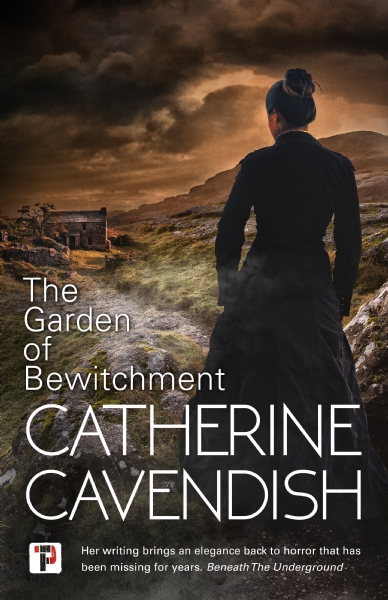
Catherine Cavendish: If we are honest, I think most of us look at the cover first and make an unconscious snap judgement about the content of the story based on that. I am lucky in that all my publishers (so far) have involved me quite heavily in the process. For The Haunting of Henderson Close and my upcoming novel, The Garden of Bewitchment, the publishers – Flame Tree Press – invited me to submit suggestions. I did so, fairly comprehensively as I always do, and the resulting covers are as near to my vision as I believe it is possible to be. I am delighted with them and feel they accurately reflect the content in each case. This also applies to my titles with Crossroad Press.
Meghan: What have you learned creating your books?
Catherine Cavendish: That you never stop learning and there is always room for improvement.
Meghan: What has been the hardest scene for you to write so far?
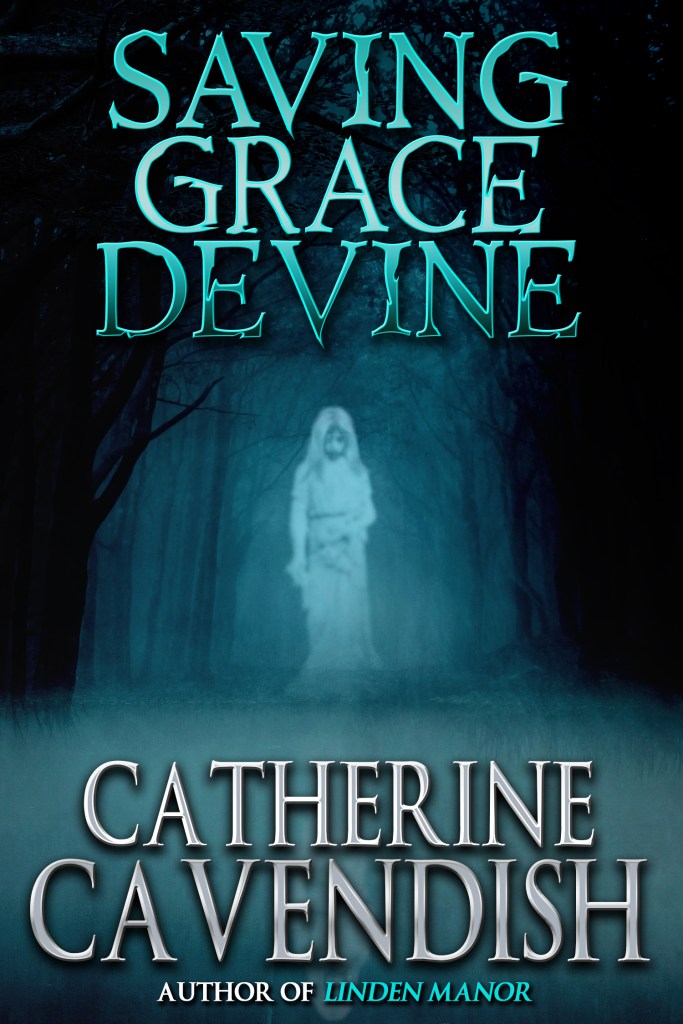
Catherine Cavendish: That has to be in my current work in progress because it involved a serious medical condition and surgery I actually lived through. While I was writing it, I felt myself back in the hospital, in pain, a bit scared and wondering how I was going to get through it. As far as my currently published work is concerned, the final scene in Saving Grace Devine reduced me to tears.
Meghan: What makes your books different from others out there in this genre?
Catherine Cavendish: I think you would have to ask my readers that one. I like to think maybe it’s the combination of gothic with supernatural and the twists I take at the end. I like to challenge!
Meghan: How important is the book title, how hard is it to choose the best one, and how did you choose yours (of course, with no spoilers)?
Catherine Cavendish: I think titles are critical. Whenever I come up with one, I always check it to see if there are any other books with the same title. If there are, I avoid it and think again. Of course, there is nothing to stop someone else coming up with the same title as yours, but I think it prevents possible confusion if you try and avoid one already in use.
Sometimes a title is the first thing that comes to me and, at other times, I really have to work at it, discarding three or four choices before finding the one that really fits the bill. One of the easiest was The Haunting of Henderson Close. I had picked the name of the Close after checking that no such place existed in Edinburgh and, as the novel was about an evil haunting, the rest came naturally.
Meghan: What makes you feel more fulfilled: Writing a novel or writing a short story?
Catherine Cavendish: In their own ways, both, but because of the length of time and energy expended on writing a novel, the time when you finally decide ‘that’s it’, is a greatly fulfilling one.
Meghan: Tell us a little bit about your books, your target audience, and what you would like readers to take away from your stories.
Catherine Cavendish: My take on horror is the jump-scare, something lurking in the shadows, the stuff of nightmares. I often set – at least part of – my stories in the past because I love history and exploring historical locations. Mine is the world of ghosts, demons, witches, devils and unquiet spirits, frequently with a Gothic flavour. I use folklore traditions that exist and ones I create myself. My target audience is anyone who enjoys a scary, creepy story, suspense and/or horror. When they have finished one of my stories, I hope readers have enjoyed the experience and want to read more
Meghan: Can you tell us about some of the deleted scenes/stuff that got left out of your work?
Catherine Cavendish: If a scene fails to move the story along, or has no relevance to what came before or will come after, out it goes. Once it’s gone, it’s gone and I don’t tend to think about it anymore.
Meghan: What is in your “trunk”?
Catherine Cavendish: I have a tin containing scraps of paper with notes on, or sometimes merely a line or two suggesting a plot for a short story, novel or novella. One came from a vivid dream I had which I can still remember around six years on. I was in a wood and came across an old timber hut. There was an exquisite and clearly expensive picture on the porch…and that’s all I’m telling you. I’ll write that story one day… maybe
Meghan: What can we expect from you in the future?
Catherine Cavendish: On February 10th, Flame Tree Press will be publishing The Garden of Bewitchment which is set in Bronte country – Haworth and its environs – in West Yorkshire, near where I grew up. This is a ghostly and Gothic tale involving twin sisters who are obsessed with the works of the Bronte sisters. Here’s the official blurb:
Don’t play the game
In 1893, Evelyn and Claire leave their home in a Yorkshire town for life in a rural retreat on their beloved moors. But when a strange toy garden mysteriously appears, a chain of increasingly terrifying events is unleashed. Neighbour Matthew Dixon befriends Evelyn, but seems to have more than one secret to hide. Then the horror really begins. The Garden of Bewitchment is all too real and something is threatening the lives and sanity of the women.
Evelyn no longer knows who – or what – to believe. And time is running out.
Meghan: Where can we find you? (Links to anywhere you’re okay with fans connecting with you.)
(I also have Instagram but I’m not particularly good at it! Camera-shy I guess.)
Meghan: Do you have any closing words for your fans or anything you’d like to say that we didn’t get to cover in this interview?
Catherine Cavendish: Thank you to everyone who has read or reads my work. I really appreciate your support. Long may it continue. Keep reading scary stories!
Cat first started writing when someone thrust a pencil into her hand. Unfortunately as she could neither read nor write properly at the time, none of her stories actually made much sense. However as she grew up, they gradually began to take form and, at the tender age of nine or ten, she sold her dolls’ house, and various other toys to buy her first typewriter. She hasn’t stopped bashing away at the keys ever since, although her keyboard of choice now belongs to her laptop.
The need to earn a living led to a varied career in sales, advertising and career guidance but Cat is now the full-time author of a number of supernatural, ghostly, haunted house and Gothic horror novels, novellas and short stories. These include (among others): The Haunting of Henderson Close, The Devil’s Serenade, and Saving Grace Devine.
Cat lives in Southport, in the U.K. with her longsuffering husband, and a black cat, who has never forgotten that her species was once worshipped in Egypt.
When not slaving over a hot computer, Cat enjoys wandering around Neolithic stone circles and visiting old haunted houses.
Ghosts have always walked there. Now they’re not alone…
In the depths of Edinburgh, an evil presence is released.
Hannah and her colleagues are tour guides who lead their visitors along the spooky, derelict Henderson Close, thrilling them with tales of spectres and murder. For Hannah it is her dream job, but not for long. Who is the mysterious figure that disappears around a corner? What is happening in the old print shop? And who is the little girl with no face?
The legends of Henderson Close are becoming all too real. The Auld De’il is out – and even the spirits are afraid.
Maddie had forgotten that cursed summer. Now she’s about to remember…
When Maddie Chambers inherits her Aunt Charlotte’s Gothic mansion, old memories stir of the long-forgotten summer she turned sixteen. She has barely moved in before a series of bizarre events drives her to question her sanity.
The strains of her aunt’s favorite song echo through the house, the roots of a faraway willow creep through the cellar, a child who cannot exist skips from room to room, and Maddie discovers Charlotte kept many deadly secrets.
Gradually, the barriers in her mind fall away, and Maddie begins to recall that summer when she looked into the face of evil. Now, the long dead builder of the house has unfinished business and an ancient demon is hungry. Soon it is not only Maddie’s life that is in danger, but her soul itself, as the ghosts of her past shed their cover of darkness.
When Alex Fletcher finds a painting of a drowned girl, she s unnerved. When the girl in the painting opens her eyes, she is terrified. And when the girl appears to her as an apparition and begs her for help, Alex can t refuse.
But as she digs further into Grace s past, she is embroiled in supernatural forces she cannot control, and a timeslip back to 1912 brings her face to face with the man who killed Grace and the demonic spirit of his long-dead mother. With such nightmarish forces stacked against her, Alex s options are few. Somehow she must save Grace, but to do so, she must pay an unimaginable price. “
I had the pleasure of meeting Kristopher last year around this time, when he agreed to take part in the 2018 Halloween Extravaganza. When I saw that he won the Splatterpunk Awards a few months ago at KillerCon in Austin, I knew I needed to have him back again. He is a man with a lot of talent, and one of the most interesting and entertaining guys I’ve met in awhile.
Meghan: Hey, Kris. Welcome back. It’s been awhile since we sat down together. What’s been going on since we last spoke?
Kristopher Triana: A great deal, actually. I’ve had several things come out in the past year and my novel, Full Brutal, won the Splatterpunk Award for Best Horror Novel of the Year. My next book comes out today. It’s a Halloween-themed novel called The Long Shadows of October.
Meghan: Who are you outside of writing?
Kristopher Triana: A dog nut and a horror fanatic.
Meghan: How do you feel about friends and close relatives reading your work?
Kristopher Triana: That’s no problem. It’s when coworkers want to read it that I get nervous, given how extreme my books can be. You never know how someone is going to take it.
Meghan: Is being a writer a gift or a curse?
Kristopher Triana: It’s neither. Being a writer (or at least a good one) takes years of hard work and dedication to the craft. It isn’t something you’re born with. The imagination, however, I think is a gift.
Meghan: How has your environment and upbringing colored your writing?
Kristopher Triana: Greatly, but I think that goes for all writers. You can always find a chunk of our hearts in what we create, bits and pieces of our history.
Meghan: What’s the strangest thing you have ever had to research for your books?
Kristopher Triana: Crime scene cleanup for Toxic Love. And it made for one twisted book. That is one bizarre profession. I like to think I could handle it but…
Meghan: Which do you find the hardest to write: the beginning, the middle, or the end?
Kristopher Triana: It depends on the story, really, but getting started tends to be the most challenging. I always end up going back to the beginning and changing it as I write the book.
Meghan: Do you outline? Do you start with characters or plot? Do you just sit down and start writing? What works best for you?
Kristopher Triana: Ideas come to me and I jot them down. The dots start to connect in my head and the characters are given an outline, but they really reveal themselves to me as I write the story.
Meghan: What do you do when characters don’t follow the outline/plan?
Kristopher Triana: I adapt to what I think they would do, based on what they’ve become throughout the book. A character fleshes out as you write the book and are never exactly the same as when you first gave them life.
Meghan: What do you do to motivate yourself to sit down and write?
Kristopher Triana: I’m one of those writers who are compelled to do it. I enjoy it so much that there’s rarely a day I have to push myself into the chair.
Meghan: Are you an avid reader?
Kristopher Triana: Definitely. You can’t be a good writer without being an avid reader.
Meghan: What kind of books do you absolutely love to read?
Kristopher Triana: The more disturbing the better.
Meghan: How do you feel about movies based on books?
Kristopher Triana: Of course! That’s what they’re there for.
Meghan: Do you enjoy making your characters suffer?
Kristopher Triana: Not in a sadistic way. The stuff I write is dark and violent. Bad things happen in my books, often to good people. I’m not adverse to the bad guy winning. Suffering is the nature of humanity. We all feel it, endure it. Expressing it through art helps us cope.
Meghan: What’s the weirdest character concept that you’ve ever come up with?
Kristopher Triana: The Goddess in Body Art. She is stitched together by a twisted mortician using various body parts, ending up with multiple legs and arms and breasts. An unexplained evil makes her a sentient being.
Meghan: What’s the best piece of feedback you’ve ever received? What’s the worst?
Kristopher Triana: Praise from some of my idols like Brian Keene, Edward Lee, and Jack Ketchum were huge for me. As far as constructive criticism, I ask for it from my editors. I want to know if I’m doing something wrong or if it isn’t effective. If your beta readers give you nothing but praise, they’re too damn nice and aren’t being helpful. The worst kind of criticism is when people bash your work because they just don’t understand it or didn’t realize what they were getting into as far as the horror element goes.
Meghan: What do your fans mean to you?
Kristopher Triana: The world and then some. That I can share my stories with them and that they ask for more is everything I’ve ever wanted in life.
Meghan: If you could steal one character from another author and make them yours, who would it be and why?
Kristopher Triana: That’s a tough one. I’m going to say I’d take Michael Myers from John Carpenter’s Halloween. I could write a brand new story that picks up where part four left off, ignoring all the other sequels and remakes.
Meghan: If you could write the next book in a series, which one would it be, and what would you make the book about?
Kristopher Triana: Ted Lewis’ Get Carter, just so I could write a fourth novel in the series. It would deal with Carter’s childhood and his earliest days in the criminal underground.
Meghan: If you could write a collaboration with another author, who would it be and what would you write about?
Kristopher Triana: Clive Barker was such an enormous influence on me. Id’ love to write a supernatural horror story with him and bring him back to his days of splatter.
Meghan: What can we expect from you in the future?
Kristopher Triana: Many things, indeed! I have at least three books coming out in 2020, plus two special edition hardbacks. Lots of projects going on. And there will be a German edition of Toxic Love for my fans overseas.
Meghan: Where can we find you?
Kristopher Triana: All the social media sites and my website. And look for me at the Merrimack Valley Halloween Book Festival on October 12th in Haverhill, Massachusetts. I’ll also be signing books at Scares That Care next summer, as well as Killercon and some other events.
Meghan: Do you have any closing words for your fans or anything you’d like to say that we didn’t get to cover in this interview or the last?
Kristopher Triana: Halloween comes but once a year. Make it count!
Kristopher Triana is a Splatterpunk Award Winning author of horror, southern gothic, and crime fiction.
When Joe and Danny take on the job of housesitting Snowden Manor, they fail to realize they won’t be in the house alone. Inside the walls swarms a specter made of equal parts ghost, succubus and witch, and she uses the manse as a prison for souls. Now that October’s supermoon is falling over the mountains, she is ready to rise and reclaim her flesh.
Kayla has a crush on Joe, so when he asks her to come to a party at the manor she accepts his invitation. But no sooner do they get there than strange things start to unfold. People go missing, a mysterious dog appears, and then the boys begin to change . . .
Wraiths warn Kayla to save her friends before they’re devoured by the seductive witch. But she must hurry. For as Halloween approaches, the manor becomes a vessel for the black magic of the mountains, and the shadows that rule the woods return home.
Kim White is a very popular cheerleader. She’s pretty, healthy, and comes from a well-off family. She has everything a girl of sixteen is supposed to want. And she’s sick to death of it.
In search of something to pull her out of suicidal thoughts, she decides to lose her virginity, having heard it’s a life-changing event. But Kim doesn’t want to do it the same way the other girls do. She seduces one of her teachers, hoping to ruin his life just for the fun of it. This starts Kim on a runaway train of sadism as she makes every effort to destroy the lives of those around her. But soon simple backstabbing is not enough to keep her excited, and she nosedives into sabotage, violence and even murder.
When Kim finds out she’s pregnant with her teacher’s child, a new madness overtakes her, and she realizes there’s only one thing that will satisfy her baby’s hunger . . .




 Meghan's House of Books