I asked Kelly Stone Gamble to take part in this year’s Halloween Extravaganza, as I have before, because I think she’s a particularly good fit even though she doesn’t write horror or dark fiction. Here she is talking about a particularly interesting “character” of her book.
Although my books’ protagonist talks to dead people, my books aren’t in anyway considered horror or paranormal or even scary. However, it is Halloween, and one of the interesting “characters” in my book goes along with the theme of the holiday in a strange sort of way. A black cat. More specifically, a black cat clock.
Remember that guy? The black Kit Kat clock that was very popular in the 70’s? I remember when my grandmother first hung one in her kitchen. I was delighted! I would stand in front of it, watch its eyes move in one direction and its tail in the other. I even had my own little Kelly dance, moving my eyes and tail in time to his movements (which, for 50 comments on this post, I will happily recreate for your viewing pleasure). I thought that clock was about the greatest thing in Kansas.
However, I also had an older brother, one who loved to torment me in a way that only older brothers can. He once convinced me to shoot myself in the foot. On another occasion, he assured me that “bastard” was a fine word to say in front of my parents because June Cleaver frequently called Beaver one. And he also convinced me that my favorite decoration, the black Kit Kat clock, was a spy, placed in the kitchen to watch my every move and report back all the bad things I did to my parents-or worse-Santa Claus.
That revelation changed everything. From that day forward, each time I was “bad”, I would look to see if the cat was watching. He always was. His eyes moved back and forth, not missing a thing. Paranoia set in when my overactive imagination decided that he could see through walls and somehow was watching me when I wasn’t even in the house. I begged my grandmother to get rid of it and it wasn’t until I “accidentally” knocked it off the wall and broke it that my nightmare of the Kit Kat clock ended.
In my books, I thought it only appropriate for Roland (the bad guy), to own a black Kit Kat clock. Since Roland dies in the first paragraph, the clock then becomes a symbol and how the clock “travels” through the three books, changing possession, is also symbolic of the current owner’s past relationship with Roland. From Cass, Roland’s wife and murderer, to Clay, Roland’s brother, to finally Shaylene, Roland’s daughter. (So if you’ve read my books and didn’t notice that, there’s an “ah ha!” moment.)
When my first book was released, my husband thought it would be a great idea to give me a vintage black Kit Kat clock as a “book birthday” gift. Thoughtful and unique, yes, but he didn’t know that some of the things my characters experienced in the books in relation to the clock were actually things I imagined as a child. Sure, I’ve got a few years on me and I know the clock isn’t really a spy, but still, four years later, I’ve yet to take it out of the box.
And hang it on the wall?
Yeah, that’s not ever going to happen.
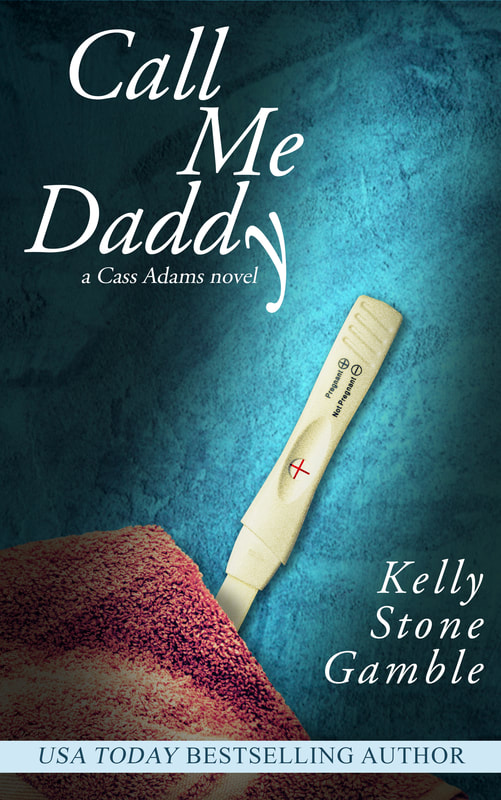
Kelly Stone Gamble is the author of USA TODAY bestseller They Call Me Crazy, Call Me Daddy, and Call Me Cass. She is an Instructor for Southeastern Oklahoma State University-McCurtain County Campus, and lives in Henderson, Nevada and Sawyer, Oklahoma (It’s complicated).
Cass Adams is crazy, and everyone in Deacon, Kansas, knows it. But when her good-for-nothing husband, Roland, goes missing, no one suspects that Cass buried him in their unfinished koi pond. Too bad he doesn’t stay there for long. Cass gets arrested on the banks of the Spring River for dumping his corpse after heavy rain partially unearths it.
The police chief wants a quick verdict—he’s running for sheriff and has no time for crazy talk. But like Roland’s corpse, secrets start to surface, and they bring more to light than anybody expected. Everyone in Cass’s life thinks they know her—her psychic grandmother, her promiscuous ex-best friend, her worm-farming brother-in-law, and maybe even her local ghost. But after years of separate silences, no one knows the whole truth. Except Roland. And he’s not talking.
Cass Adams comes from a long line of crazy, and she fears passing that on to her unborn child. Also, she’s run over Roland and Clay’s surprise half brother Britt, landing him in the hospital. With her inner demons coming out to haunt her, she doesn’t know if she should keep the baby.
Clay Adams has his own decisions to make. His half brother shows up to tell him their father, Freddy, is still alive but needs a liver transplant. When Freddy blew out of town thirty-five years ago, secrets were buried. But it’s time for them to be dug up, because only then can Clay hope to lay the past to rest.
Call Me Daddy is a story of family, the secrets they keep, and to what lengths someone would go to protect them.
Cass Adams is finally happy. She has a man who loves her, a family that understands her, and a baby on the way. Other than seeing the occasional dead person, Cass feels normal. But pregnancy has an unwelcome side effect. Cass is having visions of the future, just like Grams does. While some are cloudy, Cass knows one thing for certain. Her best friend, Maryanne, is going to die.
Police Chief Benny Cloud has his own problems. His father has been released from prison and is on his way home to surprise Benny’s mother, who’s been keeping time with the county sheriff. Fat Tina’s Gentlemen’s Club is under siege by protestors. And it’s growing dark outside.
A devastating storm is coming to Deacon, Kansas. In its wake, the town must deal with tragic losses that force everyone to reevaluate their lives.
Kelly Stone Gamble is one of my favorite people. Not only is she super freaking talented, but she is one of the nicest people I have ever met. The first two books of her Cass Adams series – They Call Me Crazy and Call Me Daddy – are absolutely fantastic… and yes I would say that even if I knew she wasn’t reading this. I read the first one in just a few hours, unable to put the book down. Book three of the trilogy – Call Me Cass – came out last month and I can’t wait to tear into that one… even if it does mean the end of the character that I have grown to love so much.
Meghan: Hi, Kelly! I am so excited to have you back on! Welcome back! It’s been awhile since we sat down together. What’s been going on since we last spoke?
Kelly Stone Gamble: Writing, writing, writing! They Call Me Crazy became a USA Today Bestseller last summer, and Call Me Daddy (the second book in the series) was released. Call Me Cass, the third and final book, was released on September 17, 2019.
Meghan: Who are you outside of writing?
Kelly Stone Gamble: I teach Literature, Humanities, and Professional Speech at Southeastern Oklahoma State University. I like to travel, rescue animals, and find ways to make the world a better place.
Meghan: How do you feel about friends and close relatives reading your work?
Kelly Stone Gamble: They better! Ha! If I were to write a memoir I may not be as comfortable with them reading it, but I write fiction and I love knowing my family and close friends are supportive enough of my work to read it.
Meghan: Is being a writer a gift or a curse?
Kelly Stone Gamble: As a writer, I feel I experience the world differently. I notice colors and textures and sounds and scents. I watch people and learn how they interact, what motivates them. In other words, I experience the world with all my senses. I don’t know how that could possibly be considered a curse.
Meghan: How has your environment and upbringing colored your writing?
Kelly Stone Gamble: I was born in, and still consider it my hometown, a small town in Kansas. The town is actually the inspiration for my fictional Deacon, Kansas. I love the Midwestern accents and vernacular of this area, and love peppering my work with the country metaphors.
Meghan: What’s the strangest thing you have ever had to research for your books?
Kelly Stone Gamble: Genital piercings. It wasn’t necessarily the subject that was strange, but the person I interviewed is a friend of my sons. So I knew him as a teenager, and it was weird talking with him about genital piercings. He’s a total professional, though, and I learned all (if not more) than I needed to.
Meghan: Which do you find the hardest to write: the beginning, the middle, or the end?
Kelly Stone Gamble: Always the middle. When I start a project, I know how I want to start and where I want to go. However, there are so many ways to get there!
Meghan: Do you outline? Do you start with characters or plot? Do you just sit down and start writing? What works best for you?
Kelly Stone Gamble: I definitely start with plot. Once I throw characters into the story, I have to learn about them, understand them, and usually end up rewriting a lot based on the personalities that emerge. As I said, my idea of “plot” is – this is where I want to begin and this is where I want to end up – I try to outline some, but I find it difficult to follow.
Meghan: What do you do when characters don’t follow the outline/plan?
Kelly Stone Gamble: I let them wander around and follow them! Afterall, it’s their story!
Meghan: What do you do to motivate yourself to sit down and write?
Kelly Stone Gamble:I go for a walk, or on a vacation, or do something out of the ordinary. I don’t know why that works for me, maybe it sparks my creativity, but it seems to be effective.
Meghan: Are you an avid reader?
Kelly Stone Gamble: I love to read, however, I don’t have the time to read like I used to. I read a lot of student papers and a lot of unpublished or pre-release books.
Meghan: What kind of books do you absolutely love to read?
Kelly Stone Gamble: Anything by Clive Cussler, and well-written apocalyptic fiction.
Meghan: How do you feel about movies based on books?
Kelly Stone Gamble: I guess it depends on the book. Some stories are better suited for the screen, in my opinion. Others don’t really translate well without the internal monologue a book offers. My books? If anyone would like to make them into movies, I’m ready to talk!
Meghan: Have you ever killed a main character?
Kelly Stone Gamble: In the third and final book of my Cass Adams novels, Call Me Cass, I do kill one of the main characters. No spoilers!
Meghan: Do you enjoy making your characters suffer?
Kelly Stone Gamble: I enjoy their suffering as a means to an end. I really enjoy allowing them to get revenge when they have suffered at the hands of another.
Meghan: What’s the weirdest character concept that you’ve ever come up with?
Kelly Stone Gamble: Have you read my books? Ha!
Meghan: What’s the best piece of feedback you’ve ever received? What’s the worst?
Kelly Stone Gamble: I’m a very headstrong person, so it may come as a surprise to those who know me how seriously I take non-toxic feedback. Rebecca Mahoney, the editor I use for everything I write before anyone else sees it, has no problem telling me what works or doesn’t work. And I listen. The best feedback she’s ever given me? In my last book, she basically said “this (about 80% of the story) doesn’t work”, and I pretty much rewrote the entire book. She was right. It’s so much better than the first draft! Worst feedback? I don’t really know. I listen to all of it, however, I don’t always agree with it and ultimately, it’s my work.
Meghan: What do your fans mean to you?
Kelly Stone Gamble: I love my fans! Since my books are a little nutty, my fans tend to be a little more fun. I have some great pictures that readers have sent me showing my book in interesting locations, and I love it! It’s an amazing feeling when you write something that someone else likes enough to tell their friends about.
Meghan: If you could steal one character from another author and make them yours, who would it be and why?
Kelly Stone Gamble: Wow, I don’t even know how to answer that. I like my characters, I can’t think of any that I would rather write than my own.
Meghan: If you could write the next book in a series, which one would it be, and what would you make the book about?
Kelly Stone Gamble: I’d love to write a book 2 of Kate Chopin’s The Awakening, where Edna doesn’t drown, but is saved by a passing fisherman and chooses not to go back to her old life.
Meghan: If you could write a collaboration with another author, who would it be and what would you write about?
Kelly Stone Gamble: I would love to collaborate with Stephen King with a story set in the deep woods of the Midwest. Deliverance meets Misery. If you’re interested, Mr. King, call me. 😊
Meghan: What can we expect from you in the future?
Kelly Stone Gamble: I’m always working on my historical fiction novel set during the building of the Hoover Dam, which seems to be my life project. I’m currently working on a story in its infancy that is so full of holes at the moment, I can’t even tell you what it’s going to be about. How is that for vague?
Meghan: Do you have any closing words for your fans or anything you’d like to say that we didn’t get to cover in this interview or the last?
Kelly Stone Gamble: Appreciate each other, take care of yourselves, and be kind to animals. And keep in touch! I love to hear from my readers!
Kelly Stone Gamble is the author of USA TODAY bestseller They Call Me Crazy, Call Me Daddy, and Call Me Cass. She is an Instructor for Southeastern Oklahoma State University-McCurtain County Campus, and lives in Henderson, Nevada and Sawyer, Oklahoma (It’s complicated).
Cass Adams is crazy, and everyone in Deacon, Kansas, knows it. But when her good-for-nothing husband, Roland, goes missing, no one suspects that Cass buried him in their unfinished koi pond. Too bad he doesn’t stay there for long. Cass gets arrested on the banks of the Spring River for dumping his corpse after heavy rain partially unearths it.
The police chief wants a quick verdict—he’s running for sheriff and has no time for crazy talk. But like Roland’s corpse, secrets start to surface, and they bring more to light than anybody expected. Everyone in Cass’s life thinks they know her—her psychic grandmother, her promiscuous ex-best friend, her worm-farming brother-in-law, and maybe even her local ghost. But after years of separate silences, no one knows the whole truth. Except Roland. And he’s not talking.
Cass Adams comes from a long line of crazy, and she fears passing that on to her unborn child. Also, she’s run over Roland and Clay’s surprise half brother Britt, landing him in the hospital. With her inner demons coming out to haunt her, she doesn’t know if she should keep the baby.
Clay Adams has his own decisions to make. His half brother shows up to tell him their father, Freddy, is still alive but needs a liver transplant. When Freddy blew out of town thirty-five years ago, secrets were buried. But it’s time for them to be dug up, because only then can Clay hope to lay the past to rest.
Call Me Daddy is a story of family, the secrets they keep, and to what lengths someone would go to protect them.
Cass Adams is finally happy. She has a man who loves her, a family that understands her, and a baby on the way. Other than seeing the occasional dead person, Cass feels normal. But pregnancy has an unwelcome side effect. Cass is having visions of the future, just like Grams does. While some are cloudy, Cass knows one thing for certain. Her best friend, Maryanne, is going to die.
Police Chief Benny Cloud has his own problems. His father has been released from prison and is on his way home to surprise Benny’s mother, who’s been keeping time with the county sheriff. Fat Tina’s Gentlemen’s Club is under siege by protestors. And it’s growing dark outside.
A devastating storm is coming to Deacon, Kansas. In its wake, the town must deal with tragic losses that force everyone to reevaluate their lives.
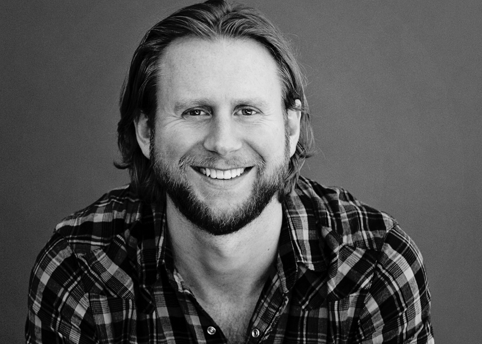
Meghan: Hi, Brian. Welcome to Meghan’s House of Books. Tell us a little bit about yourself.
Brian Kirk: Aside from being a fiction writer, I’m a father of identical twin boys: the rarest form of human offspring (a very technical term for kids). Only fraternal twins are hereditary; identical twins are a random anomaly. So it came as quite a surprise. In fact, the first thing I did when I found out was Google the phrase, “What’s the best thing about having twins?” I needed a pep talk.
Actually, it turns out I didn’t. My wife and I are blessed with wonderful boys. Raising them has been a special privilege.
Meghan: What are five things most people don’t know about you?
Brian Kirk: People who know me even a little basically know everything about me. I’m—apologies for the pun—an open book. I spent most of my adolescence feeling insecure about my reading habits and writing interests. Even when a teacher could see I had writing potential, they would discourage my dark stories, and make me feel strange for writing them. I felt a crippling urge to fit in amongst my peers when growing up, and would only do or say things that I knew would be deemed acceptable and not attract too much attention or scrutiny. So I was extremely quiet and shy, despite having an extroverted personality.
As I got older, I started to realize that there was nothing wrong with my thoughts and interests, and that I was doing a disservice to myself, my friends, and my family, by suppressing my authentic self. So I began opening up—bit by bit—exposing people in small doses to my true passions. And, to my extreme relief, I found that the more I opened up, sharing my deepest and purest inner thoughts, the more people seemed to open up in return, which helped to deepen our relationships.
I don’t have much tolerance for small talk. Within a few minutes of meeting someone, I’m moving the conversation into deep waters. This tendency helps filter out the people I am unlikely to connect with. I have nothing against people who prefer to keep things on the surface, but those who are willing to venture deeper get full access to my heart and soul.
Meghan: What is the first book you remember reading?
Brian Kirk: Learning to read was a profound experience for me. I remember the exact moment the words revealed their meaning, and I could decipher what they were saying. I was so excited I asked my teacher to let me bring home the school book so I could show my parents what I had learned. What I had unlocked. Because that’s how it felt, like I had broken some kind of seal that allowed me access to all the stories in the world.
I grew up reading everything I could get my hands on, but most fondly remember the “Choose Your Own Adventure” stories before I was introduced to the work of Stephen King.
Meghan: What are you reading now?
Brian Kirk: My reading tastes are wide and varied, and I like to change up genre/subject/style/author from one book to the next. I’m currently reading The Dead Letters by Tom Piccirilli, and loving it. His immense talent was taking from us far too soon.
Meghan: What’s a book you really enjoyed that others wouldn’t expect you to have liked?
Brian Kirk: Maybe the Harry Potter series? I struggled a bit with books 1-3, but books 4-7 ripped me straight out of my reality and fully immersed me in the world of Hogwarts. I love when that happens.
Meghan: What made you decide you want to write? When did you begin writing?
Brian Kirk: I’ve enjoyed writing stories for as long as I can remember, and have done so enthusiastically my whole life. I took a hiatus for a few years following college when I thought I needed to pursue a “serious” career, but quickly realized that was a mistake and returned to writing stories. I now freelance to allow more time for fiction writing.
Meghan: Do you have a special place you like to write?
Brian Kirk: I have a home office where I do most of my work. If I’m feeling dull or stifled, I’ll go to a nearby coffee shop to change up my environment.
Meghan: Do you have any quirks or processes that you go through when you write?
Brian Kirk: Sort of. My best writing comes from a type of waking dream state. It’s basically when I fall into an immersive daydream that silences my rational mind and taps into my subconscious (at least I think that’s what is happening, I really have no idea). This mindless dream state is where the story unfolds, and my job is simply to bear witness and try and get it down on the page as clearly as I can.
I, therefore, approach writing as though I’m preparing myself for bed. I prefer to do it in the same place, or type of place (a quiet room with a hard surface and minimal potential for distraction). I prefer to do it when all my paid freelance work is done, so that it’s not nagging the back of my mind. And then, like lying down to sleep, when I sit down to work I trust that my mind will shut off and the dreams will begin. This doesn’t always happen, of course. Just as we all have restless nights. But it’s my general approach.
Meghan: Is there anything about writing you find most challenging?
Brian Kirk: There’s a lot about writing that I find challenging, but that’s also why I enjoy it so much. I remember when I was gearing up to begin writing my debut novel I kept thinking, “I can’t wait to be engaged in the struggle of writing a book.” I figured it would be hard, but that was part of the allure.
To be more specific, though. I find writing on a regular basis challenging, although I usually do it. I find overcoming insecurity challenging, but I try. I find writing when depressed or tired difficult, but I keep slogging ahead until it gets better.
If writing were easy, it wouldn’t be rewarding. So I work to embrace the challenges and overcome them with stubborn determination, by commiserating with other writers, and by trying not to take the whole thing so seriously in the first place.
Meghan: What’s the most satisfying thing you’ve written so far?
Brian Kirk: Satisfying is a good word here, and it would probably have to be We Are Monsters, which is the first novel I ever wrote. I really struggled to write this book, and suffered somewhat of a nervous breakdown during the process. You see, writing a novel had been a dream of mine from as early as I can remember, which actually worked against me when I set out to write this book. Despite having already written and published several short stories, I found that I had inflated the importance of writing a novel so much that it suddenly seemed insurmountable. I had made it a seminal moment in my life, setting the nonexistent stakes unreasonably high. And so I started out tentatively, on shaky knees that were threatening to buckle under the weight of such a heavy load.
My first few weeks were spent in a state of desperation, as I struggled to get 300 over-written words onto a page in a single sitting. The starting pistol had fired and I had pulled my rigid hamstrings right out of the gate. The finish line seemed like an eternity away. There was no way I could ever reach it at this lumbering pace. I truly questioned whether or not I was capable of writing something so large, and that uncertainly nearly unraveled me. This was a dark and difficult period of time.
Rather than give in to this early desperation, however, I just kept going. I was struggling with the first chapter, so I skipped it, and started writing the second one. This one began to flow better. My word count increased. My rhythm returned. And the story began to take form. Sure, not every day was wonderful. But that’s the nature of writing. The trick was to get over the pre-game jitters and let my instincts take over. I needed to get out of my own way.
The lesson I learned is not to make too much of the situation. You’re just writing a story. Make it the best it can be, but don’t make it bigger than it is.
I’m satisfied that I finished this novel, knowing what it took to complete it.
Meghan: What books have most inspired you? Who are some authors that have inspired your writing style?
There are many contemporary horror authors who inspire me, but I’m hesitant to make a list as I invariably leave someone vital off. Two of my favorites, though, are John F.D. Taff and Gemma Files.
I love to read books that are so good they intimidate me and make me feel helplessly inferior. That’s where inspiration comes from.
Meghan: What do you think makes a good story?
Brian Kirk: Interesting characters placed in difficult situations that help illuminate the challenges and rewards of being human.
Meghan: What does it take for you to love a character? How do you utilize that when creating your characters?
I find that humor is something that draws me in and connects me with a character, even, if not especially, the villains. In my writing, I attempt to convey humor both through dialogue and how a particular character views the world. I feel that humor can be an excellent counterpoint to horror. It works to both disarm readers and draw them to your characters.
Meghan: Which, of all your characters, do you think is the most like you?
Brian Kirk: While there’s probably a piece of me in all of my characters, I can’t say that I am like any one of them in real life. At least, I hope not. My characters aren’t usually the most likable bunch.
Meghan: Are you turned off by a bad cover? To what degree were you involved in creating your book covers?
Brian Kirk: Yes, very much so. I actually supplied the cover art for my first two novels.
Taste is subjective, however. What I like someone else might hate. With that said, I’m more likely to connect with the content of a book if I appreciate its cover.
Meghan: What have you learned creating your books?
Brian Kirk: That writing is the part of the process that I enjoy most, which is a relief, as that’s the only part I can control.
Meghan: What has been the hardest scene for you to write so far?
Brian Kirk: One involving sexual abuse.
Meghan: What makes your books different from others out there in this genre?
Brian Kirk: I strive to write psychedelic horror, but not in the sense that my stories involve hippies or hallucinogenic drugs. Rather, I try to write stories that function like psychedelic drugs.
In the same way that a psychedelic drug, such as psilocybin or LSD, will alter one’s state of consciousness, and make one see life through a different lens, I attempt to achieve the same overall effect with the stories I write.
While a psychedelic experience can be challenging, harrowing, and even painful, it typically results in a state of euphoria and a feeling of being more connected to, and compassion towards, ourselves and the people around us. That’s what I strive to accomplish with much of my writing.
Meghan: How important is the book title, how hard is it to choose the best one, and how did you choose yours (of course, with no spoilers)?
Brian Kirk: Book titles are like people’s names; they have to fit, and often have a deeper meaning. My titles almost always come to me after the story is written, or when I’m near the end. I need to know what the story is really about, which I rarely know until I’m deep into it. What happens in the story, and what the story is about, can be two different things, and I prefer for my titles to convey the latter whenever possible.
For instance, the title We Are Monsters can be interpreted a number of ways. On one level, it speaks to the horrific ways we often treat each other, including the monstrous ways we’ve historically treated the mentally ill.
It also refers to the monstrous ways we treat ourselves. Our self-hatred and self-judgment. The ways in which we limit ourselves or sabotage our true potential. The straightjackets we unconsciously wear.
And, lastly, it refers to the monsters that live inside of us. The addictions, the illnesses, the inner demons (real or imagined).
My favorite titles are ones that capture both the subject and theme of the story.
Meghan: What makes you feel more fulfilled: Writing a novel or writing a short story?
Brian Kirk: That’s tough because they’re so different. Ultimately, though, fulfillment for me comes through the act of writing itself. It doesn’t arrive after I’ve written something. For whatever reason, the act of writing allows me to access that allusive flow state that makes us all feel like we’re fulfilling our purpose in life. It’s when time stands still and that pesky inner critic that nags some of us all day long goes quiet. In many ways, writing this sentence is as fulfilling to me as writing any other.
I’d say I prefer writing novels to short stories because they allow me to sustain that flow state for a longer period of time. It’s the same wonderful drug, just with a longer peak.
Meghan: Tell us a little bit about your books, your target audience, and what you would like readers to take away from your stories.
Brian Kirk: My books are psychological and surreal. They focus more on stirring strong emotions than producing sensations of fear. They are weird, and quirky, and can be hard to follow at times. They cater primarily to a small, fringe audience of readers who enjoy work that’s emotionally challenging, and pretty far off the beaten path.
A reader of We Are Monsters wrote to me saying that she had always given money to the homeless, but never to people she thought were “CRAZY,” because she thought it would go to waste. She said that after reading We Are Monsters, she now makes a point to give money to homeless people with clear mental illnesses because she sees them differently, and feels like they might need it even more than someone with an able-mind. That’s the kind of reaction I aim for in my writing. That in addition to simply being entertained.
Meghan: What is in your “trunk”?
Brian Kirk: I have a completed novel titled The Sun Is A Tangerine that has scenes that can only be accessed in virtual reality. Whether or not this ever sees the light of day will depend on if I can ever afford to make it, which is something I’m working on. Anyone with a pile of unused cash is welcome to give me a call!
Meghan: What can we expect from you in the future?
Brian Kirk: I’m making the final revisions on a new novel that I’d like to see out at the end of 2020 or early 2021. After that, I am planning to write a series of middle grade horror novels that I have loosely outlined. My sons turn ten soon, and I think it would be a fun project for us to work on together. We have a blast bouncing story ideas off one another. We have even more fun grossing each other out. I’m looking forward to writing for a younger audience with unbridled imaginations.
Meghan: Where can we find you?
Brian Kirk: I’m always happy to connect with people anywhere in the real or digital world. Following are the easiest ways to find me.
Meghan: Do you have any closing words for your fans or anything you’d like to say that we didn’t get to cover in this interview?
Brian Kirk: I’d just like to say thank you very much for conducting this interview! It’s probably the most in-depth one I’ve ever done, and I appreciate the probing questions. I hope people find it useful and entertaining.
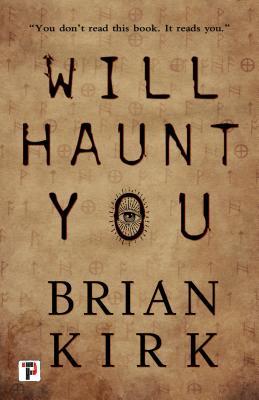
Rumors of a deadly book have been floating around the dark corners of the deep web. A disturbing tale about a mysterious figure who preys on those who read the book and subjects them to a world of personalized terror. Jesse Wheeler–former guitarist of the heavy metal group The Rising Dead–was quick to discount the ominous folklore associated with the book. It takes more than some urban legend to frighten him. Hell, reality is scary enough. Seven years ago his greatest responsibility was the nightly guitar solo. Then one night when Jesse was blackout drunk, he accidentally injured his son, leaving him permanently disabled. Dreams of being a rock star died when he destroyed his son’s future. Now he cuts radio jingles and fights to stay clean. But Jesse is wrong.
The legend is real–and tonight he will become the protagonist in an elaborate scheme specifically tailored to prey on his fears and resurrect the ghosts from his past. Jesse is not the only one in danger, however.
By reading the book, you have volunteered to participate in the author’s deadly game, with every page drawing you closer to your own personalized nightmare.
The real horror doesn’t begin until you reach the end. That’s when the evil comes for you.
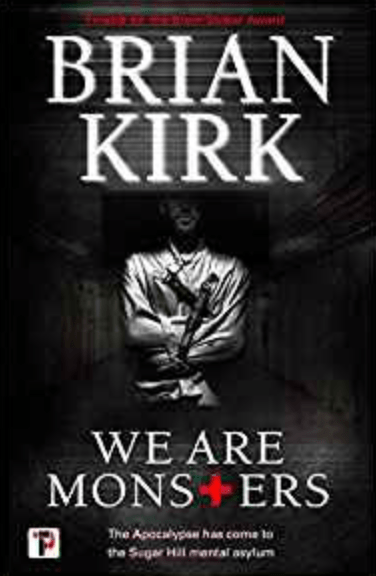
The Apocalypse has come to the Sugar Hill mental asylum.
He’s the hospital’s newest, and most notorious, patient–a paranoid schizophrenic who sees humanity’s dark side.
Luckily he’s in good hands. Dr. Eli Alpert has a talent for healing tortured souls. And his protégé is working on a cure for schizophrenia, a drug that returns patients to their former selves. But unforeseen side effects are starting to emerge. Forcing prior traumas to the surface. Setting inner demons free.
Monsters have been unleashed inside the Sugar Hill mental asylum. They don’t have fangs or claws. They look just like you or me.
Meghan: Hi, Grant. I’m so excited to have you here today. Thank you for agreeing to take part in this year’s Halloween Extravaganza. Tell us a little bit about yourself.
Grant Hinton: I was born in London, United Kingdom, back when the world made sense, but now resided in sunny Australia. I love writing, it’s a passion that’s taken over my life. I have a long-suffering wife who doesn’t read much of my stories, (she’s not a horror fan,) but supports my decision to scare people. Along with that, I like to make beer and I’ve gotten pretty good at it, well, that’s what my friends tell me.
Meghan: What are five things most people don’t know about you?
Grant Hinton: I’m an open book, even on the Internet forums I frequent. But I will go with:
I couldn’t write my name until I was six.
I’m a very good singer, as in I could make a living off of it, and when I was younger I did for a while, but it’s not the life for me.
I wrote my first story – which was a total rip-off of The BFG – but I was only ten.
I’ve never been in a fight outside of self-defence classes and boxing training.
You wouldn’t think this by looking at my rather rotund form, but I can do the splits.
Meghan: What is the first book you remember reading?
Grant Hinton: The BFG as a kid, although I was never a big reader and never finished any book assignments from school. I only started getting seriously into reading when I was about 28. I picked up a copy of Eragon by Christopher Paolini. It was incredible and I was hooked from the get-go. It was the first book I read fully in one sitting.
Meghan: What are you reading now?
Grant Hinton: Nowadays I have a few books on the go, I don’t just read fiction either. So, currently, I’m reading Save the Cat Writes a Novel by Jessica Brody, which is super impressive and informative. It’s changing the way I approach writing stories. I’ve always been a mixture of a plotter and a pantser. I would have a great idea and kinda know where I wanted it to go plot-wise and then I would pants my way through it. This book has changed that, and I’m thankful.
I love reading indie authors like myself. I think there are so many great writers out there that get overlooked. Take my other book for example. Escape from Samsara by Nicky Blue. It’s about a ninja gardener from England that goes on a quest to find his missing father. It’s comical and easy to read, it also has a cockney spirit guide that keeps cropping up in bushes, so I was sold.
Meghan: What’s a book you really enjoyed that others wouldn’t expect you to have liked?
Grant Hinton: Umm, this is tough, most people expect you to love all books and genres when they find out you’re an author. Especially the genre you write.
Gosh, this is tough. I’ve read so many. Pass. Sorry I just haven’t got an answer.
Meghan: What made you decide you want to write? When did you begin writing?
Grant Hinton: So after my plagiarism of Roald Dahl, I had a spat of writing poetry in school and after that never thought about writing again until I was 28. I was sat in a hotel room in Waikiki, Hawaii. I don’t know where the idea came from or the compulsion to write it but I grabbed the closest piece of paper and started writing. It was a dungeon scene between an evil sorcerer and a captive elf. I didn’t know what I was doing back then, so that single chapter got edited several thousand times. Each time I would go to write I would re-read, change a few things and then progress the story. I still have it somewhere. It’s around 23k words (unedited) and should have been a heroic fantasy. One day I might dust it off and write it with the skill set I now have.
Meghan: Do you have a special place you like to write?
Grant Hinton: No, is the short answer. I write everywhere. Unlike most authors, I write about 90% of the time on my phone. It’s actually how I wrote the answers to this questionnaire. Inspiration can hit me anywhere so I like being able to whip out my phone and get it down. Google docs are amazing for that. I can access them anywhere at any time. The last thing I want to do is limit myself because I’ve tried the whole make time to write in a special place and when I get there to do just that, nothing wants to come out.
Meghan: Do you have any quirks or processes that you go through when you write?
Grant Hinton: I have several processes when polishing a piece, but I don’t think that’s what you’re asking. The one thing I like to do with a WIP is re-read what I’ve written so far. It adds a little time onto the workload but It allows me to get the mindset right for the characters, what the style of the story is, the undertone, plot, conflicts etc.
If it’s a fresh idea, I like to let it simmer away in the back of mind for a time. I think a lot when I’m in bed trying to sleep. The silence allows me to really play out the story in my head. I can run scenarios, tweak ideas, ask a lot of what-ifs moments; get involved in the plot-line and stir things up.
Meghan: Is there anything about writing you find most challenging?
Grant Hinton: Politics. I’m not one for all that, so I intend to leave it out of my stories. I’m a simple man, I want to scare you to death, not bore you
What’s the most satisfying thing you’ve written so far?
It’s a short story called ‘Tunnel Vision’ in my collection The Wraith Within. Essential it’s about a lady stuck on a train. But she doesn’t know that until the end. It heavy with dialogue but of all the author friends I’ve asked to critique it, they have found it amazing, so I’m happy it’s done it justice. It’s a futuristic tech horror, one of my favourite sub-genres.
Meghan: What books have most inspired you? Who are some authors that have inspired your writing style?
Grant Hinton: The opening paragraph of GOT A Song of Ice and Fire inspired a whole story around the Irish mythology of Badb. The triple crone. Other inspirations come from Lovecraft, his style is mastery, Neil Gaiman makes telling stories seem effortless, I envy him for that. Margret Weis and Tracy Hickman’s Dragonlance adventures were my first looking into an epic fantasy setting that motivated me to devour the whole collection. And Brendon Sanderson, I’ve watched every YouTube video of his lectures, the guys incredibly talented and a must for any new writer. He will break stuff down for you in a way that you can understand.
Meghan: What do you think makes a good story?
Grant Hinton: Conflict. Without conflict, it’s not a story. I like to throw my characters into the worst situations possible and then make it even worse. Flaws are also a biggie. We all want to related to our characters. No one wants to read about a perfect MC, that’s plain and boring. We want flaws, so we can relate and feel better about ourselves as our characters change throughout the story.
Meghan: What does it take for you to love a character? How do you utilize that when creating your characters?
Grant Hinton: I kill most of my characters, so I’m not showing much love, haha. Na, I’m just kidding, well kinda. I’m going to go back to the flaws. It’s what makes them like you and me. We want them to be messed up like we are, we want them to not know the answers because we don’t. We want to see them struggle and we love them for that.
Meghan: Which, of all your characters, do you think is the most like you?
Grant Hinton: I write predominantly first-person POV. So a lot of myself pours through in my stories. But if I were to pin one character it would be a recent creation. Bison Dawson. He’s a Cherokee angel I wrote for the second season of a popular internet ARG called Brighter Futures suicide hotline. He has a massive arc to go through while fighting to fit into a world he doesn’t belong in. I felt the same since I was little. Not knowing my place in the world. But as I’ve grown older I’ve stopped thinking that way and now understand that you don’t have to fit in as much as carve out that space for yourself.
Meghan: Are you turned off by a bad cover? To what degree were you involved in creating your book covers?
Grant Hinton: Absolutely. It’s the first impression of the writing world. If you don’t get it right it can bum you book. I don’t know what makes a cover great, to be honest, I’ve been caught by a plain cover with a catchy title and I’ve been caught by great artwork. I think it’s a medium between the two.
My cover for The Wraith Within is drawn by an amazing artist called Lee Marej, an engineer from the Philippines. When I saw the picture two years ago, I knew I wanted to use it for my collection. I purchased the right to use it and designed the rest of the cover from there. That was a huge – but enjoyable – learning curve.
Meghan: What have you learned creating your books?
Grant Hinton: A lot. It’s one thing to write but all the behind-the-scenes technical stuff that goes into getting those words in front of people is astounding. I’ve had to learn how to format for ebooks, Kindle, Amazon, design book covers as above, learnt how to promote that book and even interact with fans. Some days I relish just being able to delve into the worlds inside my head and write.
Meghan: What has been the hardest scene for you to write so far?
Grant Hinton: The ending to a story called ‘Why you don’t bring back people from the dead.’ It’s about the entities latching on to you when you die and come back. It was heavily influenced by my idol. My father. So the ending has him die, that was hard. Imagining that made me choke up when I was writing it. He’s still very much alive, healthy and strong. I felt that way because he’s my father and I have a strong bond with him.
Meghan: What makes your books different from others out there in this genre?
Grant Hinton: Have you seen my front cover! It’s badass. Just kidding. Why is my book different… umm, well the one thing I can think of other than I wrote it is that I’ve given each story an epilogue. I wanted the reader to get a look into how the story came about and any feeling I had while writing it.
Meghan: How important is the book title, how hard is it to choose the best one, and how did you choose yours (of course, with no spoilers)?
Grant Hinton: I think the cover of a book is more important than the title. A good cover catches the eye and makes you stop and read the title. Get those both right and you may get someone to pick your book off the shelf or even read the blurb if online.
How hard is it for me to choose? I’ve only got the one book so far, but I have an answer for you anyway. I think you should do a poll. If that’s with your family and friends, or fans on your page or whatever. Line up the choices and get some feedback.
With my current collection, I chose The Wraith Within because one; it symbolises the demons inside of us wanting to get out. I believe humans are fundamentally good and bad, it’s a choice to do either. You have a choice to not hit someone who’s shouting at you. You have a choice to give back the money you saw drop out the guy’s wallet. You have the choice to not buy a gun and shoot people with it.
And two, It’s also how I see the stories in my head, all pulsating and pushing their way out.
Meghan: Tell us a little bit about your books, your target audience, and what you would like readers to take away from your stories.
Grant Hinton: I enjoy writing short horror stories, its how I began so it’s easy to slip back into. Shorts can be punch 500 words or be a colossal 10K words, either way, they can break novel rules. You can play with syntax and prose, throw structure out the window and experiment with the joy of writing a thrilling piece. With a novel, you can’t really do that.
Most of my stories follow the ‘learn a lesson’ style, be that don’t do drugs or don’t chase white see-through things down dark tunnels with a phone and nobody with you because that’s shits gonna end bad kinda lesson. I like my readers to still be thinking about my story well after finishing it.
Meghan: What is in your “trunk”?
Grant Hinton: A trunk? Mine’s a whole garage. Haha. Ideas crop up all the time, sometimes that inspiration needs the motivation to get out on the paper. If I don’t have the time to smash it out, I’ll leave plot points or notes so I can come back to them. When I do come back to them sometimes the fire is gone or I leave it for so long that I can’t remember the pattern of thought surrounding the storyline. These one sit at the back of my mind and in a folder on google docs. I often go through what I got in the drafts there, I’m meticulous like that. I have a master file with all that I’ve written, every collaboration I’ve been in and all my drafts. Just the other day I picked up a plot point of a man turning to my character. His face decaying with weeping wounds and open sores. A maggot crawls out from his hairline and creeps across his face, slipping in and out a fresh wound. The maggot crawls into the decaying man’s mouth and he bites down on it.
Meghan: What can we expect from you in the future?
Grant Hinton: Twisted Fairytales and Secondhand Nightmare. Twisted Fairytales explain itself precisely, but to sum up, essentially I wanted to take 8-10 popular tales and twisted them back into something Hans Christian Andersen would be proud of.
Secondhand Nightmares is a joint collaboration with my amazing author friend, Melody Grace. We have taken 30 pictures from a Facebook secondhand finds page and with the owner’s permission written stories inspired by them. My favourite is a shrunken head picture. My character is a cheeky student with a wit sharp enough to cut grass. But then lady he meets a lady on holiday that’s more than a match for him. It’s a little sexy and quite dark. It was fun to write. I won’t spoil it for anyone out there.
Meghan: Where can we find you?
Grant Hinton: Facebook is my jam, you can message me there and I’m fairly active.
Or Twitter. I participate in a daily writing challenge called VSS365. It stands for Very Short Story. Once a day a prompt word is given by a preselected person. With the word and the confines of the Twitter character limit, you have to write a short compelling story. You can interact with me there too.
Meghan: Do you have any closing words for your fans or anything you’d like to say that we didn’t get to cover in this interview?
Grant Hinton: Horror surrounds us in our daily lives, not just the words on paper or scene of a horror movie, but in the actions of the people surrounding us. Don’t be one of them. Use your time here on earth to make people happy. Especially yourself. Because if you’re happy you’ll find the world will be a happier place. And we could all do with a brighter future.
To all the budding authors out there. Read. Read like an MF, and write and show that shit to your friends and other authors. It’s the only way to learn and progress. Oh, and also grow some thick skin. Because you’re going to get feedback on your baby that you might not like but it’s essential that you learn from it. If it’s hate feedback, like the person just say you’re crap and you shouldn’t write, don’t listen to them. Feedback and criticism should be constructive, it should help you learn. If it doesn’t, it might not be you, it might be them.
Grant Hinton is the wifi password to the world of horror. His technological knowledge mixed with the grasp of the human condition results in devastatingly chilling results. Not only that, this bestselling author is hauntingly gifted in all things to raise the hairs on the back of your neck, all the ways to quickening your heartbeat, and leave you with a lesson that stays long after your eyes have left his words.
There are great things on the horizon coming ahead, stay tuned for more soul gripping content.
Grant Hinton – horror author, writing advocate, teacher and family man.
From supernaturally scary to real-world horrifying, this collection boasts 32 harrowing tales. Each accompanied by a brief epilogue into the author’s deranged mind, adding a little insight into their creation. A lady is trapped on a train, but she doesn’t know it until too late. I professor sells sex toys for one purpose only. A policeman finds more than he bargained for on a routine call to a place that doesn’t exist.
Meghan: Hi, Chris! Welcome welcome. I’m glad to have you here today. Tell us a little bit about yourself.
Chris Sarantopoulos: I was born in Greece back in the late seventies and was fortunate enough to have grown in an environment that used English as much as my native language all the time. That’s one of the reasons why I find it easy to communicate in English. After finishing school I went to study abroad, in Scotland, and that’s why I sometimes say aye instead of yes. It’s also why I use UK spelling when I write.
Meghan: What are five things most people don’t know about you?
Chris Sarantopoulos:
I’m bilingual, fluent in Greek and English.
I can’t stand heat and summer. You want to make me feel miserable? That’s your best bet. Which is weird because I’m from Greece and it’s almost always sunny, and half the eyar if not more, feel like summer. Go figure.
I’m also a self-taught, part time digital designer.
As a kid and teen, I absolutely hated reading books. Shocking, I know. Nowadays, not a day goes by without me reading for a couple of hours.
My favourite colours are black and grey.
Meghan: What is the first book you remember reading?
Chris Sarantopoulos: Like I said, as a kid I made sure to stay away from all sorts of books. The reason was that teachers or relatives used to bring me books that had no appeal to me. They were the wrong genres, even though back then I had no idea of the concept of genre.
I made a 180-degree-turn when at university, a Faroese friend and flatmate bought for me as a gift the first Dragonlance book. It blew my mind! I had at long last found a book that was exactly what I wanted. It was a genre (high fantasy) that I had no idea it existed. That’s the book that opened a door for me that eventually led me, several years later, to becoming a writer. For those unfamiliar with the Dragonlance universe, the first book of the core set is called Dragons of Autumn Twilight.
Meghan: What are you reading now?
Chris Sarantopoulos: I tend to primarily (but not exclusively) read books that are somewhat related to the genre of a given work-in-progress. So for the time being my reading list is almost exclusively Sci-Fi related. The book I just finished was Freedom (™) by Daniel Suarez, and I’m about to start reading Tiamat’s Wrath by James S.A. Corey.
Meghan: What’s a book you really enjoyed that others wouldn’t expect you to have liked?
Chris Sarantopoulos: Dragonlance. I’ve talked to a lot of people who read fantasy and a great deal of them were surprised that these books were so influential to me.
Meghan: What made you decide you want to write? When did you begin writing?
Chris Sarantopoulos: I started writing poems when I was a first-year student in Scotland. Then for some reason a year or two later, I stopped. Not only that, but I had completely forgotten I had ever tried it (yes, my brain is rather weird and behaves in mysterious ways even to me). That was back in 1999, I think.
Over the years since then, I often felt the need to write something; anything. But I always came up with reasons why I shouldn’t. “What could you possibly write, Chris? You sucked at essay writing at school.” “ Why would you want to do that, Chris? You can’t write a book in one go.” Yes, back then I was under the impression that writers finish books in one sitting… How ignorant I was!
Then, on March 25, 2013 (I remember it because it’s a very important national holiday for us Greeks), while I was talking about books with a friend, he suggested I should give writing a go. What did I have to lose, after all? And I did. Just like that. I came home and wrote the worst four pages of a story the world has ever seen. And I loved it!
It felt as though my life up to that moment was a jigsaw puzzle where the pieces were placed in the wrong place, and someone came along and knocked the whole thing in the air, and then the pieces landed precisely where they should have been in the first place. That was the moment I knew I wanted to be a writer. Best moment of my life.
Meghan: Do you have a special place you like to write?
Chris Sarantopoulos: Not really, no. I can write wherever, as long as the place is quiet and there’s internet access (for research purposes of course, not wasting or anything like that).
Meghan: Do you have any quirks or processes that you go through when you write?
Chris Sarantopoulos: The only process or ritual I have is that I write every day of the week with the exception of Sundays. I write either until I hit my daily word limit (1500-2000 words or more if I’m up to it) or until it’s time to stop. This has put me in the habit of writing daily. I have also noticed that I can’t write in the afternoon or at night, so once it’s time to stop, whatever part of my brain takes control of me and allows me to write, simply switches off and that’s it.
Meghan: Is there anything about writing you find most challenging?
Chris Sarantopoulos: The way I see it, fiction writers are, in essence, people who create emotional truths through lies. Based on that, the main challenge is to connect emotionally with the reader. And that’s very difficult because not one person is like any other. So what resonates with me, based on my perception of the world around me will differ greatly from what resonates to someone else. It’s up to writers to figure out where the common ground between each person’s likes and dislikes is and create something based on it.
On a personal level, my challenge is that English is not my native language. I may have been using it for four decades now, but I will never be as fluent as a native English speaker. Every so often I stumble on something I want to express, something I know has to have a very specific word associated with it that I’m unfamiliar with, and I end up spending hours (if not days) trying to find that one word that describes exactly what I have in mind.
Meghan: What’s the most satisfying thing you’ve written so far?
Chris Sarantopoulos: Without a doubt, it has to be my debut novel, The Darkening. Years of trying to finish it and bring it to a point where I was happy enough to allow people to read it. Though I had been published in the past by a few literary magazines and I had published a few short stories on Amazon and other retailers, finishing my first novel was the epitome of everything I had been trying to accomplish since I started writing. And the satisfaction increased tenfold when I held the print copy in my hands. It was a magical moment I will never forget.
Meghan: What books have most inspired you? Who are some authors that have inspired your writing style?
Chris Sarantopoulos: Stephen King has without a doubt a writing style that I always have in my mind. I remember the first ever book of his that I bought called A Bag of Bones. I remember I bought it as an audio book and wanted to give the whole thing a go. I never liked audiobooks, but to this day, I still remember his voice, the melody in his words, and how much they resonated with me. For me, Stephen King has a mystical or magical ability that somehow turns written words to music in my head.
As for other books or authors, there are several of them. Like I said, reading Dragonlance for the first time was a revelation for me. Of great influence, in terms of the way he builds sci-fi worlds, is Richard K. Morgan, particularly his book, Altered Carbon. I love his way of building a cyberpunk world, and Altered Carbon is a book I’ve read more than once.
Meghan: What do you think makes a good story?
Chris Sarantopoulos: It’s quite subjective, to be honest. Some people like strong and fully developed characters, others prefer non-stop action. Others want the character to delve deep into his or her thoughts. Others put a lot of emphasis on world building and descriptions. I’m a big fan of revelations; things that happen in a story (usually near the end) that tie almost all loose ends. The things that when you read them you go, “a-ha!”
Meghan: What does it take for you to love a character? How do you utilize that when creating your characters?
Chris Sarantopoulos: The character’s voice and the extent of “the baggage,” the flaws if you like, he carries. I want to see the world filtered through the character’s perception and, consequently, his voice. Is the character a gloomy, depressive character, who hates everything that’s happening around him? I want him to make me understand his reasoning, then make me see the world the way he sees it. I want to see his flaws so I can try to understand them. It’s something I try to utilize when I create characters for my own stories. I don’t think I have ever created a character without some kind of flaw that skews the way he or she perceives the world.
Meghan: Which, of all your characters, do you think is the most like you?
Chris Sarantopoulos: That’s really hard to answer. The reason for this is that when we create a character, regardless if it’s a support character or the main one, we often sprinkle a little bit (or a great deal) of ourselves over that character. But I think that I would behave more or less the same way as the main character of my latest novel, Through Stranger Eyes. Assuming of course I would be unlucky enough to have to deal with what he suffers throughout the story. Also, the way he sees the world (even that futuristic cyberpunk world) is not that far off from the way I see things today. In that book, Rick Stenslandt (that’s the name of my main character) appears as someone who opposes the fusion of man and machine. In fact some of the people around him think that he opposes the whole idea of technology, that he is a Luddite, but in reality what he is against is seeing humanity give up their individuality, the things that make us stand out from a crowd, the things that allow us to think for ourselves, in favour of following trends that can prove dangerous, if not outright lethal. I can’t say more without spoiling the book and to a certain extent the whole series Through Stranger Eyes is part of.
Meghan: Are you turned off by a bad cover? To what degree were you involved in creating your book covers?
Chris Sarantopoulos: They say that we shouldn’t judge a book by its cover, but a bad cover has the power to make me stay away from it and never go near such a book. Sad but true. It conveys the wrong message to the potential reader. For self published authors, it’s up to us to make the right choice for our covers and some of us are better at this than others.
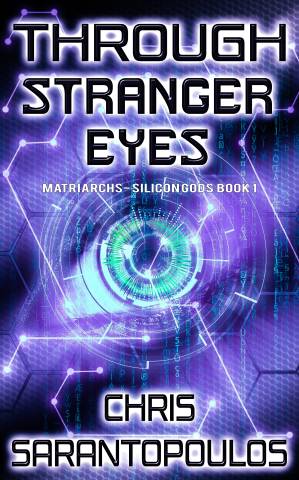
To this day, I have designed and created all my book covers. The most demanding one I ever had to do was for my debut novel, The Darkening. It took me several weeks to bring it to a state where I’d be comfortable watching it from various angles and sizes. For Through Stranger Eyes, if I remember correctly, I must have designed, completed, and eventually discarded five more covers before I came up with the one you see before you. Nearly all previous ones were far more complex than the one that I ended up using, but instead I decided to go for the simplest one. The reason for that was that up to that point I was designing the covers as a writer instead of as a publisher. Since Through Stranger Eyes is part of a series of books, I had to come up with a design that would have transferable elements throughout the series, while at the same time be unique and tell something about the story each time.
Meghan: What have you learned creating your books?
Chris Sarantopoulos: The list is quite long actually, but the most important things I learned are those that now define me as a person. Perseverance is the first one that comes to mind. Patience is another. One can’t be an author without these two as his or her closest allies. The other thing that trying to get published teaches you is how to develop a tough skin. That’s an extremely important thing in our line of work. I was fortunate enough to learn about this when the first rejection emails started coming in while I was trying to get published in various literary magazines. That doesn’t mean that nowadays rejections don’t hurt. They do. It just means that it’s easier to handle, to identify the problem, and move on with as few scars as possible.
Meghan: What has been the hardest scene for you to write so far?
Chris Sarantopoulos: It will have to be for my latest novel, Through Stranger Eyes. When I started outlining and later drafting the book, I had no ending. I did not know how the book should end. I had all the other scenes ready, all the dialogues and everything else, but the last scenes that would tie everything up were a blur for me. At that time, I had no intention of making Through Stranger Eyes part of a series, so I had no clear path to follow. Then a few days later, I thought I could expand on the world (the series is more about how the world evolves and how the key players behind the scenes influence it, rather than how a group or characters fare through a given problem). Boom! That was it. All of the sudden I had an ending, and one that (I think) comes with an unexpected twist.
Meghan: What makes your books different from others out there in this genre?
Chris Sarantopoulos: The list is quite long actually, but the most important things I learned are those that now define me as a person. Perseverance is the first one that comes to mind. Patience is another. One can’t be an author without these two as his or her closest allies. The other thing that trying to get published teaches you is how to develop a tough skin. That’s an extremely important thing in our line of work. I was fortunate enough to learn about this when the first rejection emails started coming in while I was trying to get published in various literary magazines. That doesn’t mean that nowadays rejections don’t hurt. They do. It just means that it’s easier to handle, to identify the problem, and move on with as few scars as possible.
Meghan: How important is the book title, how hard is it to choose the best one, and how did you choose yours (of course, with no spoilers)?
Chris Sarantopoulos: It has its importance, but I don’t think it’s something that can destroy a book. Assuming of course it’s relevant to the book’s genre. Unfortunately, I’m one of those writers who are not that good when it’s time to come up with a title. I usually write down as many as I can come up with that are somewhat relevant to the story or the series, and if nothing stands out I turn to friends and readers for help. For Through Stranger Eyes, my latest cyberpunk novel, the title came to me in the early stages of planning and outlining the novel. That’s long before I had decided that the story would be a sci-fi one, and before it took the shape it currently has. The story is about a top biotechnology surgeon who after an accident loses his sight, and is forced to undergo an ocular operation and have cybernetic eyes. The problem is that after the operation, he starts remembering things he has never done and people he has never met. So the title for this book came rather easily.
Meghan: What makes you feel more fulfilled: Writing a novel or writing a short story?
Chris Sarantopoulos: Definitely a novel. A novel’s length allows for characters to grow and things to happen in such a way so that the writer’s vision can take shape. Not to mention that writing a book earns you bragging rights 😉
Meghan: Tell us a little bit about your books, your target audience, and what you would like readers to take away from your stories.
Chris Sarantopoulos: My debut novel, The Darkening, came out last year and it’s a post apocalyptic horror story. It’s the story of a survivor of an apocalyptic event that turned nearly all forms of light lethal for humans. He comes across a glowing girl (more like a halo around her) and together they try not only to survive a band of highly trained and well-armed soldiers who are after them, but to also piece together the protagonist’s past and uncover the truth of what has happened. The Darkening will appeal to fans of post apocalypse and horror, but also to those who seek a new take on the genre. Through Stranger Eyes on the other hand is a cyberpunk thriller about a specialist in cybernetic augmentations who must uncover the truth regarding the gruesome murders he has recently started remembering, before the police and the megacorporations after him capture him. This story should appeal to fans of futuristic urban settings and in particular to those who love Blade Runner and thrillers. In both cases, and without spoiling too much of the stories, the theme behind them is how much can human hubris affect us not only on a personal level, but on a global scale.
Meghan: Can you tell us about some of the deleted scenes/stuff that got left out of your work?
Chris Sarantopoulos: While writing Through Stranger Eyes I had to maintain a very delicate balance between what was happening to the main character (the things he remembered and how they affected him), those who were after him, his deteriorating mental and social status, but also how all that affected his family. When I was drafting it I had included a few more scenes that showed how the main character’s predicament and choices affected his wife and his two kids. Before I sent the manuscript to my editor, and after I had revised it for the 20th time (yes, I revise and edit extensively) and with the input from a group of early readers, I decided that I had to cut back on those scenes for two reasons. The first was that Rick’s daughter (Rick is my main character’s name) appeared as a self-centred brat and that was not how I wanted her to be. The second was that the novel dragged and got boring during these parts. For a thriller at least. So I removed three fifths of these scenes and I rewrote the ones that remained, while trying to have them pull extra weight in order to show how his family life was affected by everything that was happening.
Meghan: What’s in your “trunk”?
Chris Sarantopoulos: It’s the story I can’t yet talk about. Not much anyway. It’s a fantasy story that will most likely span more than three books, it deals with different planes of existence merging together and nightmares. It’s the story I started writing way back in 2013, and about 100k words in I hit a roadblock. So I sat back and thought to myself, “Chris, you can either delete it and forget you ever wrote 100k words for it, or you can learn how to write properly and get back to it at a later time.” I chose the second option, obviously and conceded to the point that I had a great story to tell, but that I had used some extremely poor writing skills to convey it. I intend to start writing it at some point, but not yet. Not before I finish some other stories I want to tell first.
Meghan: What can we expect from you in the future?
Chris Sarantopoulous: I have already finished drafting the sequel to Through Stranger Eyes and I’m trying to outline the third book in the trilogy. Which is easier said than done, because although I know how the story will end, and although I have written five outline versions, none of them seems to satisfy me enough. So for the time being, I’ll keep working on the Matriarchs – Silicon Gods world (that’s the name of the book series). Once that’s done, and assuming nothing changes in the meanwhile, I’ll probably start working on a space opera book series. We’ll see what happens after I finish that.
Meghan: Where can we find you?
Chris Sarantopoulos: Though I’m not a big fan of social media and I spend as little time there as possible, I do my best to answer all emails and messages people send me. Readers can connect with me on Facebook, Twitter, Pinterest, my blog, and of course via email. I have an Instagram account but I hardly ever use it. Readers can also sign up for my monthly newsletter and gain access to free stories, news, and offers.
Meghan: Do you have any closing words for your fans or anything you’d like to say that we didn’t get to cover in this interview?
Chris Sarantopoulos: For fellow writers who might be reading these lines, keep dreaming your dreams. The world needs you.
For readers, don’t forget to support your favourite writers. You have no idea how much it means to get an email that says you read and enjoyed one of our stories. Review those works. We need it to keep going.
Chris Sarantopoulos is a Greek writer who learned to communicate in English almost at the same time he started using his native language. He studied Geology in Scotland (you may hear him say aye a couple of times), then decided to diversify and completed a Master’s degree in Service Management. He almost started a PhD, but that didn’t work out. He enjoys writing science fiction, particularly post-apocalyptic fiction and cyberpunk, but also dystopia, fantasy, high fantasy, dark fantasy, and horror (not the splatter type though). Currently, he lives in Greece, and if you happen to spend time there, contact him. He may be able to arrange a meeting.
His work has appeared on Beyond Imagination, Voluted Tales, and Eternal Haunted Summer among other literary magazines.
Keep track of Chris’ newest published work by subscribing to his mailing list.
The end came when light changed. It decimated humanity, leaving scattered bands of survivors stumbling in the dark.
Faced with saving himself or his family during the apocalypse, John Piscus made the wrong choice, and has been living with the guilt ever since.
When a glowing girl shows up at John’s shelter begging for help, his instincts tell him to kill her. After all, light kills.
But when masked troopers tasked with capturing survivors come after them, it’s up to John to protect himself and the girl. Not only may she hold the key to reversing the lethal effects of light, she could also be the one who can save his soul.
If you love dark settings and characters faced with tough choices that result in horrific and sinister outcomes, don’t miss this post-apocalyptic horror read.
Discover the dangers in the world of The Darkening today.








 Meghan's House of Books