Halloween Extravaganza: INTERVIEW: Rami Ungar

Meghan: Hey, Rami. Welcome to Meghan’s House of Books. It’s great to have you here today. Tell us a little bit about yourself.

Rami Ungar: My name is Rami Ungar, and Iโ€™m a horror author from Columbus, Ohio. I first started writing with the goal of being published around age ten, and started gravitating towards horror after reading the works of Stephen King. Iโ€™ve previously self-published four books, with Rose being my first with a publisher. Along with King, my major influences include Anne Rice and HP Lovecraft.

Meghan: What are five things most people donโ€™t know about you?

Rami Ungar: Tough question, as Iโ€™m an open book. But if I had to pick five, I would go with that I hate wearing socks; I am fascinated with Victorian England; I sometimes make homemade sushi, though itโ€™s never restaurant-quality; the last movie I watched was The Best of Enemies with Taraji P. Henson and Sam Rockwell; and Iโ€™ve been to the FBI Headquarters in Washington, DC.

Meghan: What is the first book you remember reading?

Rami Ungar: Probably Harry Potter and the Sorcererโ€™s Stone. Iโ€™m sure there are others, but that oneโ€™s prominent in my memory, and was first responsible for making me want to write in the first place.

Meghan: What are you reading now?

Rami Ungar: At this moment, Iโ€™m reading The Institute by Stephen King, which is proving hard to put down. Iโ€™m also listening to The Complete Collection of Sherlock Holmes by Sir Arthur Conan Doyle on audio book.

Meghan: Whatโ€™s a book you really enjoyed that others wouldnโ€™t expect you to have liked?

Rami Ungar: When Marnie Was There by Joan G. Robinson. I first saw the movie, but the book has its own special magic to it.

Meghan: What made you decide you want to write? When did you begin writing?

Rami Ungar: I canโ€™t remember what impetus made me decide to write. At some point around age ten, I realized I liked coming up with and writing down stories, so I decided to pursue that career. Sixteen years later, that dreamโ€™s coming to fruition, though thereโ€™s still a long road ahead of me.

Meghan: Do you have a special place you like to write?

Rami Ungar: Not exactly, I just sit at my desk at home and write on my laptop. That being said, I do try to make it as comfortable and conducive to creativity as possible.

Meghan: Do you have any quirks or processes that you go through when you write?

Rami Ungar: Not especially. I do tend to outline most of my stories I write them. And I like to have incense burning while I write and some music playing in the background, but thatโ€™s about it.

Meghan: Is there anything about writing you find most challenging?

Rami Ungar: Staying focused on task, which is the bane of everyone who has ADHD like myself.

Meghan: Whatโ€™s the most satisfying thing youโ€™ve written so far?

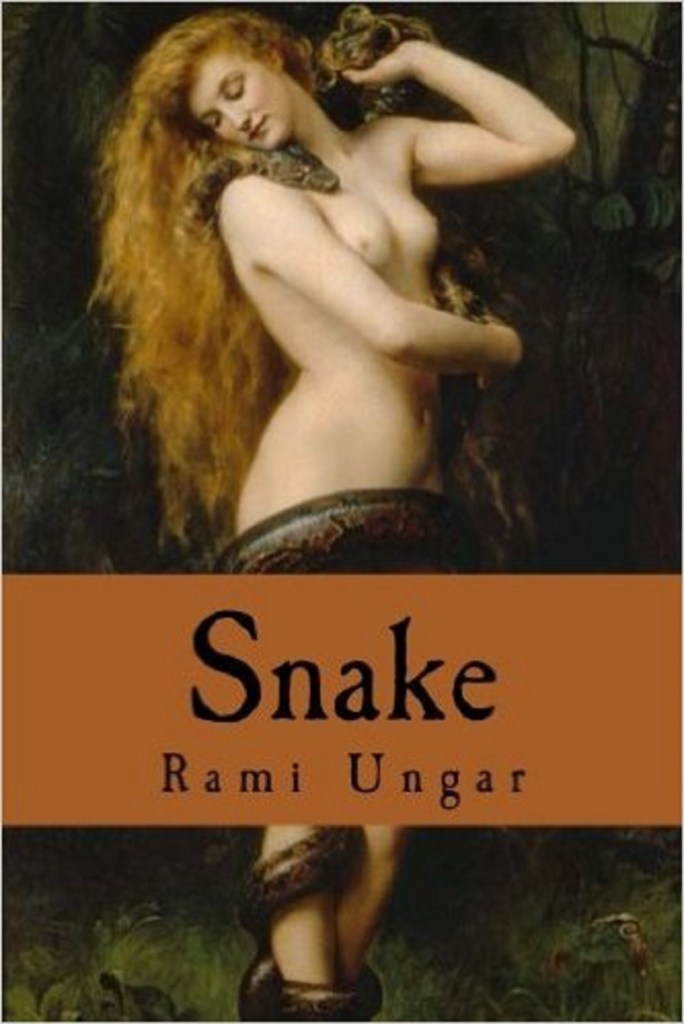
Rami Ungar: I suppose my horror-thriller novel Snake. Throughout the writing process of that, it was just a lot of fun to work on, and I still think of that story when I think of stories that I had the most fun with.

Meghan: What books have most inspired you? Who are some authors that have inspired your writing style?

Rami Ungar: Obviously, King has been a great influence. IT made me realize what power horror has, and Iโ€™ve been trying to bring out the feeling that book left in young me in my readers ever since. I also think HP Lovecraftโ€™s stories have been a powerful influence on me. I am fascinated by the idea of powerful entities that have no care for us but whose very presence can have profound effects on our lives.

Meghan: What do you think makes a good story?

Rami Ungar: That is so subjective, Iโ€™m not sure how to answer it. I guess with the stories I write, if it at least stays with you, maybe leaves you with a sense of disquiet, then thatโ€™s a good story.

Meghan: What does it take for you to love a character? How do you utilize that when creating your characters?

Rami Ungar: You know, I donโ€™t know. I guess I fall in love with characters whom I want to hug and tell them itโ€™s going to be alright, even when Iโ€™m the source for most of their problems. Which creates a conflict in me, so I donโ€™t always use those sorts of characters.

Meghan: Which, of all your characters, do you think is the most like you?

Rami Ungar: Probably the protagonist of Snake, if only we have such a love of horror and slasher films, especially Jason Voorhees.

Meghan: Are you turned off by a bad cover? To what degree were you involved in creating your book covers?

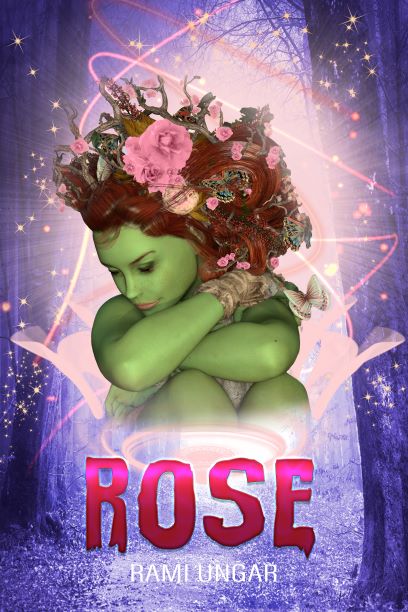
Rami Ungar: Not always. Sometimes the covers hide the best stories. And except for Rose, I had a big hand in the creation of the covers for my stories. For Rose, my publisher took a bigger part in that, and I have to say, I like the results.

Meghan: What have you learned creating your books?

Rami Ungar: That good storytelling is always an ongoing process, and thereโ€™s always something new to learn.

Meghan: What has been the hardest scene for you to write so far?

Rami Ungar: There was a scene that left me so shaken that I had to take a walk to the convenience store, in the pouring rain, just to get my head on straight. However, since that story is unpublished and I still would like to put it out someday, I will keep that a secret.

Meghan: What makes your books different from others out there in this genre?

Rami Ungar: If I had to guess, Iโ€™d say my embracing of the weird. My stories involve girls turning into plant creatures, car races involving ghosts, and more stuff that just seems so ludicrous and strange that you wonder where they come from. It enhances the joy to put that stuff in the story, and I donโ€™t know of any other writer who includes that sort of thing in their work.

Meghan: How important is the book title, how hard is it to choose the best one, and how did you choose yours (of course, with no spoilers)?

Rami Ungar: Not really. More often than not, the title makes itself known to me early on. If it doesnโ€™t, it comes to me while writing the story, and I am like, โ€œThat works. Letโ€™s use it.โ€

Meghan: What makes you feel more fulfilled: Writing a novel or writing a short story?

Rami Ungar: Writing a novel. Novels require a lot more research, planning, and work, so seeing them through to the end, as well as watching each subsequent draft become better and better, is extremely satisfying. Not to mention seeing the book possibly published.

Meghan: Tell us a little bit about your books, your target audience, and what you would like readers to take away from your stories.

Rami Ungar: One book is called The Quiet Game, and itโ€™s a short collection of stories I wrote in college. I also have a sci-fi trilogy called the Reborn City series, about street gangs in a dystopian future. So far, two books in the series, Reborn City and Video Rage, have been published. Snake is a horror-thriller about a serial killer hunting down members of a powerful mafia family in New York. And Rose follows a young woman who starts turning into a plant creature (and thatโ€™s just the start of her problems).

Meghan: Can you tell us about some of the deleted scenes/stuff that got left out of your work?

Rami Ungar: The only ones worthy of mentioning are from Rose. In that book, there were a lot of flashback scenes in earlier drafts, which really made the protagonist a complex character. However, those scenes didnโ€™t contribute much to the plot, so I ended up cutting them out around draft four or five. Was worth it, in the end.

Meghan: What can we expect from you in the future?

Rami Ungar: I have another novel I plan to edit as soon as the beta reader is done with it. I also have a project I plan to start in November for National Novel Writing Month. And Iโ€™m putting together a collection of short stories, though Iโ€™m not sure at this time when it will be done.

Meghan: Where can we find you?

Rami Ungar: Blog ** Email ** Facebook ** Twitter ** Instagram ** YouTube

Meghan: Do you have any closing words for your fans or anything youโ€™d like to say that we didnโ€™t get to cover in this interview?

Rami Ungar: If youโ€™re a horror fan, never let anyone shame you for it. Just enjoy the stories you enjoy, and let others know that you do. Thereโ€™s a lovely group of fans around the world, full of some of the nicest people youโ€™ll ever meet, and they love a good story as much as you do.

Rami Ungar knew he wanted to be a writer from the age of five, when he first became exposed to the world of Harry Potter and wanted to create imaginative worlds like Harryโ€™s. As a tween, he fell in love with the works of Anne Rice and Stephen King and, as he was getting too old to sneak up on people and shout โ€œBoo!โ€™ (not that that ever stopped him), he decided to merge his two loves and become a horror writer.

Today, Rami lives and writes in Columbus, Ohio. Heโ€™s self-published three novels and one collection of short stories, and his stories have appeared in other publications here and there. Rose, his first novel with Castrum Press, was released June 21st, 2019.

When heโ€™s not writing your nightmares or coming up with those, heโ€™s enjoying anything from the latest horror novel or movie to anime and manga to ballet, collecting anything that catches his fancy, and giving you the impression he may not be entirely human.

Snake

How far will you go for love and revenge? When a young manโ€™s girlfriend is kidnapped by the powerful Camerlengo Family, he becomes the Snake, a serial killer who takes his methods from the worst of the Russian mafia. Tracking down members of the Camerlengo Family one by one for clues, the Snake will go to any lengths to see the love of his life againโ€ฆeven if it means becoming a worse monster than any of the monsters he is hunting.

Rose

Rose Taggert awakens in a greenhouse with no clear memory of the past two years and, to her horror, finds her body transformed into an unrecognizable form.

Paris Kuyper has convinced Rose that they are lovers and as Paris could not bear for her to die, he has used an ancient and dark magic to save her from certain death.

But the dark magic Paris has used comes at a price. A price which a terrible demon is determined to extract from Rose.

As Rose struggles to understand what is happening to her, she must navigate Parisโ€™s lies and secrets; secrets that Paris will do anything to protect.
Halloween Extravaganza: INTERVIEW: Mandi and Matt Hart

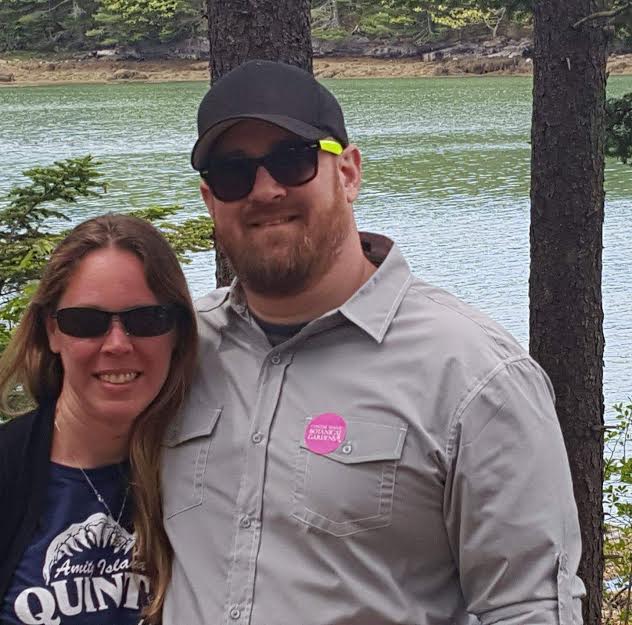
Meghan: Hi, Mandi and Matt. Welcome to my blog. Tell us a little bit about yourself.

Mandi & Matt Hart: We started our writing career shortly after we got married and found out that we both had a passion for writing. We are currently working on our first novel and expecting our first child.

Meghan: What are five things most people donโ€™t know about you?

Mandi & Matt Hart: 1) We like to be creative in all areas including art and music, 2) We enjoy collecting eclectic and unique things, 3) We started practicing for our son to come by reading each other bed time stories, 4) We have a joint journal where we write letters to each other, 5) We live in a haunted house.

Meghan: What is the first book you remember reading?

Mandi & Matt Hart: Mandi- Black Beauty, Matt- Old Yeller

Meghan: What are you reading now?

Mandi & Matt Hart: Hitchhikers Guide to the Galaxy and Peteโ€™s Dragon: The Lost Years.

Meghan: Whatโ€™s a book you really enjoyed that others wouldnโ€™t expect you to have liked?

Mandi & Matt Hart: The Odyssey

Meghan: What made you decide you want to write? When did you begin writing?

Mandi & Matt Hart: Matt did poetry in high school and after winning a few poetry contests, he got bitten by the bug. Mandi has been writing since high school and has enjoyed it, but was too shy and afraid to let anyone read her work. After we got married, Matt read some of Mandiโ€™s work and really enjoyed it and revealed he had been looking for a partner to help bring his ideas to life. We combined our talents and are now working on our first novel.

Meghan: Do you have a special place you like to write?

Mandi & Matt Hart: In the bedroom side by side.

Meghan: Do you have any quirks or processes that you go through when you write?

Mandi & Matt Hart: We hand write everything first before transcribing and editing on a computer.

Meghan: Is there anything about writing you find most challenging?

Mandi & Matt Hart: Keeping the pace of the story while still providing descriptions and information while also keeping the excitement going.

Meghan: Whatโ€™s the most satisfying thing youโ€™ve written so far?

Mandi & Matt Hart: This novel we are working on right now.

Meghan: What books have most inspired you? Who are some authors that have inspired your writing style?

Mandi & Matt Hart: The Ashes Series by William Johnstone, It by Stephen King, and House of Leaves. Hunter H. Thompson, Douglas Adams, Dean Koontz, Stephen King, and William Johnstone.

Meghan: What do you think makes a good story?

Mandi & Matt Hart: A plot that draws you in and keeps your attention and relatable characters.

Meghan: What does it take for you to love a character? How do you utilize that when creating your characters?

Mandi & Matt Hart: If we can create a character that makes the reader feel as if they are going through the trials and story with them then that is a character that we love. We create real and relatable characters.

Meghan: Which, of all your characters, do you think is the most like you?

Mandi & Matt Hart: Matt is most like Dillon in our novel.

Meghan: Are you turned off by a bad cover? To what degree were you involved in creating your book covers?

Mandi & Matt Hart: We are turned off by a bad cover and plan to be 100% involved in creating our own book covers.

Meghan: What have you learned creating your books?

Mandi & Matt Hart: We have learned team work and how to describe details of characters and places more thoroughly.

Meghan: What has been the hardest scene for you to write so far?

Mandi & Matt Hart: The first informational scene. It was a difficult balance to not lose the momentum of the story while still providing background information at the start.

Meghan: What makes your book different from others out there in this genre?

Mandi & Matt Hart: We hope to take a realistic unbiased viewpoint on the situation at hand and showing the reality of situations, backed up by research, and not having political opinions inserted in.

Meghan: How important is the book title, how hard is it to choose the best one, and how did you choose yours (of course, with no spoilers)?

Mandi & Matt Hart: The book title is extremely important and is one of the most difficult things to choose. Matt came up with our book title after a conversation with a friend about the novel.

Meghan: What makes you feel more fulfilled: Writing a novel or writing a short story?

Mandi & Matt Hart: Writing a novel makes us feel more fulfilled. We feel to best engage readers and bring them into our stories world that we need a novel concept instead of a short story concept.

Meghan: Tell us a little bit about your book, your target audience, and what you would like readers to take away from your stories.

Mandi & Matt Hart: We are writing a book about survival in a country that has been occupied by enemy forces and the importance of relying on those around us. Our target audience is people who are preppers, survivalists, and those who love military or over coming all obstacles stories. When faced with an undefeatable enemy and staggering odds against you, you still go all in head first and never give is what we would like readers to take away from our stories.

Meghan: Can you tell us about some of the deleted scenes/stuff that got left out of your work?

Mandi & Matt Hart: We first started our story at the end and tried to accomplish a story after the events unfolded but the story did not want to be told that way. We gave the story the power to tell itself and ended up starting from the beginning and allowing our readers to live through it through our characterโ€™s eyes.

Meghan: What is in your โ€œtrunkโ€?

Mandi & Matt Hart: Yes we do. We have a horror story that we have started and still work on when the muse decides to strike.

Meghan: What can we expect from you in the future?

Mandi & Matt Hart: We are also currently working on an action adventure story that takes place during the Vietnam War.

Meghan: Where can we find you?

Mandi & Matt Hart: Facebook ** Email

Meghan: Do you have any closing words for your fans or anything youโ€™d like to say that we didnโ€™t get to cover in this interview?

Mandi & Matt Hart: We look forward to getting our book out into the publicโ€™s hands soon and truly hope that you enjoy. Drop us a line any time. We look forward to getting to know our fans and creating adventures together!

Halloween Extravaganza: Brian Kaufman: Night of the Living Dead

Author Brian Kaufman joins us today with an article of one of his favorite movies: Night of the Living Dead.


As a horror fan (and a genre writer), I enjoy a scary movie. Iโ€™ve seen literally hundreds of them. One stood above the others as a truly frightening experience. Because the film was revolutionary (and because I was young), Night of the Living Dead had a lasting effect, both on my writing and my life.

My first encounter with the movie came through a negative newspaper review, which noted that the film departed from the traditional horror film (as typified by the Universal Studio monsters). NOTLD had no comedic elements. No schlocky reminders that the film was, after all, just a movie. And the hero dies. A drawing accompanying the review showed movie-goers, ostensibly children, fleeing the theater in tears.

The following summer, I took a date to the drive-in. She wore a sweater over her blouse, but it was late August, and that sweater was coming off for sure. Then the movie started. Iโ€™d recognized the name from the review Iโ€™d read, and thought, good, this could be fun. Maybe sheโ€™ll get scared!

Letโ€™s start by saying that the title sequence scared me. Black and white film. A car driving a deserted road. Plain title lettering. No reason to feel dread, except, I did. As soon as Bill Hinzman, the graveyard zombie, killed poor Barbaraโ€™s brother, my date buttoned up that sweater. I was unseasonably cold myself, and settled in to endure the overwhelming sense of impending doom.

Film over, we drove home in silence. That night, I had my first zombie nightmare.

The dreams are all the same. Itโ€™s late afternoon or early evening. The sun will be down soon, and I have a limited amount of time to secure my surroundings and find weapons. Only the setting changes. In one dream, I was in the storage room of a museum. In another, the attic of a fast food restaurant.

In one particularly bad dream, I was on the top floor of an office building. The zombies were shambling down the hall, and coworkers barred the door. We all breathed a sigh of relief. Then, the pounding started. Someone on the other side of the door begged us to let him in. One coworker asked, โ€œIs that Bob?โ€ I tried to remove the bar, but coworkers pulled me way. The man outside shrieked, โ€œTheyโ€™re eating me!โ€ I woke up screaming. My poor wife, half asleep, began screaming, too.

Meanwhile, I kept watching zombie movies. What scares you can also fascinate you. All this, thanks to that first black-and-white film, which clearly altered my DNA.

When I began writing horror, I wasted no time wondering what kind of monster Iโ€™d portray. Being eaten would surely be a horrible way to die. The relentless, unstoppable nature of zombies adds to their dread. And zombies are mindless. Evil has always struck me as thoughtless and irrational.

Novel writing is a lonely, arduous task. Thatโ€™s why I chose a subject I could obsess over. Itโ€™s easy to maintain interest in a project that infects you. Dead Beyond the Fence was a moderate success, though the million or so zombie movies and books since then have taken the genre to new places. My second zombie story, for example, Mary Kingโ€™s Plague, took the undead to 17th century Scotland.

I still have occasional zombie dreams, though time and nostalgia have altered the way they are viewed. I look forward to the setting sun. A good weapon makes me smile. (Sometimes, chaos is fun.) As for Romeroโ€™s classic, my older self finds that some of the strings are showingโ€”bad acting, script flaws, lapses in logic. No matterโ€”Night of the Living Dead still affects me, marrow deep. Best horror film ever.

Brian Kaufman is curriculum editor for an online junior college. He has published five novels, two textbooks, and a number of novellas. Kaufman lives with his wife and dog in the Colorado mountains, dividing his time between various passions, including writing, blues guitar, and book-hoarding.

Mary King’s Plague

According to legend, when plague broke out in Edinburgh, Scotland in 1644, city officials walled up a tenement neighborhood to contain the outbreak. When the walls came down months later, soldiers found dismembered corpses. Today, Mary King’s Close is one of the most haunted places in the world.

“Mary King’s Plague” – a novella. Betrayal. Forgiveness. Redemption. Zombies.

Dead Beyond the Fence: A Novel of the Zombie Apocalypse

The dead have risen, and there’s no safe place. Coworkers Kevin and Angel take refuge in a college town research facility, where a handful of desperate survivors battle the plague and each other while searching for a cure. Meanwhile, Angel has a secret that will affect everyone in the facility. “Dead Beyond the Fence” includes a bonus novella, “Dread Appetites.” Seven months have passed, and the dead still walk. Will the world ever return to normal?

Halloween Extravaganza: INTERVIEW: Brian Kaufman

Meghan: Hi, Brian. Thanks for stopping by Meghan’s House of Books today. Tell us a little bit about yourself.

Brian Kaufman: I was a cook by trade. Spent fifty years working in restaurants. Sixty to eighty hours a week doing things like peeling shrimp, which oddly enough, played into my aspirations as a writer. Youโ€™d be surprised how much writing you can do in your head while washing dishes or trimming steaks.

Meghan: What are five things most people donโ€™t know about you?

Brian Kaufman:

  • I once made six errors in a single inning in a high school baseball scrimmage.
  • I played in several heavy metal bands in the 1970s. Played in a lot of bars, but never recorded.
  • I’ve done standup comedy. I was not that funny.
  • I rode a rodeo bull once. Lasted four seconds. The single most graceful movement I ever made was climbing (or levitating) over the fence when the bull dumped me.
  • I am afraid of heights… and bungie jumped from a 140-foot tower.

Meghan: What is the first book you remember reading?

Brian Kaufman: Scuffy the Tugboat (a Little Golden Book). I still have a copy on my โ€œkeeper shelf.โ€

Meghan: What are you reading now?

Brian Kaufman: I just finished A Dangerous Man by Robert Crais. I donโ€™t normally read mystery/thrillers, but I read all of the Elvis Cole/Joe Pike mysteries.

Meghan: Whatโ€™s a book you really enjoyed that others wouldnโ€™t expect you to have liked?

Brian Kaufman: Our Souls at Night by Kent Haruf. Quite unlike anything else he wrote. Minimalist.

Meghan: What made you decide you want to write? When did you begin writing?

Brian Kaufman: I wrote a story about my seventh-grade classmates trapped on an island run by a Russian invasion force. I was twelve-years-old. The English teacher had me read the story to the other students. Thatโ€™s when I decided that Iโ€™d write if my professional baseball career fell through.

Meghan: Do you have a special place you like to write?

Brian Kaufman: I have an office in my mountain home. The window overlooks a ravine where deer like to congregate. The walls are covered with the work of local artists. And I have bookshelves. Full ones.

Meghan: Do you have any quirks or processes that you go through when you write?

Brian Kaufman: I make project-specific playlists for background music. The songs canโ€™t have English language, though. The words disrupt my writing. (Foreign languages donโ€™t seem to bother me.) For horror, I like to listen to Gregorian Chant.

Meghan: Is there anything about writing you find most challenging?

Brian Kaufman: Time management and my natural tendency towards sloth.

Meghan: Whatโ€™s the most satisfying thing youโ€™ve written so far?

Brian Kaufman: Dread Tribunal of Last Resort is a Civil War novel coming out in July from Five Star Publishing. The book took me 20 years to research and write. In the end, itโ€™s a love story, so the book was a stretch for me.

Meghan: What books have most inspired you? Who are some authors that have inspired your writing style?

Brian Kaufman: I try really hard to sound like me, so Iโ€™m not much inspired by another writerโ€™s style. But their books? Almost too many inspirations to mention. Jane Austen, Poe, Larry McMurtry, H.P. Lovecraft, Ayn Rand, Hunter Thompson, Willa Cather, Raymond Russell, and that Shakespeare guy.

Meghan: What do you think makes a good story?

Brian Kaufman: Compelling character(s) in conflict who undergo changes in such a way as to reveal something important about human nature. Sounds simple, doesnโ€™t it? Itโ€™s not.

Meghan: What does it take for you to love a character? How do you utilize that when creating your characters?

Brian Kaufman: To love a character, I have to want to write about them (faults and all). That love keeps my butt in the chair and writing. I want to spend time with these people. Even the messed-up ones.

Meghan: Which, of all your characters, do you think is the most like you?

Brian Kaufman: I consciously avoid autobiographical fiction, so my characters have no more than a little, unconscious piece of me. I find other people to be much more interesting.

Meghan: Are you turned off by a bad cover? To what degree were you involved in creating your book covers?

Brian Kaufman: After my first two novels, I started a publishing company (Dark Silo Press), so I was in charge of the covers. I found an artist on the Internet who knocked me out. I contacted him and offered him a royalty percentage. Jack Larson spent years in the military (working body detail) and the NYPD (working body detail). When he retired, he became an artistโ€ฆprimarily painting zombies. Match made in heaven.

Meghan: What have you learned creating your books?

Brian Kaufman: From junior high school on, writing was my most cherished hobby. Creating the finished product as both author and publisher helped me glimpse the full spectrum of skills necessary to be successful. For example, marketing isnโ€™t just selling. Marketing begins with aspects like market research and analysis, distribution chains, pricing strategies, and publicity. Being a professional (as opposed to a hobby writer) requires a lot of study. Iโ€™m still a work in progress.

Meghan: What has been the hardest scene for you to write so far?

Brian Kaufman: I wrote and rewrote the last two pages of my first novel, The Breach, maybe 150 times (including the final rewrite just moments before handing over the galleys to the publisher). I was afraid to read the pages when the book was released, fearing that Iโ€™d see what I should have done. Luckily, that wasnโ€™t so. Iโ€™m happy with how the ending came out.

Meghan: What makes your books different from others out there in this genre?

Brian Kaufman: My horror novels are theme and character driven. I canโ€™t get away from it. In Mary Kingโ€™s Plague, I attempted to write a comic bookโ€”some fluff, written purely for fun. When I was finished, I had a serious exploration of some heavy themes, including betrayal, forgiveness, and redemption. I couldnโ€™t help myself.

Meghan: How important is the book title, how hard is it to choose the best one, and how did you choose yours (of course, with no spoilers)?

Brian Kaufman: A bookโ€™s cover and title are the most important marketing tools a writer has. Choosing an effective title is hard. The one Iโ€™m proudest of is The Fat Ladyโ€™s Low, Sad Song, which is a play on an old Yogi Berra quote. The novella that was the most difficult to title was The Wretched Walls, a ghost story. Horror Novel Reviews named it a top ten horror read for 2015, but the story didnโ€™t sell. I blame my title, in part.

Meghan: What makes you feel more fulfilled: Writing a novel or writing a short story?

Brian Kaufman: Iโ€™m a novelist. Bigger challenge, bigger payoff.

Meghan: Tell us a little bit about your books, your target audience, and what you would like readers to take away from your stories.

Brian Kaufman: I love Umberto Ecco, who said he wrote for people who wanted to read the kind of stories he wrote. That bit of self-referencing is problematic for me, because I donโ€™t write the same sort of thing with any two projects. I suppose I fear being a one-trick pony. As for takeaways, I hope that readers consider my themes, but remember my characters.

Meghan: Can you tell us about some of the deleted scenes/stuff that got left out of your work?

Brian Kaufman: When editing, I cut gratuitous scenes, excess gore, poetic moments and other self-indulgence. As a person, Iโ€™m a little over the top. As a writer, I try to be more conservative. So, I chop away, using the delete button so I wonโ€™t be tempted to put anything back. Thatโ€™s for the best.

Meghan: What is in your โ€œtrunkโ€?

Brian Kaufman: I joke about this one a lot, but Iโ€™m secretly serious. I want to write an epic poem. I have a horror-based story in mind. I hope to construct the poem as a string of sonnets. It will be… epic.

Meghan: What can we expect from you in the future?

Brian Kaufman: I am finishing a Cthulhu Mythos novella (In His Image) with a wicked hook that will probably be finished next year. The story begins with a minister shooting his wife and children, leaving his sister to discover why.

Meghan: Where can we find you?

Brian Kaufman: Author webpage ** Facebook

Meghan: Do you have any closing words for your fans or anything youโ€™d like to say that we didnโ€™t get to cover in this interview?

Brian Kaufman: Really, a most thorough interview.

Meghan: Thanks, Brian. Wait until you get invited back for interview number two…

Brian Kaufman is curriculum editor for an online junior college. He has published five novels, two textbooks, and a number of novellas. Kaufman lives with his wife and dog in the Colorado mountains, dividing his time between various passions, including writing, blues guitar, and book-hoarding.

Mary King’s Plague

According to legend, when plague broke out in Edinburgh, Scotland in 1644, city officials walled up a tenement neighborhood to contain the outbreak. When the walls came down months later, soldiers found dismembered corpses. Today, Mary King’s Close is one of the most haunted places in the world.

“Mary King’s Plague” – a novella. Betrayal. Forgiveness. Redemption. Zombies.

Dead Beyond the Fence: A Novel of the Zombie Apocalypse

The dead have risen, and there’s no safe place. Coworkers Kevin and Angel take refuge in a college town research facility, where a handful of desperate survivors battle the plague and each other while searching for a cure. Meanwhile, Angel has a secret that will affect everyone in the facility. “Dead Beyond the Fence” includes a bonus novella, “Dread Appetites.” Seven months have passed, and the dead still walk. Will the world ever return to normal?

Halloween Extravaganza: INTERVIEW: Robert Essig

Meghan: Hello, Robert! Welcome to Meghan’s House of Books. Tell us a little bit about yourself.

Robert Essig: Iโ€™m a life long horror fan who lives with my wife and son in Southern California. I started writing in high school and then quit for several years before picking it back up and submitting my stories to various publications. Iโ€™ve published over 100 short stories and several novels and novellas. But alas that doesnโ€™t pay the bills. I work a mundane job to keep a roof over my head and keep the family fed. Somehow I manage to write a fair number of stories every year even though Iโ€™m a father, husband, and house painter before Iโ€™m a writer (oops, wasnโ€™t going to mention the day job).

Meghan: What are five things most people donโ€™t know about you?

Robert Essig: 1. I used to love sports. Turns out Iโ€™m not all that competitive. I was doing it for fun, and that didnโ€™t fly once I got into junior high. 2. I donโ€™t like swimming in lakes or large bodies of water. 3. Iโ€™m a huge fan of sushi even though Iโ€™m not a big fan of cooked fish. 4. I do not like action movies (yes, this includes super hero movies). 5. I love cold, rainy weather, which makes living in east San Diego county kind of a bummer (among many other reasons). Despite having one of our odd rainy seasons, even our winter and spring (especially where I live) can get brutally hot.

Meghan: What is the first book you remember reading?

Robert Essig: The Batman Returns novelization. I read it for some reading program in grammar school. I hated reading at the time, so it took me way too long to get through the book. To this day it is the only novelization Iโ€™ve ever read. There are little details in the film that I donโ€™t think I would have noticed had it not been for reading the book. I probably aught to read another novelization of a favorite film just to see the differences.

Meghan: What are you reading now?

Robert Essig: Revenant by Melanie Tem and The Light at the End by John Skipp and Craig Spector. Iโ€™ve had a difficult time finding a good read, so I went with a Tem book since I enjoyed her debut Prodigal so much last year when I read it.

Meghan: Whatโ€™s a book you really enjoyed that others wouldnโ€™t expect you to have liked?

Robert Essig: This is a tough one to answer because Iโ€™m pretty predictable with what I read. I guess the best answer would be the Agatha Christie book I read when I was a teenager. I donโ€™t remember the name of the book. It was a collection of short stories where two gents would meet unexpectedly and always when a murder had occurred. Together they would solve the mysteryโ€ฆ and then meet again in another story.

Meghan: What made you decide you want to write? When did you begin writing?

Robert Essig: In high school I was given an assignment to write about Thanksgiving. I figured nothing unusual happened during my family Thanksgivings, so my story was going to be a bore. It hadnโ€™t occurred to me to write fiction until someone asked if we could do just that. Thing was, I had been dreaming up a Thanksgiving horror story rather than writing about eating food and passing out on the couch. I bammed out the story in record time and handed it in after the bell rang. After Thanksgiving break I arrived to class early (as I always did so I could get some reading in) and Mrs. Martinez slapped my story down and looked kind of frantic. She said, โ€œYouโ€™ve got to finish this!โ€ I flipped to the end and realized that I had finished it. I left the ending open (something Iโ€™ve never done since). She said both she and her husband read it and loved it. From that day on I wrote short stories in class rather than do my work.

Meghan: Do you have a special place you like to write?

Robert Essig: The coffee table or the kitchen table. Those are the only places in the house where I can write. I write early in the morning before any one is awake, so there are no distractions.

Meghan: Do you have any quirks or processes that you go through when you write?

Robert Essig: Not really. I just get a cup of coffee, sit down in front of the computer and let the words flow. I used to work through my plots while driving to and from work (my commute can be a lengthy drag depending on where Iโ€™m working), but I donโ€™t really do that anymore. Iโ€™ve streamlined my process to utilize the very limited time I have to write. Working with an outline is helpful.

Meghan: Is there anything about writing you find most challenging?

Robert Essig: Selling the finished manuscripts. I hate pitching my work. As far as the writing itself, I tend to lose my drive. I have a large number of unfinished books. Great ideas, but I just donโ€™t know where to go with the stories, and I kind of want to write everything all at one time. This is why Iโ€™ve started writing outlines. With an outline I can stay focused to the end.

Meghan: Whatโ€™s the most satisfying thing youโ€™ve written so far?

Robert Essig: A novel called Circus Oasis. I havenโ€™t sold it yet. In fact, Iโ€™m going through my first round of rewrites and edits. I think Iโ€™m always the most impressed with my latest work. As far as short stories go, I wrote one for an anthology called San Diego Horror Professionals Vol. 2 where I was challenged to write a Christmas story with a clown in it. The story is called โ€œTears of a Clownโ€ and I think itโ€™s about the best short Iโ€™ve ever written.

Meghan: What books have most inspired you? Who are some authors that have inspired your writing style?

Robert Essig: Pin by Andrew Neiderman inspired the hell out of me. Itโ€™s such a tight story and so bizarre, taking the reader right up to the point of feeling uncomfortable without plunging into the pool of absurdity and exploitation. Prodigal by Melanie Tem made a huge impact on me with its emotional depth and isolation. I could relate to the little girl in the story and yet there was so much I could never relate to The story is so well told that I lived in that world for a time. Others in short order: Horror Show by Greg Kihn, Mucho Mojo by Joe Lansdale. Robert Bloch, Ray Bradbury, Richard Matheson, Shirley Jackson.

Meghan: What do you think makes a good story?

Robert Essig: Atmosphere, character development, plot. Exciting and interesting subject matter. Something new and fresh (or at least a fresh take on something old and well tread).

Meghan: What does it take for you to love a character? How do you utilize that when creating your characters?

Robert Essig: This is something that took me a while to understand and utilize. I began, many years ago, writing very idea driven stories. Through rejection I was often told that my characters were unlikable, uninteresting, or two- dimensional. I thought about it and realized that what makes a great character is something that I can connect with, something emotional, something personal. Whether a good character or bad, they need to have depth, experience, fears, dreams, something theyโ€™re yearning for. Itโ€™s very important. Itโ€™s something I pay close attention to these days.

Meghan: Which, of all your characters, do you think is the most like you?

Robert Essig: I suppose parts of me seep into every character in one way or the other, but I cannot think of one character that is the most like me outside of a little boy in an unpublished story called โ€œSea Freakโ€. I modeled the kid after myself as a youngster.

Meghan: Are you turned off by a bad cover? To what degree were you involved in creating your book covers?

Robert Essig: Of course! Who isnโ€™t? There are degrees of bad, certainly. Any publisher worth their salt isnโ€™t going to release a book with one of those awful cut and paste covers some self-published authors have come up with (there are plenty of them, unfortunately). Iโ€™ve been pretty lucky, though there has been a cover or two Iโ€™ve begun to dislike over time. So far Iโ€™ve been asked for a general idea on each cover for my work. That seems to be the standard with small presses. Iโ€™m generally not very confidant with cover ideas. My book Death Obsessed has my favorite cover of all my works. Turned out exactly how I wanted it. One of the few times I had a solid cover concept.

Meghan: What have you learned creating your books?

Robert Essig: A lot. Too much to put into one interview question. Iโ€™ve learned not to write to market. Iโ€™ve made a few bucks doing this with short stories, but it can take something I truly enjoy and turn into something that can be fairly dreadful. Iโ€™ve learned that having other eyes on my stories is a good thing, and that there is a lot to learn from editors. Iโ€™ve come to realize that I need to outline my stories in order to streamline the writing process since I have such little time in the day to write. I learn, and Iโ€™ll continue to learn until I write my last word.

Meghan: What has been the hardest scene for you to write so far?

Robert Essig: Nothing emotional. Even the most heartbreaking emotional moment was easy (well, as easy and writing ever comes), even those very few that actually brought me to tears. As strange as it may sound, action sequences are the most difficult for me to write. I much prefer atmosphere to action, but that goes to the previous question. I continue to learn how to write action sequences effectively.

Meghan: What makes your books different from others out there in this genre?

Robert Essig: Oh boy, this is a tough question. I suppose my look at the world around me and how I process things would cause elements of my stories to be fairly unique.

Meghan: How important is the book title, how hard is it to choose the best one, and how did you choose yours (of course, with no spoilers)?

Robert Essig: Book titles are your greeting card to the readers. Itโ€™s the first thing they see. A good title is a good start. Like cover concepts, Iโ€™m not all that great at titles. Short titles are good (my first book is called Through the In Between, Hell Awaitsโ€ฆ give me a break, I hate that title), and interesting or unique titles that stick out will grab a readerโ€™s attention. I think Iโ€™m getting better. Death Obsessed and Circus Oasis are nice titles. I think Iโ€™m getting better.

Meghan: What makes you feel more fulfilled: Writing a novel or writing a short story?

Robert Essig: A novel. Thereโ€™s so much more that goes into a novel. It takes longer, the characters and story take more time to develop. I become more invested and close to a novel, kind of like raising a child and watching them grow, whereas a short story can be knocked out in one writing session and revised in another sit down. Some short stories might take longer to draw out, but for the most part they happen pretty quickly. Novels leave scars; short stories are just flesh wounds.

Meghan: Tell us a little bit about your books, your target audience, and what you would like readers to take away from your stories.

Robert Essig: I write what Iโ€™m interested in. I donโ€™t target an audience, I donโ€™t follow trends, I donโ€™t write to market, and I donโ€™t think I ever will. Iโ€™m entertaining myself first. If thereโ€™s an audience for what entertains me, then thatโ€™s great. Thatโ€™s what I hope for. I have a handful of fans who buy what I put out and seem to enjoy it. I hope that little group of people gets bigger and bigger with each new release. I consider myself a bit of a pulp horror author. Iโ€™m not writing for some deeper meaning, but for entertainment. Something that people can read for escape from the trial of the day. Some of my work leans toward the extreme side of horror (Brothers in Blood, The Madness, and my latest novel from Deathโ€™s Head Press, Stronger Than Hate, for example), but I seem to be going into a more inclusive direction. By that I mean I feel that my work is becoming more accessible to any fan of the genre. I really donโ€™t want to be pigeonholed as an extreme horror author (and really Iโ€™m not as extreme as, say, Ed Lee or Monica Oโ€™Rourke).

Meghan: Can you tell us about some of the deleted scenes/stuff that got left out of your work?

Robert Essig: Thatโ€™s a great question, but once I delete a scene itโ€™s gone forever. Iโ€™m not big on saving that stuff. I canโ€™t think of a specific scene that was taken out of a story. If something doesnโ€™t work or in unnecessary I delete and move on. I do have fragments and abandoned stories, of which I will mine from time to time, but even when an entire chapter is taken out of a novel or novella I just get rid of it.

Meghan: What is in your โ€œtrunkโ€?

Robert Essig: I wrote what was supposed to be the first story in a series of urban fantasy books following freelance journalist Veronica Hensley. The first two acts of the novel are good, but the third just doesnโ€™t work. I pitched it to a mass market publisher that specializes in urban fantasy and they passed on it. I recognize the issues, but donโ€™t feel like going back to it just yet. I spent a LOT of time on this one. When I do go back (if I do) I am going to rework it into a trilogy rather than an ongoing series.

Meghan: What can we expect from you in the future?

Robert Essig: I have a collection of short fiction co-authored with Jack Bantry coming from Deathโ€™s Head Press. In May, Bantry and I have a novella coming out, but it has not been announced yet, and we also have a novella called Insatiable coming soon from Grand Mal Press. I have a few other goodies I canโ€™t talk about (one in particular that Iโ€™m ecstatic about).

Meghan: Where can we find you?

Robert Essig: Twitter ** Instagram ** Facebook

Meghan: Do you have any closing words for your fans or anything youโ€™d like to say that we didnโ€™t get to cover in this interview?

Robert Essig: First off, thank you so very much for the opportunity. These were some stellar questions. It was a lot of fun. For the fans, thereโ€™s plenty coming this year. Iโ€™ve got you covered. For the readers who havenโ€™t read me yet, I hope you give my work a chance.

Robert Essig is the author of Death Obsessed, In Black, and Brothers in Blood, among others. He has published over a hundred short stories and edited several small press anthologies. Visit him on the web. Robert lives with his family in Southern California.

Death Obsessed

Remember those old VHS tapes with labels that said โ€œbanned in 40 countriesโ€ and โ€œnot for the faint of heart,โ€ with titles like Faces of Death and Mondo Violence? Well, theyโ€™re back, only this time itโ€™s a book. This book. Death Obsessed is Faces of Death with an identity crisis. Get ready for something mondo macabre! 

Back when he was a teenager, Calvin was into the morbid stuff. He thought he outgrew it, but heโ€™s only a video clip away from becoming obsessed, and whatโ€™s Ronnie going to think about that? Sheโ€™s not the kind of girl who digs cemeteries and dead things. But Hazel, sheโ€™s something else altogether, and oh how persuasive is a woman who knows what she wants. 

Drawn back to a place Calvin had forgotten about, and lured by the baritone drawl of Mr. Ghastly, who promises the much sought-after death scenes classic known as Deathโ€™s Door, Calvin trips down one hell of a rabbit hole, and everything is at stake. Can he leave his nine-to-five life in the dust for some real action, or will he be left sick, all alone, and death obsessed? 

“For anyone who dared picked up Faces of Death at the video store as a teenager or perused the atrocities of early internet shock sites like Rotten.com, Death Obsessed is a nightmarish trip down a rabbit hole slick with corpse slime and grave dirt. It’s a supernatural glimpse at the deranged world behind execution videos and crime scene photos and the people who enjoy them.” — Mike Lombardo, writer/director of I’m Dreaming of a White Doomsday 

In Black

Chase thought heโ€™d been hired to do some painting, but when the paint dried, it created a black void through which was a chamber. Suffering abounds, but Chase manages to escape with his lifeโ€ฆand the strange black paint. 

Needles is a town that time seems to have forgotten. Run down, desperateโ€”the perfect place for Paul to pimp out his girlfriend and close enough to Laughlin for him to gamble away her earnings. When he discovers the eerie black paint, he creates a depraved brothel in a hidden void and hightails it to Vegas to make some real dough. 

Chase spends his fugitive life in search for his missing wife and the black paint. After requesting the help of someone he is loath to work with, he finds himself driving through the desert to Sin City for a showdown like no other. 

He was warned about the black paint, but didnโ€™t listen. Now he has to find and destroy it before more innocent lives succumb to its unfathomable darkness. 

Brothers in Blood: An Extreme Psychological Horror Novella

Twin brothers Kyle and Lyle Morris depend on one another to live and to kill, only Kyleโ€™s strange desires are becoming more twisted with each new body. Lyle, a grown man with the mind of a toddler, doesnโ€™t understand the perversity of his relationship with dead things. Lyleโ€™s caregiver, Desiree, is worried about the big olโ€™ lug, and sheโ€™s terrified of his brother, but sheโ€™s been getting those strange letters again, the ones that her stalker ex used to send her, only now it seems as if he wants something she canโ€™t give him. 

A necromaniac using his deformed brother for fresh meat; a young woman in the clutches of her exโ€™s twisted fantasiesโ€”blood will flow . . . but who will bleed out first and what will be left of them? 

Stronger Than Hate

Francine watches the deal from below, trapped within a sinkhole that opened up in her precious garden. Forty bucks and a quarter bag of weed. How could she be sold off for so little? Familiar faces look down upon herโ€”the worst students she ever had the displeasure of teaching before she retired from the local high school. They snicker as money changes hands. They spit on her. Throw things at her. 

And thereโ€™s no way in hell theyโ€™re going to get help. 

But someone else knows about Francineโ€™s predicament. Her neighbor Greg, another former student. The one whose peers called him Lazy Eye. The one who always looked to be accepted even at the expense of Francineโ€™s safety. Does he have it in his heart to do the right thing, to come to his senses and call the police? 

At the mercy of deviants, Francine Mosely must harness her inner strength to survive their torments, but how much can she take? Through guidance from the memory of her late husband she banishes herself from what is happening, retreating to her most precious memories, but what happens when the horrors around her infiltrate her mind? How much can she take before breaking down? Is Francine Mosely STRONGER THAN HATE?