Halloween Extravaganza: INTERVIEW: Dana Fredsti

Meghan: Hi, Dana. Welcome to Meghan’s House of Books. Tell us a little bit about yourself.

Dana Fredsti: Oh jeez, I think my bio combined with the answers to the rest of the questions gives a great sampling of who I am. โ˜บ

Meghan: What are five things most people donโ€™t know about you?

Dana Fredsti: Ermโ€ฆ Iโ€™m pretty upfront about cats, wine, and swordfighting. Letโ€™s seeโ€ฆ

I learned to surf in my late thirties after a lifetime of being afraid of the ocean. When I was a relatively little kid, my first memory of the โ€˜big wave beachโ€™ (as opposed to Shelter Island Cove, where there were only waves if a motor boatโ€”or even better, an aircraft carrier– went by) was standing there, holding my dadโ€™s hand, and seeing this big honkinโ€™ wave headed my way. Iโ€™m sure it was only a couple of feet, butโ€ฆ at the time, so was I. I screamed and hauled butt back to my mom and our beach blanket. I donโ€™t surf well, but there is a joy in overcoming that kind of fear and wow, is it fun!

Iโ€™ve had a full-grown leopard sit on my feet, wanting to get his butt scratched. Heโ€™d growl whenever I stopped. It was both exhilarating and absolutely terrifying.

When I was two years old, I used to dip pretzel sticks in the gutter run-off water from people watering their lawns. I figure Iโ€™m set if thereโ€™s a superflu resistant to antibiotics considering all the germs I must have ingested.

When my ex and I took a trip to Norway and England, along with another like-minded friend we dressed up in musketeer garb (which we took with us becauseโ€ฆwhy not?), climbed the closed and locked gate of Richmond Castle in Northern England, and sword-fought. We did not get caught. Considering what a law-abiding person Iโ€™d always been, this was definitely a deviation from my normal behavior.

The reason Iโ€™ve always been so law-abiding is because when I shoplifted a box of Milk Duds at the age ofโ€ฆ five, I thinkโ€ฆ I felt so guilty after I ate them that I buried the empty carton under a pile of horse manure, sure that my mom would find it and KNOW that Iโ€™d stolen that candy. I would not make a good criminal.

Meghan: What is the first book you remember reading?

Dana Fredsti: The Silver Chair, by C.S. Lewis. I remember sitting in my favorite rocking chair in the living room of our old house in San Diego, basically minding my own business, when my older sister Lisa came up with the book, dropped it in my lap, and said, โ€œYou need to read this book.โ€ I was a good little sister and promptly started reading it. I think I wasโ€ฆ jeez, maybe in first grade then? I know I read other books before that one, but it stands out in my mind as my official โ€˜first book.โ€™

Meghan: What are you reading now?

Dana Fredsti: Revival by Stephen King, and one of the Coffeehouse Mysteries by Cleo Coyle. Erโ€ฆ and a non-fiction book about wine, Wine Wars: The Curse of the Blue Nun, the Miracle of Two Buck Chuck, and the Revenge of the Terrorists by Mike Veseth.

Meghan: Whatโ€™s a book you really enjoyed that others wouldnโ€™t expect you to have liked?

Dana Fredsti: Since Iโ€™ve always read in multiple genres, I donโ€™t know that there is a book that fits this description. The only one I can possibly think of is The Girl with All the Gifts, and only because something bad happens to an animal and I have a real problem reading or watching anything where a cat or dog is harmed. A lot of writers seem to use this for shock value, but for me it adds nothing to the table. Iโ€™ve stopped reading books midway because of this. Itโ€™s my hot button/line that canโ€™t be crossed. SOโ€ฆ The Girl with All the Gifts is one of the only books Iโ€™ve read/finished where, while it didnโ€™t make me happy that an animal died, it didnโ€™t feel gratuitous and it more or less served the story. Itโ€™s also a beautifully written book. Butโ€ฆ you notice the first thing about it I remember is that an animal was harmed .

Also, the Betsy/Tacy books by Maud Hart Lovelace might surprise a few people, given that most of what I write is heavily based in horror with bad things happening to people who donโ€™t necessarily deserve it. Whereas the Betsy/Tacy series is about as wholesome as you could imagine. Lots of bobsledding, making homemade fudge, etc. Not a zombie in sight and not one of the characters meets a horrific end!

Meghan: What made you decide you want to write? When did you begin writing?

Dana Fredsti: Iโ€™ve always wanted to write. I canโ€™t remember a time when this wasnโ€™t something that defined me. Weโ€™re taking back when I first learned how to string words together. Somewhere my first attempt at a novel still exists. Itโ€™s called The End of the Sun. It goes: One day the sun came out. The next day the sun did not come out. It was the end of the sun. A beginning, a middle, and an end. Hah!

Meghan: Do you have a special place you like to write?

Dana Fredsti: I have an idyllic spot with a desk overlooking an ocean view, a meandering path through a wild English garden strewn with lavender, an ergonomic chair, and an ever-percolating coffee pot.

This, of course, exists only in my wistful imagination so I make do with a rocking chair and my laptop on a little adjustable desk, fending off my various cats who all want to sit on my lap when Iโ€™m working. I like going to coffeehouses occasionally โ€“ the white noise does seem to help me focus in a way I canโ€™t always manage at home, but I get antsy after a couple of hours.

I find that dictating into my iPhone while I walk our dog on the beach is a good way to shake things loose when Iโ€™m not exactly sure where Iโ€™m going next with the story.

Meghan: Do you have any quirks or processes that you go through when you write?

Dana Fredsti: Not anymore. I used to be oh so very specific about the hours during which I could write, the candles Iโ€™d need to light, the perfect music, etc., but the busier Iโ€™ve gotten with other work (I do cat sits and dog walks, as well as work as an assistant to another writer), the more Iโ€™ve had to learn to just grab whatever time Iโ€™ve got and throw words down on โ€ฆ well, not on paper anymore, but on the computer screen.

Side note: Do you know how weird it is to start running into expressions that are no longer really relevant? Like throwing words down on paper. Carbon paper. White-out. Hell, taping a show! We record it, but we donโ€™t tape it anymore. VCRs and record players? Hah! Of course, at the speed with which technology is obsolete these days, I donโ€™t know how anyone keeps up with anything. Get off my lawn, ya damn whippersnappers! โ˜บ

Meghan: Is there anything about writing you find most challenging?

Dana Fredsti: Everything is challenging when youโ€™re having a bad day and everything is easy when youโ€™re in the flow. I still donโ€™t like outlining, and it doesnโ€™t come easily to me, but I donโ€™t kick and scream when asked to at least turn in a page or two letting my editor know what I have in mind for an upcoming book.

Meghan: Whatโ€™s the most satisfying thing youโ€™ve written so far?

Dana Fredsti: Oh manโ€ฆ thatโ€™s like asking me which of my cats is my favorite. There are parts of all of my books and stories that I love, and that have satisfied different parts of me, whether itโ€™s because I managed to finish something particularly challenging, or because something made me cackle maniacally because it was so much fun to kill a particular character. I guess right now Iโ€™d give Blood Ink the prize for completing it because it was a hard book to write for me, coming off of double hip surgery and my momโ€™s death. I love it, though, and I think the pain I was in both physically and emotionally made it a better book. That being said, Iโ€™d prefer to achieve my inspiration less painfully in the future.

Meghan: What books have most inspired you? Who are some authors that have inspired your writing style?

Dana Fredsti: Ah jeez louiseโ€ฆ thatโ€™s tough. As far as inspiration, I could give you a mile-long laundry list of authors Iโ€™ve read over the years that made me want to be a writer. Literally dozens, and I keep discovering more authors I love so the list just keeps growing. Any book Iโ€™ve enjoyed has been an inspiration because I want my books and stories to be a source of enjoyment to readers in the same way.

As far as inspiring my writing styleโ€ฆ I really donโ€™t know. Iโ€™ve been inspired by a lot of authors in that reading stuff I love/enjoy/that makes me laugh/scares me makes me want to keep improving/refining my own voice. I meanโ€ฆ Stephen Kingโ€™s early work made me want to write horror and Elizabeth Peters taught me the fun of suspense combined with humor. Erโ€ฆ thatโ€™s as much of an answer as I can come up with for this one.

Meghan: What do you think makes a good story?

Dana Fredsti: Characters that the reader cares about. You donโ€™t necessarily need to like them all, but you have to be invested in what happens to them one way or another. And I personally like characters with shades of gray. I love it when an author can take a villain and make them, if not likable, at least compelling or relatable. If I like the characters, they can sometimes overcome a weak plot and make the book enjoyable.

Meghan: What does it take for you to love a character? How do you utilize that when creating your characters?

Dana Fredsti: I generally find I love characters more if they have some quality I can relate to. A first person narrative with humor also will win me over. And antagonists are so much more interesting if theyโ€™re not just cardboard villains. So when Iโ€™m creating characters, I try to make them multi-dimensional and, if possible, sympathetic to some degree. Although now and again itโ€™s just fun to create a totally evil character and let the readers enjoy hating them.

Meghan: Which, of all your characters, do you think is the most like you?

Dana Fredsti: According to some of my readers who have known me for a while, all of my female protagonists remind them of me. This would probably be the sarcastic sense of humor that is part of my narrative style and my personality, and since I write in first person a lot of the time, thereโ€™s a certain overlap. I also utilize some of my own life experiences in some of my books, like the swordfighting and love of wine and craft beer. โ˜บ

Connie in my first novel Murder for Hire: The Peruvian Pigeon really is partially based on me, though. My best friend and I used to have a murder mystery themed theatrical troupe and we decided to fictionalize some of our experiences when we wanted to kill someone we had to work with on one of our shows.

Meghan: Are you turned off by a bad cover? To what degree were you involved in creating your book covers?

Dana Fredsti: I try not to be, but yeah, some covers just lead to an expectation that the book isnโ€™t going to be great because it looks so amateurish. Others are misleading (a lot of books written by female authors are given the โ€˜twee chicklitโ€™ treatment even if theyโ€™re actually gritty suspense novels). I also wonder if every single female protag in the Urban Fantasy genre really wears leather and uses a katana.

As far as what degree Iโ€™ve been involved creating my covers, it entirely depends on the publisher Iโ€™ve worked with. All of them have at least asked for my input, and Iโ€™m really happy with the Titan covers. I also absolutely love the cover that Fox Spirit Press did for their re-release of Murder for Hire: The Peruvian Pigeon (my very first published novel, a โ€œcozy noirโ€ mystery). Itโ€™s so gorgeous!

Meghan: What have you learned creating your books?

Dana Fredsti: That writing is hard work. No joke. It really is, even when itโ€™s a joy. Iโ€™ve also learned that no matter how difficult the writing process can be during each novel, Iโ€™ll eventually get the damn thing finished. And Iโ€™ve learned NEVER to compare my wordcount with anyone elseโ€™s because therein lies madness.

Meghan: What has been the hardest scene for you to write so far?

Dana Fredsti: I had to kill a main character at the end of book 3 in a series and I SO didnโ€™t want to do this. I argued with my editor about it. I tried to figure out a way to make it work to keep this character alive. Butโ€ฆ I reluctantly came to the conclusion that there was no real way to do it and stay true to the story and to the characterโ€™s arc. I did what I call a โ€œJoan Wilderโ€ (for you Romancing the Stone fans) and cried when I wrote the scene, though. And itโ€™s a damn good scene. But a reader whoโ€™d loved the first two books was so upset she told me she wished sheโ€™d never read my books. Talk about feeling like you killed someoneโ€™s puppyโ€ฆ I still feel crappy about that.

Meghan: What makes your books different from others out there in this genre?

Dana Fredsti: My experiences and background inform my writing in a way that is unique to me. I think the same can be said about any competent writer. I also have a pretty active sense of humor and it tends to sneak through in odd places.

Meghan: How important is the book title, how hard is it to choose the best one, and how did you choose yours (of course, with no spoilers)?

Dana Fredsti: I did not choose the titles for any of the books that Iโ€™ve written for Titan. I originally called Plague Town โ€œA Plague on All Housesโ€ โ€˜cause I was going for the whole Shakespearean thingee. I think that Titanโ€™s decision to change that was probably for the best, even if I was grumpy at the time. And I think Plague Town, Plague Nation, and Plague World are three good titles for a trilogy. If I get to do a fourth novel in that universe, itโ€™s SO gonna be Plague Ground.

My working title for Spawn of Lilith was Fall Gal (named for Fall Guy, the series about a stuntman starring Lee Majors). And my working title for Blood Ink was Tramp Stamp. I still love my working titles (the whole idea for the plot of Blood Ink came from an observation on my part that a lot of tribal tramp stamps look like these gals have Cthuhlu crawling out of their butt crack), but Titan thought both titles were a little insular.

Meghan: What makes you feel more fulfilled: Writing a novel or writing a short story?

Dana Fredsti: Well, a few years ago I would have answered โ€˜a novelโ€™ instantly because short stories did not come easily to me. Nowadays, I enjoy both processes. Itโ€™s fun to have the length of a novel to tell your story, but itโ€™s also very satisfying to know youโ€™ve told a good story in 12k words or less.

Meghan: Tell us a little bit about your books, your target audience, and what you would like readers to take away from your stories.

Dana Fredsti: I donโ€™t really have a target audience per se. I mean, anyone who enjoys horror, humor, and action would, I guess, be considered my target audience. Butโ€ฆ erโ€ฆ Iโ€™ve never really thought about it all that much. Please donโ€™t tell my publisher I said that.

As far as what Iโ€™d like readers to take awayโ€ฆ enjoyment, first and foremost. I hope Iโ€™ve provided escapism and entertainment.

Meghan: Can you tell us about some of the deleted scenes/stuff that got left out of your work?

Dana Fredsti: Very little has gotten left out of my work. There were things I was gonna include in the first two Plague books that ended up in book three because of page count constraints.

Meghan: What is in your โ€œtrunkโ€?

Dana Fredsti: Iโ€™m writing a series with my goddaughter-in-law. YA, dark urban fantasy, called Mermaidโ€™s Tears. We spent some time plotting it out and writing the first few chapters, but itโ€™s on hold while I finish up my next two book contracts.

Meghan: What can we expect from you in the future?

Dana Fredsti: Mermaidโ€™s Tears! โ˜บ And hopefully more books in the Lilith universe. Iโ€™d also like to revisit my zombie series โ€˜cause I did not give Ashley a satisfactory resolution. I thought Iโ€™d be writing more books in the series when I finished up the third one soโ€ฆ fingers crossed!

Meghan: Where can we find you?

Dana Fredsti: Website ** Facebook ** Instagram ** Twitter (I suck at Twitter… Just sayin’!)

Meghan: Do you have any closing words for your fans or anything youโ€™d like to say that we didnโ€™t get to cover in this interview?

Dana Fredsti: Just thank you for reading my books, for taking the time to post reviews or email me with your thoughts, and be nice to animals!

DANA FREDSTI is an ex B-movie actress with a background in theatrical combat (a skill she utilized in Army of Darkness as a sword-fighting Deadite and fight captain). Through ten plus years of volunteering at Exotic Feline Breeding Facility/Feline Conservation Center, Danaโ€™s had a full-grown leopard sit on her feet, been kissed by tigers, held baby jaguars and had her thumb sucked by an ocelot with nursing issues. Sheโ€™s addicted to bad movies and any book or film, good or bad, which include zombies. Her other hobbies include weight lifting, collecting beach glass, and wine tasting.

She is the author of the dark urban fantasy series Spawn of Lilith and its sequel Blood Ink, and the Ashley Parker trilogy (both series with Titan Books), touted as Buffy meets The Walking Dead. Her novella A Manโ€™s Gotta Eat What a Manโ€™s Gotta Eat, first published in Mondo Zombie edited by John Skipp, and more recently published as an eBook by Titan, maybe the first example of zombie noir. She and her husband, David Fitzgerald, are currently co-writing the third book in their science-fiction trilogy Time Shards, also for Titan.

Dana also wrote the cozy noir mystery Murder for Hire: The Peruvian Pigeon, is co-author of the Joe Ledger: The Official Companion and What Women Really Want in Bed, and has written several spicy genre romances under the pen name Inara LaVey. Additionally, she has a story in V-Wars 4: Shockwaves, and stories in the anthologies Joe Ledger: Unstoppable and Hardboiled Horror.

Dana was also co-writer/associate producer on Urban Rescuers, a documentary on feral cats and TNR (Trap/Neuter/Return), which won Best Documentary at the 2003 Valley Film Festival in Los Angeles. She guest blogs frequently and has made numerous podcast and radio appearances. She lives in San Francisco with her husband and fellow author David Fitzgerald. They share their house with their dog Pogeen and a small horde of felines.

Lilith 1: The Spawn of Lilith

Out of the spotlight, in the darker corners of the studio backlots, Hollywood hides a remarkable secret. Actor or actress, set designer, electrician, best boy, or gripโ€”in la-la land, it pays not to be human. Vampires, succubae, trolls, elementals, goblinsโ€”studios hire anyone and anything that can take direction, be discreet, and not eat the extras. (The less you know about your agent, the better.)

Though only human, stuntwoman and struggling actress Lee Striga is a member of the legendary Katz Stunt Crew. Theyโ€™re the best in the biz, in part because they can y, and boast superhuman strength.

When Lee lands a job on the movie Pale Dreamer, however, not everyone is following the script. Itโ€™s up to her to gure out whoโ€”or whatโ€”is killing the cast and crew. Especially when Lee goes from stuntwoman to lead role… and the next target.

Lilith 2: Blood Ink

Having killed her last producer, stuntwoman Lee Strigaโ€™s next film shoot takes her to the voodoo-soaked bayous and haunted back alleys of New Orleans, where sinister supernatural figures stalk the streets. In a dark corner of the French Quarter, an arcane tattoo artist is using his clients in rituals that will open an inter-dimensional gateway for a demon god from beyond the stars.

Murder for Hire: The Peruvian Pigeon

A trenchcoat and a fedora don’t make a detective, and Connie Garrett couldn’t agree more. She’s the co-founder of Murder for Hire, an acting troupe that specializes in spoofing, not sleuthing. But when MFH performs at a sleepy coastal community’s mystery gala celebrating the life and works of a famous hard-boiled mystery author and the bodies start stacking up, Connie finds herself on the case whether she likes it or not. She becomes unwillingly committed to solving the murders while trying to keep both the show-and her love life-afloat.

Time Shards 1: Time Shards

Itโ€™s called โ€œthe Event.โ€ An unimaginable cataclysm in the 23rd century shatters 600 million years of the Earthโ€™s timeline into jumbled fragments. Our world is gone: instantly replaced by a new one made of shattered remnants of the past, present and future, all existing alongside one another in a nightmare patchwork of different time “shards”โ€”some hundreds of miles long and others no more than a few feet across.

San Diego native Amber Richardson is stranded on a tiny fragment of 21st century Britain surrounded by a Pleistocene wilderness. She crosses paths with Cam, a young warrior of a tribe from Roman Brittania, and together they struggle to surviveโ€”only to be imprisoned by Cromwellian soldiers. One of their captives is a man who Amber calls โ€œMerlin, and who claims to be the 23rd century scientist responsible for the Event. Together they must escape and locate Merlinโ€™s ship before the damage to the timeline is irreparable.

Time Shards 2: Shatter War

Time shatters into shards of the past, present, and future. A group of survivors dodges threats from across history to locate the source and repair the damage before it’s too late. 

It’s called “the Event.” An unimaginable cataclysm in the 23rd century shatters 600 years of the Earth’s timeline into jumbled fragments. Our world is gone: instantly replaced by a new one made of shattered remnants of the past, present and future, all existing alongside one another in a nightmare patchwork of different time “shards”–some hundreds of miles long and others no more than a few feet across.

A group of heroes forms: San Diego native Amber Richardson, Cam–a young warrior from Roman Brittania, Simon–a Teddy Boy from the 1950s, Phineas Van Seldoot–a supercilious Victorian gentleman, Blake–a soldier from World War II, an 1880’s reporter named Nelly Bly, and “Merlin, and who claims to be the 23rd century scientist responsible for the Event. Aboard Merlin’s ship they must return to his lab and repair the damage before it is irreparable. But when a Merlin doppelganger appears, they learn that not everyone may be who he seems to be. Allies may turn out to be deadly enemies.

Halloween Extravaganza: Charles Gramlich: Nightmare Season

Charles Gramlich has stopped by to talk to us about nightmares. Very interesting. Enjoy.


Iโ€™ve been blessed with nightmares for most of my life. In one, I watched a sorceress rip another womanโ€™s eyes out with magic. Then she turned on me. I began to come apart. My lower jaw tore off; it hit the ground and burst into dust. As my head exploded I realized I was dead.

That wasnโ€™t the first time Iโ€™ve died in dreams. I once fought my doppelganger, switching from head to head throughout the bout, and when I stood over my own body with a knife in its chest I wasnโ€™t sure which survivedโ€”the good me or the bad one. Iโ€™m still not sure. Are you?

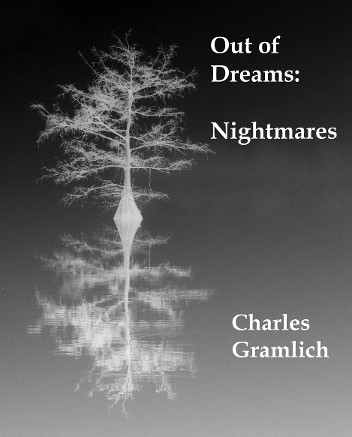
Where do such dreams come from? As a kid, Mom and Dad wouldnโ€™t let me watch scary shows like Twilight Zone or Outer Limits but they didnโ€™t monitor my reading. I read bible stories, history, animal tales, football and racing stories, science fiction and fantasy. Thatโ€™s probably where the imagery in my dreams first originated. Iโ€™ve since added scary shows to my experience. Recently, I published a collection called Out of Dreams: Nightmares, which contains retellings of dreams Iโ€™ve had in story form.

In dreams, Iโ€™ve been villains and victims. Iโ€™ve been children, and adults, and monsters. Iโ€™ve been the devil. Once I was a serial killer writing a novel on the walls of my house in the blood of the murdered. I wouldnโ€™t want to be most of these things in real life, but dreams let you live many lives. They also provide fodder for creative work, either in writing or other arts. Below, I touch on some dream related phenomena that can also feed oneโ€™s creativity.

In Lucid Dreaming you become aware of the dream. Sometimes youโ€™re just along for the ride and sometimes you can manipulate the dream. When I can, I fly. Talk about โ€œa dream come true.โ€ The other night I chased dragonflies through the pines. A little before that I was โ€œwatching TVโ€ when I realized I was dreaming. Since I couldnโ€™t fly inside the house, I pushed myself off the couch into the air and floated around the room.

Being well rested and avoiding caffeine and medications are important to the production of lucid dreams. You also need to recognize a dream. Most people experience clues that indicate dreaming. For me, light switches failing to work is often a clue. This also triggers a feeling that something bad is about to happen. But only while dreaming. When Iโ€™m awake, I just know the electricity is off.

I have a test to tell if Iโ€™m dreaming. Pinching myself doesnโ€™t work for me but jumping does. In real life, I canโ€™t jump very high. So, if I jump and touch the ceiling, or a low hanging branch, or if I seem to hang in the air, I know itโ€™s a dream. And the fun begins.

Sleep Paralysis can be extremely disconcerting. Here, you wake up from the dream state but remain paralyzed. Youโ€™re normally paralyzed from the neck down during dreams to keep you from acting out and hurting yourself, but itโ€™s supposed to end as dreaming ends. When it doesnโ€™t, you lie there wide awake but unable to move or call out. Fortunately, my sleep paralysis lasts only a few seconds. Some attacks can last for half an hour or more.

A variant type of sleep paralysis can be much more terrifying, though. You wake up and believe yourself to be โ€œfullyโ€ awake, but you remain paralyzed and certain dream-like phenomena continue occurring. Thereโ€™s often an intense feeling of a malevolent presence in the room. It may be invisible or appear only as a shadow.

My most terrifying event of this nature occurred when I awoke and saw my wife lying next to me completely covered with the sheet. I knew something was wrong. The sheet clung to the body beneath it, which was far more skeletal than my wife. As I was about to speak, the figure turned its head toward me beneath the sheet. The linen cloth clung tightly across deep-socketed eyes. The mouth was open and the sheet fluttered as the being breathed. I thought I screamed, but otherwise I couldnโ€™t move. The figure under the sheet shifted toward me in a slow scootch. I felt clearly that it was a ghost or a demon.

I tried to throw up my arm to block the thing and a cold hand underneath the sheet grabbed my wrist in a violent grasp. Again, I screamed, but then awareness came. This had to be sleep paralysis, which Iโ€™d had before, although never so frightfully. Struggling against sleep paralysis is counterproductive. The more you try to break free, the tighter it grips. The best solution is to relax. I did, and the hand let go and the figure deflated and disappeared. I didnโ€™t need to write a story to remember this experience.

Sleep paralysis is a possible explanation for a variety of ghost and demonic experiences, as well as some out-of-body and alien abduction scenarios. I believe it. If Iโ€™d had that encounter a century ago, or with no knowledge of sleep paralysis, I almost certainly would have blamed the supernatural.

The term โ€œnarcolepsyโ€ means sleep attack. The individual occasionally falls asleep without warning during normal daytime activities such as eating or talking with friends. This uncontrollable sleep is usually REM related and the person has a dream, though it lasts only a few moments.

Two symptoms of narcolepsy are hypnogogic and hypnopompic hallucinations. These are brief, vivid, dream-like experiences that occur while one is falling asleep (gogic) or waking up (pompic). My sheet/ghost experience might be described as a hypnopompic experience. Another memorable one that I had was of a train blasting its whistle while it rolled through one window of my bedroom and out the other.

Many people enjoy a good scare during Halloween season. For me, it can be as simple as going to sleep. Have a great Halloween, andโ€ฆ pleasant dreams!

Charles Gramlich writes from the piney woods of south Louisiana. He has authored the Talera fantasy series and the SF novel Under the Ember Star. His stories have been collected in Bitter Steel, Midnight in Rosary, and In the Language of Scorpions. He also writes westerns as Tyler Boone. His most recent releases, under his own name, are Farhaven & Other Stories, a collection of kid’s tales, and Out of Dreams: Nightmares, which are retellings of some of his most memorable nightmares in story form. Charles’s books are available at Amazon and Barnes & Noble, or through the author.

Iโ€™ve been blessed my entire life with nightmares. I love them. My wife has strict instructions ‘not’ to wake me up if she thinks I’m having a bad dream, no matter how terrified I might seem. From the first, many of my dreams had strong โ€œstory tellingโ€ elements to them. Some made for complete tales with beginnings, middles, and ends. All I had to do to make them into stories was write them down the way they’d occurred. This collection features retellings of some of my more darkly fantastic dreams. Most are nightmarish, but not all. Some are just strange. Many of these tales have been published elsewhere but have never appeared together before. Each has brought me joy, even if they brought me terror first! I hope you’ll like them.

Halloween Extravaganza: Hunter Shea: The Ghost of Halloween Present

After reading this guest post by the amazing Hunter Shea, all I can say is… I wish I lived closer to him because he’s definitely a house I would stop at on Halloween.


It used to be, I was happy when a Halloween consisted of me dressed up as either a hobo or vampire (I remember being a hobo, complete with packed bindle, was all the rage โ€“ not so PC now), a couple of hours to trick or treat, a visit to my grandparents, and a few mom inspected and approved candies before bed. If I was very lucky, my trick or treat bag wasnโ€™t laden with old pennies and unwrapped circus peanuts.

For once in my life, I donโ€™t long for the days of yesteryear. Halloween today in the Shea dungeon is a day long affair filled with indulgence and wicked fun. I tell people what our Halloweens are like and they donโ€™t believe meโ€ฆ until they come and see for themselves. And once they do, they come back for more year after year.

We have the distinct pleasure of having become part of a kind of trick or treat alley. It consists of one suburban block where kids and adults from far and wide descend. On this block, the houses are decorated (One family sometimes changing the entire front faรงade of their house for that yearโ€™s theme. Last year it was a rocket ship. The year before, the bow of a pirate ship). Music drifts along the chilly air. You might hear some creepy horror movie tunes, or maybe some riotous Rob Zombie, and always, always, the soundtrack to The Rocky Horror Picture Show.

We prep for the night by loading up the cooler with lots of beer. It used to be just pumpkin ale when it was hard to find, but now that itโ€™s everywhere, the allure has worn off. First beer can be cracked open at any time, be it morning or night. Well, we never wait until night. My daughters will dress up, as will the adults, all the way to grandma and grandpa. Sometimes, if my creative daughter gets the urge, sheโ€™ll pull out her makeup effects kit and adorn our necks with bloody slashes and wounds. Sheโ€™s been known to do it for random trick or treaters, too.

A carved pumpkin sits on the table, spewing massive chunks of green. That would be homemade guacamole and itโ€™s delicious. With extended family and friends present, the first trick or treaters start to trickle in. Itโ€™s always the very young ones at first with their moms and dads. At our house, everyone gets a juice box โ€“ because trick or treating is thirsty business โ€“ and a bag of treats. Once night falls, the neighborhood is transformed into a spooky Mardi Gras, the sidewalks and street packed with people of all ages, shapes and sizes. There have been flash mobs, wedding proposals, screeching when people are scared by one of us, and even the occasional flash for a drink, which makes it all the more feel like weโ€™ve been transported to New Orleans. By the time the night is done, weโ€™ve usually handed out treats to over 600 kids. Adults will get beer and cigars. And a hangover to come.

One year, I dressed up as a trailer park version of Elvira. I called myself Elmira and talked like Wendy Williams, asking everyone who came by, โ€œHow you doinโ€™?โ€ Donโ€™t ask me why. It was all inspired by Patron and Sam Adams. People loved taking pictures with the often lewd Elmira. Last year, I bought a giant crying baby mask from Five Below. Slipping into a pair of footie pajamas, I walked around looking tres disturbing. Turns out, moms like to hug crying babies, even if they are almost 6 feet tall and dancing around like a serial killer in his basement.

People we see just that once a year come by to hang, pizza is delivered, and the party doesnโ€™t stop until the treats and booze run out. When all is said and done, I always vow to watch a horror movie, something special Iโ€™ve saved for this moment. Inevitably, I pass out before the first act is over. It sure beats the Halloweens of my youth. It may be why I look forward to it more now than ever. So if you ever need a juice box or something a little stronger on Halloween, come on and join the party.

Hunter Shea is the product of a misspent childhood watching scary movies, reading forbidden books, and wishing Bigfoot would walk past his house. He doesn’t just write about the paranormal – he actively seeks out the things that scare the hell out of people and experiences them for himself. Hunter’s novels can even be found on display at the International Crytpozoology Museum. He’s a bestselling author of over 25 books, all of them written with the express desire to quicken heartbeats and make spines tingle. You can find him each week on the Final Guys podcast, as well as the long running Monster Men video podcast. Living with his wonderful family and two cats, he’s happy to be close enough to New York City to gobble down Gray’s Papaya hot dogs when the craving hits. Become a true Hunter’s Hellion and follow him at his website.

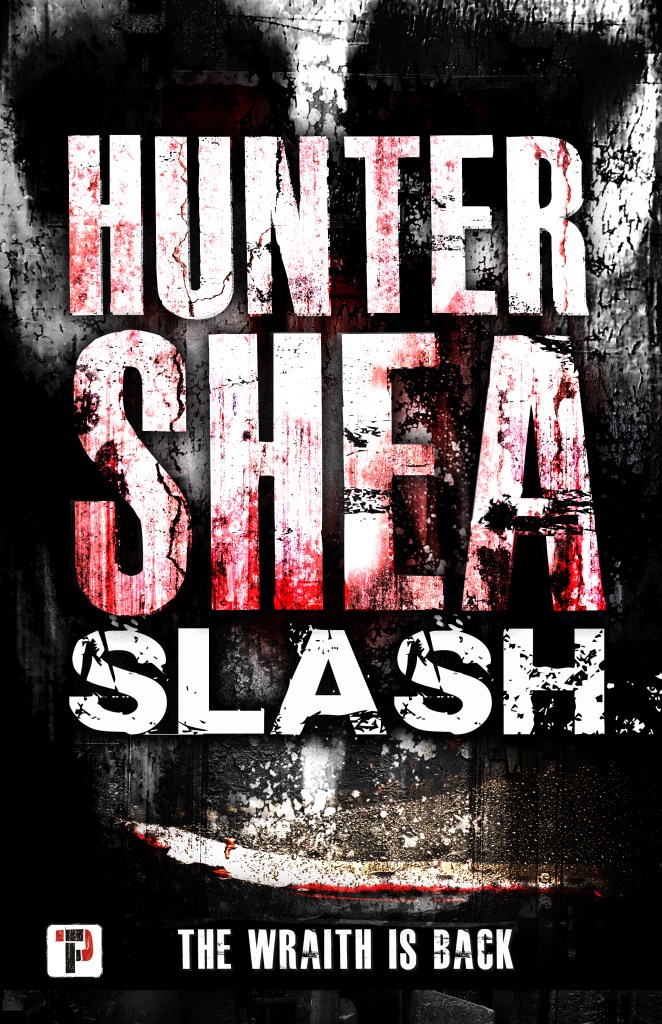
Slash

Five years after Ashley King survived the infamous Resort Massacre, sheโ€™s found hanging in her basement by her fiancรฉ, Todd Matthews. She left behind clues as to what really happened that night, clues that may reveal the identity of the killer the press has called The Wraith. 

With the help of his friends, Todd goes back to the crumbling Hayden Resort, a death-tinged ruin in the Catskills Mountains. What they find is a haunted history thatโ€™s been lying in wait for a fresh set of victims. The Wraith is back, and heโ€™s nothing what they expected.

Halloween Extravaganza: INTERVIEW: Hunter Shea

Meghan: Hi, Hunter! Thank you SO much for agreeing to be on Meghan’s House of Books today. [insert fangirling here] Tell us a little bit about yourself.

Hunter Shea: Iโ€™m a horror obsessed guy married longer than most of your readers have been alive with two amazing daughters who share my love of all things dark and scary. The fact that I got to turn my passion into a career that has allowed me to meet a lot of my horror heroes is still, I believe, the Matrix messing with me.

Meghan: What are five things most people donโ€™t know about you?

Hunter Shea: Oh boy. Iโ€™m a huge fan of Shania Twain. I once wrote a romantic comedy. I went to school with P Diddy. My all-time favorite job was as a stock boy in a supermarket. I actually like the taste of vegemite.

Meghan: What is the first book you remember reading?

Hunter Shea: As a kid, I loved The Little Red Lighthouse. I read that book until it fell apart and needed a new copy. The actual lighthouse is underneath the George Washington Bridge in New York. I pass by it all the time. My very first โ€˜adultโ€™ book was Stephen Kingโ€™s Night Shift. That explains it all.

Meghan: What are you reading now?

Hunter Shea: Riley Sagerโ€™s The Last Time I Lied. Iโ€™m halfway in and digging the hell out of it. I loved Final Girls and his latest is right on par.

Meghan: Whatโ€™s a book you really enjoyed that others wouldnโ€™t expect you to have liked?

Hunter Shea: I read anything I can get my hands on. I was gifted some romance novels last year by a friend and they surprised the heck out of me. Truly enjoyable. I can see why people love them.

Meghan: What made you decide you want to write? When did you begin writing?

Hunter Shea: Iโ€™ve always loved reading and the horror genre especially. My friend Norman Hendircks (also an author) infected me with the writing bug when we worked together in hell, aka the phone company – in the 1990s. Once I started, I was hooked. As he will tell you, itโ€™s a compulsion with me.

Meghan: Do you have a special place you like to write?

Hunter Shea: It changes from book to book. Right now, I prefer the back yard. Before that, it was the kitchen. Who knows, next book might find me in the attic.

Meghan: Do you have any quirks or processes that you go through when you write?

Hunter Shea: Just plant my butt in a chair and get to tapping keys. Although, when I think about it, I usually go to the bathroom before I write. Weird, right?

Meghan: Is there anything about writing you find most challenging?

Hunter Shea: Iโ€™m not alone when I say itโ€™s finding the time to write all of the projects I want to take on. Iโ€™ve published 27 books in 8 years, and it seems harder and harder to carve out the time I need. So many stories to tell.

Meghan: Whatโ€™s the most satisfying thing youโ€™ve written so far?

Hunter Shea: Wow, thatโ€™s a tough one. The Montauk Monster was my most commercially successful novel. One of the things on my bucket list was having a mass market paperback, and that took care of that. But I think Creature, which was very autobiographical and difficult to write, might top the list. The fact that I made it to THE END still amazes me. It took a physical and mental toll on me.

Meghan: What books have most inspired you? Who are some authors that have inspired your writing style?

Hunter Shea: I once met Elmore Leonard who taught me the two rules of writing โ€“ read and writeโ€ฆ a lot. I started reading more of his work and loved his lean, mean style. It was so much an extension of how Hemingway wrote, and Iโ€™m a huge Hemingway fan (despite his personal shortcomings). They above all others taught me how to trim the fat and just tell a good story.

Meghan: What do you think makes a good story?

Hunter Shea: Simple โ€“ good characters that engage the readers. If you have compelling characters, you can put them in any situation and it will work.

Meghan: What does it take for you to love a character? How do you utilize that when creating your characters?

Hunter Shea: I grow to love certain characters. Iโ€™ve yet to experience love at first write. ๐Ÿ˜‰ Sometimes they just get in your head and you become one with them. Their voice rattles around your brain all the time. And yes, Iโ€™ve killed my loved ones when the story calls for it.

Meghan: Which, of all your characters, do you think is the most like you?

Hunter Shea: Definitely West from We Are Always Watching. I mean, thatโ€™s just me when I was 14, though heโ€™s much better behaved.

Meghan: Are you turned off by a bad cover? To what degree were you involved in creating your book covers?

Hunter Shea: Absolutely. A bad cover screams amateur. Most times, you can judge a book by its cover. But there are some that surprise you. As for my covers, sometimes the artist will ask for some input, but I trust them as artists to knock it out of the park.

Meghan: What have you learned creating your books?

Hunter Shea: That writing is the reason I was put on this blue marble. All I want to do is create and entertain people. This world can really suck sometimes. Everyone needs an escape.

Meghan: What has been the hardest scene for you to write so far?

Hunter Shea: That would be the inner thoughts and turmoil of Andrew and Kate in Creature. I may have overshared what my wife and I go through, but it was crucial to put it in the book. SO many people with similar medical conditions have written to me thanking me for letting them know theyโ€™re not the only ones going through similar trials with similar thoughts. Totally worth it.

Meghan: What makes your books different from others out there in this genre?

Hunter Shea: On one side, Iโ€™ve carved out this little niche as the cryptid guy. So if youโ€™re looking for cyrtid monsters, I have a book for you. On the other side, Iโ€™ve been told that my books have made quite a few people tear up. I love to write characters with heartโ€ฆ and then shatter them, of course.

Meghan: How important is the book title, how hard is it to choose the best one, and how did you choose yours (of course, with no spoilers)?

Hunter Shea: I learned long ago not to fall in love with my titles. Odds are, your editor will change it or ask you for another one. Some titles you get I think donโ€™t always convey whatโ€™s between the pages, but I feel Iโ€™ve been fortunate so far. Iโ€™ve only changed one title for my book, Ghost Mine. It was initially called Hell Hole when it was published by Samhain. We changed it when it came back out this year with Flame Tree Press. The former was too Spinal Tap-ian for me.

Meghan: What makes you feel more fulfilled: Writing a novel or writing a short story?

Hunter Shea: Definitely a novel. I loved getting lost in my characters. A novel gives you room to explore and experiment.

Meghan: Tell us a little bit about your books, your target audience, and what you would like readers to take away from your stories.

Hunter Shea: My books run the gamut, from ghosts to monsters, killers to demons, urban legends to B movie madness. You donโ€™t have to just love horror. Thereโ€™s action, romance, adventure, gore, flighty books, weighty books, you name it.

Meghan: Can you tell us about some of the deleted scenes/stuff that got left out of your work?

Hunter Shea: Funny thing about deleted scenes, theyโ€™re always deleted for a reason. But for my book Tortures of the Damned, I had prewritten 5 different endings. When I actually wrote the last chapter, it was something entirely different. In one of the endings, all of the children were murdered and the parents basically went feral.

Meghan: What is in your โ€œtrunkโ€?

Hunter Shea: I wrote the first book in what I hope to be a middle grade series. Think Goosebumps, but with a recurring character who lives in a very unique place where she encounters everything that goes bump in the night.

Meghan: What can we expect from you in the future?

Hunter Shea: Iโ€™m going old school slasher this October with the release of my next book from Flame Tree Press, Slash. I came of horror age in the 80s and I wanted to finally add my take on the slasher genre. Thereโ€™s an abandoned resort in the Catskills that harbors a mysterious killer called The Wraith. The fiancรฉ of a final girl goes urban exploring, looking for answers, and gets more than he bargained for.

Meghan: Where can we find you?

Hunter Shea: Best place is at my website. Youโ€™ll find links to all of my social media there, podcasts and more.

Meghan: Do you have any closing words for your fans or anything youโ€™d like to say that we didnโ€™t get to cover in this interview?

Hunter Shea: I believe the past decade has been the true golden age of horror. Enjoy it while it lasts.

Hunter Shea is the product of a misspent childhood watching scary movies, reading forbidden books, and wishing Bigfoot would walk past his house. He doesn’t just write about the paranormal – he actively seeks out the things that scare the hell out of people and experiences them for himself. Hunter’s novels can even be found on display at the International Crytpozoology Museum. He’s a bestselling author of over 25 books, all of them written with the express desire to quicken heartbeats and make spines tingle. You can find him each week on the Final Guys podcast, as well as the long running Monster Men video podcast. Living with his wonderful family and two cats, he’s happy to be close enough to New York City to gobble down Gray’s Papaya hot dogs when the craving hits. Become a true Hunter’s Hellion and follow him at his website.

Slash

Five years after Ashley King survived the infamous Resort Massacre, sheโ€™s found hanging in her basement by her fiancรฉ, Todd Matthews. She left behind clues as to what really happened that night, clues that may reveal the identity of the killer the press has called The Wraith. 

With the help of his friends, Todd goes back to the crumbling Hayden Resort, a death-tinged ruin in the Catskills Mountains. What they find is a haunted history thatโ€™s been lying in wait for a fresh set of victims. The Wraith is back, and heโ€™s nothing what they expected.

Halloween Extravaganza: INTERVIEW: Michael R. Martin

Meghan: Hi, Michael. Welcome welcome. Tell us a little bit about yourself.

Michael R. Martin: I was born in St Helens, Lancashire, UK in 1962. I have a degree in mechanical engineering and a HND in multimedia. Iโ€™ve worked as a design engineer, a volunteer IT tutor, a medical records officer and Iโ€™m currently a freelance graphic designerโ€ฆ.and, of course, a writer. I enjoy watching football (soccer) and rugby league. I love reading, watching cool films and TV (cool to me, anyway), listening to music, mountain biking and hill walking (preferably if thereโ€™s a pub at the end of it).

Meghan: What are five things most people donโ€™t know about you?

Michael R. Martin: I canโ€™t think of one thing, to be honest. Well, not that Iโ€™d like to make public. Iโ€™m a quite introverted person, really, but what you see is what you get.

Meghan: What is the first book you remember reading?

Michael R. Martin: An Enid Blyton book, most probably The Adventures of Mr Pink-Whistle. I mustโ€™ve been five or six at the time.

Meghan: What are you reading now?

Michael R. Martin: Breakfast at Tiffanyโ€™s by Truman Capote and The Trial by Franz Kafka.

Meghan: Whatโ€™s a book you really enjoyed that others wouldnโ€™t expect you to have liked?

Michael R. Martin: Breakfast at Tiffanyโ€™s.

Meghan: What made you decide you want to write? When did you begin writing?

Michael R. Martin: Itโ€™s hard to say exactly. I was encouraged to write when I was thirteen by a teacher who saw an ability in me I didnโ€™t. Instead I went into engineering! That said, over the years, I did write some short stories but never attempted to get them published. I was forty-eight when I eventually decided this is what I really wanted to do. But I suspect that, in my case, I mayโ€™ve needed to reach that age and gain all those life experiences to write anything worthwhile.

Meghan: Do you have a special place you like to write?

Michael R. Martin: The spare bedroom where my PC is set up.

Meghan: Do you have any quirks or processes that you go through when you write?

Michael R. Martin: Not that Iโ€™m aware of.

Meghan: Is there anything about writing you find most challenging?

Michael R. Martin: Writerโ€™s block has been a problem in the past, but now I have two or three stories on the go at the same time, so I switch between them if one story hits a creative brick wall. I do a lot of editing as I write, but the final edit and proofread are challenging and quite maddening at times.

Meghan: Whatโ€™s the most satisfying thing youโ€™ve written so far?

Michael R. Martin: The short story, Zombie World. Writing a high-tech, virtual reality narrative in a way that was exciting, relatively easy to understand, without dumbing down or being patronizing, was very satisfying. Also, I donโ€™t do a lot of gore, but this is the exception. It was only inflicted on zombies, after all!

Meghan: What books have most inspired you? Who are some authors that have inspired your writing style?

Michael R. Martin: In my teenage years, I devoured every edition of the Pan Book of Horror Stories; a rude introduction to the horror and supernatural genre. Since then, Iโ€™ve drawn inspiration from the works of Nigel Kneale, H P Lovecraft, H G Wells, Arthur Machen, R Chetwynd-Hayes, John Wyndham, Stephen King, Philip K Dick, Alan Garner, and M R James. Other authors from different genres have also influenced me in many ways. I admire the writing style of Martin Amis the most. Reading Money was a wake-up call, but I felt heโ€™d set the bar too high for me to reach. Then you realise itโ€™s not about that; itโ€™s about developing your own unique style (hopefully) and working hard until it becomes second nature.

Meghan: What do you think makes a good story?

Michael R. Martin: Now thereโ€™s a question! I suppose a strong idea enacted by believable characters is the essential combination for me. These must be established in my mind before I start typing. This first stage I donโ€™t find too problematic, but how the narrative develops and unfolds can make or break a story regardless of the strength of the idea or characters. And it never seems to get any easier! Timing, like a lot of things in life, is the key.

Meghan: What does it take for you to love a character? How do you utilize that when creating your characters?

Michael R. Martin: I donโ€™t really โ€˜loveโ€™ characters, but I can bond and empathise with them. If your characters are believable, your readers donโ€™t necessarily need to like them; they just have to behave in a realistic and convincing manner. However weird the subject matter, the suspension of disbelief can be prolonged if the characters feel real.

Meghan: Which, of all your characters, do you think is the most like you?

Michael R. Martin: I suppose thereโ€™s a bit of me in all of them, but so many other people in the mix, too. And itโ€™s all subconscious: I never deliberately base my characters on actual people. And theyโ€™re braver than me; I think Iโ€™d run a mile if faced with some of the situations they have to deal with.

Meghan: Are you turned off by a bad cover? To what degree were you involved in creating your book covers?

Michael R. Martin: I am, and there are some really bad ones out there. Many self-published authors donโ€™t pay enough attention to this. A book can succeed or fail on the quality of the cover. Itโ€™s worth paying for a professional design. Iโ€™m lucky in that Iโ€™m a graphic designer, too, and create all my covers, and some for other writers I know. Keeping an eye on current trends is important, not least to buck that trend and make your covers stand out from the crowd.

Meghan: What have you learned creating your books?

Michael R. Martin: That nothing about it is easy. As a self-published writer, Iโ€™ve had to learn to write effectively, edit, proofread, format, design and create artworks, and market the finished product. Iโ€™m hamstrung because theyโ€™re steep learning curves and itโ€™s nigh-on impossible to be really good at all of them. That said, I do enjoy the challenges involved. Also, you learn to be thick-skinned when it comes to the ratings and critique that come your way. I suspect that some would be kinder to you if they knew the effort and emotional investment involved, even when they havenโ€™t enjoyed your book.

Meghan: What has been the hardest scene for you to write so far?

Michael R. Martin: Thereโ€™s a scene in Screams in the Woods (my first novel) where three people are killed in quick succession. They werenโ€™t bad people per se, but they had to go at that moment, in that way, to jolt the narrative and move it along. I never really like killing people, even the bad ones.

Meghan: What makes your books different from others out there in this genre?

Michael R. Martin: I use violence and gore only when appropriate and in context with the type of character(s) Iโ€™ve created. My stories are meant to frighten and intrigue rather than upset your stomach. I deliberately build in ambiguity and the let the readerโ€™s imagination fill in the gaps.

Meghan: How important is the book title, how hard is it to choose the best one, and how did you choose yours (of course, with no spoilers)?

Michael R. Martin: Itโ€™s absolutely critical but always occurs to me in an organic way, as Iโ€™m writing. I know the title some time before the story is finished.

Meghan: What makes you feel more fulfilled: Writing a novel or writing a short story?

Michael R. Martin: I feel fulfilled writing both. Thereโ€™s obviously more work in a novel, but some short stories can take ages to fully develop.

Meghan: Tell us a little bit about your books, your target audience, and what you would like readers to take away from your stories.

Michael R. Martin: All my books are concerned with how quite ordinary people react when they experience extraordinary events and situations, usually of a supernatural origin. I donโ€™t have a target audience (other than adult), but Iโ€™d like all of them to feel theyโ€™ve had their imaginations fired and their nerves jangled.

Meghan: Can you tell us about some of the deleted scenes/stuff that got left out of your work?

Michael R. Martin: Thereโ€™s only one of any significance, and that was in Screams in the Woods. The story is about a nineteenth-century mining accident, the strange and sinister cause of which is still being covered up today. I had a lot of back story, played out in scenes from the past, about the events leading up to the accident that I cut out and replaced with exposition through dialogue.

Meghan: What is in your โ€œtrunkโ€?

Michael R. Martin: I have three novels in various stages of development: a horror/supernatural in a UK setting, a sci fi with a US setting (my first) and one set in the early-first century AD (another first). I canโ€™t give any spoilers just now. What Iโ€™d like to do on a โ€˜rainy dayโ€™ is develop a story as a screenplay/script. Itโ€™s a pipedream to see one of my narratives on the large or small screen, but we all have to dream. Donโ€™t we?

Meghan: What can we expect from you in the future?

Michael R. Martin: See above!

Meghan: Where can we find you?

Michael R. Martin: Facebook ** Twitter ** Website

Meghan: Do you have any closing words for your fans or anything youโ€™d like to say that we didnโ€™t get to cover in this interview?

Michael R. Martin: Iโ€™m not sure if โ€˜fansโ€™ is the right word, but Iโ€™d like to thank anybody and everybody who spends their hard-earned cash on my books. I hope it was worth it. Also, constructive feedback and critique is always appreciated.

My name is Mike Martin. I have a degree in mechanical engineering and a HND in multimedia. Iโ€™ve worked as a design engineer, a volunteer IT tutor, a medical records officer and I am currently a freelance graphic designer and computer animator.

The aim of my writing is to create imaginative, supernatural thrillers populated by believable characters in realistic settings. My influences are many, but I draw particular inspiration from the works of Nigel Kneale, H P Lovecraft, R Chetwynd-Hayes, Arthur Machen, John Wyndham, Stephen King, Philip K Dick, Alan Garner and M R James.

I live in the North West UK.

13 Dark Tales: Collection One

A shocking event on an evening train only revealed by hypnosis, a man driven to extremes to rid himself of nightmare neighbours, and a rural driving holiday stopped in its tracks by a mythical creature. Just three of the 13 Dark Tales, inspired by macabre urban myths and sinister folklore, in this first collection.

Read them in the dark hours when they might call to mind a disturbing story you canโ€™t quite place or a strange shape glimpsed from the corner of your eye; things you dismissed as too fantastic to take seriously but left nagging doubts, nonetheless. Some of them may be true.

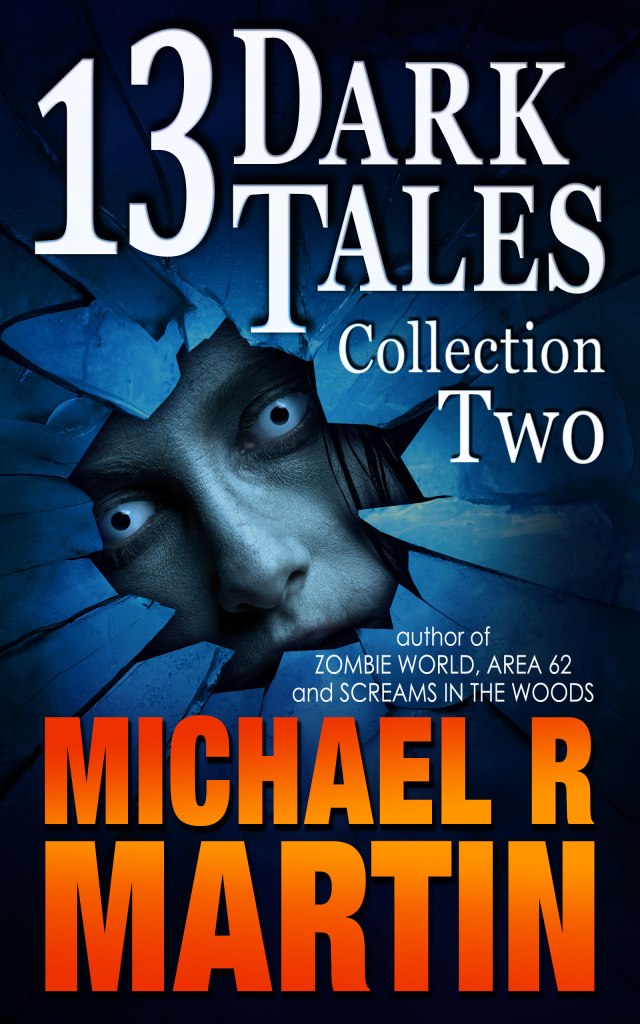
13 Dark Tales: Collection Two

A headless corpse dumped in a field leads to a terrifying insight into the future, a UFO investigator gets more than he bargained for when he tracks down an eyewitness, and bank robbers find something in a safe-deposit box they wish they hadnโ€™t.

Just three of the 13 Dark Tales, many inspired by macabre urban myths and sinister folklore, in this second collection by Michael R Martin.

Read them in the dark hours when they might call to mind a disturbing story you canโ€™t quite place or a strange shape glimpsed from the corner of your eye; things you dismissed as too fantastic to take seriously but left nagging doubts, nonetheless. Some of them may be true.

Zombie World

Imagine a video game you could physically interact with. A brutal, post-apocalyptic battleground so realistic a health check is strongly advised beforehand. Welcome to the future of gaming. Welcome to ZOMBIE WORLD …

Screams in the Woods

One rainy Monday morning, private detective Christine Lynch is presented with an untitled lever arch file to review.

It contains the detailed research of a 19th century local mining accident.
The authors have been missing for over a year.  
Two unrelated facts, surely?
Then she reads the file…

Area 62

When Colin Thurcroft decided to expand his hiking-gear business with a retail outlet, the derelict shop close to the centre of his home town seemed ideal. But something truly bizarre happened there nearly forty years ago, and it has left behind some tantalizing clues. As Colin digs deeper, he comes face to face with an international conspiracy beyond his wildest imaginings and the darkest of government secrets. Brought to the very edge of reason, he must challenge his understanding of reality and accept a future within which the human race has little influence.