To be successful as a writer, I believe one needs to have a knack for understanding human behaviour and what drives individuals to act in certain ways. It’s that keen insight into personality types and motivating factors that help when developing characters. However, when it comes to an understanding of my proclivity for crime, I’m at a bit of a loss. This begs the question; why crime?
Now when I say I have an appetite for crime, I’m not confessing to robbing a bank or planning a killing spree. My criminal life takes place on the pages of my books. For me, there has never been even the slightest possibility of writing a romance or even a cozy mystery. I’m not saying that romance and cozy mysteries aren’t great genres; they are, just not for me. For a story to be exciting, there has to be murder and mayhem – or at least madness. The characters have to be in peril or insane. Well, not always mad, that’s too cliché. Let’s just say bad guys have to have evil intentions, and the story has to be edgy.
To be clear, I’m not the product of criminal parents; in fact, both my mother and father were extremely law-abiding. My childhood was uneventful, but I don’t believe anyone’s first eighteen years of life can be completely humdrum. Mine was unremarkable in terms of exposure to crime. Yet, all my memories of writing stories in primary school involve trying to incorporate something creepy into every text.
As a child, I clearly remember writing a short story about a girl who becomes lost in the woods and finds herself in a terrifying scenario involving an abandoned house. I wish I still had that story as it would be fun to read what my ten-year-old self considered frightening. While the story is long gone, it does answer the question of when my fascination with the dark side began but not why. This brings me back to my original question; why crime?
If I were developing a character, I would include a childhood tragedy as a catalyst. Something heartbreaking and dark. Or, the very reason for my character’s appetite for crime would be the result of a strict upbringing by conservative parents leading to the character’s desire to shock and rebel. But since as far as I can remember, neither is the case for me, this throws up another question: do you chose your genre or does your genre chose you?
Crime chose me, this I can answer unequivocally. Reading books like Silence of the Lambs and Carrie made me realise that not only did I love this genre, but I wanted to write the sort of books I like to read. Writing about crime and what motivates a human being to hurt or kill and how these actions can impact the lives of the victims and their families, fascinates me and has done for as long as I can remember. And while I enjoy developing devious murders, it’s the victim I identify with and not the perpetrator – sigh of relief from my friends and family. ]
But why crime? I think the answer has to be escapism and the pleasure that comes for reading or writing something that gets the heart pounding. I love the thrill that comes from reading a book that has me on the edge of my seat. It’s that feeling I want to give my readers. But more than that, it’s what the readers are hungry for. It’s that unspoken agreement between writer and reader; that contract of expectation and delivery that pulled me into this genre. I know I’ve done my job when a reviewer says they were holding their breath or as one reader wrote about my novel, Backwoods Ripper: there were a few moments that had me cringing in delicious horror as chills raced up my back.
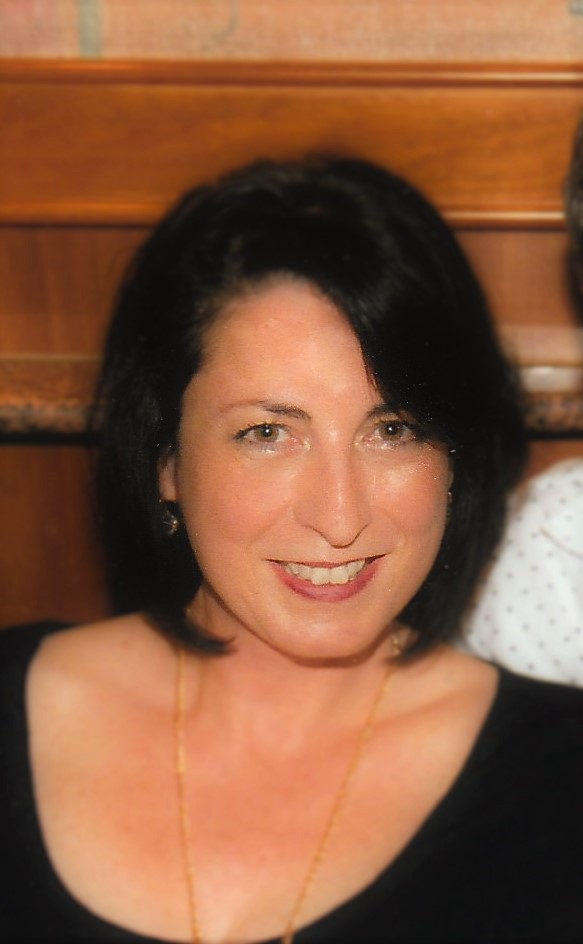
Raised in Western Australia Anna developed a love for fiction at an early age and began writing short stories in high school. Drawn to dark tales, Anna relishes writing thrillers with strong female characters. When she’s not writing, Anna enjoys reading, travelling and spending time with her husband, two children and their dogs.
When schoolteacher Jackie Winter inherits her beloved aunt’s house, she discovers that her close relative had been keeping a terrible secret.
As Jackie is drawn into her aunt’s past, all that was certain begins to fray. But she is destined to not experience this alone. Someone is watching her every move.
Then, there is a murder near the house. A cruel killing. Suddenly Jackie finds herself in the frame.
Trying to keep one step ahead of the police, Jackie turns her attention once more to the past, now certain there’s a link between her aunt’s secrets and the shadowy figure that plagues not only her days but also her nightmares.
Meghan: Hi, Anna. Welcome welcome. Tell us a little bit about yourself.
Anna Willett: I love my home life. I’m married to a man I met when we were both in high school and we have two adult children still living at home as well as two German Shepherds who spend a great deal of time relaxing on the couch. It sounds chaotic and it is – but in a good way.
Meghan: What are five things most people don’t know about you?
Meghan: What’s a book you really enjoyed that others wouldn’t expect you to have liked?
Anna Willett: Gone with the Wind. While it’s not my usual sort of read, I love it and have read it more than once. The writing is flawless and the characters are unforgettable.
Meghan: What made you decide you want to write? When did you begin writing?
Anna Willett: It’s something I’ve always known I wanted to do but never took seriously until about seven years ago. At the time, I’d had double knee surgery and after reading my stock pile of books, I decided to take the plunge and start a novel.
Meghan: Do you have a special place you like to write?
Anna Willett: I have a small desk under a window in our mostly unused sitting room. It’s quite a peaceful space where my dogs can watch me write.
Meghan: Do you have any quirks or processes that you go through when you write?
Anna Willett: No real quirks but I do have a process. When I get an idea for a new book, I start a new document and make a list of everything about the book that I know so far. Over the next few weeks, I’ll fill in a few more details. When I have a clear picture of the plot, I outline the main characters and the first few chapters. I really don’t need more than a brief plan and I’m ready to go.
Meghan: Is there anything about writing you find most challenging?
Anna Willett: The first chapter always comes easily but the next ten thousand words takes the longest to write. In that first part of the book, it’s as though I’m getting to know my characters and that takes time. Once I hit forty thousand words, I’m usually flying along.
Meghan: What’s the most satisfying thing you’ve written so far?
Anna Willett: My first published novel, Backwoods Ripper. When it was finished, the story was everything I’d hoped to achieve and the first publisher I sent it to, accepted it and offered me a contract.
Meghan: What books have most inspired you? Who are some authors that have inspired your writing style?
Anna Willett: As an avid reader, it’s difficult to name one, but many authors have inspired me. The Silence of the Lambs is one of my favourite books, I’m in awe of Thomas Harris’ talent as a writer. I’m also influenced by great writers like John Steinbeck and Stephen King. I’ve read everything Karin Slaughter has written, she’s an amazing talent.
Meghan: What do you think makes a good story?
Anna Willett: The perfect amalgamation of story and characters; one without the other doesn’t work. A story can be original and have all the elements of a fascinating tale, but with wooden or even worse, clichéd characters, it’s never going to grab me. I suppose that’s why writing a book is so challenging; all the necessary ingredients have to be present or it’s never going to appeal to readers.
Meghan: What does it take for you to love a character? How do you utilize that when creating your characters?
Anna Willett: I enjoy, and try to create characters that are authentic and flawed. It’s not enough for a character to make certain choices or act in a specific way, there has to be enough back story and thought process to make a character’s choices believable if not wise. I also like characters that have a sense of humor, even in the midst of danger or crisis and these are the things I endeavor to bring to the characters I create.
Meghan: Which, of all your characters, do you think is the most like you?
Anna Willett: I don’t know if any one character is like me, but they all have a sense of humor and an understanding of the absurd. During some of the most difficult times in my life, I fall back on my dark and quirky sense of humor to lighten the mood or just give everyone the chance to take a breath, that’s what I give my protagonists.
Meghan: Are you turned off by a bad cover? To what degree were you involved in creating your book covers?
Anna Willett: I’m not so much turned off by certain covers but I do make judgments based on the images.
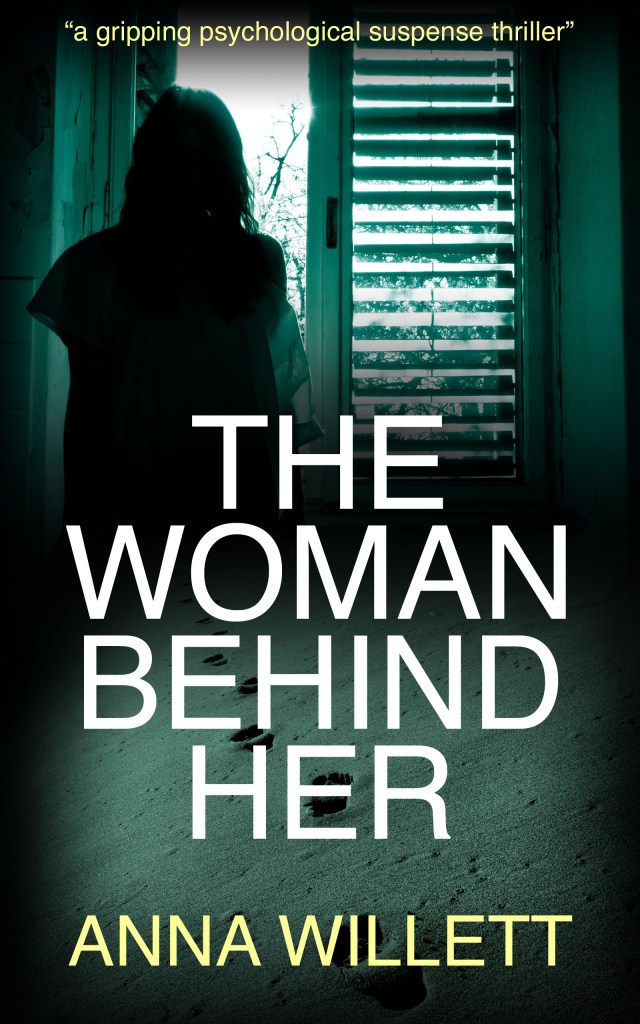
My publisher comes up with the covers and while they have the final say, I’m included in the process. Usually I’m presented with five or six images and asked for my feedback. Of my nine novels, my favourite is the latest cover for, The Woman Behind Her. There’s something evocative about the image and I adore the colours.
Meghan: What have you learned creating your books?
Anna Willett: So many things! I feel like I’ve taken a seven year master class in all things related to the business of creating books. And, every time I think I know all there is, I learn something new. One thing I do understand is the importance of interacting with my readers. While writing is a solitary pursuit, authors and readers are more connected now because of social media and so it’s never been more important to share with readers. It’s also never been a better time for writer’s to get to know their fans. So, I’m learning more and more about newsletters, fine tuning my website and discovering new ways to connect with fans of my genre.
Meghan: What has been the hardest scene for you to write so far?
Anna Willett: This answer goes back to what I’ve learned about creating books; if an author doesn’t like writing a scene, it will be evident in the work. That might not be true for everyone, but it is for me. If something makes me too uncomfortable, I won’t write it. I do this not because I’m a quitter, but because I want my readers to enjoy each scene as much as I enjoyed creating it.
Meghan: What makes your books different from others out there in this genre?
Anna Willett: One thing I never shy away from writing is the gritty stuff – the fear and the grim reality of violence. I also like to develop a sense of claustrophobia in certain scenes and stories. I like to think the thrillers I create have a harsh and creepy edge that you wouldn’t normally expect in this genre.
Meghan: How important is the book title, how hard is it to choose the best one, and how did you choose yours (of course, with no spoilers)?
Anna Willett: The title is extremely important as it tempts the reader to go further – to discover more. My titles are the result of a collaborative effort with my publisher having the final say. We often go back and forth with ideas until something amazing happens. With my latest book, The Woman Behind Her, I explained to my publisher the direction I wanted the title to take and from there, the perfect title was born.
Meghan: What makes you feel more fulfilled: Writing a novel or writing a short story?
Anna Willett: With a short story, you have to weave a compelling tale in maybe twenty pages. There’s an art to achieving something that’s satisfying to both the writer and the reader in so few words. While it’s definitely fulfilling to wrap a story up so perfectly that it can be told in twenty pages, I love the feeling that comes with finishing a full-length novel. It usually takes me between three and five months to write a novel and when it’s complete, it feels wonderful. It’s like coming to the end of a long journey where you’ve created something from nothing. If the book is any good, it’s a fantastic feeling.
Meghan: Tell us a little bit about your books, your target audience, and what you would like readers to take away from your stories.
Anna Willett: My books are thrillers that tip over into horror. Not in a supernatural way (not yet, but at some point soon). My stories are all set in Western Australia, a little known part of the world, but a place I consider to be the perfect setting for strange and dangerous happenings. Perth, the capital city, is the most isolated city in the world and so it is both a beautiful and dangerous local. If you want to know more about the forests, bush land, beaches and small towns, you’ll have to read my books.
I write about ordinary people and put them in extraordinary situations. My main characters are usually strong yet flawed women and my villains are complex and unexpected.
My target audience is anyone who comes willingly to a story and opens their mind to the possibility of being entertained, surprised and a little bit scared. I want readers to close my books feeling they got what the blurb promised.
Meghan: Can you tell us about some of the deleted scenes/stuff that got left out of your work?
Anna Willett: In my best-selling thriller, Unwelcome Guests, I removed two chapters. One chapter contained a surprising piece of information on the very last page and the other some background on how two characters formed a relationship.
Meghan: What is in your “trunk”?
Anna Willett: I have a complete novel; supernatural horror. In my humble opinion, I think it’s pretty good but I don’t know when I’ll do something with it.
Meghan: What can we expect from you in the future?
Anna Willett: I’m at the halfway point on a new book; the third in the Lucy Hush series. This one is set in the small coastal community of Savage Bay, a strange little bay where no one is what they seem to be and danger lurks everywhere including under the floorboards.
Meghan: Where can we find you?
Anna Willett: I love hearing from readers so please feel free to drop me a line via email. Or check out my website.
Raised in Western Australia Anna developed a love for fiction at an early age and began writing short stories in high school. Drawn to dark tales, Anna relishes writing thrillers with strong female characters. When she’s not writing, Anna enjoys reading, travelling and spending time with her husband, two children and their dogs.
When schoolteacher Jackie Winter inherits her beloved aunt’s house, she discovers that her close relative had been keeping a terrible secret.
As Jackie is drawn into her aunt’s past, all that was certain begins to fray. But she is destined to not experience this alone. Someone is watching her every move.
Then, there is a murder near the house. A cruel killing. Suddenly Jackie finds herself in the frame.
Trying to keep one step ahead of the police, Jackie turns her attention once more to the past, now certain there’s a link between her aunt’s secrets and the shadowy figure that plagues not only her days but also her nightmares.
Meghan: Hi, Tristan. Welcome to Meghan’s House of Books. Tell us a little bit about yourself.
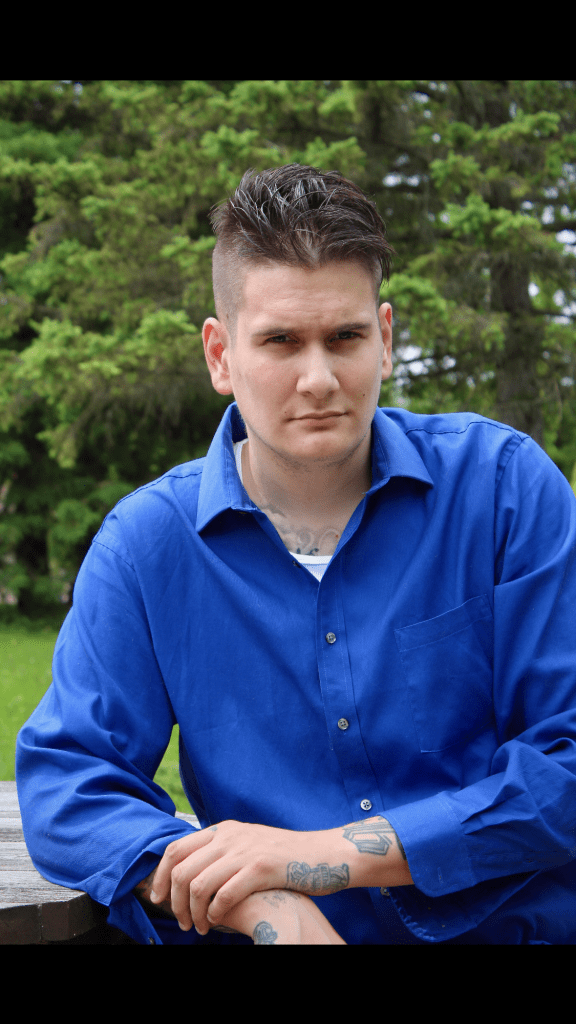
Nick Botic: I’m Nick Botic, an author/publisher from Milwaukee, WI. I’m 30 (it still feels weird to say that), and I’ve been writing since I was about 13 years old, but I’ve only really been taking it seriously since 2015.
I’m a huge fan and proponent for the horror genre, and have been my entire life. I’m a film/TV fanatic, an “aficionado” of sorts.
I am a proud and unabashed crazy cat lady. I might be 6’5” and covered in tattoos with a history of violence, but when I see a kitty, I can’t help but fawn over it like a little kid.
Meghan: What are five things most people don’t know about you?
Nick Botic:
My girlfriend’s nickname for me is Penguin. Still have no idea why.
I have 10 cats.
I’m four years sober.
I’ve spent over a year of my life in jail.
I once spent $400 on boomerangs.
Meghan: What is the first book you remember reading?
Nick Botic: The Giving Tree. It’s one that I read again as an adult, and when I did, I really understood it. It’s a good book for both kids and adults in terms of themes.
Meghan: What are you reading now?
Nick Botic: I just finished the entire 193-issue run of The Walking Dead, and have since moved onto the ongoing Absolute Carnage storyline. And in preparation for a project I have coming up, I’ve been reading all of the classic “creepypasta” stories.
Meghan: What’s a book you really enjoyed that others wouldn’t expect you to have liked?
Nick Botic: A People’s History of the United States. Learning about the different cultures that all commingled to make the country we know today was fascinating
Meghan: What made you decide you want to write? When did you begin writing?
Nick Botic: I’ve liked writing since I was young, but I didn’t start taking it seriously until I found the Reddit community r/NoSleep. The stories there fascinated me, but the ones I found effective were few and far between (which is simply a matter of personal preference, I don’t mean that as an insult to any writer’s work). I continued going through the stories and thought “I can do this”, and somewhere around March of 2016, I began writing short horror stories.
Meghan: Do you have a special place you like to write?
Nick Botic: Most of my writing gets done in bed with a cat and my girlfriend next to me.
Meghan: Do you have any quirks or processes that you go through when you write?
Nick Botic: Not really a quirk or process per se, but I can’t write in silence. I always need to have a TV show or movie playing in the background.
Meghan: Is there anything about writing you find most challenging?
Nick Botic: The most challenging part for me is filling in the blanks. I know the story I want to tell, but actually getting the words down always feels like such a chore. Other than that, endings.
Meghan: What’s the most satisfying thing you’ve written so far?
Nick Botic: I have a story I wrote called “I Found Something Impossible in my Backyard”, that I’ve always been quite happy with. I think it’s the fact that even as the writer of the story, I have no idea what was going on in the story.
Meghan: What books have most inspired you? Who are some authors that have inspired your writing style?
Nick Botic: As far as the type of writing I do, the books of other authors who write in similar styles have always been particularly inspiring, particularly Stolen Tongues by Felix Blackwell and PenPal by Dathan Auerbach.
Meghan: What do you think makes a good story?
Nick Botic: A good story needs to make the reader care about what’s happening. They need to be able to relate, to find a bit of themselves in the characters, in order to really get immersed.
Meghan: What does it take for you to love a character? How do you utilize that when creating your characters?
Nick Botic: As I mentioned, to love a character, there needs to be an aspect to them that the reader can empathize with. To accomplish that, I find it easiest to give characters flaws, be they small (such as a character who habitually bites his/her nails), or large (such as a character who is in recovery). Something that the reader can look at and think “ah yeah, I do that too” or “oh, my friend/family member has that same issue”.
Meghan: Which, of all your characters, do you think is the most like you?
Nick Botic: All of my first-person perspective work has a narrator who is essentially me; I find it easiest to imagine a situation and its outcomes when I can imagine myself in it. The character telling the story in Daughter’s Drawings, especially so.
Meghan: Are you turned off by a bad cover? To what degree were you involved in creating your book covers?
Nick Botic: A cover is the first part of a book someone sees, and it sets the tone for what lies within, so yes, I would absolutely say I’m turned off by a bad cover. For my first release and its second edition (The First Collection and later The Things We Fear), I created the covers entirely on my own (probably why they aren’t very good!), and for the group anthologies and other author’s work I’ve released under my imprint NBH Publishing, I’ve been lucky enough to have the incredible Scott Savino to do the covers.
Meghan: What have you learned creating your books?
Nick Botic: The devil is in the details. From both a writing standpoint and a publishing standpoint, making sure there are no holes anywhere in the book is key. As far as the story goes, that means making sure there are no loose threads, no plot points that lead nowhere or have been left unresolved. For publishing, it means going over the book with a fine-tooth comb, reading and rereading every word as many times as necessary to make sure everything is in order.
Meghan: What has been the hardest scene for you to write so far?
Nick Botic: Not necessarily a scene but a whole piece. There’s a story I wrote called “My Little Sister’s Beautiful Imagination”, and despite writing in horror and having the strongest stomach of anyone I’ve ever met, the subject matter of a child being sexually abused made me sick to my stomach. I ended up removing the story from r/NoSleep and my website. It’s not that I don’t think it’s a well-written story – I feel as though I’ve both written far better work and work that wasn’t nearly as good – but it’s just something I’d rather have not written. I don’t think any subject is taboo in horror, if that subject is broached in a responsible, tasteful, respectful way. If I’m not 100% that’s how I’m addressing a particular topic, I generally won’t continue until I am. That’s a story I’m not 100% sure on.
Meghan: What makes your books different from others out there in this genre?
Nick Botic: I feel as though I have a unique perspective when it comes to human suffering. I know real terror, I’ve seen true vulnerability. Combine that with what Kimmy calls “an encyclopedic knowledge of all things horror”, and I feel like I’m able to produce stories that haven’t yet been told. I’m able to, hopefully seamlessly, mix and match the most effective aspects of several different other works, to what I hope is an original final product.
Meghan: How important is the book title, how hard is it to choose the best one, and how did you choose yours (of course, with no spoilers)?
Nick Botic: A title is most definitely important. It should hint at what the story is going to deal with but of course not give too much away. It should be the enticing appetizer that leads to a delicious meal. Titles have always been something of an issue for me. Being one of the many horror authors who got their start on r/NoSleep, I’ve been almost conditioned to writing informal titles (for example, the original title of Daughter’s Drawings was “My Family Has Been Stalked For Four Years”), and breaking that habit has been a task in and of itself. For the book I re-release every Halloween, I chose the title A Halloween in Glarus because it’s straightforward, it tells the reader what the book is about, it doesn’t give anything besides the most general plot away, and at least for me, it rolls off the tongue quite nicely.
Meghan: What makes you feel more fulfilled: Writing a novel or writing a short story? (Explain.)
Nick Botic: I’m currently writing my first novel, but I can already say with complete confidence that that will be the more satisfying completion of the two. I can write a short story in a few hours, and while it always feel great knowing I’ve completed a piece of writing, the process of writing a novel is much more grueling and cumbersome, and therefore I know the weight lifted from finishing it will be extremely fulfilling
Meghan: Tell us a little bit about your books, your target audience, and what you would like readers to take away from your stories.
Nick Botic: My target audience is anyone who likes horror. Horror has so many subgenres, be it psychological, comedic, occult, folk, Lovecraftian, and I try to make my books, at least my anthologies, include as many of those subgenres as possible. I aim to give every fan of every aspect of horror something to enjoy. As far as what a reader takes away? I hope each reader takes away something different from every story.
Meghan: What is in your “trunk”?
Nick Botic: At the moment, I’m working on my first two novels. The first is an extended version of my viral short Daughter’s Drawings, the other another offshoot of an earlier project called “The Agoraphobic Journals, which is going to be an experimental novel, something I’m really excited about. Beyond that, I have two podcasts I’m currently in the writing phase of, one of which is the project I’m by far most excited about. I can’t say what it is yet, but I have no doubt it’s going to interest the fans of the genre to no end.
Lastly, I’ve been slowly but surely compiling ALL of my work from 2016-present, and I plan to release one huge book that showcases my improvement as an author. It’s going to include pictures, behind-the-scenes stuff, anecdotes, all of which I’m really excited about.
I also am working on my first podcast, entitled “100% True: The History of Creepypasta and Internet Horror”, in which I take a deep dive into the internet’s most famous stories. I’ve been forunate enough to have the authors of the most widely recognized creepypastas answer questios for me, as well as Nick Antosca, the creator of Channel Zero (a TV show that ran for four seasons, each of which was based off of a different creepypasta), and the star of seasons 3 and 4 of the show, Brandon Scott. I have an interview with the man who wrote what many people consider to be the very first creepypasta, “Ted the Caver”, the creator or an longest-serving moderator of r/NoSleep, and the creator of the SCP Wiki. In addition to them and the creator of Slenderman and Marble Hornets, I have a breadth of information I can’t wait to share. I’m really excited for it!
Meghan: Do you have any closing words for your fans or anything you’d like to say that we didn’t get to cover in this interview?
Nick Botic:
If you don’t think Black Widow is the most hardcore and talented Avenger, watch the entire MCU again.
Don’t declaw your cats.
SUPPORT INDEPENDENT AUTHORS.
Nick Botic is a 30 year old author and publisher from Milwaukee, WI. Following a stay in a rehabilitation facility in order to rid himself of a years-long heroin addiction, Nick began writing after discovering the Reddit community r/NoSleep. His first series, an 8-part saga about a hotel worker, received rave reviews, and prompted him to continue writing.
Since then, he has written over 100 short stories and series, including the viral, award-winning hit Daughter’s Drawings. His stories consistently find their way to the top 5 spots on the 13 million-plus member Reddit community, often receiving awards. His work has been published in over 10 collections, including his own anthologies The Things We Fear and An Ode To Terror and his novella A Halloween In Glarus.
Towards the end of 2018, Nick ventured into the world of publishing. His first release, the erotic horror anthology Goregasm, reached the top 10 in the new releases category on Amazon, while David Feuling’s The American Demon Waltz has been met with overwhelmingly positive reviews.
In 2019, Nick has secured adaptation deals, with several of his stories in various stages of production. His next release, the 25-author anthology Sirens at Midnight is due July 1st, and has already been met with positive reception.
Nick plans to continue balancing the responsibilities as publisher while also writing new material to keep his fans happy and horrified.
Sign up for his mailing list to receive updates as new stories and books are released.
Deciding Not to Take Halloween for Granted Anymore
Ever since I was a boy, Halloween was the big event, the bees knees, the great horror spooktacular, the horrific—dastardly—candy-having marathon of fun and games, and then some, if I do say so myself. As I’ve grown older, though, the joy in which I have for the holiday has become few and far between, depending on the year and whether or not someone in my life had convinced me to go out and actually live life in the night during it or not, perhaps instead choosing to stay home to probably sleep early in order to be in tip-top shape for work the following morning. After having this sad state of affairs brought to my attention, please allow me to lament that fact.
My earliest memory of Halloween was probably similar to many other young children, that of being horrified in person due to a jump scare by a grown man in a rubber mask, bringing myself and whichever family member my age that was with me to screams so loud and so bloody-murder-style distraught that dogs in the next district started to howl at a moon that wasn’t there. However rocky the start, my mother made sure to provide much more cherished incentives to celebrate. She would deck out our home—trailer, house, apartment, it didn’t matter—with cobwebs, all manner of skulls, baroque drinking glasses filled with gooey eyeballs, paintings that looked normal until viewed at an angle (which would then unnerve the onlooker as if they’re being watched), make-shift witch umbrellas (the handles were made of her legs, as were her shoes with the popular imagery of the witch herself), crystal balls, and so many books without stories filled with edible bugs and other creepy models of deliciousness. I could spend an entire essay describing the amount of effort that my mother went into the holidays, this goes for Christmas, Thanksgiving, and even the Fourth of July, but October 31st was something special. My mother made us active participants in the structure of the world we lived in when it came to the entirety of that month. I remember many a night sitting with my mom at the table—Monster Mash coming from the speakers—as she had my siblings and I tie a loop of string around a tissue filled with paper before we would use our permanent markers to make darkened eyes and mouths. We’d hang them from the ceiling using clear tape, each in a spot of our choosing for the adults to ever be bombarded with ghosts on high. It was a magical land of character archetypes that if not for Halloween and my mother’s intense appreciating and fostering of its traditions and imagery that I’d likely never have deep dived into stories about werewolves, Frankenstein’s monster, beautiful mermaids that are actually disgusting sea creatures, killer dolls, vampires, and the ilk; later, these led into mythology and other forms of storytelling that inspired much of my writing thereafter. That which makes us scared and reflects our fears of the mundane world, twisted and formed into something that at face value already adds a higher level of mystique and wonder to it are all things that a growing child can really sink their teeth into.
My mother had costumes for us and our friends, too, out the wazzoo. Did you want to be a super hero? Bam, Superman and Batman, there you go. Did you want to be scary? Heck yeah, here’s a Grim Reaper outfit, a scythe, and skeleton mask with a button attached through your sleeve that will make it look like blood was gushing from your skull. Would you rather be a zombie or paint something on your face? She had paint made specifically for your skin back when that stuff was hard to come by. Mom thought of everything, so much so that I’m sure I’m forgetting something.
Well out of high school and still at home, I’d show up from work in October and the decorations, which weren’t there that morning, miraculously covered the house. Every year, with my participation and enthusiasm slowly draining, as if a grain of sand intermittently pushed the value of it further from my understanding and eventually it all began fizzling out into oblivion. Mostly, the last time I visited my mother during Halloween, only a miniature haunted house remained upon the dining room table.
One year, a group of friends had asked me to go out with them, so I dressed as a greaser, partying it up with my drunken cohorts downtown, and after leaving to go to another late night after party, I had a gun pulled on me (check that story out in issue 22 of Weird Mask)—I wasn’t home, so I got into trouble again and again trying to be cool, forgetting what the holiday was really about. It wasn’t the scares, or the costumes, or even the candy. It was about joining my family in on the fun.
My wife asked me years ago when we started dating (and every year since) to help her set up around the house. She had her own set of reused cobwebs from a box marked with a sketch of a jack o’ lantern and I didn’t have any pep whatsoever. Next year, I helped in placing the window stickers that had a variety of cartoon ghosts printed inside the plastic, which started to make me smile and the kitschy candy jars reminded me of my mother, but I was too old for this pretend stuff. “This was the real world and it’s serious business,” said the fiction writer without an ounce of irony. We had wooded and stuffed black cats and bats that needed somewhere to live, nightly horror movies to watch, and Stephen King books to read. One year, we didn’t have money to spend on costumes, let alone did I ever dress up anyway, so my wife and her sister had the brilliant idea to dress in our best fall clothes and started to paint these brown paper bags in whatever designs we wanted. It was a real treat and a hit with our friends. I don’t know if my wife had intended to or not, but she brought that wide-eyed little kid back from the grave, digging him out with a shovel, and offered him a wobbly bowl of Jell-O-brains. He was back and he wasn’t going anywhere, especially now that we have a son who could join in. It was like my heart learned how to smile once more at the grotesque and the slimy, and rediscovered something far more meaningful that I had truly lost: the enriching warmth that is spending time with loved ones as we celebrate the holidays without a care in the world.
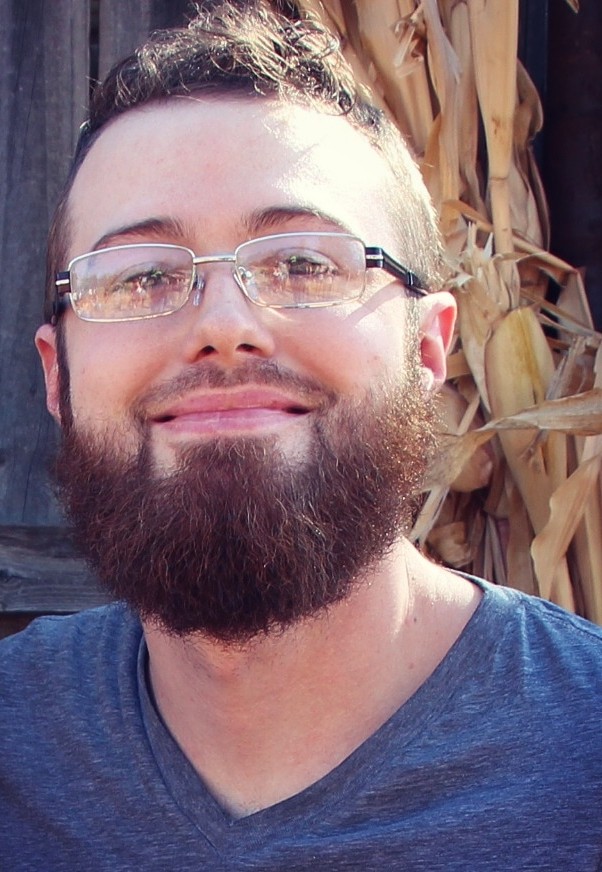
Now, I’m going to be 30 years old soon and my son was 10 months old when Halloween hit. A lot of my time aside from work has been thinking about the direction in which I want to raise my child. Of course I want him to have good manners, understand the value of standing your ground, and to know when to show kindness, but I also want him to experience the absolutely ghoulish spirit of Halloween that I knew when I was a kid, which I wish I had kept up on. I’ve got a lot of time to catch up with! I want him to read Casper, watch Stranger Things, light candles that could bring old spirits back—and Hell, I just might grab an old Ouija board for kicks, man. Recently, I haven’t even shaved my beard in a good while just so that I could be Tormund from Game of Thrones for Halloween and perhaps after we’ve raided the Spirit store, we’ll find an appropriate wildling costume for my son, or maybe an old lady costume with a walker that has miniature tennis balls at the bottom, or I don’t know, Ron Swanson or something. More than likely, my wife will create something one of a kind for him from scratch.
Literally, the world of family horror is at our fingertips, limited only within the utmost of our own creativity. I have finally decided not to take Halloween for granted anymore. I want to be kickass for Halloween, just like my mom.
Brothers of Blood follows Belle Whynecrow in her final year of highschool. Her best friends Josue, Xavier, and Jesus the hobo welcome the new kid, Chris, with welcome arms. The only catch? To quell their boredom, Belle tells them to create a kill list, marking off the names as they complete their goal before senior year ends. While struggling to pass their classes with flying colors, this band of merry murderers seems to be on a delightfully bloody roll until Belle’s long imprisoned older brother, Beau, arrives at her doorstep. Now a devout man of God, the brotherhood schemes for his return to his original, and highly exaggerated, bloodlust. That is, if Chris’s jealousy doesn’t destroy Belle’s ranking in the gang first. Not everyone will survive, but those who do will certainly have a year to remember because those that kill together live forever.
Meghan: Hi, Tristan. Welcome to Meghan’s House of Books’ Halloween Extravaganza. Tell us a little bit about yourself.
Tristan Drue Rogers: I live in North Texas with my wife and 7 ½ months old son. My son is planning on becoming a multimillionaire entrepreneur, while my wife has accepted her first full time art teaching position. I am myself a man of so few talents that the likelihood of being hired beyond entry-level is completely out of the question. In another life, I was an amateur photographer who made some waves in Las Vegas before settling down back in Texas where I figured I might as well keep up with this writer thing. This is my second year working as a writer semi-professionally and it has been one crazy ride as I’ve been welcomed into so many different circles that were previously unknown to me, allowing me to learn and shape my craft in ways that I honestly couldn’t even fathom before.
Meghan: What are five things most people don’t know about you?
Tristan Drue Rogers: I would assume that most people don’t know a whole lot about me as I am quite reserved if I’m being truthful, but I suppose I could relent and discover a few possible gems that may be worth it for someone to become privy to. Here goes:
Although I’ve lived a vast majority of my life in Texas, I was actually born in Missouri before moving to California, Illinois, and then to Texas, Nevada, and back. I need to see more of this country as well as the world.
I am both obsessed and downright mesmerized by the vast majority of animated Disney films. In general, I just enjoy cartoons more than almost any other predominantly visual media.
Everyone knows I love hip-hop, but in case you don’t, there ya go. Embarrassingly, I even tried my hand at rapping for a time. I was terrible and I thank the stars that I never really recorded anything.
And lastly—I had to have my wife help me with another tidbit—I suppose that I have a soft spot for farm animals, wanting a pet pig, a duck, and a goat one day. And they’ll be best friends forever.
Meghan: What is the first book you remember reading?
Tristan Drue Rogers: I don’t know if it actually was the first book that I ever read, concerning my mother allowed me to bring most of my old books home with me now for my son, it’d likely be a Dr. Seuss story, but the first book that I vividly remember ever reading was Mike Mulligan & His Steam Shovel by Virginia Lee Burton. I have the original that my mother used to read with me as well and I can’t wait to see how my son reacts to it. It’s a simple tale, yet somehow I grew to love and cherish it in my childhood. I remember a time that I was super excited to present the book to the elementary school library, in front of the class as we were all instructed to bring a book of our own, and I did just that. Unfortunately, soon after the children got a little too excited and rowdy, discussing your favorite reads will do that to you, and the librarian told us all to “shut your asses up.” What a misadventure that turned out to be for her. Also, depending on the time frame, maybe Garfield’s Scary Tales was the first book I remember reading. I’m bad at real life timelines.
Meghan: What are you reading now?
Tristan Drue Rogers: I am currently attempting to read The Complete H.P. Lovecraft. I think I have 700 or so pages to go. His name kept popping up and I had apparently never tackled any of his work before. I try to read at work on breaks, so it will be a while before I finish this one, but, like Poe, I have enjoyed watching his skill set evolve as the stories go on to his more final and substantial works..
Meghan: What’s a book you really enjoyed that others wouldn’t expect you to have liked?
Tristan Drue Rogers: That’s a fun question. I’ll really have to think about that one. I may have spoken about this briefly before, but it’s maybe worth noting that the structure of my own novel Brothers of Blood—which is a dark fiction/thriller/crime story with blood, gore, and psychological elements—was at least in part inspired by the two Little Women volumes. For a time while I wrote my book, I was reading Little Women and enjoyed it a lot, especially the way the characters interacted with each other.
Meghan: What made you decide you want to write? When did you begin writing?
Tristan Drue Rogers: I remember when I was a kid, probably around the age of 10 to 12, my mother helped me get a subscription to Ultimate X-men and Ultimate Spider-man. I remember waiting and waiting for those first issues to arrive and in the meantime I started writing. I wrote about kids who stood up to bullies with the help of a magical spoon and another one about a guy who killed people whenever he judged them as inferior, even though these inferior qualities were things like jaywalking or smoking. Eventually, his friend had to take him down. Ever since then, I’ve just been writing whenever a cool story happened, but only in the past 10 years or so did I really look at it as a way out to something more meaningful than escapist fun.
Meghan: Do you have a special place you like to write?
Tristan Drue Rogers: I’ve written atop my bed, under my bed, in the car, at the library, in a closet, and so many other places for writing that I’ve never really looked for anything more than enough space for a notebook or laptop to begin the journey. Although, as of late, my wife was kind enough to present me with her late grandfather’s writing desk, so I have become far more comfortable and aware of my need to sit before it instead of the other options. In my eyes, that desk commands more than a throne and I am fortunate to have it.
Meghan: Do you have any quirks or processes that you go through when you write?
Tristan Drue Rogers: This one time I told a friend that I look at my writing as method, similar to what actors like De Niro or Brando popularized. This meant that depending on what the story was about I would consume everything and partake in anything that I could which would then inform the first draft and the character s in any way possible. For instance, I have written a dark story, as of yet unpublished, about a homeless man who fancies himself a super hero, so I watched The Maxx, interviewed people I knew who had been homeless or had friends who were homeless, etc, while learning about the language and lingo that they used and if they had signs or postmarks indicating safe spaces and all that jazz. Only some of this was actually put into the manuscript, but it helped me understand what state of mind someone like my main character might have had. So, I try to do that as much as possible. Just dive deep, forget about gasping for air, and learn to open your eyes when below the murky depths.
Meghan: Is there anything about writing you find most challenging?
Tristan Drue Rogers: All of it. Simply all of it is an immense challenge. I cannot stress that enough. I love having written, but working on it is ground zero.
Meghan: What’s the most satisfying thing you’ve written so far?
Tristan Drue Rogers: Wow, I don’t know. Recently, I finished a novella that I’ve sent out to publishers about the not-so-distant future and an aimless young black man in college who had just learned that one of the candidates running for presidential office is hoping to bring reparations to and for descendants of slave families. The young man smells a rat and he ain’t wrong.
Meghan: What books have most inspired you? Who are some authors that have inspired your writing style?
Tristan Drue Rogers: I’d be remiss if I didn’t say that for a time I was just obsessed with Joe Hill’s writing. Even his stories some think of as weaker, such as Heart-Shaped Box, were and still are fantastic to me and certainly inspired a lot of my early writing as it was during high school. Amelia Gray showed me that a writer can experiment to outstanding results and that the reader doesn’t have to know everything. Neil Gaiman let me realize that I could still write in genre fiction and have something meaningful to say. I mean, the list could go on and on. I become inspired by every book I read, even the God-awful ones, so I really think that naming them off would be a monumental endeavor that would just turn into a list of books that everyone should already know are worth the time and effort.
Meghan: What do you think makes a good story?
Tristan Drue Rogers: Characters make the most memorable stories and conflict elevates them to greatest status. You can have all the ideas in the world, but without attention to this, there is nothing else to really chew on.
Meghan: What does it take for you to love a character? How do you utilize that when creating your characters?
Tristan Drue Rogers: My favorite characters are those that react to what they don’t like in the world and actually do something about it. Becoming proactive, even when within the story they don’t always see it that way themselves, allows us to see in the characters that which we don’t often see in ourselves: the ability to change our predicaments. Often we are so scared of having the status quo come out negative because of what we’ve done that we don’t take any chances at all. This isn’t to say that characters that only have things happen to them are bad, per se, but I do think a distinction must be made. In my own writing, I try to have my characters be defined by clear goals. Sometimes they don’t change or they don’t even accomplish that goal, but in the end they will have known what they wanted and their relationship with it will be the struggle in which we’ve been following. For instance, in a new and upcoming project from the makers of Weird Mask, called M, I have a serialized short story within that entails a young body builder who really doesn’t want to work out anymore. He’s tired of it. His best friend will just not let him quit, however, and so our main character decides to chop off his hand to reach his goal of a sloth lifestyle. He thinks to himself, who can work out and lift weights without the use of a hand? Soon, he learns that his friend will find a way to work around that, but hey, props for thinking outside the box, my guy. Creative problem solving ensues for the body builder, just as equally destructive as before. That one’s fun.
Meghan: Which, of all your characters, do you think is the most like you?
Tristan Drue Rogers: The easy answer is that they’re all like me. They may come from my mind, but they all do things that I would probably never do. I’m just an ordinary guy.
Meghan: Are you turned off by a bad cover? To what degree were you involved in creating your book covers?
Tristan Drue Rogers: I used to be, but now that I’ve been in the publishing game for more than a year now, I say that it’s not really the author’s vision anyway for better or for worse. The story is the story and the cover is there just to entice those that are into that specific genre, or however the publisher sees it. I hope to have more of a say next time, now that I know what I do. I just love a good cover, no matter the style. Regardless, people can always make their own covers with cardboard paper or something.
Meghan: What have you learned creating your books?
Tristan Drue Rogers: Hire an editor. No matter how often or thorough I read through my novel before it was published, I still find errors and it isn’t just embarrassing, it’s disrespectful to the readers. If I could go back, I’d actually save up the money to hire a real editor. The publisher doesn’t always do it for you. Never assume anything. Do as much yourself and professionally as possible.
Meghan: What has been the hardest scene for you to write so far?
Tristan Drue Rogers: In Brothers of Blood, the climax of where the latter half of the story had been heading included the ending from multiple character’s perspectives leading into it. As murders piled up, betrayals fostered into resentment, and more. This was my first time attempting such a thing on this scale and to have it all be in a chase sequence, in the woods, with both good intended characters and the bad, but main characters, was so difficult and fun to complete that I am still in awe that it came out the way it did. I’m proud of that one.
Meghan: What makes your books different from others out there in this genre?
Tristan Drue Rogers: Without sugar coating the lives of high school students, particularly in the way they speak and bridge their own lives with each other, one must become aware of what can actually happen by their hands if demented enough to act on their desires. Brothers of Blood was an attempt at realizing a realistic portrayal of the world in which we live where children can prosper without the active involvement of their parents.
Meghan: How important is the book title, how hard is it to choose the best one, and how did you choose yours (of course, with no spoilers)?
Tristan Drue Rogers: The book title above even the cover is the first sign of what your book might be to potential readers. Yet, there are book titles out there that aren’t that imaginative and somehow are still followed by groundbreaking and cherished novels. End the end, what matters is the story. The title will come, hopefully. With Brothers of Blood, I had the title before I even started writing. That doesn’t always happen. Maybe 50/50, but I was lucky as it helped me carve a path in the direction of dark fiction that deserved such a title.
Meghan: What makes you feel more fulfilled: Writing a novel or writing a short story? (Explain.)
Tristan Drue Rogers: I enjoy both to ever really get more enjoyment out of the other. Short stories are only short stories until they aren’t. That’s how most novels work for me; they all most likely started out as short stories. I’ve had some short stories that were supposed to be novels, but they ended early. I really don’t have much say in how long they’ll take to end, but every story is my baby and I try to take care of them until adulthood.
Meghan: Tell us a little bit about your books, your target audience, and what you would like readers to take away from your stories.
Tristan Drue Rogers: Knowing your audience is very important. I only wish I knew that then when I first attempted to gain readers for it. I’d say now that my book is aimed 17 and up, for dark fiction/thriller readers, at those who love My Favorite Murder podcasts, or Mindhunters on Netflix. If you obsess over serial killers, fictional or from the real world, my book is perfect for you.
After having read my book, I’d say that I want readers to discover the intelligence that high school kids have, the different lives that they all may hide from their friends, the vindictive nature of the most well put together kids, the brotherhood and camaraderie that is special when it fits just right in the time of your lives that will most affect you, and that I want readers to realize that anyone can want you dead, but it takes an extra type of person to gather a gang of murderers to then kill you in a show of peppy teamwork and brotherly love.
Meghan: Can you tell us about some of the deleted scenes/stuff that got left out of your work?
Tristan Drue Rogers: Sure! In my book, there was a scene early on in a dream sequence—I always have to cut my ridiculous dream sequences—whereas before one of our main characters, Beau, was playing with the puppy that he got for his little sister before they went out to stalk and kill someone. Beau falls asleep and starts witnessing himself down on all fours, with his stomach facing the sky, twisted all about, as he began to echo the same bark that little puppy did. I don’t know what I was thinking when I wrote that, but I put a giant X through it on the notebook and moved on as I was typing the manuscript. Sometimes, your head creates different ways to communicate something that you need to come across in the story, such as this guy is crazy. In this case, I knew that his actions both before and after represented that well enough that I didn’t need to resort to some cheap dream sequence that only the readers would be aware of for the entirety of the book.
Meghan: What is in your “trunk”?
Tristan Drue Rogers: I’ve wanted to work on so many projects that I’ve only half started. The big one right now that keeps popping up into my head is a dark fantasy story set in another world where giant monsters roam with a deep history that entails the shifting of continents and so much more. I’m really intrigued by this one so it may not stay in the trunk for long.
Meghan: What can we expect from you in the future?
Tristan Drue Rogers: I have some stories popping up here and there in that M zine that I’ll announce soon and another in Weird Mask about the time a gun was pulled on me and a friend before we went to a party on Halloween. I also have a poem in the July (pushed back until August 16) print edition of Genre: Urban Arts. My work is everywhere nowadays at least comparable to last year, so don’t forget to check back on my sites and stuff to keep up with me.
I am also a Site Contributor at Genre: Urban Arts, where you can find posts by me, typically in the poetry and flash fiction category.
Meghan: Do you have any closing words for your fans or anything you’d like to say that we didn’t get to cover in this interview?
Tristan Drue Rogers: My fans? That would be nice to imagine that I do have any fans at this point. Well, if they’re out there I hope they enjoy my work. I’m all over the place, but I’m slowly finding a path that works for me and fulfills my need to play around with the ways in which I perceive the world. Keep in touch and interact with me! I’m always online lurking somewhere and I’d love to speak with anyone about a good story.
Brothers of Blood follows Belle Whynecrow in her final year of highschool. Her best friends Josue, Xavier, and Jesus the hobo welcome the new kid, Chris, with welcome arms. The only catch? To quell their boredom, Belle tells them to create a kill list, marking off the names as they complete their goal before senior year ends. While struggling to pass their classes with flying colors, this band of merry murderers seems to be on a delightfully bloody roll until Belle’s long imprisoned older brother, Beau, arrives at her doorstep. Now a devout man of God, the brotherhood schemes for his return to his original, and highly exaggerated, bloodlust. That is, if Chris’s jealousy doesn’t destroy Belle’s ranking in the gang first. Not everyone will survive, but those who do will certainly have a year to remember because those that kill together live forever.





 Meghan's House of Books