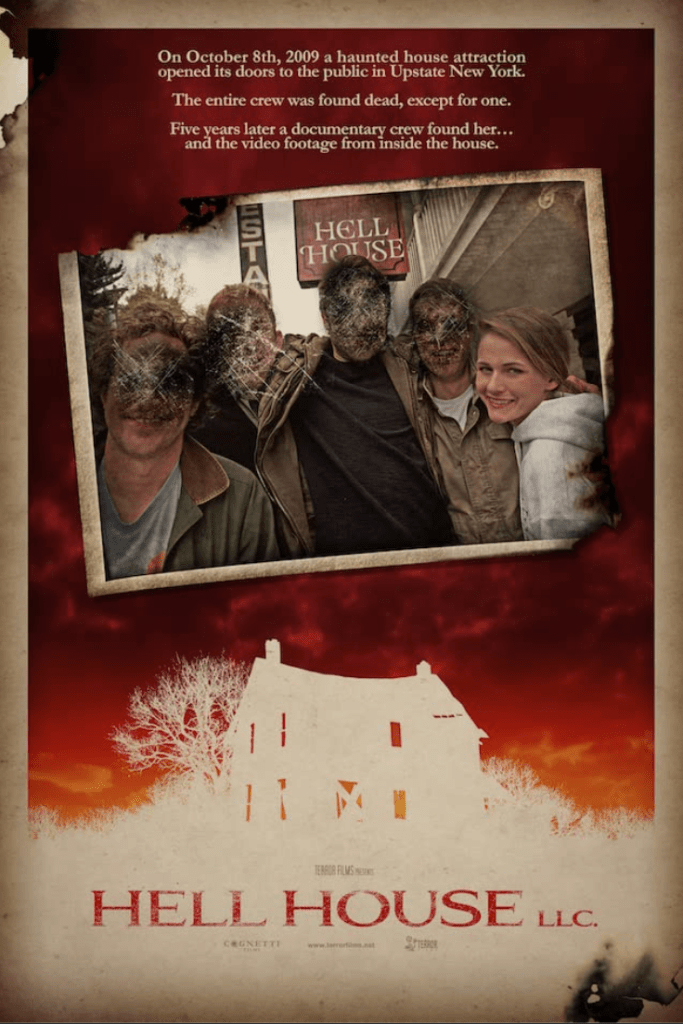
GUEST MOVIE REVIEW by Steve L. Clark: Hell House LLC

Hell House LLC:
A Halloween Attraction You Shouldn’t Miss
A Review by Steve L. Clark

Hell House LLC (2015)
Not Rated
1 hour 33 minutes

Director: Stephen Cognetti
Writer: Stephen Cognetti

Stars:
Gore Abrams
Alice Bahlke
Danny Bellini

Genre: Horror, Mystery

Five years after an unexplained malfunction causes the death of 15 tour-goers and staff on the opening night of a Halloween haunted house tour, a documentary crew travels back to the scene of the tragedy to find out what really happened.


I admit it. I am a found footage fanatic. The Blair Witch Project captured my imagination. I saw it in a packed theater with my brother when I was 16 years old, and it blew me away. It wasnโ€™t the first found footage film, but it launched the subgenre to new heights and unleashed a wave of new content. The good, the bad, and the uglyโ€”I was there for all of it.

As I got older and started a family, there got to be less time for movies, and I started missing releases. Then a couple years ago, scrolling through the Shudder app, I came across a 2015 found footage movie/mockumentary I had never heard of called Hell House LLC. The description told of a documentary crew investigation of an unexplained malfunction at a Halloween haunted attraction five years previously, resulting in the death of 15 tour goers and staff. I was intrigued and pressed play. What followed was one of the creepiest and most unsettling movies I have ever seen.

The film opens with interview clips from a journalist, witness, and an author weaved between footage of the documentary crew at the now abandoned hotel. They set the scene perfectly, instantly identifying the Abbadon Hotel as a place of mystery and unease. A short time later, the documentary crew gets in touch with the one surviving staff member from that fateful night. She turns over a bag of video footage from the weeks leading up to opening night of Hell House which is where the movie really takes off.

We meet the group of twenty-somethings who run Hell House. This Halloween they are moving the attraction from the city to a more rural area and the vacant Abbadon Hotel, documenting the entire process on film. We watch as the team spends weeks turning the already spooky hotel into a haunted attraction. It isnโ€™t long before strange things begin to occur. No spoilers, but Hell House is filled with high tension, genuinely creepy scenes. Very few times in my adult life has a movie put me on the edge. Hell House LLC is one of those movies.

Even if you arenโ€™t a fan of the found footage trope, Hell House is so well acted and directed that I still give it the highest recommendations. If youโ€™re like me and love found footage, this movie is an absolute must watch. The two sequels donโ€™t quite capture the magic of the original, but are still great movies. When I talk to people about great horror movies in the last decade, Hell House LLC is the first title out of my mouth. Stream it for free on Shudder (along with both sequels) or Amazon Prime (which also features an extended directorโ€™s cut version). You wonโ€™t forget your stay at the Abbadon Hotel.


Boo-graphy:
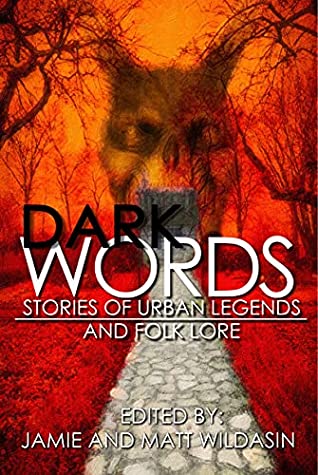
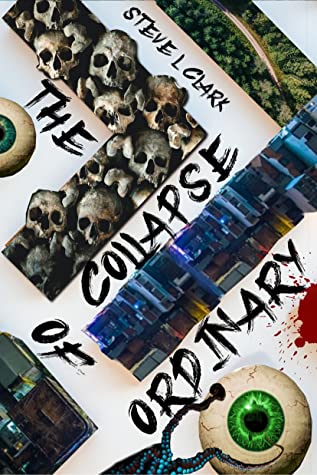
Steve L Clark is a horror author from southwest Ohio where he lives with his wife and three children. His publication debut was the short story Cold-Blooded in the anthology Dark Words: Stories of Urban Legends and Folklore. He followed that up with his own short story collection The Collapse of Ordinary featuring twelve horror stories ranging across supernatural, demonic, monsters, and human horror. He is currently working on his debut novella.

Both Dark Words and The Collapse of Ordinary are available on Amazon in ebook and paperback.

Dark Words
Horror hides everywhere! That abandoned house down your street, the woods nearby, even your own home. They all have old stories and legends of ghouls, demons and monsters. Throughout time, their stories were handed down around campfires and during sleepovers. Today, those stories will have a fresh take, but with the same Dark Words.

The Collapse of Ordinary
What happens when horror and madness collide with reality?

For most of us, life is a routine of the same chores and responsibilities. We are ordinary people doing ordinary things, unaware of the chaos closing in.

A hotel auditor gets more than he bargained for from a scary story podcast

A trip to the casino turns sinister with more on the line than money

A graveside funeral service spirals into a web of mind shattering revelations

These horrors and more await you within. Cast aside your doubts, open your mind, and embrace the insanity.

Walk with me into the Collapse of Ordinary

GUEST POST: Joseph Sale

The Slasher Genre Finally Gets a Sequel

The Slasher is a unique artifact in literature and cinema. In my view, there is no horror experience quite like it. It is a formula that on the surface of things seems almost ludicrously simple, yet this simplicity is precisely its power.

Many critics have written about the mythological origins of the Slasher. Arguably, one could trace the roots back to Beowulf, an epic penned circa 900 A.D. in Old English (which more closely resembles German, in many respects, than Modern English). In this legendary tale, the monster Grendel attacks the mead-hall of King Hrothgar, each night killing two of his servants and warriors. When Grendel is finally defeated, the hero Beowulf then has to contend with the monsterโ€™s mother, who proves a far worse foe. Giving Beowulf even a cursory analysis already reveals some fascinating insights. For a start, Grendel emerges from the swamps and fens, which seem to represent the roiling unconscious with their serpentine, reptilian forms. He attacks the bright hall of Heorot, which is illuminated by blazing fires, and seems to represent the conscious mind. Whilst Grendel could well represent a very real-world fear of the killer brute who comes for us at night, there is another fear, perhaps a deeper one, one what dwells in the depths of our quagmire-like minds.

One can also immediately see how Beowulf has informed Slashers. Grendel is a monster, a killer who emerges from a dismal swamp and picks off a group of victims one by one in increasingly gruesome and disturbing ways. He is inhuman โ€“ trollish, giant, hideous โ€“ but also disturbingly pathetic at the same time. Grendel even has a strange relationship with his uncanny mother. If your mind immediately leapt to Jason Vorhees, or even Norman Bates from Hitchcockโ€™s Psycho (which is often consider a cinematic โ€œproto-Slasherโ€), then you can easily be forgiven. Vorhees is certainly a Grendel in more ways than one. The fact he haunts a lake is not simply a reference to this classical source, but also another psychological dynamic. Water often symbolises sex, for reasons too numerous to list here. Suffice to say, the human mind naturally associates the two. Vorhees has a particularly distaste for sex, and one of the tropes of the Slasher genre is that only the pure or virginal survive. As I said before, what seems a simple formula is layered with meaning, and it is this layered meaning that makes Slashers so powerful.

In Grady Hendrixโ€™s recent novel, The Final Girls Support Group, which utlises clever meta-narrative devices to deconstruct and analyse the genre, Hendrix also draws parallels between Slashers and the ancient Greek myth of Theseus and the minotaur. The minotaur is the bestial killer, haunting a labyrinth. The hero Theseus can only overcome the killer with the help of Ariadne, the plucky โ€œfinal girlโ€ who helps him navigate and escape the labyrinth. Again, labyrinths are often psychological: they represent the human mind. Notice how the runnels of a brain seem like the paths in a maze. So, the killers are not only embodiments of things we fearโ€”monsters and things that go bump in the nightโ€”they are also fear itself, the things dwelling in our mind that we do not consciously acknowledge, waiting deep at the heart of the labyrinth.

What we are dealing with is an archetype, something that speaks to the very depths of the human condition. A frightening monster on one hand, and some form of heroine who is capable of surviving the monster, or even overcoming them at times, on the other. It could be argued that the โ€œfinal girlsโ€ who are so vital to the genre represent the better part of ourselves, the part that is able to face the id of our own mind. Whatever the truth, these images are seemingly hardwired into us, which explains why the Slashers of the โ€˜80s and โ€˜90s remain so iconic.

However, Slashers fell away during the Noughties and early 2010s. Perhaps the market was oversaturated? Perhaps the law of diminishing returns finally kicked in? A few failed reboots and sequels kicked the reputation of the genre into the dust. The creative spark was lost. All of these are possible, but I think these reasons are only part of why Slashers went away. The other part has to do with how our tastes and interests reflect what is really going on in our cultural psyche.

In the โ€˜70s, โ€˜80s, and โ€˜90s, a certain type of horror was in. But, at the turn of the millennium, we saw the rise of the Psychological Thriller and the decline of Horror in general. Thrillers dominated the Noughties and 2010s, both in cinema and in the literary world. Titles such as Before I Go To Sleep, The Girl On The Train, and Gone Girl (all of which are books and movies), in which the real enemy is often memory or perspective, replaced the crazed killers of an earlier epoch. There are a number of reasons why our tastes could have shifted so drastically. One is perhaps that the escalation of mass-shootings in the US, and the terrorist attack of 9/11, which made the killers of old-school Slashers seem, relatively speaking, quaint. With the rise of Psychological Thrillers also came a rise in Spy and Crime Thrillers, in which Jason Bourne, Jack Bauer, or another hero with the initials J. B. has to stop a terrorist attack: a bomb, a WMD, a catastrophe of nuclear proportions. One might argue that James Bond existed long before any of these and contemporaneously with the Slashers of the โ€˜70s and โ€˜80s, but note how Bond has changed from a suave spy into an action hero, how the plots he must foil are increasingly global in scale. This shift from fearing sickos with knives to fearing bombs going off in the middle of populated cities reflects a (very understandable) cultural anxiety that has dominated for 20 years.

However, whilst this shift was inevitable and certainly had just cause, it moved prevailing cinema and literature away from archetypal and mythological roots that imbue it with deeper meaning. Bombs are scary but they are impersonal. We can represent explosions on the screen, but often it devolves into spectacle over emotional resonance. There is a reason that, with this shift towards modern fears, came a pining for โ€˜80s and โ€˜90s memorabilia like never before. And furthermore, much criticism levelled at the โ€œemptinessโ€ of modern cinema. Whilst it would be easy to dismiss these kind of remarks as simply one generationโ€™s nostalgia, or comments by people who are out of touch with todayโ€™s society, there is clearly a disconcerting ring of truth to it. It isnโ€™t just one generation saying it, either: many younger creators and critics I know remark often that โ€œthey donโ€™t make them like they used toโ€. Whilst I donโ€™t fall strictly into either campโ€”there are plenty of recent films I adore, though they tend to be independently producedโ€”itโ€™s worth reflecting on what this means, because a societyโ€™s artistic output reflects its fears, hopes, and psychological abherrances. Horror in particular exemplifies this. What are we really scared of? Once it was clowns and dream-rapists and swamp-things. Now, it is something else. Weโ€™ve shifted from highly personalised demons such as Freddy Krueger to the impersonal fear of societal destruction and catastrophe. Or, we had. Things are changing.

The world moves in seasons and cycles, and weโ€™re currently experiencing something of a revival of Slashers. The Halloween reboot exploded onto the cinema screen in 2018, and the sequel, Halloween Kills, which came out October of this year. Stephen Graham Jonesโ€™ The Only Good Indians won not only the Bram Stoker but also the Shirley Jackson award. Grady Hendrixโ€™s The Final Girl Support Group is a love-letter to the genre that has smashed the bestseller lists. Whilst there is a healthy dose of trepidation for Scream 5, given that it will lack the brilliance of Wes Craven and Kevin Williamson, there is also a great deal of excitement. Love them or hate them (I am personally in the former camp), the Fear Street movies on Netflix have been voraciously devoured across the world. This resurrection of the genre indicates yet another cultural shift, and perhaps a welcome one.

The intimacy of the Slasher genre seems more appropriate to us, given that most of our worlds shrank drastically as a result of Covid-19 and lockdown. Sadly, domestic violence rose dramatically during this period, and it is likely that many of us had to confront demons, be they people we live with, skeletons in our familiesโ€™ past, or even more profoundly: within our own minds. The modern world, with its rapid pace and relentless insistence of busyness, has a tendency to drown out reflection. Lockdown forced many of us to turn our attention inward for the first time, and perhaps not all of us liked what we saw in this interior and neglected world. The swamp of the unconscious is a perfect home, after all, for the Grendel-terror to come forth from. I am only guessing, of course, and there is no single, true answer to โ€œwhyโ€. But certainly, the personal nature of Slashers, where people are not just blown up en masse but almost lovingly killed (and yes, often psycho-sexually as well), does seem to correlate with our current psychological temperament and the altered cultural norm.

Weโ€™re not quite there yet, however. The new Slasher revival has some teething problems, the main one being that we still seem to be either regurgitating the same franchises, or else deconstructing the genre with modern twists to such an extent that it no longer has the mythological feel and scope of the haunting originals. I cannot help but think we are due a true, original Slasher, something condensed from the psychic cultch of the western world, fermented in the fear of Covid and the pressures of lockdown, and imbued with a mania born out of 20 years of repression. We are due not just the sequel and reboot of the Slasher, but the glorious claw-out-of-the-grave resurrection.

And I want to be in the front row seat when it airs.


Boo-graphy:
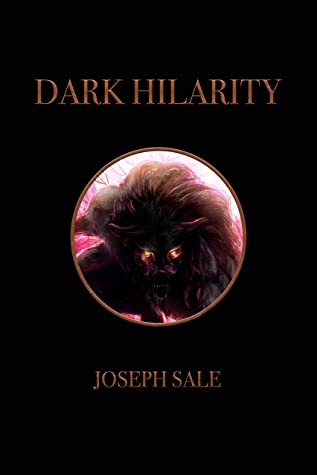
Joseph Sale is a novelist and writing coach. His first novel, The Darkest Touch, was published by Dark Hall Press in 2014. He currently writes and is published with The Writing Collective. He has authored more than ten novels, including his Black Gate trilogy, and his fantasy epic Dark Hilarity. He grew up in he Lovecraftian seaside town of Bournemouth.

His short fiction has appeared in Tales from the Shadow Booth, edited by Dan Coxon, as well as in Idle Ink, Silver Blade, Fiction Vortex, Nonbinary Review, Edgar Allan Poet and Storgy Magazine. His stories have also appeared in anthologies such as You Are Not Alone (Storgy), Lost Voices (The Writing Collective), Technological Horror (Dark Hall Press), Burnt Fur (Blood Bound Books) and Exit Earth (Storgy). In 2017 he was nominated for The Guardian’s Not the Booker prize.

Patreon
Website
Twitter

Dark Hilarity
Tara Dufrain and Nicola Morgan are eleven year old girls growing up in the โ€˜90s, obsessed by Valentine Killshot, a metal screamo band. In particular, theyโ€™re enamoured by the lead singer, the mysterious yet charismatic Jed Maine who bears the epithet โ€œThe Cretinโ€. In Jedโ€™s lyrics, he describes a world beyond the Dark Stars that he hopes one day to reach. The girls think itโ€™s all just make-believe they share together, until a freak, traumatic incident makes this world very real. As adults, Tara and Nicola try to come to terms with the devastating catastrophe that changed their lives growing up, but to do so they will have to step once more into Jed Maineโ€™s world, and confront the man who took everything from them. Dark Hilarity is My Best Friendโ€™s Exorcism meets The Never-Ending Story, a fantasy that explores addiction, depression, and the healing power of friendship.

Amazon US
Amazon UK

GUEST POST: Paul Flewitt

Horror Writers, Halloween, & Why We Do It

Happy Halloween, folks! This is our time of year, right?

Well, unless we live Halloween all year round. I guess many of us do, and just welcome people to the party when the festive period rolls around. Itโ€™s a thing. Weโ€™re the weirdos, right?

Halloween is the period when blogs everywhere want to talk to the horror writers, whether they generally cover horror or not. I guess they have to wheel out the macabre ones when the nights get dark and the ghosts come out to play. Most of them ask similar questions, and there are two that are asked most often.

Why do you write horror?

Where do the ideas come from?

So, I thought Iโ€™d address them in somewhat longer form here. Why not?

I suppose the reasons for writing horror are similar ones to why we read horror. It excites us, awakens some primal part of ourselves. Thereโ€™s a frisson of delight we get from being made uneasy in books, and the great thing is that we can always close the book if we want some relief. Itโ€™s like a rollercoaster; weโ€™re exhilarated for the duration of the ride, but we know weโ€™re getting off in a minute. Itโ€™s tapping into something that gets the pulse racing, the endorphins pumping and the adrenaline flowing. Oh, and the stories are entertaining too.

Writers are no different, and we seek that same exhilaration when we create our stories. You know that pulse racing? Yeah, we get that when we write too.

There are some scenes in stories that take us unawares; they just seem to creep out of the pen unbidden. We sit back when weโ€™re done writing them and think โ€œwhat the hell is wrong with me,โ€ closely followed by: โ€œIts damned cool though.โ€

Those are the moments weโ€™re looking for, and theyโ€™re not always planned.

Thatโ€™s one reason we write horror; to fulfill something in our primal selves and pour it out into the world.

Of course, thereโ€™s an element of catharsis there too. If weโ€™ve had a bad day, then we know we can sit down and write a brutal death scene. Releasing that negative emotion is a good, healthy thing.

I donโ€™t think thereโ€™s a psychological marker for horror writers. I know, when I was young, I pictured horror writers to be a certain way. I kind of imagined them all to be somewhat gothic, long hair and black clothes.

Then, I saw Stephen King for the first time.

We can be anyone, and thatโ€™s a cool thing. Horror speaks to all people, if they feel the need to embrace it. Horror writers arenโ€™t all devil-worshipping, vestal virgin sacrificing freaks, or I just didnโ€™t get invited to those parties yet. Pretty much all the horror writers I know are the funniest, kindest and most sensitive people I know, and I think thatโ€™s why theyโ€™re able to write horror. Most of us feel very keenly, and are very in touch with our emotions. If we understand how we feel, then we know how to convey emotions โ€ฆ and fears. Thatโ€™s also a very cool thing.

So, where do the ideas come from?

Something funny happened when I released my first novel; my mum read it โ€ฆ and asked if it was her fault. Was it something sheโ€™d done? She was utterly serious, and I found the question completely hilarious. Actually, the idea behind that first novel was born out of a joke between me, my editor and a beta reader. But, I digress.

I donโ€™t think this is a question limited just to horror. Every writer is asked where the ideas come from, and if they dry up. I think the answer is pretty simple; we always ask, โ€œwhat if?โ€

We can be walking by a piece of architecture, an interesting quirk in the landscape, or pretty much anything and ask, โ€œwhat if?โ€ To me, itโ€™s one of the most important questions in the world, and one we seek to answer. I think the most pertinent question is this though: โ€œwhy do the answers have a spooky outcome with horror writers?โ€

Well, because thatโ€™s what we like. We see the spooky because spooky is cool. My wife will look at a beautiful view in the countryside and comment on its beauty, whereas I will look at it and say, โ€œwhat if thereโ€™s a monster in those hills? What if that village is home to a demon-worshipping cult? What if?โ€

And the reaction is always satisfying. And thatโ€™s it, in a nutshell.

Yes, people of the page; weโ€™re looking for a reaction. Whether thatโ€™s delight, disgust, fear, dismay, or the plethora of other reactions we can expect from a horror story, weโ€™re just looking for that reaction.

Silence is fucking scary, after all.


Boo-graphy:
Paul Flewitt was born and raised in Sheffield, Yorkshire where he still lives with his family. He is the father of two children and keeper of several beta reading demons

Paul is a writer of horror and dark fantasy, and a former steel worker. His debut novel, Poor Jeffrey, was launched in April 2016. His latest short story, Defeating the Black Worm, is part of the Short Sharp Shocks series from Demain Publishing.

Paul spends his time caring for his children and devotes much of his free time to writing his next works. He writes only for the thrill of scaring his readers in new and inventive ways.

Short Sharp Shocks 62:
Defeating the Black Worm

Matthew had fallen so far, so quickly. The anxiety and panic had overcome him suddenly, and he couldnโ€™t find a way back. In desperation, he sought solace in doctors and psychiatrists, but no-one could (or would!) help him. He loses everything to the hunger and appetites of the Black Worm.

But then, at his lowest point, and with nothing left, Matthew finds aid in the most unexpected of placesโ€ฆ

But can the Black Worm be defeated?

GUEST POST: Tommy B. Smith

Black Cat

The October month evokes images of falling leaves, orange and brown, slow signatures of the seasonโ€™s turning, and that mystical night of the thirty-first with its tricks and treats, disguises, revelry, and jack oโ€™ lanterns with strange smiles. Decorative renditions of ghosts under white sheets, witches with pointy hats and broomsticks, and black cats abound.

Many of these images stem from the legends and folklore surrounding the origins of the occasion. In some cases, as with the jack oโ€™ lanterns lit by flickering flames, they represent traditions muddled by time.

Witches were distrusted and feared throughout crucial points in history, which in turn gave rise to the caricature of a crone garbed in black, often unpleasant in demeanor, who became the staple of numerous tales intended to frighten and horrify. Likewise, the black cat, declared by its appearance as a creature of darkness to the superstitious, became included in many of these tales as the witchesโ€™ familiars. In some stories, the witches themselves possessed the ability to shift into the forms of black cats.

The black cat has found its way into many subsequent horror tales, classic and modern. The Black Cat by Edgar Allan Poe is widely recognized, and black cats went on to make appearances in numerous horror films, including Roger Cormanโ€™s Tales of Terror (1962) and The Tomb of Ligeia (1964), both adapted from Poeโ€™s works and featuring the legendary Vincent Price.

While I can appreciate their resulting place in the horror genre, I have never lent a molecule of credence to the aged superstitions deeming their presence as unfortunate. As it happens, black cats cross my path every day. I have two: BearCat and Thirteen, the latter of whom gained his name as a jab at those superstitions, in part, and also because his birthday falls on the thirteenth of April.

Tripping over a black cat isnโ€™t a matter of misfortune. If we watch our steps, it shouldnโ€™t be an issue.

As Groucho Marx once said, โ€œA black cat crossing your path signifies that the animal is going somewhere.โ€

Should we celebrate black catsโ€™ place in horror, Halloween, and the month of October? Certainly. Itโ€™s been earned. Besides, October 27th is National Black Cat Day.

As the world turns and learns, tired old biases fading but ever-present in the yellowed pages of history, the black cat prances on, head high, eyes sharp, the cautious mascot of the misunderstood, the disparaged and beautiful, the transcendent.


Boo-graphy:
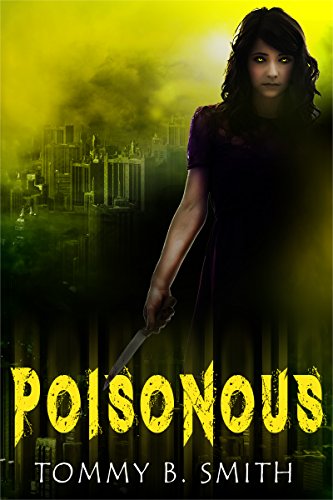
Tommy B. Smith is a writer of dark fiction, award-winning author of The Mourner’s Cradle, Poisonous, the short story collection Pieces of Chaos, and the coming of age novel Anybody Want to Play WAR? His presence currently infests Fort Smith, Arkansas, where he resides with his wife and cats. More information can be found on his website.

Poisonous
Following the Quake of โ€™79, a terrible force came to the city of St. Charles. This was the Living Poison. In Lilac Chambers, it may have found the perfect host. As she finds herself changing, becoming increasingly dangerous to everyone around her, it becomes apparent that her state of being is no accident of nature. She is becoming a prime vehicle for the Living Poisonโ€™s destructive swath through the streets of St. Charles. Detective Brandt McCullough has seen the Living Poisonโ€™s brutality. John Sutterfield, ringmaster of Sutterfieldโ€™s Circus of the Fantastic, is discovering its malignancy festering within the very circus he founded. These two are the only ones who might stand in the way of a force greater than anything they have ever known, one which threatens to wash the streets in red and swallow the city into chaos, but the stakes may be higher than either of them can imagine. St. Charlesโ€”indeed, the worldโ€”may tremble.

GUEST MOVIE REVIEW by S.C. Mendes:

I’m Just Fucking with You
(Can be found on Hulu)

Director: Adam Mason
Year: 2019
Rating: TVMA
Genre: Thriller, Horror

Starring:
Keir O’Donnell
Hayes MacArthur
Jessica McNamee

A young man and his sister endure a night of increasingly frightening practical jokes while spending the night at a secluded motel.


S.C. Mendes’ Review

Troll
a)ย ย ย ย  a dwarf or giant in Scandinavian folklore inhabiting caves or hills
b)ย ย ย ย  ย to antagonize (others) online by deliberately posting inflammatory, irrelevant, or offensive comments or other disruptive content

Larry is a Troll of the internet variety. A small, weak man in the real world, but a smack-talker online. As the movie unfolds, we learn more about his sad backstoryโ€ฆ But heโ€™s also a jerk, so itโ€™s hard to feel bad for him.

On his way to break up a weddingโ€”wait until you find out who is marrying Larryโ€™s exโ€”he stops at the Pink Motel to spend the night and gets a taste of his own medicine when he meets the late-night manager.

Chester has a juvenile and twisted sense of humor. From the minute Larry walks in, Chester starts fucking with him. Annoying, but relatively harmless and all in good fun of course. Like making Larry pay for the room in cash for a cheaper deal, then ten minutes later saying Larry never paid. An awkward pause ensues before the punchline. That type of tension starts off strong and Chester creates a genuinely disturbing atmosphere for Larry and the viewer. Image if Heath Ledgerโ€™s Joker owned a motel.

Blumhouse has a great set up here. I was expecting this to have a brilliant twist and secure a spot as one of my new favorites in the hotel genre. Psycho. Identity. No Vacancy. Iโ€™m Just fucking With You.

But no. The punchline of this joke lost me. I can admit that I donโ€™t have a better resolutionโ€”in fact, I loved the final scene which I wonโ€™t spoil hereโ€”but the twist of the film felt very generic. Maybe I went in expecting something the movie wasn’t intended to be. But I felt it didnโ€™t add anything new to the genre and thatโ€™s what I was looking for.That said, it was an updated version that most horror fans will enjoy.

Overall, itโ€™s definitely worth a viewing for Hayes MacArthur’s portrayal of Chester. Oh, and the polaroid of a large phallus. Or maybe there is no polaroid. Only one way to find out if Iโ€™m fucking with youโ€ฆ.


Boo-graphy:
Learn to appreciate the darkest moments of your life. It is those moments that make our time in the light even more beautiful. S.C. Mendes is the author of numerous short stories and a fan of pen names. The anonymity helps maintain his day job as an indoctrinator of children for the state. THE CITY is the beginning of the Max Elliot saga.