Author Brian Kaufman joins us today with an article of one of his favorite movies: Night of the Living Dead.
As a horror fan (and a genre writer), I enjoy a scary movie. I’ve seen literally hundreds of them. One stood above the others as a truly frightening experience. Because the film was revolutionary (and because I was young), Night of the Living Dead had a lasting effect, both on my writing and my life.
My first encounter with the movie came through a negative newspaper review, which noted that the film departed from the traditional horror film (as typified by the Universal Studio monsters). NOTLD had no comedic elements. No schlocky reminders that the film was, after all, just a movie. And the hero dies. A drawing accompanying the review showed movie-goers, ostensibly children, fleeing the theater in tears.
The following summer, I took a date to the drive-in. She wore a sweater over her blouse, but it was late August, and that sweater was coming off for sure. Then the movie started. I’d recognized the name from the review I’d read, and thought, good, this could be fun. Maybe she’ll get scared!
Let’s start by saying that the title sequence scared me. Black and white film. A car driving a deserted road. Plain title lettering. No reason to feel dread, except, I did. As soon as Bill Hinzman, the graveyard zombie, killed poor Barbara’s brother, my date buttoned up that sweater. I was unseasonably cold myself, and settled in to endure the overwhelming sense of impending doom.
Film over, we drove home in silence. That night, I had my first zombie nightmare.
The dreams are all the same. It’s late afternoon or early evening. The sun will be down soon, and I have a limited amount of time to secure my surroundings and find weapons. Only the setting changes. In one dream, I was in the storage room of a museum. In another, the attic of a fast food restaurant.
In one particularly bad dream, I was on the top floor of an office building. The zombies were shambling down the hall, and coworkers barred the door. We all breathed a sigh of relief. Then, the pounding started. Someone on the other side of the door begged us to let him in. One coworker asked, “Is that Bob?” I tried to remove the bar, but coworkers pulled me way. The man outside shrieked, “They’re eating me!” I woke up screaming. My poor wife, half asleep, began screaming, too.
Meanwhile, I kept watching zombie movies. What scares you can also fascinate you. All this, thanks to that first black-and-white film, which clearly altered my DNA.
When I began writing horror, I wasted no time wondering what kind of monster I’d portray. Being eaten would surely be a horrible way to die. The relentless, unstoppable nature of zombies adds to their dread. And zombies are mindless. Evil has always struck me as thoughtless and irrational.
Novel writing is a lonely, arduous task. That’s why I chose a subject I could obsess over. It’s easy to maintain interest in a project that infects you. Dead Beyond the Fence was a moderate success, though the million or so zombie movies and books since then have taken the genre to new places. My second zombie story, for example, Mary King’s Plague, took the undead to 17th century Scotland.
I still have occasional zombie dreams, though time and nostalgia have altered the way they are viewed. I look forward to the setting sun. A good weapon makes me smile. (Sometimes, chaos is fun.) As for Romero’s classic, my older self finds that some of the strings are showing—bad acting, script flaws, lapses in logic. No matter—Night of the Living Dead still affects me, marrow deep. Best horror film ever.
Brian Kaufman is curriculum editor for an online junior college. He has published five novels, two textbooks, and a number of novellas. Kaufman lives with his wife and dog in the Colorado mountains, dividing his time between various passions, including writing, blues guitar, and book-hoarding.
According to legend, when plague broke out in Edinburgh, Scotland in 1644, city officials walled up a tenement neighborhood to contain the outbreak. When the walls came down months later, soldiers found dismembered corpses. Today, Mary King’s Close is one of the most haunted places in the world.
“Mary King’s Plague” – a novella. Betrayal. Forgiveness. Redemption. Zombies.
The dead have risen, and there’s no safe place. Coworkers Kevin and Angel take refuge in a college town research facility, where a handful of desperate survivors battle the plague and each other while searching for a cure. Meanwhile, Angel has a secret that will affect everyone in the facility. “Dead Beyond the Fence” includes a bonus novella, “Dread Appetites.” Seven months have passed, and the dead still walk. Will the world ever return to normal?
I asked Kelly Stone Gamble to take part in this year’s Halloween Extravaganza, as I have before, because I think she’s a particularly good fit even though she doesn’t write horror or dark fiction. Here she is talking about a particularly interesting “character” of her book.
Although my books’ protagonist talks to dead people, my books aren’t in anyway considered horror or paranormal or even scary. However, it is Halloween, and one of the interesting “characters” in my book goes along with the theme of the holiday in a strange sort of way. A black cat. More specifically, a black cat clock.
Remember that guy? The black Kit Kat clock that was very popular in the 70’s? I remember when my grandmother first hung one in her kitchen. I was delighted! I would stand in front of it, watch its eyes move in one direction and its tail in the other. I even had my own little Kelly dance, moving my eyes and tail in time to his movements (which, for 50 comments on this post, I will happily recreate for your viewing pleasure). I thought that clock was about the greatest thing in Kansas.
However, I also had an older brother, one who loved to torment me in a way that only older brothers can. He once convinced me to shoot myself in the foot. On another occasion, he assured me that “bastard” was a fine word to say in front of my parents because June Cleaver frequently called Beaver one. And he also convinced me that my favorite decoration, the black Kit Kat clock, was a spy, placed in the kitchen to watch my every move and report back all the bad things I did to my parents-or worse-Santa Claus.
That revelation changed everything. From that day forward, each time I was “bad”, I would look to see if the cat was watching. He always was. His eyes moved back and forth, not missing a thing. Paranoia set in when my overactive imagination decided that he could see through walls and somehow was watching me when I wasn’t even in the house. I begged my grandmother to get rid of it and it wasn’t until I “accidentally” knocked it off the wall and broke it that my nightmare of the Kit Kat clock ended.
In my books, I thought it only appropriate for Roland (the bad guy), to own a black Kit Kat clock. Since Roland dies in the first paragraph, the clock then becomes a symbol and how the clock “travels” through the three books, changing possession, is also symbolic of the current owner’s past relationship with Roland. From Cass, Roland’s wife and murderer, to Clay, Roland’s brother, to finally Shaylene, Roland’s daughter. (So if you’ve read my books and didn’t notice that, there’s an “ah ha!” moment.)
When my first book was released, my husband thought it would be a great idea to give me a vintage black Kit Kat clock as a “book birthday” gift. Thoughtful and unique, yes, but he didn’t know that some of the things my characters experienced in the books in relation to the clock were actually things I imagined as a child. Sure, I’ve got a few years on me and I know the clock isn’t really a spy, but still, four years later, I’ve yet to take it out of the box.
And hang it on the wall?
Yeah, that’s not ever going to happen.
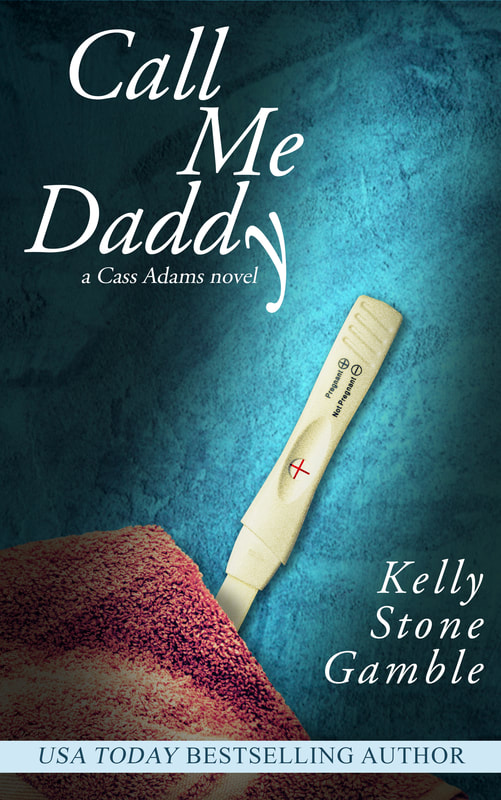
Kelly Stone Gamble is the author of USA TODAY bestseller They Call Me Crazy, Call Me Daddy, and Call Me Cass. She is an Instructor for Southeastern Oklahoma State University-McCurtain County Campus, and lives in Henderson, Nevada and Sawyer, Oklahoma (It’s complicated).
Cass Adams is crazy, and everyone in Deacon, Kansas, knows it. But when her good-for-nothing husband, Roland, goes missing, no one suspects that Cass buried him in their unfinished koi pond. Too bad he doesn’t stay there for long. Cass gets arrested on the banks of the Spring River for dumping his corpse after heavy rain partially unearths it.
The police chief wants a quick verdict—he’s running for sheriff and has no time for crazy talk. But like Roland’s corpse, secrets start to surface, and they bring more to light than anybody expected. Everyone in Cass’s life thinks they know her—her psychic grandmother, her promiscuous ex-best friend, her worm-farming brother-in-law, and maybe even her local ghost. But after years of separate silences, no one knows the whole truth. Except Roland. And he’s not talking.
Cass Adams comes from a long line of crazy, and she fears passing that on to her unborn child. Also, she’s run over Roland and Clay’s surprise half brother Britt, landing him in the hospital. With her inner demons coming out to haunt her, she doesn’t know if she should keep the baby.
Clay Adams has his own decisions to make. His half brother shows up to tell him their father, Freddy, is still alive but needs a liver transplant. When Freddy blew out of town thirty-five years ago, secrets were buried. But it’s time for them to be dug up, because only then can Clay hope to lay the past to rest.
Call Me Daddy is a story of family, the secrets they keep, and to what lengths someone would go to protect them.
Cass Adams is finally happy. She has a man who loves her, a family that understands her, and a baby on the way. Other than seeing the occasional dead person, Cass feels normal. But pregnancy has an unwelcome side effect. Cass is having visions of the future, just like Grams does. While some are cloudy, Cass knows one thing for certain. Her best friend, Maryanne, is going to die.
Police Chief Benny Cloud has his own problems. His father has been released from prison and is on his way home to surprise Benny’s mother, who’s been keeping time with the county sheriff. Fat Tina’s Gentlemen’s Club is under siege by protestors. And it’s growing dark outside.
A devastating storm is coming to Deacon, Kansas. In its wake, the town must deal with tragic losses that force everyone to reevaluate their lives.
When Brian asked if he could share a story he wrote during my Halloween Extravaganza, I could hardly say no. Especially after reading it. Get comfortable and enjoy…
Warren hated that old house.
It was coming up on two years since he’d bought it. Everything in it creaked and leaked, from the basement to the roof, and everything between. It had bare, wooden floors that warped and leaned at crooked angles. Bathrooms wallpapered in heavy mildew and old cigarette smoke. Lights that blinked whenever he walked down the hallway.
And it was cold. Starting in the first months of fall, all the way through the dead of winter, the house was filled with a dampness that cut to the bone. Wind whistled through the old window frames, no matter how much he tried to block them up with blankets. Even when he could manage to stop a draft from coming in through one window, another would just take its place. The whistling unnerved Warren, like distant crying in the woods. He woke up shivering sometimes from the cold air pressing down on his chest. He’d started wearing thick socks and shoes around the house most of the time just to keep the feeling in his toes.
The real estate agent had called it a fixer-upper, but that was just a nice way of saying it was a money pit. A place where dreams went to slowly die.
Then there was the sound.
It didn’t happen every night, but sometimes, just after six-thirty, after he’d eaten whatever he picked up for dinner, it would start. Warren would be on the couch, trying to watch the news, when it would start somewhere deep down in the basement.
Ka-thump. Ka-thump. Ka-thump.
It was a thick sound, like footsteps but heavier. The basement door, which he always kept closed, was between the living room and the kitchen, where he rarely went. As he sat watching television, he would hear it move slowly up the basement stairs, one agonizing step at a time.
Ka-thump. Ka-thump. Ka-thump.
For an entire year he’d been trying to ignore it. Pretend it didn’t exist. But each day the sound grew harder to block out. Tonight, as he tried to watch a movie for a change, he was just getting comfortable, thinking that perhaps he’d been left alone for the night, when the familiar sound started at the bottom of the basement stairs.
Ka-thump. Ka-thump. Ka-thump.
Moving slowly. Climbing the stairs, one at a time. Warren turned up the volume and leaned in closer to the television, straining to hear the movie he could already barely follow, but the sound only seemed to grow louder. It was a hammer on his skull. He closed his eyes and counted to ten, praying it would go away, but each count was accompanied by the sound echoing up from the basement, like the heartbeat in his own chest.
Ka-thump. Ka-thump. Ka-thump.
It mocked him. Teased him. Attacked him until he thought for the thousandth time about moving out. But he had no money left after what the house had eaten up, and he had his pride to think about as well. What would the neighbors think of him if he packed up, tucked his tail and ran off in the night? What would they say about him when he was gone?
And still, the sound came through the basement door.
Ka-thump. Ka-thump. Ka-thump.
When he couldn’t take it anymore, Warren turned off the television, jumped up from the couch and turned to face the basement. “Stop it!” he shouted, his voice echoing off bare walls and a sagging ceiling. “Just stop!”
He knew the sound wasn’t real. It couldn’t be. There was nothing down there but a long set of wooden stairs ending in a hard, concrete floor. If anyone could see him now, yelling at the air, they would think he was crazy. But Warren lived alone those days, and there was no one to think anything about him. He glared at the unpainted basement door, drawing up his strength. Willing it to be silent. But still it came, louder and louder, slowly rising up the basement stairs.
Ka-thump. Ka-thump. Ka-thump.
A laugh bubbled up in his throat. He was being ridiculous, of course. Scared of a door. He walked to it, still not believing, still not letting the possibility of it into his head. Step-by-step, foot-by-foot, he crossed the living room, feet dragging slightly on the warped floor, until he reached the basement door.
Ka-thump. Ka-thump. Ka-thump.
With the breath caught in his throat like a fish, Warren stared at the unpainted door. It hadn’t been opened in a year. Even through all those nights of listening to the sound move up the stairs again and again, of holding his pillow over his ears and praying for sleep, he’d refused to entertain the idea. But it was time that changed. This twisted game had gone on long enough. He had to end it while he still had one last nerve left to do it with.
Tonight was the night Warren took his house back.
But then, he noticed something. In the minute he’d been standing in front of the door, willing his hand to reach up and touch the handle, the sound from the basement had stopped. Except for the house’s frame creaking under the wind outside, the night was silent.
Warren reached up, heart booming in his chest like a man trying to escape his jail cell, and slowly touched the handle. It was cold and solid. Real. He almost laughed again. The idea that he’d been expecting anything else was ridiculous. That he thought his hand might pass through it like a hook through a jellyfish. With a deep breath he turned the handle and slowly, very slowly, opened the door, the long creak of an un-oiled hinge overtaking the throbbing in his ears.
The darkness of the basement seeped through the crack between the door and the frame. One sliver at a time, the basement stairs he hadn’t seen in a year were revealed to him. That long path beneath the ground. Old, uneven slats of wood dipping down into a pool of black thicker than paint.
Ka-thump-ka-thump-ka-thump!
The sound suddenly rose up the basement stairs faster than ever before. It came at him. Excited to see him. As if it was about to crash through the door and leap out at him.
Warren slammed the door shut and ran, ran to the front of the house, ready to escape into the night and never come back so long as he lived. His body was electric. His heart felt like it was clawing its way up his neck so it could crawl out his mouth. He’d never been so terrified in his life, never so sure of the danger that came for him.
With his hand on the front door, he stopped.
He took a moment to think about what he was doing. Where would he go? What would he say when he got there? With nothing but a crazy story in his pocket, who would take him in? Who would even believe what he had to say?
Knock knock knock!
The door came alive under his hand. He stumbled back, almost falling. Warren stared at the front door, horrified that he had not one but two doors to be scared of. But even in his panic, he knew something about the knocking on the door was different. It was a normal sound. Nothing like the one he’d lived with for the past year. With shaking hands he approached the front door again, close enough to put his eye to the peephole.
A worried face. And red hair. He sighed. It was the neighbor next door, the young woman who liked to garden. She lived on her own, he remembered, something about her parents leaving her the house. She looked like she was unsure of being on his doorstep, her body language saying she was about to leave. Warren considered staying quiet and letting her go, but something in him needed to speak to someone. Anyone. Even a woman he’d barely said a dozen words to in two years.
He opened the door. She looked back at him with concerned eyes, waiting for him to say something, but he didn’t know what to say. What could he say?
“Hello,” he managed.
“Sorry to knock on your door so late,” she said, “but…are you alright? I thought I heard someone shouting.”
He stared at her a moment. “Oh,” he finally said. He thought of his outburst a few minutes earlier. Yelling at a door. He was embarrassed to think anyone had heard that. “I…I was just watching a movie. I probably I had the volume too high.” He motioned to the living room. She glanced over, the living room visible from the front door, and saw the television turned off. “I was,” he added. To be fair it was true, just not what she’d actually heard.
Her face relaxed. “I’m really sorry, I shouldn’t have interrupted.”
“No, I’m glad you did,” he replied. It was the most honest thing Warren had said in a long time. She smiled, and for a second he forgot all about the sound in the basement.
“What was it?” she asked.
He blinked. “What?”
“The movie.”
“Oh.” He glanced sideways. “You know I already forgot?”
She put her hand to mouth and laughed. The friendly sound of it brightened his doorstep, and the night beyond. Was this what it was like to be normal? It had been so long since he’d spoken with someone, he’d forgotten what it felt like. To talk to a person. To make them laugh. “Doesn’t sound like a very good movie,” she said.
“No, I guess not.”
She nodded, brushing her hair over her ear. “Well, as long as you’re okay. I overreact sometimes, but honestly I’d hate myself if I didn’t do something and someone ended up hurt. I hear about this stuff all the time.”
“No problem at all. I’m glad someone’s looking out for me.”
She smiled, saying goodnight and apologizing once again for the intrusion. Before she left, she turned back to Warren, looking a bit unsure of what she was about to say. “Listen…I know you haven’t gone out much since…you know.” She shifted uncomfortably, as did he. “If you ever need an ear, I’m right next door. I know how lonely it gets in these big houses.”
“It does, I guess,” Warren said. Not knowing what else to say, he added, “Thank you.”
“No problem.” She paused again. “I never talked to her, but she seemed nice.” She smiled sheepishly, then gave a small nod and headed back to her house. Warren watched her go, then closed the door and locked it.
It was coming up on two years since he and Mary Lynn bought the house. Mary Lynn, with her black hair like a raven’s feathers, had been as nice as the red-haired neighbor when they first met. But the house had changed her. It changed both of them. Their fixer-upper consumed them until it was all they could talk about. All they fought about. When he thought of their last argument, his face still went red at the memory. That day he’d seen a side of both of them that still shook him.
The basement had fallen silent since he’d left. He went to it, feeling the deep embarrassment of a man who’d woken up from a screaming nightmare he’d sworn was real while he was in it. It was a completely normal, unpainted door, and he had to face the fact that what he’d been hearing, what he’d been experiencing in the last year, was the result of a man unprepared to move on.
He opened the door, not slowly this time, not with the reverence of fear, but like he would any other door. The squeak of its dry, brass hinges was brief, like the tiny yelp of a surprised mouse. Without flinching, Warren forced himself to look directly at the basement stairs, to see them for what they were. Earthly things of wood and nails, and nothing more.
As he looked down at the stairs, Warren felt a chill run through him. It started on his back, a cold spot like someone had pressed an ice cube to his spine, and it moved through his blood like a shadow over open ground. The tiny hairs at the back of his neck stood up as he felt the unmistakable presence of someone standing behind him, just over his shoulder. His nose picked up the hint of a familiar perfume. And yet he didn’t dare turn around. Didn’t dare look.
As he stood there, frozen in fear, Warren’s mind drifted to that day more than a year earlier.
“Can you please paint this today?” Mary Lynn stood in front of the basement door, her small hands on her waist. “Please?”
Warren put down the black garbage bag he was carrying, stuffed to the gills with broken glass, moth-eaten pillowcases and old wires he’d pulled out of the spare bedroom, the one they’d never quite gotten to. “The whole house is falling apart, why are you so obsessed with one door?”
“Because it creeps me out.”
“And painting it will change that.”
She frowned at him. “We won’t find out unless we try.”
He wiped the dusty sweat from his brow with his forearm, leaving the garbage bag behind. “You can paint it, too, you know.”
“Maybe I would if I wasn’t busy cooking dinner.”
“I didn’t ask you to cook dinner.”
“Well, I don’t see you doing it.”
“That’s right, because I’m not doing anything at all. Right?”
It went on like that for almost an hour. The two of them argued louder and louder, forgetting all about the dinner burning on the stove, an expensive piece of fish gone black. They’d fought so many times already, but this time was different. This time the fight grew bitter and petty. Warren and Mary Lynn, standing in front of the basement door, screamed at each other about every dripping faucet and rusty nail in the house, all because he hadn’t gotten around to painting one door. They came to the point where Warren was flinging the basement door open, shouting that he would just take it off the hinges and remove it if it bothered her so much. Each time he did Mary Lynn slammed it shut, screaming all kinds of nasty things at him, things he never thought he’d hear from the lips of the sweet girl he’d married.
And then, in the heat of the moment, he did something he’d never done before.
He grabbed her arm.
She looked up at him, shocked by his behavior. Before she could pull away, he wrenched her over in front of the open door so she could look at the stupid basement stairs for herself. When she had a good, hard look at them, he leaned in close to her ear, so she didn’t miss a word.
“You’re so scared of the basement?” he hissed. “Look at it!” He didn’t recognize his own voice coming out of him. It didn’t even feel like him saying it. But before he could stop himself, before the little voice in the back of his mind could ask him what he was doing, Warren gave Mary Lynn a hard shove toward the stairs that bothered her so much.
Warren shook, unable to move. A pressure overcame him, and his eardrums felt about to pop. Whatever it was behind him, whoever it was, he could feel the hatred coming off them in waves, pulsing like blacktop in summer. Unseen lips drew closer. Close enough they could kiss him. With cold breath drifting across his neck, the shadow behind him whispered into his ear.
“Look at it.”
And then he felt it on his back.
A single push.
Warren tipped over the precipice of the basement door. Either the fear or something else kept his arms from working, kept his hands from stopping his fall. His head was first to hit the basement stairs. He heard a loud crack as his neck bent sideways, and a deep, sharp pain shot through his body, followed by a messy tumble down the stairs. He felt every broken arm, every dislocated leg as he flopped and rolled down the long set of steps, ending in a hard stop on cold concrete.
Warren couldn’t move his legs. His body was shattered, his breath shallow. His eyes rolled in his skull to look back up the distance he’d fallen, up the stairs that looked a mile long from where he lay, all the way to the basement door.
It was coming up on two years since he and Mary Lynn bought the house, and one year since she’d died. Yet there she stood, black hair like a raven’s feathers, blowing softly in the draft that never left. She was pale and beautiful and cold, her eyes diamonds cut from pressure and pain.
“Please,” Warren whispered. It was all he could manage to pull from weakened lungs.
With a light touch of her small hand, she closed the still unpainted door. The dry hinge creaked like a dead tree in the winter wind. Then all light cut out, plunging both Warren and the basement into pure darkness. The black encompassed him, surrounded him, drawing the precious heat from his shattered body. Finally, the old house, the house he hated so much, was finishing the job of bleeding him dry. He could no longer feel his feet, or really much else beyond the slowing of his own heart.
Gasping like a fish, Warren summoned whatever he had left and focused on reaching the stairs. They were somewhere in front of him, in the dark. By some miracle he got his arms to work, and he began pulling himself along the frigid basement floor, useless legs dragging behind him.
Barely able to lift his head, he clutched the bottom step and pulled himself up it. The strain on his broken neck was too much to hold. His head slumped, pounding against the wood. Yet still he didn’t stop. He couldn’t, not until he reached the top. Maybe there he could call for help loud enough that someone would hear him. Maybe the nice neighbor with the red hair. There wasn’t anyone else close enough to hear. No one else who cared.
One step at a time he dragged his cold body up the stairs and toward the door, hoping to be saved, praying to be forgiven, and one step at a time, his heavy head fell and struck the wood. A thick sound, like footsteps but heavier.
Ka-thump. Ka-thump. Ka-thump.
Brian Martinez is a science fiction and horror writer. He studied Film at Long Island University, and has been known to watch a John Carpenter flick on repeat until people grow concerned. He lives in New York with his wife Natalia and their pack of dogs.
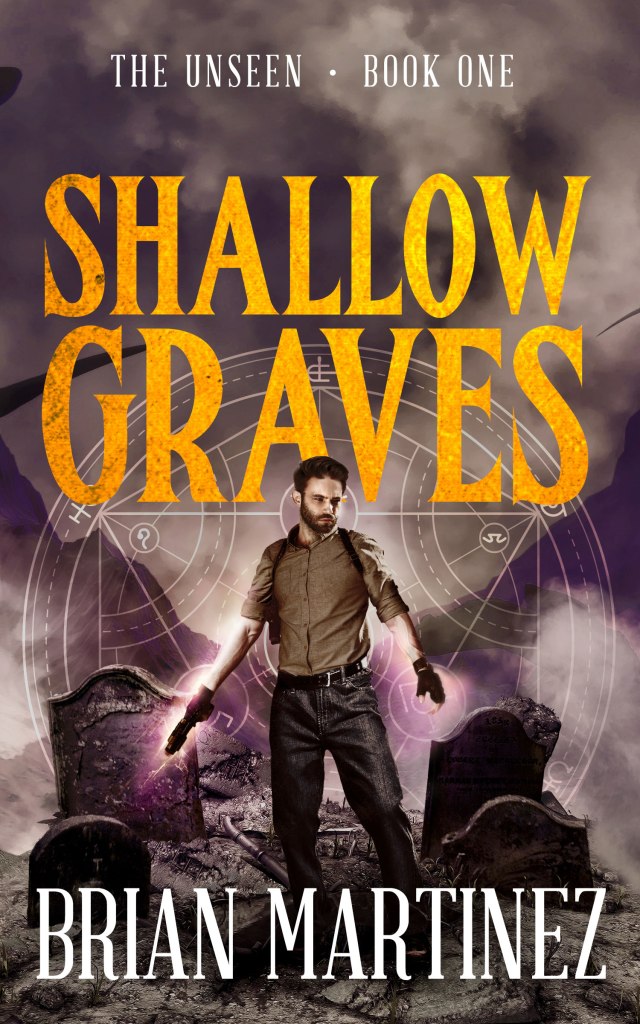
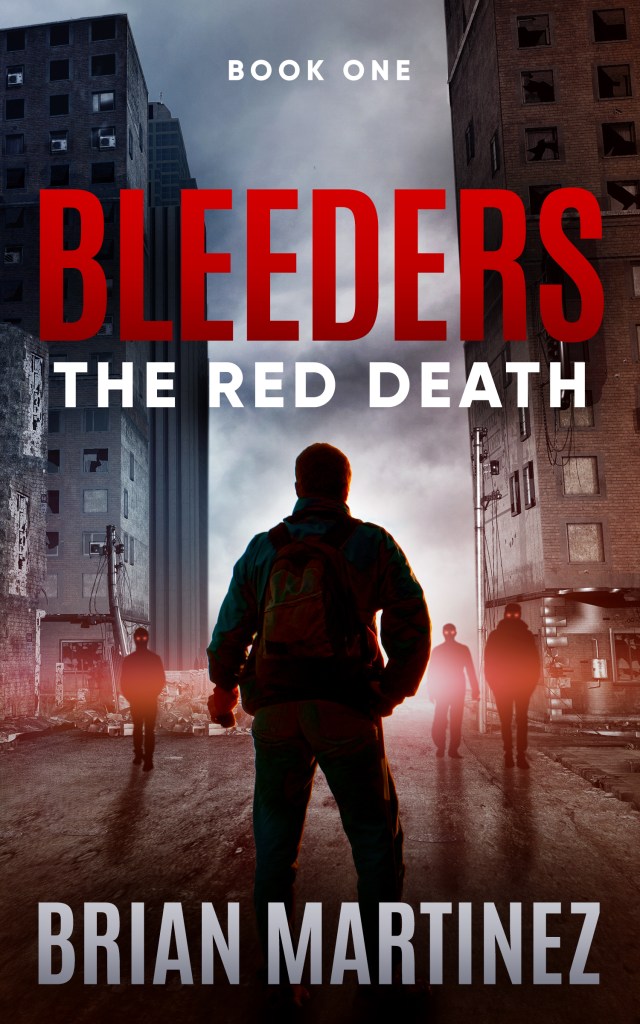
Martinez is known for numerous apocalyptic works, including A Chemical Fire, The Mountain and The City, and the Bleeders series. He also writes The Vessel, a Space Horror podcast on all major platforms. His works have appeared on screen and in print, as well as on Youtube and in audiobook. He is currently working on The Unseen, a major, multi-character Supernatural Thriller series.
He drinks too much. He can’t hold a marriage together. And he’s our only hope against the monster that just came to town.
Franklin Butcher is a young cop with a few rough years behind him. Freshly divorced, he decides to make a new start in the small town of Shallow Creek. What better place to coast until retirement than a town where nothing happens?
His plan doesn’t work. Soon people start disappearing, and Butcher is the only one who seems to want to solve the case. He believes a new couple in town are to blame for the vanishings, but the truth is even darker than he thinks.
Before he knows it, Butcher is drawn into an unseen world of supernatural creatures that has existed in secret for centuries. It’s also a world he has more connection to than he ever imagined. Because, like Shallow Creek, Franklin Butcher has a few secrets of his own.
The Unseen is a bold new take on familiar myths, from doppelgangers to vampires, to demons, monsters and more. This is a series that can’t be missed. But be careful- once seen, this world can’t be unseen…
Can the world’s biggest smart-ass survive the apocalypse?
All the news channels can talk about is the Red Flu, a nasty strain that came out of nowhere to wreak havoc on the population. There’s also something the government isn’t telling the public about the Red Flu- both the secret of its true effects, and exactly how it spreads.
Brody Tate doesn’t care. He’s a young smart-ass living in New York City, locked in a dead-end job. His only concern is telling his boss where he can shove it. Besides, the news only exists to scare people, right?
But something is wrong. There’s blood in his boss’s office. A woman is dead on the floor.
His boss is eating the cleaning lady.
He kills the man in self-defense- not that the cops believe him- and gets carted away for murder. As if his day wasn’t bad enough, his boss managed to bite him during the struggle. With the Red Flu tearing up his insides, Brody finds himself in a self-destructing New York, lost in the horrors of a crumbling city while fighting to stay alive.
The question now is, if the Red Flu doesn’t kill him, and someone with it doesn’t, what will be left of him? What will he become?
An epidemic has killed off most humans, turning the rest into beasts with sharp nails, keen senses and an insatiable hunger. Now, years later, a solitary survivor hides in a trailer above a dead city. This is life with the door and windows taped shut, where survival comes down to two, simple rules: stay quiet, and protect the air.
One day, a visitor comes up the mountain. It’s a meeting that leads to a fateful decision, and a sacrifice that will change everything.
Collected here for the first time, The Mountain and The City is a post-apocalyptic serial that has kept its faithful readers on the edge of their seats time and time again.
When Peter asked me if he could write a review on Twilight by Stephanie Meyer, there was no chance of me saying no. I love hearing people’s opinion on not just these books, but these movies.
Twilight is my sister’s favorite series – something she’s read at least ten times, watched the movies so many times she has them memorized – but something that I could not get into, no matter how much I tried for her sake. But that’s the way it is with this one, isn’t it? There’s the people that loved, it, the people that hated it, and the people who didn’t bother because they had no interest at all.
Is it possible for someone to truly like both Twilight and Pride and Prejudice? I ask because I feel as though I’m about to get kicked in the literary nards again. The last time I stepped on a chick-lit favorite, Jane Austen‘s dull, but well written “romance,” I was described as “someone who lacks the will to understand,” and that was one of the more flattering comments! So you can see why I’m a little hesitant reviewing Twilight.
Here’s my problem with Stephenie Meyer’s debut novel: Twilight reads like a novel written by an average pre-teen, only without any evidence of editing or talent. Tenses are mixed, the plot is paper thin, and the characters are so shallow that they are little more than speaking cardboard cutouts.
The book can best be described as choppy and that’s being nice. Half the time the emotional state of Bella is completely incongruent with the scene she is in. It’s as if Meyer kept a hat near her computer and pulled from it scraps of paper with the words: mopey, or angry, or depressed, written on them. It’s rainy, let’s see what the hat says Bella should feel… hmm… hate. “I hate anything that’s wet.” Yes, that a line from the book and what a great line it is. How long did it take her to think up that one?
Sadly, there are more lines that are even worse. Here’s one that I treasure: “The room was familiar; it had been belonged to me since I was born.”
Been belonged? What the hell is that? And familiar? The room you’ve had since you were born you describe as familiar?
Here’s another line that I just had to read over and over wondering how it made it into the book: “Through their noses, all their features, were straight, perfect, angular.” Through their noses???? I’m clueless what that’s supposed to mean. And, what’s, with, all, the, commas,? If you can get past all this, you then have to swallow the endless repetitious ‘perfect’ descriptions of Edward: His perfect golden eyes smoldered heatedly out from his flawless and perfect brow so that the ocher perfectly singed me with their perfection and heat–I exaggerate, but only barely.
It makes me wonder how this became a New York Times Editor’s Choice. Or how on earth it could be described as “The best book of the Year” by Publisher’s Weekly? I can only surmise that there weren’t any other books written that year.
I just don’t get it. It is a complete mystery how someone can become a millionaire writing like this. Maybe I should not start stopping, practicing to write weller than I does.
I could be famous too.
PS Can anyone tell me why girls fall for Edward when it’s obvious he’s gay. Let’s look at the facts as presented by the book: He’s a smart dresser. He’s neat and trim. He sparkles, smells fruity, and has a musical voice…la, la, la, la. Clearly he’s not just gay, but flaming, feather boa wearing, “I’m a dancer” gay. (Not that there’s anything wrong with that–it’s just an observation.)
PPS Even more of a question is how anyone can like Bella? She can’t walk to the bathroom without fear of falling in the toilet–trust me when I say it’s not an endearing trait. She’s annoyingly condescending to everyone. To call her moody is a joke. She’s bi-polar with a side-order of vanilla flavored mania. In the space of a minute she can be laughing, glaring angrily and crying. Yet all the boys want her. I get that Edward is using her as cover—“I swear that’s not my feather boa. It must be Bella’s.” But the rest of them? It stretches the limits of fiction.
Peter has written drama, horror, fantasy, apocalypse, and post apocalypse novel.
He is proud to have served in the U.S. Army for four years, serving in the 82nd airborne division and as a medic during Gulf War 1. Also having tried his hand in real estate, and a CEO of a national lighting company, he has come to find that his true addiction is in writing and been blessed to make it his full-time career.
Peter resides in Colorado with his wife, Stacy, of 27 years. They have two grown children and a a grandchild who also live in Colorado.
May you find an unforgettable adventure among my writings!
Money, terrorism, and simple bad luck conspire to bring mankind to its knees as a viral infection spreads out of control, reducing those infected to undead horrors that feed upon the rest.
It’s a time of misery and death for most, however there are some who are lucky, some who are fast, and some who are just too damned tough to go down without a fight. This is their story.
It’s been twelve years since the undead hordes swept over the earth forcing mankind to the brink of extinction. We now live like rats, scavenging in the ruins of our fallen civilization as the dead hunt us night and day.
There is little left to scavenge, however. Grocery stores were emptied ages ago, gas tanks have long been dry and bullets are so precious that a man is lucky to have two to his name.
Still, we survive.
But for how much longer? Instinct and love have combined to turn Darwin’s theory on its head. The strongest didn’t survive in this world. They were the first to die, leaving behind a generation of orphans.
It’s a generation that’s never had a full belly. It’s a generation that has no idea what an Xbox did, or what algebra is for. It’s a generation of children who never laugh out loud, and who have learned to cry softly because the dead are always near and the dead are always so very, very hungry.
When Commander William Jern and his wife Gayle are given an opportunity to move into one of the spacious Colonial homes on the Village Green, they jump at the chance. But the Jern’s new dream home quickly becomes an icy nightmare, as death stalks them relentlessly. It comes unheralded out of the night, and like all of us, they are dreadfully unprepared. But regardless, William Jern must face terrors beyond imagination in order to save his daughter whose body had become a frozen vessel for The Horror Of The Shade. With the help of his son Will, a boy struggling to find the courage to be a man, and an old woman, who has foreseen the terrifying manner in which she will die, William undergoes the ultimate test to see how far a man will go to save his child.
As a writer, one thing that really irritates me is when a movie or TV show features a blocked writer having some kind of adventure or an out-of-the-ordinary experience in real-life which provides the inspiration for his or her next magnum opus. I find this trope insulting. It’s like saying writers aren’t creative enough to imagine our stories and we’re only capable of writing thinly disguised nonfiction. But I did have a weird experience on Halloween some years back, and I did eventually use it in a horror story, so for me, the trope became real – at least once.
It began on Halloween in the year 2000. My oldest daughter was five, and my youngest hadn’t had her first birthday yet. The previous fall I’d accepted a full-time job teaching creative writing and composition at Sinclair College in Dayton, Ohio, and at the time, the neighborhood we’d moved into seemed okay, but as the months went on, we began to realize that it had a kind of . . . I guess negative atmosphere is the best way to put it. Everyone seemed to watch everyone else with suspicion, and there was a sense that something bad might happen at any moment, like the build-up of energy in the air before a huge thunderstorm breaks loose. We were determined to make the best of it, though, and when Halloween rolled around, I volunteered to take our oldest daughter – Devon – trick-or-treating, while my wife Cindy stayed at home with our not-quite-a-toddler Leigh.
Devon dressed as a witch that year. She had a black witch’s robe, and a conical witch’s hat with black fuzz around the edge of the brim. She was very excited to go trick-or-treating, and while I was a little worried about how the night might go, I loved taking Devon out for Halloween, and I hoped we’d both have a good time. Plus, we didn’t know most of our neighbors, and this would be the first time I’d get a sense of what the area was really like. I told myself that once I had the chance to meet the people who lived in the neighborhood, I’d see that this place wasn’t so bad after all.
And at first, that’s exactly what happened. We went from door to door, along with other kids and their parents, ringing doorbells and shouting “Trick or treat!” when someone answered. Because Devon was so young and didn’t have any friends in the neighborhood to trick or treat with, I went up to the houses with her, smiling at the adults who answered the door, and giving them a wave as we departed. Everyone seemed pleasant and quite normal . . . and then we went to what I’ve come to think of as The Street. I can’t remember its name, but it was dark there. There weren’t many streetlights in the neighborhood, and those that were there didn’t seem to put out much illumination. Not many kids were trick or treating there, and while I didn’t feel the street was dangerous, I was reluctant to take Devon to the houses there. I told myself that I shouldn’t prejudge this neighborhood and the people that lived there, and I led Devon to the first house on the street, and we continued our rounds.
We soon came to a house that had a large chain-link enclosure in the side yard. It was a cage, complete with a roof, and inside were three very big, very shaggy creatures who looked like wolves. I was certain they were wolves, and they paced back and forth looking out at us and growling softly. The house itself was dark. The porchlight wasn’t on, and no light shone from inside. I had no idea what the hell someone was doing keeping wolves in a suburban neighborhood, and I didn’t want to know. I decided we could give this house a pass, and we continued on down the sidewalk.
This was almost twenty years ago, so I don’t remember if it was the very next house we visited after the Wolf House or not, but we soon came to house where, when Devon rang the doorbell, a man inside called out, “Come in!” After the Wolf House, I was hesitant to enter, but it wasn’t uncommon for people in the area to invite kids inside to give them candy, and besides, I was with Devon. If figured it would be all right.
We went inside and saw a living room that was empty – no furniture, only blinds over the windows. In the center of a room a heavy-set middle-aged man sat on a wooden stool, talking on a cell phone. He wore a white tank top undershirt, the kind some people call a wife-beater, and boxer shorts. No shoes or socks. Scattered on the floor all round him were newspaper pages, almost as if he’d hurled a newspaper up in the air and let the pages remain wherever they landed. Or as if he were putting down paper for a pet to do its business on. Except there was no pet visible.
A bowl of candy sat on the floor next to the stool, and he gestured toward it, not really looking at us. Not knowing what else to do, I led Devon to the bowl, told her to take a piece of candy, and then we got the hell out of there. The man never spoke, either to us or to whoever he was on the phone with. I don’t remember if I let Devon keep the candy she got from the Man on the Stool, but I wouldn’t be surprised if I confiscated it and threw it away once we got home.
That was the night I decided we needed to move to a different neighborhood.
A few years later, I was sitting at the dining table in our new house – this one situated directly next to a lovely small park – laptop in front of me, thinking about what I should write next. I decided to write a short story, and I remembered that night trick-or-treating with Devon in our old neighborhood. The story I wrote was called “Portrait of a Horror Writer,” a metafictional story about where horror writers get their ideas, and among other things, I included the Man on the Stool. I submitted the story to Cemetery Dance magazine, and it was published in their 48th issue in 2004. If you’d like to read the story, you can find it on my website here.
So I guess I shouldn’t complain about the “writer gets an idea for a story from a real-life adventure” trope since I lived it, at least in a small way, and not only did I get a story out of it that was published in a great magazine – and for which I got paid – but I’ve kept the story on my website for years. That’s a lot of mileage to get out of one strange experience, but I’m thankful for that little big of dark magic that occurred that Halloween night.
I’m even more thankful that we moved, though.
Tim Waggoner’s first novel came out in 2001, and since then he’s published over forty novels and five collections of short stories. He writes original dark fantasy and horror, as well as media tie-ins. His novels include Like Death, considered a modern classic in the genre, and the popular Nekropolis series of urban fantasy novels. He’s written tie-in fiction based on Supernatural, Grimm, The X-Files, Alien, Doctor Who, A Nightmare on Elm Street, and Transformers, among others, and he’s written novelizations for films such as Kingsman: the Golden Circle and Resident Evil: the Final Chapter. His articles on writing have appeared in Writer’s Digest, Writer’s Journal, Writer’s Workshop of Horror, Horror 101, and Where Nightmares Come From. In 2017 he received the Bram Stoker Award for Superior Achievement in Long Fiction, and he’s been a finalist multiple times for both the Shirley Jackson Award and the Scribe Award. His fiction has received numerous Honorable Mentions in volumes of Best Horror of the Year, and he’s had several stories selected for inclusion in volumes of Year’s Best Hardcore Horror. In addition to writing, he’s also a full-time tenured professor who teaches creative writing and composition at Sinclair College in Dayton, Ohio.
When an industrial spy steals a Xenomorph egg, former Colonial Marine Zula Hendricks must prevent an alien from killing everyone on an isolated colony planet.
Venture, a direct rival to the Weyland-Yutani corporation, will accept any risk to crush the competition. Thus, when a corporate spy “acquires” a bizarre, leathery egg from a hijacked vessel, she takes it directly to the Venture testing facility on Jericho 3.
Though unaware of the danger it poses, the scientists there recognize their prize’s immeasurable value. Early tests reveal little, however, and they come to an inevitable conclusion. They need a human test subject…
Enter Zula Hendricks.
A member of the Jericho 3 security staff, Colonial Marines veteran Zula Hendricks has been tasked with training personnel to deal with anything the treacherous planet can throw their way. Yet nothing can prepare them for the horror that appears–a creature more hideous than any Zula has encountered before.
Unless stopped, it will kill every human being on the planet.
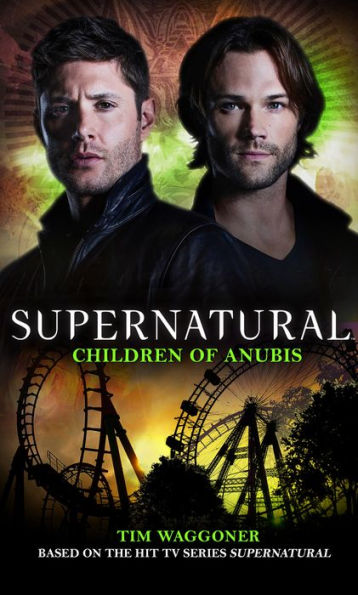
A brand new Supernatural novel inspired by the record-breaking show starring Jared Padalecki and Jensen Ackles.
A brand-new Supernatural novel that reveals a previously unseen adventure for the Winchester brothers, from the hit TV series!
Sam and Dean travel to Indiana, to investigate a murder that could be the work of a werewolf. But they soon discover that werewolves aren’t the only things going bump in the night. The town is also home to a pack of jakkals who worship the god Anubis: carrion-eating scavengers who hate werewolves. With the help of Garth, the Winchester brothers must stop the werewolf-jakkal turf war before it engulfs the town – and before the god Anubis is awakened…
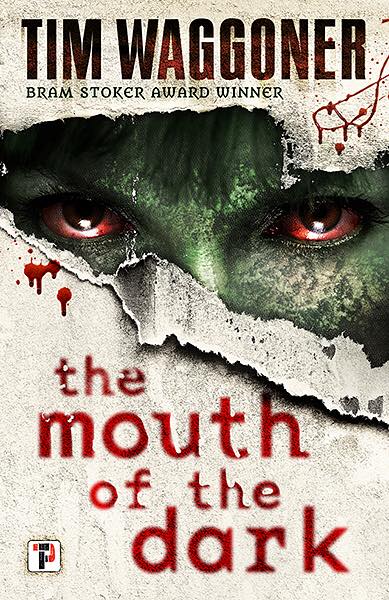
Jayce’s twenty-year-old daughter Emory is missing, lost in a dark, dangerous realm called Shadow that exists alongside our own reality. An enigmatic woman named Nicola guides Jayce through this bizarre world, and together they search for Emory, facing deadly dog-eaters, crazed killers, homicidal sex toys, and – worst of all – a monstrous being known as the Harvest Man. But no matter what Shadow throws at him, Jayce won’t stop. He’ll do whatever it takes to find his daughter, even if it means becoming a worse monster than the things that are trying to stop him.
What are you willing to do, what are you willing to become, to save someone you love?
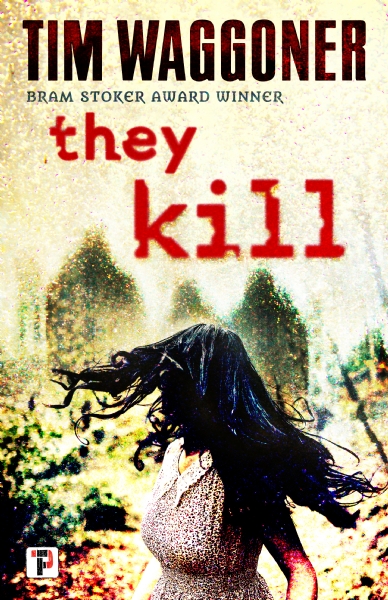
Sierra Sowell’s dead brother Jeffrey is resurrected by a mysterious man known only as Corliss. Corliss also transforms four people in Sierra’s life into inhuman monsters determined to kill her. Sierra and Jeffrey’s boyfriend Marc work to discover the reason for her brother’s return to life while struggling to survive attacks by this monstrous quartet.
Corliss gives Sierra a chance to make Jeffrey’s resurrection permanent – if she makes a dreadful bargain. Can she do what it will take to save her brother, no matter how much blood is shed along the way?











 Meghan's House of Books