Halloween has always been my favorite of all holidays. The earliest Halloween I remember, I was about four or five years old – mostly I remember it, because my dad had a fairly extensive video made of the party with his now-antique VHS recorder. My mom went as a witch, dad was Count Dracula, and I was a lion (though I didn’t wear the head piece very much because it was too hot!) We had this big walk-in pantry that we’d turned into a haunted maze, we had a bucket for bobbing for apples on the porch, dad had carved two pumpkins into Bert and Ernie heads, and there were skeletons and ghosts hanging everywhere.
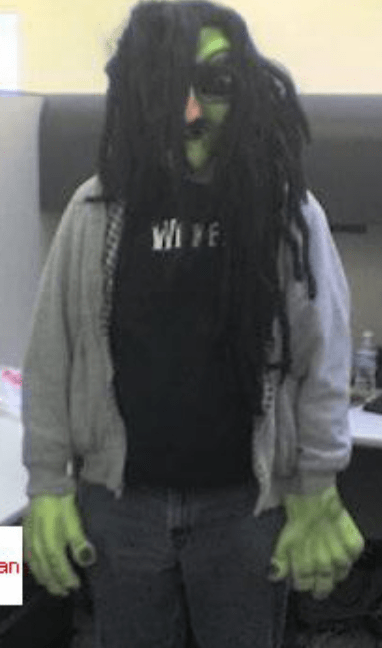
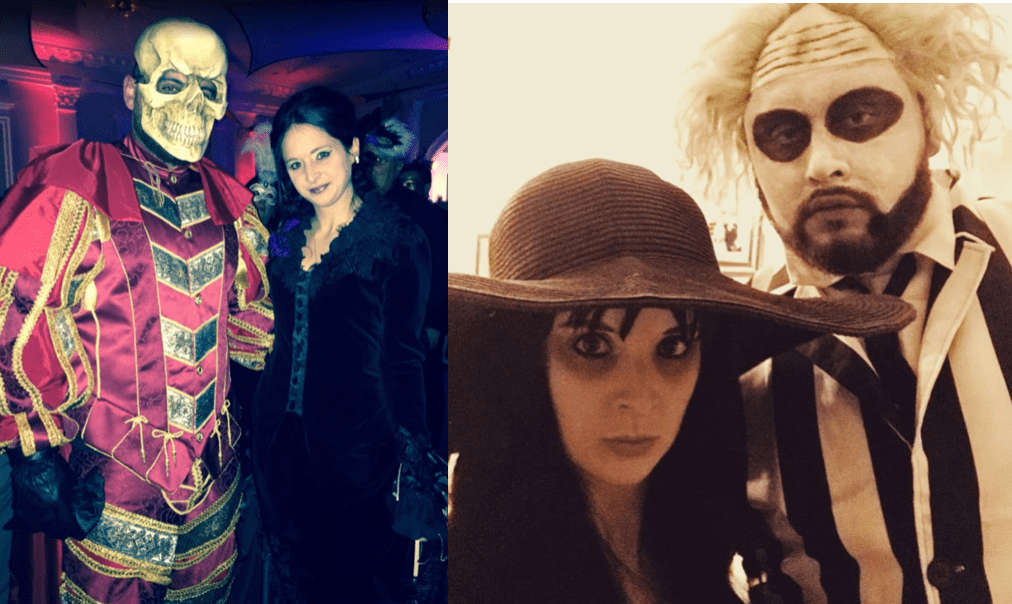
Dressing up in costumes, though, I think was always my favorite part. My favorite costume of all time was one I made first back when I was going to college in Boston. I bought a UFO alien mask and gloves, stitched a pair of Groucho Marx onto the mask, and pulled on a hoodie sweatshirt over the whole thing so that I was an alien trying to pose as a human. A few years later, I added on a Rastafari dreadlocks wig to the ensemble. No particular reason, really.
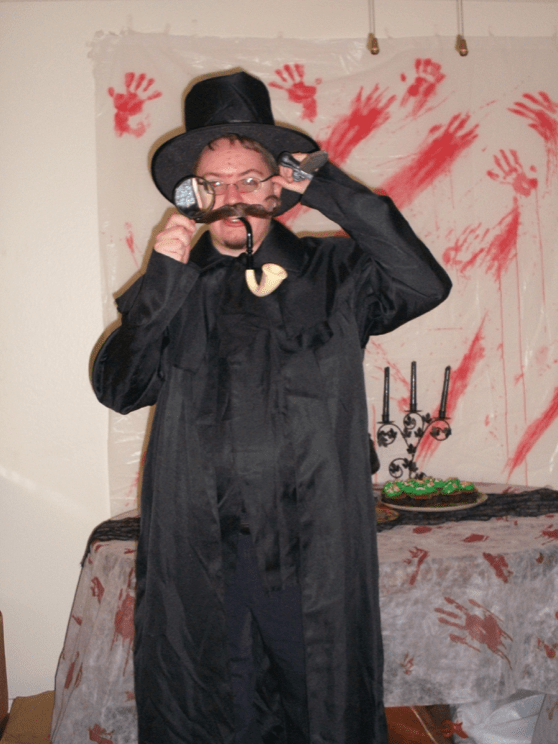
Another year I went as Sherlock The Ripper – I had a long black coat and top hat, fake handlebar mustache, a bloody knife, and a Sherlock Holmes pipe and magnifying glass. At night he put on a fake mustache and went around London dissecting Protestants. By day, he removed the mustache and pretended to attempt to solve the crimes he had committed, so as to alleviate suspicion. That year, my wife Betsy went as Afronighty, the Roman Goddess of Dusk. Our theme was that we were bad high school essays.
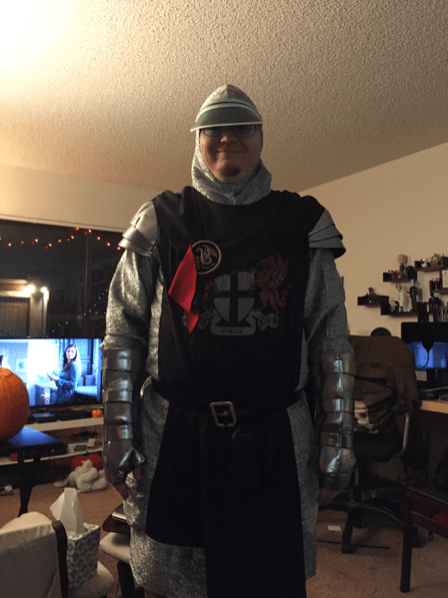
Most recently, I punned out my job as a hotel night auditor and went as Sir Abacus, a Knight Auditor of the Rounded-Up Table. I had the full knight’s armor complete with an old-school accountant’s visor and a spool of calculator tape attached to my belt. The hotel’s general manager loved it so much she insisted I wear it on my shift, despite the official dress code policy.
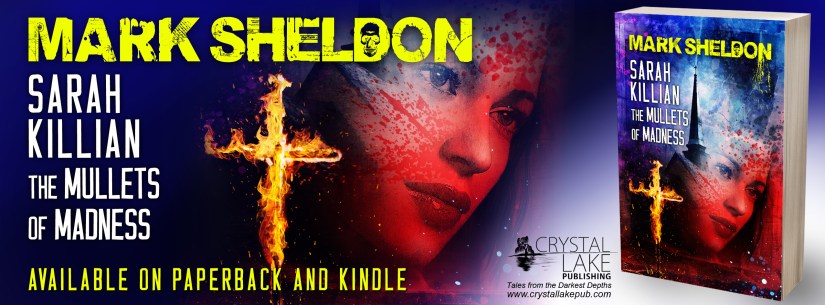
Meet Sarah Killian, a professional serial killer (for hire!) with a twisted sense of humor.
Sarah Killian is not your average thirty year-old single woman. Foul-mouthed, mean-spirited, and a text-book-case loner. Also, she is a Professional Serial Killer.
In this Crime Fiction / Thriller novel with a twisted sense of humor, Sarah works for T.H.E.M. (Trusted Hierarchy of Everyday Murderers), a secret organization of murderers for hire headed up by the mysterious Zeke. You’ll be surprised to learn who their biggest clients are. Conspiracy theories, anyone?
But a wrench is thrown into the clockwork of Sarah’s comfortable lifestyle when, on her latest assignment, she is forced to take on an apprentice, Bethany—a bubbly, perky, blonde with a severe case of verbal-vomit. In short, Bethany is everything Sarah is not.
Will Sarah be able to adjust and work with her new apprentice, or will she break her contract with T.H.E.M. and murder the buxom bimbo?
So if you’re looking for a strong female lead that doesn’t care what you think, in a book similar to the best of Dean Koontz and J.A. Konrath, then look no further than Sarah Killian – Serial Killer (For Hire).
Just don’t call her an ‘assassin.’ You might not live long enough to regret it.
Have you ever woken one morning with a burning, insatiable desire to go out and kill someone?
Sarah Killian, a notoriously foul-mouthed and mean-spirited serial killer for hire, along with her cohort assassin Mary Sue Keller, are back on assignment for the Trusted Hierarchy of Everyday Murderers (T.H.E.M.).
After receiving an ominous warning from a mark-gone-wrong, it becomes clear that Nick Jin—Sarah’s former nemesis—is still at large and singling her out.
Sarah and Mary Sue are dispatched to Tennessee to discreetly kill off an accused family of KKK organizers, but their true mission is to lure Nick Jin into a trap. But will Nick—always several steps ahead of T.H.E.M.—see their bait for what it is? One thing is guaranteed: blood will be shed.
In the spirit of Sidney Sheldon, Dean Koontz, and Joss Whedon,The Mullets of Madness is a truly unique blend of horror, suspense and espionage.
Having the amazing Brian Hodge on the blog for the first time is definitely an honor. Having him write a review of his favorite Halloween story, which is also one of mine… it’s like we’ve known each other forever.
It is inevitable that institutions get watered down by time. Meanings dilute; the reactions they evoke diminish. Solemn rites become superficial pageantry, ever more hollow the further they drift from their original contexts. Given enough familiarity, even villains and monsters evolve into unlikely antiheroes. By now, the only people rooting for the Halloween movies’ Michael Myers to be stopped are those who are bored sick of him.
According to splatterpunk O.G. John Skipp and his early short story “The Spirit of Things,” the problem with Halloween goes back a lot farther in time than its four-decade film franchise, and runs a lot deeper.
To the ancient Celts, the seasonal turning of summer to winter, of old year to new, was a transitional phase that brought a thinning of the veil between our world and everything else on the other side. Spirits, demons, the dead… they could all cross the ephemeral threshold. This is the history that “The Spirit of Things” remembers. This is the reality that, after millennia of eradication and mockery, is reasserting itself with extreme prejudice.
Since it was first published in the mid-1980s, “The Spirit of Things” has remained my favorite Halloween story of all time. Until a couple of moves disappeared my old hardcopies into a boxed storage purgatory from which they’ve yet to be excavated, I read the piece each year like holy canon: first in the December 1986 issue of Twilight Zone Magazine, then in Deadlines, the 1988 novel by Skipp and his then-collaborator Craig Spector. A strange narrative beast, is Dead Lines, at the time described by its authors as a story collection wrapped in a novel about a guy who kills himself because he can’t sell his story collection.
Barely cracking 2300 words, “The Spirit of Things” has the straightforward simplicity of a timeless fable: a single character, a single setting, a single sequence of events that, in real time, would span fifteen minutes, tops. On the scariest night of the year, an armed and desperate blue-collar worker barricades himself in his apartment, listening to the grisly fate of his neighbors and waiting to see what his own will be.
Yet, with this deceptively limited handful of elements, Skipp paints a portrait in miniature of an entire world undergoing breakdown toward a horrifying new normal. To read it is to reposition yourself at the heart of it. It’s not only balding, paunchy Jake Wertzel under siege in his home; it’s you in yours. It’s not just Wertzel finding out how far he’s willing to go when offering sacrifices to petition for his survival; you can’t read this without wondering about your own limits.
The story’s greatest power is in how actively it engages the imagination. Reader participation is mandatory, because while little is actually seen, much is implied and a whole crazy freakin’ lot is heard. As Wertzel’s surroundings periodically erupt with the kinetic mayhem of an Evil Dead film, it’s the chaos of what he can only hear going on all around him — just outside the windows, on the other side of ceilings and walls — that truly brings the terror, forcing you to conjure in your own head what horrors could possibly be making those ghastly sounds… as well as the carnage they’re leaving in their wake. You want to see, but to see will be the end of you.
Because it’s been around more than thirty years, “The Spirit of Things” may require a bit of a hunt to get your hands on one of its various reprintings. But the effort will be of long-term reward: a holiday classic you can revisit on an annual basis, and wonder, “What if, this year…?”
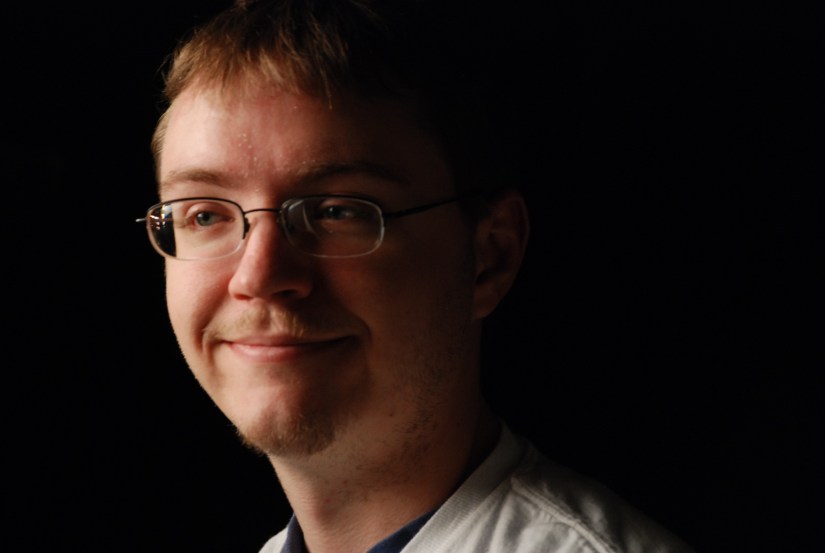
Called “a writer of spectacularly unflinching gifts” by no less than Peter Straub, Brian Hodge is one of those people who always has to be making something. So far, he’s made thirteen novels, over 130 shorter works, five full-length collections, and one soundtrack album.
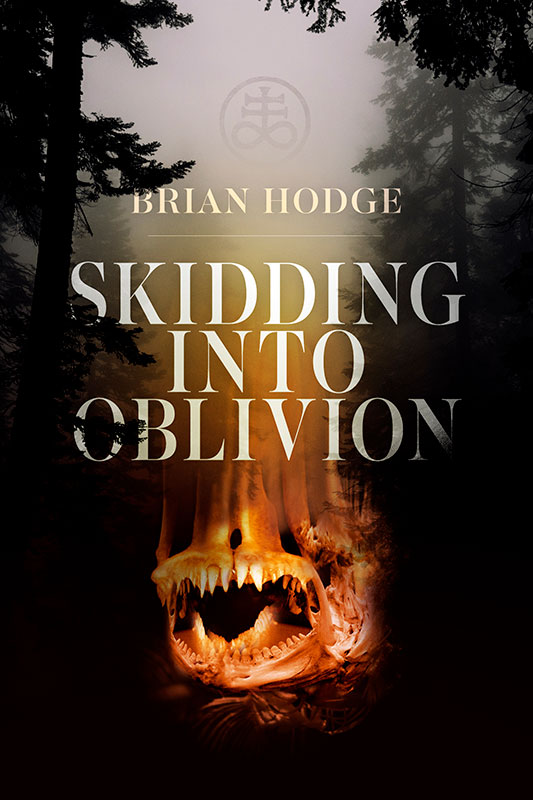
His most recent works include the novel The Immaculate Void and the collection Skidding Into Oblivion, companion volumes of cosmic horror. His Lovecraftian novella The Same Deep Waters As You is in the early stages of development as a TV series by a London-based production company. More of everything is in the works.
He lives in Colorado, where he also endeavors to sweat every day like he’s being chased by the police. Connect through his website, or Facebook.
“You wouldn’t think events happening years apart, at points in the solar system hundreds of millions of miles distant, would have anything to do with each other.”
When she was six, Daphne was taken into a neighbor’s toolshed, and came within seconds of never coming out alive. Most of the scars healed. Except for the one that went all the way through.
“You wouldn’t think that the serial murders of children, and the one who got away, would have any connection with the strange fate of one of Jupiter’s moons.”
Two decades later, when Daphne goes missing again, it’s nothing new. As her exes might agree, running is what she does best … so her brother Tanner sets out one more time to find her. Whether in the mountains, or in his own family, search—and—rescue is what he does best.
“But it does. It’s all connected. Everything’s connected.”
Down two different paths, along two different timelines, Daphne and Tanner both find themselves trapped in a savage hunt for the rarest people on earth, by those who would slaughter them on behalf of ravenous entities that lurk outside of time.
“So when things start to unravel, it all starts to unravel.”
But in ominous signs that have traveled light—years to be seen by human eyes, and that plummet from the sky, the ultimate truth is revealed:
There are some things in the cosmos that terrify even the gods.
We each inhabit many worlds, often at the same time. From worlds on the inside, to the world on a cosmic scale. Worlds imposed on us, and worlds of our own making.
In time, though, all worlds will end. Bear witness:
After the death of their grandmother, two cousins return to their family’s rural homestead to find a community rotting from the soul outward, and a secret nobody dreamed their matriarch had been keeping.
The survivors of the 1929 raid on H.P. Lovecraft’s town of Innsmouth hold the key to an anomalous new event in the ocean, if only someone could communicate with them.
The ultimate snow day turns into the ultimate nightmare when it just doesn’t stop.
An extreme metal musician compels his harshest critic to live up to the hyperbole of his trolling.
With the last of a generation of grotesquely selfish city fathers on his deathbed, the residents of the town they doomed exercise their right to self-determination one last time.
As history repeats itself and the world shivers through a volcanic winter, a group gathers around the shore of a mountain lake to once again invoke the magic that created the world’s most famous monster.
With Skidding Into Oblivion, his fifth collection, award-winning author Brian Hodge brings together his most concentrated assortment yet of year’s best picks and awards finalists, with one thing in common:
It’s the end of the world as we know it… and we don’t feel fine at all.
“Mom,” the daughter called as her mother entered into the Louisiana homestead, “did you get anything that isn’t shit?”
Her mother had been at the supermarket for the majority of the day, leaving the daughter alone at home, forcing her to lie under the tin roof and listen to the sounds of the rain pattering against the roof of the shack. After the death of the Husband, it was just the two of them deep in the murky swamp among the mosquitos, alligators, copperheads, and bears. They lived in a messily strewn together shack that only had one room. Mother usually slept on a blowup mattress on the floor, while Daughter had the luxury of using their couch as a bed. Other than that, they had a record player, a bug zapping lamp, an ancient wood stove, some rusted silverware, and a refrigerator. Filling their yard was a sea of trash, that would have smelled hideously, but blended in with the scent of the mold, mud, and still water of the swamp. Mother was far too lazy to clean up or take any of the trash to the landfill when she went out to the supermarket. It wasn’t like she was a hard worker or anything, seeing as they lived off of welfare checks that were sent to the family for Mother’s “injuries.”
“Watch your language, please,” Mother quipped back at her, stepping over a mountain of cigarette cartons, fast food boxes, soda boxes, and laundry. She held the groceries tightly in her hands: more cigarettes and a giant box of Goldfish. She set one of the bags full of dozens of cigarette cartons on the floor, then started to shake the Goldfish box, as if she was jiggling a present to see what was inside. It was easy to hear them sloshing around on the inside. The smiling fish on the front cover seemed to mock the rest that would soon meet their fate. In a way, it was disturbing that Pepperidge Farms could be so egregious by killing millions without a second thought, but then again, it was all for the greater good.
“Goldfish for dinner again?” Daughter whined. Mother frowned at her ungratefulness, but shrugged it off; she wasn’t at all in the mood to get in a fight that night.
“A nice man gave me a discount,” Mother retorted, “we actually talked awhile. His name was Mark. He even gave me his telephone number!”
Daughter sighed, rolling her eyes back.
“I’m not rushing it again, you know that! Mommy has just been… really lonely. I asked him if he wanted to get dinner sometime.”
“What did he say?”
“He was such a nice man, really! He said he would love to do something with me. He even asked asked me if I wanted to go over to his house to watch some movies this weekend! He was just splendid!” There was that word again. Every time that Mother found a male interesting, she seemed to describe everything with him as splendid. She would often bring one of them over for a night or two, and Daughter would usually go for long walks when this happened, only for a new man to be in Mother’s Life within a month or so.
“That’s great, ma, that really is.” In the dim candlelight of the shack, Mother’s operculum looked smaller than usual. Daughter almost wanted to compliment her, but she didn’t have the energy.
“Are you hungry, baby? I bet you’ve been so bored all day,” she asked her child with a slow blink of her eye. Mother’s skin almost looked like a rainbow of colors, looking entrancingly beautiful in the light. How Daughter wished that skin would shed like that of a copperhead. Maybe if she was able to have Mother’s skin, the kids at school would make fun of her less. She wondered if Mother knew how jealous she was.”
“Starving! Let’s eat!” Daughter begged.
The two sat down in the sludge on top of the mattress, their unnaturally skinny legs crossed over each other. Mother sat the Goldfish in between them, letting the screams from the inside howl into the shack. She pulled two rusty forks from under the mattress, taking one for herself and giving the other to Daughter, who nervously eyed Mother’s red, gelatin-like eggs in one of the corners of the shack.
“Mother, you never told me, who is the father of them?”
“That isn’t your business, now is it?”
“Yes, it is. It’s pretty moist out here, Mother, so most of them will probably survive till adulthood. I wanna know who made my siblings. Why are they red?”
“We can’t support all of them, you know that. We’ll probably have to eat some to stay alive.”
Daughter kept her mouth shut. She knew how disturbing and vile the suggestion was. Even still, her gills flared up in anger. She watched as Mother pried open the cardboard container in front of them, then they both took a good whiff of the contents. Inside of the box was a gallon and a half of water, and dozens of meatball sized fish were rushing from side to side, urging for some kind of escape. Unfortunately, the fish were too small to leave the box, and even if they somehow scaled the walls the two would happily be able to devour them.
“Are you going to eat?” Mother asked, noticing that she was staring off into space.
“You said you were hungry! So you better eat! I spent good money on these!” Mother practically screamed, then jammed her fork into the box, piercing one of the fish like Poseidon’s trident. The blood of the fish instantly began to float through the water, making the rest of them violently rush into the walls to escape, but to no avail. Mother yanked the fork from the murky water but had only grazed the fish, poking through its stomach and piercing through its intestines. The scales easily crumbled away for the might of the rusty fork, forcing the intestines to leave the flapping body of the creature and wrap around the silver, like a macabre rope. The fish dangled in the air, violently convulsing and gasping for water. Daughter watched in horror at the amusement Mother found in the creature’s torture. After a few more agonizing moments that sent blood splattering onto the mattress, she brought the fork above her head, letting the fish dangle above her mouth. With a quick chomp of her teeth, which were some of the only parts of her that were still human, she swallowed the creature and separated it from the intestines wrapped around the fork, sending the black grime of its digested food splattered against her face. Mother gleefully giggled, running her fins over his lips and letting the fluid slowly drip into her mouth.
Daughter’s stomach grumbled, and suddenly, she found herself craving the salty taste of their scales, the irony taste of their blood, and the cool rubbery texture of their insides.
“Do you think my eggs will taste this good?” Mother finally asked after the two spent nearly ten minutes feasting on the squirming animals.
“I think they will, Ma,” Daughter replied, rubbing her stomach, “but I ate too much.”
“Maybe we can have them tomorrow,” Mother responded.
“Sure.”
“They don’t have to know that their mommy got a little hungry, do they? After all, I made them with love,” she said, softly purring, eyeing her children. They were puny inside of the translucent red eggs as they wobbled around. If only they could understand what the two were talking about. Would they be happy if the same woman who created them would be devouring them? Would they embrace death, or they would be afraid of their mother?
William Becker is an 18-year-old horror author with a mind for weirder sides of the universe. With an emphasis on complex and layered storylines that tug harshly on the reader to search for deeper meanings in the vein of Silent Hill and David Lynch, Becker is a force to be reckoned within the horror world. His works are constantly unfathomable, throwing terror into places never before seen, while also providing compelling storylines that transcend the predictable jumpscares of the popular modern horror.
His first novel, Weeping of the Caverns, was written when he was 14. After eight months of writing, editing, and revising, the story arrived soon after his 15th birthday. During the writing sessions for his debut novel, he also wrote an ultra-controversial short story known as THE WHITE SHADE that focused on the horrors of a shooting. Living in a modern climate, it was impossible for THE WHITE SHADE to see the light of day. Following a psychedelic stint that consisted of bingeing David Lynch movies, weird art, and considering the depth of the allegory of the cave wall, he returned to writing with a second story, THE BLACK BOX, and soon after, his second novel, Grey Skies.
A man is arrested after a strange series of barbaric animal killings in the Rocky Mountains. He is taken away from his family, and then placed behind bars, but not even the solid confines of prison can save him from the hellish nightmare that begins to unfold.
Roman Toguri finds himself burying the body of a nun in Boone, North Carolina. As the skies darken and it begins to storm, he is forced to shove the corpse into his trunk and take it home for the night, unaware of the torment that playing God will bestow upon him.
Enter Hell with two bonus short stories: The White Shade, an ultra-violent look into the mind of a mass shooter, and The Black Box, a psychedelic dive into weird horror.
I used to dream of bloodthirsty wolves. I used to dream of apocalyptic warfare and loved ones with sloughing faces, who were either ripped from my arms or liquefied in my embrace. I used to dream of severed hands and broken teeth and corpses draped in antique lace, whose bones sounded like forest fires as they clambered and howled for my blood.
I think they dreamed of me too.
The dark was different when we were together, hazier, paler, like we were meeting in misty moorlands instead of my messy bedroom. As if entranced by this melding of worlds, I would open my eyes, sit up in bed, and see them as clearly as the words on this screen. There was never a tussle, never an attack. Just staring. Silent warnings and soft curses. I don’t know how long we dreamt of each other, but come morning it felt like I hadn’t slept a wink. Throughout my youth and well into adulthood, these waking dreams disrupted my sleep and caused bouts of insomnia that lasted days. And unfortunately, consuming horror fiction made matters worse.
Following my first viewing of Del Toro’s The Orphanage, Tomás, a young character who wears a burlap sack mask to hide his deformed face, entered my room. He stood beside my bed, his tiny fingers curling the burlap up his chin, threatening to show me the deformities the movie didn’t. Blinking hard, pinching my arm, and burying myself in covers didn’t help. It only brought us closer.
And then, a strange magic occurred. A phrase came into my mind, which I then repeated for reasons I can’t explain. I could still see Tomás with my eyes closed and blankets over my head, the burlap revealing new horrors by the second, but this phrase made him stop. It made him release the mask and back away. The phrase and its strange magic made him disappear.
The words I repeated that night were: “Danny Marble and the Application for Non-Scary Things.” It made no sense, but there was an undeniable power in it. The next day I began writing a book of the same name about a child with waking nightmares, and though it’s now out of print, I still regard it as one of my best stories.
I’ve written quite a lot thanks to nightmares, including one of my bestselling books, “Rabbits in the Garden,” but inspiration isn’t exactly a fair trade-off for insomnia. So, in attempt reduce the frequency of my nightmares, I stepped away from reading and watching horror. And unfortunately, it worked.
Creating horror didn’t affect me, but I noticed a drastic drop-off in nightmares when I reduced my intake. I didn’t hide it the change either. When I did panels at conventions, an inky cohort inevitably brought up how I, a horror writer, didn’t read or watch horror anymore, and we all had a good laugh at the contradiction.
As much as I missed my creepy inspirado, movies especially, I liked sleeping through the night more. My once frequent nightmares morphed into adventures. There were still scary elements, but with my cat Tyler as my trusty sidekick, there was nothing we couldn’t handle. We rode the avalanching debris of collapsing buildings. We slept in the trees of enchanted forests. And when we had to flee from danger, I picked him up and ran, pushing through crowds and leaping over downed power lines until my arms ached. Sometimes they even hurt the next morning. But over three years, throughout countless complex worlds I explored with Tyler, I didn’t experience one waking nightmare. I didn’t dream of wolves, and they didn’t dream of me.
Part TWO
My hands started shaking after Tyler died. For over a year, I watched him shrink from a squishy 20lbs beast to a 2lbs sack of bones, ignorant to how his sickness was also shrinking me. Not being able to afford the tests to identify the cancer, let alone remove it, hit me hard. Because I chose an artist’s life—a poor life—it felt like I’d condemned him to suffer. My best friend. My soul mate. My boy.
Surprisingly, Tyler’s physicality was the only thing that changed over the months. His personality remained the same: affectionate, dickish, and always at my side. Tiny as he became, he was still Tyler.
Until he wasn’t.
I knew it would be hard to let go, but I had no idea how it would irrevocably alter my life. After we said goodbye to our little man, I threw myself back into work. I’d been in the middle of writing a novel and decided to continue. In hindsight, it was a terrible idea, as I’m rewriting all of that horrible prose almost four years later. But at the time it seemed the only way I could cope.
I finished the novel and began a large flash fiction project soon after. A few weeks later, I noticed the trembling in my hands. I wrote it off as a symptom of grief, of which I had many, but as my mourning progressed and other symptoms receded, the shaking intensified. Even when my hands weren’t physically trembling, it sure as hell felt like they were. It came in waves, much like grief itself, feeling like insects hatching in my fingertips, skittering down my arms, and converging in my chest like a nest of restless beetles.
I hid it for months, which I’m certain made it worse. There were times it struck me while I was writing and I had to stop because I felt like my skin was going to shake right off my bones. One day while writing in a bar, the feeling hit me with such overwhelming agony I threw my pen as far as I could. After apologizing and retrieving it, I texted my husband and finally told him what was going on.
I also started speaking about it on the podcast I co-hosted with Jack Wallen. I decided it was probably best if I took a break from writing since it was obviously causing so much stress. But after spending the last decade with a pen almost constantly in hand, not writing was just as agonizing. So I occupied my hands with things that didn’t stress me out as much. I drew. I played handheld games like Professor Layton and Bejeweled.
But with no improvement, I had no choice but to drag my uninsured ass to a doctor. That’s when I began worrying about what else besides grief was causing the shakes. Maybe all the bouts of tendinitis I’d gotten from pipetting had taken a permanent toll. Or maybe it was something deeper; the fact that my father has cancer certainly heightened those fears.
But friends (and Google searches) kept bringing up the same question: Could this be as simple as anxiety and panic attacks?
No, because anxiety isn’t simple. Nor are panic attacks, clinical depression, or any other invisible illness, especially when you don’t have insurance. But I finally forced myself into a doctor’s office, where it became clear within minutes that I’d been experiencing severe anxiety and depression since Tyler’s death–and likely before. The doctor was kind enough to give me a discount and Zoloft for my depression and Xanax for panic attacks. Over three years later, I’m jazzed to report that my hands only shake when I have panic attacks, and even then, I’m able to cope with medication, yoga, and breathing techniques.
Depression and anxiety are as much a part of me as mourning Tyler. And they’ll be there forever, on the edge of my mind. But over time I’m learning to use them as stepping stones rather than brick walls.
Part THREE
If you Google Zoloft dreams, you’ll find posts from dozens of people who say the drug increases the vividness of their dreams, often to the point of nightmares. It’s not true in my case, but there has been a significant change since I started the drug.
I’m gorging myself on a healthy diet of horror again. In the four years since Tyler’s death, I’ve consumed more horror than I did in the decade preceding it, and I haven’t had one waking nightmare. I haven’t had much I’d even consider a “scary dream.”
But I also haven’t found a story in a dream in ages. I haven’t woken with monsters in my mind and inspiration in my guts, or had to rifle through my bedside table for a paper and pen before the idea vanished. Now my bad dreams consist of packing and unpacking everything I own, in new houses, in hotel rooms, always in a hurry. And then there are dreams of auditoriums full of friends and family telling me I’m a shitty person, that I’m untrustworthy and useless and undeserving of their love.
And you know what? I miss my monsters. They stole sleep from me, but they gave me inspiration. They made me cry out of fear, but they didn’t make me feel worthless. Perhaps it’s best that they’re gone, tucked away with childish things, but I can’t help wondering if there’s a magic I’m now missing. Would I have found more phrases like “Danny Marble and the Application for Non-Scary Things?” Would I have unlocked more doors, discovered more worlds, if I hadn’t interrupted the horror flow all those years ago?
I might never know the answer, but one thing is clear: it’s a fair trade-off now. I can ingest horror fiction and sleep through the night. I can use all manner of terrifying sources for inspiration and know that my hands won’t shake when I write. I can support my horror-writing friends again and find magic in their phrases instead.
Now that the sun has set and I’ve taken my pill, I’m off to watch Hold the Dark on Netflix. Here’s hoping it’s a beautiful nightmare.
Jessica McHugh is a novelist and internationally produced playwright running amok in the fields of horror, sci-fi, young adult, and wherever else her peculiar mind leads. She’s had twenty-three books published in eleven years, including her bizarro romp, The Green Kangaroos, her Post Mortem Press bestseller, Rabbits in the Garden, and her YA series, The Darla Decker Diaries. More information on her published and forthcoming fiction can be found on her website.
Perry Samson loves drugs. He’ll take what he can get, but raw atlys is his passion. Shot hard and fast into his testicles, atlys helps him forget that he lives in an abandoned Baltimore school, that his roommate exchanges lumps of flesh for drugs at the Kum Den Smokehouse, and that every day is a moldering motley of whores, cuntcutters, and disease. Unfortunately, atlys never helps Perry forget that, even though his older brother died from an atlys overdose, he will never stop being the tortured middle child.
Set in 2099, THE GREEN KANGAROOS explores the disgusting world of Perry’s addiction to atlys and the Samson family’s addiction to his sobriety.
Patience is not Darla Decker’s strong suit. Surviving sixth grade is tough enough with an annoying older brother, a best friend acting distant, and schoolwork. After adding instructive kissing games and the torturous wait for a real date with her biggest crush, Darla is perpetually torn between behaving like an adult and throwing temper tantrums.
Games of flashlight tag, and the crazy cat lady roaming Shiloh Farms in a “demon bus,” serve as distractions during her parents’ quarrels and her anxiety about show choir auditions. Yet the more Darla waits for her adulthood to begin, the more she learns that summoning patience won’t be the hardest part of being eleven.
A frank and funny look at the path to adulthood, DARLA DECKER HATES TO WAIT begins a journey of love, loss, and the nitty-gritty of growing up through Darla Decker’s eyes.
The toppings: Terror and torment. The crust: Stuffed with dread and despair. And the sauce: Well, the sauce is always red.
Whether you’re in the mood for a Chicago-style deep dish of darkness, or prefer a New York wide slice of thin-crusted carnage, or if you just have a hankering for the cheap, cheesy charms of cardboard-crusted, delivered-to-your-door devilry; we have just the slice for you.
At twelve years old, Avery Norton had everything: a boyfriend who was also her best friend, the entirety of Martha’s Vineyard as her playground, and her very own garden to tend. By thirteen, it was all over.The discovery of a secret crypt in the basement starts the Norton family down many unexpected avenues, including one that leads to Avery’s arrest for murder and her subsequent imprisonment in Taunton State Lunatic Asylum.
Set in 1950s Massachusetts, Rabbits in the Garden follows Avery Norton’s struggle to prove her innocence, exact her revenge, and escape Taunton with her mind intact.
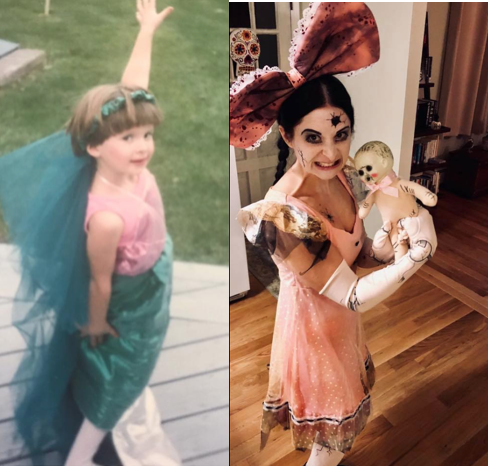
Looking back, I don’t remember loving Halloween any more than my peers. Sure, pillowcases bursting with candy and trekking through my neighborhood after dark with friends was fun, and my mom was great at coming up with unique costumes she fashioned on her Singer sewing machine (a bushel of grapes, a fortune teller, and an evil queen are a few that come to mind). But for the most part, Halloween was one more exciting day in a childhood that I was extremely fortunate to experience as having its fair share of them.
Still, I did enjoy the darker aspects of other youthful pastimes. My bookshelves and OG TBR, i.e., the Scholastic book fair newsletter, were full of Bunnicula volumes, Nancy Drew titles, and the R.L. StineGoosebumps and Fear Street series, and this appreciation for horror literature eventually morphed into a love of horror films. I saw John Carpenter’s Halloween a few months after I turned thirteen, and the Scream / I Know What You Did Last Summer / Urban Legend era of the late nineties solidified this infatuation. Now, twenty years later, my adoration of All Hallows’ Eve and all things horror is fully-formed and multifaceted. Here are the top five reasons why I love Halloween… maybe you love the holiday for some of the very same reasons.
1. The General public expresses their appreciation for all things spooky.
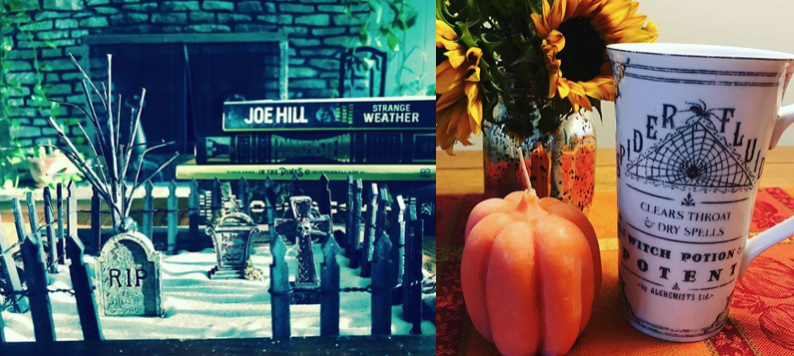
From November to September, my house is not going to be confused with the Halloween section of Michael’s, however, my wardrobe usually revolves around one particular end of the color spectrum and my home office remains decorated year-round with Stephen King-inspired artwork, black flowers, and skull-and-raven bookends. Some late weekend in September, I cart the Halloween bins up from the basement and let the black cats and cotton cobwebs infiltrate every corner of my house. The remote-control tray on the coffee table is replaced with a black-and-silver skull dish; the salad tongs become skeleton hands, the soap dispensers get their witch hats on, and every single candle is swapped with its pumpkin spice or cinnamon apple-scented counterpart.
The best part of this transformation? Pier 1, TJ Maxx, Target, The Home Depot, pretty much every well-known chain and massive department store is packed to the rafters with dark delights. Ouija board throw pillows, tombstone yard accents, Gothic tea sets, and creepy clown dishware, you can find any manner of Halloween or horror-themed household item as easily as you can buy a loaf of bread. I love strolling the aisles of Home Goods and running into an Ann-Taylor-garbed housewife with a shopping cart full of yoga mats and leisurewear reaching for a bat-bedecked candelabra worthy of Morticia’s dining room table. When school starts and the September equinox looms, mainstream America offers up affordable tricks and adorable treats for perpetual horror lovers and Halloween-enthusiasts alike.
2. Horror film snobs relax their horror snobbery.
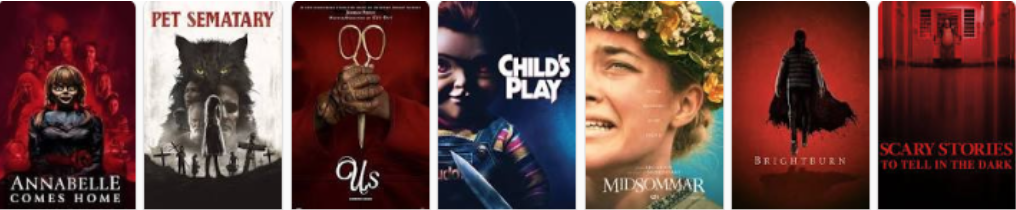
I’ve expressed my annoyance at this phenomenon before, but one of my biggest pet peeves is when people turn up their nose at the horror genre then claim their all-time favorite movie is The Silence of the Lambs. “That movie can’t be horror,” they say. “Did you know it won the Oscar for Best Picture?” Cue eye roll. October is the one time of the year when movie lovers seem to relax their highbrow opinion of horror films and embrace vampires, serial killers, and buckets of (fake) blood. Zombieland: Double Tap was released this October, though I can all but guarantee that scores of folks too busy and uninterested to see earlier horror releases of 2019 will stream The Curse of La Lorna, Pet Sematary, Us, Happy Death Day 2U, and The Prodigy before the month is out. Similarly, The Terror, Castle Rock, The Haunting of Hill House, and American Horror Story will likely see an uptick in viewers.
And you know what? Bring it on. Sure, it’s obnoxious when some know-it-all film buff wants to eschew horror will simultaneously discoursing on the genius of the Duffer Brothers, but I will talk all October long with every summertime-horror-hater and Christmas-splatter-film-skeptic about their theory that Hopper is still alive or whether the ending of the Pet Sematary remake was better than the original. You know why? Because there’s room at the table for the fair-weather-horror fans, and, as my next section will detail, Halloween equals love.
3. Horror-centric couples express their love for one another.
So why do so many real-life couples and fictional sweethearts find that horror and/or Halloween strengthens their bonds? Marriage is no cakewalk, and yet plenty of newlyweds find themselves unprepared for the trials that come with long-term commitment: steep mortgages and the rising cost of living, the decision of whether or not to have children, illness and loss, in-laws and the ebb and flow of friendships with other people, growing old and keeping your relationship new. Couples that interweave commitment with the acknowledgment of inevitable death could potentially be more in tune with the bleaker but necessary aspects of the human condition. What’s a bit of adversity when you know your partner can stomach Cannibal Holocaust, or that they once performed a madcap but heartbreakingly unsuccessful experiment to try and resurrect their childhood dog, Frankenweenie-style? They do say that the couple that slays together, stays together (I think the ‘they’ in this sentence refers to the marketing team behind Santa Clarita Diet, but hey, it works, and Sheila and Joel Hammond are another great example of a couple made stronger by ghouls and gore).
4. Haunted attractions become the norm.
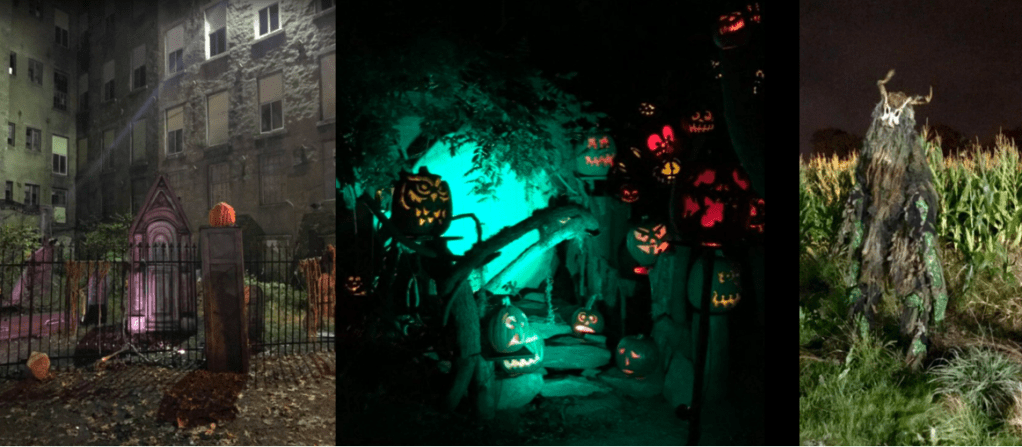
Here are some of the Halloween activities in which I have partaken: haunted hayrides, haunted corn mazes, haunted houses (or a haunted factory, or asylum, or whatever that year’s or location’s theme happens to be), a paranormal excursion and theatrical séance at the Stanley Hotel, an overnight stay at the Lizzie Borden Bed and Breakfast Museum, a daytrip to Salem, Massachusetts, a visit to the gravesite of alleged vampire Mercy Brown, a journey through the nationally acclaimed Jack-O-Lantern Spectacular at Roger Williams Park Zoo in Providence, and a historic ghost tour in that same city.
All those haunted houses and ghostly tours were, if not actually frightening then completely entertaining, but according to Halloween New England, I haven’t even scratched the surface of haunted attractions in Rhode Island or the surrounding states. Here is a (radically incomplete) selection of activities across New England that I still have left to pursue: in Connecticut, the Trolley Museum’s Pumpkin Patch ride; in Maine, a special FX make-up class or a ghostly Bangor walking tour; in Massachusetts, a flashlight maze at Connors Farm or a date with the Ghost Hunters Paranormal Society; in Rhode Island, a Ghosts of Newport excursion; in New Hampshire, Screeemfest at Canobie Lake Park; and in Vermont, a haunted hayride at Gaines Farm called Vengeance in the Valley that promises both the undead and flesh-eating extra-terrestrials. I’ve now lost the thread of this paragraph on haunted attractions and must systematically enter the ten different Halloween New England website-sponsored giveaways as well as purchase tickets to the Haunted Graveyard at Lake Compounce before I can move on to my final point.
5. The boundary between the living and the dead is penetrable.
My final reason for loving Halloween is not commercial, social, or societal in nature. When you strip away the candy and the costumes and the Stephen King movie marathons on AMC, when you remove the ghost-dog dish towels and witch-cat coffee mugs from the shelves of TJ Maxx, Halloween is the time of the year when the boundary between the physical and the spiritual worlds is the thinnest. It’s the perfect time to engage in respective personal and cultural traditions, whether that’s baking soul cakes, leaving an offering for a deceased relative, or lighting a bonfire in celebration of Samhain. If spirits and faeries can enter our world more easily at this lush, liminal time, than I am of the mind to give them the widest possible gateway through which to pass.
Tarot cards, oracle decks, candle magic, Ouija boards, graveyard séances, scary stories around a campfire, or any of the other tools employed for spiritual enlightenment and fulfillment throughout the year take on new meaning once darkness descends on October thirty-first. So, this Halloween, gather up your friends and dance a danse macabre in honor of death. I hope your path to the grave is one of mind-bending horror movies and cider-scented hayrides, of delicious cupcakes with R.I.P. frosted across Peppermint Pattie tombstones and relationships on par with Gomez and Morticia’s l’amour vrai. In other words, I wish you one long, spooky, spectacular walk past the ghosts and goblins, through the dark and cobweb-draped corridors, and all the way to the end of the haunted, hallowed corn maze.
Christa Carmen’s work has been featured in anthologies, ezines, and podcasts such as Fireside Fiction, Year’s Best Hardcore Horror, Outpost 28, and Tales to Terrify. Her debut collection, Something Borrowed, Something Blood-Soaked, is available now from Unnerving, and won the 2018 Indie Horror Book Award for Best Debut Collection. Christa lives in Rhode Island with her husband and their bluetick beagle. She has a bachelor’s degree from the University of Pennsylvania in English and psychology, a master’s degree from Boston College in counseling psychology, and is an MFA candidate at the Stonecoast Creative Writing program, of the University of Southern Maine. You can find her online at her website.








 Meghan's House of Books