Halloween Extravaganza: Paul Flewitt: Clive Barker, Dark Dreamer Pt 2

Clive Barker, Dark Dreamer:
A Retrospective
Part 2

1988 proved to be another busy year for Clive Barker, as another Hellraiser movie was needed and more books needed to be written. He gave up the directorโ€™s seat for Hellraiser 2, offering his friend, Peter Atkins, the opportunity to write it. Clive acted as executive producer for Hellbound, whilst pursuing another movie project in Nightbreed. He was also working on a new novel, eager to capitalise on the UK success of Weaveworld.

1988 was a year of creation, but he still managed to release another seminal work, the book that became the unintended blueprint for the movie that would become Nightbreed.

Barker had actually intended to release Cabal as part of another collection of short stories; in fact, it has been released along with other stories from Books of Blood Volume 6 in the US. In the UK, it was released as a novella, the intention being to release a series of connected stories outlining the mythology of the lost breed. That has never, up to now, materialised, but has given rise to graphic novels, unauthorised anthologies, and the aforementioned movie. What it has become in the intervening years is a cult classic, giving rise to TV programmes like Buffy The Vampire Slayer and movies like Twilight, where the monster can be the sympathetic character and the humans the true monsters. Here, Clive Barker was truly ahead of his time.

Cabal (1988)

Aaron Boone is a man suffering with mental health issues which often lead to him having blackouts. In order to combat his illness, he has turned to psychiatrist, Phillip Decker. During a crisis Boone visits Decker, where the psychiatrist shows him a deck of photographs from crime scenes, crimes which Decker insists Boone committed. The good doctor promises to cover for Boone, just as long as he takes the medication that Decker prescribes. Confused, scared, feeling guilty, and high on the medication that Decker has given him, Boone attempts to commit suicide and throws himself under a truck… but he is not killed and wakes up in a hospital.

In his hospital room is a man named Narcisse, who mistakes Boone for an envoy of a place called Midian. Narcisse insists that he is worthy and begs Boone to take him there, and to prove his worth he is prepared to show Boone his true face. Narcisse sets to work slicing off his own face as an act of faith, and Boone flees in fear of being blamed for the manโ€™s injuries. What Narcisse has given Boone is a destination: if he is a monster, then why not go where the monsters live?

Boone finds Midian, a huge graveyard and necropolis in the north of Canada. He approaches the gates and is met there by Peloquin, a half-man, half-reptile hybrid. Boone tells him of his crimes, and Peloquin laughs and tells him that he is innocent and natural… he is meat. Peloquin bites Boone, and the bite awakens something in Booneโ€™s senses. He flees from Midian and hides in a ghost town, shunned by the monsters and fearful of humanity, he hunkers down. The police arrive, led by Decker, and corner Boone, shooting him at the order of the psychiatrist who has now blamed Boone for the murders in the photographs.

Lori is Booneโ€™s girlfriend and soulmate, and she struggles to make sense of Booneโ€™s crimes or his death. In an effort to find some closure, she sets out to Midian to lay her man to rest. She finds the necropolis in daylight and explores the place, wondering what could possibly have brought Boone to this place. On her exploration she finds a cat-like creature, burning in the sun. She picks up the creature and carries it to the shadows of a mausoleum, where the creature turns into a little girl. The girlโ€™s mother, Rachel, appears and explains to Lori the nature of the Breed, and tells her that Boone is not dead. Lylesberg, the patriarch of Midian, appears and bids Lori to leave, โ€œWhat is below must remain below,โ€ he says, reciting the law of the Breed.

Devastated at her dismissal and the news that Boone still lives, Lori leaves and is found by Old Zipper Face, the alter ego of Decker. He tells her that it was him that committed the murders that Boone was accused of, that he liked it. He chases her through the necropolis, but is attacked by Boone. Decker escapes and Boone takes an unconscious Lori into the mausoleum, breaking the law of the Breed.

When Lori wakes, she finds Midian in controversy over Booneโ€™s actions. Lylesberg insists that Boone must answer to Baphomet, the god of the Breed. Boone goes off to the godโ€™s chamber to be judged for his crimes, and Lori follows. What she sees astounds her; a city underground peopled by every configuration of monster that her mind could conjure. She comes to Baphometโ€™s chamber and screams when she sees the divided god in its pillar of white fire.

Boone is banished from Midian by the god, and is about to leave when the city comes under attack from the cops and good old boys of the nearby town. In the tumult of the attack, Boone finds Decker and tears him to pieces as the battle rages around him. Lylesberg releases the Berserkers of the Breed, and the humans are defeated, but at the cost of Midian. Uncovered, the Breed must leave their haven and find new sanctuaries… and Boone must be their leader. He is Cabal.


With the success of Hellraiser, and the promise of more movies in that franchise, Barker realised that his distance from Hollywood would prove to be a stumbling block. In 1988, Barker decided that it was time to circulate in LA. His agents, CAA, introduced him to another of their clients, Mick Garris. The two men found a common ground with their love of horror and got along; Garris was fresh from success with Critters 2 and Barker has just released Hellraiser the year before, so it made sense that they might work together. Over the coming months and years, the pair would pitch a number of projects that would not see the light themselves, but would give rise to other projects that did. Spirit City USA, a series that Barker was developing for ABT, would become Lord of Illusion; there was early talk of adapting the Books of Blood Story, In The Flesh, into a movie as well as Cabal, but neither happened; and neither did their pitch for a movie entitled The Mummy, although that would surface in 1999 under a very different guise to the one that Barker and Garris intended.

Garris did work with Barker on screen, however, casting him in a cameo for Stephen Kingโ€™s Sleepwalkers (one of the most iconic scenes for horror aficionados, involving Barker, King and Tobe Hooper). Garris also worked on the King/Barker collaboration, Quicksilver Highway, in 97.

With this meeting between Barker and Garris, and Cliveโ€™s attempts to work more often in LA, he was certainly signalling his intent and ambition in 1988. LA and the film industry would become influential for Barker in the coming years… but not quite yet.

1989 was dawning, and Barker still had business in England… and with the literary world.


1989 was the year that Barker stepped his literary craft up to another level, penning and releasing the book that would begin what I consider to be the triumvirate of masterpieces that he would create in the next few years: The Great and Secret Show. In fact, it was something of a risk, as Barker would eschew the horror genre completely and step into another realm entirely, and one not easily characterised at the time. With The Great and Secret Show, Barker would embrace his Tolkienesque quality and display his love of E.R. Eddison with great effect, re-writing the rulebook when it comes to fantasy writing and truly becoming the great imaginer of the dark fantastique.

The gamble would pay off, as The Great and Secret Show would earn him bestseller status in both the UK and US for the first time, and also a $2m advance for his next four books. It would place him in the pantheon of great authors of his time, offering him the freedom and cache to be the artist that he truly wanted to be.

The Great & Secret Show (1989)

The book begins with Randolph Jaffe, a true wastrel who struggles to hold down a job, feels no direction and is utterly hopeless. He is absolutely bitter about all of this, feeling that he is above the lot that the world had given him and being wasted in the dead-end world that he inhabits. He works in the post office in Omaha, the centre of America… and hates it. His mood isnโ€™t made any better when he is sent to work in the dead letter office, opening envelopes that the service has failed to deliver. His job is to open up the letters and remove anything of value; consigning the worthless correspondence to the furnace. What he discovers in the dead mail will change his life. Not every letter, but one in every hundred or so envelopes, he sees whispers of a hidden world, a new theology which exists under the surface of humanity. Jaffe hears of the sea of Quiddity, which mankind swims in only three times in their life: the day they are born, the night they sleep beside their true love, and the day they die. He reads about the Ephemeris, the island which stands in Quiddity, and the power that might be derived from that strange place. He searches through the letters then in search of more information of this new religion. He finds it too, along with a strange medallion which piques his fascination even more. In these letters, Randolph Jaffe sees power and knowledge… he sees The Art.

Soon enough, his supervisor and colleagues become distrustful of Jaffe and suspect him of hoarding some of the banal treasures for himself. He hears that his superiors are about to remove him from the dead letter office, and so he kills his supervisor and burns down the dead letter office. He flees Omaha and goes on a quest across America in search of the Art, of the power that it might offer him.

His quest brings him to a strange place called The Loop, where he meets a man named Kissoon. Kissoon is a shaman, wielder of The Art, and member of a group of seventeen murdered adepts named The Shoal. Jaffe implores Kissoon to teach him, but he is refused and sent away.

Not to be denied, Jaffe soon finds another way to obtain power. He meets Richard Fletcher, a brilliant scientist who is addicted to mescaline. Fletcher is a dreamer, always asking โ€œWill I be sky?โ€ He has engineered a substance called the Nuncio, a force which speeds up evolution. With the Nuncio, Fletcher has already caused an ape to evolve into a boy and Jaffe sees the possibilities that the Nuncio presents. He imbibes it, feeling the power of the substance coursing through him. Unfortunately for Jaffe, Fletcher has also been exposed to the effects of the Nuncio, and pits himself against Jaffe. They battle each other for many years, all across America, until they are exhausted and come to rest, totally exhausted in a non-descript area of the States.

In Palomo Grove, four virgins go swimming in a lake which appears from nowhere during a summer storm. When they emerge, each one is filled with carnal urges which cover a basic need, that of fertility. Of the four, one is barren and kills herself. Three others conceive and deliver children, but one of them kills her child, which leaves three: Tommy-Ray and Jo-Beth Maguire, twins borne of Jaffeโ€™s seed, and Harold Katz, borne of Fletcherโ€™s. The scene has been set for an endgame, but it would take eighteen years for it to reach apotheosis.

Buddy Vance is a comedian who has made Palomo Grove his home. He falls down a fissure while out running, where he comes into contact with Jaffe and Fletcher. He is dying, and sees the pair, by turns, as wasted old men and spirits locked in grim combat. Through sly persuasion, Jaffe takes Vanceโ€™s worst fears and nightmares, turning them into creatures called terrata, which he uses to escape the chasm that has kept him trapped with Fletcher. On his part, Fletcher takes a dream from Vance, called hallucinogenia, gives chase, and both men go in search of their offspring.

Nathan Grillo arrives in Palomo Grove to investigate the disappearance of Buddy Vance. Grillo is a shamed journalist, feeding on the weird and horrific in American society for publications like National Enquirer. For Grillo, the disappearance of Vance is manna from heaven. Until Vance resurfaces and arranges a party at his house in the town, inviting the great and good from Hollywood to attend. His house is a shrine to carnival, a literal funhouse. Grillo sneaks into the party, and witnesses the strangeness that ensues.

Buddy Vance is not Buddy Vance at all, but is Jaffe disguised by a sway. Jaffeโ€™s plan is to lure these people to the town and make them bear witness to his moment of glory, and make an army of their nightmares..

Meanwhile, Fletcher has realised that his hallucinogenia is no match for Jaffeโ€™s terrata, and he has no time to raise more. He passes the secrets of the Nuncio to Tesla Bombeck, before he sets himself on fire in an act of self-sacrifice. There is a crowd of townspeople watching the scene unfold, and Fletcherโ€™s spirit touches each of them, which in turn inspires their hallucinogenia.

Tesla sets out to find the remnants of Fletcherโ€™s Nuncio to destroy it, but Tommy-Ray Maguire is inspired by his father by now and tries to take it from her. In the scuffle, Tommy-Ray is touched by the Nuncio and is transformed into the Death Boy and he flees back to Palomo Grove. Gravely wounded from the battle, Tesla also tastes the Nuncio, and is transported to New Mexico, to the town of Trinity, where she meets Kissoon and is utterly disgusted by him.

Meanwhile, Jaffe is slowly becoming drunk on his own power to deceive. In the rush, he goes beyond his intention to create terrata and decides to show his audience his true power, to rip away the screen of reality and show the gathered there what lies beneath the veneer of the world. He takes a handful of the wall in his hand and pulls, bending the substance of the house out of true and revealing the secret world that exists beyond the veil. He pulls, revealing more and more, and slowly becoming consumed by it. Harold Katz and Jo-Beth Maguire arrive with an army of hallucinogenia, intending to take on Jaffe and his terrata, and witness the downfall of Jo-Bethโ€™s father… just as Tommy-Ray arrives, too late to save him.

The trio are sucked out of the real world and into Quiddity. They swim for a time, and the sea joins Jo-Beth and Harold together. They come onto the island of Ephemeris. Here, Tommy-Ray sees the Iad Uroboros, a seething mass of darkness which contains horrors beyond the imagining of man. The sight inspires him, and he takes that inspiration back into the real world.

Tesla and Grillo descend into the bowels of Palomo Grove, into the chasm that had claimed Buddy Vance, in search of whatever the experience in the house had left of Jaffe. They find him, bereft and bitter after his failure to wield the Art. What follows is a scene reminiscent of the game of riddles in The Hobbit, where Gollum and Bilbo Baggins trade riddles in return for Bilboโ€™s freedom. Jaffe leads Tesla as she tries to make sense of the things that she has seen, egging her on to the most profound discovery and explanation of the medallion that he first discovered all those years before Palomo Grove and the Nuncio.

Grillo and Tesla emerge from the chasm to the death of Palomo Grove, as the town destroys itself and sinks into the earth.

This is not the end though… not quite. Tesla returns to Trinity and The Loop, where she encounters Kissoon once again. This time, she knows the power that she wields and can control it. She uncovers the secret of the place, the pivotal moment of human history in the twentieth century, frozen in time and made a prison. She confronts Kissoon and discovers his crimes, and destroys the Loop… and a remnant of the Iad Uroboros. She has come into her power and revealed herself as a saving power in the human world.

1989 ended on a high and with triumph for Barker, as The Great and Secret Show gave him his first success, both critical and commercial. He moved forward with confidence into the New Year, with a new challenge before him… but 1990 would prove to be frustrating, and darken his view of the workings of Hollywood for the rest of his life.


Come back tomorrow for Part 3 of this fantastic retrospective on Clive Barker.

Paul Flewitt is a horror/dark fantasy author. He was born on the 24th April 1982 in the Yorkshire city of Sheffield.

Always an avid reader, Paul put pen to paper for the first time in 1999 and came very close to inking a deal with a small press. Due to circumstances unforeseen, this work has never been released, but it did give Paul a drive to achieve within the arts.

In the early 2000โ€™s, Paul concentrated on music; writing song lyrics for his brother and his own bands. Paul was lead singer in a few rock bands during this time and still garners inspiration from music to this day. Paul gave up his musical aspirations in 2009.

In late 2012, Paul became unemployed and decided to make a serious attempt to make a name for himself as a writer. He went to work, penning several short stories and even dusting off the manuscript that had almost been published over a decade earlier. His efforts culminated in his first work being published in mid-2013, the flash fiction piece โ€œSmokeโ€ can be found in OzHorrorConโ€™s Book of the Tribes: A Tribute To Clive Barkerโ€™s Nightbreed.

2013 was a productive year as he released his short story โ€œParadise Parkโ€ in both J. Ellington Ashtonโ€™s All That Remains anthology and separate anthology, Thirteen Vol 3. He also completed his debut novella in this time. Poor Jeffrey was first released to much praise in February 2014. In July 2014 his short story โ€œAlways Beneathโ€ was released as part of CHBBโ€™s Dark Light Four anthology.

In 2015 Paul contributed to two further anthologies: Demonology (Climbing Out) from Lycopolis Press and Behind Closed Doors (Apartment 16c) with fellow authors Matt Shaw, Michael Bray, Stuart Keane, and more.In 2016, Paul wrote the monologue, The Silent Invader, for a pitch TV series entitled Fragments of Fear. The resulting episode can be viewed now on YouTube, but the show was never aired. The text for the monologue was published in Matt Shawโ€™s Masters Of Horror anthology in 2017.

Paul continues to work on further material.

He remains in Sheffield, where he lives with his partner and two children. He consorts with his beta reading demons on a daily basis.

You can find more information on Paul Flewitt and his works hereโ€ฆ

Amazon ** Facebook ** Twitter ** Instagram

Halloween Extravaganza: Austin Crawley: Choosing Holiday Traditions

I absolutely love that, in lieu of a Christmas story, Austin Crawley wrote us about Christmas traditions in his house… and now I kinda want to do this every year, have people talk about THEIR Christmas traditions. Traditions are such a huge thing in my family and I can say that I am almost obsessed with knowing what others do as well.

Sit back, relax, and maybe you’ll come up with some new ideas to do with your family this year. Halloween is over… Thanksgiving is over… and this is the last day of November, so… Happy Holiday’s, y’all!


Choosing Holiday Traditions

We all grow up with certain holiday traditions, shaped by our geographical location and family cultural traditions. These can vary from one family to another even in a close community, but in the English speaking countries and much of Europe, we’re affected to some extent or other by the spectre of Christmas, including those whose religion doesn’t celebrate the Dickensian holiday that all the marketers tell us we must embrace.

Having grown up in Los Angeles, I, like most Americans, have been bombarded every year with expectations of the ‘holiday season’ which starts with Halloween, continues through Thanksgiving, comes to a climax for Christmas and then expresses an epilogue on New Year’s Eve, just before the heart-shaped candy boxes hit the store shelves in anticipation of February.

I was in my early twenties when I began to question some of the practices I was expected to follow that appeared to be shaped by television ads and retail outlets. The first to be examined was the tradition of the holiday dinner. If you live in the U.S.A., you’ll be familiar with the Thanksgiving dinner. Turkey, stuffing, candied yams, mashed potatoes, pumpkin pie and any other trimmings your family is used to including. It makes for a great celebration meal and if your family is around the average of four people, chances are you’ll be eating leftover turkey for a while and run out of it just in time to do it all again for Christmas!

This close repetition of the holiday meal bothered me long before I grew to adulthood, but it was as a young man that I began to question whether I could break the tradition and not go to Hell for the infraction. Don’t get me wrong, I love a good Turkey dinner, but I wanted it to feel more special for Christmas. To accomplish that, I would have to change the menu at Thanksgiving. The trouble with that is the symbolism involved in some of the specific foods and accepted history.

After giving it careful thought, I decided that the important part of the tradition was having a good meal and I started having tacos for Thanksgiving. Lots of them! This actually caught on with my mother and became a new tradition between us. My father was gone by then and my brother was married and lived away from us. The irony was the year I went to visit him the day after Thanksgiving, satisfied that I had avoided the turkey trap, only to find out that he had built his own personal tradition of having friends come over for a traditional turkey dinner on the Friday after!

Roll on to Christmas. Christmas traditions fluctuate from one country to another, but most of us are familiar with the symbolic bringing of greenery into the house to dispel the darkness of winter, the display of lights and colorful ornaments to brighten up those cold, dismal nights, the exchange of gifts among family and close friends and of course, bountiful food and treats.

The specific foods expected in a holiday dinner are subject to variation from one region to another, and this is one of the things I find interesting to examine. The Germanic and Scandinavian countries, for example, include some wonderful spiced cookies among their holiday fare and even the choice of vegetables and desserts are completely different between the U.S.A. and our closest cultural relative, the United Kingdom.

This is one instance where I allowed commercial advertising to shape an adopted tradition to add to my arsenal. Food catalogs like Swiss Colony and Hickory Farms offer all sorts of interesting treats, both sweet and savory around the holidays, but I believe it was Swiss Colony who started me having pastry for breakfast on Christmas. That first one was a Raspberry Kringle, something I note still appears in their Fall catalog, though the price has increased substantially.

Adopting a new tradition is nothing more than a matter of developing a chosen habit over time. Any one of us can pick and choose which traditions we like from any culture and make it part of our own personal customs.

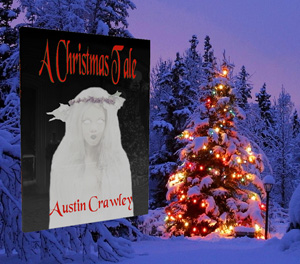
When it comes to customs at Christmas, my favorite is a tradition from Iceland, where books are exchanged on Christmas Eve and time is put aside that evening for reading. Books make great presents if you know the reading tastes of your loved ones and reading among the family was popular in Victorian England, particularly ghost stories. Hence, Charles Dickens’ A Christmas Carol which has continued to be popular Christmas reading. My own Christmas story, A Christmas Tale, is based on Dickens’ ghosts and how they might manifest when three young women try to invoke them through a sรฉance, only to be reminded that Christmas is not always nice for everyone.

One of my more recently adopted traditions was actually inspired by one of my characters who decided that Christmas was a time to help those who might be less fortunate, something that Dickens expresses through the mirror of Scrooge’s miserly habits in the early part of his story.

A few years ago I was in a shopping area where a street busker was singing Christmas songs. To the tune of Tis the Season to be Jolly I overheard him sing, “Tis the season to be miserable!” I spun round and looked at him. He pointed to the shoppers passing by and said, “Well look at them!” Sure enough, every face pushing their way through the throng of materialistic humanity looked as though they would prefer to be curled up in front of an open fire with a warm drink, like another song says.

I had been aware of the overblown consumerism that had taken over the holiday long before, but that really brought it home. No, I didn’t stop buying my family Christmas presents, but over time, I developed a habit of collecting things I knew they would like during the year and putting them aside for Christmas. No more buying crap just for the sake of giving someone a package to open! I went through a Christmas catalogue recently and was appalled at the percentage of useless garbage offered up as mindless gift giving fodder. Overpriced food hampers, more grooming aids than anyone would ever use, gallons of perfume and a plethora of ‘cutsie’ novelty gifts to be put in a drawer and forgotten.

Whether you practice the traditions you grew up with or start a few new ones of your own, whether your Christmas reading is ghost stories or you prefer the more heart warming tales, I hope everyone has a great holiday season and will do whatever makes you most happy.

Austin Crawley writes Horror and Dystopian fiction with a supernatural twist. His lifelong love of ghost stories and interest in comparative religions has led him to seek the darker corners of human existence and to exploit them in prose, touching on our deepest fears. he has been known to spend his vacations visiting places that are reported to be haunted.

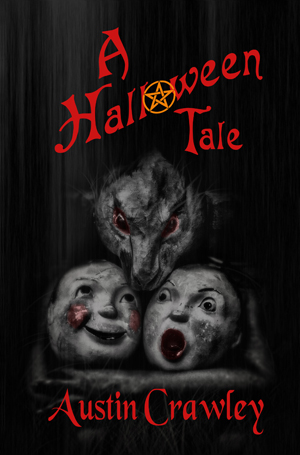
Crawley is the author of A Christmas Tale, a story about three young women who perform a seance to raise the fictional ghosts of DickensA Christmas Carol with surprising results, and of Letters to the Damned, about a post box in a small English village that reportedly transmits written requests for favours to the dead and damned. His most recent release is A Halloween Tale, which came out last month, a haunted house tale filled with horrific, inter-dimensional terror.

A Halloween Tale ** A Christmas Tale

Halloween Extravaganza: Austin Crawley: Shades of Halloween Past

Shades of Halloween Past

Who doesn’t love Halloween? Scary stories, vampire movies, costumes and parties and most of all when you’re a kid, trick-or-treating!

When I was a kid in California where the nights don’t get as cold as a lot of other places, my brother and I treated trick-or-treating like a non-contact sport. We knew the rules. If the porch light is on, they’ve got candy. Only one hit per house, unless they’re giving out candy bars and a big group of kids is coming along so you can filter in among them and pretend you haven’t been there already.

Back in the days when grocery bags were still made of brown paper and held a lot more than the namby-pamby little plastic bags that replaced them (and are now polluting our oceans), we could fill them up in the hour and a half allotted as trick-or-treat time. When we got older and could stay out later, pushing the 9:00 cut-off time, we dropped off our full bags one year and started on another.

How old do you suppose is too old to go out trick-or-treating? Well, that depends on how creative you are. One year when I was sixteen, my parents had just bought a new refrigerator. I took the box it came in, cut holes for eyes and arms and a chute for dropping in candy, and no one knew there was a teenager inside. A little silver spray paint and some random dial knobs had turned me into a robot, height and age unknown.

Then we always went through the candy and discarded anything that looked like it might have been tampered with. That was silly. Our neighborhood was a small community and the houses we went to were all family homes. There were no bad people waiting for a chance to poison a child in those few blocks near my house.

Teenage Halloween wasn’t so bad when I finally accepted I was too old to beg door-to-door anymore. Halloween treats at parties have their own merits, especially imaginative cupcakes and cookies. We still got to dress up and with adolescence bringing on the pheromones, the costumes got sexier and kissing games began to feature. All in innocence of course. How disappointing it could be to meet a fascinating person at a Halloween party, then look them up at high school the next day to learn they had suddenly got younger and more ordinary!

The kissing games fell by the wayside as adulthood encroached on all our fun, but now that my driver’s license insists that I’m a grown-up, I can look back and see how Halloween fun has affected the person I grew up to be; one who enjoys cosplay and likes to read (and write) scary stories! I still watch the same movies I used to watch as a kid if I’m at home on Halloween night. The 1941 version of The Wolf Man with Lon Chaney Jr. was old before I was born, but I still enjoy it more than any of the remakes and have a copy of it on DVD.

Some years I may do no more than wear a wizard hat when I answer the door to give candy to the local kids (well packaged so they can see it hasn’t been interfered with) but Halloween is still a time of letting my imagination fly free into the dark recesses of what makes us afraid and why we still find it so fascinating. Reading scary stories in October gets me in that Halloween frame of mind and by the time the day comes at the end of the month, that wizard hat is all it takes to bring out my inner Bela Lugosi and add a little acting to my responsible adult giving out candy routine.

It’s all a bit of fun. Remember the old saying: “What’s the point of being grown-up if you can’t act childish?”

Happy Belated Halloween everybody!

Austin Crawley writes Horror and Dystopian fiction with a supernatural twist. His lifelong love of ghost stories and interest in comparative religions has led him to seek the darker corners of human existence and to exploit them in prose, touching on our deepest fears. he has been known to spend his vacations visiting places that are reported to be haunted.

Crawley is the author of A Christmas Tale, a story about three young women who perform a seance to raise the fictional ghosts of DickensA Christmas Carol with surprising results, and of Letters to the Damned, about a post box in a small English village that reportedly transmits written requests for favours to the dead and damned. His most recent release is A Halloween Tale, which came out last month, a haunted house tale filled with horrific, inter-dimensional terror.

A Halloween Tale ** A Christmas Tale

Halloween Extravaganza: Tommy B. Smith: Halloween

Halloween

The walls between worlds draw thin. This world and which other, you might ask? The world of shadow, dreams, and imagination. Its denizens hurry along the streets in masks, shrouds of white, black, and orange, and bags full of sugar-bombs.

Tis the season. No, not that season. The other one. The one many of us horror fiends celebrate all year round, in our fashion.

The day is known as Samhain to those who recognize and celebrate the occasionโ€™s Celtic roots, Hallowโ€™s Eve to some others, and Halloween to many. Itโ€™s inspired countless adventures, tales, and films across the years.

In general, Iโ€™ve found inspiration in the fall season. Its arrival is unmistakable with a cooler note on the winds rustling among falling leaves, the season coloring the trees and steering summer behind us as another year winds toward its wintery conclusion.

Maybe the next year will be better. Maybe not. Perhaps we should appreciate what we have while itโ€™s around. Watching the leaves fall has become a subtle reminder.

To step outside and sip a tasty beverage isnโ€™t out of the question. Oktoberfest brews line the shelves, though Iโ€™m not partial to the style. In my experience, a winter warmer goes a long way on a brisk October day, even if October isnโ€™t quite winter.

So there I am, sipping my whiskey-barrel ale on a Halloween night while the vampires, princesses, pirates, and green witches with pointy hats make the streets and occasion their own. A night of tricks and treats, a catalyst for liberation, and imagination overcomes fear.

Rise and conquer, children of the night. This is the stuff of stories.

Tommy B. Smith is a writer of dark fiction, author of The Mourner’s Cradle, Poisonous, and the short story collection, Pieces of Chaos, as well as works appearing in numerous magazines and anthologies throughout the years. His presence currently infests Fort Smith, Arkansas, where he resides with his wife and cats.

Halloween Extravaganza: Rachel Aukes: Halloween

Halloween:
My Favorite Holiday;
My Dog’s Least Favorite Holiday

I love Halloween. Not for the treats, though I loved trick-or-treating as a child. What I love about the holiday is the chance for anyone to dress up any way they want; they can be any one they want. Now, I wish people treated every day as Halloween, but thatโ€™s not the world we live in, so Iโ€™ll savor the one night a year when the world goes wild.

My dog goes wild, too. Even though sheโ€™d prefer not to.

I have a fifty-pound Wirehaired Pointing Griffon. Sheโ€™s a hunting dog. She loves to hunt, point, flush, chase, and retrieve. She is an outdoorsy dog that has terrified the local squirrel, chipmunk, and rabbit populations. She does not like dressing up.

Sheโ€™s two and a half years old right now, which means sheโ€™s worn two costumes and will be wearing her third soon.

Ellieโ€™s first Halloween came when she was only six months old. If youโ€™ve never had a puppy, six months is the age of boundless energy, endless curiosity, and destructive playfulness. Knowing this, I bought her a simple harness with angel wings. I thought, she wears a harness on walks so this will be perfect! Nope. The wings lasted roughly three point two seconds before she figured out how to reach one. Her angel costume had become a fallen angel costume, which, looking back, does fit her personality better.

Ellieโ€™s second Halloween came for an older and better trained dog. I found the perfect Halloween costume for her. She dressed up as her favorite character: the UPS driver. You see, we have Jimmy, the best UPS driver of all time. With every package he delivers, heโ€™d leave a treat for Ellie. I swear, she could hear his truck from a mile away and would be waiting, in a perfect โ€œsitโ€ position, for her inevitable treat. And so when I came across a costume of a UPS driver in my dogโ€™s size, I knew itโ€™d be perfect.

She did far better her second Halloween. Her costume lasted nearly a minute before sheโ€™d torn into the mini package on the front of the costume. She was disappointed that there were no treats within.

(Note: I couldnโ€™t get a good picture of Ellie in her UPS Driver costume as there were too many things for her to chew on: the hat, arms, package, you name itโ€”it was truly irresistible to her. Attempt 1: Ellie was intent on shredding an arm. Attempt 2: I had to snap a picture the split-second after I said, โ€œtreat!โ€ She resumed chewing immediately after the shot.)

For Ellieโ€™s third Halloween, I havenโ€™t yet picked out her costume, though I certainly will get her one. After all, itโ€™s a tradition. So, help me! Give me ideas for Ellieโ€™s Halloween costume. And maybe, your idea will turn into a costume my dog will model for at least ten minutes (fingers crossed) this year!

Rachel Aukes is a science fiction writer with over twenty books in print, including 100 Days in Deadland, which made Suspense Magazineโ€™s Best of the Year list. She is also a Wattpad Star, her stories having over six million reads. Her popular Tidy Guides series covers tips on writing, editing, and publishing your first novel. When not writing, Rachel can be found flying old airplanes with her husband and an incredibly spoiled 50-pound lap dog over central Iowa.

Fringe 5: Fringe Legacy

It’s an age of heroes and sacrifices. 
The colonies won their independence.
But they are not at peace.

New enemies come at the fragile Alliance of Free Colonies. Assassination attempts. Kidnappings. Murder.

When Aramis Reyne is nearly killed, he turns the tables and hunts the hunters. He learns things are not as they seem. When Critch disappears, he must make an impossible rescue. 

If Reyne fails, the Alliance will fall. War will claim the colonies once again. 
The race is on and time is running out.

The Tidy Guide to Writing a Novel

Learn to write a novel in 30 minutes!

Do you dream of writing a novel, but not sure where to start? Have you been working on a book for ages but feel stuck? Despite all your best efforts, do you feel overwhelmed? The Tidy Guide to Writing a Novel brings you a no-nonsense approach to write your book right the first time. 

In this guide, you’ll learn how to: 
โ€ข Plan and organize your story ideas by breaking them out into easy, digestible bites 
โ€ข Use the simple yet mighty Little Ups approach to confidently write your first draft and subsequent drafts

The Tidy Guide to Writing a Novel is a 30-minute read thatโ€™s jam-packed with information essential for writers at any stage in their careers.