As a writer, one thing that really irritates me is when a movie or TV show features a blocked writer having some kind of adventure or an out-of-the-ordinary experience in real-life which provides the inspiration for his or her next magnum opus. I find this trope insulting. It’s like saying writers aren’t creative enough to imagine our stories and we’re only capable of writing thinly disguised nonfiction. But I did have a weird experience on Halloween some years back, and I did eventually use it in a horror story, so for me, the trope became real – at least once.
It began on Halloween in the year 2000. My oldest daughter was five, and my youngest hadn’t had her first birthday yet. The previous fall I’d accepted a full-time job teaching creative writing and composition at Sinclair College in Dayton, Ohio, and at the time, the neighborhood we’d moved into seemed okay, but as the months went on, we began to realize that it had a kind of . . . I guess negative atmosphere is the best way to put it. Everyone seemed to watch everyone else with suspicion, and there was a sense that something bad might happen at any moment, like the build-up of energy in the air before a huge thunderstorm breaks loose. We were determined to make the best of it, though, and when Halloween rolled around, I volunteered to take our oldest daughter – Devon – trick-or-treating, while my wife Cindy stayed at home with our not-quite-a-toddler Leigh.
Devon dressed as a witch that year. She had a black witch’s robe, and a conical witch’s hat with black fuzz around the edge of the brim. She was very excited to go trick-or-treating, and while I was a little worried about how the night might go, I loved taking Devon out for Halloween, and I hoped we’d both have a good time. Plus, we didn’t know most of our neighbors, and this would be the first time I’d get a sense of what the area was really like. I told myself that once I had the chance to meet the people who lived in the neighborhood, I’d see that this place wasn’t so bad after all.
And at first, that’s exactly what happened. We went from door to door, along with other kids and their parents, ringing doorbells and shouting “Trick or treat!” when someone answered. Because Devon was so young and didn’t have any friends in the neighborhood to trick or treat with, I went up to the houses with her, smiling at the adults who answered the door, and giving them a wave as we departed. Everyone seemed pleasant and quite normal . . . and then we went to what I’ve come to think of as The Street. I can’t remember its name, but it was dark there. There weren’t many streetlights in the neighborhood, and those that were there didn’t seem to put out much illumination. Not many kids were trick or treating there, and while I didn’t feel the street was dangerous, I was reluctant to take Devon to the houses there. I told myself that I shouldn’t prejudge this neighborhood and the people that lived there, and I led Devon to the first house on the street, and we continued our rounds.
We soon came to a house that had a large chain-link enclosure in the side yard. It was a cage, complete with a roof, and inside were three very big, very shaggy creatures who looked like wolves. I was certain they were wolves, and they paced back and forth looking out at us and growling softly. The house itself was dark. The porchlight wasn’t on, and no light shone from inside. I had no idea what the hell someone was doing keeping wolves in a suburban neighborhood, and I didn’t want to know. I decided we could give this house a pass, and we continued on down the sidewalk.
This was almost twenty years ago, so I don’t remember if it was the very next house we visited after the Wolf House or not, but we soon came to house where, when Devon rang the doorbell, a man inside called out, “Come in!” After the Wolf House, I was hesitant to enter, but it wasn’t uncommon for people in the area to invite kids inside to give them candy, and besides, I was with Devon. If figured it would be all right.
We went inside and saw a living room that was empty – no furniture, only blinds over the windows. In the center of a room a heavy-set middle-aged man sat on a wooden stool, talking on a cell phone. He wore a white tank top undershirt, the kind some people call a wife-beater, and boxer shorts. No shoes or socks. Scattered on the floor all round him were newspaper pages, almost as if he’d hurled a newspaper up in the air and let the pages remain wherever they landed. Or as if he were putting down paper for a pet to do its business on. Except there was no pet visible.
A bowl of candy sat on the floor next to the stool, and he gestured toward it, not really looking at us. Not knowing what else to do, I led Devon to the bowl, told her to take a piece of candy, and then we got the hell out of there. The man never spoke, either to us or to whoever he was on the phone with. I don’t remember if I let Devon keep the candy she got from the Man on the Stool, but I wouldn’t be surprised if I confiscated it and threw it away once we got home.
That was the night I decided we needed to move to a different neighborhood.
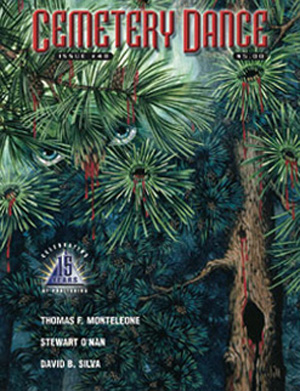
A few years later, I was sitting at the dining table in our new house – this one situated directly next to a lovely small park – laptop in front of me, thinking about what I should write next. I decided to write a short story, and I remembered that night trick-or-treating with Devon in our old neighborhood. The story I wrote was called “Portrait of a Horror Writer,” a metafictional story about where horror writers get their ideas, and among other things, I included the Man on the Stool. I submitted the story to Cemetery Dance magazine, and it was published in their 48th issue in 2004. If you’d like to read the story, you can find it on my website here.
So I guess I shouldn’t complain about the “writer gets an idea for a story from a real-life adventure” trope since I lived it, at least in a small way, and not only did I get a story out of it that was published in a great magazine – and for which I got paid – but I’ve kept the story on my website for years. That’s a lot of mileage to get out of one strange experience, but I’m thankful for that little big of dark magic that occurred that Halloween night.
I’m even more thankful that we moved, though.
Tim Waggoner’s first novel came out in 2001, and since then he’s published over forty novels and five collections of short stories. He writes original dark fantasy and horror, as well as media tie-ins. His novels include Like Death, considered a modern classic in the genre, and the popular Nekropolis series of urban fantasy novels. He’s written tie-in fiction based on Supernatural, Grimm, The X-Files, Alien, Doctor Who, A Nightmare on Elm Street, and Transformers, among others, and he’s written novelizations for films such as Kingsman: the Golden Circle and Resident Evil: the Final Chapter. His articles on writing have appeared in Writer’s Digest, Writer’s Journal, Writer’s Workshop of Horror, Horror 101, and Where Nightmares Come From. In 2017 he received the Bram Stoker Award for Superior Achievement in Long Fiction, and he’s been a finalist multiple times for both the Shirley Jackson Award and the Scribe Award. His fiction has received numerous Honorable Mentions in volumes of Best Horror of the Year, and he’s had several stories selected for inclusion in volumes of Year’s Best Hardcore Horror. In addition to writing, he’s also a full-time tenured professor who teaches creative writing and composition at Sinclair College in Dayton, Ohio.
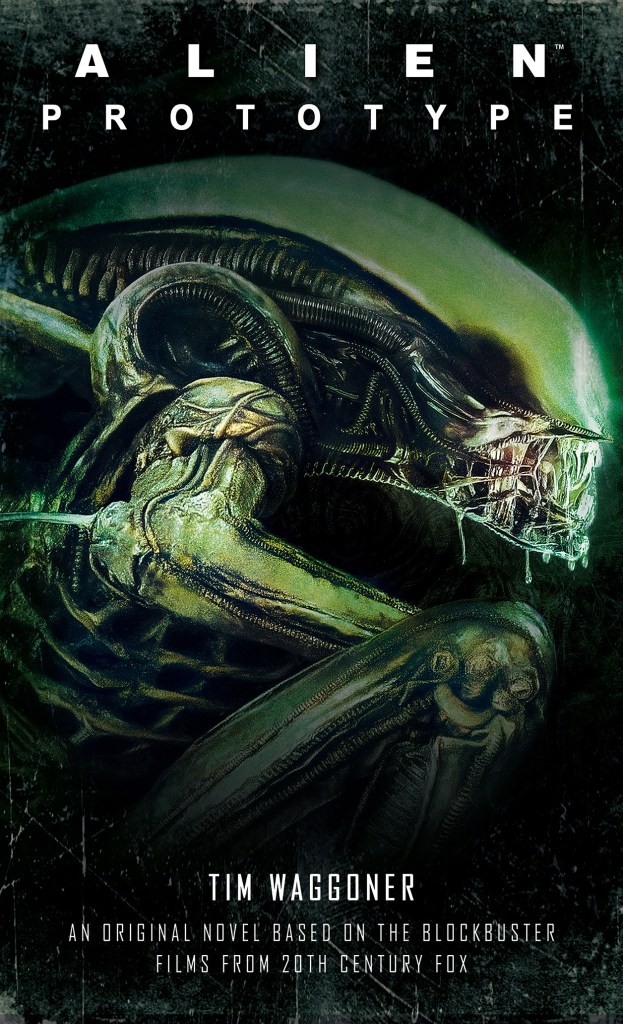
When an industrial spy steals a Xenomorph egg, former Colonial Marine Zula Hendricks must prevent an alien from killing everyone on an isolated colony planet.
Venture, a direct rival to the Weyland-Yutani corporation, will accept any risk to crush the competition. Thus, when a corporate spy “acquires” a bizarre, leathery egg from a hijacked vessel, she takes it directly to the Venture testing facility on Jericho 3.
Though unaware of the danger it poses, the scientists there recognize their prize’s immeasurable value. Early tests reveal little, however, and they come to an inevitable conclusion. They need a human test subject…
Enter Zula Hendricks.
A member of the Jericho 3 security staff, Colonial Marines veteran Zula Hendricks has been tasked with training personnel to deal with anything the treacherous planet can throw their way. Yet nothing can prepare them for the horror that appears–a creature more hideous than any Zula has encountered before.
Unless stopped, it will kill every human being on the planet.
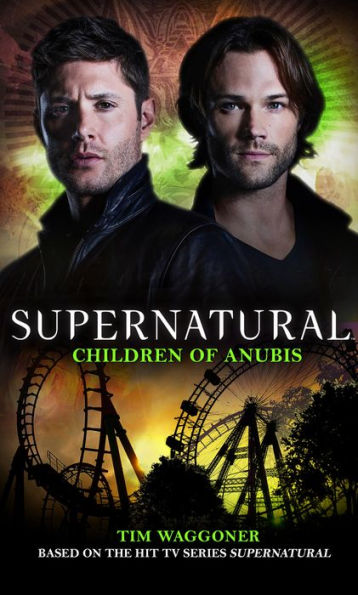
A brand new Supernatural novel inspired by the record-breaking show starring Jared Padalecki and Jensen Ackles.
A brand-new Supernatural novel that reveals a previously unseen adventure for the Winchester brothers, from the hit TV series!
Sam and Dean travel to Indiana, to investigate a murder that could be the work of a werewolf. But they soon discover that werewolves aren’t the only things going bump in the night. The town is also home to a pack of jakkals who worship the god Anubis: carrion-eating scavengers who hate werewolves. With the help of Garth, the Winchester brothers must stop the werewolf-jakkal turf war before it engulfs the town – and before the god Anubis is awakened…
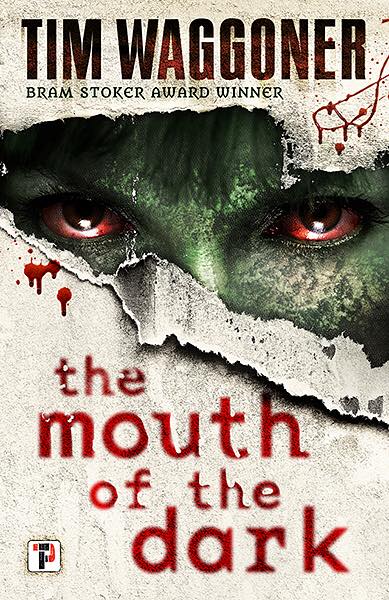
Jayce’s twenty-year-old daughter Emory is missing, lost in a dark, dangerous realm called Shadow that exists alongside our own reality. An enigmatic woman named Nicola guides Jayce through this bizarre world, and together they search for Emory, facing deadly dog-eaters, crazed killers, homicidal sex toys, and – worst of all – a monstrous being known as the Harvest Man. But no matter what Shadow throws at him, Jayce won’t stop. He’ll do whatever it takes to find his daughter, even if it means becoming a worse monster than the things that are trying to stop him.
What are you willing to do, what are you willing to become, to save someone you love?
Sierra Sowell’s dead brother Jeffrey is resurrected by a mysterious man known only as Corliss. Corliss also transforms four people in Sierra’s life into inhuman monsters determined to kill her. Sierra and Jeffrey’s boyfriend Marc work to discover the reason for her brother’s return to life while struggling to survive attacks by this monstrous quartet.
Corliss gives Sierra a chance to make Jeffrey’s resurrection permanent – if she makes a dreadful bargain. Can she do what it will take to save her brother, no matter how much blood is shed along the way?
Tim Waggoner is a rather interesting guy, but unfortunately (or fortunately, depending on how you look at it) he has never been part of the Halloween Extravaganza until this year. It was a lot of fun getting to know him better, and I have to say that this was, by far, one of the most interesting interviews I’ve ever done.
Meghan: Hi, Tim. Welcome to Meghan’s House of Books. It’s great having you here today. Tell us a little bit about yourself.
Tim Waggoner: I’m fifty-five, I’ve lived in Ohio most of my life, I’m a lifelong fan of all things weird and wonderful, I’ve been writing seriously since the age of eighteen, I’ve traditionally published close to fifty novels and seven collections of short stories, and I’ve taught college composition and creative writing courses for the last thirty years. I write both original fiction and media tie-ins, and the majority of my fiction falls into the genres of horror and dark fantasy.
Meghan: What are five things most people don’t know about you?
Tim Waggoner:
My wife thinks I’m addicted to buying Funko Pops, but she’s wrong. I can quit any time I want.
I hate raisins and watermelon. They’re the devil’s fruits.
I refuse to ruin a good cup of coffee by putting anything in it.
I can juggle (a little).
I’m a big fan of musicals.
Meghan: What is the first book you remember reading?
Tim Waggoner: The Spaceship Under the Apple Tree by Louis Siobodkin. It’s about a boy who makes friends with a young explorer from another planet. I wanted a friend who had a spaceship and could take me on trips to other worlds!
Meghan: What are you reading now?
Tim Waggoner: I’m a moody reader, and often I’ll read a little of one book, then a little of another, and so on. I also read one thing on my Kindle and listen to something else on audio when I drive. Right now I’m reading Starship: Mutiny by Mike Resnick and listening to The Consultant by Bentley Little.
Meghan: What’s a book you really enjoyed that others wouldn’t expect you to have liked?
Tim Waggoner: Maybe Mrs. Dalloway by Virginia Woolf. It’s a literary novel about relationships in which nothing of any real importance seems to happen, but I found it riveting. It’s one of the few books I’ve read in a single sitting. I love stories that are written with a close identification with a character’s viewpoint, regardless of genre.
Meghan: What made you decide you want to write? When did you begin writing?
Tim Waggoner: I’ve been telling stories one way or another my entire life. I was the one who’d come up with scenarios for my friends and me to act out on the playground, and I used to create epic sagas with my army men and action figures. But in terms of consciously deciding to write, it began when I was in high school and read an interview with Stephen King in an issue of the B&W comic magazine Dracula Lives. The Shining had just come out, and King wasn’t super-famous yet. It might have been the first interview with a writer I ever read, and before this, it had never really occurred to me that being a writer was something a person could choose. Something I could choose. I later told my mom that I thought I might like to be a writer, and she said, “I think you’d be a good one.” Her simple encouragement meant the world to me, and it still does.
Meghan: Do you have a special place you like to write?
Tim Waggoner: I usually go out to a Starbucks. I grew up in a noisy household, and I don’t like working in silence. I like to have a certain amount of noise and activity around me, and at Starbucks there’s no one who needs me – no wife, no kids, no students, no pets. I can get my coffee, sit down, and write. I usually spend about three to four hours working, which translates into roughly four or five pages of manuscript, sometimes more, especially when I’m nearing the end of a story or novel and the words are really flowing.
Meghan: Do you have any quirks or processes that you go through when you write?
Tim Waggoner: I like to write my first drafts by hand. The words seem to flow better that way. Personal computers didn’t appear until I was nineteen or twenty, so I spent most of my formative years writing by hand. I’m more focused when I write by hand, and I produce more pages faster. Typing it up is a real pain in the ass sometimes, but it allows me to edit and clean up the text as I input it into the computer, and I usually don’t need to do any more drafts after that.
Meghan: Is there anything about writing you find most challenging?
Tim Waggoner: I’ve been writing for thirty years, and at this point, I have to be careful not to repeat ideas and concepts I’ve used for other stories in the past. It’s one thing for an author to work with recurring themes throughout his or her career, but it’s another to keep writing the same basic story over and over without realizing it. Hopefully, I’ve managed to avoid accidental self-plagiarism, but if I haven’t, would I even know it?
Something else – it seems to take me a couple weeks to fully make the mental shift from one project to another – especially when I have a bunch of novel proposals out at various publishers, any one of which I might (if I’m lucky) have to start on at any time. But one of the downsides to being prolific is figuring out which projects to work on when and shifting my mindset from one type of fiction to another. That shift seems to be getting more difficult as I get older. My wife says I always start slow on a project and pick up speed as I go until I’m rocketing along at a fast pace, but I hate the slow start!
Meghan: What’s the most satisfying thing you’ve written so far?
Tim Waggoner: My short story “Mr. Punch,” which appeared in the anthology Young Blood twenty-five years ago was my first professional sale. It was also when I found my voice as a horror author. “Mr. Punch” is the first time I learned to trust my instincts as an artist and write the story I wanted to write, no matter how weird and bizarre it turned out. And I’ve been writing weird and bizarre stories ever since!
Meghan: What books have most inspired you? Who are some authors that have inspired your writing style?
Tim Waggoner: Stephen King’s novels influenced me in terms of developing character and a sense of place. Piers Anthony’s novels – especially the Xanth series – made me fall in love with wild, manic invention in fiction. Charles de Lint’s novels showed me the power of placing dark fantasy in the contemporary world, and Clive Barker showed me how to create my own strange mythology. Ramsey Campbell and Charles L. Grant’s fiction helped teach me how to draw unique dark imagery from my subconscious to create my monsters. Tom Piccirilli and Douglas Clegg’s novels showed me how to develop my weird horror at novel length. Mystery writer Lawrence Block’s how-to-write columns and books taught me more about writing fiction than any creative writing class ever did. There are so many more – Shirley Jackson, Harlan Ellison, Ray Bradbury, Richard Matheson . . . It’s sounds like a cliché when writers say everything they’ve ever read, watched, or experienced influences their work, but it’s true.
Meghan: What do you think makes a good story?
Tim Waggoner: For me, it’s something that stimulates my imagination. It could be an intriguing concept, an interesting character, an original plot, or a captivating style. The best is when a story has all of these elements going for it. I like to read stories that let me get into the characters’ heads, and I like stories that, even if they’re set in the contemporary world create a reality all their own. While I enjoy stories that have a leisurely pace, my favorites tend to be more fast-paced, possessing a strong forward-moving momentum.
Meghan: What does it take for you to love a character? How do you utilize that when creating your characters?
Tim Waggoner: I have to feel a connection to a character in order to love him or her. This connection can be small. Hannibal Lector doesn’t have many admirable qualities, but he likes and respects Clarice Starling, and I can connect to that bit of humanity that still exists inside him. In Poe’s The Tell-Tale Heart, I connect to the insane narrator’s very human need to tell his tale in order to be understood. I try to create such a human connection between my characters and readers, and hopefully I succeed more often than not.
Meghan: Which, of all your characters, do you think is the most like you?
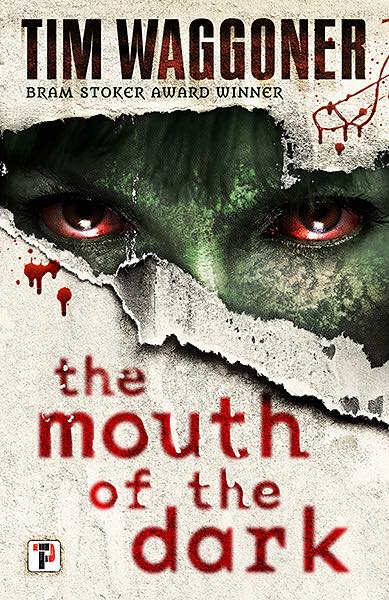
Tim Waggoner: They’re all part of me on way or another. Writers can never not write about ourselves. No matter how hard we try to disguise our characters, they’re all reflections of us in one way or another, even if they’re funhouse mirror distortions. My zombie PI Matt Richter from the Nekropolis series reflects my humorous side. Jayce in The Mouth of the Dark is the father side of me, while Neal in The Forever House is the part of me that can be insecure in relationships. My characters are all pieces of a puzzle that, if they were assembled, would make a portrait of me.
Meghan: Are you turned off by a bad cover? To what degree were you involved in creating your book covers?
Tim Waggoner: When I first started writing, I heard a lot of professional writers say that editors always change the titles of your books and you never get any input into the cover. That’s not been my experience, though. Most editors keep my original titles, and they usually ask for my input on the covers. Most of the time, one of my suggestions forms the basis for the cover, and usually I think they turn out pretty good. Sometimes I think the covers are just okay, and other times – only a few – I dislike them. But there’s nothing that can be done at that point. The only thing I really hate is if a cover image has nothing to do with the book’s contents. When I was a kid, I hated it when the main character on a book cover looked different than the way the author described him or her, or if the cover seemed to promise a very different kind of story. The original cover for Jack Ketchum’s masterpiece The Girl Next Door is a perfect example. It depicts a skeleton in a cheerleader’s outfit, implying the story is a generic spooky tale when in fact it’s a brutal, bleak, uncompromising examination of violence toward the Other, of the dangers of going along with the group, and how ultimately violence affects both victims and perpetrators alike. I bet a lot of people who bought that paperback edition were shocked as hell when they started to read the book –which, now that I think about it, is pretty cool. Good horror should never be safe. So maybe, in a sense, that cover worked after all, just no in the way the publisher intended it to.
Meghan: What have you learned creating your books?
Tim Waggoner: What haven’t I learned? Writing novels uses more of me than anything else I’ve ever done. I’ve learned patience, perseverance, mental and emotional resilience . . . I’ve learned to prioritize my time, to take risks, to deal with setbacks, disappointments, self-doubts, and failures. I’ve learned so much about story – what makes one work, what makes one not work. . . I’ve learned how to write for readers without my awareness of those readers making me so self-conscious I freeze up. I’ve learned how to deal with praise, criticism, and outright hatred of my work. I’ve learned how to win awards and how to lose them. I’ve learned how to be a member of a writing community and how to – I hope – be a good citizen of that community. Most of all, I’ve learned more about who Tim Waggoner is, who he was, and who he might one day become.
Meghan: What has been the hardest scene for you to write so far?
Tim Waggoner: In my story “Voices Like Barbed Wire” I based a scene on when my ex-wife and I told our daughters that we were going to get divorced. It’s one of my most painful memories – one which I would happily cut out of my brain if I knew how – but since the story is about a woman who wants to get rid of a bad memory, I decided to give her my worst one so that the story might have more emotional truth and, at least to me, have more meaning. And by putting the memory in the story, maybe I managed to exorcise it from my mind, at least a little.
Meghan: What makes your books different from others out there in this genre?
Tim Waggoner: That’s hard for me to say. I just think of my horror novels as Tim Waggoner stories. Reviewers have remarked on my original ideas and nightmarish imagery, my strong characters and fast-paced narratives, and my blend of different styles of horror – from quiet to erotic to extreme to surreal – in the same novel. That’s probably as good a description as any of the kind of thing I write.
Meghan: How important is the book title, how hard is it to choose the best one, and how did you choose yours (of course, with no spoilers)?
Tim Waggoner: I put a lot of work into titles. I keep a file with possible titles in it – phrases I’ve overheard or read somewhere, snatches of song lyrics or poetry that spark my imagination . . . I also keep story ideas in the same file, weird things I’ve seen, heard, or thought, bizarre news stories I’ve read, etc. When it’s time to start a new project, I go through the file, looking for ideas. Sometimes I start with an idea, but a lot of times I start with the title. Sometimes an idea and a title seem perfect for each other. For example, a while ago, I had an idea about a house that was infinite on the inside. One of the phrases I’d collected was The Forever House. The idea and the phrase matched so well, that I decided to write a novel using that title. I did a search on Google and Amazon to see if anyone else had ever used that title for a novel – especially a horror novel – and when I was confident no one had, I committed to The Forever House as the title for the book.
Meghan: What makes you feel more fulfilled: Writing a novel or writing a short story?
Tim Waggoner: I feel most fulfilled when I write novels. I like the complexity of them and the chance to develop characters in greater detail than I can with a short story. In novels, you can work with a larger scope and with bigger ideas. I enjoy seeing all the ways that I can take plot points and spin out different threads from them, and I love weaving all those threads together and making connections between them to create a richer, tighter narrative.
Short stories are in some ways harder for me to write. They require a laser-like focus on a narrower concept, and you have to make every word, every image count. My brain always feels like it gets a workout when I write a short story, but I get a lot of satisfaction when I finish one because they don’t come so easily to me.
Meghan: Tell us a little bit about your books, your target audience, and what you would like readers to take away from your stories.
Tim Waggoner: In the horror community, I’m known for writing a certain kind of surreal, existential horror, but I’ve written a lot of different kinds of fiction: epic fantasy, action-adventure, spy thriller, creature-feature fiction, erotica, science fiction, urban fantasy, young adult, middle-grade reader . . . Most of those were tie-in books where the genre was given to me. I like that because it stretches me as a writer, makes me try my hand at genres that I might not otherwise attempt. Whatever the genre, I always try to give the reader developed characters, interesting ideas, and a fast-paced, smooth read. I want to stimulate readers’ imaginations – which is, as I said earlier, I seek as a reader myself – and I hope to make readers think. I want to surprise them with my stories, take them places where they don’t expect. I hope they’ll view the genre a little differently when they’ve finished one of my books.
I write my horror novels for fans that are well-versed in the genre and are looking for something different. My tie-in novels have different audiences. For example, I write Supernatural novels for fans of the TV series, although I hope that anyone can enjoy them.
I like to write my books on two levels: on one level, I hope they’re fun, enjoyable reads, but on another, deeper level, I play with genre conventions and write an almost metafictional critique of the genre itself. I try to do the latter as subtly as possible, so I don’t spoil the story for anyone, but there’s a deeper layer to the story for those who want a little more from a reading experience. A colleague once told me I write “deep parody,” and I suppose that’s as good a description as any of what I do. I’m not trying to mock a genre or its readers, but I hope that I can get them to engage with the genre in a different way and perhaps even show them something about the genre they’ve never considered before. I do this in my tie-in books too (but don’t tell my editors!).
Meghan: Can you tell us about some of the deleted scenes/stuff that got left out of your work?
Tim Waggoner: I don’t usually have to cut anything from my original work. Editors do sometimes make me cut some stuff from tie-in novels. Years ago, I was working on A Nightmare on Elm Street novel. New Line Cinema was taking a long time to approve my outline, so the editor told me to just go ahead and start writing. I was sixty pages into the book when the editor told me the studio refused to approve the idea. My concept was that Freddie was returned to life as a human and was trying to find a way to return to the dream realm. The studio didn’t want Freddie to be human again because it brought up the specter of him being a child molester in life, something the studio didn’t want to remind people of. I had to come up with an entirely new outline for a novel, and New Line approved it, and that became my novel A Nightmare on Elm Street: Protégé. That experience taught me never to begin drafting a tie-in novel before the rights holder gives their approval.
Meghan: What is in your “trunk”?
Tim Waggoner: I have a number of novel proposals that my agent sends around to publishers, and of course not all of them are picked up. I’d love to work on some of those projects, but I’ve been selling novels on the basis of proposals for twenty years now. I prefer to have a contract in hand before I fully commit to writing a novel. But even if all my proposals were picked up by editors, I doubt I’d have time to write them all before I die. It’s the lot of artists to know that we’ll never be able to make all the things we want to make in a single lifetime. The trick is to make as many as possible in the time we have.
Meghan: What can we expect from you in the future?
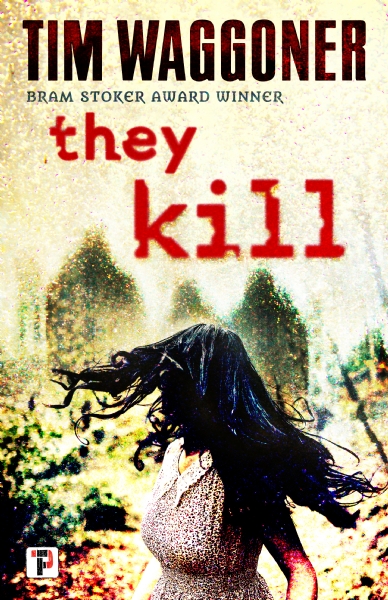
Tim Waggoner: My tie-in novel Alien: Protocol will be out in late October. I’ll have two other books out in 2020, a horror novel called The Forever House from Flame Tree Press, and a how-to-write horror book called Writing in the Dark from Guide Dog Books. I’m especially proud of Writing in the Dark since it’s a culmination of thirty years of writing and teaching.
Meghan: Do you have any closing words for your fans or anything you’d like to say that we didn’t get to cover in this interview?
Tim Waggoner: Aardvark, zither, chrysanthemum.
Tim Waggoner’s first novel came out in 2001, and since then he’s published over forty novels and five collections of short stories. He writes original dark fantasy and horror, as well as media tie-ins. His novels include Like Death, considered a modern classic in the genre, and the popular Nekropolis series of urban fantasy novels. He’s written tie-in fiction based on Supernatural, Grimm, The X-Files, Alien, Doctor Who, A Nightmare on Elm Street, and Transformers, among others, and he’s written novelizations for films such as Kingsman: the Golden Circle and Resident Evil: the Final Chapter. His articles on writing have appeared in Writer’s Digest, Writer’s Journal, Writer’s Workshop of Horror, Horror 101, and Where Nightmares Come From. In 2017 he received the Bram Stoker Award for Superior Achievement in Long Fiction, and he’s been a finalist multiple times for both the Shirley Jackson Award and the Scribe Award. His fiction has received numerous Honorable Mentions in volumes of Best Horror of the Year, and he’s had several stories selected for inclusion in volumes of Year’s Best Hardcore Horror. In addition to writing, he’s also a full-time tenured professor who teaches creative writing and composition at Sinclair College in Dayton, Ohio.
When an industrial spy steals a Xenomorph egg, former Colonial Marine Zula Hendricks must prevent an alien from killing everyone on an isolated colony planet.
Venture, a direct rival to the Weyland-Yutani corporation, will accept any risk to crush the competition. Thus, when a corporate spy “acquires” a bizarre, leathery egg from a hijacked vessel, she takes it directly to the Venture testing facility on Jericho 3.
Though unaware of the danger it poses, the scientists there recognize their prize’s immeasurable value. Early tests reveal little, however, and they come to an inevitable conclusion. They need a human test subject…
Enter Zula Hendricks.
A member of the Jericho 3 security staff, Colonial Marines veteran Zula Hendricks has been tasked with training personnel to deal with anything the treacherous planet can throw their way. Yet nothing can prepare them for the horror that appears–a creature more hideous than any Zula has encountered before.
Unless stopped, it will kill every human being on the planet.
A brand new Supernatural novel inspired by the record-breaking show starring Jared Padalecki and Jensen Ackles.
A brand-new Supernatural novel that reveals a previously unseen adventure for the Winchester brothers, from the hit TV series!
Sam and Dean travel to Indiana, to investigate a murder that could be the work of a werewolf. But they soon discover that werewolves aren’t the only things going bump in the night. The town is also home to a pack of jakkals who worship the god Anubis: carrion-eating scavengers who hate werewolves. With the help of Garth, the Winchester brothers must stop the werewolf-jakkal turf war before it engulfs the town – and before the god Anubis is awakened…
Jayce’s twenty-year-old daughter Emory is missing, lost in a dark, dangerous realm called Shadow that exists alongside our own reality. An enigmatic woman named Nicola guides Jayce through this bizarre world, and together they search for Emory, facing deadly dog-eaters, crazed killers, homicidal sex toys, and – worst of all – a monstrous being known as the Harvest Man. But no matter what Shadow throws at him, Jayce won’t stop. He’ll do whatever it takes to find his daughter, even if it means becoming a worse monster than the things that are trying to stop him.
What are you willing to do, what are you willing to become, to save someone you love?
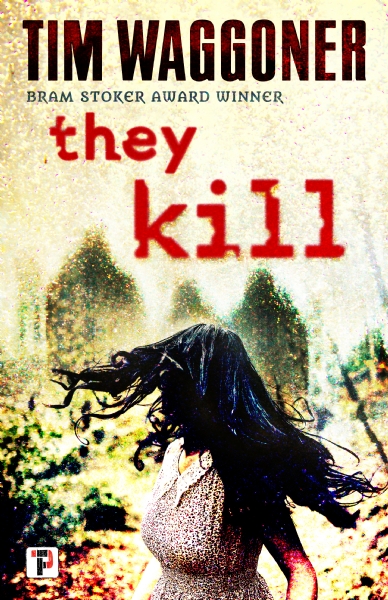
Sierra Sowell’s dead brother Jeffrey is resurrected by a mysterious man known only as Corliss. Corliss also transforms four people in Sierra’s life into inhuman monsters determined to kill her. Sierra and Jeffrey’s boyfriend Marc work to discover the reason for her brother’s return to life while struggling to survive attacks by this monstrous quartet.
Corliss gives Sierra a chance to make Jeffrey’s resurrection permanent – if she makes a dreadful bargain. Can she do what it will take to save her brother, no matter how much blood is shed along the way?
Catherine Cavendish is a must-read horror author and someone I am super excited about having involved in this year’s Halloween Extravaganza. If you haven’t read any of her work, I encourage you to give her a chance. It won’t be a waste of time, I assure you.
Meghan: Hi, Catherine. Welcome welcome. Tell us a little bit about yourself.
Catherine Cavendish: I’m a published author of horror tales mainly in the supernatural, paranormal, Gothic, and ghostly traditions.
Meghan: What are five things most people don’t know about you?
Catherine Cavendish: When I was a child, I planted a conker that is now a flourishing, tall horse chestnut tree
I am not fond of chocolate. I don’t hate it, but I could live without it perfectly happily. Cheese on the other hand…
I have a phobia about stairs – I had a nasty accident involving them a few years back.
When I was a small child, I wanted to be a ballerina.
Again, when I was a small child, I had an invisible friend called Gerry. He went everywhere with me, much to my mother’s embarrassment.
Meghan: What is the first book you remember reading?
Meghan: What made you decide you want to write? When did you begin writing?
Catherine Cavendish: There is no one answer to this as I cannot remember a time I didn’t want to write. The need to tell a story that builds in my head and refuses to go away is what always gets me started. I began writing as soon as I could hold a pencil.
Meghan: Do you have a special place you like to write?
Catherine Cavendish: At my desk in my home office/library. The walls are lined with bookshelves. Perfect for me.
Meghan: Do you have any quirks or processes that you go through when you write?
Catherine Cavendish: Nothing out of the ordinary. I research locations and settings on the internet and create a file of pictures. I also do this with main characters. For books requiring research, I read a lot beforehand to drown myself in the atmosphere of the time and place in which I am setting the story.
Meghan: Is there anything about writing you find most challenging?
Catherine Cavendish: Hunting out and ridding the story of anomalies that creep in. Even when you think you’ve dispatched them all, there is always one lurking in a corner ready to trip you up.
Meghan: What’s the most satisfying thing you’ve written so far?
Catherine Cavendish: That’s a hard one to answer. I am particularly partial to my latest – The Haunting of Henderson Close – because I had the basic idea for that story for a number of years and finally got around to writing it.
Meghan: What books have most inspired you? Who are some authors that have inspired your writing style?
Catherine Cavendish: Strong, multi layered characters working their way through a plot with unexpected twists and turns, challenges, atmosphere, suspense and an ending you weren’t expecting.
Meghan: What does it take for you to love a character? How do you utilize that when creating your characters?
Catherine Cavendish: I hate prissy, sweet, text book characters. I love flawed, sometimes damaged personalities who fight against the circumstances in which they find themselves. I like them to be non-conformist or to have broken away from the life they were expected to follow. I like rebels. I strive to incorporate this in my main characters. They are usually thirty years old, or more, and have had ups and downs in their lives. Of course, little do they know that things are about to take a turn for the worse and they will need all their reserves of strength and resilience…
Meghan: Which, of all your characters, do you think is the most like you?
Catherine Cavendish: There are elements of me in most of my main characters but none are especially like me. I suppose the closest is probably Nessa who features in a novel I am currently working on. She goes through some of the major medical issues I faced a few years ago and I do see more of myself in her.
Meghan: Are you turned off by a bad cover? To what degree were you involved in creating your book covers?
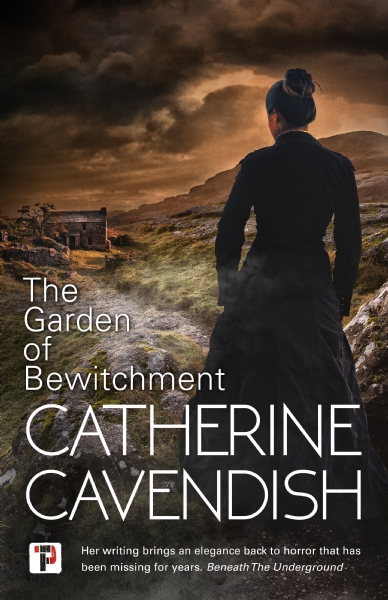
Catherine Cavendish: If we are honest, I think most of us look at the cover first and make an unconscious snap judgement about the content of the story based on that. I am lucky in that all my publishers (so far) have involved me quite heavily in the process. For The Haunting of Henderson Close and my upcoming novel, The Garden of Bewitchment, the publishers – Flame Tree Press – invited me to submit suggestions. I did so, fairly comprehensively as I always do, and the resulting covers are as near to my vision as I believe it is possible to be. I am delighted with them and feel they accurately reflect the content in each case. This also applies to my titles with Crossroad Press.
Meghan: What have you learned creating your books?
Catherine Cavendish: That you never stop learning and there is always room for improvement.
Meghan: What has been the hardest scene for you to write so far?
Catherine Cavendish: That has to be in my current work in progress because it involved a serious medical condition and surgery I actually lived through. While I was writing it, I felt myself back in the hospital, in pain, a bit scared and wondering how I was going to get through it. As far as my currently published work is concerned, the final scene in Saving Grace Devine reduced me to tears.
Meghan: What makes your books different from others out there in this genre?
Catherine Cavendish: I think you would have to ask my readers that one. I like to think maybe it’s the combination of gothic with supernatural and the twists I take at the end. I like to challenge!
Meghan: How important is the book title, how hard is it to choose the best one, and how did you choose yours (of course, with no spoilers)?
Catherine Cavendish: I think titles are critical. Whenever I come up with one, I always check it to see if there are any other books with the same title. If there are, I avoid it and think again. Of course, there is nothing to stop someone else coming up with the same title as yours, but I think it prevents possible confusion if you try and avoid one already in use.
Sometimes a title is the first thing that comes to me and, at other times, I really have to work at it, discarding three or four choices before finding the one that really fits the bill. One of the easiest was The Haunting of Henderson Close. I had picked the name of the Close after checking that no such place existed in Edinburgh and, as the novel was about an evil haunting, the rest came naturally.
Meghan: What makes you feel more fulfilled: Writing a novel or writing a short story?
Catherine Cavendish: In their own ways, both, but because of the length of time and energy expended on writing a novel, the time when you finally decide ‘that’s it’, is a greatly fulfilling one.
Meghan: Tell us a little bit about your books, your target audience, and what you would like readers to take away from your stories.
Catherine Cavendish: My take on horror is the jump-scare, something lurking in the shadows, the stuff of nightmares. I often set – at least part of – my stories in the past because I love history and exploring historical locations. Mine is the world of ghosts, demons, witches, devils and unquiet spirits, frequently with a Gothic flavour. I use folklore traditions that exist and ones I create myself. My target audience is anyone who enjoys a scary, creepy story, suspense and/or horror. When they have finished one of my stories, I hope readers have enjoyed the experience and want to read more
Meghan: Can you tell us about some of the deleted scenes/stuff that got left out of your work?
Catherine Cavendish: If a scene fails to move the story along, or has no relevance to what came before or will come after, out it goes. Once it’s gone, it’s gone and I don’t tend to think about it anymore.
Meghan: What is in your “trunk”?
Catherine Cavendish: I have a tin containing scraps of paper with notes on, or sometimes merely a line or two suggesting a plot for a short story, novel or novella. One came from a vivid dream I had which I can still remember around six years on. I was in a wood and came across an old timber hut. There was an exquisite and clearly expensive picture on the porch…and that’s all I’m telling you. I’ll write that story one day… maybe
Meghan: What can we expect from you in the future?
Catherine Cavendish: On February 10th, Flame Tree Press will be publishing The Garden of Bewitchment which is set in Bronte country – Haworth and its environs – in West Yorkshire, near where I grew up. This is a ghostly and Gothic tale involving twin sisters who are obsessed with the works of the Bronte sisters. Here’s the official blurb:
Don’t play the game
In 1893, Evelyn and Claire leave their home in a Yorkshire town for life in a rural retreat on their beloved moors. But when a strange toy garden mysteriously appears, a chain of increasingly terrifying events is unleashed. Neighbour Matthew Dixon befriends Evelyn, but seems to have more than one secret to hide. Then the horror really begins. The Garden of Bewitchment is all too real and something is threatening the lives and sanity of the women.
Evelyn no longer knows who – or what – to believe. And time is running out.
Meghan: Where can we find you? (Links to anywhere you’re okay with fans connecting with you.)
(I also have Instagram but I’m not particularly good at it! Camera-shy I guess.)
Meghan: Do you have any closing words for your fans or anything you’d like to say that we didn’t get to cover in this interview?
Catherine Cavendish: Thank you to everyone who has read or reads my work. I really appreciate your support. Long may it continue. Keep reading scary stories!
Cat first started writing when someone thrust a pencil into her hand. Unfortunately as she could neither read nor write properly at the time, none of her stories actually made much sense. However as she grew up, they gradually began to take form and, at the tender age of nine or ten, she sold her dolls’ house, and various other toys to buy her first typewriter. She hasn’t stopped bashing away at the keys ever since, although her keyboard of choice now belongs to her laptop.
The need to earn a living led to a varied career in sales, advertising and career guidance but Cat is now the full-time author of a number of supernatural, ghostly, haunted house and Gothic horror novels, novellas and short stories. These include (among others): The Haunting of Henderson Close, The Devil’s Serenade, and Saving Grace Devine.
Cat lives in Southport, in the U.K. with her longsuffering husband, and a black cat, who has never forgotten that her species was once worshipped in Egypt.
When not slaving over a hot computer, Cat enjoys wandering around Neolithic stone circles and visiting old haunted houses.
Ghosts have always walked there. Now they’re not alone…
In the depths of Edinburgh, an evil presence is released.
Hannah and her colleagues are tour guides who lead their visitors along the spooky, derelict Henderson Close, thrilling them with tales of spectres and murder. For Hannah it is her dream job, but not for long. Who is the mysterious figure that disappears around a corner? What is happening in the old print shop? And who is the little girl with no face?
The legends of Henderson Close are becoming all too real. The Auld De’il is out – and even the spirits are afraid.
Maddie had forgotten that cursed summer. Now she’s about to remember…
When Maddie Chambers inherits her Aunt Charlotte’s Gothic mansion, old memories stir of the long-forgotten summer she turned sixteen. She has barely moved in before a series of bizarre events drives her to question her sanity.
The strains of her aunt’s favorite song echo through the house, the roots of a faraway willow creep through the cellar, a child who cannot exist skips from room to room, and Maddie discovers Charlotte kept many deadly secrets.
Gradually, the barriers in her mind fall away, and Maddie begins to recall that summer when she looked into the face of evil. Now, the long dead builder of the house has unfinished business and an ancient demon is hungry. Soon it is not only Maddie’s life that is in danger, but her soul itself, as the ghosts of her past shed their cover of darkness.
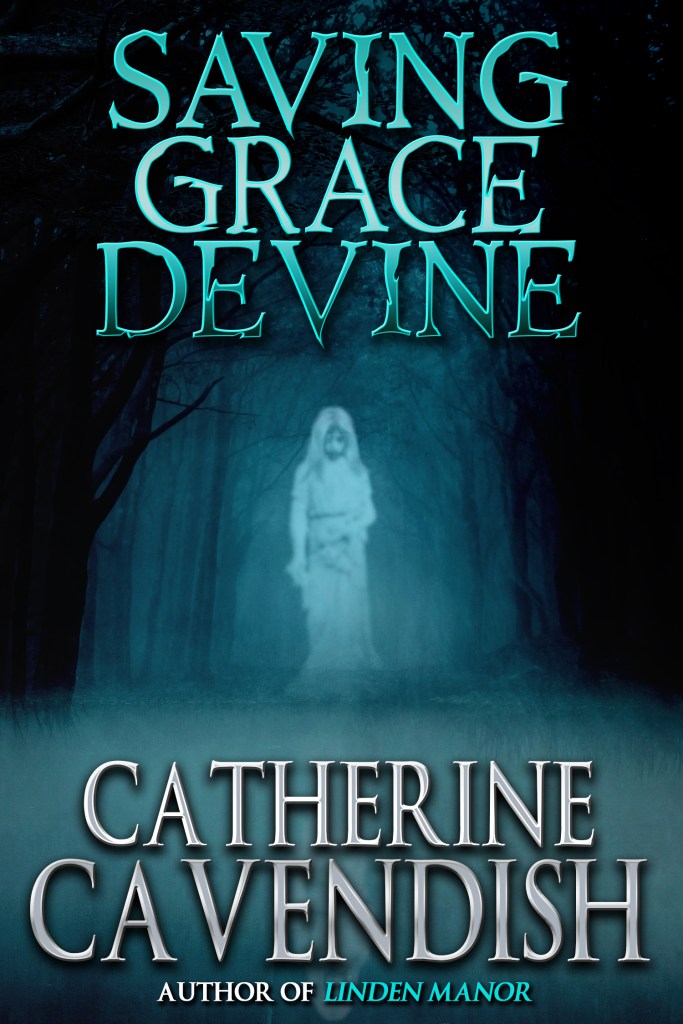
When Alex Fletcher finds a painting of a drowned girl, she s unnerved. When the girl in the painting opens her eyes, she is terrified. And when the girl appears to her as an apparition and begs her for help, Alex can t refuse.
But as she digs further into Grace s past, she is embroiled in supernatural forces she cannot control, and a timeslip back to 1912 brings her face to face with the man who killed Grace and the demonic spirit of his long-dead mother. With such nightmarish forces stacked against her, Alex s options are few. Somehow she must save Grace, but to do so, she must pay an unimaginable price. “









 Meghan's House of Books