Halloween Extravaganza: JG Faherty: Halloween & My Writing Career

I love these blog posts because I can let the authors pretty much do what they want. In this one, JG tells us about a Halloween that led him to be the author he is now. A great read.


Hello, there! My name is JG Faherty, Iโ€™m a horror and dark fiction author, and Iโ€™ve been granted free reign for todayโ€™s blog. So strap and in prepare yourself for some Halloween-themed brain musings.

I thought long and hard about what to discuss today. The topic of Halloween offers so many options โ€“ the history of the holiday, childhood memories, what Halloween means to me, things Iโ€™ve written that deal with Halloween.

In the end, I decided to do something of an amalgam and talk about not just a strong Halloween moment but how that moment impacted me as a writer.

Iโ€™ve always been a huge fan of Halloween, all the way back to when I was a little kid dressing up as Spider Man, trick-or-treating with my friends, and watching the Great Pumpkin. Back then, it would only be on once the whole month of October and I made sure to never miss it. As I got a little older, two things happened โ€“ I added the juvenile pranks of Gate Night/Mischief Night to my celebration (shaving cream, soap, flaming dog poo, all the standards!) and I discovered a book: Something Wicked This Way Comes, by Ray Bradbury.

Wow.

To the 12-year-old me, that was possibly the most amazing book ever. Better than Poe, Shelley, Stoker, or Verne, the classic writers Iโ€™d been reading up to that point. Better than the Hardy Boys. Better than James Blish, who was writing a lot of Star Trek tie-ins that I enjoyed so much. Better even than Heinlein, who Iโ€™d recently discovered.

I fell in love, not just with the book, and Bradbury as a writer, but with how it spoke to me. A kid from a small town in the country who loved scary stuff and carnivals. (Did I mention we used to play in the local graveyards?)

I probably read that book three times before I got into high school, and another three times since. It didnโ€™t start my life-long infatuation with all things horror and Halloween, but it did give me a particular fondness for small-town terrors, Halloween-themed stories, and coming of age stories.

Which leads me to the year 2001.

Yes, weโ€™ve jumped forward quite a bit. 2001 was the year I started writing fiction. The previous year, Iโ€™d gotten a side job writing study guides for The Princeton Review, 4th and 5th grade, mostly. English, Language Arts. Each book was about 100 pages long and I had to write the practice reading assignments plus all the questions and answers. Although Iโ€™d always had a deep desire to be a writer, Iโ€™d never thought I had the ability, and other than 1 very abortive attempt in college, I never tried. I did a lot of writing for work, as a research scientist and laboratory manager, but never fiction.

Until those study guides. And I discovered it was fun. And it came easy to me. Iโ€™ve talked about how this led to me writing my first fiction in other blogs, so I wonโ€™t repeat that here.

By 2001, I had 2 short stories published. A few others in the works. And then it happened.

The dream.

A bunch of college students stuck inside a Halloween carnival, run by a demon. They had to go through every room in the haunted mansion, where all the monsters came alive. A cool dream, right?

But there was more.

I dreamed an entire novel, from beginning to end. And not just one story, but a whole series of them. I saw not just the haunted mansion, but also all the other rides, the side shows, the games. The monsters behind the masks at every booth. How the carnival appeared every Halloween since the dawn of time, never in the same place.

When I woke up, I immediately grabbed a notebook and pen and started writing. I wrote and I wrote and I wrote. For two weeks, I wrote in the morning, at lunch, and after work. I wrote on the weekends. And I finished that novel in record time. Not an outline, the whole damn novel!

Then I transcribed it into the computer. 137,000 words. I proofed it, got it down to 129,000.

It didnโ€™t sell. I was young and naรฏve then, I knew nothing about the publishing industry or how bad the quality of a first novel is. Over the next few years, I honed my skills, kept rewriting that book, took the Borderlands Writers Bootcamp and had famous writers critique it. I got a mentor through the Horror Writers Association and she helped me.

And in 2009, I sold it. Carnival of Fear. Published in 2010. Still available (feel free to buy it!).

But remember how I said I dreamed of more?

Thereโ€™s a lot more.

I wrote 3 short stories based on that carnival. And a novella, which was published by Samhain Publishing a few years ago. Plus some poems. I have the sequel to Carnival of Fear half-written in my computer, and the only reason itโ€™s not complete is because Iโ€™ve worked on other books before it. During that dream, I saw the sequel, the spin-off stories. I woke up with ideas for what could happen on every ride, under every tent. I knew which ones would be short stories and which ones longer pieces.

Never in my life had I ever experienced anything like that, and never since.

Although I have, and will, write about other things, every couple of years in one way or another I come back to the world of Carnival of Fear and pluck another story from my dream memories.

What is it about the Carnival of Fear universe that is so vital to me I keep going back to it?

Itโ€™s my Something Wicked. In the past, Iโ€™ve said my book was an homage to Bradburyโ€™s. And it is. Teens, haunted carnival, strange carnies, bad things happen. But itโ€™s more than that.

Because I identified so much with Bill Halloway and James Nightshade, I created characters like them for my stories. Ordinary boys, girls, men, and women caught up in something they donโ€™t understand. Small town people, because where else would a mysterious carnival pop up?

People like me. Like my friends and family.

Bradbury wrote with a simple, everyman style, and all my favorite authors write that way. Do I like them because of him? Probably. Folks like King, Keene, Wilson, Koontz, Hamilton, Collins, Maberry.

Did Bradbury play a part in shaping the way I write? How could he not?

After I found Bradbury and read everything I could by him, I discovered other writers who focused on that small town or country vibe. Manly Wade Wellman. Karl Edward Wagner. People who made any story feel like a cold October night in upstate New York.

Bradbury has written a lot of stuff, but for me opening any of his books always makes me feel like Iโ€™m opening the door to Halloween, that itโ€™s the season where anything can happen.

When I wrote Carnival of Fear, I wanted my book to be just like that for a new generation. Not just frightening, but exhilarating. I wanted people to remember what Halloween was like as a kid, as a teen, when they turned those pages. I wanted them to smell the popcorn and cotton candy, taste the candied apples and French fries and hot dogs.

Remember what it was like to pal around with friends or hold hands with someone special and breathe the crisp October air.

I wanted them to feel the way I did when I read Something Wicked This Way Comes for the first time.

And thatโ€™s my Halloween story for you.

Happy Halloween!

OLYMPUS DIGITAL CAMERA

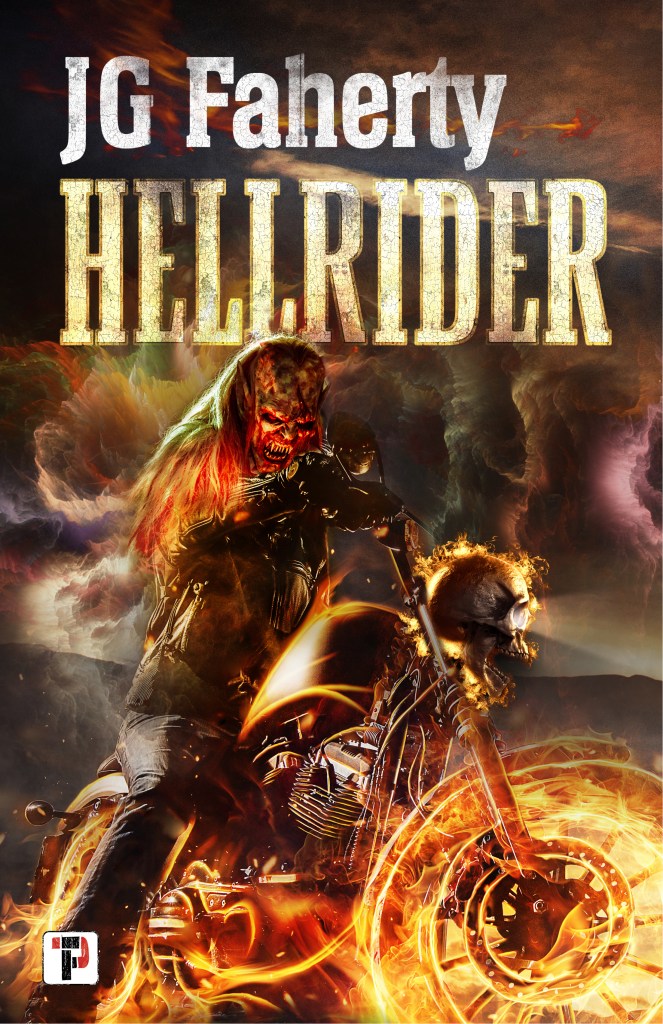
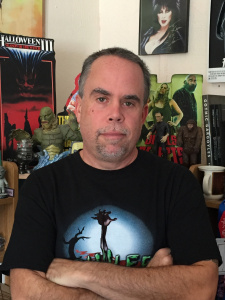
A life-long resident of New York’s haunted Hudson Valley, JG Faherty has been a finalist for both the Bram Stoker Award (The Cure, Ghosts in Coronado Bay) and ITW Thriller Award (The Burning Time), and he is the author of 7 novels, 10 novellas, and more than 75 short stories. His next novel, Hellrider, comes out from Flame Tree Press in August of 2019. He grew up enthralled with the horror movies and books of the 60s, 75, 70s, and 80s. Which explains a lot.

Carnival of Fear

The carnival is in town… What was supposed to be an evening of fun and laughter for JD Cole and the other students of Whitebridge High turns into a never-ending night of terror. Trapped inside the Castle of Horrors by the demonic Proprietor, good friends and bitter rivals must band together to make it through the maze of torturous attractions, where fictional monsters come to life, eager to feast on human flesh. Vampires, zombies, werewolves, and aliens lurk around every corner as JD and his friends struggle from one room to the next, fighting for their sanity, fighting to survive, fighting to escape … The Carnival of Fear.

The Cure

She was born with the power to cure. Now sheโ€™s developed the power to kill. Leah DeGarmo has the power to cure with just a touch. But with her gift comes a dark side: Whatever she takes in she has to pass on, or suffer it herself. 

Now a sadistic criminal has discovered what she can do and heโ€™ll stop at nothing to control her. He makes a mistake, though, when he kills the man she loves, triggering a rage inside her that releases a new power she didnโ€™t know she had: the ability to kill. 

Transformed into a demon of retribution, Leah resurrects her lover and embarks on a mission to destroy her enemies. The only question is, does she control her power or does it control her?

Houses of the Unholy

In this new collection of stories, genre favorite JG Faherty takes you on a tour of unholy houses, where you’ll find: 

– A man struggling to discover why all the people in his life are disappearing when he falls asleep. 
– An accident in a mountain pass that turns into a deadly encounter with a mythical beast. 
– A man who learns that the only thing worse than being a passenger on the train to Hell is being the engineer. 
– A town where the dead coming back to life isn’t the worst thing that can happen. 
– A young couple who uncover a terrible secret in the town that has ostracized them for their sins. 
– A science experiment gone wrong that could spell the end of mankind. 

The collection also includes “The Lazarus Effect,” a chilling post-apocalyptic story where survivors face off against godless undead, and a brand new novella-length sequel, “December Soul.”

Hellrider

After being burned alive by a gang, the Hell Riders, he used to belong to, Eddie Ryder returns as a heavy-metal spouting ghost with a temper that’s worse now than when he was alive. At first he is nothing more than a floating presence, depressed he has to spend eternity watching his teenage brother, Carson, and ailing mother struggle without him. Then he develops powers. And he can control electricity. He can conjure the ghostly doppelganger of his motorcycle, Diablo, and fly across the sky, but he can’t escape the boundaries of his hometown, Hell Creek. 

Eddie decides to exact his revenge on the bikers who killed him. Before he can do more than scare some of the bikers, however, he discovers something even better: he can posses people. He uses this ability to get the gang members to attack each other, and to deliver a message to the current leader, Hank Bowman: Eddie’s Coming. 

Spouting fire and lightning from his fingers and screaming heavy metal lyrics as he rides the sky above the town of Hell Creek, he brings destruction down on all those who wronged him, his power growing with every death. Only Eddie’s younger brother, Carson, and the police chief’s daughter, Ellie, understand what’s really happening, and now they have to stop him before he destroys the whole town.

Halloween Extravaganza: INTERVIEW: JG Faherty

Meghan: Hi, JG. Welcome to Meghan’s House of Books. Tell us a little bit about yourself.

JG Faherty: Letโ€™s see. Iโ€™ve been writing fiction since 2000. My first novel was published in 2010. I write primarily in the areas of horror, supernatural thrillers, YA, and paranormal romance, plus a little dark science fiction and fantasy. My hobbies are playing the guitar, watching bad sci-fi movies, visiting wineries, and reading. I own a rescue dog, Iโ€™m married, and I live in a very haunted region of New York State.

Meghan: What are five things most people donโ€™t know about you?

JG Faherty:

  • I studied herpetology in college and used to own more than a dozen venomous snakes.
  • I have built four guitars.
  • I have been published three times in Chicken Soup for the Soul anthologies.
  • I used to write an advice column many years ago.
  • I enjoy exploring abandoned buildings.

Meghan: What is the first book you remember reading?

JG Faherty: Try as I might, I canโ€™t remember the very first book. I know I started reading at a young age. I know that by the time I was 7 or 8, I was already checking out books on dinosaurs from the library and I was reading short stories by Poe. My first novel was probably either Frankenstein or Dracula. And as a young kid, I also read all the Hardy Boys mysteries (I still have the whole collection!).

Meghan: What are you reading now?

JG Faherty: I just got back from a vacation and I read Demons, Well-Seasoned: Book III in The Secret Spice Cafe Trilogy by Patricia V. Davis (itโ€™s a cozy supernatural mystery) and The Mammoth Book of Halloween Stories, edited by Stephen Jones. I recommend both of them!

Meghan: Whatโ€™s a book you really enjoyed that others wouldnโ€™t expect you to have liked?

JG Faherty: Hmmm. Probably something outside of the horror genre, like Snakes & Snakes Hunting, the Anita Blake: Vampire Hunter series, or Lucy (an anthropology book by Donald Johanson).

Meghan: What made you decide you want to write? When did you begin writing?

JG Faherty: When I was young, I wanted to be a comic strip writer. But I canโ€™t draw well enough. In college, I tried to write a horror novel, but it was terrible and I didnโ€™t know at the time (this was before the internet) that you had to practice, have editors, etc. So I just stopped writing. Then, in 1999, I got a job writing test preparation books for The Princeton Review, and that required writing fiction for the reading passages. I really enjoyed it, and it came easy. I tried my hand at a short story, and got some good comments from editors I met at a horror convention. So I kept at it, and started getting published. I began writing in 2000, and my first professional publication was 2001, a 2000-word short story. Little did I know it would be almost 3 years before my next one, and not until 2005 until Iโ€™d start getting published on a regular basis.

Meghan: Do you have a special place you like to write?

JG Faherty: I always write at my desk, on my computer. No laptop for me. Hate them. If Iโ€™m on vacation, I bring a journal-type notebook and write long-hand. Usually, thatโ€™s how I work out story problems or put down ideas, but Iโ€™ve also written some short stories that way. Interesting fact โ€“ my first novel, Carnival of Fear, was written entirely long hand and then I typed it into the computer later. Only time Iโ€™ve ever done that.

Meghan: Do you have any quirks or processes that you go through when you write?

JG Faherty: It has to be absolutely quiet. No music, no noise. I donโ€™t mind music when Iโ€™m editing, but it distracts me when Iโ€™m writing. Same with TV, people talking, etc.

Meghan: Is there anything about writing you find most challenging?

JG Faherty: All of it. Itโ€™s hard for me to maintain a long attention span, and usually I think everything I write sucks. Itโ€™s not until the editing phase that I start to think the book is good.

Meghan: Whatโ€™s the most satisfying thing youโ€™ve written so far?

JG Faherty: My first novel will always be the most satisfying, because it proved I could do it. Every novel since then is satisfying because it means I overcame all the obstacles and did it again. And, of course, being nominated for several industry awards has meant a lot.

Meghan: What books have most inspired you? Who are some authors that have inspired your writing style?

JG Faherty: I particularly have always enjoyed writers who have a down to earth style โ€“ Stephen King, Brian Keene, and several of the science authors I enjoy. While Iโ€™ve never tried to copy anyone, I think that my style is also down to earth, casual, and realistic in terms of dialog. I like characters that seem real, like people youโ€™d meet.

Meghan: What do you think makes a good story?

JG Faherty: A good story should have a plot that makes sense, move quickly into the action, have a strong middle, and a strong ending. Too many books are great right up to the last 30 pages, and then they donโ€™t make sense. Or worse, thereโ€™s no ending at all. Most of all, a good story keeps the reader interested from page 1 to the last page.

Meghan: What does it take for you to love a character? How do you utilize that when creating your characters?

JG Faherty: For me to love a character, they have to seem real to me. I have to be invested in them emotionally, whether they are good or bad. They have to make me laugh, or cry, or shout, or all three. I can love a character whether they are evil or good โ€“ we all love Hannibal Lecter and Dracula, and they arenโ€™t good at all. And thatโ€™s what I try to do with my characters, both protagonists and antagonists, and even secondary characters. Put the reader in their shoes, so that when good or bad things happen, they are feeling what the characters are feeling.

Meghan: Which, of all your characters, do you think is the most like you?

JG Faherty: Wow. Thatโ€™s a tough one. I try not to put too much of myself in any character, because Iโ€™m always trying to be in other peoplesโ€™ shoes, to think like my characters would. In terms of how and think and feel, perhaps JD, the main character in Carnival of Fear. But I donโ€™t come from the wrong side of the tracks like he did, and I donโ€™t have an old football injury. Iโ€™ve put a lot of other people into my books, though, under fake names. Iโ€™ve never told them, and theyโ€™ve never let me know if theyโ€™ve noticed!

Meghan: Are you turned off by a bad cover? To what degree were you involved in creating your book covers?

JG Faherty: I am incredibly turned off by bad covers. Iโ€™ve had a couple of books where I hated the covers and I couldnโ€™t wait to put new ones on them once I got the rights to the books back. I firmly believe those bad covers are partly responsible for poorer sales than I anticipated. As my career moved along, I have made sure to be as involved in cover art as possible, and to that extent my time with Samhain Publishing and now Flame Tree has been very rewarding, because in both cases the staff artists were/are astounding and Iโ€™ve had to fill out lengthy cover art worksheets detailing my ideas, plot, character descriptions, and more for the artists. And the result has been 9 books in a row with covers I love. And that readers tell me they love, too.

Meghan: What have you learned creating your books?

JG Faherty: That writing is hard! Also, that, like my mentors in this biz have said over and over, your first idea usually is either not good or itโ€™s already been used. You have to look beyond the obvious, find twists, make a story your own. Donโ€™t rewrite Dracula, create something thatโ€™s never been done before. Also, that I have no idea of what is scary. I keep trying to scare myself with my stories, and it never happens. But my readers say the stuff is way scary. So Iโ€™ve learned not to trust my own judgement.

Meghan: What has been the hardest scene for you to write so far?

JG Faherty: Military horror is kind of tough for me, because it requires non-stop action. In Hellrider, I had to write a scene where a character threatens a minor with physical and sexual violence, and we had to make sure it portrayed the character as bad but didnโ€™t step over the bounds of what youโ€™d normally expect in a grindhouse story. In Carnival of Fear, I had to write a death scene that was supposed to be tragic, and I kept working at it until finally I re-read what Iโ€™d written and I started to cry. Thatโ€™s when I knew Iโ€™d nailed it.

Meghan: What makes your books different from others out there in this genre?

JG Faherty: Theyโ€™re by me. My style, my words, my ideas. No two writers are the same. Iโ€™ve written a lot of โ€˜classicโ€™ horror, the kind with supernatural bad guys and people trapped in impossible situations. Same as King, Mary Shelley, Peter Straub, Dean Koontz, and a thousand other horror writers. But none of itโ€™s the same. Thereโ€™s really no other way to say it. My haunted carnival novel is not the same as anyone elseโ€™s. My novel about a veterinarian who can cure animals by touching them (The Cure) is not like anyone elseโ€™s novel about curing with a touch. My novel about six friends reuniting to stop a supernatural terror (Cemetery Club) is not like IT once you get past the one-line description. And Hellrider is nothing like Ghost Rider, even though they are both on motorcycles. My story is more like Sons of Anarchy with ghosts, if Robert Rodriguez directed it.

Meghan: How important is the book title, how hard is it to choose the best one, and how did you choose yours (of course, with no spoilers)?

JG Faherty: I think the book title is very important โ€“ it has to convey the basics of the story to the reader, even if they donโ€™t know it at the time. Can you imagine if The Shining was called Dannyโ€™s Life? Or if Dracula was called Harkerโ€™s Journey? Or if Frankenstein: A Modern Prometheus was called Experiments in Anatomy?

For my own books, Iโ€™ve always put a lot of thought into the titles. Carnival of Fear โ€“ a demonic, haunted carnival. The Burning Time โ€“ an evil entity incites a town to extreme violence during a summer heat wave. Cemetery Club โ€“ a group of outcasts form a club that meets in a cemetery that sits over haunted ground. The Cure โ€“ a veterinarian can cure with a touch, but more than that, the whole book is about her trying to โ€˜cureโ€™ her own feelings of inadequacy and her loneliness.

Hellrider has a quadruple meaning โ€“ Hell Riders is the gang Eddie belongs to, Hell Creek is the town he lives in and heโ€™s a โ€˜rider,โ€™ his last name is Ryder and he comes back from Hell, and Hellrider is also the name of his favorite song.

Meghan: What makes you feel more fulfilled: Writing a novel or writing a short story?

JG Faherty: I love writing short stories. Thatโ€™s how I got my start. I still think that a short story imparts the most emotional impact because it has to hit hard and fast, no wasted words. Novels are great for delivering grander stories, expansive plots, and deep concepts. Personally, I feel that the novella is the best length for a book โ€“ long enough to have secondary characters and a subplot or two, but short enough that you can read it in one sitting and still get hit hard by the story. Iโ€™ve written 10 so far, and I look forward to writing more.

Meghan: Tell us a little bit about your books, your target audience, and what you would like readers to take away from your stories.

JG Faherty: Well, I think Iโ€™ve covered the books in answering previous questions. My novels and novellas range from downright traditional and scary (The Burning Time, Cemetery Club, Death Do Us Part, Winterwood) to thrillers (The Cure, Fatal Consequences) to YA (Ghosts of Coronado Bay) to grindhouse (Hellrider) to Lovecraftian (Legacy, the upcoming Sins of the Father) to suspense (Fatal Consequences). My target audience is really just people who love an entertaining story that will send some shivers up your spine and keep you at the edge of your seat. When theyโ€™re finished, Iโ€™d like them to say, โ€˜wow, that was cool, and maybe I wonโ€™t turn the lights off tonight.โ€™

Meghan: Can you tell us about some of the deleted scenes/stuff that got left out of your work?

JG Faherty: Thereโ€™s not really a lot. Things get cut out of every story when youโ€™re writing it, but usually if itโ€™s not good enough to be in the published version itโ€™s not good enough to create a later, unabridged version! One exception would be with Carnival of Fear โ€“ I cut that one from 120,000 words to 90,000, and I saved the excess to use in the sequel that I plan on writing someday. It was a sub-plot with some characters that donโ€™t appear anywhere else in the book and so eventually theyโ€™ll get their own story.

Meghan: What is in your โ€œtrunkโ€?

JG Faherty: My trunk is about the size of Fort Knox. I have at least 7 half-finished novels, a few novellas, and a couple of dozen finished short stories, plus unfinished ones. I write in a very OCD style, so if I get stuck working on one project, Iโ€™ll root through the old ones and see if something strikes my fancy to work on for a while.

Meghan: What can we expect from you in the future?

JG Faherty: My next novel, Sins of the Father, is currently in the pre-editing phase with Flame Tree Press, so I imagine it will come out some time next year. My collection of short stories, Houses of the Unholy, and my current novel, Hellrider, are both available now. Beyond that, who knows?

Meghan: Where can we find you?

JG Faherty: Twitter ** Facebook ** Website ** Amazon

Meghan: Do you have any closing words for your fans or anything youโ€™d like to say that we didnโ€™t get to cover in this interview?

JG Faherty: For fans and readers, I just want to say thank you, you are the ones we do this for and you make it possible for people like me to do what we love. And if you read a book you enjoy, please leave a review on Amazon and tell your friends โ€“ spreading the word is what keeps writers able to write.Beyond that, remember, Halloween is right around the corner, so read something scary today and tell your kids a scary story tonight!

A life-long resident of New York’s haunted Hudson Valley, JG Faherty has been a finalist for both the Bram Stoker Award (The Cure, Ghosts in Coronado Bay) and ITW Thriller Award (The Burning Time), and he is the author of 7 novels, 10 novellas, and more than 75 short stories. His next novel, Hellrider, comes out from Flame Tree Press in August of 2019. He grew up enthralled with the horror movies and books of the 60s, 75, 70s, and 80s. Which explains a lot.
Carnival of Fear

The carnival is in town… What was supposed to be an evening of fun and laughter for JD Cole and the other students of Whitebridge High turns into a never-ending night of terror. Trapped inside the Castle of Horrors by the demonic Proprietor, good friends and bitter rivals must band together to make it through the maze of torturous attractions, where fictional monsters come to life, eager to feast on human flesh. Vampires, zombies, werewolves, and aliens lurk around every corner as JD and his friends struggle from one room to the next, fighting for their sanity, fighting to survive, fighting to escape … The Carnival of Fear.

The Cure

She was born with the power to cure. Now sheโ€™s developed the power to kill. Leah DeGarmo has the power to cure with just a touch. But with her gift comes a dark side: Whatever she takes in she has to pass on, or suffer it herself. 

Now a sadistic criminal has discovered what she can do and heโ€™ll stop at nothing to control her. He makes a mistake, though, when he kills the man she loves, triggering a rage inside her that releases a new power she didnโ€™t know she had: the ability to kill. 

Transformed into a demon of retribution, Leah resurrects her lover and embarks on a mission to destroy her enemies. The only question is, does she control her power or does it control her?

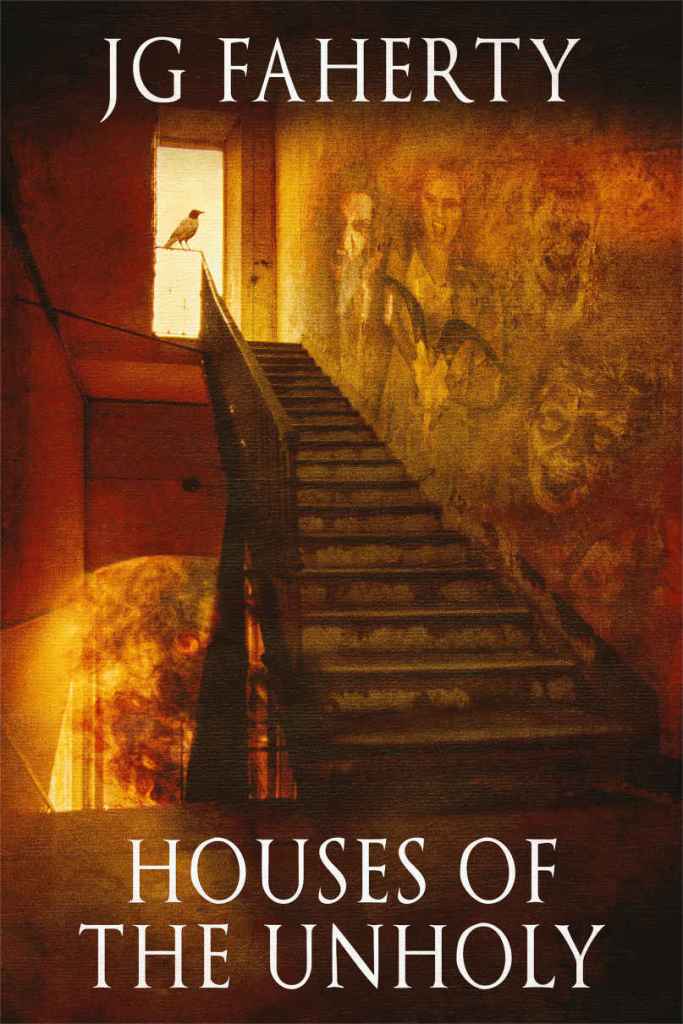
Houses of the Unholy

In this new collection of stories, genre favorite JG Faherty takes you on a tour of unholy houses, where you’ll find: 

– A man struggling to discover why all the people in his life are disappearing when he falls asleep. 
– An accident in a mountain pass that turns into a deadly encounter with a mythical beast. 
– A man who learns that the only thing worse than being a passenger on the train to Hell is being the engineer. 
– A town where the dead coming back to life isn’t the worst thing that can happen. 
– A young couple who uncover a terrible secret in the town that has ostracized them for their sins. 
– A science experiment gone wrong that could spell the end of mankind. 

The collection also includes “The Lazarus Effect,” a chilling post-apocalyptic story where survivors face off against godless undead, and a brand new novella-length sequel, “December Soul.”

Hellrider

After being burned alive by a gang, the Hell Riders, he used to belong to, Eddie Ryder returns as a heavy-metal spouting ghost with a temper that’s worse now than when he was alive. At first he is nothing more than a floating presence, depressed he has to spend eternity watching his teenage brother, Carson, and ailing mother struggle without him. Then he develops powers. And he can control electricity. He can conjure the ghostly doppelganger of his motorcycle, Diablo, and fly across the sky, but he can’t escape the boundaries of his hometown, Hell Creek. 

Eddie decides to exact his revenge on the bikers who killed him. Before he can do more than scare some of the bikers, however, he discovers something even better: he can posses people. He uses this ability to get the gang members to attack each other, and to deliver a message to the current leader, Hank Bowman: Eddie’s Coming. 

Spouting fire and lightning from his fingers and screaming heavy metal lyrics as he rides the sky above the town of Hell Creek, he brings destruction down on all those who wronged him, his power growing with every death. Only Eddie’s younger brother, Carson, and the police chief’s daughter, Ellie, understand what’s really happening, and now they have to stop him before he destroys the whole town.

Halloween Extravaganza: Hunter Shea: The Ghost of Halloween Present

After reading this guest post by the amazing Hunter Shea, all I can say is… I wish I lived closer to him because he’s definitely a house I would stop at on Halloween.


It used to be, I was happy when a Halloween consisted of me dressed up as either a hobo or vampire (I remember being a hobo, complete with packed bindle, was all the rage โ€“ not so PC now), a couple of hours to trick or treat, a visit to my grandparents, and a few mom inspected and approved candies before bed. If I was very lucky, my trick or treat bag wasnโ€™t laden with old pennies and unwrapped circus peanuts.

For once in my life, I donโ€™t long for the days of yesteryear. Halloween today in the Shea dungeon is a day long affair filled with indulgence and wicked fun. I tell people what our Halloweens are like and they donโ€™t believe meโ€ฆ until they come and see for themselves. And once they do, they come back for more year after year.

We have the distinct pleasure of having become part of a kind of trick or treat alley. It consists of one suburban block where kids and adults from far and wide descend. On this block, the houses are decorated (One family sometimes changing the entire front faรงade of their house for that yearโ€™s theme. Last year it was a rocket ship. The year before, the bow of a pirate ship). Music drifts along the chilly air. You might hear some creepy horror movie tunes, or maybe some riotous Rob Zombie, and always, always, the soundtrack to The Rocky Horror Picture Show.

We prep for the night by loading up the cooler with lots of beer. It used to be just pumpkin ale when it was hard to find, but now that itโ€™s everywhere, the allure has worn off. First beer can be cracked open at any time, be it morning or night. Well, we never wait until night. My daughters will dress up, as will the adults, all the way to grandma and grandpa. Sometimes, if my creative daughter gets the urge, sheโ€™ll pull out her makeup effects kit and adorn our necks with bloody slashes and wounds. Sheโ€™s been known to do it for random trick or treaters, too.

A carved pumpkin sits on the table, spewing massive chunks of green. That would be homemade guacamole and itโ€™s delicious. With extended family and friends present, the first trick or treaters start to trickle in. Itโ€™s always the very young ones at first with their moms and dads. At our house, everyone gets a juice box โ€“ because trick or treating is thirsty business โ€“ and a bag of treats. Once night falls, the neighborhood is transformed into a spooky Mardi Gras, the sidewalks and street packed with people of all ages, shapes and sizes. There have been flash mobs, wedding proposals, screeching when people are scared by one of us, and even the occasional flash for a drink, which makes it all the more feel like weโ€™ve been transported to New Orleans. By the time the night is done, weโ€™ve usually handed out treats to over 600 kids. Adults will get beer and cigars. And a hangover to come.

One year, I dressed up as a trailer park version of Elvira. I called myself Elmira and talked like Wendy Williams, asking everyone who came by, โ€œHow you doinโ€™?โ€ Donโ€™t ask me why. It was all inspired by Patron and Sam Adams. People loved taking pictures with the often lewd Elmira. Last year, I bought a giant crying baby mask from Five Below. Slipping into a pair of footie pajamas, I walked around looking tres disturbing. Turns out, moms like to hug crying babies, even if they are almost 6 feet tall and dancing around like a serial killer in his basement.

People we see just that once a year come by to hang, pizza is delivered, and the party doesnโ€™t stop until the treats and booze run out. When all is said and done, I always vow to watch a horror movie, something special Iโ€™ve saved for this moment. Inevitably, I pass out before the first act is over. It sure beats the Halloweens of my youth. It may be why I look forward to it more now than ever. So if you ever need a juice box or something a little stronger on Halloween, come on and join the party.

Hunter Shea is the product of a misspent childhood watching scary movies, reading forbidden books, and wishing Bigfoot would walk past his house. He doesn’t just write about the paranormal – he actively seeks out the things that scare the hell out of people and experiences them for himself. Hunter’s novels can even be found on display at the International Crytpozoology Museum. He’s a bestselling author of over 25 books, all of them written with the express desire to quicken heartbeats and make spines tingle. You can find him each week on the Final Guys podcast, as well as the long running Monster Men video podcast. Living with his wonderful family and two cats, he’s happy to be close enough to New York City to gobble down Gray’s Papaya hot dogs when the craving hits. Become a true Hunter’s Hellion and follow him at his website.

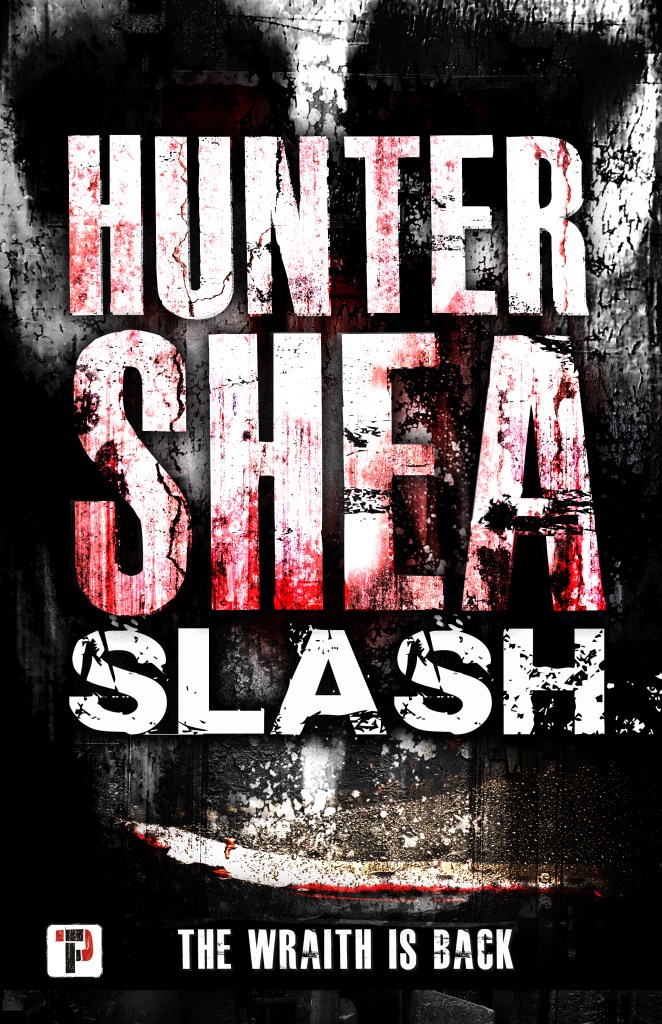
Slash

Five years after Ashley King survived the infamous Resort Massacre, sheโ€™s found hanging in her basement by her fiancรฉ, Todd Matthews. She left behind clues as to what really happened that night, clues that may reveal the identity of the killer the press has called The Wraith. 

With the help of his friends, Todd goes back to the crumbling Hayden Resort, a death-tinged ruin in the Catskills Mountains. What they find is a haunted history thatโ€™s been lying in wait for a fresh set of victims. The Wraith is back, and heโ€™s nothing what they expected.

Halloween Extravaganza: INTERVIEW: Hunter Shea

Meghan: Hi, Hunter! Thank you SO much for agreeing to be on Meghan’s House of Books today. [insert fangirling here] Tell us a little bit about yourself.

Hunter Shea: Iโ€™m a horror obsessed guy married longer than most of your readers have been alive with two amazing daughters who share my love of all things dark and scary. The fact that I got to turn my passion into a career that has allowed me to meet a lot of my horror heroes is still, I believe, the Matrix messing with me.

Meghan: What are five things most people donโ€™t know about you?

Hunter Shea: Oh boy. Iโ€™m a huge fan of Shania Twain. I once wrote a romantic comedy. I went to school with P Diddy. My all-time favorite job was as a stock boy in a supermarket. I actually like the taste of vegemite.

Meghan: What is the first book you remember reading?

Hunter Shea: As a kid, I loved The Little Red Lighthouse. I read that book until it fell apart and needed a new copy. The actual lighthouse is underneath the George Washington Bridge in New York. I pass by it all the time. My very first โ€˜adultโ€™ book was Stephen Kingโ€™s Night Shift. That explains it all.

Meghan: What are you reading now?

Hunter Shea: Riley Sagerโ€™s The Last Time I Lied. Iโ€™m halfway in and digging the hell out of it. I loved Final Girls and his latest is right on par.

Meghan: Whatโ€™s a book you really enjoyed that others wouldnโ€™t expect you to have liked?

Hunter Shea: I read anything I can get my hands on. I was gifted some romance novels last year by a friend and they surprised the heck out of me. Truly enjoyable. I can see why people love them.

Meghan: What made you decide you want to write? When did you begin writing?

Hunter Shea: Iโ€™ve always loved reading and the horror genre especially. My friend Norman Hendircks (also an author) infected me with the writing bug when we worked together in hell, aka the phone company – in the 1990s. Once I started, I was hooked. As he will tell you, itโ€™s a compulsion with me.

Meghan: Do you have a special place you like to write?

Hunter Shea: It changes from book to book. Right now, I prefer the back yard. Before that, it was the kitchen. Who knows, next book might find me in the attic.

Meghan: Do you have any quirks or processes that you go through when you write?

Hunter Shea: Just plant my butt in a chair and get to tapping keys. Although, when I think about it, I usually go to the bathroom before I write. Weird, right?

Meghan: Is there anything about writing you find most challenging?

Hunter Shea: Iโ€™m not alone when I say itโ€™s finding the time to write all of the projects I want to take on. Iโ€™ve published 27 books in 8 years, and it seems harder and harder to carve out the time I need. So many stories to tell.

Meghan: Whatโ€™s the most satisfying thing youโ€™ve written so far?

Hunter Shea: Wow, thatโ€™s a tough one. The Montauk Monster was my most commercially successful novel. One of the things on my bucket list was having a mass market paperback, and that took care of that. But I think Creature, which was very autobiographical and difficult to write, might top the list. The fact that I made it to THE END still amazes me. It took a physical and mental toll on me.

Meghan: What books have most inspired you? Who are some authors that have inspired your writing style?

Hunter Shea: I once met Elmore Leonard who taught me the two rules of writing โ€“ read and writeโ€ฆ a lot. I started reading more of his work and loved his lean, mean style. It was so much an extension of how Hemingway wrote, and Iโ€™m a huge Hemingway fan (despite his personal shortcomings). They above all others taught me how to trim the fat and just tell a good story.

Meghan: What do you think makes a good story?

Hunter Shea: Simple โ€“ good characters that engage the readers. If you have compelling characters, you can put them in any situation and it will work.

Meghan: What does it take for you to love a character? How do you utilize that when creating your characters?

Hunter Shea: I grow to love certain characters. Iโ€™ve yet to experience love at first write. ๐Ÿ˜‰ Sometimes they just get in your head and you become one with them. Their voice rattles around your brain all the time. And yes, Iโ€™ve killed my loved ones when the story calls for it.

Meghan: Which, of all your characters, do you think is the most like you?

Hunter Shea: Definitely West from We Are Always Watching. I mean, thatโ€™s just me when I was 14, though heโ€™s much better behaved.

Meghan: Are you turned off by a bad cover? To what degree were you involved in creating your book covers?

Hunter Shea: Absolutely. A bad cover screams amateur. Most times, you can judge a book by its cover. But there are some that surprise you. As for my covers, sometimes the artist will ask for some input, but I trust them as artists to knock it out of the park.

Meghan: What have you learned creating your books?

Hunter Shea: That writing is the reason I was put on this blue marble. All I want to do is create and entertain people. This world can really suck sometimes. Everyone needs an escape.

Meghan: What has been the hardest scene for you to write so far?

Hunter Shea: That would be the inner thoughts and turmoil of Andrew and Kate in Creature. I may have overshared what my wife and I go through, but it was crucial to put it in the book. SO many people with similar medical conditions have written to me thanking me for letting them know theyโ€™re not the only ones going through similar trials with similar thoughts. Totally worth it.

Meghan: What makes your books different from others out there in this genre?

Hunter Shea: On one side, Iโ€™ve carved out this little niche as the cryptid guy. So if youโ€™re looking for cyrtid monsters, I have a book for you. On the other side, Iโ€™ve been told that my books have made quite a few people tear up. I love to write characters with heartโ€ฆ and then shatter them, of course.

Meghan: How important is the book title, how hard is it to choose the best one, and how did you choose yours (of course, with no spoilers)?

Hunter Shea: I learned long ago not to fall in love with my titles. Odds are, your editor will change it or ask you for another one. Some titles you get I think donโ€™t always convey whatโ€™s between the pages, but I feel Iโ€™ve been fortunate so far. Iโ€™ve only changed one title for my book, Ghost Mine. It was initially called Hell Hole when it was published by Samhain. We changed it when it came back out this year with Flame Tree Press. The former was too Spinal Tap-ian for me.

Meghan: What makes you feel more fulfilled: Writing a novel or writing a short story?

Hunter Shea: Definitely a novel. I loved getting lost in my characters. A novel gives you room to explore and experiment.

Meghan: Tell us a little bit about your books, your target audience, and what you would like readers to take away from your stories.

Hunter Shea: My books run the gamut, from ghosts to monsters, killers to demons, urban legends to B movie madness. You donโ€™t have to just love horror. Thereโ€™s action, romance, adventure, gore, flighty books, weighty books, you name it.

Meghan: Can you tell us about some of the deleted scenes/stuff that got left out of your work?

Hunter Shea: Funny thing about deleted scenes, theyโ€™re always deleted for a reason. But for my book Tortures of the Damned, I had prewritten 5 different endings. When I actually wrote the last chapter, it was something entirely different. In one of the endings, all of the children were murdered and the parents basically went feral.

Meghan: What is in your โ€œtrunkโ€?

Hunter Shea: I wrote the first book in what I hope to be a middle grade series. Think Goosebumps, but with a recurring character who lives in a very unique place where she encounters everything that goes bump in the night.

Meghan: What can we expect from you in the future?

Hunter Shea: Iโ€™m going old school slasher this October with the release of my next book from Flame Tree Press, Slash. I came of horror age in the 80s and I wanted to finally add my take on the slasher genre. Thereโ€™s an abandoned resort in the Catskills that harbors a mysterious killer called The Wraith. The fiancรฉ of a final girl goes urban exploring, looking for answers, and gets more than he bargained for.

Meghan: Where can we find you?

Hunter Shea: Best place is at my website. Youโ€™ll find links to all of my social media there, podcasts and more.

Meghan: Do you have any closing words for your fans or anything youโ€™d like to say that we didnโ€™t get to cover in this interview?

Hunter Shea: I believe the past decade has been the true golden age of horror. Enjoy it while it lasts.

Hunter Shea is the product of a misspent childhood watching scary movies, reading forbidden books, and wishing Bigfoot would walk past his house. He doesn’t just write about the paranormal – he actively seeks out the things that scare the hell out of people and experiences them for himself. Hunter’s novels can even be found on display at the International Crytpozoology Museum. He’s a bestselling author of over 25 books, all of them written with the express desire to quicken heartbeats and make spines tingle. You can find him each week on the Final Guys podcast, as well as the long running Monster Men video podcast. Living with his wonderful family and two cats, he’s happy to be close enough to New York City to gobble down Gray’s Papaya hot dogs when the craving hits. Become a true Hunter’s Hellion and follow him at his website.

Slash

Five years after Ashley King survived the infamous Resort Massacre, sheโ€™s found hanging in her basement by her fiancรฉ, Todd Matthews. She left behind clues as to what really happened that night, clues that may reveal the identity of the killer the press has called The Wraith. 

With the help of his friends, Todd goes back to the crumbling Hayden Resort, a death-tinged ruin in the Catskills Mountains. What they find is a haunted history thatโ€™s been lying in wait for a fresh set of victims. The Wraith is back, and heโ€™s nothing what they expected.

Halloween Extravaganza: INTERVIEW: Brian Kirk

Meghan: Hi, Brian. Welcome to Meghan’s House of Books. Tell us a little bit about yourself.

Brian Kirk: Aside from being a fiction writer, Iโ€™m a father of identical twin boys: the rarest form of human offspring (a very technical term for kids). Only fraternal twins are hereditary; identical twins are a random anomaly. So it came as quite a surprise. In fact, the first thing I did when I found out was Google the phrase, โ€œWhatโ€™s the best thing about having twins?โ€ I needed a pep talk.

Actually, it turns out I didnโ€™t. My wife and I are blessed with wonderful boys. Raising them has been a special privilege.

Meghan: What are five things most people donโ€™t know about you?

Brian Kirk: People who know me even a little basically know everything about me. Iโ€™mโ€”apologies for the punโ€”an open book. I spent most of my adolescence feeling insecure about my reading habits and writing interests. Even when a teacher could see I had writing potential, they would discourage my dark stories, and make me feel strange for writing them. I felt a crippling urge to fit in amongst my peers when growing up, and would only do or say things that I knew would be deemed acceptable and not attract too much attention or scrutiny. So I was extremely quiet and shy, despite having an extroverted personality.

As I got older, I started to realize that there was nothing wrong with my thoughts and interests, and that I was doing a disservice to myself, my friends, and my family, by suppressing my authentic self. So I began opening upโ€”bit by bitโ€”exposing people in small doses to my true passions. And, to my extreme relief, I found that the more I opened up, sharing my deepest and purest inner thoughts, the more people seemed to open up in return, which helped to deepen our relationships.

I donโ€™t have much tolerance for small talk. Within a few minutes of meeting someone, Iโ€™m moving the conversation into deep waters. This tendency helps filter out the people I am unlikely to connect with. I have nothing against people who prefer to keep things on the surface, but those who are willing to venture deeper get full access to my heart and soul.

Meghan: What is the first book you remember reading?

Brian Kirk: Learning to read was a profound experience for me. I remember the exact moment the words revealed their meaning, and I could decipher what they were saying. I was so excited I asked my teacher to let me bring home the school book so I could show my parents what I had learned. What I had unlocked. Because thatโ€™s how it felt, like I had broken some kind of seal that allowed me access to all the stories in the world.

I grew up reading everything I could get my hands on, but most fondly remember the โ€œChoose Your Own Adventureโ€ stories before I was introduced to the work of Stephen King.

Meghan: What are you reading now?

Brian Kirk: My reading tastes are wide and varied, and I like to change up genre/subject/style/author from one book to the next. Iโ€™m currently reading The Dead Letters by Tom Piccirilli, and loving it. His immense talent was taking from us far too soon.

Meghan: Whatโ€™s a book you really enjoyed that others wouldnโ€™t expect you to have liked?

Brian Kirk: Maybe the Harry Potter series? I struggled a bit with books 1-3, but books 4-7 ripped me straight out of my reality and fully immersed me in the world of Hogwarts. I love when that happens.

Meghan: What made you decide you want to write? When did you begin writing?

Brian Kirk: Iโ€™ve enjoyed writing stories for as long as I can remember, and have done so enthusiastically my whole life. I took a hiatus for a few years following college when I thought I needed to pursue a โ€œseriousโ€ career, but quickly realized that was a mistake and returned to writing stories. I now freelance to allow more time for fiction writing.

Meghan: Do you have a special place you like to write?

Brian Kirk: I have a home office where I do most of my work. If Iโ€™m feeling dull or stifled, Iโ€™ll go to a nearby coffee shop to change up my environment.

Meghan: Do you have any quirks or processes that you go through when you write?

Brian Kirk: Sort of. My best writing comes from a type of waking dream state. Itโ€™s basically when I fall into an immersive daydream that silences my rational mind and taps into my subconscious (at least I think thatโ€™s what is happening, I really have no idea). This mindless dream state is where the story unfolds, and my job is simply to bear witness and try and get it down on the page as clearly as I can.

I, therefore, approach writing as though Iโ€™m preparing myself for bed. I prefer to do it in the same place, or type of place (a quiet room with a hard surface and minimal potential for distraction). I prefer to do it when all my paid freelance work is done, so that itโ€™s not nagging the back of my mind. And then, like lying down to sleep, when I sit down to work I trust that my mind will shut off and the dreams will begin. This doesnโ€™t always happen, of course. Just as we all have restless nights. But itโ€™s my general approach.

Meghan: Is there anything about writing you find most challenging?

Brian Kirk: Thereโ€™s a lot about writing that I find challenging, but thatโ€™s also why I enjoy it so much. I remember when I was gearing up to begin writing my debut novel I kept thinking, โ€œI canโ€™t wait to be engaged in the struggle of writing a book.โ€ I figured it would be hard, but that was part of the allure.

To be more specific, though. I find writing on a regular basis challenging, although I usually do it. I find overcoming insecurity challenging, but I try. I find writing when depressed or tired difficult, but I keep slogging ahead until it gets better.

If writing were easy, it wouldnโ€™t be rewarding. So I work to embrace the challenges and overcome them with stubborn determination, by commiserating with other writers, and by trying not to take the whole thing so seriously in the first place.

Meghan: Whatโ€™s the most satisfying thing youโ€™ve written so far?

Brian Kirk: Satisfying is a good word here, and it would probably have to be We Are Monsters, which is the first novel I ever wrote. I really struggled to write this book, and suffered somewhat of a nervous breakdown during the process. You see, writing a novel had been a dream of mine from as early as I can remember, which actually worked against me when I set out to write this book. Despite having already written and published several short stories, I found that I had inflated the importance of writing a novel so much that it suddenly seemed insurmountable. I had made it a seminal moment in my life, setting the nonexistent stakes unreasonably high. And so I started out tentatively, on shaky knees that were threatening to buckle under the weight of such a heavy load.

My first few weeks were spent in a state of desperation, as I struggled to get 300 over-written words onto a page in a single sitting. The starting pistol had fired and I had pulled my rigid hamstrings right out of the gate. The finish line seemed like an eternity away. There was no way I could ever reach it at this lumbering pace. I truly questioned whether or not I was capable of writing something so large, and that uncertainly nearly unraveled me. This was a dark and difficult period of time.

Rather than give in to this early desperation, however, I just kept going. I was struggling with the first chapter, so I skipped it, and started writing the second one. This one began to flow better. My word count increased. My rhythm returned. And the story began to take form. Sure, not every day was wonderful. But thatโ€™s the nature of writing. The trick was to get over the pre-game jitters and let my instincts take over. I needed to get out of my own way.

The lesson I learned is not to make too much of the situation. Youโ€™re just writing a story. Make it the best it can be, but donโ€™t make it bigger than it is.

Iโ€™m satisfied that I finished this novel, knowing what it took to complete it.

Meghan: What books have most inspired you? Who are some authors that have inspired your writing style?

Brian Kirk: The three books that immediately come to mind are The Stand by Stephen King, Cloud Atlas by David Mitchell, and The Magus by John Fowles. I like stories with disparate threads that begin to weave together as the story unfolds.

The list of authors I draw inspiration from is long, and constantly evolving. I enjoy Stephen Kingโ€™s ability to plop you into a story on page one and have you instantly care for his characters. I appreciate the lush writing and quirky humor of luminaries like Roald Dahl, Richard Matheson, and Ray Bradbury. I like the stark, gothic realism of Joyce Carol Oates, Flannery Oโ€™Connor, and Cormac McCarthy. The ambition of David Mitchell. The psychedelic mind-bending of Philip K. Dick. The heroic storytelling of Robert McCammon and Joe R. Lansdale. The gritty darkness of Gillian Flynn.

There are many contemporary horror authors who inspire me, but Iโ€™m hesitant to make a list as I invariably leave someone vital off. Two of my favorites, though, are John F.D. Taff and Gemma Files.

I love to read books that are so good they intimidate me and make me feel helplessly inferior. Thatโ€™s where inspiration comes from.

Meghan: What do you think makes a good story?

Brian Kirk: Interesting characters placed in difficult situations that help illuminate the challenges and rewards of being human.

Meghan: What does it take for you to love a character? How do you utilize that when creating your characters?

Brian Kirk: I tend to like quirky characters who are just a touch larger than life. The type of characters youโ€™ll find in something written by Carl Hiaasen, Katherine Dunn, Joe Lansdale, Shirley Jackson, or Patrick deWitt.

I find that humor is something that draws me in and connects me with a character, even, if not especially, the villains. In my writing, I attempt to convey humor both through dialogue and how a particular character views the world. I feel that humor can be an excellent counterpoint to horror. It works to both disarm readers and draw them to your characters.

Meghan: Which, of all your characters, do you think is the most like you?

Brian Kirk: While thereโ€™s probably a piece of me in all of my characters, I canโ€™t say that I am like any one of them in real life. At least, I hope not. My characters arenโ€™t usually the most likable bunch.

Meghan: Are you turned off by a bad cover? To what degree were you involved in creating your book covers?

Brian Kirk: Yes, very much so. I actually supplied the cover art for my first two novels.

Taste is subjective, however. What I like someone else might hate. With that said, Iโ€™m more likely to connect with the content of a book if I appreciate its cover.

Meghan: What have you learned creating your books?

Brian Kirk: That writing is the part of the process that I enjoy most, which is a relief, as thatโ€™s the only part I can control.

Meghan: What has been the hardest scene for you to write so far?

Brian Kirk: One involving sexual abuse.

Meghan: What makes your books different from others out there in this genre?

Brian Kirk: I strive to write psychedelic horror, but not in the sense that my stories involve hippies or hallucinogenic drugs. Rather, I try to write stories that function like psychedelic drugs.

In the same way that a psychedelic drug, such as psilocybin or LSD, will alter oneโ€™s state of consciousness, and make one see life through a different lens, I attempt to achieve the same overall effect with the stories I write.

While a psychedelic experience can be challenging, harrowing, and even painful, it typically results in a state of euphoria and a feeling of being more connected to, and compassion towards, ourselves and the people around us. Thatโ€™s what I strive to accomplish with much of my writing.

Meghan: How important is the book title, how hard is it to choose the best one, and how did you choose yours (of course, with no spoilers)?

Brian Kirk: Book titles are like peopleโ€™s names; they have to fit, and often have a deeper meaning. My titles almost always come to me after the story is written, or when Iโ€™m near the end. I need to know what the story is really about, which I rarely know until Iโ€™m deep into it. What happens in the story, and what the story is about, can be two different things, and I prefer for my titles to convey the latter whenever possible.

For instance, the title We Are Monsters can be interpreted a number of ways. On one level, it speaks to the horrific ways we often treat each other, including the monstrous ways we’ve historically treated the mentally ill.

It also refers to the monstrous ways we treat ourselves. Our self-hatred and self-judgment. The ways in which we limit ourselves or sabotage our true potential. The straightjackets we unconsciously wear.

And, lastly, it refers to the monsters that live inside of us. The addictions, the illnesses, the inner demons (real or imagined).

My favorite titles are ones that capture both the subject and theme of the story.

Meghan: What makes you feel more fulfilled: Writing a novel or writing a short story?

Brian Kirk: Thatโ€™s tough because theyโ€™re so different. Ultimately, though, fulfillment for me comes through the act of writing itself. It doesnโ€™t arrive after Iโ€™ve written something. For whatever reason, the act of writing allows me to access that allusive flow state that makes us all feel like weโ€™re fulfilling our purpose in life. Itโ€™s when time stands still and that pesky inner critic that nags some of us all day long goes quiet. In many ways, writing this sentence is as fulfilling to me as writing any other.

Iโ€™d say I prefer writing novels to short stories because they allow me to sustain that flow state for a longer period of time. Itโ€™s the same wonderful drug, just with a longer peak.

Meghan: Tell us a little bit about your books, your target audience, and what you would like readers to take away from your stories.

Brian Kirk: My books are psychological and surreal. They focus more on stirring strong emotions than producing sensations of fear. They are weird, and quirky, and can be hard to follow at times. They cater primarily to a small, fringe audience of readers who enjoy work thatโ€™s emotionally challenging, and pretty far off the beaten path.

A reader of We Are Monsters wrote to me saying that she had always given money to the homeless, but never to people she thought were โ€œCRAZY,โ€ because she thought it would go to waste. She said that after reading We Are Monsters, she now makes a point to give money to homeless people with clear mental illnesses because she sees them differently, and feels like they might need it even more than someone with an able-mind. Thatโ€™s the kind of reaction I aim for in my writing. That in addition to simply being entertained.

Meghan: What is in your โ€œtrunkโ€?

Brian Kirk: I have a completed novel titled The Sun Is A Tangerine that has scenes that can only be accessed in virtual reality. Whether or not this ever sees the light of day will depend on if I can ever afford to make it, which is something Iโ€™m working on. Anyone with a pile of unused cash is welcome to give me a call!

Meghan: What can we expect from you in the future?

Brian Kirk: Iโ€™m making the final revisions on a new novel that Iโ€™d like to see out at the end of 2020 or early 2021. After that, I am planning to write a series of middle grade horror novels that I have loosely outlined. My sons turn ten soon, and I think it would be a fun project for us to work on together. We have a blast bouncing story ideas off one another. We have even more fun grossing each other out. Iโ€™m looking forward to writing for a younger audience with unbridled imaginations.

Meghan: Where can we find you?

Brian Kirk: Iโ€™m always happy to connect with people anywhere in the real or digital world. Following are the easiest ways to find me.

Website ** Twitter ** Facebook ** Instagram

Meghan: Do you have any closing words for your fans or anything youโ€™d like to say that we didnโ€™t get to cover in this interview?

Brian Kirk: Iโ€™d just like to say thank you very much for conducting this interview! Itโ€™s probably the most in-depth one Iโ€™ve ever done, and I appreciate the probing questions. I hope people find it useful and entertaining.

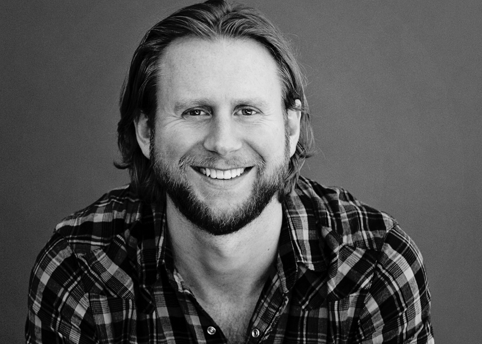
Brian Kirk writes strange, often scary stories. His debut novel, We Are Monsters, was a finalist for the Bram Stoker Award in the first novel category. And his short fiction has been published in several notable magazines and anthologies, such as Gutted: Beautiful Horror Stories and Behold! Oddities, Curiosities, and Undefinable Wonders, which won a Bram Stoker Award.

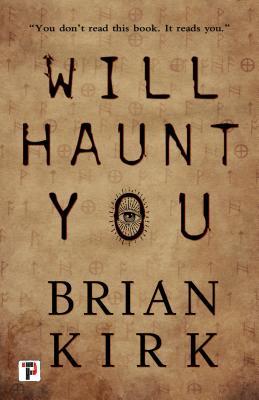
His latest novel is a work of surreal horror titled Will Haunt You. He wrote the prequel as a creepy-pasta story, titled OBSIDEO.

Will Haunt You
Amazon ** Barnes & Noble

You don’t read the book. It reads you.

Rumors of a deadly book have been floating around the dark corners of the deep web. A disturbing tale about a mysterious figure who preys on those who read the book and subjects them to a world of personalized terror. Jesse Wheeler–former guitarist of the heavy metal group The Rising Dead–was quick to discount the ominous folklore associated with the book. It takes more than some urban legend to frighten him. Hell, reality is scary enough. Seven years ago his greatest responsibility was the nightly guitar solo. Then one night when Jesse was blackout drunk, he accidentally injured his son, leaving him permanently disabled. Dreams of being a rock star died when he destroyed his son’s future. Now he cuts radio jingles and fights to stay clean. But Jesse is wrong.

The legend is real–and tonight he will become the protagonist in an elaborate scheme specifically tailored to prey on his fears and resurrect the ghosts from his past. Jesse is not the only one in danger, however.

By reading the book, you have volunteered to participate in the author’s deadly game, with every page drawing you closer to your own personalized nightmare.

The real horror doesn’t begin until you reach the end. That’s when the evil comes for you.


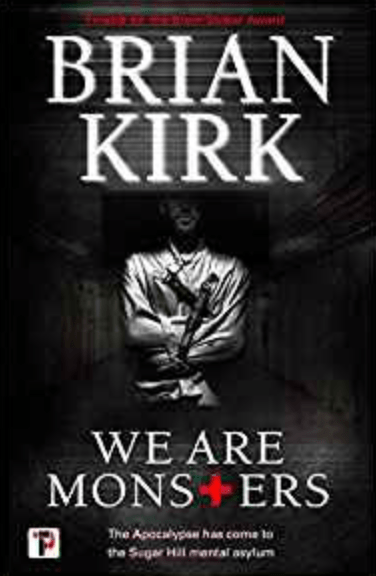
We Are Monsters
Available for Pre-Order on Amazon

The Apocalypse has come to the Sugar Hill mental asylum.

He’s the hospital’s newest, and most notorious, patient–a paranoid schizophrenic who sees humanity’s dark side.

Luckily he’s in good hands. Dr. Eli Alpert has a talent for healing tortured souls. And his protรฉgรฉ is working on a cure for schizophrenia, a drug that returns patients to their former selves. But unforeseen side effects are starting to emerge. Forcing prior traumas to the surface. Setting inner demons free.

Monsters have been unleashed inside the Sugar Hill mental asylum. They don’t have fangs or claws. They look just like you or me.