Today we have author James L. Steele, another talented author from the latest anthology, Burnt Fur, from Blood Bound Books on the blog for an author interview.
Meghan: Hi, James! Welcome to Meghan’s House of Books. Tell us a little bit about yourself.
James L. Steele: I grew up as a military child. My father told me to stay out of the military, so that’s why I never joined, and it’s probably why I took up something more creative. Had I joined the Army, I might have had the creativity stamped out of me.
Meghan: What is something most people don’t know about you?
James L. Steele: You wouldn’t know it from my most recent social media posts, but I only just recently got into wine, and I had never been a drinker. It took deliberate effort to get into it. Why would I do that? Apart from finally finding a drink I enjoyed, I thought I was boring and needed a reason to leave the house.
Meghan: What is the first book you remember reading?
James L. Steele: I just finished reading The Tin Drum by Günter Grass. Someone in a writing group mentioned it, and I saw a copy in a local bookstore, so I bought it on a whim. Not casual reading, and probably the longest work of fiction I’ve tackled in years.
Meghan: What’s a book you really enjoyed that others wouldn’t expect you to have liked?
James L. Steele: Probably Tool by Peter Sotos. (You can find his review here.) I enjoyed it in that it presented its points of view very well, and that’s quite an accomplishment.
Meghan: What made you decide you want to write? When did you begin writing?
James L. Steele: I’ve been writing in some form or another since grade school. I imagined I’d get into television and write my own series. I began writing synopses for various film and TV series I imagined, as well as video games. Usually the video game stories came first, and then I imagined the games would do so well they’d become a film series and finally a TV series. Sometime after High School, I decided to sit down and write more than the synopses. Then one day, shortly after my parents split up, I had to make a choice between pursuing writing or computer programming. I chose the one I enjoyed more.
Meghan: Do you have a special place you like to write?
James L. Steele: My bedroom is hardly special. I don’t know how people can write in cafes, let alone coding.
Meghan: Do you have any quirks or processes that you go through when you write?
James L. Steele: When I was a kid, whenever we got a major assignment, I would ignore it for a day, and then I would begin researching and outlining. I still do that. When I get a new idea, I sit on it for a while, ignoring it, and then I begin. Creating that initial distance keeps me from panicking and starting off wrong.
Meghan: Is there anything about writing you find most challenging?
James L. Steele: Writing used to be hard. Having been doing it for so many years, now publishing is the hard part. Getting people interested in reading my published work is harder still, and convincing people to pay money to read my stuff is the hardest task in the world.
Meghan: What’s the most satisfying thing you’ve written so far?
James L. Steele: Recently I wrote an idea that had been germinating in my head since the mid-90s. The idea ended up becoming a 6-book series, collectively called the Archeons series. Taking any idea and translating it into something others can understand has been the most satisfying feeling I can chase, and I think I got the biggest rush from making my oldest idea real.
Meghan: What books have most inspired you? Who are some authors that have inspired your writing style?
James L. Steele: I am most inspired by the classic science fiction writers of yesteryear (namely Clarke). Apart from them, masterful worldbuilders are high on my list (Orwell, Lewis Carroll). I think that’s what I enjoyed most. Worldbuilding.
Meghan: What do you think makes a good story?
James L. Steele: The best stories make us forget we are reading. I yearn to create something which does that.
Meghan: What does it take for you to love a character? How do you utilize that when creating your characters?
James L. Steele: I don’t like to place such strict boundaries on characters, this one you’re supposed to love, and this one you’re supposed to hate, and this one you’re supposed to identify with. I believe to love a character is to understand them. I prefer readers understand my characters, and that allows them to choose which ones they’ll love.
Meghan: Which, of all your characters, do you think is the most like you?
James L. Steele: All of my characters have a little bit of me in them, so it’s hard to choose. I think I wrote about my deepest desires in my villains, but since I go out of my way to help the reader understand them, they don’t seem like villains at all.
Meghan: Are you turned off by a bad cover? To what degree were you involved in creating your book covers?
James L. Steele: The cover need not be amazing, but it shouldn’t be thoughtless either. There’s a difference. Usually I’m not involved in the process at all, but when I am, I want it to look like someone put thought into it. If if were up to me, I’d design every cover so the reader will pause to look back at it when they reach that particular moment in the story it depicts.
Meghan: What have you learned throughout the process of creating your books?
James L. Steele: My first book took 2 years to write, and it was still a jumbled mess after I was done. I thought if I kept going, I’d figure out what the story wanted to be about. I did, eventually, but had I figured it out in the first draft, or before, I wouldn’t have needed to spend all that time editing and rewriting. I learned to have a plan before committing to that much writing. Doesn’t have to be a concrete plan, but guardrails can keep the story from going off in random directions. No reason to let the story have its way if you’re just going to edit those parts out later.
Meghan: What has been the hardest scene for you to write so far?
James L. Steele: No individual scenes come to mind. My biggest problem always comes from where backstory ends and now-story begins. My earliest novels often had me starting and restarting a story at different moments. I wasn’t sure what I needed to show and what I could get away with simply explaining. I still struggle with this, though I’m better at it now.
Meghan: What makes your books different from others out there in this genre?
James L. Steele: One of the underlying assumptions of sci-fi is that technology is the end result of civilization and it will make all our lives better. I wanted to approach from a different assumption. What if technology was not a sign of an advanced civilization? 4 years later, I had written six books about that.
Meghan: How important is the book title, how hard is it to choose the best one, and how did you choose yours?
James L. Steele: It’s hard to choose a title because no matter what you want to call your book, someone else has already called it that. I try to choose phrases that stand out.
Meghan: What makes you feel more fulfilled: Writing a novel or writing a short story?
James L. Steele: I am certainly a novelist. Most of my ideas end up being too large to be short stories.
Meghan: Tell us a little bit about your books, your target audience, and what you would like readers to take away from your stories.
James L. Steele: Currently I’m releasing the Archeons series, a sci-fi tale set mostly off Earth. It takes place from the aliens’ point of view and only involves humans toward the end. No spaceships. No technology. In this reality, the conscious mind is capable of taking control of spacetime and opening portals to other planets, and that’s how everyone gets around. Archeon is the term given to people who have this ability to break down the subconscious and perceive the universe as it really is. To understand it is to control it. Then something happens that sends this happy system into chaos, and that’s where the story opens. I want it to appeal to sci-fi readers who are interested in something without spaceships and laser battles that still feels sci-fi. I’m not trying to make a statement about technology, but I do often wonder if humankind truly is on a normal path.
Meghan: I am always excited to get my hands on anthologies, especially ones from publishers that I have grown to trust. Tell us about Burnt Fur and your story in it.
James L. Steele: “The Victims” was originally written for a Halloween anthology. It was rejected due to it not fitting in with the other stories already selected, and I understand why, as it barely has anything to do with Halloween. I wrote it with the idea that there could be something going on in the animal world on that particular date, unseen by human eyes. Some secret pact with evil the animals made that ended up saving mankind, and humans are unaware of it. I hoped the story would be a better fit for Burnt Fur than the one it was written for. I don’t write horror very often, so for this to be published is special to me in more ways than one.
Meghan: Can you tell us about some of the deleted scenes/stuff that got left out of your work?
James L. Steele: Most of the deleted elements from my work are deleted for good reason. Action scenes going on too long, incorrect reactions to certain events. That happened a lot in Dangerous Experiments (Archeons 2). My editor pointed these out and I improved them. Hopefully the original version will never be seen.
Meghan: What is in your “trunk”?
James L. Steele: I have at least 3 books I want to go back to and fix up someday. Knowing what I know now, I believe I could do better with those earlier works. I also know it would be a lot of work, so I hesitate committing to them.
Meghan: What can we expect from you in the future?
James L. Steele: KTM Publishing is in the process of releasing the second half of the Archeons series, and I am always looking for homes for what few short stories I’ve written.
Meghan: Do you have any closing words for your fans or anything you’d like to say that we didn’t get to cover in this interview?
James L. Steele: Horror is not my usual genre, so I hope The Victims intrigues horror readers. And if anyone checks out my other work because of this story, I hope they’re not too disappointed I mostly write sci-fi. Cheers!
Author the Author: James L. Steele has been published in various anthologies and magazines, including: Solarcide, Allasso, Different Worlds, Different Skins: V.2, Tall Tales with Short Cocks V.2, Bourbon Penn, Gods with Fur, Claw the Way to Victory, and The Reclamation Project, Year One. His sci-fi novel Huvek is published through Argyll Productions, and the Archeons series has been released through KTM Publishing, beginning with Dangerous Thoughts. He lives in Ohio, where he pursues his hobby of becoming a wine connoisseur while having at least two existential crises per day.
About the Books: Sit. Roll over. Who’s a Good Boy?
There are no good boys in in this anthology, only twisted, deviant, and burnt encounters with pets, people in costume, animals who behave like humans, and creatures who blur the line between the three. Violent pigs, killer ducks, horny bees, a naughty rabbit, and many more fill these pages with tale after tail of hair-raising horror.
Don your Fursuit, slip into your Fursona, and ride the dark wave of horror that is Burnt Fur. You may never go back to wearing your normal skin again.
The Moon in Her Eyes by Sarah Hans Mallard’s Maze by Joseph Sale Salivation by Theodore Deadrat The Hamford Pigs by N. Rose The Willingness of Prey by Paul Allih 6 Dicks by Rachel Lee Weist The Others by C.M. Saunders Randall Rabbit by Elliot Arthur Cross A Concubine for the Hive by Rue K. Poe Five Nights with Teddy by Thurston Howl Oh Piggy, My Piggy by Matt Scott Ware the Deep by Stephanie Park The Molt of a Diminishing Light by Michelle F. Goddard The Victims by James L. Steele
Humanity has gone to the stars, split and fused the atom, colonized hundreds of worlds, and rejoiced at first contact with alien life. Until the killing started.
Man has been at war with the Kesvek for over forty years. Nearly indestructible, relentless in battle, and unwilling to negotiate, the reptiles constantly push forward. Colony after colony has fallen, and the human race can do little but hold them back. Humanity knows very little about their enemy.
The Kesvek plan to change that.
There is much to learn, and the Kesvek are willing to teach. So long as humans can survive the process, mankind will discover what caused the conflict, and what is required for peace.
No matter the cost.
Their planet was ripped apart from under their feet. When Deka and Kylac wake up, they discover Archeons are dead, and the portals have closed without warning, leaving hundreds of planets without links to other worlds.
Rel’s destruction touched every planet in the contacted universe. Without the portals, entire civilizations hang in the balance, and Deka and Kylac are the only two who can make spacetime spheres. The raptor and the fox travel from world to world, repairing the damage the disaster caused, preventing civilization from collapsing.
Floating islands drifting through the toxic atmosphere of a gas giant—offworlders are stranded there, just barely clinging to life. A planet of raised platforms made of growing rock that elevate the people above the flammable algae on the surface—everything is falling apart, and where are the people? A world of giant insects—researchers have gone missing, and they have been injected with mind-altering venom. A planet of salamanders and birdlike reptiles who relied on portals for food—facing starvation, the reptiles revert to hunting the salamanders.
What could have destroyed an entire planet?
What could have reached across the light years to kill so many Archeons at the same time?
Today, I would like to welcome author Matt Scott to the blog. He is another one of the talented authors from Burnt Fur, an anthology released earlier this month by Blood Bound Books, edited by Ken MacGregor.
Meghan: Hi, Matt. Welcome to Meghan’s House of Books. Tell us a little bit about yourself.
Matt Scott: I am 45 years old and live outside of a little town just northwest of Indianapolis. My wife and I live out in the country with our barnyard friends: chickens (too many), ducks (mean), pigs (potbellied), and our cats and dogs. As well as writing, my wife, Heather, and I run a small pet care business. Big animal lovers. We also recently just kicked off a new venture in publishing by starting our own company- Scover Publications LLC. We are really excited to get started. When I’m not writing or taking care of animals, my wife and I love to go Geocaching, hiking, and exploring. I watch just about anything and everything and my reading habits are similar with a slight preference for horror, bizarro, and crime.
Meghan: What are five things most people don’t know about you?
Matt Scott: I’m deathly afraid of clowns (in person), there is no reason for a grown ass person to be dressed that way. I hate spiders. I collect knives and can throw them pretty well (getting them to stick is a whole other story). I get pretty emotional while watching movies- I get that from my dad. And last but not least, I am slowly giving up meat (my wife is a vegetarian).
Meghan: What is the first book you remember reading?
Matt Scott: Top of my head- maybe those D+D Choose your own adventure books?
Meghan: What made you decide you want to write? When did you begin writing?
Matt Scott: I used to write stories in fourth grade and sell them at recess. I also wrote the lyrics down from songs on the radio and sold copies at school. I’ve always wanted to write. My mom was a big reader and she taught me the value of a good story.
Meghan: Do you have a special place you like to write?
Matt Scott: My office, at my desk. I carry notebooks around with me during the day, and I come home and put my notes or ideas on the laptop, adding to or revising whatever project I may be working on at the time.
Meghan: Do you have any quirks or processes that you go through when you write?
Matt Scott: I don’t outline, but I work a lot from my notes. I also print out all my research so I can have hard copies with me while I ‘m writing.
Meghan: Is there anything about writing you find most challenging?
Matt Scott: Honestly – making something special – to stand out – to live on – to make something that means, matters, something important.
Meghan: What’s the most satisfying thing you’ve written so far?
Matt Scott: That’s not a very easy question. I’ve become attached to many projects over the years, not all of them great, but they have meant something to me. A poem I wrote after my mom died called – Night, Night, Beautiful – was inspired by my parents relationship and what my dad said at her bedside when she died. Another couple stories are Still Under and Asylum.
Meghan: What books have most inspired you? Who are some authors that have inspired your writing style?
Matt Scott: I really love Kerouac and Bukowski. I love their voice and style. And Poe. I’m a sucker for dark gothic horror.
Meghan: What do you think makes a good story?
Matt Scott: While I write mostly genre fiction, I think believable, relatable, fleshed out characters make for a better story.
Meghan: What does it take for you to love a character? How do you utilize that when creating your characters?
Matt Scott: A lovable character is a real one- one who is not perfect, who faces real trials, has real concerns and is true to their nature.
Meghan: Which, of all your characters, do you think is the most like you?
Matt Scott: I have a character in a story called So Tired that I modeled loosely after myself. It has an emotional payoff at the end, so I really like his reaction.
Meghan: Are you turned off by a bad cover? To what degree were you involved in creating your book covers?
Matt Scott: I am, yes. A bad cover will make me skip right past it most times, unless I recognize the author. I have worked with Becky Narron from Terror Tract on both my book covers – I give her a general idea and she brings it home. She’s quite talented, love her designs.
Meghan: What have you learned throughout the process of creating your books?
Matt Scott: That I have much left to learn. I guess the biggest being, after you finish a draft, put it in a drawer for a while. Let yourself detach from it somewhat as it simmers, then go back to it with fresh eyes before sending it out into the world.
Meghan: What has been the hardest scene for you to write so far?
Matt Scott: I think every scene has its own difficulties, their own eccentricities. Hemingway was right, “writing is easy, you just sit down at your desk and bleed.”
Meghan: What makes your books different from others out there in this genre?
Matt Scott: My horror has been so far, for the most part, centered on human monsters; the evil shit that people do to one another, inexplicable, and with no remorse.
Meghan: How important is the book title, how hard is it to choose the best one, and how did you choose yours?
Matt Scott: Titles for me, whether they are for a short story, collection, or larger stand-alone work, prove troublesome. Ii think a great title is important, I just tend be a little disappointed in some of mine. They could be better.
Meghan: What makes you feel more fulfilled: Writing a novel or writing a short story?
Matt Scott: I enjoy finishing what I start, it really gives me a sense of accomplishment, so short stories are completed more frequently. Having said that, I am on the cusp of completing my first novel, so I’ll let you know then. I have put together a collection of shorts, which was satisfying and a poetry collection, which I’m proud of.
Meghan: Tell us a little bit about your books, your target audience, and what you would like readers to take away from your stories.
Matt Scott: What I have sent out into the world at this point is geared toward a pretty big slice of readers- males, 18-45. My first collection of short stories, called Darkness Calling contains a sort of shock and awe TOC. The stories consist of malicious intent, betrayal, debauchery, deviancy, and good old fashion murder. Splatterpunk, to a small extent. Mine are a little tame compared to some, and that’s ok.
Meghan: I am always excited to get my hands on anthologies, especially ones from publishers that I have grown to trust. Tell us about Burnt Fur and your story in it.
Matt Scott: My story in Burnt Fur snuck up on me. It started out, believe or not, as a part of a longer stand-alone work aimed at a much younger audience – Think Babe, or Charlotte’s Web (yeah, I know). I morphed the story to fit the call actually. I had a solid character and a good protagonist, so I gave him anthropomorphic qualities and sent him to town. The result was bizarre, unexpected, funny, and horrifying – I was really quite happy with it.
Meghan: Can you tell us about some of the deleted scenes/stuff that got left out of your work?
Matt Scott: As I said, really everything outside the immediate scenario was cut out and the rating went from PG to… well, I don’t know what you would rate Oh Piggy, My Piggy.
Meghan: What is in your “trunk”?
Matt Scott: Right now I’m working on another collection of short stories (not quite as gory and graphic), three novels, another poetry book, and as mentioned earlier, my wife and I just started our own publishing company – Scover Publications LLC. I am really excited about all that’s going on right now, if not sometimes a little overwhelmed, but I’ll take that over the alternative.
Meghan: What can we expect from you in the future?
Matt Scott: Hopefully a few substantial novel length works, more literary than horror, as well as a new collection of shorts and some more poetry. Also looking forward to putting out titles by other authors.
Meghan: Do you have any closing words for your fans or anything you’d like to say that we didn’t get to cover in this interview?
Matt Scott: I would just like to say thank you, Meghan, for the chance to reach out and answer some very hard and intriguing questions. I appreciate the opportunity. I had a lot of fun and hope readers enjoy this and the upcoming Burnt Fur anthology from Blood Bound Books.
About the Book: Sit. Roll over. Who’s a Good Boy?
There are no good boys in in this anthology, only twisted, deviant, and burnt encounters with pets, people in costume, animals who behave like humans, and creatures who blur the line between the three. Violent pigs, killer ducks, horny bees, a naughty rabbit, and many more fill these pages with tale after tail of hair-raising horror.
Don your Fursuit, slip into your Fursona, and ride the dark wave of horror that is Burnt Fur. You may never go back to wearing your normal skin again.
The Moon in Her Eyes by Sarah Hans Mallard’s Maze by Joseph Sale Salivation by Theodore Deadrat The Hamford Pigs by N. Rose The Willingness of Prey by Paul Allih 6 Dicks by Rachel Lee Weist The Others by C.M. Saunders Randall Rabbit by Elliot Arthur Cross A Concubine for the Hive by Rue K. Poe Five Nights with Teddy by Thurston Howl Oh Piggy, My Piggy by Matt Scott Ware the Deep by Stephanie Park The Molt of a Diminishing Light by Michelle F. Goddard The Victims by James L. Steele
About the Author: Matt Scott is the author of over two dozen published stories and two collections of short horror and poetry. His work has appeared in anthologies from Terror Tract, Deadman’s Tome, Infernal Ink Magazine, and Burnt Fur by Blood Bound Books. He recently began his foray into the world of publishing by launching his own press, Scover Publications LLC, something he is excited to learn from and grow. Matt lives in Central Indiana with his wife, Heather, and their ever growing gaggle of farmyard friends.
Today, the talented Rachel Lee Weist is joining us on Meghan’s House of Books for the first time. She is a very talented author whose short story, 6 Dicks, is included in the anthology, Burnt Fur, released earlier this month from Blood Bound Books.
Meghan: Hi, Rachel. Welcome to the blog. Tell us a little bit about yourself.
Rachel Lee Weist: I grew up in Redding, California, before I moved to the coast to graduate with honors from Humboldt State University with my BA in English. I’m a life-long horror fan, from books, films, and video games to art and graphic novels. I was married on Halloween of 2019. I love nature and draw a lot of creative inspiration from hiking the forests and beaches of northern California. I get along with animals better than I do people, and I am always surrounded by a variety of critters.
Meghan: What are five things most people don’t know about you?
Rachel Lee Weist: I was born in New Orleans, Louisiana. As a child, I had the same recurring nightmare about E.T. for years. I am terrified by the two deeps, sea and space, although they are two of my favorite settings in books, video games, and films. My husband bought me a tricycle because I can’t ride a bicycle, and I still managed to crash it and break my hand. I really love to hunt and hide marbles, and I am lucky enough to live in Humboldt County, home of Humboldt Marble Weekend, with a community of folks who share the obsession.
Meghan: What is the first book you remember reading?
Rachel Lee Weist: I read a lot from an early age, but I think the first book to really make an impression was The Phantom Tollbooth by Norton Juster.
Meghan: What are you reading now?
Rachel Lee Weist: I am currently reading the Nox Pareidolia anthology of short stories.
Meghan: What’s a book you really enjoyed that others wouldn’t expect you to have liked?
Rachel Lee Weist: Stonefish, by Scott R. Jones, was phenomenal. It falls within an area of the horror genre that I haven’t delved into much until recently, so those who know my typical reading habits might be surprised to find that I’m expanding my interests.
Meghan: What made you decide you want to write? When did you begin writing?
Rachel Lee Weist: I have been writing, in some form or another, since middle school. I’ve always been an avid reader, but I needed a way to project ideas that didn’t exist outside of my own head in order to create the stories that I wanted to read. I made the decision to actively pursue my writing interests after taking a creative writing course during my final semester of college. Receiving feedback from those workshops was the final push that I needed to focus my efforts on becoming a published author.
Meghan: Do you have a special place you like to write?
Rachel Lee Weist: I often write in my library, because I can see out the second story window, where the rooftops of houses poke through the trees below like a neighborhood of tree houses. I do my early-morning writing in the kitchen, my other favorite room of the house.
Meghan: Do you have any quirks or processes that you go through when you write?
Rachel Lee Weist: I wake up very early in the morning and sneak downstairs to the kitchen, make a pot of tea, and write before all of my animals (and the world outside) wake up to start the day. When I finish a story, I will usually let a few days, sometimes weeks, pass before I return to edit it so that I’m not too emotionally close to the story to recognize any short-comings.
Meghan: Is there anything about writing you find most challenging?
Rachel Lee Weist: I find the absence of feedback most challenging. When I’m working in a vacuum, without the opinions and fresh perspectives of a workshop atmosphere, it can be difficult to tell whether a story is translating to readers the way I’ve intended.
Meghan: What’s the most satisfying thing you’ve written so far?
Rachel Lee Weist: I just completed the first draft of a short story that is my version of a wendigo tale. It is a subject that has fascinated me for years, so it was satisfying to see the idea through to completion.
Meghan: What books have most inspired you? Who are some authors that have inspired your writing style?
Rachel Lee Weist: A good story is one that immerses the reader in the setting, while creating emotional investment in the characters.
Meghan: What does it take for you to love a character? How do you utilize that when creating your characters?
Rachel Lee Weist: It takes a great deal of depth in characterization, of time spent with that character, exposure to their thoughts, and reactions, for me to love a character
Meghan: Which, of all your characters, do you think is the most like you?
Rachel Lee Weist: I don’t consider any of my characters to be like me, because I try to write outside of myself when creating characters to avoid projecting my personal beliefs, opinions, or mannerisms into a work of fiction.
Meghan: Are you turned off by a bad cover? To what degree were you involved in creating your book covers?
Rachel Lee Weist: Yes, I am very turned off by bad covers. I have also been lured, many times, by great covers that housed terrible books within. I have not been involved in any book cover creation yet.
Meghan: What have you learned throughout the process of creating your books?
Rachel Lee Weist: I have learned not to pull punches when it comes to the fates of my characters, trying to find a balance between attachment to a character and the willingness to follow the story to its natural conclusion.
Meghan: What has been the hardest scene for you to write so far?
Rachel Lee Weist: I have a currently unpublished short story in which a young girl regurgitates a kitten-sized mass of her own hair… that was rough.
Meghan: What makes your books different from others out there in this genre?
Rachel Lee Weist: I like to explore the weaknesses or flaws of characters, because sometimes these are more instrumental in forming an attachment. Imperfections are believable, human, and I feel more involved in the character’s struggles when failure is an option. I am still an emerging author, so I hope to eventually develop my style in a way that will make my work easily distinguishable from others in the genre.
Meghan: How important is the book title, how hard is it to choose the best one, and how did you choose yours?
Rachel Lee Weist: A story’s title plays an important role in enticing the reader with a preview of what’s to come. I usually title mine after they are finished, because the few words are representative of the tale as a whole. I chose mine, “6 Dicks,” because the story is focused on resource acquisition, each with its own challenges and triumphs.
Meghan: What makes you feel more fulfilled: Writing a novel or writing a short story?
Rachel Lee Weist: I have only ever written short stories to completion.
Meghan: Tell us a little bit about your books, your target audience, and what you would like readers to take away from your stories.
Rachel Lee Weist: I am still an emerging author, so my current published works are few. I hope that those who read my stories will feel affected by them afterwards in some way, whether that be a lingering horror, reflecting on an interesting idea, or perhaps mourning the loss of a character.
Meghan: I am always excited to get my hands on anthologies, especially ones from publishers that I have grown to trust. Tell us about Burnt Fur and your story in it.
Rachel Lee Weist: Burnt Fur is a furry-themed horror anthology. My story follows the journey of an opossum, named Wax, who must obtain soft human flesh for the creation of a fetish suit.
Meghan: Can you tell us about some of the deleted scenes/stuff that got left out of your work?
Rachel Lee Weist: I didn’t leave anything out.
Meghan: What can we expect from you in the future?
Rachel Lee Weist: I am in the preliminary stages of writing my first book, and I will continue to submit short stories for publication in magazines and anthologies. I hope someday to assemble these stories into their own anthology.
About the Author: Rachel Weist lives in a century-old Victorian house on the coast of northern California, with her husband and the host of strange animals that she calls family. When she isn’t writing horror, roaming through the forest, or painting fungi, she can be found with a cat in her lap and a book in her hand.
About the Book: Sit. Roll over. Who’s a Good Boy?
There are no good boys in in this anthology, only twisted, deviant, and burnt encounters with pets, people in costume, animals who behave like humans, and creatures who blur the line between the three. Violent pigs, killer ducks, horny bees, a naughty rabbit, and many more fill these pages with tale after tail of hair-raising horror.
Don your Fursuit, slip into your Fursona, and ride the dark wave of horror that is Burnt Fur. You may never go back to wearing your normal skin again.
The Moon in Her Eyes by Sarah Hans Mallard’s Maze by Joseph Sale Salivation by Theodore Deadrat The Hamford Pigs by N. Rose The Willingness of Prey by Paul Allih 6 Dicks by Rachel Lee Weist The Others by C.M. Saunders Randall Rabbit by Elliot Arthur Cross A Concubine for the Hive by Rue K. Poe Five Nights with Teddy by Thurston Howl Oh Piggy, My Piggy by Matt Scott Ware the Deep by Stephanie Park The Molt of a Diminishing Light by Michelle F. Goddard The Victims by James L. Steele
Earlier this month, Blood Bound Books released their latest anthology, Burnt Fur, edited by Ken MacGregor. I have been lucky enough to sit down with Ken, and several of the authors involved in this anthology, and over the next week, will be sharing these interviews with you.
Meghan: Hi, Ken. Welcome to Meghan’s House of Books. Tell us a little bit about yourself.
Ken MacGregor: Certainly. I’m a father of two, who drives the bookmobile for the local library, and I’ve been an actor, a stage and movie director (some professionally), a cook, cab driver, hotel desk clerk, and about a hundred and fifty other things in my 53 years.
Meghan: What are five things most people don’t know about you?
Ken MacGregor: I have eleven tattoos (so far). I was married for seventeen years (until death did us part). I did sketch comedy for five years. When I was a kid, I wanted to be a magician (that did not work out). My first book-crush was the Xanth series of youth fantasy novels by Piers Anthony.
Meghan: What is the first book you remember reading?
Meghan: What’s a book you really enjoyed that others wouldn’t expect you to have liked?
Ken MacGregor: Charlotte’s Web by E.B. White (who also wrote The Elements of Style, a book every writer should own). It’s a kid’s book, but it opens with a man carrying an axe, planning to spill blood.
Meghan: What made you decide you want to write? When did you begin writing?
Ken MacGregor: It’s funny, because I’ve always been a storyteller, for as long as I can remember. I got a poem published in my elementary school newsletter. But I never considered trying to get stuff published for real until almost ten years ago. I was acting in movies, working with friends who were very good at it. One of them, Brian Lillie (who also writes horror, and is very good. You should look him up) said he wanted to make the scariest short movie of all time. So, I tried to write it. I sent him script after script, annoying him until he finally told me to write them as short stories instead, put me in touch with the Great Lakes Association of Horror Writers, and the rest sort of snowballed. Now, I have a ton of stuff in print, a novel and a novella on the way, get invited to write for anthologies, and am a professional editor. How the hell did all that happen?
Meghan: Do you have a special place you like to write?
Ken MacGregor: I like my comfy chair in the living room (I’m there right now), sunlight streaming in behind me, pen in hand, wide-rule composition book in front of me. But I can write pretty much anywhere: on breaks at work, in a coffee shop (during non-pandemic times), over breakfast, in the park…
Meghan: Do you have any quirks or processes that you go through when you write?
Ken MacGregor: A couple years ago, I decided to set aside my laptop and write an entire novella (the one that’s getting published this year) completely by hand. Up to then, I had typed all my first drafts. It was great! I was so much more in tune with the story, and it flowed more easily. Since, I’ve written almost everything longhand first. When I transcribe it to computer, I do my first real edit. This system has worked well for me. I won’t suggest you do it. Everyone has their own process, and what works for me won’t necessarily work for you. But, it might. You’re welcome to try it.
Meghan: Is there anything about writing you find most challenging?
Ken MacGregor: It’s not the writing itself I find challenging. It’s the process of publishing. The endless waiting, the staggering number of rejections, the number of revisions and re-edits needed to get things in print (especially with the novel!) that I find frustrating. It has taught me to be patient (in all aspects of my life), but I still loathe how long everything takes.
Meghan: What’s the most satisfying thing you’ve written so far?
Ken MacGregor: That’s a difficult thing to answer. It’s dependent on context in a lot of ways. So, I’ll give you my most recent example. I was invited to write for an anthology a few months back. The genre was “magical realism” and I’d not only never tried to write that but hadn’t read any either. The editor suggested I read some Gabriel Garcia Marquez to get a feel for the genre. I did and loved it. I tried to write one story that I thought was inadequate, so wrote another and sent it to a friend whose opinion I deeply respect. She swore at me and said she wished she had written it. I took this as a good sign. Sent it to the editor, who loved it too, and it’s scheduled to be in the book (should be out around October of this year). That was pretty damn satisfying.
Meghan: What books have most inspired you? Who are some authors that have inspired your writing style?
Ken MacGregor: Characters we can relate to, love or hate, root for or want to see fall; settings we can imagine walking through, seeing, smelling, tasting the world; conflict: if the protagonist isn’t suffering, I’m bored; dialogue that seems real and true to the character (I’ve read some otherwise fantastic fiction that left me lukewarm because of the dialogue).
Meghan: What does it take for you to love a character? How do you utilize that when creating your characters?
Ken MacGregor: They have to be believable, first and foremost. And, they have to be true to themselves. If you’re writing a drug addict, and you put them in a room with drugs, they should be dying to do them. If they aren’t, you’ve lost my trust as a reader. When I write, I let my characters make choices based on who they are. If I put them in peril (and I do, pretty much all the time, because that’s my job), they should react as themselves. If I catch myself trying to help them get out of it, I put on the brakes and get my natural inclination to be nice out of the way. It’s not my place to be nice. The best is when the characters take on a life of their own and make decisions without my consent. Inevitably, when this happens (not often enough for my tastes, but more than it used to), the story is much better for it. I’ve had stories go wildly different than intended because the characters were like, “Nope. That’s not what we want to do.” And I listen, because they know better than I.
Meghan: Which, of all your characters, do you think is the most like you?
Ken MacGregor: Gavin the Werewolf. No contest. He’s basically me, idealized and indestructible. He’s a wiseass, fun-loving maniac who happens to transform into a giant wolf and loves fighting monsters (the bigger and tougher the better). He’s in four short stories (five, if you count the one I’m writing now) and is one of the main characters in my co-authored (with Kerry Lipp) novel, HEADCASE (coming soon).
Meghan: Are you turned off by a bad cover? To what degree were you involved in creating your book covers?
Ken MacGregor: Bad covers are horrible. I know you’re not supposed to judge, but I do. We all do. I’ve been heavily involved in the cover-creating process for both my story collections, the novel, and with Burnt Fur. Mostly, my involvement has been approval (or otherwise) of cover art, along with making suggestions (and, in the case of my second collection, telling the artist exactly what I wanted). I also hired the artist for my upcoming novella. She finished reading it yesterday, and I’m hoping to see a draft of cover art in the next month or so.
Meghan: What have you learned throughout the process of creating your books?
Ken MacGregor: I’m constantly learning. Every time I read a book on writing, or read a great book, or an amazing short story, I take something away from it. Every time I get editor feedback on my own work, I learn. Every writing experience, and, indeed, every life experience, enriched one and makes one a better writer. I’m always trying to up my game, make each new thing better than the last. The other, less person thing I’ve learned is: don’t be a dick. Editors and publishers all seem to know one another. If you’re professional, and pleasant, you may not make a sale, and you may not be remembered… but, if you’re rude, you’re much less likely to make a sale, and you will be remembered. That’s not the way you want to be remembered. Luckily, I’ve learned this by watching others make this mistake. So far, I don’t think I’ve pissed anyone off. (knocks wood).
Meghan: What has been the hardest scene for you to write so far?
Ken MacGregor: I write horror, mostly, so you might think it’d be the really gruesome stuff: the eyeball-gouging, skin-peeling, genital-torture stuff. It’s not. The worst thing I ever had to write was a scene where a guy recounts the night his wife died in a car accident. Even harder was reading this scene out loud at StokerCon. I damn near cried in that room full of people. My own wife died in 2018, and I doubt very much I’ll ever fully recover from that. Writing that scene helped a little, but it was like putting new stitches in an old wound and pulling them tight.
Meghan: What makes your books different from others out there in this genre?
Ken MacGregor: I write horror, so I always see the worst possible outcome in every scenario. However, I have a background in improv and sketch comedy too, so I also tend to see the funny in everything. I liberally season the nastiness in my work with a few well-placed laughs. This has the effect of either easing the tension or making the reader wonder what the hell is wrong with me. Possibly both. Oh, and I write sexy stuff too, because I have a background in… you know what? Never mind.
Meghan: How important is the book title, how hard is it to choose the best one, and how did you choose yours?
Ken MacGregor: I think, like covers, titles are pretty damn important. A good title catches your eye, makes you want to know more. This particular book, Burnt Fur, was a carefully chosen title. In Furry culture, there was a time when a small group of people were pushing boundaries and making a lot of other people uncomfortable. From this, a radical, near-Puritanical group emerged, calling themselves Burned Furs, who wanted to squash any sort of blatantly sexual activities among Furries (in public anyway). This group incited violence (though no actual violence is documented) and quickly developed a stigma among other Furries. The name itself causes some people in the fandom to cringe. This is why I chose a variant of it for a horror anthology about Furry culture (and anthropomorphic animals). I wanted the negative connotations that came with the name. I wanted to make people uncomfortable out of the gate. I want you, the reader, to feel a little apprehensive before page one. Because it’s horror. It’s not supposed to be nice.
Meghan: What makes you feel more fulfilled: Writing a novel or writing a short story?
Ken MacGregor: Well, I’ve only written one novel, and that was by accident (Kerry and I had written a short story, sold it, and we’re planning to write another. We got carried away). I love the short form, and likely always will. There’s something incredibly satisfying about being able to sit down and hammer out an entire story in one sitting. Also, I’m a total pantser, so trying to plan out a novel seems incredibly daunting to me. I plan to do it someday regardless, but I keep putting it off.
Meghan: Tell us a little bit about your books, your target audience, and what you would like readers to take away from your stories.
Ken MacGregor: My first collection, An Aberrant Mind (Sirens Call Publications, 2014) is a hodgepodge of short and flash fiction without any sort of theme (thus the name: the only thing they have in common is they all originated in my kooky brain). My second collection, Sex, Gore & Millipedes, is all the stuff I don’t want my mother to know I wrote. It’s all in the title: dirty, nasty, gross, and, well, funny! Headcase is about Johnny Headcase, an aging (but badass) bounty hunter and his friends. It’s like a buddy cop movie with sex and vampires. Son of a Monster Hunter (working title) is my first middle-grade story, and my first novella. It’s scheduled to come out sometime in 2020, and is about a kid whose dad is dying, so he has to step up and take over the family “business” a few years early.
Meghan: I am always excited to get my hands on anthologies, especially ones from publishers that I have grown to trust. Since you are the editor of this anthology, tell us about Burnt Fur, the story behind the concept (since you are the one who came up with the idea), and how you went about selecting the stories included in this anthology.
Ken MacGregor: I already talked about the title, but there’s more fun stuff about how this came about. Blood Bound Books put out an open call, on April 1, 2018, for antho ideas. Said they’d pay to have it made if they liked it. I sent them an email saying that, despite the fact that it was likely a prank, I wanted to pitch the idea of a Furry-themed antho, because I could see it drawing some great stories (it did!) and because it has a built-in fan base as Furries are widely known and many people find them fascinating. Selecting the stories was an interesting process: we had a lot of submissions that were easy to pass over, since they didn’t fit the theme, and some that did fit the theme but were not the kind of quality stories I wanted to attach my name to. After that, it came down to picking the best possible pieces. This wasn’t easy, and some had to go because we had too many of one type (there are, in fact, two pig and two werewolf stories, but they are wildly different, so I let it slide). After choosing the final selection, I was delighted to find that the writers were easy to work with and receptive to my edit suggestions. I can tell you, based on other projects, that sometimes writers are not always so pleasant to work with. I’d work with any of these folks anytime.
Meghan: Can you tell us about some of the deleted scenes/stuff that got left out of the anthology?
Ken MacGregor: I asked a few of the writers to redo the ending of their stories, because I could see an ending the seemed truer to the story. As a writer, I’ve often had people point this out to me, because I was too close to it, and couldn’t see the forest for the trees. Each of these writers was gracious enough to accept these suggestions from me, and, I think, made the stories stronger. Perhaps they mention this in their own interviews. Hopefully, without too much bitterness.
Meghan: What is in your “trunk”?
Ken MacGregor: I’ve been working on another novella. This one is sort of a gritty detective story with a nonbinary, asexual protagonist who keeps coming back from the dead. It’s weird and I have no idea where the hell it’s going, but I think I’ll figure it out eventually.
Meghan: What can we expect from you in the future?
Ken MacGregor: I’m going to keep writing and editing, as long as I can, assuming I survive the pandemic. Kerry and I are writing the sequel to Headcase, which we’ll hopefully finish before the end of the year. I’m going to attend a few conventions, assuming we’re allowed to interact with other humans safely at some point, and look forward to seeing some of you at some of those (StokerCon in 2021 is also on my long-term plans).
Meghan: Where can we find you?
Ken MacGregor: My website (though I’m terrible about keeping it up to date), Facebook, & Amazon.
Meghan: Do you have any closing words for your fans or anything you’d like to say that we didn’t get to cover in this interview?
Ken MacGregor: I’m really proud of Burnt Fur and the writers in it (the cover too, done by K. Trap Jones). It’s an incredible thing to come up with an idea, have it enthusiastically accepted by a publisher, and have the end result wildly exceed your expectations. I believe this book is going to surprise people with its diversity of subject matter and talent; I think readers are going to walk away from this with images from the book indelibly embedded into their brains. It’ll shake you up. It’ll stay with you. Which is good. That’s it’s job. Thank you.
About the Book: Sit. Roll over. Who’s a Good Boy?
There are no good boys in in this anthology, only twisted, deviant, and burnt encounters with pets, people in costume, animals who behave like humans, and creatures who blur the line between the three. Violent pigs, killer ducks, horny bees, a naughty rabbit, and many more fill these pages with tale after tail of hair-raising horror.
Don your Fursuit, slip into your Fursona, and ride the dark wave of horror that is Burnt Fur. You may never go back to wearing your normal skin again.
The Moon in Her Eyes by Sarah Hans Mallard’s Maze by Joseph Sale Salivation by Theodore Deadrat The Hamford Pigs by N. Rose The Willingness of Prey by Paul Allih 6 Dicks by Rachel Lee Weist The Others by C.M. Saunders Randall Rabbit by Elliot Arthur Cross A Concubine for the Hive by Rue K. Poe Five Nights with Teddy by Thurston Howl Oh Piggy, My Piggy by Matt Scott Ware the Deep by Stephanie Park The Molt of a Diminishing Light by Michelle F. Goddard The Victims by James L. Steele
About the Author: Ken MacGregor’s work has appeared in dozens of anthologies and magazines, and the occasional podcast.
He has two story collections: AN ABERRANT MIND, and SEX, GORE & MILLIPEDES, and is a member of the Great Lakes Association of Horror Writers (GLAHW). He has also written TV commercials, sketch comedy, a music video, and a zombie movie. His debut novel (co-written with Kerry Lipp) is pending publication in 2020, and they are working on the sequel. HIs first middle-grade novella comes out in 2020 too. He is the Managing Editor of Anthologies for LVP Publications, and curated an anthology (BURNT FUR) for Blood Bound Books.
When not writing, Ken drives the bookmobile for his local library. He lives with his kids, two cats, and the ashes of his wife.
It was obvious that something was wrong the moment they entered the empty house.
For a start off, it felt far from empty.
There were sounds everywhere.
“If those’re rats, I’m out of here,” Lenny muttered, his enthusiasm dampened suddenly by the scutterings that seemed to cascade all around them as they walked across the bare floorboards in their trainers. Lenny, the younger of the two boys by barely a month, was tall and gangly, with a livid rash of acne across both cheeks. His dark eyes glanced suspiciously about the ballroom-sized entrance hall as they paused inside it, listening.
Pete grinned. It was a broad, unmistakably roguish grin that somehow made him look older than his fifteen years, as if he’d been born before and could still remember far too much of a disreputably colourful past life.
“Rats are the last things you should be worried about here, Lenny.” He made a long, haunting moan that echoed eerily through the house.
“Bollocks,” Lenny retorted, anger mixed with the stirrings of doubt he had begun to feel as soon as they approached the old, abandoned house. Making plans was one thing. Carrying them out was something else, especially after dusk had darkened the two acres of woodland around the house into a motion-filled blackness of half-seen, menacing shapes. “We should have set out earlier,” he grumbled as he switched on his torch. “Besides, I bet none of the others turn up.”
“They’d better,” Pete said. “This lot cost me a fortune. Especially since I had to pay that old wino, Karl Ott, to buy them for me.” He lugged the rucksack he’d been carrying off his shoulders and lowered it to the floorboards. There was a clink of glass: two half bottles of vodka and a bottle of rum, with a mixture of cokes, Sprite and orangeade. On top was a box of candles in case the electricity in the house wasn’t working.
Lenny tried the light switch and the two boys were surprised when the electric chandelier above their heads came on, though half its bulbs were dead or missing.
“The rest of the gang should be here in another half hour,” Pete said. “I told them half five.”
In late October, though, it was dark not long after four. Now, with heavy clouds covering what little there was of the moon, it was all but black outside.
“It would have been better if we’d all come together,” Lenny grumbled.
“What, and miss out on getting into the party mood beforehand?” Pete brought out one of the bottles of vodka and a couple of glasses. “Coke or Sprite?”
Lenny grinned. “Coke.”
He accepted the brimming glass and sipped the dark, fizzy liquid inside it. “I can’t taste anything but coke,” he complained. “Did you pour in some vodka?”
“You saw me, dummy. Fifty-fifty. My dad says you can’t taste vodka anyway. Only what you mix with it.”
“Then what’s the point?”
“You’ll see the point when you’ve drunk it. When was the last time you got a buzz off cola?”
Dubious, Lenny drank some more. “I think I see what you mean,” he said a moment later.
“Here’s to Halloween,” Pete announced, raising his glass.
“Shouldn’t we wait for the others?”
“What for? We can have another toast then. There’s no law to say you can only toast something once. Come on, hurry up. We’ve time for a few more drinks before they get here.”
Draining his glass, Lenny handed it back to Pete for a refill. Somehow the creaks and scratchings inside the walls and in the ceiling didn’t quite seem so menacing anymore. He felt a mild glow start to grow inside him.
“It’s not hard to believe what happened here, is it?” Lenny said a few minutes and a third glass of vodka and coke later. The warm glow had now spread throughout most of his diaphragm.
“Did you ever doubt it?”
“Naw. But sometimes you wonder whether your parents enjoy embroidering it all a bit just to get you frightened. It’s kind of sick, isn’t it? A whole family slaughtered, one by one.”
“It was worse than that, Lenny.” The two boys were sat on the floor in the hallway, the surrounding doors into the other rooms still closed, sealed with festoons of dark grey cobwebs. Most of Pete’s face was in shadow as he leaned forward over his glass of coke.
“What d’you mean, worse? What could be worse than that?”
“Worse, ‘cause they weren’t just slaughtered. They were sacrificed, Lenny, one by one. Whoever killed them, tied them up first so they couldn’t move, then taped their mouths so none of them could cry for help. Or hear their screams as he worked on them.”
“Worked on them?”
“They were tortured to death, Lenny. It took hours. All night long it went on. There was blood everywhere. That’s why there are no carpets. They were drenched in it. Ruined. Even the floors were awash. If you look hard enough they say you can still see some of the stains.”
Lenny squirmed uncomfortably on the wooden floor, as if he could feel the old dried blood beneath his buttocks on the dark floorboards.
“You’re joshing me, aren’t you?”
“Why should I do that? It’s all for real. You could check it yourself if you wanted to. It’s there in the papers. Every last word. Twenty-five years ago to this night. On Halloween. And no one has ever been arrested for it.”
Lenny reached for another drink from his glass.
“Whoever did it must be getting on now. If he was only in his twenties then, he’d fifty now. Sheesh!”
“Fifty’s not old,” Pete said.
“My grandparents are fifty – and they’re old.”
Pete laughed. “Bet they’d be pleased if you told them that.”
“But it’s true,” Lenny insisted. “It’s too old for a murderer. Isn’t it?”
“You’re a scream, Lenny. A real scream. Did you know that?”
Lenny grunted.
“Anyway, it’s a long time ago.”
“And this house is still empty.”
“Not always,” Lenny said. “I remember people living here.”
“Maybe, but none of them ever stayed for long. That’s what I mean. None of them,” Pete added with an air of significance.
“Are you telling me this place is haunted?”
“Don’t you think so? Isn’t that why we’re here?”
Lenny shivered; his hand reached out instinctively for the vodka and coke. “Where are the others? They should be here by now.”
“They’ll be here. There’s plenty of time yet.”
“But it’s nearly six.”
“And so?”
Lenny shrugged. “It’s nearly six. That’s all I said. I thought at least one of them would’ve been here by now.”
“Perhaps they’ve chickened out? Perhaps they know too much about what happened all those years ago and are frightened to come here tonight.”
Lenny stared at him. “You’re joking, aren’t you?”
“Maybe.” Pete grinned, that same roguish, all-knowing grin he always used.
Lenny drank some more vodka and coke. He felt a little light-headed now.
“What’ll we do if they don’t come?” he asked.
“We’ll have a party of our own.”
“That’d be fun,” Lenny said, sarcastically.
Pete merely grinned.
“You did tell them all, didn’t you?” Lenny asked a few minutes later. The noises within the walls were still rustling disconcertingly all about them and he was beginning to feel nervous again despite the effects of the vodka.
“Of course I did.”
Lenny peered at his Timex. “It’s ten past now. Why aren’t they here?”
“Perhaps they’ve chickened out, like I said. Perhaps there’s only you and me with the balls to come here.”
Lenny reached for his glass. He wished he felt as tough about being in this place as Pete. But the non-stop sounds of hidden movement made him think too vividly of nasty, vicious swarms of rats inside the walls, of scores, perhaps hundreds of the verminous creatures hidden behind the dark wallpaper and wafer-thin, damp-riddled plaster, only feet away from them. With sharp teeth and sharper claws.
“You feeling a bit jittery?” Pete asked.
“Naw…” Even to his own ears, though, Lenny’s reply sounded weak. Unsure.
Pete laughed, quietly.
His laughter was beginning to get on Lenny’s nerves. He wondered if Pete had really invited the rest of them here. But why would he have lied about this? It didn’t make sense.
Unless, Lenny wondered, Pete had some secret reason for wanting to be alone with him here tonight which Lenny would never have agreed to if he had known about it. Unless, Lenny thought, with a sudden shock of insight that left him feeling nauseated, Pete fancied him in some way.
Lenny looked at his friend. Was it possible that Pete was secretly queer?
He didn’t look that way. But could he be sure? He knew so little about that kind of thing, and what he did know was probably a load of nonsense. He was only too aware how talk about stuff like that got distorted, with all sorts of myths and rumours and misinformation. Perhaps Pete was gay. He’d a bloody strange grin, that was for sure. And he didn’t seem at all concerned that none of the others had turned up tonight– as if he had known all along there would only be the two of them here.
Lenny reached again for his vodka and coke, though he wasn’t sure if drinking any more of the stuff was a good idea.
“Are you worried?” Pete asked.
“About what?”
“About this place. About its history. About what went on here twenty-five years ago. What else did you think I meant?” Pete narrowed his eyes.
“Nothing,” Lenny said. “Just what you said. What happened here. The murders.”
“Bloody gruesome, eh?” Pete laughed. The sound echoed through the empty house and for the briefest of instants Lenny was sure the rustling ceased, as if whatever was making the sounds had heard him and paused – to listen.
“I think I’ve had enough of it here,” Lenny said suddenly. “If the rest aren’t coming, it’s going to be a bloody bore. We might as well go home and watch TV.”
“You chickening out too?”
“I’m here, aren’t I? I wasn’t scared to come here. I’d have stayed here too if there was any point. But two of us doesn’t make a party, whatever you say. And now it’s getting cold and there’s nowhere to sit except on the floor. And I don’t care much for those rats.”
“What rats?”
“Those fucking rats scuttering inside the walls, for God’s sake. Can’t you hear them too?”
Pete shrugged. “To be honest, Lenny, I’d forgotten about them. Got used to the sounds, I suppose. Just background noise. White noise, don’t they call it? Anyway, they’re harmless. Have you ever heard of anyone you know being attacked by rats? They’re only aggressive if they’re cornered. Everyone knows that. Leave them alone and they’ll leave you alone. It’s as simple as that.”
“So you’re an expert on rats now?”
Pete frowned; his grin gone. “Have I upset you, Lenny? Have I said something to annoy you? To piss you off?”
“No.”
“Sounds to me like I have. Sounds to me like that’s why you want to leave. We’ve not even been here an hour yet. There’s still plenty of time for the others to arrive.”
“Bollocks. None of them are coming. They’d have been here by now if they were. At least one of them would have turned up.”
“You trying to imply something?”
Lenny shrugged. “Maybe.”
“Like what?”
“Just leave it. I’m fed up with this place. And that vodka’s making me feel sick.”
“Like what, I said, Lenny?”
“Fuck it.” Lenny got to his feet. “I’m off.”
“Like fuck you are.” Pete stood up too, his aggression obvious to Lenny. What good humour he’d had before had gone. There was a dangerous tautness about his face, which disconcerted Lenny. He had never seen anything like this about his friend before. It was almost as if he had found himself alone with a stranger.
“What’s up with you, Pete?”
“Up with me?” The teenager smiled. It was a tense smile, as unlike anything he would have normally given as a grimace. There was no humour in the expression. There was no humour in it at all.
Feeling suddenly afraid, Lenny abruptly made for the outside door, but Pete moved even more quickly, cutting him off, as if he had half expected him to do what he did.
“Not so fucking quick,” Pete snarled. He swung a fist at Lenny’s face. It was so unexpected that Lenny could barely react before he felt Pete’s knuckles crack like a heavy mallet against his jaw. The next thing he knew he was falling, dizzy with shock, nausea and a sudden sense of unreality, as the floorboards loomed against the side of his face. Almost at once Pete was astride him. The weight of his body forced Lenny down onto the hard floorboards, winding him. Still dazed, Lenny felt his hands being pulled in front of him. Something thin was tugged tight around his wrists, forcing them together. He struggled to sit up when he saw that a narrow strip of plastic, like the kind his father used for tying up plants in their yard, was being pulled around his wrists, then locked into place. He tried to push it apart, but the plastic tie was far too strong and cut his skin.
“Pete! What are you doing?”
His friend reached into one of the pockets of his jacket and pulled out a roll of gaffer tape. He tore off a six-inch strip of it, held it for a second above Lenny’s face, as if gauging his target, then tugged it tight across his mouth. Lenny tried to scream, but his lips couldn’t move beneath the vile-smelling tape.
“That’s better,” Pete said, finally. He eased himself up, then stepped back, grabbed a hold of Lenny’s feet and forced them together. Before Lenny could do anything to resist him, another, heavier plastic tie had been secured around his ankles. It was so tight it hurt as it bit into him.
“Had enough?” Pete asked.
Lenny tried to say something, but his lips were squashed beneath the unyielding tape gummed across them. The skin around them felt as if it would tear if he tried to force them open.
“Resistance is futile,” Pete said, grinning once more, his voice familiar to both of them as a Borg from Star Trek. The sudden humour sounded misplaced and false to Lenny as he uselessly struggled against the plastic ties around his wrists and ankles and realised just how painful it was to try to snap them.
“Do you think our unknown, unscrupulous friend, all those years ago, used plastic ties and gaffer tape to immobilise his victims?” Pete asked. “He might have had gaffer tape, I suppose. It could have been around then. I don’t know. I don’t suppose plastic ties were, though. Do you?”
Pete turned, retraced his steps to the pack he’d brought their drinks in and squatted down to search inside it till he found what he wanted, then slowly rose to his feet once more, a look of triumph on his face. Lenny squirmed on the floor to watch him, his heart thumping so loud in his ears it almost blotted out the rat-like scratchings inside the walls. Deep grunts of panic came from inside his throat when he saw the knife Pete held in his hands. He fondled it almost like he would a pet as he stared at Lenny over it. It gleamed like very expensive steel. And its edge looked sharp.
“Bet he’d have given his high teeth for something like this,” Pete said. “Cost an arm and a leg. Paid for it with my dad’s credit card on the internet. But he buys so much expensive crud using it he’ll never notice one more item he never bought himself.”
Pete pointed the knife at Lenny’s face, clearly enjoying the sight as his friend’s eyes opened wide in abject terror, staring back at it, unable to look away.
“You know, Lenny, I often think I’ve been here before. Somehow I’ve always felt like that. My mother told me that when my gran first saw me as a newborn baby, she said, “He’s been here before, this one. He’s been here before.” D’you know that, Lenny? Even my gran recognised this wasn’t my first life. It’s not my second, either. I’ve been here lots of times before. Lots and lots of times.” He took a step nearer. “And every time I’ve been here, I’ve had this task, this very important task to do, to ensure I’ll be able to come back again. I’ve done it so often over the years it comes to me in my dreams, time and time again, as clear as I can see you now, to make sure I can’t ignore it.” He hunkered down beside Lenny’s head. “But I’d never ignore it. That’s why there’s only you and me, why no one else was told about us coming to this place tonight. No one knows we’re here, Lenny. It’s a secret. A secret between you and me. And you’ll never tell, will you, Lenny?” Pete snickered. “That’s a bit of a no brainer, if ever there was one, I know, but I couldn’t resist it.” His hand flicked out and the point of the hunting knife sliced a line across Lenny’s forehead. Lenny would have screamed at the sudden, intense pain, as a trickle of blood pulsed out of the cut and dripped into one eye, but the gaffer tape kept his straining lips gummed together.
“Shush, shush,” Pete whispered. “I’ve not begun yet. There’s someone here you’ve yet to meet before the real thing starts.” He cocked his head to one side. “You’ve heard it, though. That scuttering.” Pete stood up. Behind him, from the wall, Lenny saw something move where the old wallpaper seemed to hang open now like a dislodged curtain. From beyond it, something large and grey, like a huge, misshapen rat moved out into the light of the room. There were others, smaller, huddled behind it. Their dark eyes, gleaming like soiled rubies, stared at Lenny.
“They like the blood,” Pete said as he crouched beside him again. “Especially Him. He’s old. So old you couldn’t imagine it. He was brought to this place so long ago, too, when I was in a different body, with a different name. So long ago even I can’t remember what name I had, there’ve been so many in between. But it doesn’t matter. What does is His power. That’s old as well. As old as the world. Perhaps older. When others like Him were plentiful. When they ruled. As one day, if Mankind has its suicidal way and we destroy what we have of this world, He’ll rule again.”
Lenny struggled to scream as he watched the creature move across the floorboards, as large as a pig, its ugly, scaly rat-like face etched with countless sores and wrinkles. Most of the thick grey hair had fallen away from its corpulent body, baring the glistening skin beneath. If he had not been gagged, he would have shouted at Pete that he was mad, that this ugly creature wasn’t what he seemed to think it was, but some insane monster that had fooled him. It wasn’t godlike. It wasn’t godlike at all. Just some pathetic old demon. How he sensed or knew this, he wasn’t sure. Instinct, perhaps. Some old race memory from a time when things like this had flourished. He didn’t know. All he knew with certainty was that Pete had been taken in by it. That it needed him to provide it with the worship it craved – it and its hideous, ugly children.
Though rat-like in shape, as it moved out into the light, Lenny realised the thing had no mouth as such, just tubular, fleshy tendrils. Each, though, ended in what looked like a mouth – mouths that opened and closed as it slowly, furtively moved towards him.
Again, Pete sliced at Lenny with his knife, cutting deep into one of his hands. Blood pulsed from the wound. And the rat-like creature moved in, its tendrils dipping into the blood as it spread across the floorboards. Lenny’s body tensed with horror and disgust as he heard the hideous slurping sounds from the tendrils as they sucked at the pool of blood. And the other, smaller, rat-like creatures scuttled forwards, drawn by it.
In sheer desperation Lenny struggled to free his lips from the gaffer tape, chewing at what snippets he could draw between his teeth. He fought against the pain as Pete sliced away his jacket and t-shirt so he could make further gashes in his body.
“Part of it is your pain,” Pete told him, as if this expiated him. “He needs to feel that – that and your fear. He feeds off them both.”
Several times during the next few hours Lenny blacked out, either from nausea or pain or both. Each time Pete waited till he was conscious again, then started once more, cut after cut, till the floor surrounding them was thick with blood. The other creatures had moved in on the pool as it spread across the room and had begun to feed from it.
Almost too weak from blood loss to feel much pain anymore, it was only then that Lenny was able to force his mouth open. The gaffer tape was sodden with spit and weakened where he had gnawed at it.
But by then he could barely talk, let alone scream for help, and Pete merely glanced at him as he carved more cuts in his chest.
“Pete…” Lenny’s voice was a ragged croak, barely intelligible. “Pete…”
“Too late to plead for your life, Lenny. Far too late for that, I’m afraid. He must feed. And so must they. I’m held to do it. I always have been. And always will.”
“Twenty five years ago,” Lenny whispered. “You did it twenty-five years ago.”
Pete glanced down at him, smiled, then moved the knife speculatively across his friend’s abdomen.
“You’re fifteen now. How long did your old self live after what he did here?”
Pete shrugged. “How long is a piece of string, Lenny?”
Midnight had come and gone, and still Pete worked, his face lost in the intensity of it. Lenny died not long afterwards. And as he died, so the blood flowed slowly, then stopped.
Pete looked around at the creatures. His creatures. His Gods.
The large one stared up at him from the blood it had been drinking.
“I’ve served you well,” Pete said. “Again.” He smiled, roguishly.
Something heavy moved across his foot. He looked down and saw one of the smaller creatures climb across it. Others milled around his ankles. And for a moment he felt uneasy. But it was always like this. They were thanking him for what he had done for them.
The large one, his God, stared up at him, though, its dark red eyes unwavering as it moved towards him. There was more to be done. Just what, he was unsure. But there was more, he was certain. He felt himself being pushed by the others; their bodies as big as well fed cats. Then he remembered. This was his moment of rebirth – the moment he would enter the darkness of the void. The moment he would leave this shallow husk till the time was right to return. Ten years he had hung in the void before till he entered this body. His time to let go of this body was now.
Was now.
Pete screamed as his God lunged at him. It claws dug deep into his chest, as it dragged him back towards the gap within the wall. The others scrabbled about his feet, biting and nipping and scratching him.
“No!” Pete screamed as he remembered it all, all those times in the past. He had to go with them now, into their cramped dark world. But he didn’t want to go into that void again where they would feed off his flesh and blood, revived and hungry.
His final act of sacrifice.
“Till next time,” he heard himself scream in despair.
As his eyes stared in horror at the grim darkness between the walls where they were dragging him.
Where he would feed and sustain them and make them fat for years to come.
Picture 1: David A. Riley — Picture 2: David A. Riley, with his friend, fantasy artist, Jim Pitts
It was never going to be easy to return for one last look at the streets where he spent his childhood years. Even knowing this, Gary still felt he had to make the effort, just this once, to see if they were really as bad as he remembered. In a few months demolition was due to start on Grudge End… When Gary Morgan travels north to lie low after a gangland shooting in London, a childhood friend is violently maimed within hours of his arrival. Decades after escaping the blight of his hometown, he finds himself ensnared in a place he hates more than any other.Feuding families, bloodthirsty syndicates, and hostile forces older than mankind all play a role in the escalating chaos surrounding Gary Morgan. Now he must unravel the mysteries of Grudge End and his own past or meet his doom in the grip of an ancient, unimaginable evil.
Elm Tree House had a sinister history but few realised the true demonic power that lurked within its forbidding depths till it was taken over by a cult determined to make use of its horrendous secret.
Many years have passed since Elves defeated and killed the last Goblin king. Now the Goblins are growing stronger in their mire, and Mickle Gorestab, one of the few remaining veterans of that war, is determined they will fight once more, this time aided by a renegade Elf who has delved into forbidden sorcery and hates his kind even more than his Goblin allies. Murder, treachery and the darkest of all magics follow in a maelstrom of blood, violence and unexpected alliances. Facing up to the cold cruelty of the Elves, Mickle Gorestab stands out as the epitome of grim, barbaric heroism, determined to see the wrongs of his race avenged and a restoration of the Goblin King.
There’s a serial killer at loose in London. Janice, who has a chronic fear of the dark, stumbles into a relationship with the man who may secretly be the murderer. Neither know that in the North of England, in a place previously owned by his dead mother, activities are taking place that may unleash a horror that could spell the end of civilisation in Britain – an ancient evil that would make the activities of any serial killer look like child’s play by comparison. Could a psychotic killer be the only man capable of ending this? Andrew Jennings is also known as David A. Riley.
David A. Riley began writing horror stories while still at school and had his first professional sale to Pan Books in 1969, which was The Lurkers in the Abyss, published in The Eleventh Pan Book of Horror Stories. This story was chosen for inclusion in The Century’s Best Horror Fiction in 2012. Over the years he has had numerous stories published in Britain and the United States plus translations into German, Spanish, Italian and Russian. His fiction has appeared in World of Horror, Fear, Whispers, Fantasy Tales, Aboriginal Science Fiction, Dark Discoveries and Lovecraft e-Zine. His first collection, His Own Mad Demons was published by Hazardous Press in 2012. The Return, a Lovecraftian horror novel was published by Blood Bound Books in 2013. This second collection brings together under one cover seventeen of the author’s best blood-curdling stories.
Their Cramped Dark World and Other Tales is David A. Riley’s third collection of short fiction, spanning 40 years of publication, from appearances in New Writings in Horror & the Supernatural #1 in 1971, to the Ninth Black Book of Horror in 2012.He has had numerous stories published by Doubleday, DAW, Corgi, Sphere, Roc, Playboy Paperbacks, Robinsons, etc., and in magazines such as Aboriginal Science Fiction, Dark Discoveries, Fear, and Fantasy Tales. His stories have been translated into Italian, German, Spanish and Russian. His Lovecraftian crime noir horror novel, The Return, was published by Blood Bound Books in 2013. His fantasy novel, Goblin Mire, was published by Parallel Universe Publications in 2015.Table of Contents Hoody (first published in When Graveyards Yawn, Crowswing Books, 2006) A Bottle of Spirits (first published in New Writings in Horror & the Supernatural 2, 1972) No Sense in Being Hungry, She Thought (first published in Peeping Tom #20, 1996) Now and Forever More (first published in The Second Black Book of Horror, 2008) Romero’s Children (first published in The Seventh Black Book of Horror, 2010) Swan Song (first published in the Ninth Black Book of Horror, 2012) The Farmhouse (first published in New Writings in Horror & the Supernatural 1, 1971) The Last Coach Trip (first published in The Eighth Black Book of Horror, 2011) The Satyr’s Head (first published in The Satyr’s Head & Other Tales of Terror, 1975) Their Cramped Dark World (first published in The Sixth Black Book of Horror, 2010).
David A. Riley’s first professionally published story was in the 11th Pan Book of Horror in 1970. Since then he has been published in numerous anthologies from ROC Books, DAW Books, Robinson Books, Corgi Books, Doubleday, Playboy Paperbacks, and Sphere. Two recent notable anthologies in which he has appeared are The Century’s Best Horror Fiction from Cemetery Dance, and Otto Pensler’s Zombies! Zombies! Zombies! from Vintage Books.In 1995, David and his wife Linden edited and published Beyond, a fantasy/SF magazine. His stories have been published in magazines such as Aboriginal Science Fiction, Dark Discoveries, Fear, Fantasy Tales and World of Horror.His Own Mad Demons contains his stories “Lock-In”, “The Worst of All Possible Places”, “The Fragile Mask on His Face”, “Their Own Mad Demons”, and “The True Spirit”.


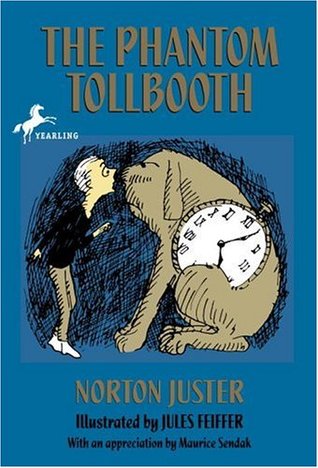

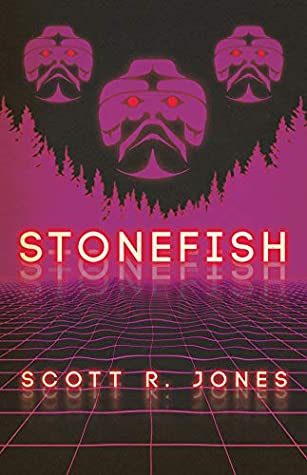


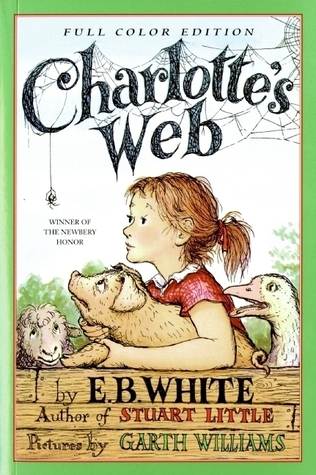


 Meghan's House of Books