Halloween Extravaganza: INTERVIEW: Catherine Cavendish

Catherine Cavendish is a must-read horror author and someone I am super excited about having involved in this year’s Halloween Extravaganza. If you haven’t read any of her work, I encourage you to give her a chance. It won’t be a waste of time, I assure you.


Meghan: Hi, Catherine. Welcome welcome. Tell us a little bit about yourself.

Catherine Cavendish: Iโ€™m a published author of horror tales mainly in the supernatural, paranormal, Gothic, and ghostly traditions.

Meghan: What are five things most people donโ€™t know about you?

Catherine Cavendish: When I was a child, I planted a conker that is now a flourishing, tall horse chestnut tree

I am not fond of chocolate. I donโ€™t hate it, but I could live without it perfectly happily. Cheese on the other handโ€ฆ

I have a phobia about stairs โ€“ I had a nasty accident involving them a few years back.

When I was a small child, I wanted to be a ballerina.

Again, when I was a small child, I had an invisible friend called Gerry. He went everywhere with me, much to my motherโ€™s embarrassment.

Meghan: What is the first book you remember reading?

Catherine Cavendish: Alice in Wonderland by Lewis Carroll

Meghan: What are you reading now?

Catherine Cavendish: I am re-reading Collected Ghost Stories by M.R. James.

Meghan: Whatโ€™s a book you really enjoyed that others wouldnโ€™t expect you to have liked?

Catherine Cavendish: Tales of the City โ€“ Armistead Maupin. I love all his books โ€“ a true guilty pleasure.

Meghan: What made you decide you want to write? When did you begin writing?

Catherine Cavendish: There is no one answer to this as I cannot remember a time I didnโ€™t want to write. The need to tell a story that builds in my head and refuses to go away is what always gets me started. I began writing as soon as I could hold a pencil.

Meghan: Do you have a special place you like to write?

Catherine Cavendish: At my desk in my home office/library. The walls are lined with bookshelves. Perfect for me.

Meghan: Do you have any quirks or processes that you go through when you write?

Catherine Cavendish: Nothing out of the ordinary. I research locations and settings on the internet and create a file of pictures. I also do this with main characters. For books requiring research, I read a lot beforehand to drown myself in the atmosphere of the time and place in which I am setting the story.

Meghan: Is there anything about writing you find most challenging?

Catherine Cavendish: Hunting out and ridding the story of anomalies that creep in. Even when you think youโ€™ve dispatched them all, there is always one lurking in a corner ready to trip you up.

Meghan: Whatโ€™s the most satisfying thing youโ€™ve written so far?

Catherine Cavendish: Thatโ€™s a hard one to answer. I am particularly partial to my latest โ€“ The Haunting of Henderson Close – because I had the basic idea for that story for a number of years and finally got around to writing it.

Meghan: What books have most inspired you? Who are some authors that have inspired your writing style?

Catherine Cavendish: Creature by Hunter Shea is an amazing book โ€“ not only is it sublime horror but it is also one of the most moving stories I have ever read. NOS4A2 by Joe Hill is riveting, Ramsey Campbell, Stephen King, M.R. James, Susan Hill, Jonathan Janzโ€ฆ the list of amazing horror authors past and present continue to inspire me. Emily Bronte and Daphne du Maurier have also been sources of great inspiration and continue to be.

Meghan: What do you think makes a good story?

Catherine Cavendish: Strong, multi layered characters working their way through a plot with unexpected twists and turns, challenges, atmosphere, suspense and an ending you werenโ€™t expecting.

Meghan: What does it take for you to love a character? How do you utilize that when creating your characters?

Catherine Cavendish: I hate prissy, sweet, text book characters. I love flawed, sometimes damaged personalities who fight against the circumstances in which they find themselves. I like them to be non-conformist or to have broken away from the life they were expected to follow. I like rebels. I strive to incorporate this in my main characters. They are usually thirty years old, or more, and have had ups and downs in their lives. Of course, little do they know that things are about to take a turn for the worse and they will need all their reserves of strength and resilienceโ€ฆ

Meghan: Which, of all your characters, do you think is the most like you?

Catherine Cavendish: There are elements of me in most of my main characters but none are especially like me. I suppose the closest is probably Nessa who features in a novel I am currently working on. She goes through some of the major medical issues I faced a few years ago and I do see more of myself in her.

Meghan: Are you turned off by a bad cover? To what degree were you involved in creating your book covers?

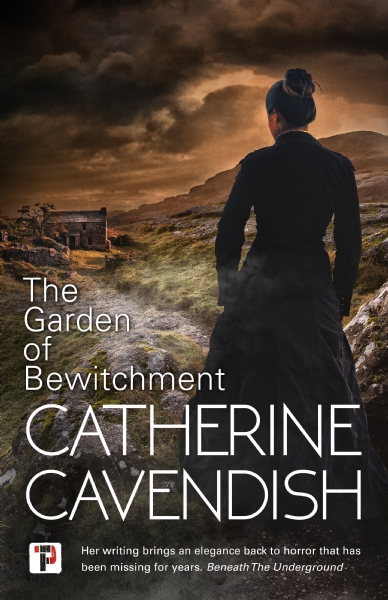
Catherine Cavendish: If we are honest, I think most of us look at the cover first and make an unconscious snap judgement about the content of the story based on that. I am lucky in that all my publishers (so far) have involved me quite heavily in the process. For The Haunting of Henderson Close and my upcoming novel, The Garden of Bewitchment, the publishers – Flame Tree Press – invited me to submit suggestions. I did so, fairly comprehensively as I always do, and the resulting covers are as near to my vision as I believe it is possible to be. I am delighted with them and feel they accurately reflect the content in each case. This also applies to my titles with Crossroad Press.

Meghan: What have you learned creating your books?

Catherine Cavendish: That you never stop learning and there is always room for improvement.

Meghan: What has been the hardest scene for you to write so far?

Catherine Cavendish: That has to be in my current work in progress because it involved a serious medical condition and surgery I actually lived through. While I was writing it, I felt myself back in the hospital, in pain, a bit scared and wondering how I was going to get through it. As far as my currently published work is concerned, the final scene in Saving Grace Devine reduced me to tears.

Meghan: What makes your books different from others out there in this genre?

Catherine Cavendish: I think you would have to ask my readers that one. I like to think maybe itโ€™s the combination of gothic with supernatural and the twists I take at the end. I like to challenge!

Meghan: How important is the book title, how hard is it to choose the best one, and how did you choose yours (of course, with no spoilers)?

Catherine Cavendish: I think titles are critical. Whenever I come up with one, I always check it to see if there are any other books with the same title. If there are, I avoid it and think again. Of course, there is nothing to stop someone else coming up with the same title as yours, but I think it prevents possible confusion if you try and avoid one already in use.

Sometimes a title is the first thing that comes to me and, at other times, I really have to work at it, discarding three or four choices before finding the one that really fits the bill. One of the easiest was The Haunting of Henderson Close. I had picked the name of the Close after checking that no such place existed in Edinburgh and, as the novel was about an evil haunting, the rest came naturally.

Meghan: What makes you feel more fulfilled: Writing a novel or writing a short story?

Catherine Cavendish: In their own ways, both, but because of the length of time and energy expended on writing a novel, the time when you finally decide โ€˜thatโ€™s itโ€™, is a greatly fulfilling one.

Meghan: Tell us a little bit about your books, your target audience, and what you would like readers to take away from your stories.

Catherine Cavendish: My take on horror is the jump-scare, something lurking in the shadows, the stuff of nightmares. I often set – at least part of – my stories in the past because I love history and exploring historical locations. Mine is the world of ghosts, demons, witches, devils and unquiet spirits, frequently with a Gothic flavour. I use folklore traditions that exist and ones I create myself. My target audience is anyone who enjoys a scary, creepy story, suspense and/or horror. When they have finished one of my stories, I hope readers have enjoyed the experience and want to read more

Meghan: Can you tell us about some of the deleted scenes/stuff that got left out of your work?

Catherine Cavendish: If a scene fails to move the story along, or has no relevance to what came before or will come after, out it goes. Once itโ€™s gone, itโ€™s gone and I donโ€™t tend to think about it anymore.

Meghan: What is in your โ€œtrunkโ€?

Catherine Cavendish: I have a tin containing scraps of paper with notes on, or sometimes merely a line or two suggesting a plot for a short story, novel or novella. One came from a vivid dream I had which I can still remember around six years on. I was in a wood and came across an old timber hut. There was an exquisite and clearly expensive picture on the porchโ€ฆand thatโ€™s all Iโ€™m telling you. Iโ€™ll write that story one dayโ€ฆ maybe

Meghan: What can we expect from you in the future?

Catherine Cavendish: On February 10th, Flame Tree Press will be publishing The Garden of Bewitchment which is set in Bronte country โ€“ Haworth and its environs – in West Yorkshire, near where I grew up. This is a ghostly and Gothic tale involving twin sisters who are obsessed with the works of the Bronte sisters. Hereโ€™s the official blurb:

Donโ€™t play the game

In 1893, Evelyn and Claire leave their home in a Yorkshire town for life in a rural retreat on their beloved moors. But when a strange toy garden mysteriously appears, a chain of increasingly terrifying events is unleashed. Neighbour Matthew Dixon befriends Evelyn, but seems to have more than one secret to hide. Then the horror really begins. The Garden of Bewitchment is all too real and something is threatening the lives and sanity of the women.

Evelyn no longer knows who – or what – to believe. And time is running out.

Meghan: Where can we find you? (Links to anywhere youโ€™re okay with fans connecting with you.)

Catherine Cavendish: Website ** Facebook ** Twitter ** Goodreads

(I also have Instagram but Iโ€™m not particularly good at it! Camera-shy I guess.)

Meghan: Do you have any closing words for your fans or anything youโ€™d like to say that we didnโ€™t get to cover in this interview?

Catherine Cavendish: Thank you to everyone who has read or reads my work. I really appreciate your support. Long may it continue. Keep reading scary stories!

Cat first started writing when someone thrust a pencil into her hand. Unfortunately as she could neither read nor write properly at the time, none of her stories actually made much sense. However as she grew up, they gradually began to take form and, at the tender age of nine or ten, she sold her dollsโ€™ house, and various other toys to buy her first typewriter. She hasnโ€™t stopped bashing away at the keys ever since, although her keyboard of choice now belongs to her laptop.

The need to earn a living led to a varied career in sales, advertising and career guidance but Cat is now the full-time author of a number of supernatural, ghostly, haunted house and Gothic horror novels, novellas and short stories. These include (among others): The Haunting of Henderson Close, The Devilโ€™s Serenade, and Saving Grace Devine.

Her new novel – The Garden of Bewitchment โ€“ is out from Flame Tree Press on February 10th 2020.

Cat lives in Southport, in the U.K. with her longsuffering husband, and a black cat, who has never forgotten that her species was once worshipped in Egypt.

When not slaving over a hot computer, Cat enjoys wandering around Neolithic stone circles and visiting old haunted houses.

The Haunting of Henderson Close

Ghosts have always walked there. Now theyโ€™re not aloneโ€ฆ

In the depths of Edinburgh, an evil presence is released.

Hannah and her colleagues are tour guides who lead their visitors along the spooky, derelict Henderson Close, thrilling them with tales of spectres and murder. For Hannah it is her dream job, but not for long. Who is the mysterious figure that disappears around a corner? What is happening in the old print shop? And who is the little girl with no face?

The legends of Henderson Close are becoming all too real. The Auld Deโ€™il is out โ€“ and even the spirits are afraid.

The Devil’s Serenade

Maddie had forgotten that cursed summer. Now she’s about to rememberโ€ฆ

When Maddie Chambers inherits her Aunt Charlotteโ€™s Gothic mansion, old memories stir of the long-forgotten summer she turned sixteen. She has barely moved in before a series of bizarre events drives her to question her sanity.

The strains of her auntโ€™s favorite song echo through the house, the roots of a faraway willow creep through the cellar, a child who cannot exist skips from room to room, and Maddie discovers Charlotte kept many deadly secrets.

Gradually, the barriers in her mind fall away, and Maddie begins to recall that summer when she looked into the face of evil. Now, the long dead builder of the house has unfinished business and an ancient demon is hungry. Soon it is not only Maddieโ€™s life that is in danger, but her soul itself, as the ghosts of her past shed their cover of darkness.

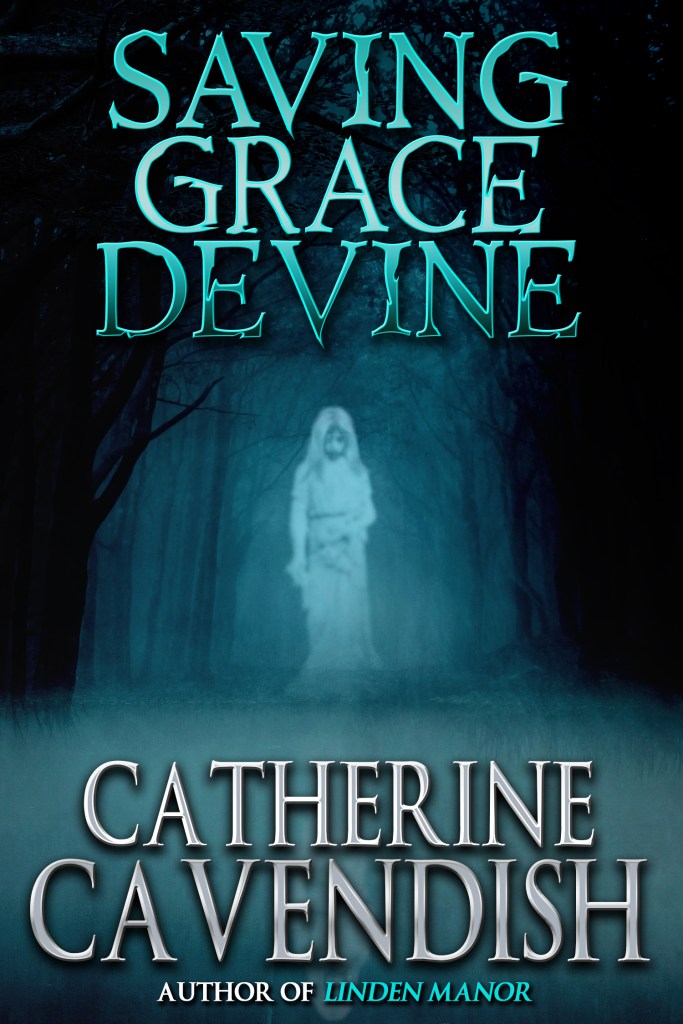
Saving Grace Devine

“Can the living help the dead…and at what cost? “

When Alex Fletcher finds a painting of a drowned girl, she s unnerved. When the girl in the painting opens her eyes, she is terrified. And when the girl appears to her as an apparition and begs her for help, Alex can t refuse.

But as she digs further into Grace s past, she is embroiled in supernatural forces she cannot control, and a timeslip back to 1912 brings her face to face with the man who killed Grace and the demonic spirit of his long-dead mother. With such nightmarish forces stacked against her, Alex s options are few. Somehow she must save Grace, but to do so, she must pay an unimaginable price. “

Halloween Extravaganza: INTERVIEW: B.R. Stateham

Meghan: Hi, B.R. Welcome to Meghan’s House of Books. I appreciate you taking time out of your busy day to sit down with me. Tell us a little bit about yourself.

B.R. Stateham: My name is B.R. Stateham. I am a seventy-year-old writer of genre fiction. I have been writing stories since I was ten years old. And no, I am not famous. For the last 35 years Iโ€™ve been married to a tolerant wife who puts up with my eccentricities. Most of the time. We have three kids, five grand kids, a dog . . . all the โ€˜stuffโ€™ that makes up a typical human being. Nothing special here, which frankly, I am grateful for. Who wants to constantly live under a spotlight all the time?

Meghan: What are five things most people donโ€™t know about you?

B.R. Stateham: Thereโ€™s nothing here. Iโ€™m an open book for normalcy. Two arms, two legs, five fingers on each hand, and a wise-ass mouth. You get what you see.

Meghan: What is the first book you remember reading?

B.R. Stateham: It had to be something in science-fiction. I definitely remember getting hooked on the Edgar Rice Burroughsโ€™ Barsoom novels featuring a Martian princess by the name of Dejah Thor and an earthman by the name of John Carter of Virginia. Burroughs is the guy who created Tarzan of the Apes, another of his series which I devoured at the age of 10 or 11.

Meghan: What are you reading now?

B.R. Stateham: The Norwegian mystery writer, Jo Nesbo, has a new novel out called The Knife. Nesbo writes a dark noir kind of mystery, a bit bleak, with a police detective named Harry Hole (I know; itโ€™s a funny name, but probably not pronounced in Norwegian as we do here in the States). The writer has all the standard tropes found in this kind of novel. The main character is an alcoholic. Heโ€™s a loner, misunderstood and difficult to be around people. The standard shtick. But, for me, somehow it works. I have this โ€˜thingโ€™ of tasting mystery novels from authors living in places other than the States.

Meghan: Whatโ€™s a book you really enjoyed that others wouldnโ€™t expect you to have liked?

B.R. Stateham: Havenโ€™t found one yet, although I think most people would be very surprised if I read a romance novel and enjoyed it. Including myself in that equation.

Meghan: What made you decide you want to write? When did you begin writing?

B.R. Stateham: I was ten years old when I wrote my first story. A full-length sci-fi novel. Hand written. Edgar Rice Burroughs put the writing bug in me at ten for science fiction. A twelve or fourteen, a guy by the name of Dashiell Hammitt torched me with a desire to write mystery fiction. Iโ€™ve been writing ever since.

Meghan: Do you have a special place you like to write?

B.R. Stateham: Not really. The big computer I work on is in a converted bedroom I use as a book depository and writing desk. But I have a laptop I take with me. And it seems I am always writing, or plotting out a story line, in my head no matter where I am at. So the โ€˜writingโ€™ never seems to stop with me.

Meghan: Do you have any quirks or processes that you go through when you write?

B.R. Stateham: A big glass of instant tea. And when available, a little silence around me. But a house filled with grand-kids pretty will eliminates the second choice. (sigh)

Meghan: Is there anything about writing you find most challenging?

B.R. Stateham: Generally speaking, just sitting down and beginning the typing process. I donโ€™t know what it is, but I find myself straining to climb that mountain of inertia when it comes to the physical aspect of writing. Donโ€™t ask me why. I have no answer. Specifically, writing action scenes are difficult. I have to really, really slow down when chopping on the keyboards writing an action scene. Movement, physicality, action and reaction have to make sense. Hard to do when, in reality, the action sequences in a novel are the most exciting times to write.

Meghan: Whatโ€™s the most satisfying thing youโ€™ve written so far?

B.R. Stateham: I have a recurring character by the name if Smitty. Heโ€™s a hit man/investigator. I wrote a short story a while back explaining how Smitty became Smitty. Going from a normal married man to a man who becomes, in many respects, a cold-blooded killer. But one with a code of honor. Without doubt, thatโ€™s the best thing Iโ€™ve produced so far.

Meghan: What books have most inspired you? Who are some authors that have inspired your writing style?

B.R. Stateham: Hundreds of books. Dozens of authors. No one book, or one author, truly stands out. But all combined inspired me and gave me that incentive to experiment in the writing form and finding my own voice and style. Iโ€™d be hard pressed to single out a particular writer. Each one Iโ€™ve read and appreciated has contributed something to my logbook on how to write. To name names now, and explain why theyโ€™ve impressed me in their writing styles would become a long essay, if not an entire book, of wishful thinking.

Meghan: What do you think makes a good story?

B.R. Stateham: For me it breaks down to three elements. One, a kick-ass opening which glues me instantly to the story. Two, a character, usually the lead character, who I can love or hate who is quirky and three-dimensional in nature. And Three, imagination. I want to see what is going on inside the novel. I want to taste it . . . feel it . . . the whole nine yards. (To be honest, the imagination part probably is what made me become a writer. The more I read, the less I found writers who could convey their imagination over into the words. So they didnโ€™t. They just barely drew an outline and told the writer to fill in the colors and details. For some reason, that really pisses me off.)

Meghan: What does it take for you to love a character? How do you utilize that when creating your characters?

B.R. Stateham: See my answer to the above question.

Meghan: Which, of all your characters, do you think is the most like you?

B.R. Stateham: This is a hard one. I have several recurring characters in a about three different series I am writing. Each has their own traits. Their own strengths and weaknesses. I like them all. I donโ€™t know if I can say I have a โ€˜favorite.โ€™

Meghan: Are you turned off by a bad cover? To what degree were you involved in creating your book covers?

B.R. Stateham: Absolutely turned off by bad covers. And yes, I try to be actively involved in cover design. In self-publishing and using small indie publishers, I usually can have my way in cover designs. So far I have had limited success in finding a major publisher for any of my work, and they never ask me for any real input in their decisions. Nor, if I ever get lucky and find a major publisher again who likes my work, do I expect them to ask me for my opinions.

Meghan: What have you learned creating your books?

B.R. Stateham: Money talks. If you have the money to create the book you want, you get what you want. If youโ€™re funds are limited, so is the end product. As simple as that.

Meghan: What has been the hardest scene for you to write so far?

B.R. Stateham: Again, action scenes.

Meghan: What makes your books different from others out there in this genre?

B.R. Stateham: I wished I could tell you convincingly. But I can only hazard a guess. I think I put more imagination in my efforts. I try to draw characters verbally which capture your complete attention. I try to write plots which are tightly drawn and hang together, drawing you deeper into the story without you realizing youโ€™re being pulled in. At least, thatโ€™s what I hope I am doing.

Meghan: How important is the book title, how hard is it to choose the best one, and how did you choose yours (of course, with no spoilers)?

B.R. Stateham: Book titles are very important. Usually what a potential reader sees first is either the title, or the artwork of the cover. Both go hand in hand.

Therefore, both are critical. Generally, I find the title for my book or short story in the body of the story. A phrase, a sentence, an idea . . . there is something within the story which gives me the title. And that title has to foretell what the story is about. It doesnโ€™t have to be a blunt-force trauma kind of title. But it must be suggestive. Maybe even a bit menacing.

Meghan: What makes you feel more fulfilled: Writing a novel or writing a short story?

B.R. Stateham: The length of the story doesnโ€™t matter. The story must be sharply defined, tightly plotted. Even elegant, if youโ€™ll allow that idea to be considered. A definite beginning, middle, and end. And it has to create some kind of emotional reaction. A reaction which fits the story. If I achieve all of this, Iโ€™ve done my job as a writer.

Meghan: Tell us a little bit about your books, your target audience, and what you would like readers to take away from your stories.

B.R. Stateham: I write mysteries, police-procedurals, two different historical mystery series and fantasy series. At the moment, I am hunting for publishers for the historical mysteries and the fantasy series. But I do have a mystery series, featuring the hit man named Smitty.

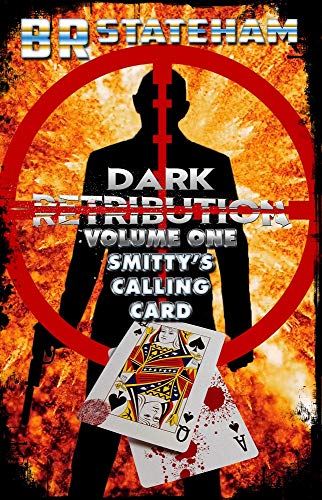
The first book in the series is called, Dark Retribution Volume I: Smittyโ€™s Calling Card. This is the first full-length Smitty novel. The publisher is a small indie from out of Britain (Close to the Bone).

Volume two of the series (Dark Retribution, Volume II: Sometimes Nightmares Come True) came out September 27th of this year. This is ten short stories plus a novella featuring the dark-eyed Smitty.

Fahrenheit Press (another Brit indie) has one of my historical detective mysteries out, the title being Death of a Young Lieutenant. A series featuring an art thief turned-reluctant-detective by the name of Jake Reynolds. The series is set in the first part of the 20th Century, starting in the opening weeks of 1914 and the beginning of World War One.

Each of these books can be found either in Amazon Books, or on the publisherโ€™s web sites. Hope to have news soon detailing about a few of my other novels circulating the circuit hunting for a publisher. Weโ€™ll see.

Meghan: Can you tell us about some of the deleted scenes/stuff that got left out of your work?

B.R. Stateham: What deleted scenes?

Meghan: What is in your โ€œtrunkโ€?

B.R. Stateham: Oh, golly. Currently I have about five novels in the que, plus that many or more short stories Iโ€™m working on. The writing never stops. Sometimes it slows down. But it never stops.

Meghan: What can we expect from you in the future?

B.R. Stateham: More writing and adding to the many series Iโ€™ve started. Just more writing in general.

Meghan: Where can we find you?

B.R. Stateham: You can find me on Twitter and Facebook. Usually under my full name (Bryant R. Stateham). I also have a blog site called In the Dark Mind of B.R. Stateham. The blog lists everything I have published at one time or another, plus I talk about writing in general.

Meghan: Do you have any closing words for your fans or anything youโ€™d like to say that we didnโ€™t get to cover in this interview?

B.R. Stateham: Thanks for the interview! I appreciated the invitation. I hope Iโ€™ve said something . . . anything . . . even remotely interesting. And I hope your readers might be intrigued enough to check out some of my material. Gaining a reader or two is always something I strive for. Becoming a successful writer is more a matter of sheer luck than it is of pure talent. Therefore, I feel really lucky whenever anyone discovers, and enjoys, something I have written.

With luck, maybe we can do this again someday. That would be a blast!

B.R. Stateham is a fourteen-year-old boy trapped in a seventy-year-old body. But his enthusiasm and boyish delight in anything mysterious and/or unknown continue.

Writing novels, especially detectives, is just the avenue of escape which keeps the authorโ€™s mind sharp and inquisitive. Heโ€™s published a ton of short stories in online magazines like Crooked, Darkest Before the Dawn, Abandoned Towers, Pulp Metal Magazine, Suspense Magazine, Spinetingler Magazine, Near to The Knuckle, A Twist of Noir, Angieโ€™s Diary, Power Burn Flash, and Eastern Standard Crime. He writes both detective/mysteries, as well as science-fiction and fantasy.

In 2008 the first book in the series featuring homicide detectives Turner Hahn and Frank Morales came out, called Murderous Passions.

Also, in 2008 he self-published a fantasy novel entitled, Roland of the High Crags: Evil Arises.

In 2009 he created a character named Smitty. So far twenty-eight short stories and two novellas have been written about this dark eyed, unusually complex hit man.

In 2012 Untreed Reads published book two of the Turner Hahn/Frank Morales series A Taste of Old Revenge.

In 2015 NumberThirteen Press published a Smitty novella entitled, A Killing Kiss.

In 2017 a British indie publisher, Endeavour Media, re-issued A Taste of Old Revenge, and soon followed by a second Turner Hahn/Frank Morales novel entitled, There Are No Innocents.

In 2018 Endeavour Media published a third novel of mine, the first in a 1st Century Roman detective series, entitled While the Emperor Slept.

Also in 2018, NumberThirteen Press merged with another famous British indie, Fahrenheit Press. Soon afterwards, Fahrenheit Press re-issued an old novel of mine entitled, Death of a Young Lieutenant.

Now, after all of this apparent success, you would think Fame and Fortune would have sailed into my harbor, making me the delight of the hard-core genre world. Ah but contraire, mon ami! Fame and Fortune are two devious little wraiths who pick and chooses the poor souls they wish to bedevil. I remain in complete anonymity and am just as bereft of fortune as I have always been. And apparently will continue to be for a long time to come.

Dark Retribution 1: Smitty’s Calling Card

He’s desperate. He knows his sister-in-law is the next victim. And even though he’s a cop assigned to the team built to hunt the killer down and arrest him, they’ve had no luck finding him. How does he save his sister-in-law?

Sometimes to fight evil, you must flirt with the devil. Sometimes you need a killer to find a killer.

Dark Retribution 2: Sometimes Nightmares Come True

How does a man become a cold-blooded hit man? Once, a loving husband and loyal brother… now a strange man who kills for profit. And for conviction. Ten short stories and a novella explaining the transition of an ordinary man into a near-legend.

Halloween Extravaganza: INTERVIEW: Jamie Nash

Y’all, let’s welcome Jamie Nash, author of Nomad and The 44 Rules of Amateur Sleuthing, to our Halloween Extravaganza. This is his first time joining us.


Meghan: Hi, Jamie. Welcome to Meghan’s House of Books. Tell us a little bit about yourself.

Jamie Nash: Iโ€™m the writer of the sci-fi novel, NOMAD. My day-job is screenwriting. I mostly write R-rated horror and family filmsโ€ฆ not at the same time.

Meghan: What are five things most people donโ€™t know about you?

Jamie Nash:

  • I used to be a street-performing juggler.
  • I was the official juggler of Oriole Park at Camden Yards for a season.
  • I used to be in an improv groupโ€ฆand did Murder Mystery Trains.
  • As a teenager, I was one of the original members of the LARP organization Darkon.
  • I worked as a computer programmer for the Avalon Hill Game Company and Talonsoft and worked primarily on WW2 computer games.

Meghan: What is the first book you remember reading?

Jamie Nash: Hmmm. Thatโ€™s an awesome question. Do comic-books count? I had a hardback collection of old Batman comics.

Meghan: What are you reading now?

Jamie Nash: Howard Stern Comes Again. Fiction-wise โ€“ Stephen Kingโ€™s The Outsider.

Meghan: Whatโ€™s a book you really enjoyed that others wouldnโ€™t expect you to have liked?

Jamie Nash: The Myth series by Robert Asprin.

Meghan: What made you decide you want to write? When did you begin writing?

Jamie Nash: I wrote the first chapter of a Godzilla novel when I was in 5th grade. I donโ€™t really know why… but I always want to be the creator not the consumer. Iโ€™m vastly curious about behind the scenes stuff โ€“ I donโ€™t want to watch theater, I want to act. I donโ€™t want to play basketball, I want to coach. I donโ€™t want to watch magic, but want to know how the trick is done. Same with writing. I just always gravitated to โ€˜how is that doneโ€™?

Meghan: Do you have a special place you like to write?

Jamie Nash: On my couch in front of the TV watching Netflix.

Meghan: Do you have any quirks or processes that you go through when you write?

Jamie Nash: I watch TV. Which is weirdโ€ฆ cause now I canโ€™t โ€˜just watch TVโ€™. I need to 2-screen and do something productive.

Meghan: Is there anything about writing you find most challenging?

Jamie Nash: The career of it. The ups and downs. And constantly thinking youโ€™re never going to sell another one.

Meghan: Whatโ€™s the most satisfying thing youโ€™ve written so far?

Jamie Nash: The 44 Rules of Amateur Sleuthing โ€“ my first novel. Just to prove I could do it.

Meghan: What books have most inspired you? Who are some authors that have inspired your writing style?

Jamie Nash: Stephen King, Clive Barker, Dean R Koontz, Richard Laymon, Elmore Leonard.

Meghan: What do you think makes a good story?

Jamie Nash: Becoming emotionally invested in a character so you live or die with their decisions they make and the horrors they endure.

Meghan: What does it take for you to love a character? How do you utilize that when creating your characters?

Jamie Nash: I really like characters that are people I wish I could beโ€ฆ yet still flawed. Ones that I admire their codes or empathyโ€ฆ yet they still have work to do to be complete.

Meghan: Which, of all your characters, do you think is the most like you?

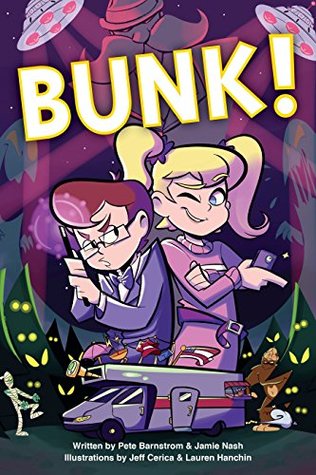
Jamie Nash: I co-wrote a kidโ€™s book called Bunk about a kid-magician who is wicked smart and debunks supernatural Hoaxes. The kid has some talent but lives in a bubble โ€“ and probably doesnโ€™t realize what a huge dork they really are at times.

Meghan: Are you turned off by a bad cover? To what degree were you involved in creating your book covers?

Jamie Nash: Not really. I tend to be more of a blurb person. Hook me with a concept and Iโ€™m inโ€ฆ more than the cover.

Meghan: What have you learned creating your books?

Jamie Nash: That marketing a book is hard work. Getting the word out so people even know you wrote something is harder than it appears and takes constant grunt work. Big thanks to reviewers, blogs and bookstagrammersโ€ฆ without them it would be tough!

Meghan: What has been the hardest scene for you to write so far?

Jamie Nash: I donโ€™t have an answer for thisโ€ฆ sceneโ€™s arenโ€™t hard for me. Sometimes story-threads are hard or structural choices but once I have the general ideas scenes are usually easy. Scenes with lots of characters can be a slog to get right. I generally hate them.

Meghan: What makes your books different from others out there in this genre?

Jamie Nash: I think I have a style that might appeal to the impatient reader. A lot fo sci-fi books are dense with lots of words. I tend to be a minimalist in terms of style and storytelling. People have told me theyโ€™ve read my books in one or two sittings โ€“ which is exactly what I was going for.

Meghan: How important is the book title, how hard is it to choose the best one, and how did you choose yours (of course, with no spoilers)?

Jamie Nash: Itโ€™s important. I typically search for something with a double-meaning. A sense of irony.

Meghan: What makes you feel more fulfilled: Writing a novel or writing a short story?

Jamie Nash: A novel. Writing a short story is like going for a morning jog. Completing a novel is like running a marathon. Pulling it off is a tremendous feat. Being able to say your finished is both a relief and a time for proud reflection.

Meghan: Tell us a little bit about your books, your target audience, and what you would like readers to take away from your stories.

Jamie Nash: As a reader, I’m rare in that I like fast reads. I often try to deliver books with ‘maximum story’ but also ones you can just pickup, dive into, and get hooked… and before you know it… you’re done.

When I write novels, they’re typically coming from a place of shared DNA with things I love. Mostly they come from some inner-child… hearkening back to when I was twelve years old and falling in love with stories and reading. But with a slightly more world-weary/life-lived POV…

Meghan: Can you tell us about some of the deleted scenes/stuff that got left out of your work?

Jamie Nash: Honestly, I can’t think of many. In my latest book – NOMAD – it started as Third Person Omniscient… and switched to first-person. So there were lots of moments with the villain and furthering that world that got traded for character beats and aligning the reader closer to the main character’s mindset and situation. The book became part of a character piece than the ‘chess match’ it originally might have been.

Meghan: What is in your โ€œtrunkโ€?

Jamie Nash: Not as much. I tend to dive into the things I want to do. I’d like to write a play one day. Maybe a horror play. I don’t think there are enough of those and I find theater really can elevate the tension.

Meghan: What can we expect from you in the future?

Jamie Nash: My next book is another Middle Grade story. It’s about Godzilla-esque monsters. I’m also directing a film this fall, a short for the anthology A Comedy of Horrors. Hopefully, it’ll be released by next Halloween.

Meghan: Where can we find you?

Jamie Nash: Website ** Twitter

And I do a screenwriting podcast that analyzes hit movies for writing tips and tricks – it’s called Writers/Blockbusters… search Thundergrunt on your favorite podcast platform to subscribe.

Meghan: Do you have any closing words for your fans or anything youโ€™d like to say that we didnโ€™t get to cover in this interview?

Jamie Nash: I love to interact and hear what people are responding to. So I hope you’ll pick up the book and join the conversation.

Jamie Nash is a screenwriter and novelist who likes to mix it up. He’s the writer of the horror sci-fi novel Nomad and the middle-grade mystery The 44 Rules of Amateur Sleuthing.  He’s written horror films like ExistsV/H/S/2The Night WatchmenAltered, and Lovely Molly. And family films like Santa Hunters and Tiny Christmas. Jamie teaches screenwriting to college students, co-hosts the podcast Writers/Blockbusters and can juggle chainsaws (not a joke). He lives with his wife, son, and a talking dog.

The 44 Rules of Amateur Sleuthing

Twelve-year-old Mandrake Mandrake is the world’s greatest detective.

Nobody cares.

The cops take credit for all the mysteries he solves, his grandmother is more interested in his “suspect” Algebra grades, and he lives in the shadow of his parents – the most feared super villains in the history of super villainry!

But respect is on the upswing when an all-star team of gumshoes enlists Mandrake to help crack an impossible case – how did Mandrake’s dastardly father escape from an inescapable super-prison? And what evil scheme is he hatching now?

Mandrake has never met his infamous dad. In fact, he’s spent his entire life trying to distance himself from his father’s dark legacy.

But when the other master detectives are captured inside the super-prison and all of its criminal occupants are unleashed on the city, Mandrake must save the day by doing the very thing he fears most – trying to understand the twisted brain of the evil mastermind father who ruined his life.

Nomad

What if you woke up in a space ship with no idea how you got there? And someone on board was trying to kill you?

Nomad is a dark Sci-Fi from the screenwriter of V/H/S/2: Ride in the Park, Exists, and Lovely Molly. The fast-paced horror story unfolds in real-time as a complex teen tries to unravel the mind-bending mysteries of who she is and how she ended up in deep-space battling to survive something evil that stalks her within the ship’s dark corridors.

It’s Alien meets The Thing with a strong teenage female protagonist.

From the back of the book:
She wakes up drowning, escapes from a watery canister into a deathtrap of fiery corridors and exploding machinery.

Somehow, she’s in space.

She can’t remember her name or why she’s here.

Her mind is a mixed up Rubik’s cube of fuzzy memories. But she knows that spaceships don’t exist, and if they did, ordinary girls like her don’t belong on them.

Has she been abducted?
Did cryfreeze scramble her brain?
Is it aliens?
Or even real?

And there’s something else. She’s not alone. Someone or something lurks in the shadows. And it wants her dead…

Bunk!

It’s Scooby-Doo meets Encyclopedia Brown with all the laughs of Diary of a Wimpy Kid. See if you have what it takes to solve each spooky mystery. The clues are hidden within the pages and pictures (features over 100 illustrations).

A Bigfoot photo bomb? Mermaids at the Water Park? An attic filled with ghosts?

It’s not exactly the ‘girl vacay’ Berni had planned out for her last summer before joining the grown-up world of middle school.

But all her dreams of summer fun came to a screeching halt when Uncle Danny whisks her away on a cross-country tour with her eccentric and annoying cousin – Baxter the Magnificent.

Now, poor Berni is squeezed into a sparkly and very itchy magician’s assistant costume just so she can be stuffed in a box and sawed in-half once a night (and twice on Sundays!) as part of Baxter’s cheese-ball magic show.

Fortunately, she’s not just Baxter’s ‘Lovely Assistant.’ She’s also his debunking partner. Baxter solves Mysteries of the Unexplained. Using his knowledge of magic and illusion, along with her smarts and common sense, they’re called into cases to expose the cheaters and tricksters who want to fake us out with monsters, spooks, and space aliens!

But when Baxter’s parents are framed for an impossible robbery using real magic powers, it’s up to Baxter and Berni to travel to the famous magic palace and save Baxter’s mom and dad from being sent to jail!

In the tradition of classic kid-detective stories, BUNK allows you to crack the spooky cases alongside Berni and Baxter. Every page and picture provides the clues you’ll need. So look sharp, pay attention, and get ready to BUNK!

INTERVIEW: C.J. Anthony

I met C.J. Anthony a few months ago through his publishing consultant and was so completely intrigued by the plot idea of his debut book that I agreed to read it. I wanted to know more about him, especially after we exchanged a few emails, so here we are, sitting down for an interview together.


Meghan: Hi, C.J. Thanks for agreeing to sit down with me today. Tell us a little bit about yourself.

C.J. Anthony: I’m a former British soldier and currently a security specialist mainly working within the Middle East. I had toyed with the idea of writing a book for some time. I had some ingredients – characters, settings, and genre – but I just needed the right plot to bring it all together. I’m inspired by my experiences that have happened in my life, taking certain events that I think would make an interesting story, and put them creatively together. By altering the truth, I create a more engaging story. A book needs a kind of organic identity.

I’m passionate about anything creative, I’m an avid art collector, a keen painter, and I have exhibited in London. For as long as I can remember, I have always been creative, and I’m obsessed with it. To produce something to evoke an emotion in others is quite overwhelming.

Meghan: What are four things most people don’t know about you?

C.J. Anthony: I’m an art collector. Artist. I’m sat in my office now – in Baghdad. I have assisted a friend who is a military technical advisor on a feature film.

Meghan: What is the first book you remember reading?

C.J. Anthony: The Village with Three Corners. I read it while I was at primary school. What a classic.

Meghan: What are you reading now?

C.J. Anthony: Machines Like Me by Ian McEwan and The Opposite of Loneliness by Marina Keegan.

Meghan: What made you decide you want to write? When did you begin writing?

C.J. Anthony: I began writing about two years ago. My current manuscript is directly influenced by my love of art; both collecting and being an artist, also drawing on my knowledge and experiences within the security world. One afternoon I was sitting at home having a coffee with the TV on in the background, whilst flicking through one of my art books published by British artist Damien Hirst. The book illustrates over a thousand of his famous various spot paintings, spanning over twenty-five years (1986-2011).

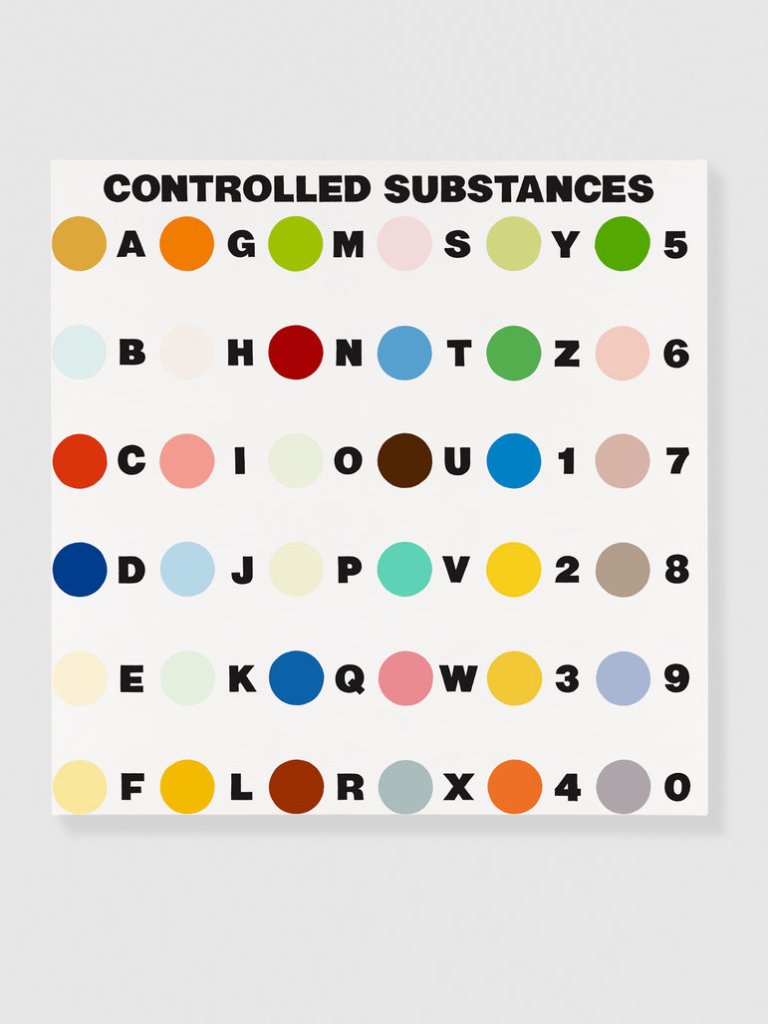
As part of my art collection, I own a signed limited edition print by Hirst. This limited edition is titled Controlled Substances; the original was publicly on display at the Tate Modern Gallery in London in 1994. The painting is based on the simple format of the grid, the painting features circular ‘spots’ of coloured paint lined up at regular intervals, with the spaces between them always the same distance as their diameter, on a white background. With all the letters of the Alphabet and numbers next to an opposing spot, visually this particular edition resembles some sort of code to produce secret cyphers.

I’d already known about the Damien Hirst exhibition back in 2012, which I missed due to work commitments. It was a major retrospective celebrating his spot painting series, simultaneously across all the eleven Gagosian galleries worldwide. While I was flicking through the pages of the Hirst book, I noticed that the film The Imitation Game was on TV. It stars Benedict Cumberbatch as a British cryptanalyst Alan Turing, who decrypted German intelligence codes for the British government during the second world war.

That very moment was my epiphany, my catalyst to start writing. In my excitement, I got up from off my sofa and walked over toward the Hirst edition print that was hung up on the wall. I took it from off the wall and placed it down in the centre of the living room floor. Pausing for a moment in thought, I then started to carefully tear out pages from the Hirst book, placing them around the print in a sort of strategic pattern. At this stage, it didn’t make sense, but visutally it helped me put together the plot. Eleven galleries, eleven owners, cryptography, and a bit of art and terrorism thrown into the mix. I quickly went to my study and got my notebook and pen and sarted to plan, plot, and prepare – A Spot of Vengeance. Taking me a total of nine weeks to write the full manuscript while I was in my office in Basra.

Meghan: Do you have a special place you like to write?

C.J. Anthony: For me, it’s when I wake up in the early hours and go into my office and write. There’s just calming and inspiring about that time of day, when your still half asleep with a cup of coffee and music playing in the background.

My favorite place to write, when I’m home in the UK is my study as it faces out onto a wooded area, which is very pleasing on the eye, however I get distracted by the wildlife.

Meghan: Do you have any quirks or processes that you go through when you write?

C.J. Anthony: A lot of day dreaming the scenes and a lot of doodling.

Meghan: Is there anything about writing you find most challenging?

C.J. Anthony: That’s the beauty of writing, the challenges are so addictive and when you achieve your aim it’s a great feeling.

Meghan: What’s the most satisfying thing about writing so far?

C.J. Anthony: To actually feel the physical book in your hand and to see others read it! And the great reviews I have received so far is overwhelming.

Meghan: What books have most inspired you? Who are some authors that have inspired your writing style?

C.J. Anthony: The books I have read have all been inspiring in one way or another, but none have inspired me and my writing style. More of a motivation to write.

Meghan: What do you think makes a good story?

C.J. Anthony: Something that makes you want to be a certain character or makes you constantly think about a certain subject matter, long after each chapter or when you have finished the book.

Meghan: What does it take for you to love a character? How do you utilize that when creating your characters?

C.J. Anthony: My characters are all people that I’ve known or I still know them today. (But they don’t know it’s them. I hope ha!)

Meghan: Which, of all your characters, do you think is the most like you?

C.J. Anthony: Danny, with elements of Thom and the style of Hafiz – I love designer clothes, and being a gentleman is a fine art these days.

Meghan: Are you turned off by a bad cover? To what degree were you involved in creating your book covers?

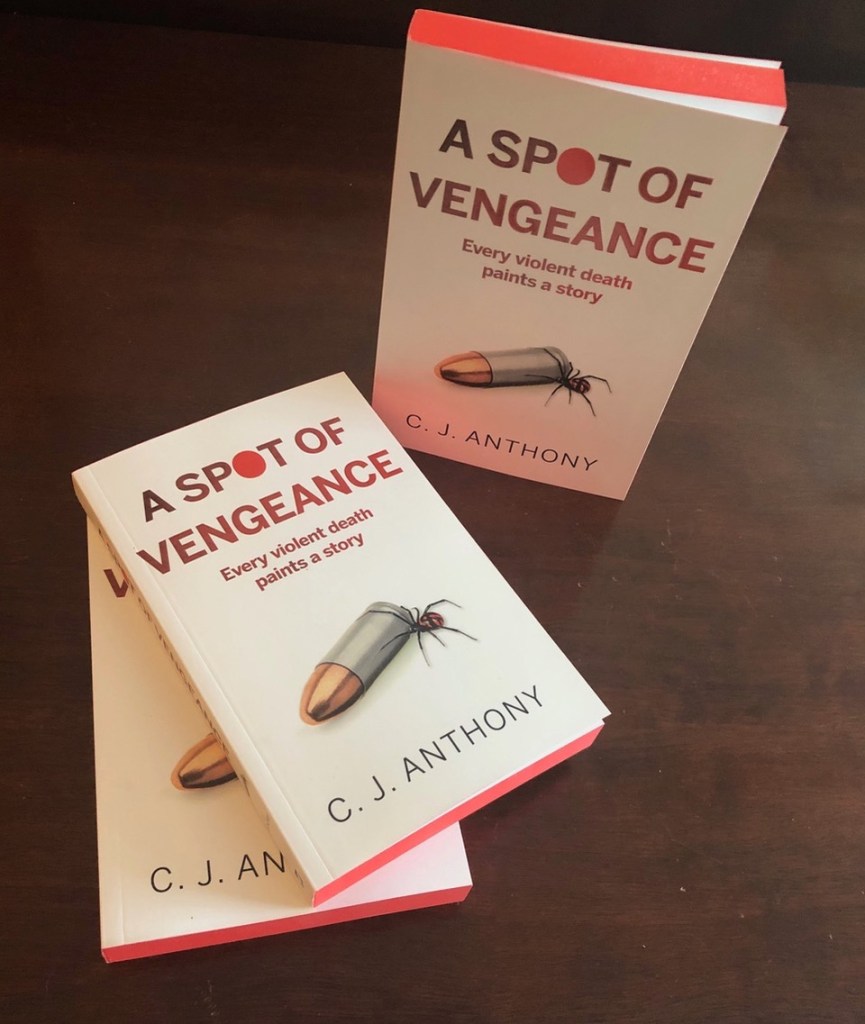
C.J. Anthony: Yes, some book covers don’t do the author any justice, which is unfortunate as it’s a representation of them and their work. I was fortunate enough to design my own book cover, as the publishing design team’s ideas were somewhat poor and their ideas wouldn’t give the reader/viewer an insight into what the books is really about.

I love conceptual art designs on book covers, as it should give you a hint of what to expect; gets the mind working before you have even started to read.

Meghan: What have you learned creating your book?

C.J. Anthony: I’ve learned a lot about the process and mastering the craft as a writer, which is an ongoing process, and that you need to adapt all the time to keep up with trends at the time.

Meghan: What has been the hardest scene for you to write so far?

C.J. Anthony: I write in a filmic way and my story is dominated by code breaking. I had to make the code breaking scenes feel very creative, in a way, so that the reader feels they are on the journey with Danny.

Meghan: What makes your book different from others out there in this genre?

C.J. Anthony: It is not only a book for the spy thriller enthusiasts, but it is also for the creatives and art lovers among us. Readers will experience a vicarious feeling of excitement, opulence, and intrigue. Also educating them on a well-researched insight into the world of art, depicting how it’s dominated and manipulated by the chosen few. These are just some of the many incremental differences that readers will receive compared to other works similar to A Spot of Vengeance. Skillfully highlighting the worlds constant threat of terrorism and its shadowy tactics. This intriguing story is loosely based on true events with interesting characters. The ongoing war of critic versus artist, ruthless buyers, and the self-obsessed collectors. While portraying the lengths in which someone would go to manipulat their own position of power, purely for personal revenge. Encouraging the reader to get lost in the narrative and question their own emotional experiences. I believe it sets it apart and makes it all the more interesting as a result.

Meghan: How important is the book title, how hard is it to choose the best one, and how did you choose yours (of course, with no spoilers)?

C.J. Anthony: Originally my book was titled “The Architect” as the British artist Damien Hirst claimed to be an architect, his ideas and designs are then put together by an army of helpers. Just like a real architect designs a building and it is then constructed by builders. However, I was advised to give it a more direct title as readers would think the book was about an architect and buildings.

Meghan: What makes you feel more fulfilled: Writing a novel or writing a short story?

C.J. Anthony: This is my first book and I have really enjoyed the journey. It has been overwhelming at times, but worth it.

Meghan: Can you tell us about some of the deleted scenes/stuff that got left out of your work?

C.J. Anthony: I had written an alternative ending, but when I read it out loud, it just didn’t work and it played on my mind for days so I had to rewrite it.

Meghan: What is in your “trunk”?

C.J. Anthony: My sister passed away three years ago, aged 38. She had learning difficulties and sadly died in her sleep peacefully. Her boyfriend (Scott) of 23 years has Asperger’s and Autism. Throughout their twenty-three-year relationship, they spent every moment they could together, doing activities, youth club, church, movies, etc. (They called themselves the love birds.) They just adored each other. However, every Monday was the only time they spent apart throughout their twenty-three-year relationship, while Scott would work part time at a local charity shop. Due to his condition, he forgets and still waits for her or visits her apartment and his parents have to remind him. I have an idea for a love story/their love story, showing the issues they battled with in society and their own conditions as a couple – with a great twist in the end.

Meghan: What can we expect from you in the future?

C.J. Anthony: A Spot of Vengeance is now being written into a screenplay. Due to having contacts within the film industry, I have secured an agent to represent me.

Meghan: Where can we find you?

C.J. Anthony: I am only on Instagram at the moment. Please connect with me.

Meghan: Do you have any closing words for your fans or anything you’d like to say that we didn’t get to cover in this interview?

C.J. Anthony: Just a big thank you. My older sister, Pamela, has stage 4 cancer – she’s going through chemo therapy for the second time. I’m donating 50% of all sales to cancer research, which is a fantastic charity.

Born in the UK, Birmingham, C.J. Anthony’s debut novel showcases his creative skills and diverse imagination that will lead readers in contemplation long after they turn the last page. Drawing on his experience as a former British soldier, security specialist within the Middle East. He writes in a filmic and seductive prose, adding to the emotive and realistic charge to his narrative. C.J. Anthony is passionate about anything creative, an avid art collector, and a keen painter who has exhibited in London.

A Spot of Vengeance

Ex-Army intelligence Danny Swift has always yearned to be an artist. By coincidence, he meets art dealer Hafiz De Mercurio who promises to help him launch his career. Little does Danny know that Hafiz hides behind a deadly cloak of deception until British intelligence recruit Danny, and his perilous mission is to covertly observe the elusive Hafiz. They believe something big is coming, something coordinated, a terror spectacular to rival anything seen before, and the key lies in a cypher hidden in works of art. Unable to refuse, Danny is drawn into a world he’d turned his back on, a world of lies, deception, and double-dealing.

As the clock ticks down and Danny begins to crack the code surrounding the enigmatic Hafiz, Danny will be tested in ways he never imagined… including preventing the massacre of innocent people and artworks on display in the eleven Gagosian galleries around the world.

INTERVIEW: Kevin J. Anderson

I think every avid reader has a short list of authors that they would love to talk to. A few months ago, I was lucky enough to have a conversation (online) with one of mine. Even HE will admit that I fangirled a smidge, no matter how professional I tried to behave. Just a few days after posting that interview, I took a break from my book blog while I worked on creating my next adventure. As far as I was concerned, it was the best way that I could have ended that part of my story, getting the chance to do that. When I sat down to start planning my future blog posts here, I wanted something that, for me, would be epic, but I couldn’t imagine topping that. It wasn’t until one night, around 3 am (when I seem to always get my best ideas), I just happened to wonder if he would be interested in coming back for a second interview – close that blog out with him, and then open this blog up with him. He agreed… and here we are.

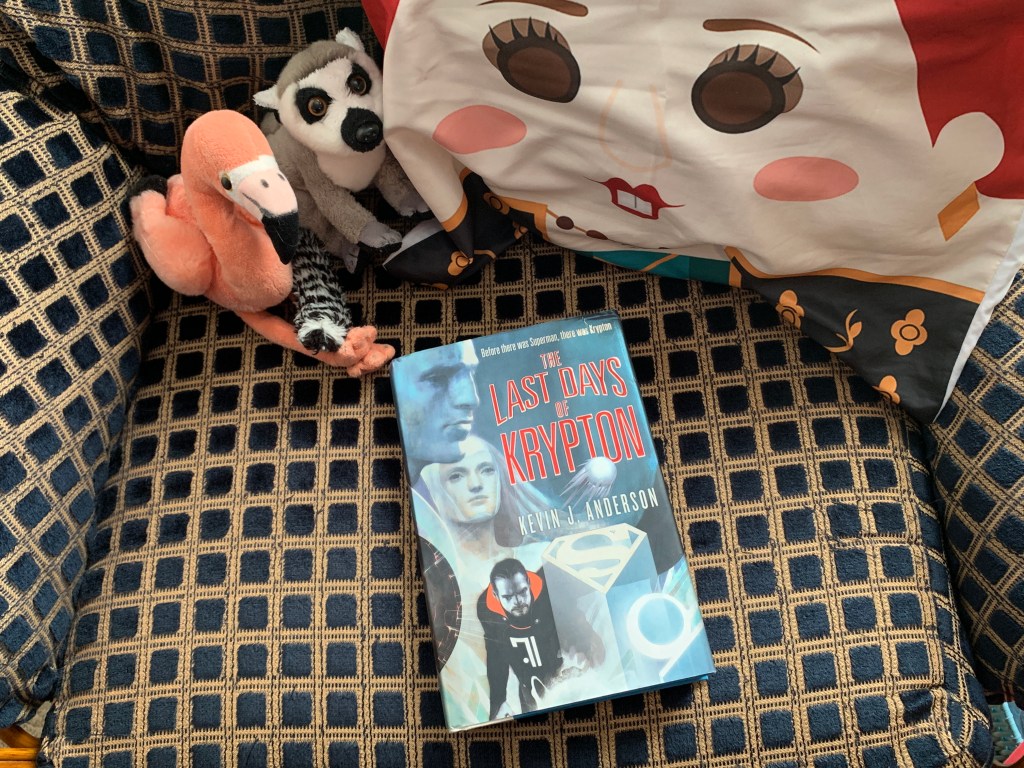
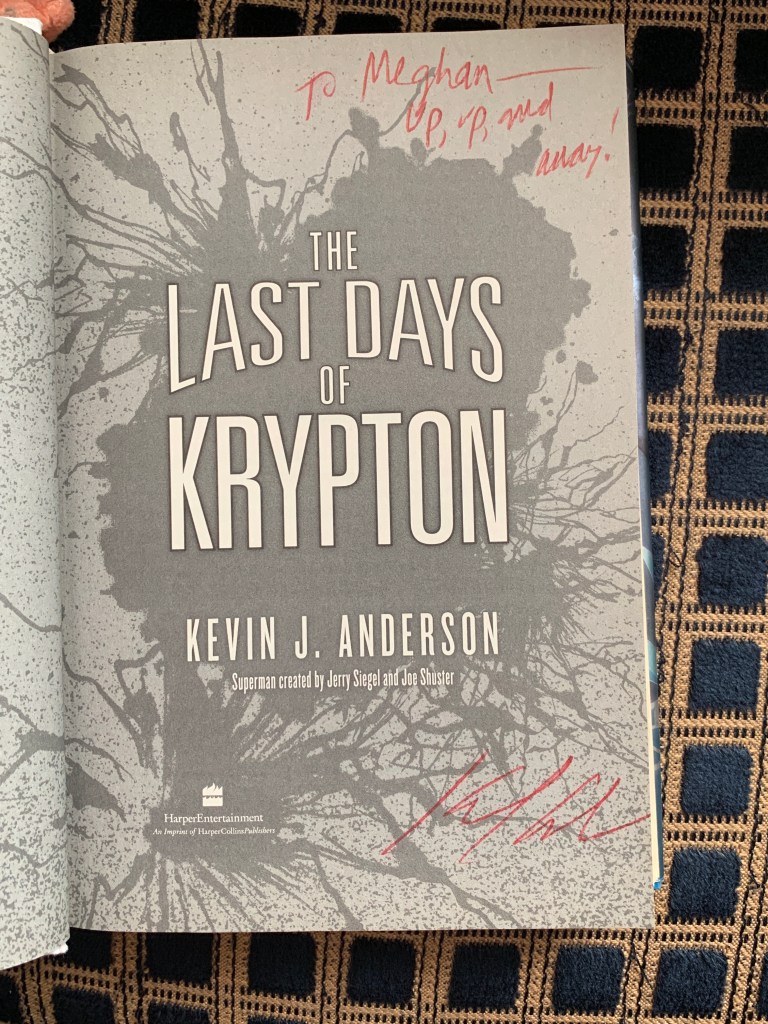
Kevin J. Anderson is an incredible writer, and anyone who hasn’t take the time to read one of his Star Wars and Star Trek books or the continued saga of Dune is truly missing out. But for me, it will always be The Last Days of Krypton. It’s definitely top ten in my most favorite books of all time… and one of the few on that list that haven’t changed over the years. I came upon it… almost by accident. My family was getting prepared to evacuate for a hurricane, and we were in Walmart picking up some last minute items. This was back when the book area was in the front of the store, up near the registers, and my sister and I would go to that section every chance we got. My mom told me I had “exactly one minute” to pick something, so I just grabbed a book – one of several that I was trying to make my mind up on – not even looking at what it was. I read almost the entire thing in the car, and have read it several times since. You don’t have to necessarily be a Superman fan to pick this book up. It’s… before Superman. How his parents met and got together, why General Zod is such a jerk. The important stuff haha. It really is quite good.

Since that time, I had lent the book out a couple of times, until one day it didn’t come back. In a conversation with an old friend a couple of years ago, talking about favorite books, I mentioned that book and how much it meant to me. For my birthday, he purchased a hard cover copy and, knowing he was going to be at a convention that Kevin was at, he had him sign it for me. It is one of my most treasured items.

Ladies and Gentleman, I give you… my second interview with THE Kevin J. Anderson.


Meghan: Hi, Kevin. It’s been a little while since we sat down together. What’s been going on since we last spoke?

Kevin J. Anderson: Plenty, as usual. Many books released – Spine of the Dragon (epic fantasy) and Kill Zone (high-tech thriller) just in the past month, and a vampire thriller, Stake, coming out from Audible in October. And I’m a professor running a brand new grad-program for a Publishing MA at Western Colorado University, and I’m involved in the big Dune feature film and TV series. So, yeah, busy.

Meghan: Who are you outside of writing?

Kevin J. Anderson: Well, writing is an integral part of just about everything I do, and even the other parts of my life are related to my writing – as a teacher, a dedicated hiker in the mountains of Colorado (I dictate my writing while hiking), a publisher. And I’m also the grandfather of three great boys, and an appreciator of fine craft beers.

Meghan: How do you feel about friends and close relatives reading your work?

Kevin J. Anderson: I hope my friends and close relatives want to support me by reading my books! (Though, if I do have a the occasional graphic sex scene, that can be a little embarrassing.)

Meghan: Is being a writer a gift or a curse?

Kevin J. Anderson: A gift – I love writing, making up stories, creating worlds, playing with my imaginary friends. I can’t conceive a job that would be more satisfying for me.

Meghan: How has your environment and upbringing colored your writing?

Kevin J. Anderson: I grew up in a small town in Wisconsin, so I have a Midwestern sensibility and work ethic, and that “isolationism” kept me from being exposed to exotic cultures and foods. I didn’t even have Chinese food for the first time before I was in college. But now I pursue all sorts of experiences and foods with great gusto.

Meghan: What’s the strangest thing you have ever had to research for your books?

Kevin J. Anderson: When you write big SF and Fantasy, you have to research many strange things. Sometimes, when writing modern-day high-tech thrillers, you can step into dangerous territory. In one of my novels, Virtual Destruction, I had to interview many security experts about the best way to poison a prominent weapons researcher (that raised some eyebrows), and for another novel, Fallout, I toured the Hoover Dam complex and asked a few too many questions about how a terrorist might blow up the dam (turns out, you can’t), and that also raised some suspicions.

Meghan: Which do you find the hardest to write: the beginning, the middle, or the end?

Kevin J. Anderson: Probably the middle. I write massive books, 160,000 words or more, and when you hit the middle, you’re getting tired from all the work already, and the end seems very far off.

Meghan: Do you outline? Do you start with characters or plot? Do you just sit down and start writing? What works best for you?

Kevin J. Anderson: I outline very carefully. I feel that if you want to build a big, complex skyscraper, you better draw a blueprint first, rather than just digging holes and throwing up walls wherever you like. I really don’t like rewriting and throwing out chapters, so I prefer to plan ahead. This is doubly important if you collaborate, so you and your writing partner both have the same road map. Also, if you write media tie-in books, you must outline carefully, so the licensor can approve ahead of time.

Meghan: What do you do when characters don’t follow the outline/plan?

Kevin J. Anderson: I develop the characters as I develop the outline, so the plot itself is natural to the characters. If I reach a point where the characters really insist on doing something else, my subconscious is already retooling the storyline.

Meghan: What do you do to motivate yourself to sit down and write?

Kevin J. Anderson: It’s fun to write. I don’t need to trick myself.

Meghan: Are you an avid reader?

Kevin J. Anderson: I used to be a voracious reader, but now I WRITE so much, my days are filled with writing, editing, and proofreading my own prose. When relaxing, I prefer to sit back and enjoy a good movie or show. I do consume audiobooks a lot, though.

Meghan: What kind of books do you absolutely love to read?

Kevin J. Anderson: Great epics that are not necessarily in my genre. I read outside of SF/F because I learn a lot of new tricks that way.

Meghan: How do you feel about movies based on books?

Kevin J. Anderson: Since I’m working on the new DUNE movie, I certainly think that’s a great idea and I am confident with the cast and crew involved, it will be excellent. When a book is made into a movie, it’s beneficial to the author in almost all instances. Sometimes authors gripe about changes, but even a mediocre movie sells a lot of copies of the original book.

Meghan: Have you ever killed a main character?

Kevin J. Anderson: Dozens and dozens of times. Very sad…

Meghan: Do you enjoy making your characters suffer?

Kevin J. Anderson: I don’t enjoy it, but you do want to throw them into terrible and challenging circumstances, which makes the story compelling. When characters suffer great tribulations, we hope it shows the reader how they might cope with their own difficulties.

Meghan: What’s the weirdest character concept that you’ve ever come up with?

Kevin J. Anderson: I had to create a shape-shifting alien prostitute who worked on a space station and never knew what sort of customer would come in next. That was pretty weird.

Meghan: What’s the best piece of feedback you’ve ever received? What’s the worst?

Kevin J. Anderson: Best piece of advice was from an otherwise useless writing instructor when he told me “No bad guy ever THINKS he’s the bad guy.” Made me rethink antagonists completely. Worst piece of advice was when my agent suggested I should write medical thrillers, like Robin Cook, because they sold well. Since I know nothing at all about medicine or hospitals or doctors, that was not a good idea.

Meghan: What do your fans mean to you?

Kevin J. Anderson: As I write this, I spent five days at DragonCon (about 100,000 people) then came home for one day, then flew off to spend four days at Salt Lake FanX (another 100,000+). I do a great many conventions where I meet fans face-to-face, take pictures, sign their books. I also interact with them daily on social media. Without my fans, I wouldn’t be able to sell stories.

Meghan: If you could steal one character from another author and make them yours, who would it be and why? If you could write the next book in a series, which one would it be, and what would you make the book about? If you could write a collaboration with another author, who would it be and what would you write about?

Kevin J. Anderson: These last three questions… I just don’t even think like that. I have so many projects in the works, and so many already planned out in my head, that I simply don’t spend time considering what series I might like to do or what writers I would work with. I already do my solo books, and my collaborations with Brian Herbert, Doug Beason, and my wife Rebecca. I don’t have brains pace for any more!

Meghan: What can we expect from you in the future?

Kevin J. Anderson: Kill Zone just came out in hardcover from Forge Books. Stake will be out from Audible in October. From my own WordFire Press, I just published Saga of Seven Suns: Two Short Novels, and I will be releasing new editions of my novels The Dragon Business, Captain Nemo, and The Martian War.

Meghan: Where can we find you?

Kevin J. Anderson: Twitter ** Facebook ** Instagram ** Website (alas, a website interminably under construction)

Meghan: Do you have any closing words for your fans or anything you’d like to say that we didn’t get to cover in this interview or the last?

Kevin J. Anderson: I’ll keep telling stories. I’m glad a lot of people like to read them.

Kevin J. Anderson is the author of 160 novels, 56 of which have appeared on national or international bestseller lists; he has over 23 million books in print in thirty languages. Anderson has coauthored fourteen books in the Dune series with Brian Herbert, over 50 books for Lucasfilm in the Star Wars universe. He has written for the X-Files, Star Trek, Batman and Superman, and many other popular franchises. For his solo work, he’s written the epic SF series, The Saga of Seven Suns, and a sweeping nautical fantasy trilogy, Terra Incognita, accompanied by two progressive rock CDs (which he wrote and produced). He has written two steampunk novels, Clockwork Angels and Clockwork Lives, with legendary drummer and lyricist Neil Peart from the band Rush. He also created the popular humorous horror series featuring Dan Shamble, Zombie PI, and has written eight high-tech thrillers with Colonel Doug Beason.

Anderson holds a physics/astronomy degree and spent 14 years working as a technical writer for the Lawrence Livermore National Laboratory. He is now the publisher of Colorado-based WordFire Press, a new-model publisher using innovative techniques and technologies to release books worldwide in print and eBooks. They have released over 300 titles. Anderson is also one of the founders of the Superstars Writing Seminar, which has been one of the premiere professional and career development seminars for writers. He is also an accomplished public speaker on a wide range of topics.

He and his wife, bestselling author Rebecca Moesta, have lived in Colorado for 20 years; Anderson has climbed all of the mountains over 14,000 ft in the state, and he has also hiked the 500-mile Colorado Trail.

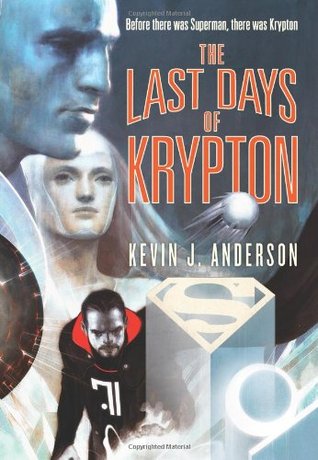
The Last Days of Krypton
Before there was Superman… there was Krytpon, a doomed world, and two parents who gave us their only son…

Everyone knows how Kal-El – Superman – was sent to Earth just before his planet exploded. But what led to such a disaster? Now, in The Last Days of Krypton, Kevin J. Anderson presents a sweeping tale of the pomp and grandeur, the intrigue and passion, and the politics and betrayals of a doomed world filled with brave heroes and cruel traitors.

Against the spectacular backdrop of Krypton’s waning halcyon days, there is the courtship and marriage of Kal-El’s parents, the brilliant scientist Jor-El and his historian wife, Lara. Together they fight to convince a stagnant, disbeliving society that their world is about to end. Jor-El’s brother, Zor-El, leader of the fabled Argo City, joins the struggle not only to save the planet but also to fight against the menace of the ruthless and cunning General Zod.

The diabolical Zod, future archenemy of Superman, avails himself of a golden opportunity to seize power when the android Brainiac captures the capital city of Kandor. As Zod’s grip on the populace tightens and his powers grow, he too is blind to all the signs that point ot hte death of the very civilization he is trying to rule.

Through all of this, Jor-El and Lara’s love for each other, their history, and their son allows for Krypton to live on even as the planet is torn apart around them. For in the escape of their baby lies Krypton’s greatest gift – and Earth’s greatest hero.

The Last Days of Krypton is a timeless, groundbreaking exploration of a world that has never been fully defined, and reveals the extraordinary origins of a legend that has never ceased to amaze and astound generation after generation.


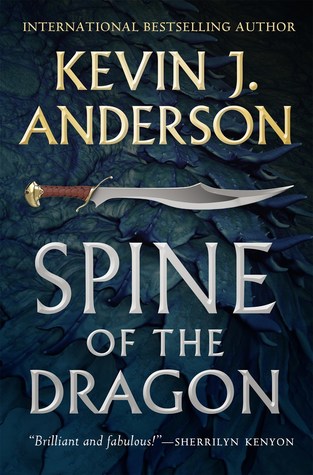
Wake the Dragon 1: Spine of the Dragon
Bestselling author Kevin J. Anderson’s triumphant return to epic fantasy, Spine of the Dragon, is a politically charged adventure of swords, sorcery, vengeance, and the rise of sleeping giants.

Two continents at war, the Three Kingdoms and Ishara, are divided by past bloodshed. When an outside threat arises – the reawakening of a powerful anceint race that wants to remake the world – the two warring nations must somehow set aside generational hatred and form an alliance to fight their true enemy.


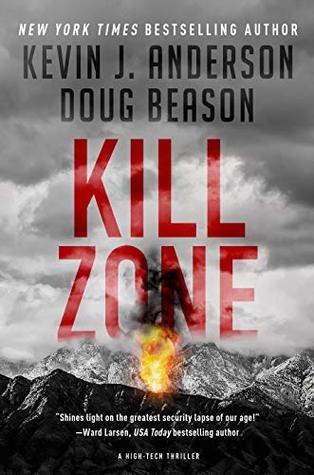
Kill Zone: A High-Tech Thriller
Power duo Kevin J. Anderson and Doug Beason team up in Kill Zone, a perilous disaster thriller for the modern age.

Deep within a mountain in Albuquerque, New Mexico, a Cold War-era nuclear weapons storage facility is being used to covertly receive more than 10,000 tons of nuclear waste stored across the U.S. Only Department of Energy employee, Adonia, and a few others, including a war hero, a senator, and an environmental activist, are allowed access to perform a high-level security review of the facilities. But Hydra Mountain was never meant to securely hold this much hazardous waste, and it has the potential to expolde, taking with it all of Albuquerque and spreading radioactivity across the nation.

This disaster situation proves all too possible when a small plane crashes at a nearby military base, setting off Hydra’s lockdown and trapping Adonia and her team in the heart of the hazardous, waste-filled mountain. Now, the only direction for them to go is deeper into the mountain, through the tear gas and into a secretive area no one was ever supposed to know about.