Halloween Extravaganza: INTERVIEW: Grant Hinton

Meghan: Hi, Grant. I’m so excited to have you here today. Thank you for agreeing to take part in this year’s Halloween Extravaganza. Tell us a little bit about yourself.

Grant Hinton: I was born in London, United Kingdom, back when the world made sense, but now resided in sunny Australia. I love writing, it’s a passion that’s taken over my life. I have a long-suffering wife who doesnโ€™t read much of my stories, (sheโ€™s not a horror fan,) but supports my decision to scare people. Along with that, I like to make beer and Iโ€™ve gotten pretty good at it, well, thatโ€™s what my friends tell me.

Meghan: What are five things most people donโ€™t know about you?

Grant Hinton: I’m an open book, even on the Internet forums I frequent. But I will go with:

  • I couldn’t write my name until I was six.
  • I’m a very good singer, as in I could make a living off of it, and when I was younger I did for a while, but it’s not the life for me.
  • I wrote my first story – which was a total rip-off of The BFG – but I was only ten.
  • I’ve never been in a fight outside of self-defence classes and boxing training.
  • You wouldn’t think this by looking at my rather rotund form, but I can do the splits.

Meghan: What is the first book you remember reading?

Grant Hinton: The BFG as a kid, although I was never a big reader and never finished any book assignments from school. I only started getting seriously into reading when I was about 28. I picked up a copy of Eragon by Christopher Paolini. It was incredible and I was hooked from the get-go. It was the first book I read fully in one sitting.

Meghan: What are you reading now?

Grant Hinton: Nowadays I have a few books on the go, I donโ€™t just read fiction either. So, currently, Iโ€™m reading Save the Cat Writes a Novel by Jessica Brody, which is super impressive and informative. Itโ€™s changing the way I approach writing stories. Iโ€™ve always been a mixture of a plotter and a pantser. I would have a great idea and kinda know where I wanted it to go plot-wise and then I would pants my way through it. This book has changed that, and Iโ€™m thankful.

I love reading indie authors like myself. I think there are so many great writers out there that get overlooked. Take my other book for example. Escape from Samsara by Nicky Blue. Itโ€™s about a ninja gardener from England that goes on a quest to find his missing father. Itโ€™s comical and easy to read, it also has a cockney spirit guide that keeps cropping up in bushes, so I was sold.

Meghan: Whatโ€™s a book you really enjoyed that others wouldnโ€™t expect you to have liked?

Grant Hinton: Umm, this is tough, most people expect you to love all books and genres when they find out you’re an author. Especially the genre you write.

Gosh, this is tough. Iโ€™ve read so many. Pass. Sorry I just havenโ€™t got an answer.

Meghan: What made you decide you want to write? When did you begin writing?

Grant Hinton: So after my plagiarism of Roald Dahl, I had a spat of writing poetry in school and after that never thought about writing again until I was 28. I was sat in a hotel room in Waikiki, Hawaii. I donโ€™t know where the idea came from or the compulsion to write it but I grabbed the closest piece of paper and started writing. It was a dungeon scene between an evil sorcerer and a captive elf. I didnโ€™t know what I was doing back then, so that single chapter got edited several thousand times. Each time I would go to write I would re-read, change a few things and then progress the story. I still have it somewhere. Itโ€™s around 23k words (unedited) and should have been a heroic fantasy. One day I might dust it off and write it with the skill set I now have.

Meghan: Do you have a special place you like to write?

Grant Hinton: No, is the short answer. I write everywhere. Unlike most authors, I write about 90% of the time on my phone. Itโ€™s actually how I wrote the answers to this questionnaire. Inspiration can hit me anywhere so I like being able to whip out my phone and get it down. Google docs are amazing for that. I can access them anywhere at any time. The last thing I want to do is limit myself because Iโ€™ve tried the whole make time to write in a special place and when I get there to do just that, nothing wants to come out.

Meghan: Do you have any quirks or processes that you go through when you write?

Grant Hinton: I have several processes when polishing a piece, but I donโ€™t think thatโ€™s what you’re asking. The one thing I like to do with a WIP is re-read what Iโ€™ve written so far. It adds a little time onto the workload but It allows me to get the mindset right for the characters, what the style of the story is, the undertone, plot, conflicts etc.

If itโ€™s a fresh idea, I like to let it simmer away in the back of mind for a time. I think a lot when Iโ€™m in bed trying to sleep. The silence allows me to really play out the story in my head. I can run scenarios, tweak ideas, ask a lot of what-ifs moments; get involved in the plot-line and stir things up.

Meghan: Is there anything about writing you find most challenging?

Grant Hinton: Politics. Iโ€™m not one for all that, so I intend to leave it out of my stories. Iโ€™m a simple man, I want to scare you to death, not bore you

Whatโ€™s the most satisfying thing youโ€™ve written so far?

It’s a short story called โ€˜Tunnel Vision’ in my collection The Wraith Within. Essential itโ€™s about a lady stuck on a train. But she doesnโ€™t know that until the end. It heavy with dialogue but of all the author friends Iโ€™ve asked to critique it, they have found it amazing, so Iโ€™m happy itโ€™s done it justice. Itโ€™s a futuristic tech horror, one of my favourite sub-genres.

Meghan: What books have most inspired you? Who are some authors that have inspired your writing style?

Grant Hinton: The opening paragraph of GOT A Song of Ice and Fire inspired a whole story around the Irish mythology of Badb. The triple crone. Other inspirations come from Lovecraft, his style is mastery, Neil Gaiman makes telling stories seem effortless, I envy him for that. Margret Weis and Tracy Hickmanโ€™s Dragonlance adventures were my first looking into an epic fantasy setting that motivated me to devour the whole collection. And Brendon Sanderson, Iโ€™ve watched every YouTube video of his lectures, the guys incredibly talented and a must for any new writer. He will break stuff down for you in a way that you can understand.

Meghan: What do you think makes a good story?

Grant Hinton: Conflict. Without conflict, itโ€™s not a story. I like to throw my characters into the worst situations possible and then make it even worse. Flaws are also a biggie. We all want to related to our characters. No one wants to read about a perfect MC, thatโ€™s plain and boring. We want flaws, so we can relate and feel better about ourselves as our characters change throughout the story.

Meghan: What does it take for you to love a character? How do you utilize that when creating your characters?

Grant Hinton: I kill most of my characters, so Iโ€™m not showing much love, haha. Na, Iโ€™m just kidding, well kinda. Iโ€™m going to go back to the flaws. Itโ€™s what makes them like you and me. We want them to be messed up like we are, we want them to not know the answers because we donโ€™t. We want to see them struggle and we love them for that.

Meghan: Which, of all your characters, do you think is the most like you?

Grant Hinton: I write predominantly first-person POV. So a lot of myself pours through in my stories. But if I were to pin one character it would be a recent creation. Bison Dawson. Heโ€™s a Cherokee angel I wrote for the second season of a popular internet ARG called Brighter Futures suicide hotline. He has a massive arc to go through while fighting to fit into a world he doesnโ€™t belong in. I felt the same since I was little. Not knowing my place in the world. But as Iโ€™ve grown older Iโ€™ve stopped thinking that way and now understand that you donโ€™t have to fit in as much as carve out that space for yourself.

Meghan: Are you turned off by a bad cover? To what degree were you involved in creating your book covers?

Grant Hinton: Absolutely. Itโ€™s the first impression of the writing world. If you donโ€™t get it right it can bum you book. I donโ€™t know what makes a cover great, to be honest, Iโ€™ve been caught by a plain cover with a catchy title and Iโ€™ve been caught by great artwork. I think itโ€™s a medium between the two.

My cover for The Wraith Within is drawn by an amazing artist called Lee Marej, an engineer from the Philippines. When I saw the picture two years ago, I knew I wanted to use it for my collection. I purchased the right to use it and designed the rest of the cover from there. That was a huge – but enjoyable – learning curve.

Meghan: What have you learned creating your books?

Grant Hinton: A lot. Itโ€™s one thing to write but all the behind-the-scenes technical stuff that goes into getting those words in front of people is astounding. Iโ€™ve had to learn how to format for ebooks, Kindle, Amazon, design book covers as above, learnt how to promote that book and even interact with fans. Some days I relish just being able to delve into the worlds inside my head and write.

Meghan: What has been the hardest scene for you to write so far?

Grant Hinton: The ending to a story called โ€˜Why you donโ€™t bring back people from the dead.โ€™ Itโ€™s about the entities latching on to you when you die and come back. It was heavily influenced by my idol. My father. So the ending has him die, that was hard. Imagining that made me choke up when I was writing it. Heโ€™s still very much alive, healthy and strong. I felt that way because heโ€™s my father and I have a strong bond with him.

Meghan: What makes your books different from others out there in this genre?

Grant Hinton: Have you seen my front cover! Itโ€™s badass. Just kidding. Why is my book differentโ€ฆ umm, well the one thing I can think of other than I wrote it is that Iโ€™ve given each story an epilogue. I wanted the reader to get a look into how the story came about and any feeling I had while writing it.

Meghan: How important is the book title, how hard is it to choose the best one, and how did you choose yours (of course, with no spoilers)?

Grant Hinton: I think the cover of a book is more important than the title. A good cover catches the eye and makes you stop and read the title. Get those both right and you may get someone to pick your book off the shelf or even read the blurb if online.

How hard is it for me to choose? Iโ€™ve only got the one book so far, but I have an answer for you anyway. I think you should do a poll. If thatโ€™s with your family and friends, or fans on your page or whatever. Line up the choices and get some feedback.

With my current collection, I chose The Wraith Within because one; it symbolises the demons inside of us wanting to get out. I believe humans are fundamentally good and bad, it’s a choice to do either. You have a choice to not hit someone whoโ€™s shouting at you. You have a choice to give back the money you saw drop out the guy’s wallet. You have the choice to not buy a gun and shoot people with it.

And two, It’s also how I see the stories in my head, all pulsating and pushing their way out.

Meghan: Tell us a little bit about your books, your target audience, and what you would like readers to take away from your stories.

Grant Hinton: I enjoy writing short horror stories, its how I began so it’s easy to slip back into. Shorts can be punch 500 words or be a colossal 10K words, either way, they can break novel rules. You can play with syntax and prose, throw structure out the window and experiment with the joy of writing a thrilling piece. With a novel, you canโ€™t really do that.

Most of my stories follow the โ€˜learn a lessonโ€™ style, be that donโ€™t do drugs or donโ€™t chase white see-through things down dark tunnels with a phone and nobody with you because that’s shits gonna end bad kinda lesson. I like my readers to still be thinking about my story well after finishing it.

Meghan: What is in your โ€œtrunkโ€?

Grant Hinton: A trunk? Mineโ€™s a whole garage. Haha. Ideas crop up all the time, sometimes that inspiration needs the motivation to get out on the paper. If I donโ€™t have the time to smash it out, Iโ€™ll leave plot points or notes so I can come back to them. When I do come back to them sometimes the fire is gone or I leave it for so long that I canโ€™t remember the pattern of thought surrounding the storyline. These one sit at the back of my mind and in a folder on google docs. I often go through what I got in the drafts there, Iโ€™m meticulous like that. I have a master file with all that Iโ€™ve written, every collaboration I’ve been in and all my drafts. Just the other day I picked up a plot point of a man turning to my character. His face decaying with weeping wounds and open sores. A maggot crawls out from his hairline and creeps across his face, slipping in and out a fresh wound. The maggot crawls into the decaying manโ€™s mouth and he bites down on it.

Meghan: What can we expect from you in the future?

Grant Hinton: Twisted Fairytales and Secondhand Nightmare. Twisted Fairytales explain itself precisely, but to sum up, essentially I wanted to take 8-10 popular tales and twisted them back into something Hans Christian Andersen would be proud of.

Secondhand Nightmares is a joint collaboration with my amazing author friend, Melody Grace. We have taken 30 pictures from a Facebook secondhand finds page and with the owner’s permission written stories inspired by them. My favourite is a shrunken head picture. My character is a cheeky student with a wit sharp enough to cut grass. But then lady he meets a lady on holiday thatโ€™s more than a match for him. Itโ€™s a little sexy and quite dark. It was fun to write. I wonโ€™t spoil it for anyone out there.

Meghan: Where can we find you?

Grant Hinton: Facebook is my jam, you can message me there and Iโ€™m fairly active.

Or Twitter. I participate in a daily writing challenge called VSS365. It stands for Very Short Story. Once a day a prompt word is given by a preselected person. With the word and the confines of the Twitter character limit, you have to write a short compelling story. You can interact with me there too.

Meghan: Do you have any closing words for your fans or anything youโ€™d like to say that we didnโ€™t get to cover in this interview?

Grant Hinton: Horror surrounds us in our daily lives, not just the words on paper or scene of a horror movie, but in the actions of the people surrounding us. Donโ€™t be one of them. Use your time here on earth to make people happy. Especially yourself. Because if youโ€™re happy youโ€™ll find the world will be a happier place. And we could all do with a brighter future.

To all the budding authors out there. Read. Read like an MF, and write and show that shit to your friends and other authors. Itโ€™s the only way to learn and progress. Oh, and also grow some thick skin. Because youโ€™re going to get feedback on your baby that you might not like but itโ€™s essential that you learn from it. If itโ€™s hate feedback, like the person just say youโ€™re crap and you shouldnโ€™t write, donโ€™t listen to them. Feedback and criticism should be constructive, it should help you learn. If it doesnโ€™t, it might not be you, it might be them.

Grant Hinton is the wifi password to the world of horror. His technological knowledge mixed with the grasp of the human condition results in devastatingly chilling results. Not only that, this bestselling author is hauntingly gifted in all things to raise the hairs on the back of your neck, all the ways to quickening your heartbeat, and leave you with a lesson that stays long after your eyes have left his words.

There are great things on the horizon coming ahead, stay tuned for more soul gripping content.

Grant Hinton – horror author, writing advocate, teacher and family man.


The Wraith Within

From supernaturally scary to real-world horrifying, this collection boasts 32 harrowing tales. Each accompanied by a brief epilogue into the author’s deranged mind, adding a little insight into their creation. A lady is trapped on a train, but she doesn’t know it until too late. I professor sells sex toys for one purpose only. A policeman finds more than he bargained for on a routine call to a place that doesn’t exist.

Halloween Extravaganza: INTERVIEW: Chris Sarantopoulos

Meghan: Hi, Chris! Welcome welcome. I’m glad to have you here today. Tell us a little bit about yourself.

Chris Sarantopoulos: I was born in Greece back in the late seventies and was fortunate enough to have grown in an environment that used English as much as my native language all the time. Thatโ€™s one of the reasons why I find it easy to communicate in English. After finishing school I went to study abroad, in Scotland, and thatโ€™s why I sometimes say aye instead of yes. Itโ€™s also why I use UK spelling when I write.

Meghan: What are five things most people don’t know about you?

Chris Sarantopoulos:

  • I’m bilingual, fluent in Greek and English.
  • I can’t stand heat and summer. You want to make me feel miserable? That’s your best bet. Which is weird because I’m from Greece and it’s almost always sunny, and half the eyar if not more, feel like summer. Go figure.
  • I’m also a self-taught, part time digital designer.
  • As a kid and teen, I absolutely hated reading books. Shocking, I know. Nowadays, not a day goes by without me reading for a couple of hours.
  • My favourite colours are black and grey.

Meghan: What is the first book you remember reading?

Chris Sarantopoulos: Like I said, as a kid I made sure to stay away from all sorts of books. The reason was that teachers or relatives used to bring me books that had no appeal to me. They were the wrong genres, even though back then I had no idea of the concept of genre.

I made a 180-degree-turn when at university, a Faroese friend and flatmate bought for me as a gift the first Dragonlance book. It blew my mind! I had at long last found a book that was exactly what I wanted. It was a genre (high fantasy) that I had no idea it existed. Thatโ€™s the book that opened a door for me that eventually led me, several years later, to becoming a writer. For those unfamiliar with the Dragonlance universe, the first book of the core set is called Dragons of Autumn Twilight.

Meghan: What are you reading now?

Chris Sarantopoulos: I tend to primarily (but not exclusively) read books that are somewhat related to the genre of a given work-in-progress. So for the time being my reading list is almost exclusively Sci-Fi related. The book I just finished was Freedom (โ„ข) by Daniel Suarez, and Iโ€™m about to start reading Tiamatโ€™s Wrath by James S.A. Corey.

Meghan: What’s a book you really enjoyed that others wouldn’t expect you to have liked?

Chris Sarantopoulos: Dragonlance. Iโ€™ve talked to a lot of people who read fantasy and a great deal of them were surprised that these books were so influential to me.

Meghan: What made you decide you want to write? When did you begin writing?

Chris Sarantopoulos: I started writing poems when I was a first-year student in Scotland. Then for some reason a year or two later, I stopped. Not only that, but I had completely forgotten I had ever tried it (yes, my brain is rather weird and behaves in mysterious ways even to me). That was back in 1999, I think.

Over the years since then, I often felt the need to write something; anything. But I always came up with reasons why I shouldnโ€™t. โ€œWhat could you possibly write, Chris? You sucked at essay writing at school.โ€ โ€œ Why would you want to do that, Chris? You canโ€™t write a book in one go.โ€ Yes, back then I was under the impression that writers finish books in one sittingโ€ฆ How ignorant I was!

Then, on March 25, 2013 (I remember it because itโ€™s a very important national holiday for us Greeks), while I was talking about books with a friend, he suggested I should give writing a go. What did I have to lose, after all? And I did. Just like that. I came home and wrote the worst four pages of a story the world has ever seen. And I loved it!

It felt as though my life up to that moment was a jigsaw puzzle where the pieces were placed in the wrong place, and someone came along and knocked the whole thing in the air, and then the pieces landed precisely where they should have been in the first place. That was the moment I knew I wanted to be a writer. Best moment of my life.

Meghan: Do you have a special place you like to write?

Chris Sarantopoulos: Not really, no. I can write wherever, as long as the place is quiet and thereโ€™s internet access (for research purposes of course, not wasting or anything like that).

Meghan: Do you have any quirks or processes that you go through when you write?

Chris Sarantopoulos: The only process or ritual I have is that I write every day of the week with the exception of Sundays. I write either until I hit my daily word limit (1500-2000 words or more if Iโ€™m up to it) or until itโ€™s time to stop. This has put me in the habit of writing daily. I have also noticed that I canโ€™t write in the afternoon or at night, so once itโ€™s time to stop, whatever part of my brain takes control of me and allows me to write, simply switches off and thatโ€™s it.

Meghan: Is there anything about writing you find most challenging?

Chris Sarantopoulos: The way I see it, fiction writers are, in essence, people who create emotional truths through lies. Based on that, the main challenge is to connect emotionally with the reader. And thatโ€™s very difficult because not one person is like any other. So what resonates with me, based on my perception of the world around me will differ greatly from what resonates to someone else. Itโ€™s up to writers to figure out where the common ground between each personโ€™s likes and dislikes is and create something based on it.

On a personal level, my challenge is that English is not my native language. I may have been using it for four decades now, but I will never be as fluent as a native English speaker. Every so often I stumble on something I want to express, something I know has to have a very specific word associated with it that Iโ€™m unfamiliar with, and I end up spending hours (if not days) trying to find that one word that describes exactly what I have in mind.

Meghan: What’s the most satisfying thing you’ve written so far?

Chris Sarantopoulos: Without a doubt, it has to be my debut novel, The Darkening. Years of trying to finish it and bring it to a point where I was happy enough to allow people to read it. Though I had been published in the past by a few literary magazines and I had published a few short stories on Amazon and other retailers, finishing my first novel was the epitome of everything I had been trying to accomplish since I started writing. And the satisfaction increased tenfold when I held the print copy in my hands. It was a magical moment I will never forget.

Meghan: What books have most inspired you? Who are some authors that have inspired your writing style?

Chris Sarantopoulos: Stephen King has without a doubt a writing style that I always have in my mind. I remember the first ever book of his that I bought called A Bag of Bones. I remember I bought it as an audio book and wanted to give the whole thing a go. I never liked audiobooks, but to this day, I still remember his voice, the melody in his words, and how much they resonated with me. For me, Stephen King has a mystical or magical ability that somehow turns written words to music in my head.

As for other books or authors, there are several of them. Like I said, reading Dragonlance for the first time was a revelation for me. Of great influence, in terms of the way he builds sci-fi worlds, is Richard K. Morgan, particularly his book, Altered Carbon. I love his way of building a cyberpunk world, and Altered Carbon is a book Iโ€™ve read more than once.

Meghan: What do you think makes a good story?

Chris Sarantopoulos: Itโ€™s quite subjective, to be honest. Some people like strong and fully developed characters, others prefer non-stop action. Others want the character to delve deep into his or her thoughts. Others put a lot of emphasis on world building and descriptions. Iโ€™m a big fan of revelations; things that happen in a story (usually near the end) that tie almost all loose ends. The things that when you read them you go, โ€œa-ha!โ€

Meghan: What does it take for you to love a character? How do you utilize that when creating your characters?

Chris Sarantopoulos: The characterโ€™s voice and the extent of โ€œthe baggage,โ€ the flaws if you like, he carries. I want to see the world filtered through the characterโ€™s perception and, consequently, his voice. Is the character a gloomy, depressive character, who hates everything thatโ€™s happening around him? I want him to make me understand his reasoning, then make me see the world the way he sees it. I want to see his flaws so I can try to understand them. Itโ€™s something I try to utilize when I create characters for my own stories. I donโ€™t think I have ever created a character without some kind of flaw that skews the way he or she perceives the world.

Meghan: Which, of all your characters, do you think is the most like you?

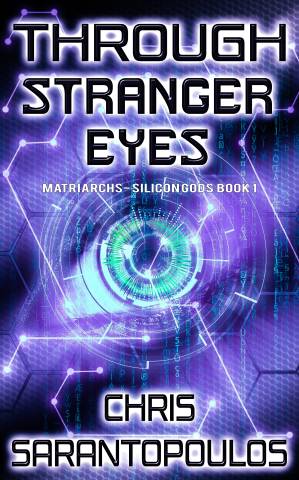
Chris Sarantopoulos: Thatโ€™s really hard to answer. The reason for this is that when we create a character, regardless if itโ€™s a support character or the main one, we often sprinkle a little bit (or a great deal) of ourselves over that character. But I think that I would behave more or less the same way as the main character of my latest novel, Through Stranger Eyes. Assuming of course I would be unlucky enough to have to deal with what he suffers throughout the story. Also, the way he sees the world (even that futuristic cyberpunk world) is not that far off from the way I see things today. In that book, Rick Stenslandt (thatโ€™s the name of my main character) appears as someone who opposes the fusion of man and machine. In fact some of the people around him think that he opposes the whole idea of technology, that he is a Luddite, but in reality what he is against is seeing humanity give up their individuality, the things that make us stand out from a crowd, the things that allow us to think for ourselves, in favour of following trends that can prove dangerous, if not outright lethal. I canโ€™t say more without spoiling the book and to a certain extent the whole series Through Stranger Eyes is part of.

Meghan: Are you turned off by a bad cover? To what degree were you involved in creating your book covers?

Chris Sarantopoulos: They say that we shouldnโ€™t judge a book by its cover, but a bad cover has the power to make me stay away from it and never go near such a book. Sad but true. It conveys the wrong message to the potential reader. For self published authors, itโ€™s up to us to make the right choice for our covers and some of us are better at this than others.

To this day, I have designed and created all my book covers. The most demanding one I ever had to do was for my debut novel, The Darkening. It took me several weeks to bring it to a state where Iโ€™d be comfortable watching it from various angles and sizes. For Through Stranger Eyes, if I remember correctly, I must have designed, completed, and eventually discarded five more covers before I came up with the one you see before you. Nearly all previous ones were far more complex than the one that I ended up using, but instead I decided to go for the simplest one. The reason for that was that up to that point I was designing the covers as a writer instead of as a publisher. Since Through Stranger Eyes is part of a series of books, I had to come up with a design that would have transferable elements throughout the series, while at the same time be unique and tell something about the story each time.

Meghan: What have you learned creating your books?

Chris Sarantopoulos: The list is quite long actually, but the most important things I learned are those that now define me as a person. Perseverance is the first one that comes to mind. Patience is another. One canโ€™t be an author without these two as his or her closest allies. The other thing that trying to get published teaches you is how to develop a tough skin. Thatโ€™s an extremely important thing in our line of work. I was fortunate enough to learn about this when the first rejection emails started coming in while I was trying to get published in various literary magazines. That doesnโ€™t mean that nowadays rejections donโ€™t hurt. They do. It just means that itโ€™s easier to handle, to identify the problem, and move on with as few scars as possible.

Meghan: What has been the hardest scene for you to write so far?

Chris Sarantopoulos: It will have to be for my latest novel, Through Stranger Eyes. When I started outlining and later drafting the book, I had no ending. I did not know how the book should end. I had all the other scenes ready, all the dialogues and everything else, but the last scenes that would tie everything up were a blur for me. At that time, I had no intention of making Through Stranger Eyes part of a series, so I had no clear path to follow. Then a few days later, I thought I could expand on the world (the series is more about how the world evolves and how the key players behind the scenes influence it, rather than how a group or characters fare through a given problem). Boom! That was it. All of the sudden I had an ending, and one that (I think) comes with an unexpected twist.

Meghan: What makes your books different from others out there in this genre?

Chris Sarantopoulos: The list is quite long actually, but the most important things I learned are those that now define me as a person. Perseverance is the first one that comes to mind. Patience is another. One canโ€™t be an author without these two as his or her closest allies. The other thing that trying to get published teaches you is how to develop a tough skin. Thatโ€™s an extremely important thing in our line of work. I was fortunate enough to learn about this when the first rejection emails started coming in while I was trying to get published in various literary magazines. That doesnโ€™t mean that nowadays rejections donโ€™t hurt. They do. It just means that itโ€™s easier to handle, to identify the problem, and move on with as few scars as possible.

Meghan: How important is the book title, how hard is it to choose the best one, and how did you choose yours (of course, with no spoilers)?

Chris Sarantopoulos: It has its importance, but I donโ€™t think itโ€™s something that can destroy a book. Assuming of course itโ€™s relevant to the bookโ€™s genre. Unfortunately, Iโ€™m one of those writers who are not that good when itโ€™s time to come up with a title. I usually write down as many as I can come up with that are somewhat relevant to the story or the series, and if nothing stands out I turn to friends and readers for help. For Through Stranger Eyes, my latest cyberpunk novel, the title came to me in the early stages of planning and outlining the novel. Thatโ€™s long before I had decided that the story would be a sci-fi one, and before it took the shape it currently has. The story is about a top biotechnology surgeon who after an accident loses his sight, and is forced to undergo an ocular operation and have cybernetic eyes. The problem is that after the operation, he starts remembering things he has never done and people he has never met. So the title for this book came rather easily.

Meghan: What makes you feel more fulfilled: Writing a novel or writing a short story?

Chris Sarantopoulos: Definitely a novel. A novelโ€™s length allows for characters to grow and things to happen in such a way so that the writerโ€™s vision can take shape. Not to mention that writing a book earns you bragging rights ๐Ÿ˜‰

Meghan: Tell us a little bit about your books, your target audience, and what you would like readers to take away from your stories.

Chris Sarantopoulos: My debut novel, The Darkening, came out last year and itโ€™s a post apocalyptic horror story. Itโ€™s the story of a survivor of an apocalyptic event that turned nearly all forms of light lethal for humans. He comes across a glowing girl (more like a halo around her) and together they try not only to survive a band of highly trained and well-armed soldiers who are after them, but to also piece together the protagonistโ€™s past and uncover the truth of what has happened. The Darkening will appeal to fans of post apocalypse and horror, but also to those who seek a new take on the genre. Through Stranger Eyes on the other hand is a cyberpunk thriller about a specialist in cybernetic augmentations who must uncover the truth regarding the gruesome murders he has recently started remembering, before the police and the megacorporations after him capture him. This story should appeal to fans of futuristic urban settings and in particular to those who love Blade Runner and thrillers. In both cases, and without spoiling too much of the stories, the theme behind them is how much can human hubris affect us not only on a personal level, but on a global scale.

Meghan: Can you tell us about some of the deleted scenes/stuff that got left out of your work?

Chris Sarantopoulos: While writing Through Stranger Eyes I had to maintain a very delicate balance between what was happening to the main character (the things he remembered and how they affected him), those who were after him, his deteriorating mental and social status, but also how all that affected his family. When I was drafting it I had included a few more scenes that showed how the main characterโ€™s predicament and choices affected his wife and his two kids. Before I sent the manuscript to my editor, and after I had revised it for the 20th time (yes, I revise and edit extensively) and with the input from a group of early readers, I decided that I had to cut back on those scenes for two reasons. The first was that Rickโ€™s daughter (Rick is my main characterโ€™s name) appeared as a self-centred brat and that was not how I wanted her to be. The second was that the novel dragged and got boring during these parts. For a thriller at least. So I removed three fifths of these scenes and I rewrote the ones that remained, while trying to have them pull extra weight in order to show how his family life was affected by everything that was happening.

Meghan: What’s in your “trunk”?

Chris Sarantopoulos: Itโ€™s the story I canโ€™t yet talk about. Not much anyway. Itโ€™s a fantasy story that will most likely span more than three books, it deals with different planes of existence merging together and nightmares. Itโ€™s the story I started writing way back in 2013, and about 100k words in I hit a roadblock. So I sat back and thought to myself, โ€œChris, you can either delete it and forget you ever wrote 100k words for it, or you can learn how to write properly and get back to it at a later time.โ€ I chose the second option, obviously and conceded to the point that I had a great story to tell, but that I had used some extremely poor writing skills to convey it. I intend to start writing it at some point, but not yet. Not before I finish some other stories I want to tell first.

Meghan: What can we expect from you in the future?

Chris Sarantopoulous: I have already finished drafting the sequel to Through Stranger Eyes and Iโ€™m trying to outline the third book in the trilogy. Which is easier said than done, because although I know how the story will end, and although I have written five outline versions, none of them seems to satisfy me enough. So for the time being, Iโ€™ll keep working on the Matriarchs โ€“ Silicon Gods world (thatโ€™s the name of the book series). Once thatโ€™s done, and assuming nothing changes in the meanwhile, Iโ€™ll probably start working on a space opera book series. Weโ€™ll see what happens after I finish that.

Meghan: Where can we find you?

Chris Sarantopoulos: Though Iโ€™m not a big fan of social media and I spend as little time there as possible, I do my best to answer all emails and messages people send me. Readers can connect with me on Facebook, Twitter, Pinterest, my blog, and of course via email. I have an Instagram account but I hardly ever use it. Readers can also sign up for my monthly newsletter and gain access to free stories, news, and offers.

Meghan: Do you have any closing words for your fans or anything you’d like to say that we didn’t get to cover in this interview?

Chris Sarantopoulos: For fellow writers who might be reading these lines, keep dreaming your dreams. The world needs you.

For readers, donโ€™t forget to support your favourite writers. You have no idea how much it means to get an email that says you read and enjoyed one of our stories. Review those works. We need it to keep going.

Chris Sarantopoulos is a Greek writer who learned to communicate in English almost at the same time he started using his native language. He studied Geology in Scotland (you may hear him say aye a couple of times), then decided to diversify and completed a Masterโ€™s degree in Service Management. He almost started a PhD, but that didnโ€™t work out. He enjoys writing science fiction, particularly post-apocalyptic fiction and cyberpunk, but also dystopia, fantasy, high fantasy, dark fantasy, and horror (not the splatter type though). Currently, he lives in Greece, and if you happen to spend time there, contact him. He may be able to arrange a meeting.

His work has appeared on Beyond Imagination, Voluted Tales, and Eternal Haunted Summer among other literary magazines.

Keep track of Chrisโ€™ newest published work by subscribing to his mailing list.

If you would like to know more about him, please visit his web page or follow him on Amazon, Twitter, Pinterest, and Facebook.

The Darkening

Donโ€™t fear the dark. Fear the light. 

The end came when light changed. It decimated humanity, leaving scattered bands of survivors stumbling in the dark.

Faced with saving himself or his family during the apocalypse, John Piscus made the wrong choice, and has been living with the guilt ever since.

When a glowing girl shows up at Johnโ€™s shelter begging for help, his instincts tell him to kill her. After all, light kills. 

But when masked troopers tasked with capturing survivors come after them, itโ€™s up to John to protect himself and the girl. Not only may she hold the key to reversing the lethal effects of light, she could also be the one who can save his soul.

If you love dark settings and characters faced with tough choices that result in horrific and sinister outcomes, donโ€™t miss this post-apocalyptic horror read.

Discover the dangers in the world of The Darkening today.

Halloween Extravaganza: INTERVIEW: Brian Martinez

Meghan: Hi, Brian. Welcome to Meghan’s House of Books. Tell us a little bit about yourself.

Brian Martinez: Alright, well my name is Brian Martinez and I hail from Long Island, New York. I’ve written something like ten books at last count. Most of them are horror stories, or if they’re not horror they at least contain ingredients of horror. I love the dark stuff, although when I write it myself it tends to come out with a twist of humor.

Meghan: What are five things most people donโ€™t know about you?

Brian Martinez: Five? Alright, let’s seeโ€ฆ

1) I’m a huge music fan, and by that I mean I listen to music almost constantly. For me streaming music is one of the greatest inventions of the last ten years or so. I mainly listen to Alternative and Electronic, but I mix in some other things as well. Lots of synth.
2) Nine Inch Nails is my favorite band of all time. I’ve been obsessed since the first moment I heard Trent Reznor’s music, so starting around ’92 or so. He’s one of my biggest artistic heroes in how he’s changed so much over the years, yet stayed true to exactly who he is.
3) I love animals, especially dogs. Sometimes more than people. In fact, if you see a dog in one of my books, that’s probably the safest character in the story.
4) I wake up at 4:30 every morning, almost on the dot, whether I want to or not. It started happening a few years ago, completely by accident. At first it was annoying and I tried to fight it, but I’ve come to embrace it. Now I get my best writing done before most people are awake.
5) I was on Sesame Street as a child, and I have proof.

Meghan: What is the first book you remember reading?

Brian Martinez: Harold and the Purple Crayon. It’s a children’s book about a four year-old who makes his own world with a single crayon. So that obviously goes back pretty far. It sounds silly, but Harold was the first person who taught me I could create my own reality. It’s still one of the most powerful lessons I’ve ever learned. Like most kids I was then totally scarred by the Scary Stories to Tell in the Dark books, and a few ghost story books that gave me really bad nightmares. I think later on Dean Koontz was my introduction to more adult books, which always inevitably leads to Stephen King.

Meghan: What are you reading now?

Brian Martinez: Tomie, by Junji Ito. He’s a master of Japanese horror manga who you absolutely must experience for yourself. His most famous work is Uzumaki, and it’s seriously a masterpiece of surreal horror. He has this way of making you feel uncomfortable, yet at the same time unable to look away. Japanese horror at its best.

Meghan: Whatโ€™s a book you really enjoyed that others wouldnโ€™t expect you to have liked?

Brian Martinez: I don’t usually read straight thrillers, but I picked up Killing Floor, the first Jack Reacher book by Lee Child, and was stunned by how well-written it was. Not that I thought it would be bad, I sort of expected the good action and fast pace, but I didn’t see the expert prose coming. Lee Child has a way with words and dialogue that makes the story sing. Other than that I do read bits and pieces of genres you wouldn’t think. I expect you’ll find that’s true of a lot of writers- we like to pop the hood and check out how the engine runs.

Meghan: What made you decide you want to write? When did you begin writing?

Brian Martinez: I started writing sometime in elementary school, for the simple reason that one day I asked my older brother what he thought I was good at, and he said writing stories. At the time I didn’t know what he meant, because I didn’t recall writing anything. Looking back I’ve found some old school papers in my parents’ attic and realized I had the habit of turning homework assignments into short stories, and usually bloody ones. I think it was inevitable from the start.

Meghan: Do you have a special place you like to write?

Brian Martinez: I have an office in my house that I do most of my writing in, although I do bits and pieces just about everywhere. To find the time to write you really have to be flexible. Five minutes here and there adds up to an hour pretty quickly if you keep at it. But at the same time having a routine is incredibly important.

Meghan: Do you have any quirks or processes that you go through when you write?

Brian Martinez: I listen to music, all instrumental, so I don’t get distracted by lyrics. Mainly eighties horror soundtracks. Other than that, a lot of staring at the wall until it talks.

Meghan: Is there anything about writing you find most challenging?

Brian Martinez: The whole thing is challenging. That’s probably why I keep doing it. The arts are weird in that every time you start a project, you’re essentially starting from scratch. You have the experience and the skills in place to create something, but you’ve never created THAT PARTICULAR something, so you never know how it’s going to go and where it might fall apart. If it was too easy everyone would do it, and it would probably lose its luster.

Meghan: Whatโ€™s the most satisfying thing youโ€™ve written so far?

Brian Martinez: Usually it’s the short stories. There’s a certain purity to a really focused short story. Less words means less chances to screw it up. Short stories are almost like songs to me. Get in, do the damage, get out. I have a short story called โ€œThe Depthsโ€ that felt particularly good at the time.

Meghan: What books have most inspired you? Who are some authors that have inspired your writing style?

Brian Martinez: House of Leaves by Mark Z. Danielewski comes to mind, because it’s a work of art and completely opened my eyes to what a book could be. Hunter Thompson and his ability to make something as meaningful as it is hilarious. As far as my writing style, he’s not an author, but I very often find myself trying to capture the feeling I get from John Carpenter movies. Whether you’re supposed to laugh or be scared, you just love that atmosphere he puts you in.

Meghan: What do you think makes a good story?

Brian Martinez: It can be so many things. Usually it’s a great character. In the end, though, it just has to deliver on what the tin says. I don’t watch Hot Fuzz for the same reasons I watch Saving Private Ryan or Alien, and yet all three are successful at giving you exactly the movie you wanted. They promise a certain ride and deliver it. Sometimes, though, what makes a story go from good to great is when it over-delivers. You expected to laugh, you did, but you cried somewhere in the middle as well. That’s a good ride. You still got what you wanted, and then some.

Meghan: What does it take for you to love a character? How do you utilize that when creating your characters?

Brian Martinez: Being funny helps. Also they should do things, and not just think about doing things. And they definitely shouldn’t complain about doing things. Unless the complaining is funny. I don’t know exactly how I create characters other than letting them talk for a while and hearing what they have to say. From there I decide whether or not I want to keep hearing them talk. Characters are really interesting to me, you start off with an idea of who they’re going to be, a pre-judgment, but so many times they surprise you about who they actually are. That probably sounds full of crap but it’s completely true. As a writer, if you’re forcing a character to be who you think they should be, you’re doing something wrong. Part of the process is letting go of a certain amount of control.

Meghan: Which, of all your characters, do you think is the most like you?

Brian Martinez: Find the one who copes with life through humor, and that’s usually where you’ll find me.

Meghan: Are you turned off by a bad cover? To what degree were you involved in creating your book covers?

Brian Martinez: I am most definitely turned off by a bad cover. It should at least be an okay cover, and then it better have a killer description. I just can’t imagine spending the kind of time it takes to write a book, to then turn around and slap a terrible picture on the front of it. Of course people should judge the story on the story itself, that’s obvious, but if you have an awful cover people will never get to read it in the first place.

For a while I did my covers with my own decent amount of Photoshop skills, but in the last few years I’ve come to see the importance of hiring professionals to do them. Not only are they better than you at it, they don’t have the emotional attachment clouding their vision. I still give my cover designer lots of ideas to draw from, and then give feedback for how to tweak the final image, so I’m definitely still involved. If you find the right person it’s a satisfying give-and-take process that makes everyone happy. A good cover draws people in, and it tells them you’re serious about this thing you’ve made.

Meghan: What have you learned creating your books?

Brian Martinez: How good it feels to finish a project. Writing any book, good, bad, mediocre, is a kind of marathon. People like to criticize certain authors or books, and I do it sometimes, too, but if you’ve ever actually written one, there’s always going to be a part of you that says, โ€œWell, yeah, but at least they finished it.โ€ I have a stack of books on my bookshelf that I wrote. That’s a great feeling. I think everyone needs that feeling in their lives in some form or another.

Meghan: What has been the hardest scene for you to write so far?

Brian Martinez: None of them have been emotionally difficult for me, if that’s what you mean. The first few scenes of any book are tough in that it takes a little while to find the voice of the story. Almost like warming up an engine. Once I do I usually have to rewrite those first scenes anyway, to match the feel. More and more I don’t sweat those first pages because I know how much they’ll end up changing. Editing is really freeing in that way. Nothing is permanent.

Meghan: What makes your books different from others out there in this genre?

Brian Martinez: I tend to mix genres a lot. The Unseen, the series I’m writing now, is primarily a supernatural thriller, and yet it includes heavy amounts of horror, martial arts, noir, and even Lovecraftian elements. It’s selfish in a way, because I do it largely to keep things interesting for me, but I hope that translates to an interesting story that isn’t written how someone else would write it. The downside is it’s harder to market, but I have to accept that. I just hope that like-minded people will love it that much more.

Meghan: How important is the book title, how hard is it to choose the best one, and how did you choose yours (of course, with no spoilers)?

Brian Martinez: Titles are extremely important. A friend pointed out once that titles are the one bit of your writing that everyone reads, and I agree with that whole-heartedly. That said, don’t sweat it too much. You usually know the right title when you see it. If not, write down as many as you can and try them out on people. You’ll figure out pretty quickly which one people respond to.

Meghan: What makes you feel more fulfilled: Writing a novel or writing a short story?

Brian Martinez: Novels by a huge margin. Short stories are great for those small bursts of accomplishment, which makes them great to write either between novels or when you’re feeling the drag in the middle. But like I said before, novels are marathons, and nothing makes you feel better about yourself than running a marathon. Or so I’m told.

Meghan: Tell us a little bit about your books, your target audience, and what you would like readers to take away from your stories.

Brian Martinez: I think what my books all have in common is that they dance in the place where genres meet. My biggest influence by far is growing up crazy about movies, and the ones I liked the most were always in a gray area genre-wise. Star Wars is science fiction but it’s kind of a western, too. Aliens is science fiction but it’s also horror. Predator is a monster movie but it’s a military action flick. Even Little Shop of Horrors, which I watched so many times I think I still know most of the songs, is a horror movie and a comedy and a musical and a romance all at once.

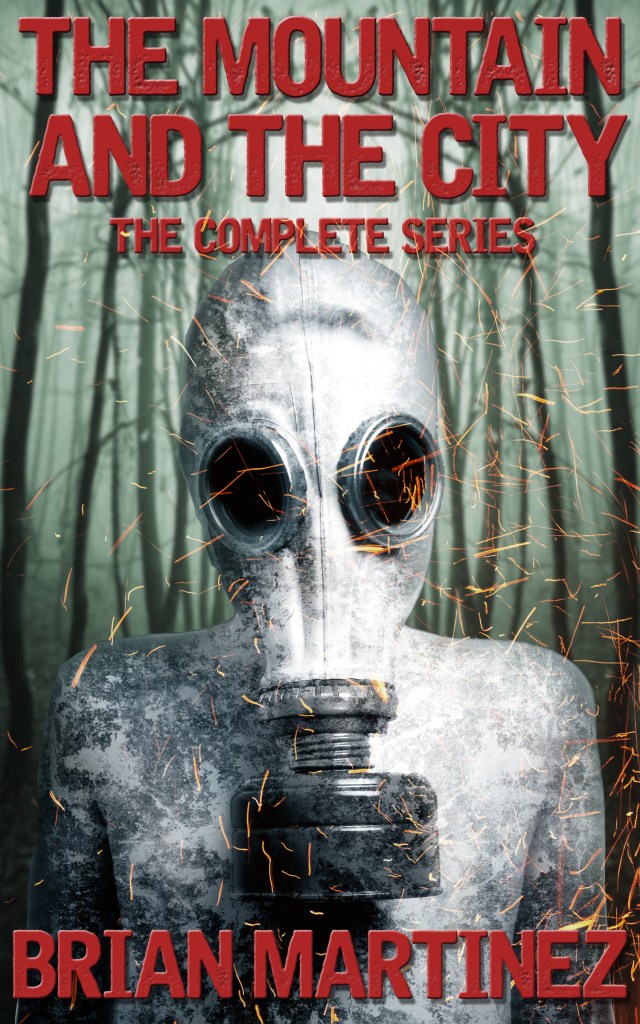
When I first started out, I was trying to write literary, post-modern stuff like Palahniuk or Clevenger, but I could never finish anything. It wasn’t until I embraced my love for genre fiction that my writing really took off. I realized pretty quicky that I could still say the things I wanted to say. My first book, A Chemical Fire, takes place in a kind of zombie apocalypse, but it’s also about a man destroying his world with drugs. The Mountain and The City is about post-pandemic life, but it’s also about how powerful mothers can be. And then there’s the Bleeders books, which are basically dark comedies about a major smart-ass dealing with the end of the world. And so on. The kind of people I write books for are people like me, who are unashamedly in love with the scope of what genre fiction can be. I just hope to give people a little escape, maybe a few laughs, and the sense that there are other people like them out there, either writing the books they’re reading, or running around in the books themselves.

Meghan: Can you tell us about some of the deleted scenes/stuff that got left out of your work?

Brian Martinez: I can’t think of any major deleted scenes of the stuff I’ve published. I do have a bunch of false-starts filed away, books I’ve gotten a few chapters into and decided the idea wasn’t quite cooked yet. That happened recently when I started writing a supernatural thriller set in the eighties called Passenger. It took me a little while to realize that what I was actually writing was a prequel to my series The Unseen. Once I understood that, I put it down and got back to work on The Unseen. But it did help me set up a bunch of backstory. Maybe at some point I’ll go back and finish it.

Meghan: What is in your โ€œtrunkโ€?

Brian Martinez: I actually do have a trunk novel. It’s one of those false-starts I mentioned, but it’s one I would still love to write. All I can tell you is it takes place in the future, and that I did a lot of research about parasites. Also it has one of the better titles I’ve come up with: Monstermouth Death Switch.

Meghan: What can we expect from you in the future?

Brian Martinez: Right now I’m all in on The Unseen. It’s the most elaborate world I’ve created so far, with four major characters, each with a primary home town, crossing paths with creatures from something like ten different worlds. It’s been a complicated but interesting ride, and I want to see it through to the end. Somewhere along the way I have a few other series that have to be wrapped up, but beyond those I’m always looking for whatever comes. I’ve learned to keep an open mind when opportunities present themselves, and to say yes as much as possible when they do.

Meghan: Where can we find you?

Brian Martinez: The main place is my website ** Twitter ** Instagram ** Facebook

Meghan: Do you have any closing words for your fans or anything youโ€™d like to say that we didnโ€™t get to cover in this interview?

Brian Martinez: Just keep reading what you love to read, watch what you love to watch, listen to what you love to listen to, draw what you love to draw and write what you love to write. People who try to step on what you care about just wish they had something to care about as much as you. You’re allowed to be happy. You’re allowed to love things and be excited about them. Some people don’t want to admit when they like something, like it’s a sign of weakness, and maybe it is in a way, but it’s the best kind. It’s proof that you’re alive and you can be hurt. Wear your heart on your sleeve. Hold your favorite book up like a torch.

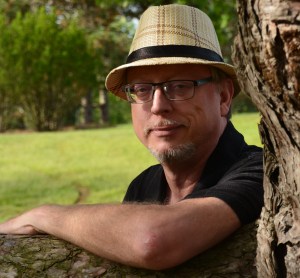
Brian Martinez is a science fiction and horror writer. He studied Film at Long Island University, and has been known to watch a John Carpenter flick on repeat until people grow concerned. He lives in New York with his wife Natalia and their pack of dogs. 

Martinez is known for numerous apocalyptic works, including A Chemical Fire, The Mountain and The City, and the Bleeders series. He also writes The Vessel, a Space Horror podcast on all major platforms. His works have appeared on screen and in print, as well as on Youtube and in audiobook. He is currently working on The Unseen, a major, multi-character Supernatural Thriller series.

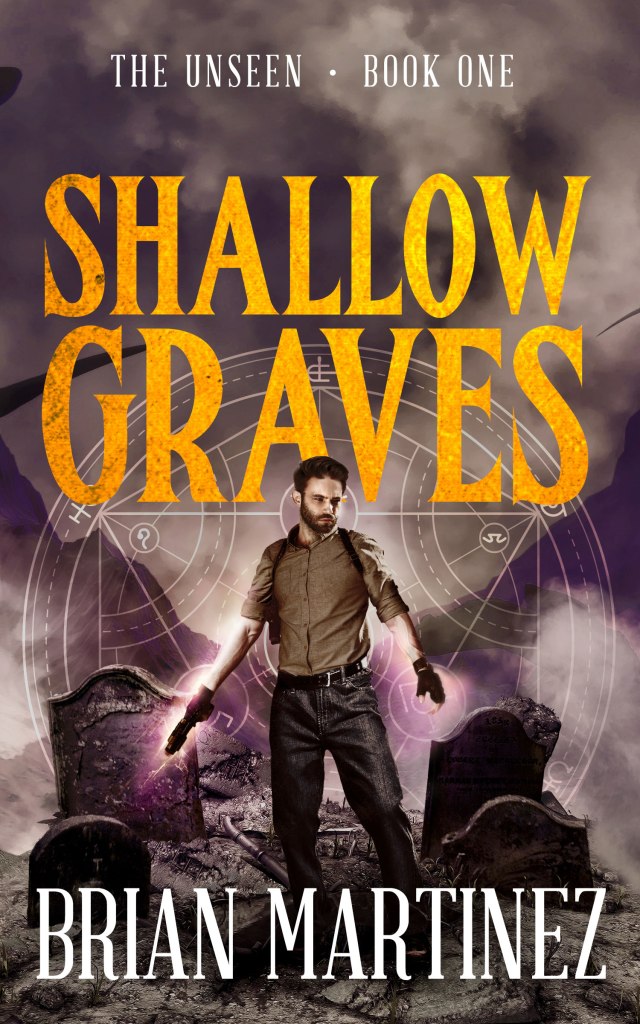
The Unseen 1: Shallow Graves

He drinks too much. He can’t hold a marriage together. And he’s our only hope against the monster that just came to town.

Franklin Butcher is a young cop with a few rough years behind him. Freshly divorced, he decides to make a new start in the small town of Shallow Creek. What better place to coast until retirement than a town where nothing happens?

His plan doesn’t work. Soon people start disappearing, and Butcher is the only one who seems to want to solve the case. He believes a new couple in town are to blame for the vanishings, but the truth is even darker than he thinks.

Before he knows it, Butcher is drawn into an unseen world of supernatural creatures that has existed in secret for centuries. It’s also a world he has more connection to than he ever imagined. Because, like Shallow Creek, Franklin Butcher has a few secrets of his own.

The Unseen is a bold new take on familiar myths, from doppelgangers to vampires, to demons, monsters and more. This is a series that can’t be missed. But be careful- once seen, this world can’t be unseen…


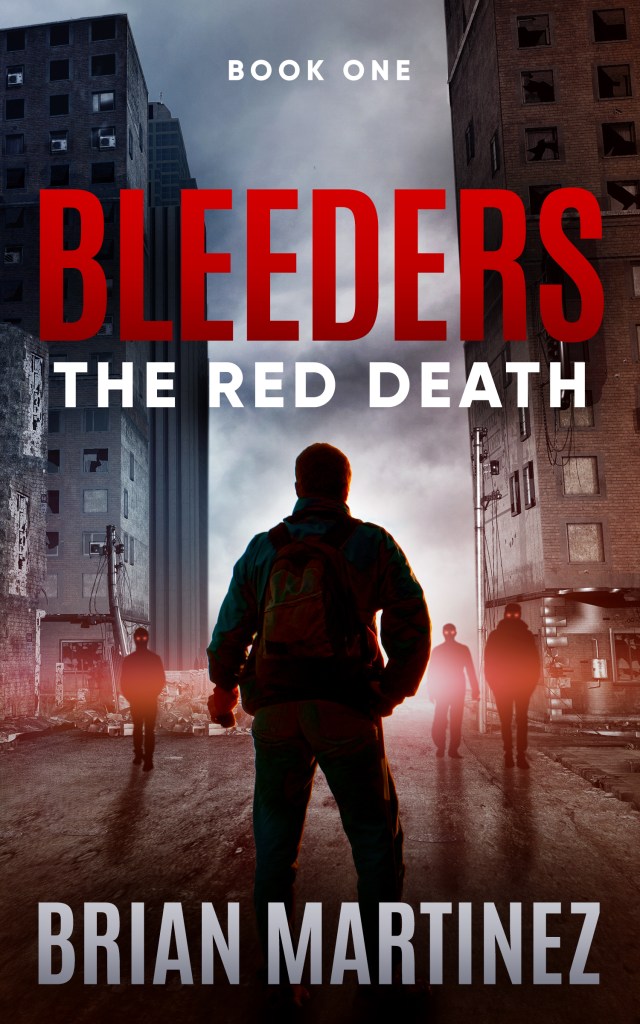
Bleeders 1: The Read Death

Can the world’s biggest smart-ass survive the apocalypse?

All the news channels can talk about is the Red Flu, a nasty strain that came out of nowhere to wreak havoc on the population. There’s also something the government isn’t telling the public about the Red Flu- both the secret of its true effects, and exactly how it spreads. 

Brody Tate doesn’t care. He’s a young smart-ass living in New York City, locked in a dead-end job. His only concern is telling his boss where he can shove it. Besides, the news only exists to scare people, right? 

But something is wrong. There’s blood in his boss’s office. A woman is dead on the floor. 

His boss is eating the cleaning lady. 

He kills the man in self-defense- not that the cops believe him- and gets carted away for murder. As if his day wasn’t bad enough, his boss managed to bite him during the struggle. With the Red Flu tearing up his insides, Brody finds himself in a self-destructing New York, lost in the horrors of a crumbling city while fighting to stay alive. 

The question now is, if the Red Flu doesn’t kill him, and someone with it doesn’t, what will be left of him? What will he become?


The Mountain & the City

An epidemic has killed off most humans, turning the rest into beasts with sharp nails, keen senses and an insatiable hunger. Now, years later, a solitary survivor hides in a trailer above a dead city. This is life with the door and windows taped shut, where survival comes down to two, simple rules: stay quiet, and protect the air. 

One day, a visitor comes up the mountain. It’s a meeting that leads to a fateful decision, and a sacrifice that will change everything. 

Collected here for the first time, The Mountain and The City is a post-apocalyptic serial that has kept its faithful readers on the edge of their seats time and time again.

Halloween Extravaganza: INTERVIEW: Peter Meredith

I’m honored to have Peter Meredith back on this year’s Halloween Extravaganza, his second appearance. If you haven’t read any of his work, you should definitely pick something up. He is a truly talented guy, and one of the nicest authors I’ve met.


Meghan: Hi, Peter. Welcome back to my Halloween Extravaganza, and at the same time, welcome to the new blog. Itโ€™s been awhile since we sat down together. Whatโ€™s been going on since we last spoke?

Peter Meredith: Mostly just knocking out the books. Iโ€™ve been to Vietnam a couple of times, found my wifeโ€™s birth family, escaped terrorists bent on changing my autograph to something legible, but mostly a lot of writing.

Meghan: Who are you outside of writing?

Peter Meredith: Husband, father and grandfatherโ€ฆ mostly grandfather now that my five-year-old grandson has moved in. Tired grandfather, that is.

Meghan: How do you feel about friends and close relatives reading your work?

Peter Meredith: Iโ€™m all for it, but after doing this for eight years, I never expect it. The same friends always say: โ€œI have to read your book!โ€ I just smile now, knowing it probably wonโ€™t happen. When one does thatโ€™s great, but I donโ€™t nag or follow up with what did you think? If they liked it, theyโ€™ll tell you.

Meghan: Is being a writer a gift or a curse?

Peter Meredith: Itโ€™s completely, totally a gift, except when I donโ€™t hit my word count for the day, then the curse strikes, which involves night sweats, a racing heart beat and it hurts when I pee. I am sort of addicted. On the plus side I write four books a year and make a good living. I tell people I could go anywhere and write, but I donโ€™t. I stay locked away in my cave.

Meghan: How has your environment and upbringing colored your writing?

Peter Meredith: I was the middle child of seven kids, in a military family that moved around every couple years. Saying it makes it sound torturous but in retrospect, it was a great childhood that allowed me to see a great variety of people and places.

Meghan: Whatโ€™s the strangest thing you have ever had to research for your books?

Peter Meredith: Thatโ€™ll be up to the prosecutor to decide. Iโ€™ve looked up how to make so many improvised explosives that Iโ€™m sure the FBI is reading this as I type. Hi fellas. Maybe lay off the doughnuts.

Meghan: Which do you find the hardest to write: the beginning, the middle, or the end?

Peter Meredith: Always the beginning. Since I donโ€™t plot, I generally donโ€™t know what my book is going to be about at first. I just keep writing until it starts to gel around me, but those first few days I walk around sort of muttering to myself.

Meghan: Do you outline? Do you start with characters or plot? Do you just sit down and start writing? What works best for you?

Peter Meredith: Usually I start with an ideaโ€”what would happen ifโ€” sometimes the idea comes with an ending that I shoot for and sometimes not.

Meghan: What do you do when characters donโ€™t follow the outline/plan? Usually I can feel when they start to come off the rails and I gently nudge them over. Sometimes I like the evolved state better than the original and so I keep it.

Peter Meredith: What do you do to motivate yourself to sit down and write? I look at my credit card bills. Since I donโ€™t have another job, money has to be a prime consideration. Also I am addicted. I donโ€™t know what stopping would be like.

Meghan: Are you an avid reader? I used to be. Before I started writing I read all the time. Now I write all the time.

Peter Meredith: What kind of books do you absolutely love to read? I love well written fantasy, but if thereโ€™s a sparkly vampire I will burn the book.

Meghan: How do you feel about movies based on books?

Peter Meredith: Theyโ€™re getting better. It used to be I hated them, but now theyโ€™re trying hard to stay true to the story. And sometimes theyโ€™re straight up better. World War Z is a fine example. Hollywood liked the title and the fact that there were zombies in it but threw out the rest and for that I thank them.

Meghan: Have you ever killed a main character?

Peter Meredith: Why isnโ€™t the question: Have you not a killed a main character? Yes, is the answer. A hero can only hang from the edge of a cliff so many times before readers yawn and think โ€œHeโ€™ll escape from those dragons and the machine guns wielding guards, even if he is surrounded by a lake of lava.โ€ A death here and there keeps the readers on their toes.

Meghan: Thanks, Peter. I’ll have to take that question change under advisement. Do you enjoy making your characters suffer?

Peter Meredith: Yes because I want my readers to feel the pain of the characters. I want them emotionally attached. I want them to cry. And that wonโ€™t happen if there ainโ€™t no ants at the picnic.

Meghan: Whatโ€™s the weirdest character concept that youโ€™ve ever come up with?

Peter Meredith: Jillybeanโ€”a 6 year old in a 16 book zombie series. Normally a child in a zombie book is there only to do something stupid to drive the plot along. Jillybean is different in that sheโ€™s insane. Sheโ€™s spent the first year of the apocalypse utterly alone. Her mom is a decaying corpse upstairs in the master bedroom and all her neighbors are eaten one by one outside her living room window. Sheโ€™s cracked and yet she develops into a latent genius as way of a survival mechanism. I describe her genius this way: If you threw a million children into the middle of the Pacific Ocean, theyโ€™d all drown. All except one. One would figure out how to make a raft out of the corpses of the rest. Perhaps she might even skin a few for sails. Who knows?

Meghan: Whatโ€™s the best piece of feedback youโ€™ve ever received? What’s the worst?

Peter Meredith: My mom thinks that I am AWE-some.

My dad is like: Ehh. Why have anyone guarding a lake of lava?

Meghan: What do your fans mean to you?

Peter Meredith: Cha-ching! A-hemโ€ฆ I mean they are my every thing. My sun and stars. Also I like it when they say I rite gud.

Meghan: If you could steal one character from another author and make them yours, who would it be and why?

Peter Meredith: This is the toughest question so far. Iโ€™m going with Stephen Kingโ€™s Barlow from Salemโ€™s Lot. To me, the perfect vampire. I would love to explore that unhappy business.

Meghan: If you could write the next book in a series, which one would it be, and what would you make the book about?

Peter Meredith: I am doing that currently. The story is set 150 years in the future after every nuclear weapon in the worldโ€™s arsenal had been lit off in an attempt to stop a zombie apocalypse that exploded out of no where. Half the world is a desert and the other half has to contend with fallout storms, technological regression, famine, and an interesting catch-all disease called slag that eats the flesh from its victims. And BTW, not all the zombies were killed. Theyโ€™re hiding among the slags and its up to nothing-left-to-lose bounty hunters to root them out. Fun.

Meghan: If you could write a collaboration with another author, who would it be and what would you write about?

Peter Meredith: I hear that is a horror. The answer is Stephen King. One book and Iโ€™d be set for life. Iโ€™d be able to write sheet music for crickets like Iโ€™ve always wanted. Thereโ€™s more than two notes people, er insects.

Meghan: What can we expect from you in the future?

Peter Meredith: Dead-eye Hunt should be completed by mid October. I shall rest up for half a day and begin Dead-eye Hunt book 2.

Meghan: Where can we find you?

Peter Meredith: Website ** Patreon ** Facebook ** Twitter ** Instagram

Meghan: Do you have any closing words for your fans or anything youโ€™d like to say that we didnโ€™t get to cover in this interview or the last?

Peter Meredith: Just thank you for having me, Meghan, and thank you to my fans for inviting me into your heads. Eventually, you come to realize what a mistake that was, but youโ€™re smiling now and that what counts.

Peter Meredith is the multi-genre author of thirty-six novels including: The Undead World, a 10 book series, Generation Z Series, The Trilogy of Void, The Hidden Lands Series, The Sacrificial Daughter, A Perfect America, and Sprite.

Peter has written drama, horror, fantasy, apocalypse, and post apocalypse novel.

He is proud to have served in the U.S. Army for four years, serving in the 82nd airborne division and as a medic during Gulf War 1. Also having tried his hand in real estate, and a CEO of a national lighting company, he has come to find that his true addiction is in writing and been blessed to make it his full-time career.

Peter resides in Colorado with his wife, Stacy, of 27 years. They have two grown children and a a grandchild who also live in Colorado.

May you find an unforgettable adventure among my writings!

The Undead World 1: The Apocalypse

Money, terrorism, and simple bad luck conspire to bring mankind to its knees as a viral infection spreads out of control, reducing those infected to undead horrors that feed upon the rest. 

It’s a time of misery and death for most, however there are some who are lucky, some who are fast, and some who are just too damned tough to go down without a fight. This is their story.

The Undead World 2: The Apocalypse Survivors
The Undead World 3: The Apocalypse Outcasts
The Undead World 4: The Apocalypse Fugitives
The Undead World 5: The Apocalypse Renegades
The Undead World 6: The Apocalypse Exile
The Undead World 7: The Apocalypse War
The Undead World 8: The Apocalypse Executioner
The Undead World 9: The Apocalypse Revenge
The Undead World 10: The Apocalypse Sacrifice
The Undead World 10.1: Jillybean’s First Adventure
The Undead World 10.2: Jillybean & the First Giants


Generation Z 1: Generation Z

Itโ€™s been twelve years since the undead hordes swept over the earth forcing mankind to the brink of extinction. We now live like rats, scavenging in the ruins of our fallen civilization as the dead hunt us night and day. 

There is little left to scavenge, however. Grocery stores were emptied ages ago, gas tanks have long been dry and bullets are so precious that a man is lucky to have two to his name. 

Still, we survive. 

But for how much longer? Instinct and love have combined to turn Darwinโ€™s theory on its head. The strongest didnโ€™t survive in this world. They were the first to die, leaving behind a generation of orphans. 

Itโ€™s a generation thatโ€™s never had a full belly. Itโ€™s a generation that has no idea what an Xbox did, or what algebra is for. Itโ€™s a generation of children who never laugh out loud, and who have learned to cry softly because the dead are always near and the dead are always so very, very hungry.

Generation Z 2: The Queen of the Dead
Generation Z 3: The Queen of War
Generation Z 4: The Queen Unthroned
Generation Z 5: The Queen Enslaved
Generation Z 6: The Queen Unchained


Trilogy of the Void 1: The Horror of the Shade

When Commander William Jern and his wife Gayle are given an opportunity to move into one of the spacious Colonial homes on the Village Green, they jump at the chance. But the Jern’s new dream home quickly becomes an icy nightmare, as death stalks them relentlessly. It comes unheralded out of the night, and like all of us, they are dreadfully unprepared. But regardless, William Jern must face terrors beyond imagination in order to save his daughter whose body had become a frozen vessel for The Horror Of The Shade. With the help of his son Will, a boy struggling to find the courage to be a man, and an old woman, who has foreseen the terrifying manner in which she will die, William undergoes the ultimate test to see how far a man will go to save his child.

Trilogy of the Void 2: An Illusion of Hell
Trilogy of the Void 3: Hell Blade

Halloween Extravaganza: INTERVIEW: Tim Waggoner

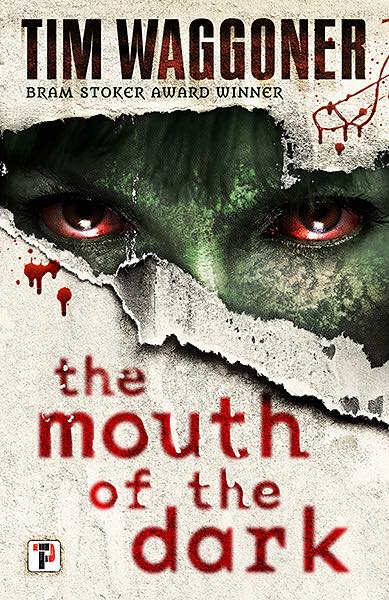
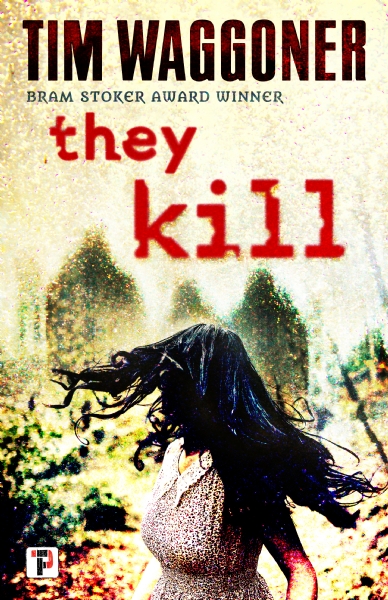
Tim Waggoner is a rather interesting guy, but unfortunately (or fortunately, depending on how you look at it) he has never been part of the Halloween Extravaganza until this year. It was a lot of fun getting to know him better, and I have to say that this was, by far, one of the most interesting interviews I’ve ever done.


Meghan: Hi, Tim. Welcome to Meghan’s House of Books. It’s great having you here today. Tell us a little bit about yourself.

Tim Waggoner: Iโ€™m fifty-five, Iโ€™ve lived in Ohio most of my life, Iโ€™m a lifelong fan of all things weird and wonderful, Iโ€™ve been writing seriously since the age of eighteen, Iโ€™ve traditionally published close to fifty novels and seven collections of short stories, and Iโ€™ve taught college composition and creative writing courses for the last thirty years. I write both original fiction and media tie-ins, and the majority of my fiction falls into the genres of horror and dark fantasy.

Meghan: What are five things most people donโ€™t know about you?

Tim Waggoner:

  • My wife thinks I’m addicted to buying Funko Pops, but she’s wrong. I can quit any time I want.
  • I hate raisins and watermelon. They’re the devil’s fruits.
  • I refuse to ruin a good cup of coffee by putting anything in it.
  • I can juggle (a little).
  • I’m a big fan of musicals.

Meghan: What is the first book you remember reading?

Tim Waggoner: The Spaceship Under the Apple Tree by Louis Siobodkin. Itโ€™s about a boy who makes friends with a young explorer from another planet. I wanted a friend who had a spaceship and could take me on trips to other worlds!

Meghan: What are you reading now?

Tim Waggoner: Iโ€™m a moody reader, and often Iโ€™ll read a little of one book, then a little of another, and so on. I also read one thing on my Kindle and listen to something else on audio when I drive. Right now Iโ€™m reading Starship: Mutiny by Mike Resnick and listening to The Consultant by Bentley Little.

Meghan: Whatโ€™s a book you really enjoyed that others wouldnโ€™t expect you to have liked?

Tim Waggoner: Maybe Mrs. Dalloway by Virginia Woolf. Itโ€™s a literary novel about relationships in which nothing of any real importance seems to happen, but I found it riveting. Itโ€™s one of the few books Iโ€™ve read in a single sitting. I love stories that are written with a close identification with a characterโ€™s viewpoint, regardless of genre.

Meghan: What made you decide you want to write? When did you begin writing?

Tim Waggoner: Iโ€™ve been telling stories one way or another my entire life. I was the one whoโ€™d come up with scenarios for my friends and me to act out on the playground, and I used to create epic sagas with my army men and action figures. But in terms of consciously deciding to write, it began when I was in high school and read an interview with Stephen King in an issue of the B&W comic magazine Dracula Lives. The Shining had just come out, and King wasnโ€™t super-famous yet. It might have been the first interview with a writer I ever read, and before this, it had never really occurred to me that being a writer was something a person could choose. Something I could choose. I later told my mom that I thought I might like to be a writer, and she said, โ€œI think youโ€™d be a good one.โ€ Her simple encouragement meant the world to me, and it still does.

Meghan: Do you have a special place you like to write?

Tim Waggoner: I usually go out to a Starbucks. I grew up in a noisy household, and I donโ€™t like working in silence. I like to have a certain amount of noise and activity around me, and at Starbucks thereโ€™s no one who needs me โ€“ no wife, no kids, no students, no pets. I can get my coffee, sit down, and write. I usually spend about three to four hours working, which translates into roughly four or five pages of manuscript, sometimes more, especially when Iโ€™m nearing the end of a story or novel and the words are really flowing.

Meghan: Do you have any quirks or processes that you go through when you write?

Tim Waggoner: I like to write my first drafts by hand. The words seem to flow better that way. Personal computers didnโ€™t appear until I was nineteen or twenty, so I spent most of my formative years writing by hand. Iโ€™m more focused when I write by hand, and I produce more pages faster. Typing it up is a real pain in the ass sometimes, but it allows me to edit and clean up the text as I input it into the computer, and I usually donโ€™t need to do any more drafts after that.

Meghan: Is there anything about writing you find most challenging?

Tim Waggoner: Iโ€™ve been writing for thirty years, and at this point, I have to be careful not to repeat ideas and concepts Iโ€™ve used for other stories in the past. Itโ€™s one thing for an author to work with recurring themes throughout his or her career, but itโ€™s another to keep writing the same basic story over and over without realizing it. Hopefully, Iโ€™ve managed to avoid accidental self-plagiarism, but if I havenโ€™t, would I even know it?

Something else โ€“ it seems to take me a couple weeks to fully make the mental shift from one project to another โ€“ especially when I have a bunch of novel proposals out at various publishers, any one of which I might (if I’m lucky) have to start on at any time. But one of the downsides to being prolific is figuring out which projects to work on when and shifting my mindset from one type of fiction to another. That shift seems to be getting more difficult as I get older. My wife says I always start slow on a project and pick up speed as I go until I’m rocketing along at a fast pace, but I hate the slow start!

Meghan: Whatโ€™s the most satisfying thing youโ€™ve written so far?

Tim Waggoner: My short story โ€œMr. Punch,โ€ which appeared in the anthology Young Blood twenty-five years ago was my first professional sale. It was also when I found my voice as a horror author. โ€œMr. Punchโ€ is the first time I learned to trust my instincts as an artist and write the story I wanted to write, no matter how weird and bizarre it turned out. And Iโ€™ve been writing weird and bizarre stories ever since!

Meghan: What books have most inspired you? Who are some authors that have inspired your writing style?

Tim Waggoner: Stephen Kingโ€™s novels influenced me in terms of developing character and a sense of place. Piers Anthonyโ€™s novels โ€“ especially the Xanth series โ€“ made me fall in love with wild, manic invention in fiction. Charles de Lintโ€™s novels showed me the power of placing dark fantasy in the contemporary world, and Clive Barker showed me how to create my own strange mythology. Ramsey Campbell and Charles L. Grantโ€™s fiction helped teach me how to draw unique dark imagery from my subconscious to create my monsters. Tom Piccirilli and Douglas Cleggโ€™s novels showed me how to develop my weird horror at novel length. Mystery writer Lawrence Blockโ€™s how-to-write columns and books taught me more about writing fiction than any creative writing class ever did. There are so many more โ€“ Shirley Jackson, Harlan Ellison, Ray Bradbury, Richard Matheson . . . Itโ€™s sounds like a clichรฉ when writers say everything theyโ€™ve ever read, watched, or experienced influences their work, but itโ€™s true.

Meghan: What do you think makes a good story?

Tim Waggoner: For me, itโ€™s something that stimulates my imagination. It could be an intriguing concept, an interesting character, an original plot, or a captivating style. The best is when a story has all of these elements going for it. I like to read stories that let me get into the charactersโ€™ heads, and I like stories that, even if theyโ€™re set in the contemporary world create a reality all their own. While I enjoy stories that have a leisurely pace, my favorites tend to be more fast-paced, possessing a strong forward-moving momentum.

Meghan: What does it take for you to love a character? How do you utilize that when creating your characters?

Tim Waggoner: I have to feel a connection to a character in order to love him or her. This connection can be small. Hannibal Lector doesnโ€™t have many admirable qualities, but he likes and respects Clarice Starling, and I can connect to that bit of humanity that still exists inside him. In Poeโ€™s The Tell-Tale Heart, I connect to the insane narratorโ€™s very human need to tell his tale in order to be understood. I try to create such a human connection between my characters and readers, and hopefully I succeed more often than not.

Meghan: Which, of all your characters, do you think is the most like you?

Tim Waggoner: Theyโ€™re all part of me on way or another. Writers can never not write about ourselves. No matter how hard we try to disguise our characters, theyโ€™re all reflections of us in one way or another, even if theyโ€™re funhouse mirror distortions. My zombie PI Matt Richter from the Nekropolis series reflects my humorous side. Jayce in The Mouth of the Dark is the father side of me, while Neal in The Forever House is the part of me that can be insecure in relationships. My characters are all pieces of a puzzle that, if they were assembled, would make a portrait of me.

Meghan: Are you turned off by a bad cover? To what degree were you involved in creating your book covers?

Tim Waggoner: When I first started writing, I heard a lot of professional writers say that editors always change the titles of your books and you never get any input into the cover. Thatโ€™s not been my experience, though. Most editors keep my original titles, and they usually ask for my input on the covers. Most of the time, one of my suggestions forms the basis for the cover, and usually I think they turn out pretty good. Sometimes I think the covers are just okay, and other times โ€“ only a few โ€“ I dislike them. But thereโ€™s nothing that can be done at that point. The only thing I really hate is if a cover image has nothing to do with the bookโ€™s contents. When I was a kid, I hated it when the main character on a book cover looked different than the way the author described him or her, or if the cover seemed to promise a very different kind of story. The original cover for Jack Ketchumโ€™s masterpiece The Girl Next Door is a perfect example. It depicts a skeleton in a cheerleaderโ€™s outfit, implying the story is a generic spooky tale when in fact itโ€™s a brutal, bleak, uncompromising examination of violence toward the Other, of the dangers of going along with the group, and how ultimately violence affects both victims and perpetrators alike. I bet a lot of people who bought that paperback edition were shocked as hell when they started to read the book โ€“which, now that I think about it, is pretty cool. Good horror should never be safe. So maybe, in a sense, that cover worked after all, just no in the way the publisher intended it to.

Meghan: What have you learned creating your books?

Tim Waggoner: What havenโ€™t I learned? Writing novels uses more of me than anything else Iโ€™ve ever done. Iโ€™ve learned patience, perseverance, mental and emotional resilience . . . Iโ€™ve learned to prioritize my time, to take risks, to deal with setbacks, disappointments, self-doubts, and failures. Iโ€™ve learned so much about story โ€“ what makes one work, what makes one not work. . . Iโ€™ve learned how to write for readers without my awareness of those readers making me so self-conscious I freeze up. Iโ€™ve learned how to deal with praise, criticism, and outright hatred of my work. Iโ€™ve learned how to win awards and how to lose them. Iโ€™ve learned how to be a member of a writing community and how to โ€“ I hope โ€“ be a good citizen of that community. Most of all, Iโ€™ve learned more about who Tim Waggoner is, who he was, and who he might one day become.

Meghan: What has been the hardest scene for you to write so far?

Tim Waggoner: In my story โ€œVoices Like Barbed Wireโ€ I based a scene on when my ex-wife and I told our daughters that we were going to get divorced. Itโ€™s one of my most painful memories โ€“ one which I would happily cut out of my brain if I knew how โ€“ but since the story is about a woman who wants to get rid of a bad memory, I decided to give her my worst one so that the story might have more emotional truth and, at least to me, have more meaning. And by putting the memory in the story, maybe I managed to exorcise it from my mind, at least a little.

Meghan: What makes your books different from others out there in this genre?

Tim Waggoner: Thatโ€™s hard for me to say. I just think of my horror novels as Tim Waggoner stories. Reviewers have remarked on my original ideas and nightmarish imagery, my strong characters and fast-paced narratives, and my blend of different styles of horror โ€“ from quiet to erotic to extreme to surreal โ€“ in the same novel. Thatโ€™s probably as good a description as any of the kind of thing I write.

Meghan: How important is the book title, how hard is it to choose the best one, and how did you choose yours (of course, with no spoilers)?

Tim Waggoner: I put a lot of work into titles. I keep a file with possible titles in it โ€“ phrases Iโ€™ve overheard or read somewhere, snatches of song lyrics or poetry that spark my imagination . . . I also keep story ideas in the same file, weird things Iโ€™ve seen, heard, or thought, bizarre news stories Iโ€™ve read, etc. When itโ€™s time to start a new project, I go through the file, looking for ideas. Sometimes I start with an idea, but a lot of times I start with the title. Sometimes an idea and a title seem perfect for each other. For example, a while ago, I had an idea about a house that was infinite on the inside. One of the phrases Iโ€™d collected was The Forever House. The idea and the phrase matched so well, that I decided to write a novel using that title. I did a search on Google and Amazon to see if anyone else had ever used that title for a novel โ€“ especially a horror novel โ€“ and when I was confident no one had, I committed to The Forever House as the title for the book.

Meghan: What makes you feel more fulfilled: Writing a novel or writing a short story?

Tim Waggoner: I feel most fulfilled when I write novels. I like the complexity of them and the chance to develop characters in greater detail than I can with a short story. In novels, you can work with a larger scope and with bigger ideas. I enjoy seeing all the ways that I can take plot points and spin out different threads from them, and I love weaving all those threads together and making connections between them to create a richer, tighter narrative.

Short stories are in some ways harder for me to write. They require a laser-like focus on a narrower concept, and you have to make every word, every image count. My brain always feels like it gets a workout when I write a short story, but I get a lot of satisfaction when I finish one because they donโ€™t come so easily to me.

Meghan: Tell us a little bit about your books, your target audience, and what you would like readers to take away from your stories.

Tim Waggoner: In the horror community, Iโ€™m known for writing a certain kind of surreal, existential horror, but Iโ€™ve written a lot of different kinds of fiction: epic fantasy, action-adventure, spy thriller, creature-feature fiction, erotica, science fiction, urban fantasy, young adult, middle-grade reader . . . Most of those were tie-in books where the genre was given to me. I like that because it stretches me as a writer, makes me try my hand at genres that I might not otherwise attempt. Whatever the genre, I always try to give the reader developed characters, interesting ideas, and a fast-paced, smooth read. I want to stimulate readersโ€™ imaginations โ€“ which is, as I said earlier, I seek as a reader myself โ€“ and I hope to make readers think. I want to surprise them with my stories, take them places where they donโ€™t expect. I hope theyโ€™ll view the genre a little differently when theyโ€™ve finished one of my books.

I write my horror novels for fans that are well-versed in the genre and are looking for something different. My tie-in novels have different audiences. For example, I write Supernatural novels for fans of the TV series, although I hope that anyone can enjoy them.

I like to write my books on two levels: on one level, I hope theyโ€™re fun, enjoyable reads, but on another, deeper level, I play with genre conventions and write an almost metafictional critique of the genre itself. I try to do the latter as subtly as possible, so I donโ€™t spoil the story for anyone, but thereโ€™s a deeper layer to the story for those who want a little more from a reading experience. A colleague once told me I write โ€œdeep parody,โ€ and I suppose thatโ€™s as good a description as any of what I do. Iโ€™m not trying to mock a genre or its readers, but I hope that I can get them to engage with the genre in a different way and perhaps even show them something about the genre theyโ€™ve never considered before. I do this in my tie-in books too (but donโ€™t tell my editors!).

Meghan: Can you tell us about some of the deleted scenes/stuff that got left out of your work?

Tim Waggoner: I donโ€™t usually have to cut anything from my original work. Editors do sometimes make me cut some stuff from tie-in novels. Years ago, I was working on A Nightmare on Elm Street novel. New Line Cinema was taking a long time to approve my outline, so the editor told me to just go ahead and start writing. I was sixty pages into the book when the editor told me the studio refused to approve the idea. My concept was that Freddie was returned to life as a human and was trying to find a way to return to the dream realm. The studio didnโ€™t want Freddie to be human again because it brought up the specter of him being a child molester in life, something the studio didnโ€™t want to remind people of. I had to come up with an entirely new outline for a novel, and New Line approved it, and that became my novel A Nightmare on Elm Street: Protรฉgรฉ. That experience taught me never to begin drafting a tie-in novel before the rights holder gives their approval.

Meghan: What is in your โ€œtrunkโ€?

Tim Waggoner: I have a number of novel proposals that my agent sends around to publishers, and of course not all of them are picked up. Iโ€™d love to work on some of those projects, but Iโ€™ve been selling novels on the basis of proposals for twenty years now. I prefer to have a contract in hand before I fully commit to writing a novel. But even if all my proposals were picked up by editors, I doubt Iโ€™d have time to write them all before I die. Itโ€™s the lot of artists to know that weโ€™ll never be able to make all the things we want to make in a single lifetime. The trick is to make as many as possible in the time we have.

Meghan: What can we expect from you in the future?

Tim Waggoner: My tie-in novel Alien: Protocol will be out in late October. Iโ€™ll have two other books out in 2020, a horror novel called The Forever House from Flame Tree Press, and a how-to-write horror book called Writing in the Dark from Guide Dog Books. Iโ€™m especially proud of Writing in the Dark since itโ€™s a culmination of thirty years of writing and teaching.

Meghan: Where can we find you?

Tim Waggoner: Website ** Twitter ** Facebook ** Instagram

Meghan: Do you have any closing words for your fans or anything youโ€™d like to say that we didnโ€™t get to cover in this interview?

Tim Waggoner: Aardvark, zither, chrysanthemum.

Tim Waggoner’s first novel came out in 2001, and since then he’s published over forty novels and five collections of short stories. He writes original dark fantasy and horror, as well as media tie-ins. His novels include Like Death, considered a modern classic in the genre, and the popular Nekropolis series of urban fantasy novels. He’s written tie-in fiction based on Supernatural, Grimm, The X-Files, Alien, Doctor Who, A Nightmare on Elm Street, and Transformers, among others, and he’s written novelizations for films such as Kingsman: the Golden Circle and Resident Evil: the Final Chapter. His articles on writing have appeared in Writer’s Digest, Writer’s Journal, Writer’s Workshop of Horror, Horror 101, and Where Nightmares Come From. In 2017 he received the Bram Stoker Award for Superior Achievement in Long Fiction, and he’s been a finalist multiple times for both the Shirley Jackson Award and the Scribe Award. His fiction has received numerous Honorable Mentions in volumes of Best Horror of the Year, and heโ€™s had several stories selected for inclusion in volumes of Yearโ€™s Best Hardcore Horror. In addition to writing, he’s also a full-time tenured professor who teaches creative writing and composition at Sinclair College in Dayton, Ohio.

Alien: Prototype

When an industrial spy steals a Xenomorph egg, former Colonial Marine Zula Hendricks must prevent an alien from killing everyone on an isolated colony planet.

Venture, a direct rival to the Weyland-Yutani corporation, will accept any risk to crush the competition. Thus, when a corporate spy “acquires” a bizarre, leathery egg from a hijacked vessel, she takes it directly to the Venture testing facility on Jericho 3.

Though unaware of the danger it poses, the scientists there recognize their prize’s immeasurable value. Early tests reveal little, however, and they come to an inevitable conclusion. They need a human test subject…

Enter Zula Hendricks.

A member of the Jericho 3 security staff, Colonial Marines veteran Zula Hendricks has been tasked with training personnel to deal with anything the treacherous planet can throw their way. Yet nothing can prepare them for the horror that appears–a creature more hideous than any Zula has encountered before.

Unless stopped, it will kill every human being on the planet.

Supernatural: Children of Anubis

A brand new Supernatural novel inspired by the record-breaking show starring Jared Padalecki and Jensen Ackles.

A brand-new Supernatural novel that reveals a previously unseen adventure for the Winchester brothers, from the hit TV series!

Sam and Dean travel to Indiana, to investigate a murder that could be the work of a werewolf. But they soon discover that werewolves aren’t the only things going bump in the night. The town is also home to a pack of jakkals who worship the god Anubis: carrion-eating scavengers who hate werewolves. With the help of Garth, the Winchester brothers must stop the werewolf-jakkal turf war before it engulfs the town – and before the god Anubis is awakened…

The Mouth of the Dark

Jayceโ€™s twenty-year-old daughter Emory is missing, lost in a dark, dangerous realm called Shadow that exists alongside our own reality. An enigmatic woman named Nicola guides Jayce through this bizarre world, and together they search for Emory, facing deadly dog-eaters, crazed killers, homicidal sex toys, and โ€“ worst of all โ€“ a monstrous being known as the Harvest Man. But no matter what Shadow throws at him, Jayce wonโ€™t stop. Heโ€™ll do whatever it takes to find his daughter, even if it means becoming a worse monster than the things that are trying to stop him.

They Kill

What are you willing to do, what are you willing to become, to save someone you love?

Sierra Sowellโ€™s dead brother Jeffrey is resurrected by a mysterious man known only as Corliss. Corliss also transforms four people in Sierraโ€™s life into inhuman monsters determined to kill her. Sierra and Jeffreyโ€™s boyfriend Marc work to discover the reason for her brotherโ€™s return to life while struggling to survive attacks by this monstrous quartet.

Corliss gives Sierra a chance to make Jeffreyโ€™s resurrection permanent โ€“ if she makes a dreadful bargain. Can she do what it will take to save her brother, no matter how much blood is shed along the way?