Meghan: Hi, Mandi and Matt. Welcome to my blog. Tell us a little bit about yourself.
Mandi & Matt Hart: We started our writing career shortly after we got married and found out that we both had a passion for writing. We are currently working on our first novel and expecting our first child.
Meghan: What are five things most people don’t know about you?
Mandi & Matt Hart: 1) We like to be creative in all areas including art and music, 2) We enjoy collecting eclectic and unique things, 3) We started practicing for our son to come by reading each other bed time stories, 4) We have a joint journal where we write letters to each other, 5) We live in a haunted house.
Meghan: What is the first book you remember reading?
Meghan: What made you decide you want to write? When did you begin writing?
Mandi & Matt Hart: Matt did poetry in high school and after winning a few poetry contests, he got bitten by the bug. Mandi has been writing since high school and has enjoyed it, but was too shy and afraid to let anyone read her work. After we got married, Matt read some of Mandi’s work and really enjoyed it and revealed he had been looking for a partner to help bring his ideas to life. We combined our talents and are now working on our first novel.
Meghan: Do you have a special place you like to write?
Mandi & Matt Hart: In the bedroom side by side.
Meghan: Do you have any quirks or processes that you go through when you write?
Mandi & Matt Hart: We hand write everything first before transcribing and editing on a computer.
Meghan: Is there anything about writing you find most challenging?
Mandi & Matt Hart: Keeping the pace of the story while still providing descriptions and information while also keeping the excitement going.
Meghan: What’s the most satisfying thing you’ve written so far?
Mandi & Matt Hart: This novel we are working on right now.
Meghan: What books have most inspired you? Who are some authors that have inspired your writing style?
Mandi & Matt Hart: A plot that draws you in and keeps your attention and relatable characters.
Meghan: What does it take for you to love a character? How do you utilize that when creating your characters?
Mandi & Matt Hart: If we can create a character that makes the reader feel as if they are going through the trials and story with them then that is a character that we love. We create real and relatable characters.
Meghan: Which, of all your characters, do you think is the most like you?
Mandi & Matt Hart: Matt is most like Dillon in our novel.
Meghan: Are you turned off by a bad cover? To what degree were you involved in creating your book covers?
Mandi & Matt Hart: We are turned off by a bad cover and plan to be 100% involved in creating our own book covers.
Meghan: What have you learned creating your books?
Mandi & Matt Hart: We have learned team work and how to describe details of characters and places more thoroughly.
Meghan: What has been the hardest scene for you to write so far?
Mandi & Matt Hart: The first informational scene. It was a difficult balance to not lose the momentum of the story while still providing background information at the start.
Meghan: What makes your book different from others out there in this genre?
Mandi & Matt Hart: We hope to take a realistic unbiased viewpoint on the situation at hand and showing the reality of situations, backed up by research, and not having political opinions inserted in.
Meghan: How important is the book title, how hard is it to choose the best one, and how did you choose yours (of course, with no spoilers)?
Mandi & Matt Hart: The book title is extremely important and is one of the most difficult things to choose. Matt came up with our book title after a conversation with a friend about the novel.
Meghan: What makes you feel more fulfilled: Writing a novel or writing a short story?
Mandi & Matt Hart: Writing a novel makes us feel more fulfilled. We feel to best engage readers and bring them into our stories world that we need a novel concept instead of a short story concept.
Meghan: Tell us a little bit about your book, your target audience, and what you would like readers to take away from your stories.
Mandi & Matt Hart: We are writing a book about survival in a country that has been occupied by enemy forces and the importance of relying on those around us. Our target audience is people who are preppers, survivalists, and those who love military or over coming all obstacles stories. When faced with an undefeatable enemy and staggering odds against you, you still go all in head first and never give is what we would like readers to take away from our stories.
Meghan: Can you tell us about some of the deleted scenes/stuff that got left out of your work?
Mandi & Matt Hart: We first started our story at the end and tried to accomplish a story after the events unfolded but the story did not want to be told that way. We gave the story the power to tell itself and ended up starting from the beginning and allowing our readers to live through it through our character’s eyes.
Meghan: What is in your “trunk”?
Mandi & Matt Hart: Yes we do. We have a horror story that we have started and still work on when the muse decides to strike.
Meghan: What can we expect from you in the future?
Mandi & Matt Hart: We are also currently working on an action adventure story that takes place during the Vietnam War.
Meghan: Do you have any closing words for your fans or anything you’d like to say that we didn’t get to cover in this interview?
Mandi & Matt Hart: We look forward to getting our book out into the public’s hands soon and truly hope that you enjoy. Drop us a line any time. We look forward to getting to know our fans and creating adventures together!
Meghan: Hi, Brian. Thanks for stopping by Meghan’s House of Books today. Tell us a little bit about yourself.
Brian Kaufman: I was a cook by trade. Spent fifty years working in restaurants. Sixty to eighty hours a week doing things like peeling shrimp, which oddly enough, played into my aspirations as a writer. You’d be surprised how much writing you can do in your head while washing dishes or trimming steaks.
Meghan: What are five things most people don’t know about you?
Brian Kaufman:
I once made six errors in a single inning in a high school baseball scrimmage.
I played in several heavy metal bands in the 1970s. Played in a lot of bars, but never recorded.
I’ve done standup comedy. I was not that funny.
I rode a rodeo bull once. Lasted four seconds. The single most graceful movement I ever made was climbing (or levitating) over the fence when the bull dumped me.
I am afraid of heights… and bungie jumped from a 140-foot tower.
Meghan: What is the first book you remember reading?
Brian Kaufman: Scuffy the Tugboat (a Little Golden Book). I still have a copy on my “keeper shelf.”
Meghan: What are you reading now?
Brian Kaufman: I just finished A Dangerous Man by Robert Crais. I don’t normally read mystery/thrillers, but I read all of the Elvis Cole/Joe Pike mysteries.
Meghan: What’s a book you really enjoyed that others wouldn’t expect you to have liked?
Meghan: What made you decide you want to write? When did you begin writing?
Brian Kaufman: I wrote a story about my seventh-grade classmates trapped on an island run by a Russian invasion force. I was twelve-years-old. The English teacher had me read the story to the other students. That’s when I decided that I’d write if my professional baseball career fell through.
Meghan: Do you have a special place you like to write?
Brian Kaufman: I have an office in my mountain home. The window overlooks a ravine where deer like to congregate. The walls are covered with the work of local artists. And I have bookshelves. Full ones.
Meghan: Do you have any quirks or processes that you go through when you write?
Brian Kaufman: I make project-specific playlists for background music. The songs can’t have English language, though. The words disrupt my writing. (Foreign languages don’t seem to bother me.) For horror, I like to listen to Gregorian Chant.
Meghan: Is there anything about writing you find most challenging?
Brian Kaufman: Time management and my natural tendency towards sloth.
Meghan: What’s the most satisfying thing you’ve written so far?
Brian Kaufman: Dread Tribunal of Last Resort is a Civil War novel coming out in July from Five Star Publishing. The book took me 20 years to research and write. In the end, it’s a love story, so the book was a stretch for me.
Meghan: What books have most inspired you? Who are some authors that have inspired your writing style?
Brian Kaufman: Compelling character(s) in conflict who undergo changes in such a way as to reveal something important about human nature. Sounds simple, doesn’t it? It’s not.
Meghan: What does it take for you to love a character? How do you utilize that when creating your characters?
Brian Kaufman: To love a character, I have to want to write about them (faults and all). That love keeps my butt in the chair and writing. I want to spend time with these people. Even the messed-up ones.
Meghan: Which, of all your characters, do you think is the most like you?
Brian Kaufman: I consciously avoid autobiographical fiction, so my characters have no more than a little, unconscious piece of me. I find other people to be much more interesting.
Meghan: Are you turned off by a bad cover? To what degree were you involved in creating your book covers?
Brian Kaufman: After my first two novels, I started a publishing company (Dark Silo Press), so I was in charge of the covers. I found an artist on the Internet who knocked me out. I contacted him and offered him a royalty percentage. Jack Larson spent years in the military (working body detail) and the NYPD (working body detail). When he retired, he became an artist…primarily painting zombies. Match made in heaven.
Meghan: What have you learned creating your books?
Brian Kaufman: From junior high school on, writing was my most cherished hobby. Creating the finished product as both author and publisher helped me glimpse the full spectrum of skills necessary to be successful. For example, marketing isn’t just selling. Marketing begins with aspects like market research and analysis, distribution chains, pricing strategies, and publicity. Being a professional (as opposed to a hobby writer) requires a lot of study. I’m still a work in progress.
Meghan: What has been the hardest scene for you to write so far?
Brian Kaufman: I wrote and rewrote the last two pages of my first novel, The Breach, maybe 150 times (including the final rewrite just moments before handing over the galleys to the publisher). I was afraid to read the pages when the book was released, fearing that I’d see what I should have done. Luckily, that wasn’t so. I’m happy with how the ending came out.
Meghan: What makes your books different from others out there in this genre?
Brian Kaufman: My horror novels are theme and character driven. I can’t get away from it. In Mary King’s Plague, I attempted to write a comic book—some fluff, written purely for fun. When I was finished, I had a serious exploration of some heavy themes, including betrayal, forgiveness, and redemption. I couldn’t help myself.
Meghan: How important is the book title, how hard is it to choose the best one, and how did you choose yours (of course, with no spoilers)?
Brian Kaufman: A book’s cover and title are the most important marketing tools a writer has. Choosing an effective title is hard. The one I’m proudest of is The Fat Lady’s Low, Sad Song, which is a play on an old Yogi Berra quote. The novella that was the most difficult to title was The Wretched Walls, a ghost story. Horror Novel Reviews named it a top ten horror read for 2015, but the story didn’t sell. I blame my title, in part.
Meghan: What makes you feel more fulfilled: Writing a novel or writing a short story?
Brian Kaufman: I’m a novelist. Bigger challenge, bigger payoff.
Meghan: Tell us a little bit about your books, your target audience, and what you would like readers to take away from your stories.
Brian Kaufman: I love Umberto Ecco, who said he wrote for people who wanted to read the kind of stories he wrote. That bit of self-referencing is problematic for me, because I don’t write the same sort of thing with any two projects. I suppose I fear being a one-trick pony. As for takeaways, I hope that readers consider my themes, but remember my characters.
Meghan: Can you tell us about some of the deleted scenes/stuff that got left out of your work?
Brian Kaufman: When editing, I cut gratuitous scenes, excess gore, poetic moments and other self-indulgence. As a person, I’m a little over the top. As a writer, I try to be more conservative. So, I chop away, using the delete button so I won’t be tempted to put anything back. That’s for the best.
Meghan: What is in your “trunk”?
Brian Kaufman: I joke about this one a lot, but I’m secretly serious. I want to write an epic poem. I have a horror-based story in mind. I hope to construct the poem as a string of sonnets. It will be… epic.
Meghan: What can we expect from you in the future?
Brian Kaufman: I am finishing a Cthulhu Mythos novella (In His Image) with a wicked hook that will probably be finished next year. The story begins with a minister shooting his wife and children, leaving his sister to discover why.
Meghan: Do you have any closing words for your fans or anything you’d like to say that we didn’t get to cover in this interview?
Brian Kaufman: Really, a most thorough interview.
Meghan: Thanks, Brian. Wait until you get invited back for interview number two…
Brian Kaufman is curriculum editor for an online junior college. He has published five novels, two textbooks, and a number of novellas. Kaufman lives with his wife and dog in the Colorado mountains, dividing his time between various passions, including writing, blues guitar, and book-hoarding.
According to legend, when plague broke out in Edinburgh, Scotland in 1644, city officials walled up a tenement neighborhood to contain the outbreak. When the walls came down months later, soldiers found dismembered corpses. Today, Mary King’s Close is one of the most haunted places in the world.
“Mary King’s Plague” – a novella. Betrayal. Forgiveness. Redemption. Zombies.
The dead have risen, and there’s no safe place. Coworkers Kevin and Angel take refuge in a college town research facility, where a handful of desperate survivors battle the plague and each other while searching for a cure. Meanwhile, Angel has a secret that will affect everyone in the facility. “Dead Beyond the Fence” includes a bonus novella, “Dread Appetites.” Seven months have passed, and the dead still walk. Will the world ever return to normal?
Meghan: Hello, Robert! Welcome to Meghan’s House of Books. Tell us a little bit about yourself.
Robert Essig: I’m a life long horror fan who lives with my wife and son in Southern California. I started writing in high school and then quit for several years before picking it back up and submitting my stories to various publications. I’ve published over 100 short stories and several novels and novellas. But alas that doesn’t pay the bills. I work a mundane job to keep a roof over my head and keep the family fed. Somehow I manage to write a fair number of stories every year even though I’m a father, husband, and house painter before I’m a writer (oops, wasn’t going to mention the day job).
Meghan: What are five things most people don’t know about you?
Robert Essig: 1. I used to love sports. Turns out I’m not all that competitive. I was doing it for fun, and that didn’t fly once I got into junior high. 2. I don’t like swimming in lakes or large bodies of water. 3. I’m a huge fan of sushi even though I’m not a big fan of cooked fish. 4. I do not like action movies (yes, this includes super hero movies). 5. I love cold, rainy weather, which makes living in east San Diego county kind of a bummer (among many other reasons). Despite having one of our odd rainy seasons, even our winter and spring (especially where I live) can get brutally hot.
Meghan: What is the first book you remember reading?
Robert Essig: The Batman Returns novelization. I read it for some reading program in grammar school. I hated reading at the time, so it took me way too long to get through the book. To this day it is the only novelization I’ve ever read. There are little details in the film that I don’t think I would have noticed had it not been for reading the book. I probably aught to read another novelization of a favorite film just to see the differences.
Meghan: What’s a book you really enjoyed that others wouldn’t expect you to have liked?
Robert Essig: This is a tough one to answer because I’m pretty predictable with what I read. I guess the best answer would be the Agatha Christie book I read when I was a teenager. I don’t remember the name of the book. It was a collection of short stories where two gents would meet unexpectedly and always when a murder had occurred. Together they would solve the mystery… and then meet again in another story.
Meghan: What made you decide you want to write? When did you begin writing?
Robert Essig: In high school I was given an assignment to write about Thanksgiving. I figured nothing unusual happened during my family Thanksgivings, so my story was going to be a bore. It hadn’t occurred to me to write fiction until someone asked if we could do just that. Thing was, I had been dreaming up a Thanksgiving horror story rather than writing about eating food and passing out on the couch. I bammed out the story in record time and handed it in after the bell rang. After Thanksgiving break I arrived to class early (as I always did so I could get some reading in) and Mrs. Martinez slapped my story down and looked kind of frantic. She said, “You’ve got to finish this!” I flipped to the end and realized that I had finished it. I left the ending open (something I’ve never done since). She said both she and her husband read it and loved it. From that day on I wrote short stories in class rather than do my work.
Meghan: Do you have a special place you like to write?
Robert Essig: The coffee table or the kitchen table. Those are the only places in the house where I can write. I write early in the morning before any one is awake, so there are no distractions.
Meghan: Do you have any quirks or processes that you go through when you write?
Robert Essig: Not really. I just get a cup of coffee, sit down in front of the computer and let the words flow. I used to work through my plots while driving to and from work (my commute can be a lengthy drag depending on where I’m working), but I don’t really do that anymore. I’ve streamlined my process to utilize the very limited time I have to write. Working with an outline is helpful.
Meghan: Is there anything about writing you find most challenging?
Robert Essig: Selling the finished manuscripts. I hate pitching my work. As far as the writing itself, I tend to lose my drive. I have a large number of unfinished books. Great ideas, but I just don’t know where to go with the stories, and I kind of want to write everything all at one time. This is why I’ve started writing outlines. With an outline I can stay focused to the end.
Meghan: What’s the most satisfying thing you’ve written so far?
Robert Essig: A novel called Circus Oasis. I haven’t sold it yet. In fact, I’m going through my first round of rewrites and edits. I think I’m always the most impressed with my latest work. As far as short stories go, I wrote one for an anthology called San Diego Horror Professionals Vol. 2 where I was challenged to write a Christmas story with a clown in it. The story is called “Tears of a Clown” and I think it’s about the best short I’ve ever written.
Meghan: What books have most inspired you? Who are some authors that have inspired your writing style?
Robert Essig: Pin by Andrew Neiderman inspired the hell out of me. It’s such a tight story and so bizarre, taking the reader right up to the point of feeling uncomfortable without plunging into the pool of absurdity and exploitation. Prodigal by Melanie Tem made a huge impact on me with its emotional depth and isolation. I could relate to the little girl in the story and yet there was so much I could never relate to The story is so well told that I lived in that world for a time. Others in short order: Horror Show by Greg Kihn, Mucho Mojo by Joe Lansdale. Robert Bloch, Ray Bradbury, Richard Matheson, Shirley Jackson.
Meghan: What do you think makes a good story?
Robert Essig: Atmosphere, character development, plot. Exciting and interesting subject matter. Something new and fresh (or at least a fresh take on something old and well tread).
Meghan: What does it take for you to love a character? How do you utilize that when creating your characters?
Robert Essig: This is something that took me a while to understand and utilize. I began, many years ago, writing very idea driven stories. Through rejection I was often told that my characters were unlikable, uninteresting, or two- dimensional. I thought about it and realized that what makes a great character is something that I can connect with, something emotional, something personal. Whether a good character or bad, they need to have depth, experience, fears, dreams, something they’re yearning for. It’s very important. It’s something I pay close attention to these days.
Meghan: Which, of all your characters, do you think is the most like you?
Robert Essig: I suppose parts of me seep into every character in one way or the other, but I cannot think of one character that is the most like me outside of a little boy in an unpublished story called “Sea Freak”. I modeled the kid after myself as a youngster.
Meghan: Are you turned off by a bad cover? To what degree were you involved in creating your book covers?
Robert Essig: Of course! Who isn’t? There are degrees of bad, certainly. Any publisher worth their salt isn’t going to release a book with one of those awful cut and paste covers some self-published authors have come up with (there are plenty of them, unfortunately). I’ve been pretty lucky, though there has been a cover or two I’ve begun to dislike over time. So far I’ve been asked for a general idea on each cover for my work. That seems to be the standard with small presses. I’m generally not very confidant with cover ideas. My book Death Obsessed has my favorite cover of all my works. Turned out exactly how I wanted it. One of the few times I had a solid cover concept.
Meghan: What have you learned creating your books?
Robert Essig: A lot. Too much to put into one interview question. I’ve learned not to write to market. I’ve made a few bucks doing this with short stories, but it can take something I truly enjoy and turn into something that can be fairly dreadful. I’ve learned that having other eyes on my stories is a good thing, and that there is a lot to learn from editors. I’ve come to realize that I need to outline my stories in order to streamline the writing process since I have such little time in the day to write. I learn, and I’ll continue to learn until I write my last word.
Meghan: What has been the hardest scene for you to write so far?
Robert Essig: Nothing emotional. Even the most heartbreaking emotional moment was easy (well, as easy and writing ever comes), even those very few that actually brought me to tears. As strange as it may sound, action sequences are the most difficult for me to write. I much prefer atmosphere to action, but that goes to the previous question. I continue to learn how to write action sequences effectively.
Meghan: What makes your books different from others out there in this genre?
Robert Essig: Oh boy, this is a tough question. I suppose my look at the world around me and how I process things would cause elements of my stories to be fairly unique.
Meghan: How important is the book title, how hard is it to choose the best one, and how did you choose yours (of course, with no spoilers)?
Robert Essig: Book titles are your greeting card to the readers. It’s the first thing they see. A good title is a good start. Like cover concepts, I’m not all that great at titles. Short titles are good (my first book is called Through the In Between, Hell Awaits… give me a break, I hate that title), and interesting or unique titles that stick out will grab a reader’s attention. I think I’m getting better. Death Obsessed and Circus Oasis are nice titles. I think I’m getting better.
Meghan: What makes you feel more fulfilled: Writing a novel or writing a short story?
Robert Essig: A novel. There’s so much more that goes into a novel. It takes longer, the characters and story take more time to develop. I become more invested and close to a novel, kind of like raising a child and watching them grow, whereas a short story can be knocked out in one writing session and revised in another sit down. Some short stories might take longer to draw out, but for the most part they happen pretty quickly. Novels leave scars; short stories are just flesh wounds.
Meghan: Tell us a little bit about your books, your target audience, and what you would like readers to take away from your stories.
Robert Essig: I write what I’m interested in. I don’t target an audience, I don’t follow trends, I don’t write to market, and I don’t think I ever will. I’m entertaining myself first. If there’s an audience for what entertains me, then that’s great. That’s what I hope for. I have a handful of fans who buy what I put out and seem to enjoy it. I hope that little group of people gets bigger and bigger with each new release. I consider myself a bit of a pulp horror author. I’m not writing for some deeper meaning, but for entertainment. Something that people can read for escape from the trial of the day. Some of my work leans toward the extreme side of horror (Brothers in Blood, The Madness, and my latest novel from Death’s Head Press, Stronger Than Hate, for example), but I seem to be going into a more inclusive direction. By that I mean I feel that my work is becoming more accessible to any fan of the genre. I really don’t want to be pigeonholed as an extreme horror author (and really I’m not as extreme as, say, Ed Lee or Monica O’Rourke).
Meghan: Can you tell us about some of the deleted scenes/stuff that got left out of your work?
Robert Essig: That’s a great question, but once I delete a scene it’s gone forever. I’m not big on saving that stuff. I can’t think of a specific scene that was taken out of a story. If something doesn’t work or in unnecessary I delete and move on. I do have fragments and abandoned stories, of which I will mine from time to time, but even when an entire chapter is taken out of a novel or novella I just get rid of it.
Meghan: What is in your “trunk”?
Robert Essig: I wrote what was supposed to be the first story in a series of urban fantasy books following freelance journalist Veronica Hensley. The first two acts of the novel are good, but the third just doesn’t work. I pitched it to a mass market publisher that specializes in urban fantasy and they passed on it. I recognize the issues, but don’t feel like going back to it just yet. I spent a LOT of time on this one. When I do go back (if I do) I am going to rework it into a trilogy rather than an ongoing series.
Meghan: What can we expect from you in the future?
Robert Essig: I have a collection of short fiction co-authored with Jack Bantry coming from Death’s Head Press. In May, Bantry and I have a novella coming out, but it has not been announced yet, and we also have a novella called Insatiable coming soon from Grand Mal Press. I have a few other goodies I can’t talk about (one in particular that I’m ecstatic about).
Meghan: Do you have any closing words for your fans or anything you’d like to say that we didn’t get to cover in this interview?
Robert Essig: First off, thank you so very much for the opportunity. These were some stellar questions. It was a lot of fun. For the fans, there’s plenty coming this year. I’ve got you covered. For the readers who haven’t read me yet, I hope you give my work a chance.
Robert Essig is the author of Death Obsessed, In Black, and Brothers in Blood, among others. He has published over a hundred short stories and edited several small press anthologies. Visit him on the web. Robert lives with his family in Southern California.
Remember those old VHS tapes with labels that said “banned in 40 countries” and “not for the faint of heart,” with titles like Faces of Death and Mondo Violence? Well, they’re back, only this time it’s a book. This book. Death Obsessed is Faces of Death with an identity crisis. Get ready for something mondo macabre!
Back when he was a teenager, Calvin was into the morbid stuff. He thought he outgrew it, but he’s only a video clip away from becoming obsessed, and what’s Ronnie going to think about that? She’s not the kind of girl who digs cemeteries and dead things. But Hazel, she’s something else altogether, and oh how persuasive is a woman who knows what she wants.
Drawn back to a place Calvin had forgotten about, and lured by the baritone drawl of Mr. Ghastly, who promises the much sought-after death scenes classic known as Death’s Door, Calvin trips down one hell of a rabbit hole, and everything is at stake. Can he leave his nine-to-five life in the dust for some real action, or will he be left sick, all alone, and death obsessed?
“For anyone who dared picked up Faces of Death at the video store as a teenager or perused the atrocities of early internet shock sites like Rotten.com, Death Obsessed is a nightmarish trip down a rabbit hole slick with corpse slime and grave dirt. It’s a supernatural glimpse at the deranged world behind execution videos and crime scene photos and the people who enjoy them.” — Mike Lombardo, writer/director of I’m Dreaming of a White Doomsday
Chase thought he’d been hired to do some painting, but when the paint dried, it created a black void through which was a chamber. Suffering abounds, but Chase manages to escape with his life…and the strange black paint.
Needles is a town that time seems to have forgotten. Run down, desperate—the perfect place for Paul to pimp out his girlfriend and close enough to Laughlin for him to gamble away her earnings. When he discovers the eerie black paint, he creates a depraved brothel in a hidden void and hightails it to Vegas to make some real dough.
Chase spends his fugitive life in search for his missing wife and the black paint. After requesting the help of someone he is loath to work with, he finds himself driving through the desert to Sin City for a showdown like no other.
He was warned about the black paint, but didn’t listen. Now he has to find and destroy it before more innocent lives succumb to its unfathomable darkness.
Twin brothers Kyle and Lyle Morris depend on one another to live and to kill, only Kyle’s strange desires are becoming more twisted with each new body. Lyle, a grown man with the mind of a toddler, doesn’t understand the perversity of his relationship with dead things. Lyle’s caregiver, Desiree, is worried about the big ol’ lug, and she’s terrified of his brother, but she’s been getting those strange letters again, the ones that her stalker ex used to send her, only now it seems as if he wants something she can’t give him.
A necromaniac using his deformed brother for fresh meat; a young woman in the clutches of her ex’s twisted fantasies—blood will flow . . . but who will bleed out first and what will be left of them?
Francine watches the deal from below, trapped within a sinkhole that opened up in her precious garden. Forty bucks and a quarter bag of weed. How could she be sold off for so little? Familiar faces look down upon her—the worst students she ever had the displeasure of teaching before she retired from the local high school. They snicker as money changes hands. They spit on her. Throw things at her.
And there’s no way in hell they’re going to get help.
But someone else knows about Francine’s predicament. Her neighbor Greg, another former student. The one whose peers called him Lazy Eye. The one who always looked to be accepted even at the expense of Francine’s safety. Does he have it in his heart to do the right thing, to come to his senses and call the police?
At the mercy of deviants, Francine Mosely must harness her inner strength to survive their torments, but how much can she take? Through guidance from the memory of her late husband she banishes herself from what is happening, retreating to her most precious memories, but what happens when the horrors around her infiltrate her mind? How much can she take before breaking down? Is Francine Mosely STRONGER THAN HATE?
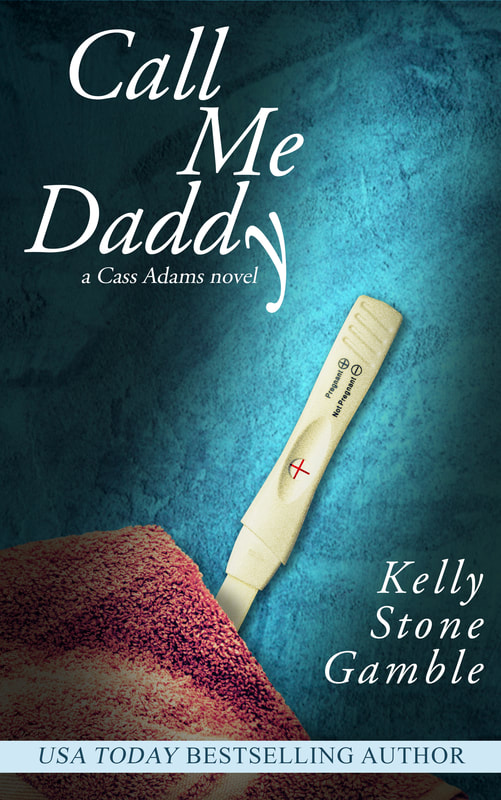
Kelly Stone Gamble is one of my favorite people. Not only is she super freaking talented, but she is one of the nicest people I have ever met. The first two books of her Cass Adams series – They Call Me Crazy and Call Me Daddy – are absolutely fantastic… and yes I would say that even if I knew she wasn’t reading this. I read the first one in just a few hours, unable to put the book down. Book three of the trilogy – Call Me Cass – came out last month and I can’t wait to tear into that one… even if it does mean the end of the character that I have grown to love so much.
Meghan: Hi, Kelly! I am so excited to have you back on! Welcome back! It’s been awhile since we sat down together. What’s been going on since we last spoke?
Kelly Stone Gamble: Writing, writing, writing! They Call Me Crazy became a USA Today Bestseller last summer, and Call Me Daddy (the second book in the series) was released. Call Me Cass, the third and final book, was released on September 17, 2019.
Meghan: Who are you outside of writing?
Kelly Stone Gamble: I teach Literature, Humanities, and Professional Speech at Southeastern Oklahoma State University. I like to travel, rescue animals, and find ways to make the world a better place.
Meghan: How do you feel about friends and close relatives reading your work?
Kelly Stone Gamble: They better! Ha! If I were to write a memoir I may not be as comfortable with them reading it, but I write fiction and I love knowing my family and close friends are supportive enough of my work to read it.
Meghan: Is being a writer a gift or a curse?
Kelly Stone Gamble: As a writer, I feel I experience the world differently. I notice colors and textures and sounds and scents. I watch people and learn how they interact, what motivates them. In other words, I experience the world with all my senses. I don’t know how that could possibly be considered a curse.
Meghan: How has your environment and upbringing colored your writing?
Kelly Stone Gamble: I was born in, and still consider it my hometown, a small town in Kansas. The town is actually the inspiration for my fictional Deacon, Kansas. I love the Midwestern accents and vernacular of this area, and love peppering my work with the country metaphors.
Meghan: What’s the strangest thing you have ever had to research for your books?
Kelly Stone Gamble: Genital piercings. It wasn’t necessarily the subject that was strange, but the person I interviewed is a friend of my sons. So I knew him as a teenager, and it was weird talking with him about genital piercings. He’s a total professional, though, and I learned all (if not more) than I needed to.
Meghan: Which do you find the hardest to write: the beginning, the middle, or the end?
Kelly Stone Gamble: Always the middle. When I start a project, I know how I want to start and where I want to go. However, there are so many ways to get there!
Meghan: Do you outline? Do you start with characters or plot? Do you just sit down and start writing? What works best for you?
Kelly Stone Gamble: I definitely start with plot. Once I throw characters into the story, I have to learn about them, understand them, and usually end up rewriting a lot based on the personalities that emerge. As I said, my idea of “plot” is – this is where I want to begin and this is where I want to end up – I try to outline some, but I find it difficult to follow.
Meghan: What do you do when characters don’t follow the outline/plan?
Kelly Stone Gamble: I let them wander around and follow them! Afterall, it’s their story!
Meghan: What do you do to motivate yourself to sit down and write?
Kelly Stone Gamble:I go for a walk, or on a vacation, or do something out of the ordinary. I don’t know why that works for me, maybe it sparks my creativity, but it seems to be effective.
Meghan: Are you an avid reader?
Kelly Stone Gamble: I love to read, however, I don’t have the time to read like I used to. I read a lot of student papers and a lot of unpublished or pre-release books.
Meghan: What kind of books do you absolutely love to read?
Kelly Stone Gamble: Anything by Clive Cussler, and well-written apocalyptic fiction.
Meghan: How do you feel about movies based on books?
Kelly Stone Gamble: I guess it depends on the book. Some stories are better suited for the screen, in my opinion. Others don’t really translate well without the internal monologue a book offers. My books? If anyone would like to make them into movies, I’m ready to talk!
Meghan: Have you ever killed a main character?
Kelly Stone Gamble: In the third and final book of my Cass Adams novels, Call Me Cass, I do kill one of the main characters. No spoilers!
Meghan: Do you enjoy making your characters suffer?
Kelly Stone Gamble: I enjoy their suffering as a means to an end. I really enjoy allowing them to get revenge when they have suffered at the hands of another.
Meghan: What’s the weirdest character concept that you’ve ever come up with?
Kelly Stone Gamble: Have you read my books? Ha!
Meghan: What’s the best piece of feedback you’ve ever received? What’s the worst?
Kelly Stone Gamble: I’m a very headstrong person, so it may come as a surprise to those who know me how seriously I take non-toxic feedback. Rebecca Mahoney, the editor I use for everything I write before anyone else sees it, has no problem telling me what works or doesn’t work. And I listen. The best feedback she’s ever given me? In my last book, she basically said “this (about 80% of the story) doesn’t work”, and I pretty much rewrote the entire book. She was right. It’s so much better than the first draft! Worst feedback? I don’t really know. I listen to all of it, however, I don’t always agree with it and ultimately, it’s my work.
Meghan: What do your fans mean to you?
Kelly Stone Gamble: I love my fans! Since my books are a little nutty, my fans tend to be a little more fun. I have some great pictures that readers have sent me showing my book in interesting locations, and I love it! It’s an amazing feeling when you write something that someone else likes enough to tell their friends about.
Meghan: If you could steal one character from another author and make them yours, who would it be and why?
Kelly Stone Gamble: Wow, I don’t even know how to answer that. I like my characters, I can’t think of any that I would rather write than my own.
Meghan: If you could write the next book in a series, which one would it be, and what would you make the book about?
Kelly Stone Gamble: I’d love to write a book 2 of Kate Chopin’s The Awakening, where Edna doesn’t drown, but is saved by a passing fisherman and chooses not to go back to her old life.
Meghan: If you could write a collaboration with another author, who would it be and what would you write about?
Kelly Stone Gamble: I would love to collaborate with Stephen King with a story set in the deep woods of the Midwest. Deliverance meets Misery. If you’re interested, Mr. King, call me. 😊
Meghan: What can we expect from you in the future?
Kelly Stone Gamble: I’m always working on my historical fiction novel set during the building of the Hoover Dam, which seems to be my life project. I’m currently working on a story in its infancy that is so full of holes at the moment, I can’t even tell you what it’s going to be about. How is that for vague?
Meghan: Do you have any closing words for your fans or anything you’d like to say that we didn’t get to cover in this interview or the last?
Kelly Stone Gamble: Appreciate each other, take care of yourselves, and be kind to animals. And keep in touch! I love to hear from my readers!
Kelly Stone Gamble is the author of USA TODAY bestseller They Call Me Crazy, Call Me Daddy, and Call Me Cass. She is an Instructor for Southeastern Oklahoma State University-McCurtain County Campus, and lives in Henderson, Nevada and Sawyer, Oklahoma (It’s complicated).
Cass Adams is crazy, and everyone in Deacon, Kansas, knows it. But when her good-for-nothing husband, Roland, goes missing, no one suspects that Cass buried him in their unfinished koi pond. Too bad he doesn’t stay there for long. Cass gets arrested on the banks of the Spring River for dumping his corpse after heavy rain partially unearths it.
The police chief wants a quick verdict—he’s running for sheriff and has no time for crazy talk. But like Roland’s corpse, secrets start to surface, and they bring more to light than anybody expected. Everyone in Cass’s life thinks they know her—her psychic grandmother, her promiscuous ex-best friend, her worm-farming brother-in-law, and maybe even her local ghost. But after years of separate silences, no one knows the whole truth. Except Roland. And he’s not talking.
Cass Adams comes from a long line of crazy, and she fears passing that on to her unborn child. Also, she’s run over Roland and Clay’s surprise half brother Britt, landing him in the hospital. With her inner demons coming out to haunt her, she doesn’t know if she should keep the baby.
Clay Adams has his own decisions to make. His half brother shows up to tell him their father, Freddy, is still alive but needs a liver transplant. When Freddy blew out of town thirty-five years ago, secrets were buried. But it’s time for them to be dug up, because only then can Clay hope to lay the past to rest.
Call Me Daddy is a story of family, the secrets they keep, and to what lengths someone would go to protect them.
Cass Adams is finally happy. She has a man who loves her, a family that understands her, and a baby on the way. Other than seeing the occasional dead person, Cass feels normal. But pregnancy has an unwelcome side effect. Cass is having visions of the future, just like Grams does. While some are cloudy, Cass knows one thing for certain. Her best friend, Maryanne, is going to die.
Police Chief Benny Cloud has his own problems. His father has been released from prison and is on his way home to surprise Benny’s mother, who’s been keeping time with the county sheriff. Fat Tina’s Gentlemen’s Club is under siege by protestors. And it’s growing dark outside.
A devastating storm is coming to Deacon, Kansas. In its wake, the town must deal with tragic losses that force everyone to reevaluate their lives.
Meghan: Hi, Brian. Welcome to Meghan’s House of Books. Tell us a little bit about yourself.
Brian Kirk: Aside from being a fiction writer, I’m a father of identical twin boys: the rarest form of human offspring (a very technical term for kids). Only fraternal twins are hereditary; identical twins are a random anomaly. So it came as quite a surprise. In fact, the first thing I did when I found out was Google the phrase, “What’s the best thing about having twins?” I needed a pep talk.
Actually, it turns out I didn’t. My wife and I are blessed with wonderful boys. Raising them has been a special privilege.
Meghan: What are five things most people don’t know about you?
Brian Kirk: People who know me even a little basically know everything about me. I’m—apologies for the pun—an open book. I spent most of my adolescence feeling insecure about my reading habits and writing interests. Even when a teacher could see I had writing potential, they would discourage my dark stories, and make me feel strange for writing them. I felt a crippling urge to fit in amongst my peers when growing up, and would only do or say things that I knew would be deemed acceptable and not attract too much attention or scrutiny. So I was extremely quiet and shy, despite having an extroverted personality.
As I got older, I started to realize that there was nothing wrong with my thoughts and interests, and that I was doing a disservice to myself, my friends, and my family, by suppressing my authentic self. So I began opening up—bit by bit—exposing people in small doses to my true passions. And, to my extreme relief, I found that the more I opened up, sharing my deepest and purest inner thoughts, the more people seemed to open up in return, which helped to deepen our relationships.
I don’t have much tolerance for small talk. Within a few minutes of meeting someone, I’m moving the conversation into deep waters. This tendency helps filter out the people I am unlikely to connect with. I have nothing against people who prefer to keep things on the surface, but those who are willing to venture deeper get full access to my heart and soul.
Meghan: What is the first book you remember reading?
Brian Kirk: Learning to read was a profound experience for me. I remember the exact moment the words revealed their meaning, and I could decipher what they were saying. I was so excited I asked my teacher to let me bring home the school book so I could show my parents what I had learned. What I had unlocked. Because that’s how it felt, like I had broken some kind of seal that allowed me access to all the stories in the world.
I grew up reading everything I could get my hands on, but most fondly remember the “Choose Your Own Adventure” stories before I was introduced to the work of Stephen King.
Meghan: What are you reading now?
Brian Kirk: My reading tastes are wide and varied, and I like to change up genre/subject/style/author from one book to the next. I’m currently reading The Dead Letters by Tom Piccirilli, and loving it. His immense talent was taking from us far too soon.
Meghan: What’s a book you really enjoyed that others wouldn’t expect you to have liked?
Brian Kirk: Maybe the Harry Potter series? I struggled a bit with books 1-3, but books 4-7 ripped me straight out of my reality and fully immersed me in the world of Hogwarts. I love when that happens.
Meghan: What made you decide you want to write? When did you begin writing?
Brian Kirk: I’ve enjoyed writing stories for as long as I can remember, and have done so enthusiastically my whole life. I took a hiatus for a few years following college when I thought I needed to pursue a “serious” career, but quickly realized that was a mistake and returned to writing stories. I now freelance to allow more time for fiction writing.
Meghan: Do you have a special place you like to write?
Brian Kirk: I have a home office where I do most of my work. If I’m feeling dull or stifled, I’ll go to a nearby coffee shop to change up my environment.
Meghan: Do you have any quirks or processes that you go through when you write?
Brian Kirk: Sort of. My best writing comes from a type of waking dream state. It’s basically when I fall into an immersive daydream that silences my rational mind and taps into my subconscious (at least I think that’s what is happening, I really have no idea). This mindless dream state is where the story unfolds, and my job is simply to bear witness and try and get it down on the page as clearly as I can.
I, therefore, approach writing as though I’m preparing myself for bed. I prefer to do it in the same place, or type of place (a quiet room with a hard surface and minimal potential for distraction). I prefer to do it when all my paid freelance work is done, so that it’s not nagging the back of my mind. And then, like lying down to sleep, when I sit down to work I trust that my mind will shut off and the dreams will begin. This doesn’t always happen, of course. Just as we all have restless nights. But it’s my general approach.
Meghan: Is there anything about writing you find most challenging?
Brian Kirk: There’s a lot about writing that I find challenging, but that’s also why I enjoy it so much. I remember when I was gearing up to begin writing my debut novel I kept thinking, “I can’t wait to be engaged in the struggle of writing a book.” I figured it would be hard, but that was part of the allure.
To be more specific, though. I find writing on a regular basis challenging, although I usually do it. I find overcoming insecurity challenging, but I try. I find writing when depressed or tired difficult, but I keep slogging ahead until it gets better.
If writing were easy, it wouldn’t be rewarding. So I work to embrace the challenges and overcome them with stubborn determination, by commiserating with other writers, and by trying not to take the whole thing so seriously in the first place.
Meghan: What’s the most satisfying thing you’ve written so far?
Brian Kirk: Satisfying is a good word here, and it would probably have to be We Are Monsters, which is the first novel I ever wrote. I really struggled to write this book, and suffered somewhat of a nervous breakdown during the process. You see, writing a novel had been a dream of mine from as early as I can remember, which actually worked against me when I set out to write this book. Despite having already written and published several short stories, I found that I had inflated the importance of writing a novel so much that it suddenly seemed insurmountable. I had made it a seminal moment in my life, setting the nonexistent stakes unreasonably high. And so I started out tentatively, on shaky knees that were threatening to buckle under the weight of such a heavy load.
My first few weeks were spent in a state of desperation, as I struggled to get 300 over-written words onto a page in a single sitting. The starting pistol had fired and I had pulled my rigid hamstrings right out of the gate. The finish line seemed like an eternity away. There was no way I could ever reach it at this lumbering pace. I truly questioned whether or not I was capable of writing something so large, and that uncertainly nearly unraveled me. This was a dark and difficult period of time.
Rather than give in to this early desperation, however, I just kept going. I was struggling with the first chapter, so I skipped it, and started writing the second one. This one began to flow better. My word count increased. My rhythm returned. And the story began to take form. Sure, not every day was wonderful. But that’s the nature of writing. The trick was to get over the pre-game jitters and let my instincts take over. I needed to get out of my own way.
The lesson I learned is not to make too much of the situation. You’re just writing a story. Make it the best it can be, but don’t make it bigger than it is.
I’m satisfied that I finished this novel, knowing what it took to complete it.
Meghan: What books have most inspired you? Who are some authors that have inspired your writing style?
There are many contemporary horror authors who inspire me, but I’m hesitant to make a list as I invariably leave someone vital off. Two of my favorites, though, are John F.D. Taff and Gemma Files.
I love to read books that are so good they intimidate me and make me feel helplessly inferior. That’s where inspiration comes from.
Meghan: What do you think makes a good story?
Brian Kirk: Interesting characters placed in difficult situations that help illuminate the challenges and rewards of being human.
Meghan: What does it take for you to love a character? How do you utilize that when creating your characters?
I find that humor is something that draws me in and connects me with a character, even, if not especially, the villains. In my writing, I attempt to convey humor both through dialogue and how a particular character views the world. I feel that humor can be an excellent counterpoint to horror. It works to both disarm readers and draw them to your characters.
Meghan: Which, of all your characters, do you think is the most like you?
Brian Kirk: While there’s probably a piece of me in all of my characters, I can’t say that I am like any one of them in real life. At least, I hope not. My characters aren’t usually the most likable bunch.
Meghan: Are you turned off by a bad cover? To what degree were you involved in creating your book covers?
Brian Kirk: Yes, very much so. I actually supplied the cover art for my first two novels.
Taste is subjective, however. What I like someone else might hate. With that said, I’m more likely to connect with the content of a book if I appreciate its cover.
Meghan: What have you learned creating your books?
Brian Kirk: That writing is the part of the process that I enjoy most, which is a relief, as that’s the only part I can control.
Meghan: What has been the hardest scene for you to write so far?
Brian Kirk: One involving sexual abuse.
Meghan: What makes your books different from others out there in this genre?
Brian Kirk: I strive to write psychedelic horror, but not in the sense that my stories involve hippies or hallucinogenic drugs. Rather, I try to write stories that function like psychedelic drugs.
In the same way that a psychedelic drug, such as psilocybin or LSD, will alter one’s state of consciousness, and make one see life through a different lens, I attempt to achieve the same overall effect with the stories I write.
While a psychedelic experience can be challenging, harrowing, and even painful, it typically results in a state of euphoria and a feeling of being more connected to, and compassion towards, ourselves and the people around us. That’s what I strive to accomplish with much of my writing.
Meghan: How important is the book title, how hard is it to choose the best one, and how did you choose yours (of course, with no spoilers)?
Brian Kirk: Book titles are like people’s names; they have to fit, and often have a deeper meaning. My titles almost always come to me after the story is written, or when I’m near the end. I need to know what the story is really about, which I rarely know until I’m deep into it. What happens in the story, and what the story is about, can be two different things, and I prefer for my titles to convey the latter whenever possible.
For instance, the title We Are Monsters can be interpreted a number of ways. On one level, it speaks to the horrific ways we often treat each other, including the monstrous ways we’ve historically treated the mentally ill.
It also refers to the monstrous ways we treat ourselves. Our self-hatred and self-judgment. The ways in which we limit ourselves or sabotage our true potential. The straightjackets we unconsciously wear.
And, lastly, it refers to the monsters that live inside of us. The addictions, the illnesses, the inner demons (real or imagined).
My favorite titles are ones that capture both the subject and theme of the story.
Meghan: What makes you feel more fulfilled: Writing a novel or writing a short story?
Brian Kirk: That’s tough because they’re so different. Ultimately, though, fulfillment for me comes through the act of writing itself. It doesn’t arrive after I’ve written something. For whatever reason, the act of writing allows me to access that allusive flow state that makes us all feel like we’re fulfilling our purpose in life. It’s when time stands still and that pesky inner critic that nags some of us all day long goes quiet. In many ways, writing this sentence is as fulfilling to me as writing any other.
I’d say I prefer writing novels to short stories because they allow me to sustain that flow state for a longer period of time. It’s the same wonderful drug, just with a longer peak.
Meghan: Tell us a little bit about your books, your target audience, and what you would like readers to take away from your stories.
Brian Kirk: My books are psychological and surreal. They focus more on stirring strong emotions than producing sensations of fear. They are weird, and quirky, and can be hard to follow at times. They cater primarily to a small, fringe audience of readers who enjoy work that’s emotionally challenging, and pretty far off the beaten path.
A reader of We Are Monsters wrote to me saying that she had always given money to the homeless, but never to people she thought were “CRAZY,” because she thought it would go to waste. She said that after reading We Are Monsters, she now makes a point to give money to homeless people with clear mental illnesses because she sees them differently, and feels like they might need it even more than someone with an able-mind. That’s the kind of reaction I aim for in my writing. That in addition to simply being entertained.
Meghan: What is in your “trunk”?
Brian Kirk: I have a completed novel titled The Sun Is A Tangerine that has scenes that can only be accessed in virtual reality. Whether or not this ever sees the light of day will depend on if I can ever afford to make it, which is something I’m working on. Anyone with a pile of unused cash is welcome to give me a call!
Meghan: What can we expect from you in the future?
Brian Kirk: I’m making the final revisions on a new novel that I’d like to see out at the end of 2020 or early 2021. After that, I am planning to write a series of middle grade horror novels that I have loosely outlined. My sons turn ten soon, and I think it would be a fun project for us to work on together. We have a blast bouncing story ideas off one another. We have even more fun grossing each other out. I’m looking forward to writing for a younger audience with unbridled imaginations.
Meghan: Where can we find you?
Brian Kirk: I’m always happy to connect with people anywhere in the real or digital world. Following are the easiest ways to find me.
Meghan: Do you have any closing words for your fans or anything you’d like to say that we didn’t get to cover in this interview?
Brian Kirk: I’d just like to say thank you very much for conducting this interview! It’s probably the most in-depth one I’ve ever done, and I appreciate the probing questions. I hope people find it useful and entertaining.
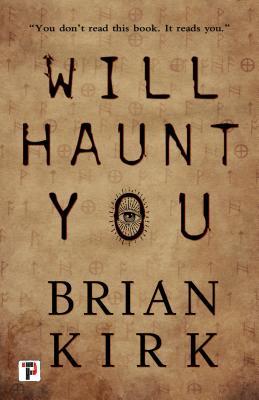
Rumors of a deadly book have been floating around the dark corners of the deep web. A disturbing tale about a mysterious figure who preys on those who read the book and subjects them to a world of personalized terror. Jesse Wheeler–former guitarist of the heavy metal group The Rising Dead–was quick to discount the ominous folklore associated with the book. It takes more than some urban legend to frighten him. Hell, reality is scary enough. Seven years ago his greatest responsibility was the nightly guitar solo. Then one night when Jesse was blackout drunk, he accidentally injured his son, leaving him permanently disabled. Dreams of being a rock star died when he destroyed his son’s future. Now he cuts radio jingles and fights to stay clean. But Jesse is wrong.
The legend is real–and tonight he will become the protagonist in an elaborate scheme specifically tailored to prey on his fears and resurrect the ghosts from his past. Jesse is not the only one in danger, however.
By reading the book, you have volunteered to participate in the author’s deadly game, with every page drawing you closer to your own personalized nightmare.
The real horror doesn’t begin until you reach the end. That’s when the evil comes for you.
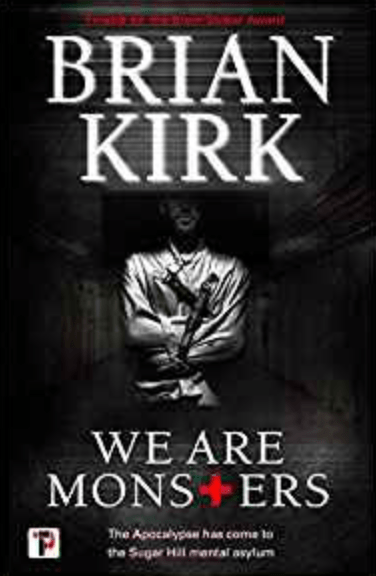
The Apocalypse has come to the Sugar Hill mental asylum.
He’s the hospital’s newest, and most notorious, patient–a paranoid schizophrenic who sees humanity’s dark side.
Luckily he’s in good hands. Dr. Eli Alpert has a talent for healing tortured souls. And his protégé is working on a cure for schizophrenia, a drug that returns patients to their former selves. But unforeseen side effects are starting to emerge. Forcing prior traumas to the surface. Setting inner demons free.
Monsters have been unleashed inside the Sugar Hill mental asylum. They don’t have fangs or claws. They look just like you or me.







 Meghan's House of Books