Halloween Extravaganza: INTERVIEW: D.W. Gillespie

Meghan: Hi, D.W. Welcome welcome. It’s a pleasure having you here today. Tell us a little bit about yourself.

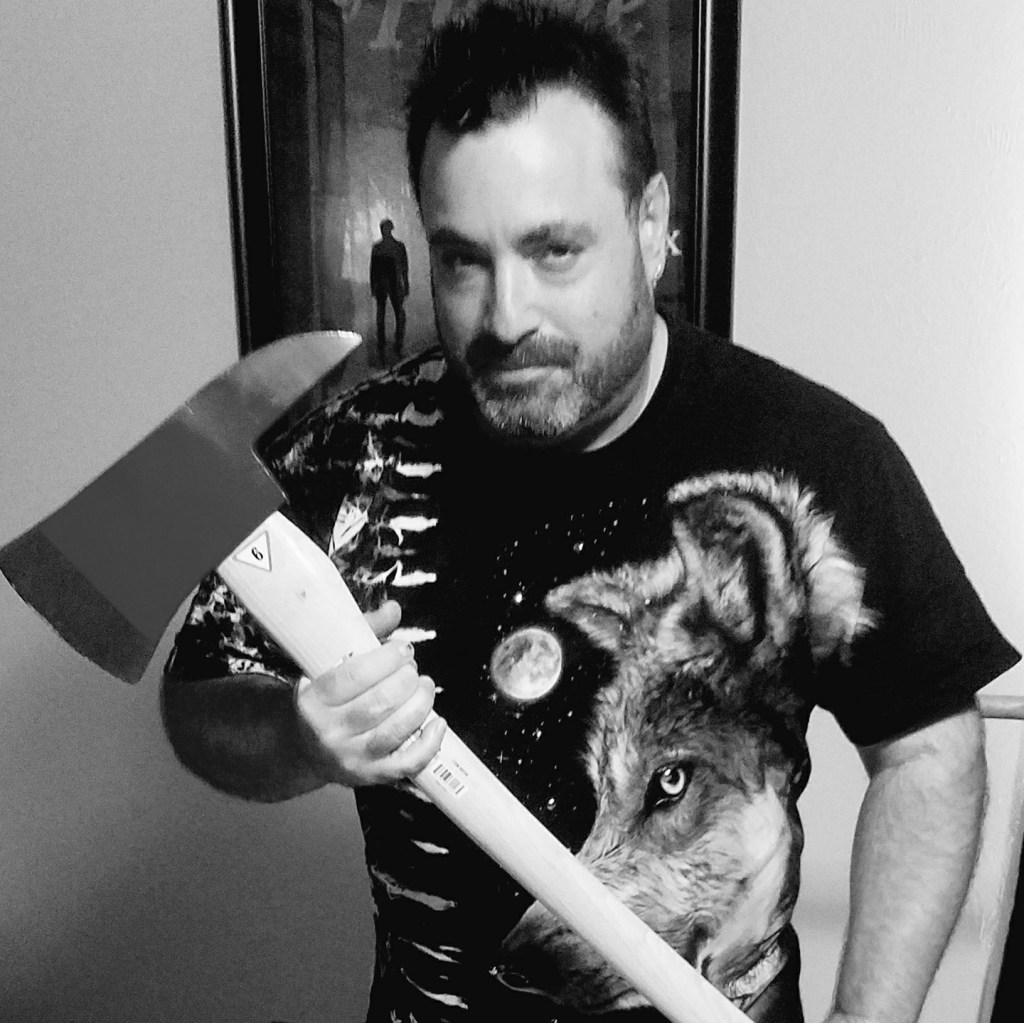
D.W. Gillespie: Well, I’ve been writing for about eighteen years now, which is crazy to say out loud. I’m not exactly sure when you’re allowed to consider yourself a professional writer, but I did get paid for a story way back in college, so we’ll go with that. If only I knew how long it would take to actually get novels published, I might have started a Youtube channel instead.

Over those years, I have realized some things about myself, mainly that I am a writer through and through. There’s not a lot in this world that I feel like I’m qualified to do, but writing is one of those things I feel like I’ve earned, if not with actual talent, than at least with blood, sweat, and tears.

Beyond that, I’m a family man. I’m, admittedly, pretty boring. I spend most of my time with my wife and kids, or playing video games. Being boring is actually pretty great for the nuts and bolts of writing (planning, sticking to schedules, stuff like that), but it’s not as helpful for writing bios and interviews. I wish I could tell you some crazy interesting story about myself, but no, I’m just a writer.

Meghan: What are five things most people don’t know about you?

D.W. Gillespie: For starters, I’d say most people don’t know anything about me, because I kind of hate social media. I do it, but I don’t think I do it particularly well.

Second thing, which goes along with the first, is that I’m pretty introverted. I genuinely like people, but I need some alone time to recharge at least a little bit everyday.

Third thing… ever since my kids were born, I’ve had less and less time to write at home, so my last four or five books have been written during my lunch break from my day job. That’s why writing full time is a huge dream of mine, not because I have delusions of wealth and fame, but because I’d just love to have the time to write and edit at a deeper level.

Four, now that I have two more widespread books coming out, I think most people don’t realize how long I’ve been writing. I’m certainly new to them, but along with the four books I have available, there are another seven or so that haven’t seen the light of day. Some were (in hindsight) just practice, and I’ve already reused certain parts in other books, but a few are waiting for the right time.

And the last thing is, along with horror, which I’m known for, I’ve also written a sci-fi novel, and even a middle-grade novel. The sci-fi one is on the shelf for now, but it might see the light of day once I spend some more time with it. The middle-grade novel is being read by publishers by the time you read this, so fingers crossed.

Meghan: What is the first book you remember reading?

D.W. Gillespie: I’ve thought about this a lot recently, just because I was trying to remember the answer myself. I know for a fact that the first horror novel I ever read was Dracula, which in hindsight, was a pretty dense read for a kid. I do remember really enjoying it, and I wanted to immediately read some Stephen King after that.

But, I think the first novel I read was Call of the Wild by Jack London. I don’t remember a ton about it, but I did really enjoy it. There are some passages there that still stick with me even if I can’t remember the entire plot.

Meghan: What are you reading now?

D.W. Gillespie: Been slowly working my way through Boy’s Life by Robert McCammon. What a book. I’ve seen it described as a horror book, but it’s more than I was expecting. I recently read through IT by King as well, and it’s a fun comparison, looking at the two of those books, both about childhood in a lost time.

Meghan: What’s a book you really enjoyed that others wouldn’t expect you to have liked?

D.W. Gillespie: I always list The Hobbit as one of my favorite books. It’s getting to the point now were I feel like people are beginning to turn on classics like that, maybe because they’re too old fashioned, but I love things that are earnest.

Meghan: What made you decide you want to write? When did you begin writing?

D.W. Gillespie: I’ve told the story before, but I was always the creative type. When I was right out of high school, I was convinced I would be making movies at some point. Then I realized how hard it is to make movies, especially without the right people around you, so I started to just drift towards something I could do all by myself. I took a creative writing class, and got some great feedback from my teacher. That was around 2002, and it’s been pretty steady ever since.

Meghan: Do you have a special place you like to write?

D.W. Gillespie: I always laugh, because the answer to this question is always the same. In my car, during my lunchbreak, in some abandoned parking lot somewhere. Not very glamorous, but it gets the job done. One of these days, I’d like to have an actual stuffy office with books on the wall and a big desk, but for now, I’ll just make due.

Meghan: Do you have any quirks or processes that you go through when you write?

D.W. Gillespie: Not so much quirks, but I have written enough books to have a very solid process. Sometimes I change up whether or not I plan too much ahead of time, but I always have a set schedule for drafts. I’m not one of those people who write every single day. I’m more a sprinter, and when I’m working on a draft, I try very hard to hit ten thousand words a week until the draft is finished. That’s a pace that I couldn’t keep up for more than a few months at a time, but it works well in short bursts.

Meghan: Is there anything about writing you find most challenging?

D.W. Gillespie: For me, it’s just the time. I love draft writing, but I’ve learned to love editing too. When I’m working on a manuscript, I feel like I’m doing exactly what I’m on this planet to do, so when I have to spend 8 hours in an office doing something that, to be honest, anyone could do, it’s a bummer.

Meghan: What’s the most satisfying thing you’ve written so far?

D.W. Gillespie: That’s a tough one to say. I’m very proud of both The Toy Thief and One by One, but my last unpublished book is still probably the one I’m most satisfied with. It’s a bit more sprawling, going back hundreds of years into the history of this town, and I think it has something like 70 characters in it. It was very ambitious, but it just wasn’t the right book for the time. I might try to revisit it someday.

Meghan: What books have most inspired you? Who are some authors that have inspired your writing style?

D.W. Gillespie: The Road by Cormac McCarthy is one of my favorite books. I love his style, and I’ll go back and read through passages over and over again. Hemmingway is another one, even though I don’t love his books, I just love the ability to get as much meaning and feeling as possible with just a few words.

Meghan: What do you think makes a good story?

D.W. Gillespie: Well, it’s that push and pull between characters and plot. Character, rightfully, gets most of the praise in books, but for me, the stories that really live on are the ones that hit that balance perfectly.

Meghan: What does it take for you to love a character? How do you utilize that when creating your characters?

D.W. Gillespie: I’ve thought a lot about this since my last book, The Toy Thief. I really didn’t see any reviews that thought it was poorly written, but I saw a lot of criticism of the main character, saying she was unlikable. It might just be a preference thing, but I’ve always liked broken, vulnerable characters, people that have reasons to give up, but find a way to keep going.

I try very hard to see the duality of everyone. That’s one of my favorite aspects of a good character. It’s a villain, a monster even, who still has something human and relatable about them. It’s a protagonist who you’re genuinely rooting for who suddenly does something despicable. Its not about shock or cheap tricks, it’s about recognizing the fact that every single one of us has done things we’re not proud of. That’s what makes a character work for me.

Meghan: Which, of all your characters, do you think is the most like you?

D.W. Gillespie: I don’t think I can even pick one. This is one of the funniest things about being a writer, is having everyone who reads your book saying, “Oh, I know who that character is.” The truth is, there are bits of me in every character I’ve ever written.

Meghan: Are you turned off by a bad cover? To what degree were you involved in creating your book covers?

D.W. Gillespie: Bad covers can be disappointing. It’s the first impression, and you just know that some great books just won’t get an audience with the wrong cover.

I’ve had some basic feedback on most of my covers, but not complete control. I’m happy with most of them though.

Meghan: What have you learned creating your books?

D.W. Gillespie: I’ve learned a lot of basic life lessons from writing. Perseverance. Goal setting and keeping. Time management. I’ve gotten more of this from writing than I ever did from school or any other job.

Meghan: What has been the hardest scene for you to write so far?

D.W. Gillespie: It’s hard to pick out one, but there have been several scenes that played out a certain way in my mind and totally different when I sat down to write them. One by One in particular deals with issues of child abuse, and I knew pretty quickly that I was going to handle those things in a very vague, “offscreen” sort of way. I just can’t dive into the details of things like that.

Meghan: What makes your books different from others out there in this genre?

D.W. Gillespie: I’ve seen the phrase “quiet horror” in several of my reviews, and I’ve kind of learned to embrace it. I’ve written gorier or more extreme stories before, but I’ll admit that’s not my main focus. I think of my books as mood-building, and I like the feeling of standing in the calm before a storm. Hopefully, my books put you on edge and keep you there while you wait for the bad thing to finally happen.

Meghan: How important is the book title, how hard is it to choose the best one, and how did you choose yours (of course, with no spoilers)?

D.W. Gillespie: I used to try really hard to nail down the title before starting, but I gave up on that years ago. I almost always start with a placeholder title now, and I just pick the title out of a line in the book. It usually happens organically though.

Meghan: What makes you feel more fulfilled: Writing a novel or writing a short story?

D.W. Gillespie: I spent several years straight trying to get short stories published, which is something that has completely fallen off for the past 3 years or so. My focus is completely on novels now, and that’s led to some great success. I still love writing shorts, and I hope to get back to them next year.

Overall, I don’t think there’s anything as satisfying as completing a novel, just because of the time commitment. You basically life with a novel over the course of months, or even years. I’m amazed that books I thought were “finished” years before still come back for edits. Once you finally see that book in your hand, it’s almost surreal.

Meghan: Tell us a little bit about your books, your target audience, and what you would like readers to take away from your stories.

D.W. Gillespie: I’m in this to make the reader feel something. Probably the worst review for me would be someone saying they didn’t feel anything reading my books. Whether you like it or not, if you leave the book with something to think about, then I’ve done my job.

My target audience would be anyone who loves monsters. They might be literal monsters, or just figurative ones, but they’ve all got a human side to them.

Meghan: What can we expect from you in the future?

D.W. Gillespie: I got two big projects on the horizon. One is the middle grade book I mentioned earlier, which I can’t say too much about just yet. I will give you a preview of the name, The Unseen Team… I’ll let you guess what that means.

The other project is a new horror novel titled The Mill. I’m getting ambitious with this one. The draft is longer than any book I’ve ever written. There’s a lot of work to be done, but hopefully it will be out to publishers in the next few months.

Meghan: Where can we find you?

D.W. Gillespie: Website (which needs an update) ** Twitter ** Facebook

Meghan: Do you have any closing words for your fans or anything you’d like to say that we didn’t get to cover in this interview?

D.W. Gillespie: I just want to say that, the past year has been a big boost for me as a writer. I’ve gotten more reviews and eyes on my work in the past twelve months than I have in the previous twelve years. I can’t thank you all enough.

For anyone who has enjoyed my work, stay tuned. There is much more on the way.

Born and raised in Middle Tennessee, D.W. Gillespie has been daydreaming for as long as he can remember. His first short story was in second grade, and it involved (unsurprisingly) monsters wreaking havoc on some unsuspecting victim. Some things never change, and now D.W. writes a healthy mixture of horror, sci-fi, and supernatural fiction.

He began writing seriously in 2002, and he’s since been published many times in print and online. His body of work includes eleven novels and dozens of short stories.

D.W. still lives in Tennessee with his wife and two children.

One By One

The Easton family has just moved into their new fixer-upper, a beautiful old house that they bought at a steal, and Alice, the youngest of the family, is excited to explore the strange, new place. Her excitement turns to growing dread as she discovers a picture hidden under the old wallpaper, a child’s drawing of a family just like hers. Soon after, members of the family begin to disappear, each victim marked on the child’s drawing with a dark black X. It’s up to her to unlock the grim mystery of the house before she becomes the next victim.

Halloween Extravaganza: INTERVIEW: The Price Girls

Meghan: Hi, ladies. Welcome to Meghan’s House of Books. Take a seat and tell us a little bit about yourselves.

Marité: Sheníe and I are identical twins, and Taís is five years younger—although, most people mistake us as triplets. Taís is also an artist who illustrated our covers.

Meghan: What are five things most people don’t know about the three of you?

Taís:
1.) The three of us bought a house together and share a room.
2.) We all have a healthy fear of the dark, hence the part about us sharing a room.
3.) We see dead people (our houses have always been haunted).
4.) Out of the three of us, Sheníe is the only one who has ever read a Stephen King novel.
5.) As a rule, we don’t celebrate Halloween.

Meghan: What is the first book you remember reading?

Sheníe: The Runaway Bunny by Margaret Wise Brown.

Meghan: What are the three of you reading now?

Marité: I am still currently reading Children of Blood and Bone by Tomi Adeyemi, Sheníe is reading Two Dark Reigns (Book #3 in the Three Dark Crowns series) by Kendare Blake, and Taís is reading The Brotherhood of Olympus and The Deadliest Game by Guy T. Simpson, Jr.

Meghan: What’s a book you really enjoyed that others wouldn’t expect you to have liked?

Sheníe: Queen Bees & Wannabees: Helping Your Daughter Survive Cliques, Gossip, Boyfriends, and the New Realities of Girl World by Rosalind Wiseman. Our dad originally bought the book to help him understand girl world back when Marité and I had attended junior high. Being thirteen when I first read it, I didn’t think a parenting book would be at all entertaining, but I found the book resonated with what I was experiencing at the time and quite humorous.

Meghan: What made you decide you want to write? When did you begin writing?

Marité: As far back as I can remember I always had the longing to write something, yet I could never come up with anything worth writing. I recall reading a piece of writing advice in a book somewhere that you should draw inspiration from your life, and being a teenager at the time I read this leading a relatively quiet life I decided to wait until I had material worthy to draw from. A couple of years later, when the urge to write had intensified, Sheníe had a nightmare about a girl who moves into a small town’s haunted house and being (a) a teenage girl myself trapped in a small town in Texas and (b) living in a haunted house I knew I had my story. Three days later we started writing our first draft of what later came to be The Merging of Shadows, Sheníe and I had just turned seventeen two-weeks prior and Taís was only eleven at the time.

Meghan: Do you have a special place you like to write?

Taís: The living room is our regular haunt so it serves the dual purpose of acting as both our entertainment space and workshop.

Meghan: Do you have any quirks or processes that you go through when you write?

Marité: I can always be found writing with my earbuds in even if they are not plugged into anything—it helps me to block out the background noise, Sheníe has to listen to Linkin Park whenever she’s writing, and Taís always has to create a playlist to help her get into writing mode.

Meghan: Is there anything about writing you find most challenging?

Sheníe: Sticking to an outline is by far the most challenging as our writing style is composed of freewriting which means the ideas come as they go and the scenes are constantly evolving.

Meghan: What’s the most satisfying thing you’ve written so far?

Taís: The darker scenes were the most satisfying as we had to challenge ourselves to up the ante.

Meghan: What books have most inspired you?

Marité: Twilight, because the story was inspired by a dream, and The Hunger Games because of Suzanne Collins’ masterful blend of genres.

Meghan: Who are some authors that have inspired your writing style?

Sheníe: Suzanne Collins because her stories are fast-paced, J.K. Rowling for her ability to slip magic into the real world, and Stephanie Meyer’s romantic genius.

Meghan: What do you think makes a good story?

Taís: A good story is one that you can take something away from it. After all, stories were originally crafted to contain a message.

Meghan: What does it take for you to love a character? How do you utilize that when creating your characters?

Marité: For us, we find that the characters that we adore have within them the capacity for good, no matter how intrinsically evil they may be. With each character we bring to life we are careful they allude a sense of humanity, even if that may come as an illusion.

Meghan: Which, of all your characters, do you think is the most like you?

Sheníe: Marimar embodies all three of our personalities and she also serves as the personification of our ideal selves as well as our shortcomings.

Meghan: What have you learned creating your books?

Taís: It is our duty as authors to tell a story as it is meant to be told. Something one person might love about a book another may hate, yet what’s important is that you are never afraid to be daring and always ready to push the envelope.

Meghan: How important is the book title, how hard is it to choose the best one, and how did you choose yours (of course, with no spoilers)?

Marité: A title must embody the tone and theme of your book while at the same time clarifying the cover image. In this respect, it plays a key role in capturing your attended audience and, as such, is one of the hardest decisions to make. After two failed attempts (the first had us listed on Amazon under a telenovela and the second was too similar to a title of an already popular book) we finally took our title from a passage in our novel. We felt the title The Merging of Shadows conveyed a sense of mystery and hinted at the central theme of our book—the blurring of the line between the known and the unknown.

Meghan: Tell us a little bit about your books, your target audience, and what you would like readers to take away from your stories.

Sheníe: The Merging of Shadows and its sequel The Darkness that Lies Inside originated from a single nightmare of mine. Three times I had tried to wake myself up from it only to fall back asleep and enter the dream, watching the story play out like a movie from beginning, middle, and end. When I awoke the next morning I told my sisters about it and we just knew we had to write it. As luck would have it, our Dad was about to have us start on a book report for our English assignment when we managed to convince him into letting us write a novel instead as part of our homeschool project.

Flash forward six years, and we have polished the manuscript, found an editor, published it in paperback form, and have just released its sequel. Yet, in spite of all the years in between, the biggest take away that we wish young adults and our adult readers will have has always stayed the same and that is that we all have the power inside ourselves to take control of our own lives.

Meghan: What was it like working together?

Taís: As in any democracy, there is a lot of checks and balances. Everything has to be put to a vote and there are countless vetoes.

Meghan: Do you think it’s easier or harder to work together as sisters?

Marité: For us, it was easy as we think alike. Truth be told, at times we speculated whether the stories would have come out faster if only one of us had chosen to write it, but in the end we have all agreed that the story wouldn’t be half as good (in our opinion) without each of our thoughts, ideas, and (in our case) dreams.

Meghan: I’ve interviewed several author-teams, but never one consisting of three people. How does the process work for y’all?

Sheníe: The three of us take turns writing in the book, and we split up the writing depending on whose idea it was for a scene or chapter. When facing writer’s block we will hand off the book to whoever is available. Interestingly enough, when we all are stuck on a certain scene one of us will have a nightmare about what to do next and we will write around that central idea. The spookiest part about this is that all three of us have been visited by the same character in our dreams.

Meghan: Who is the sister that is the most outspoken? Who is the quietest? There’s always one that is more bossy than the others – who would you say that sister is?

Taís: Marité is the most outspoken, I am the quietest, and Sheníe is the bossiest although Marité is the oldest.

Meghan: What can we expect from you in the future?

Marité: At the moment we are working on two new projects, one being the spinoff to The Merging of Shadows series and the other is a contemporary young adult novel inspired from yet another one of Sheníe’s dreams.

Meghan: Where can we find you?

Sheníe: Visit us if you dare at our young adult blog and be sure to stop by our official website (Coming Soon) which is kindly hosted by WebsiteDreams.

Meghan: Do you have any closing words for your fans or anything you’d like to say that we didn’t get to cover in this interview?

Taís: Firstly, we would like to express our thanks to Meghan’s House of Books for conducting this wonderful interview, and lastly we would like to thank all of you paranormal geeks, horror lovers, and bookworms out there for making this interview possible. Sweet dreams. Love, Price Girls.

Marité, Sheníe, and Taís Price are three sisters who write under the collective name Price Girls. The three of them have escaped a small—always hot—western town in Texas to live in the mossy—seems like it is always raining—urban city of Olympia, Washington. Together, they are living out their dream of residing in the Pacific Northwest in a home filled with three generations of women, cats, dogs, ducks, and chickens. Currently, they are hard at work writing during the day and conjuring scary ideas during the night.

The Merging of Shadows 1: The Merging of Shadows

Sixteen-year-old Marimar Utterson has just found herself living in a small southern town’s notoriously haunted house when she meets Sage Sterling. A handsome hazel-green eyed boy who is not only captivated by Marimar’s petite beauty and fiery disposition, but by her home’s mysterious past. Unfortunately, his fascination with her house turns perilous when he manages to infuriate the spirit who in turn lashes out against Marimar.

Together, they must set off to uncover the spirit’s dark secret in hopes of finally laying it to rest. For with each encounter the malicious presence diminishes Marimar’s grasp on her sanity and odds of survival.

The Merging of Shadows 2: The Darkness That Lies Inside

After undergoing battle with her dead roommate and reclaiming her house, Marimar attempts to go back to life as normal. But darkness has a way of creeping back in and as the darkness spreads so does the chaos. Sage begins to keep secrets, her once loving baby sister is beginning to change and grow distant, and everything Marimar thought she knew to be true was wrong. Danger is once again lurking at every corner and if she is to stop it from spreading any further a sacrifice must be made.Cornered and alone, Marimar must choose to either embrace the light- fulfilling the role she was predestined to take, risking the loss of the one she holds most dear-or be swallowed by the darkness.

Halloween Extravaganza: INTERVIEW: C. Derick Miller

Meghan: Hello and welcome to Meghan’s House of Books. Tell us a little bit about yourself.

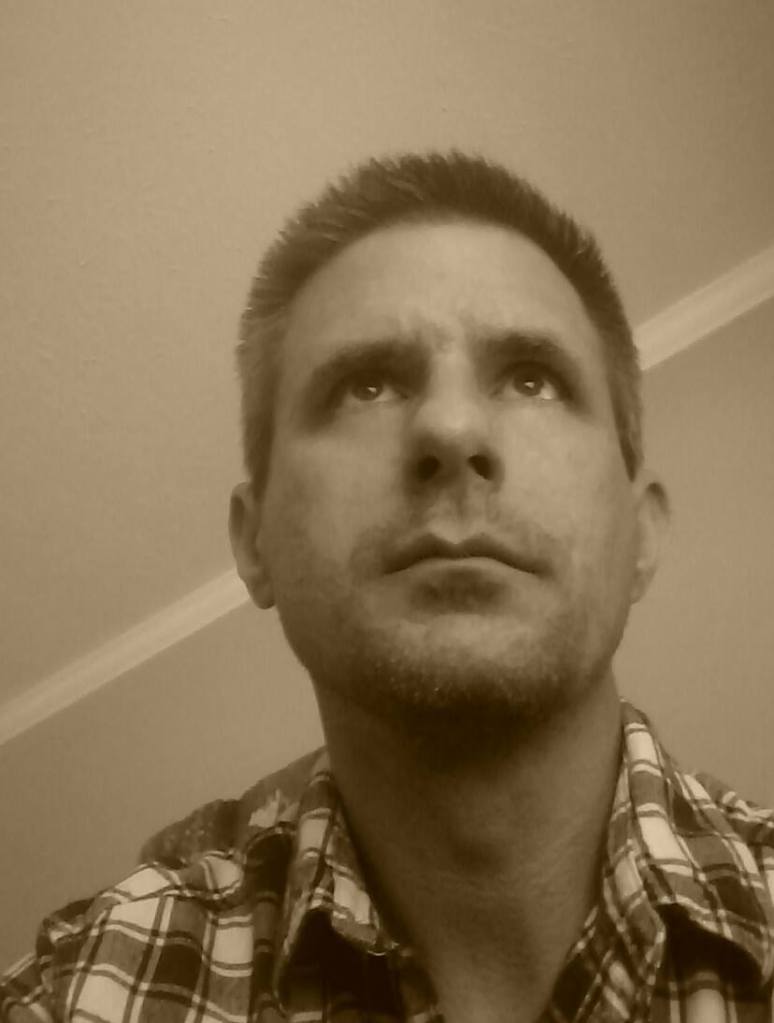
C. Derick Miller: I’m a dark fiction author, Gonzo Journalist, freelance A&E journalist, poet, ordained minister, and ASCAP songwriter born in the town of Greenville, Texas. A seasoned paranormal investigator and traveler for the art industry, my influences include Hunter S. Thompson, Kevin Smith, Shawn Mullins, and Del James. I’m currently signed with Black Rose Writing and Death’s Head Press. I’m also an active member of the International Thriller Writers organization, the Horror Writers Association, and the creator of Gonzo Wolf Press. I currently reside in the Bishop Arts District of Dallas, Texas and have a price on his head for my short story “Hell Paso” contained in the #1 Amazon Best Selling Death’s Head Press Anthology And Hell Followed.

Meghan: What are five things most people don’t know about you?

C. Derick Miller: I’m a veteran, prior law enforcement, a father of 4, a grandfather of 2, and related to Lee Harvey Oswald’s widowed wife!

Meghan: What is the first book you remember reading?

C. Derick Miller: Where the Red Fern Grows

Meghan: What are you reading now?

C. Derick Miller: Catfish in The Cradle by Wile E. Young

Meghan: What’s a book you really enjoyed that others wouldn’t expect you to have liked?

C. Derick Miller: What the Valley Knows by Heather Christie

Meghan: What made you decide you want to write? When did you begin writing?

C. Derick Miller: I read a book of short stories by Del James titled The Language of Fear. It contained the story ‘Without You’ which influenced the music video for Guns N Roses November Rain. I woke up the next morning and wrote my first short story. Poetry was always easy for me as a school kid though.

Meghan: Do you have a special place you like to write?

C. Derick Miller: Nowhere special but loud, 80’s hair metal is a key ingredient.

Meghan: Do you have any quirks or processes that you go through when you write?

C. Derick Miller: I normally write the beginning, then the end, and fill in the blanks in between.

Meghan: Is there anything about writing you find most challenging?

C. Derick Miller: Writing? No. The publishing industry? Too many to mention.

Meghan: What’s the most satisfying thing you’ve written so far?

C. Derick Miller: My newest novel Extinguished. It’s the only thing I’ve written during complete sobriety. Some say it’s my best work so far.

Meghan: What books have most inspired you? Who are some authors that have inspired your writing style?

C. Derick Miller: I don’t think it’s fair for an author to describe his own style. I try my best not to pull influence from anywhere. I just do my own thing.

Meghan: What do you think makes a good story?

C. Derick Miller: The villain makes the story. Always. You can’t have a good hero without a good villain. Darth Vader, Lord Voldemort, Scar from The Lion King lol.

Meghan: What does it take for you to love a character? How do you utilize that when creating your characters?

C. Derick Miller: Honesty and the acceptance of weakness. I hate overpowered heroes. Disney has a bad habit of this. Not everyone can be a Jedi. Some of us must be Chewbacca.

Meghan: Which, of all your characters, do you think is the most like you?

C. Derick Miller: Johnny Haynes from the Taste of Home series. Loudmouth, oblivious to the consequences of his actions, and can easily turn anything into a sex joke.

Meghan: Are you turned off by a bad cover? To what degree were you involved in creating your book covers?

C. Derick Miller: I don’t mind a bad cover. I despise a bad synopsis. My son has been an internationally published graphic artist since age 15 and he’s designed my covers for the past few years. He’s leaving for the Army soon, so I’m screwed.

Meghan: What have you learned creating your books?

C. Derick Miller: The market is oversaturated with bad writers who possess amazing marketing skills. The same could be said about the music industry as well. Gotta love the internet, right? The best talent is brushed to the wayside far too often.

Meghan: What has been the hardest scene for you to write so far?

C. Derick Miller: There’s a scene in Far from Home where the protagonist is forced to watch his own daughter be sexually assaulted. I have three daughters. You get the picture. I wanted to write a disturbing scene and that was the most disturbing thing I could think of.

Meghan: What makes your books different from others out there in this genre?

C. Derick Miller: It’s a lot less extreme than most of the indie horror titles floating around out there. I was just contracted for my first ‘extreme’ horror novella. I’m a little nervous about putting those thoughts on paper.

Meghan: How important is the book title, how hard is it to choose the best one, and how did you choose yours (of course, with no spoilers)?

C. Derick Miller: I feel the title is the bait, not the cover. My upcoming novella was originally titled ‘The Screaming of The Trees’. It was too ‘on the nose’ for the subject matter. I wanted it to be a little more mysterious. One night, my wife reminded me to pick up the cat food because our cat Zoe was going to the veterinarian in the morning. Starving Zoe was exactly the title I was looking for, so I went with it!

Meghan: What makes you feel more fulfilled: Writing a novel or writing a short story?

C. Derick Miller: Novel. Novels are like relationships. Short stories are more like one-night stands. I can knock out a lengthy short story in a matter of hours compared to the months of dedication it takes to complete a novel.

Meghan: Tell us a little bit about your books, your target audience, and what you would like readers to take away from your stories.

C. Derick Miller: The ‘Home’ series and Extinguished are dark fiction but I’m beginning to cross the boundary into extreme horror. I don’t necessarily have a target audience, but most of my readers appear to be women! My protagonists are all normal, downtrodden people who rise to the occasion when needed. Now that I think about it, female characters have all been the victors in my fiction novels. For decades, women were the unlikely hero in any fiction. I hated that. I have three strong adult daughters and a strong wife. No victims in this family.

Meghan: Can you tell us about some of the deleted scenes/stuff that got left out of your work?

C. Derick Miller: When A Taste of Home was just a short story, I’d originally written the protagonist’s daughter Katie to die at the hands of her werewolf father, thus the title of the novel. Instead, I kept her alive for a stronger, unexpected ending. She’s the main character in the sequel and it really gave me a chance to flesh her out rather than have her torn to pieces!

Meghan: What is in your “trunk”?

C. Derick Miller: I have several songs I’ve written just sitting in a file on my computer. Four of them have been recorded over the years but there are tons more. Rather than wait on a needy musician, I’m learning to play the guitar. Who knows? Maybe one day I’ll record them instead!

Meghan: What can we expect from you in the future?

C. Derick Miller: I’m part of an upcoming Splatter Western box set from Death’s Head Press. Think Splatterpunk with an old west twist. I also have outlines completed for a Far from Home and Extinguished sequel. My wife and I also have our first children’s book in the works using my story and her illustrations.

Meghan: Where can we find you?

C. Derick Miller: My website is a one stop shop. I blog often and have links to all my social media there. My wife and I also record a weekly podcast called Butterflies Make Me Angry! We discuss books, film, politics, and anything else on our minds. We can be found on Podbean, Spotify, iTunes, and YouTube!

Meghan: Do you have any closing words for your fans or anything you’d like to say that we didn’t get to cover in this interview?

C. Derick Miller: Surround yourself with creative people. Encourage each other. Build a family of writers and cling to one another for dear life. In the end, no one else understands us!

C. Derick Miller is a dark fiction author, gonzo journalist, freelance A&E journalist, poet, ordained minister, and ASCAP songwriter born in the town of Greenville, Texas. A seasoned paranormal investigator and traveler for the art industry, his influences include Hunter S. Thompson, Kevin Smith, Shawn Mullins, and Del James. He is currently signed with Black Rose Writing and Death’s Head Press. Chad is also an active member of The International Thriller Writers Organization, The Horror Writers Association, the creator of Gonzo Wolf Press, and writer/co-host of both the “Butterflies Make Me Angry” and “American Justice” podcasts. He currently resides in the Bishop Arts District of Dallas, Texas and has a price on his head for his short story “Hell Paso” contained in the #1 Amazon Best Selling Death’s Head Press Anthology And Hell Followed.

Home 1: A Taste of Home

Toby Liberman is nearing the end of his rope. After a fateful confrontation with his wife’s lover, he is chased into the woods only to be discovered by an unidentifiable creature. He is attacked and rendered unconscious. Upon waking at the scene of a gruesome triple homicide, Toby is arrested as the sole suspect and thrown into a jail cell with a strange man that knows way too much about his predicament. The stranger reveals to Toby that he now possesses the curse of the werewolf. Using his new-found strength to flee his captors, Toby begins to discover that things are not what they seem in the sleepy town of Twin Oaks, TX. Now hunted by law enforcement, as well as the town’s gun toting civilians, Toby seeks vengeance against his false accusers and embarks upon a quest to clear his name once and for all.

Home 2: Far from Home

A Curse Beyond Comprehension. A Power Beyond Belief. A Girl Far From Home.Katie Liberman is your typical eighteen-year-old college student…or at least that’s what her family thinks. Picking up five years after the events of A Taste of Home, Katie has dropped out of school and embarked upon a dangerous quest to find Kurt Jimmerson, the New York City attorney responsible for her family’s werewolf curse. Unknown to her, the attorney’s grip on the ‘City That Never Sleeps’ is tighter than imagined and she’ll need any and all help available to be victorious. But… where do you find friends when you’re Far From Home?

Diary of a Gonzo Ghost Hunter

Most people run away from the unknown. Me? I chose to run toward it and never look back. Unaware of the consequences of my actions in small town Texas, I dove deep into paranormal research. It consumed my entire life. Taken from a decade of personal journals and interpreted by Rae Louise, Diary of a Gonzo Ghost Hunter is an extremely honest journey down a road less traveled. What shadows lurk in the darkness outside of bedroom doors? I was determined to find out.

What’s it like to walk in the shoes of a ghost hunter? It’s all here. As someone who lived through what you’re about to experience, it is difficult for me to read. For some, it will be the fuel that drives their curiosity. But for others … let it be a warning. Every step you take toward the dead leads you further from the living.

And Hell Followed: An Anthology

Seventeen authors re-imagine the biblical apocalypse and all the hell that follows in sixteen horrifying tales. What if the prophecies of Revelation hit today? What sort of craziness and evil would ensue? With this list of excellent authors contributing, it’s sure to be a Hell of a read! 

Wrath James White 
Sam West 
The Sisters of Slaughter 
Jeff Strand 
K Trap Jones 
C Derick Miller 
Christine Morgan 
Patrick C. Harrison III 
John Wayne Comunale 
Hyäne Sawbones 
Delphine Quinn 
James Watts 
Wile E. Young 
Chris Miller 
Mark Deloy 
Richard Raven

Halloween Extravaganza: INTERVIEW: Glen R. Krisch

Meghan: Hi, Glen. Welcome welcome. Tell us a little bit about yourself.

Glen R. Krisch: I’m currently a full-time writer and stay-at-home dad. Before that, I worked in warehouses, built tractors on an assembly line, worked in retail management, among many other jobs. I married my high school sweetheart. I love to run, and I try to eat a vegan diet, but I don’t force it on anyone.

Meghan: What are five things most people don’t know about you?

Glen R. Krisch:

  • I once finished 4th in a 50k trail race.
  • I’m pretty much a recluse.
  • My first memory was being in a crib on Halloween 1975. I was 15 months old.
  • I went to an environmental conference in 1993. Ralph Nader was the keynote speaker.
  • In grade school, I wrote to NASA so often to ask for free posters and other materials that they finally asked me to stop.

Meghan: What is the first book you remember reading?

Glen R. Krisch: The first adult book I remember reading is Thinner by King. I don’t remember much before that. We had an encyclopedia set that I read all the time. I also started reading the newspaper on a regular basis when I was nine. I read, and constantly, just not fiction.

Meghan: What are you reading now?

Glen R. Krisch: I almost always read multiple books at once. Right now, I’m reading King‘s The Drawing of the Three (a reread as I attempt to read the whole Dark Tower series), as well as a bunch of Jack Ketchum short stories (a reread of Peaceable Kingdom and his last collection, Gorilla in My Room), and some nonfiction material for a project I’ve been working on for about a decade.

Meghan: What’s a book you really enjoyed that others wouldn’t expect you to have liked?

Glen R. Krisch: Hmm… I don’t remember the title, but I once picked up a Nora Roberts book, and it was SO compelling. She can really write!

Meghan: What made you decide you want to write? When did you begin writing?

Glen R. Krisch: I started writing as a sophomore in high school. I was being bullied by a neighbor and no one would listen to me. Instead of doing something destructive, I turned my emotions into bad poetry and short stories.

Meghan: Do you have a special place you like to write?

Glen R. Krisch: My office, and when it’s nice outside, the rocker on my front porch.

Meghan: Do you have any quirks or processes that you go through when you write?

Glen R. Krisch: I can’t listen to music. Actually, sound of any kind can be detrimental to my output. I oftentimes write while wearing earplugs, even when I have the house to myself.

Meghan: Is there anything about writing you find most challenging?

Glen R. Krisch: The hardest part is always starting. All it takes is writing a single sentence, and I can write all day. But opening the document and starting…? Yep, that’s my devil.

Meghan: What’s the most satisfying thing you’ve written so far?

Glen R. Krisch: Hard to say. I feel great satisfaction completing a project. Doesn’t matter what it is—a poem, a short story, or novel—but it feels like a weight is lifted from my shoulders when I finally type the last word.

Meghan: What books have most inspired you? Who are some authors that have inspired your writing style?

Glen R. Krisch: For the most part, I’m totally blind to my own style. I have no idea if I write like anyone else. I just have a goal of personally being able to see the characters move through scenes as they deal with conflict.

Meghan: What do you think makes a good story?

Glen R. Krisch: It’s all about characters and conflict being propelled down the page. Throw in an interesting setting or time period along with the above, and I’m in heaven.

Meghan: What does it take for you to love a character? How do you utilize that when creating your characters?

Glen R. Krisch: I love heroes that aren’t perfect. I love bad guys with hints of humanity. I love when the bad guy feels like what he’s doing is the right thing to do. I love characters with secrets. I love characters who make bold sacrifices.

Meghan: Which, of all your characters, do you think is the most like you?

Glen R. Krisch: Hard to say. Most of my lead characters have some small part of me. From Kevin and Carin in my first novel, The Nightmare Within, to Krista, Jack, and Poppa in my latest, Little Whispers.

Meghan: Are you turned off by a bad cover? To what degree were you involved in creating your book covers?

Glen R. Krisch: Book covers are so important. I’ve been very lucky (for the most part) in that I’ve not only worked with great artists and designers, but they’ve taken into account my vision for the cover.

Meghan: What have you learned creating your books?

Glen R. Krisch: They don’t write themselves.

Meghan: What has been the hardest scene for you to write so far?

Glen R. Krisch: In my first novel, The Nightmare Within, I knew the main character’s grandmother would die at the hands of the monster. I knew it early in the process of writing the book, and when I reached that point… I just couldn’t write it. Finally, after a couple of weeks, I just did it. When my wife came home and asked about my day, I could only mutter… “I killed the old woman today.” She knew what I was talking about because she knew I didn’t want to face writing that scene.

Meghan: What makes your books different from others out there in this genre?

Glen R. Krisch: Truthfully, I have no idea. I try for originality and quality. If I accomplish that as I write a story I feel compelled to write, then I consider it a success.

Meghan: How important is the book title, how hard is it to choose the best one, and how did you choose yours (of course, with no spoilers)?

Glen R. Krisch: I try to come up with fitting titles for my work, but sometimes it’s a struggle nailing one down. It’s probably beneficial that it takes me so long to write a book so I have more time to mull it over.

Meghan: What makes you feel more fulfilled: Writing a novel or writing a short story?

Glen R. Krisch: I used to write only short stories. From the time I graduated college with a writing degree, until I finished The Nightmare Within about five years later, I wrote exclusively short stories. Now, I write almost exclusively novels and novellas, unless someone asks me to write a short. I like writing short stories, but I love the depth and dimensionality of longer works.

Meghan: Tell us a little bit about your books, your target audience, and what you would like readers to take away from your stories.

Glen R. Krisch: Ugh… geez. You had to ask this question? The problem is, I don’t know who my audience is. In my mind, it could be anyone. I don’t care who you are, your background, etc. I write almost exclusively because I want to write specific stories. I’m sure it’s bad for my sales, but I’m my own audience.

Meghan: Can you tell us about some of the deleted scenes/stuff that got left out of your work?

Glen R. Krisch: I might be unusual in that I don’t have too many deleted scenes from my work. For a longer story (a novella or novel) I usually have a dump file. This is just a place where I can cut and paste paragraphs that I personally love that aren’t the best fit for the story.

Meghan: What can we expect from you in the future?

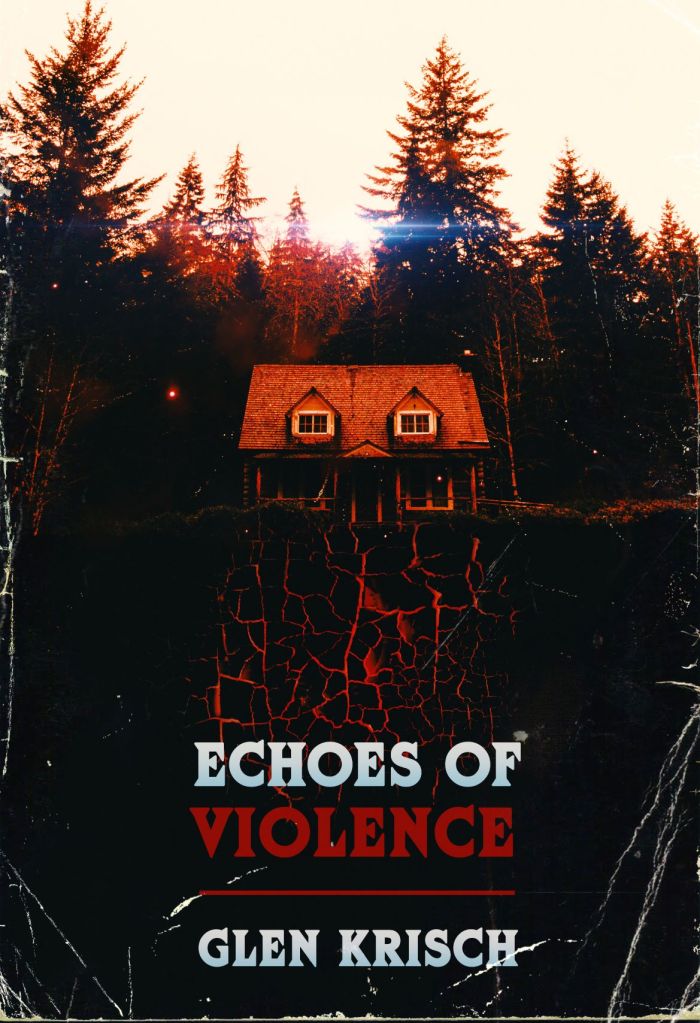
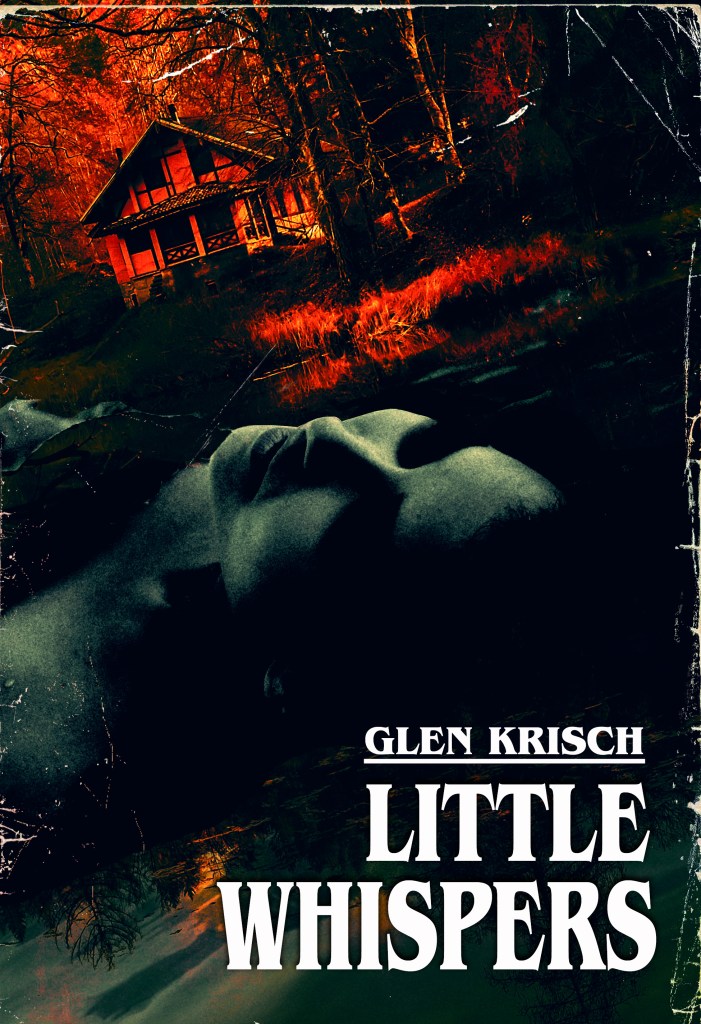
Glen R. Krisch: This year will probably look like I write a TON, but I haven’t had much published in the last few years even though I write just about every day. So far this year I’ve republished my out-of-print novel, Arkadium Rising. I’ve published the short novel, Echoes of Violence. Another new novel, Little Whispers, came out in June. I also have plans to publish a paperback edition of Nothing Lasting, and three new novella projects will also see the light of day this year.

Meghan: Where can we find you?

Glen R. Krisch: Twitter ** Instagram ** Facebook

Meghan: Do you have any closing words for your fans or anything you’d like to say that we didn’t get to cover in this interview?

Glen R. Krisch: Just that it’s still a thrill that people read my work, and some of them even enjoy it! Thanks for having me, Meghan!

A native of the Chicago suburbs, Glen Krisch hopes to add to his list of ghosts he’s witnessed (two), as well as develop his rather pedestrian telekinetic and precognitive skills. His novels include Amazon Bestseller Where Darkness Dwells, The Nightmare Within, Nothing Lasting, Arkadium Rising, and Little Whispers

Before becoming a full-time writer, he worked a lot of unfulfilling jobs that only reinforced his ambition to chase his dreams. Besides writing and reading, he enjoys spending time with his wife, his three boys, simple living, and ultra-running.

Echoes of Violence

In a secret lab in the southern Illinois woodlands, scientists break through the barriers between universes. While trying to decode the mysteries of the multiverse, they unwittingly bring a deadly flu virus into their own world. At first, people die in great numbers. Then, the newly dead rise, preying upon the living like a plague of locusts. 

Not only have the scientists unleashed a deadly plague, but they’ve changed the very fabric of time, causing those who remain to continue to re-live the same day. 

The Upton family has lived and died through thousands of todays. A married couple with three kids, they run the Cherryhill Campground next to the lab. In a day of unending chaos and violence, the only thing they know for certain is they must fight to stay together no matter what.

Little Whispers

It’s a time to say goodbye. 

Krista Forrester and her family return to her childhood lake house to say goodbye to her dying grandfather. His last wish is to spend his final days surrounded by family. It’s a time to reminisce, a time for togetherness and love. But the family’s return awakens both forgotten memories and the unsettled spirits tied to the land. 

Sometimes memories are better left buried. 

Krista never wanted to return to the lake house. She hasn’t been back since Breann, her childhood friend, disappeared from the sandy beach right outside her back door. Her disappearance left behind both lingering sorrow and many unanswered questions. Was Breann a victim of a now-convicted serial killer? Will Krista and her family succumb to the evil bound to the lake house? Is Breann still somewhere close, waiting to be discovered? What are those melancholic little whispers Krista hears in the middle of the night? 

Only by confronting the tragedies of the past can Krista guarantee her family’s future.

Halloween Extravaganza: INTERVIEW: JG Faherty

Meghan: Hi, JG. Welcome to Meghan’s House of Books. Tell us a little bit about yourself.

JG Faherty: Let’s see. I’ve been writing fiction since 2000. My first novel was published in 2010. I write primarily in the areas of horror, supernatural thrillers, YA, and paranormal romance, plus a little dark science fiction and fantasy. My hobbies are playing the guitar, watching bad sci-fi movies, visiting wineries, and reading. I own a rescue dog, I’m married, and I live in a very haunted region of New York State.

Meghan: What are five things most people don’t know about you?

JG Faherty:

  • I studied herpetology in college and used to own more than a dozen venomous snakes.
  • I have built four guitars.
  • I have been published three times in Chicken Soup for the Soul anthologies.
  • I used to write an advice column many years ago.
  • I enjoy exploring abandoned buildings.

Meghan: What is the first book you remember reading?

JG Faherty: Try as I might, I can’t remember the very first book. I know I started reading at a young age. I know that by the time I was 7 or 8, I was already checking out books on dinosaurs from the library and I was reading short stories by Poe. My first novel was probably either Frankenstein or Dracula. And as a young kid, I also read all the Hardy Boys mysteries (I still have the whole collection!).

Meghan: What are you reading now?

JG Faherty: I just got back from a vacation and I read Demons, Well-Seasoned: Book III in The Secret Spice Cafe Trilogy by Patricia V. Davis (it’s a cozy supernatural mystery) and The Mammoth Book of Halloween Stories, edited by Stephen Jones. I recommend both of them!

Meghan: What’s a book you really enjoyed that others wouldn’t expect you to have liked?

JG Faherty: Hmmm. Probably something outside of the horror genre, like Snakes & Snakes Hunting, the Anita Blake: Vampire Hunter series, or Lucy (an anthropology book by Donald Johanson).

Meghan: What made you decide you want to write? When did you begin writing?

JG Faherty: When I was young, I wanted to be a comic strip writer. But I can’t draw well enough. In college, I tried to write a horror novel, but it was terrible and I didn’t know at the time (this was before the internet) that you had to practice, have editors, etc. So I just stopped writing. Then, in 1999, I got a job writing test preparation books for The Princeton Review, and that required writing fiction for the reading passages. I really enjoyed it, and it came easy. I tried my hand at a short story, and got some good comments from editors I met at a horror convention. So I kept at it, and started getting published. I began writing in 2000, and my first professional publication was 2001, a 2000-word short story. Little did I know it would be almost 3 years before my next one, and not until 2005 until I’d start getting published on a regular basis.

Meghan: Do you have a special place you like to write?

JG Faherty: I always write at my desk, on my computer. No laptop for me. Hate them. If I’m on vacation, I bring a journal-type notebook and write long-hand. Usually, that’s how I work out story problems or put down ideas, but I’ve also written some short stories that way. Interesting fact – my first novel, Carnival of Fear, was written entirely long hand and then I typed it into the computer later. Only time I’ve ever done that.

Meghan: Do you have any quirks or processes that you go through when you write?

JG Faherty: It has to be absolutely quiet. No music, no noise. I don’t mind music when I’m editing, but it distracts me when I’m writing. Same with TV, people talking, etc.

Meghan: Is there anything about writing you find most challenging?

JG Faherty: All of it. It’s hard for me to maintain a long attention span, and usually I think everything I write sucks. It’s not until the editing phase that I start to think the book is good.

Meghan: What’s the most satisfying thing you’ve written so far?

JG Faherty: My first novel will always be the most satisfying, because it proved I could do it. Every novel since then is satisfying because it means I overcame all the obstacles and did it again. And, of course, being nominated for several industry awards has meant a lot.

Meghan: What books have most inspired you? Who are some authors that have inspired your writing style?

JG Faherty: I particularly have always enjoyed writers who have a down to earth style – Stephen King, Brian Keene, and several of the science authors I enjoy. While I’ve never tried to copy anyone, I think that my style is also down to earth, casual, and realistic in terms of dialog. I like characters that seem real, like people you’d meet.

Meghan: What do you think makes a good story?

JG Faherty: A good story should have a plot that makes sense, move quickly into the action, have a strong middle, and a strong ending. Too many books are great right up to the last 30 pages, and then they don’t make sense. Or worse, there’s no ending at all. Most of all, a good story keeps the reader interested from page 1 to the last page.

Meghan: What does it take for you to love a character? How do you utilize that when creating your characters?

JG Faherty: For me to love a character, they have to seem real to me. I have to be invested in them emotionally, whether they are good or bad. They have to make me laugh, or cry, or shout, or all three. I can love a character whether they are evil or good – we all love Hannibal Lecter and Dracula, and they aren’t good at all. And that’s what I try to do with my characters, both protagonists and antagonists, and even secondary characters. Put the reader in their shoes, so that when good or bad things happen, they are feeling what the characters are feeling.

Meghan: Which, of all your characters, do you think is the most like you?

JG Faherty: Wow. That’s a tough one. I try not to put too much of myself in any character, because I’m always trying to be in other peoples’ shoes, to think like my characters would. In terms of how and think and feel, perhaps JD, the main character in Carnival of Fear. But I don’t come from the wrong side of the tracks like he did, and I don’t have an old football injury. I’ve put a lot of other people into my books, though, under fake names. I’ve never told them, and they’ve never let me know if they’ve noticed!

Meghan: Are you turned off by a bad cover? To what degree were you involved in creating your book covers?

JG Faherty: I am incredibly turned off by bad covers. I’ve had a couple of books where I hated the covers and I couldn’t wait to put new ones on them once I got the rights to the books back. I firmly believe those bad covers are partly responsible for poorer sales than I anticipated. As my career moved along, I have made sure to be as involved in cover art as possible, and to that extent my time with Samhain Publishing and now Flame Tree has been very rewarding, because in both cases the staff artists were/are astounding and I’ve had to fill out lengthy cover art worksheets detailing my ideas, plot, character descriptions, and more for the artists. And the result has been 9 books in a row with covers I love. And that readers tell me they love, too.

Meghan: What have you learned creating your books?

JG Faherty: That writing is hard! Also, that, like my mentors in this biz have said over and over, your first idea usually is either not good or it’s already been used. You have to look beyond the obvious, find twists, make a story your own. Don’t rewrite Dracula, create something that’s never been done before. Also, that I have no idea of what is scary. I keep trying to scare myself with my stories, and it never happens. But my readers say the stuff is way scary. So I’ve learned not to trust my own judgement.

Meghan: What has been the hardest scene for you to write so far?

JG Faherty: Military horror is kind of tough for me, because it requires non-stop action. In Hellrider, I had to write a scene where a character threatens a minor with physical and sexual violence, and we had to make sure it portrayed the character as bad but didn’t step over the bounds of what you’d normally expect in a grindhouse story. In Carnival of Fear, I had to write a death scene that was supposed to be tragic, and I kept working at it until finally I re-read what I’d written and I started to cry. That’s when I knew I’d nailed it.

Meghan: What makes your books different from others out there in this genre?

JG Faherty: They’re by me. My style, my words, my ideas. No two writers are the same. I’ve written a lot of ‘classic’ horror, the kind with supernatural bad guys and people trapped in impossible situations. Same as King, Mary Shelley, Peter Straub, Dean Koontz, and a thousand other horror writers. But none of it’s the same. There’s really no other way to say it. My haunted carnival novel is not the same as anyone else’s. My novel about a veterinarian who can cure animals by touching them (The Cure) is not like anyone else’s novel about curing with a touch. My novel about six friends reuniting to stop a supernatural terror (Cemetery Club) is not like IT once you get past the one-line description. And Hellrider is nothing like Ghost Rider, even though they are both on motorcycles. My story is more like Sons of Anarchy with ghosts, if Robert Rodriguez directed it.

Meghan: How important is the book title, how hard is it to choose the best one, and how did you choose yours (of course, with no spoilers)?

JG Faherty: I think the book title is very important – it has to convey the basics of the story to the reader, even if they don’t know it at the time. Can you imagine if The Shining was called Danny’s Life? Or if Dracula was called Harker’s Journey? Or if Frankenstein: A Modern Prometheus was called Experiments in Anatomy?

For my own books, I’ve always put a lot of thought into the titles. Carnival of Fear – a demonic, haunted carnival. The Burning Time – an evil entity incites a town to extreme violence during a summer heat wave. Cemetery Club – a group of outcasts form a club that meets in a cemetery that sits over haunted ground. The Cure – a veterinarian can cure with a touch, but more than that, the whole book is about her trying to ‘cure’ her own feelings of inadequacy and her loneliness.

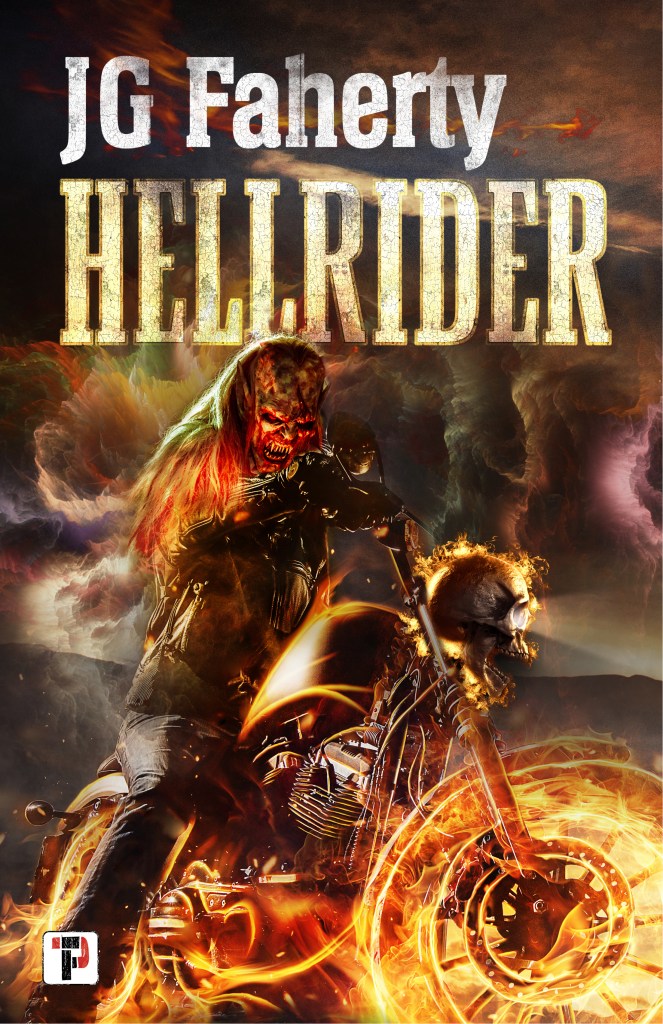
Hellrider has a quadruple meaning – Hell Riders is the gang Eddie belongs to, Hell Creek is the town he lives in and he’s a ‘rider,’ his last name is Ryder and he comes back from Hell, and Hellrider is also the name of his favorite song.

Meghan: What makes you feel more fulfilled: Writing a novel or writing a short story?

JG Faherty: I love writing short stories. That’s how I got my start. I still think that a short story imparts the most emotional impact because it has to hit hard and fast, no wasted words. Novels are great for delivering grander stories, expansive plots, and deep concepts. Personally, I feel that the novella is the best length for a book – long enough to have secondary characters and a subplot or two, but short enough that you can read it in one sitting and still get hit hard by the story. I’ve written 10 so far, and I look forward to writing more.

Meghan: Tell us a little bit about your books, your target audience, and what you would like readers to take away from your stories.

JG Faherty: Well, I think I’ve covered the books in answering previous questions. My novels and novellas range from downright traditional and scary (The Burning Time, Cemetery Club, Death Do Us Part, Winterwood) to thrillers (The Cure, Fatal Consequences) to YA (Ghosts of Coronado Bay) to grindhouse (Hellrider) to Lovecraftian (Legacy, the upcoming Sins of the Father) to suspense (Fatal Consequences). My target audience is really just people who love an entertaining story that will send some shivers up your spine and keep you at the edge of your seat. When they’re finished, I’d like them to say, ‘wow, that was cool, and maybe I won’t turn the lights off tonight.’

Meghan: Can you tell us about some of the deleted scenes/stuff that got left out of your work?

JG Faherty: There’s not really a lot. Things get cut out of every story when you’re writing it, but usually if it’s not good enough to be in the published version it’s not good enough to create a later, unabridged version! One exception would be with Carnival of Fear – I cut that one from 120,000 words to 90,000, and I saved the excess to use in the sequel that I plan on writing someday. It was a sub-plot with some characters that don’t appear anywhere else in the book and so eventually they’ll get their own story.

Meghan: What is in your “trunk”?

JG Faherty: My trunk is about the size of Fort Knox. I have at least 7 half-finished novels, a few novellas, and a couple of dozen finished short stories, plus unfinished ones. I write in a very OCD style, so if I get stuck working on one project, I’ll root through the old ones and see if something strikes my fancy to work on for a while.

Meghan: What can we expect from you in the future?

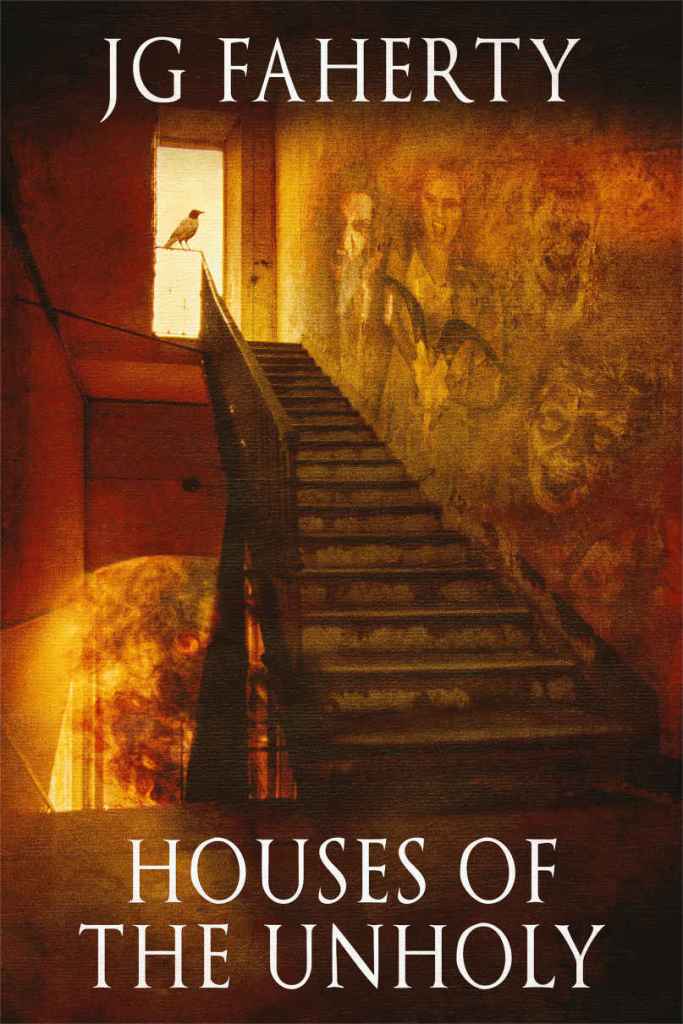
JG Faherty: My next novel, Sins of the Father, is currently in the pre-editing phase with Flame Tree Press, so I imagine it will come out some time next year. My collection of short stories, Houses of the Unholy, and my current novel, Hellrider, are both available now. Beyond that, who knows?

Meghan: Where can we find you?

JG Faherty: Twitter ** Facebook ** Website ** Amazon

Meghan: Do you have any closing words for your fans or anything you’d like to say that we didn’t get to cover in this interview?

JG Faherty: For fans and readers, I just want to say thank you, you are the ones we do this for and you make it possible for people like me to do what we love. And if you read a book you enjoy, please leave a review on Amazon and tell your friends – spreading the word is what keeps writers able to write.Beyond that, remember, Halloween is right around the corner, so read something scary today and tell your kids a scary story tonight!

A life-long resident of New York’s haunted Hudson Valley, JG Faherty has been a finalist for both the Bram Stoker Award (The Cure, Ghosts in Coronado Bay) and ITW Thriller Award (The Burning Time), and he is the author of 7 novels, 10 novellas, and more than 75 short stories. His next novel, Hellrider, comes out from Flame Tree Press in August of 2019. He grew up enthralled with the horror movies and books of the 60s, 75, 70s, and 80s. Which explains a lot.

Carnival of Fear

The carnival is in town… What was supposed to be an evening of fun and laughter for JD Cole and the other students of Whitebridge High turns into a never-ending night of terror. Trapped inside the Castle of Horrors by the demonic Proprietor, good friends and bitter rivals must band together to make it through the maze of torturous attractions, where fictional monsters come to life, eager to feast on human flesh. Vampires, zombies, werewolves, and aliens lurk around every corner as JD and his friends struggle from one room to the next, fighting for their sanity, fighting to survive, fighting to escape … The Carnival of Fear.

The Cure

She was born with the power to cure. Now she’s developed the power to kill. Leah DeGarmo has the power to cure with just a touch. But with her gift comes a dark side: Whatever she takes in she has to pass on, or suffer it herself. 

Now a sadistic criminal has discovered what she can do and he’ll stop at nothing to control her. He makes a mistake, though, when he kills the man she loves, triggering a rage inside her that releases a new power she didn’t know she had: the ability to kill. 

Transformed into a demon of retribution, Leah resurrects her lover and embarks on a mission to destroy her enemies. The only question is, does she control her power or does it control her?

Houses of the Unholy

In this new collection of stories, genre favorite JG Faherty takes you on a tour of unholy houses, where you’ll find: 

– A man struggling to discover why all the people in his life are disappearing when he falls asleep. 
– An accident in a mountain pass that turns into a deadly encounter with a mythical beast. 
– A man who learns that the only thing worse than being a passenger on the train to Hell is being the engineer. 
– A town where the dead coming back to life isn’t the worst thing that can happen. 
– A young couple who uncover a terrible secret in the town that has ostracized them for their sins. 
– A science experiment gone wrong that could spell the end of mankind. 

The collection also includes “The Lazarus Effect,” a chilling post-apocalyptic story where survivors face off against godless undead, and a brand new novella-length sequel, “December Soul.”

Hellrider

After being burned alive by a gang, the Hell Riders, he used to belong to, Eddie Ryder returns as a heavy-metal spouting ghost with a temper that’s worse now than when he was alive. At first he is nothing more than a floating presence, depressed he has to spend eternity watching his teenage brother, Carson, and ailing mother struggle without him. Then he develops powers. And he can control electricity. He can conjure the ghostly doppelganger of his motorcycle, Diablo, and fly across the sky, but he can’t escape the boundaries of his hometown, Hell Creek. 

Eddie decides to exact his revenge on the bikers who killed him. Before he can do more than scare some of the bikers, however, he discovers something even better: he can posses people. He uses this ability to get the gang members to attack each other, and to deliver a message to the current leader, Hank Bowman: Eddie’s Coming. 

Spouting fire and lightning from his fingers and screaming heavy metal lyrics as he rides the sky above the town of Hell Creek, he brings destruction down on all those who wronged him, his power growing with every death. Only Eddie’s younger brother, Carson, and the police chief’s daughter, Ellie, understand what’s really happening, and now they have to stop him before he destroys the whole town.