Meghan: Hi, William. Welcome to Halloween Extravaganza. Tell us a little bit about yourself.
William Becker: My name is William Becker. I currently live in the Appalachian mountains of North Carolina. My second novel, Grey Skies, released on June 9th, 2019. I was adopted from Saint Petersburg, Russia when I was only eight months old. Outside of writing, I produce and direct film with my best friend,Travis Hill, and together we have formed Becker Hill Films, our first work being the music video for Bury Me In Black’s song Pharaoh, which can be found on YouTube currently. I listen to a ton of really experimental music, which partially inspired Grey Skies. I read semi-regularly, kind of dabbling in whatever book happens to catch my interest. Beyond that, I practice meditation nightly.
Meghan: What are five things most people don’t know about you?
William Becker: I enjoy Stephen King, but he is in no way an inspiration to me stylistically or with what I write about. When I tell people that I don’t know that I’m a horror writer, they always immediately jump to, “so like Stephen King?” No, not really, sorry.
I love studying religion. A lot of people say that and just focus on one, but any religion is pretty interesting to me. While I’m not personally very religious, I find any religion fascinating. I’ve made it a goal to go through the holy books of a lot of the major religions and just try and learn as much as I possibly can. I think if there’s one thing that can be expected from me in the future, it’s that I’ll write about the concepts of religion.
I’m really passionate politically but I have no desire to shove my positions down anyone’s throat.
Meghan: What is the first book you remember reading?
William Becker: Oh gosh, probably Guess How Much I Love You by Sam McBratney. I didn’t read it, but my mom read it to me every night and would get me to read a long. I remember reading Goosebumps at a pretty decently young age.
Meghan: What’s a book you really enjoyed that others wouldn’t expect you to have liked?
William Becker: I LOATHE self-help books but I really enjoyed The Subtle Art of Not Giving a Fuck. I think it’s basically eastern philosophies dressed up for millennials and with lots of swearing and modern examples. I think a lot of people who are younger/very stressed out by life should check it out at some point. It’s certainly not for everyone, because some people find the book obnoxious, but there are some valuable lessons about how many fucks one should give.
Meghan: What made you decide you want to write? When did you begin writing?
William Becker: I think the first dive into writing is when I was 12 years old. I had a really big crush on this girl I had just met. I wrote really angsty stuff that I didn’t entirely feel to impress her. In a classic way, she didn’t like me back and ended up with some asshole that I hated and was really awful to her. My work became more depressing and something that I felt more, and I quickly stopped liking her. Not long after, she became one of my best friends.
Meghan: Do you have a special place you like to write?
William Becker: Adaptability is everything. I love to write in school, probably more than I like writing at home. Just the chaos of everything kind of prevents distractions in a strange way. I’m not likely to dick around and end up reading threads about Donald Trump on reddit if I don’t have too much flexibility. Anywhere that’s busy always works well for me.
Meghan: Do you have any quirks or processes that you go through when you write?
William Becker: I stop every few paragraphs, re-examine them, send them to a friend or two, often rewriting sentences and doing research on tiny details that probably don’t matter. It can sometimes take obnoxious amounts of time for me to write a page.
Meghan: What’s the most satisfying thing you’ve written so far?
William Becker: My answer to this will change almost every time I write something new, but Grey Skies gets that title. The symbolism, the subtle details, the ciphers, the ending, and the buildup make the story really interesting to re-read. It wears its influences on its sleeve, but in a way, is completely able to stand on its own. I remember posting the story on Wattpad way back when and watching everyone struggle to comprehend each new chapter, as if people were gazing upon a newborn child. I recognize how pretentious that sounds, but people’s reactions to the novel have always been so interesting to me. It’s a confusing, complex, and weird piece of work, but it’s currently my favorite thing that I’ve ever done
Meghan: What books have most inspired you? Who are some authors that have inspired your writing style?
William Becker: Of Mice and Men really influenced my writing style. The way that John Steinbeck writes each scene has been my basis for a while. He writes his work like a movie, describing the setting at the beginning of each scene and rarely interrupting the action with description that doesn’t matter. Of course, some people find that overwhelming, which is completely understandable, but it’s always kept things organized for me.
Meghan: What do you think makes a good story?
William Becker: A good story is like any other piece of good art: it must either provoke or entertain the audience. A great story can do both.
Meghan: What does it take for you to love a character? How do you utilize that when creating your characters?
William Becker: It’s always more realistic to have characters be in a morally grey area. People who are evil for the sake of being evil or are overtly good for no reason are boring. I don’t have to be in love with the main character to love the story. Walter White is a fantastic example. He has good motivations in the beginning, but he’s inherently selfish and kind of a manipulative jackass to Jesse. I think that to truly love a character, they have to be relatable in some way to the audience, or at least interesting. James Carver from THE WHITE SHADE, which is one of the two stories attached to Grey Skies is relatable, even though he isn’t considered a good person by the end of the novel.
Meghan: Which, of all your characters, do you think is the most like you?
William Becker: Answering this will put me in jail.
Meghan: Are you turned off by a bad cover? To what degree were you involved in creating your book covers?
William Becker: I personally can’t stand covers that just feature some person standing in front of a backdrop or some abstract symbol. There was so much potential in books like A Game of Thrones to have a great, really interesting looking cover, but they always seem to cheap out and use something that isn’t very interesting. Maybe I shouldn’t talk, considering my first novel is just a picture of a house edited to look like Texas Chainsaw, and it’s shallow to judge a book by its cover, but still, there’s so much potential with covers. It won’t put me off from reading a book, but it’s certainly pretty lame. There are very few books that I look at and think, “wow, what a nice cover!” However, The Night Ocean by Paul La Farge has one of my favorite book covers of all time.
Meghan: What have you learned creating your books?
William Becker: That not everyone is going to like your work, especially as you go in a more experimental direction. Don’t do it to please others, do it because you love it.
Meghan: What has been the hardest scene for you to write so far?
William Becker: Very few scenes are hard to write. Sometimes, making complex description interesting is nearly impossible, especially considering a lot of people tend to skip over description that they find overwhelming.
Meghan: What makes your books different from others out there in this genre?
William Becker: It’s weirder, more complex, and more confusing. It’s a lot less straightforward than most horror and has a lot more symbolism.
Meghan: How important is the book title, how hard is it to choose the best one, and how did you choose yours (of course, with no spoilers)?
William Becker: The name is both literal and figurative. I’ll try and make it as condensed as possible. Most of the book features rain, Grey Skies bring rain. Rain is more of a metaphor for torment. Drowning and asphyxiation are important to the central idea of the novel. As is the whole “fingerprints don’t show well in the rain” idea.
Meghan: What makes you feel more fulfilled: Writing a novel or writing a short story?
William Becker: Short stories are more fun and way easier to do, but I always feel more proud of my novels. Life is so short and it takes a lot of dedication to write a full piece of work. It always feels like I achieved something great whenever I finish a novel. They’re much longer, more packed full of characterization, etc. Don’t get me wrong I love my short stories (most of them can be found on Wattpad) but there’s something that feels amazing about finishing a novel.
Meghan: Tell us a little bit about your books, your target audience, and what you would like readers to take away from your stories.
William Becker: Anyone who has an open mind or just wants to read a good story. I would love to say that no one under 18 should read my story, but I worked on most of my first novel when I was 14, so you can honestly do whatever the Fuck you want.
Meghan: Can you tell us about some of the deleted scenes/stuff that got left out of your work?
William Becker: I am such a perfectionist that I never write anything that I can’t even attempt to use. Usually, the “deleted scenes” get scrapped before they’re written.
Meghan: What is in your “trunk”?
William Becker: There’s a few hints in Grey Skies (cough, cough, the only picture in the entire novel).
Meghan: What can we expect from you in the future?
William Becker: Expect nothing, then you’ll be always pleasantly surprised. I have no plans to stick with any genre. My only consistency is that my work will stay dark and close to the heart.
Meghan: Where can we find you?
William Becker: I have two Instagram accounts (one and two), and I have a Goodreads account which is just my name.
Meghan: Do you have any closing words for your fans or anything you’d like to say that we didn’t get to cover in this interview?
William Becker: Don’t do drugs.
William Becker is an 18-year-old horror author with a mind for weirder sides of the universe. With an emphasis on complex and layered storylines that tug harshly on the reader to search for deeper meanings in the vein of Silent Hill and David Lynch, Becker is a force to be reckoned within the horror world. His works are constantly unfathomable, throwing terror into places never before seen, while also providing compelling storylines that transcend the predictable jumpscares of the popular modern horror.
His first novel, Weeping of the Caverns, was written when he was 14. After eight months of writing, editing, and revising, the story arrived soon after his 15th birthday. During the writing sessions for his debut novel, he also wrote an ultra-controversial short story known as THE WHITE SHADE that focused on the horrors of a shooting. Living in a modern climate, it was impossible for THE WHITE SHADE to see the light of day. Following a psychedelic stint that consisted of bingeing David Lynch movies, weird art, and considering the depth of the allegory of the cave wall, he returned to writing with a second story, THE BLACK BOX, and soon after, his second novel, Grey Skies.
A man is arrested after a strange series of barbaric animal killings in the Rocky Mountains. He is taken away from his family, and then placed behind bars, but not even the solid confines of prison can save him from the hellish nightmare that begins to unfold.
Roman Toguri finds himself burying the body of a nun in Boone, North Carolina. As the skies darken and it begins to storm, he is forced to shove the corpse into his trunk and take it home for the night, unaware of the torment that playing God will bestow upon him.
Enter Hell with two bonus short stories: The White Shade, an ultra-violent look into the mind of a mass shooter, and The Black Box, a psychedelic dive into weird horror.
Meghan: Hi, Christa. Welcome! Tell us a little bit about yourself.
Christa Carmen: I live in Westerly, Rhode Island, a place that swells uncomfortably with tourists in the summer but that thins and quiets and keeps secrets in the colder, darker months. I was married three years ago on Halloween at the Stanley Hotel in Estes Park, and my familiar is an eleven-year old blue tick beagle, though she often upsets my daily rituals by being entirely true to her sleepy, stubborn self. I enjoy horror, reading, writing. animals, and nature, and would love to live on a sprawling farm in the middle of the woods replete with hidden trails and secret gardens. Until then, I live at the culmination of a dead end on a piece of property with several gone-to-seed but wildly beautiful gardens of its own, too many squirrels, and not enough bird feeders.
Meghan: What are five things most people don’t know about you?
Christa Carmen:
I did gymnastics for fifteen years and was a member of the University of Pennsylvania’s Division I Gymnastics Team. A fair amount of people probably knows this but the further away I get from the time I spent doing gymnastics, the less likely is it to come up in casual conversation.
I love all animals but have cycled through periods during which I was obsessed with dogs, birds, horses, elephants, and foxes/coyotes/wolves.
I collect bird feathers and love house plants.
I was vegan for six years, but am now pescatarian (I try to buy only locally caught seafood).
I am a quintessential Cancer: home is everything, and I’m equal parts loyal, moody, and empathetic, sometimes to a fault.
Meghan: What is the first book you remember reading?
Meghan: What’s a book you really enjoyed that others wouldn’t expect you to have liked?
Christa Carmen: I read across a wide variety of genres so I’m not sure there’d be any one book I liked that others would find surprising. I do tend to focus on horror, mystery, suspense, and literary titles more often than science fiction and fantasy, but I became a huge fan of Blake Crouch when his sci-fi novel Dark Matter came out in 2016 and enjoyed this year’s Recursion even more so. I loved Crouch’s characters in Recursion, found the suspense scenes to be phenomenally written, and relished the feeling of falling deeper and deeper into a world populated by an infinite number of time loops. I happened to see a review of Recursion on Goodreads from a book blogger whose tastes I usually agree with and this individual was not a fan, so like any novel, it won’t be for everyone; personally, I adored it and plan to read it again at some point in the future (it’s rare that I reread a novel).
Meghan: What made you decide you want to write? When did you begin writing?
Christa Carmen: I believe that I wanted to be a writer for as long as I’ve been a reader, so since the age of five or so. With that being said, I don’t think I realized this desire until much later. The concept that one could simply ‘be’ a writer was stymied by my struggle with alcohol and drugs during those years when one should be figuring out what to do with one’s life. I’m sober now and have been for just about six years and I don’t regret that my path to writing was a bumpy one. I’m not sure I would have ever had the, ‘I love writing, I could just… write, and therefore be a writer’-epiphany had I not endured those experiences, no matter how difficult they might have been.
Meghan: Do you have a special place you like to write?
Christa Carmen: I can pretty much write anywhere, anytime, although the ideal time and place would be early morning in my home office or curled up somewhere comfortable in my house.
Meghan: Do you have any quirks or processes that you go through when you write?
Christa Carmen: I only write with one of two different brands and types of pens—a black or blue Bic Cristal 1.6 mm or a medium point Paper Mate Flair of pretty much any color—and though they each provide a completely different writing experience, I’m equally indiscriminate and happy with either. I do third draft edits on the computer, but all first drafts and second draft rewrites must be done by hand, or the words don’t flow adequately.
Meghan: Is there anything about writing you find most challenging?
Christa Carmen: Time management is always a challenging thing for me. I work a full-time job at a pharmaceutical company as a packaging coordinator Monday through Friday, and on the weekends a few times a month as a mental health counselor on the inpatient psychiatric unit at a local hospital. I do volunteer work for a few nonprofits that aim to maximize public awareness and seek solutions to the ever-growing opioid crisis in southern Rhode Island and southeastern Connecticut, and I aim to exercise (yoga or going for a run) and walk my dog every day. I try to make writing my top priority from one day to the next, but sometimes hitting a word count goal takes a backseat to the need to crash on the couch and watch a horror movie as a form of recharging the creativity batteries.
Meghan: What’s the most satisfying thing you’ve written so far?
Christa Carmen: Usually the most satisfying thing I’ve written is whatever I’m finished most recently! Aside from this ‘favorite-story-is-the-one-I-just-finished’ phenomenon, I have a special place in my heart for “Flowers from Amaryllis” (my most personal story), “Liquid Handcuffs” (a novelette rewrite of the first short story I ever wrote), “Red Room” (the story that readers seem to enjoy the most), and “The Girl Who Loved Bruce Campbell” (my most oft-published story, including publication in Corner Bar Magazine, Year’s Best Hardcore Horror Volume 2, and featured on Horror Hill, Chilling Tales for Dark Nights / The Simply Scary Podcast Network).
All four of these stories are included in my short fiction collection, Something Borrowed, Something Blood-Soaked.
Meghan: What books have most inspired you? Who are some authors that have inspired your writing style?
Christa Carmen: Being a horror fan, I think there’s something truly special about exploring a topic through the lens of something terrifying. It allows the reader to receive a message about that topic in a thought-provoking yet understated way, and that message subsequently sticks with the reader long after it otherwise would have if the story had presented in a more straightforward manner. Shirley Jackson commented on the close-mindedness and problematic adherence to tradition of a small village of three-hundred people in The Lottery by filtering that commentary through a plot of paranoia and rather than So I think what makes a good story is the ability to say something in a way that’s unique and resounds with readers long after they’ve put down the novel or short story collection.
Meghan: What does it take for you to love a character? How do you utilize that when creating your characters?
Christa Carmen: Characters must be relatable, i.e., not unflawed, for me to fall in love with them, and I try to employ this belief in my own work. Oftentimes I think about myself or the people in my life whom I know really well and map out a little outline of the things that make them who they are, then make sure I have a similar map for whichever fiction character I’m creating (this map can be on paper or in my head). For example, I am an aggregate of a great many hopes, dreams, likes, dislikes, personality traits, strengths, weaknesses, and idiosyncrasies, so does my protagonist (and my secondary characters for that matter) love something as much as I love my dog, want to accomplish something the way I want to accomplish my writing goals, like something the way I like English breakfast tea and Loran Doone cookies, dislike something the way I do meat and peppers, and so on and so on?
Once a character has begun to act in a way that shows they have this sort of rich back history, I’m getting somewhere in terms of characterization. This can be in remarkably subtle ways; a character’s actual like or dislike shouldn’t necessarily show up on the page, rather, they should act like a human being with likes and dislikes, because I, as the author, know what those likes and dislikes are.
Meghan: Which, of all your characters, do you think is the most like you?
Christa Carmen: I think there are pieces of me in every character I create: the memory of a perceived sin committed in childhood in the unnamed character at the center of “Thirsty Creatures,” the annoyance at being disbelieved showcased by Marci in “Red Room,” the hopelessness experienced at the lowest point of addiction seen in many of my characters (Olive in “Liquid Handcuffs,” Molly in “Wolves at the Door and Bears in the Forest,” Lauren in “This Our Angry Train”), the urge to rise above your fear and become a heroine as displayed by Kartya in “The Girl Who Loved Bruce Campbell.” I think the character I created who is most like me is Emelia Grey, the protagonist of the first novel I ever wrote and ultimately did not publish, Sequela Manor, and it is likely for this very reason that I feel the novel would only work after being extensively rewritten (and Emelia fleshed out in a dramatically different way).
Meghan: Are you turned off by a bad cover? To what degree were you involved in creating your book covers?
Christa Carmen: If the cover for a self-or indie-published book has been pieced together through clipart images and an obvious desire to cut corners, it can certainly be a turn-off, but I’m also quite forgiving; if I hear good things about a book with a cover I wouldn’t necessarily have picked myself, I would of course give it a try.
For Something Borrowed, Something Blood-Soaked, Eddie Generous, publisher, editor, artist, and wearer of whatever other hats Unnerving requires of him, thought to use the image of a pig-faced woman in a plunging red satin dress after reading “Lady of the Flies,” one of three original stories that appear in the collection. “Lady of the Flies” is about Priscila Teasdale, a haunted house worker whose life has been a series of unfortunate events, and who copes with a last, devastating blow by leaning a bit too heavily on her haunted house persona. The cover represents not only Priscila, Lady of the Flies, but all of the beautiful grotesque I endeavored to showcase via the thirteen stories I chose for this collection.
Meghan: What have you learned creating your books?
Christa Carmen: I’ve learned about the Hundred-Mile Wilderness of the Appalachian Trial and the Equal Pay Act of 1963; I’ve learned about Charles Dickens’ use of staves in A Christmas Carol and the way certain plants (as well as certain body parts) decay after death; I’ve learned about hummingbird aggression and the slaughter of pigs, about the poetry of Edgar Allan Poe and how long it would take to choke on honey; I’ve learned about the different layers of skin and the feeding patterns of sharks; I’ve learned about the pre-witch trial era of colonial America and organ regeneration, about modern urban legends and EMF meters and the geography of upstate New York. I’ve learned about opioid-free analgesics and coywolves, about hybrid tea roses and viburnum blueberries. I’ve learned about Audubon’s Birds of America and the eastern shoreline of Block Island, about witches and Bluebeard and UFOs and My Chemical Romance and totem poles and Cthulhu and Fae.
These are, of course, I’ll things I’ve learned from the research for my writing; what I’ve learned more than anything from the crafting of my work is who I really am. I know what scares me and what’s important to me and what I look for in a friend. Life certainly informs my writing, but my writing also informs my life.
Meghan: What has been the hardest scene for you to write so far?
Meghan: One of the stories in Something Borrowed, Something Blood-Soaked is called “Flowers for Amaryllis,” and I can’t tell you how many times I’ve rewritten it. Even now, in its finished state, it’s gone through so many overhauls and tweaks, that the story seems strange to me. It’s about a young woman whose circumstances take a dark turn after her parents are killed, but who stumbles across an abandoned puppy in a rainstorm and turns her life around in order to care for this creature more helpless than she. Years later, when her dog dies, she is poised to make a decision that would very quickly return her to that place of danger and despair, but something intervenes, though I won’t say what.
I wrote the first draft of this story at least two years ago, if not longer, and it’s clear, as it would be to anyone who knows me, that I wrote it from a very personal place, a place that recoils from the idea of losing my own dog in however many years. I think I thought I could write away my anxiety, my uncertainty, my dread, and it would all go into this story and get tied up with a neat little bow, and of course, that’s not how stories, or life, work. Still, I persisted with the idea, and I wrote, rewrote, cut, and altered the structure, until I was as satisfied as I was going to be with the result. It still doesn’t do that panicky feeling in my chest when I think about losing this dog that I’ve already had for eleven years, and relied on for so much, justice, but I think it comes close enough. And that’s all I can really ask for, right? To have captured even a tiny piece of those feelings, those thoughts in my head, and not to have diminished them too considerably on the page.
Meghan: What makes your books different from others out there in this genre?
Christa Carmen: I write all types of horror, from comedic to Gothic and everything in between. I stay slightly removed from writing the traditional horror villain stories—vampires, werewolves, etc.—although I’ve certainly penned stories containing monsters. I suppose it would make sense that the horror fiction I write encompasses a wide variety of tones, because the horror fiction and film I consume encompasses that same variability.
As for what makes my collection or the novel that I’m currently working on different from others out there in the horror genre, I think my writing style reflects this appreciation for different tones and subgenres; I can start working on a story that, in my head, looks to be darkly comedic, only to find that it works better without the black humor. I can also outline a story to fit the guidelines of an anthology or other market I want to submit to, then discover that, while the subject matter might remain consistent, the work ends up shifting from, say, a simple haunted house story to a haunted house story that includes commentary on a social issue I’ve been wanting to explore along the way.
Meghan: How important is the book title, how hard is it to choose the best one, and how did you choose yours (of course, with no spoilers)?
Christa Carmen: Titles are absolutely important, and it has been my experience that a title either presents itself without fanfare with the completion of a project or makes you toil and sweat and bleed for the one that will work best with what you’ve created.
Something Borrowed, Something Blood-Soaked is actually the title of one of the flash fiction pieces in the collection, originally published by Fireside Fiction Company and edited by the incomparable Julia Rios. I felt it would be a good name for the collection as a whole because first, there are three different stories—“Red Room,” “Something Borrowed…,” and “All Souls of Eve”—that have to do with the topic of marriage, and second, I took into consideration the traditional Lancashire rhyme that details what a bride should wear at her wedding for good luck:
“Something old, something new, something borrowed, something blue, and a silver sixpence in her shoe.”
The superstition goes that the old item provides continuity (or protection for the baby to come, because of course all brides’ brains will quickly turn to mush thinking of the inevitable baby that will soon be on the way!), something new offers optimism for the future, the item borrowed from another is for good luck, or ‘borrowed happiness,’ the color blue is a sign of purity, love, and fidelity, and the sixpence is a symbol of prosperity, or acts as a ward against evil.
I like this little grab-bag idea of outfitting oneself with trinkets and talismans before stepping into the unknown territory of a marriage, a union that represents commitment, but also change and a future that is largely unknown. I thought that this concept could extend to the experience of reading the collection… at the very least, the reader should bring something with them to ward off evil; any pleasure the characters in Something Borrowed, Something Blood-Soaked experience is borrowed happiness at best.
Meghan: What makes you feel more fulfilled: Writing a novel or writing a short story?
Christa Carmen: I have a bit of a problem (call it a lingering symptom of my previous addictions) with the desire for instant gratification, so there’s something really rewarding for me in taking a short story from conception to completion in a matter of weeks. With that being said, nothing felt as good as completing my 100,000-word Gothic horror novel, Sequela Manor, back in 2015, and I’m hoping for that same ‘writer’s high’ this December (or thereabout) when I finish my current novel work-in-progress.
Meghan: Tell us a little bit about your books, your target audience, and what you would like readers to take away from your stories.
Christa Carmen: Something Borrowed, Something Blood-Soaked was released from Unnerving on August 21, 2018. From the description on Amazon: “A young woman’s fears regarding the gruesome photos appearing on her cell phone prove justified in a ghastly and unexpected way. A chainsaw-wielding Evil Dead fan defends herself against a trio of undead intruders. A bride-to-be comes to wish that the door between the physical and spiritual worlds had stayed shut on All Hallows’ Eve. A lone passenger on a midnight train finds that the engineer has rerouted them toward a past she’d prefer to forget. A mother abandons a life she no longer recognizes as her own to walk up a mysterious staircase in the woods. In her debut collection, Christa Carmen combines horror, charm, humor, and social critique to shape thirteen haunting, harrowing narratives of women struggling with both otherworldly and real-world problems. From grief, substance abuse, and mental health disorders, to a post-apocalyptic exodus, a seemingly sinister babysitter with unusual motivations, and a group of pesky ex-boyfriends who won’t stay dead, Something Borrowed, Something Blood-Soaked is a compelling exploration of horrors both supernatural and psychological, and an undeniable affirmation of Carmen’s flair for short fiction.”
The stories in Something Borrowed, Something Blood-Soaked were published in places like Fireside Fiction, DarkFuse Magazine (which unfortunately exists no more), Third Flatiron’s Strange Beasties anthology, Unnerving Magazine, Tales to Terrify, and Year’s Best Hardcore Horror Volume 2, to name a few. The publisher asked upfront that a certain percentage of the stories in collection submissions be reprints, so once I’d filled that quota, I added two stories that had been published by markets no longer in circulation, changed one story that had appeared on a podcast to the novella version I’d been hoping for a chance to unveil, and chose three brand new stories to tie everything together.
Ultimately, I am very pleased with the balance that was achieved. I think readers can appreciate a collection that includes reprints, especially from magazines and anthologies they may have read previously, and hopefully enjoyed, as well as a handful of new tales that allows them to experience an author’s latest work.
In putting together this collection, I really strove to include stories that showcased my range, not just as a writer, but as a horror lover, and all the different types of horror stories I have penned to date. Something Borrowed, Something Blood-Soaked includes post-apocalyptic, extreme, slasher, paranormal, supernatural, psychological, zombie, Gothic, magical realism, weird, and creature horror, so I truly hope the phrase, ‘there’s something for everyone,’ will apply!
But those tried-and-true tropes are thinly veiled stand-ins for themes that run deeper. Without giving too much away, the babysitter in “Souls, Dark and Deep” might possess powers in the same vein as those of a witch, but she uses her powers not for evil, but to level the playing field against evil and injustice. The depraved serial killers in “Red Room” function less to scare à la Michael Myers, and more to warn of the peril men face when they disbelieve women. The ghost of Aunt Louise in the eponymous flash fiction piece is a hardcore, Gloria Steinem-quoting, take-no-nonsense-and-even-less-prisoners bad-bitch feminist. And the shadow wolf in “Flowers from Amaryllis” represents many, many things: the fear of eventually losing a companion animal, the fear of losing a parent, the fear of being alone, the fear of going mad, the fear of not being able to be true to who you are.
Meghan: Can you tell us about some of the deleted scenes/stuff that got left out of your work?
Christa Carmen: As I mentioned above, I changed one story in Something Borrowed, Something Blood-Soaked that had originally appeared on the Tales to Terrify podcast to the novella version I’d been hoping for a chance to unveil, and this piece was “Liquid Handcuffs.” Most of the passages that were cut had to do with the return of Nicole Price, the therapy client Olive is seeing at the start of the story, to Eddie’s bed (Eddie is the spurned client who has kidnapped Olive), and what this means for Olive and Eddie’s shaky relationship, if their tumultuous connection can even be called as such. As with anything that gets cut from my work, I still maintain a level of appreciation for the material, but I have learned to kill my darlings, if not whole-heartedly, then at least begrudgingly.
Meghan: What is in your “trunk”?
Christa Carmen: Oh goodness, what isn’t in my trunk? Everything but the skeleton of a bride still in her wedding dress, I imagine! Let’s see, I have an unfinished novella called The Curious Incident at the All Souls’ Chapel and Crematorium, 13 Sessions, a body horror novel about a thirty-something year old woman who writes a blog about the pharmaceutical industry and ends up pursuing acupuncture as a personal infertility treatment, with monstrous results, Coming Down Fast, a novel about a female Charles Manson type and her ‘followers,’ the crime they commit, and the first female police chief in Westerly, Rhode Island’s three-hundred fifty year history who pursues them, a short story called “Daydream Believers” about a married couple who systematically murder everyone in their neighborhood, a novella called “Serenità, Interrotta” about a women’s NA group that’s a front for a coven of witches, and two or three other short stories that are hopefully pretty close to completion.
Meghan: What can we expect from you in the future?
Christa Carmen: I have a new story, “Shadows,” out in Issue 4 of Outpost 28, and another new story called “The Shivers” in an illustrated middle grade horror anthology, additional details forthcoming. There have been a few delays in publication, but I have two stories coming out with Chilling Tales for Dark Nights, “Shark Minute” and “What Are Little Girls Made Of?”, the first as part of Chilling Tales’ Scary Stories to Tell in the Dark tribute anthology, the second on The Simply Scary Podcast Network. I have a nonfiction essay, “A Ghost is a Wish Your Heart Makes,” coming out as part of a scholarly anthology of articles on Netflix’s The Haunting of Hill House series, and my short story, “And Sweetest in the Gale is Heard” will be part of an amazing all-female anthology, Not All Monsters, edited by Sara Tantlinger, to be released by Strangehouse Books in the fall of 2020.
After that, I hope to release the new novel I am working on for my thesis at Stonecoast, which is a historical horror novel, the details about which I won’t say too much more.
Meghan: Do you have any closing words for your fans or anything you’d like to say that we didn’t get to cover in this interview?
Christa Carmen: Thank you so very much for having me on Meghan’s House of Books site, and please seek me out on social media if you’d like to ask me any additional questions not covered in the interview (although this interview was pretty damn thorough!), order a copy of my collection, or discuss horror fiction in general.
Christa Carmen’s work has been featured in anthologies, ezines, and podcasts such as Fireside Fiction, Year’s Best Hardcore Horror, Outpost 28, and Tales to Terrify. Her debut collection, Something Borrowed, Something Blood-Soaked, is available now from Unnerving, and won the 2018 Indie Horror Book Award for Best Debut Collection. Christa lives in Rhode Island with her husband and their bluetick beagle. She has a bachelor’s degree from the University of Pennsylvania in English and psychology, a master’s degree from Boston College in counseling psychology, and is an MFA candidate at the Stonecoast Creative Writing program, of the University of Southern Maine. You can find her online at her website.
A young woman’s fears regarding the gruesome photos appearing on her cell phone prove justified in a ghastly and unexpected way. A chainsaw-wielding Evil Dead fan defends herself against a trio of undead intruders. A bride-to-be comes to wish that the door between the physical and spiritual worlds had stayed shut on All Hallows’ Eve. A lone passenger on a midnight train finds that the engineer has rerouted them toward a past she’d prefer to forget. A mother abandons a life she no longer recognizes as her own to walk up a mysterious staircase in the woods.
In her debut collection, Christa Carmen combines horror, charm, humor, and social critique to shape thirteen haunting, harrowing narratives of women struggling with both otherworldly and real-world problems. From grief, substance abuse, and mental health disorders, to a post-apocalyptic exodus, a seemingly sinister babysitter with unusual motivations, and a group of pesky ex-boyfriends who won’t stay dead, Something Borrowed, Something Blood-Soaked is a compelling exploration of horrors both supernatural and psychological, and an undeniable affirmation of Carmen’s flair for short fiction.
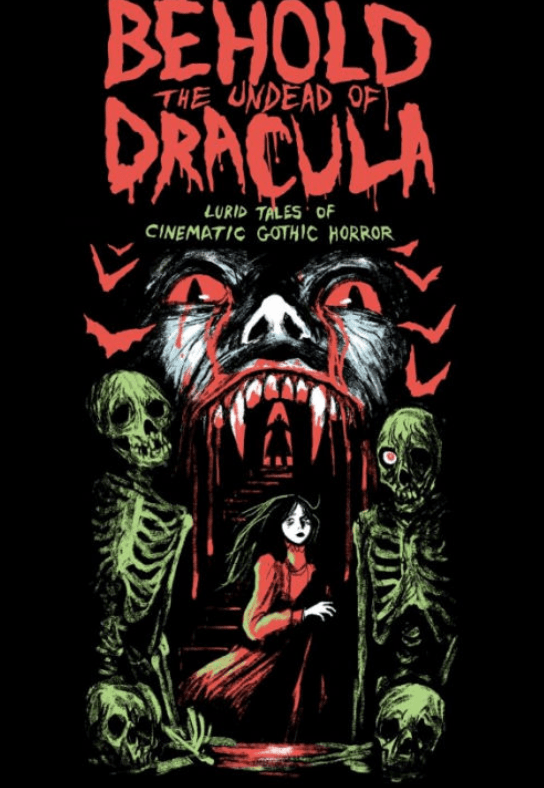
During the gothic horror revival of the late 1950s through the 1970s, vampires, witches, devil worshipers, occultists, spirits, ghouls, and grave-robbing mad scientists returned to terrify a new generation of thrill-seeking movie audiences. Influenced by the social and cultural upheavals of the time and the ever-present specter of nuclear war, these classic terrors became more violent, more subversive—and more seductive.
Behold the Undead of Dracula features stories inspired by the films of the gothic horror revival, dripping with blazing bright-red blood and radiating sex appeal. Eleven of the best authors in underground horror fiction offer up unique and terrifying takes on this special era of cinematic history, summoning spine-tingling tales sure to frighten and seduce unwary readers.
Grab your popcorn, take a seat, and watch as the curtain rises on these neo-gothic nightmares. Bear witness to the lurid and sensual horrors of…
Comet Press is extremely proud to present its second annual anthology featuring this year’s hardcore corps of authors with the best extreme horror fiction of 2016 that breaks boundaries and trashes taboos.
Yes, there will be blood. Lots of it. Gore galore and plenty of the gushy stuff. But you’ll also find tales less graphic but with hardcore attitudes, transgressive stories you’re not sure you should be reading, stories showing you things you shouldn’t see. Visceral fiction.
Nothing is too strange for Third Flatiron’s new anthology, “Strange Beasties.” Find something unsettling at every turn, from rising primordical monsters and gods to murderous supernatural predators and vengeful soul-hungry demons.
There’s plenty of dark comedy too, with gamblers who race unusual beasts, ogres who run cooking podcasts, horrifically dysfunctional families, and unhinged sorcerers.
Meghan: Hi, Frazer. It is an HONOR having you here today. Tell us a little bit about yourself.
Frazer Lee: Hello! Thanks for hosting me, and I must say that I love Meghan’s House of Books ☺ Forgive me while I switch to third person for the ‘official author bio’…
Frazer Lee is a novelist, screenwriter, and filmmaker. His debut novel The Lamplighters was a Bram Stoker Award® Finalist for Best First Novel. Winner of the Edgar Allan Poe Gothic Filmmaker of the Year Award for The Stay, his film credits also include the acclaimed feature film Panic Button. Frazer resides with his family in Buckinghamshire, just across the cemetery from the real-life Hammer House of Horror.
Meghan: What are five things most people don’t know about you?
Frazer Lee:
I have a mysterious scar on my right hand.
An obsessive fan of The Cure, I have seen the band play like 38 times so far. (I know that isn’t very many, so I’m working on it.)
I was vegetarian for twenty-five years, but recently became pescatarian after recurring fever dreams involving flapping fish in an ocean storm.
My middle name is Alaric.
I am unable to converse until I am on my 2nd coffee. (I’m drinking my 2nd right now, luckily.)
Meghan: What is the first book you remember reading?
Frazer Lee: The Gauntlet by Ronald Welch, which transported me to a medieval world. Oh my goodness, what a book. I cried when I finished it because I didn’t want it to be over and I felt so bereft.
Meghan: What are you reading now?
Frazer Lee: I am studying for my PhD so I am neck deep in Ernst Cassirer’s Language and Myth. If you don’t hear from me in a day or two, send help.
Meghan: What’s a book you really enjoyed that others wouldn’t expect you to have liked?
Frazer Lee: Perhaps Miracles of Life by J.G. Ballard because it is rather on the sentimental side and my reputation as a hardened cynic goes before me?
Meghan: What made you decide you want to write? When did you begin writing?
Frazer Lee: I started writing stories in junior school because I lived in Staffordshire and needed to escape somewhere. (As Lou Reed and John Cale once sang, when you’re growing up in a small town, and you’re having a nervous breakdown, you just have to get out of there.) Reading, and writing, did exactly that. (Some of) my teachers encouraged me, and for that I am eternally grateful. I remember smiling when my school report said, “I look forward to Frazer’s first novel.” Took a while, but I got there in the end.
Meghan: Do you have a special place you like to write?
Frazer Lee: I like to write surrounded by trees, with my cat by my side, but I also like to write on the move, on trains, planes, in cafes, but never in automobiles – that’s too dangerous.
Meghan: Do you have any quirks or processes that you go through when you write?
Frazer Lee: I like to write to music without lyrics, and I enjoy playing physical CDs and vinyl, so I often go through a kind of stop-start-stop again dance when I’m finding the right groove in which to begin a book. I talk to myself A LOT. And that 2nd coffee thing I mentioned earlier also applies to the writing, more often than not.
Meghan: Is there anything about writing you find most challenging?
Frazer Lee: Nagging self-doubt can be a problem. That feeling that it’s not coming out quite how you’d hoped or imagined and what’s the point anyway? Like most things in life, it’s nothing that a stroll in the woods can’t sort out. Grit your teeth, roll the dice, come and have a go if you think you’re hard enough.
Meghan: What’s the most satisfying thing you’ve written so far?
Frazer Lee: I wrote a scenario about a grown man trapped in the skin of a young boy and he does this insanely disgusting thing with a big syringe and someone’s buttock fat… I don’t know if it was satisfying but it sure did make me cackle a lot writing it!
Meghan: What books have most inspired you? Who are some authors that have inspired your writing style?
Frazer Lee: My favourite novel of all time is still Frankenstein; or, the Modern Prometheus by Mary Wollstonecraft Shelley. Bloody hell though, it has everything. Familial drama and tragedy, impossible highs and unfathomable lows, beautiful imagery that ties the whole experience together so memorably. And through it all, the terror of loving – and of losing. I think that mash-up of the Gothic and cutting edge science has had a long lasting effect on me. Perhaps it’s not surprising that I love J.G. Ballard’s writing so much as he continues that blend of new ideas/technology with the structure of a classic murder mystery or police procedural, but adds such a uniquely perverse dimension to proceedings that sometimes makes you feel grubby for just reading the book.
Meghan: What do you think makes a good story?
Frazer Lee: An idea. A character, her vividly rendered world, and a seemingly insurmountable problem.
Meghan: What does it take for you to love a character? How do you utilize that when creating your characters?
Frazer Lee: Cheesy as it may sound, there’s that sweet spot when they’re speaking to you as you write them. If I can feel how they feel, hopefully readers can feel that too. I’m attracted to deeply flawed characters. The deeper those flaws, the more interesting I find them. There are no sexual athletes and crack-shots in my stories, more likely a bunch of barely functioning failures. That’s not for everyone, I know. If you want shiny, try your luck at a casino. I’ll wait for you in the basement bar.
Meghan: Which, of all your characters, do you think is the most like you?
Frazer Lee: I doubt that I’m the best person to judge that, but maybe the Skin Mechanic? (I’m a dab hand with a flesh-comb too.)
Meghan: Are you turned off by a bad cover? To what degree were you involved in creating your book covers?
Frazer Lee: I’ve been lucky that I’ve rather enjoyed my book covers so far. My editors and publishers always involve me in the process with a questionnaire, where I get to drop heavy hints about things I’d like to see or un-see. They are never quite as you imagined them, though, and that’s all part of the fun I think.
Meghan: What have you learned creating your books?
Frazer Lee: I’ve learned that it’s good to have a level of attack, but that’s it’s also good to let the thing breathe a bit and to never kid yourself that you have all the answers.
Meghan: What has been the hardest scene for you to write so far?
Frazer Lee: That was a scene in The Jack in the Green because it’s based on something horrible that happened in my early childhood. I won’t go into the details because I’m having a pretty good day so far and I don’t really want to go there again… into the dark… not now anyhow, maybe later.
Meghan: What makes your books different from others out there in this genre?
Frazer Lee: I think that would be for the readers to decide. Maybe each and every book is unique in its combination of character and plot. You could give the same outline and character bios to two different writers and they would create completely different books. I’ve learned that one reader’s “different good” may be another reader’s “different bad” so there’s nothing to be gained from trying to guess which way it’s going to play. I think just be true to yourself, the character, the story and it’ll come out how it has to.
Meghan: How important is the book title, how hard is it to choose the best one, and how did you choose yours (of course, with no spoilers)?
Frazer Lee: The title is usually one of the easiest parts of the creative process for me. Occasionally, you might need a second opinion. I had a few different titles for Hearthstone Cottage and sent them over to my amazing editor Don D’Auria, and he resoundingly preferred the one that’s now on the book spine. And he was right, of course. He so often is (but don’t tell him that, whatever you do!)
Meghan: What makes you feel more fulfilled: Writing a novel or writing a short story?
Frazer Lee: A story well told is a story well told. How well, that’s always up for debate of course. It’s just a sense that the story is the best it can be at that given time, subject to deadlines, and any other constraints, before the story wriggles free of your grasp and you have to hand it over to readers. There is a sense of fulfillment to having gone through that process, and there’s no difference really in how that feels whether it’s a short story, or a novel, or a short film or a feature length movie screenplay, in my experience.
Meghan: Tell us a little bit about your books, your target audience, and what you would like readers to take away from your stories.
Frazer Lee: Each of my books does something a little different with the horror ingredients of isolation, confrontation, and transformation. My target audience is, honestly, anyone who will make the time to pick it up and give it a whirl. I’d like readers to take what they will from my tales, but as I write primarily in the horror genre, I do hope they take away some nightmares with them. You’re welcome.
Meghan: Can you tell us about some of the deleted scenes/stuff that got left out of your work?
Frazer Lee: I write to pretty detailed outlines, so there aren’t really deleted scenes as such. But anything tangential has to go, unless it works. The deleted bits are often the most uninteresting and expository asides about the minutiae of a character’s life, or their belief system (or lack of one). Hopefully what remains serves the character and their story and keeps the forward momentum going. Sometimes moments that are too gratuitously visceral or violent get edited out in favour of what you don’t get to see, because that’s often far more disturbing and scary.
Meghan: What can we expect from you in the future?
Frazer Lee: I am working on a new horror novel for Flame Tree Press called Greyfriars Reformatory. It’s a haunted institution story with a post-modern twist. I have a script doctor commission on a movie screenplay that I’m contractually not allowed to talk about. And I’m developing another film project or two for my sins, which are legion.
Meghan: Do you have any closing words for your fans or anything you’d like to say that we didn’t get to cover in this interview?
Frazer Lee: Hee, I find the concept that I would have ‘fans’ ludicrous…
I would just like to thank you again for hosting me on the blog today, and to say to anyone who has ever read my stories or watched my films, thank you for taking the time and I hope to see you again soon in your nightmares!
One of Frazer’s early short stories received a Geoffrey Ashe Prize from the Library of Avalon, Glastonbury. His short fiction has since appeared in numerous anthologies including the acclaimed Read By Dawn series.
Also a screenwriter and filmmaker, Frazer’s movie credits include the award-winning short horror films On Edge, Red Lines, Simone, The Stay, and the critically acclaimed horror/thriller feature (and Amazon #1 movie novelization) Panic Button.
Frazer lectures in Creative Writing and Screenwriting at Brunel University London and Birkbeck, University of London. He resides with his family in leafy Buckinghamshire, England just across the cemetery from the actual Hammer House of Horror.
Mike Carter and his girlfriend Helen, along with their friends Alex and Kay, travel to a remote loch side cottage for a post-graduation holiday. But their celebrations are short-lived when they hit and kill a stag on the road. Alex’s sister Meggie awaits them in the cottage, adding to the tension when her dog, Oscar, goes missing. Mike becomes haunted by a disturbing presence in the cottage, and is hunted by threatening figures in the highland fog. Reeling from a shock revelation, Mike begins to lose his grip on his sanity. As the dark secrets of the past conspire to destroy the bonds of friendship, Mike must uncover the terrifying truth dwelling within the walls of Hearthstone Cottage.
Meghan: Hey, John! Welcome back to the Halloween Extravaganza. It’s been awhile since we sat down together. What’s been going on since we last spoke?
John Wayne Comunale: I’ve been staying pretty busy on the road doing conventions. I’m usually somewhere different every two weeks.
Meghan: Who are you outside of writing?
John Wayne Comunale: An awesome dude 4 life.
Meghan: How do you feel about friends and close relatives reading your work?
John Wayne Comunale: I’m all for it. The more readers the better. I could give a shit what anyone thinks of me, especially people I’m related to.
Meghan: Is being a writer a gift or a curse?
John Wayne Comunale: Being a writer is who I am, and writing is what I do. It’s neither of these things, nor have I ever considered it to be.
Meghan: How has your environment and upbringing colored your writing?
John Wayne Comunale: I’m sure it’s had some affect and influence in a periphery sense, but I don’t think either of these are significant to me.
Meghan: What’s the strangest thing you have ever had to research for your books?
John Wayne Comunale: I’ve researched witchcraft and demonology to add realism to certain parts, but I don’t think that’s very strange.
Meghan: Which do you think is the hardest to write: the beginning, the middle, or the end?
John Wayne Comunale: I don’t think about things like this. When you do I believe you’re just manifesting unnecessary resistance against what you’re trying to do. If you think you’re hung up on something, and then say how hard it is for you whenever it comes up, it always will be.
Meghan: Do you outline? Do you start with characters or plot? Do you just sit down and start writing? What works best for you?
John Wayne Comunale: I start with a general idea and just go. I don’t outline or do character bios or any of that. I don’t like to be forced to walk a line even from myself.
Meghan: What do you do to motivate yourself to sit down and write?
John Wayne Comunale: I’ve committed myself to doing it, and meeting goals on a daily basis.
Meghan: Are you an avid reader?
John Wayne Comunale: Yes.
Meghan: What kind of books do you absolutely love to read?
John Wayne Comunale: Anything that bends reality.
Meghan: How do you feel about movies based on books?
John Wayne Comunale: Whatever.
Meghan: Have you ever killed a main character?
John Wayne Comunale: Of course.
Meghan: Do you enjoy making your characters suffer?
John Wayne Comunale: I’m not garnering a type of enjoyment from making a character do anything. I get enjoyment out of writing regardless.
Meghan: What can we expect from you in the future?
John Wayne Comunale: To be on the road eternally. My next book, The Cycle, comes out on January 4th, 2020 from Grindhouse Press.
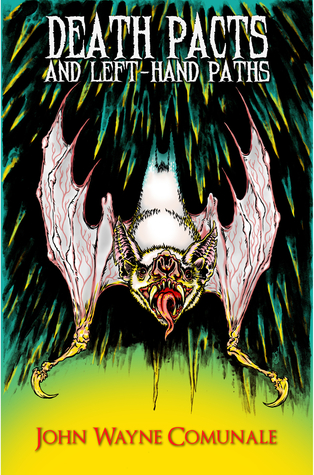
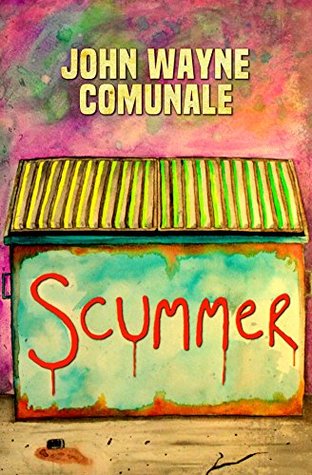
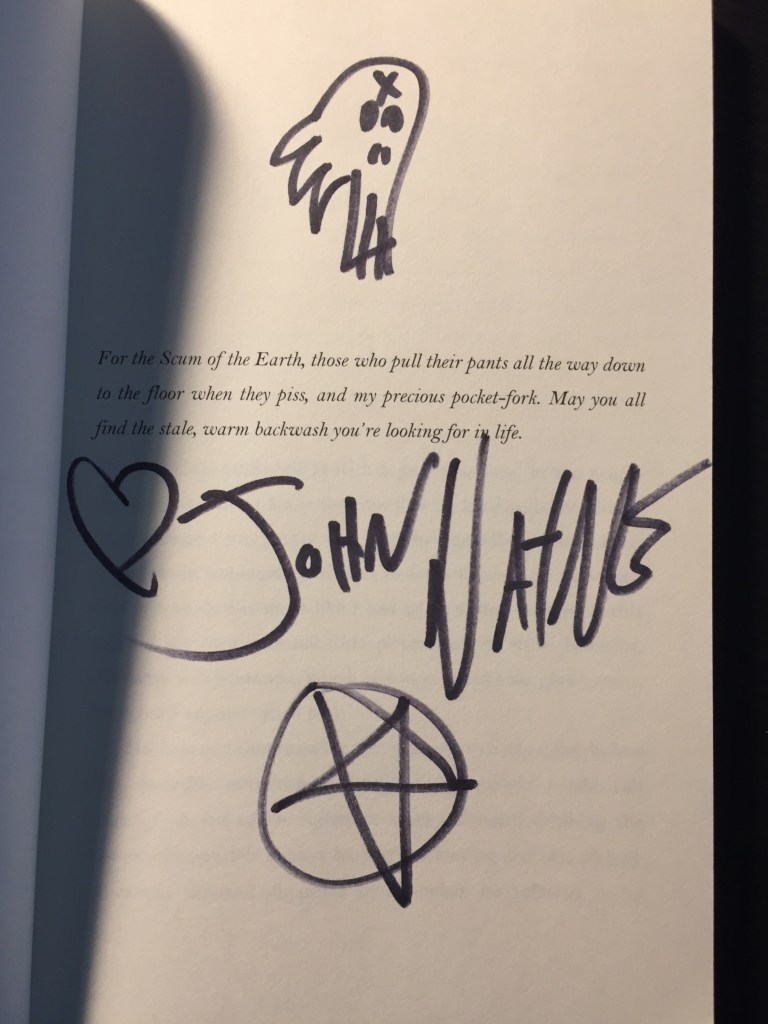
John Wayne Comunale lives in Houston Texas to prepare himself for the heat in Hell. He is the author of books such as Death Pacts & Left-Hand Paths, Scummer, As Seen on TV, and Sinkhole, and also hosts the weekly storytelling podcast John Wayne Lied to You. He fronts the punk rock disaster, johnwayneisdead, and travels around the country giving truly unique performances of the written word.
John Wayne was an American actor who died in 1979.
Everyone is looking for shortcuts in life, but rarely do they find the kind they’re looking for, and when they do it never turns out like they thought. But what if you were to accidentally fall into cahoots with an other-worldly creature who could provide those shortcuts and so much more? Of course, there’s always a price attached to such favors, but killing gets easier the more you do it, and everything is great as long as the rewards outweigh the risk. That is until you find out this was never true and you’ve inadvertently set into motion something so horrible you lack the capacity to understand or accept it.
A filthy barfly haunts the bar down the road. He lives off the leftover dregs of the patrons’ beers and spent cigarettes he finds on the ground. He may be living in the trunk of someone’s car. His name is Scummer. He’s mysterious and elusive. He’s unbound by inhibitions and you want to be just like him.
Artie is a serial killer obsessed with As Seen On T.V. products. Collecting and modifying these items is his only passion outside of killing, which he’s been doing a long time. Far longer than most of his peers, but Artie always took special care to make sure he remained free. Now a strange, small man has moved next door to him, and the smell of popcorn hangs thick in the air. After a few odd interactions with him, Artie starts to wonder if there’s something other than himself that’s kept him from being caught.
After the hurricane, Reggie and Betsy discover a portion of their backyard has begun to sink. Fearing the ground will open up and swallow their house sooner rather than later Reggie calls the city to come fix it, but pushback from the local Sheriff slows the process down by a day. Come nightfall the power goes out, the sinkhole opens, and a busload of ghoulish children crawl to the surface for their first meal in fifty-two years.
Meghan: Hi, Austin. It’s been awhile since we sat down together. What’s been going on since we last spoke?
A.S. Chambers: Well, I seem to have been majorly busy. I now have four Sam Spallucci novels out, with a fifth one on the way. 2019 also saw the publication of a collection of vampire short stories entitled Children of Cain and a stand-alone novella Songbird, both of which are set in the same universe. Also, at the end of 2018, my fourth short horror anthology, Mourning Has Broken, hit the shelves.
Meghan: Who are you outside of writing?
A.S. Chambers: What is this thing called “outside of writing”? I have to say that it more or less dominates my life. For me, it’s a nine to five thing. If it wasn’t, then life would just elbow its way in and stop anything from getting written down. I have to be ruthlessly strict with myself and make sure that I approach my writing in a determined, professional manner. Having said that, I do chill out in the evenings. This summer I’ve been doing up my garden, planting in lots of flowering plants. I also love to go walking. I live in Lancashire in the UK and there is just a mass of beautiful open countryside to go and enjoy.
Meghan: How do you feel about friends and close relatives reading your work?
A.S. Chambers: They don’t read it until it’s finished. I tend to very secretive and keep the work closely under wraps, probably in case I have a major change of mind and swerve plots off in a completely different path. Once it’s finished, I have no problem. They can read away.
Meghan: Is being a writer a gift or a curse?
A.S. Chambers: I fail to see how writing could ever be a curse. You are creating something from within you, expressing it and putting it down on paper. This is a wondrous thing, an art form. It takes a long time to perfect and there can be times when you feel like screaming, but all beautiful things take a lot of work and effort to get right. They should never be rushed.
Meghan: How has your environment and upbringing colored your writing?
A.S. Chambers: I hold fast by the old motto, “Write about what you know.” I live in the beautiful city of Lancaster, so my urban fantasy books about the paranormal investigator Sam Spallucci are set here. I draw upon local places and even local people and events. My upbringing has also had a profound effect. Sam shares certain parts of my life: the death of his father, his education, his health. I know these things about him in an incredibly intimate way, so I can really use them to make him feel alive as a person.
Meghan: What’s the strangest thing you have ever had to research for your books?
A.S. Chambers: Oooooo… That’s a good question. I wouldn’t say it was strange, but I had to research the workings of the Victorian household and their use of servants for my vampire novella, Songbird. It was fascinating. The conditions that the young girls were forced to live and work in were deplorable. It was very close to a being a slave.
Meghan: Which do you find the hardest to write: the beginning, the middle, or the end?
A.S. Chambers: If I had to choose one of the three, it would probably be the middle. I wouldn’t say it’s the hardest, per se, but certainly the most time consuming. I always know how my stories are going to start and finish. It is up to my characters to develop the journey between the two points. When I start a novel, I always have certain scenes in my head. I make sure that I write these down first, then I see how my characters would join the dots by moving between them. As that happens, the story develops.
Meghan: Do you outline? Do you start with characters or plot? Do you just sit down and start writing? What works best for you?
A.S. Chambers: I always start with characters. My works are very much character-led. Sam is at the forefront and his friends and acquaintances around him. It’s normally a case of, “Well what shall we do to them this time?” Once I have certain pertinent scenes written, I then sketch a rough outline, highlighting flashpoints in the story which I will need to write next as they will be pivotal to plot and character development. After that, I reassess the outline and start ticking off “joining scenes” and develop other areas of the story which start to call out to me.
Meghan: What do you do when characters don’t follow the outline/plan?
A.S. Chambers: Go with the flow. You can’t fit a square peg in a round hole. If I’m writing something and think to myself, “Nope. They would not be doing that,” then I stop and have a break. Go for a walk and see the world through the character’s eyes. I then come back, start the scene afresh and let the character lead me down the rabbit hole.
Meghan: What do you do to motivate yourself to sit down and write?
A.S. Chambers: I don’t need motivation. I need peace, quiet and nice coffee. I have never had problems making myself write. It is one of the greatest pleasures in my life. However, due to my health, I do get very fatigued, so I have to make sure that I don’t overdo it and I take regular breaks. This keeps the whole process fresh and enjoyable.
Meghan: Are you an avid reader?
A.S. Chambers: Oh yes. It’s kind of hard to move for books in my house. They cover almost every wall.
Meghan: What kind of books do you absolutely love to read?
A.S. Chambers: I tend to read absolutely anything. I feel it’s really important to give anything a shot at least once because you don’t know whether you’ll like it if you just avoid it. Personally, I love Philip K Dick and Ray Bradbury. They both have a wonderfully quirky yet clean style which has me gripped from the moment I start reading. I also enjoy the Kathy ReichsTemperance Brennan books. They are good, character driven stories which I feel carry me along on an interesting ride as I try to solve the case before the heroine. However, two series which stand out the most for me are the Dexter books by Jeff Lindsay and the Barney Thomson novels by Douglas Lindsay (no relation to Jeff). Again, very character driven and thoroughly enjoyable. The Barney Thomson books, especially, stand out as they are so surreal at times due to the things that Douglas puts his characters through and you can’t help but laugh out loud.
Meghan: How do you feel about movies based on books?
A.S. Chambers: Absolutely depends on the movie. For example, The Long Midnight of Barney Thomson was adapted by Robert Carlyle and was an absolute hoot. They changed a considerable amount to bring it to life, but the feel and the atmosphere was exactly the same as the book. Likewise, Blade Runner. One of my favourite films, the original plot of the book is almost totally unrecognisable compared to the film, but the feel and the texture remain. However, you do get those productions where you think to yourself, “Dear Lord. Have you actually read the book?”
Meghan: Have you ever killed a main character?
A.S. Chambers: Technically no (Sam was “killed” but went back and changed history), but I have killed off side characters who readers liked. At the end of the day, the stories need to have a real feel to them to engage people. One of the truths of life is that bad things can happen to nice people. You need a certain amount of peril.
Meghan: Do you enjoy making your characters suffer?
A.S. Chambers: I wouldn’t say that I enjoy making them suffer, but like in the previous question, bad things can happen to nice people in real life, so fiction has to follow that too. We are the sum of our experiences, bad as well as good. The way that my characters react to suffering will ultimately determine what path they will choose. (Hmmm… I wonder if that could be some sort of spoiler?)
Meghan: What’s the weirdest character concept that you’ve ever come up with?
A.S. Chambers: A Bondage-loving Banshee. I had a twenty-something who had been cursed by her mate and every time she got “aroused” would scream and kill electronic devices in the surrounding area. Needless to say, she was fun to create.
Meghan: What’s the best piece of feedback you’ve ever received? What’s the worst?
A.S. Chambers: My short story Needs Must was published in a charity anthology some years back and one reviewer singled it out saying that “This is what horror should be.” Can’t really get much better than that. Then there was the person who read Casebook and grumbled that there was very little historical matter about Lancaster. I think he had probably been reading the wrong sort of book…
Meghan: What do your fans mean to you?
A.S. Chambers: They mean a hell of a lot. It’s great seeing them getting hyped about a new book or theorising about what’s going to happen. I’ve even had one come to an event cosplaying as the werewolf of Williamson Park. How cool is that? As an author, it’s so satisfying having people (many of whom I have never met) becoming totally invested in characters and storylines that I have created.
Meghan: If you could steal one character from another author and make them yours, who would it be and why?
A.S. Chambers: Easy one. In the later Barney Thomson books, Douglas Lindsay created a hunchbacked, deaf barber’s assistant called Igor, whose job is just to sweep up in the barbershop. All the guy can say is, “Arf,” and yet everyone knows exactly what he means and, on top of this, he is a hit with the ladies. Pure genius and, in my opinion, the best character in all the books I have ever read.
Meghan: If you could write the next book in a series, which one would it be, and what would you make the book about?
A.S. Chambers: I couldn’t possibly write in a series that has already been established by another author. It would feel like I had broken into his house, crept into his bed room and stolen all his kinky underwear that he wears at those special kind of parties. So, I’ll just stick my own series about the down at heel paranormal investigator, Sam Spallucci.
Meghan: If you could write a collaboration with another author, who would it be and what would you write about?
A.S. Chambers: I am actually working on one at the moment. In the next Sam Spallucci book, Troubled Souls, Sam will get transported back to Victorian Morecambe where he will team up with a pair of detectives, Mulberry and Touchstone, who were created by the wonderful Peter Cakebread and first appeared in his book The Morecambe Medium. We are basically taking the story and writing it from our own characters’ points of view. Sam’s adventure will appear in Troubled Souls as The Case of the Time Travelling Tea Room and Peter’s will be published at a later date.
Meghan: What can we expect from you in the future?
A.S. Chambers: Like I’ve mentioned a few times already, I am currently working on Sam Spallucci: Troubled Souls. This is the fifth book in Sam’s series and will contain angels, haunted checkouts, Indian burial grounds and at least two serial killers. I also have my fifth short story anthology at the editing process and I am working on a Young Adult set of stories set in Sam’s universe.
Meghan: Do you have any closing words for your fans or anything you’d like to say that we didn’t get to cover in this interview or the last?
A.S. Chambers: In the immortal word of Igor from the Barney Thomson books, “Arf!” I think that covers it all.
Lancaster’s master of the macabre is well known for marking his home town’s place on the horror map of the United Kingdom. His Sam Spallucci books, with their quirky blend of urban fantasy, film noir and dry humour, have gained a cult following over the last few years with fans journeying from around the country to see where reality meets an ever expanding universe of vampires, werewolves, angels and a plethora of other supernatural characters.
For the first time, A.S.Chambers collects the popular stories of the vampires that feature in the expanded universe of his paranormal investigator, Sam Spallucci. Follow Justice the Wild West gunslinger as he tries to come to terms with his newfound supernatural abilities and heavy weight of being a king in waiting. Then, when finally reunited with his father and newborn sister, tragedy strikes. Accompany Nightingale, the all too human regent, as she creates her first offspring before attempting to train him to shrug off his own human nature. Go out for a night on the tiles with party-loving Scorpion and Tigress, the mute blonde and the bouncy redhead, as they hunt down an unsuspecting victim, before travelling back in time to when their supernatural lives crashed into the peaceful solitude of a medieval craftsman.Also includes a new foreword by the author.
Follow a young Nightingale through the late Victorian era as she escapes from abject poverty to become the ruler of the secretive vampire society known to its members as the Children of Cain. She travels from begging on the streets to a life of servitude under a sadistic parish priest before being liberated under the light of the moon by the vampire king, Doulos. With her new father, she travels to the Wild West in search of her older sibling, only to be cast into a tale of tragedy and bloodshed.
Songbird – A Nightingale Story is set in the same universe as the Sam Spallucci series and is penned by Lancaster’s master of the macabre, A.S. Chambers.
Welcome to the world of Samuel C Spallucci; whiskey drinking, chain-smoking, trumpet playing, sci-fi watching investigator of the paranormal.
When we start a new job all we normally encounter is overbearing managers, jealous co-workers and a dodgy toilet that needs that certain wiggle to make it flush. During Sam’s first week, based in the small university city of Lancaster, he is abducted by a cult of Satanic actors, has to baby-sit a new-born vampire, investigates a teenage poltergeist and escapes the clutches of a werewolf that works in a local zoo.
Not your usual first week on a new job, but certainly one you will never forget.
Contains the stories: The Case of the Satanic Suburban Sitcom The Case of the Vexed Vampire The Case of the Fastidious Phantom The Case of the Paranoid Poltergeist The Case of the Werewolf of Williamson Park













 Meghan's House of Books