Halloween Extravaganza: INTERVIEW: Mr. Michael Squid

Meghan: Hi, Michael. Welcome to Meghan’s House of Books. Tell us a little bit about yourself.

Mr. Michael Squid: I’m a visual artist and an avid horror reader and writer. I’ve been travelling a lot and was most recently in Bulgaria.

Meghan: What are five things most people don’t know about you?

Mr. Michael Squid:

  • I sleep using my arm as a pillow.
  • I don’t believe in the supernatural.
  • I’m terrified of death.
  • I have a very bizarre sense of humor.
  • I hate nothing more than mosquitoes.

Meghan: What is the first book you remember reading?

Mr. Michael Squid: The Twits by Roald Dahl

Meghan: What are you reading now?

Mr. Michael Squid: Songs of a Dead Dreamer by Thomas Ligotti

Meghan: What’s a book you really enjoyed that others wouldn’t expect you to have liked?

Mr. Michael Squid: The Life & Times of the Thunderbolt Kid by Bill Bryson

Meghan: What made you decide you want to write? When did you begin writing?

Mr. Michael Squid: I discovered Stephen King at the age of 10 and soon after H.P. Lovecraft. I think I was inspired to write after getting into Lovecraft, but King sparked my initial interest in reading horror.

Meghan: Do you have a special place you like to write?

Mr. Michael Squid: A desk whenever possible. I need to be sitting in one place and forced to write otherwise I get distracted.

Meghan: Do you have any quirks or processes that you go through when you write?

Mr. Michael Squid: I often play ominous ambient songs and sip coffee, but nothing aisde from getting it down and editing.

Meghan: Is there anything about writing you find most challenging?

Mr. Michael Squid: Editing. I have serious ADD so reading something I already know the plot to is hard. I also struggle with repeating adjectives and thinking of new ways to word things.

Meghan: What’s the most satisfying thing you’ve written so far?

Mr. Michael Squid: I found a Secret Lab from the 70’s, it was extremely fun to create the underground scenes of horrors in this online series.

Meghan: What books have most inspired you? Who are some authors that have inspired your writing style?

Mr. Michael Squid: Lovecraft‘s At The Mountains of Madness, Clive Barker‘s The Great & Secret Show, and Stephen King‘s The Stand were all inspiring in terms of the world-building and horror with adventuresome elements. It’s something I aspire to do more of. In terms of writing style, I can’t say, but reading a lot of Philip K. Dick‘s workin my formative years had some influence.

Meghan: What do you think makes a good story?

Mr. Michael Squid: Sweeping the reader away from their current location and transporting them in the situation and location they are reading about. They can smell the crisp fall, feel the rain on their skin and reel from a deep-cutting insult just as much as the protagonist they are reading. That’s the magic of a good story.

Meghan: What does it take for you to love a character? How do you utilize that when creating your characters?

Mr. Michael Squid: A lovable character needs quirks and flaws, but they still need to be receptive and aware. They need a sore tooth or some sympathetic situation in order to root for them. In very short fiction, They just need to be relatable and likable. Any time I write a loathsome protagonist I lose the reader.

Meghan: Which, of all your characters, do you think is the most like you?

Mr. Michael Squid: Tough one, I rarely write characters like myself, but possibly Jeremy, the cousin in A Beginner’s Guide to Blood Portals.

Meghan: Are you turned off by a bad cover? To what degree were you involved in creating your book covers?

Mr. Michael Squid: Yes, I am always turned off by covers with poor design or an ineffective image. I’m an illustrator and designer by trade, so I may be more sensitive to them than most. I do my own covers, but spend far more time crafting covers for other authors than working on my own.

Meghan: What have you learned creating your books?

Mr. Michael Squid: Edit first, then publish. I published a collection only to realize later just how many typos there were I hadn’t caught due to a few negative reviews. I fixed them after hiring an editor, but those reviews pulled my book’s rating down. They are fixed now.

Meghan: What has been the hardest scene for you to write so far?

Mr. Michael Squid: I worked on a collaborative story with a few fellow authors and had some extremely specific and outlandish constraints, writing a behind-the-scenes explanation for a stranger’s story. It was a learning experience, but very difficult.

Meghan: What makes your books different from others out there in this genre?

Mr. Michael Squid: I hope to keep them varied enough in terms of subject and style to keep the stories interesting. I do a ton of research in order to mention actual science, places and venues to keep the realism there as well. Most of all, 98% of the time I’m aiming to scare the wits out of the reader, and I often get feedback to reflect that.

Meghan: How important is the book title, how hard is it to choose the best one, and how did you choose yours (of course, with no spoilers)?

Mr. Michael Squid: I think something that stands out and gives a hint to the book’s contents is the best. I chose mine partly inspired by Where the Sidewalk Ends by Shel Silverstein, I always thought it sounded profound and horrific, so I tried to touch on that but a much more sinister direction.

Meghan: What makes you feel more fulfilled: Writing a novel or writing a short story?

Mr. Michael Squid: I’ve started two novels and finished neither, so I have to say a short story. I do hope to finish the novels someday when time allows it, however.

Meghan: Tell us a little bit about your books, your target audience, and what you would like readers to take away from your stories.

Mr. Michael Squid: They are collections of serious horror stories, and I want to leave you with some resounding nightmare fuel you can’t quite ever shake.

Meghan: Can you tell us about some of the deleted scenes/stuff that got left out of your work?

Mr. Michael Squid: I had a few stories that were a bit too abstract to be effective, and maybe they will resurface in a more appropriate collection.

Meghan: What’s in your “trunk”?

Mr. Michael Squid: I’m actually starting to get ready to film some horror tales, and hope to have some big things to show next Halloween.

Meghan: What can we expect from you in the future?

Mr. Michael Squid: More horror, both in story format and on the screen. I’ve also co-written a screenplay, and hope to begin the next steps on that in the upcoming months.

Meghan: Where can we find you?

Mr. Michael Squid: Amazon ** Facebook ** Website ** Reddit

Meghan: Do you have any closing words for your fans or anything you’d like to say that we didn’t get to cover in this interview?

Mr. Michael Squid: I want to first say thank you so much for the interview, it was a pleasure and an honor! To my readers, you give me life by reading my stories and I hope to bring you what you crave. Feel free at any time to ask me questions or requests through my Facebook page. Thank you!

Mr. Michael Squid will drag you deep into a well of unfiltered nightmares. Horror without seatbelts or breaks that will make you think and make you terrified.
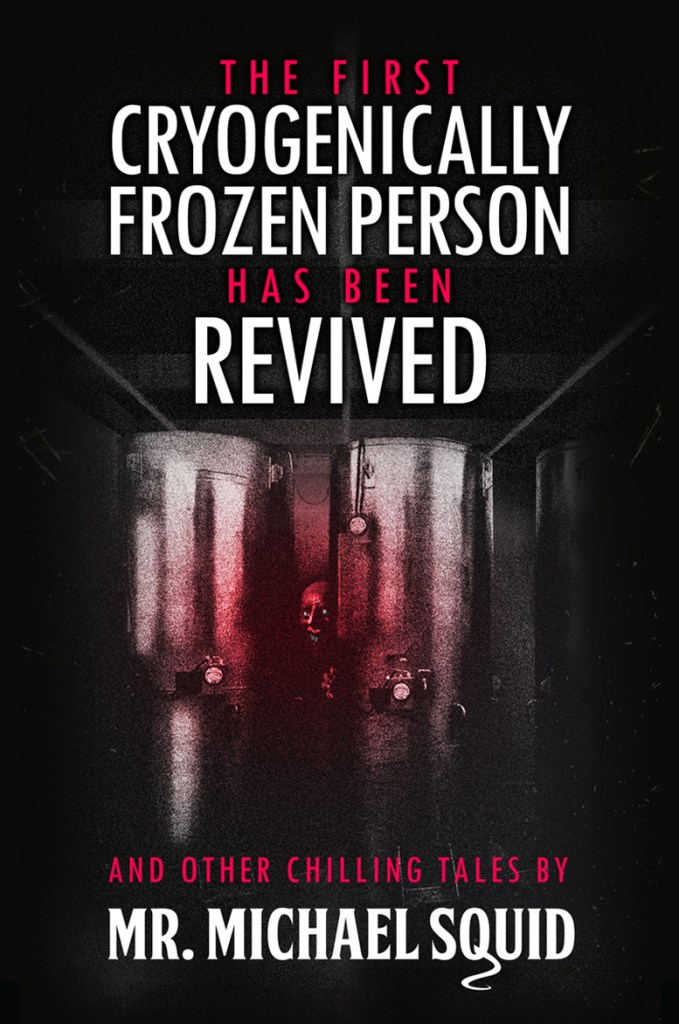
The First Cryogenically Frozen Person Has Been Revived

A breakthrough in cryonics unfolds in a horrific tale of unexpected chaos. A discovery of unaired television shows reveals an sinister plot to cover up the existence of dangerous artifacts. This is a collection of chilling tales of nightmarish worlds hidden just below the surface.

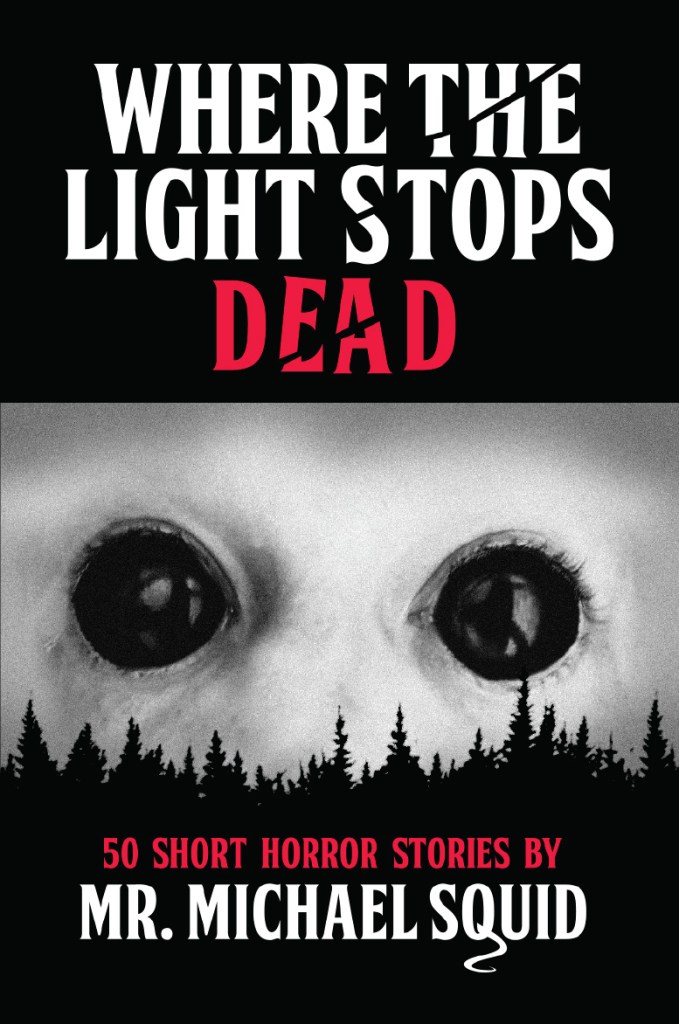
Where the Light Stops Dead

A collection of 50 creeping horror stories that dig deep into your mind and won’t let go. 50 unconnected tales that will unsettle and horrify, reaching beyond common tropes as different narrators pull you into their nightmarish situations and malevolent minds.
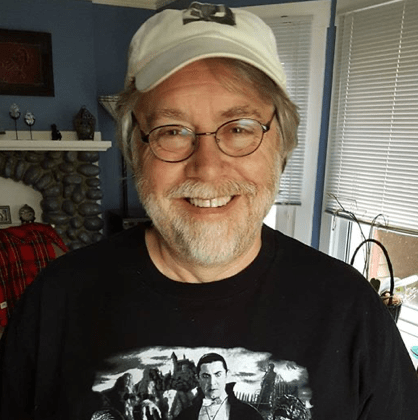
Halloween Extravaganza: INTERVIEW: Paul Heatley

Meghan: Hi, Paul. It’s been awhile since we sat down together. What’s been going on since we last spoke?

Paul Heatley: Well, I’ve been keeping busy. I always try to keep busy. Books two and three in the Eye For An Eye series were released by Close To The BoneThe Runner and Violent By Design – I released a Christmas novella called Christmas Stockings, and this year has seen the release of Guillotine (All Due Respect) and, most recently, Bad Bastards (Fahrenheit 13).

Meghan: Who are you outside of writing?

Paul Heatley: Pretty boring. When I’m not at the day job I read a lot, I watch TV – standard stuff.

Meghan: How do you feel about friends and close relatives reading your work?

Paul Heatley: I really don’t mind. In fact, I wish more of them would do it! (And tell all of their friends and relatives in turn, and so on.)

Meghan: Is being a writer a gift or a curse?

Paul Heatley: It’s a bit of both. When it’s going well it’s the greatest thing in the world. Then, when block strikes or something in a manuscript just isn’t quite working out the way you want it to, it remains the best thing in the world but with added frustration. I make sure to write in some capacity every day, and if I don’t I get incredibly restless and agitated, which is what makes it a curse I suppose. I don’t mind, though. I’d rather have this than nothing else.

Meghan: How has your environment and upbringing colored your writing?

Paul Heatley: I’m not so sure it has a great deal. I set most of my books in America and I wasn’t raised there, and the Eye For An Eye books which I’ve set in the north east England don’t contain a great deal of my background – not that I can see, anyway.

Meghan: What’s the strangest thing you have ever had to research for your books?

Paul Heatley: I’m not sure I’ve ever researched anything particularly strange. Like I said above I tend to set most of my books in America, so sometimes I just look up words to see if they have different meanings in America to how we use them in England.

Meghan: Which do you find the hardest to write: the beginning, the middle, or the end?

Paul Heatley: Probably endings. Even just chapter endings, sometimes. You want to make sure you finish on just the right word or phrase. When it comes to the very end of the book, that’s what people are going to remember most of all so it’s important to try and nail it just right. Of course, sometimes beginnings are hard, too, especially if it’s something brand new that you’re going into and you need to work your way through the setting and get to know your characters.

Meghan: Do you outline? Do you start with characters or plot? Do you just sit down and start writing? What works best for you?

Paul Heatley: I do a mix of all! Primarily I outline, but sometimes I do just sit down and start writing. I prefer to have an outline as I prefer to go in to a work knowing that I have all the Gordian knots already unravelled, rather than lose time trying to find out how to cut through them. I don’t think there’s anything worse than writing yourself into a corner and having no idea how to get out of it. When it comes to characters and plot, I tend to have the plot first, then I introduce the characters to it, work out their own background and traits which in turn influences and sometimes expands the plot.

Meghan: What do you do when characters don’t follow the outline/plan?

Paul Heatley: I follow them and see where they go. I outline, but I’m not afraid to change it on the fly. I’ve rewritten entire sections of work in the past if the characters find a new direction to go in.

Meghan: What do you do to motivate yourself to sit down and write?

Paul Heatley: I repeat mantras to myself that I’ve heard over the years to make sure I get in the chair and write. Sometimes they’re harsh, but sometimes that’s what it takes – ‘Every day you don’t write is another day you’ve wasted.’ ‘Do you want results, or do you want excuses?’ etc.

Meghan: Are you an avid reader?

Paul Heatley: I am, though not a particularly fast one!

Meghan: What kind of books do you absolutely love to read?

Paul Heatley: I’ll read anything, so long as it interests me. At the minute I’m reading the first book in the Wheel Of Time series by Robert Jordan. I haven’t read any fantasy for a while and I was eager to get back into it. I tend to mostly read things on the crime side, though. I read The Postman Always Rings Twice by James M. Cain for the first time recently, so you can probably guess I’ve still got a lot of the classics to catch up on. I’ve never read Raymond Chandler or Patricia Highsmith, and I’m eager to get round to both of them. I only started reading Richard Stark in the last year and now I can’t get enough. Mostly I’ve read James Ellroy, Jim Thompson, and Chester Himes. They are my main three.

Meghan: How do you feel about movies based on books?

Paul Heatley: I don’t mind them, though if it’s something I’m interested in I always prefer to have read the book first.

Meghan: Have you ever killed a main character?

Paul Heatley: Yes, quite often. Going back to your earlier question about when characters don’t follow the outline, there’s a death at the end of Violent By Design that I didn’t originally plan on, but I’m quite glad it got worked in.

Meghan: Do you enjoy making your characters suffer?

Paul Heatley: Yes. It’s necessary to the story – without their suffering, there is no story. Especially in noir. And when you consider noir tends to be the stories of bad people doing bad things, it’s hard to not want to make them suffer.

Meghan: What’s the weirdest character concept that you’ve ever come up with?

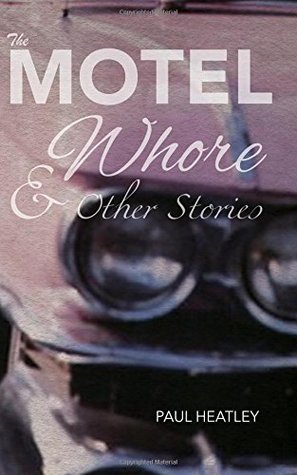
Paul Heatley: My most colourful characters probably appear in my Motel Whore books (collected together in The Motel Whore & Other Stories). There’s a wide array of outcasts and oddballs in those stories.

Meghan: What’s the best piece of feedback you’ve ever received? What’s the worst?

Paul Heatley: I wouldn’t necessarily say I’ve had a bad piece of feedback. It’s only really bad if you perceive it as such, and if I read a bad review I pay attention to WHY the person didn’t like it. That way, you’ve got something to learn from and improve upon. In terms of the best, I got a great review recently from David Nemeth for my book Guillotine where he said ‘Heatley is becoming a master of American noir in the vein of Jim Thompson and James M Cain.’ That’s great, and that’s the blurb I’m gonna use on every future release.

Meghan: What do your fans mean to you?

Paul Heatley: They mean a hell of a lot. I appreciate everyone who buys and reads my books, and who gets in touch with me to tell me what they thought of them. Without them it’s me just screaming out into a void.

Meghan: If you could steal one character from another author and make them yours, who would it be and why?

Paul Heatley: Parker by Richard Stark. He’s simultaneously the perfect noir hero and villain. Tough and unrelenting, and cares only about himself.

Meghan: If you could write the next book in a series, which one would it be, and what would you make the book about?

Paul Heatley: This questions follows on perfectly from the last as I guess I’d have to go with Parker. Naturally the story would be about a heist going wrong, he gets double-crossed, then he comes back for revenge! I’d have to read every single one of his past appearances to make sure I was able to work in something new and didn’t just repeat an earlier caper.

Meghan: If you could write a collaboration with another author, who would it be and what would you write about?

Paul Heatley: Stephen King, and we’d put together some From Dusk Til Dawn-style thing – it starts off as a gangster story, then it becomes something totally unexpected and over the top.

Meghan: What can we expect from you in the future?

Paul Heatley: Like I said at the top, I keep busy! I write every day and the intention is to always be building up forward momentum, so hopefully you’ll see a lot more books coming your way!

Meghan: Where can we find you?

Paul Heatley: I’m on Facebook, Twitter, and Instagram. My website is here.

Paul Heatley is the author of The Motel Whore & Other Stories, Fatboy, Guillotine, Bad Bastards, and the Eye for an Eye series, as well as more than fifty short stories published online and in print. He lives in the north east of England.

The Motel Whore & Other Stories

A dying town on the edge of nowhere. Misfits, outcasts, losers and loners, making their way through their aimless lives. The Motel Whore. The Vampire. The Boy. They will crawl inside your skull. They will live beneath your skin. They will stay with you forever. Featuring two previously unpublished tales.

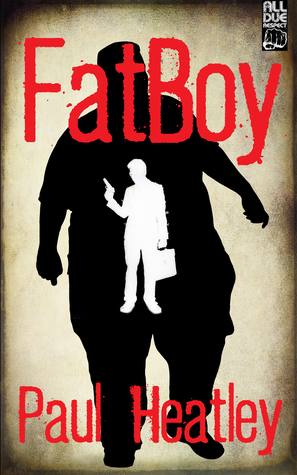
Fatboy

After his girlfriend leaves and takes their young son with her, Joey Hidalgo is left alone in the trailer they formerly called home with nothing to do but get drunk and contemplate her reasons. Is he really as angry, as volatile, so close to constant violence, as she claims he is?

No, Joey thinks, of course not, the real problem is money–or lack thereof. Joey’s a bartender, always struggling to make ends meet, unlike his most vile regular customer, the rich and racist fatboy. So Joey hatches a plan to get his family back by taking him for all he’s worth. 

But the fatboy isn’t going to make it easy for them. Neither is Joey’s temper. Things are going to get messy, and it’s gonna be one hell of a long night.

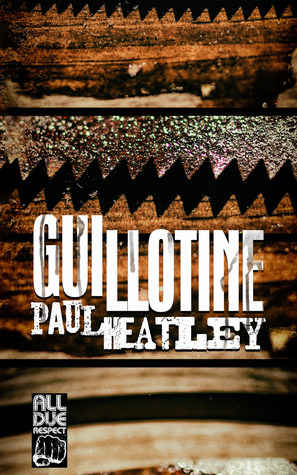
Guillotine

After suffering a lifetime of tyranny under her father’s oppressive rule, when Lou-Lou sees a chance to make a break with the man she loves, she takes it. Problem is, daddy’s also known as Big Bobby Joe, a dangerous and powerful man in the local area—powerful enough to put out a sixty grand bounty on the head of the man she’s run off with, who also happens to be one of his ex-employees.

With every criminal affiliate out looking for them, making good on their getaway doesn’t seem promising. Even their so-called friends are on the take, willing to pull a double-cross if that’s what’s going to turn them a quick buck. But Big Bobby Joe hasn’t counted on his daughter’s resolve to distance herself from him. No matter what he throws at her, no matter what he does, she’s going to get away—or die trying.

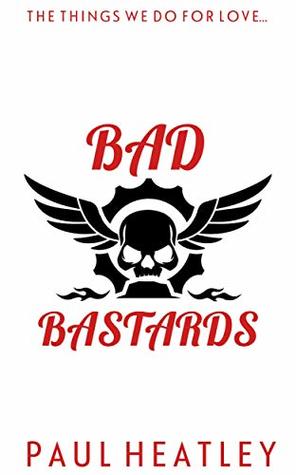
Bad Bastards

Falling in love might just be the dumbest move Patton has ever made. 

Patty Dawson is beautiful – tall, with most of her length in her legs – and Patton has fallen head over heels. Patty is also Bobby Hodge’s daughter and that means she’s off-limits to guys like Patton. 

Bobby runs the Bad Bastards Motorcycle Club with an iron fist – he runs his family the same way – and when he finds out about Patton and his only daughter it was only ever going to go one way, badly. 

Beaten to a pulp and under threat of death, Patton is determined to find a way to be with the girl he loves no matter what the cost, but as the stakes get higher he has to decide just how far he’s willing to go in the name of love. 

Halloween Extravaganza: INTERVIEW: A.S. Coomer

Meghan: Welcome to Meghan’s House of Books, A.S. Tell us a little bit about yourself.

A.S. Coomer: I’m a writer, musician, artist, and friend of cats. I was born and raised in Kentucky, where I currently reside, but I travel as often as I can.

Meghan: What are five things most people don’t know about you?

A.S. Coomer: I was commissioned a Kentucky Colonel in 2019 for my literary and creative endeavors. I have a degree in Social Work, specializing in Child Protective Services. I worked with families and children in difficult situations and environments for several years before devoting myself full-time to writing. I’m a composer (record forthcoming) and fan of ambient music. I like Heath bars crunched up in my pancakes.

Meghan: What is the first book you remember reading?

A.S. Coomer: The first book that I remember reading is Stellaluna by Jannell Cannon.

Meghan: What are you reading now?

A.S. Coomer: I’m one of those weirdos that have a few books going at the same time. Right now I’m reading If Beale Street Could Talk by James Baldwin, Voodoo Histories by David Aaronovitch, Barn Dances & Jamborees Across Kentucky by J.D. Wilkes, The Adventures of Augie March by Saul Bellow, & The Outlaw Bible of American Poetry.

Meghan: What’s a book you really enjoyed that others wouldn’t expect you to have liked?

A.S. Coomer: Lady Chatterley’s Lover by D.H. Lawrence.

Meghan: What made you decide you want to write? When did you begin writing?

A.S. Coomer: I’ve loved books for as long as I can remember. I started writing early, in grade school: stories, poems, comics, lyrics. I’m an introspective person, so the writing life just felt right. I began writing full-time four years ago.

Meghan: Do you have a special place you like to write?

A.S. Coomer: I don’t have a special place to write, per se, but one of my cats, Vigo the Carpathian, has been in my lap for every novel I’ve written.

Meghan: Do you have any quirks or processes that you go through when you write?

A.S. Coomer: I wake up every morning at 7am, make a pot of coffee, and go straight to the writing.

Meghan: Is there anything about writing you find most challenging?

A.S. Coomer: Writing, in general, is often challenging. It’s the proverbial head-to-wall, word by word, line by line until, simply, it isn’t. That being said, natural, scene-specific dialogue is always a challenge. Sometimes I feel like a confused translator trying to get the text to say what I envision in my head.

Meghan: What’s the most satisfying thing you’ve written so far?

A.S. Coomer: My novel, Memorabilia, is the most satisfying thing I’ve written thus far. The book is experimental and strange, but accessible and, hopefully, relatable. It’ll be available for purchase or download via 11:11 Press on December 7th, 2019.

Meghan: What books have most inspired you? Who are some authors that have inspired your writing style?

A.S. Coomer: Something Wicked This Way Comes by Ray Bradbury really sparked my inspiration when I was younger. I love that book. There’s a sense of magical possibility in most of his books, but that one particularly. The Heart is a Lonely Hunter by Carson McCullers was an inspiration too. I read it at the right time and it said the right things to me. It also showed me what a novel could do as well as what it could refuse to do.

As for my writing style, I’ve been influenced by Kurt Vonnegut, Carson McCullers, Ernest Hemingway, Jean-Paul Sartre, Virginia Woolf, Stephen King, James Lee Burke, Cormac McCarthy, F. Scott Fitzgerald, to name a few.

Meghan: What do you think makes a good story?

A.S. Coomer: A good story takes up its own real estate in your head. It keeps the pages turning while you’re wading through the text the first time and then holds its space inside you after you’ve put the book back on the shelf.

Meghan: What does it take for you to love a character? How do you utilize that when creating your characters?

A.S. Coomer: For me to really love a character, they have to be believable. Characters have to be believable even if they’re not especially relatable. I try to write characters that act as only they’d act.

I’ve been working with unlikeable characters in my most recent work (a horror novel forthcoming from Grindhouse Press), which has been a whole lot of fun.

Meghan: Which, of all your characters, do you think is the most like you?

A.S. Coomer: Polly Jean is very relatable for me these days. She’s the eponymous protagonist in a story that was originally published in Oxford Magazine. She is a vagabond on the road with a partner, at the beginning of the story, but feels stifled and confused by the other’s presence in her solitary life.

Meghan: Are you turned off by a bad cover? To what degree were you involved in creating your book covers?

A.S. Coomer: I am. Who looks at bad covers and says, “I can’t wait to read this”? Well, I guess there are times when a cover can be so bad it’s good.

I try to stay as involved as I can in my book’s covers. This is different with each publishing project based on the contract and the publisher’s way of doing things. I’ve shot down some proffered covers on a few occasions, but more often than not I work with the publishers and their artists by giving suggestions or feedback on what they come up. It’s an interesting collaboration usually.

Meghan: What have you learned creating your books?

A.S. Coomer: I’ve learned a lot about writing with each book. I think the proficiency arc is trending upwards, or, at least, I’d like to believe it is. Writing books for a living is always teaching me patience. I’ve honed a mantra these past four years: Patience is a practice that takes practice.

Meghan: What has been the hardest scene for you to write so far?

A.S. Coomer: There are several scenes in Memorabilia that were very difficult for me to write. The protagonist is dealing with death, art, and meaninglessness throughout the book.

Meghan: What makes your books different from others out there in this genre?

A.S. Coomer: I don’t stick to one genre. I’m deathly afraid of standing still. My books are different because they’re different. Each takes up its own space and stands on its own. I’ve never tried to write for a particular audience or demographic, other than myself.

Meghan: How important is the book title, how hard is it to choose the best one, and how did you choose yours (of course, with no spoilers)?

A.S. Coomer: Titles are important. Sometimes they’re not though. It depends on the book. Most of the time, the title is pretty evident once you’ve completed a project. The title should do more than just peak interest in the book, it should sound something of deeper resonance from within the story.

Meghan: What makes you feel more fulfilled: Writing a novel or writing a short story?

A.S. Coomer: Novel, definitely. They take so much time and effort that when you’ve completed one, pushed and pulled it through all the edits and over-analyzations, you feel a much deeper sense of accomplishment.

Meghan: Tell us a little bit about your books, your target audience, and what you would like readers to take away from your stories.

A.S. Coomer: Each of my books is different. I don’t write one particular genre. My target audience is the lover of the word.

The Fetishists is a subversive novel about power and dominance. A young, rich lawyer attends a sex-slave auction only to have his world flipped upside-down. I’d like people to take away a different perspective on power and inequality after reading it.

Rush’s Deal is a Faustian coming of age story with a non-visual comic story companion. This novel is currently out of print, but a new paperback edition is under contract for publication.

Flirting with Disaster & Other Poems is my first full-length collection of poems.

Shining the Light is the biography of fictitious musician Homer Antumbra.

The Devil’s Gospel is a thriller about parental expectations and religious fanaticism.

The Flock Unseen, forthcoming from Clare Songbirds Publishing House, is a collection of four, literary stories.

Misdeeds, forthcoming from Shotgun Honey Books, contains five crime short stories and the novella Dellie’s Ditch.

Memorabilia is an existentialist novel about meaninglessness and creation.

Meghan: Can you tell us about some of the deleted scenes/stuff that got left out of your work?

A.S. Coomer: The Devil’s Gospel had a completely different ending. It left things much more ambiguously. The new ending gives the book a more final closure than I’d originally intended.

Meghan: What is in your “trunk”?

A.S. Coomer: I’ve been working on a ten-song collection of ambient compositions. I think I’ve got it about tinkered into completion.

Meghan: What can we expect from you in the future?

A.S. Coomer: Memorabilia comes out December 7th, 2019. Misdeeds, a collection of crime fiction and a novella, is due out in July 2020. The Flock Unseen, a collection of literary fiction, is due out in late 2019 or early 2020. The Coomers released an eight-song EP called Live at MotherBrain on Halloween 2019.

Meghan: Where can we find you?

A. S. Coomer:

A.S. Coomer:
Facebook ** Twitter ** Instagram ** Amazon ** Goodreads
YouTube ** Bandcamp ** Spotify ** Blog

The Coomers:
Facebook ** Instagram ** Bandcamp ** Spotify

Meghan: Do you have any closing words for your fans or anything you’d like to say that we didn’t get to cover in this interview?

A.S. Coomer: I’m constantly working on something new, y’all. The best way to stay up-to-date is to subscribe to the blog.

A.S. Coomer is a writer, musician, and taco fanatic. A.S. was commissioned a Kentucky Colonel, the highest honor bestowed by the Commonwealth of Kentucky, for his literary and creative endeavors and contributors. Books include Shining the Light, The Fetishists, Misdeeds, Flirting with Disaster & Other Poems, The Devil’s Gospel, The Flock Unseen, and Memorabilia. He runs Lost, Long Gone, Forgotten Records, a “record label” for poetry, and co-edits Cocklebur Press. He plays guitar and sings in The Coomers.

The Fetishists

Jefferson Wellman is a lawyer and has everything—money. He also has a particular taste when it comes to pleasure. And what Jefferson doesn’t have he can purchase. His friend, Richard, visits him at his office one day with a contract and an invitation for a fetish auction by a new company. Bad Pain Entertainment guarantees to have what Jefferson is looking for… a ‘ponygirl’. But when Jefferson shows up for the auction located in a remote wooded area, things don’t go exactly as planned: Richard never arrives, Bad Pain’s personnel are a little peculiar, Jefferson wakes up missing a few fingers, and the rest of the attendees are dead. Jefferson believes he has the knowledge to keep his reputation from being ruined. But what he doesn’t know is he is now the focus of a new kind of fetish.

Shining the Light

There is a light and there is a darkness. There is, also, a space in between. Homer Antumbra inhabited this no-man’s-land. In his flickering flame of a life, he shined the light and lived with the darkness. His life and work changed the craft of songwriting, both showing what a song could be and hinting at where it could go. His work redefined a genre before shattering any attempts at categorization. Shining the Light is the first in-depth look into the man, the myth, the music of Homer Antumbra, ensuring the light still shines.

Flirting with Disaster & Other Poems

Flirting with Disaster & Other Poems is the debut poetry collection from writer & musician A.S. Coomer. The collection consists of sixty poems, including the Thelma’s Prize winning poem I’m not sure how I feel about the sound, Pushcart nominee: The Old Skins of the New Snake, & several previously unpublished poems.

The Devil’s Gospel

Biology Professor Kevin Ballard finds his quiet life rocked by a series of vicious mysterious events. 

First, his mother is slain in his childhood home. Then his girlfriend (and research assistant) is kidnapped from their cabin and he finds that the plant he’s studying is apparently being used in strange local rituals. 

To top it all off, the police think Kevin is somehow involved. Who wants to wreck his life and why?

Memorabilia

When adjunct professor Stephen Paul accidentally discovers the suicide note of his recently deceased friend, he unwittingly trips a wire into his own enigmatic madness. Within hours, the basic characteristics of his life rupture and are transformed by incarceration and psychiatric chaos. As a prisoner of the state and of his own body, Stephen’s existence appears absurd, ruthless, and barely stitched together. He must come to embrace that the only way out is through an associative mind, one that is as much invisible as it is material.

Memorabilia is a Kafkaesque narrative driven by the existential nature of creation. It’s a novel of self-discovery, exploration, and understanding, risking more and more as it progresses. A.S. Coomer questions the nature of reality and the reliability of the mind.

Halloween Extravaganza: INTERVIEW: Dean H. Wild

Meghan: Hi, Dean. Welcome back to my annual Halloween Extravaganza. It’s been awhile since we sat down together. What’s been going on since we last spoke?

Dean H. Wild: On the writing front, I will have a short story published in CrashCode, an anthology of technology-based horror tales to be released by the end of 2019. My story is called “The God Finger.” I’ve also been working with The Horror Zine on an anthology of ghost stories and I have started another novel.

Meghan: Who are you outside of writing?

Dean H. Wild: Some people call me “organized.” Some call me “thorough.” I recently had someone refer to me as “gentle.” I suppose you need to have most of your marbles in the can to do what I do, and I have quite the soft spot in my heart when it comes to the animals of the world. A lost and lonely kitten can nearly break my heart in two. But I’m mostly your typical introvert with a tenacious commitment to the comfort of guests in my home and a gentleman’s appreciation of a fine whiskey.

Meghan: How do you feel about friends and close relatives reading your work?

Dean H. Wild: I have no trouble with it. They already know about my dark and twisted core, so if some of that leaks into my work (and it always does) I have no shame or concern. They are aware of what they’re getting into.

Meghan: Is being a writer a gift or a curse?

Dean H. Wild: The answer is Yes. Ha-ha. I love the organic feel the flow of ideas brings when I’m in writing mode. It is an experience that defies words. And to have someone read the work later and relate to it is an author-reader connection that is rewarding and precious. However, the drive to put words to paper, especially when those words are coming hard, spurred on by the need to move forward with a piece and bring it to fruition can be brutal. It consumes all thought, making the rest of your life a state of distraction. Performing any other task, however menial and/or necessary, becomes a source of guilt. And there is no escape from the misery, because once the manuscript-at-hand is complete, there is utter helplessness against taking up the pen and starting another.

Meghan: How has your environment and upbringing colored your writing?

Dean H. Wild: I grew up in a very colorful blue collar environment populated by some very hard-smoking, hard-drinking adults. This was offset by the honest, peaceful, almost idyllic lives of some kind and nurturing relatives. Therefore I was exposed to two very contrasting lifestyles, and being the quiet, introverted and nearly “invisible” child that I was, I often observed how these two groups interacted with their chums and, more interestingly, how they intermingled. I feel this gave me a very up-close view of how people interpret, judge and play off of one another. How they speak differently when in the company of their cohorts vs. in mixed company. It gave me a good sense of character, I feel.

Meghan: What’s the strangest thing you have ever had to research for your books?

Dean H. Wild: Aside from the usual weird stuff (how to pick a lock, various homemade explosive devices, other things that have, no doubt, landed me on some sort of watch list or other) I would have to say it would be the decay and anaerobic gases produced by our garbage as it breaks down in the depths of our landfills. Pretty savory stuff, right?

Meghan: Which do you find the hardest to write: the beginning, the middle, or the end?

Dean H. Wild: Most often, for me, it is the end. I know far in advance where the book is headed, so “what” is going to happen isn’t too much of a challenge, but I find it critically important “how” the ending falls into place. I require the ending to be satisfying in relation to the story and in regard to the characters as well. It needs to be more than a finish. It must be to be significant, and the prose needs to be just right. I often struggle with endings to get them fine-tuned to suit my needs.

Meghan: Do you outline? Do you start with characters or plot? Do you just sit down and start writing? What works best for you?

Dean H. Wild: I’m a pantser through and through. No outlines here ever. I will make notes as I go along to make sure I hit a desired plot point or include an incident that has popped into my head while working on the story, but that’s about all the preplanning I do. At the very, microbial level, when I’m first hatching a book idea, my main character is typically the starting point. Certainly not every minute fact about them, but basic characteristics that make them relevant as a protagonist. Plot follows closely, to be sure that character’s relevance applies. Day to day, it is a butt in chair/pen in hand method.

Meghan: What do you do when characters don’t follow the outline/plan?

Dean H. Wild: Sit back, shake my head and figure out how to write myself (and them) out of the predicament. Or sometimes I follow them down that new path. It’s scary when a character’s intuition is stronger than mine, but I love it.

Meghan: What do you do to motivate yourself to sit down and write?

Dean H. Wild: Sometimes the story calls out to me. Sometimes I need to seek it out. But it all comes down to the fact I think about the current work-in-progress all the time. No matter where I am, no matter what I’m doing at the moment. The story/novel/whatever is always working in the back of my mind like a perpetually running machine. It makes me ready, at a moment’s notice, to sit down and get to work on it, whenever those precious moments are available. I guess, with me, it’s not motivation as much as it is staying in an “always ready” state.

Meghan: Are you an avid reader?

Dean H. Wild: I read as much as I can. Not sure that makes me “avid.” But I’ve always got two books going at once, sometimes three. I still can’t keep up with my TBR pile, however!!

Meghan: What kind of books do you absolutely love to read?

Dean H. Wild: I prefer fiction over nonfiction, and I like to invest for the long haul, so I prefer novels over story collections or anthologies when I read. Horror makes up the bulk of my reading choices, but any novel with striking, memorable characters faced with obstacles and challenges hold my interest. Especially novels with good pacing.

Meghan: How do you feel about movies based on books?

Dean H. Wild: For me, the two mediums are vastly different, with their own unique methods of storytelling. I do not compare book to movie since what works for one might fall flat for the other. I consider each on its own merit and don’t trouble myself with picking nits over why the book’s blonde protagonist is a redhead in the film or why the dragon was fought on a rickety bridge instead of on a mountain spire.

Meghan: Have you ever killed a main character?

Dean H. Wild: In a novel, no. In short stories, yes.

Meghan: Do you enjoy making your characters suffer?

Dean H. Wild: I do not. I do, however, understand this is an element of storytelling which must remain present. Often, my characters come with a lot of built-in anguish so a lot of their suffering comes from within. That being said, a character who remains unchallenged can be a largely uninteresting character, so I have learned how to make the going rough to enrich the story.

Meghan: What’s the weirdest character concept that you’ve ever come up with?

Dean H. Wild: An ancient, soul-hungry entity that takes the form of a huge, rolling, wooden wheel. It’s in a novel I’m shopping around right now, something I wrote back in 2012. Watch for it one day!!

Meghan: What’s the best piece of feedback you’ve ever received? What’s the worst?

Dean H. Wild: I will relay the best in the form of an anecdote. I submitted a manuscript to be professionally edited, and the editor was very helpful and very knowledgeable. One thing she pointed out (and I realize now that deep down I was aware of this but never gave it any real thought) was my overuse of the letter “C” when it came to character names, place names, etc. Almost every character had a “C” either in their first name or last. Restaurants, street names, towns, contained “C’s” without number. One character even drove a Camry, for crying out loud. It was a bit jarring for me to rename most of my beloved characters after spending so much time with themand knowing them so well as Cora, Cassidy, Clark, Charlene, etc. But the editor was right. And I came to realize in the piece I was currently working on, the same thing was occurring again, this time with the letter “T”!!! I’m not sure why my brain works that way, but it is something I am cognizant of now and avoid without fail.

As for the worst feedback, I was advised by an editor to get rid of a secondary character because he didn’t like her. Well, she may have been secondary but some of her actions and predicaments were pivotal to the plot any my main character would have zero motivations to learn or to act upon his intuitions without her presence (she was his ex-wife) so I’m not sure if the editor actually read the whole book and was aware this or not. To excise her would mean monumental rewrites and a huge change to the entire storyline. I didn’t do it. (I did, however, change her name so it didn’t have a “C” in it)

Meghan: What do your fans mean to you?

Dean H. Wild: To those who’ve read something of mine, said “this was pretty good” and look for more work with my name on it, I say a thousand thank you’s. The need to write is the throbbing heart and the driving conscience of an author’s craft, but the constant reader is the surging blood. Would I continue to write even if no one read my creations? Of course. But knowing there is someone out there experiencing the tale I created and realizing at least a little enjoyment from it is a reward all its own. I write for that unseen audience (readers, fans, whatever name you want to give them) as much as I write for myself, and in the act hope I am creating a connection. “Here is my story, stuff I like to read. I hope you like it, too.”

Meghan: If you could steal one character from another author and make them yours, who would it be and why?

Dean H. Wild: That would be Ben Mears from Stephen King’s Salem’s Lot. He is everything I find intriguing in a main character. He’s troubled, yet sincere. Levelheaded yet unsure. He’s an every-man philosopher, impassioned and humble. I think you’ll find snips of him in most of my main characters.

Meghan: If you could write the next book in a series, which one would it be, and what would you make the book about?

Dean H. Wild: To be honest, I don’t often read many books that are part of a series. I’m a fan of the stand-alone novel so I’m not sure how to answer. Most of the series I have read are such broad-scope endeavors I would not presume to step in and attempt an installment of my own. It would feel like trespassing.

Meghan: If you could write a collaboration with another author, who would it be and what would you write about?

Dean H. Wild: I’m usually entrenched up to my eyeballs in my own work—I’m in it all or nothing—so it’s difficult for me to imagine collaborating. What I have thought about is a sort of “tag-team” story collection, perhaps something with a theme, where two authors, or perhaps three, take turns weaving their tales; one by me, one by author #2, then one by author #3, then back to me again, round and round. As to with whom I might collaborate—the list is endless. There are so many talented folks out there. I would like to see some dark humor threaded into this fantasy tag-team. Jeff Strand or Larry Hinkle come to mind.

Meghan: What can we expect from you in the future?

Dean H. Wild: Now that The Crymost is on the shelves and selling, I have begun to work on a new novel. I also have a nearly-completed novella which I need to finish, but since I’ve been away from that tale for a while, it will be a challenge to get back into the groove with that one. And I have notes on two other novels which I would like to tackle after the current one is done. Lots of irons in the fire or ready to be consigned to flame. We’ll see what comes of it.

Meghan: Where can we find you?

Dean H. Wild: My website is the cleanest, clearest path.

Meghan: Do you have any closing words for your fans or anything you’d like to say that we didn’t get to cover in this interview or the last?

Dean H. Wild: Only that I appreciate every reader who picks up a book, however briefly, and finds enjoyment within its pages. To write is a fulfillment of a striving energy greater than the soul. To be read is a validation beyond words.

Dean H. Wild grew up in east central Wisconsin and has lived in the area, primarily in small towns surrounding the city of Fond du Lac, all his life. He wrote his first short horror story at the tender age of seven and continued to write dark fiction while he pursued careers in retail, the newspaper industry, and retail pharmacy. His short stories have seen publication in various magazines and anthologies including Bell, Book & Beyond, A Feast of Frights, Night Terrors II, and Horror Library 6. His novel, The Crymost, is an exploration of tradition, superstition, and encroaching horrir in a small Wisconsin town. He and his wife, Julia, currently reside in the village of Brownsville.

The Crymost

There is a place just outside of town where the people of Knoll, Wisconsin take their sorrows and their worries. They don’t talk much about it, and they don’t discuss the small tokens they bring as offerings to the place known as the Crymost. After all, this is Knoll, where certain things are best left unsaid. The Crymost, however, will not remain quiet for much longer. Something ancient has awakened in that remote, sorrowful place, and time is running out for its inhabitants. Long-kept secrets will need to be unearthed before the entire town succumbs to the will of a powerful, dark stranger who works hand in hand with a hungry entity crossing Knoll’s borders, invading its homes and executing a soul-draining grip on its citizens.

Halloween Extravaganza: INTERVIEW: Robert Herold

Meghan: Hi, Robert. Welcome to Meghan’s House of Books. Thank you so much for agreeing to be part of the annual Halloween Extravaganza. Tell us a little bit about yourself.

Robert Herold: I’ve been a fan of horror ever since I was a little nipper. I decided to rekindle that love much later in life by becoming a horror author and I’m having a blast. You could say that being a horror writer is to die for!

Meghan: What are five things most people don’t know about you?

Robert Herold: I wanted to be a werewolf as a child, later it was The Riddler from Batman. I guess I’ve always had a dark side. I enjoy treasure-hunting in thrift stores and flea markets for books (especially 1930’s-1950’s paperbacks with lurid covers), records, sheet music, and kitschy items. I used to get in trouble in elementary for daydreaming. I’m the only one in Seattle who doesn’t like coffee. (It’s a lonely town!) My all-time favorite movie is It’s a Wonderful Life. I play in a Seattle band called Bluetopia. (OK, that’s six. ‘Good thing I’m not a math teacher!)

Meghan: What is the first book you remember reading?

Robert Herold: The Cat In The Hat Comes Back—I loved that brash 6 foot cat and his ability to turn snow pink. (My abilities are limited to yellow.)

Meghan: What are you reading now?

Robert Herold: On audiobook in my car, I’m listening to The Outsider by Stephen King, and in book form, I’m reading The Apothecary Rose by my friend Candace Robb.

Meghan: What’s a book you really enjoyed that others wouldn’t expect you to have liked?

Robert Herold: My favorite book this year is The Judge Hunter by Christopher Buckley. It’s a marvelous tale set in the 17th Century about an annoying man who is sent to the colonies to track down a couple of fugitives during the Restoration period in England.

Meghan: What made you decide you want to write? When did you begin writing?

Robert Herold: I began writing in junior high and had a wonderful English teacher who encouraged me. Later, I put writing aside to pursue music (I play the saxophone & flute) but about five years ago, I came across a sheaf of papers with a ribbon around it. It was from my son, Devon, when he was about eight or nine. A note was attached saying that the paper was for me to use when I start writing again. I decided to put writing back in my life. I’m glad I did!

Meghan: Do you have a special place you like to write?

Robert Herold: I typically write at home with my chihuahua acting as guard.

Meghan: Do you have any quirks or processes that you go through when you write?

Robert Herold: I come with an ending first. I used to outline, but I have more fun when I don’t. It means more time in the editing process, but I’m OK with that.

Meghan: Is there anything about writing you find most challenging?

Robert Herold: Like many authors, the editing process is arduous, but it’s worth it.

Meghan: What’s the most satisfying thing you’ve written so far?

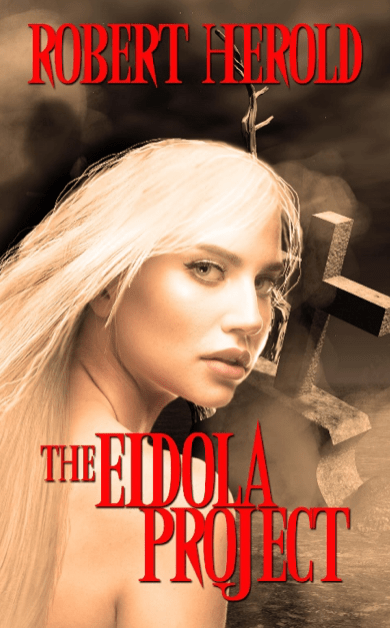
Robert Herold: My novel, The Eidola Project, is the most satisfying. I’ve had some success writing pilot scripts, winning a contest and being a finalist, but I’ve never worked so hard on one project and I’m satisfied that I’ve given it my all.

Meghan: What books have most inspired you? Who are some authors that have inspired your writing style?

Robert Herold: I’ve read The Maltese Falcon by Dashiell Hammett probably a dozen times! His clean powerful prose is masterful, as is his cinematic approach, revealing characterization largely through action and dialogue. I love everything I’ve read by David Liss, Bernard Cornwell, Stephen King, Paul Tremblay, Christopher Buckley, Caleb Carr, Peter Straub, Raymond Chandler, Will Thomas, Thomas Harris, Walter Mosley, and many more!

Meghan: What do you think makes a good story?

Robert Herold: An engaging set of characters facing a crisis is key, as is action, realistic dialogue, and masterful use of the English language.

Meghan: What does it take for you to love a character? How do you utilize that when creating your characters?

Robert Herold: For me to engage with a character, they need to convey a sense of realism within their world. I need to believe they exist, with a rich backstory, of which I may only know a little. To love a character, they need to have a moral compass and show growth in the course of the tale. I tried to imbue each character with these traits, which took some doing with an ensemble.

Meghan: Which, of all your characters, do you think is the most like you?

Robert Herold: They each reflect a different side to me. I’m not always proud of these aspects, but there they are.

Meghan: Are you turned off by a bad cover? To what degree were you involved in creating your book covers?

Robert Herold: First impressions do matter. For example, a cute fuzzy bunny would probably not attract many horror fans. On the other hand, if it had blood dripping from its mouth, then perhaps… I had quite a bit of involvement in the cover for The Eidola Project. My publisher contracts with Debbie Taylor, who did a great job!

Meghan: What have you learned creating your books?

Robert Herold: I’ve learned so many things: gratitude for those who have helped me along the way, how to make my prose more powerful, and how to use social media to reach out to potential readers. (‘Still learning!)

Meghan: What has been the hardest scene for you to write so far?

Robert Herold: Killing characters that I have come to love. Oh, well, sometimes they gotta go!

Meghan: What makes your books different from others out there in this genre?

Robert Herold: Imagine Stephen King, Caleb Carr, and Sir Arthur Conan Doyle thrown in a blender and mixed up to a bloody froth. My work combines classic elements to make a new taste treat.

Meghan: How important is the book title, how hard is it to choose the best one, and how did you choose yours (of course, with no spoilers)?

Robert Herold: Eidola is a Greek word for ghost. Since the Eidola Project is a team of paranormal investigators, it seemed like a natural (or supernatural) fit.

Meghan: What makes you feel more fulfilled: Writing a novel or writing a short story?

Robert Herold: Both are wonderful artforms. Given the time investment, I’d say that I find novel writing most fulfilling.

Meghan: Tell us a little bit about your books, your target audience, and what you would like readers to take away from your stories.

Robert Herold: I hope my books give people the creeps! In addition, as I combine my love of horror with my love of history, I hope can also bring the time in which they are set to life, the late 19th Century.

Meghan: Can you tell us about some of the deleted scenes/stuff that got left out of your work?

Robert Herold: By and large, everything that I came up with for the book is still in it, though it went through a million rewrites.

Meghan: What is in your “trunk”?

Robert Herold: I may have a movie or TV show in me! I had some success in contests writing pilot scripts (in fact The Eidola Project began as one) and I may return to this one day.

Meghan: What can we expect from you in the future?

Robert Herold: Book two in the series is already at the editor, and I am 99 pages into book three. I have plans for ten or more titles in this series. Though I will strive to make each book stand on its own.

Meghan: Where can we find you?

Robert Herold: Website ** Facebook

Meghan: Do you have any closing words for your fans or anything you’d like to say that we didn’t get to cover in this interview?

Robert Herold: After reading The Eidola Project, please consider leaving an honest review on one or more sites. In today’s world reviews are golden! Look forward to more Eidola Project books. I’ve only just begun!

The supernatural always had the allure of forbidden fruit, ever since my mother refused to allow me, as a boy, to watch creature features on late night TV. She caved in. (Well, not literally.)

As a child, fresh snow provided me the opportunity to walk out onto neighbors’ lawns halfway and then make paw prints with my fingers as far as I could stretch. I would retrace the paw and boot prints, then fetch the neighbor kids and point out that someone turned into a werewolf on their front lawn. (They were skeptical.)

I have pursued many interests over the years, but the supernatural always called to me. You could say I was haunted. Finally, following the siren’s call, I wrote The Eidola Project, based on a germ of an idea I had as a teenager. Ultimately, I hope my book gives you the creeps, and I mean that in the best way possible.

Website ** Facebook

The Eidola Project

It’s 1885 and a drunk and rage-filled Nigel Pickford breaks up a phony medium’s séance. A strange twist of fate soon finds him part of a team investigating the afterlife.

The Eidola Project is an intrepid group of explorers dedicated to bringing the light of science to that which has been feared, misunderstood, and often manipulated by charlatans. They are a psychology professor, his assistant, an African-American physicist, a sideshow medium, and now a derelict, each possessing unique strengths and weaknesses.

Called to the brooding Hutchinson Estate to investigate rumored hauntings, they encounter deadly supernatural forces and a young woman driven to the brink of madness.

Will any of them survive?