
Meghan: Hi, Christa. Welcome! Tell us a little bit about yourself.
Christa Carmen: I live in Westerly, Rhode Island, a place that swells uncomfortably with tourists in the summer but that thins and quiets and keeps secrets in the colder, darker months. I was married three years ago on Halloween at the Stanley Hotel in Estes Park, and my familiar is an eleven-year old blue tick beagle, though she often upsets my daily rituals by being entirely true to her sleepy, stubborn self. I enjoy horror, reading, writing. animals, and nature, and would love to live on a sprawling farm in the middle of the woods replete with hidden trails and secret gardens. Until then, I live at the culmination of a dead end on a piece of property with several gone-to-seed but wildly beautiful gardens of its own, too many squirrels, and not enough bird feeders.
Meghan: What are five things most people don’t know about you?
Christa Carmen:
- I did gymnastics for fifteen years and was a member of the University of Pennsylvania’s Division I Gymnastics Team. A fair amount of people probably knows this but the further away I get from the time I spent doing gymnastics, the less likely is it to come up in casual conversation.
- I love all animals but have cycled through periods during which I was obsessed with dogs, birds, horses, elephants, and foxes/coyotes/wolves.
- I collect bird feathers and love house plants.
- I was vegan for six years, but am now pescatarian (I try to buy only locally caught seafood).
- I am a quintessential Cancer: home is everything, and I’m equal parts loyal, moody, and empathetic, sometimes to a fault.
Meghan: What is the first book you remember reading?
Christa Carmen: The first book I remember having read to me is But No Elephants by Jerry Smath. The first book I remember reading myself is far more difficult to recall. I’m unfortunately not 100% sure, but the American Girl series, Little House on the Prairie, and The Boxcar Children were some of my early favorites.
Meghan: What are you reading now?
Christa Carmen: I’m always reading more than one book at a time, for better or worse, so I’ll mention titles across Kindle, Audible, and print editions: The Red Tree by Caitlín R. Kiernan, Dead Blondes and Bad Mothers: Monstrosity, Patriarchy, and the Fear of Female Power by Sady Doyle, and Women Who Run with the Wolves: Myths and Stories of the Wild Woman Archetype by Clarissa Pinkola Estés.
Meghan: What’s a book you really enjoyed that others wouldn’t expect you to have liked?
Christa Carmen: I read across a wide variety of genres so I’m not sure there’d be any one book I liked that others would find surprising. I do tend to focus on horror, mystery, suspense, and literary titles more often than science fiction and fantasy, but I became a huge fan of Blake Crouch when his sci-fi novel Dark Matter came out in 2016 and enjoyed this year’s Recursion even more so. I loved Crouch’s characters in Recursion, found the suspense scenes to be phenomenally written, and relished the feeling of falling deeper and deeper into a world populated by an infinite number of time loops. I happened to see a review of Recursion on Goodreads from a book blogger whose tastes I usually agree with and this individual was not a fan, so like any novel, it won’t be for everyone; personally, I adored it and plan to read it again at some point in the future (it’s rare that I reread a novel).
Meghan: What made you decide you want to write? When did you begin writing?
Christa Carmen: I believe that I wanted to be a writer for as long as I’ve been a reader, so since the age of five or so. With that being said, I don’t think I realized this desire until much later. The concept that one could simply ‘be’ a writer was stymied by my struggle with alcohol and drugs during those years when one should be figuring out what to do with one’s life. I’m sober now and have been for just about six years and I don’t regret that my path to writing was a bumpy one. I’m not sure I would have ever had the, ‘I love writing, I could just… write, and therefore be a writer’-epiphany had I not endured those experiences, no matter how difficult they might have been.
Meghan: Do you have a special place you like to write?
Christa Carmen: I can pretty much write anywhere, anytime, although the ideal time and place would be early morning in my home office or curled up somewhere comfortable in my house.
Meghan: Do you have any quirks or processes that you go through when you write?
Christa Carmen: I only write with one of two different brands and types of pens—a black or blue Bic Cristal 1.6 mm or a medium point Paper Mate Flair of pretty much any color—and though they each provide a completely different writing experience, I’m equally indiscriminate and happy with either. I do third draft edits on the computer, but all first drafts and second draft rewrites must be done by hand, or the words don’t flow adequately.
Meghan: Is there anything about writing you find most challenging?
Christa Carmen: Time management is always a challenging thing for me. I work a full-time job at a pharmaceutical company as a packaging coordinator Monday through Friday, and on the weekends a few times a month as a mental health counselor on the inpatient psychiatric unit at a local hospital. I do volunteer work for a few nonprofits that aim to maximize public awareness and seek solutions to the ever-growing opioid crisis in southern Rhode Island and southeastern Connecticut, and I aim to exercise (yoga or going for a run) and walk my dog every day. I try to make writing my top priority from one day to the next, but sometimes hitting a word count goal takes a backseat to the need to crash on the couch and watch a horror movie as a form of recharging the creativity batteries.
Meghan: What’s the most satisfying thing you’ve written so far?
Christa Carmen: Usually the most satisfying thing I’ve written is whatever I’m finished most recently! Aside from this ‘favorite-story-is-the-one-I-just-finished’ phenomenon, I have a special place in my heart for “Flowers from Amaryllis” (my most personal story), “Liquid Handcuffs” (a novelette rewrite of the first short story I ever wrote), “Red Room” (the story that readers seem to enjoy the most), and “The Girl Who Loved Bruce Campbell” (my most oft-published story, including publication in Corner Bar Magazine, Year’s Best Hardcore Horror Volume 2, and featured on Horror Hill, Chilling Tales for Dark Nights / The Simply Scary Podcast Network).
All four of these stories are included in my short fiction collection, Something Borrowed, Something Blood-Soaked.
Meghan: What books have most inspired you? Who are some authors that have inspired your writing style?
Christa Carmen: Books that have inspired me include The Little Stranger by Sarah Waters, Rebecca by Daphne du Maurier, ‘Salem’s Lot by Stephen King, The Lottery and Other Stories and The Haunting of Hill House by Shirley Jackson, Helter Skelter: The True Story of the Manson Murders by Vincent Bugliosi, and And Then There Were None by Agatha Christie.
The list of authors who’ve inspired me to write includes Stephen King, Shirley Jackson, Dean Koontz, Frank M. Robinson, Agatha Christie, Mary Shelley, Margaret Mitchell, Sarah Waters, Sidney Sheldon, R.L. Stine, Jennifer McMahon, Charlotte Perkins Gilman, Harper Lee, J.K. Rowling, Cormac McCarthy, Edgar Allan Poe, Stephen Dobyns, Michael McDowell, Dan Simmons, and Jack Ketchum.
The list of authors who inspire me to continue writing is long, imperfect, and ever-growing, and includes Carmen Maria Machado, Gwendolyn Kiste, Stephanie M. Wytovich, Jessica McHugh, Nadia Bulkin, Ania Ahlborn, Jac Jemc, Alma Katsu, Christina Sng, Elizabeth Hand, Robert Levy, Joyce Carol Oates, Claire C. Holland, Erin Sweet Al-Mehairi, Renee Miller, Theresa Braun, Seanan McGuire, Kelly Link, Damien Angelica Walters, Lauren Groff, Roxane Gay, Annie Hartnett, Caroline Kepnes, Ruth Ware, Sarah Pinborough, Gillian Flynn, B.A. Paris, Joe Hill, John Palisano, John Langan, Nicholas Kaufman, Grady Hendrix, Paul Tremblay, Dean Kuhta, and Calvin Demmer.
Meghan: What do you think makes a good story?
Christa Carmen: Being a horror fan, I think there’s something truly special about exploring a topic through the lens of something terrifying. It allows the reader to receive a message about that topic in a thought-provoking yet understated way, and that message subsequently sticks with the reader long after it otherwise would have if the story had presented in a more straightforward manner. Shirley Jackson commented on the close-mindedness and problematic adherence to tradition of a small village of three-hundred people in The Lottery by filtering that commentary through a plot of paranoia and rather than So I think what makes a good story is the ability to say something in a way that’s unique and resounds with readers long after they’ve put down the novel or short story collection.
Meghan: What does it take for you to love a character? How do you utilize that when creating your characters?
Christa Carmen: Characters must be relatable, i.e., not unflawed, for me to fall in love with them, and I try to employ this belief in my own work. Oftentimes I think about myself or the people in my life whom I know really well and map out a little outline of the things that make them who they are, then make sure I have a similar map for whichever fiction character I’m creating (this map can be on paper or in my head). For example, I am an aggregate of a great many hopes, dreams, likes, dislikes, personality traits, strengths, weaknesses, and idiosyncrasies, so does my protagonist (and my secondary characters for that matter) love something as much as I love my dog, want to accomplish something the way I want to accomplish my writing goals, like something the way I like English breakfast tea and Loran Doone cookies, dislike something the way I do meat and peppers, and so on and so on?
Once a character has begun to act in a way that shows they have this sort of rich back history, I’m getting somewhere in terms of characterization. This can be in remarkably subtle ways; a character’s actual like or dislike shouldn’t necessarily show up on the page, rather, they should act like a human being with likes and dislikes, because I, as the author, know what those likes and dislikes are.
Meghan: Which, of all your characters, do you think is the most like you?
Christa Carmen: I think there are pieces of me in every character I create: the memory of a perceived sin committed in childhood in the unnamed character at the center of “Thirsty Creatures,” the annoyance at being disbelieved showcased by Marci in “Red Room,” the hopelessness experienced at the lowest point of addiction seen in many of my characters (Olive in “Liquid Handcuffs,” Molly in “Wolves at the Door and Bears in the Forest,” Lauren in “This Our Angry Train”), the urge to rise above your fear and become a heroine as displayed by Kartya in “The Girl Who Loved Bruce Campbell.” I think the character I created who is most like me is Emelia Grey, the protagonist of the first novel I ever wrote and ultimately did not publish, Sequela Manor, and it is likely for this very reason that I feel the novel would only work after being extensively rewritten (and Emelia fleshed out in a dramatically different way).
Meghan: Are you turned off by a bad cover? To what degree were you involved in creating your book covers?
Christa Carmen: If the cover for a self-or indie-published book has been pieced together through clipart images and an obvious desire to cut corners, it can certainly be a turn-off, but I’m also quite forgiving; if I hear good things about a book with a cover I wouldn’t necessarily have picked myself, I would of course give it a try.
For Something Borrowed, Something Blood-Soaked, Eddie Generous, publisher, editor, artist, and wearer of whatever other hats Unnerving requires of him, thought to use the image of a pig-faced woman in a plunging red satin dress after reading “Lady of the Flies,” one of three original stories that appear in the collection. “Lady of the Flies” is about Priscila Teasdale, a haunted house worker whose life has been a series of unfortunate events, and who copes with a last, devastating blow by leaning a bit too heavily on her haunted house persona. The cover represents not only Priscila, Lady of the Flies, but all of the beautiful grotesque I endeavored to showcase via the thirteen stories I chose for this collection.
Meghan: What have you learned creating your books?
Christa Carmen: I’ve learned about the Hundred-Mile Wilderness of the Appalachian Trial and the Equal Pay Act of 1963; I’ve learned about Charles Dickens’ use of staves in A Christmas Carol and the way certain plants (as well as certain body parts) decay after death; I’ve learned about hummingbird aggression and the slaughter of pigs, about the poetry of Edgar Allan Poe and how long it would take to choke on honey; I’ve learned about the different layers of skin and the feeding patterns of sharks; I’ve learned about the pre-witch trial era of colonial America and organ regeneration, about modern urban legends and EMF meters and the geography of upstate New York. I’ve learned about opioid-free analgesics and coywolves, about hybrid tea roses and viburnum blueberries. I’ve learned about Audubon’s Birds of America and the eastern shoreline of Block Island, about witches and Bluebeard and UFOs and My Chemical Romance and totem poles and Cthulhu and Fae.
These are, of course, I’ll things I’ve learned from the research for my writing; what I’ve learned more than anything from the crafting of my work is who I really am. I know what scares me and what’s important to me and what I look for in a friend. Life certainly informs my writing, but my writing also informs my life.
Meghan: What has been the hardest scene for you to write so far?
Meghan: One of the stories in Something Borrowed, Something Blood-Soaked is called “Flowers for Amaryllis,” and I can’t tell you how many times I’ve rewritten it. Even now, in its finished state, it’s gone through so many overhauls and tweaks, that the story seems strange to me. It’s about a young woman whose circumstances take a dark turn after her parents are killed, but who stumbles across an abandoned puppy in a rainstorm and turns her life around in order to care for this creature more helpless than she. Years later, when her dog dies, she is poised to make a decision that would very quickly return her to that place of danger and despair, but something intervenes, though I won’t say what.
I wrote the first draft of this story at least two years ago, if not longer, and it’s clear, as it would be to anyone who knows me, that I wrote it from a very personal place, a place that recoils from the idea of losing my own dog in however many years. I think I thought I could write away my anxiety, my uncertainty, my dread, and it would all go into this story and get tied up with a neat little bow, and of course, that’s not how stories, or life, work. Still, I persisted with the idea, and I wrote, rewrote, cut, and altered the structure, until I was as satisfied as I was going to be with the result. It still doesn’t do that panicky feeling in my chest when I think about losing this dog that I’ve already had for eleven years, and relied on for so much, justice, but I think it comes close enough. And that’s all I can really ask for, right? To have captured even a tiny piece of those feelings, those thoughts in my head, and not to have diminished them too considerably on the page.
Meghan: What makes your books different from others out there in this genre?
Christa Carmen: I write all types of horror, from comedic to Gothic and everything in between. I stay slightly removed from writing the traditional horror villain stories—vampires, werewolves, etc.—although I’ve certainly penned stories containing monsters. I suppose it would make sense that the horror fiction I write encompasses a wide variety of tones, because the horror fiction and film I consume encompasses that same variability.
As for what makes my collection or the novel that I’m currently working on different from others out there in the horror genre, I think my writing style reflects this appreciation for different tones and subgenres; I can start working on a story that, in my head, looks to be darkly comedic, only to find that it works better without the black humor. I can also outline a story to fit the guidelines of an anthology or other market I want to submit to, then discover that, while the subject matter might remain consistent, the work ends up shifting from, say, a simple haunted house story to a haunted house story that includes commentary on a social issue I’ve been wanting to explore along the way.
Meghan: How important is the book title, how hard is it to choose the best one, and how did you choose yours (of course, with no spoilers)?
Christa Carmen: Titles are absolutely important, and it has been my experience that a title either presents itself without fanfare with the completion of a project or makes you toil and sweat and bleed for the one that will work best with what you’ve created.
Something Borrowed, Something Blood-Soaked is actually the title of one of the flash fiction pieces in the collection, originally published by Fireside Fiction Company and edited by the incomparable Julia Rios. I felt it would be a good name for the collection as a whole because first, there are three different stories—“Red Room,” “Something Borrowed…,” and “All Souls of Eve”—that have to do with the topic of marriage, and second, I took into consideration the traditional Lancashire rhyme that details what a bride should wear at her wedding for good luck:
“Something old,
something new,
something borrowed,
something blue,
and a silver sixpence in her shoe.”
The superstition goes that the old item provides continuity (or protection for the baby to come, because of course all brides’ brains will quickly turn to mush thinking of the inevitable baby that will soon be on the way!), something new offers optimism for the future, the item borrowed from another is for good luck, or ‘borrowed happiness,’ the color blue is a sign of purity, love, and fidelity, and the sixpence is a symbol of prosperity, or acts as a ward against evil.
I like this little grab-bag idea of outfitting oneself with trinkets and talismans before stepping into the unknown territory of a marriage, a union that represents commitment, but also change and a future that is largely unknown. I thought that this concept could extend to the experience of reading the collection… at the very least, the reader should bring something with them to ward off evil; any pleasure the characters in Something Borrowed, Something Blood-Soaked experience is borrowed happiness at best.
Meghan: What makes you feel more fulfilled: Writing a novel or writing a short story?
Christa Carmen: I have a bit of a problem (call it a lingering symptom of my previous addictions) with the desire for instant gratification, so there’s something really rewarding for me in taking a short story from conception to completion in a matter of weeks. With that being said, nothing felt as good as completing my 100,000-word Gothic horror novel, Sequela Manor, back in 2015, and I’m hoping for that same ‘writer’s high’ this December (or thereabout) when I finish my current novel work-in-progress.
Meghan: Tell us a little bit about your books, your target audience, and what you would like readers to take away from your stories.
Christa Carmen: Something Borrowed, Something Blood-Soaked was released from Unnerving on August 21, 2018. From the description on Amazon: “A young woman’s fears regarding the gruesome photos appearing on her cell phone prove justified in a ghastly and unexpected way. A chainsaw-wielding Evil Dead fan defends herself against a trio of undead intruders. A bride-to-be comes to wish that the door between the physical and spiritual worlds had stayed shut on All Hallows’ Eve. A lone passenger on a midnight train finds that the engineer has rerouted them toward a past she’d prefer to forget. A mother abandons a life she no longer recognizes as her own to walk up a mysterious staircase in the woods. In her debut collection, Christa Carmen combines horror, charm, humor, and social critique to shape thirteen haunting, harrowing narratives of women struggling with both otherworldly and real-world problems. From grief, substance abuse, and mental health disorders, to a post-apocalyptic exodus, a seemingly sinister babysitter with unusual motivations, and a group of pesky ex-boyfriends who won’t stay dead, Something Borrowed, Something Blood-Soaked is a compelling exploration of horrors both supernatural and psychological, and an undeniable affirmation of Carmen’s flair for short fiction.”
The stories in Something Borrowed, Something Blood-Soaked were published in places like Fireside Fiction, DarkFuse Magazine (which unfortunately exists no more), Third Flatiron’s Strange Beasties anthology, Unnerving Magazine, Tales to Terrify, and Year’s Best Hardcore Horror Volume 2, to name a few. The publisher asked upfront that a certain percentage of the stories in collection submissions be reprints, so once I’d filled that quota, I added two stories that had been published by markets no longer in circulation, changed one story that had appeared on a podcast to the novella version I’d been hoping for a chance to unveil, and chose three brand new stories to tie everything together.
Ultimately, I am very pleased with the balance that was achieved. I think readers can appreciate a collection that includes reprints, especially from magazines and anthologies they may have read previously, and hopefully enjoyed, as well as a handful of new tales that allows them to experience an author’s latest work.
In putting together this collection, I really strove to include stories that showcased my range, not just as a writer, but as a horror lover, and all the different types of horror stories I have penned to date. Something Borrowed, Something Blood-Soaked includes post-apocalyptic, extreme, slasher, paranormal, supernatural, psychological, zombie, Gothic, magical realism, weird, and creature horror, so I truly hope the phrase, ‘there’s something for everyone,’ will apply!
But those tried-and-true tropes are thinly veiled stand-ins for themes that run deeper. Without giving too much away, the babysitter in “Souls, Dark and Deep” might possess powers in the same vein as those of a witch, but she uses her powers not for evil, but to level the playing field against evil and injustice. The depraved serial killers in “Red Room” function less to scare à la Michael Myers, and more to warn of the peril men face when they disbelieve women. The ghost of Aunt Louise in the eponymous flash fiction piece is a hardcore, Gloria Steinem-quoting, take-no-nonsense-and-even-less-prisoners bad-bitch feminist. And the shadow wolf in “Flowers from Amaryllis” represents many, many things: the fear of eventually losing a companion animal, the fear of losing a parent, the fear of being alone, the fear of going mad, the fear of not being able to be true to who you are.
Meghan: Can you tell us about some of the deleted scenes/stuff that got left out of your work?
Christa Carmen: As I mentioned above, I changed one story in Something Borrowed, Something Blood-Soaked that had originally appeared on the Tales to Terrify podcast to the novella version I’d been hoping for a chance to unveil, and this piece was “Liquid Handcuffs.” Most of the passages that were cut had to do with the return of Nicole Price, the therapy client Olive is seeing at the start of the story, to Eddie’s bed (Eddie is the spurned client who has kidnapped Olive), and what this means for Olive and Eddie’s shaky relationship, if their tumultuous connection can even be called as such. As with anything that gets cut from my work, I still maintain a level of appreciation for the material, but I have learned to kill my darlings, if not whole-heartedly, then at least begrudgingly.
Meghan: What is in your “trunk”?
Christa Carmen: Oh goodness, what isn’t in my trunk? Everything but the skeleton of a bride still in her wedding dress, I imagine! Let’s see, I have an unfinished novella called The Curious Incident at the All Souls’ Chapel and Crematorium, 13 Sessions, a body horror novel about a thirty-something year old woman who writes a blog about the pharmaceutical industry and ends up pursuing acupuncture as a personal infertility treatment, with monstrous results, Coming Down Fast, a novel about a female Charles Manson type and her ‘followers,’ the crime they commit, and the first female police chief in Westerly, Rhode Island’s three-hundred fifty year history who pursues them, a short story called “Daydream Believers” about a married couple who systematically murder everyone in their neighborhood, a novella called “Serenità, Interrotta” about a women’s NA group that’s a front for a coven of witches, and two or three other short stories that are hopefully pretty close to completion.
Meghan: What can we expect from you in the future?
Christa Carmen: I have a new story, “Shadows,” out in Issue 4 of Outpost 28, and another new story called “The Shivers” in an illustrated middle grade horror anthology, additional details forthcoming. There have been a few delays in publication, but I have two stories coming out with Chilling Tales for Dark Nights, “Shark Minute” and “What Are Little Girls Made Of?”, the first as part of Chilling Tales’ Scary Stories to Tell in the Dark tribute anthology, the second on The Simply Scary Podcast Network. I have a nonfiction essay, “A Ghost is a Wish Your Heart Makes,” coming out as part of a scholarly anthology of articles on Netflix’s The Haunting of Hill House series, and my short story, “And Sweetest in the Gale is Heard” will be part of an amazing all-female anthology, Not All Monsters, edited by Sara Tantlinger, to be released by Strangehouse Books in the fall of 2020.
After that, I hope to release the new novel I am working on for my thesis at Stonecoast, which is a historical horror novel, the details about which I won’t say too much more.
Meghan: Where can we find you?
Christa Carmen:
Author Website ** Goodreads ** Amazon Author Page
Facebook ** Twitter ** Instagram
Meghan: Do you have any closing words for your fans or anything you’d like to say that we didn’t get to cover in this interview?
Christa Carmen: Thank you so very much for having me on Meghan’s House of Books site, and please seek me out on social media if you’d like to ask me any additional questions not covered in the interview (although this interview was pretty damn thorough!), order a copy of my collection, or discuss horror fiction in general.
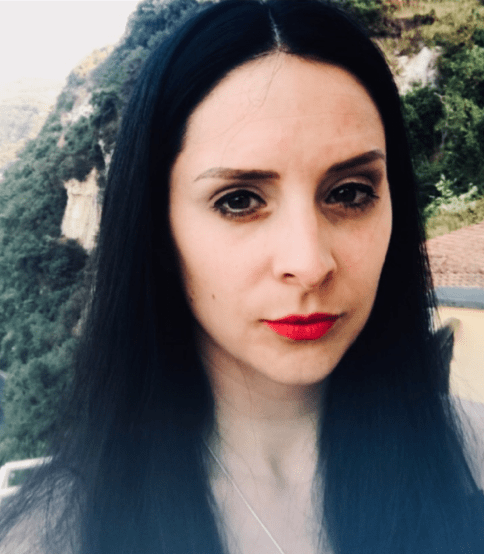
Christa Carmen’s work has been featured in anthologies, ezines, and podcasts such as Fireside Fiction, Year’s Best Hardcore Horror, Outpost 28, and Tales to Terrify. Her debut collection, Something Borrowed, Something Blood-Soaked, is available now from Unnerving, and won the 2018 Indie Horror Book Award for Best Debut Collection. Christa lives in Rhode Island with her husband and their bluetick beagle. She has a bachelor’s degree from the University of Pennsylvania in English and psychology, a master’s degree from Boston College in counseling psychology, and is an MFA candidate at the Stonecoast Creative Writing program, of the University of Southern Maine. You can find her online at her website.



Something Borrowed, Something Blood Soaked
A young woman’s fears regarding the gruesome photos appearing on her cell phone prove justified in a ghastly and unexpected way. A chainsaw-wielding Evil Dead fan defends herself against a trio of undead intruders. A bride-to-be comes to wish that the door between the physical and spiritual worlds had stayed shut on All Hallows’ Eve. A lone passenger on a midnight train finds that the engineer has rerouted them toward a past she’d prefer to forget. A mother abandons a life she no longer recognizes as her own to walk up a mysterious staircase in the woods.
In her debut collection, Christa Carmen combines horror, charm, humor, and social critique to shape thirteen haunting, harrowing narratives of women struggling with both otherworldly and real-world problems. From grief, substance abuse, and mental health disorders, to a post-apocalyptic exodus, a seemingly sinister babysitter with unusual motivations, and a group of pesky ex-boyfriends who won’t stay dead, Something Borrowed, Something Blood-Soaked is a compelling exploration of horrors both supernatural and psychological, and an undeniable affirmation of Carmen’s flair for short fiction.
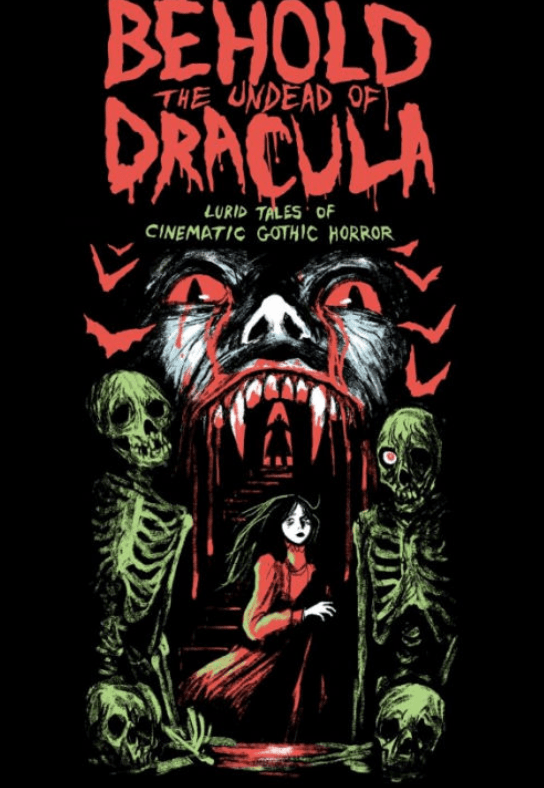
Behold the Undead of Dracula: Lurid Tales of Cinematic Gothic Horror
The classic monsters have returned… again!
During the gothic horror revival of the late 1950s through the 1970s, vampires, witches, devil worshipers, occultists, spirits, ghouls, and grave-robbing mad scientists returned to terrify a new generation of thrill-seeking movie audiences. Influenced by the social and cultural upheavals of the time and the ever-present specter of nuclear war, these classic terrors became more violent, more subversive—and more seductive.
Behold the Undead of Dracula features stories inspired by the films of the gothic horror revival, dripping with blazing bright-red blood and radiating sex appeal. Eleven of the best authors in underground horror fiction offer up unique and terrifying takes on this special era of cinematic history, summoning spine-tingling tales sure to frighten and seduce unwary readers.
Grab your popcorn, take a seat, and watch as the curtain rises on these neo-gothic nightmares. Bear witness to the lurid and sensual horrors of…
Behold the Undead of Dracula!
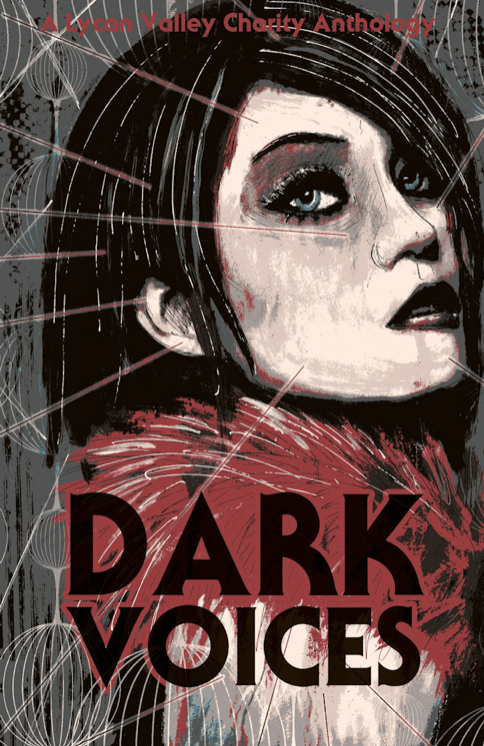
Dark Voices: A Lycan Valley Charity Anthology
Dark Voices is a Lycan Valley Charity Anthology — 100% of profits will go to benefit breast cancer non-profit organizations. Voices are meant to be heard. Darkness amplifies sound. And Dark Voices cannot be silenced. You won’t find pages filled with sunshine and lollipops or rose glass filtered landscapes. Instead, gloom and evil lurks, monsters and despair prevail. As you read these 38 women of horror, sci-fi and dark fiction, their voices will linger in your mind and infiltrate your soul. Their voices are loud. Their voices are strong. Their voices are dark. Voices include: Theresa Derwin * Michelle Scalise * Linda D Addison * Diane Arrelle * Sara Dobie Bauer * Charlotte Bond * Chesya Burke * Christa Carmen * Lynn M Cochrane * Ruschelle Dillon * Pauline E Dungate * Amber Fallon * Cara Fox * Julie Frost * Charlie Hannah * Penny Jones * Reen Jones * Calypso Kane * Kitty Kane * Nancy Kilpatrick * Laura Mauro * Keris McDonald * Helen Mihajlovic * Christine Morgan * Billie Sue Mosiman and Frankline E Wales * Anne Nicholls * Marie O’Regan * Hayley Orgill * NOA Rawle * Eden Royce * EF Schraeder * Angela Slatter * Kristal Stittle * KD Thomas * Angeline Trevena * Nemma Wollenfang * Mercedes Murdock Yardley * Erin Sweet Al-Mehairi
Year’s Best Hardcore Horror Volume 2
Comet Press is extremely proud to present its second annual anthology featuring this year’s hardcore corps of authors with the best extreme horror fiction of 2016 that breaks boundaries and trashes taboos.
Selected from indie publishers and magazines such as Weirdpunk Books, Necro Publications, Splatterpunk Zine, Corner Bar Magazine, Carrion Blue, and Raw Dog Screaming Press, these stories represent the state of the art of extreme horror fiction. Whether extreme in theme or with gore galore, these disturbing tales will be hard to forget even though you may wish you could.
Yes, there will be blood. Lots of it. Gore galore and plenty of the gushy stuff. But you’ll also find tales less graphic but with hardcore attitudes, transgressive stories you’re not sure you should be reading, stories showing you things you shouldn’t see. Visceral fiction.
This year’s best hardcore fiction features work by Michael A. Arnzen, Jasper Bark, Christa Carmen, Marvin Brown, Adam Cesare, Matthew Chabin, Jose Cruz, Andrew Darlington, Paolo Di Orazio, Stefanie Elrick, William Grabowski, Sarah L. Johnson, Eric LaRocca, Alessandro Manzetti, Tim Miller, Alexandra Renwick, Bryan Smith, Jeremy Thompson, Tim Waggoner, Wrath James White, and Stephanie M. Wytovich.
Strange Beasties: Third Flatiron Anthologies, Fall 2017
Nothing is too strange for Third Flatiron’s new anthology, “Strange Beasties.” Find something unsettling at every turn, from rising primordical monsters and gods to murderous supernatural predators and vengeful soul-hungry demons.
There’s plenty of dark comedy too, with gamblers who race unusual beasts, ogres who run cooking podcasts, horrifically dysfunctional families, and unhinged sorcerers.
An international group of new and established contributors to “Strange Beasties” makes this an original and varied collection that is sure to please fans of science fiction/fantasy, humor, and horror. Writers include Bruce Arthurs, John Sunseri, Philip John Schweitzer, Tim Jeffreys, Sarah Tchernev, Lucy Harlow, Philip Brian Hall, Jean Graham, Marc E. Fitch, Christa Carmen, Isobel Horsburgh, Paulo Da Silva, Jeff Hewitt, Wulf Moon, Daniel Rosen, Brenton Clark, John J. Kennedy, and Brian Trent. Foreword by Lizz-Ayn Shaarawi.
Join us for an exhilarating ride through uncharted dark territory–and keep an eye out for strange beasties.








 Meghan's House of Books