No Hockey Masks or Machetes Allowed (Top 10 Episodes of Friday the 13th: The Series)
For Tim and Sarah
Friday the 13th: The Series (1987-1990) may have been the best television show of the 1980’s. It is definitely in my top ten of TV shows. There was nothing like it on the air at that time. Combining the horror of past shows like The Twilight Zone, fellow anthology shows Tales from the Darkside, Monsters, and Night Stalker—with the modern horror of the films of its day (gore and sex) was brilliant.
This TV series has no relation to Jason or the Friday the 13th films except its producers. Originally it was to be called The 13th Hour, but it was probably a better marketing idea to cash in on the films. Strangely, now there is a TV show in the works based on the films and will share the same title. That’s lazy on the part of network execs. You can just as easily use the Jason name in the title and everyone will know who you are talking about. In England, the show was known as Friday’s Curse.
This show was created by Frank Mancuso Jr. and Larry B. Williams. Shot and produced in Canada. I wonder if this was one of the shows to give producers an idea how many great locations and how much cheaper it was to film in Canada. The eerie theme music was composed by Fred Mollin.
The premise is that two cousins by marriage who never met, inherit an antiques shop after its owner, Uncle Lewis Vendredi (played by great character actor R.G. Armstrong—Pat Garrett & Billy the Kid, White Lightning, Children of the Corn), dies mysteriously. Micki and Ryan soon learn that the antiques sold there were all cursed by the devil himself. With the help of Jack Marshak, the three hunt down these objects, learn the dangers of this job, even feel guilty not being able to prevent deaths.
That’s what separates this show from a lot of copy cats (Warehouse 13). It’s very human and you get to know characters.
Also the talented group of writers and directors, actors, staff that ran this show, made it look and feel like a network TV series, not a low budget syndicated show. The stars had charisma, and melded well with each other. John D. Lemay as Ryan, pop star Robey as Micki, ever reliable Chris Wiggins as Jack Marshak, and later Steven Monarque as Johnny. 72 episodes were made, three seasons. Here’s the list:
A hearing aid that lets the wearer hear the thoughts of people around him. Adam Cole is a mentalist in a double act that is going badly because he has a hearing problem. He goes to the ear doctor and promptly steals an antique hearing aide. This enables him to hear others thoughts. The only problem is the thoughts build up inside and if he doesn’t release them onto another poor unsuspecting soul, his body could release them for him, which is like an overload.
Why is this my favorite episode? How it handles the subject of con artists working in the so called “Spirit” profession. They make people think they have supernatural powers by using old Magician’s tricks, and steal hard earned money from the working class. It’s also one of the gorier episodes and a sex scene that the producers got away with because of late night syndication. But the script, direction, and acting is perfectly executed. It also contains my favorite quote and delivery between Jack and Johnny. Johnny: You guys won’t let me write about any of this stuff. Jack: that’s because you write fiction and that has to make sense. According to Wikipedia, this episode was influenced by Magician and debunker James Randi accused (and proved) that Healer Peter Poppoff used a hearing device to receive information about his congregation that he regularly cured of all medical problems they had.
“First the glove heals, then it kills to pay for it.”
David Cronenberg directed this gem. The story bears some resemblance to the episode above, except a white glove that can heal, and if those ailments are not rid of in good time, the owner has the problems ten folds. What a unique and great idea, one I hadn’t seen used in horror television before. Just like the episode above, the makers had to have been following James Randi’s exploits to come up with this story. It also deals with body horror, which fit right in with Cronenberg’s other films. It even has one of Cronenberg’s mainstays guesting, Robert A. Silverman as a debunker, named Jerry, who specializes in faith healing con men. Jack and Jerry go way back, never seeing eye to eye about whether supernatural exists or not. The best thing about this episode is the twist in the story, something the viewer wouldn’t expect.
This was the pilot episode about a killer doll. The episode that explains the premise of the show and introduces Jack, Micki, and Ryan. Sarah Polley is a little girl, Mary, who hates her stepmother, and to be frank, rightfully so. The woman is overbearing and controlling, and downright mean to the little girl. They wander into the shop and discover Uncle Lewis ready to close. They talk him into letting them look around and Little Mary sees a doll she wants. Lewis has second thoughts about selling it, and tells them to leave. Turning away a customer of cursed items has dire consequences, and the Devil or evil presence kills Uncle Lewis. Next we meet Micki who is about to marry a successful Lawyer. She has the intention of selling the shop. She meets Cousin Ryan. She convinces Ryan to have a sale so she can get back to her life, but Ryan really has nothing else going on. During the sale, Mary’s father buys the doll for her. The doll begins to talk to her, and they make a pact to rid themselves of the stepmother just as she wants to take the doll away. One late night they catch Jack Marshak sneaking around, and this is where Jack relates his story that he was the one that travelled the world collecting the antique oddities for Lewis to sell. They discover the manifest and the contract between the Devil and Lewis. The show is off and running.
The cursed item is boxing gloves. When used, literally the shadow of a boxer appears on walls or buildings and beats their victim to death. A never- was been sweeps the floors and is prodded by fellow trainees at the gym, gives him cause for vengeance and builds an even bigger bloated ego. He first discovers the gloves in the manager’s office tries them on, and when the manager catches him, the shadow beats the manager to death. This definitely could have fit into the Twilight Zone. At one instance even Jack gets caught up in a tangle with that shadow.
This episode is about a cursed pool stick. Danny is a talented pool hustler who is up to win 5,000 dollars in a big match. His fiancé Jennifer believes that he is the man who of her dreams. Jack and Ryan go off to find cursed snow shoes, leaving Micki to mind the store and eventually team up with that kid Johnny who is helping locate that pool stick. This is where we meet Johnny who ended up replacing Ryan as one of the main pursuers of cursed objects. This episode is notable for Lolita Davidovich guest starring as the sister of a woman who would do anything to make her boyfriend a success. Full of characters who care of nothing but themselves and pay the price for it.
This one is about a cursed tattoo kit. Gambler Tommy Chen can’t win for losing. He sees a rival gambler using a tattoo kit that not only gives good luck, but the tattoos he places on his victims come to life to ensure death as the price. Tommy kills the rival and takes the tattoo kit. His grandfather notices the writing on the box, he knows its evil and also the name of Lewis’s shop. He calls Jack and asks to return it. Which turns out that the kit is listed in the manifest. Tommy also owes quite a bit of money to the mob. He is given 24 hours to bring in a lot of money in a short time. An excellent episode that brings the gang into Chinatown and introduces the idea that they are a family, whether they believe it or not. The animation in this episode is tremendous, must have cost a fortune for TV.
Cursed 1950’s car stereo that can take you back to a simpler time, before you had to give people of color their rights. A poignant episode. Very well written (notable for replacing the adage of the N word with colored), extremely well-acted episode. You can see the influence of the 1988 film Mississippi Burning here.
Robert A. Silverman guest stars again, this time playing slow-witted Archie who buys the cursed car radio for his Brother Ray’s 1954 Chevy. When blood is drawn, the car can take whoever is in the vehicle back to that year. It’s no surprise that Ray hate’s black people, because his father (a member of the Klan) had murdered a black man and a mysterious witness put him in prison and eventually put to death by the state. Ray is enamored to be back in the past and see his father, whom he never met.
A ballsy episode, and frankly, I don’t think they can produce such a story these days in this PC world. Terrible times, no one should have to go through any kind of racism, or torment for their skin color or for any reason. But when dealing with villains of any kind, you can’t water it down (as in the last season of American Horror Story with Kathy Bates character). When you watch this episode, you come away informed and again, the villains in this episode have reason for the things they do, and the show doesn’t apologize, because they are villains. The ending is just and satisfying, the scenes with the Klan a lot scarier than anything the show has ever produced.
A pair of Houdin cabinets is the focus of this one. We get to see Jack discuss his early days as a magician. There is death as payment as always, and the victims get locked in the cabinets to guarantee magic works. Jack and Micki enter a magic contest. One of the few episodes where the owner doesn’t know about the curse. A very bloody episode. Once again we see Jack converse with people he knew back in his days as something other than a pursuer of cursed objects.
A bottle traps victims in their worst memories. This was an end of the season flashback episode, to help hype the coming season and help newcomers to find out more about the show. According to Wikipedia, this was also the result of a writers strike during production. Micki and Ryan are trapped in the vault with the cursed items. Rashid makes an appearance as does Uncle Lewis. It was an ingenious way of reintroducing Lewis, adding a possible helper and showing the audience all of the previous cursed antiques and backstory. Remember when shows used to use flashbacks? A thing of the past.
This episode holds a special place in my heart. Not only was it the first episode I had seen, but on a Saturday night, watching TV with my brother and Father, trying to find something on at ten pm. I’m not sure why my Father stopped on the syndicated channel (the newly dubbed Fox 35 affiliate of Fox network) we thought this was a Fox show. I’m not even sure why it was on at ten pm, when usual time slot was eleven pm(on another channel, a CBS affiliate, it was on at eleven thirty and even spurred the local newscaster of the area to film a short commercial urging parents not to let their children watch this show). My brother and I were hooked( later to involve our younger sister in our obsession over Cursed antiques show), and our Father watched one or two more, then he didn’t care to watch anymore, probably the late hour and silly premise did it for him.
The Cupid of Malek makes women fall in love with the owner of the little statue. The three of them tear around a college campus looking for the statue and the person who owns it. You get to see some great animation with the use of the statue shooting arrows and his evil facial expressions. Denis Forest was great as both funny and a creepy would-be rapist. This episode was masterfully directed by Atom Egoyan, best known for such indie films as Exotica, The sweet hereafter, and Felicia’s journey.
It was hard to pick the top ten. I even had five more picked when I realized the article would be too long. I know I skipped fan fav’s as The Scarecrow, or Vanity’s mirror, The Quilt of Hathor, but these are my favorites. My list is way too long to include in its entirety.
Barry London is a Fixer by trade, lent out by his boss to other crime lords. He is sent to his hometown of Geneva, New Jersey to deal with corrupt cops at war with each other over a missing video, dealing with an ex-girlfriend who happens to be a cop, the wife of a good friend who also wants to sleep with him, both looking to tame the wild and rough London. On top of all that, London finds himself looking several murders and Firebug who torched a nightclub. The key to it all is cracking the mystery of Mr. Zero.
Do you need a potion? How about a spell? Maybe… murder someone? Evelina Giles is a witch chosen by magic, just like her father. She operates a shop in a sleepy college town in Virginia. When a businessman approaches Evelina for a spell so he can steal a project from his boss, Evelina’s practical joke turns deadly. Or did it? Now, along with her assistant Mungo and her Journalist-friend Jeanie, Evelina must investigate not one, but multiple murders.
Meghan: Hi, Mark. Welcome to Meghan’s House of Books. Tell us a little bit about yourself.
Mark Slade: Not a whole lot to tell. Been writing off and on my entire life. I am the author of A Six Gun & the Queen of Light, Blackout City Confidential, Witch for Hire (An Evelina Giles book), and Mr. Zero (A Barry London Novel). I also write and produce audio dramas Blood Noir and Daniel Dread.
Meghan: What are five things most people don’t know about you?
Mark Slade: Those secrets are buried with anyone who knows them! I don’t know. I think people know a little more than I want them to, but I can’t shut up. Well, my favorite movie isn’t Crime or fantasy or horror related. It’s a British film about WWII called Hope & Glory. John Boorman film. People may not know that. I am controlled by a Chihuahua through his psychic powers. I’m a Brit TV enthusiast. I love British Television programs, especially old ones. I’m a huge Dallas Cowboys fan, but I think the world knows that. I’m also a jazz fan, but I love Rock n Roll. Guitar music, big Waylon Jennings/outlaw country fan… You know, I don’t think many people know I like Sade’s music.
Meghan: What is the first book you remember reading?
Mark Slade: Where the Wild things Are. I saw a guy on PBS reading parts of it. I loved the art. But he left the ending. I think I got it from a school library and read it or maybe thought I read it. I probably made up my own story in my head. Second book, was an issue of Spider-Man. The death of Gwen Stacy, I think. Holy cow, it brought me to tears.
Meghan: What are you reading now?
Mark Slade: Jim Thompson’s After Dark, My Sweet. And a biography of Ross Macdonald. Ross Macdonald was another writer that has cast a HUGE shadow over my life. Everywhere I go, his stories stay with me.
Meghan: What’s a book you really enjoyed that others wouldn’t expect you to have liked?
Mark Slade: Well, when my sister was reading Anne of Green Gables, I read it, too. I really liked it even though I wasn’t a young girl. Just a good story.
Meghan: What made you decide you want to write? When did you begin writing?
Mark Slade: Well, like I said before, I attempted when I was ten after that TZ episode. But at 14 I saw a movie on Elvira, Mistress of the Dark and thought “Yeah, I can do better than that!” So I wrote a story about a father who threw his kids down a well. Naw, I couldn’t do better than that.
Meghan: Do you have a special place you like to write?
Mark Slade: Convenient place is more like it. Dining room, Dining room table.
Meghan: Do you have any quirks or processes that you go through when you write?
Mark Slade: I think about what I’m writing way too much. Takes over my life. I also try to listen to music that might inspire stories and characters.
Meghan: What books have most inspired you? Who are some authors that have inspired your writing style?
Mark Slade: Definitely Richard Matheson, Ed McBain, and Ross Macdonald. Sparse style, lots of dialogue. Get to the story as quick as possible. Writers I see in print now that I am influenced by a lot are Paul D. Brazill, ever since I discovered his story Drunk on the Moon – I’ve always wanted to write a story as good as that – and G. Wayne Miller. Everything he has written, non-fiction, or fiction, especially We Who Are His Followers. Great stuff.
Meghan: What do you think makes a good story?
Mark Slade: Let the characters tell the story. Who cares about literature or styles of putting words on a paper. Lit, that’s a made up marketing tool. Best stories and writers come from the pulps. No lie.
Meghan: What does it take for you to love a character? How do you utilize that when creating your characters?
Mark Slade: Flaws. If they are truly a well-rounded character they can’t be completely a good person all the time, nor a bad person.
Meghan: Which, of all your characters, do you think is the most like you?
Mark Slade: Oh, crap! I hope none of them! They do some awful things. Might be some interests that are the same, other than that, none.
Meghan: Are you turned off by a bad cover? To what degree were you involved in creating your book covers?
Mark Slade: No. Not at all. If the plot on the back interests me, I’ll read it.
Meghan: What has been the hardest scene for you to write so far?
Mark Slade: Ah man. Some sex scenes are hard, or they were. Now its not as big a deal. I think in my new book it’s a scene The Klu Klux Klan chase somebody. And its set in 1956. That was tough.
Meghan: What makes your books different from others out there in this genre?
Mark Slade: That I do not know. We all feed off each other. No ego or lack of can change that. I just want people to like or give my stories a chance.
Meghan: What makes you feel more fulfilled: Writing a novel or writing a short story?
Mark Slade: Short story is definitely an art form. I just started novels. Getting it done and hitting a word count, plus making the story work. I write crime mysteries now. That’s a tough nut to crack.
Meghan: Tell us a little bit about your books, your target audience, and what you would like readers to take away from your stories.
Mark Slade: Not sure if I have a target audience. I’d like to have a general or mass audience, if that’s possible. Maybe people who enjoy Crime, Horror, and fantasy stories. Taking away from my stories, I think good characters. I hope. A story that sticks to your ribs, like good food. A story they’ll never forget.
Meghan: Can you tell us about some of the deleted scenes/stuff that got left out of your work?
Mark Slade: For Blackout city Confidential, two scripts and one story was left out and some artwork by Lissanne Lake. Lots of murders, lots of great art left in the cold. Too bad.
Meghan: What is in your “trunk”?
Mark Slade: A collection of all my short stories would be nice. One huge book. In the audio drama world, I’d like to do two projects: One an adaption of the Lew Archer books or Ed MacBain’s 87th Precinct. That would be really great. Another, Dangerous Duos, would be the title where unlikely fictional/or historical characters get involved in some sort of action story. The other part of the series would to take fictional characters who would go together and have adventures, like Mrs. Peel and Honey West. Or in the case of real people, Bruce Lee and John Holmes break up a white slavery ring. Or Jim Brown and Truman Capote investigate Ted Bundy.
Meghan: What can we expect from you in the future?
Mark Slade: I have a book being edited by Next Chapter called Strange Corridors. Illustrated by Cameron Hampton. Its about a little girl taken by a mysterious Jester into weird lands. And I’m writing a book called Yardbird about a man doing the bidding of an oil tycoon, such as investigate murders, blackmail payoffs, get rid of dead bodies.
Barry London is a Fixer by trade, lent out by his boss to other crime lords. He is sent to his hometown of Geneva, New Jersey to deal with corrupt cops at war with each other over a missing video, dealing with an ex-girlfriend who happens to be a cop, the wife of a good friend who also wants to sleep with him, both looking to tame the wild and rough London. On top of all that, London finds himself looking several murders and Firebug who torched a nightclub. The key to it all is cracking the mystery of Mr. Zero.
Do you need a potion? How about a spell? Maybe… murder someone? Evelina Giles is a witch chosen by magic, just like her father. She operates a shop in a sleepy college town in Virginia. When a businessman approaches Evelina for a spell so he can steal a project from his boss, Evelina’s practical joke turns deadly. Or did it? Now, along with her assistant Mungo and her Journalist-friend Jeanie, Evelina must investigate not one, but multiple murders.
Mommy… Why are all those people’s heads on sticks? Well, let’s talk about that later.
These are the types of conversations I hear on Halloween. Children sometimes have questions about things they don’t understand. Heads on sticks would fall into this category. The unspoken answer to this particular exchange might run as follows: “Because your father moved us from Michigan to godforsaken Arkansas, right next door to this redneck who has no sense of decorum.” Or something like that. You see, I don’t decorate for Christmas, Thanksgiving or Independence Day. These days pass much like all the rest on my calendar. I don’t resent these occasions or those who celebrate them, but they simply do not resonate with my experience. But I do decorate for Halloween. In fact, my house has traditionally resembled the mouth of hell. I specialize in mutilated body parts, agitating sounds, and menacing lights. I keep up with latest research trends as to what produces the maximum levels of cortisol in any potential visitor. No one walks away unscathed.
Some of the kids are too young, so they just stare at the lights and drool. Others stand on the sidewalk and scream as frustrated parents tells them it’s OK to ring the bell, their tears of fear sating the dark places inside me. As they get older the brave ones come to love the place and I have lots of repeat business. And yes, they get full sized candy bars. The normal response from parents when they see my house is something like, “Well, this is interesting.” Translation: “What the hell is wrong with you?” Yes, I’m that guy in the neighborhood.
The problem is that we’ve moved. I liked the old street. It was a subtle mix of blue and white collar families living the American Dream. But the new neighborhood is a little nicer. The people are a little friendlier. The rents are a little higher. Everyone is conscientious about recycling. A few folks even have solar panels. The children are all gifted and talented. You get the picture. Everyone couldn’t have made me and my wife feel more welcome. We even got a gift basket with gourmet cheese. What could be the problem you ask? My lovely wife, who is much smarter than I, broached the topic gently:
“Maybe you could think about toning it down a little bit this year.”
“Why, whatever do you mean?”
“I mean Halloween. Like maybe skeletons are OK, but the other stuff, the heads, the torsos, the intestines… Maybe that’s a little much.”
I am crestfallen. “What about the fog machine?”
“The fog machine is fine. Look, these people are being really nice to us. Do you really want to do that to them?”
I do not say it, but the answer is “yes.” Perhaps it is a profound moral failing. It’s just that I cannot abide half-measures when it comes to this issue. I look around at the happy ghosts, smiling pumpkins, and quaint scarecrows in the lawns of other houses and shake my head sadly. Every neighborhood should have that one house that scares the children. Fear is a crucial part of childhood development. They will not remember who gave them which piece of candy, but they will remember the person who made their heart race when that quivering finger approached the doorbell.
So, should I decorate or simply sublimate the darkness into some other activity—perhaps crafting or making myself a better citizen? I already know the answer, but it’s better to keep quiet for a time. I’ll go on smiling and waving. I’ll tend the roses. I will do everything I can to let these gentle people know that I mean them no harm. But self-expression is very important, isn’t it? After all, it’s only for one night.
Thomas Vaughn is an author of dark fiction who resides in the Ozark Mountains. When he is not writing stories, he poses as a college professor who teaches classes in apocalyptic rhetoric and doomsday cults. He has always loved Halloween and remains one of those stalwarts who refuses to let the tradition die. If you are curious about what he is getting up to you, you are welcome to visit him at his website.
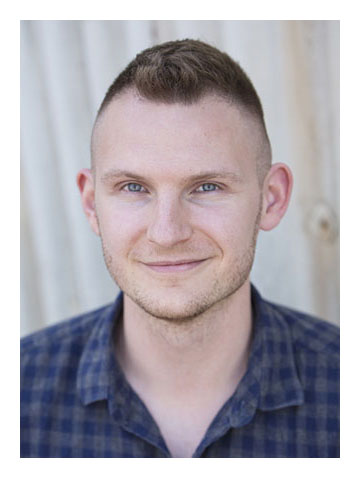
Meghan: Hi, Nick. Thank you for stopping by today. Tell us a little bit about yourself.
Nick Clausen: I’m 31, I live in Denmark with my wife, and I’ve been a published writer since 2009. I’ve done almost 30 books, all of them in Danish, and I began translating them into English and self-publishing them about a year ago. Eight titles are available in English so far, and I hope to put out 4 titles a year.
Meghan: What are five things most people don’t know about you?
Nick Clausen: I’m a yoga and fitness instructor. I have back-yard chickens. I meditate daily. I’m working on a big sci-fi epic, which I’ve been writing since 2013, and hopefully it’ll be out by 2020. I do the covers for my books myself.
Meghan: What is the first book you remember reading?
Nick Clausen: It was a middle grade book called The Snow Vampire, and it was awesome! Made me want to become a writer on the spot.
Meghan: What are you reading now?
Nick Clausen: Horns by Joe Hill. So far, incredibly good.
Meghan: What’s a book you really enjoyed that others wouldn’t expect you to have liked?
Nick Clausen: Rebecca by Daphne du Maurier. It was so unbelievably intriguing; I didn’t want it to end. I think it might be one of the best books I’ve ever read. I usually only read horror, thriller and paranormal, so Rebecca was quite a different experience.
Meghan: What made you decide you want to write? When did you begin writing?
Nick Clausen: I loved comics and cartoons and I wanted to be a cartoonist or comic book artist when I grew up. Then, I learned to read and picked up my first book and it was a complete game-changer. It seemed to me so much easier to write a story than to draw one. That’s how I decided to become a writer instead.
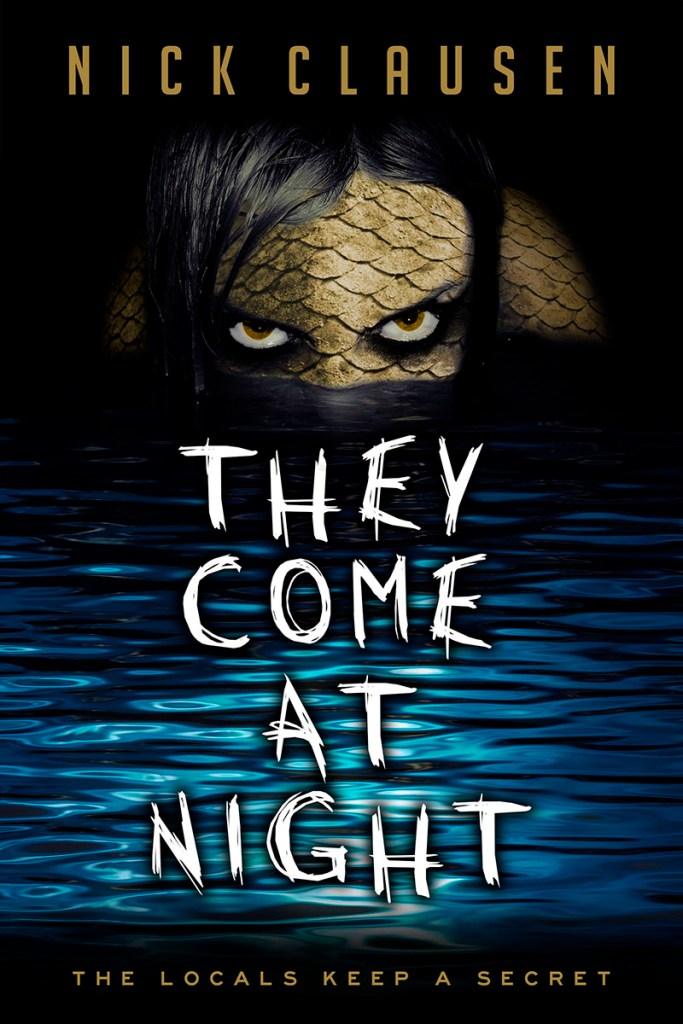
I wrote a few stories at the age of 14 or 15, and I sent them to a publisher, who seemed impressed, but not quite enough to buy the stories. Then, when I was 18, I decided to make my dream come true. I made myself a promise to write 1,000 words a day until I got a book accepted by a publisher. It took 12 rejections and 2.5 years, then I wrote They Come at Night, and it got accepted and became my debut novella.
Meghan: Do you have a special place you like to write?
Nick Clausen: Not really. I have an office (it sounds fancy, but it’s really just a room in my house with a desk) and I usually write there. But I’ve written almost everywhere – on trains, on vacations. As long as I can be on my own, I’m fine.
Meghan: Do you have any quirks or processes that you go through when you write?
Nick Clausen: I don’t think I have any quirks, and my process is very non-structured. I literally just get an idea and start writing. I try not to plan anything out in advance. I did that with my first ten books, and it worked fine, but somehow it got boring to me. I began feeling like the writing itself was just hard work and no fun. But now, as I get to figure out the story as I go along, it feels much more vibrant and surprising to me. I feel like I’m experiencing the story while I write it. When I’ve done the first draft, I read it through and edit what needs editing and rewrite parts that need rewriting. Then, I send it to my publisher, and they help me with any further input they might have. They then buy the book from me, and the rest of the publishing process is out of my hands. But I keep the rights for translating the book and publishing it in English.
Meghan: Is there anything about writing you find most challenging?
Nick Clausen: The most challenging part is when a story just won’t work. Some ideas are just too difficult to get right, and sometimes I end up rewriting most of the story up to ten times before I’m satisfied. I recently published a paranormal thriller in Danish called The Girl Who Wasn’t There (it’ll be available in English around January 2020) and it took me six years to finish, because I just couldn’t decide how best to tell the story, so I kept changing point of views, kept jumping back and forth, writing and changing and changing back again. By the end, I couldn’t tell if the damn thing was even any good. So, I shipped it off to the publisher, hoping they could tell me what to do. And to my utter surprise, they loved it and only suggested very modest edits. That was a great relief. I guess I just couldn’t see the forest anymore.
Meghan: What’s the most satisfying thing you’ve written so far?
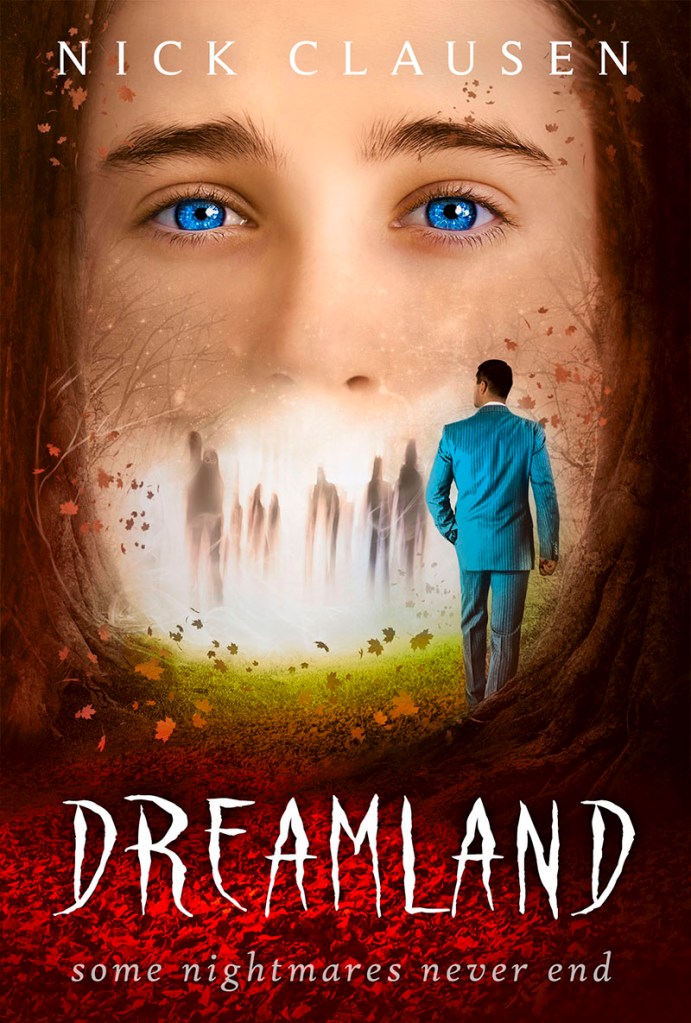
Nick Clausen: I’ve written quite a few stories with real emotion in them. Even though I write speculative genres like horror, I think it’s very important for a story to not just attempt to spook the reader, but also touch them. For instance, I find my short story Beast pretty emotional, because it focuses on a teenage boy and his beloved dog. My book Dreamland also has quite a strong message about losing your loved ones and dealing with letting them go. Those things are by far more satisfying for me to write than ghosts and werewolves and other things that go bump in the night. Although those are cool, too.
Meghan: What books have most inspired you? Who are some authors that have inspired your writing style?
Nick Clausen: I can’t mention any books in particular, but I find pieces of inspiration in many different works. Of course, I don’t copy the plot points, but I’ll get very inspired by a certain mood in a book. Sometimes, when I read, I get so inspired I have to put down the book and go to my computer to write.
Stephen King has definitely had the biggest impact on my writing. I also really like Neil Gaiman and the way he weaves his tales. I’m also very intrigued by authors who have a very straight-forward no-nonsense style, like Hemingway and Thomas Harris.
Meghan: What do you think makes a good story?
Nick Clausen: Whatever makes the reader feel something. It has to be true in some way. Elicit real emotions.
Meghan: What does it take for you to love a character? How do you utilize that when creating your characters?
Nick Clausen: The characters I love the most are the ones who seem like real people. This means they’re not perfect, they have flaws and they’re capable of bad things. My favorite type of character is usually someone who has had difficulties and overcome them. I think Victoria McQueen in Joe Hill’s NOS4A2 is a great example. Also the kids in Stephen King’s It.
When I write my own characters, I try not to have them always make the right decision, rather I prefer them to make the realistic decision, given who they are and what their motivations might be. I also don’t judge them for making the wrong choices.
Meghan: Which, of all your characters, do you think is the most like you?
Nick Clausen: The obvious answer would be that I put something of myself in all of my characters. But one particular character comes to mind. His name is Joshian, and he’s one of the main characters in my upcoming sci-fi epic. He’s around my age, and he faces a lot of the same difficulties and challenges as I have in my life (not literally, but emotionally) and he learns some lessons during the story which I’ve learned in my own life. He feels so real to me, completely like a real-life person. My wife, who have read the drafts of the story, agrees that he might be the most realistic and like-me character I’ve ever done. Needless to say, I’m very excited how the story will be received. Fingers crossed I’ll have it out by 2020.
Meghan: Are you turned off by a bad cover? To what degree were you involved in creating your book covers?
Nick Clausen: Very much so. There are SO many books out there, and even some books with great covers are disappointing, but if the cover is bad, I won’t even give the book a change. By bad, I mean unprofessionally done. A bad cover could also mean not very intriguing or perhaps a little misleading as to the genre.
Nowadays, I’m doing my own covers, so I pretty much decide exactly how they look like. Of course, I listen to readers’ feedback and try to follow some guidelines as to what works within the genre, so I don’t feel like I have completely free hands; it’s much more important to me that the covers works.
When I first started out as I writer, I didn’t do the covers myself. The Danish publisher had a professional designer do them, and they would always ask for my input and opinion, so they would never go with something I wouldn’t be satisfied with, which is really nice.
Meghan: What have you learned creating your books?
Nick Clausen: A lot! I think I’ve become a better writer over the years, and I still find new ways to explore my characters and come up with exciting plot twists I’ve never seen before. Also, I’ve learned a lot about the creative process and how to best make it flow. To me, it’s all about not standing in the way of the energy but standing aside and let it flow.
Meghan: What has been the hardest scene for you to write so far?
Nick Clausen: I’ll give a twofold answer. The hardest scene in terms of effort is a whole chapter of my upcoming sci-fi epic which runs at almost 12,000 words. It’s a meeting between different scientists who discuss different facts and theories and tries to come to a consensus regarding some climate problems. That chapter took me several weeks to research and write, making sure all the arguments were on point and made sense, while still driving the dialogue ahead and not boring the reader. That chapter felt more like writing a book.
In terms of emotions, I’ve already mentioned two scenes which made my throat constrict: the ending of Beast and the ending of Dreamland. Those both deal with loss and grief and the injustice of losing a loved one. There’s also a scene in another one of my stories, which came out on October 8th, called Dead Meat. I won’t spoil anything by saying it’s one of the main characters dying, and the character knows it’s going to happen before hand, so when I had to write the scene where the character tries to come to terms with it, I had to put myself in that situation, and it was pretty awful.
Meghan: What makes your books different from others out there in this genre?
Nick Clausen: I try to give them my own flavor. They’re pretty classic, but with quirks or twists you might not see coming. My books always have something to tell, something of importance to convey; if not, I won’t write them. I’m not talking about boring stuff like messages or morals, but true emotional impact. Also, being a native Dane, I probably don’t think like a Brit or an American, so I don’t suppose the universes I create in my books will look exactly like the ones you might be used to visiting.
Meghan: How important is the book title, how hard is it to choose the best one, and how did you choose yours (of course, with no spoilers)?
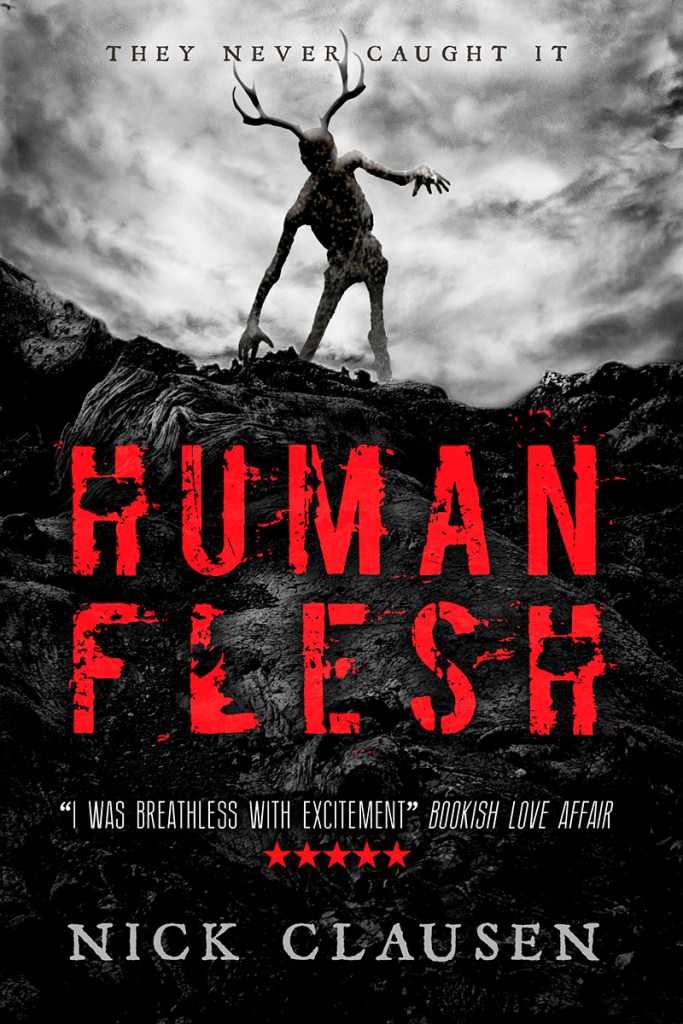
Nick Clausen: The title is pretty important, I think. Most of all, it needs to convey the genre. Secondly, it needs to be intriguing. Like, almost pose a question, something the reader will want to find out. Sometimes the title is easy. The title Human Flesh came to me even before I had the full idea for the story. They Come at Night was originally titled The Tide, but I just didn’t think that was creepy enough, so I changed it. The Girl Who Wasn’t There was originally called The Girl in The Book, but that sounded more like fantasy than thriller. Sometimes, the title isn’t that obvious and I need to think about it for a while.
Meghan: What makes you feel more fulfilled: Writing a novel or writing a short story?
Nick Clausen: A novel usually has a greater capacity for emotional impact or pay-off, because you get to know the characters and maybe even care for them. You invest in their goals and destiny. The strength of a short story is a little different, but there’s also something to be said about that brief, intense meeting you get with a character. I don’t need to get bogged down writing stuff like memories and background stories, I can just go straight to the action. Over all, I think novels are more satisfying, though.
Nick Clausen: Tell us a little bit about your books, your target audience, and what you would like readers to take away from your stories.
I write speculative fiction; horror, sci-fi, paranormal and fantasy. My audience seem to be mostly young adults, with some middle graders but also quite a few grown-ups. I like to think of myself as my core audience: an adult who still enjoy YA-books.
I already mentioned it, but the most important thing to me, the thing I hope the readers take away from my books, are some sort of emotional impact. I don’t really care if that emotion might be grief, horror, surprise, hopefulness or a mixture of several emotions; as long as the story touched them in some way, I feel like I’ve succeeded.
Meghan: Can you tell us about some of the deleted scenes/stuff that got left out of your work?
Nick Clausen: In Dreamland, we only follow the main character’s POV. It’s a boy called Louie who’s 13 years old. But originally, I’d also written a few chapters seen from the perspective of his mother. The publisher advised me to delete those, and I did. Honestly, I’m not complete sure it was the right choice, but I trusted their judgement.
They Come at Night also has a few deleted scenes—and this might be a bit of a spoiler, in case you haven’t read the book—where the monsters would speak to the characters. Again, the publisher advised me it would be more frightening if the monsters weren’t able to speak, so I changed it. I think they were absolutely right.
Human Flesh was originally planned out to be told exclusively through the diary of the main character Anne, but I realized about a third way in that the format was too constricting, so I opened it up and included all kinds of written sources, turning the story into what almost felt like a fictitious murder case. And the diary turning into a blog, which felt more like a present-day thing. I still have some of the deleted diary entries.
Meghan: What is in your “trunk”? (Everyone has a book or project, which doesn’t necessarily have to be book related, that they have put aside for a ‘rainy day’ or for when they have extra time. Do you have one?)
Nick Clausen: Oh, yes, I do. It’s my Moby Dick. In case I ever write it, it’ll be titled The Hole in the Sky, and it’ll be awesome. A grand sci-fi epic about aliens from another dimension coming to invade Earth, entering through a hole in the sky. Fingers crossed I’ll someday get to write it.
Meghan: What can we expect from you in the future?
Nick Clausen: A lot of books! The first three books in my series Dead Meat came out on October 8, November 8, and the third will be out December 8. Next year, I’m hoping to put out at least two longer books, one of them called The Girl Who Wasn’t There, and the other one (my sci-fi epic) called The Water Planet. I’m pretty productive and will be putting out several books a year going forward.
Meghan: Do you have any closing words for your fans or anything you’d like to say that we didn’t get to cover in this interview?
Nick Clausen: If you’ve read any of my books or plan to do so in the future, please don’t feel shy about reaching out to tell me what you thought of it! I genuinely love to hear from readers. Thank you!
Live in Denmark. Been writing since the age of 18. Promised to type 1,000 words a day until I got a book published. Kept that promise 18 months and 13 manuscripts later. Have written and published +25 books. Lived as a full-time writer since 2017. Started translating my books into English in 2019. Prefer horror, suspense and sci-fi. Prefer dogs, but like cats too.
In this new apocalyptic zombie series from the author of They Come at Night and Human Flesh, we follow events day for day as the world slowly but surely decends into mayhem as the zombies take over. Don’t miss the thrilling ride!
For fans of The Walking Dead, The Orphans Book and World War Z.
How it all began:
Three teenagers find themselves trapped in a stuffy, warm basement. The old lady who used to own the house is now dead. She’s also standing right on the other side of the basement door, scraping and moaning, trying to get in. Patiently. Tirelessly.
How did they end up here? Just a few hours ago, all three of of them were sitting in Thomas’ car, sweating and listening to music, not a care in the world. They were almost done with the paper route when they came to the old lady’s house. And that’s when everything turned to chaos.
In his sleep, Louie starts visiting a magical world where he meets his father, who died when Louie was still a baby. But nothing turns out to be what it seems, and great horrors loom very close by…
Welcome to Dreamland
A mysterious teen ghost story about fear and loss and losing yourself in dreams, Dreamland was originally published in Danish to great reviews, and is now available in English.
During the winter of 2017, a series of strange occurrences took place in a small town of northern Maine. A rational explanation for what happened has still not been presented. Now, for the first time, all available evidence is being released to the public from what is commonly known as the Freyston case.
Human Flesh is a dark YA horror story about the mythical creature wendigo known for possessing people and turning them into cannibals. It will also satisfy crime lovers, as the plot is told through written evidence in a fictitious murder case. For fans of Hannibal Lecter, and those who enjoyed the mood of Pet Sematary and the style of Carrie.
It was obvious that something was wrong the moment they entered the empty house.
For a start off, it felt far from empty.
There were sounds everywhere.
“If those’re rats, I’m out of here,” Lenny muttered, his enthusiasm dampened suddenly by the scutterings that seemed to cascade all around them as they walked across the bare floorboards in their trainers. Lenny, the younger of the two boys by barely a month, was tall and gangly, with a livid rash of acne across both cheeks. His dark eyes glanced suspiciously about the ballroom-sized entrance hall as they paused inside it, listening.
Pete grinned. It was a broad, unmistakably roguish grin that somehow made him look older than his fifteen years, as if he’d been born before and could still remember far too much of a disreputably colourful past life.
“Rats are the last things you should be worried about here, Lenny.” He made a long, haunting moan that echoed eerily through the house.
“Bollocks,” Lenny retorted, anger mixed with the stirrings of doubt he had begun to feel as soon as they approached the old, abandoned house. Making plans was one thing. Carrying them out was something else, especially after dusk had darkened the two acres of woodland around the house into a motion-filled blackness of half-seen, menacing shapes. “We should have set out earlier,” he grumbled as he switched on his torch. “Besides, I bet none of the others turn up.”
“They’d better,” Pete said. “This lot cost me a fortune. Especially since I had to pay that old wino, Karl Ott, to buy them for me.” He lugged the rucksack he’d been carrying off his shoulders and lowered it to the floorboards. There was a clink of glass: two half bottles of vodka and a bottle of rum, with a mixture of cokes, Sprite and orangeade. On top was a box of candles in case the electricity in the house wasn’t working.
Lenny tried the light switch and the two boys were surprised when the electric chandelier above their heads came on, though half its bulbs were dead or missing.
“The rest of the gang should be here in another half hour,” Pete said. “I told them half five.”
In late October, though, it was dark not long after four. Now, with heavy clouds covering what little there was of the moon, it was all but black outside.
“It would have been better if we’d all come together,” Lenny grumbled.
“What, and miss out on getting into the party mood beforehand?” Pete brought out one of the bottles of vodka and a couple of glasses. “Coke or Sprite?”
Lenny grinned. “Coke.”
He accepted the brimming glass and sipped the dark, fizzy liquid inside it. “I can’t taste anything but coke,” he complained. “Did you pour in some vodka?”
“You saw me, dummy. Fifty-fifty. My dad says you can’t taste vodka anyway. Only what you mix with it.”
“Then what’s the point?”
“You’ll see the point when you’ve drunk it. When was the last time you got a buzz off cola?”
Dubious, Lenny drank some more. “I think I see what you mean,” he said a moment later.
“Here’s to Halloween,” Pete announced, raising his glass.
“Shouldn’t we wait for the others?”
“What for? We can have another toast then. There’s no law to say you can only toast something once. Come on, hurry up. We’ve time for a few more drinks before they get here.”
Draining his glass, Lenny handed it back to Pete for a refill. Somehow the creaks and scratchings inside the walls and in the ceiling didn’t quite seem so menacing anymore. He felt a mild glow start to grow inside him.
“It’s not hard to believe what happened here, is it?” Lenny said a few minutes and a third glass of vodka and coke later. The warm glow had now spread throughout most of his diaphragm.
“Did you ever doubt it?”
“Naw. But sometimes you wonder whether your parents enjoy embroidering it all a bit just to get you frightened. It’s kind of sick, isn’t it? A whole family slaughtered, one by one.”
“It was worse than that, Lenny.” The two boys were sat on the floor in the hallway, the surrounding doors into the other rooms still closed, sealed with festoons of dark grey cobwebs. Most of Pete’s face was in shadow as he leaned forward over his glass of coke.
“What d’you mean, worse? What could be worse than that?”
“Worse, ‘cause they weren’t just slaughtered. They were sacrificed, Lenny, one by one. Whoever killed them, tied them up first so they couldn’t move, then taped their mouths so none of them could cry for help. Or hear their screams as he worked on them.”
“Worked on them?”
“They were tortured to death, Lenny. It took hours. All night long it went on. There was blood everywhere. That’s why there are no carpets. They were drenched in it. Ruined. Even the floors were awash. If you look hard enough they say you can still see some of the stains.”
Lenny squirmed uncomfortably on the wooden floor, as if he could feel the old dried blood beneath his buttocks on the dark floorboards.
“You’re joshing me, aren’t you?”
“Why should I do that? It’s all for real. You could check it yourself if you wanted to. It’s there in the papers. Every last word. Twenty-five years ago to this night. On Halloween. And no one has ever been arrested for it.”
Lenny reached for another drink from his glass.
“Whoever did it must be getting on now. If he was only in his twenties then, he’d fifty now. Sheesh!”
“Fifty’s not old,” Pete said.
“My grandparents are fifty – and they’re old.”
Pete laughed. “Bet they’d be pleased if you told them that.”
“But it’s true,” Lenny insisted. “It’s too old for a murderer. Isn’t it?”
“You’re a scream, Lenny. A real scream. Did you know that?”
Lenny grunted.
“Anyway, it’s a long time ago.”
“And this house is still empty.”
“Not always,” Lenny said. “I remember people living here.”
“Maybe, but none of them ever stayed for long. That’s what I mean. None of them,” Pete added with an air of significance.
“Are you telling me this place is haunted?”
“Don’t you think so? Isn’t that why we’re here?”
Lenny shivered; his hand reached out instinctively for the vodka and coke. “Where are the others? They should be here by now.”
“They’ll be here. There’s plenty of time yet.”
“But it’s nearly six.”
“And so?”
Lenny shrugged. “It’s nearly six. That’s all I said. I thought at least one of them would’ve been here by now.”
“Perhaps they’ve chickened out? Perhaps they know too much about what happened all those years ago and are frightened to come here tonight.”
Lenny stared at him. “You’re joking, aren’t you?”
“Maybe.” Pete grinned, that same roguish, all-knowing grin he always used.
Lenny drank some more vodka and coke. He felt a little light-headed now.
“What’ll we do if they don’t come?” he asked.
“We’ll have a party of our own.”
“That’d be fun,” Lenny said, sarcastically.
Pete merely grinned.
“You did tell them all, didn’t you?” Lenny asked a few minutes later. The noises within the walls were still rustling disconcertingly all about them and he was beginning to feel nervous again despite the effects of the vodka.
“Of course I did.”
Lenny peered at his Timex. “It’s ten past now. Why aren’t they here?”
“Perhaps they’ve chickened out, like I said. Perhaps there’s only you and me with the balls to come here.”
Lenny reached for his glass. He wished he felt as tough about being in this place as Pete. But the non-stop sounds of hidden movement made him think too vividly of nasty, vicious swarms of rats inside the walls, of scores, perhaps hundreds of the verminous creatures hidden behind the dark wallpaper and wafer-thin, damp-riddled plaster, only feet away from them. With sharp teeth and sharper claws.
“You feeling a bit jittery?” Pete asked.
“Naw…” Even to his own ears, though, Lenny’s reply sounded weak. Unsure.
Pete laughed, quietly.
His laughter was beginning to get on Lenny’s nerves. He wondered if Pete had really invited the rest of them here. But why would he have lied about this? It didn’t make sense.
Unless, Lenny wondered, Pete had some secret reason for wanting to be alone with him here tonight which Lenny would never have agreed to if he had known about it. Unless, Lenny thought, with a sudden shock of insight that left him feeling nauseated, Pete fancied him in some way.
Lenny looked at his friend. Was it possible that Pete was secretly queer?
He didn’t look that way. But could he be sure? He knew so little about that kind of thing, and what he did know was probably a load of nonsense. He was only too aware how talk about stuff like that got distorted, with all sorts of myths and rumours and misinformation. Perhaps Pete was gay. He’d a bloody strange grin, that was for sure. And he didn’t seem at all concerned that none of the others had turned up tonight– as if he had known all along there would only be the two of them here.
Lenny reached again for his vodka and coke, though he wasn’t sure if drinking any more of the stuff was a good idea.
“Are you worried?” Pete asked.
“About what?”
“About this place. About its history. About what went on here twenty-five years ago. What else did you think I meant?” Pete narrowed his eyes.
“Nothing,” Lenny said. “Just what you said. What happened here. The murders.”
“Bloody gruesome, eh?” Pete laughed. The sound echoed through the empty house and for the briefest of instants Lenny was sure the rustling ceased, as if whatever was making the sounds had heard him and paused – to listen.
“I think I’ve had enough of it here,” Lenny said suddenly. “If the rest aren’t coming, it’s going to be a bloody bore. We might as well go home and watch TV.”
“You chickening out too?”
“I’m here, aren’t I? I wasn’t scared to come here. I’d have stayed here too if there was any point. But two of us doesn’t make a party, whatever you say. And now it’s getting cold and there’s nowhere to sit except on the floor. And I don’t care much for those rats.”
“What rats?”
“Those fucking rats scuttering inside the walls, for God’s sake. Can’t you hear them too?”
Pete shrugged. “To be honest, Lenny, I’d forgotten about them. Got used to the sounds, I suppose. Just background noise. White noise, don’t they call it? Anyway, they’re harmless. Have you ever heard of anyone you know being attacked by rats? They’re only aggressive if they’re cornered. Everyone knows that. Leave them alone and they’ll leave you alone. It’s as simple as that.”
“So you’re an expert on rats now?”
Pete frowned; his grin gone. “Have I upset you, Lenny? Have I said something to annoy you? To piss you off?”
“No.”
“Sounds to me like I have. Sounds to me like that’s why you want to leave. We’ve not even been here an hour yet. There’s still plenty of time for the others to arrive.”
“Bollocks. None of them are coming. They’d have been here by now if they were. At least one of them would have turned up.”
“You trying to imply something?”
Lenny shrugged. “Maybe.”
“Like what?”
“Just leave it. I’m fed up with this place. And that vodka’s making me feel sick.”
“Like what, I said, Lenny?”
“Fuck it.” Lenny got to his feet. “I’m off.”
“Like fuck you are.” Pete stood up too, his aggression obvious to Lenny. What good humour he’d had before had gone. There was a dangerous tautness about his face, which disconcerted Lenny. He had never seen anything like this about his friend before. It was almost as if he had found himself alone with a stranger.
“What’s up with you, Pete?”
“Up with me?” The teenager smiled. It was a tense smile, as unlike anything he would have normally given as a grimace. There was no humour in the expression. There was no humour in it at all.
Feeling suddenly afraid, Lenny abruptly made for the outside door, but Pete moved even more quickly, cutting him off, as if he had half expected him to do what he did.
“Not so fucking quick,” Pete snarled. He swung a fist at Lenny’s face. It was so unexpected that Lenny could barely react before he felt Pete’s knuckles crack like a heavy mallet against his jaw. The next thing he knew he was falling, dizzy with shock, nausea and a sudden sense of unreality, as the floorboards loomed against the side of his face. Almost at once Pete was astride him. The weight of his body forced Lenny down onto the hard floorboards, winding him. Still dazed, Lenny felt his hands being pulled in front of him. Something thin was tugged tight around his wrists, forcing them together. He struggled to sit up when he saw that a narrow strip of plastic, like the kind his father used for tying up plants in their yard, was being pulled around his wrists, then locked into place. He tried to push it apart, but the plastic tie was far too strong and cut his skin.
“Pete! What are you doing?”
His friend reached into one of the pockets of his jacket and pulled out a roll of gaffer tape. He tore off a six-inch strip of it, held it for a second above Lenny’s face, as if gauging his target, then tugged it tight across his mouth. Lenny tried to scream, but his lips couldn’t move beneath the vile-smelling tape.
“That’s better,” Pete said, finally. He eased himself up, then stepped back, grabbed a hold of Lenny’s feet and forced them together. Before Lenny could do anything to resist him, another, heavier plastic tie had been secured around his ankles. It was so tight it hurt as it bit into him.
“Had enough?” Pete asked.
Lenny tried to say something, but his lips were squashed beneath the unyielding tape gummed across them. The skin around them felt as if it would tear if he tried to force them open.
“Resistance is futile,” Pete said, grinning once more, his voice familiar to both of them as a Borg from Star Trek. The sudden humour sounded misplaced and false to Lenny as he uselessly struggled against the plastic ties around his wrists and ankles and realised just how painful it was to try to snap them.
“Do you think our unknown, unscrupulous friend, all those years ago, used plastic ties and gaffer tape to immobilise his victims?” Pete asked. “He might have had gaffer tape, I suppose. It could have been around then. I don’t know. I don’t suppose plastic ties were, though. Do you?”
Pete turned, retraced his steps to the pack he’d brought their drinks in and squatted down to search inside it till he found what he wanted, then slowly rose to his feet once more, a look of triumph on his face. Lenny squirmed on the floor to watch him, his heart thumping so loud in his ears it almost blotted out the rat-like scratchings inside the walls. Deep grunts of panic came from inside his throat when he saw the knife Pete held in his hands. He fondled it almost like he would a pet as he stared at Lenny over it. It gleamed like very expensive steel. And its edge looked sharp.
“Bet he’d have given his high teeth for something like this,” Pete said. “Cost an arm and a leg. Paid for it with my dad’s credit card on the internet. But he buys so much expensive crud using it he’ll never notice one more item he never bought himself.”
Pete pointed the knife at Lenny’s face, clearly enjoying the sight as his friend’s eyes opened wide in abject terror, staring back at it, unable to look away.
“You know, Lenny, I often think I’ve been here before. Somehow I’ve always felt like that. My mother told me that when my gran first saw me as a newborn baby, she said, “He’s been here before, this one. He’s been here before.” D’you know that, Lenny? Even my gran recognised this wasn’t my first life. It’s not my second, either. I’ve been here lots of times before. Lots and lots of times.” He took a step nearer. “And every time I’ve been here, I’ve had this task, this very important task to do, to ensure I’ll be able to come back again. I’ve done it so often over the years it comes to me in my dreams, time and time again, as clear as I can see you now, to make sure I can’t ignore it.” He hunkered down beside Lenny’s head. “But I’d never ignore it. That’s why there’s only you and me, why no one else was told about us coming to this place tonight. No one knows we’re here, Lenny. It’s a secret. A secret between you and me. And you’ll never tell, will you, Lenny?” Pete snickered. “That’s a bit of a no brainer, if ever there was one, I know, but I couldn’t resist it.” His hand flicked out and the point of the hunting knife sliced a line across Lenny’s forehead. Lenny would have screamed at the sudden, intense pain, as a trickle of blood pulsed out of the cut and dripped into one eye, but the gaffer tape kept his straining lips gummed together.
“Shush, shush,” Pete whispered. “I’ve not begun yet. There’s someone here you’ve yet to meet before the real thing starts.” He cocked his head to one side. “You’ve heard it, though. That scuttering.” Pete stood up. Behind him, from the wall, Lenny saw something move where the old wallpaper seemed to hang open now like a dislodged curtain. From beyond it, something large and grey, like a huge, misshapen rat moved out into the light of the room. There were others, smaller, huddled behind it. Their dark eyes, gleaming like soiled rubies, stared at Lenny.
“They like the blood,” Pete said as he crouched beside him again. “Especially Him. He’s old. So old you couldn’t imagine it. He was brought to this place so long ago, too, when I was in a different body, with a different name. So long ago even I can’t remember what name I had, there’ve been so many in between. But it doesn’t matter. What does is His power. That’s old as well. As old as the world. Perhaps older. When others like Him were plentiful. When they ruled. As one day, if Mankind has its suicidal way and we destroy what we have of this world, He’ll rule again.”
Lenny struggled to scream as he watched the creature move across the floorboards, as large as a pig, its ugly, scaly rat-like face etched with countless sores and wrinkles. Most of the thick grey hair had fallen away from its corpulent body, baring the glistening skin beneath. If he had not been gagged, he would have shouted at Pete that he was mad, that this ugly creature wasn’t what he seemed to think it was, but some insane monster that had fooled him. It wasn’t godlike. It wasn’t godlike at all. Just some pathetic old demon. How he sensed or knew this, he wasn’t sure. Instinct, perhaps. Some old race memory from a time when things like this had flourished. He didn’t know. All he knew with certainty was that Pete had been taken in by it. That it needed him to provide it with the worship it craved – it and its hideous, ugly children.
Though rat-like in shape, as it moved out into the light, Lenny realised the thing had no mouth as such, just tubular, fleshy tendrils. Each, though, ended in what looked like a mouth – mouths that opened and closed as it slowly, furtively moved towards him.
Again, Pete sliced at Lenny with his knife, cutting deep into one of his hands. Blood pulsed from the wound. And the rat-like creature moved in, its tendrils dipping into the blood as it spread across the floorboards. Lenny’s body tensed with horror and disgust as he heard the hideous slurping sounds from the tendrils as they sucked at the pool of blood. And the other, smaller, rat-like creatures scuttled forwards, drawn by it.
In sheer desperation Lenny struggled to free his lips from the gaffer tape, chewing at what snippets he could draw between his teeth. He fought against the pain as Pete sliced away his jacket and t-shirt so he could make further gashes in his body.
“Part of it is your pain,” Pete told him, as if this expiated him. “He needs to feel that – that and your fear. He feeds off them both.”
Several times during the next few hours Lenny blacked out, either from nausea or pain or both. Each time Pete waited till he was conscious again, then started once more, cut after cut, till the floor surrounding them was thick with blood. The other creatures had moved in on the pool as it spread across the room and had begun to feed from it.
Almost too weak from blood loss to feel much pain anymore, it was only then that Lenny was able to force his mouth open. The gaffer tape was sodden with spit and weakened where he had gnawed at it.
But by then he could barely talk, let alone scream for help, and Pete merely glanced at him as he carved more cuts in his chest.
“Pete…” Lenny’s voice was a ragged croak, barely intelligible. “Pete…”
“Too late to plead for your life, Lenny. Far too late for that, I’m afraid. He must feed. And so must they. I’m held to do it. I always have been. And always will.”
“Twenty five years ago,” Lenny whispered. “You did it twenty-five years ago.”
Pete glanced down at him, smiled, then moved the knife speculatively across his friend’s abdomen.
“You’re fifteen now. How long did your old self live after what he did here?”
Pete shrugged. “How long is a piece of string, Lenny?”
Midnight had come and gone, and still Pete worked, his face lost in the intensity of it. Lenny died not long afterwards. And as he died, so the blood flowed slowly, then stopped.
Pete looked around at the creatures. His creatures. His Gods.
The large one stared up at him from the blood it had been drinking.
“I’ve served you well,” Pete said. “Again.” He smiled, roguishly.
Something heavy moved across his foot. He looked down and saw one of the smaller creatures climb across it. Others milled around his ankles. And for a moment he felt uneasy. But it was always like this. They were thanking him for what he had done for them.
The large one, his God, stared up at him, though, its dark red eyes unwavering as it moved towards him. There was more to be done. Just what, he was unsure. But there was more, he was certain. He felt himself being pushed by the others; their bodies as big as well fed cats. Then he remembered. This was his moment of rebirth – the moment he would enter the darkness of the void. The moment he would leave this shallow husk till the time was right to return. Ten years he had hung in the void before till he entered this body. His time to let go of this body was now.
Was now.
Pete screamed as his God lunged at him. It claws dug deep into his chest, as it dragged him back towards the gap within the wall. The others scrabbled about his feet, biting and nipping and scratching him.
“No!” Pete screamed as he remembered it all, all those times in the past. He had to go with them now, into their cramped dark world. But he didn’t want to go into that void again where they would feed off his flesh and blood, revived and hungry.
His final act of sacrifice.
“Till next time,” he heard himself scream in despair.
As his eyes stared in horror at the grim darkness between the walls where they were dragging him.
Where he would feed and sustain them and make them fat for years to come.
Picture 1: David A. Riley — Picture 2: David A. Riley, with his friend, fantasy artist, Jim Pitts
It was never going to be easy to return for one last look at the streets where he spent his childhood years. Even knowing this, Gary still felt he had to make the effort, just this once, to see if they were really as bad as he remembered. In a few months demolition was due to start on Grudge End… When Gary Morgan travels north to lie low after a gangland shooting in London, a childhood friend is violently maimed within hours of his arrival. Decades after escaping the blight of his hometown, he finds himself ensnared in a place he hates more than any other.Feuding families, bloodthirsty syndicates, and hostile forces older than mankind all play a role in the escalating chaos surrounding Gary Morgan. Now he must unravel the mysteries of Grudge End and his own past or meet his doom in the grip of an ancient, unimaginable evil.
Elm Tree House had a sinister history but few realised the true demonic power that lurked within its forbidding depths till it was taken over by a cult determined to make use of its horrendous secret.
Many years have passed since Elves defeated and killed the last Goblin king. Now the Goblins are growing stronger in their mire, and Mickle Gorestab, one of the few remaining veterans of that war, is determined they will fight once more, this time aided by a renegade Elf who has delved into forbidden sorcery and hates his kind even more than his Goblin allies. Murder, treachery and the darkest of all magics follow in a maelstrom of blood, violence and unexpected alliances. Facing up to the cold cruelty of the Elves, Mickle Gorestab stands out as the epitome of grim, barbaric heroism, determined to see the wrongs of his race avenged and a restoration of the Goblin King.
There’s a serial killer at loose in London. Janice, who has a chronic fear of the dark, stumbles into a relationship with the man who may secretly be the murderer. Neither know that in the North of England, in a place previously owned by his dead mother, activities are taking place that may unleash a horror that could spell the end of civilisation in Britain – an ancient evil that would make the activities of any serial killer look like child’s play by comparison. Could a psychotic killer be the only man capable of ending this? Andrew Jennings is also known as David A. Riley.
David A. Riley began writing horror stories while still at school and had his first professional sale to Pan Books in 1969, which was The Lurkers in the Abyss, published in The Eleventh Pan Book of Horror Stories. This story was chosen for inclusion in The Century’s Best Horror Fiction in 2012. Over the years he has had numerous stories published in Britain and the United States plus translations into German, Spanish, Italian and Russian. His fiction has appeared in World of Horror, Fear, Whispers, Fantasy Tales, Aboriginal Science Fiction, Dark Discoveries and Lovecraft e-Zine. His first collection, His Own Mad Demons was published by Hazardous Press in 2012. The Return, a Lovecraftian horror novel was published by Blood Bound Books in 2013. This second collection brings together under one cover seventeen of the author’s best blood-curdling stories.
Their Cramped Dark World and Other Tales is David A. Riley’s third collection of short fiction, spanning 40 years of publication, from appearances in New Writings in Horror & the Supernatural #1 in 1971, to the Ninth Black Book of Horror in 2012.He has had numerous stories published by Doubleday, DAW, Corgi, Sphere, Roc, Playboy Paperbacks, Robinsons, etc., and in magazines such as Aboriginal Science Fiction, Dark Discoveries, Fear, and Fantasy Tales. His stories have been translated into Italian, German, Spanish and Russian. His Lovecraftian crime noir horror novel, The Return, was published by Blood Bound Books in 2013. His fantasy novel, Goblin Mire, was published by Parallel Universe Publications in 2015.Table of Contents Hoody (first published in When Graveyards Yawn, Crowswing Books, 2006) A Bottle of Spirits (first published in New Writings in Horror & the Supernatural 2, 1972) No Sense in Being Hungry, She Thought (first published in Peeping Tom #20, 1996) Now and Forever More (first published in The Second Black Book of Horror, 2008) Romero’s Children (first published in The Seventh Black Book of Horror, 2010) Swan Song (first published in the Ninth Black Book of Horror, 2012) The Farmhouse (first published in New Writings in Horror & the Supernatural 1, 1971) The Last Coach Trip (first published in The Eighth Black Book of Horror, 2011) The Satyr’s Head (first published in The Satyr’s Head & Other Tales of Terror, 1975) Their Cramped Dark World (first published in The Sixth Black Book of Horror, 2010).
David A. Riley’s first professionally published story was in the 11th Pan Book of Horror in 1970. Since then he has been published in numerous anthologies from ROC Books, DAW Books, Robinson Books, Corgi Books, Doubleday, Playboy Paperbacks, and Sphere. Two recent notable anthologies in which he has appeared are The Century’s Best Horror Fiction from Cemetery Dance, and Otto Pensler’s Zombies! Zombies! Zombies! from Vintage Books.In 1995, David and his wife Linden edited and published Beyond, a fantasy/SF magazine. His stories have been published in magazines such as Aboriginal Science Fiction, Dark Discoveries, Fear, Fantasy Tales and World of Horror.His Own Mad Demons contains his stories “Lock-In”, “The Worst of All Possible Places”, “The Fragile Mask on His Face”, “Their Own Mad Demons”, and “The True Spirit”.






 Meghan's House of Books