Blog

Halloween Extravaganza: Grant Hinton: STORY: Granny Decay & the Halloween of ’94

Grant Hinton was kind enough to provide us with a short story for his guest post today. Sit back and enjoy.


Do you remember the scariest time of your life? I do. It was the time I met Granny Decay. We called her Granny decay because her garden was full of weeds, dead plants and littered with the bones of dead animals. Little did we know, as twelve-year-olds, that her garden wasnโ€™t the worst part of her home.

It was the Halloween of โ€˜94 and me and my friends were allowed out trick or treating for the first time alone. Well, with the exception of having my older brother tag alone. He didnโ€™t like it, neither did we, we also didnโ€™t like it when he told us we would be giving up some of our stash of candy in compensation. In truth, it wasnโ€™t such a bad thing. Our street was long and relatively quiet in terms of traffic, with the vast majority of homes participating in the festivities it was going to be a good hoard. We could give a little to Jason – my brother – and still have loads for ourselves.

Granny Decayโ€™s house was at the end of the street, every kid in our neighbourhood knew her house and dared each other to go and knock on her door. None did though. Sure, some of the braver kids got a few steps past the rickety gate, but their courage soon fled as did their pals. It was only a matter of time before me and my friends were standing outside the broken gate. It seemed to grin at us, itโ€™s broken slates like jagged teeth.

โ€œI dare you,โ€ said Johnny to me, removing his plastic Dracula fangs so he could speak better.

Jason, my older brother by four years snorted, smoke curled from his nose. โ€œIf youโ€™re so brave, you do it.โ€ Then punched Johnny on the arm.

โ€œIโ€™m telling mum that youโ€™re smoking,โ€ I retorted with a slight smirk. Jason plucked the cigarette from his lips and blew smoke into my face.

โ€œDo that and I tell her about the mag you stole from dads collection.โ€ My cheeks reddened with his blackmail as he twirled his Zippo lighter between his fingers.

โ€œThatโ€™s what I thought.โ€ It was his turn to smirk.

โ€œHey, Jas,โ€ called a blonde girl in a white gown with red blotches from the opposite side of the road. โ€œWhat are you doing? Weโ€™re all going to Jessicaโ€™s house. Wanna come?โ€

โ€œHey, Ciara. Iโ€™ve got to watch my kid brother,โ€ Jason grabbed me in a headlock and gave me a noogie. โ€œMaybe another time?”

โ€œBummer. See ya later?โ€ She shouted as another girl dressed as Witch pulled at her arm. Jason smiled and waved, then he let me go and his smile faded.

โ€œI dare you,โ€ said Johnny again looking at me, โ€œyouโ€™re the one whoโ€™s always going on about being the bravest.โ€

Johnny rubbed at his arm and shot my brother a hurt look.

โ€œLook!โ€ Henry pointed his tentacled arm at Granny Decays house.

Iโ€™m still not sure what type of monster he was, some cross between a winged octopus, and a man. The curtains twitched again and a cold shiver went through me.

โ€œItโ€™s her! Granny Decay, I saw her,โ€ he said, still pointing at the dirty window.

Like her garden, her house was decrypted. The once white wall-shearing had turned a rotten green, vines and plants snaked in and out the boards making it seem like the garden invaded the home. An old mailbag discard by, what I imagined was a scared mailman, hung snagged on a thorny bush. Wrappers and scrap pieces of paper littered the barren grass adding to the cesspool.

โ€œDouble dare you,โ€ Johnny said, I could tell that he was just as scared as I was, even Jason looked a tad bit frightened by the prospect.

There are pivotal moments throughout childhood, this was one such occasion. Even though I was scared, another thought overpowered that fear. If I was the one who knocked on Granny Decayโ€™s door, I would be remembered forever.

โ€œDo you remember that time when Grant Hinton knocked on Granny Decayโ€™s door back in โ€˜94?โ€

โ€œYeah, what a legend!โ€

โ€œHeโ€™s too scared.โ€ Jasonโ€™s punch was light, but it brought me back from my daydream, the smile faded from his face as I locked eyes with him.

โ€œHere, hold my candy,โ€ I shoved the cauldron into Henryโ€™s hand and pushed at the rickety gate.

โ€œNo way,โ€ I heard Johnny hiss as I left them slack-jawed behind me. I was halfway up the broken path when my fear finally caught up with me. Each weighted step after felt like I was wading through custard.

I saw the net curtain twitch again, and I swallowed. An old lady in a white nightgown with long white hair stood frozen behind the thin grey net. I looked back to my brother and my friends, their jaws still wide open. The local kids had started to gather around them. Draculaโ€™s, Witches, Frankensteinโ€™s, Ghosts, all watched my advance up the path. With each additional kid, I knew I had to go on, I couldnโ€™t turn around now. The door loomed in front of me. Cobwebs covered the porch, every crevice taken up by large black spiders at the centre of their webs.

I swallowed again and raised my hand. My throat felt as dry as sandpaper as the boom of my knock echoed through the house. I heard the slow drag of feet over wooden floors, then a latch being removed. The door handle turned one way, then the other, then back again.

Then, the door opened.

โ€œYour the first kid whoโ€™s ever knocked on my door.โ€ Granny Decay smiled a gap-tooth smile. She didnโ€™t seem as scary now she and I was face to face.

โ€œArenโ€™t you supposed to say something, mmm?โ€ I didnโ€™t know what to say as she smiled at me again, I never intended for the door to open, let alone to be having a conversation with her.

โ€œUm, trick or treat?โ€ I said passed the lump in my throat.

โ€œThatโ€™s it, dear, come in, I’ve got candy in the kitchen.โ€

I looked over my shoulder as Granny Decay shuffled down the dark hallway. Jason, Johnny and Henry all shook their heads no, but a few other kids had started to cheer and clap. What was I supposed to do? I stepped into Granny Decayโ€™s house.

Once inside the gloomy, musty interior, I saw more cobwebs with small carcasses in the corner of the walls and hallway doors. A mouse, a moth, something I couldnโ€™t discern. The drab, grey walls were pockmarked with moth holes and deep gouges. The accumulated dust of years obscured the inhabitants of several pictures that hung haphazardly from a dated picture rail.

I crept down the hall behind the shuffling old lady. Her back was malformed and crooked. Something long and black ran down her spine beneath her dress. My eyes wandered back up to her shoulders and I caught a glimpse of the kitchen in question. A large bowl of candy shone like a precious treasure. A treasure that I would bring to school and gloat over.

โ€œEvery year I buy candy, and every year it goes to waste. Do you know why?โ€ She asked as she approached the bowl.

โ€œUm, yes maโ€™am, youโ€™reโ€ฆyour house is creepy, weโ€™re all too scared to knock on your door.โ€

โ€œCreepy? Why, isnโ€™t that what Halloweenโ€™s all about?โ€ She turned with a handful of chocolate coins, I took them and glanced up into her eyes. Her irises were wide and as black as tar in the gloom.

โ€œBut, you knocked?โ€ She asked, her eyes fixed on me. I pulled at a strand of gossamer that was stuck to the back of one of the coins. Maybe the candy had sat there for so long that cobweb had covered them. A fly buzzed past my ear and I swatted it away. Granny Decay watched as it flew past, her head twitched with the erratic flight of the fly.

โ€œYeah, I kinda got dared to,โ€ I said, peeling the golden wrapper off the coin.

โ€œA brave one, or a fool.โ€

The fly flew into a web and buzzed noisily. I wonder if she meant me or the fly. Granny Decay licked her lips as the spider came charging out to snare its prey.

โ€œMaybe both,โ€ I chuckled, โ€œbut, they will be talking about this at school tomorrow.โ€ I stuffed another chocolate into my mouth.

Granny Decay smiled and turned back to the spider.

โ€œDid you know that the pirate spider cannot make webs of its own to catch prey, so it invades others and steal its food and even eats the other spider?โ€

I swallowed, the chocolate stuck to the sides of my throat, thick and gloopy.

โ€œThey invade the webs of other spiders, in a bid to lure them out and then kill them. Gently, they pluck the strings of the web,โ€ she motioned her hands like pincers, each one plucked at an invisible web.

โ€œOnce the host spider has ventured out to investigate, the pirate makes its move. First, it encloses its prey within its two massive front legs. Theyโ€™re fringed with elongated spines, called “macrosetae”, which trap the other spider in a prison-like cage. Then, the final move.โ€

She turned as my arms sagged, the candy dropped to the dusty floor and rolled away.

โ€œThe pirate spider bites its prey and uses its fangs to inject a powerful venom that instantly immobilises it.โ€

My legs turned to stone, I couldnโ€™t move. Every part of me slowly shut down.

โ€œTotal paralysis.โ€ Granny Decay, blinked then. But instead of two eyes opening, six eyes did instead. As her normal eyes blackened, two above them and one on either side blinked again. Two thick black spindly legs crept over her shoulders, as more craned around her sides. Then, a large black abdomen extended from her dress.

Granny Decay scuttled over to me and picked me up with her new legs, a stream of silk spewed from her spinet as she twirled me around. The sticky web covered my face like a hood, the sounds of the house muffled as more covered my ears. Very soon, I was cocooned.

She dragged me along the hall, I vision obscured to shapes and outlines through the silk. She stopped suddenly, then dragged me a few feet more, then my world turned upside down. Her spindly legs hooked me up on the ceiling, then methodically worked their way down over her work.

โ€œBuild a web, catch a fly, wrap it up in silk, then devour at leisure.โ€ She cooed as she scuttled out the door.

I tried to scream but my voice wouldnโ€™t work like the rest of my body. My silent struggle didnโ€™t even make me swing in my prison. The only thing that worked was my eyes, but they couldnโ€™t do anything but watch as the door opened again.

I shut them tight as the dark figure came to devour me. Then, the web came free from my face and Jasonโ€™s voice whispered in my ear.

โ€œYou fucking dick! I told you not to go in.โ€ Jason freed me from the silk bag and threw my arm over his shoulder. I managed to move my head slightly. Other bags hung from the ceiling. Some bulged, some sagged, others had been split open to reveal dark moist interiors, pools of black laid beneath them. I didnโ€™t know if the juices were the underside of the silk web or the inside of the hapless victim. My feet still didnโ€™t move right, so Jason practically dragged me to the hall.

โ€œWhereโ€ฆ has.. she gone,โ€ I asked, surprised that my voice worked again and winched at how loud it sounded in the hollow corridor.

โ€œShhh! Sheโ€™s gone back that way,โ€ he said pointing to the kitchen. โ€œWeโ€™ve gotta get out of here before she comes back.โ€ Jason heaved me upright again, as I started to slide down the door frame.

โ€œCome on,โ€ Jason pulled me down the corridor.

โ€œMore flies? Itโ€™s my lucky day.โ€

My blood froze, and the hairs on the back of my neck did a better job of standing up than I did. We turned as one, the slow creep of dread wormed it way up my spine, slowly tickling my skin as it went.

She hung in the doorway, her human feet inches above the floor. Her spidery legs lost in the doorway to the kitchen. Her eyes blinked, it was the most menacing thing she could have done; something so natural, that it unnerved me further.

Her web shot out from her spinners again and stuck to my chest. Her legs pulled at the web as Jason tried to heave me away. A tug of war ensues, one where my life was the prize.

โ€œMy pocket Grant, get my smokes!โ€

โ€œWโ€ฆ What?โ€

โ€œMy lighter, you dickhead, get the lighter.โ€ Suddenly I knew what he was aiming to do. I stretched my hand out and my fingers gingerly poked into the top of his pocket as my body jerked back toward Granny Decay. Jason heaved me around my waist and my fingertips slid over the cigarette box.

โ€œCome to me, flies,โ€ Granny Decayโ€™s huge forelegs collapsed on themselves and bend through the door frame, one pierced either wall. I could see now that what I thought were moth holes were, in fact, leveraged holes.

My fingers dragged down the box, one index finger on one side, middle finger on the other. I squeezed them together and pulled. The cigarette pack came free and I snatched at the lighter in the box. Quick as a flash I turned and stuck the metal reel, a spark flew but no flame. Again and again, I tried but the thing wouldnโ€™t work.

โ€œJason, it wonโ€™t work!โ€ I struck it again and again, the smell of paraffin caught my nose, but still, no flame spewed forth from the zippo.

Jason grunted as Granny Decay pulled as down the hall, as if scenting prey, the spiders in their webs shook at their mistresses impending triumph. Praying that any god would hear me I closed my eyes and struck the lighter again. I felt the heat on my fingers and opened my eyes to the most glorious yellow-tinged fire.

Granny Decay screeched at the fire and pulled even harder. Evidently, she had been toying with us, her strength was unbelievable. One minute we were by the front door, the next we were seconds away from her clutches. The fire burnt my hand and I remembered what I had. I brought the flame under the web and it burnt like dried tinder, then snapped. I fell on Jason in a heap and we both scrambled to our feet.

โ€œQuick. Give it here.โ€ Jason made a grab for the zippo and snatch it out my hand. He placed it against the peeling wallpaper and soon fire rolled up the wall. Granny Decay screeched again and made a lung for us. One of her legs shot out and pierced Jasonโ€™s shoulder. The lighter fell from his hand and burnt against the opposite wall.

โ€œJason!!โ€ I shouted as he fell to the ground. I pulled at his hand as the fire billowed around us. Granny Decayโ€™s screeches filled the hall as grey-black smoke clogged the passage. Soon only her screeches told me she was trapped in the kitchen. I pulled Jason to the front door and kicked it open.

The army of kids gasped as fire flew out behind us like we were action heroes in an adventure movie. Some screamed as we stumbled down the path and then fled. Jason clutched at his shoulder a tight grimace on his face as we fell to the pavement.

โ€œJason, are you ok?โ€ I asked as blood leaked l through his fingers.

โ€œI think so, bitch stabbed me in the arm.โ€ He pulled his hand away. Ciara, the blonde girl from early, raced up to him and started to kneel, but Jason seeing her, grunted and stood up.

Fire and smoke billowed from the house and everyone turned when a ball of fire scuttled out the house screeching. Granny Decay withered and flailed around on the dry lawn. Patches caught fire as she bucked and squirmed.

The neighbourhood kids stumbled back away, panic and terror taking the place of curiosity. The fire consumed the hissing figure like she would have consumed me. We all watched in a state of perplexion until Granny Decay stopped moving, her charred legs curled in as did her burst abdomen.

When I turned around it was only Jason, and the girl, left by my side. Even Henry and Johnny had fled to the safety of the opposite pavement as the fire enveloped the house.

โ€œWe need to get away from here Jason.โ€ I started to cross the street as he and Ciara followed.

โ€œI think I need the hospital,โ€ he said and reached an arm over the girl’s shoulder. She smiled delightedly to have his attention. Suddenly adults swarmed the streets and the distant sound of a fire truck filled the air. Our mum screamed when she saw Jason and he collapsed to the ground once again. Jason smiled up at me.

โ€œYou’re not the only one who will be remembered for this, Grant.โ€ He said with a chuckle and then passed out.


I played a lead role in this dark Halloween tale about that one suburban house at the end of the street. Weโ€™ve all trick or treated and know the joys of racing up and down the garden paths collecting a bounty of chocolate and candy, and we all know too well the frights that await us on that spooky night.

Halloween is every horror writers time to shine. So I tackled the childhood memory I have of that old crooked house at the end of my childhood street. In truth, that ransacked, wind strewn, garbage ridden home with the dead garden was nothing to be scared of. But, for that one night a year our imaginations made it the home of a monster.

Children can be cruel because in reality, the monster was nothing more than a reclusive old lady who spent her time amassing a huge stockpile of newspapers and various other local paraphernalia. You would occasionally see the curtains twitch as you walked by but that was all. She never ventured out from behind those yellowed drapes. That still didnโ€™t stop us daring each other to knock at her door, which, as I write this, seems another cruelty of our youth, I bet all she wanted was to be left alone.

My monster concept was designed upon the pirate spider, purely for the swashbuckling approach it has at stealing its prey. How better a monster than a spider that lure you into her web with candy and chocolates only for you to realise too late that it was a trap. My favourite section in this story has got to be, โ€œA fly buzzed past my ear and I swatted it away. Granny Decay watched as it flew past, her head twitched with the erratic flight of the fly.

โ€œYeah, I kinda got dared to,โ€ I said, peeling the golden wrapper off the coin.

โ€œA brave one, or a fool.โ€

The fly flew into a web and buzzed noisily. I wonder if she meant me or the fly. Granny Decay licked her lips as the spider came charging out to snare its prey.โ€

This is the first time I let you imagine the monster Iโ€™m hiding. Thankfully, the bond of brothers defeat this beast for a happy ending, well, for my brother at least because he got the girl.

Grant Hinton is the wifi password to the world of horror. His technological knowledge mixed with the grasp of the human condition results in devastatingly chilling results. Not only that, this bestselling author is hauntingly gifted in all things to raise the hairs on the back of your neck, all the ways to quickening your heartbeat, and leave you with a lesson that stays long after your eyes have left his words.

There are great things on the horizon coming ahead, stay tuned for more soul gripping content.

Grant Hinton – horror author, writing advocate, teacher and family man.


The Wraith Within

From supernaturally scary to real-world horrifying, this collection boasts 32 harrowing tales. Each accompanied by a brief epilogue into the author’s deranged mind, adding a little insight into their creation. A lady is trapped on a train, but she doesn’t know it until too late. I professor sells sex toys for one purpose only. A policeman finds more than he bargained for on a routine call to a place that doesn’t exist.

Halloween Extravaganza: INTERVIEW: Grant Hinton

Meghan: Hi, Grant. I’m so excited to have you here today. Thank you for agreeing to take part in this year’s Halloween Extravaganza. Tell us a little bit about yourself.

Grant Hinton: I was born in London, United Kingdom, back when the world made sense, but now resided in sunny Australia. I love writing, it’s a passion that’s taken over my life. I have a long-suffering wife who doesnโ€™t read much of my stories, (sheโ€™s not a horror fan,) but supports my decision to scare people. Along with that, I like to make beer and Iโ€™ve gotten pretty good at it, well, thatโ€™s what my friends tell me.

Meghan: What are five things most people donโ€™t know about you?

Grant Hinton: I’m an open book, even on the Internet forums I frequent. But I will go with:

  • I couldn’t write my name until I was six.
  • I’m a very good singer, as in I could make a living off of it, and when I was younger I did for a while, but it’s not the life for me.
  • I wrote my first story – which was a total rip-off of The BFG – but I was only ten.
  • I’ve never been in a fight outside of self-defence classes and boxing training.
  • You wouldn’t think this by looking at my rather rotund form, but I can do the splits.

Meghan: What is the first book you remember reading?

Grant Hinton: The BFG as a kid, although I was never a big reader and never finished any book assignments from school. I only started getting seriously into reading when I was about 28. I picked up a copy of Eragon by Christopher Paolini. It was incredible and I was hooked from the get-go. It was the first book I read fully in one sitting.

Meghan: What are you reading now?

Grant Hinton: Nowadays I have a few books on the go, I donโ€™t just read fiction either. So, currently, Iโ€™m reading Save the Cat Writes a Novel by Jessica Brody, which is super impressive and informative. Itโ€™s changing the way I approach writing stories. Iโ€™ve always been a mixture of a plotter and a pantser. I would have a great idea and kinda know where I wanted it to go plot-wise and then I would pants my way through it. This book has changed that, and Iโ€™m thankful.

I love reading indie authors like myself. I think there are so many great writers out there that get overlooked. Take my other book for example. Escape from Samsara by Nicky Blue. Itโ€™s about a ninja gardener from England that goes on a quest to find his missing father. Itโ€™s comical and easy to read, it also has a cockney spirit guide that keeps cropping up in bushes, so I was sold.

Meghan: Whatโ€™s a book you really enjoyed that others wouldnโ€™t expect you to have liked?

Grant Hinton: Umm, this is tough, most people expect you to love all books and genres when they find out you’re an author. Especially the genre you write.

Gosh, this is tough. Iโ€™ve read so many. Pass. Sorry I just havenโ€™t got an answer.

Meghan: What made you decide you want to write? When did you begin writing?

Grant Hinton: So after my plagiarism of Roald Dahl, I had a spat of writing poetry in school and after that never thought about writing again until I was 28. I was sat in a hotel room in Waikiki, Hawaii. I donโ€™t know where the idea came from or the compulsion to write it but I grabbed the closest piece of paper and started writing. It was a dungeon scene between an evil sorcerer and a captive elf. I didnโ€™t know what I was doing back then, so that single chapter got edited several thousand times. Each time I would go to write I would re-read, change a few things and then progress the story. I still have it somewhere. Itโ€™s around 23k words (unedited) and should have been a heroic fantasy. One day I might dust it off and write it with the skill set I now have.

Meghan: Do you have a special place you like to write?

Grant Hinton: No, is the short answer. I write everywhere. Unlike most authors, I write about 90% of the time on my phone. Itโ€™s actually how I wrote the answers to this questionnaire. Inspiration can hit me anywhere so I like being able to whip out my phone and get it down. Google docs are amazing for that. I can access them anywhere at any time. The last thing I want to do is limit myself because Iโ€™ve tried the whole make time to write in a special place and when I get there to do just that, nothing wants to come out.

Meghan: Do you have any quirks or processes that you go through when you write?

Grant Hinton: I have several processes when polishing a piece, but I donโ€™t think thatโ€™s what you’re asking. The one thing I like to do with a WIP is re-read what Iโ€™ve written so far. It adds a little time onto the workload but It allows me to get the mindset right for the characters, what the style of the story is, the undertone, plot, conflicts etc.

If itโ€™s a fresh idea, I like to let it simmer away in the back of mind for a time. I think a lot when Iโ€™m in bed trying to sleep. The silence allows me to really play out the story in my head. I can run scenarios, tweak ideas, ask a lot of what-ifs moments; get involved in the plot-line and stir things up.

Meghan: Is there anything about writing you find most challenging?

Grant Hinton: Politics. Iโ€™m not one for all that, so I intend to leave it out of my stories. Iโ€™m a simple man, I want to scare you to death, not bore you

Whatโ€™s the most satisfying thing youโ€™ve written so far?

It’s a short story called โ€˜Tunnel Vision’ in my collection The Wraith Within. Essential itโ€™s about a lady stuck on a train. But she doesnโ€™t know that until the end. It heavy with dialogue but of all the author friends Iโ€™ve asked to critique it, they have found it amazing, so Iโ€™m happy itโ€™s done it justice. Itโ€™s a futuristic tech horror, one of my favourite sub-genres.

Meghan: What books have most inspired you? Who are some authors that have inspired your writing style?

Grant Hinton: The opening paragraph of GOT A Song of Ice and Fire inspired a whole story around the Irish mythology of Badb. The triple crone. Other inspirations come from Lovecraft, his style is mastery, Neil Gaiman makes telling stories seem effortless, I envy him for that. Margret Weis and Tracy Hickmanโ€™s Dragonlance adventures were my first looking into an epic fantasy setting that motivated me to devour the whole collection. And Brendon Sanderson, Iโ€™ve watched every YouTube video of his lectures, the guys incredibly talented and a must for any new writer. He will break stuff down for you in a way that you can understand.

Meghan: What do you think makes a good story?

Grant Hinton: Conflict. Without conflict, itโ€™s not a story. I like to throw my characters into the worst situations possible and then make it even worse. Flaws are also a biggie. We all want to related to our characters. No one wants to read about a perfect MC, thatโ€™s plain and boring. We want flaws, so we can relate and feel better about ourselves as our characters change throughout the story.

Meghan: What does it take for you to love a character? How do you utilize that when creating your characters?

Grant Hinton: I kill most of my characters, so Iโ€™m not showing much love, haha. Na, Iโ€™m just kidding, well kinda. Iโ€™m going to go back to the flaws. Itโ€™s what makes them like you and me. We want them to be messed up like we are, we want them to not know the answers because we donโ€™t. We want to see them struggle and we love them for that.

Meghan: Which, of all your characters, do you think is the most like you?

Grant Hinton: I write predominantly first-person POV. So a lot of myself pours through in my stories. But if I were to pin one character it would be a recent creation. Bison Dawson. Heโ€™s a Cherokee angel I wrote for the second season of a popular internet ARG called Brighter Futures suicide hotline. He has a massive arc to go through while fighting to fit into a world he doesnโ€™t belong in. I felt the same since I was little. Not knowing my place in the world. But as Iโ€™ve grown older Iโ€™ve stopped thinking that way and now understand that you donโ€™t have to fit in as much as carve out that space for yourself.

Meghan: Are you turned off by a bad cover? To what degree were you involved in creating your book covers?

Grant Hinton: Absolutely. Itโ€™s the first impression of the writing world. If you donโ€™t get it right it can bum you book. I donโ€™t know what makes a cover great, to be honest, Iโ€™ve been caught by a plain cover with a catchy title and Iโ€™ve been caught by great artwork. I think itโ€™s a medium between the two.

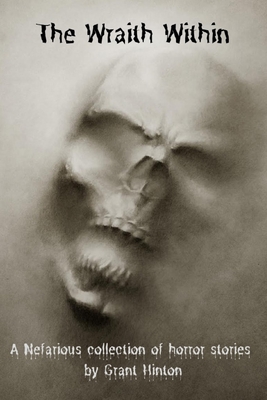
My cover for The Wraith Within is drawn by an amazing artist called Lee Marej, an engineer from the Philippines. When I saw the picture two years ago, I knew I wanted to use it for my collection. I purchased the right to use it and designed the rest of the cover from there. That was a huge – but enjoyable – learning curve.

Meghan: What have you learned creating your books?

Grant Hinton: A lot. Itโ€™s one thing to write but all the behind-the-scenes technical stuff that goes into getting those words in front of people is astounding. Iโ€™ve had to learn how to format for ebooks, Kindle, Amazon, design book covers as above, learnt how to promote that book and even interact with fans. Some days I relish just being able to delve into the worlds inside my head and write.

Meghan: What has been the hardest scene for you to write so far?

Grant Hinton: The ending to a story called โ€˜Why you donโ€™t bring back people from the dead.โ€™ Itโ€™s about the entities latching on to you when you die and come back. It was heavily influenced by my idol. My father. So the ending has him die, that was hard. Imagining that made me choke up when I was writing it. Heโ€™s still very much alive, healthy and strong. I felt that way because heโ€™s my father and I have a strong bond with him.

Meghan: What makes your books different from others out there in this genre?

Grant Hinton: Have you seen my front cover! Itโ€™s badass. Just kidding. Why is my book differentโ€ฆ umm, well the one thing I can think of other than I wrote it is that Iโ€™ve given each story an epilogue. I wanted the reader to get a look into how the story came about and any feeling I had while writing it.

Meghan: How important is the book title, how hard is it to choose the best one, and how did you choose yours (of course, with no spoilers)?

Grant Hinton: I think the cover of a book is more important than the title. A good cover catches the eye and makes you stop and read the title. Get those both right and you may get someone to pick your book off the shelf or even read the blurb if online.

How hard is it for me to choose? Iโ€™ve only got the one book so far, but I have an answer for you anyway. I think you should do a poll. If thatโ€™s with your family and friends, or fans on your page or whatever. Line up the choices and get some feedback.

With my current collection, I chose The Wraith Within because one; it symbolises the demons inside of us wanting to get out. I believe humans are fundamentally good and bad, it’s a choice to do either. You have a choice to not hit someone whoโ€™s shouting at you. You have a choice to give back the money you saw drop out the guy’s wallet. You have the choice to not buy a gun and shoot people with it.

And two, It’s also how I see the stories in my head, all pulsating and pushing their way out.

Meghan: Tell us a little bit about your books, your target audience, and what you would like readers to take away from your stories.

Grant Hinton: I enjoy writing short horror stories, its how I began so it’s easy to slip back into. Shorts can be punch 500 words or be a colossal 10K words, either way, they can break novel rules. You can play with syntax and prose, throw structure out the window and experiment with the joy of writing a thrilling piece. With a novel, you canโ€™t really do that.

Most of my stories follow the โ€˜learn a lessonโ€™ style, be that donโ€™t do drugs or donโ€™t chase white see-through things down dark tunnels with a phone and nobody with you because that’s shits gonna end bad kinda lesson. I like my readers to still be thinking about my story well after finishing it.

Meghan: What is in your โ€œtrunkโ€?

Grant Hinton: A trunk? Mineโ€™s a whole garage. Haha. Ideas crop up all the time, sometimes that inspiration needs the motivation to get out on the paper. If I donโ€™t have the time to smash it out, Iโ€™ll leave plot points or notes so I can come back to them. When I do come back to them sometimes the fire is gone or I leave it for so long that I canโ€™t remember the pattern of thought surrounding the storyline. These one sit at the back of my mind and in a folder on google docs. I often go through what I got in the drafts there, Iโ€™m meticulous like that. I have a master file with all that Iโ€™ve written, every collaboration I’ve been in and all my drafts. Just the other day I picked up a plot point of a man turning to my character. His face decaying with weeping wounds and open sores. A maggot crawls out from his hairline and creeps across his face, slipping in and out a fresh wound. The maggot crawls into the decaying manโ€™s mouth and he bites down on it.

Meghan: What can we expect from you in the future?

Grant Hinton: Twisted Fairytales and Secondhand Nightmare. Twisted Fairytales explain itself precisely, but to sum up, essentially I wanted to take 8-10 popular tales and twisted them back into something Hans Christian Andersen would be proud of.

Secondhand Nightmares is a joint collaboration with my amazing author friend, Melody Grace. We have taken 30 pictures from a Facebook secondhand finds page and with the owner’s permission written stories inspired by them. My favourite is a shrunken head picture. My character is a cheeky student with a wit sharp enough to cut grass. But then lady he meets a lady on holiday thatโ€™s more than a match for him. Itโ€™s a little sexy and quite dark. It was fun to write. I wonโ€™t spoil it for anyone out there.

Meghan: Where can we find you?

Grant Hinton: Facebook is my jam, you can message me there and Iโ€™m fairly active.

Or Twitter. I participate in a daily writing challenge called VSS365. It stands for Very Short Story. Once a day a prompt word is given by a preselected person. With the word and the confines of the Twitter character limit, you have to write a short compelling story. You can interact with me there too.

Meghan: Do you have any closing words for your fans or anything youโ€™d like to say that we didnโ€™t get to cover in this interview?

Grant Hinton: Horror surrounds us in our daily lives, not just the words on paper or scene of a horror movie, but in the actions of the people surrounding us. Donโ€™t be one of them. Use your time here on earth to make people happy. Especially yourself. Because if youโ€™re happy youโ€™ll find the world will be a happier place. And we could all do with a brighter future.

To all the budding authors out there. Read. Read like an MF, and write and show that shit to your friends and other authors. Itโ€™s the only way to learn and progress. Oh, and also grow some thick skin. Because youโ€™re going to get feedback on your baby that you might not like but itโ€™s essential that you learn from it. If itโ€™s hate feedback, like the person just say youโ€™re crap and you shouldnโ€™t write, donโ€™t listen to them. Feedback and criticism should be constructive, it should help you learn. If it doesnโ€™t, it might not be you, it might be them.

Grant Hinton is the wifi password to the world of horror. His technological knowledge mixed with the grasp of the human condition results in devastatingly chilling results. Not only that, this bestselling author is hauntingly gifted in all things to raise the hairs on the back of your neck, all the ways to quickening your heartbeat, and leave you with a lesson that stays long after your eyes have left his words.

There are great things on the horizon coming ahead, stay tuned for more soul gripping content.

Grant Hinton – horror author, writing advocate, teacher and family man.


The Wraith Within

From supernaturally scary to real-world horrifying, this collection boasts 32 harrowing tales. Each accompanied by a brief epilogue into the author’s deranged mind, adding a little insight into their creation. A lady is trapped on a train, but she doesn’t know it until too late. I professor sells sex toys for one purpose only. A policeman finds more than he bargained for on a routine call to a place that doesn’t exist.

Halloween Extravaganza: INTERVIEW: Chris Sarantopoulos

Meghan: Hi, Chris! Welcome welcome. I’m glad to have you here today. Tell us a little bit about yourself.

Chris Sarantopoulos: I was born in Greece back in the late seventies and was fortunate enough to have grown in an environment that used English as much as my native language all the time. Thatโ€™s one of the reasons why I find it easy to communicate in English. After finishing school I went to study abroad, in Scotland, and thatโ€™s why I sometimes say aye instead of yes. Itโ€™s also why I use UK spelling when I write.

Meghan: What are five things most people don’t know about you?

Chris Sarantopoulos:

  • I’m bilingual, fluent in Greek and English.
  • I can’t stand heat and summer. You want to make me feel miserable? That’s your best bet. Which is weird because I’m from Greece and it’s almost always sunny, and half the eyar if not more, feel like summer. Go figure.
  • I’m also a self-taught, part time digital designer.
  • As a kid and teen, I absolutely hated reading books. Shocking, I know. Nowadays, not a day goes by without me reading for a couple of hours.
  • My favourite colours are black and grey.

Meghan: What is the first book you remember reading?

Chris Sarantopoulos: Like I said, as a kid I made sure to stay away from all sorts of books. The reason was that teachers or relatives used to bring me books that had no appeal to me. They were the wrong genres, even though back then I had no idea of the concept of genre.

I made a 180-degree-turn when at university, a Faroese friend and flatmate bought for me as a gift the first Dragonlance book. It blew my mind! I had at long last found a book that was exactly what I wanted. It was a genre (high fantasy) that I had no idea it existed. Thatโ€™s the book that opened a door for me that eventually led me, several years later, to becoming a writer. For those unfamiliar with the Dragonlance universe, the first book of the core set is called Dragons of Autumn Twilight.

Meghan: What are you reading now?

Chris Sarantopoulos: I tend to primarily (but not exclusively) read books that are somewhat related to the genre of a given work-in-progress. So for the time being my reading list is almost exclusively Sci-Fi related. The book I just finished was Freedom (โ„ข) by Daniel Suarez, and Iโ€™m about to start reading Tiamatโ€™s Wrath by James S.A. Corey.

Meghan: What’s a book you really enjoyed that others wouldn’t expect you to have liked?

Chris Sarantopoulos: Dragonlance. Iโ€™ve talked to a lot of people who read fantasy and a great deal of them were surprised that these books were so influential to me.

Meghan: What made you decide you want to write? When did you begin writing?

Chris Sarantopoulos: I started writing poems when I was a first-year student in Scotland. Then for some reason a year or two later, I stopped. Not only that, but I had completely forgotten I had ever tried it (yes, my brain is rather weird and behaves in mysterious ways even to me). That was back in 1999, I think.

Over the years since then, I often felt the need to write something; anything. But I always came up with reasons why I shouldnโ€™t. โ€œWhat could you possibly write, Chris? You sucked at essay writing at school.โ€ โ€œ Why would you want to do that, Chris? You canโ€™t write a book in one go.โ€ Yes, back then I was under the impression that writers finish books in one sittingโ€ฆ How ignorant I was!

Then, on March 25, 2013 (I remember it because itโ€™s a very important national holiday for us Greeks), while I was talking about books with a friend, he suggested I should give writing a go. What did I have to lose, after all? And I did. Just like that. I came home and wrote the worst four pages of a story the world has ever seen. And I loved it!

It felt as though my life up to that moment was a jigsaw puzzle where the pieces were placed in the wrong place, and someone came along and knocked the whole thing in the air, and then the pieces landed precisely where they should have been in the first place. That was the moment I knew I wanted to be a writer. Best moment of my life.

Meghan: Do you have a special place you like to write?

Chris Sarantopoulos: Not really, no. I can write wherever, as long as the place is quiet and thereโ€™s internet access (for research purposes of course, not wasting or anything like that).

Meghan: Do you have any quirks or processes that you go through when you write?

Chris Sarantopoulos: The only process or ritual I have is that I write every day of the week with the exception of Sundays. I write either until I hit my daily word limit (1500-2000 words or more if Iโ€™m up to it) or until itโ€™s time to stop. This has put me in the habit of writing daily. I have also noticed that I canโ€™t write in the afternoon or at night, so once itโ€™s time to stop, whatever part of my brain takes control of me and allows me to write, simply switches off and thatโ€™s it.

Meghan: Is there anything about writing you find most challenging?

Chris Sarantopoulos: The way I see it, fiction writers are, in essence, people who create emotional truths through lies. Based on that, the main challenge is to connect emotionally with the reader. And thatโ€™s very difficult because not one person is like any other. So what resonates with me, based on my perception of the world around me will differ greatly from what resonates to someone else. Itโ€™s up to writers to figure out where the common ground between each personโ€™s likes and dislikes is and create something based on it.

On a personal level, my challenge is that English is not my native language. I may have been using it for four decades now, but I will never be as fluent as a native English speaker. Every so often I stumble on something I want to express, something I know has to have a very specific word associated with it that Iโ€™m unfamiliar with, and I end up spending hours (if not days) trying to find that one word that describes exactly what I have in mind.

Meghan: What’s the most satisfying thing you’ve written so far?

Chris Sarantopoulos: Without a doubt, it has to be my debut novel, The Darkening. Years of trying to finish it and bring it to a point where I was happy enough to allow people to read it. Though I had been published in the past by a few literary magazines and I had published a few short stories on Amazon and other retailers, finishing my first novel was the epitome of everything I had been trying to accomplish since I started writing. And the satisfaction increased tenfold when I held the print copy in my hands. It was a magical moment I will never forget.

Meghan: What books have most inspired you? Who are some authors that have inspired your writing style?

Chris Sarantopoulos: Stephen King has without a doubt a writing style that I always have in my mind. I remember the first ever book of his that I bought called A Bag of Bones. I remember I bought it as an audio book and wanted to give the whole thing a go. I never liked audiobooks, but to this day, I still remember his voice, the melody in his words, and how much they resonated with me. For me, Stephen King has a mystical or magical ability that somehow turns written words to music in my head.

As for other books or authors, there are several of them. Like I said, reading Dragonlance for the first time was a revelation for me. Of great influence, in terms of the way he builds sci-fi worlds, is Richard K. Morgan, particularly his book, Altered Carbon. I love his way of building a cyberpunk world, and Altered Carbon is a book Iโ€™ve read more than once.

Meghan: What do you think makes a good story?

Chris Sarantopoulos: Itโ€™s quite subjective, to be honest. Some people like strong and fully developed characters, others prefer non-stop action. Others want the character to delve deep into his or her thoughts. Others put a lot of emphasis on world building and descriptions. Iโ€™m a big fan of revelations; things that happen in a story (usually near the end) that tie almost all loose ends. The things that when you read them you go, โ€œa-ha!โ€

Meghan: What does it take for you to love a character? How do you utilize that when creating your characters?

Chris Sarantopoulos: The characterโ€™s voice and the extent of โ€œthe baggage,โ€ the flaws if you like, he carries. I want to see the world filtered through the characterโ€™s perception and, consequently, his voice. Is the character a gloomy, depressive character, who hates everything thatโ€™s happening around him? I want him to make me understand his reasoning, then make me see the world the way he sees it. I want to see his flaws so I can try to understand them. Itโ€™s something I try to utilize when I create characters for my own stories. I donโ€™t think I have ever created a character without some kind of flaw that skews the way he or she perceives the world.

Meghan: Which, of all your characters, do you think is the most like you?

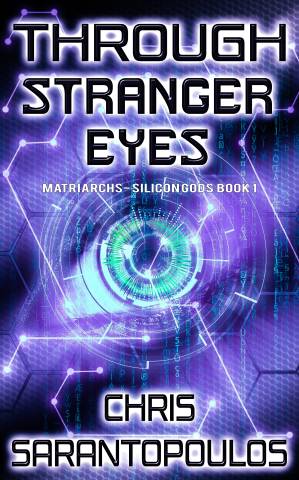
Chris Sarantopoulos: Thatโ€™s really hard to answer. The reason for this is that when we create a character, regardless if itโ€™s a support character or the main one, we often sprinkle a little bit (or a great deal) of ourselves over that character. But I think that I would behave more or less the same way as the main character of my latest novel, Through Stranger Eyes. Assuming of course I would be unlucky enough to have to deal with what he suffers throughout the story. Also, the way he sees the world (even that futuristic cyberpunk world) is not that far off from the way I see things today. In that book, Rick Stenslandt (thatโ€™s the name of my main character) appears as someone who opposes the fusion of man and machine. In fact some of the people around him think that he opposes the whole idea of technology, that he is a Luddite, but in reality what he is against is seeing humanity give up their individuality, the things that make us stand out from a crowd, the things that allow us to think for ourselves, in favour of following trends that can prove dangerous, if not outright lethal. I canโ€™t say more without spoiling the book and to a certain extent the whole series Through Stranger Eyes is part of.

Meghan: Are you turned off by a bad cover? To what degree were you involved in creating your book covers?

Chris Sarantopoulos: They say that we shouldnโ€™t judge a book by its cover, but a bad cover has the power to make me stay away from it and never go near such a book. Sad but true. It conveys the wrong message to the potential reader. For self published authors, itโ€™s up to us to make the right choice for our covers and some of us are better at this than others.

To this day, I have designed and created all my book covers. The most demanding one I ever had to do was for my debut novel, The Darkening. It took me several weeks to bring it to a state where Iโ€™d be comfortable watching it from various angles and sizes. For Through Stranger Eyes, if I remember correctly, I must have designed, completed, and eventually discarded five more covers before I came up with the one you see before you. Nearly all previous ones were far more complex than the one that I ended up using, but instead I decided to go for the simplest one. The reason for that was that up to that point I was designing the covers as a writer instead of as a publisher. Since Through Stranger Eyes is part of a series of books, I had to come up with a design that would have transferable elements throughout the series, while at the same time be unique and tell something about the story each time.

Meghan: What have you learned creating your books?

Chris Sarantopoulos: The list is quite long actually, but the most important things I learned are those that now define me as a person. Perseverance is the first one that comes to mind. Patience is another. One canโ€™t be an author without these two as his or her closest allies. The other thing that trying to get published teaches you is how to develop a tough skin. Thatโ€™s an extremely important thing in our line of work. I was fortunate enough to learn about this when the first rejection emails started coming in while I was trying to get published in various literary magazines. That doesnโ€™t mean that nowadays rejections donโ€™t hurt. They do. It just means that itโ€™s easier to handle, to identify the problem, and move on with as few scars as possible.

Meghan: What has been the hardest scene for you to write so far?

Chris Sarantopoulos: It will have to be for my latest novel, Through Stranger Eyes. When I started outlining and later drafting the book, I had no ending. I did not know how the book should end. I had all the other scenes ready, all the dialogues and everything else, but the last scenes that would tie everything up were a blur for me. At that time, I had no intention of making Through Stranger Eyes part of a series, so I had no clear path to follow. Then a few days later, I thought I could expand on the world (the series is more about how the world evolves and how the key players behind the scenes influence it, rather than how a group or characters fare through a given problem). Boom! That was it. All of the sudden I had an ending, and one that (I think) comes with an unexpected twist.

Meghan: What makes your books different from others out there in this genre?

Chris Sarantopoulos: The list is quite long actually, but the most important things I learned are those that now define me as a person. Perseverance is the first one that comes to mind. Patience is another. One canโ€™t be an author without these two as his or her closest allies. The other thing that trying to get published teaches you is how to develop a tough skin. Thatโ€™s an extremely important thing in our line of work. I was fortunate enough to learn about this when the first rejection emails started coming in while I was trying to get published in various literary magazines. That doesnโ€™t mean that nowadays rejections donโ€™t hurt. They do. It just means that itโ€™s easier to handle, to identify the problem, and move on with as few scars as possible.

Meghan: How important is the book title, how hard is it to choose the best one, and how did you choose yours (of course, with no spoilers)?

Chris Sarantopoulos: It has its importance, but I donโ€™t think itโ€™s something that can destroy a book. Assuming of course itโ€™s relevant to the bookโ€™s genre. Unfortunately, Iโ€™m one of those writers who are not that good when itโ€™s time to come up with a title. I usually write down as many as I can come up with that are somewhat relevant to the story or the series, and if nothing stands out I turn to friends and readers for help. For Through Stranger Eyes, my latest cyberpunk novel, the title came to me in the early stages of planning and outlining the novel. Thatโ€™s long before I had decided that the story would be a sci-fi one, and before it took the shape it currently has. The story is about a top biotechnology surgeon who after an accident loses his sight, and is forced to undergo an ocular operation and have cybernetic eyes. The problem is that after the operation, he starts remembering things he has never done and people he has never met. So the title for this book came rather easily.

Meghan: What makes you feel more fulfilled: Writing a novel or writing a short story?

Chris Sarantopoulos: Definitely a novel. A novelโ€™s length allows for characters to grow and things to happen in such a way so that the writerโ€™s vision can take shape. Not to mention that writing a book earns you bragging rights ๐Ÿ˜‰

Meghan: Tell us a little bit about your books, your target audience, and what you would like readers to take away from your stories.

Chris Sarantopoulos: My debut novel, The Darkening, came out last year and itโ€™s a post apocalyptic horror story. Itโ€™s the story of a survivor of an apocalyptic event that turned nearly all forms of light lethal for humans. He comes across a glowing girl (more like a halo around her) and together they try not only to survive a band of highly trained and well-armed soldiers who are after them, but to also piece together the protagonistโ€™s past and uncover the truth of what has happened. The Darkening will appeal to fans of post apocalypse and horror, but also to those who seek a new take on the genre. Through Stranger Eyes on the other hand is a cyberpunk thriller about a specialist in cybernetic augmentations who must uncover the truth regarding the gruesome murders he has recently started remembering, before the police and the megacorporations after him capture him. This story should appeal to fans of futuristic urban settings and in particular to those who love Blade Runner and thrillers. In both cases, and without spoiling too much of the stories, the theme behind them is how much can human hubris affect us not only on a personal level, but on a global scale.

Meghan: Can you tell us about some of the deleted scenes/stuff that got left out of your work?

Chris Sarantopoulos: While writing Through Stranger Eyes I had to maintain a very delicate balance between what was happening to the main character (the things he remembered and how they affected him), those who were after him, his deteriorating mental and social status, but also how all that affected his family. When I was drafting it I had included a few more scenes that showed how the main characterโ€™s predicament and choices affected his wife and his two kids. Before I sent the manuscript to my editor, and after I had revised it for the 20th time (yes, I revise and edit extensively) and with the input from a group of early readers, I decided that I had to cut back on those scenes for two reasons. The first was that Rickโ€™s daughter (Rick is my main characterโ€™s name) appeared as a self-centred brat and that was not how I wanted her to be. The second was that the novel dragged and got boring during these parts. For a thriller at least. So I removed three fifths of these scenes and I rewrote the ones that remained, while trying to have them pull extra weight in order to show how his family life was affected by everything that was happening.

Meghan: What’s in your “trunk”?

Chris Sarantopoulos: Itโ€™s the story I canโ€™t yet talk about. Not much anyway. Itโ€™s a fantasy story that will most likely span more than three books, it deals with different planes of existence merging together and nightmares. Itโ€™s the story I started writing way back in 2013, and about 100k words in I hit a roadblock. So I sat back and thought to myself, โ€œChris, you can either delete it and forget you ever wrote 100k words for it, or you can learn how to write properly and get back to it at a later time.โ€ I chose the second option, obviously and conceded to the point that I had a great story to tell, but that I had used some extremely poor writing skills to convey it. I intend to start writing it at some point, but not yet. Not before I finish some other stories I want to tell first.

Meghan: What can we expect from you in the future?

Chris Sarantopoulous: I have already finished drafting the sequel to Through Stranger Eyes and Iโ€™m trying to outline the third book in the trilogy. Which is easier said than done, because although I know how the story will end, and although I have written five outline versions, none of them seems to satisfy me enough. So for the time being, Iโ€™ll keep working on the Matriarchs โ€“ Silicon Gods world (thatโ€™s the name of the book series). Once thatโ€™s done, and assuming nothing changes in the meanwhile, Iโ€™ll probably start working on a space opera book series. Weโ€™ll see what happens after I finish that.

Meghan: Where can we find you?

Chris Sarantopoulos: Though Iโ€™m not a big fan of social media and I spend as little time there as possible, I do my best to answer all emails and messages people send me. Readers can connect with me on Facebook, Twitter, Pinterest, my blog, and of course via email. I have an Instagram account but I hardly ever use it. Readers can also sign up for my monthly newsletter and gain access to free stories, news, and offers.

Meghan: Do you have any closing words for your fans or anything you’d like to say that we didn’t get to cover in this interview?

Chris Sarantopoulos: For fellow writers who might be reading these lines, keep dreaming your dreams. The world needs you.

For readers, donโ€™t forget to support your favourite writers. You have no idea how much it means to get an email that says you read and enjoyed one of our stories. Review those works. We need it to keep going.

Chris Sarantopoulos is a Greek writer who learned to communicate in English almost at the same time he started using his native language. He studied Geology in Scotland (you may hear him say aye a couple of times), then decided to diversify and completed a Masterโ€™s degree in Service Management. He almost started a PhD, but that didnโ€™t work out. He enjoys writing science fiction, particularly post-apocalyptic fiction and cyberpunk, but also dystopia, fantasy, high fantasy, dark fantasy, and horror (not the splatter type though). Currently, he lives in Greece, and if you happen to spend time there, contact him. He may be able to arrange a meeting.

His work has appeared on Beyond Imagination, Voluted Tales, and Eternal Haunted Summer among other literary magazines.

Keep track of Chrisโ€™ newest published work by subscribing to his mailing list.

If you would like to know more about him, please visit his web page or follow him on Amazon, Twitter, Pinterest, and Facebook.

The Darkening

Donโ€™t fear the dark. Fear the light. 

The end came when light changed. It decimated humanity, leaving scattered bands of survivors stumbling in the dark.

Faced with saving himself or his family during the apocalypse, John Piscus made the wrong choice, and has been living with the guilt ever since.

When a glowing girl shows up at Johnโ€™s shelter begging for help, his instincts tell him to kill her. After all, light kills. 

But when masked troopers tasked with capturing survivors come after them, itโ€™s up to John to protect himself and the girl. Not only may she hold the key to reversing the lethal effects of light, she could also be the one who can save his soul.

If you love dark settings and characters faced with tough choices that result in horrific and sinister outcomes, donโ€™t miss this post-apocalyptic horror read.

Discover the dangers in the world of The Darkening today.

Halloween Extravaganza: Brian Martinez: STORY: The Basement Stares

When Brian asked if he could share a story he wrote during my Halloween Extravaganza, I could hardly say no. Especially after reading it. Get comfortable and enjoy…


Warren hated that old house.

It was coming up on two years since he’d bought it. Everything in it creaked and leaked, from the basement to the roof, and everything between. It had bare, wooden floors that warped and leaned at crooked angles. Bathrooms wallpapered in heavy mildew and old cigarette smoke. Lights that blinked whenever he walked down the hallway.

And it was cold. Starting in the first months of fall, all the way through the dead of winter, the house was filled with a dampness that cut to the bone. Wind whistled through the old window frames, no matter how much he tried to block them up with blankets. Even when he could manage to stop a draft from coming in through one window, another would just take its place. The whistling unnerved Warren, like distant crying in the woods. He woke up shivering sometimes from the cold air pressing down on his chest. He’d started wearing thick socks and shoes around the house most of the time just to keep the feeling in his toes.

The real estate agent had called it a fixer-upper, but that was just a nice way of saying it was a money pit. A place where dreams went to slowly die.

Then there was the sound.

It didn’t happen every night, but sometimes, just after six-thirty, after he’d eaten whatever he picked up for dinner, it would start. Warren would be on the couch, trying to watch the news, when it would start somewhere deep down in the basement.

Ka-thump. Ka-thump. Ka-thump.

It was a thick sound, like footsteps but heavier. The basement door, which he always kept closed, was between the living room and the kitchen, where he rarely went. As he sat watching television, he would hear it move slowly up the basement stairs, one agonizing step at a time.

Ka-thump. Ka-thump. Ka-thump.

For an entire year he’d been trying to ignore it. Pretend it didn’t exist. But each day the sound grew harder to block out. Tonight, as he tried to watch a movie for a change, he was just getting comfortable, thinking that perhaps he’d been left alone for the night, when the familiar sound started at the bottom of the basement stairs.

Ka-thump. Ka-thump. Ka-thump.

Moving slowly. Climbing the stairs, one at a time. Warren turned up the volume and leaned in closer to the television, straining to hear the movie he could already barely follow, but the sound only seemed to grow louder. It was a hammer on his skull. He closed his eyes and counted to ten, praying it would go away, but each count was accompanied by the sound echoing up from the basement, like the heartbeat in his own chest.

Ka-thump. Ka-thump. Ka-thump.

It mocked him. Teased him. Attacked him until he thought for the thousandth time about moving out. But he had no money left after what the house had eaten up, and he had his pride to think about as well. What would the neighbors think of him if he packed up, tucked his tail and ran off in the night? What would they say about him when he was gone?

And still, the sound came through the basement door.

Ka-thump. Ka-thump. Ka-thump.

When he couldn’t take it anymore, Warren turned off the television, jumped up from the couch and turned to face the basement. “Stop it!” he shouted, his voice echoing off bare walls and a sagging ceiling. โ€œJust stop!โ€

He knew the sound wasn’t real. It couldn’t be. There was nothing down there but a long set of wooden stairs ending in a hard, concrete floor. If anyone could see him now, yelling at the air, they would think he was crazy. But Warren lived alone those days, and there was no one to think anything about him. He glared at the unpainted basement door, drawing up his strength. Willing it to be silent. But still it came, louder and louder, slowly rising up the basement stairs.

Ka-thump. Ka-thump. Ka-thump.

A laugh bubbled up in his throat. He was being ridiculous, of course. Scared of a door. He walked to it, still not believing, still not letting the possibility of it into his head. Step-by-step, foot-by-foot, he crossed the living room, feet dragging slightly on the warped floor, until he reached the basement door.

Ka-thump. Ka-thump. Ka-thump.

With the breath caught in his throat like a fish, Warren stared at the unpainted door. It hadn’t been opened in a year. Even through all those nights of listening to the sound move up the stairs again and again, of holding his pillow over his ears and praying for sleep, he’d refused to entertain the idea. But it was time that changed. This twisted game had gone on long enough. He had to end it while he still had one last nerve left to do it with.

Tonight was the night Warren took his house back.

But then, he noticed something. In the minute he’d been standing in front of the door, willing his hand to reach up and touch the handle, the sound from the basement had stopped. Except for the house’s frame creaking under the wind outside, the night was silent.

Warren reached up, heart booming in his chest like a man trying to escape his jail cell, and slowly touched the handle. It was cold and solid. Real. He almost laughed again. The idea that he’d been expecting anything else was ridiculous. That he thought his hand might pass through it like a hook through a jellyfish. With a deep breath he turned the handle and slowly, very slowly, opened the door, the long creak of an un-oiled hinge overtaking the throbbing in his ears.

The darkness of the basement seeped through the crack between the door and the frame. One sliver at a time, the basement stairs he hadn’t seen in a year were revealed to him. That long path beneath the ground. Old, uneven slats of wood dipping down into a pool of black thicker than paint.

Ka-thump-ka-thump-ka-thump!

The sound suddenly rose up the basement stairs faster than ever before. It came at him. Excited to see him. As if it was about to crash through the door and leap out at him.

Warren slammed the door shut and ran, ran to the front of the house, ready to escape into the night and never come back so long as he lived. His body was electric. His heart felt like it was clawing its way up his neck so it could crawl out his mouth. He’d never been so terrified in his life, never so sure of the danger that came for him.

With his hand on the front door, he stopped.

He took a moment to think about what he was doing. Where would he go? What would he say when he got there? With nothing but a crazy story in his pocket, who would take him in? Who would even believe what he had to say?

Knock knock knock!

The door came alive under his hand. He stumbled back, almost falling. Warren stared at the front door, horrified that he had not one but two doors to be scared of. But even in his panic, he knew something about the knocking on the door was different. It was a normal sound. Nothing like the one he’d lived with for the past year. With shaking hands he approached the front door again, close enough to put his eye to the peephole.

A worried face. And red hair. He sighed. It was the neighbor next door, the young woman who liked to garden. She lived on her own, he remembered, something about her parents leaving her the house. She looked like she was unsure of being on his doorstep, her body language saying she was about to leave. Warren considered staying quiet and letting her go, but something in him needed to speak to someone. Anyone. Even a woman he’d barely said a dozen words to in two years.

He opened the door. She looked back at him with concerned eyes, waiting for him to say something, but he didn’t know what to say. What could he say?

โ€œHello,โ€ he managed.

โ€œSorry to knock on your door so late,โ€ she said, โ€œbutโ€ฆare you alright? I thought I heard someone shouting.โ€

He stared at her a moment. โ€œOh,โ€ he finally said. He thought of his outburst a few minutes earlier. Yelling at a door. He was embarrassed to think anyone had heard that. โ€œIโ€ฆI was just watching a movie. I probably I had the volume too high.โ€ He motioned to the living room. She glanced over, the living room visible from the front door, and saw the television turned off. โ€œI was,โ€ he added. To be fair it was true, just not what she’d actually heard.

Her face relaxed. โ€œI’m really sorry, I shouldn’t have interrupted.โ€

โ€œNo, I’m glad you did,โ€ he replied. It was the most honest thing Warren had said in a long time. She smiled, and for a second he forgot all about the sound in the basement.

โ€œWhat was it?โ€ she asked.

He blinked. โ€œWhat?โ€

โ€œThe movie.โ€

โ€œOh.โ€ He glanced sideways. โ€œYou know I already forgot?โ€

She put her hand to mouth and laughed. The friendly sound of it brightened his doorstep, and the night beyond. Was this what it was like to be normal? It had been so long since he’d spoken with someone, he’d forgotten what it felt like. To talk to a person. To make them laugh. โ€œDoesn’t sound like a very good movie,โ€ she said.

โ€œNo, I guess not.โ€

She nodded, brushing her hair over her ear. โ€œWell, as long as you’re okay. I overreact sometimes, but honestly I’d hate myself if I didn’t do something and someone ended up hurt. I hear about this stuff all the time.โ€

โ€œNo problem at all. I’m glad someone’s looking out for me.โ€

She smiled, saying goodnight and apologizing once again for the intrusion. Before she left, she turned back to Warren, looking a bit unsure of what she was about to say. โ€œListenโ€ฆI know you haven’t gone out much sinceโ€ฆyou know.โ€ She shifted uncomfortably, as did he. โ€œIf you ever need an ear, I’m right next door. I know how lonely it gets in these big houses.โ€

โ€œIt does, I guess,โ€ Warren said. Not knowing what else to say, he added, โ€œThank you.โ€

โ€œNo problem.” She paused again. “I never talked to her, but she seemed nice.โ€ She smiled sheepishly, then gave a small nod and headed back to her house. Warren watched her go, then closed the door and locked it.

It was coming up on two years since he and Mary Lynn bought the house. Mary Lynn, with her black hair like a raven’s feathers, had been as nice as the red-haired neighbor when they first met. But the house had changed her. It changed both of them. Their fixer-upper consumed them until it was all they could talk about. All they fought about. When he thought of their last argument, his face still went red at the memory. That day he’d seen a side of both of them that still shook him.

The basement had fallen silent since he’d left. He went to it, feeling the deep embarrassment of a man who’d woken up from a screaming nightmare he’d sworn was real while he was in it. It was a completely normal, unpainted door, and he had to face the fact that what he’d been hearing, what he’d been experiencing in the last year, was the result of a man unprepared to move on.

He opened the door, not slowly this time, not with the reverence of fear, but like he would any other door. The squeak of its dry, brass hinges was brief, like the tiny yelp of a surprised mouse. Without flinching, Warren forced himself to look directly at the basement stairs, to see them for what they were. Earthly things of wood and nails, and nothing more.

As he looked down at the stairs, Warren felt a chill run through him. It started on his back, a cold spot like someone had pressed an ice cube to his spine, and it moved through his blood like a shadow over open ground. The tiny hairs at the back of his neck stood up as he felt the unmistakable presence of someone standing behind him, just over his shoulder. His nose picked up the hint of a familiar perfume. And yet he didn’t dare turn around. Didn’t dare look.

As he stood there, frozen in fear, Warren’s mind drifted to that day more than a year earlier.


โ€œCan you please paint this today?โ€ Mary Lynn stood in front of the basement door, her small hands on her waist. โ€œPlease?โ€

Warren put down the black garbage bag he was carrying, stuffed to the gills with broken glass, moth-eaten pillowcases and old wires he’d pulled out of the spare bedroom, the one they’d never quite gotten to. โ€œThe whole house is falling apart, why are you so obsessed with one door?โ€

โ€œBecause it creeps me out.โ€

โ€œAnd painting it will change that.โ€

She frowned at him. โ€œWe won’t find out unless we try.โ€

He wiped the dusty sweat from his brow with his forearm, leaving the garbage bag behind. “You can paint it, too, you know.โ€

โ€œMaybe I would if I wasn’t busy cooking dinner.โ€

โ€œI didn’t ask you to cook dinner.โ€

โ€œWell, I don’t see you doing it.โ€

โ€œThat’s right, because I’m not doing anything at all. Right?โ€

It went on like that for almost an hour. The two of them argued louder and louder, forgetting all about the dinner burning on the stove, an expensive piece of fish gone black. They’d fought so many times already, but this time was different. This time the fight grew bitter and petty. Warren and Mary Lynn, standing in front of the basement door, screamed at each other about every dripping faucet and rusty nail in the house, all because he hadn’t gotten around to painting one door. They came to the point where Warren was flinging the basement door open, shouting that he would just take it off the hinges and remove it if it bothered her so much. Each time he did Mary Lynn slammed it shut, screaming all kinds of nasty things at him, things he never thought he’d hear from the lips of the sweet girl he’d married.

And then, in the heat of the moment, he did something he’d never done before.

He grabbed her arm.

She looked up at him, shocked by his behavior. Before she could pull away, he wrenched her over in front of the open door so she could look at the stupid basement stairs for herself. When she had a good, hard look at them, he leaned in close to her ear, so she didn’t miss a word.

โ€œYou’re so scared of the basement?โ€ he hissed. โ€œLook at it!โ€ He didn’t recognize his own voice coming out of him. It didn’t even feel like him saying it. But before he could stop himself, before the little voice in the back of his mind could ask him what he was doing, Warren gave Mary Lynn a hard shove toward the stairs that bothered her so much.


Warren shook, unable to move. A pressure overcame him, and his eardrums felt about to pop. Whatever it was behind him, whoever it was, he could feel the hatred coming off them in waves, pulsing like blacktop in summer. Unseen lips drew closer. Close enough they could kiss him. With cold breath drifting across his neck, the shadow behind him whispered into his ear.

“Look at it.”

And then he felt it on his back.

A single push.

Warren tipped over the precipice of the basement door. Either the fear or something else kept his arms from working, kept his hands from stopping his fall. His head was first to hit the basement stairs. He heard a loud crack as his neck bent sideways, and a deep, sharp pain shot through his body, followed by a messy tumble down the stairs. He felt every broken arm, every dislocated leg as he flopped and rolled down the long set of steps, ending in a hard stop on cold concrete.

Warren couldn’t move his legs. His body was shattered, his breath shallow. His eyes rolled in his skull to look back up the distance he’d fallen, up the stairs that looked a mile long from where he lay, all the way to the basement door.

It was coming up on two years since he and Mary Lynn bought the house, and one year since she’d died. Yet there she stood, black hair like a raven’s feathers, blowing softly in the draft that never left. She was pale and beautiful and cold, her eyes diamonds cut from pressure and pain.

โ€œPlease,โ€ Warren whispered. It was all he could manage to pull from weakened lungs.

With a light touch of her small hand, she closed the still unpainted door. The dry hinge creaked like a dead tree in the winter wind. Then all light cut out, plunging both Warren and the basement into pure darkness. The black encompassed him, surrounded him, drawing the precious heat from his shattered body. Finally, the old house, the house he hated so much, was finishing the job of bleeding him dry. He could no longer feel his feet, or really much else beyond the slowing of his own heart.

Gasping like a fish, Warren summoned whatever he had left and focused on reaching the stairs. They were somewhere in front of him, in the dark. By some miracle he got his arms to work, and he began pulling himself along the frigid basement floor, useless legs dragging behind him.

Barely able to lift his head, he clutched the bottom step and pulled himself up it. The strain on his broken neck was too much to hold. His head slumped, pounding against the wood. Yet still he didn’t stop. He couldn’t, not until he reached the top. Maybe there he could call for help loud enough that someone would hear him. Maybe the nice neighbor with the red hair. There wasn’t anyone else close enough to hear. No one else who cared.

One step at a time he dragged his cold body up the stairs and toward the door, hoping to be saved, praying to be forgiven, and one step at a time, his heavy head fell and struck the wood. A thick sound, like footsteps but heavier.

Ka-thump. Ka-thump. Ka-thump.

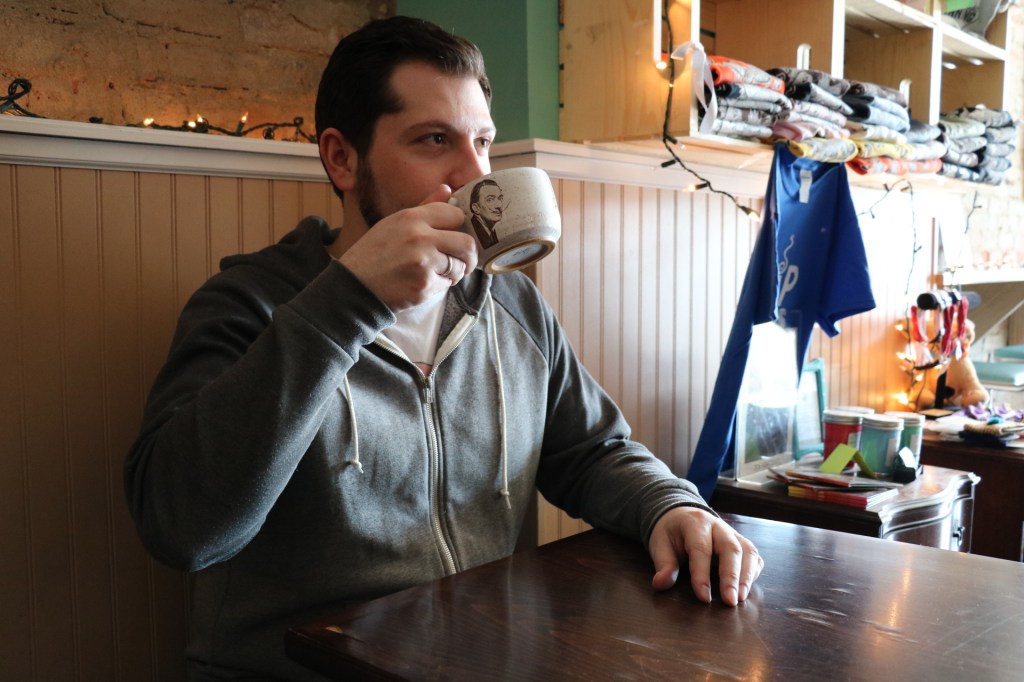
Brian Martinez is a science fiction and horror writer. He studied Film at Long Island University, and has been known to watch a John Carpenter flick on repeat until people grow concerned. He lives in New York with his wife Natalia and their pack of dogs. 

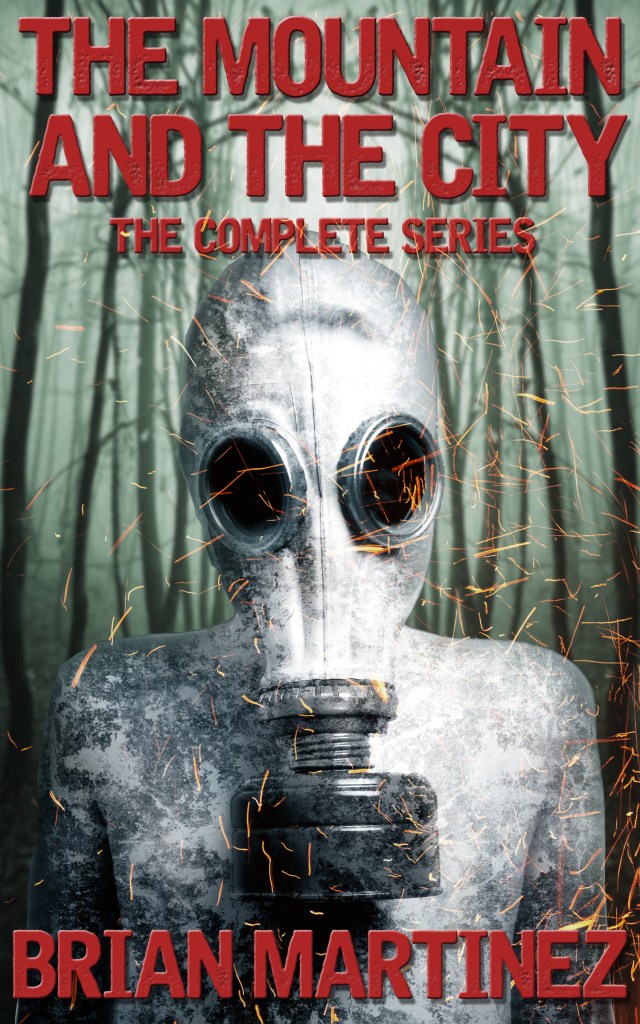
Martinez is known for numerous apocalyptic works, including A Chemical Fire, The Mountain and The City, and the Bleeders series. He also writes The Vessel, a Space Horror podcast on all major platforms. His works have appeared on screen and in print, as well as on Youtube and in audiobook. He is currently working on The Unseen, a major, multi-character Supernatural Thriller series.

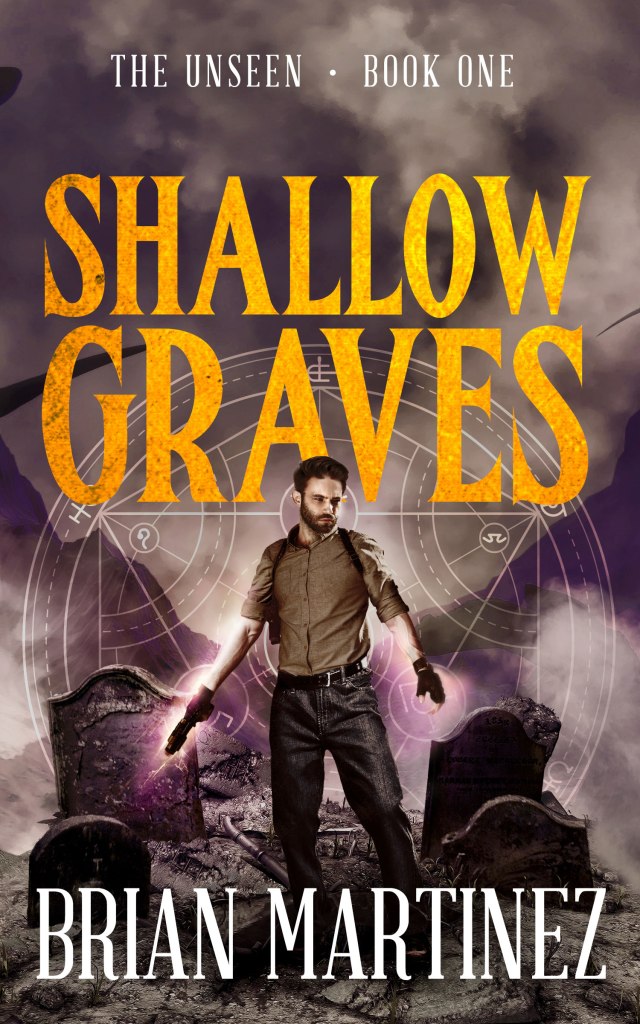
The Unseen 1: Shallow Graves

He drinks too much. He can’t hold a marriage together. And he’s our only hope against the monster that just came to town.

Franklin Butcher is a young cop with a few rough years behind him. Freshly divorced, he decides to make a new start in the small town of Shallow Creek. What better place to coast until retirement than a town where nothing happens?

His plan doesn’t work. Soon people start disappearing, and Butcher is the only one who seems to want to solve the case. He believes a new couple in town are to blame for the vanishings, but the truth is even darker than he thinks.

Before he knows it, Butcher is drawn into an unseen world of supernatural creatures that has existed in secret for centuries. It’s also a world he has more connection to than he ever imagined. Because, like Shallow Creek, Franklin Butcher has a few secrets of his own.

The Unseen is a bold new take on familiar myths, from doppelgangers to vampires, to demons, monsters and more. This is a series that can’t be missed. But be careful- once seen, this world can’t be unseen…


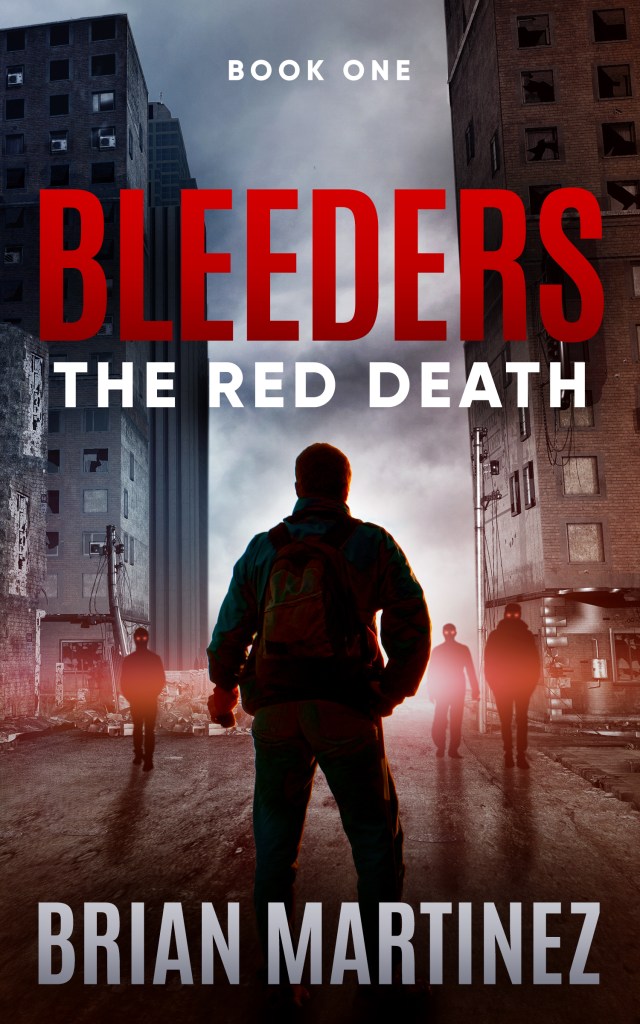
Bleeders 1: The Read Death

Can the world’s biggest smart-ass survive the apocalypse?

All the news channels can talk about is the Red Flu, a nasty strain that came out of nowhere to wreak havoc on the population. There’s also something the government isn’t telling the public about the Red Flu- both the secret of its true effects, and exactly how it spreads. 

Brody Tate doesn’t care. He’s a young smart-ass living in New York City, locked in a dead-end job. His only concern is telling his boss where he can shove it. Besides, the news only exists to scare people, right? 

But something is wrong. There’s blood in his boss’s office. A woman is dead on the floor. 

His boss is eating the cleaning lady. 

He kills the man in self-defense- not that the cops believe him- and gets carted away for murder. As if his day wasn’t bad enough, his boss managed to bite him during the struggle. With the Red Flu tearing up his insides, Brody finds himself in a self-destructing New York, lost in the horrors of a crumbling city while fighting to stay alive. 

The question now is, if the Red Flu doesn’t kill him, and someone with it doesn’t, what will be left of him? What will he become?


The Mountain & the City

An epidemic has killed off most humans, turning the rest into beasts with sharp nails, keen senses and an insatiable hunger. Now, years later, a solitary survivor hides in a trailer above a dead city. This is life with the door and windows taped shut, where survival comes down to two, simple rules: stay quiet, and protect the air. 

One day, a visitor comes up the mountain. It’s a meeting that leads to a fateful decision, and a sacrifice that will change everything. 

Collected here for the first time, The Mountain and The City is a post-apocalyptic serial that has kept its faithful readers on the edge of their seats time and time again.

Halloween Extravaganza: INTERVIEW: Brian Martinez

Meghan: Hi, Brian. Welcome to Meghan’s House of Books. Tell us a little bit about yourself.

Brian Martinez: Alright, well my name is Brian Martinez and I hail from Long Island, New York. I’ve written something like ten books at last count. Most of them are horror stories, or if they’re not horror they at least contain ingredients of horror. I love the dark stuff, although when I write it myself it tends to come out with a twist of humor.

Meghan: What are five things most people donโ€™t know about you?

Brian Martinez: Five? Alright, let’s seeโ€ฆ

1) I’m a huge music fan, and by that I mean I listen to music almost constantly. For me streaming music is one of the greatest inventions of the last ten years or so. I mainly listen to Alternative and Electronic, but I mix in some other things as well. Lots of synth.
2) Nine Inch Nails is my favorite band of all time. I’ve been obsessed since the first moment I heard Trent Reznor’s music, so starting around ’92 or so. He’s one of my biggest artistic heroes in how he’s changed so much over the years, yet stayed true to exactly who he is.
3) I love animals, especially dogs. Sometimes more than people. In fact, if you see a dog in one of my books, that’s probably the safest character in the story.
4) I wake up at 4:30 every morning, almost on the dot, whether I want to or not. It started happening a few years ago, completely by accident. At first it was annoying and I tried to fight it, but I’ve come to embrace it. Now I get my best writing done before most people are awake.
5) I was on Sesame Street as a child, and I have proof.

Meghan: What is the first book you remember reading?

Brian Martinez: Harold and the Purple Crayon. It’s a children’s book about a four year-old who makes his own world with a single crayon. So that obviously goes back pretty far. It sounds silly, but Harold was the first person who taught me I could create my own reality. It’s still one of the most powerful lessons I’ve ever learned. Like most kids I was then totally scarred by the Scary Stories to Tell in the Dark books, and a few ghost story books that gave me really bad nightmares. I think later on Dean Koontz was my introduction to more adult books, which always inevitably leads to Stephen King.

Meghan: What are you reading now?

Brian Martinez: Tomie, by Junji Ito. He’s a master of Japanese horror manga who you absolutely must experience for yourself. His most famous work is Uzumaki, and it’s seriously a masterpiece of surreal horror. He has this way of making you feel uncomfortable, yet at the same time unable to look away. Japanese horror at its best.

Meghan: Whatโ€™s a book you really enjoyed that others wouldnโ€™t expect you to have liked?

Brian Martinez: I don’t usually read straight thrillers, but I picked up Killing Floor, the first Jack Reacher book by Lee Child, and was stunned by how well-written it was. Not that I thought it would be bad, I sort of expected the good action and fast pace, but I didn’t see the expert prose coming. Lee Child has a way with words and dialogue that makes the story sing. Other than that I do read bits and pieces of genres you wouldn’t think. I expect you’ll find that’s true of a lot of writers- we like to pop the hood and check out how the engine runs.

Meghan: What made you decide you want to write? When did you begin writing?

Brian Martinez: I started writing sometime in elementary school, for the simple reason that one day I asked my older brother what he thought I was good at, and he said writing stories. At the time I didn’t know what he meant, because I didn’t recall writing anything. Looking back I’ve found some old school papers in my parents’ attic and realized I had the habit of turning homework assignments into short stories, and usually bloody ones. I think it was inevitable from the start.

Meghan: Do you have a special place you like to write?

Brian Martinez: I have an office in my house that I do most of my writing in, although I do bits and pieces just about everywhere. To find the time to write you really have to be flexible. Five minutes here and there adds up to an hour pretty quickly if you keep at it. But at the same time having a routine is incredibly important.

Meghan: Do you have any quirks or processes that you go through when you write?

Brian Martinez: I listen to music, all instrumental, so I don’t get distracted by lyrics. Mainly eighties horror soundtracks. Other than that, a lot of staring at the wall until it talks.

Meghan: Is there anything about writing you find most challenging?

Brian Martinez: The whole thing is challenging. That’s probably why I keep doing it. The arts are weird in that every time you start a project, you’re essentially starting from scratch. You have the experience and the skills in place to create something, but you’ve never created THAT PARTICULAR something, so you never know how it’s going to go and where it might fall apart. If it was too easy everyone would do it, and it would probably lose its luster.

Meghan: Whatโ€™s the most satisfying thing youโ€™ve written so far?

Brian Martinez: Usually it’s the short stories. There’s a certain purity to a really focused short story. Less words means less chances to screw it up. Short stories are almost like songs to me. Get in, do the damage, get out. I have a short story called โ€œThe Depthsโ€ that felt particularly good at the time.

Meghan: What books have most inspired you? Who are some authors that have inspired your writing style?

Brian Martinez: House of Leaves by Mark Z. Danielewski comes to mind, because it’s a work of art and completely opened my eyes to what a book could be. Hunter Thompson and his ability to make something as meaningful as it is hilarious. As far as my writing style, he’s not an author, but I very often find myself trying to capture the feeling I get from John Carpenter movies. Whether you’re supposed to laugh or be scared, you just love that atmosphere he puts you in.

Meghan: What do you think makes a good story?

Brian Martinez: It can be so many things. Usually it’s a great character. In the end, though, it just has to deliver on what the tin says. I don’t watch Hot Fuzz for the same reasons I watch Saving Private Ryan or Alien, and yet all three are successful at giving you exactly the movie you wanted. They promise a certain ride and deliver it. Sometimes, though, what makes a story go from good to great is when it over-delivers. You expected to laugh, you did, but you cried somewhere in the middle as well. That’s a good ride. You still got what you wanted, and then some.

Meghan: What does it take for you to love a character? How do you utilize that when creating your characters?

Brian Martinez: Being funny helps. Also they should do things, and not just think about doing things. And they definitely shouldn’t complain about doing things. Unless the complaining is funny. I don’t know exactly how I create characters other than letting them talk for a while and hearing what they have to say. From there I decide whether or not I want to keep hearing them talk. Characters are really interesting to me, you start off with an idea of who they’re going to be, a pre-judgment, but so many times they surprise you about who they actually are. That probably sounds full of crap but it’s completely true. As a writer, if you’re forcing a character to be who you think they should be, you’re doing something wrong. Part of the process is letting go of a certain amount of control.

Meghan: Which, of all your characters, do you think is the most like you?

Brian Martinez: Find the one who copes with life through humor, and that’s usually where you’ll find me.

Meghan: Are you turned off by a bad cover? To what degree were you involved in creating your book covers?

Brian Martinez: I am most definitely turned off by a bad cover. It should at least be an okay cover, and then it better have a killer description. I just can’t imagine spending the kind of time it takes to write a book, to then turn around and slap a terrible picture on the front of it. Of course people should judge the story on the story itself, that’s obvious, but if you have an awful cover people will never get to read it in the first place.

For a while I did my covers with my own decent amount of Photoshop skills, but in the last few years I’ve come to see the importance of hiring professionals to do them. Not only are they better than you at it, they don’t have the emotional attachment clouding their vision. I still give my cover designer lots of ideas to draw from, and then give feedback for how to tweak the final image, so I’m definitely still involved. If you find the right person it’s a satisfying give-and-take process that makes everyone happy. A good cover draws people in, and it tells them you’re serious about this thing you’ve made.

Meghan: What have you learned creating your books?

Brian Martinez: How good it feels to finish a project. Writing any book, good, bad, mediocre, is a kind of marathon. People like to criticize certain authors or books, and I do it sometimes, too, but if you’ve ever actually written one, there’s always going to be a part of you that says, โ€œWell, yeah, but at least they finished it.โ€ I have a stack of books on my bookshelf that I wrote. That’s a great feeling. I think everyone needs that feeling in their lives in some form or another.

Meghan: What has been the hardest scene for you to write so far?

Brian Martinez: None of them have been emotionally difficult for me, if that’s what you mean. The first few scenes of any book are tough in that it takes a little while to find the voice of the story. Almost like warming up an engine. Once I do I usually have to rewrite those first scenes anyway, to match the feel. More and more I don’t sweat those first pages because I know how much they’ll end up changing. Editing is really freeing in that way. Nothing is permanent.

Meghan: What makes your books different from others out there in this genre?

Brian Martinez: I tend to mix genres a lot. The Unseen, the series I’m writing now, is primarily a supernatural thriller, and yet it includes heavy amounts of horror, martial arts, noir, and even Lovecraftian elements. It’s selfish in a way, because I do it largely to keep things interesting for me, but I hope that translates to an interesting story that isn’t written how someone else would write it. The downside is it’s harder to market, but I have to accept that. I just hope that like-minded people will love it that much more.

Meghan: How important is the book title, how hard is it to choose the best one, and how did you choose yours (of course, with no spoilers)?

Brian Martinez: Titles are extremely important. A friend pointed out once that titles are the one bit of your writing that everyone reads, and I agree with that whole-heartedly. That said, don’t sweat it too much. You usually know the right title when you see it. If not, write down as many as you can and try them out on people. You’ll figure out pretty quickly which one people respond to.

Meghan: What makes you feel more fulfilled: Writing a novel or writing a short story?

Brian Martinez: Novels by a huge margin. Short stories are great for those small bursts of accomplishment, which makes them great to write either between novels or when you’re feeling the drag in the middle. But like I said before, novels are marathons, and nothing makes you feel better about yourself than running a marathon. Or so I’m told.

Meghan: Tell us a little bit about your books, your target audience, and what you would like readers to take away from your stories.

Brian Martinez: I think what my books all have in common is that they dance in the place where genres meet. My biggest influence by far is growing up crazy about movies, and the ones I liked the most were always in a gray area genre-wise. Star Wars is science fiction but it’s kind of a western, too. Aliens is science fiction but it’s also horror. Predator is a monster movie but it’s a military action flick. Even Little Shop of Horrors, which I watched so many times I think I still know most of the songs, is a horror movie and a comedy and a musical and a romance all at once.

When I first started out, I was trying to write literary, post-modern stuff like Palahniuk or Clevenger, but I could never finish anything. It wasn’t until I embraced my love for genre fiction that my writing really took off. I realized pretty quicky that I could still say the things I wanted to say. My first book, A Chemical Fire, takes place in a kind of zombie apocalypse, but it’s also about a man destroying his world with drugs. The Mountain and The City is about post-pandemic life, but it’s also about how powerful mothers can be. And then there’s the Bleeders books, which are basically dark comedies about a major smart-ass dealing with the end of the world. And so on. The kind of people I write books for are people like me, who are unashamedly in love with the scope of what genre fiction can be. I just hope to give people a little escape, maybe a few laughs, and the sense that there are other people like them out there, either writing the books they’re reading, or running around in the books themselves.

Meghan: Can you tell us about some of the deleted scenes/stuff that got left out of your work?

Brian Martinez: I can’t think of any major deleted scenes of the stuff I’ve published. I do have a bunch of false-starts filed away, books I’ve gotten a few chapters into and decided the idea wasn’t quite cooked yet. That happened recently when I started writing a supernatural thriller set in the eighties called Passenger. It took me a little while to realize that what I was actually writing was a prequel to my series The Unseen. Once I understood that, I put it down and got back to work on The Unseen. But it did help me set up a bunch of backstory. Maybe at some point I’ll go back and finish it.

Meghan: What is in your โ€œtrunkโ€?

Brian Martinez: I actually do have a trunk novel. It’s one of those false-starts I mentioned, but it’s one I would still love to write. All I can tell you is it takes place in the future, and that I did a lot of research about parasites. Also it has one of the better titles I’ve come up with: Monstermouth Death Switch.

Meghan: What can we expect from you in the future?

Brian Martinez: Right now I’m all in on The Unseen. It’s the most elaborate world I’ve created so far, with four major characters, each with a primary home town, crossing paths with creatures from something like ten different worlds. It’s been a complicated but interesting ride, and I want to see it through to the end. Somewhere along the way I have a few other series that have to be wrapped up, but beyond those I’m always looking for whatever comes. I’ve learned to keep an open mind when opportunities present themselves, and to say yes as much as possible when they do.

Meghan: Where can we find you?

Brian Martinez: The main place is my website ** Twitter ** Instagram ** Facebook

Meghan: Do you have any closing words for your fans or anything youโ€™d like to say that we didnโ€™t get to cover in this interview?

Brian Martinez: Just keep reading what you love to read, watch what you love to watch, listen to what you love to listen to, draw what you love to draw and write what you love to write. People who try to step on what you care about just wish they had something to care about as much as you. You’re allowed to be happy. You’re allowed to love things and be excited about them. Some people don’t want to admit when they like something, like it’s a sign of weakness, and maybe it is in a way, but it’s the best kind. It’s proof that you’re alive and you can be hurt. Wear your heart on your sleeve. Hold your favorite book up like a torch.

Brian Martinez is a science fiction and horror writer. He studied Film at Long Island University, and has been known to watch a John Carpenter flick on repeat until people grow concerned. He lives in New York with his wife Natalia and their pack of dogs. 

Martinez is known for numerous apocalyptic works, including A Chemical Fire, The Mountain and The City, and the Bleeders series. He also writes The Vessel, a Space Horror podcast on all major platforms. His works have appeared on screen and in print, as well as on Youtube and in audiobook. He is currently working on The Unseen, a major, multi-character Supernatural Thriller series.

The Unseen 1: Shallow Graves

He drinks too much. He can’t hold a marriage together. And he’s our only hope against the monster that just came to town.

Franklin Butcher is a young cop with a few rough years behind him. Freshly divorced, he decides to make a new start in the small town of Shallow Creek. What better place to coast until retirement than a town where nothing happens?

His plan doesn’t work. Soon people start disappearing, and Butcher is the only one who seems to want to solve the case. He believes a new couple in town are to blame for the vanishings, but the truth is even darker than he thinks.

Before he knows it, Butcher is drawn into an unseen world of supernatural creatures that has existed in secret for centuries. It’s also a world he has more connection to than he ever imagined. Because, like Shallow Creek, Franklin Butcher has a few secrets of his own.

The Unseen is a bold new take on familiar myths, from doppelgangers to vampires, to demons, monsters and more. This is a series that can’t be missed. But be careful- once seen, this world can’t be unseen…


Bleeders 1: The Read Death

Can the world’s biggest smart-ass survive the apocalypse?

All the news channels can talk about is the Red Flu, a nasty strain that came out of nowhere to wreak havoc on the population. There’s also something the government isn’t telling the public about the Red Flu- both the secret of its true effects, and exactly how it spreads. 

Brody Tate doesn’t care. He’s a young smart-ass living in New York City, locked in a dead-end job. His only concern is telling his boss where he can shove it. Besides, the news only exists to scare people, right? 

But something is wrong. There’s blood in his boss’s office. A woman is dead on the floor. 

His boss is eating the cleaning lady. 

He kills the man in self-defense- not that the cops believe him- and gets carted away for murder. As if his day wasn’t bad enough, his boss managed to bite him during the struggle. With the Red Flu tearing up his insides, Brody finds himself in a self-destructing New York, lost in the horrors of a crumbling city while fighting to stay alive. 

The question now is, if the Red Flu doesn’t kill him, and someone with it doesn’t, what will be left of him? What will he become?


The Mountain & the City

An epidemic has killed off most humans, turning the rest into beasts with sharp nails, keen senses and an insatiable hunger. Now, years later, a solitary survivor hides in a trailer above a dead city. This is life with the door and windows taped shut, where survival comes down to two, simple rules: stay quiet, and protect the air. 

One day, a visitor comes up the mountain. It’s a meeting that leads to a fateful decision, and a sacrifice that will change everything. 

Collected here for the first time, The Mountain and The City is a post-apocalyptic serial that has kept its faithful readers on the edge of their seats time and time again.