From his recliner in the living room, Ed heard the Bittermans’ dog going apeshit. Not just barking—the damned mutt was howling to wake the dead. He picked up his phone from the coffee table.
“One of these days, Jack, somebody’s going to call Animal Control on your dog. I know he’s not mean, but he’s so goddamned loud. What is he even yapping about?”
“Carolers,” Jack answered. “They’re on the front lawn singing, and holding up a sign asking for donations. Don’t worry, as soon as they’re gone, Elvis will calm down.”
Ed sighed. “It’s okay, man. He’s not really bothering me, but I know Butt-Lick’s probably already calling the Homeowners’ Association about it. You know, Wahh, they’re violating the covenants, and I’m a little brat.”
Butt-Lick, the mutual next-door neighbor between Ed and Jack, was a real piece of work. His actual name was Gene Snavely, but they’d both called him Butt-Lick since the Independence Day Block Party five years ago.
Ed and Jack had been talking about an upcoming fishing trip when a woman near the cornhole boards screamed. Gene, a retired car salesman, lurched into action, dropping his paper plate of potato salad and barbecued ribs onto the grass.
A kid was choking. She had apparently taken a huge bite of a bratwurst and tried to swallow too quickly. Her face was turning purple, and before anyone else could react, Gene grabbed her around the belly.
He used the Heimlich Maneuver on the kid. After the offending chunk of brat had popped out, Gene had looked around with a huge barbecue sauce-smeared grin on his face and said Yep, that Hind-lick Maneuver works ever’ time! Ed had snickered and whispered his thoughts to Jack, and from that moment forward, Gene’s new name between the two of them was Butt-Lick.
Butt-Lick could be considered heroic by his quick thinking and saving that kid, but he more than made up for it with everything else. He was truly the worst kind of neighbor to have. He constantly gave unsolicited advice on everything from killing weeds in the front lawn to investment banking, whether he knew anything on the subject or not. Also, every time he saw something on the street that he didn’t like, he’d file a complaint with the Homeowners’ Association instead of stepping across the lawn and simply suggesting that the guy next door put away his empty trash cans or move the car parked in front of his mailbox.
Ed was a widower and spent most of his time at work, and as a result had relatively few encounters with Butt-Lick. On the other side, though, Jack Bitterman was young and married, with two happy kids and an obnoxiously friendly Golden Retriever. Somehow, Butt-Lick always managed to see every move the Bittermans made, and he always found something to bitch about. Dog barking, dog poop, toys in the yard, trash cans left out, anything was fair game.
“You’re probably right,” Jack said now. “That guy is such a knob. Anyway, thanks. And if I don’t see you between now and Tuesday, Merry Christmas!”
“You, too, Jack—” Ed began, but Jack started speaking away from the phone.
“Lindsay, honey, don’t open the door, we don’t know those people. Lindsay, stop! Hey, excuse me, please back out of my house. What do you think you’re doing? Out! Get out! Right now, before I call the cops! You—”
The line disconnected.
Lindsay was Jack’s daughter, seven years old last month.
Ed took the phone away from his ear and cleared the call, then lay the phone on the coffee table. He went to the front door and opened it. Standing on his front porch, his breath fogging with each exhale, he could see the line of young pine trees Butt-Lick had planted along the property line in an effort to get some privacy from the Bittermans’ lives, but he couldn’t see anything beyond the trees clearly. The front porch light shone on the driveway and the lawn, but the furtive movement he saw was mostly obscured by pine boughs. He heard high-pitched snatches of a Christmas carol on the chill breeze, but couldn’t identify the song.
Elvis’s yapping grew more frantic, then abruptly cut off with a yelp. A child’s giggle filled the silence.
That doesn’t sound good. Frigging creepy, actually.
His first instinct was to call 911, but he wanted to make sure he wasn’t overreacting. He knew Butt-Lick had called the police on Jack’s kids before because of a misthrown football breaking a window. Ed grabbed a flannel shirt to throw on over his t-shirt and shoved his feet into a pair of slippers, then stepped out into the evening darkness.
The December night was chilly, but not cold. Maybe upper forties, but Ed was getting to that age when he’d rather be sweating his balls off in heat than spending even a moment in actual cold. He’d had a few real White Christmases as a kid when he’d lived further north, but he wasn’t expecting one here in South Carolina anytime soon. Still, the wind went through the flannel like it was nothing, and the chill grabbed hold of his spine in a grip that he knew would ache the rest of the night.
Ed stepped off of his driveway and into Butt-Lick’s yard, psychically daring that halfwit to start griping about him trespassing. The dry, dormant Bermuda grass crunched beneath his slippers as he shuffled forward. He saw no movement of the front window curtains, and the old bastard’s porch light didn’t flare to life.
Ed found himself standing before the line of pine trees, trying to find a clear line of sight into Jack’s family’s yard. Butt-Lick had been thorough, though, and Ed only got glimpses. The carolers wore mixed colors of clothing, but all seemed to be wearing red stocking caps. The song he heard was clear enough now, sung by a small group just beyond the trees. It was The Wassail Song, but the lyrics sounded off. The song wound down and ended, and in the new silence, Ed heard a muffled scream from inside the house.
That’s it. I’m calling the cops.
Behind him, a sound softly rang out. A single person, slowly whistling the opening bars of The Wassail Song. The sound was haunting, almost echoing in the sudden stillness of the night. Ed jumped, turning with a jerk.
The man standing before him was tall and thin. In the dimness, Ed couldn’t make out much of the man’s facial features, except for the shiny, dark spatters on his cheek. The spatters looked black in the darkness, but they could only be blood. The man’s mouth changed from a whistling pucker into a grin. A crisp voice spoke from beneath the knitted red stocking cap.
“Come along, my friend. Well met.”
Ed jerked backward, but too late. A hand closed like a vise over his arm, and propelled him with wiry strength around the stand of pine trees as the carolers began singing again where the whistler left off. The carolers, adults and children, looked gaunt, almost feral, despite their cheesily matching red stocking caps. Their full smiles looked sharp, hungry and expectant.
“Here we come a-wassailing, with knives so keen and bright,” they began.
Those are not the words, Ed thought as the man yanked him helplessly up the front steps and through the door into the Bitterman household. Ed thought he heard crying, deeper inside the house, but the voices of the carolers intruded.
“We’ve come to take your sacrifice, to join our sacred rite.” Then the singers launched into the chorus, which in itself sounded like the lyrics Ed knew.
The front hall of the house was a shambles. Jack and Tara’s efforts at interior decoration were a complete wreck. Picture frames were on the floor, their glass kicked in and the pictures torn. Fans of blood were sprayed onto the wall instead. The table by the door was nothing more than varnished kindling and silver shards of shattered mirror. The wiry man dragging Ed into the house yanked him forward into the living room and threw him into an overstuffed chair. Ed saw Jack’s cell lying on the floor, its dead black screen a thousand-faceted mosaic.
“Hey! Stop!” he said when he finally found his voice.
“Keep the axe on him,” said a huge, round, baritone voice, and Ed turned to the fireplace as an axe head thumped heavily onto his left shoulder. Ed reflexively turned toward it, and felt the cold, sharp edge of the blade press into his neck. He imagined the thin one holding the other end of the axe handle. Shuddering, Ed refocused on the large figure before the fireplace.
A huge man, practically a giant, stood before him, his arm resting on the mantlepiece. The man’s shoulders were broad, and behind him, over the mantle, Ed could barely see Jack’s wall-mounted television playing A Christmas Story. The man wore a knitted red cap like the others, but his was different, floppy cloth over a tighter headband, with a jaunty puffball on top. A tam o’shanter, and at the front one side of it slouched over the big man’s face, obscuring his left eye.
“What is this? What have you done to this family?”
The man erupted in hearty laughter, dramatically gesturing with outstretched arms. “Ah, good neighbor, have you not heard our song? We’ve come a-wassailing.” He paused, then smiled good-naturedly. “Forgive me. Allow me to explain. You do know where the tradition of caroling originated, don’t you?”
Ed didn’t answer this crazy man. He shifted, shrugging the bruised shoulder that held the cold weight of the axe head.
“The turn of the seasons depends on sacrifice,” the giant said matter-of-factly. “It began with the Wild Hunt, a beautiful spectacle. My hunters and I rode through the winter solstice night, hunting souls for sacrifice. We grease the wheel of seasons and keep it turning, so that Winter may pass and life may return in Spring.”
Sacrifice? What the hell is he talking about?
“Yes, those were heady days. Riding Sleipnir across the night sky and stirring up storms as we hunted souls. Ah, such glorious times. But we found we didn’t need to harvest souls to turn the seasons. We only needed the willingness of mortals to sacrifice of themselves.”
Ed gripped the arms of the chair. He had to get away from here and call the police. He slowly shifted his body infinitesimally to the right, away from the axe. The axe head didn’t move.
“In time, the Wild Hunt became wassailing, where groups of the devoted went from house to house chanting and asking for offerings. In return for an offering, the households were blessed. Those who did not give, naturally, were cursed. The faithful did the work, and I was allowed to rest.”
Outside, the song ended. After a silent moment, the thin man behind Ed began his slow, melancholy whistle of the song’s first few bars, then the singers outside began to sing again.
“Here we come a-wassailing, To take your pound of flesh, We’ve come to take your sacrifice, Your soul from body thresh…”
The big man smiled again. “Mortals continued to give to the wassailers, and eventually the threat of a curse was no longer needed. The wassailers eventually became modern carolers. You have probably even seen in your lifetime when carolers came around and sang, many people offered them snacks, or warm beverages, or even—” he winked his visible eye “—a tipple of spirits.”
Ed did remember carolers coming to the house when he was a child, and his mother always gave the singers a cup of hot chocolate to send them on their way. She’d said it was just the right thing to do, to give them something for their musical entertainment. Ed didn’t see things like that these days, though. People were too scared to open their doors to anyone, and with good reason.
If this crazy person was to be believed, Mom had been more right than she’d known.
“Sadly,” the man in the tam said, “that time has passed, and I must again take my place at the head of the Wild Hunt. The seasons must change for the earth to live, and the turn of the seasons demands sacrifice.”
Ed shifted again, slightly. If he kept his movements small, maybe he could eventually lunge away and get clear of the axe resting on his shoulder. Beyond that, he had no idea. Escape through the kitchen, out the back door, maybe. He needed time to stall.
“But, ahh,” he said, “this family didn’t have extra to give. They’re both schoolteachers.”
“Friend, look around yourself. This house, this neighborhood, this very quality of life?” He turned and smashed a fist through the TV screen, sending sparks flying. Ralphie, dressed in a pink bunny suit and glasses too big for his face, stuttered, blinked, then disappeared. A wisp of smoke rose from a crack in the screen. “The way they—and you—live is obscene, profligate! This family has plenty, they give nothing, and the universe demands their sacrifice. Theirs, and yours, and many others. You know this is the truth.”
He leaned forward, putting his large shaggy head level with Ed’s. “And believe me, I know about sacrifice.” He lifted the fold of tam o’shanter from the left side of his face, smiling as he revealed a wet, empty socket where his eye should be. “I’m sure you’ve heard the story. A long time ago I gouged out my own eye and dropped it into the well in order to gain wisdom.” Ed shuddered.
“But why are you here?” Ed strained to lean back, away from the big man.
“We go wherever the hunt takes us next.”
The back door crashed open, and a small figure backed into the kitchen, bent over and dragging something heavy.
It was a small girl in a dark brown coat, the red knit cap askew on her head. She turned to the big man.
“What about this one, Father Odin?” she asked. Her mouth and chin was smeared with blood and her eyes were bright silver coins. She dropped Elvis’s limp forelegs onto the floor, and the dog didn’t move. The crest of the little girl’s ears were long and pointed through her hair.
Odin? An elf? Ed thought he must be going crazy. These were creatures from myth. The story of the eye and the Wild Hunt? No way.
“An excellent start, child.”
The elf girl beamed at the praise.
The back door was blocked now, by the Bittermans’ dead golden retriever and the elf child.
There was one other way out. Ed knew that Jack and his wife had a door onto the back deck from their bedroom. He could get out that way and get to his house, where he could call 911.
The thin man behind him whistled the first few bars of the song, and Ed took his chance. He ducked to the right, at the same time shoving the axe head away from his neck with his left hand. He tumbled from the chair and went in the only available direction, the hallway toward the bedrooms.
“Ha!” the rich voice of Odin roared behind him, laughing triumphantly. “Just like the old days!”
Outside, the carolers sang louder.
“Good master and good mistress, While we cleave from you your life, The earth shall drink your blood From ev’ry dripping hunter’s knife…”
Ed raced into the master bedroom, then stopped. Jack, Tara, and both of the kids had been killed and gutted and tossed onto the bed. Their bodies made a bloody, lifeless heap on the quilted bedspread.
OH GOD! his mind screamed. They’d been slaughtered, butchered.
The back door was on the far side of the bed. Ed ran around the foot of the bed, avoiding looking at the ropes of viscera piled on top of the bodies. He tried and failed to ignore the thick smell of all the spilled blood. He reached for the door.
From the hallway, the axe came spinning out of the darkness. It chopped through Ed’s outstretched hand and buried its head in the doorframe. Ed’s fingers fell to the floor as his hand began to jet blood onto the wall.
Ed shrieked, looking down at his twitching fingers on the carpet. He reversed direction from the door to the window, on the side of the house. He yanked the curtains out of the way, bringing down the rods and drapes together.
“Yes!” Odin sang out joyfully behind him. “The Wild Hunt rides tonight!”
Ed slammed his fist against the glass, but it didn’t break. Across the side yard, he saw Butt-Lick peering disapprovingly out the window, looking directly at him.
“HELP!” he screamed.
Butt-Lick raised a stern eyebrow at him, his frown unmistakable even at this distance. He shook his head and picked up his phone. Ed watched helplessly as his neighbor dialed and put the receiver to his ear. He pointed to Ed, and then, meaningfully, to his phone. He was no doubt either reporting to the Homeowner’s Association, or calling to make a noise complaint to the police.
From out front, the singers continued through the chorus, their voices in perfect harmony. They stopped again at the end of the song.
“GENE! STOP! HELP ME!” Ed shrieked again, smearing blood over the master bedroom window as he scrabbled at the glass. Butt-Lick disappeared from the facing window, and the light in that room winked out.
Behind Ed, the thin man began to slowly, softly whistle the opening bars of The Wassail Song.
The End
Dev Jarrett is a writer, a father of five, a husband, and one of those guys the US Army trained too much. He speaks Arabic, he can break ciphers in his sleep, and can still break down and reassemble an M4 rifle and an M9 pistol while blindfolded.
He’s visited many different countries in the past quarter century, and can’t talk about most of the adventures he’s had. On the other hand, it’s public record that he’s received a Bronze Star and a Purple Heart, so make what you will of that.
Clive Barker, Dark Dreamer: A Retrospective Part 4
1993 was a quiet year on the literary and film-making front for Barker, but that certainly didn’t mean that he was inactive. 1993 was the year that he first displayed his artwork in public, with his first exhibition taking place in March ’93. He was also exploring the possibilities of creating new graphic novels after the successes of Hellraiser, Nightbreed, Tapping the Vein, and other graphic adaptations of his work. Some would meet with success in subsequent years; some would die on the vine. Still, Barker was always moving forward; always looking for the next project.
In literary terms (because Barker is always working on the next books, sometimes two or three at the same time), Barker was close to completing his next major work: the second installment of The Art trilogy, which had begun in 1989 with The Great and Secret Show. Everville was to delve even deeper into the world, theology and metaphysics that he had introduced in The Great and Secret Show, to open up the Metacosm and Quiddity to closer scrutiny and explain its relationship to our world (the Cosm) in greater detail. It was to be another epic work of fantasy, as ambitious in its own way as Imajica was in 1991. In this book, Barker seemed to be in control in a way that he often wasn’t while writing Imajica. If that work almost defeated him, Everville is the work of a writer totally assured in his own skill as a storyteller. Barker was, here in this book, a master of the art with confidence in abundance.
Everville does not follow on from The Great and Secret Show in linear fashion. Like any great history, explaining beginnings often seems to bear little relation to the world we know. So it is that the beginnings of The Great and Secret Show were to be found at the beginnings of the America that we know today; with the pioneers and fathers who birthed the nation.
Everville opens on the Oregon Trail in the mid-1800’s, with pioneers searching for new lands to call their own. They set out with the belief that God is on their side and will protect them on their journey, but as the mountains rise around them, the temperature freezes and the snow falls, death, disease, and famine are their constant companion.
On the trail with the pioneers are Maeve O’Connell and her father, Harmon. The O’Connells are a strange pair, with dreams of building a city. It is a dream that they have shared with no one on the trail, but still they are mistrusted and vilified. As the death toll rises and the group lurch from one disaster to another, the O’Connells are blamed for their misfortune and Harmon O’Connell is murdered. Maeve flees into the woods, followed by men with guns to dispatch her. The little girl is protected from the men by a strange, demonic-looking creature, killing several of the men before hiding in the upper branches of a tree. The creature is injured in the fray, and his blood drips onto the ground around the tree. Maeve is famished and turns her head up to the grisly rain, opening her mouth and drinking the creature’s blood. It tastes sweet on her tongue, and invigorates her. Maeve persuades the creature to come down from the tree so that she can see him, and this he does. The sight of him takes Maeve’s breath away, and she falls in love with him instantly. His name is Coker Amiano, and he is in this place to attend a wedding. He leaves, telling Maeve not to watch him leave or follow him; if she disobeys, he will kill her.
Maeve does not listen to Coker’s warning. She peeks through her fingers and watches him leave. Following him up into the mountains, she finds a party in full swing in a cleft in the rocks, with tents erected and much merriment. She sneaks into one of the tents and sees the wedding ceremony in progress, with the bride and groom dreaming a baby into existence. Maeve breathes “beautiful” in her wonder, and her words pollute the ritual and kill the baby being born overhead. Fighting breaks out among the guests as both sides blame each other for the death of the baby and desecration of the ceremony that would have joined two factions and ended centuries of warfare. There is death all around her and Maeve tries to flee. It is Coker who protects her as the survivors kill each other and try to escape through a portal further up the mountain. Coker goes to leave too, but the portal closes too soon and traps his wings. He pulls and rips his wings from his body as the portal shuts and exiles Coker from his own world.
They return to Maeve’s wagon, which has been looted and abandoned by the pioneers who had shunned her, and she nurses Coker back to health. Though much has been taken, Maeve finds the plans for her father’s city, along with a cross that a man named Owen Buddenbaum has instructed her father to bury at the first crossroads in the new city. Maeve and Coker resolve to build the city in her father’s memory, and the city would be called Everville.
In modern times, Everville has grown into a banal, all-American town from the movies. It is a town where nothing momentous has, or ever would happen. Its secrets are kept by the Everville Historical Society, which has covered up the true story of Everville’s origins in favour of more wholesome tales… but the truth remains to be uncovered. Indeed, the truth is under the feet of every citizen who walks the town’s streets… and above their heads in the mountains which cast their shadows over the town.
Everville’s annual town celebration is nearing, and the Historical Society has vowed that it will be the biggest and best fair yet. In any dark fiction tale, this could only mean that something apocalyptic is about to occur… and Everville is no different.
Erwin Toothaker is a lawyer who lives in the town, and he is close to uncovering the secrets that the historical society has kept for over a hundred years. He is a single, straight-laced man who no one remembers and less will miss. So it passes that he returns home to a visitor, who kills him. Toothaker does not simply fade into the long goodnight, however; his spirit remains as he finds himself wearing a jacket he thought long lost, the pockets filled with mementoes from his life. He wanders the town, trying to make sense of his new state when he meets other spirits; the long dead town fathers who haunt its streets.
Phoebe Cobb is the overweight receptionist at the local doctor’s clinic. Her life is one of routine boredom until Joe Flicker shows up in town. The pair strike up an affair, enjoying secret trysts on Phoebe’s dinner breaks, or when she can get out of her marital home on the pretext of running some errand for the historical society. The relationship moves along well, and the pair plan to leave town together. Things turn bad when Joe decides to surprise Phoebe by showing up at her home, but they are caught together by Phoebe’s husband. A fight breaks out and Phoebe kills her husband. Joe flees, injured from the fight, into the mountains. He climbs into the heights and finds the portal into the strange world that exiled Coker Amiano so long ago. Curious, Joe steps over the threshold and into the Metacosm, leaving Phoebe to face the police and the gossip in town.
Nathan Grillo has given up journalism and settle in Omaha, once home of Randolph Jaffe. He has become a recluse, battling the effects of multiple sclerosis as he builds a living database of strange events across the USA which he calls The Reef. He waits and watches the database, forming connections between one event and the next, always searching for The Art.
Tesla Bombeck, unlikely heroine of The Great and Secret Show, has spent the intervening years on the road with Raul in her head. She has grown into a weary traveller, going from place to place simply to experience life. She has grown cynical, despite the power that she knows courses through her body. She returns to the ruins of Palomo Grove, where she finds a small group of people who have heard of the events that have occurred there and turned it into a theology, with Fletcher and Tesla as its deity.
By turns, Tesla is directed to Everville, where she arrives in time for the festival… and the events which are about to unfold on its streets.
Harry D’Amour is a New York private eye who specialises in the demonic, and played a cameo role in the events at Palomo Grove. He has experienced a great many strange things in his career, so is perfectly poised for the events which are about to unfold. He has witnessed a ceremony in a basement in New York, a celebration of strange creatures which descends into a massacre. It is this event which ties D’Amour to the events in Everville, and which brings him back into contact with the Art.
Tesla arrives in town and goes to a diner for coffee, where she draws a reaction from the god-fearing diner owner by her mere appearance. On the streets she hears a voice shouting, but cannot place the voice or hear exactly what it is saying. She tries to follow it, and eventually hears an address. She meets Phoebe Cobb and goes to the address to investigate. Here, the voice whispers into her ear once again; “Kiss Soon,” it says. Tesla breaks into the house, and finds the excretal creatures of old adversary, Kissoon, in the place. Together, the women kill the creatures and return to Phoebe’s house. They drink, and Tesla agrees to help Phoebe to find the missing Joe. Their search takes them up into the mountains, where strange creatures are busy building crosses in the heights. Phoebe sees the portal that Joe has crossed through and she follows, finding herself in the Metacosm, while Tesla is stuck in Everville.
Meanwhile, Joe has travelled throughout the Metacosm with a strange man named Noah. He has seen the inverted pyramid city of b’Kether Sabbat, and seen through the eyes of a creature called Zehrapushu. On a voyage on his travels, Joe falls into the sea and drowns, dreaming of Phoebe as his life ebbs away.
Phoebe finds herself in a strange town called Liverpool as a storm rages in its streets. She is taken to a house owned by a fat, bitter old woman called Maeve O’Connell, who spends her days tearing up letters from a former lover named King Texas. It transpires that Liverpool is Maeve’s city; that she dreamed it into being from memories of the town that she was born in. Phoebe tells Maeve about Everville, and Maeve tells her how that town came into being; that Everville was another town that she dreamed into being… and then was chased out of once it grew. Maeve had built the town around a brothel with her husband, Coker Amiano, and her son, a half breed of Cosm and Metacosm. When children started to go missing from the town, it was Maeve and her family that were blamed and they hung them all… but Maeve had survived and fled into the Metacosm, where she dreamed Liverpool. Now, Maeve O’Connell decided, it was time to remind Everville of its roots.
In the meantime, Tesla has been called away from Everville. As a kind of aside to the main story, Howard Katz and Jo-Beth Maguire have been living on the run since the events in Palomo Grove. They have been happily married, more or less, and had a child, but now Jo-Beth has grown distant from Howard and is having strange dreams. Grillo has agreed to visit them, and Tesla arrives with him. Unfortunately Tommy-Ray Maguire, the Death Boy and Jo-Beth’s twin, is also on the way. In a breath-taking pursuit, Tommy-Ray chases down Grillo and Jo-Beth as Grillo tries to get a reluctant Jo-Beth to safety, causing them to crash their car. Tesla arrives on the scene with Howard and Jo-Beth admitted that she has been having an affair with her twin, and that her child is Tommy-Ray’s. Grillo and the baby are trapped in the car as Tommy-Ray and Howard enact a confrontation which recalls the final moments of Fletcher’s life in The Great and Secret Show, Grillo lies dead with the baby in his arms as, overcome with rage, Howard fires a gun at Tommy-Ray and ignites petrol that has spilled on the road from the crashed car. The petrol ignites, engulfing Jo-Beth in flames. Howard leaps into the flames and dies with Jo-Beth in his arms. Tommy-Ray retreats in grief, enshrouded by his army of ghosts.
Tesla could do nothing at all but watch the tragedy unfold, holding the baby in her arms as her parents did battle. From behind her, Tesla hears a sob and turns to see a trio of children standing a short way away from her: the Jai-Wai, Rare Utu, Yie, and Hahe. They have been haunting her on the road for a time now, and explain that they want to see tragedies unfold before their eyes in return for power. Owen Budenbaum has been their arranger for many years now, but they have grown tired of his brand of entertainment. The Jai-Wai missed the events at Palomo Grove and heard of the tragedies which surrounded her there, and now they want to see, wanted to know. Disgusted, and eager to be away from the grieving Tommy-Ray Maguire, Tesla takes the baby and makes her way back to Everville.
Owen Budenbaum has arrived in Everville to reclaim what is his, a seed planted a hundred years before. Maeve O’Connell had been true to her father’s word and built a town, not quite the city that he had envisaged, and buried the cross at the first crossroads. Over the years, that cross had been gathering power into itself, and Budenbaum had come to collect. Over the days since his arrival he had struck up a casual liaison with a boy named Seth Lundy, a strange soul who heard hammering from the heavens. Tesla’s arrival in the town had proven to be something of a complication, but he would stop at nothing to get what he had sought for so long… the Art. Now, as the day of the festival in Everville arrived, it was time to collect and he will allow nothing to stand in his way… especially not Tesla Bombeck.
In the Metacosm, in the city of Liverpool, the Iad Uroboros had arrived. The Iad was a devouring force which destroys everything in its path. It was no ordinary storm which engulfed the city… it was the Iad. Phoebe Cobb finds herself rescued from the ravages of the Iad by Maeve O’Connell’s sometime lover, King Texas. He is the King of Rock, and he holds Phoebe deep in the ground while chaos reigns on the surface. While underground, Phoebe persuades Texas out of a decades long despair borne of Maeve’s indifference toward him. Phoebe’s words inspire Texas to protect Liverpool from the Iad, and he wounds the seething mass. After the battle, Phoebe finds herself back on the surface and sees the Iad disappearing through the portal that had delivered her into the Metacosm… and she watched as both the portal and Iad disappeared.
On the mountain over Everville, Harry D’Amour has found himself in grave danger. Beings from the Metacosm have gathered at the portal and he has disturbed their devotion and killed their priest. As punishment for his crimes, the beings have readied him for crucifixion. He is tied to a cross when Kissoon appears. After a brief conversation, Kissoon passes him by and proceeds up the mountain and leaves D’Amour to his fate. It seems to him that all is lost as the executioner, the dim-witted Bartho, arrives, but he is struck down with a hammer by a man that Harry does not know. The man, when Harry is freed from the crucifix, is Raul, the ape-boy that Fletcher had created, and who had been resident in Tesla’s head until Kissoon blew him from her mind. Raul now has a body to call his own, and he has come to Everville. The pair watch as Kissoon climbs the mountain and approaches the oncoming Iad, even as the ground turns to liquid and tremors shake the mountain to its roots.
Erwin Toothaker has also found his way up the mountain with the town fathers and has witnessed all that has transpired. As the Iad approach, one of the fathers shouts out and runs toward the portal. The man is Coker Amiano, and he has seen his wife, Maeve O’Connell, striding over the threshold.
As Raul and D’Amour descend down the mountain, Raul hears the voices of the dead screaming at him. They direct him into the trees and there they find the harridan, Maeve. In her own inimitable fashion, she demands that D’Amour carry her down to the town… her town.
Tesla returns to Everville with the Katz baby and arrives at Phoebe Cobb’s place, where she finds Seth Lundy waiting for her, sent by Budenbaum to bring her to him. The baby is unsettled, and Seth offers to help her while they talk. Seth tells her that Budenbaum wants to see her, that he considers her a significant insignificance, but their conversation is interrupted by the arrival of the Jai-Wai, who again try to convince Tesla to be their agent. After the conversation, she agrees to go and meet Budenbaum at a coffee shop in the town, but on the way they are attacked by a gang of Everville’s good old boys. Seth is beaten and the baby taken by the god-fearing Bosley, but Tesla manages to escape and goes to the coffee shop to meet her adversary.
At the coffee house, Budenbaum and Tesla trade tales. Tesla tells him what she has guessed of his plans, and in return Budenbaum tells her the true tale of Everville, his place in its creation and his purpose. He has spent two centuries trying to set the conditions necessary to acquire the Art, and now he wants it. What he needs is the Jai-Wai, but they have deserted him in favour of Tesla. In return for his help in turning back the Iad, Tesla agrees to bring the Jai-Wai to the crossroads and then get out of town; being a Nunciate, Budenbaum believes that the Art would be conflicted about who to enter if Tesla was there. Tesla agrees to bring the Jai-Wai, and sets out to find them.
As Tesla and Budenbaum are holding their treaty in the coffee shop, Harry D’Amour and Raul have arrived back at the town and are helping Maeve O’Connell to find the place where her whorehouse had stood as Kissoon is descending the mountain with the Iad at his heels. At the same time, Tommy-Ray has arrived in town and found Bosley with the baby that he believes is his. He takes the child from him, even as Seth protests, and disappears into his cloud of tortured spirits with the baby and departs.
At the crossroads, Budenbaum is waiting for Tesla to arrive with the Jai-Wai. He has made his preparations, and now he only needs the divinities to arrive. And arrive they do: Tesla has agreed to their offer to be their new guide in the world, providing that the Jai-Wai themselves tell Budenbaum that his services are no longer required. They approach to tell him, knowing that their decision means an end to his long life, but Budenbaum has a trick up his own sleeve. As they approach Hahe sees something amiss with the road under Budenbaum’s feet and goes to investigate. Instantly, he is caught in the trap that the man has laid. Rare Utu is the next to be caught in the trap, and both are dissolved and turned into light. Yie sees all of this and catches hold of Tesla, the mere touch rendering her immobile. Yie advances on Budenbaum and he too is caught, but his voice and rage unhinges Tesla’s mind and she falls, sinking into the earth as Budenmbaum screams in rage and defeat. As she dies, she sees the medallion and the power that it holds; her last thought is of the cross under Palomo Grove, and the representation of humanities evolution from amoeba to divinity and then back again.
D’Amour, Raul, and Maeve arrive at the crossroads in time to see Tesla fall, and Maeve recognises Budenbaum. She advances on him, demanding answers for all that has befallen her since her childhood… events that he set in motion. Raul stops her and tells her of Coker’s presence, news which softens the harridan, but still she advances on Budembaum. As she speaks to him, ribbons of light begin to play around her hands and coalesce around her, taking form from her memories. The light was rebuilding the whorehouse, down to the finest detail. As it rebuilt itself around her, Budenbaum retreated, unwilling and unable to take the memories being made manifest. While the building is taking place, Maeve talks about the house, her husband, and her son, Clayton. At her words, a realisation hits D’Amour and he makes off to investigate further.
Beneath the road, the medallion is at work on more than just the rebuilding of memories. Tesla has felt herself die, has felt herself putrefying, and turning to dust under the power of the Art. She is aware of the wonders all around her, and understanding what it is the medallion has given her in death.
D’Amour runs through the streets and finds Budenbaum. The defeated man tries to persuade D’Amour to help him, to dig for the medallion. He shows Harry his hands, which he has mangled in the attempt, but D’Amour refuses. Budembaum then threatens D’Amour, and is about to make good on his threat when Seth Lundy appears and stops him, leading him away to care for him. D’Amour carries on through the town and finds the Iad. He screams into the cloud, calling for Kissoon, and then using his true name, Clayton O’Connell. Kissoon appears then, interest piqued with D’Amour’s knowledge of his name. Harry tells Kissoon that his mother is alive, and that she is waiting for him. Kissoon agrees to go with him, not out of sentimentality, but out of curiosity. When they reach the house that the medallion has built, Kissoon refuses to go inside and asks D’Amour to go in and fetch her to him. Harry fetches her… and predictably, Kissoon kills her.
The violence and death do not go unnoticed below ground. Tesla feels the death and sees the blood spreading across her sky. She rages and races back to her body. When she feels the flesh around her, she realises that this is what the medallion wanted. She feels the power of the Art surging through her, raising her up, and claiming her for its own. This was not a gift that can be refused, it is a possession which holds her in its grip and which she would need to learn to control.
On the surface, Maeve’s corpse turns to ash and rainbows of light spring from the ground as Tesla appears in the air, insubstantial at first, but solidifying and becoming real. At her appearance, the Iad screams and retreats in fear of her. Kissoon tells her that there is nothing she can do; the end will still come, before he too retreats.
So to the aftermath and Harry D’Amour returns to New York and faces his own demons, knowing that no matter how many he puts down there will always be more climbing out of the pit.
For Tesla, she has to put her mind in order. She now holds the Art and is more than she ever was before. She travels to Omaha, back to Grillo’s house where she takes his post at The Reef, watching the mysteries and listening to the whispers of the world as she tries to understand who this new Tesla will be.
With Everville, Barker had further cemented his place as the great imaginer of our times, a writer for whom boundaries of genre meant nothing. He had created a middle novel (Everville was intended as a second book in a trilogy) which could both stand on its own and provide a glimpse of wider tales too, which has piqued the interest of readers ever since its publication. All over Barker discussion boards, you will see readers demanding that Barker write that elusive third book of the Art with almost the same rabidity that you hear from fans of George R.R. Martin calling for Winds of Winter. It can only be testament to the quality of writing in this book that, twenty-five years after its original release, the appetite is only gaining strength.
1994 is notable for the release of Everville, but Barker was also busy in Hollywood. Four years after his hellish experiences directing Nightbreed, Clive decided that the time was right for him to retake the director’s chair for a new feature.
Clive had been eager to get Harry D’Amour onto the screen for a decade, and United Artists had now given him the green light to bring his short story, The Last Illusion, to the screen. Barker had first mooted a D’Amour movie back in the late eighties, with an original screenplay called The Great Unknown. D’Amour is clearly a character that Barker feels a great affinity with, appearing in several short stories and making appearances in The Great and Secret Show and Everville, but only now, with the successful Hellraiser movie franchise and a growing list of bestselling novels, were the studios looking for more Barker material to put on the big screen. The Last Illusion, with embellishments from the original Books of Blood story, became Lord of Illusions and went into production in July 1994 with Barker directing.
Lord of Illusions is a much bigger story than its literary counterpart, offering much more in the way of backstory for Swann, and introducing the Mephistopheles-like Nix (surely one of the unsung antagonists in the Barker canon). Although the heart of the story is still very much culled from The Last Illusion, Lord of Illusions builds on that story and offers us a glimpse into the world of Swann and D’Amour that is only ever hinted at in the story, culminating in an apocalyptic endgame which would take the $11m budget to its limits. Scott Bakula plays a very convincing Harry D’Amour, while Famke Jansen embodies the noir femme-fatale of Dorothea to perfection.
Barker was very astute in the production of Lord of Illusion. Keeping in mind the cuts that had to be made to Nightbreed, he inserted several scenes that he knew would be cut in an effort to save more important scenes from the cutting room floor. One scene had to be recoloured to remove the impact of a sea of blood on the screen and, after test screenings, there were several scenes removed to cut time, but it did remain the movie that Barker wanted to make. Thankfully, unlike Nightbreed, the Director’s Cut of this film was released to DVD soon after the theatrical cut was released and restored the missing narrative with a commentary track from Barker himself.
It was also the last movie that Barker has directed to date.
Events in 1995 also informed Barker’s next book, Sacrament.
A sense of things passing, of impermanence, pervaded Clive’s mind through the sickness and death of his cousin, Mark, from complications connected to AIDS. As a gay man, the AIDS epidemic had been stark in Barker’s mind since its rise to prominence in the 80’s; the sense that gay men were threatened as a tribe because they did not propagate and were born to extinction. These thoughts are at the heart of what Sacrament was to become as a story, a tale centred on extinction and the impermanence of things.
I have to admit that I found Sacrament to be one of Barker’s more difficult books on first reading, the manifesto he was putting forward often speaking louder than the story. As I came to understand the intention behind the book, and the inspiration for it, I also came to understand that this is one Barker tale where the story isn’t really the point. Here is Barker trying to say something far more profound which works on many different levels: an environmental message as much as it is a humanitarian one, a cry of near-despair from the LBGT community as much as it is the same for humankind at large. Given the news we read today of extinctions and the state of our planet 23 years after the book was released, it remains to this day certainly one of Barker’s more prescient tales.
Will Rabjohns is a photographer who plies his trade in war-torn and famine ravaged territories. His stock in trade is not the human suffering is these areas, however, but the impact that these very human events have on wildlife. He photographs endangered species in their habitat, struggling to survive under the scourge of mankind.
During a trip, he is attacked by a wounded bear and grievously wounded. He falls unconscious, and as he heels his mind transports him back to his childhood in England.
Will’s dreams take him back to when he was thirteen, wandering the hills around the village where he lived. He was a loner. His older brother was the family favourite, but died young, which left Will to wander and dream. On one such rambling, he encounters the strange Jacob Steep and his partner, Risa McGee. Steep is the “Killer of Last Things,” travelling the globe to put an end to the last remnants of each dying species. The pair had been together for many years. Rosa had carried eighty-seven children, and all of them had died at birth.
Will wanders with the pair, listening to the wisdoms that Steep imparted: “Living and dying we feed the fire.” It is a lesson that Steep illustrates to Will in stark terms, encouraging him to throw a moth into a flame. Then, at Steep’s encouragement, Will kills two birds with the man’s own knife. “Imagine that these two birds were the last of their kind,” Steep tells Will. “This will not come again… nor this… nor this…” It is a stark lesson, and one that Will takes to heart. Such a small act of cruelty could change the world.
After this lesson, Steep touches Will and the boy is given a vision of Steep’s history. In 1730, the man was sent to confront an artist who had given up his life to debauchery and excess. The artist, Thomas Simeon, had been taken under the patronage of a mystic named Gerard Rukenau and taken to his retreat in the Hebrides in order to create a record of the building of a cathedral to the arcane that Rukenau had named the Domus Mundi. Steep had been sent to track the artist down, but Simeon had committed suicide rather than submit to being returned to his patron.
Steep blamed Rukenau for the artist’s death, turning his back on the man in favour of his mission to wipe out the last of every endangered species, similar to the way that Will would capture endangered species and record them in photographs. When, as an adult, Will sees one of Simeon’s paintings, he recognizes the relationship between the art and his own photographs. Whereas Will was recording species in extremis, in the moments after extinction, Simeon was recording the moment preceding extinction.
When Will wakes from his coma, he is visited by a strange presence called Mr. Fox. The creature tells him that God wants him to see. He tells him that the passing of things, of days and beasts and men he’d loved was just a cruel illusion and memory… a clue to its unmasking.
Being gay, Will is a race of one, an endangered species all his own. Steep and Rosa know this and are plotting his extinction. They return to Will’s childhood home and assault his father; a bait to draw Will back in.
Will does go home and confronts Steep, and touching him again he is met by another chilling image. He saw the human race as a scourge which descended on every other living thing. He wished for a plague to wither every human womb, for death to silence every throat. Will understood Steep’s wishes; it was often how he saw humankind himself.
Will pursues Steep north, to the Hebrides island of Tyree (the scene of many happy holidays for Clive Barker himself), where he discovers the Domus Mundi of Rukenau. He does not find a wondrous cathedral, as he had seen in his childhood visions in Steep’s memory, but a cesspit clogged with filth and detritus.
High atop a network of fetid ropes sits the sinuous Rukenau himself, but he is no satanic deity. His arrogance has created a prison for himself; one step outside his creation would mean his death, the price of his immortality. The Domus Mundi is Rukenau’s prison, and he has covered its beauty in shit and dirt.
Rukenau was the illegitimate child of an architect who abandoned him. Rukenau devised a plan to revenge; to create a cathedral which would leave his father’s churches empty. Rukenau studied architecture and magic, studying the magical properties of geometry to achieve his plan. Finally he enlists the help of an angel, but he fails to understand the Nilotic’s plans… he needed an artist. Thomas Simeon was that artist, hired to interpret the angel’s vision.
Steep enters and cuts down Rukenau’s web of ropes, killing the man. Rosa follows in his wake, cleaning the dirt from the walls to reveal the beauty and grandeur of the man’s creation. On the walls are paintings of creation, in all its chaos and wonder. As Rukenau dies, he offers Will his final secret; Steep and Rosa are the Nilotic angel, split in two by Rukenau’s necromancy. They would wander the world and learn the nature of their gender, unable to live apart but tortured by each other’s company as they could never be close enough. With a touch, the two halves of the angel are reunited; Rosa’s brightness bleeding into the darkness of Steep and becoming whole once more.
The newly restored angel moves deeper into the Domus Mundi and Will follows. It seems to him that he is not moving through painted echoes of the world, the expert markings of a skilled painter, but through the world itself. Seeing the world and its creation laid bare like this, he feels joy at the knowledge that the House imparts. He comes to realise that joy comes from being.
With these revelations, Will returns to his childhood home. He wanders the countryside and sees the landscape with new eyes, feeling the same joy that was awakened in him within the Domus Mundi. He sees creation in everything around him; in the smallest stone and sheerest cliffs, the least blade of grass and the oldest gnarled tree. He has been changed forever by his experiences, and he is renewed.
These changes are brought home with startling finality when he fulfills a promise made to his friend and former lover, Patrick. He is dying of AIDS, and Will had promised him that he would be there at the end. The time has come for Patrick, and Will goes to his bedside to be there with him. Now, with his new insights, he feels uncomfortable at the deathbed. He feels he is intruding and no longer death’s voyeur. It reaffirms the change that has been wrought within him, and he knows that it is a change for the better.
Sacrament marked a change in Barker’s attitudes toward his sexuality, which he had previously regarded as very much a private matter. He had never been “in the closet” as far as friends and colleagues were concerned, and had been in several romantic relationships over the years. With Sacrament though, he decided to be more publicly open about his sexuality and speak about issues that the LGBT community faced. He arranged a series of interviews with gay publications which were headlined as “coming out,” but really it was Barker speaking out.
Of course, Barker had written gay characters into his books as far back as Books of Blood, but his publisher in America still begged him to rewrite Will Rabjohns and be less explicit about his sexuality. This Clive refused to do, and used the story as a vehicle to convey a message that bears repeating loudly even today.
What came next for Barker was inspired by an encroaching landmark in time; the millennium. It was a theme that Clive had already addressed in a couple of his stories, most notably in Everville and Imajica, but now he had reason to tackle the theme in a more direct way. Chiliad: A Meditation was a wraparound short story which appeared in the Revelations anthology in 1997, edited by Douglas E. Winter and focused on the impending millennium.
Chiliad was written during a tumultuous time in Barker’s life. With the end of a six year relationship distracting him, Clive went away to the Hawaiian island of Kauai. This is a location that would feature heavily in his novel Galilee, but in 1997, it was very much an escape from the bleak place that his life seemed to have become, and The Chilad served as an object to focus his mind back upon work.
The Chiliad is written in two parts, beginning and ending the Revelations anthology. In the anthology, each of the ten stories included represent a decade in the century, with Barker’s story serving as a wraparound for the entire work.
The story begins with an introduction. Shank lives by the river in the village of Tress. One day he finds his partner, Agnes, face-down in the water, the victim of a murder. Filled with rage, Shank tracks down three men and kills them in revenge for his lady’s death, not knowing that they are innocent. When in the throes of killing the last victim, Shank becomes ensnared with the man and drowns in the river himself. That is the last event of any significance which takes place on that spot, and nothing will change for a thousand years… until 1940. It is in this year that a German bomber will mistakenly drop its bombs on the village and destroy the church. After the war, a new church is built and an artist in commissioned to design four stained glass windows, but only three of the designs are completed.
The first window showed John the Baptist preaching in the river to a crowd of worshippers. The second window shows Christopher, with the young Christ on his shoulders. The third window showed Christ himself, walking on the water, while the fourth window remains blank, showing only the sky. What the artist had reputedly intended was to depict the second coming of Christ, arriving with the river flowing in the wrong direction and the sun, moon and stars all appearing in the same sky… but all that exists is a plain glass pain.
The second part of the story takes place as the world turns onto the new millennium, a thousand years after the deaths of Shank and Agnes. Devlin wanders near the church by the riverbank, troubled just as Shank had been so many years before. Devlin is an insurance broker from the city, and on two nights a week he makes pots and bowls in ceramics class. He is a banal, uninteresting creature. Devlin is remarkable, though, for his own wife was found dead and washed up in the river the previous night. Like Shank before him, Devlin dreamed of tracking down the killer and meting out his own justice.
While ruminating on the death of his wife, Devlin is transported to the night of her death. He sees her wandering on the riverbank with her secret lover, and he sees himself wielding the knife that takes the lives of both wife and lover. By some trick, Devlin questions himself to discover how it was that he came to commit such a crime, but this is only the beginning of his revelation. This other Devlin transports him back to a time when he was caught watching his sister and her lover’s sexual tryst, but Devlin knows there is more to the story than that.
Devlin is transported back through the history of mankind, witnessing crime after crime, until he witnesses the night a millennium ago when Shank’s wife died. We see a man clutching the knife that killed Agnes, the priest of the nearby church. When the priest sees the flame that is Devlin, he believes it to be Christ. He embraces the flame and Devlin burns to nothing as the priest lies down to die.
Watching, the narrator of the piece finds his own revelation and finishes the story, leaving the notepad where it might be found. Then, with nothing more to do, the narrator wades into the river to meet a fate that isn’t explained, but is left as incomplete as the stained glass in the church.
Chiliad is perhaps a throwaway story written for a new millennium anthology, but it served as rehabilitation for Barker and is regarded as one of Barker’s own favourite stories. It is a meditation on loss and regret, a harking back of things past. It opened the floodgates of creation on many fronts. It greased the wheels for his great work of the new millennium: Abarat. It was upon his return from Kauai that Barker would begin work on a series of canvases that would form the basis for that great, ambitious work.
But he had work to complete, too. The next year brought Galilee into the world.
1998 was a year of changes for Barker. Just as the end of his relationship with Malcolm Smith had sparked and fuelled the writing of the Chiliad, so the beginning of Clive’s relationship with David Armstrong was the spark that fed the writing of his next ambitious work, Galilee. Indeed, there are many striking similarities with Clive’s life at the time and the romance which takes place within the pages of this book (Atva “Galilee” Barbarossa is surely an approximation of Armstrong,) and Kauaii features very heavily. Armstrong brought to Clive’s life family, in the personage of Armstrong’s daughter, and another dog to add to Clive’s own pack.
Just as the Chiliad was a very bleak story, Galilee is almost joyful. It focusses on transformation, redemption (that idea that Barker returns to again and again throughout his books), and hope for the future. Along with Imajica and the Books of The Art, Galilee should rightly be considered as one of Barker’s greatest triumphs.
Edmund “Maddox” Barbarossa is the writer and narrator of this history of the great feud between the Barbarossa family and the Gearys. Maddox is a cripple, confined to a wheelchair since an accident rendered him paralysed from the waist down. He lives in the home of his step-mother, Cesaria Barbarossa, with his half-sisters and one of his half-brothers. As the millennium approaches, Maddox senses that the time is right to tell the story of the Barbarossas, to uncover the mysteries and intrigues that are entangled in the family name. Of course, that also means that Maddox must tell the story of the Geary family, American royalty similar to that of the Kennedys, and the story of Rachel Pallenberg, the woman who could destroy or save them all.
The Barbarossas are deities and demi-gods, living for thousands of years and influencing the world in all of that time. The story opens with Cesaria Barbarossa and her husband, Nicodemus, walking along the beach on the shores of Galilee. Their child runs away and dives into the sea, swimming away from his parents. The child has no name as yet, and the parents are arguing about what his name should be. They ask a fisherman what the boy’s name should be, what the name of the village he hails from is, and he answers “Galilee.” Cesaria refuses to name her child after the sea into which the child has tried to escape, but meeting the pair does inspire the fisherman to travel to the city of Samarkand, where he becomes a shaman and teaches supplicants of the world and the day he met with gods.
Years later, Cesaria and Nicodemus live a polygamous life, where Nicodemus pursues several sexual conquests (civilisations through the centuries have created statues in honour of his cock) and raises horses. In turn, Cesaria has entered into an affair with Thomas Jefferson, whom she inspires to build her house, l’Enfant. It is here that Cesaria retreated to and lives out the rest of her years with her children and, latterly, her stepson Maddox. It is at l’Enfant that Nicodemus begins an affair with Maddox’s wife, and is where Maddox is kicked by one of Nicodemus’ horses and paralysed in an accident which kills his father. What can Maddox do but forgive his dead father his trespasses?
All of this Maddox hears when he is summoned to the attic room where Cesaria lives in l’Enfant. The experience is as terrifying as it is inspiring, and Maddox finds that he can walk again… for a short time. Following these revelations, Cesaria gives her blessing for Maddox to write the story of her family… their time is coming to an end, after all.
The Gearys are an old American family, rich beyond the dreams of avarice. No one in the country truly remembers where the family earned their fortune; their fingers are to be found in numerous businesses across their empire. They are the kind of family, like the Kennedys, who are seen on the cover of Time magazine and held up as the all-American archetype.
Hearts break all over America when Mitchell Geary, the grandson of Cadmus Geary, falls in love and marries Rachel Pallenberg. She is not a rich girl from a rich family by any means, but meets Mitchell when he stumbles into the jewellery store where she works. She helps him to choose and buy a broach, and ends up with a husband.
Of course, happiness cannot last long for Rachel and Mitchell. She falls pregnant and soon miscarries; doctors tell her that she cannot bear children. It is a major blow to the couple, for whom children are a priority to assure the continuance of the family name and fortune. Mitchell soon begins philandering and Rachel leaves, at first going back to her parents’ home. After a visit from her sister-in-law, Margie, she finds out about a place that is perfect for her to find her mind… and is kept specifically for the Geary women to escape to. So it is that Rachel travels to the Hawaiian island of Kauaii and changes the course of her life… and the lives of all the Gearys.
At the house in Kauaii, Rachel meets the caretaker of the house, Niolopua. He welcomes her warmly, promising to look after her every wish during her stay, and leaves her to her thoughts. She luxuriates in the house’s seclusion, spending her time relaxing and getting her mind in order. As the sun sets, Rachel sees a ship and watches as it passes the bay on which her retreat sits. She watches for a while, and then disappears into the house to sleep. She is awoken by the smell of burning; someone has built a fire on the beach as she slept; local youths, she reasons and returns to sleep. When she awakes again, there is a man in her room. She is taken aback at first, but speaks to the man. He is gentle, softly spoken, and offers no threat to her. She feels comforted by his very presence. When he leaves, she mourns his leaving. The man returns and shows her his ship, the ship that she watched the day before. He takes her away on the boat and they make love, consummating a relationship that could destroy or redeem two families. Rachel has met Galilee Barbarossa.
Meanwhile, the Geary family is falling apart. Mitchell has turned to drink, his brother has descended into debauchery, and the old man, Cadmus, is failing. The family is being secretly run by the old man’s wife, Loretta, in an effort to keep the media and business wolves from coming to the door. It is a situation that cannot possibly last. The cracks become apparent when Margie Geary is found dead, apparently from an overdose. Rachel returns from Kauaii for the funeral, and events soon spiral out of control.
Soon after Margie’s death, Cadmus Geary’s health begins to fail. On his last night, Cesaria Barbarossa pays a visit and repays Cadmus for the evils he has committed, reminding him of a debt that his family owes hers. It is here, for the first time, that Rachel meets the mother of her lover.
Mitchell Geary’s hopes of reconciliation are dashed when Rachel returns to Kauaii, in hopes of Galilee’s return. She finds Niolopua drinking and angry on the steps of the house. He explains that Galilee is his father, and that he has been robbed of a true relationship with him because of the Geary women, who all have had relationships with him and all have broken his heart. Galilee wanders the world, called back whenever a Geary woman needs him and it hurts him every time. It is an arrangement that has gone on for well over a century, and one which has gone on for too long. He leaves her to ruminate on his words, while she waits for Galilee’s return… and return he does.
Rachel is woken after a night of passion with Galilee by the sound of someone creeping through the house. She gets up to investigate and finds Mitchell, drunk and vengeful. He has already killed Niolopua outside; now he wants Galilee, and he wants her to go home with him and play the dutiful wife. She refuses, and Mitchell attacks her, but Galilee intervenes. Mitchell stabs Galilee, wounding him grievously. It seems that Mitchell has the upper-hand as he stalks Rachel up the stairs, but the Geary women have other ideas. An army of ghosts converge on Mitchell and force him backwards, causing him to fall on the stairs and impale himself on his own knife. Mitchell dies there on the floor as Rachel tends to Galilee.
Now Rachel learns the story of Galilee from a book that she has found in the house. During the American Civil War, a man named Nub Nickleberry is a cook in the army. During the war, he meets and befriends Galilee, whose life he saves. Nub asks a favour in return, and it is a favour which grants him fortunes… and ties Galilee to his family forever. Nub Nickleberry changes his name to Geary, and sires one of America’s great families… a family which now lays in ruins.
In the aftermath of the book, Galilee and Rachel Pallenberg return to l’Enfant and meet with Maddox. Galilee visits with his mother for the first time in a century, the prodigal returned at the last. He reads Maddox’s book, and when he finishes he quips, “It’s a great story. Is any of it true?”
And so ends the saga of the Gearys and Barbarossas… or does it?
At the end of the book, there is an intriguing segue where Maddox visits with his brother, Luman. The man is crazy, or so people think, and he has vowed to find his children. He persuades Maddox to help him locate his offspring, which he agrees to do now that his book is finished.
We are then taken on a journey with a floating leaf, and are shown a scene which involves Luman Barbarossa’s children, promising that the tale of the Barbarossas may be far from over.
Galilee is the last of Barker’s truly epic works of fantasy. It eschews horror completely, preferring to focus on the romantic and fantastic elements of Barker’s writing, but does not suffer from that lack of darkness. What Barker has constructed here is an intriguing history of the spiritual and material, mixing the two worlds until they become inextricable. It is a tour de force of imagination, and certainly among Barker’s best works.
1998 also saw the release of a movie that had been in the making since the 1995 release of the second Candyman movie. Alongside Bill Condon, Barker had enjoyed a deepening friendship based on both men’s mutual respect for each other and their similar approaches to creating horror movies. Following the lukewarm reception to Candyman: Farewell to the Flesh (for which Barker has pushed for Condon to direct), the pair had mooted several projects, including an anthology movie adaptation of Books of Blood. None of their proposals were ever created, but the movie that Condon approached Barker with in 1996 was.
Gods and Monsters was a biopic of James Whale, director of Frankenstein and Bride of Frankenstein in the 1930’s. Both men were huge fans of the director, and had read advance copies of the biography from which the film was adapted: Father of Frankenstein. Gods and Monsters was not a movie based on Barker’s work, and neither was he responsible for the screenplay or direction. Barker was executive producer and patron for the movie, always on hand with help and advice when it was required. Barker funded aspects of the movie from his own pocket, and opened his home up to Condon for a meeting with Ian McKellen, in an effort to persuade him to star.
Like many Barker projects, Gods and Monsters was a low-budget affair and struggled to find distribution and production company support. Condon completed the movie and toured it around the film festivals that year, winning awards and traction. It was released to theatres by Lionsgate in November 98, recouping the costs of production and becoming the most critically acclaimed movie of the year. The movie won Best Screenplay at the Oscars, with Ian McKellen nominated for best actor. Other industry awards were won in the following months, cementing it as the best received movie with Barker involvement… and a great way to end a productive year.
1999 was a quieter year for Barker, as he had effectively washed his hands of the Hellraiser and Candyman franchises by this time. No longer was he executive producer on any of those movies, and neither was he approached for advice on them. Aside from the movies bearing his name, he had no involvement in the creation of any of the movies… and nor did he wish to have any.
This left the way open for Barker to pursue other activities, and this he did with gusto. He painted, worked on pitches for television shows and movie adaptations, and of course he wrote incessantly. He also produced a coffee-table volume called The Essential Clive Barker.
The Essential Clive Barker contains snippets from his books, quotes from movies, and scenes from his plays. Each section in the book is introduced with explanations and thoughts from Clive himself. It is a writer of dark matter explaining his vision and allowing people insight into his imagination. As he said himself in the book, it isn’t intended to be read from beginning to end, but to be flicked through and enjoyed in passing moments. It serves as a great introduction to Clive’s work, and for a deeper delving for those already initiated into the Barkerverse.
The book is split into distinct themes such as Mind, Bestiary, Doorways, Journeys, Terrors, and Making and Unmaking, allowing the reader to explore Barker’s mind and work in an ordered fashion if one so wishes.
In truth, it serves as a bible for fans who wanted to ask him questions. Since the earliest years of his career, he and his publisher received reams of fan mail asking questions on all aspects of Barker’s writing. At first, he tried to reply personally to all of these correspondences, but it soon became impossible with the sheer volume of letters. Thanks to the internet, he set up a website and tried to answer questions there too. Of course, Barker was a regular on the convention circuit, but it was a medium that he never felt comfortable in. Barker is a very shy man, and found convention appearances an uncomfortable experience. In his own words, he had to become another man and perform the part of Clive Barker. That isn’t to say he ever disliked meeting fans, quite the contrary, but fans wanted to touch him and would queue for hours for their moment with the maestro. It was quite a responsibility to make sure that they didn’t leave disappointed.
The Essential Clive Barker was a partial remedy for those who wanted questions answered. This is Barker speaking to the reader, teaching the aspirant writer, and spending that time with the author that everyone craved. A must own for any Clive Barker devotee.
Come back tomorrow for Part 5 of this fantastic retrospective on Clive Barker.
Paul Flewitt is a horror/dark fantasy author. He was born on the 24th April 1982 in the Yorkshire city of Sheffield.
Always an avid reader, Paul put pen to paper for the first time in 1999 and came very close to inking a deal with a small press. Due to circumstances unforeseen, this work has never been released, but it did give Paul a drive to achieve within the arts.
In the early 2000’s, Paul concentrated on music; writing song lyrics for his brother and his own bands. Paul was lead singer in a few rock bands during this time and still garners inspiration from music to this day. Paul gave up his musical aspirations in 2009.
In late 2012, Paul became unemployed and decided to make a serious attempt to make a name for himself as a writer. He went to work, penning several short stories and even dusting off the manuscript that had almost been published over a decade earlier. His efforts culminated in his first work being published in mid-2013, the flash fiction piece “Smoke” can be found in OzHorrorCon’s Book of the Tribes: A Tribute To Clive Barker’s Nightbreed.
In 2015 Paul contributed to two further anthologies: Demonology (Climbing Out) from Lycopolis Press and Behind Closed Doors (Apartment 16c) with fellow authors Matt Shaw, Michael Bray, Stuart Keane, and more.In 2016, Paul wrote the monologue, The Silent Invader, for a pitch TV series entitled Fragments of Fear. The resulting episode can be viewed now on YouTube, but the show was never aired. The text for the monologue was published in Matt Shaw’s Masters Of Horror anthology in 2017.
Paul continues to work on further material.
He remains in Sheffield, where he lives with his partner and two children. He consorts with his beta reading demons on a daily basis.
You can find more information on Paul Flewitt and his works here…
“Mum,” Kitt said from behind her, “I’ve got a stomach ache.”
Rachel peered over a shoulder.
From her chair at the dining-room table, she saw her son looking at her. Lanky for a ten-year old, he stood framed in the doorway with sleeves halfway up his skinny forearms. Perhaps they should’ve bought him a new coat rather than all those presents. A glance into the lounge reminded her of the mess to clear up: wrapping paper and toys everywhere. Her and James’s gifts were neatly stacked beside the sofa from which they’d earlier watched the chaos unfold.
“You’re dripping snow on the carpet,” she told him. “Take off your coat.”
His face, rosy from the cold, didn’t change as he slunk back into the kitchen. The sound of his shuffling feet was almost in time with James’s vegetable chopping.
“At least you took off your boots,” she called after him.
Coloured Lego bricks of varying shapes and sizes covered the table, several obscuring the instruction booklet and surrounding the half-complete model. Indeed, much like the toys scattered in the other room, this was another present he’d played with for not even five minutes. Most, after tearing open the wrapping paper, he’d simply given a once-over; some, barely a cursory glance. Every year, it was the same. Flo seemed to be following in his ways. As it was, she often copied him, a trait Rachel knew was common in all younger siblings.
She found the Lego brick she’d been searching for, attached it to the part Kitt had already completed, and glanced at the photo on the box. What she had so far in her hands, she guessed, would be a section of car engine. She recalled the 70s when Lego models were basic vehicles. But now, they were impressive, intricate, and with so many moving parts. Back then, it was pretty much only the wheels that moved. As a kid, she’d marvelled at how her older brother would construct them. She wondered if she had copied him as much as Flo copied Kitt.
In just a few hours, her brother and his children would come crashing through their front door, presents in hand… more chaos… more wrapping paper to tidy later. And, besides… all that packaging – seriously, was all that packaging necessary?
Tea. She wanted a cup of tea, but as she stepped into the kitchen, the smell of brandy and cinnamon warmed her nostrils. When she saw the saucepan of mulled wine steaming on the stove, she knew she had no intention of putting the kettle on to make a cuppa.
Yeah, she wanted some mulled wine.
James didn’t look round as he said, “I’m looking forward to this.”
He dragged a bunch of carrots across the work surface, and with nimble fingers, he began chopping them into even slices. She often marvelled at how he never cut himself. He was a fine cook – indeed, modesty aside, she wasn’t too bad herself – and he seemed to enjoy it more than she did.
“Kitt…” He still hadn’t removed his jacket. “Where’s your sister?”
“Out in the Hollow.”
The Hollow, as they’d named it after moving to their country house during the summer, was a bomb crater in the woodland which backed onto their garden. It was one of many overgrown scars from the Second World War. Rachel had once been trapped in a conversation with a local elderly woman who insisted some German pilots hadn’t wanted to reach London and so deliberately dropped their payloads onto empty countryside. She was unsure how much faith to have in the woman’s knowledge, but it was admirable to be positive about a piece of history that was otherwise devastating.
Positivity, however, was at a low level in Rachel’s reserve and she was, sadly, dreading her brother’s troops invading her home.
She placed the red Lego brick she hadn’t realised she still held onto the worktop. “Why don’t you both come in now?”
“I’m in,” Kitt said. He’d unzipped his coat and was now rubbing his stomach.
“Yes, but your sister’s not.” She reached up and opened the cupboard for some glasses. “Besides, your cousins’ll be here soon.”
“I don’t feel well.” In truth, the boy didn’t look himself. Maybe he’d caught a chill. After all, it was cold out there: the sky was white, and the snow was coming down in impressive flurries. However, ever since he’d turned ten he’d become a bit of a whinge-bag.
“Okay.” She took two glasses from the shelf and placed them down on the counter. “I’ll make some hot chocolate while you go get Flo, and by the time you’re back, it’ll be ready to drink.”
James glanced at her. “Mulled wine for me.” He looked at the glasses in front of her and grinned. “Good call.”
She watched Kitt continue to rub his stomach. Perhaps he really was ill. “What do you say, sweetie?”
He shrugged.
“Deal?” she prodded.
His eyes drifted from her, to the window and beyond, to where his sister was probably still playing in the den.
“Seriously, Kitt, go get your—”
His face slackened, a whiteness – no, a blueness – tinted his cheeks. Traceries of veins raced beneath his skin. His eyes, the whites themselves, turned a cold blue. Ice formed across his cheeks, crackling, and spreading fast to cover his whole face. Even his hair suddenly frosted. Clothes, too: they whitened as though he’d been stuffed in a freezer for days.
The sound of crackling intensified.
Rachel staggered forwards, knocking the Lego brick onto the floor. It skittered across the tiles.
James had now turned, eyes wide, knuckles whitening as they gripped the knife.
“Kitt…” she whispered.
His body stiffened. More crackling, sharp, from inside his body like fracturing ice. His skin, his hands, his face, white as the sky, cracked in places. A deep crevice zigzagged upwards from beneath his collar, shooting along his jaw and up his cheek and across his brow.
He stood there. Frozen.
Fragile as glass, he shattered. Exploded.
Hundreds of multi-coloured ice crystals, twinkling in the kitchen light, shot in every direction. It sounded like a dozen windows cracking at once. In whites and crimsons and purples and blues, their son’s body vanished in an icy haze. It was like a bomb had gone off in the middle of an iceberg. Several shards stung Rachel’s cheeks.
Her scream filled the kitchen as Kitt became nothing more than hundreds of ice crystals scattered around the kitchen.
Still clutching the knife, James backed off, retched and spewed. It spattered the worktop, and as it dribbled down the apron she’d bought him for Christmas, she noticed she’d not removed the price tag.
A hundred thoughts collided in her suddenly small brain. Dizziness pressed down on her. What was left of Kitt absurdly made her think of the time she’d dropped the ice cube tray and the cubes had scattered across the tiles.
James stepped forward and reached out for where Kitt had stood. He then backed up… his foot shot out in front of him. Vomit flicked in the air, and for a crazy second, it was as though he ran on the spot.
He fell – face down – onto the knife he still held.
Blood pumped from his chest as he scrambled sideways, then slumped, and kicked the glinting ice crystals. They made the same sound as the Lego brick a moment ago.
“James!” She leapt towards him and dropped to her knees beside his shuddering body.
His moans, strong at first, weakened… softening, quietening. He jerked and a slice of carrot shot across the floor, bounced off a crystal, and skidded through a small heap of snow to rest against one of Kitt’s boots. One more twitch, another… then he stopped. His head flopped to the side.
She pulled him into her arms, stroking his face. His dead eyes stared past her head. A dark pool soaked her trousers, warm, now spreading beneath them both. She screamed and her agony tore through the house. A glance out through the glass of the back door, into the relentless snow and out to the bottom of their garden, she remembered Flo. The Hollow.
Tears prickled her eyes as much as darkness crept into her periphery. Somehow… somehow she pushed both aside.
Flo. She had to get Flo.
On her feet, not realising she’d stood, she glanced down at James. His blood had now spread to blend in with the crystals that had once been their son. With one boot on, one off, she reached for the backdoor, gripping it with slippery fingers.
James couldn’t be dead, could he? Can’t be possible. And Kitt. What happened to Kitt? She staggered back towards her husband, refusing to believe any of this. The sole of her Wellington boot squeaked, slipping in the blood, and she stumbled into the dishwasher, causing it to rattle.
Leaving red handprints up the front of the appliance, she put on her boots properly.
Flo.
Back to the door, after fumbling the handle, she was soon outside, the air freezing her lungs. A quick look over her shoulder brought into view James’s legs amid the glinting crystals, and she considered going back to get a coat.
But… the Hollow – she had to get to the Hollow.
Already, Kitt’s footprints had vanished.
Snow filled the sky, coming down in flurries. It stung her face as she started to run up the pathway, every footfall crunching. In what felt like hours, she made it to the gate at the bottom of their garden – the one James had purposefully cut into the fence to allow access to the woodland behind, so the kids could play in the Hollow. Acres spread out behind their property, where even the Estate Agents couldn’t tell them who owned it. All of it so remote, it was never to be a problem.
Something red flashed up ahead, someone darting between tree trunks and winter-dead foliage… then nothing. Perhaps she hadn’t seen anyone. But, then again, no… she knew she saw him – yet it was ridiculous who she saw. This wasn’t happening! And it was at that moment, despite the freezing snow buffeting her, she knew she was dreaming… she had to be… surely.
Father Christmas. Or at least someone dressed like him.
A sickness rose in her throat… James, Kitt. Dear God, what was happening? She bit down on her lip and fought the urge to collapse to her knees, to cry, to let the snow take her, freeze her. She remained upright, managing to sprint into the woodland. The snow on the ground thinned the deeper into the woods she went. As she ran, she searched for Father Christmas – for Santa… for the man she’d seen… This was such madness. Kitt had… had exploded! Whatever the cause, she wondered if that man in the red suit had anything to do with it. Kitt had said he felt ill. Poison? Had the imitation Father Christmas poisoned him? Insane. The man—
Rachel interrupted her own thoughts. Flo! He’d better not harm her.
With those thoughts, she sprinted through crispy leaves and snow, kicking it up. Already, she felt damp through her trousers, and James’s blood was freezing her skin. The trees were sparser here, and so the snow was thicker, in the sky as well as on the ground. Finally, she saw where the woodland floor dipped slightly. That was where the crater began – the Hollow.
Where had the man gone? There were no footprints. She could’ve sworn he ran this way. It was snowing heavily, certainly, but not enough to cover his tracks that quickly. Everywhere was a mix of white and subtle streaks of brown where tree trunks and foliage had so far avoided the heavy snow. Her breath clouded the air in front of her and she regretted not getting a coat.
She held up an arm as a feeble shield from the stinging snow.
At the rim of the Hollow, her breath cold and sharp in her throat, she looked down. Below her, in the centre of the crater, was the kids’ den. In the shape of something between a cabin and a tepee, built with James’s carpentry skills, it was a sturdy weave of branches and pallet boards. Snow covered the roof and heaped the sides in drifts.
Still, she saw no sign of Father Christmas.
A short laugh escaped her, and she refused another as it seemed to get lost in the snow. She worried that would bring on a madness she felt was close to overwhelming her, just like the darkness she felt at the edge of her vision. She stumbled down the slope, almost tripping, but snagged herself on the winter skeleton of a tree. Beside her, a startled robin redbreast took flight. The branch it had been standing on wobbled in the wake of its lift-off.
Flo had to be down there… she hoped… she prayed.
Down the embankment she went, taking sideways steps between branches and tangled brambles. The snow was untouched here, too. Again, she wondered about the man she’d seen. Had she even seen him? Whoever he was, and indeed if she’d even seen him, couldn’t be in the den. No footprints, she thought with relief.
But she knew her daughter was in there. She couldn’t be anywhere else.
Rachel slowed her pace, her lungs burning with a strange, cold fire, and her breath plumed about her in great clouds.
“Flo?” Her voice sounded close to hysterical, and, again, she somehow pushed it aside. She reached the paving that hid beneath the smooth snow. “Honey?”
No answer.
Closer to the door, she saw colours between the snow-coated boards and branches; bright yellow, too. Was that Flo’s coat? Yes, thank God. There she was, sitting inside.
“It’s Mummy, I’m coming in.” Rachel pulled open the door, and it made an arc in the snow. “Flo, honey…”
Her daughter sat cross-legged on the blanket the kids used as a carpet. For a moment, Rachel couldn’t understand what she saw. Food. So many paper plates, piled with food, surrounded her daughter. She wondered at which point during the day her children had taken all the food from the kitchen. Had it been today? Yesterday? Then Rachel realised none of the food was theirs. She didn’t recognise any of it. There was a Christmas pudding and gingerbread men, mince pies, iced biscuits, tree cookies, and a perfectly-made Yule log. The chocolate looked divine.
Flo turned towards her. There was a headless gingerbread man in her pudgy fingers, and through a mouthful, she said, “Mummy, I told Kitt not to eat it.”
A flash of memory: Kitt rubbing his stomach, turning to ice, exploding… She wanted to laugh, to cry, to tell Flo to stop eating, and… she wanted some of that chocolate log. Kitt, James… a shiver ran up her spine, and she crouched to step through the doorway.
She slapped the gingerbread from the girl’s hand.
“Don’t eat anything!” Tears again threatened to overcome her. She bit her lip, feeling her chin quiver.
Shocked, Flo cradled her hand in the other, and declared, “It tastes fine.”
“Kitt—” Her boy’s name caught in her throat.
“He shouldn’t have eaten any of that.” Flo pointed to a plate Rachel hadn’t noticed tucked between the Yule log and Christmas pudding. It was a pie with a smiling elf’s face made from chunks of lumpy pastry. Crudely made, and entirely unappetising. There was a piece missing, and the filling oozed a deep red onto the plate. It glistened, reflecting Flo’s yellow coat.
Again, she thought of Kitt’s exploding body. Again, she bit her lip. This was not the time to lose her cool.
Wind howled, and through the gap in the branches and boards, snow drifted in. Several flakes landed on the elf pie to instantly dissolve into the pastry and filling.
Rachel’s lip hurt, and the copper taste of blood teased her tongue. Perhaps it even trickled down her chin. A shuffle forwards, and she could finally wrap her arms around Flo. Tight. An embrace. Mother and daughter. A life-thread… Family. Her only family now. Tears welled, blurred her vision. It was like water filled the den, brimming to drown them both. As though that was precisely what was happening, she began to choke and gasp. But they were sobs.
“He’s outside again,” Flo whispered.
Rachel gulped, held back the next sob, and mumbled into the girl’s hair, “Who?”
“I’m scared, mummy.”
With reluctance, she held Flo at arm’s length. “Who are you talking about?” Rachel knew. Of course she knew.
Flo’s eyes widened.
Outside, the sounds of twigs breaking and snow crunching beneath boots made them squeeze one another tighter.
The air froze in Rachel’s throat.
In a roar of snapping wood, exploding splinters and screeching nails, the roof and walls of the den were suddenly ripped away… A blanket that had been bunched in the corner was swept up into the air. Wind and snow buffeted them, and they both squinted into the whiteness.
Through the swirling snow, the toothy grin of a pockmarked and bearded face bore down on them. The rotund man was dressed in a tatty Father Christmas costume. Frost clung to the grubby fibres. A long, arthritic hand jerked towards Flo, one finger extended. The dirt beneath the fingernail hovering in front of the girl’s nose was black.
“You!” His voice was sharp. “I told you… to… eat!”
Flo’s bottom lip quivered.
Rachel shoved her away from him, and stood up straight. Flo cried out amid scattered plates and crumbled food, as Rachel tilted her head back. The man – if she could, in fact, call him that – had to be over eight-feet tall. He reeked of a mixture of cinnamon and sewage.
“Who are you?” she shrieked, her hands shaking. Adrenaline buzzed in her head.
When he grinned, his teeth appeared to lengthen, each as sharp as a pine needle and just as green. His red face was cratered, deeply scarred, oozed pus. He wore the floppy, red and white hat of an average Father Christmas, and his bulky coat was of the same shade of red, its buttons tarnished, rusted. A cold, cobalt blue fire burned in his stare – the same coldness that was in Kitt’s eyes… just before… before he…
“What have you done?” Her shrill voice echoed around the Hollow. Yet again, she realised how close a personal darkness was to taking her away, but she had to stay strong for Flo. It was all about Flo now. They had to get out of there – now!
Breath steamed from gaping nostrils as he stepped back, gloating. As he did so, a plate flicked up crumbs over his tatty leather boot and a tree cookie crumbled into the blanket. He shifted the sack she’d not noticed he held. Covered in frost, just like the rest of him, it was crudely stitched in a patchwork effort that was confusing, and not entirely Christmassy. Each section was different: snowmen, love hearts, candy canes, shamrocks, skulls, pumpkins, eggs, rabbits; there was even a baby in a crib. Those were all she glimpsed, but there were more.
A grey-green filth oozed from in between the stitches, dripping onto the ground. It hissed, dissolving the snow and singeing the twigs. It smouldered when it spattered the blanket. An acrid curl of smoke wafted upwards, only to be snatched up by a sudden snow flurry.
“Flo, honey…” Rachel said, fighting the urge to cower before the gruesome creature. “Come here.” Her hands shook so much more than from the cold that rooted her.
Flo reached up, and with a cold and clammy grip, grabbed Rachel’s hand.
The man’s blue eyes, with a hint of red, locked onto Rachel. Unable to look away, she felt Flo yank her sleeve.
“Mummy!”
One more step back, and the fake Father Christmas shrugged off the sack. It slumped to the ground between them with a thump.
“What have I done, you ask?” Incredibly, his grin widened still, seeming to split his head in two. Those craters in his skin now leaked a greenish muck.
Rachel moved slightly, and a branch snapped beneath her heel. She felt as though the ground had frozen up and around her boots.
In one movement, his veiny hands untied the frayed rope that fastened the sack. It gaped for a second then fell sideways. Dozens of coloured crystals scattered… and James’s body flopped out.
Her heart corkscrewed into her throat and she cried out.
“Daddy!” Flo’s grip crushed Rachel’s fingers.
Most of the crystals and the majority of her husband’s body remained in the sack. Those icy shards of her son twinkled.
“What have I done, indeed!” He laughed and it was more a shriek of delight, the sick bastard.
Flo pulled against Rachel’s hand, but she wouldn’t let her rush to her dad. No way.
“And…” The man booted James’s lifeless body. “I even have a bonus.”
James’s dead eyes stared up to the sky as though watching the drifting flakes. A bitterness rose in Rachel’s throat, choking her, and her mind reeled and warped her vision.
This man, this monster, reached down and picked up one of the crystals. He squinted into it, rolling it between thumb and forefinger. “Beautiful,” he muttered and flicked it back into the sack. That tinkling sound sent nausea flushing through her. Still crouched, he picked up the elf pie. Its filling now bubbled.
Rachel willed her feet to move, and, finally, they shuffled backwards – inches at a time – slowly dragging Flo with her. As before, a dizziness threatened to take her down.
Balancing the plate on his upturned hand, he stood and offered it to Flo.
“Now, eat!”
She shook her head, clamping her lips tight; they turned as white as her cheeks and her tiny nostrils flared.
“I only need one more of you, then I can leave this ridiculous season.”
“Get away from her!” Rachel yelled. One hand squeezed Flo’s hand, while the other dug fingernails into her own palm to force away the darkness.
“Only one more mouth to feed, then I am out of here, away from this selfish season of gift-sharing-loveless-family-nonsense.”
“One more?” Rachel murmured. The dizziness was strengthening, but she had to get Flo away from there.
“Yes.” His eyes shone a deeper red amid the blue.
“Just one more?” she repeated, her voice shaking as much as the rest of her. “Then you’ll leave us?”
“Yes.” He took the plate away from Flo, and tilted his head to look at Rachel.
She straightened her back, lifting her head high. “I’ll eat it,” she whispered.
“Mummy, no,” Flo cried.
Holding that monster’s cold gaze, Rachel hardened her next words.
“If you promise to leave my daughter alone, I’ll—”
Without waiting for her to finish, he rammed the pie towards her. His grin seemed to fill her whole vision.
Without hesitation, she snatched the plate from him and brought the pie to her mouth. It tasted of cinnamon, rotten vegetables, and off-meat. She gobbled, chewed, swallowed, then choked. Tears came, and then body-wracking sobs followed along with the image of James, of Kitt, of Flo… of a Christmas morning that began so normal.
She released Flo and used both hands to shovel the foul stuff into her mouth.
The man in the red suit chuckled.
“The more you eat,” he whispered, “the quicker it’ll be.”
Gagging, she managed to swallow more. Some slopped onto her boots. Most of it went down her throat.
“Mummy.” Flo had backed away and was almost sitting on the splintered remains of the den. A tiny crease had formed in her forehead, and her bottom lip quivered.
Rachel dropped the empty plate. The back of her hands whitened as they frosted. Her lungs filled with freezing air. Then feeling as though her organs had chilled to burning cold, her stomach swelled. A dizziness swept into her blurred vision, a whiteness leaking into her periphery.
So cold! she thought, numbed. But no pain…
As she watched ice crystals form over her sleeve and across her jumper, the freezing sensation intensified. The sound of cracking came from somewhere inside her.
Her skin began to split.
From inside to out, that coldness surged through every inch of her, and perhaps… perhaps she heard Flo call out before a darkness replaced the blinding whiteness… and Rachael shattered into hundreds of ice crystals.
The girl cowered against the splintered remains of the den, her arm covering her face. Wind roared and snow stung her forehead. When she looked around, through a tornado of red and white and multi-coloured ice, she saw the pretend Father Christmas. He flew around her, swooping up and down, circling.
It was like she was trapped in a storm, and it made her dizzy. Her throat hurt from screaming, but she couldn’t hear herself over the shrieking wind.
The man’s ugly patchwork sack gaped open to scoop the crystals. Soon, the colours dissolved into the whorl of snow, and even his red suit blended with the white. She could barely see him now.
Although the man had vanished, his laughter remained close.
“Better go indoors, little girl…” His words shrieked, then faded with a dying wind, “or you’ll freeze to death.”
Mark Cassell can label himself as author, artist, and actor, but his passion is clearly stamped in the written word. As the author of the best-selling Shadow Fabric Mythos, as series of books about demons, devices and deceit, he has a penchant for ignoring typical horror tropes, casting them into the void. Although best known for cosmic horror, he also writes steampunk, sci-fi, and dark fantasy, with work published in numerous reputable anthologies. More about Mark can be found at his website.
Clive Barker, Dark Dreamer: A Retrospective Part 3
In 1990 Clive Barker once again teamed up with Chris Figg, this time to make the movie adaptation of Cabal: Nightbreed. The pair teamed up with Morgan Creek to make the movie, who financed them to the tune of $11m due to Barker’s rising stock as a writer and director after the successes of Hellraiser and The Great and Secret Show. Barker had spoken to Geoff Portas at Image Animation, and together they had drawn up plans for the monsters that would appear in the film, producing a bible to explain the mythology of the Breed. Barker convinced legendary cult-film director, David Cronenberg, to jump on board to play psychopathic psychiatrist, Decker, as well as recruiting Hellraiser alumni Doug Bradley, Nick Vince, and Simon Bamford.
Almost immediately after shooting began, the financiers started getting cold feet about the project as costs spiralled due to a prosthetics team that had grown from thirty members to fifty-one, a crew of monsters which had increased from fifty to almost two-hundred, and twenty-five sets at Pinewood Studios in London. The $11m budget had swollen to a reported $20m and Barker wanted more… a dispute which cost Chris Figg his job.
Morgan Creek agreed a deal with Twentieth Century Fox for distribution, and they expressed reservations about the movie when they saw Barker’s cut. They had invested in Barker as “the future of horror,” but Nightbreed was neither a horror movie nor the natural successor to Hellraiser that they had expected.
In post-production, Fox insisted on enhancement shoots, extending filming for three weeks. They told Barker this was to film three new monsters, but was actually to enforce their own changes. They filmed a cameo with John Agar, as well as a new ending which would set-up a possible sequel. They overdubbed several of the actors’ voices, including Doug Bradley and Oliver Parker.
Barker and editor, Richard Marden, flew to Hollywood and met with Fox for a meeting and were told that the movie had been totally recut. Instead of the epic monster fantasy that Clive had intended to make, they had cut it by 30 minutes to two hours and informed Barker that they wanted to cut it even further to 90 minutes, with the focus of the new cut being Decker, not the Nightbreed. At this news, Richard Marden quit the movie and flew back to England.
Mark Goldblatt and Alan Baumgarten took over editing the final cut of the movie, and it was an act of butchery. The cohesion of Barker’s vision was destroyed under the committee-style production. Even after the re-edit, there was more insult to add to injury, as the MPAA did not like the idea of a movie where the monsters were the heroes and humanity were the real monsters. They cut a further seventeen scenes from the movie, saying that they were being hard on the movie due to the heroic monsters aspect.
The final nail in Nightbreed’s coffin was delivered by Fox’s promotional campaign, which totally misrepresented the movie as a slasher flick instead of a fantasia. Nightbreed was not received well, and disappeared from the cinemas shortly after release.
The shame of all this is, of course, that Nightbreed is far from a terrible movie. Even in the butchered theatrical cut, there is a lot to like. Underneath the incoherence, you can sense the movie that Barker had intended to create and characters, such as Narcisse, Ohnaka, and Babette, are still lovable, just as much as Decker is hated. The edit destroyed the relationship between Boone and Lori, so that it is more ambiguous than Barker ever intended.
This was an episode which broke Barker’s heart, telling friends upon his return to England that it would be a long time before he directed another movie. He was drained, both physically and emotionally, after the battles he had to fight to just get Nightbreed made. He realised that he could not be successful in Hollywood unless he could be a part of the fabric of the city, to be involved in the politicking and the business. In short, he had to leave for America on a more permanent basis.
That could have been the end of matters for Nightbreed, but it wasn’t. It seems only right and proper that we take a moment to fast forward to the mid-2000’s and rumours that the lost Nightbreed footage existed. No one was exactly sure where they were or what condition they might be in, but they did exist. Mark Miller, VP of Seraphim Studios, decided to track down the footage to see if anything could be done with them, but was told by Morgan Creek that there wasn’t the audience to even make a bu-ray enhancement worthwhile. There the story may have ended, but for a fortuitous event… In June 2009, Mark Miller announced that he had found VHS tapes in Seraphim’s offices which were labelled “Nightbreed.” Unfortunately, these tapes were not compatible with VHS players in the States, so were sent to Barker archivists, Phil and Sarah Stokes. They digitized the tapes, and what they found was a treasure trove of footage containing pieces that could be reconstructed to reveal Barker’s original vision. It was a start. There was a thread on Revelations, asking fans what they thought of a possible director’s cut being produced, which generated 1200 responses, a number which continued to grow for a couple of years.
In 2010, there was an authorised one-off screening of the digitized workprint at HorrorHound convention, a very rough and unedited version of the tapes that had been found which generated some enthusiasm from those who attended, but momentum slowed amidst Morgan Creek’s refusal to do anything with the tapes because demand did not justify spending the money on a restoration. In July 2010, Morgan Creek told Revelations that a search of their archives for lost footage had turned up nothing, so it had to be assumed that the only material available was on the Seraphim tapes. All seemed lost at that moment, and fans despaired of ever seeing the director’s cut coming to fruition.
Once again, events took a turn in 2011 when Russell Cherrington, Senior Lecturer of Film and Video Production in Derby, UK, and long-time friend of Barker, saw the workprint tapes and saw potential in them. They were grainy and needed some work, but he believed that something could be salvaged from them that Barker might be happy with. Using an early draft of the Nightbreed script, Cherrington and editor Jimmi Johnson set about piecing together a coherent version of the movie. The result would become known as The Cabal Cut.
The Cabal Cut was an ongoing project, with at least 8 different versions as the restoration evolved. Clive Barker offered insights, notes and direction for the project as it finally became the movie that he wanted to make. Upon first viewing of this cut, Barker was reportedly tearful at the result and has said many times that his dream of seeing the film as he envisioned it might soon be realised. Still, Morgan Creek remained unreceptive to the idea of a full restoration.
In 2012, The Cabal Cut was screened at Mad Monster Party, which included a panel with Anne Bobby (Lori) and Craig Sheffer (Boone) from the original cast. In attendance was Ryan Danhauser of the Clive Barker Podcast, who was there to report on the event for the podcast. It was in a recorded conversation with Danhauser for the podcast that Anne Bobby said that fans should “Occupy Midian,” and thus a movement was born. It was a slogan that she would repeat during a Q&A, urging fans to campaign to get the damn restoration made.
Also in attendance at Mad Monster Party was producer, Michael Plumides. He was a guy with contacts within Morgan Creek, and he heard that Barker was still struggling to get permission from Morgan Creek to actually screen The Cabal Cut at Mad Monster Party. Plumides made a call to Morgan Creek president, David Robinson, and urged him to get behind the project. In one phone call, Plumides succeeded where others had failed and the screening went ahead.
Following on from Anne Bobby’s “Occupy Midian” clarion call, Ryan Danhauser and Roger Boyes decided to act. That very night, a Facebook Group was created and they began to lay the foundations of a movement. Meanwhile, Cherrington bought the domain name for occupymidian.com. the movement grew quickly as news of The Cabal Cut screening spread, and a Twitter account was also set up to spread the word that the Tribes of the Moon were being called home. An online petition was set up, which garnered 14,000 signatures (mine among them, I’m pleased to confirm), and a letter campaign to Morgan Creek ensued from fans urging the company to make The Cabal Cut available. The question was: what to do next?
The next step was to host further screenings in 2012, this time at The New Beverly Cinema in LA. One screening sold out, and a second had to be arranged to meet demand. Clive Barker was ecstatic with this response, publishing a series of tweets thanking the fans for their support. Next, The Cabal Cut went on tour, with over 40 screenings worldwide with panels including Russell Cherrington and cast members.
Occupy Midian and Russell Cherrington had proven that there was indeed an appetite to see Nightbreed restored, but they needed distribution. Cue Michael Plumides again, who was introduced to Cliff Macmillan of Shout Factory. He jumped at the chance to release the movie and the deal was done.
In 2014, Shout Factory announced that, in conjunction with Warner Bros, they had managed to find the original film of Nightbreed in over 600 boxes. Not only had they found the missing masters, they had never before seen footage too. It was beyond the wildest dreams of anyone involved in the Occupy Midian movement, and Barker especially. Finally, a high quality restoration of the Director’s Cut of Nightbreed could begin.
Shout Factory’s release was originally set for 5000 copies, but demand meant it was quickly upgraded to 10,000. In less than a week, 2000 copies had been pre-ordered… and it was only available in the US! In November of 2014, the Director’s Cut was on Amazon Instant Video, iTunes, and in December it was streamed on Netflix and Shudder, where it went to number one in horror. Finally, after so many years and the heartache the original project had caused Barker, Nightbreed was a smash hit. In June 2015, The Director’s Cut won a Saturn Award for Best DVD or Blu-Ray Special Edition Release.
Barker had won, after 24 years… but the war was not yet over. Licensing and rights issues meant that the Director’s Cut could only be released in the US. Despite distributors being eager to bring Midian to shores worldwide, Barker’s hands were tied. All of that changed earlier this year, with an announcement made by Arrow Video that they would be releasing Nightbreed in the UK on Blu-Ray for the first time and pre-orders have proved very popular even after five years of waiting. Barker’s vindication is complete at last.
1991 saw the release of Barker’s most epic, ambitious, and dense work to date: Imajica. Perhaps this was a reaction to the butchery of Nightbreed, as Clive let loose with his imagination and pushed himself to the limits of his abilities.
Imajica was written at a time of upheaval and change in Barker’s life. He was dealing with the fallout of Nightbreed and a move to Los Angeles, which is reflected in the book. Parts of Imajica read like a love letter to the London that he had lived in, and to the UK. There are moments of self-reflection within the pages; the main character is an artist, making his way as a forger. Could this be a comment on himself, writer of horror and expected to rehash familiar themes for paymasters who demanded blood and gore, rather than the more progressive material that Barker offered? Because of this, Imajica comes across to his readers as the most personal of Barker’s work, a story that you see a lot of Barker laid bare and examined as we witness the fall and rise of the main character; John Furie “Gentle” Zacharias.
Some readers consider Imajica overlong and flawed, an opinion that I would disagree with strongly. To me Imajica is Barker’s magnum opus, the storytelling and structure sweeps the reader away in much the same way as Tolkien’s Lord of the Rings. It is a novel which challenges the reader, asking existential, moral, and theological questions in the guise of an epic fantasy. For me, Barker rarely exceeded the powers that he showed with Imajica.
The book opens with a typically Barker treatise on drama, written under the guise of Pluthero Quexos. Here, he determines that true drama can only ever be based around two or three characters. Okay, more might wander on and off stage, but by the end of any play the cast is whittled down until the spotlight falls on two or three characters. It is an opening salvo which sets the stage very well, and is a rule which Barker observes as he whittles down the cast in this story from many, to just one.
John Furie “Gentle” Zaccharias is an artist plying his trade as a forger, and confirmed lady’s man. The beginning of Imajica finds Gentle between conquests and without work for the first time in an age when he receives a mysterious letter from the husband of an old flame, Jude. The husband, Charlie Estabrook, a rich businessman, has paid for someone to kill Jude after the breakup of their marriage and now he is getting cold feet. Gentle goes to meet the man and agrees to go to New York to warn Jude of the threat to her life.
In New York, Gentle tracks Jude’s apartment and saves her when the assassin makes an attempt on her life. He chases the mysterious man and fails to catch him, but does have a strange frisson when he makes eye contact with the would-be killer… a feeling that he knows this person. Bemused, Gentle returns to Jude’s apartment but she asks him to leave; there are too many bad memories associated with him.
He goes back to his hotel room and goes to sleep, but is roused when Jude appears in his room. In the throes of passion, the phone rings and Gentle knocks it off the bedside table. The receiver falls from the cradle and he hears Jude’s voice on the other end of the line. Confused, he snaps on the light and sees that Jude is not the woman he is in bed with… it is the assassin. He flees again, and this time Gentle cannot give chase. Confused and agitated, he can do nothing more than return to London.
Back in London, Gentle cannot simply forget all that happened in New York. The memory of the assassin plagues him, and he tries to catch the likeness of the man on the canvas, exhausting himself as he paints obsessively. Eventually, defeated, he returns to Estabrook and demands to know where the man met the assassin. Estabrook tells him about the travellers’ campsite, and Gentle tracks it down. When Gentle reaches the camp, he finds it in flames. Enraged, he rushed into the flames and catches sight of the assassin, but loses him as he is overcome by the smoke. Once again, Gentle is forced to admit defeat and return to his studio empty handed.
Meanwhile, Jude returns to London. She is contacted by old friend Clem, letting her know that his partner, Taylor, is dying and that they are holding a New Year’s Eve party. He asks her if she could find Gentle and bring him along. Of course, she agrees and does take Gentle along to the party, but he has to leave early when he is taken sick. Jude drives him home to his studio and leaves him there.
Jude goes to Estabrook’s house to collect some of her things, hearing that he is in hospital after a suicide attempt. While taking some of her jewellery from the safe, she finds a mysterious blue stone which she takes as a memento. Back at her apartment, she finds the blue stone in her pocket and studies it, becoming entranced by it. Soon enough, she is taken out of her body and transported across the city to a tower, where she is shown the mummified body of a woman trapped behind a wall. She is returned to her body, but the visions that the stone has showed her continue to haunt her and she decides to go to see Gentle… if anyone would believe her extraordinary story, it would be him.
Gentle is still ill when the assassin arrives at his studio, explaining that he is a being from another world, a mystif of the second dominion. There are five dominions, the creature tells Gentle, from which the Earth has been sundered. Gentle asks the mystif, Pie’Oh’Pah, to take him to these dominions, and the creature agrees.
Jude arrives at Gentle’s apartment in time to see the pair leave, their forms entwining as they left the world she knows. Bereft, she realises that the only way for her to untangle the mystery of the stone (and now Gentle’s disappearance) is to meet with her estranged husband. She goes to visit Estabrook in the hospital, where he tells her that the stone was a gift from his brother, Oscar Godolphin, but will tell her little more. The two brothers did not get along after Estabrook was passed over for inheritance by their father, so Godolphin became the owner of the family estate and Estabrook denounced the family and gave up its name. Jude threatens to track the brother down and ask him directly, but Estabrook begs her not to, telling her that Oscar is dangerous and not to be trusted… he will show her what she wants to see.
A few days later, Jude is taken to the derelict Godolphin estate by Estabrook. They walk around the grounds and Jude enters the ruined house, the sight of the grand hallway bringing forth images of balls and parties which may have been held there. He takes her to see The Retreat, a folly built by one of Estabrook’s ancestors as a gateway to the dominions. They step inside when Oscar appears… and Jude falls instantly in love. Estabrook tells her to leave them, to get away from Oscar, which she only does reluctantly when Oscar tells her to. The brothers are left alone inside the Retreat, and after a time, Oscar comes out with a wound, telling Jude that Estabrook is dead and that he had to kill him or be killed. Jude leaves with Oscar, becoming his lover… and prisoner.
Meanwhile, Gentle is travelling the dominions with Pie’Oh’Pah. He discovers that he has magical powers in these worlds – pneuma. Wherever he travels in the dominions, it seems drama and destruction follows in his wake. In Yzorrderex there is uprising; in Beatrix there is massacre. The pair soon discover that they are being tracked and hunted by the Autarch’s soldiers. They decide to travel over the mountains to a portal out of the dominion, and Gentle frees goddesses that were trapped in ice by the god, Happexamendios. On the journey, the pair marry after a sickness that Gentle contracts from a near drowning.
It is here that Gentle discovers that he is a powerful man, a reconciler. Pie’Oh’Pah tells him that it was his servant when he, as the Maestro Sartori, attempted to reconcile the domions two hundred years previously. He failed in the attempt, and begged the mystif to make him forget the failure and its tragic consequences. He has lived in ignorance for two hundred years, shedding identities like old socks and moving on, never remembering who he was. Unbeknown to Gentle, the Autarch is his doppelganger, a being of his creation around the time of the reconciliation. The Autarch has taken over the dominions and shaped them into his own empire. Everywhere Gentle looks, he sees how he has been responsible for the desecration of the Imajica.
Soon Pie’Oh’Pah is injured in a battle, and is close to death when they reach The Erasure, a sacred place in the Imajica where the dominions are divided by their god, Happexamendios. When the mystif dies, Gentle loses himself to despair and destroys the encampment around the Erasure before returning to the Yzzorderex… to destroy his creation, the Autarch.
While Gentle is busy exploring the Imajica, Jude is distracted by Oscar. She tells herself otherwise, but she has become enslaved to the man. On a trip to the opera, Oscar has to stop off for a meeting. Waiting in the car, Jude realises that the place they have arrived at is the tower that she saw in her vision of the woman. She explores while Oscar is distracted and meets a woman called Clara Leash, who tells her of the Tabula Rasa. The Tabula Rasa is a secret group that for centuries has been committed to eradicating all forms of magic from the Earth. The group is comprised of members of seven families, and that Oscar is a member of that group. Jude tells Clara about the woman in the basement, and she agrees to meet again to try and free her.
A few days later, Jude returns to the tower to meet with Clara. They search around the perimeter of the place, looking for a way in, when they meet Dowd, Oscar’s right hand man. Dowd kills Clara and takes Jude back to Oscar’s house. Now she really is a prisoner. She confronts Oscar and he agrees to take her to the Retreat and to show her the Imajica; he really has fallen in love with her and wants to keep her by his side. He does take her, but while crossing over to the Imajica, Dowd interferes. Jude sees Oscar’s face covered in blood, then Dowd leering at her before she loses consciousness.
She wakes up in the home of Peccable, a merchant of curios from her domino who had worked for a long time with Oscar. Peccable is not home, but his daughter, Hoi Polloi, is. There is civil war raging in the city, and Hoi Polloi is afraid. There is a storm coming, fighting in the streets, and the girl has to shut up the house. For the moment, Jude is trapped in the house with Dowd.
Once the storm passes, Dowd decides to leave the city and means to take Jude with him. Jude tries to persuade Hoi Polloi to leave with them, but she refuses to leave without her father. So it is that Jude finds herself wandering the broken streets of Yzzorderex in the company of Dowd, with unrest raging all around her. In the midst of all of this, Jude is passed by a great procession of soldiers bearing a palanquin. When the curtains part as the palanquin is dropped, Jude comes face to face with her mirror image. The woman she fleetingly encounters is Quaisoir, the Aurarch’s cruel paramour, on her way to view the day’s executions. Jude resolves to meet this woman who has her face, and discover all about her sister.
In the tumult on the streets, Jude is parted from Dowd and she decides to climb the hill to the Autarch’s palace. Once inside, she finds her way to Quasiour’s apartments and the woman herself, a drugged and paranoid harridan. She falls asleep in Quaisoir’s bed, and is woken by Gentle. They make love on the bed, neither lover knowing that the other is not the person they think.
Here it is that Quaissoir is blinded, and in her weakened state she explains how Jude came to be. Two hundred years before, Quaisoir had been married to Joshua Godolphin, but a man named the Maestro Sartori had become enchanted with her, and she had fallen in love with him. In return for his part in the Reconciliation, Sartori had requested Godolphin’s wife. Being a fair man, Sartori had created a double which would love Godolphin for the rest of his life. Jude was that double, but there had also been an unintended consequence of the working: Sartori had also created a double of himself, the Autarch.
Quaissoir persuades Jude to take her into the city, to find her “Man of Sorrows,” but instead they find Dowd. He tries to kill Jude, but Quaissoir kills him. They return to the palace and Quaissoir retires to a room between the Pivot Tower, a receptacle of prayers which a monolith within the tower collects from all over the dominion and the source of the Autarch’s preternatural ability to know all the goings on in the Imajica.
Meanwhile, the city is in uprising and the people are marching on the Autarch’s Palace. Gentle arrives and finds himself in his brother’s palace, where he seeks the Autarch out. They find each other and battle through the palace, but the Autarch flees. Gentle finds the Pivot… and both Jude and Quaissoir. Now, Gentle resolves to destroy the Pivot and does so, breaking it with pneuma. In the midst of the destruction, Quaissoir refuses to leave the room under the tower and is killed as the Pivot Tower falls. With Gentle bereft, injured, and exhausted, the pair return to their own Dominion at last.
Jude takes Gentle back to his studio before returning to her own apartment. After sleep, she is invited to another party at Gentle’s old employer’s house, Chester Klein. When she arrives, Gentle is there and looking rested and much the better for sleep. They leave together and return to her apartment together. After a night of passion, Gentle leaves on business; he is ready to build an empire now and begins to act very strangely, but Jude overlooks this. Upon returning, he finds the blue stone and takes it from Jude. This is when Jude knows that this Gentle, who she has taken into her heart and into her bed, is not her Gentle, but the Autarch Sartori… and that she is now pregnant with his child.
While Sartori is out on his empire building business, Jude meets Oscar Goldolphin and returns to the tower. They go straight to the basement in search of the goddess trapped behind the walls, but are disturbed by the sound of an intruder. Oscar goes off to investigate, and Dowd appears, back from the dead. He kills Oscar and advances on Jude, not knowing that there is a being of power in the basement with them. The wall begins to dissolve to reveal the goddess, and he makes a fatal error… he touches her. In a rage, the goddess kills Dowd and asks Jude to find her son, Sartori.
Meanwhile, the real Gentle has returned to a place he barely remembers, a house he once occupied when he was the Maestro Sartori. The house on Gamut Street is filled with ghosts from his past, and all of them confront him as he tours the rooms of his old home. At last, he is met by a demon called Little Ease, an emissary of Gentle’s twin sent to waylay him. In one fell swoop, Little Ease opens Gentle’s mind and all of Gentle’s memories of his past lives, which have been forgotten, flood back in and makes him crazy. Little Ease sends him on his confused and shambling way back into the world.
Alone and addled, not knowing even his name, Gentle wanders the streets of London and falls in with a group of homeless people. Among their number is a boy who draws with charcoal; Gentle takes them and begins drawing on the walls, the floors… every surface he can find. He is drawing a map of the Imajica, if only he could remember what it was.
While all this is going on, Jude and Gentle’s friend Clem is searching for the real Gentle. Taylor has returned from the dead and told Clem that Gentle has returned and he is going to do something wonderful. Clem volunteers with a soup kitchen in the evenings. On one of these evenings feeding the homeless, Clem finds pictures drawn in pastels all over the pavement and walls, pictures that could only have been drawn by Gentle. He follows the trail of artwork and finds the man himself, and realises that he has lost his mind… or rather, rediscovered too much of his mind. They walk together, Clem trying to find Gentle in among the ramblings as the night draws on. Eventually, at dawn, they come back to the camp and hear giggling from one of the sleeping vagrants. Clem’s partner, Taylor, is in the light and speaks through the boy, Monday. It Taylor is that reminds Gentle of who he is and what it is that he is made to do; he is all of the things that he remembers, and he is the Reconciler. Together with Monday they return to the house on Gamut Street, where Gentle confronts the ghosts and embarks on his first reconciliation, that between his past failures and fallen friends, before making plans for the rite that will realign the Imajica.
Jude also arrives at Gamut Street with the ailing goddess Celestine. Gentle is preoccupied by the preparations for the reconciliation, but is persuaded to talk with the woman. She tells him a story that she told him as a child, the take of Nissi Nirvana. It is, of course, her story. Gentle comes to understand his own nature from the story: he is the son of Happexamendios himself, who raped Celestine and left her in her madness. Celstine tells her story, then passes away with her son in her arms.
As the time draws near, Jude begins to have reservations about the reconciliation, and decides that she must stop the working, finally siding with Sartori against Gentle. As Gentle is preparing for the rite, he finds that Jude has sabotaged the working and throws her out before finding the stones that will form the circle that he needs to perform the deed. He throws his mind out and visits the other maestros in the other dominions, making sure that the working is safe before they begin. Then, they begin the reconciliation, imagining themselves as the dominions that they represent. All seems to be going well until Gentle is pulled from the circle and attacked. Sartori has found his way to Gamut Street and is intent on destroying both the reconciliation and Gentle. A fight ensues, and this time Gentle is victorious and kills his brother. The reconciliation has taken on its own momentum, restructuring the Imajica and opening doors to bring the dominions back together.
In dismay and disgust at her own actions and anger at Gentle for being the man that he was, and is, Jude returns to Yzzorderex and finds it much changed. The goddesses have taken over the Autarch’s palace, and they take Jude in as one of their own.
In the aftermath of the Reconciliation, Gentle realises that he has one more task before him. The First Dominion, the home of his father, is still separate from the rest of the dominions. To be truly reconciled, he must tear down the walls that his father has put up. Once again, Gentle travels through the Imajica and enters the first dominion, finding his father in a city forgotten. Happexamendios reveals himself to Gentle, forgetting his own shape as he manifests himself and appearing as a mismatched and hideous thing. In the confrontation between father and son, Gentle reminds Happexamendios of his sins against Celestine, and the god becomes enraged. He sends out a killing fire across the dominions to destroy the woman, but he has forgotten… the Imajica is a circle, and so the killing fire returns and strikes the god down himself. At the death of Happexamendios, the First Dominion is revealed as a rotting, disease infected place… and in the ruins of this hell, Gentle is reunited with his love, Pie’Oh’Pah.
At the end, Gentle resolves to travel and make a map of the Imajica, a work of art that can never be complete, and will be ever changing… at last, he has purpose.
Imajica was a story that stretched Barker’s ambitions almost to breaking point, the one story that Barker thought he may not have the skill to complete. It has stood as his Lord of the Rings for many readers in the years since its publication. Still, Barker didn’t see this as the peak of his creativity… there were still many more stories to tell, but he had regained control that he felt he had lost with his foray into Hollywood, and now he decided it was time to move back into that circle.
1992 would see Barker move back into Hollywood circles, but not before he took another gamble with his literary career and stuck a further thumb in the eye of critics and readers who still mistakenly labelled Barker a horror writer. This time, Clive decided to release a children’s tale, The Thief of Always, written as he was also creating Imajica.
Barker did have history of writing children’s stories, although none of them had seen publication. The Candle in the Cloud and The Adventures of Maximillian Bacchus… had been written years before, and very much directed toward young adult readers, but his publishers wouldn’t know that. It was indeed a huge gamble for a writer known for writing erotically charged, dark tales to branch out into children’s fiction, but that is precisely what Barker was proposing. It was perhaps a testament to the level that he had risen to that his publishers did not dismiss the idea out of hand; they purchased The Thief of Always for a single dollar, which offered the author much more in the way of royalties. As Clive himself quipped earlier this year to a fan at a convention: “It turned out to be a terrible business decision; it is now available in forty languages… it just shows that the experts don’t always know everything.”
His publishers didn’t skimp on the release, making 100,000 hardback copies available in the US alone. In the 27 years since its publication, The Thief of Always has enchanted a great many younger readers (including my own daughter, who still counts it as one of her favourite books), and has been optioned for movie rights many times, although a finished movie has yet to emerge.
The Thief of Always is also notable as the first book to feature Clive Barker’s artwork within its pages, belying an ambition that would reach its apotheosis with the Abarat series. Of course, Barker’s artwork adorned later printings of Books of Blood and books by other authors, but this was the most extensive use of his artwork yet… and proved to be a talking point and attraction of the book for many years to come. The positive reaction to his artwork led to more work being exhibited in 1993, and a tentative step into the world of art in general. It was a world that Barker mistrusted, and so chose his exhibitors with great care, but was also a pursuit that he found fulfilling over the years.
So it was that The Thief of Always became an important entry in the Barker canon for many reasons: an illustration of the creative freedom that he had won, proof that Barker could sell books in many genres, and that his visual art also had an audience. In one book, Barker had cemented himself as a true visionary and dreamer.
Like Weaveworld and Imajica before it, The Thief of Always opens with a line that could hook even the most sceptical of readers: “The Great Grey Beast February had eaten Harvey Swick whole…”
It was a line which evoked the childhood desperation of boring, rainy days in pre-spring, when there is little to do but watch the rain dripping down the windowpane and dreaming of summer. This is precisely what Harvey Swick is feeling in the opening pages of the book, and like many parents, his mother offers him the same advice that my mother often gave me: “Don’t dream your life away.” Like the opening line, it is a statement which speaks of the whole while seeming an everyday, throwaway comment.
In the midst of his boredom, Harvey is visited by the strange and oddly reminiscent of Shadwell (Weaveworld) Rictus. The man flies in through Harvey’s window and offers him the trip of a lifetime to the Holiday House. Harvey accepts the invitation readily, and travels across town with the man. He is confronted with a high wall which disappears into the February mists, but is really a portal into another world. On the other side of the wall is Wonderland, a place where all of his childish wishes come true. At the Holiday House, Harvey is met by the jovial Wendell, the more serious and melancholy Lulu, and the homely cook, Miss Griffin, and her three cats.
It soon becomes apparent that the Holiday House is truly a place of dreams where the mornings are spring days, where the daytime is all summer, evenings are autumn days and Halloween parties; night time is winter, with Christmas dinners and Thanksgiving suppers. Harvey tests the claim that all his wishes can come true here, and wishes for a long lost toy ark to be returned to him. That night he is given a Christmas gift, and unwrapping it finds the toy that he wished for, exact in every imperfect particular. The Holiday House was everything that Rictus had told him it was… and much more.
Exploring the Wonderland, Harvey discovers that the place isn’t all about pleasant dreams. Beyond a gnarled hedge, Walden, Lulu, and Harvey discover an old pond filled with fish that Harvey instantly dislikes, swimming round the pond as if waiting for one of them to fall in. He loses his toy ark in the depths of the pond, but doesn’t mourn its loss for long. Harvey also meets Rictus’ nightmarish brothers: Jive, Marr, and Carna. He is told that the owner and builder of the house, Mr. Hood, only wants special children in his Holiday Home, and that Harvey is one of them.
That night, Marr turns Harvey into a vampire as a joke to be played on Wendell. Harvey delights in his newfound powers of flight, swooping down on the frightened Wendell, but rebuffs Marr’s suggestion that Harvey should taste Wendell’s blood.
Harvey is disturbed by these events, realising that happiness and fun comes at a price. He understands that the fun cannot last forever, embodied by Lulu, who has been at the House the longest and is quickly turning into one of its own creatures. He begins to see similarities between Lulu and the fish in the pond, resolving to escape as soon as possible.
Together, Harvey and Wendell follow one of Mrs. Griffin’s cats and find a way through the misty wall and back into the real world. They are pursued by Carna, but he cannot follow them far as reality injures him. Harvey wanders home, but the town feels somehow different to him after his experiences in the Wonderland. He arrives home and finds that his parents are grown old and sad; he has been missing for thirty years! It is only then that Harvey realises the terrible trick that has been played on him, that his time in the Holiday House has stolen time from his life, and the lives of all the other children that visited the place.
Harvey resolves to return to the Holiday House to reclaim that which has been stolen from him. He goes into the cellar and finds Mrs.Griffin in a coffin; she was the House’s first child victim and condemned to remain as housekeeper by her wish for immortality. It is Mrs.Griffin who finally tells Harvey of the nature of the House and its occupants. After freeing Mrs.Griffin, Harvey tracks down and destroys Marr, Jive, and Carna by showing them the nature of their own creation. Now he confronts Mr. Hood in the attic. Here it becomes apparent that the man is the evil of the house incarnate, a reflection of his own darkness. What ensues is a battle of wishes, as Harvey offers wish after wish, which Mr. Hood is bound to grant, and is destroyed. Hood’s destruction frees the children, all of whom were the fish in the pond which Harvey disliked, and all return to their own times.
Harvey returns home and finds his parents restored to youth. He tells them his fantastic story, but they don’t believe him. Desperate to be believed, Harvey takes them to the wall that had been the portal into the Wonderland where he meets and old man who confirms Harvey’s tale. The old man is Lulu’s husband, sent by her to thank Harvey for her release so many years before.
1992 also brought the world a new monster to rival the Freddies and Jasons of the horror world; a monster far more eloquent, intelligent, and darkly-scary than any of them: Candyman.
Based on “The Forbidden” from Books of Blood, Candyman is transported from the run down council estates of Liverpool to the Chicago projects and Cabrini Green. Usually, such transportations are a mere Hollywood flippancy, borne of a belief that audiences couldn’t possibly handle any scenario or story that doesn’t take place in America (because the US is, of course, the centre of the known world…). In the case of Candyman, it does add the dichotomy of a middle-class white woman exploring a largely African-American, lower class area of a big city which simply wouldn’t have been the same if it was set in Liverpool. This aside, and some embellishments to flesh out the characters a little more and offer the possibility of sequels, Candyman remained largely faithful to the original material. The addition of music by Phillip Glass in the soundtrack was a masterstroke; the haunting piano playing in counterpoint to the action lending increased atmosphere to each scene is truly remarkable and fitting with the tale being told on screen.
Clive Barker took a step back and relinquished control to Bernard Rose, who wrote and directed the movie. Barker acted as executive producer, offering his insights whenever they were requested. Rose remarked at the support that Clive gave him and the project, being open to changes that Rose wanted to make. Barker would say later that their minds were very similar, crafting fiction in much the same way, so it isn’t a surprise that they worked together so successfully.
Virginia Madsen plays Helen, the white, middle class university student writing a thesis of modern urban legends. It is her researcher, Bernadette, who recounts the tale of the hook-handed Candyman (reminiscent of Bloody Mary, for any British person who grew up in the 70’s and 80’s), who would appear and kill you if you looked into a mirror and uttered his name five times.
Helen continues her research, despite the dismissals of her lecherous and philandering husband, Trevor. During her research, she learn that there is a serial killer haunting the streets of Cabrini Green. Of course, Helen decides to investigate further.
On a drunken dare with her researcher, Helen looks into a mirror and utters Candman’s name five times, laughing it off as ridiculous horseplay.
In Cabrini Green, the pair discover an apartment where one of the murders allegedly took place, finding the slogan “sweets to the sweet” daubed on the wall. Investigating further, they discover a room given over as a shrine, the image of a screaming man painted around a door and offerings of bedsheets, chocolates, and bloody razorblades on the floor. When they leave the apartment, they meet one of the residents, Anne-Marie, who tells them about the killer they have dubbed Candyman.
That night, Helen holds a dinner party and tells her guests about her research. The overbearing and condescending Professor Purcell pontificates on a paper that he wrote a decade before on the subject of Candyman, detailing the character’s history. Legend tells them that in the 1800’s, a wealthy landowner commissioned a talented young artist (who happened to be a black man) to draw a picture of his daughter. Unfortunately for the artist, he fell in love with the girl. Hearing of the artist’s infatuation, the wealthy man hired a bunch of villains to exact revenge. They took him and sawed off his hand, daubing him with honey, and leaving him to be stung to death by bees. The artist’s body was burned and his ashes scattered on land that Cabrini Green is built upon, and remained to haunt the place ever since.
Helen isn’t convinced by the professor’s dismissal, and returns to Cabrini Green to photograph the graffiti in the apartment. While there she meets Jake, a young boy who lives in Cabrini Green. She asks the boy about Candyman, and he takes her to a public toilet where, according to stories in the area, a disabled youth was unmanned and left for dead. Inside the toilets she finds more Candyman-inspired graffiti and a toilet bowl filled with bees. She is disturbed by four youths, one of them wielding a hook, who attack her and leave her for dead. Later, she identifies one of her attackers in a police line-up and he is charged with the murders that have taken place in Cabrini Green. On a return visit to the estate, she reassured Jake that the Candyman isn’t real; that he is just a made up monster like Frankenstein. On her way home however, walking through a car park, Helen is disturbed by a shadow who calls her name, his deep voice silky and hypnotizing. “Helen… I came for you,” he says.
Out of the shadows steps the Candyman himself (played magnificently by Tony Todd), wearing a long coat over nineteenth century shirt and trousers. In her mind, Helen pictures the graffiti which she now understands are not simply memorials and shrines to an urban legend, but faithful representations of the man. He tells her that he had to meet her, because she wanted the truth behind the myths being told. He brandishes the hook and asks her to be his victim.
From here on, we are not in the realms of a straight-forward horror flick. Candyman’s eloquence and intelligence demands more, and he sets out his mission in the movie with one of the best speeches in horror cinema: “I am the writing on the wall, the whisper in the classroom. Without these things, I am nothing. So now I must shed innocent blood… Come with me.”
Helen faints, and wakes in Anne-Marie’s apartment with the severed head of a dog and a meat cleaver beside her. Anne-Marie attacks her, screaming about her missing baby and demanding that Helen return the child. In the fray, Helen wounds Anne-Marie with the meat cleaver, just as police burst into the room and see Helen with the weapon. Of course, they arrest Helen and take her to the jailhouse.
She is bailed out of jail by Trevor and returns home, where she is again confronted by Candyman. Now he tells her that either she must die, or Anne-Marie’s baby will be killed. He wants Helen to become legend, just like him, to be immortal. Bernadette interrupts the conversation, and Candyman kills her, leaving the knife behind to incriminate Helen once again. Now the police confine Helen to a mental institution, but she isn’t safe from the Candyman even there. He lavishes her with more seductions, promising that she will always be remembered if only she will become his victim.
Helen wakes from sedation weeks later, finding that she has been charged with the murder of her researcher. She tells her story to a psychiatrist, who confirms that she is crazy. The Candyman appears then, cutting the man open, and telling Helen that she is his before freeing her.
Helen shambles home, still fuzzy headed from sedation and finding that Trevor has moved one of his young students into the house. They are redecorating, wiping away any trace of Helen’s existence in the place. Trevor attempts to justify himself, but Helen tells him that it’s all over; meaning both their relationship… and her life.
She returns to Cabrini once more, back to the abandoned apartment with the graffiti and the shrine. She finds the place much changed, now adorned with frescoes which tell the story of Candyman on every wall. She finds the man himself, sleeping on a bier in one of the rooms and attacks him, but only awakens him. She offers herself in return for the child, and Candyman accepts
With a kiss, Candyman disappears with the child, the walls now adorned with the words “It was always you, Helen,” and a portrait of his dead lover… who looks almost identical to Helen herself. From outside, she hears the cries of the child and rushes to a pile of detritus that has been built in the middle of the estate. She fights her way into the pile to retrieve the child, but the people of Cabrini Green douse the pile of rubbish with fuel and set it ablaze, believing that Candyman is inside. She realises now that she has been betrayed by him, and fights to save the child before the flames reach it. Candyman appears, and she impales him with a flaming stake, fighting her way through the inferno to get the baby out. Burned, her hair gone, she finally bursts from the flames and lays the baby at Anne-Marie’s feet before she falls to the floor dead.
In typical Hollywood fashion, the way must be left open for a sequel, and Candyman does not escape from that tradition. At Helen’s graveside stands Trevor, Purcell, and Trevor’s new girlfriend. As they lower Helen’s coffin into the ground, the residents of Cabrini Green arrive at the graveside to pay their respects to their fallen hero, and Jake throws a scorched hook… Candyman’s hook… onto her coffin.
Later that night, Trevor is in the bathroom mourning Helen. We see his new girlfriend in the kitchen, chopping up steak with a sharp knife, and she calls to her lover. Trevor turns to the bathroom mirror, sobbing as he calls Helen’s name five times. Helen appears behind him, hook in hand. She guts Trevor and leaves his corpse for the girlfriend to find, and for the police to find her.
Candyman was Barker’s return to horror, and much like Hellraiser it was a success. Bernard Rose was approached to write a sequel, for which he decided to recall another Books of Blood story, The Midnight Meat Train. In Rose’s version, the audience would be transported to London’s Whitechapel where murders oddly reminiscent of the Jack the Ripper killings were happening again. The movie would flash back and forth from the original 1880’s killings to the present day events, ending with the main characters on a train full of human meat. The producers hated this pitch, and Barker himself was convinced that The Midnight Meat Train could be made into its own standalone movie, and so that version of the Candyman sequel was never made. Instead, Candyman 2: Farewell to the Flesh was made in 1995, with Candyman 3: Day of the Dead appearing in 1997.
Barker had returned to Hollywood, although not as director, and proven that his stories could make successful movies if treated faithfully and with respect. To a degree, it was vindication after the hell that he had experienced with Nightbreed.
Candyman was not Barker’s only work in Hollywood in 1992. Hellraiser 3: Hell On Earth was also released in that year, as was Stephen King’s Sleepwalkers, which is notable for a certain cameo scene involving King, Tobe Hooper, and Clive Barker at a crime scene. It lasts only seconds, but is a wonderful thing to behold for any lover of 80’s and 90’s dark fiction.
Come back tomorrow for Part 4 of this fantastic retrospective on Clive Barker.
Paul Flewitt is a horror/dark fantasy author. He was born on the 24th April 1982 in the Yorkshire city of Sheffield.
Always an avid reader, Paul put pen to paper for the first time in 1999 and came very close to inking a deal with a small press. Due to circumstances unforeseen, this work has never been released, but it did give Paul a drive to achieve within the arts.
In the early 2000’s, Paul concentrated on music; writing song lyrics for his brother and his own bands. Paul was lead singer in a few rock bands during this time and still garners inspiration from music to this day. Paul gave up his musical aspirations in 2009.
In late 2012, Paul became unemployed and decided to make a serious attempt to make a name for himself as a writer. He went to work, penning several short stories and even dusting off the manuscript that had almost been published over a decade earlier. His efforts culminated in his first work being published in mid-2013, the flash fiction piece “Smoke” can be found in OzHorrorCon’s Book of the Tribes: A Tribute To Clive Barker’s Nightbreed.
In 2015 Paul contributed to two further anthologies: Demonology (Climbing Out) from Lycopolis Press and Behind Closed Doors (Apartment 16c) with fellow authors Matt Shaw, Michael Bray, Stuart Keane, and more.In 2016, Paul wrote the monologue, The Silent Invader, for a pitch TV series entitled Fragments of Fear. The resulting episode can be viewed now on YouTube, but the show was never aired. The text for the monologue was published in Matt Shaw’s Masters Of Horror anthology in 2017.
Paul continues to work on further material.
He remains in Sheffield, where he lives with his partner and two children. He consorts with his beta reading demons on a daily basis.
You can find more information on Paul Flewitt and his works here…
For Dorian Prior, the anticipation was paramount. The rush he felt while standing in the open air, the breeze rushing past his ears, the scent of smoldering wood filling his nostrils, his fingers clenching and unclenching in his pockets. His heart beat incessantly, pounding against his chest like a caged beast.
Yes, the anticipation ruled over all else.
He hid in the shadows behind a line of low-standing shrubs, staring at the house, waiting as the lights brightening each window went out, one by one. He pressed the button on the side of his watch, illuminating its face, and checked the time. Eleven seventeen. In nine minutes, all would be dark save the glow of the television from the picture window in the front of the house. Thirty-five minutes after that and it would officially be Christmas Day. The second phase was about to begin.
This moment had been eleven months in the making. Eleven months since Dorian fled Elk City, Oklahoma, after spending a month locked away in his hotel room, scouring the news channels, watching the public outcry against his Purge. The Purge was what he lived for. For the last twenty years he crisscrossed the country, searching for acceptable subjects for his annual cleanse. From California to Massachusetts to Washington to Georgia, each Christmas morning he offered one lucky family the chance to see innocence in a new light. Now it was Mercy Hills, Connecticut who would receive his gift, the residents of 87 Sumner Avenue to be specific.
The first time he Purged, he’d been twenty-two years old. He’d grown up in Brownington, Vermont, a land of dirt roads, farms, and giant lakes. While most of the townsfolk lived in run-down trailers—which clashed with the expensive cars parked in their gravel driveways—his parents owned a large white farmhouse, set up on a hill with a clear view of Mount Pisca out the northern windows. He hated his home because other people hated him for living in it—his father had made a fortune granting high interest, sure-to-be-defaulted loans to poor farmers, and even more from confiscating their lands after they failed to pay their debts and selling it to real-estate developers. In Brownington and neighboring towns, the Priors were hated, considered worse than parasites, though neither his mother nor father seemed bothered by that while they looked down on the common folk from their castle on the hill.
Dorian was a neglected child. His mother was distant, spending her life fastened to the couch in the living room, staring at the blaring television with empty eyes, while tranquilizers infested her bloodstream. No matter how much Dorian tried to connect with her, the most he received was a shrug in reply.
His father, on the other hand, paid a little too much attention to him. Most of that attention came from cracks of his belt as he lashed his young son for the slightest of misdeeds. As Dorian came to learn, Beauregard Prior had never wanted a boy. It was young girls that captured his fancy, who lured him in with their large eyes, their rosebud lips, the promise of their coming womanhood.
Dorian was eight when he first saw his father with one of them. It was Christmas morning, presents were stacked beneath the tree, his mother was passed out in bed, and he found his father in the basement, dressed in a bright red Santa suit, groveling at the feet of a naked schoolgirl two years Dorian’s senior. She had blonde hair tied into twin braids, and her hairless flesh glimmered in the faint basement light. He recognized her as Fabian Rogers, one of the stars of the youth softball team his father coached. She’d been staying in their spare room on the ground floor as a favor to her mother, a single parent, who worked the overnight shift at the hospital in Newport. Dorian watched as Fabian skittered to the side, covering herself, taunting his father with her tear-filled eyes, her quivering lips, her little girl scents. He watched his father take her, heard her screaming, listened to Beauregard tell her afterward that he would evict her mother and put them on the street if she ever told.
In that moment Dorian understood the grand lie; the secret, dark flower every young girl hid under the disguise of their innocence.
Yet he knew it wasn’t their fault. They’d simply been born that way, much as he’d been born with the ability to see through the lie to the monster lurking beneath. They needed help. They needed their innocence restored. They needed to be purged.
When his parents died in a car accident when Dorian was twenty, he inherited everything. He hired a childhood acquaintance, Jason Betts, to watch the estate, and funded his travels with his substantial trust fund. Then he traveled to nearby Lowell, where he knew Fabian lived, now twenty-something, with a young daughter of her own.
On Christmas Eve of that year, the very first Purge took place.
The wind howled, bringing him back to the present. He checked his watch again. Two minutes to midnight. The sound of the television inside the house lowered. Almost time.
He’d been watching the residence of Paul and Margaret Baker since February. It was unusual for him to pursue a married couple, but fate had been kind to him this time around. Just like all recipients of the Purge, they worked the graveyard shift at a hospital—the emergency room to be specific. Five days a week, they left their house at 9:25 in the evening and returned at 10:45 in the morning, rushing into the house, covering their eyes from the day’s brightness, appearing beaten and tired. Emergency room employees were Dorian’s preferred targets, as tragedy never took a holiday, which meant their schedules would never change.
Paul and Margaret had two daughters—sixteen-year-old Grace and seven-year-old Bethany. Grace was the built-in babysitter, watching her sister while her parents were at work. Dorian felt blessed; if he had traveled to this town only a few years earlier, it was possible either one of the parents wouldn’t be working. That or he’d have to deal with a childcare professional, which meant he most likely would’ve had to find a less ideal recipient of his gift than the adorable and deceitful Bethany Baker.
Two minutes ticked by, and Dorian crept from his hiding spot. He tiptoed over the frost-covered lawn, tracing a line around the side of the house. He slung his bag over his shoulder, noticing its emptiness, and approached the window on the side of the garage. He knew the lock on that window had been broken—he’d done so himself three days earlier, while the family was out shopping—and he also knew the door inside that garage was kept unlocked. Reaching up with his hands, swathed in white cotton gloves, he pushed the window open, stepped up on the stool he’d brought, and slithered through the opening.
The heavy suit he wore always made climbing through windows harder than it needed to be, but the effect his outfit had on the children outweighed the negatives.
His booted feet landed on concrete with a soft thud. He reached behind him, slid the window closed, and snuck through the garage, moving cautiously, not wanting to bump into a stray tricycle or knock over a stack of empty cans.
The door to the inside creaked slightly as he pushed it open. He paused, listening for signs of movement, but heard only the muffled backbeat of music. Closing the door, he advanced down the hall, heading for the living room, which was surrounded by the azure glow of the television set. His foot discovered a loose board, and it groaned. He paused once more, heard nothing, and kept on his way.
In the living room he discovered Grace, eyes closed, slouching on the couch, remote control dangling from her limp hand. The television opposite her, nestled into an old, beat-up entertainment center, flashed images of long-haired, tattooed men screaming. The oddly quiet sound of crunching guitars drifted across the open space, assaulting his ears with its stifled aggression.
Dorian skulked around the couch, making sure to keep his feet on the area rug instead of the hardwood floor, and crouched down in front of the sleeping girl. With one hand he removed the serrated blade from his thick black belt; with the other, he covered the girl’s mouth. Her eyes snapped open and she stared at him, bleary and confused, as if she thought she was still in the grips of a dream.
Dorian straightened up, threw one leg over the girl, and dragged the blade across the smooth flesh of her neck. The skin parted and blood poured out, spraying a little, glazing his red coat in an even darker shade. His knees pinned down her arms as her eyes widened. She thrashed, the strength of her movements remarkably vital, almost throwing him off her. He kept his hand over her mouth the whole time, smothering her cries, even after her body fell still. Then he climbed off the corpse, took a rag from his sack, and wiped the blood from his blade.
It had been too late for Grace. She was too old for the Purge, and he refused to soil little Bethany with the blood of the tainted.
He stepped away from the body, letting it bleed out on the throw rug. On the way out of the room he walked with less care. There was no one left to avoid, after all, not with older sister dead. He passed the family Christmas tree, a cheap store-purchased fake, and stared at it, feeling a moment of sadness. It was all lit up with white lights, but no ornaments hung from its aluminum branches, no tinsel rested on the green vinyl needles. Perhaps they were waiting for the next afternoon to decorate it.
No matter. Too late now.
Up the stairs he went, listening to the swooshing of his thick pants with each swing of his legs. At the top he veered to the left, down a hallway lit by a single nightlight. He gazed at the walls as he passed, looking for the telltale family portraits, pictures that showed Grace and Bethany on their march through time, but there were none to be seen. Shrugging, he stopped at a door festooned with a child’s drawings. One of the sketches seemed to show a happy unicorn feeding a carrot to an impoverished teddy bear; another presented a school of fish circling a chest of gold. He pushed open the door.
Moonlight streamed in through gaps in the curtains, casting the bed in the center of the room in an eerie cobalt radiance. Little Bethany sat up in bed, very much awake, dark hair dandling in front of her face, holding the blankets to her chest. Her eyes were wide, twinkling in the moonlight. Dorian strode into the room and slung the empty sack from over his shoulder. He smiled, and the fake beard itched against his cheek, making him twitch.
“Santa Claus?” said Bethany.
“Yes, dear,” replied Dorian. “It is me.”
The little girl visibly relaxed. “You bring presents?”
His tools jangled in his pockets. “I have. Many presents.”
“Can I see them?”
“Have you been a good little girl?”
“Uh-huh.”
“Are you sure?”
“Uh-huh.”
Dorian shook his head. “I am not so sure of that, Bethany Baker.”
“Why not?”
He sauntered along the side of the bed and sat down on the edge. Bethany retreated the tiniest bit, but not as much as a little girl should when a stranger entered their room. Dorian silently praised himself for the idea of donning the Santa suit. That decision had come about almost twenty years ago, and it was the smartest one he’d ever made.
His hand drifted to Bethany’s knee. Once more she recoiled, but again the curiosity showing in her eyes won out. She actually inched closer to him, and allowed her tiny fingers to touch the soft fabric of his gloves. Her mouth dropped into a frown.
“Santa, your suit’s wet.”
Dorian nodded. “That happens.”
“Did you see my sister?”
“Yes.”
“Was she good?”
“No.”
“Did you give her a present anyway?”
“Of course.”
Her eyes drifted to his empty sack. “Was it the last one?”
“Not at all, my child,” he replied. “Not at all.”
With his free hand, Dorian shoved the little girl flat on the bed. A puff of surprised air escaped her rosebud lips, and she grabbed hold of his wrist, trying to free herself. Just like her sister, she seemed strong for her age, but Dorian was a large man. He held her down easily, and then climbed on top of her. She whimpered and cried. He took his spool of gaffer tape from his pocket, ripped off a piece, and fastened it over her mouth. With another piece he bound her thrashing wrists together over her head. He wrapped a third around her ankles.
Bethany flogged about on the bed like a snake on hot concrete. Dorian leaned over her, staring into those wide, panicky eyes. They seemed so shocked, so betrayed. He almost felt sorry for her.
Almost.
He sat beside her until she calmed down, though her chest continued to rise and fall like a revving engine. When she stilled he lifted her nightshirt, festooned with images of dancing princesses, and traced his fingertips around her bellybutton. Her flesh was smooth and warm.
“You have been a bad girl, Bethany,” said Dorian. “Do you know why?”
Her head shook violently from side to side.
“You have evil inside you, princess. Just like all little girls. You taunt men with your virtue, place dirty images in their heads. You turn men into monsters, because you are a monster yourself. But all is not lost. I can save you. I can purge the demon from your flesh. I can make you good.”
Bethany whimpered.
He took out the knife and pressed it gently against her breastbone. The cutting edge drew blood, and the girl was thrown into another lashing spasm. Dragging the knife downward, he opened a tiny mouth in her flesh. With every breath, with every thrash, the mouth opened, spitting her life’s fluids. It dribbled over her ribs, pooling on the flannel sheets.
“Quiet now,” Dorian whispered. “It hurts more if you fight it.”
He went to work, cutting off her clothes and opening tiny mouths all over her body, allowing them to air out the darkness within. Unlike most of his subjects, Bethany’s struggles increased. She became harder to hold still. Her muffled screams pierced his eardrums. I must have hit the mother lode, he thought, and couldn’t help but smile.
He labored for more than an hour, until his beard, suit, and the entire surface of the bed was soaked with the child’s blood. She finally stopped fighting. Her eyes stared blankly at the ceiling, blinking only occasionally. Satisfied, Dorian opened his bag. From it he removed a small, steel bone-saw. He needed it to cut through her ribcage and access the organs beneath.
“The hard part is over,” he whispered into her ear. Bethany’s sweat-coated hair smelled salty and sour, making him sneeze.
He placed the saw on the bed beside her, lifted his knife, and drove it into her stomach. It punched through her skin, and he slowly moved it upward, opening a much bigger mouth to match the tiny ones covering her. Her back arched and a pitiful moan echoed in her throat. Her intestines glistened in the moonlight, writhing as she did, like a pile of worms. More blood poured out as he worked. He always misjudged how much of it the human body held. He picked up the saw and got ready to cut in, to fill his sack with the source of little Bethany’s evil.
Light suddenly filled his world. It emanated from behind him. In a moment of confusion he paused and dropped the saw. Fingers of cold steel wrapped around his shoulders before he could turn around, yanking him off the bed. He careened through the air and smacked into the wall. His head bounced off the plaster, cracking it. Blood—Bethany’s blood—leapt from his clothes in a mist upon impact. Stars danced in his vision while the urge to vomit rose in his gut.
He craned his neck. Two figures stood above him, staring down with hatred in their eyes. Off to the side, standing in the doorway, was yet another, albeit smaller profile.
Dorian’s eyes widened as his vision came into focus. It was Grace who stood in the doorway, looking pale and wearing a scarf, her dark hair pulled back, her eyes squinting. She held a phone in her hand, waving it at him, taunting him.
“What the hell…” whispered Dorian.
Paul Baker reached down and grabbed Dorian by the furry lapel. The guy was so strong, lifting him to his feet with ease. His fists were large and meaty, his jaw firm. Spit flew from his lips as he bared his teeth. He ripped off Dorian’s fake beard with one tug.
“What were you doing to my daughter, you sick fuck?”
Dorian didn’t respond. He wished he had his knife.
Paul tossed him aside as if he weighed nothing. He fell again, once more smacked the back of his skull, and yelped. The pain was so great that when he tried to think of how to get out of this mess, he drew a complete blank.
Margaret Baker joined her husband. They hovered over Dorian, their facial muscles twitching. The wife stepped forward and got on one knee before him. She shook her head.
“They won’t leave us alone,” she said.
“Of course, they can’t,” replied Paul.
“But we’ve been trying.”
“That doesn’t matter.”
Dorian’s eyes danced back and forth, following the chatting couple. He watched Grace sneak up, moving like a jungle cat. Upon seeing her again, his brain froze. He’d sliced her from ear to ear. There was no way she could be alive.
“He needs to pay,” the girl hissed. She removed the scarf from around her neck, revealing a festering, open sore that belched blood and pus when she tilted her chin back.
“Oh, he will,” replied her father.
The three of them formed a line, and Dorian watched in horror as the air around them shuddered. Their faces twisted, gyrating like putty. Their brows crumpled and their noses scrunched, becoming almost batlike. Teeth exploded from their mouths, rows of razor-sharp tusks that jutted from now-ruined lips. Their eyes became yellow, glowing in the darkness. They opened their jaws wider than humanly possible, and from their maws slithered long, snake-like black tongues.
“Yes,” said the creature who had once been Paul. “For centuries we have tried to be good, have tried to behave. But people like you keep dragging us back in. Tell me, do you like what you’ve unleashed?”
Dorian screamed, and the three monsters charged.
Pain filled him as jagged teeth pierced through his thick Santa suit and his flesh. Chunks were ripped out of him, and his blood poured onto the carpet. He tried to yell out for help, but more teeth punched into his jugular, severing it from his neck. He gurgled and choked on his own life’s essence. It flowed from his nose, his mouth, from every gaping wound.
“Wait,” a voice stated.
Paul looked normal again, though his lips were frayed. The man stood up and backed away from the frenzy. He considered Dorian with a cockeyed glance and then leaned over the bed. Dorian watched as he tore the binds from Bethany’s wrists and ankles. He didn’t have to remove the tape from her mouth, however. The girl had grown tusks, just like the rest of her family, ripping through the tape. She clicked her oversized teeth together and crept across the bed. The remnants of the tape flapped on either side of her mouth. The cavernous hole in her stomach opened and closed along with her jaws. She held in her intestines with one hand.
Paul grabbed the knife off the bed and tossed it to his wife. Margaret held it in front of Dorian’s eyes. His vision was going hazy on him as he bled out, but the fear was still very, very real.
“One good turn deserves another,” the mother said, the corners of her tattered lips curling in a smile.
She plunged the knife into Dorian’s stomach, echoing the wound he’d given her daughter. Then the family stepped aside, allowing little Bethany to enter the fray. Her glowing yellow eyes glared at him, her massive teeth clacked together, her long tongue slithered in and out.
Bethany sank her face into the gash her mother had opened up. Her head thrashed like a shark, ripping at his entrails, puncturing his kidney, severing his spine. Blood cascaded around her.
“Just take enough to heal yourself,” said Paul as Dorian’s world went black. “We still need something to decorate the tree with, after all.”


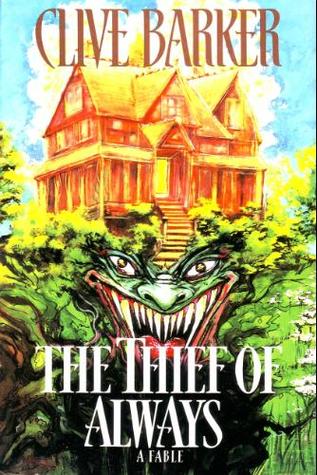

 Meghan's House of Books