Halloween Extravaganza: INTERVIEW: Kelli Owen

Meghan: Hi, Kelli. It’s been awhile since we sat down together. What’s been going on since we last spoke?

Kelli Owen: To start off with a bang, I got a chapbook banned on Amazon last spring. They’d been selling it for three years and then one day some guy named Charlie V with too much power and not enough friends decided to ban it, block me from selling it, and make my life an interesting factoid. In the end, I published it at a local printer and now offer it through my website. Sorry, Charlie.

Shortly after that, Passages, book 2 in the Wilted Lily series, came out. And in doing so, turned into a series rather than a sequel.

And several short stories have happened—two came out last year, two will this year, and one is slatted for an early next year release. I know, that’s only five, the sixth piece I was ticking off on my fingers was actually an essay rather than a story—released last year as well.

Meghan: Who are you outside of writing?

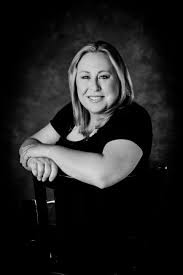
Kelli Owen: Depends on the moment. I wear many hats, including writing. I’m an accountant (by day), a grandmother, a perpetual 12-year-old full of wonder and questions, a curious but cautious explorer, and a fun-crazy (not to be confused with scary-crazy) girl just trying to absorb it all.

Meghan: How do you feel about friends and close relatives reading your work?

Kelli Owen: I think it’s great. Readers are readers, and not in the sense of “please read my book” but rather in a “reading is becoming rare and any reader is a good thing” kind of way. If I happen to know them and they happen to read my fiction, awesome. I hope they like it.

Meghan: Is being a writer a gift or a curse?

Kelli Owen: Neither. It just is. It can however be an intrusive inconvenience. When you’re actively working on something but are away from it for whatever reason (life, dinner, shower, out with friends) and suddenly have to stop what you’re doing to write notes. That can be fun. And there’s those moments when you’re mid-sentence or watching a movie and just drift off because suddenly you’re plotting or planning or have dialogue running through your head. I still wouldn’t say curse, but I’d definitely suggest it’s an adventure. Just having the imagination that goes with writing can fall into both categories, and usually at the worst times.

Meghan: How has your environment and upbringing colored your writing?

Kelli Owen: My father loved thrillers and horror novels, introducing me to everything from Lovecraft to Dean Koontz. My mother loved horror movies, and supported my love of all things creepy—though with a raised eyebrow on occasion. While I did read my way through a fantasy phase, writing fantasy was as brief as a firefly’s blinky butt. Thrillers and horror were the things that moved me from a very young age, and made me want to move others. The atmosphere in my house nurtured it, never suggesting I “write something nicer” or otherwise steering my interests, themes or topics.

Meghan: What’s the strangest thing you have ever had to research for your books?

Kelli Owen: Returning blood to a liquid state after it has clotted. Even typing that is gross and reminds me of some of the nastiness of that research. Thank goodness I found a lovely phlebotomist to make friends with who could answer all the questions with science and make it less gross for me, even though I turned around and wrote it with gore and upped the gross factor for the readers.

Meghan: Which do you find the hardest to write: the beginning, the middle, or the end?

Kelli Owen: The first paragraph. I will write and rewrite and rewrite it. Then I’ll move past it and come back, and rewrite it. And rewrite it again. I honestly rewrite that first paragraph at least six times before I get to the end. I never start a piece of fiction without knowing the end, and the middle is the fun part where I have a rough sketch and let the characters tell me the details, but that beginning? It has to not only punch, it has to lead into the middle and the eventual end with grace.

Meghan: Do you outline? Do you start with characters or plot? Do you just sit down and start writing? What works best for you?

Kelli Owen: I outline, or what I call an outline. It’s more of a list of scenes and/or conversations, in order, which does usually get followed fairly closely.

I usually know the story before I know the characters. I know this thing is happening in the universe, then I work out who is present for it, whom among them have insight and therefore voice. Story arc and character arc often work in opposite directions, passing each other somewhere in the outlines.

Once all that is ready, and that dang first paragraph is good, then yes, I just start. It becomes a living thing to the point that one of my biggest issues is tense change—because it’s happening present time in my mind but I write mostly in past tense, so I’ll catch myself switching between them.

Meghan: What do you do when characters don’t follow the outline/plan?

Kelli Owen: Smile, sit back, and follow them with glee. I love when characters come to life and start surprising me, and my outlines generally allow for it to happen. Only rarely have I had to reel a character back in, and it usually causes me to pause and wonder why they went off that way.

Meghan: What do you do to motivate yourself to sit down and write?

Kelli Owen: Deadlines work! Haha. I’m actually blessed, and I say it that way because I know there are many who aren’t and I don’t want to get slapped by colleagues. When it’s time to write, I can basically just do that. I start the music, read what I previously wrote, and then continue the story.

Meghan: Are you an avid reader?

Kelli Owen: Oh I used to be such an insanely voracious reader. For years, I read enough to keep the TBR pile(s) under control. Now, I’m pulled so many ways for time, I have three different TBR piles, and while I am reading from each of them (the top book), I’m not doing it anywhere near the speed I would like.

Meghan: What kind of books do you absolutely love to read?

Kelli Owen: I still love the thrillers and horror. Dark stories about normal people in screwed up situations. Wicked twists or supernatural undertones, paranormal or apocalyptic, I’ll take anything that falls under dark, but is only one step left of reality.

Meghan: How do you feel about movies based on books?

Kelli Owen: I think people could enjoy both more if they all just remembered it’s two different mediums and sometimes you need to make changes because things don’t translate one way or the other. That said, I think there should be more movies based on books. Hollywood is so fixated with built-in audiences and unwarranted remakes, I swear they’ve all burned down their bookshelves. There are so so many books, in just the last twenty years, that would make amazing movies, but unless they’re agented or connected, they’ll never be seen that way. It’s a shame.

Meghan: Have you ever killed a main character?

Kelli Owen: Absolutely. One I knew was going to happen from the beginning, the other was a bit of a surprise (see that question above about characters going off script). And of course, in the Atrocious Alphabet, the coloring book based on a horror poem I wrote, pretty much everyone dies.

Meghan: Do you enjoy making your characters suffer?

Kelli Owen: It sounds so dirty when you say it that way, but yes. It’s my job. By definition, a thriller or horror story is boiled down to: something has gone wrong and it affects the protagonist. For a short story you can end there, but for longer works, usually more things goes wrong. A lot more if there are layers and/or multiple characters in the mix. Do I enjoy it? I don’t necessarily enjoy the issue or problem at the core, but seeing how it affects the characters, or how they’re going to deal with it, is always interesting.

Meghan: What’s the weirdest character concept that you’ve ever come up with?

Kelli Owen: “Weird” is a subjective term, and in the realm of the darker genres, it’s actually normal, or at the very least expected. So I’m not sure how to answer this. Re-inventing vampires (in Teeth) who don’t burn in the sun or fear the cross, perhaps? I also have a school full of psychically gifted kids, with some new twists on paranormal abilities (Passages).

Meghan: What’s the best piece of feedback you’ve ever received? What’s the worst?

Kelli Owen: Actually, I recently had an editor question the tone of the ending to a short story, and it made me rethink it and change it—strengthening the entire story. We’ll call that the best. The worst? I don’t know if there is such a thing. There’s feedback you disagree with, or decide not to heed, but I wouldn’t necessarily call it bad. And oddly, can’t think of anything I disagreed with hard enough to even mention.

Meghan: What do your fans mean to you?

Kelli Owen: Everything. I’m delighted to have them, and am constantly humbled by their kind words. I have included them in my works via submitted names for characters, and thanked them in the acknowledgements.

Meghan: If you could steal one character from another author and make them yours, who would it be and why?

Kelli Owen: Odd Thomas. And you should know, in my head, I answered that with definitive vulgarity punctuating those words. I’d make him a teacher at McMillan Hall (Passages) and have a lovely time with scenes in his classroom.

Meghan: If you could write the next book in a series, which one would it be, and what would you make the book about?

Kelli Owen: There’s not a lot of series (I’ve read) which are still open ended enough to take somewhere. Though it may be more fun to hijack someone else’s work and write a sequel. In that case, I would love to take Jack Ketchum’s Off Season—which is one of my all time favorite books—and continue the story beyond his existing sequel (Offspring) to round it out to a three-part series.

Meghan: If you could write a collaboration with another author, who would it be and what would you write about?

Kelli Owen: I would have loved to write with Dallas, aka Jack Ketchum, but sadly that window has closed. As both a hero and a mentor, and later a friend, it would have been a beautiful opportunity to see how his magic was created from the inside. What would we have written about? Easy. Life askew, washed in horrific Technicolor. Also, see the previous question.

Meghan: What can we expect from you in the future?

Kelli Owen: For starters, what I thought was a simple sequel to Wilted Lilies became book two in a series. So after Passages there will be at least three more, which are currently plotted. While those will likely remain novella length to fit the theme so far, anything could happen. Outside of that, I’m very excited about my next two novels—a coming of age tale, followed by what I hope is a truly scary ghost story. I’ve made a career out of making people nervous or uncomfortable, let’s see if I can’t make their hearts race and perhaps scare them…

Meghan: Where can we find you?

Kelli Owen:

Facebook (author page) ** Facebook (discussion group)
Twitter ** Instagram ** Goodreads

And of course, my website where you can find links to other bits and pieces of me scattered about the web. Also, depending on when this is published, I will be at four signings this Halloween season, please see website for details.

Meghan: Do you have any closing words for your fans or anything you’d like to say that we didn’t get to cover in this interview or the last?

Kelli Owen: Thank you so much for reaching out to me to come back and be part of the extravaganza again, I’m delighted to be included. To the fans, thank you so much for reading—please tip your waitress (ahem, please leave reviews, it’s lifeblood in this business). And may everyone have a safe and spooky Halloween!

Kelli Owen is the author of more than a dozen books, including the novels Teeth and Floaters, and fan-favorite apocalyptic novella Waiting Out Winter, and the Wilted Lily Series. Her fiction spans the genres from thrillers to psychological horror, with an occasional bloodbath, and an even rarer happy ending. She was an editor and reviewer for over a decade, and has attended countless writing conventions, participated on dozens of panels, and spoken at the CIA Headquarters in Langley, VA regarding both her writing and the field in general. Visit her website for more information.

Teeth

All myths have a kernel of truth. The truth is: vampires are real.

They’ve always been here, but only came out of hiding in the last century. They are not what Hollywood would have you believe. They are not what is written in lore or whispered by the superstitious.

They look and act like humans. They live and love and die like humans. Puberty is just a bit more stressful for those with the recessive gene. And while some teenagers worry about high school, others dread their next set of teeth.

Vampires are real, but in a social climate still struggling to accept that truth, do teeth alone make them monsters?

Wilted Lily 1: Wilted Lilies

It’s not that Lily May Holloway is a broken, battered teenager recently escaped from her kidnapper. 

It’s not that she may or may not have killed him to escape. 

The question on Detective Travis Butler’s mind is — what exactly does the death of little Tommy Jenkins have to do with her kidnapper? 

And why does the man behind the one-way glass want the detective to entertain Lily’s tales of speaking to the dead… and being able to hear the thoughts of the living?

Wilted Lily 2: Passages

Lily May Holloway can hear the thoughts of the living, and speak to the dead. She’s done so since she was little, and been shunned for it.

As a new student at McMillan Hall, a private school with other teens who possess a variety of psychic gifts, she finds she isn’t necessarily unique. Or safe.

Acceptance is no longer her only concern. 

Staying alive is.

Passages, book 2 of the Wilted Lily series, picks up where Wilted Lilies left off…

Left for Dead/Fall from Grace

LEFT FOR DEAD

When Susan’s 8-year-old daughter is brutally attacked, she becomes consumed by her need for revenge but mere punishment is not enough. Susan learns that sometimes those being given the lessons are not those doing the learning.

FALL FROM GRACE

Grace has spent seven years adjusting to the tragedies of her youth. She has become a smart, sexy, complex teenager, who is nothing short of dangerous, as she teeters on the edge of the abyss and smiles at the monsters inside.

Halloween Extravaganza: C.R. Richards: My Most Bone-Chilling Halloween Adventure Yet

Spooky adventures are a must in October. I want to be scared during the spooky season, so as soon as I feel the chill of Fall in the air, I’m looking for scary fun. Forget haunted houses and corn mazes. Halloween is the perfect time for Ghost Tours.

I love paranormal adventures. Booking a ghost tour or hunt is part of my itinerary when visiting a new city. I’ve roamed the cobblestone streets of Alexandria, Virginia in hopes of catching a glimpse of some revolutionary war era residents. And I’ve wandered the suffocating graveyards in the August heat of New Orleans. The gardens of the Alamo in San Antonio subdued my mood as I searched for the ghostly defenders still wandering the grounds and hotels close by. None of these experiences, however, rattled me like the tour I took in my own hometown.

Denver Botanic Garden’s Colorful Past

Denver Botanic Gardens has two spectacular locations: Cheesman Park Neighborhood close to historic Downtown Denver and a newer garden in Littleton, Colorado located near Chatfield State Park. It is the 23-acre park located on York Street in Denver that draws the ghost loving crowd like me. The grounds of garden and its surrounding neighborhood don’t always fall into a peaceful sleep at night. Restless spirits roam among the moonlit trees or cause quiet mischief within the historic buildings located about the grounds. Why? What caused these souls to leave the peace of a long-forgotten grave?

The lush gardens and surrounding parks were once the site of Mount Prospect Cemetery. Denver Botanic Gardens and Cheesman Park were built on a cemetery. In the late 1890s, Congress approved a new park system to be developed on the site. There was a little matter of 5000 graves. They had to be moved before the run-down cemetery could be transformed. Denver gave the families of the deceased buried in Mount Prospect 90 days to move their loved ones. Several years passed, and only 700 graves had been moved.

Enter infamous undertaker, E.P. McGovern. The city paid McGovern $1.90 per coffin to respectfully move the graves, but greed knows no shame. McGovern hatched a scheme to make more money. He dismembered the bodies and scattered them into multiple coffins to make more money. City officials discovered the plot after McGovern had removed a fraction of the graves (roughly 1000 of the 5000 entombed there). Rather than continuing on with another contractor, the city simply pulled the remaining headstones and began building Cheesman Park and Denver Botanic Gardens. Officials estimate about 3000 graves remained. Bodies have continued to be found as late as 2010.

The disrespect of the dead has caused stirrings in the paranormal realm.

Ghosts in The Gardens

The York Street Gardens decided to embrace rumors of ghostly night strollers. They offer very limited Ghost Tours over two weekends in October. It took me several years to score tickets (Yes. The Tours are that popular). It was worth the wait.

Our tour guide was a former York Street Security Guard who’d seen his share of unexplained things happening after the gates shut at night. He led us through places in the garden’s buildings and conservatories that guest usually don’t see. Each spot we stopped had its own story of unexplained events. We passed broken elevator doors said to open on their own. Phantom workers haunted the greenhouse, still taking care of the plants.

Out in the gardens under the stars, we walked along paths lined with beautiful foliage I’d marveled at for years. Then I discovered a popular and well-traveled path was once the primary road workers used to cart the dead for burial. And the underground parking garage’s – which has always given me the creeps – construction had been halted because they found unmarked graves which had to be moved.

I’ll never look at the gardens the same again. Tales of the “Pest House” where sick people were left to die and the Robert C. Campbell House, however, put the biggest fright into me. I felt the heavy shadow of the sinister as soon as I stepped inside. Our guide seemed nervous as he told us some of the strange things that happened inside the house at night.

I don’t want to tell you too much, because part of the tour’s fun is the surprise of finding things out while you’re there…in the dark. Sometimes the scariest adventures are the ones we have in our own backyard.

C.R. Richards’ literary career began when she interned as a part-time columnist for a small entertainment newspaper. She wore several hats: food critic, entertainment reviewer, and cranky editor. A co-author of horror and urban fantasy novels, her first solo fiction project – The Mutant Casebook Series – was published by Whiskey Creek Press in 2013. Phantom Harvest (Book One in the series) is the winner of the 2014 EPIC eBook Awards for Fantasy Fiction. Cynthia is an active member of the Horror Writers Association, EPIC, and Rocky Mountain Fiction Writers. For more information about her books, visit her website.

Facebook ** Twitter ** Goodreads ** LinkedIn

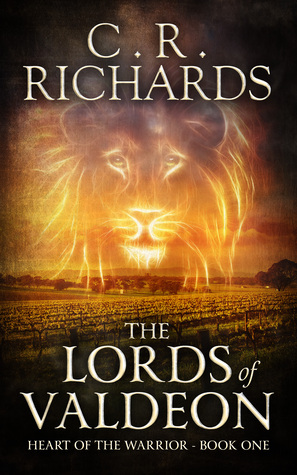
Heart of the Warrior 1: The Lords of Valdeon

A new series from award winning Author, C.R. Richards: The epic tale of two men begins. The first – a man of honor trying desperately to turn his country from civil war. The other – a boy struggling to discover his destiny before agents of evil find him first.

Coveted by two ancient enemies of a long forgotten age, the continent of Andara holds the key to victory in an endless struggle for dominance. Eight hundred years have passed since the god-like Jalora struck a bargain with the first King of Valdeon. The Lion Ring, symbol of the covenant and conduit of power, gives its bearer incredible abilities. The ring’s borrowed magic protects the people of Andara from covetous evil, but there is a price. As with most predators, the Lion Ring must feed. Only the blood of the D’Antoiné family line will satisfy its hunger.

A rival for Andara’s treasures, the Sarcion has waited impatiently for its time upon the land. Whispers of treason in the right ear aid its treachery. The King of Valdeon mysteriously disappears, leaving his lands in danger of a civil war by the hand of a murderous usurper. His Lion Ring is lost and the covenant is broken. The Jalora’s power begins to seep away from the land. Evil’s foot hold grows stronger. Can the Lords of Valdeon, Sacred Guard of the covenant, stop the tides of war? Or will Andara fall into chaos? The future rests in the blood of a boy…

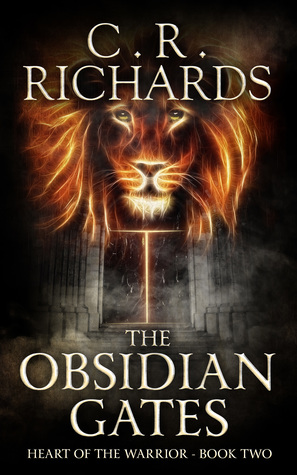
Heart of the Warrior 2: The Obsidian Gates

A new series from award winning Author, C.R. Richards: The epic tale continues. A new covenant has been forged in the chaos of war. Its price is nothing less than the Bearer of the Lion Ring’s soul.

The rivalry for dominance over the continent of Andara has taken a dark turn. Eternal enemies – the Jalora and the Sarcion – pit their forces against one another in bloody battle. Good weakens, betrayed by the very humans it has sworn to protect. Valdeon, its stronghold on Andara, falls to sword and flame. The fires of its destruction are set alight by barbaric invaders from across the sea. Their brutal hand conquers the land in a night, exiling the Lords of Valdeon – Sacred Guard of the Covenant. Cut off from the center of their power, the Jalora’s greatest heroes are helpless to defend their homeland. 

Hope still lingers. Seth D’Antoiné, Bearer of the Lion Ring, journeys to the great Obsidian Citadel seeking a magical relic, the Book of Ancients. Its power could hold the key to Andara’s defense. He alone can open its pages, sparking the magic into life and restoring the Jalora’s waning power. Finding the book won’t be easy. Elusive Obsidian Gates – appearing and then vanishing again by their own will – keep the secret of the book’s location well hidden.

In the depths of the mountain fortress, he finds treachery and intrigue hiding within its walls. Can Seth open the Book of Ancients before the Sarcion’s men find him? Or will the power of Good leave the land forever? Andara’s future awaits behind the Obsidian Gates…

Heart of the Warrior 3: Creed of the Guardian

Protect the Innocent. Punish the Guilty.

Seth the Ice Lion, now an Apprentice in the Jalora Legion, reluctantly travels aboard ship with his new battalion. Western Beta’s mission seems a dull assignment. Guarding miles of bogs and old ruins should be a simple task, but Seth soon learns nothing is easy for the Bearer of the Lion Ring. The Jalora is the embodiment of Good and the source of Seth’s power. It commands he search North Marsh for a relic capable of saving his homeland from the ravenous appetite of the Jackal invaders. Surrounded by deadly bogs and savage beasts, he must find the relic before the Lion Spirit inside of him takes control of their shared body.

Invaders from across the sea hold a firm grip on Valdeon, but their thirst for blood remains unsated. They lust for the riches of Andara. Using fear and greed as weapons, the Jackal enlist aid from the continent’s unscrupulous mercenaries to prepare for a larger invasion. They build a stronghold – Stone Fang Fortress – in the Bloodtooth Mountains of the north. It is here they prepare to conquer the free world.

Will Seth find this powerful relic before the Jackal swarm invades Andara? Or will his people be enslaved under the iron fist of the Jackal Lord? Seth’s answers hide in the deadly bogs of North Marsh… 

Halloween Extravaganza: John Linwood Grant: The True Roots of Halloween

Let us be blunt about this. Despite the ubiquitous nature of the pumpkin and its gaudy symbology towards the end of October, all serious folklorists and horror fans know that these orange monstrosities are latecomers to the game. Oh yes, pumpkins flutter their leaves and tendrils, and they puff out their big ribbed bodies, but it’s just show – for they know that the turnip, often recognised as the spirit-animal of Northern England, Scotland and Ireland, is the genuine symbol of All Hallows.

Swede, rutabaga, turnip, neep, tumshie* – we don’t mind what you call it. For centuries, bold Northerners have torn their fingernails, skinned their knuckles and stabbed themselves in the leg trying to carve through rock-hard turnip flesh in order to make something resembling a diseased head with holes in it. Some folk may even have died in the process, which takes at least seventeen times longer than it does to hollow out a pumpkin. And at the end, we have stood there on Halloween, our turnip lanterns in our hands, and said “Oh look, it’s gone out again.”

Why do we do this? Because we honour the turning year through such effort. Exhausting ourselves in order to dominate that deeply-resistant root, we celebrate the aspect of humanity which keeps us watching a TV show in the hope that it might get slightly better later in the season; which makes us try some recipes yet again in case they aren’t quite as horrible as they were the first five times. A bold, optimistic, indomitable quality. Or stupidity, possibly.

We also do it because our ancestors did it. Across Northern Europe, simple peasant folk proved just how simple they were by selecting a vegetable that was a bugger to chop up, never mind hollow out, and inventing the turnip lantern. In such lanterns, we evoke the lights over the marshes, the flicker through the woods, and the gleam of the hostile stars. We remind ourselves of the skulls of our enemies, had our enemies’ heads been hacked off and filled with cheap candles. We bring to mind the wisdom of our ancestors, their wrinkled faces staring down at their hapless descendants and wondering why we didn’t just go and buy a pumpkin.

As far as horror is concerned, we wave our turnip lanterns high to ward off the unwanted departed – and more malevolent spirits – when the barriers between the living and dead are thin – All Hallows’ Eve. The turnip samhnag, or torch, is cutting edge. You can forget your crucifix, cold iron, garlic or silver bullets – nothing averts evil better than a badly-carved turnip on a piece of string.

“Blimey” say the witches, ghouls, spectres and wights. “If they’re tough enough to carve a turnip, best not mess with them! Let’s go beat up those softies who could only manage a pumpkin.”

So this Halloween, get out your box of sticking plasters and tourniquets, your electric drill, and the number of your nearest emergency clinic, and honour the past. This year, abandon your pumpkin and let your turnip stand proud!

* Calling someone a tumshie means that they’re foolish, ill-adivsed or dim – contracted from the expression “tumshie-heid” meaning “turnip-head.”

And if you think turnips are a laughing matter, you should pay heed to large, slightly psychotic ponies…

Mr Bubbles in Love

A heart-warming tale of romance by J. Linseed Grant

No one was actually dead. The police and ambulance crews had dragged the badly-injured walking party well away from the scene of crime, and were in the process of counting limbs, many of which were still attached. Thick spatters of blood, now congealing under the midday sun, decorated the hedgerows; someone’s ear hung off a yew tree. It had a nice ear-ring in it – the ear, not the tree.

“It’s a public footpath,” said Sandra, frowning as she fished a torn woolly hat out of the horse trough. The hat, almost bitten through, had an animal welfare badge on it. Sandra wondered if that was what writers called irony.

“They looked at my turnip.” A crimson fire danced in the pony’s great eyes.

“They had a right to be there.”

Mr Bubbles moved his weight uneasily from hoof to hoof. “They still looked at my turnip.”

“They were passing by! They’re on a walking tour.” She noticed two policewoman trying to construct temporary stretchers out of runner-bean poles. “Well, they were on a walking tour.”

The pony glared at the nearest whimpering rambler, and he rolled a large, mottled root vegetable lovingly back into the shade of the barn. He sighed, admiring the plump curves of the vegetable’s sides, the almost coy blush of purple near the top…

“MY turnip,” muttered Mr Bubbles – who understood priorities in life.

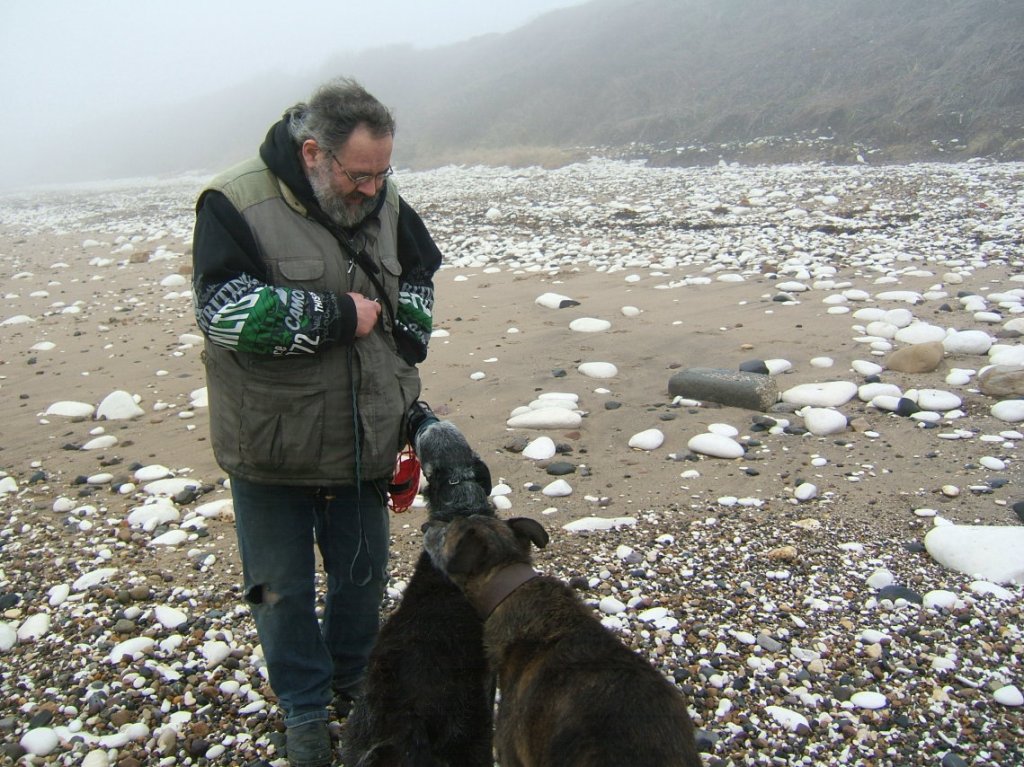
John Linwood Grant is a pro writer/editor from Yorkshire in the UK, with some forty plus stories published in a wide range of magazines and anthologies over the last three years, including Lackington’s Magazine, Vasterien, Weirdbook, Space & Time, and others. His story “His Heart Shall Speak No More” was picked for this year’s Best New Horror, his “The Jessamine Touch” was in the Lambda award winning anthology His Seed, and the expanded edition of his short story collection, A Persistence of Gerandiums, came out from Ulthar Press this February. His latest novel The Assassin’s Coin is available from IFD. He is also editor of Occult Detective Magazine and various anthologies, including the recent Hell’s Empire. News of his projects can be found on his popular website, which explores weird fiction and weird art.

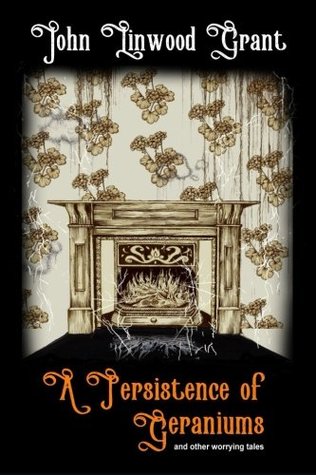
A Persistence of Geraniums & Other Worrying Tales

Enter a world where the psychic, the alienist and the assassin carry out their strange duties whilst quiet tragedies unfold. These are tales of murder, madness and the supernatural in an Edwardian England never quite what it seems. From rural Yorkshire to the heart of the City, death is on the air, and no one can sense it better than Mr Dry, the Deptford Assassin. On the cursed shores of Suffolk, an army widow loads her husband’s revolver; in a small village, a vicar and his wife hear a tale which challenges their beliefs. The monstrous acts of a young gentleman are brought to an end by unlikely allies, whilst a deluded killer almost escapes the courts, only to discover another kind of justice. And if you want to know why a pale dog waits patiently in a London terrace, the true fate of the Whitechapel murderer, or simply the value of geraniums to one woman, then come inside… The first ever collection of Tales of the Last Edwardian, from John Linwood Grant.

Sherlock Holmes: The Science of Deduction 4: A Study in Grey

“You are no John Watson, Captain Blake.”

“Indeed not. He is courageous, steadfast, and many other noble things. I have no d-d-delusions about my own character. I lie, p-p-perjure myself, and deceive d-d-decent folk. In the last week alone I’ve killed a man with the revolver you saw, and p-p-probably sent at least one other to the gallows.”

The Edwardian Era has begun its rot into modernity, exchanging all the virtues of Dr. John H. Watson for the vices of Captain Redvers Blake. But a case from Watson’s era resurges in the present, ensnaring a high official in what may be a ring of German spies. Not any mere ring of bombs and petrol, but a ring of spiritualism and séances.

The former case was one of Holmes’ failures. Despite an illustrious employer, despite Holmes’ warnings, and despite a vengeful fire, a young woman married a monster and slipped beyond the Great Detective’s ken. Now, she returns to his notice, hostess to the seance ring.

As England prepares for war, Sherlock Holmes and Captain Redvers Blake must solve these two entwined cases at once. 

All this, to say nothing of 427 Cheyne Walk’s new residents and their role…

13 Miller’s Court 2: The Assassin’s Coin

She is Catherine Weatherhead, and she is Madame Rostov. She will lie, though not with malice. She will deceive, though often with good cause. And she will change the course of history, for murder speaks to her. In Whitechapel, all talk is of Jack the Ripper, but there is another killer in play, and he most definitely has a name. Mr Edwin Dry, the Deptford Assassin. The truth is not what you believe. It is what he makes it.

Although THE ASSASSIN’S COIN is a standalone story, it is also a companion novel to the Jack the Ripper Victims Series novel, THE PROSTITUTE’S PRICE, by Alan M. Clark. The gain a broader experience of each novel, read both.

Halloween Extravaganza: Daniel Parsons: How to Write Horror for Children

“We make up horrors to help us cope with the real ones.” That quote by Stephen King couldn’t be truer. For all of its tension and bloodlust, horror is just entertainment – fantasy with more blood, as I like to call it. And the similarities between the two genres don’t stop there.

Consider these elements: monsters; death; fear; supernatural happenings; a struggle between good and evil; characters cast into unfamiliar environments. All of these components could be used to describe Game of Thrones just as much as The Walking Dead. So what is it that separates them?

Isolation.

A prominent factor that contributes to this theme is that horror lacks some of fantasy’s main character types. Now, this isn’t true in every case but there’s often no mentor or sidekick present in horror stories. There is no cavalry rushing to help the hero. The protagonist is on their own, frequently experiencing the epitome of humanity’s greatest fears: feeling alone; feeling trapped; feeling helpless.

So, Can Horror Be Written for Children?

Admittedly, those are pretty heavy themes to tackle, even for adults. So can it be done for children? In a word, yes. I’m proof of that, having written two zombie books for teens and four dark fantasy books with horror elements for middle grade readers.

The key, I think, is first to write a good horror book – for all ages – and then to prune back some of the more explicit adult elements. In my case, that’s all but the mildest of bad language and sexual references. While those two elements are staples in adult horror, they simply don’t work in children’s literature. You can get away with it for teens, but even then I would approach with caution.

“And what about gore?” I hear you say. “Can we include blood and guts?”

“Oh, gore is fine,” I reply, sipping a red liquid – probably wine – from a human skull. “More than fine, actually. It’s encouraged.”

Honestly, the gore level needed in your story depends on the kind of horror you want to write. For ghost stories, the fear is far more psychological. The moment the monster is revealed, you diffuse the situation. As Alfred Hitchcock once said: “There is no terror in the bang, only the anticipation of it.”

I, on the other hand, write about zombies, my primary readership sitting in the 12-18 bracket. And if there’s one thing you learn while writing zombie books for young readers, it’s that they want gore. Even those on the younger end. Creative death scenes are all part of the fun.

Just look at Halloween and you’ll understand. Fake blood is everywhere. Kids walk the streets, slathered in synthetic guts, chewing gummy eyeballs. They play games where characters lose limbs. They stay up late watching horror specials on TV. Even to kids as young as eight, a monster biting off a man’s head is greeted with the same enthusiasm and awe as seeing a dragon torch a whole army as it flies overhead.

They love bodies thrown into wood chippers, heads exploding and survivors defending themselves with the severed arms of the fallen undead. One of my stories, The Dead Woods, contained all three of these elements and it was voted on of Wattpad’s “Top Zombie Stories” back in 2016 – on a site with more than 40 million readers, the majority of whom are under 18.

How to Adapt Horror for Younger Readers

Darren Shan, arguably the king of children’s horror in the UK, rose to fame using the same logic in his uber-successful Demonata books. In an early scene in book one, the hero Grubbs Grady finds his parents ripped apart by demons, his father hanging upside down, decapitated. Twelve-year-old me, along with thousands of other readers, devoured that scene. It wasn’t scary, it was cool.

Admittedly, Shan has revealed in an interview with The Guardian, that his editor took an exception to seeing the mother decapitated, so it had to be changed to the hero’s father. By his admission, mothers are protected in children’s horror. They can be killed, but it can’t be described explicitly, because of children’s attachment to their mothers. If it is described, it must be overshadowed by a more barbaric act elsewhere to cushion the blow – in this case, the dad.

While I’m not sure I agree with that idea (and neither would plenty of dads, understandably), his point still stands: horror, being an adventure, should never stray too close to the dangers of reality. It’s meant to be enjoyable – to fill the reader with the sort of tension that ends in an almighty jump, followed by a self-conscious laugh, not the sort of tension that forces them to face the hard truths of the real world.

R. L. Stine, who has sold over 350 million books in his Goosebumps series, words it well: “The real world is much scarier than [my] books. So, I don’t do divorce, even. I don’t do drugs. I don’t do child abuse. I don’t do all the really serious things that would interfere with the entertainment.”

One good way to create this entertainment-based brand of horror, I’ve found, is to write in first person. To focus the lens and omit details that could release the tension. That way, the main character doesn’t expose too much and ruin the tension because they are living in the moment, unprotected, without a narrator to shed a light on the shadows.

If the hero doesn’t see the monster until it’s already too late, neither does the reader, which allows the tension to keep building. It postpones the inevitable bang Hitchcock mentions. And with the reader seeing your world through the hero’s eyes, they experience that true human terror as if they were the hero.

Believe it or not, kids can deal with that sort of tension. Better yet, they thrive on it! They’re tougher than you think.

Daniel Parsons is a fantasy and horror author from South Wales, UK. So far, he’s published seven books, including installments in The Twisted Christmas Trilogy, The Necroville Series, The Canvas Chronicles, and The Creative Business Series for authors. He has been an Amazon bestseller in the USA, Canada and Australia. Plus, he was fortunate enough to see his debut novel become the fastest downloaded children’s book in America on Christmas Day 2017, four years after publication.

His comedy zombie story, The Dead Woods, has received extensive acclaim on the story-sharing website Wattpad. There, it garnered over 35,000 reads across 70 countries and was named one of the site’s Top Zombie Stories as part of a campaign to promote Hollywood’s Pride and Prejudice and Zombies movie.

To contact Daniel, sign up to his bi-monthly newsletter at his website, check out his books online, or join his 80,000 Twitter followers. He loves hearing from readers.

The Twisted Christmas Trilogy 1: The Winter Freak Show

12-year-old Toby escapes the cruelty of the workhouse and dreams of a life of freedom in Victorian London. He joins the Winter Freak Show, a band of travelling acrobats and performers, who put on a spellbinding show each year before Christmas. But all is not well in the City of London. A shadowy force is kidnapping children, and only Toby knows the terrible truth. In a race against time, Toby must catch the kidnapper. If he fails, Christmas will never be the same again.

The Twisted Christmas Trilogy 2: Face of a Traitor

ONE BOY. TWO WORLDS. AN ANCIENT EVIL THAT WANTS THEM BOTH.

It’s been a year since thirteen-year-old Toby Thornton found his long-lost family. But already cracks are appearing in his dream life. Forbidden from seeing his magical friends at The Winter Freak Show, he begins to realise how much he misses adventure. So when he gets word that the elves are in danger, that’s all the excuse he needs to run away from home.

It isn’t long before he discovers that things are worse than he imagined. Nicko has been kidnapped. And without the ringmaster’s guidance, his elves have descended into chaos. A band of shapeshifting enemies lurk among their ranks. Monsters are on the loose. And the secretive mastermind behind it all is trying to resurrect the most frightening evil the elves have ever faced. Only Toby stands in their way.

If he fails, forget Christmas. This time, the human race will fall.

The Necroville Series 0: The Dead Woods

THE PAID ACTORS AT THE NECROVILLE SURVIVAL EXPERIENCE ARE VERY GOOD AT PRETENDING TO BE ZOMBIES. TOO GOOD…

When Will and his friends decide to spend one last night together after graduating university, none of them realise the danger that lurks in plain sight. At first they’re having fun, caught up in the thrill of running through the forest, firing Nerf guns at under-paid zombies-actors. Then that all changes when darkness falls.

It quickly becomes apparent that the actors are very good at what they do. Too good. Armed with only an arsenal of Nerf guns, the group quickly figure out that they’ll need more than just foam bullets and sandwiches to get them through the night.

The Dead Woods is the critically acclaimed comedy zombie story that founded The Necroville Series. If you like Zombieland or Shaun of the Dead then you’ll love Daniel Parsons’s hilarious horror.

The Necroville Series 1: Last Crawl

WHEN ALCOHOL MAKES YOU INVISIBLE TO ZOMBIES, A BAR CRAWL COULD SAVE YOUR LIFE.

Milo’s fear of everything has held him back for as long as he can remember. He knows university will drag him out of his comfort zone but he has no idea just how uncomfortable he is about to become. When zombies strike during his first night out on campus, he quickly discovers that making friends is a matter of life and death.

A chance encounter reveals that zombies don’t attack extremely drunk people. Can Milo and his new flatmates band together to survive the most dangerous bar crawl the world has ever seen?

Last Crawl is the first novel in this comedy horror series, inspired by the author’s critically acclaimed short story The Dead Woods. If you like Shaun of the DeadWarm Bodies, or Zombieland, then you’ll love Daniel Parsons’ new zombie comedy.

Halloween Extravaganza: INTERVIEW: Carol Schaffer

Meghan: Hi, Carol. Welcome back to Halloween Extravaganza. It’s great having you, as I didn’t get a chance to interview the last time you were here. Let’s start with something… easy. Tell us a little bit about yourself.

Carol Schaffer: I am about to celebrate my 55th birthday, and I look forward to at least 50 more. I am a wildly passionate intense person. I am forever fascinated and impressed by the raw unpredictable, sometimes ugly side of life. I am a huge fan of old movies, and an even bigger fan of classic horror flicks.

Meghan: What are five things that most people don’t know about you?

Carol Schaffer:

  • From the ages of about seven, into my mid-twenties, I had the worst stutter. It was so bad that I rarely spoke to anyone that was not my immediate family. When I get upset or angry, I still stutter sometimes.
  • I have a certified phobia of big dogs, specifically pit bulls and German shepherds.
  • When I was growing up, many of the women, including my mom, practiced witchcraft. I was frequently involved in helping my mom with her spells.
  • I tried cocaine when I was nineteen and loved it for about a year.
  • I am painfully shy.

Meghan: What is the first bok you remember reading?

Carol Schaffer: Frog and Toad books, by Arnold Lobel.

Meghan: What are you reading now?

Carol Schaffer: Elevation by Stephen King. Trying to find time to read, is a much more accurate statement.

Meghan: What’s a book you really enjoyed that others wouldn’t expect you to have liked?

Carol Schaffer: The Scarlet Letter. I was surprised that I liked it.

Meghan: What made you decide you want to write? When did you begin writing?

Carol Schaffer: I don’t feel like it was ever that I made a decision to write. I come from a family that had more skeletons in our closets than Disney’s Haunted Mansion. My mom deemed every single thing about our household lives, to be private or a “secret.” I think writing things down became my lifeline to sanity.

I started writing at about the age of nine.

My writing prompts were words from the Encyclopedia Britannica. I started with Vol. one and I worked my way through every volume that my parents managed to purchase.

Meghan: Do you have a special place you like to write?

Carol Schaffer: I usually find myself writing in the kitchen, or a room close to it.

Meghan: Do you have any quirks or processes that you go through when you write?

Carol Schaffer: I think the only quirk I have noticed about when I write, is that I feel like my creativity flows when I have been prompted to a strong reaction from an argument, or circumstance that is not ideal in my life. I don’t love how cliché I am as a writer when it comes to inspiration, but I’ll take it however I can get it.

Meghan: Is there anything about writing you find most challenging?

Carol Schaffer: The single most challenging thing for me about writing is, that I am almost always blasted with the most lyrical wording while driving, showering, or doing something involving other people, which makes it incredibly difficult to get my thoughts down quick enough to capture the way I first think them.

Meghan: What’s the most satisfying thing you’ve written so far?

Carol Schaffer: I wrote a short story about nine years ago that is one of my favorites of all time, so far. The inspiration from this story came from a dark secret that my ex-boyfriend once shared with me. It was on the fringe of erotic, and I have still never heard anything like it. I have never shared it with anyone, and I am not sure if I ever will.

Meghan: What books have most inspired you? Who are some authors that have inspired your writing style?

Carol Schaffer: The Canterbury Tales. A Christmas Carol. Romeo and Juliet. Tommy Knockers.

Authors who have inspired my writing style: Mark Twain. William Shakespeare. Stephen King. Charles Bukowski. Ernest Hemingway. Rod Serling (possibly once known as Sterling).

Meghan: What do you think makes a good story?

Carol Schaffer: What makes a good story is the author’s ability to make the reader believe that every word they are reading is entirely possible, even when the reader never would have normally believed that such a thing could take place.

Meghan: What does it take for you to love a character? How do you utilize that when creating your characters?

Carol Schaffer: I love characters that allow aspects of myself, that I don’t let people see very often, come out to play on full blast.

Meghan: Are you turned off by a bad cover? To what degree were you involved in creating your book covers?

Carol Schaffer: Book covers are moderately important if the author is unknown. I think the book’s title is much more important.

Meghan: What have you learned creating your books?

Carol Schaffer: The thing I learned from creating/writing, is that stories go on. There never really is an ending.

Meghan: What makes your books different from others out there in this genre?

Carol Schaffer: I am just recently preparing to go through the process of getting published, so I haven’t officially been placed in a writing genre; I have an idea where I would land. I think what sets me apart from many others in the genre that I could possibly fit is that my book is for me. It would probably be super cool to be published, but if it doesn’t happen, that’s okay too. My mission is to create the book that I am dying to read.

Meghan: How important is the book title, how hard is it to choose the best one, and how did you choose yours (of course, with no spoilers)?

Carol Schaffer: I feel like book titles are as important as what is inside of the cover. I try not to judge the book by the cover, because sometimes the cover turns out to be so much more interesting than the book.

My book title has changed so many times I have lost count. If I am honest, I still only have half the title. I love the half I have, and I will keep it, but I’m not quite there yet.

Meghan: What makes you feel more fulfilled: Writing a novel or writing a short story?

Carol Schaffer: I love to write short stories because they put a cap on things, while still leaving room for more.

Meghan: Tell us a little bit about your book, your target audience, and what you would like readers to take away from your stories.

Carol Schaffer: My book is about providing a template, which provides a path for the continuation of a life story to take place. My book is a sort of “Permission slip” for people who find themselves a little lost in a place where it’s murky, and difficult to see and believe that there is anything of relevance left to do with their life.

I made the decision to leave out autobiographical childhood details from my book because this book is about, “what next.” It’s about what’s happening now in this new phase. How essential it is to learn how to be open to gaining unfamiliar, untapped clarity that is unique to someone who has done a lot of living, and wants to do a whole lot more, and be happy as hell while they’re doing it.

Meghan: What’s in your “trunk”?

Carol Schaffer: 😉 Well… I wrote, Deck the Halls with Blood and Bodies, for The Gal in the Blue Mask, in contribution to Christmas Take Over in 2016. Deck the Halls, has continued to float around and haunt me ever since. The story is begging to be told in deep vivid detail, with crashing crescendos.

Meghan: What can we expect from you in the future?

Carol Schaffer: My book! Continued development of my new website, where I will write and share and blog about many interesting things including: my book, all things food and eating, my plans for moving to a farm in Washington, and the life and times of still being a wild child at the age of fifty-five.

I have been asked to do a night-time radio interview with someone who was a close associate of the late great radio host, Art Bell. The interview will delve into my exposure to the occult through my mother’s practice of witchcraft, and the influence it continues to have in my life.

Meghan: Where can we find you?

Carol Schaffer: Website ** Instagram ** Twitter ** Pinterest

Meghan: Do you have any closing words for your fans or anything you’d like to say that we didn’t get to cover in this interview?

Carol Schaffer: I know it’s been said many times, but I would like to say it again: It really doesn’t matter who has done it before you, or how good they were at it, nobody can do it, or say it exactly like you.

I was born and raised in Los Angeles, and stayed there until after I was married and had my first baby in 1989. I have lived in Riverside California for almost thirty years now, and I am still surprised by how small it feels. I have been in sales for a long time, and I love it. I consider what I do an art form. I am a gifted writer of stories, poems, speeches. The time finally feels right to share my writing with the world, or other interested parties. I adore the ocean, and the forest. I have a son and two daughters who I love to the moon. I once had a close encounter with a real werewolf.