Halloween Extravaganza: INTERVIEW: C. Derick Miller

Meghan: Hello and welcome to Meghan’s House of Books. Tell us a little bit about yourself.

C. Derick Miller: Iโ€™m a dark fiction author, Gonzo Journalist, freelance A&E journalist, poet, ordained minister, and ASCAP songwriter born in the town of Greenville, Texas. A seasoned paranormal investigator and traveler for the art industry, my influences include Hunter S. Thompson, Kevin Smith, Shawn Mullins, and Del James. Iโ€™m currently signed with Black Rose Writing and Deathโ€™s Head Press. Iโ€™m also an active member of the International Thriller Writers organization, the Horror Writers Association, and the creator of Gonzo Wolf Press. I currently reside in the Bishop Arts District of Dallas, Texas and have a price on his head for my short story โ€œHell Pasoโ€ contained in the #1 Amazon Best Selling Deathโ€™s Head Press Anthology And Hell Followed.

Meghan: What are five things most people donโ€™t know about you?

C. Derick Miller: Iโ€™m a veteran, prior law enforcement, a father of 4, a grandfather of 2, and related to Lee Harvey Oswaldโ€™s widowed wife!

Meghan: What is the first book you remember reading?

C. Derick Miller: Where the Red Fern Grows

Meghan: What are you reading now?

C. Derick Miller: Catfish in The Cradle by Wile E. Young

Meghan: Whatโ€™s a book you really enjoyed that others wouldnโ€™t expect you to have liked?

C. Derick Miller: What the Valley Knows by Heather Christie

Meghan: What made you decide you want to write? When did you begin writing?

C. Derick Miller: I read a book of short stories by Del James titled The Language of Fear. It contained the story โ€˜Without Youโ€™ which influenced the music video for Guns N Roses November Rain. I woke up the next morning and wrote my first short story. Poetry was always easy for me as a school kid though.

Meghan: Do you have a special place you like to write?

C. Derick Miller: Nowhere special but loud, 80โ€™s hair metal is a key ingredient.

Meghan: Do you have any quirks or processes that you go through when you write?

C. Derick Miller: I normally write the beginning, then the end, and fill in the blanks in between.

Meghan: Is there anything about writing you find most challenging?

C. Derick Miller: Writing? No. The publishing industry? Too many to mention.

Meghan: Whatโ€™s the most satisfying thing youโ€™ve written so far?

C. Derick Miller: My newest novel Extinguished. Itโ€™s the only thing Iโ€™ve written during complete sobriety. Some say itโ€™s my best work so far.

Meghan: What books have most inspired you? Who are some authors that have inspired your writing style?

C. Derick Miller: I donโ€™t think itโ€™s fair for an author to describe his own style. I try my best not to pull influence from anywhere. I just do my own thing.

Meghan: What do you think makes a good story?

C. Derick Miller: The villain makes the story. Always. You canโ€™t have a good hero without a good villain. Darth Vader, Lord Voldemort, Scar from The Lion King lol.

Meghan: What does it take for you to love a character? How do you utilize that when creating your characters?

C. Derick Miller: Honesty and the acceptance of weakness. I hate overpowered heroes. Disney has a bad habit of this. Not everyone can be a Jedi. Some of us must be Chewbacca.

Meghan: Which, of all your characters, do you think is the most like you?

C. Derick Miller: Johnny Haynes from the Taste of Home series. Loudmouth, oblivious to the consequences of his actions, and can easily turn anything into a sex joke.

Meghan: Are you turned off by a bad cover? To what degree were you involved in creating your book covers?

C. Derick Miller: I donโ€™t mind a bad cover. I despise a bad synopsis. My son has been an internationally published graphic artist since age 15 and heโ€™s designed my covers for the past few years. Heโ€™s leaving for the Army soon, so Iโ€™m screwed.

Meghan: What have you learned creating your books?

C. Derick Miller: The market is oversaturated with bad writers who possess amazing marketing skills. The same could be said about the music industry as well. Gotta love the internet, right? The best talent is brushed to the wayside far too often.

Meghan: What has been the hardest scene for you to write so far?

C. Derick Miller: Thereโ€™s a scene in Far from Home where the protagonist is forced to watch his own daughter be sexually assaulted. I have three daughters. You get the picture. I wanted to write a disturbing scene and that was the most disturbing thing I could think of.

Meghan: What makes your books different from others out there in this genre?

C. Derick Miller: Itโ€™s a lot less extreme than most of the indie horror titles floating around out there. I was just contracted for my first โ€˜extremeโ€™ horror novella. Iโ€™m a little nervous about putting those thoughts on paper.

Meghan: How important is the book title, how hard is it to choose the best one, and how did you choose yours (of course, with no spoilers)?

C. Derick Miller: I feel the title is the bait, not the cover. My upcoming novella was originally titled โ€˜The Screaming of The Treesโ€™. It was too โ€˜on the noseโ€™ for the subject matter. I wanted it to be a little more mysterious. One night, my wife reminded me to pick up the cat food because our cat Zoe was going to the veterinarian in the morning. Starving Zoe was exactly the title I was looking for, so I went with it!

Meghan: What makes you feel more fulfilled: Writing a novel or writing a short story?

C. Derick Miller: Novel. Novels are like relationships. Short stories are more like one-night stands. I can knock out a lengthy short story in a matter of hours compared to the months of dedication it takes to complete a novel.

Meghan: Tell us a little bit about your books, your target audience, and what you would like readers to take away from your stories.

C. Derick Miller: The โ€˜Homeโ€™ series and Extinguished are dark fiction but Iโ€™m beginning to cross the boundary into extreme horror. I donโ€™t necessarily have a target audience, but most of my readers appear to be women! My protagonists are all normal, downtrodden people who rise to the occasion when needed. Now that I think about it, female characters have all been the victors in my fiction novels. For decades, women were the unlikely hero in any fiction. I hated that. I have three strong adult daughters and a strong wife. No victims in this family.

Meghan: Can you tell us about some of the deleted scenes/stuff that got left out of your work?

C. Derick Miller: When A Taste of Home was just a short story, Iโ€™d originally written the protagonistโ€™s daughter Katie to die at the hands of her werewolf father, thus the title of the novel. Instead, I kept her alive for a stronger, unexpected ending. Sheโ€™s the main character in the sequel and it really gave me a chance to flesh her out rather than have her torn to pieces!

Meghan: What is in your โ€œtrunkโ€?

C. Derick Miller: I have several songs Iโ€™ve written just sitting in a file on my computer. Four of them have been recorded over the years but there are tons more. Rather than wait on a needy musician, Iโ€™m learning to play the guitar. Who knows? Maybe one day Iโ€™ll record them instead!

Meghan: What can we expect from you in the future?

C. Derick Miller: Iโ€™m part of an upcoming Splatter Western box set from Deathโ€™s Head Press. Think Splatterpunk with an old west twist. I also have outlines completed for a Far from Home and Extinguished sequel. My wife and I also have our first childrenโ€™s book in the works using my story and her illustrations.

Meghan: Where can we find you?

C. Derick Miller: My website is a one stop shop. I blog often and have links to all my social media there. My wife and I also record a weekly podcast called Butterflies Make Me Angry! We discuss books, film, politics, and anything else on our minds. We can be found on Podbean, Spotify, iTunes, and YouTube!

Meghan: Do you have any closing words for your fans or anything youโ€™d like to say that we didnโ€™t get to cover in this interview?

C. Derick Miller: Surround yourself with creative people. Encourage each other. Build a family of writers and cling to one another for dear life. In the end, no one else understands us!
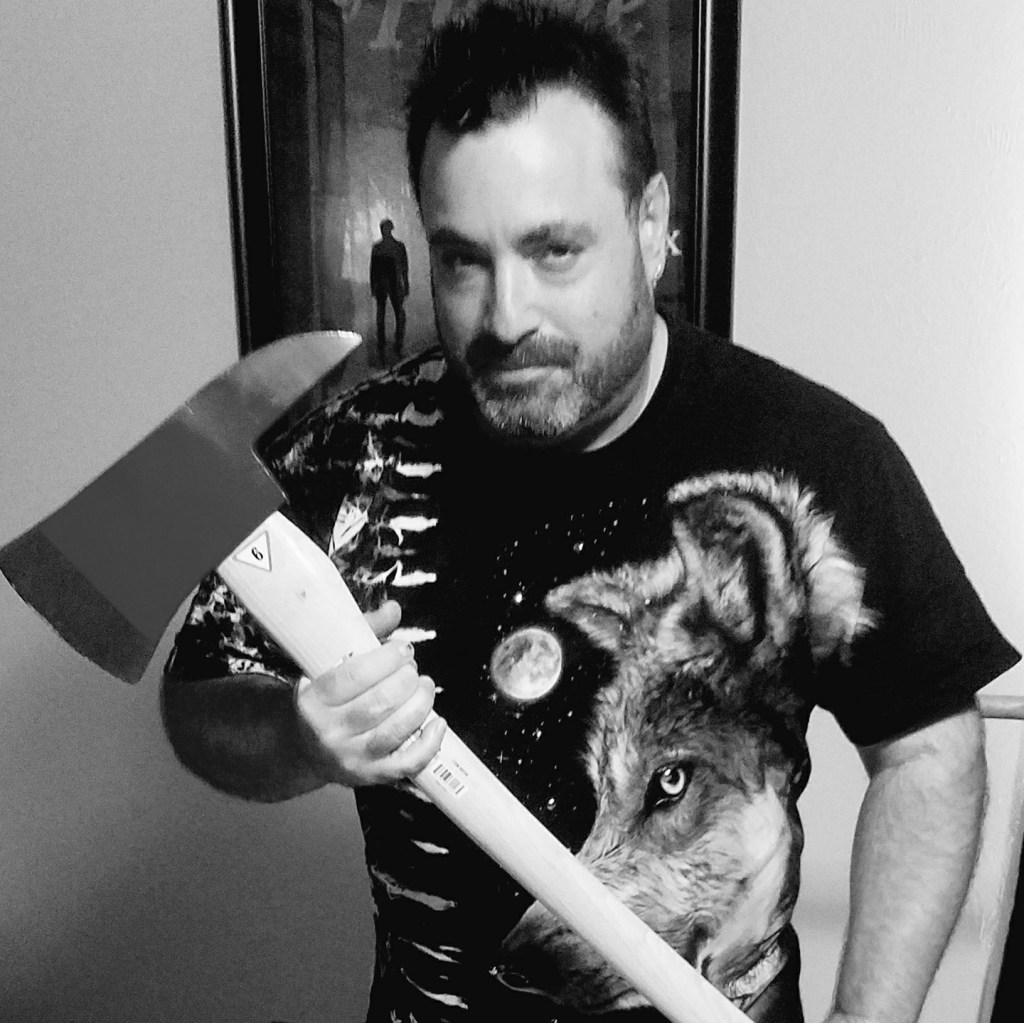
C. Derick Miller is a dark fiction author, gonzo journalist, freelance A&E journalist, poet, ordained minister, and ASCAP songwriter born in the town of Greenville, Texas. A seasoned paranormal investigator and traveler for the art industry, his influences include Hunter S. Thompson, Kevin Smith, Shawn Mullins, and Del James. He is currently signed with Black Rose Writing and Deathโ€™s Head Press. Chad is also an active member of The International Thriller Writers Organization, The Horror Writers Association, the creator of Gonzo Wolf Press, and writer/co-host of both the โ€œButterflies Make Me Angryโ€ and โ€œAmerican Justiceโ€ podcasts. He currently resides in the Bishop Arts District of Dallas, Texas and has a price on his head for his short story โ€œHell Pasoโ€ contained in the #1 Amazon Best Selling Deathโ€™s Head Press Anthology And Hell Followed.

Home 1: A Taste of Home

Toby Liberman is nearing the end of his rope. After a fateful confrontation with his wifeโ€™s lover, he is chased into the woods only to be discovered by an unidentifiable creature. He is attacked and rendered unconscious. Upon waking at the scene of a gruesome triple homicide, Toby is arrested as the sole suspect and thrown into a jail cell with a strange man that knows way too much about his predicament. The stranger reveals to Toby that he now possesses the curse of the werewolf. Using his new-found strength to flee his captors, Toby begins to discover that things are not what they seem in the sleepy town of Twin Oaks, TX. Now hunted by law enforcement, as well as the townโ€™s gun toting civilians, Toby seeks vengeance against his false accusers and embarks upon a quest to clear his name once and for all.

Home 2: Far from Home

A Curse Beyond Comprehension. A Power Beyond Belief. A Girl Far From Home.Katie Liberman is your typical eighteen-year-old college student…or at least thatโ€™s what her family thinks. Picking up five years after the events of A Taste of Home, Katie has dropped out of school and embarked upon a dangerous quest to find Kurt Jimmerson, the New York City attorney responsible for her family’s werewolf curse. Unknown to her, the attorney’s grip on the โ€˜City That Never Sleepsโ€™ is tighter than imagined and she’ll need any and all help available to be victorious. But… where do you find friends when you’re Far From Home?

Diary of a Gonzo Ghost Hunter

Most people run away from the unknown. Me? I chose to run toward it and never look back. Unaware of the consequences of my actions in small town Texas, I dove deep into paranormal research. It consumed my entire life. Taken from a decade of personal journals and interpreted by Rae Louise, Diary of a Gonzo Ghost Hunter is an extremely honest journey down a road less traveled. What shadows lurk in the darkness outside of bedroom doors? I was determined to find out.

What’s it like to walk in the shoes of a ghost hunter? It’s all here. As someone who lived through what you’re about to experience, it is difficult for me to read. For some, it will be the fuel that drives their curiosity. But for others … let it be a warning. Every step you take toward the dead leads you further from the living.

And Hell Followed: An Anthology

Seventeen authors re-imagine the biblical apocalypse and all the hell that follows in sixteen horrifying tales. What if the prophecies of Revelation hit today? What sort of craziness and evil would ensue? With this list of excellent authors contributing, itโ€™s sure to be a Hell of a read! 

Wrath James White 
Sam West 
The Sisters of Slaughter 
Jeff Strand 
K Trap Jones 
C Derick Miller 
Christine Morgan 
Patrick C. Harrison III 
John Wayne Comunale 
Hyรคne Sawbones 
Delphine Quinn 
James Watts 
Wile E. Young 
Chris Miller 
Mark Deloy 
Richard Raven

Halloween Extravaganza: INTERVIEW: Glen R. Krisch

Meghan: Hi, Glen. Welcome welcome. Tell us a little bit about yourself.

Glen R. Krisch: I’m currently a full-time writer and stay-at-home dad. Before that, I worked in warehouses, built tractors on an assembly line, worked in retail management, among many other jobs. I married my high school sweetheart. I love to run, and I try to eat a vegan diet, but I don’t force it on anyone.

Meghan: What are five things most people donโ€™t know about you?

Glen R. Krisch:

  • I once finished 4th in a 50k trail race.
  • I’m pretty much a recluse.
  • My first memory was being in a crib on Halloween 1975. I was 15 months old.
  • I went to an environmental conference in 1993. Ralph Nader was the keynote speaker.
  • In grade school, I wrote to NASA so often to ask for free posters and other materials that they finally asked me to stop.

Meghan: What is the first book you remember reading?

Glen R. Krisch: The first adult book I remember reading is Thinner by King. I don’t remember much before that. We had an encyclopedia set that I read all the time. I also started reading the newspaper on a regular basis when I was nine. I read, and constantly, just not fiction.

Meghan: What are you reading now?

Glen R. Krisch: I almost always read multiple books at once. Right now, I’m reading King‘s The Drawing of the Three (a reread as I attempt to read the whole Dark Tower series), as well as a bunch of Jack Ketchum short stories (a reread of Peaceable Kingdom and his last collection, Gorilla in My Room), and some nonfiction material for a project I’ve been working on for about a decade.

Meghan: Whatโ€™s a book you really enjoyed that others wouldnโ€™t expect you to have liked?

Glen R. Krisch: Hmmโ€ฆ I don’t remember the title, but I once picked up a Nora Roberts book, and it was SO compelling. She can really write!

Meghan: What made you decide you want to write? When did you begin writing?

Glen R. Krisch: I started writing as a sophomore in high school. I was being bullied by a neighbor and no one would listen to me. Instead of doing something destructive, I turned my emotions into bad poetry and short stories.

Meghan: Do you have a special place you like to write?

Glen R. Krisch: My office, and when it’s nice outside, the rocker on my front porch.

Meghan: Do you have any quirks or processes that you go through when you write?

Glen R. Krisch: I can’t listen to music. Actually, sound of any kind can be detrimental to my output. I oftentimes write while wearing earplugs, even when I have the house to myself.

Meghan: Is there anything about writing you find most challenging?

Glen R. Krisch: The hardest part is always starting. All it takes is writing a single sentence, and I can write all day. But opening the document and startingโ€ฆ? Yep, that’s my devil.

Meghan: Whatโ€™s the most satisfying thing youโ€™ve written so far?

Glen R. Krisch: Hard to say. I feel great satisfaction completing a project. Doesn’t matter what it isโ€”a poem, a short story, or novelโ€”but it feels like a weight is lifted from my shoulders when I finally type the last word.

Meghan: What books have most inspired you? Who are some authors that have inspired your writing style?

Glen R. Krisch: For the most part, I’m totally blind to my own style. I have no idea if I write like anyone else. I just have a goal of personally being able to see the characters move through scenes as they deal with conflict.

Meghan: What do you think makes a good story?

Glen R. Krisch: It’s all about characters and conflict being propelled down the page. Throw in an interesting setting or time period along with the above, and I’m in heaven.

Meghan: What does it take for you to love a character? How do you utilize that when creating your characters?

Glen R. Krisch: I love heroes that aren’t perfect. I love bad guys with hints of humanity. I love when the bad guy feels like what he’s doing is the right thing to do. I love characters with secrets. I love characters who make bold sacrifices.

Meghan: Which, of all your characters, do you think is the most like you?

Glen R. Krisch: Hard to say. Most of my lead characters have some small part of me. From Kevin and Carin in my first novel, The Nightmare Within, to Krista, Jack, and Poppa in my latest, Little Whispers.

Meghan: Are you turned off by a bad cover? To what degree were you involved in creating your book covers?

Glen R. Krisch: Book covers are so important. I’ve been very lucky (for the most part) in that I’ve not only worked with great artists and designers, but they’ve taken into account my vision for the cover.

Meghan: What have you learned creating your books?

Glen R. Krisch: They don’t write themselves.

Meghan: What has been the hardest scene for you to write so far?

Glen R. Krisch: In my first novel, The Nightmare Within, I knew the main character’s grandmother would die at the hands of the monster. I knew it early in the process of writing the book, and when I reached that pointโ€ฆ I just couldn’t write it. Finally, after a couple of weeks, I just did it. When my wife came home and asked about my day, I could only mutterโ€ฆ “I killed the old woman today.” She knew what I was talking about because she knew I didn’t want to face writing that scene.

Meghan: What makes your books different from others out there in this genre?

Glen R. Krisch: Truthfully, I have no idea. I try for originality and quality. If I accomplish that as I write a story I feel compelled to write, then I consider it a success.

Meghan: How important is the book title, how hard is it to choose the best one, and how did you choose yours (of course, with no spoilers)?

Glen R. Krisch: I try to come up with fitting titles for my work, but sometimes it’s a struggle nailing one down. It’s probably beneficial that it takes me so long to write a book so I have more time to mull it over.

Meghan: What makes you feel more fulfilled: Writing a novel or writing a short story?

Glen R. Krisch: I used to write only short stories. From the time I graduated college with a writing degree, until I finished The Nightmare Within about five years later, I wrote exclusively short stories. Now, I write almost exclusively novels and novellas, unless someone asks me to write a short. I like writing short stories, but I love the depth and dimensionality of longer works.

Meghan: Tell us a little bit about your books, your target audience, and what you would like readers to take away from your stories.

Glen R. Krisch: Ughโ€ฆ geez. You had to ask this question? The problem is, I don’t know who my audience is. In my mind, it could be anyone. I don’t care who you are, your background, etc. I write almost exclusively because I want to write specific stories. I’m sure it’s bad for my sales, but I’m my own audience.

Meghan: Can you tell us about some of the deleted scenes/stuff that got left out of your work?

Glen R. Krisch: I might be unusual in that I don’t have too many deleted scenes from my work. For a longer story (a novella or novel) I usually have a dump file. This is just a place where I can cut and paste paragraphs that I personally love that aren’t the best fit for the story.

Meghan: What can we expect from you in the future?

Glen R. Krisch: This year will probably look like I write a TON, but I haven’t had much published in the last few years even though I write just about every day. So far this year I’ve republished my out-of-print novel, Arkadium Rising. I’ve published the short novel, Echoes of Violence. Another new novel, Little Whispers, came out in June. I also have plans to publish a paperback edition of Nothing Lasting, and three new novella projects will also see the light of day this year.

Meghan: Where can we find you?

Glen R. Krisch: Twitter ** Instagram ** Facebook

Meghan: Do you have any closing words for your fans or anything youโ€™d like to say that we didnโ€™t get to cover in this interview?

Glen R. Krisch: Just that it’s still a thrill that people read my work, and some of them even enjoy it! Thanks for having me, Meghan!

A native of the Chicago suburbs, Glen Krisch hopes to add to his list of ghosts he’s witnessed (two), as well as develop his rather pedestrian telekinetic and precognitive skills. His novels include Amazon Bestseller Where Darkness Dwells, The Nightmare Within, Nothing Lasting, Arkadium Rising, and Little Whispers

Before becoming a full-time writer, he worked a lot of unfulfilling jobs that only reinforced his ambition to chase his dreams. Besides writing and reading, he enjoys spending time with his wife, his three boys, simple living, and ultra-running.

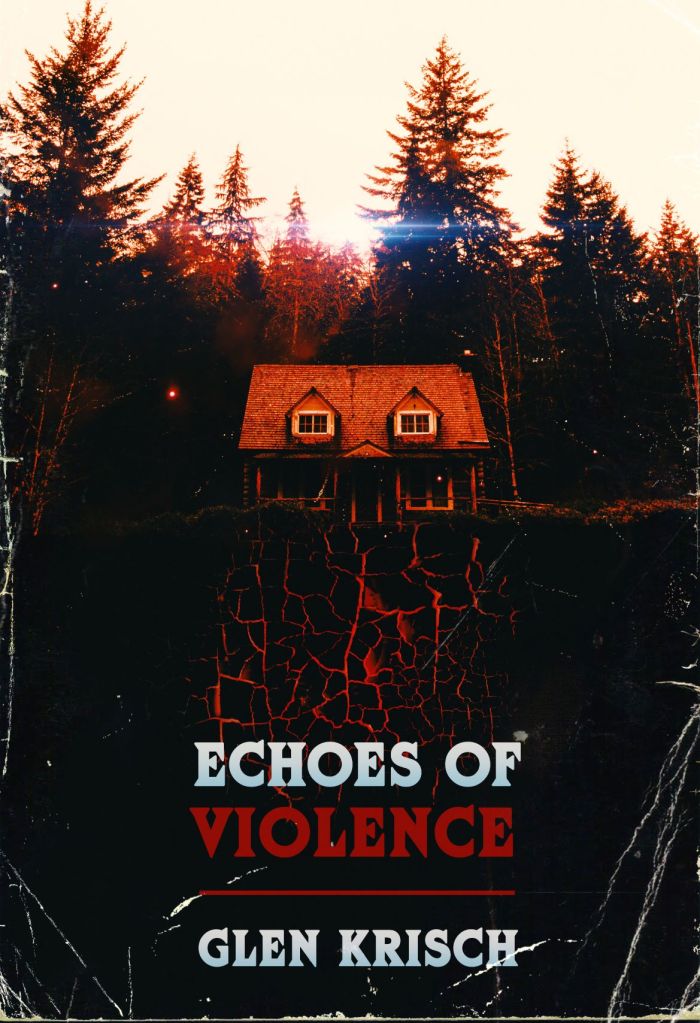
Echoes of Violence

In a secret lab in the southern Illinois woodlands, scientists break through the barriers between universes. While trying to decode the mysteries of the multiverse, they unwittingly bring a deadly flu virus into their own world. At first, people die in great numbers. Then, the newly dead rise, preying upon the living like a plague of locusts. 

Not only have the scientists unleashed a deadly plague, but they’ve changed the very fabric of time, causing those who remain to continue to re-live the same day. 

The Upton family has lived and died through thousands of todays. A married couple with three kids, they run the Cherryhill Campground next to the lab. In a day of unending chaos and violence, the only thing they know for certain is they must fight to stay together no matter what.

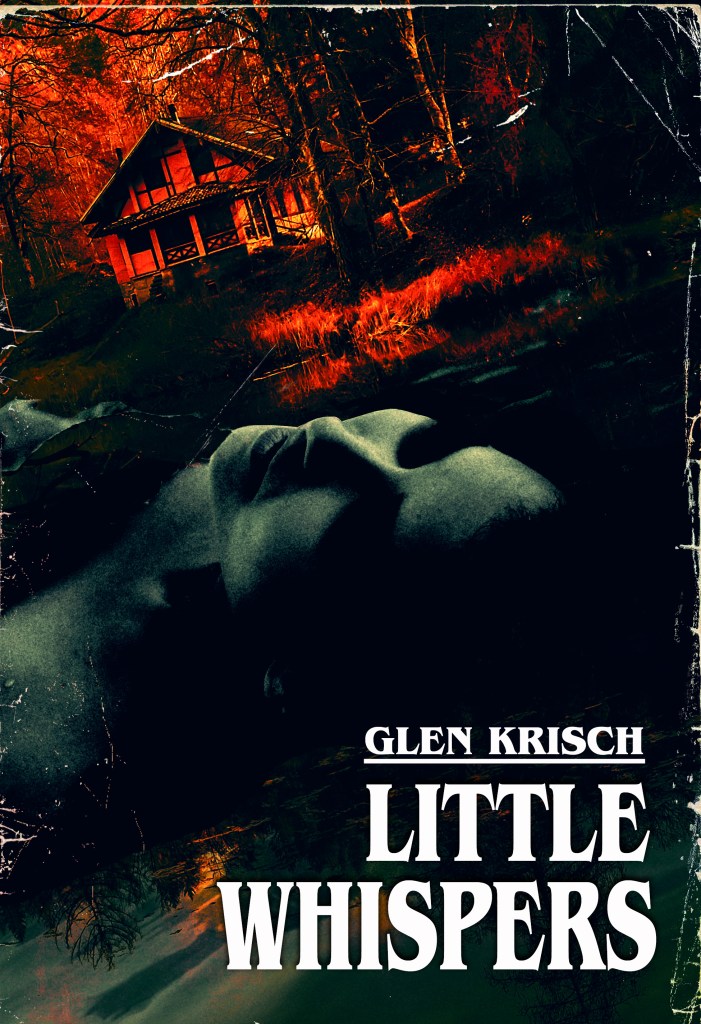
Little Whispers

It’s a time to say goodbye. 

Krista Forrester and her family return to her childhood lake house to say goodbye to her dying grandfather. His last wish is to spend his final days surrounded by family. It’s a time to reminisce, a time for togetherness and love. But the family’s return awakens both forgotten memories and the unsettled spirits tied to the land. 

Sometimes memories are better left buried. 

Krista never wanted to return to the lake house. She hasn’t been back since Breann, her childhood friend, disappeared from the sandy beach right outside her back door. Her disappearance left behind both lingering sorrow and many unanswered questions. Was Breann a victim of a now-convicted serial killer? Will Krista and her family succumb to the evil bound to the lake house? Is Breann still somewhere close, waiting to be discovered? What are those melancholic little whispers Krista hears in the middle of the night? 

Only by confronting the tragedies of the past can Krista guarantee her family’s future.

Halloween Extravaganza: JG Faherty: Halloween & My Writing Career

I love these blog posts because I can let the authors pretty much do what they want. In this one, JG tells us about a Halloween that led him to be the author he is now. A great read.


Hello, there! My name is JG Faherty, Iโ€™m a horror and dark fiction author, and Iโ€™ve been granted free reign for todayโ€™s blog. So strap and in prepare yourself for some Halloween-themed brain musings.

I thought long and hard about what to discuss today. The topic of Halloween offers so many options โ€“ the history of the holiday, childhood memories, what Halloween means to me, things Iโ€™ve written that deal with Halloween.

In the end, I decided to do something of an amalgam and talk about not just a strong Halloween moment but how that moment impacted me as a writer.

Iโ€™ve always been a huge fan of Halloween, all the way back to when I was a little kid dressing up as Spider Man, trick-or-treating with my friends, and watching the Great Pumpkin. Back then, it would only be on once the whole month of October and I made sure to never miss it. As I got a little older, two things happened โ€“ I added the juvenile pranks of Gate Night/Mischief Night to my celebration (shaving cream, soap, flaming dog poo, all the standards!) and I discovered a book: Something Wicked This Way Comes, by Ray Bradbury.

Wow.

To the 12-year-old me, that was possibly the most amazing book ever. Better than Poe, Shelley, Stoker, or Verne, the classic writers Iโ€™d been reading up to that point. Better than the Hardy Boys. Better than James Blish, who was writing a lot of Star Trek tie-ins that I enjoyed so much. Better even than Heinlein, who Iโ€™d recently discovered.

I fell in love, not just with the book, and Bradbury as a writer, but with how it spoke to me. A kid from a small town in the country who loved scary stuff and carnivals. (Did I mention we used to play in the local graveyards?)

I probably read that book three times before I got into high school, and another three times since. It didnโ€™t start my life-long infatuation with all things horror and Halloween, but it did give me a particular fondness for small-town terrors, Halloween-themed stories, and coming of age stories.

Which leads me to the year 2001.

Yes, weโ€™ve jumped forward quite a bit. 2001 was the year I started writing fiction. The previous year, Iโ€™d gotten a side job writing study guides for The Princeton Review, 4th and 5th grade, mostly. English, Language Arts. Each book was about 100 pages long and I had to write the practice reading assignments plus all the questions and answers. Although Iโ€™d always had a deep desire to be a writer, Iโ€™d never thought I had the ability, and other than 1 very abortive attempt in college, I never tried. I did a lot of writing for work, as a research scientist and laboratory manager, but never fiction.

Until those study guides. And I discovered it was fun. And it came easy to me. Iโ€™ve talked about how this led to me writing my first fiction in other blogs, so I wonโ€™t repeat that here.

By 2001, I had 2 short stories published. A few others in the works. And then it happened.

The dream.

A bunch of college students stuck inside a Halloween carnival, run by a demon. They had to go through every room in the haunted mansion, where all the monsters came alive. A cool dream, right?

But there was more.

I dreamed an entire novel, from beginning to end. And not just one story, but a whole series of them. I saw not just the haunted mansion, but also all the other rides, the side shows, the games. The monsters behind the masks at every booth. How the carnival appeared every Halloween since the dawn of time, never in the same place.

When I woke up, I immediately grabbed a notebook and pen and started writing. I wrote and I wrote and I wrote. For two weeks, I wrote in the morning, at lunch, and after work. I wrote on the weekends. And I finished that novel in record time. Not an outline, the whole damn novel!

Then I transcribed it into the computer. 137,000 words. I proofed it, got it down to 129,000.

It didnโ€™t sell. I was young and naรฏve then, I knew nothing about the publishing industry or how bad the quality of a first novel is. Over the next few years, I honed my skills, kept rewriting that book, took the Borderlands Writers Bootcamp and had famous writers critique it. I got a mentor through the Horror Writers Association and she helped me.

And in 2009, I sold it. Carnival of Fear. Published in 2010. Still available (feel free to buy it!).

But remember how I said I dreamed of more?

Thereโ€™s a lot more.

I wrote 3 short stories based on that carnival. And a novella, which was published by Samhain Publishing a few years ago. Plus some poems. I have the sequel to Carnival of Fear half-written in my computer, and the only reason itโ€™s not complete is because Iโ€™ve worked on other books before it. During that dream, I saw the sequel, the spin-off stories. I woke up with ideas for what could happen on every ride, under every tent. I knew which ones would be short stories and which ones longer pieces.

Never in my life had I ever experienced anything like that, and never since.

Although I have, and will, write about other things, every couple of years in one way or another I come back to the world of Carnival of Fear and pluck another story from my dream memories.

What is it about the Carnival of Fear universe that is so vital to me I keep going back to it?

Itโ€™s my Something Wicked. In the past, Iโ€™ve said my book was an homage to Bradburyโ€™s. And it is. Teens, haunted carnival, strange carnies, bad things happen. But itโ€™s more than that.

Because I identified so much with Bill Halloway and James Nightshade, I created characters like them for my stories. Ordinary boys, girls, men, and women caught up in something they donโ€™t understand. Small town people, because where else would a mysterious carnival pop up?

People like me. Like my friends and family.

Bradbury wrote with a simple, everyman style, and all my favorite authors write that way. Do I like them because of him? Probably. Folks like King, Keene, Wilson, Koontz, Hamilton, Collins, Maberry.

Did Bradbury play a part in shaping the way I write? How could he not?

After I found Bradbury and read everything I could by him, I discovered other writers who focused on that small town or country vibe. Manly Wade Wellman. Karl Edward Wagner. People who made any story feel like a cold October night in upstate New York.

Bradbury has written a lot of stuff, but for me opening any of his books always makes me feel like Iโ€™m opening the door to Halloween, that itโ€™s the season where anything can happen.

When I wrote Carnival of Fear, I wanted my book to be just like that for a new generation. Not just frightening, but exhilarating. I wanted people to remember what Halloween was like as a kid, as a teen, when they turned those pages. I wanted them to smell the popcorn and cotton candy, taste the candied apples and French fries and hot dogs.

Remember what it was like to pal around with friends or hold hands with someone special and breathe the crisp October air.

I wanted them to feel the way I did when I read Something Wicked This Way Comes for the first time.

And thatโ€™s my Halloween story for you.

Happy Halloween!

OLYMPUS DIGITAL CAMERA

A life-long resident of New York’s haunted Hudson Valley, JG Faherty has been a finalist for both the Bram Stoker Award (The Cure, Ghosts in Coronado Bay) and ITW Thriller Award (The Burning Time), and he is the author of 7 novels, 10 novellas, and more than 75 short stories. His next novel, Hellrider, comes out from Flame Tree Press in August of 2019. He grew up enthralled with the horror movies and books of the 60s, 75, 70s, and 80s. Which explains a lot.

Carnival of Fear

The carnival is in town… What was supposed to be an evening of fun and laughter for JD Cole and the other students of Whitebridge High turns into a never-ending night of terror. Trapped inside the Castle of Horrors by the demonic Proprietor, good friends and bitter rivals must band together to make it through the maze of torturous attractions, where fictional monsters come to life, eager to feast on human flesh. Vampires, zombies, werewolves, and aliens lurk around every corner as JD and his friends struggle from one room to the next, fighting for their sanity, fighting to survive, fighting to escape … The Carnival of Fear.

The Cure

She was born with the power to cure. Now sheโ€™s developed the power to kill. Leah DeGarmo has the power to cure with just a touch. But with her gift comes a dark side: Whatever she takes in she has to pass on, or suffer it herself. 

Now a sadistic criminal has discovered what she can do and heโ€™ll stop at nothing to control her. He makes a mistake, though, when he kills the man she loves, triggering a rage inside her that releases a new power she didnโ€™t know she had: the ability to kill. 

Transformed into a demon of retribution, Leah resurrects her lover and embarks on a mission to destroy her enemies. The only question is, does she control her power or does it control her?

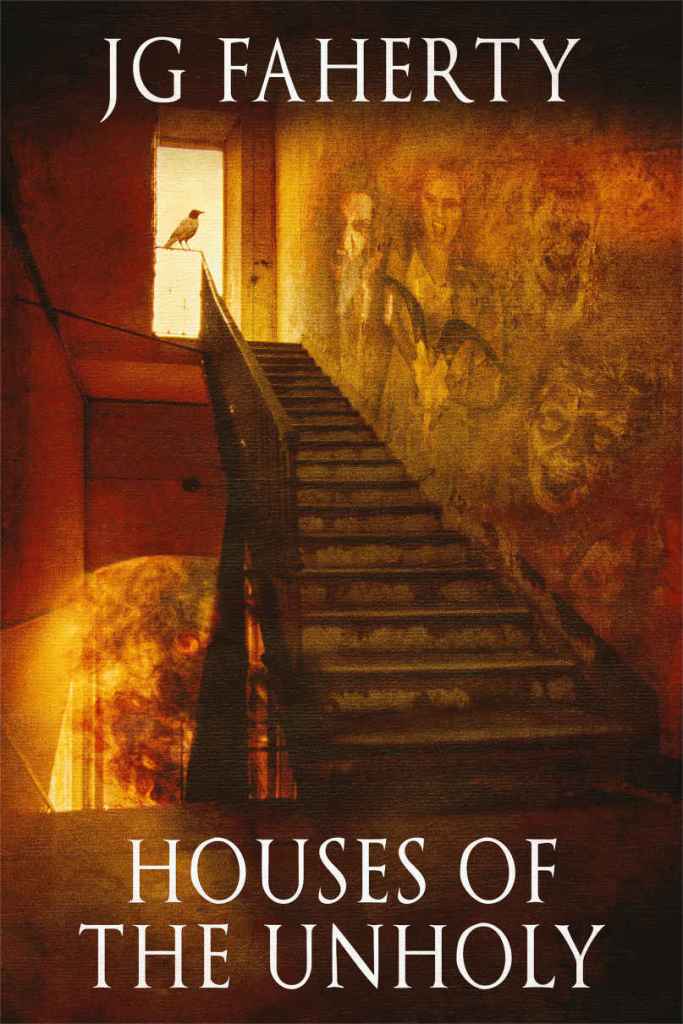
Houses of the Unholy

In this new collection of stories, genre favorite JG Faherty takes you on a tour of unholy houses, where you’ll find: 

– A man struggling to discover why all the people in his life are disappearing when he falls asleep. 
– An accident in a mountain pass that turns into a deadly encounter with a mythical beast. 
– A man who learns that the only thing worse than being a passenger on the train to Hell is being the engineer. 
– A town where the dead coming back to life isn’t the worst thing that can happen. 
– A young couple who uncover a terrible secret in the town that has ostracized them for their sins. 
– A science experiment gone wrong that could spell the end of mankind. 

The collection also includes “The Lazarus Effect,” a chilling post-apocalyptic story where survivors face off against godless undead, and a brand new novella-length sequel, “December Soul.”

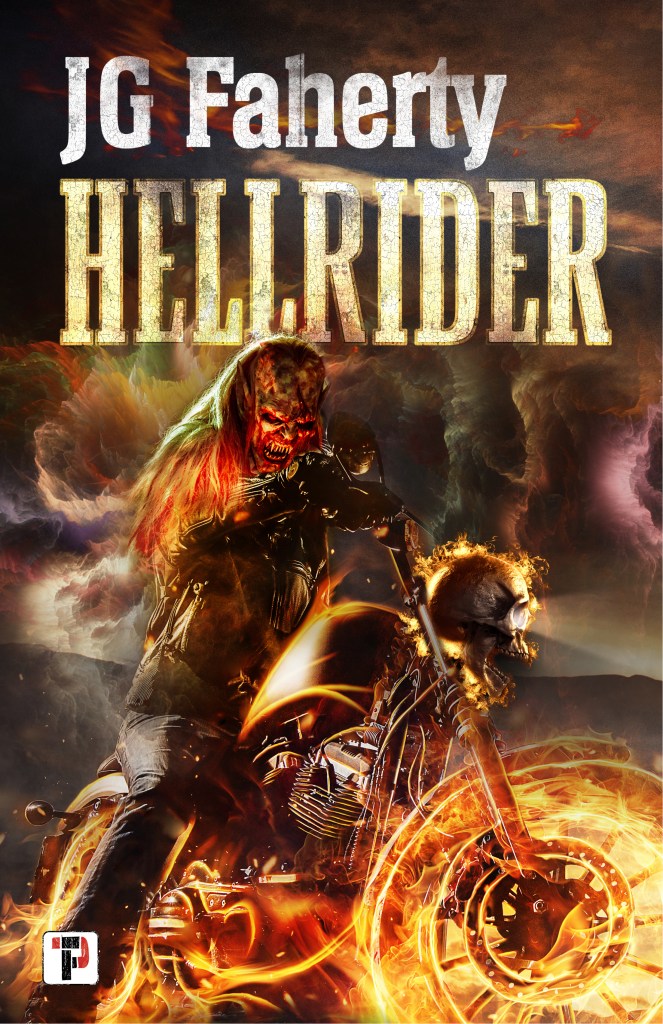
Hellrider

After being burned alive by a gang, the Hell Riders, he used to belong to, Eddie Ryder returns as a heavy-metal spouting ghost with a temper that’s worse now than when he was alive. At first he is nothing more than a floating presence, depressed he has to spend eternity watching his teenage brother, Carson, and ailing mother struggle without him. Then he develops powers. And he can control electricity. He can conjure the ghostly doppelganger of his motorcycle, Diablo, and fly across the sky, but he can’t escape the boundaries of his hometown, Hell Creek. 

Eddie decides to exact his revenge on the bikers who killed him. Before he can do more than scare some of the bikers, however, he discovers something even better: he can posses people. He uses this ability to get the gang members to attack each other, and to deliver a message to the current leader, Hank Bowman: Eddie’s Coming. 

Spouting fire and lightning from his fingers and screaming heavy metal lyrics as he rides the sky above the town of Hell Creek, he brings destruction down on all those who wronged him, his power growing with every death. Only Eddie’s younger brother, Carson, and the police chief’s daughter, Ellie, understand what’s really happening, and now they have to stop him before he destroys the whole town.

Halloween Extravaganza: INTERVIEW: JG Faherty

Meghan: Hi, JG. Welcome to Meghan’s House of Books. Tell us a little bit about yourself.

JG Faherty: Letโ€™s see. Iโ€™ve been writing fiction since 2000. My first novel was published in 2010. I write primarily in the areas of horror, supernatural thrillers, YA, and paranormal romance, plus a little dark science fiction and fantasy. My hobbies are playing the guitar, watching bad sci-fi movies, visiting wineries, and reading. I own a rescue dog, Iโ€™m married, and I live in a very haunted region of New York State.

Meghan: What are five things most people donโ€™t know about you?

JG Faherty:

  • I studied herpetology in college and used to own more than a dozen venomous snakes.
  • I have built four guitars.
  • I have been published three times in Chicken Soup for the Soul anthologies.
  • I used to write an advice column many years ago.
  • I enjoy exploring abandoned buildings.

Meghan: What is the first book you remember reading?

JG Faherty: Try as I might, I canโ€™t remember the very first book. I know I started reading at a young age. I know that by the time I was 7 or 8, I was already checking out books on dinosaurs from the library and I was reading short stories by Poe. My first novel was probably either Frankenstein or Dracula. And as a young kid, I also read all the Hardy Boys mysteries (I still have the whole collection!).

Meghan: What are you reading now?

JG Faherty: I just got back from a vacation and I read Demons, Well-Seasoned: Book III in The Secret Spice Cafe Trilogy by Patricia V. Davis (itโ€™s a cozy supernatural mystery) and The Mammoth Book of Halloween Stories, edited by Stephen Jones. I recommend both of them!

Meghan: Whatโ€™s a book you really enjoyed that others wouldnโ€™t expect you to have liked?

JG Faherty: Hmmm. Probably something outside of the horror genre, like Snakes & Snakes Hunting, the Anita Blake: Vampire Hunter series, or Lucy (an anthropology book by Donald Johanson).

Meghan: What made you decide you want to write? When did you begin writing?

JG Faherty: When I was young, I wanted to be a comic strip writer. But I canโ€™t draw well enough. In college, I tried to write a horror novel, but it was terrible and I didnโ€™t know at the time (this was before the internet) that you had to practice, have editors, etc. So I just stopped writing. Then, in 1999, I got a job writing test preparation books for The Princeton Review, and that required writing fiction for the reading passages. I really enjoyed it, and it came easy. I tried my hand at a short story, and got some good comments from editors I met at a horror convention. So I kept at it, and started getting published. I began writing in 2000, and my first professional publication was 2001, a 2000-word short story. Little did I know it would be almost 3 years before my next one, and not until 2005 until Iโ€™d start getting published on a regular basis.

Meghan: Do you have a special place you like to write?

JG Faherty: I always write at my desk, on my computer. No laptop for me. Hate them. If Iโ€™m on vacation, I bring a journal-type notebook and write long-hand. Usually, thatโ€™s how I work out story problems or put down ideas, but Iโ€™ve also written some short stories that way. Interesting fact โ€“ my first novel, Carnival of Fear, was written entirely long hand and then I typed it into the computer later. Only time Iโ€™ve ever done that.

Meghan: Do you have any quirks or processes that you go through when you write?

JG Faherty: It has to be absolutely quiet. No music, no noise. I donโ€™t mind music when Iโ€™m editing, but it distracts me when Iโ€™m writing. Same with TV, people talking, etc.

Meghan: Is there anything about writing you find most challenging?

JG Faherty: All of it. Itโ€™s hard for me to maintain a long attention span, and usually I think everything I write sucks. Itโ€™s not until the editing phase that I start to think the book is good.

Meghan: Whatโ€™s the most satisfying thing youโ€™ve written so far?

JG Faherty: My first novel will always be the most satisfying, because it proved I could do it. Every novel since then is satisfying because it means I overcame all the obstacles and did it again. And, of course, being nominated for several industry awards has meant a lot.

Meghan: What books have most inspired you? Who are some authors that have inspired your writing style?

JG Faherty: I particularly have always enjoyed writers who have a down to earth style โ€“ Stephen King, Brian Keene, and several of the science authors I enjoy. While Iโ€™ve never tried to copy anyone, I think that my style is also down to earth, casual, and realistic in terms of dialog. I like characters that seem real, like people youโ€™d meet.

Meghan: What do you think makes a good story?

JG Faherty: A good story should have a plot that makes sense, move quickly into the action, have a strong middle, and a strong ending. Too many books are great right up to the last 30 pages, and then they donโ€™t make sense. Or worse, thereโ€™s no ending at all. Most of all, a good story keeps the reader interested from page 1 to the last page.

Meghan: What does it take for you to love a character? How do you utilize that when creating your characters?

JG Faherty: For me to love a character, they have to seem real to me. I have to be invested in them emotionally, whether they are good or bad. They have to make me laugh, or cry, or shout, or all three. I can love a character whether they are evil or good โ€“ we all love Hannibal Lecter and Dracula, and they arenโ€™t good at all. And thatโ€™s what I try to do with my characters, both protagonists and antagonists, and even secondary characters. Put the reader in their shoes, so that when good or bad things happen, they are feeling what the characters are feeling.

Meghan: Which, of all your characters, do you think is the most like you?

JG Faherty: Wow. Thatโ€™s a tough one. I try not to put too much of myself in any character, because Iโ€™m always trying to be in other peoplesโ€™ shoes, to think like my characters would. In terms of how and think and feel, perhaps JD, the main character in Carnival of Fear. But I donโ€™t come from the wrong side of the tracks like he did, and I donโ€™t have an old football injury. Iโ€™ve put a lot of other people into my books, though, under fake names. Iโ€™ve never told them, and theyโ€™ve never let me know if theyโ€™ve noticed!

Meghan: Are you turned off by a bad cover? To what degree were you involved in creating your book covers?

JG Faherty: I am incredibly turned off by bad covers. Iโ€™ve had a couple of books where I hated the covers and I couldnโ€™t wait to put new ones on them once I got the rights to the books back. I firmly believe those bad covers are partly responsible for poorer sales than I anticipated. As my career moved along, I have made sure to be as involved in cover art as possible, and to that extent my time with Samhain Publishing and now Flame Tree has been very rewarding, because in both cases the staff artists were/are astounding and Iโ€™ve had to fill out lengthy cover art worksheets detailing my ideas, plot, character descriptions, and more for the artists. And the result has been 9 books in a row with covers I love. And that readers tell me they love, too.

Meghan: What have you learned creating your books?

JG Faherty: That writing is hard! Also, that, like my mentors in this biz have said over and over, your first idea usually is either not good or itโ€™s already been used. You have to look beyond the obvious, find twists, make a story your own. Donโ€™t rewrite Dracula, create something thatโ€™s never been done before. Also, that I have no idea of what is scary. I keep trying to scare myself with my stories, and it never happens. But my readers say the stuff is way scary. So Iโ€™ve learned not to trust my own judgement.

Meghan: What has been the hardest scene for you to write so far?

JG Faherty: Military horror is kind of tough for me, because it requires non-stop action. In Hellrider, I had to write a scene where a character threatens a minor with physical and sexual violence, and we had to make sure it portrayed the character as bad but didnโ€™t step over the bounds of what youโ€™d normally expect in a grindhouse story. In Carnival of Fear, I had to write a death scene that was supposed to be tragic, and I kept working at it until finally I re-read what Iโ€™d written and I started to cry. Thatโ€™s when I knew Iโ€™d nailed it.

Meghan: What makes your books different from others out there in this genre?

JG Faherty: Theyโ€™re by me. My style, my words, my ideas. No two writers are the same. Iโ€™ve written a lot of โ€˜classicโ€™ horror, the kind with supernatural bad guys and people trapped in impossible situations. Same as King, Mary Shelley, Peter Straub, Dean Koontz, and a thousand other horror writers. But none of itโ€™s the same. Thereโ€™s really no other way to say it. My haunted carnival novel is not the same as anyone elseโ€™s. My novel about a veterinarian who can cure animals by touching them (The Cure) is not like anyone elseโ€™s novel about curing with a touch. My novel about six friends reuniting to stop a supernatural terror (Cemetery Club) is not like IT once you get past the one-line description. And Hellrider is nothing like Ghost Rider, even though they are both on motorcycles. My story is more like Sons of Anarchy with ghosts, if Robert Rodriguez directed it.

Meghan: How important is the book title, how hard is it to choose the best one, and how did you choose yours (of course, with no spoilers)?

JG Faherty: I think the book title is very important โ€“ it has to convey the basics of the story to the reader, even if they donโ€™t know it at the time. Can you imagine if The Shining was called Dannyโ€™s Life? Or if Dracula was called Harkerโ€™s Journey? Or if Frankenstein: A Modern Prometheus was called Experiments in Anatomy?

For my own books, Iโ€™ve always put a lot of thought into the titles. Carnival of Fear โ€“ a demonic, haunted carnival. The Burning Time โ€“ an evil entity incites a town to extreme violence during a summer heat wave. Cemetery Club โ€“ a group of outcasts form a club that meets in a cemetery that sits over haunted ground. The Cure โ€“ a veterinarian can cure with a touch, but more than that, the whole book is about her trying to โ€˜cureโ€™ her own feelings of inadequacy and her loneliness.

Hellrider has a quadruple meaning โ€“ Hell Riders is the gang Eddie belongs to, Hell Creek is the town he lives in and heโ€™s a โ€˜rider,โ€™ his last name is Ryder and he comes back from Hell, and Hellrider is also the name of his favorite song.

Meghan: What makes you feel more fulfilled: Writing a novel or writing a short story?

JG Faherty: I love writing short stories. Thatโ€™s how I got my start. I still think that a short story imparts the most emotional impact because it has to hit hard and fast, no wasted words. Novels are great for delivering grander stories, expansive plots, and deep concepts. Personally, I feel that the novella is the best length for a book โ€“ long enough to have secondary characters and a subplot or two, but short enough that you can read it in one sitting and still get hit hard by the story. Iโ€™ve written 10 so far, and I look forward to writing more.

Meghan: Tell us a little bit about your books, your target audience, and what you would like readers to take away from your stories.

JG Faherty: Well, I think Iโ€™ve covered the books in answering previous questions. My novels and novellas range from downright traditional and scary (The Burning Time, Cemetery Club, Death Do Us Part, Winterwood) to thrillers (The Cure, Fatal Consequences) to YA (Ghosts of Coronado Bay) to grindhouse (Hellrider) to Lovecraftian (Legacy, the upcoming Sins of the Father) to suspense (Fatal Consequences). My target audience is really just people who love an entertaining story that will send some shivers up your spine and keep you at the edge of your seat. When theyโ€™re finished, Iโ€™d like them to say, โ€˜wow, that was cool, and maybe I wonโ€™t turn the lights off tonight.โ€™

Meghan: Can you tell us about some of the deleted scenes/stuff that got left out of your work?

JG Faherty: Thereโ€™s not really a lot. Things get cut out of every story when youโ€™re writing it, but usually if itโ€™s not good enough to be in the published version itโ€™s not good enough to create a later, unabridged version! One exception would be with Carnival of Fear โ€“ I cut that one from 120,000 words to 90,000, and I saved the excess to use in the sequel that I plan on writing someday. It was a sub-plot with some characters that donโ€™t appear anywhere else in the book and so eventually theyโ€™ll get their own story.

Meghan: What is in your โ€œtrunkโ€?

JG Faherty: My trunk is about the size of Fort Knox. I have at least 7 half-finished novels, a few novellas, and a couple of dozen finished short stories, plus unfinished ones. I write in a very OCD style, so if I get stuck working on one project, Iโ€™ll root through the old ones and see if something strikes my fancy to work on for a while.

Meghan: What can we expect from you in the future?

JG Faherty: My next novel, Sins of the Father, is currently in the pre-editing phase with Flame Tree Press, so I imagine it will come out some time next year. My collection of short stories, Houses of the Unholy, and my current novel, Hellrider, are both available now. Beyond that, who knows?

Meghan: Where can we find you?

JG Faherty: Twitter ** Facebook ** Website ** Amazon

Meghan: Do you have any closing words for your fans or anything youโ€™d like to say that we didnโ€™t get to cover in this interview?

JG Faherty: For fans and readers, I just want to say thank you, you are the ones we do this for and you make it possible for people like me to do what we love. And if you read a book you enjoy, please leave a review on Amazon and tell your friends โ€“ spreading the word is what keeps writers able to write.Beyond that, remember, Halloween is right around the corner, so read something scary today and tell your kids a scary story tonight!

A life-long resident of New York’s haunted Hudson Valley, JG Faherty has been a finalist for both the Bram Stoker Award (The Cure, Ghosts in Coronado Bay) and ITW Thriller Award (The Burning Time), and he is the author of 7 novels, 10 novellas, and more than 75 short stories. His next novel, Hellrider, comes out from Flame Tree Press in August of 2019. He grew up enthralled with the horror movies and books of the 60s, 75, 70s, and 80s. Which explains a lot.

Carnival of Fear

The carnival is in town… What was supposed to be an evening of fun and laughter for JD Cole and the other students of Whitebridge High turns into a never-ending night of terror. Trapped inside the Castle of Horrors by the demonic Proprietor, good friends and bitter rivals must band together to make it through the maze of torturous attractions, where fictional monsters come to life, eager to feast on human flesh. Vampires, zombies, werewolves, and aliens lurk around every corner as JD and his friends struggle from one room to the next, fighting for their sanity, fighting to survive, fighting to escape … The Carnival of Fear.

The Cure

She was born with the power to cure. Now sheโ€™s developed the power to kill. Leah DeGarmo has the power to cure with just a touch. But with her gift comes a dark side: Whatever she takes in she has to pass on, or suffer it herself. 

Now a sadistic criminal has discovered what she can do and heโ€™ll stop at nothing to control her. He makes a mistake, though, when he kills the man she loves, triggering a rage inside her that releases a new power she didnโ€™t know she had: the ability to kill. 

Transformed into a demon of retribution, Leah resurrects her lover and embarks on a mission to destroy her enemies. The only question is, does she control her power or does it control her?

Houses of the Unholy

In this new collection of stories, genre favorite JG Faherty takes you on a tour of unholy houses, where you’ll find: 

– A man struggling to discover why all the people in his life are disappearing when he falls asleep. 
– An accident in a mountain pass that turns into a deadly encounter with a mythical beast. 
– A man who learns that the only thing worse than being a passenger on the train to Hell is being the engineer. 
– A town where the dead coming back to life isn’t the worst thing that can happen. 
– A young couple who uncover a terrible secret in the town that has ostracized them for their sins. 
– A science experiment gone wrong that could spell the end of mankind. 

The collection also includes “The Lazarus Effect,” a chilling post-apocalyptic story where survivors face off against godless undead, and a brand new novella-length sequel, “December Soul.”

Hellrider

After being burned alive by a gang, the Hell Riders, he used to belong to, Eddie Ryder returns as a heavy-metal spouting ghost with a temper that’s worse now than when he was alive. At first he is nothing more than a floating presence, depressed he has to spend eternity watching his teenage brother, Carson, and ailing mother struggle without him. Then he develops powers. And he can control electricity. He can conjure the ghostly doppelganger of his motorcycle, Diablo, and fly across the sky, but he can’t escape the boundaries of his hometown, Hell Creek. 

Eddie decides to exact his revenge on the bikers who killed him. Before he can do more than scare some of the bikers, however, he discovers something even better: he can posses people. He uses this ability to get the gang members to attack each other, and to deliver a message to the current leader, Hank Bowman: Eddie’s Coming. 

Spouting fire and lightning from his fingers and screaming heavy metal lyrics as he rides the sky above the town of Hell Creek, he brings destruction down on all those who wronged him, his power growing with every death. Only Eddie’s younger brother, Carson, and the police chief’s daughter, Ellie, understand what’s really happening, and now they have to stop him before he destroys the whole town.

Halloween Extravaganza: INTERVIEW: Dana Fredsti

Meghan: Hi, Dana. Welcome to Meghan’s House of Books. Tell us a little bit about yourself.

Dana Fredsti: Oh jeez, I think my bio combined with the answers to the rest of the questions gives a great sampling of who I am. โ˜บ

Meghan: What are five things most people donโ€™t know about you?

Dana Fredsti: Ermโ€ฆ Iโ€™m pretty upfront about cats, wine, and swordfighting. Letโ€™s seeโ€ฆ

I learned to surf in my late thirties after a lifetime of being afraid of the ocean. When I was a relatively little kid, my first memory of the โ€˜big wave beachโ€™ (as opposed to Shelter Island Cove, where there were only waves if a motor boatโ€”or even better, an aircraft carrier– went by) was standing there, holding my dadโ€™s hand, and seeing this big honkinโ€™ wave headed my way. Iโ€™m sure it was only a couple of feet, butโ€ฆ at the time, so was I. I screamed and hauled butt back to my mom and our beach blanket. I donโ€™t surf well, but there is a joy in overcoming that kind of fear and wow, is it fun!

Iโ€™ve had a full-grown leopard sit on my feet, wanting to get his butt scratched. Heโ€™d growl whenever I stopped. It was both exhilarating and absolutely terrifying.

When I was two years old, I used to dip pretzel sticks in the gutter run-off water from people watering their lawns. I figure Iโ€™m set if thereโ€™s a superflu resistant to antibiotics considering all the germs I must have ingested.

When my ex and I took a trip to Norway and England, along with another like-minded friend we dressed up in musketeer garb (which we took with us becauseโ€ฆwhy not?), climbed the closed and locked gate of Richmond Castle in Northern England, and sword-fought. We did not get caught. Considering what a law-abiding person Iโ€™d always been, this was definitely a deviation from my normal behavior.

The reason Iโ€™ve always been so law-abiding is because when I shoplifted a box of Milk Duds at the age ofโ€ฆ five, I thinkโ€ฆ I felt so guilty after I ate them that I buried the empty carton under a pile of horse manure, sure that my mom would find it and KNOW that Iโ€™d stolen that candy. I would not make a good criminal.

Meghan: What is the first book you remember reading?

Dana Fredsti: The Silver Chair, by C.S. Lewis. I remember sitting in my favorite rocking chair in the living room of our old house in San Diego, basically minding my own business, when my older sister Lisa came up with the book, dropped it in my lap, and said, โ€œYou need to read this book.โ€ I was a good little sister and promptly started reading it. I think I wasโ€ฆ jeez, maybe in first grade then? I know I read other books before that one, but it stands out in my mind as my official โ€˜first book.โ€™

Meghan: What are you reading now?

Dana Fredsti: Revival by Stephen King, and one of the Coffeehouse Mysteries by Cleo Coyle. Erโ€ฆ and a non-fiction book about wine, Wine Wars: The Curse of the Blue Nun, the Miracle of Two Buck Chuck, and the Revenge of the Terrorists by Mike Veseth.

Meghan: Whatโ€™s a book you really enjoyed that others wouldnโ€™t expect you to have liked?

Dana Fredsti: Since Iโ€™ve always read in multiple genres, I donโ€™t know that there is a book that fits this description. The only one I can possibly think of is The Girl with All the Gifts, and only because something bad happens to an animal and I have a real problem reading or watching anything where a cat or dog is harmed. A lot of writers seem to use this for shock value, but for me it adds nothing to the table. Iโ€™ve stopped reading books midway because of this. Itโ€™s my hot button/line that canโ€™t be crossed. SOโ€ฆ The Girl with All the Gifts is one of the only books Iโ€™ve read/finished where, while it didnโ€™t make me happy that an animal died, it didnโ€™t feel gratuitous and it more or less served the story. Itโ€™s also a beautifully written book. Butโ€ฆ you notice the first thing about it I remember is that an animal was harmed .

Also, the Betsy/Tacy books by Maud Hart Lovelace might surprise a few people, given that most of what I write is heavily based in horror with bad things happening to people who donโ€™t necessarily deserve it. Whereas the Betsy/Tacy series is about as wholesome as you could imagine. Lots of bobsledding, making homemade fudge, etc. Not a zombie in sight and not one of the characters meets a horrific end!

Meghan: What made you decide you want to write? When did you begin writing?

Dana Fredsti: Iโ€™ve always wanted to write. I canโ€™t remember a time when this wasnโ€™t something that defined me. Weโ€™re taking back when I first learned how to string words together. Somewhere my first attempt at a novel still exists. Itโ€™s called The End of the Sun. It goes: One day the sun came out. The next day the sun did not come out. It was the end of the sun. A beginning, a middle, and an end. Hah!

Meghan: Do you have a special place you like to write?

Dana Fredsti: I have an idyllic spot with a desk overlooking an ocean view, a meandering path through a wild English garden strewn with lavender, an ergonomic chair, and an ever-percolating coffee pot.

This, of course, exists only in my wistful imagination so I make do with a rocking chair and my laptop on a little adjustable desk, fending off my various cats who all want to sit on my lap when Iโ€™m working. I like going to coffeehouses occasionally โ€“ the white noise does seem to help me focus in a way I canโ€™t always manage at home, but I get antsy after a couple of hours.

I find that dictating into my iPhone while I walk our dog on the beach is a good way to shake things loose when Iโ€™m not exactly sure where Iโ€™m going next with the story.

Meghan: Do you have any quirks or processes that you go through when you write?

Dana Fredsti: Not anymore. I used to be oh so very specific about the hours during which I could write, the candles Iโ€™d need to light, the perfect music, etc., but the busier Iโ€™ve gotten with other work (I do cat sits and dog walks, as well as work as an assistant to another writer), the more Iโ€™ve had to learn to just grab whatever time Iโ€™ve got and throw words down on โ€ฆ well, not on paper anymore, but on the computer screen.

Side note: Do you know how weird it is to start running into expressions that are no longer really relevant? Like throwing words down on paper. Carbon paper. White-out. Hell, taping a show! We record it, but we donโ€™t tape it anymore. VCRs and record players? Hah! Of course, at the speed with which technology is obsolete these days, I donโ€™t know how anyone keeps up with anything. Get off my lawn, ya damn whippersnappers! โ˜บ

Meghan: Is there anything about writing you find most challenging?

Dana Fredsti: Everything is challenging when youโ€™re having a bad day and everything is easy when youโ€™re in the flow. I still donโ€™t like outlining, and it doesnโ€™t come easily to me, but I donโ€™t kick and scream when asked to at least turn in a page or two letting my editor know what I have in mind for an upcoming book.

Meghan: Whatโ€™s the most satisfying thing youโ€™ve written so far?

Dana Fredsti: Oh manโ€ฆ thatโ€™s like asking me which of my cats is my favorite. There are parts of all of my books and stories that I love, and that have satisfied different parts of me, whether itโ€™s because I managed to finish something particularly challenging, or because something made me cackle maniacally because it was so much fun to kill a particular character. I guess right now Iโ€™d give Blood Ink the prize for completing it because it was a hard book to write for me, coming off of double hip surgery and my momโ€™s death. I love it, though, and I think the pain I was in both physically and emotionally made it a better book. That being said, Iโ€™d prefer to achieve my inspiration less painfully in the future.

Meghan: What books have most inspired you? Who are some authors that have inspired your writing style?

Dana Fredsti: Ah jeez louiseโ€ฆ thatโ€™s tough. As far as inspiration, I could give you a mile-long laundry list of authors Iโ€™ve read over the years that made me want to be a writer. Literally dozens, and I keep discovering more authors I love so the list just keeps growing. Any book Iโ€™ve enjoyed has been an inspiration because I want my books and stories to be a source of enjoyment to readers in the same way.

As far as inspiring my writing styleโ€ฆ I really donโ€™t know. Iโ€™ve been inspired by a lot of authors in that reading stuff I love/enjoy/that makes me laugh/scares me makes me want to keep improving/refining my own voice. I meanโ€ฆ Stephen Kingโ€™s early work made me want to write horror and Elizabeth Peters taught me the fun of suspense combined with humor. Erโ€ฆ thatโ€™s as much of an answer as I can come up with for this one.

Meghan: What do you think makes a good story?

Dana Fredsti: Characters that the reader cares about. You donโ€™t necessarily need to like them all, but you have to be invested in what happens to them one way or another. And I personally like characters with shades of gray. I love it when an author can take a villain and make them, if not likable, at least compelling or relatable. If I like the characters, they can sometimes overcome a weak plot and make the book enjoyable.

Meghan: What does it take for you to love a character? How do you utilize that when creating your characters?

Dana Fredsti: I generally find I love characters more if they have some quality I can relate to. A first person narrative with humor also will win me over. And antagonists are so much more interesting if theyโ€™re not just cardboard villains. So when Iโ€™m creating characters, I try to make them multi-dimensional and, if possible, sympathetic to some degree. Although now and again itโ€™s just fun to create a totally evil character and let the readers enjoy hating them.

Meghan: Which, of all your characters, do you think is the most like you?

Dana Fredsti: According to some of my readers who have known me for a while, all of my female protagonists remind them of me. This would probably be the sarcastic sense of humor that is part of my narrative style and my personality, and since I write in first person a lot of the time, thereโ€™s a certain overlap. I also utilize some of my own life experiences in some of my books, like the swordfighting and love of wine and craft beer. โ˜บ

Connie in my first novel Murder for Hire: The Peruvian Pigeon really is partially based on me, though. My best friend and I used to have a murder mystery themed theatrical troupe and we decided to fictionalize some of our experiences when we wanted to kill someone we had to work with on one of our shows.

Meghan: Are you turned off by a bad cover? To what degree were you involved in creating your book covers?

Dana Fredsti: I try not to be, but yeah, some covers just lead to an expectation that the book isnโ€™t going to be great because it looks so amateurish. Others are misleading (a lot of books written by female authors are given the โ€˜twee chicklitโ€™ treatment even if theyโ€™re actually gritty suspense novels). I also wonder if every single female protag in the Urban Fantasy genre really wears leather and uses a katana.

As far as what degree Iโ€™ve been involved creating my covers, it entirely depends on the publisher Iโ€™ve worked with. All of them have at least asked for my input, and Iโ€™m really happy with the Titan covers. I also absolutely love the cover that Fox Spirit Press did for their re-release of Murder for Hire: The Peruvian Pigeon (my very first published novel, a โ€œcozy noirโ€ mystery). Itโ€™s so gorgeous!

Meghan: What have you learned creating your books?

Dana Fredsti: That writing is hard work. No joke. It really is, even when itโ€™s a joy. Iโ€™ve also learned that no matter how difficult the writing process can be during each novel, Iโ€™ll eventually get the damn thing finished. And Iโ€™ve learned NEVER to compare my wordcount with anyone elseโ€™s because therein lies madness.

Meghan: What has been the hardest scene for you to write so far?

Dana Fredsti: I had to kill a main character at the end of book 3 in a series and I SO didnโ€™t want to do this. I argued with my editor about it. I tried to figure out a way to make it work to keep this character alive. Butโ€ฆ I reluctantly came to the conclusion that there was no real way to do it and stay true to the story and to the characterโ€™s arc. I did what I call a โ€œJoan Wilderโ€ (for you Romancing the Stone fans) and cried when I wrote the scene, though. And itโ€™s a damn good scene. But a reader whoโ€™d loved the first two books was so upset she told me she wished sheโ€™d never read my books. Talk about feeling like you killed someoneโ€™s puppyโ€ฆ I still feel crappy about that.

Meghan: What makes your books different from others out there in this genre?

Dana Fredsti: My experiences and background inform my writing in a way that is unique to me. I think the same can be said about any competent writer. I also have a pretty active sense of humor and it tends to sneak through in odd places.

Meghan: How important is the book title, how hard is it to choose the best one, and how did you choose yours (of course, with no spoilers)?

Dana Fredsti: I did not choose the titles for any of the books that Iโ€™ve written for Titan. I originally called Plague Town โ€œA Plague on All Housesโ€ โ€˜cause I was going for the whole Shakespearean thingee. I think that Titanโ€™s decision to change that was probably for the best, even if I was grumpy at the time. And I think Plague Town, Plague Nation, and Plague World are three good titles for a trilogy. If I get to do a fourth novel in that universe, itโ€™s SO gonna be Plague Ground.

My working title for Spawn of Lilith was Fall Gal (named for Fall Guy, the series about a stuntman starring Lee Majors). And my working title for Blood Ink was Tramp Stamp. I still love my working titles (the whole idea for the plot of Blood Ink came from an observation on my part that a lot of tribal tramp stamps look like these gals have Cthuhlu crawling out of their butt crack), but Titan thought both titles were a little insular.

Meghan: What makes you feel more fulfilled: Writing a novel or writing a short story?

Dana Fredsti: Well, a few years ago I would have answered โ€˜a novelโ€™ instantly because short stories did not come easily to me. Nowadays, I enjoy both processes. Itโ€™s fun to have the length of a novel to tell your story, but itโ€™s also very satisfying to know youโ€™ve told a good story in 12k words or less.

Meghan: Tell us a little bit about your books, your target audience, and what you would like readers to take away from your stories.

Dana Fredsti: I donโ€™t really have a target audience per se. I mean, anyone who enjoys horror, humor, and action would, I guess, be considered my target audience. Butโ€ฆ erโ€ฆ Iโ€™ve never really thought about it all that much. Please donโ€™t tell my publisher I said that.

As far as what Iโ€™d like readers to take awayโ€ฆ enjoyment, first and foremost. I hope Iโ€™ve provided escapism and entertainment.

Meghan: Can you tell us about some of the deleted scenes/stuff that got left out of your work?

Dana Fredsti: Very little has gotten left out of my work. There were things I was gonna include in the first two Plague books that ended up in book three because of page count constraints.

Meghan: What is in your โ€œtrunkโ€?

Dana Fredsti: Iโ€™m writing a series with my goddaughter-in-law. YA, dark urban fantasy, called Mermaidโ€™s Tears. We spent some time plotting it out and writing the first few chapters, but itโ€™s on hold while I finish up my next two book contracts.

Meghan: What can we expect from you in the future?

Dana Fredsti: Mermaidโ€™s Tears! โ˜บ And hopefully more books in the Lilith universe. Iโ€™d also like to revisit my zombie series โ€˜cause I did not give Ashley a satisfactory resolution. I thought Iโ€™d be writing more books in the series when I finished up the third one soโ€ฆ fingers crossed!

Meghan: Where can we find you?

Dana Fredsti: Website ** Facebook ** Instagram ** Twitter (I suck at Twitter… Just sayin’!)

Meghan: Do you have any closing words for your fans or anything youโ€™d like to say that we didnโ€™t get to cover in this interview?

Dana Fredsti: Just thank you for reading my books, for taking the time to post reviews or email me with your thoughts, and be nice to animals!

DANA FREDSTI is an ex B-movie actress with a background in theatrical combat (a skill she utilized in Army of Darkness as a sword-fighting Deadite and fight captain). Through ten plus years of volunteering at Exotic Feline Breeding Facility/Feline Conservation Center, Danaโ€™s had a full-grown leopard sit on her feet, been kissed by tigers, held baby jaguars and had her thumb sucked by an ocelot with nursing issues. Sheโ€™s addicted to bad movies and any book or film, good or bad, which include zombies. Her other hobbies include weight lifting, collecting beach glass, and wine tasting.

She is the author of the dark urban fantasy series Spawn of Lilith and its sequel Blood Ink, and the Ashley Parker trilogy (both series with Titan Books), touted as Buffy meets The Walking Dead. Her novella A Manโ€™s Gotta Eat What a Manโ€™s Gotta Eat, first published in Mondo Zombie edited by John Skipp, and more recently published as an eBook by Titan, maybe the first example of zombie noir. She and her husband, David Fitzgerald, are currently co-writing the third book in their science-fiction trilogy Time Shards, also for Titan.

Dana also wrote the cozy noir mystery Murder for Hire: The Peruvian Pigeon, is co-author of the Joe Ledger: The Official Companion and What Women Really Want in Bed, and has written several spicy genre romances under the pen name Inara LaVey. Additionally, she has a story in V-Wars 4: Shockwaves, and stories in the anthologies Joe Ledger: Unstoppable and Hardboiled Horror.

Dana was also co-writer/associate producer on Urban Rescuers, a documentary on feral cats and TNR (Trap/Neuter/Return), which won Best Documentary at the 2003 Valley Film Festival in Los Angeles. She guest blogs frequently and has made numerous podcast and radio appearances. She lives in San Francisco with her husband and fellow author David Fitzgerald. They share their house with their dog Pogeen and a small horde of felines.

Lilith 1: The Spawn of Lilith

Out of the spotlight, in the darker corners of the studio backlots, Hollywood hides a remarkable secret. Actor or actress, set designer, electrician, best boy, or gripโ€”in la-la land, it pays not to be human. Vampires, succubae, trolls, elementals, goblinsโ€”studios hire anyone and anything that can take direction, be discreet, and not eat the extras. (The less you know about your agent, the better.)

Though only human, stuntwoman and struggling actress Lee Striga is a member of the legendary Katz Stunt Crew. Theyโ€™re the best in the biz, in part because they can y, and boast superhuman strength.

When Lee lands a job on the movie Pale Dreamer, however, not everyone is following the script. Itโ€™s up to her to gure out whoโ€”or whatโ€”is killing the cast and crew. Especially when Lee goes from stuntwoman to lead role… and the next target.

Lilith 2: Blood Ink

Having killed her last producer, stuntwoman Lee Strigaโ€™s next film shoot takes her to the voodoo-soaked bayous and haunted back alleys of New Orleans, where sinister supernatural figures stalk the streets. In a dark corner of the French Quarter, an arcane tattoo artist is using his clients in rituals that will open an inter-dimensional gateway for a demon god from beyond the stars.

Murder for Hire: The Peruvian Pigeon

A trenchcoat and a fedora don’t make a detective, and Connie Garrett couldn’t agree more. She’s the co-founder of Murder for Hire, an acting troupe that specializes in spoofing, not sleuthing. But when MFH performs at a sleepy coastal community’s mystery gala celebrating the life and works of a famous hard-boiled mystery author and the bodies start stacking up, Connie finds herself on the case whether she likes it or not. She becomes unwillingly committed to solving the murders while trying to keep both the show-and her love life-afloat.

Time Shards 1: Time Shards

Itโ€™s called โ€œthe Event.โ€ An unimaginable cataclysm in the 23rd century shatters 600 million years of the Earthโ€™s timeline into jumbled fragments. Our world is gone: instantly replaced by a new one made of shattered remnants of the past, present and future, all existing alongside one another in a nightmare patchwork of different time “shards”โ€”some hundreds of miles long and others no more than a few feet across.

San Diego native Amber Richardson is stranded on a tiny fragment of 21st century Britain surrounded by a Pleistocene wilderness. She crosses paths with Cam, a young warrior of a tribe from Roman Brittania, and together they struggle to surviveโ€”only to be imprisoned by Cromwellian soldiers. One of their captives is a man who Amber calls โ€œMerlin, and who claims to be the 23rd century scientist responsible for the Event. Together they must escape and locate Merlinโ€™s ship before the damage to the timeline is irreparable.

Time Shards 2: Shatter War

Time shatters into shards of the past, present, and future. A group of survivors dodges threats from across history to locate the source and repair the damage before it’s too late. 

It’s called “the Event.” An unimaginable cataclysm in the 23rd century shatters 600 years of the Earth’s timeline into jumbled fragments. Our world is gone: instantly replaced by a new one made of shattered remnants of the past, present and future, all existing alongside one another in a nightmare patchwork of different time “shards”–some hundreds of miles long and others no more than a few feet across.

A group of heroes forms: San Diego native Amber Richardson, Cam–a young warrior from Roman Brittania, Simon–a Teddy Boy from the 1950s, Phineas Van Seldoot–a supercilious Victorian gentleman, Blake–a soldier from World War II, an 1880’s reporter named Nelly Bly, and “Merlin, and who claims to be the 23rd century scientist responsible for the Event. Aboard Merlin’s ship they must return to his lab and repair the damage before it is irreparable. But when a Merlin doppelganger appears, they learn that not everyone may be who he seems to be. Allies may turn out to be deadly enemies.